

Tshawb nrhiav txog kev ua haujlwm thiab kev ua haujlwm ntawm Twin Screw Extruders
A w uses two intermeshing screws to mix, convey, and process materials efficiently. You gain superior mixing and higher production rates compared to single-screw extruders. Manufacturers rely on this technology for plastics and powder processing. The polymer and plastics industries hold nearly 40% of the global market share, with demand driven by packaging, tsheb, and food applications. Asia-Pacific leads the market due to rapid industrial growth.
Cov Ntsiab Lus Tseem Ceeb
-
Ntxaib ntsia hlau extruders use two intermeshing screws to mix and process materials efficiently, leading to better mixing and higher production rates.
-
These machines excel in handling a variety of materials, including plastics and powders, making them versatile for many industries.
-
The design of twin screw extruders allows for precise control over temperature, pressure, and mixing, ua kom cov khoom zoo sib xws.
-
Koj tuaj yeem kho cov ntsia hlau kom ua tau zoo rau cov khoom sib txawv, txhim kho kev hloov tau yooj yim hauv kev tsim khoom.
-
Twin screw extruders zoo tagnrho rau cov qauv nyuaj, vim lawv pab kom cov khoom ntxiv thiab cov khoom ntxiv faib sib npaug thoob plaws hauv cov khoom.
-
Cov tshuab no txhawb kev ua haujlwm ruaj khov los ntawm kev ua haujlwm kom zoo cov khoom siv rov siv dua thiab txo kev pov tseg hauv kev tsim khoom.
-
Nrog peev xwm ua haujlwm siab, ob lub nplhaib extruder pab cov tuam txhab tsim khoom ua raws li lub sijhawm tsim khoom nyuaj yam tsis poob zoo.
-
Kev saib xyuas thiab saib xyuas tas li yog qhov tseem ceeb kom cov tshuab ob lub nplhaib khiav tau zoo thiab tiv thaiv teeb meem kev ua haujlwm.
Dab tsi yog ib lub tshuab ob lub nplhaib extruder
Kev piav qhia thiab cov khoom tseem ceeb
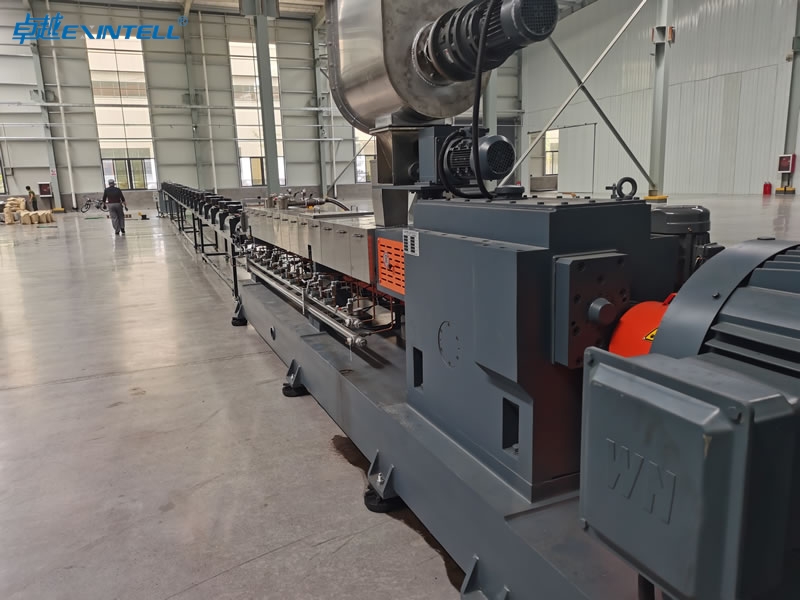
A twin screw extruder stands as a powerful machine for processing and shaping a wide range of material. You use it to mix, convey, and transform plastics, powders, and other substances into finished products. The twin screw design features two parallel screws rotating inside a barrel, which creates strong shear and kneading effects. This setup ensures even dispersion of additives and fillers, making it ideal for complex formulations.
Screws and Barrel
You rely on the screws and barrel to drive the core operation of the twin screw extruder. The screws advance and compress the material, generating shear force and friction that melt and mix the substance. The barrel houses the screws and provides the necessary containment and heating zones. Superior mixing capabilities ensure uniform dispersion of fillers and additives. You can optimize mixing by selecting different screw elements for tailored shear mixing zones. Varied pitch angles improve material flow and allow you to control shear based on material sensitivity.
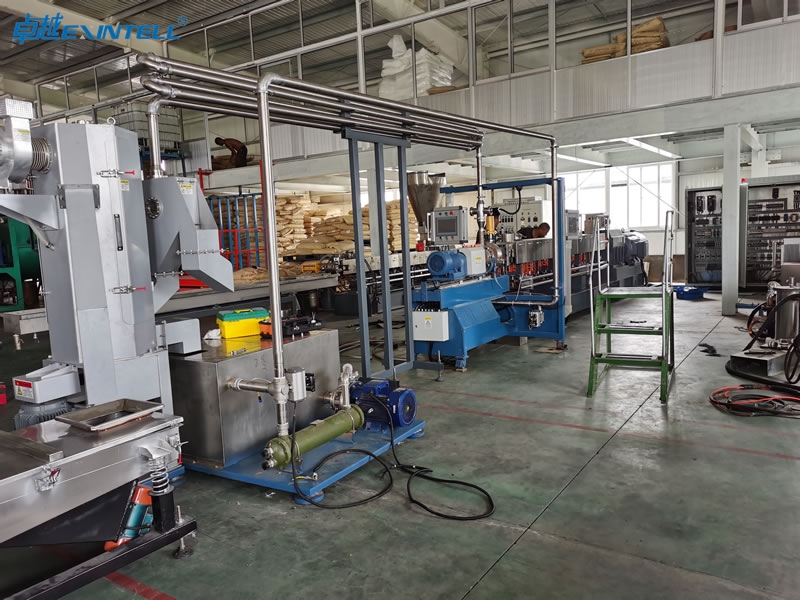
Twin screw extruders excel in mixing due to their intermeshing screws, which create strong shear and kneading effects, ensuring even dispersion of additives and fillers.
-
You achieve precise control of feeding rates and devolatilization, making the machine suitable for materials with volatile components.
-
Consistent fiber distribution and matrix bonding occur in compounding reinforced polymers.
-
Adaptability in reactive extrusion helps you maintain temperature and shear control during chemical reactions.
Drive System and Controls
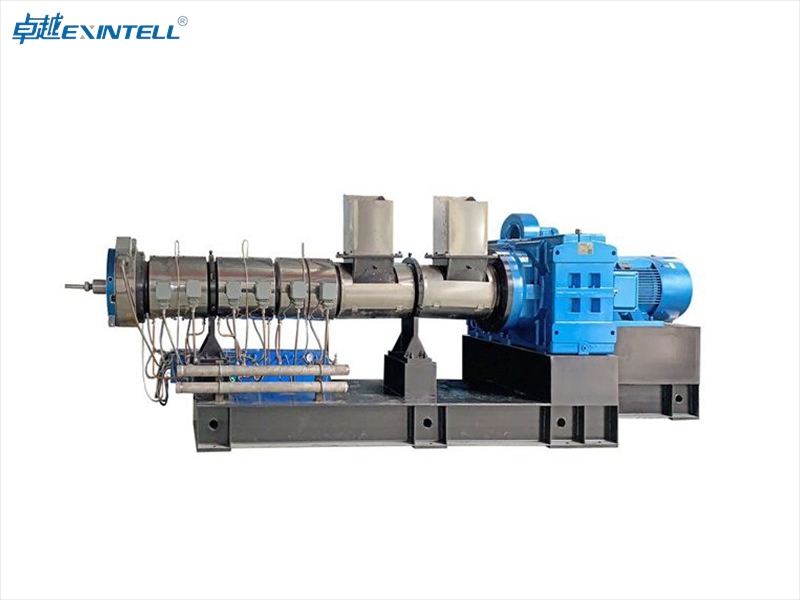
The drive system powers the screws and regulates their speed. You use advanced controls to monitor and adjust parameters such as feeding rate, screw speed, s, and pressure. This level of control ensures stable operation and consistent product quality. Twin screw extruders offer greater flexibility due to their modular design. You can adjust screw configuration to optimize for specific processes. The control system allows you to handle sensitive materials and maintain precise temperature control across different zones.
|
Contribution |
|
|---|---|
|
Feeding System |
Delivers plastic pellets or powder into the screw grooves for processing. |
|
Screw Grooves |
Advances and compresses the plastic raw material, generating shear force and friction for melting. |
|
Heating System |
Provides thermal energy to melt the plastic raw material into a thermoplastic molten substance. |
|
Extrusion Process |
Shapes the molten plastic into the desired cross-section and length through the extrusion die. |
|
Control System |
Monitors and adjusts parameters like feeding, screw speed, s, and pressure for stability. |
Comparison to Single Screw Extruder
You notice clear differences when comparing twin screw extruders to single screw extruders. The twin screw extruder delivers superior mixing efficiency thiab kev tswj kub raug. You can handle a wide range of material, including powders and liquids, which single screw extruders often struggle with. The modular design allows you to customize the machine for specific applications, while single screw extruders remain simpler and less flexible.
|
Feature |
Twin Screw Extruders |
Ib Leeg Ntsia Hlau Extruders |
|---|---|---|
|
Kev Sib Tov Muaj Peev Xwm |
Superior mixing efficiency, ideal for complex formulations |
Kev sib tov tsawg, excels in high-throughput applications |
|
Kev tswj kub kub |
Precise control across different zones |
Less control, yuav ua rau kub tsis sib npaug |
|
Muaj peev xwm pub mov |
Ua tau ntau yam khoom siv, including powders and liquids |
Muaj teeb meem nrog hmoov thiab cov khoom siv uas muaj density tsawg |
|
Yoog raws |
Tsim qauv modular tso cai rau kev kho kom haum |
Tsim yooj yim dua, tsis yooj yim hloov |
|
Khoom tuav |
Txo kev pheej hmoo puas, haum rau cov khoom siv uas yooj yim puas |
Yuav ua rau muaj kev txiav ntau dhau, ua rau puas tsuaj |
Ob lub screw extruders muaj peev xwm zoo hauv kev ntsuas kev ua tau zoo xws li kev sib xyaw thiab tswj kub. Koj tau txais kev faib khoom sib npaug thiab txo kev pheej hmoo ntawm kev puas tsuaj, tsis tshua muaj nrog cov khoom uas yooj yim raug mob. Ib lub nplhaib extruders haum rau cov haujlwm ua haujlwm siab nrog tsawg kev sib xyaw. Lawv vam khom kev sib txhuam thiab viscous drag, uas tuaj yeem ua rau kev ua khoom tsis sib npaug. Koj tau txais txiaj ntsig los ntawm peev xwm tsim khoom siab thiab kev hloov tau yooj yim ntawm ob lub nplhaib extruders, making them ideal for complex and demanding manufacturing tasks.
Working Principle of Twin Screw Extruder
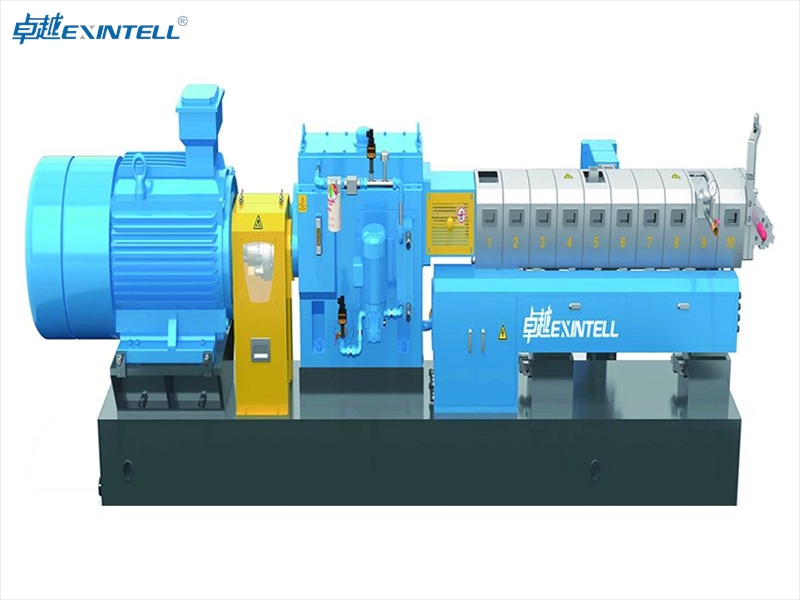
Understanding the working principle of a twin screw extruder helps you optimize your production process and achieve consistent results. This machine relies on continuous mixing, conveying, and processing of material to deliver high-quality output. You can control each stage, from feeding to final extrusion, to suit your specific application.
Feeding and Conveying
You start the extrusion process by feeding plastic pellets or powder into the extruder. The feeding system includes a hopper and a feed screw that delivers the material into the grooves of the rotating screws. As the screws turn, they grab the material and move it forward through the barrel. This action compresses and conveys the material, npaj rau kev ua haujlwm ntxiv. Kev tsim ntawm cov ntsia hlau pab kom thauj tau zoo, uas pab kom muaj kev thauj khoom ntau dua thiab txo kev pheej hmoo ntawm kev thaiv.
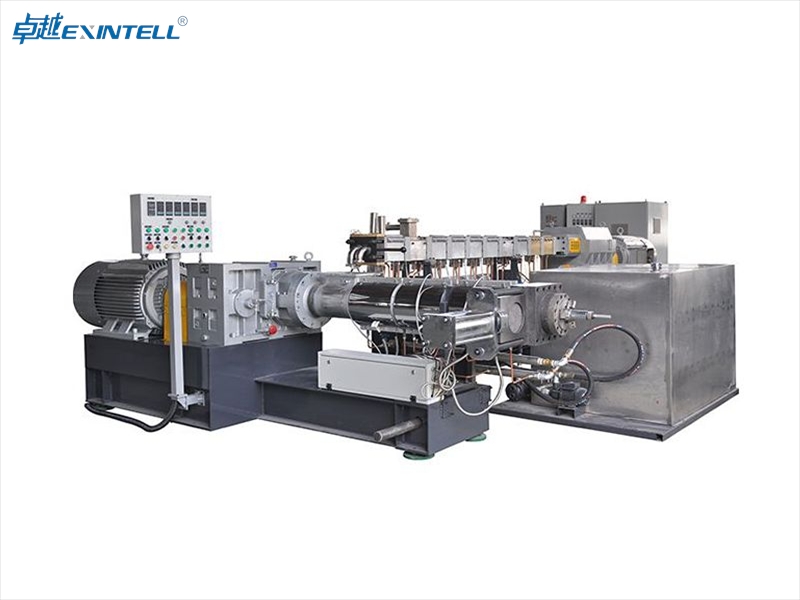
Lub tswv yim: Kev pub tas mus li thiab ceev ntsia hlau kom zoo pab koj tswj kev ua haujlwm ruaj khov thiab tiv thaiv kev puas tsuaj ntawm cov khoom.
Kev tsim thiab kev teeb tsa ntsia hlau
Kev tsim thiab kev teeb tsa ntsia hlau muaj lub luag haujlwm tseem ceeb hauv txoj cai ua haujlwm ntawm lub tshuab extruder ob ntsia hlau. Koj tuaj yeem kho cov ntsia hlau kom phim koj cov khoom siv thiab cov kev xav tau ntawm koj txoj kev ua.
Intermeshing vs. Non-Intermeshing
Cov ntsia hlau sib xyaw tig kom lawv cov xov sib tshuam, tsim thaj chaw hloov chaw zoo. Qhov qauv no pab kom sib xyaw thiab thauj khoom zoo dua, making it ideal for complex formulations. Koj tau txais kev faib tawm zoo dua ntawm cov khoom ntxiv thiab fillers, uas ua rau cov khoom zoo sib xws. C, o.
v, ntawm qhov tod tes, s. c, r. e.
-
w.
-
s, making them suitable for applications that require low shear.
s
i. b. You can swap out elements to address processing challenges or to adapt to new material types. This modularity lets you control material flow, residence time, and mixing intensity with precision.
-
You can try new screw setups for different materials.
-
You can adjust the screw configuration to develop new products or improve existing ones.
-
Modular elements help you fix problems quickly without replacing the entire screw.
Material Mixing and Output
The working principle of a twin screw extruder centers on continuous mixing and precise control over the extrusion process. You feed the material into the system, where the screws compress and shear it, generating heat and melting the substance. The screws mix the material thoroughly, ensuring even distribution of additives and fillers. As the molten material moves forward, it passes through an extrusion die that shapes it into the desired form. A cooling system then solidifies the product, completing the process.
-
The feeding system introduces plastic pellets or powder into the screw grooves.
-
The screws rotate, compressing and melting the material through shear force and friction.
-
The extrusion process shapes the molten material, and a cooling system solidifies the final product.
You achieve consistent product quality because the twin screw extruder excels at mixing. The advanced design ensures that all ingredients are uniformly distributed, which is essential for meeting industry standards. You can process a wide range of materials, including powders and plastics, thanks to the precise control over temperature, pressure, and mixing intensity. This versatility makes the twin screw extruder a preferred choice for demanding manufacturing environments.
Types of Twin Screw Extruders
Co-Rotating
You encounter co-rotating twin screw extruders in many advanced manufacturing environments. These machines feature two screws that rotate in the same direction, creating a dynamic mixing zone. The material moves in a figure-eight pattern, which enhances homogenization and self-cleaning. You benefit from intensive mixing, making it easier to achieve uniform dispersion of additives and fillers. This design suits compounding, polymerization, and reactive processing tasks.
Co-rotating extruders offer precise control over temperature, pressure, and screw speed. You can tailor the process to match your material requirements and production goals.
You gain versatility with co-rotating extruders. They handle polymers, plastics, and even food ingredients. Kev ua tau zoo tus nqi ua rau lawv zoo rau kev tsim khoom loj. Koj tuaj yeem ntseeg tau cov tshuab no rau kev zoo ntawm cov khoom thiab kev ua haujlwm zoo.
|
Cim tshwj xeeb |
Cov lus piav qhia |
|---|---|
|
Kev siv tau ntau yam |
Ua haujlwm ntau yam khoom siv, suav nrog polymers, plastics, thiab cov khoom xyaw zaub mov. |
|
Kev sib tov tob |
Ua kom cov khoom ntxiv faib sib npaug rau qhov zoo ruaj khov. |
|
Kev tswj kom raug |
Tso cai rau kev ua haujlwm raws li qhov tsim nyog los ntawm kub, pressure, thiab kev kho ceev ntawm lub nplhaib. |
|
High Throughput |
Txhawb nqa kev tsim khoom loj nrog kev tsim khoom siab. |
|
Kev sib xyaw thiab kev ua haujlwm rov qab |
Siv rau kev ntxiv cov khoom ntxiv thiab cov txheej txheem siab xws li polymerization. |
Kev tig rov qab
Koj siv cov tshuab extruders ob lub nplhaib tig tiv thaiv thaum koj xav tau kev txiav thiab sib tov muaj zog. Hauv qhov tsim no, cov nplhaib tig mus rau ob txoj kev sib txawv. Cov khoom mus dhau ib chav kaw, uas ua rau nws raug kev sib tov hnyav heev. You achieve thorough blending, but you must monitor shear levels to avoid degrading sensitive materials.
Counter-rotating extruders excel in applications that require robust mixing. However, high shear forces make them less suitable for processing PVC profiles or heat-sensitive compounds. You can optimize the process by adjusting screw speed and configuration, but you must balance mixing intensity with material integrity.
Lub tswv yim: Counter-rotating extruders deliver powerful mixing, but you should evaluate material compatibility before selecting this design.
Non-Meshing
You encounter non-meshing twin screw extruders in specialized mixing applications. These machines feature screws with large radial clearance, which leads to significant material leakage. You use them primarily for mixing tasks where self-cleaning is not required. Ib puag ncig ua haujlwm mos haum rau cov khoom uas xav tau kev txiav tsawg heev.
Cov extruders tsis mesh tsis tau txais qib sib xyaw zoo li intermeshing twin-screw extruders. Lawv raug zam rau PVC profiles thiab lwm yam khoom uas xav tau kev sib xyaw raug. Hloov chaw, Lawv siv hauv cov qauv tsis mesh rau kev sib tov yooj yim thiab cov khoom uas tau txais txiaj ntsig los ntawm kev ua haujlwm tsawg zog.
|
Txoj Cai Ua Haujlwm |
Haum rau PVC Profiles |
|
|---|---|---|
|
Meshing Counter-Rotating |
Cov khoom siv txav hauv chav kaw 'C'-shaped chamber, Ua kom muaj zog txiav thiab sib tov loj. |
Tsis haum vim muaj zog txiav siab. |
|
Non-Meshing |
Qhov chaw radial loj ua rau muaj kev ntws dej ntau; Feem ntau siv rau kev sib tov yam tsis muaj kev ntxuav tus kheej. |
Tsis haum rau PVC profiles. |
|
Meshing Co-Rotating |
Material is pulled and pushed in an ‘∞’ shape, enhancing mixing and homogenization with good self-cleaning. |
Not suitable due to large shear forces. |
You select the right twin screw extruder based on your material, mixing needs, and production goals. Each type offers unique advantages and limitations, so you must evaluate your process requirements carefully.
Cov txawv tseem ceeb
You need to understand the key differences between co-rotating, counter-rotating, and non-meshing twin screw extruders to select the right machine for your process. Each type offers unique advantages and limitations. You can optimize your production by matching the extruder design to your material and application.
Main Comparison Points:
-
a:
Co-rotating extruders deliver intensive mixing and self-cleaning. You achieve uniform dispersion of additives and fillers. Counter-rotating extruders provide strong shearing and stirring. You can blend materials thoroughly, but you must monitor shear levels to avoid degradation. Non-meshing extruders offer gentle mixing. You use them for materials that require minimal shear. -
Kev haum rau cov khoom siv:
Co-rotating extruders handle a wide range of polymers, plastics, thiab cov khoom xyaw zaub mov. You rely on them for compounding and reactive processing. Counter-rotating extruders suit applications that demand robust mixing, such as PVC profiles and heat-sensitive compounds. You must balance mixing intensity with material integrity. Non-meshing extruders work best for simple mixing tasks. You avoid using them for products that require precise blending. -
Txoj Cai Ua Haujlwm:
Co-rotating screws move in the same direction. You benefit from a figure-eight mixing pattern and enhanced homogenization. Counter-rotating screws rotate in opposite directions. You create a closed chamber for intense mixing. Non-meshing screws have large radial clearance. You experience significant material leakage and gentle processing. -
Application Areas:
Co-rotating extruders excel in compounding, polymerization, and large-scale production. You use counter-rotating extruders for PVC profiles, kev rwb thaiv hluav taws xob, and heat-sensitive materials. Non-meshing extruders suit basic mixing operations and materials that need low-intensity processing.
Lub tswv yim: You should evaluate your material properties and production goals before choosing a twin screw extruder. The right choice improves efficiency and product quality.
Lub Rooj Sib Piv:
|
Feature |
Co-Rotating |
Kev tig rov qab |
Non-Meshing |
|---|---|---|---|
|
a |
Intensive, self-cleaning |
Muaj zog, high shear |
Gentle, low shear |
|
Kev haum rau cov khoom siv |
Wide range, complex blends |
PVC, heat-sensitive |
Yooj yim, low-shear materials |
|
Txoj Cai Ua Haujlwm |
Same direction, figure-eight |
Opposite direction, closed chamber |
Large clearance, material leakage |
|
Application Areas |
Compounding, polymerization |
PVC profiles, kev rwb thaiv hluav taws xob |
Basic mixing, low-intensity |
You gain flexibility with co-rotating extruders. You achieve high throughput and consistent quality. Counter-rotating extruders give you powerful mixing, but you must monitor material compatibility. Non-meshing extruders provide gentle handling for sensitive materials. You should match the extruder type to your process requirements for optimal results.
Features and Advantages
a
You benefit from exceptional mixing efficiency when you use a twin screw extruder. The intermeshing screws create strong shear and kneading zones, which give you better mixing properties than other types of extruders. This design ensures that additives and fillers disperse evenly throughout your material. You can process sensitive materials with controlled shear, which reduces the risk of degradation and maintains product quality.
|
Hom extruder |
a |
Shear Control |
Suitability for Sensitive Materials |
|---|---|---|---|
|
Superior mixing due to intermeshing screws, enabling better dispersion of additives and fillers. |
Provides precise control over shear rates, reducing the risk of material degradation. |
||
|
Lower mixing efficiency, reliant on friction which can lead to uneven mixing. |
Yuav ua rau muaj kev txiav ntau dhau, leading to degradation in some materials. |
Less suitable for sensitive materials due to high shear. |
You achieve better mixing properties with a twin screw extruder, especially when you need uniformity in complex formulations. The advanced mixing capability allows you to meet strict industry standards and deliver consistent results.
Throughput
You gain a significant advantage in throughput when you choose a twin screw extruder. These machines deliver high output, ua rau lawv zoo tagnrho rau kev tsim khoom loj. You can maintain high throughput rates even when processing challenging materials or complex granulation tasks. The design supports continuous operation, so you keep your production lines running efficiently.
-
Twin screw extruders achieve higher throughput rates than single screw extruders.
-
You can rely on them for large-scale production due to their capacity.
-
They maintain product quality even with complex granulation.
You do not have to sacrifice quality for speed. The system ensures that every batch meets your specifications, even at high output levels.
Application Flexibility
You experience unmatched application flexibility with twin screw extruders. You can quickly adjust to changes in raw materials or formulations, which helps you respond to shifting market demands. The machine handles a wide range of polymers and materials with different viscosities, so you can produce many types of plastic products.
|
Txiaj ntsig |
Cov lus piav qhia |
|---|---|
|
Twin screw extruders can quickly adjust to changes in raw materials and formulations, which is crucial for manufacturers needing to respond to market demands. |
|
|
Kev ua tau zoo |
Enhanced production efficiency is achieved as these extruders can handle a variety of materials, optimizing the manufacturing process. |
|
Kev siv tau ntau yam |
They are suitable for processing polymers with different viscosities, allowing for a wide range of plastic products to be produced. |
You can switch between products or formulations with minimal downtime. This flexibility gives you a competitive edge in industries where innovation and rapid response are essential. You also benefit from better mixing properties, which further expands your manufacturing possibilities.
Kev tswj txheej txheem
You gain precise process control when you operate a twin screw extruder. This machine gives you the ability to monitor and adjust critical parameters throughout production. You can set and maintain temperature, screw speed, and pressure for each zone. These controls help you achieve consistent product quality and reduce waste.
Twin screw extruders stand out because they let you respond quickly to changes in material or formulation. You can swap screw elements or barrel sections to adapt to new requirements. This modular design makes your production line flexible and efficient. You do not need to shut down the entire system to make adjustments. Hloov chaw, you can change configurations and resume processing with minimal downtime.
You benefit from steady temperature control. The extruder keeps the material at the optimal temperature, preventing burning or improper melting. This feature protects your product and extends its lifespan. You avoid defects that result from overheating or uneven cooling. The system uses multiple heating zones, so you can fine-tune the process for each stage.
Lub tswv yim: Use the control panel to monitor real-time data. Adjust settings as needed to maintain stable conditions and improve output quality.
You also gain efficient mixing. The co-rotating screws create strong forces that break up clumps and distribute additives evenly. You can process complex blends without worrying about uneven dispersion. This capability ensures that every batch meets your specifications.
Here are some unique process control features you get with twin screw extruders:
-
Steady temperature maintenance prevents burning or improper melting.
-
Efficient mixing breaks up clumps and distributes additives evenly.
-
Modular design allows quick changes in production by swapping screws or barrel sections.
You can see the advantages of process control in the following table:
|
Process Control Feature |
Benefit to You |
|---|---|
|
Steady Temperature |
Enhances product quality and longevity |
|
Efficient Mixing |
Ensures uniform dispersion of additives |
|
Modular Adaptability |
Facilitates quick production changes |
|
Real-Time Monitoring |
Allows immediate adjustments for stability |
You control every aspect of the extrusion process. You can tailor the operation to match your material and production goals. This level of control helps you meet industry standards and deliver reliable results. You improve efficiency, txo cov khib nyiab, and maintain high product quality with a twin screw extruder.
Kev Lag Luam Kev Lag Luam
Plastics Processing
You see the most widespread use of twin screw extruders in plastics processing. These machines play a vital role in yas extrusion, compounding, thiab rov siv dua. You can process a wide range of material, suav nrog polymers, additives, thiab fillers. The design of the extruder allows you to achieve superior mixing and broad material compatibility. You benefit from flexibility and modularity, which means you can customize the machine for different applications and control processing conditions with precision.
In plastic extrusion, you combine multiple operations into a single step. This approach reduces production time and energy consumption. You ensure consistent product quality because the extruder provides uniform distribution of ingredients. You can rely on high throughput and process efficiency, which keeps your production lines running smoothly. The ability to handle various material types makes twin screw extruders essential for manufacturing shaped products like medical devices, cov khoom tsheb, and consumer electronics.
Lub tswv yim: Use twin screw extruders to meet strict industry standards for plastic extrusion and compounding.
Key benefits in plastics processing:
-
Superior mixing for complex formulations
-
High throughput for large-scale production
-
Consistent quality in finished products
Powder and Feed Processing
You find twin screw extruders indispensable in powder and feed processing industries. These machines give you precise mixing and scalability, especially in polymer compounding. You can process powders, granules, and feedstock with high efficiency. The extruder enhances solubility and bioavailability of poorly soluble drugs, which is crucial in pharmaceutical applications. You also produce solid dispersions and controlled-release formulations with ease.
In food processing, you use twin screw extruders for snack production thiab kev tsim khoom nplej. The machines improve product quality and streamline operations. You benefit from high efficiency and versatility, which allows you to adapt to different material types and processing requirements. The global industry value reached US$ 1.25 billion in 2023, with the Asia Pacific region leading in adoption due to rapid industrial growth.
Common applications include:
-
Kev ua zaub mov (snacks, cereals)
-
Feed production for livestock and aquaculture
-
Polymer compounding for advanced materials
Chemical and Pharmaceutical Uses
You rely on twin screw extruders for advanced chemical and pharmaceutical applications. These machines provide precise mixing, scalability, and efficiency. In pharmaceutical manufacturing, you use them for continuous processing, which ensures tightly controlled residence time and temperature. This control leads to consistent product quality and minimizes contamination risks.
You can produce innovative dosage forms, such as controlled-release tablets and solid dispersions. Hot-melt extrusion enhances the solubility and bioavailability of poorly soluble drugs. You achieve cost-effectiveness by streamlining processes, reducing production costs, and minimizing material waste. The advanced mixing capabilities of the extruder ensure uniformity, which is essential for efficacy and safety in medical applications.
Key roles in chemical and pharmaceutical processing:
-
Continuous manufacturing of drug formulations
-
Production of controlled-release and solid dispersion products
-
Enhanced solubility and bioavailability for challenging material
Ceeb toom: Twin screw extruders are essential in food, kev kho mob, tshuaj, and plastics industries. You improve product quality and operational efficiency by integrating these machines into your processing lines.
Recycling and Compounding
You play a crucial role in modern manufacturing when you use twin screw extruders for recycling and compounding. These machines help you transform waste plastics and other materials into valuable products. You can process post-consumer and post-industrial scrap efficiently. The twin screw design gives you the power to handle complex, multi-component formulations that often challenge traditional equipment.
You achieve superior mixing with twin screw extruders. The intermeshing screws ensure that fillers, additives, and reinforcements disperse uniformly throughout your material. This uniformity leads to consistent product quality, which is essential for recycled plastics and advanced compounds. You can rely on precise control over feeding rates and devolatilization. This feature allows you to process materials with volatile components, such as recycled polymers that may contain moisture or residual solvents.
Lub tswv yim: Use the modular design of twin screw extruders to adapt quickly to different recycling streams and compounding recipes.
You benefit from unmatched versatility. Twin screw extruders process a wide range of materials, suav nrog polymers, pharmaceuticals, and specialty blends. You can run large-scale production or switch to specialized low-volume batches without sacrificing efficiency. The machine handles challenging formulations with ease, giving you flexibility in your operations.
Here are some key advantages you gain when you use twin screw extruders for recycling and compounding:
-
Achieve uniform dispersion of fillers, additives, and reinforcements.
-
Handle challenging formulations with precise control.
-
Process various materials, from polymers to specialty blends.
-
Scale production up or down based on your needs.
-
Maintain consistent product quality, even with complex recipes.
-
Control feeding rates and devolatilization for volatile materials.
You can see how these advantages compare in the table below:
|
Zoo |
Impact on Your Process |
|---|---|
|
Uniform Dispersion |
Ensures consistent quality in recycled output |
|
Kev tswj kom raug |
Handles complex, multi-component materials |
|
Kev siv tau ntau yam |
Ua haujlwm ntau yam khoom siv |
|
Scalability |
Supports both large and small batch runs |
|
Superior Mixing |
Delivers reliable results for every batch |
You improve sustainability in your manufacturing by using twin screw extruders. You reduce waste and create high-value products from recycled materials. The advanced mixing and control features help you meet industry standards and customer expectations. You position your operation at the forefront of innovation by choosing twin screw technology for recycling and compounding.
Importance in Manufacturing
Efficiency and Product Quality
You drive modern manufacturing forward when you choose a w for your operations. This machine optimizes production efficiency by streamlining the extrusion process and reducing energy consumption. You maintain high output rates, which helps you meet demanding schedules and keep costs under control. Superior mixing capabilities ensure that every batch of material achieves a homogeneous blend. You see improvements in mechanical and thermal properties, which translates to higher product quality.
-
You integrate multiple operations into a single step, which reduces production time and lowers costs.
-
The machine maintains consistent quality by dispersing polymers and additives evenly throughout the material.
-
Kev siv hluav taws xob stands out as a key benefit, helping you cut operational expenses and support sustainable manufacturing practices.
You gain a competitive edge by using equipment that delivers both speed and reliability. Consistent product quality builds trust with your customers and strengthens your reputation in the industry.
|
Txiaj ntsig |
Impact on Manufacturing |
|---|---|
|
Faster production, lower costs |
|
|
Superior Mixing |
Enhanced product performance |
|
Kev siv hluav taws xob |
Reduced operational expenses |
|
Streamlined Operations |
Less downtime, improved workflow |
Innovation and Sustainability
You see rapid innovation in twin screw extruder technology as manufacturers respond to industry demands and sustainability goals. New designs focus on processing recycled material and supporting circular economy strategies. You benefit from machines that handle multi-layer waste and complex polymer blends, which helps you reduce environmental impact.
-
Regulations in the U.S. influence the market, especially regarding safety, emissions, and plastic recycling standards.
-
Compliance with FDA and EPA norms drives innovation in equipment, ensuring you meet strict requirements.
-
Sustainability policies promote the use of extruders capable of processing biodegradable and recycled material.
You notice that about 22% of new extruder models are designed for multi-layer waste and complex blends. Around 19% of recent developments focus on systems for biodegradable polymers and sustainable composites. These advancements help you meet environmental targets and adapt to changing regulations.
You position your operation at the forefront of sustainable manufacturing by investing in technology that supports recycling and eco-friendly materials.
-
You process recycled material efficiently, reducing waste and conserving resources.
-
You meet regulatory standards and customer expectations for sustainability.
-
You support innovation by adopting equipment that handles advanced formulations and new material types.
|
Innovation Focus |
Manufacturing Benefit |
|---|---|
|
Recycled Material |
Lower environmental footprint |
|
Biodegradable Polymers |
Compliance with sustainability |
|
Multi-layer Waste |
Expanded processing capabilities |
|
Kev Tswj Xyuas Kev Cai |
Safer, greener production |
You build a resilient manufacturing operation by embracing innovation and sustainability. The twin screw extruder helps you achieve production efficiency, maintain product quality, and support environmental goals.
You gain a powerful tool in modern manufacturing with a twin screw extruder. This machine blends materials thoroughly, adapts to diverse applications, and operates efficiently. You preserve sensitive materials and achieve consistent quality through precise control. Consider these advantages:
-
Enhanced mixing capability for uniform products.
-
Versatility across industries thiab cov khoom siv.
-
Continuous processing for higher productivity.
-
Gentle handling of sensitive materials.
-
Precise control for consistent results.
-
Effective removal of unwanted gases.
You can elevate your production and meet industry standards by choosing the right extruder for your needs.
FAQ
What materials can you process with a twin screw extruder?
You can process plastics, powders, cov khoom xyaw zaub mov, pharmaceuticals, thiab tshuaj tshwj xeeb. The machine handles polymers, fillers, additives, and recycled materials. You gain flexibility for many industrial applications.
How do you maintain a twin screw extruder?
You should clean the screws and barrel regularly. Inspect wear parts and replace them as needed. Lubricate the drive system. Monitor temperature and pressure sensors. Schedule routine maintenance to prevent downtime.
Why should you choose a twin screw extruder over a single screw extruder?
You achieve better mixing, kev ua tau zoo dua, and more precise process control. Twin screw extruders handle complex formulations and sensitive materials. You can adapt the machine for different products.
Can you change the screw configuration for different products?
Yog, you can swap modular screw elements to match your process needs. This flexibility lets you optimize mixing, residence time, and shear for each material.
Lub tswv yim: Adjusting screw design helps you improve product quality and process efficiency.
What safety precautions should you follow during operation?
You must wear protective gear. Check safety interlocks before starting. Never bypass guards. Monitor temperature and pressure. Follow the manufacturer’s guidelines for safe operation.
How do you troubleshoot common extrusion problems?
You should check for blockages, uneven feeding, or temperature fluctuations. Inspect screw wear and barrel alignment. Review control settings. Consult the user manual for specific error codes.
|
Problem |
Quick Check |
|---|---|
|
Blockage |
Inspect feed system |
|
Poor Mixing |
Review screw configuration |
|
Overheating |
Check cooling system |
Cov lag luam twg tau txais txiaj ntsig tshaj plaws los ntawm ob lub screw extruders?
You see the greatest benefits in plastics, Kev ua zaub mov noj, pharmaceuticals, u, thiab rov siv dua. These industries require precise mixing, kev ua haujlwm siab, and flexibility for diverse materials.