

Miihini Whakakii Masterbatch Extrusion: Ko te Aratohu Tauhokohoko B2B Tino mo nga Kaihanga Ao, Kaituku & Kaihoko i roto
Ko te maakete o te ao mo mihini whakakī masterbatch extrusion kei te uru ki tetahi waahanga tipu nui, i peia e te piki haere o te tono mo nga otinga whakahiato kirihou whai hua puta noa i te kapi, hangahanga, waka, me nga waahanga hoko taonga. Hei konupūmā pākawa waro (CaCO3) Kei te haere tonu te whakakii i te masterbatch ki te whakakapi i te kapia wahine i roto i nga mahi whakangao puta noa i te ao, nga miihini e whakaputa ana i enei roopu matua — ko te tuatahi ko te huri tahi i nga taputapu mahanga-hurihuri me nga raina whakakotahi motuhake — kua noho hei whakangao whakapaipai nui mo nga miihini kirihou i nga whenua katoa. Ko tenei aratohu matawhānui e tirotirohia ana te whenua hokohoko o naianei, taiao kaupapa here, rautaki rapu, me te tirohanga a meake nei mo nga kaihoko B2B e rapu pono ana nga kaihanga miihini whakakii masterbatch, kaiwhakarato, a wheketere rarawe hoa puta noa i te kauhanga hokohoko -Asia.
Whakahuihui Miihini Extruder Wholesale  Pouaka Konumohe Whakaputaina
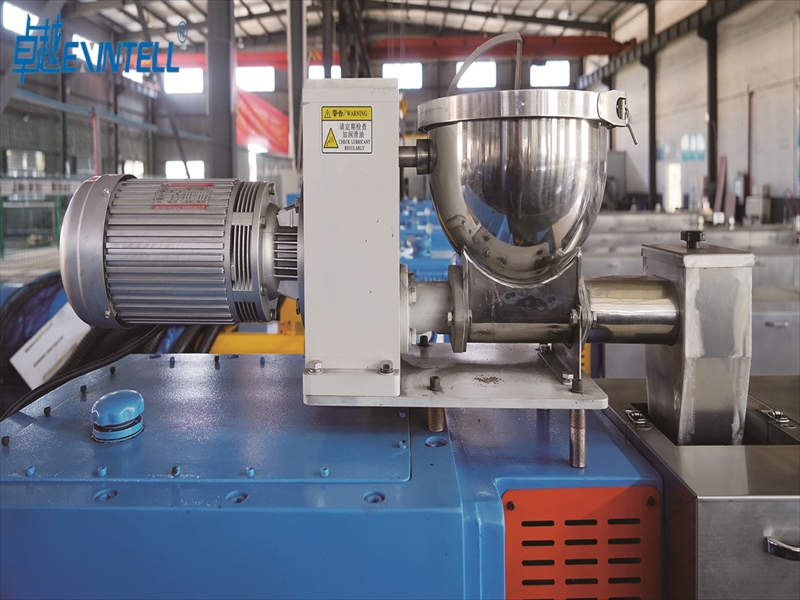
Te whare whakangao ahumahi me nga miihini taumaha me nga raina whakaputa tangohanga hei tohu ki te whakakii masterbatch extrusi
Te Maramatanga ki nga Miihini Whakakii Masterbatch Extrusion: Hangarau matua me nga tono
Ko nga miihini whakakikorua masterbatch he punaha whakahiato motuhake i hangaia hei whakakotahi i nga kohinga teitei o nga whakakii kohuke — te nuinga o te konupūmā pākawa waro (CaCO3), talc, ko te barium sulfate ranei — me nga kapia kawe penei i te polyethylene (PE), polypropylene (PP), polystyrene ranei (PS). Ko nga pire whakakī masterbatch ka whakamahia e nga kaiwhakatika kirihou o raro hei whakaheke i nga utu rawa, whakapai ake i te pumau o te ahu, me te whakarei ake i etahi ahuatanga miihini o nga hua kua oti.
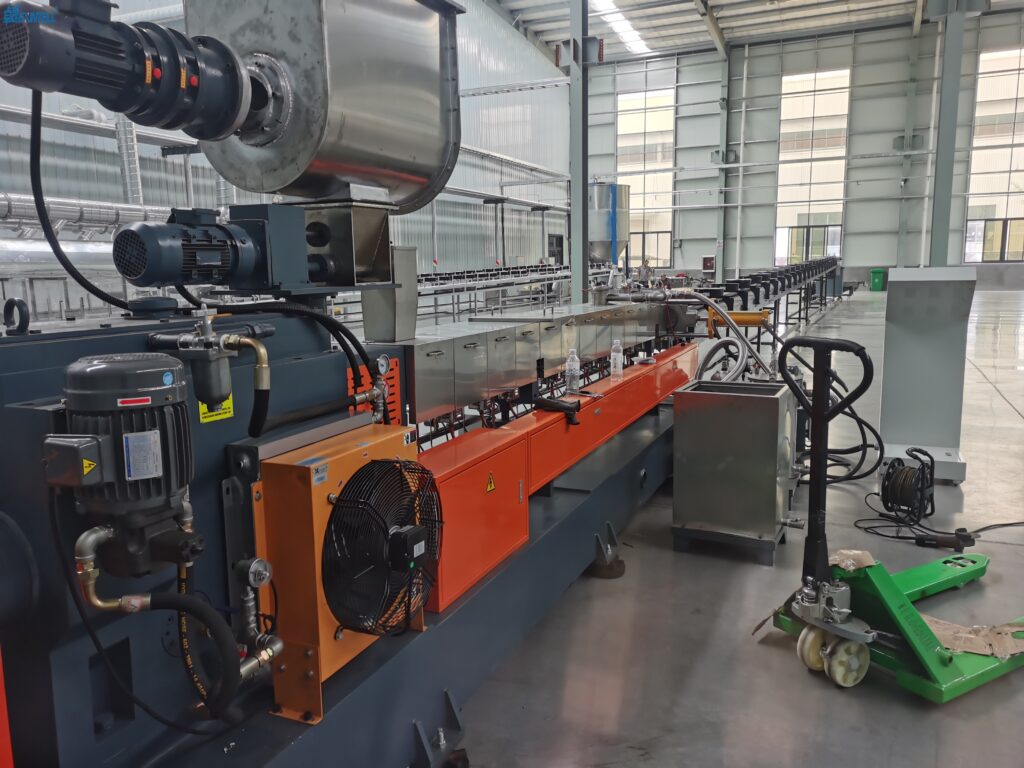
The dominant machine architecture for filler masterbatch production is the co-rotating twin-screw extruder, which offers superior mixing, dispersive capability, and throughput compared to single-screw alternatives. Modern filler masterbatch extrusion lines typically include:
- A co-rotating twin-screw extruder (screw diameter ranging from 50mm to 135mm for industrial-scale production)
- Gravimetric or volumetric feeding systems for precise filler-to-resin ratio control
- Side feeders for high-fill-ratio applications (typically 70–85% CaCO3 loading)
- Strand pelletizing or underwater pelletizing systems
- Cooling conveyors, vibrating screens, and storage silos
- PLC-based control systems with HMI interfaces for process monitoring
Production capacities for commercial filler masterbatch extrusion machines range from 300 kg/h for smaller lines up to 2,000+ kg/h mo nga whakaurunga wheketere nui. Ko te kowhiringa o te whirihoranga miihini ka whakawhirinaki ki te paheketanga o te whakakii whakakii, te kounga pellet e hiahiatia ana, nga whakaritenga whakaputa a-tau, me te tono whakararo motuhake — ahakoa kiriata pupuhi, whakarewa werohanga, tangohanga paipa, hanga pepa ranei.
Tirohanga Maakete o te Ao: Miihini Whakakii Masterbatch Extrusion i roto
Ko te maakete masterbatch o te ao i wariuhia ki te USD 13.67 piriona i roto i 2024 me te matapae ka eke ki te USD 19.94 piriona na 2030, e tipu ana i runga i te reiti tipu o ia tau (CAGR) o huri noa 6.5%, e ai ki nga rangahau ahumahi mai Mordor Intelligence a Rangahau Tirohanga Nui. Ko te rangatira whakakī te tohu tetahi o nga waahanga nui rawa atu i roto i tenei maakete, te kaute mo te wahanga nui o te katoa o te pukapuka na runga i ona painga whakaheke utu.
Ma tenei tipu ka kaha te tono mo nga miihini whakakii masterbatch. Ko nga hihiri o te maakete matua kei roto:
- Te rangatiratanga o Ahia-Kiwa: Haina, Inia, Vietnam, a ko Indonesia tonu te kaihanga nui rawa atu me nga kaihoko o te whakakī masterbatch, me nga kaihanga Hainamana penei i a Nanjing Kerke, Nanjing Haisi, me Jiangsu Xinda te kaiarahi i te whakaputa miihini me te kaweake.
- Te whakahou a te pakeha: Ko nga kaihanga a EU kei te haumi i roto i te kaha whakahiato o roto ki te whakaheke i te whakaraeraetanga o nga mekameka tuku, te hanga tono mo nga raina tangohanga tino pai mai i nga OEM Pakeha e rua (Coperion, KraussMaffei, Leistritz) me nga kaiwhakarato Ahia whakataetae utu.
- Te roha o Amerika ki te Raki: Ko nga miihini kirihou a Amerika me Mexico kei te whakaheke i nga mahi whakakii masterbatch hei utu i te pikinga o nga utu kapia wahine, me te tipu ake i roto i nga tono whakangao me te hanga.
- Kaitaraiwa tauwhiro: Ko te pehanga ture ki te whakauru i nga ihirangi hangarua me te whakaiti i te para kirihou kei te turaki i nga tukatuka ki te whakaki i te masterbatch hei rautaki whakakapi kapia waahanga, further boosting machine demand.
The machinery segment itself — encompassing twin-screw extruders, compounding lines, and ancillary equipment — represents a multi-billion-dollar global market, with trade flows concentrated along the China-to-world export corridor and intra-European equipment trade, as reported by the Te Whakahaere Tauhokohoko o te Ao (ITA).
Trade Policy Landscape Affecting Filler Masterbatch Extrusion Machines
The transatlantic trade environment in presents both opportunities and complexities for B2B buyers sourcing filler masterbatch extrusion machines. Understanding the current policy framework is essential for procurement planning. Plastic Extrusion Machine Wholesale
Kaupapa Tauhokohoko US: Tariffs and Industrial Strategy
The United States maintains a layered tariff structure on imported industrial machinery. No waenganui-, key considerations include:
- Wāhanga 301 tariffs on Chinese machinery: Twin-screw extruders and compounding equipment imported from China face additional tariffs of 25% i raro i te Wahanga 301, on top of standard MFN (Iwi Tino Pai) duty rates. This has prompted some Chinese filler masterbatch extrusion machines manufacturers to explore assembly operations in Southeast Asia or to partner with US-based distributors to mitigate cost impacts, as documented by the US International Trade Commission (USITC).
- Infrastructure and manufacturing incentives: The Inflation Reduction Act (IRA) and CHIPS Act, while primarily targeting semiconductors and clean energy, have created a broader industrial investment climate that benefits domestic plastics processing capacity expansion.
- Buy American provisions: Federal procurement preferences for domestically manufactured equipment can influence purchasing decisions for government-funded infrastructure projects that use plastic components.
Kaupapahere Hokohoko EU: Green Deal and Machinery Regulation
The European Union's trade and industrial policy in is shaped by several intersecting frameworks:
- Ture Miihini EU 2023/1230: Ka whai hua mai i Hanuere 2027 (with transition provisions already influencing procurement), this regulation updates safety and conformity requirements for industrial machinery sold in the EU. Filler masterbatch extrusion machines suppliers targeting European buyers must ensure CE marking compliance, comprehensive technical documentation, and adherence to updated risk assessment standards, ia te Te Tari Whakahaere Tauhokohoko a te Komihana a Europi.
- Carbon Border Adjustment Mechanism (CBAM): While CBAM primarily targets carbon-intensive materials (maitai, sima, konumohe), its phased implementation signals the EU's direction toward embedding carbon costs in trade — a factor that may eventually affect machinery manufacturing supply chains.
- EU-China trade tensions: Ongoing anti-subsidy investigations and potential countervailing duties on certain Chinese industrial goods create uncertainty for European buyers sourcing filler masterbatch extrusion machines from Chinese factories.
Busy international shipping port with container vessels and cargo cranes representing global B2B trade logistics for industri
Bilateral Trade Dynamics
Te Kaunihera Tauhokohoko me te Hangarau (TTC) continues to serve as a platform for aligning standards and reducing trade friction in industrial sectors. For filler masterbatch extrusion machines, the practical implications include:
- Ko nga korerorero mo te whakamohiotanga tahi mo nga paerewa haumaru miihini (US OSHA/ANSI vs. EU CE/EN) ka taea te whakangawari i te hokohoko taputapu whakawhiti-Atlantic
- Ko nga huarahi ruruku ki te whakawhiwhi i te kaha o nga mekameka ka pai ake pea ki te rereke mai i nga taunga-puna kotahi
- He hiahia tahi ki te whakatairanga i nga hangarau whakangao matatau, tae atu ki nga punaha tangohanga Ahumahi 4.0-whakahohea
Ko nga kaihoko B2B e whakatere ana i tenei whenua me mahi tahi me nga kaihokohoko mohio me nga kaitohutohu tauhokohoko tauhokohoko ki te arotau i nga utu taunga me te whakarite kia rite nga ture., pera me ta te US Customs me te Parenga Taitapa (CBP) a EU Customs Union mana. Momo Taputapu Raima Raima
Nga Whakaaetanga Tauhokohoko B2B i roto i te Rangai Miihini Whakakii Masterbatch Extrusion
Ko te taiao maakete o naianei he maha nga huarahi hokohoko B2B mo nga kaihanga, kaiwhakarato, me nga kaihoko o nga miihini whakakī masterbatch extrusion:
Te whai waahi 1: Te Utu Whakataetae mai i nga Kaihanga Ahia
Ko nga tono Extruder Tiu Kotahi Ko nga kaihanga miihini whakakii a Haina me Taiwanese e tuku ana i nga raina whakangao i te 40–60% he iti ake te utu whakapaipai ki nga OEM Pakeha, me te kore e patu i nga inenga mahi matua. He 65mm te whakakii mahanga-kirikiri Raina Tangohanga Kirihou raina matua me te 500–800 Ko te kaha o te kg/h mai i te wheketere Hainamana rongonui ka taea te utu i te USD 80,000–150,000 awhe (FOB), whakaritea ki te USD 250,000–500,000+ mo nga punaha i hangaia e te Pakeha. Ko tenei rereketanga utu ka tino ataahua nga taputapu mai i Ahia:
- Ko nga kaiwhakatikatika maakete hou e whakanui ana i te whakangao masterbatch whakakii
- Ko nga kaihoko B2B te utu i roto i nga maakete mutunga whakataetae utu (tākai taonga, kiriata ahuwhenua)
- Companies establishing secondary or backup production lines
Te whai waahi 2: European Premium Equipment for High-Specification Applications
European filler masterbatch extrusion machines manufacturers — including Coperion (Tiamana), KraussMaffei (Tiamana), me Leistritz (Tiamana) — command premium pricing but deliver advantages in precision engineering, te kaha o te kaha, automation integration, me te pono mo te wa roa. For B2B buyers producing high-quality masterbatch for demanding applications (nga waahanga motuka, medical packaging, food-contact films), European-sourced equipment often delivers superior total cost of ownership over a 15–20 year operational lifespan.
Te whai waahi 3: Turnkey Project Solutions and After-Sales Service Networks
A growing trend among filler masterbatch extrusion machines suppliers is the provision of turnkey project solutions — encompassing machine supply, factory layout design, te tirotiro whakaurunga, whakangungu kaiwhakahaere, and ongoing technical support. This model Wholesale Double Screw Extruder is particularly valuable for B2B buyers entering the filler masterbatch market for the first time or expanding into new geographic markets. Suppliers with established after-sales service networks in the buyer's region command a competitive advantage.
Engineers working with advanced industrial control systems and automation technology in a modern manufacturing plant
Te whai waahi 4: Refurbished and Second-Hand Equipment Market
The secondary market for filler masterbatch extrusion machines is active, particularly in Europe and North America, where processors upgrading to newer technology release well-maintained used equipment. B2B buyers with limited capital budgets can acquire functional production lines at 30–50% of new equipment cost, though due diligence on machine condition, te waatea o nga waahanga e manawapa ana, me te ū ki nga paerewa haumaru o naianei he mea nui.
Nga Wero Matua i roto i te Hokohoko B2B mo nga Miihini Whakakii Masterbatch Extrusion
I te taha o nga whai waahi, Ko nga kaiuru B2B i roto i tenei waahanga he maha nga wero e mau tonu ana:
- Manatoko kounga i tawhiti: Te aromatawai i te kounga hanga miihini, puna wae (e.g., pouaka taputapu, oko, whakarewa huānga tīwiri), me nga paerewa whakangao mai i nga kaiwhakarato o tawahi e hiahia ana ki te tirotiro i nga wheketere i runga i te waahi, me te whakawhirinaki ranei ki nga ratonga tirotiro-tuatoru penei i te SGS, i te Bureau Veritas ranei..
- Nga awangawanga mo te taonga hinengaro: Ko etahi miihini whakakī masterbatch whakaheke utu iti ka uru pea ki te whakauru i nga hoahoa e tino rite ana ki nga hangarau rangatira mai i nga OEM kua pumau., te hanga i te taunahatanga IP pea mo nga kaihoko i roto i nga mana whakahaere me te kaha whakakaha patent.
- Logistics me te wa arahi: Nga raruraru waka moana, popoketanga tauranga (particularly at major hubs like Rotterdam, Los Angeles/Tatahi roa, and Shanghai), and extended manufacturing lead times (typically 60–120 days for custom configurations) require careful procurement planning.
- Technical support gaps: Buyers sourcing filler masterbatch extrusion machines from distant suppliers may face challenges in obtaining timely spare parts, remote troubleshooting, and on-site service — a critical consideration for production-critical equipment.
- Currency and payment risk: International B2B transactions for capital equipment typically involve significant payment milestones (30% deposit, 70% before shipment is common), exposing both parties to currency fluctuation and counterparty risk. Letters of credit and trade finance instruments are standard risk mitigation tools.
Geographic and Policy Advantages Enabling B2B Trade in Filler Masterbatch Extrusion Machines
Several geographic and policy factors create structural advantages for B2B trade in this sector:
Free Trade Zones and Special Economic Zones: Buyers in countries with FTZs (e.g., Jebel Ali in the UAE, various Chinese SEZs, EU free zones in Hamburg and Trieste) can import filler masterbatch extrusion machines with deferred or reduced duty obligations, particularly when the equipment is used to produce goods for re-export. This is documented by the World Trade Organization (WTO) trade facilitation frameworks.
Parallel Twin-Screw Extruder Factory Regional Trade Agreements: The USMCA (US-Mexico-Canada Agreement) facilitates duty-free or preferential trade in industrial machinery among North American partners. Waihoki, the EU's network of free trade agreements with countries including South Korea, Hapani (EU-Japan EPA), me Vietnam (EVFTA) ka taea te whakaiti i nga arai utu mo nga waahanga miihini me nga taputapu kua oti.
Nga hanganga tauranga rautaki: Ko nga huarahi tauhokohoko nui mo nga miihini whakakii masterbatch e whakamahi ana i nga whakaurunga tauranga o te ao — Rotterdam me Hamburg i Uropi, Los Angeles/Long Beach me Savannah i te US, Shanghai me Ningbo i Haina — e tuku ana i te tukatuka tikanga pai, whare putunga herea, me nga hononga kawe waka maha ki nga pokapu whakangao ki uta.
Nga hua o te roopu ahumahi: Te aro o nga tohungatanga tukatuka kirihou — penei i nga kawanatanga o Guangdong me Jiangsu i Haina, te rohe Rhine-Ruhr i Tiamana, me te kauhanga petrochemical o Gulf Coast i te US — Waihangahia nga punaha rauwiringa kaiao kei reira nga kaihanga miihini whakakii masterbatch, nga kaiwhakarato waahanga, me nga kaiwhakarato ratonga hangarau e mahi tata ana, te whakahaere i nga whakawhitinga B2B pai.

Aerial view of a major international port with shipping containers and logistics infrastructure supporting global trade
Practical Case Studies Success in Filler Masterbatch Extrusion Machines Trade
Akoranga Take 1: European Compounder Sources from Chinese Manufacturer
A mid-sized plastics compounding company based in Poland sought to expand its filler masterbatch production capacity to serve growing demand from the European packaging sector. After evaluating both European and Asian suppliers, the company selected a Chinese filler masterbatch extrusion machines manufacturer offering a complete 75mm twin-screw compounding line with 1,000 kg/h capacity for CaCO3 masterbatch at 80% filler loading.
3X3 Extruded Aluminum Cad Key success factors in this B2B transaction included:
- Pre-purchase factory audit conducted by a third-party inspection firm, verifying manufacturing capabilities and quality management systems
- Detailed technical specification agreement covering screw element configuration, barrel metallurgy (nitrided steel with bimetallic liners for abrasion resistance), gearbox specifications (verified torque rating), and control system requirements
- Structured payment terms using an irrevocable letter of credit, with final payment contingent on successful factory acceptance testing (FAT)
- Negotiated 2-year warranty with defined spare parts pricing and availability commitments
- CE marking and EU Machinery Directive compliance documentation provided by the manufacturer, verified by an EU-based notified body
The total landed cost (including equipment, ocean freight, customs duties, tāutanga, and commissioning) i tata 55% of the quoted price for a comparable European-built line. The machine achieved target production parameters within 3 wiki o te tono, and the company reported satisfactory performance after 12 marama mahi.
Akoranga Take 2: US Distributor Builds Wholesale Channel for Asian Equipment
A US-based industrial equipment distributor identified an opportunity to serve the growing North American filler masterbatch market by establishing a wholesale channel for competitively priced Asian-manufactured extrusion machines. The distributor partnered with two Taiwanese and one Chinese filler masterbatch extrusion machines factory to offer a curated range of production lines spanning 300–1,500 kg/h capacity.
The distributor's value proposition to B2B buyers included:
- US-based inventory of critical spare parts (huānga tīwiri, nga waahanga potae, heater bands, drive components) for rapid delivery
- Factory-trained service technicians based in Texas and Ohio, capable of on-site installation, tukunga, and troubleshooting
- Equipment pre-configured to meet US electrical standards (480V/60Hz), OSHA safety requirements, and UL/CSA certifications
- Flexible financing options through partnerships with industrial equipment leasing companies
This model addressed the primary pain points of US B2B buyers — after-sales support, hanganga ture, and spare parts availability — while preserving the cost advantage of Asian-manufactured equipment. The distributor reported 40% year-over-year growth in filler masterbatch extrusion machine sales over the 2023– period.
Akoranga Take 3: Indian Manufacturer Targets African and Middle Eastern Markets
An Indian filler masterbatch extrusion machines manufacturer leveraged India's competitive manufacturing costs and favorable trade agreements to build a strong export business targeting B2B buyers in Africa and the Middle East. The company offered complete turnkey filler masterbatch production projects, including factory design, equipment supply, raw material sourcing guidance, and operator training programs.
The manufacturer's approach to these emerging markets emphasized:
- Robust, simplified machine designs optimized for operating environments with variable power supply quality and limited access to specialized maintenance technicians
- Competitive pricing enabled by India's lower labor and overhead costs compared to Chinese competitors
- Participation in regional trade exhibitions (e.g., Plastivision Arabia, PPPEXPO Africa) to build direct relationships with B2B buyers
- Partnerships with local agents and service providers in key markets (Nigeria, Kenya, Saudi Arabia, UAE) to ensure ongoing customer support
International B2B trade exhibition hall with industrial machinery Extrusion Machine Manufacturers displays and business professionals networking Plastic Tube Extrusion Manufacturer
Selecting the Right Filler Masterbatch Extrusion Machines Supplier: A B2B Buyer's Framework
For B2B procurement professionals evaluating filler masterbatch extrusion machines suppliers, a structured assessment framework reduces risk and improves outcomes:
Technical Evaluation Criteria
- Screw and barrel technology: Assess screw element design (kneading block configuration, mixing element geometry), barrel metallurgy (bimetallic vs. nitrided), and the supplier's ability to customize screw profiles for specific filler types and loading ratios.
- Gearbox and drive system: The gearbox is the most critical and expensive component. Verify torque density rating (Nm/cm³), manufacturer origin, and warranty terms. Premium suppliers use gearboxes from established manufacturers like Flender, Zambello, or NANJING-branded equivalents with verified specifications.
- Control system sophistication: Evaluate PLC brand (Siemens, Allen-Bradley, Mitsubishi), HMI functionality, data logging capabilities, me te Ahumahi 4.0 readiness (OPC-UA connectivity, remote monitoring options).
- Energy efficiency: Specific energy consumption (kWh/kg of output) varies significantly between machine designs. Request verified energy consumption data at target production parameters.
- Pelletizing system: Strand pelletizing is standard for filler masterbatch; underwater pelletizing offers advantages for high-throughput operations. Assess pellet quality (uniformity, dust generation, bulk density) from reference installations.
Commercial and Service Evaluation Criteria
- Nga whakaurunga tohutoro: Request and verify reference customer contacts operating similar filler masterbatch extrusion machines in comparable applications.
- Spare parts strategy: Evaluate spare parts pricing, availability (stock vs. made-to-order), and delivery timelines to the buyer's location.
- Training and commissioning: Confirm the scope and duration of operator training, commissioning support, and the availability of ongoing technical consultation.
- Te pumau o te putea: For capital equipment purchases with multi-year warranty and service implications, assess the supplier's financial health and market longevity.
- Tautukunga tauhokohoko: Verify the supplier's ability to provide all required export documentation, certificates of origin, and regulatory compliance certifications for the destination market.
Future Trade Trends for Filler Masterbatch Extrusion Machines: Hōngongoi–September Outlook
I runga i nga tohu maakete o naianei, whanaketanga kaupapa here, me te matauranga ahumahi, several trends are expected to shape B2B trade in filler masterbatch extrusion machines over the next 1–2 marama:
Te ia 1: Accelerated Procurement Ahead of Potential Tariff Escalation
Ongoing US-China trade tensions and the possibility of additional tariff actions on industrial machinery are prompting some B2B buyers to accelerate procurement timelines. Buyers who have been evaluating Chinese-manufactured filler masterbatch extrusion machines may move to place orders in Q3 to lock in current pricing and tariff rates before potential policy changes take effect. Ko te ITA tariff resource center provides updated guidance on applicable rates.
Te ia 2: Growing Demand for Energy-Efficient and Automated Systems
Rising energy costs in Europe and sustainability reporting requirements (EU Corporate Sustainability Reporting Directive) are driving B2B buyers toward filler masterbatch extrusion machines with demonstrably lower specific energy consumption and higher automation levels. Suppliers offering verified energy performance data, variable-frequency drive integration, and smart process control features will have a competitive advantage in European and North American markets.
Te ia 3: Southeast Asian Manufacturing Hub Emergence
Vietnam, Thailand, and Indonesia are emerging as alternative manufacturing bases for filler masterbatch extrusion machines, as some Chinese manufacturers establish production facilities in these countries to circumvent tariff barriers and access ASEAN free trade benefits. B2B buyers should monitor these developments as potential new sourcing options with favorable trade terms for both US and EU markets.
Te ia 4: Digital B2B Procurement Platforms Gaining Traction
Online B2B platforms (Alibaba, Hanga-i-Haina, GlobalSources, and specialized industrial equipment marketplaces) are increasingly used for initial supplier discovery and RFQ processes for filler masterbatch extrusion machines. Heoi ano, the high-value, technically complex nature of these capital equipment purchases means that digital platforms serve primarily as lead generation tools — final procurement decisions still require direct supplier engagement, factory visits, and detailed technical negotiations.
Te ia 5: Circular Economy Integration
The integration of recycled content processing capabilities into filler masterbatch extrusion machines is becoming a differentiating feature. Machines designed to handle post-consumer recycled (PCR) or post-industrial recycled (PIR) resins alongside mineral fillers address the growing regulatory and market demand for circular economy solutions, particularly in the EU market where the EU Plastics Strategy sets ambitious recycled content targets.
Modern industrial automation and smart manufacturing technology representing the future of filler masterbatch extrusion machi
B2B Safety Footwear in Industrial Environments: Protecting Workers Operating Filler Masterbatch Extrusion Machines
The operation of filler masterbatch extrusion machines involves significant workplace hazards — nga waahanga miihini taumaha, high-temperature polymer melts, rotating equipment, and the handling of bulk mineral fillers. In this industrial context, safety footwear is not merely a compliance requirement but a critical element of worker protection. For B2B buyers and factory operators in the filler masterbatch sector, understanding the advantages of proper safety shoes is essential to maintaining a safe and productive work environment.
Why Safety Footwear Matters in Extrusion Machine Environments
Filler masterbatch production facilities Cheeto Extruder Factory present multiple foot injury risks:
- Te kuru kino: Heavy machine components (huānga tīwiri, nga waahanga potae, gearbox assemblies) taumaha 20–200+ kg are routinely handled during maintenance and changeover operations. A dropped barrel segment can cause severe foot injuries without adequate toe protection.
- Ngaaarearea: Extruder barrels operate at temperatures of 150–280°C. Molten polymer strands and hot pellets can cause burns on contact with unprotected feet. Heat-resistant safety footwear with appropriate sole ratings is essential.
- Te rongo matū: Tukatuka taapiri, coupling agents, and cleaning solvents used in filler masterbatch production can damage standard footwear and cause skin irritation. Chemical-resistant safety shoes provide necessary protection.
- Nga mate paheke: Spilled CaCO3 powder, polymer dust, and cooling water create slippery floor conditions. Anti-slip sole technology significantly reduces fall risk in these environments.
- Ngā mōrearea werohanga: Metal fragments from screw element wear, wire from packaging materials, and other sharp debris on factory floors can penetrate standard footwear soles.
Steel Toe and Composite Toe Protection: Ko te
Filler Masterbatch Making Machine: Complete B2B Trade Guide for Manufac… · Color Masterbatch Extruder Machine: Te Taatari Tauhokohoko B2B o te Ao, Manufact… · Color Masterbatch Granulating Machine: Te Taatari Tauhokohoko B2B o te Ao, Manuf…