

Carane Beda Sistem Ekstrusi Tumpukan Up kanggo Manufaktur
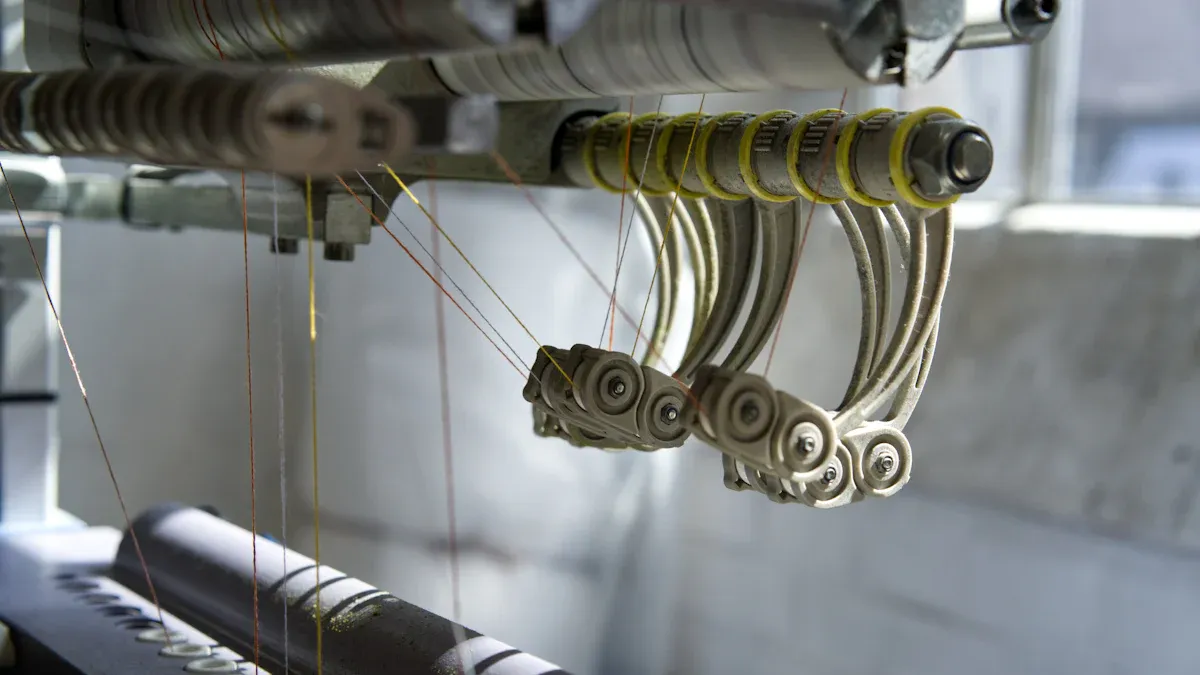
Aku wis weruh manawa pilihan sistem ekstrusi mbentuk kabeh proses manufaktur. Umume pabrikan nggunakake sistem sekrup tunggal, kang ngemu a 62% pangsa pasar, nalika sistem twin-meneng akun kanggo 38%.
| Tipe Sistem Ekstrusi | Persentase Pangsa Pasar |
|---|---|
| Tunggal-sekrup | 62% |
| Sekrup kembar | 38% |
Milih antarane jinis meneng mengaruhi efficiency, kualitas produk, lan kompatibilitas materi. Nalika aku cocog teknologi extrusion kanggo tujuan manufaktur, Aku sok dong mirsani dandan ing biaya-efektifitas, versatility desain, lan kelestarian.
| Faktor | Dampak ing Efisiensi Manufaktur | Dampak ing Kualitas Produk |
|---|---|---|
| Paramèter sing dikontrol | Njaga kualitas produk seragam | Nampa toleransi mikrometer |
Aku ngandelake Sistem Ekstrusi Lengkap kanggo ngasilake asil sing konsisten lan kinerja sekrup sing tepat.
Takeaways Key
- Pilih sistem ekstrusi sing tepat adhedhasar tujuan manufaktur lan sifat material kanggo njamin kinerja sing optimal.
- Extruders siji-screw becik kanggo produksi volume dhuwur saka bahan prasaja, nalika sistem twin-screw unggul ing nyampur bahan Komplek.
- Pangopènan rutin lan ngawasi sistem ekstrusi nyegah downtime lan nambah efisiensi, njamin kualitas produk sing konsisten.
- Coba diameter sekrup lan rasio L / D nalika milih extruder, amarga faktor kasebut mengaruhi throughput lan efisiensi campuran.
- Gunakake co-extrusion kanggo nggawe produk multi-lapisan sing nggabungake macem-macem bahan, nambah fungsi lan kinerja.
- Evaluasi kompatibilitas bahan karo sistem ekstrusi sing dipilih kanggo ngindhari cacat lan njamin output sing berkualitas tinggi.
- Tetep ngerti babagan tren sing berkembang ing teknologi ekstrusi, kayata IoT lan AI, kanggo nambah efisiensi lan adaptasi kanggo ngganti kabutuhan produksi.
- Nggawe dhaptar mriksa faktor kunci sadurunge milih mesin extrusion kanggo ngindhari kesalahan sing larang regane lan mesthekake yen sistem memenuhi syarat aplikasi.
Milih Sistem Ekstrusi Tengen kanggo Manufaktur
Faktor Kunci ing Pilihan Sistem
Aku tau golek universal “paling apik” sistem ekstrusi. Pengalamanku ngandhani yen pilihan sing cocog gumantung saka tujuan manufaktur, sifat materi, lan syarat produk. Nalika aku milih sistem extrusion, Aku tansah cocog kemampuan kanggo aplikasi dimaksudaké. Pendekatan iki njamin proses ekstrusi ngasilake kualitas sing konsisten lan kinerja sing optimal.
Aku nimbang sawetara faktor kritis sadurunge nggawe pilihan mesin extrusion. Aku nggunakake tabel ing ngisor iki kanggo nuntun keputusanku:
| Faktor | Katrangan |
|---|---|
| Sasaran Panliten | Tujuan saka mesin (pendidikan, pangembangan materi, utawa produksi pilot komersial) |
| Jinis Bahan | Jinis polimer sing bakal diproses (panas-sensitif, molah malih, utawa reaktif) |
| Kapasitas Output sing dibutuhake | Kapasitas throughput (gram utawa kilogram saben jam) |
| Syarat Proses Lanjut | Perlu kanggo injeksi gas, degassing vakum, utawa kemampuan ekstrusi reaktif |
| Anggaran lan Ruang Laboratorium | Pertimbangan kanggo expansion modular kanggo upgrade mangsa |
| Kabutuhan Skala-Up Masa Depan | Kompatibilitas karo modul ekstrusi industri kanggo nambah produksi |
Aku tansah mbayar manungsa waé kanggo diameteripun meneng lan rasio L / D. Parameter kasebut nemtokake kapasitas throughput lan efisiensi campuran. Aku milih extruder karo kapasitas output tengen, kang bisa sawetara saka 0.25 kg/h iki 150 kg / h gumantung model. Desain modular ngidini kula ngganti komponen kanthi cepet, sing menehi keluwesan kanggo riset lan pangembangan. Aku gumantung ing sistem kontrol majeng, kayata PLC lan HMI, kanggo entuk kontrol sing tepat lan traceability data.
Nalika aku ngira-ngira jinis mesin extrusion, Aku nganggep kerumitan profil lan toleransi sing dibutuhake. Desain sing rumit mbutuhake alat sing tepat lan bisa nambah biaya. Aku uga ndeleng jumlah pesenan. Volume sing luwih dhuwur nyuda biaya saben unit amarga biaya persiyapan nyebar ing luwih akeh unit. Rampung lan operasi sekunder, kayata anodizing utawa mesin CNC, nambah nilai lan biaya.
Tip: Aku nyaranake nggawe dhaptar mriksa faktor kasebut sadurunge miwiti proses pilihan mesin ekstrusi. Praktek iki mbantu ngindhari kesalahan sing larang regane lan njamin sistem cocog karo aplikasi sing dituju.
Dampak ing Efisiensi Manufaktur
Aku sok dong mirsani sing sistem extrusion aku milih langsung mengaruhi efficiency Manufaktur. Desain meneng, kemampuan nyampur, lan teknologi extrusion kabeh muter peran ing carane lancar proses mlaku. Contone, a single screw extruder asring dianggo uga kanggo polimer prasaja lan produksi volume dhuwur. Extruders twin-screw nangani bahan rumit lan aplikasi canggih, kayata ekstrusi reaktif utawa campuran khusus.
Aku wis weruh sing viskositas dhuwur lan isi ngalangi ing bahan energik bisa nimbulaké clogging, ekstrusi ora stabil, lan nyandhang nozzle. Masalah kasebut nyuda efisiensi lan kompromi safety. Aku ngatasi tantangan kasebut kanthi ngoptimalake desain sistem kneading. Keseragaman campuran sing luwih apik lan akurasi ekstrusi nambah safety lan efisiensi.
Aku nggunakake sistem extrusion twin-screw rong tahap nalika butuh stabilitas lan adaptasi sing luwih gedhe. Simulasi nuduhake yen desain iki nambah karakteristik aliran lan njaga output sing konsisten. Aku tansah ngawasi proses extrusion kanggo njamin kualitas seragam lan nyilikake downtime.
| Jenis Bukti | Katrangan |
|---|---|
| Tantangan ing Manufaktur Aditif | Viskositas dhuwur lan isi padhet saka bahan energik nyebabake masalah kaya penyumbatan, ekstrusi ora stabil, lan nyandhang nozzle, mengaruhi efisiensi lan safety. |
| Kinerja Sistem Kneading | Desain sistem kneading nyebabake keseragaman campuran bahan lan akurasi ekstrusi, karo optimizations tartamtu ngajokaken kanggo nambah safety lan efficiency. |
| Desain Sistem Ekstrusi | Sistem ekstrusi twin-screw rong tahap dirancang kanggo nambah stabilitas lan adaptasi ing proses ekstrusi., karo simulasi mbukak karakteristik aliran saka sistem beda. |
Aku tansah cocog sistem extrusion kanggo syarat produksi. Praktek iki njamin extruder ngirim kualitas lan kinerja sing dikarepake. Aku milih konfigurasi meneng adhedhasar jinis materi lan kerumitan aplikasi. Aku ngandelake teknologi ekstrusi majeng kanggo nggedhekake efisiensi lan njaga standar kualitas produk sing dhuwur.
Cathetan: Aku nyaranake pangopènan rutin lan ngawasi proses kanggo njaga efisiensi puncak lan nyegah downtime sing ora dikarepke.
Jinis Sistem Ekstrusi Lengkap
Nalika aku ngira-ngira sistem extrusion lengkap kanggo Manufaktur, Aku tansah miwiti dening ngenali utama jinis mesin ekstrusi. Pilihan sing paling umum kalebu mesin ekstrusi sekrup tunggal, mesin ekstrusi meneng kembar, lan mesin ekstrusi ram. Saben sistem nawakake kekuwatan lan watesan sing unik, dadi aku fokus ing cocog teknologi tengen kanggo aplikasi.
| Jinis Mesin Ekstrusi |
|---|
| Mesin Ekstrusi Sekrup Tunggal |
| Twin Screw Extrusion Machines |
| Mesin Ekstrusi Ram |
Ekstrusi Sekrup Tunggal
Aku kerep nggunakake extruder meneng siji kanggo proses extrusion langsung. Mesin iki nduweni siji sekrup puteran ing tong minyak sing digawe panas. Sekrup nyurung materi maju, nyawiji, lan mbentuk liwat die. Aku ngandelake sistem iki kanggo produksi termoplastik volume dhuwur, produk panganan, lan senyawa karet. Kesederhanaan desain ndadekake gampang kanggo operate lan njaga.
| Industri | Deskripsi Aplikasi | Prakiraan Wutah Pasar |
|---|---|---|
| Plastik | Leleh lan mbentuk termoplastik, mimpin dening Rising nggunakake PE lan PP. | CAGR kira-kira 4-5% liwat 2030 |
| Pangolahan Panganan | Ngasilake panganan olahan kaya cemilan lan sereal. | Pasar kanggo nggayuh $75 milyar dening 2026 |
| Karet Compounding | Nyampur lan mbentuk karet kanggo ban lan bagean otomotif. | Produksi ban kanggo ngluwihi 2 milyar unit dening 2025 |
| Biomedis | Produksi biopolimer kanggo kemasan lan piranti medis. | Pasar berkembang kanthi teknologi ekstrusi anyar |
Nanging, Aku ngenali watesan saka ekstrusi sekrup tunggal. Nampa pencampuran seragam bisa dadi angel, utamané nalika aku nambah pangisi utawa aditif. Konsistensi tekanan asring beda-beda kanthi owah-owahan feedstock, lan bahan viskositas dhuwur bisa uga ora mili, mimpin kanggo cacat. Tantangan iki nuntun pilihan mesin ekstrusi nalika mbutuhake kualitas sing luwih dhuwur utawa proses sing luwih rumit.
Tip: Kanggo prasaja, aplikasi volume dhuwur, Aku nyaranake miwiti karo extruder meneng siji. Kanggo campuran majeng utawa bahan khusus, nimbang opsi liyane.
Twin-Screw Extrusion
Nalika aku mbutuhake Processing majeng, Aku nguripake kanggo extruder meneng kembar teknologi. Sistem iki nggunakake rong sekrup sing muter bebarengan ing tong minyak. Sekrup bisa intermesh utawa mlaku podo karo, gumantung ing desain. Aku golek sing extruders meneng kembar ngirim efficiency nyawiji unggul, plasticizing luwih kanggo bahan viskositas dhuwur, lan nambah kontrol suhu lan tekanan. Fitur kasebut ningkatake kualitas produk lan konsistensi proses.
Ekstrusi meneng kembar uga ngidini aku nindakake pirang-pirang langkah pangolahan ing siji mesin. Aku bisa nyampur, nyawiji, ventilasi, lan malah nanggepi bahan sak pass siji. Fleksibilitas iki nyuda sampah lan nyepetake produksi. Nalika mbandhingake twin screw vs single screw extruders, Aku weruh bali luwih cepet ing investasi lan asil liyane seragam karo sistem meneng kembar, utamane kanggo campuran kompleks utawa plastik daur ulang.
Twin-Screw Subtipe
Aku tansah nimbang macem-macem jinis mesin extruder ing kategori meneng kembar. Konfigurasi sekrup mengaruhi kinerja, efisiensi, lan sawetara aplikasi.
Intermeshing
Intermeshing twin screw extruders fitur ngawut-awut sing tumpang tindih lan bolong bebarengan. Desain iki nyedhiyakake transportasi materi sing tepat lan pasukan geser dhuwur. Aku nggunakake sistem intermeshing kanggo nambah compounding lan kompatibilitas, especially when I need to disperse additives or fillers evenly.
Non-Intermeshing
Non-intermeshing twin screw extruders have screws that rotate without overlapping. This setup offers gentler mixing and less shear. I choose non-intermeshing designs for sensitive materials that require minimal mechanical stress.
Co-Rotasi
Co-rotating twin screw extruders have screws that turn in the same direction. This subtype excels in mixing efficiency and material transport. I use co-rotating systems for reactive extrusion, devolatilization, and high-performance polymer compounding. Nanging, high shear rates can degrade heat-sensitive materials, so I monitor screw design and cooling closely.
| Subtype | Processing Capabilities and Advantages | Limitations and Considerations | Aplikasi paling apik |
|---|---|---|---|
| Co-Rotating Twin-Screw Extruder | Efisiensi campuran sing dhuwur, suitable for reactive extrusion, high shear rates | Risk of material degradation, requires precise screw design | Campuran polimer, nanocomposites, lab-to-production workflows |
Counter-Rotasi
Counter-rotating twin screw extruders feature screws that turn in opposite directions. This configuration generates lower shear forces, which protects fragile materials. I rely on counter-rotating systems for ceramics, bio-polymers, and pharmaceutical formulations. The design also provides good pressure build-up and effective sealing, though mixing intensity is lower than with co-rotating systems.
| Subtype | Processing Capabilities and Advantages | Limitations and Considerations | Aplikasi paling apik |
|---|---|---|---|
| Counter-Rotating Twin-Screw Extruder | Lower shear forces, good pressure build-up, effective sealing | Lower mixing intensity, more complex sealing and bearing design | Keramik, bio-polymers, pharmaceuticals |
When I select a complete extrusion system, I always match the screw type and configuration to the material and process requirements. This approach ensures high quality, efisiensi, lan kinerja dipercaya ing kabeh aplikasi.
Ram Ekstrusi
Aku kerep milih ekstrusi ram nalika aku kudu ngolah bahan sing mbutuhake tekanan dhuwur lan wangun sing tepat. Cara iki nggunakake ram hidrolik kanggo push materi liwat laras digawe panas lan mati, tinimbang gumantung ing meneng muter. Aku nemokake extruders ram utamané migunani kanggo mbentuk produk saka plastik thermosetting, keramik, lan PTFE. Proses kasebut ngidini kula nggawe rod, tabung, lan profil kanthi ukuran sing konsisten.
Ekstrusi ram minangka salah sawijining jinis mesin ekstrusi amarga nangani bahan sing ora bisa diproses kanthi efisien dening extruder sekrup tradisional.. Aku nggunakake teknologi iki ing industri kayata plastik, panganan, lan pharmaceuticals. Contone, Aku gawé cemilan lan cereals karo wangun unik, lan aku nggawe tablet lan kapsul kanthi spesifikasi sing tepat.
Aku wis ngeweruhi sawetara keuntungan lan tantangan nalika nggunakake extruders ram:
- Ram extruders unggul ing prodhuksi kualitas dhuwur saka bahan angel-kanggo-proses.
- Aku gumantung ing aplikasi ngendi teknologi extrusion meneng tiba cendhak, kayata profil PTFE lan keramik.
- Proses kasebut nyedhiyakake kualitas sing konsisten lan akurasi dimensi.
- Biaya operasional sing dhuwur bisa nyebabake efisiensi lan kinerja sakabèhé.
- Peraturan sing ketat ing manufaktur plastik mbutuhake kontrol proses sing ati-ati.
- Kompetisi saka sistem ekstrusi alternatif nyurung aku kanggo ngoptimalake pilihan mesin ekstrusi.
Aku tansah nimbang faktor kasebut sadurunge milih ekstrusi ram kanggo sistem ekstrusi lengkap. Aku ngawasi proses kanthi rapet kanggo njaga kualitas lan efisiensi, utamané nalika nggarap bahan khusus.
Co-Extrusion
Co-extrusion ngidini kula kanggo gabungke macem-macem bahan dadi siji produk, nggawe profil multi-lapisan kanthi sifat sing ditingkatake. Aku nggunakake teknologi ekstrusi iki kanggo nggabungake macem-macem termoplastik, saben lapisan nawakake ciri unik. Proses kasebut kalebu nyurung sawetara bahan liwat siji die, ngasilake profil manunggal sing nyukupi syarat produksi sing kompleks.
Aku ngandelake co-extrusion kanggo produk manufaktur sing mbutuhake daya tahan, keluwesan, lan daya tarik estetis. Cara iki ngidini kula ngatur kualitas saben lapisan, nambah kinerja lan fungsi. Aku ndeleng co-extrusion minangka kemajuan utama ing sistem ekstrusi lengkap, utamané nalika aku kudu gawé item karo fitur specialized.
Industri entuk manfaat saka co-extrusion ing sawetara cara:
- Konstruksi: Aku nggawe kusen jendela, pigura, lan potong potong sing nggabungake kekuatan lan daya tarik visual.
- Eceran: Aku mbangun shelving lan sistem tampilan sing loro awet lan atraktif.
- Tandha: Aku gawé pratandha murup lan pigura karo Rampung resik lan kinerja dipercaya.
Co-extrusion ngembangake macem-macem aplikasi kanggo teknologi ekstrusi. Aku nggunakake kanggo ketemu gol produksi nuntut lan ngirim produk karo kualitas unggul. Nalika aku milih extruder kanggo co-extrusion, Aku nimbang desain meneng, kontrol proses, lan kompatibilitas materi. Pendekatan iki njamin efisiensi lan asil sing konsisten.
Tip: Aku nyaranake co-extrusion kanggo proyek sing mbutuhake profil multi-lapisan lan fungsi produk meningkat. Pilihan mesin ekstrusi sing ati-ati lan ngawasi proses penting kanggo entuk kualitas sing optimal.
Struktur lan Operasi Sistem Ekstrusi
Screw lan Barrel Design
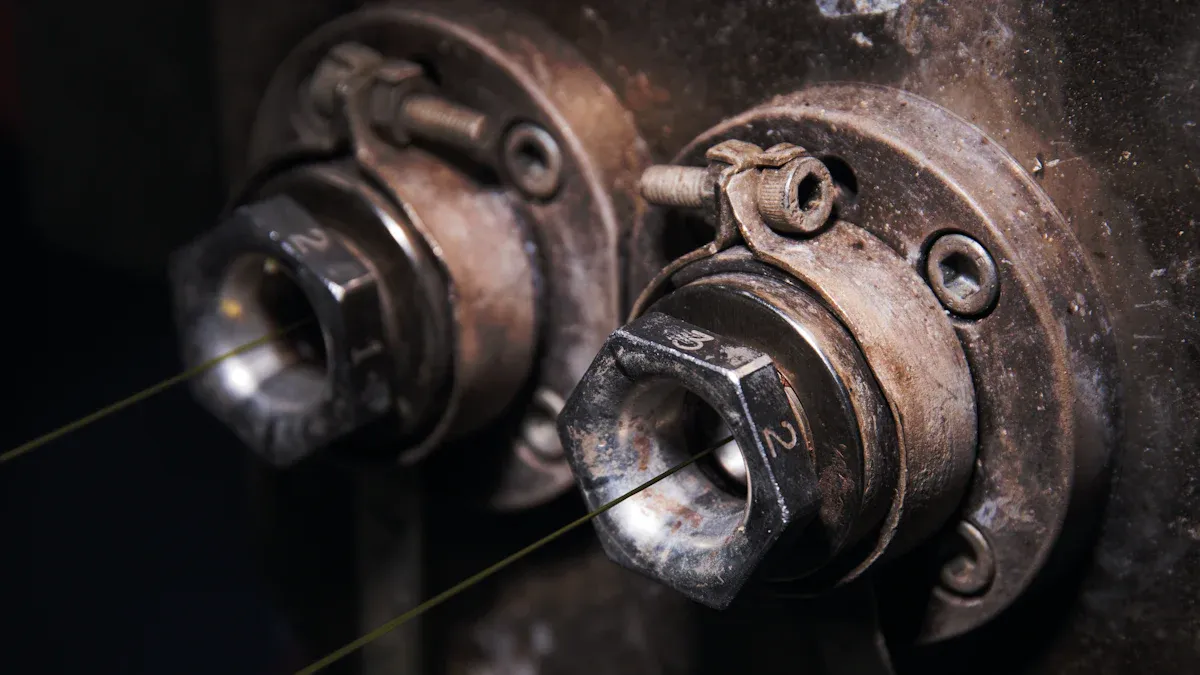
Aku tansah miwiti pilihan mesin extrusion dening mrikso desain meneng lan tong minyak. Geometri saka meneng nemtokake cara irit extruder nyawiji, nyampur, lan ngirim materi. Aku nyetel dawa-kanggo-diameter (L/D) rasio kanggo ngontrol wektu panggonan lan campuran. Rasio L / D sing luwih dhuwur ngidini materi bisa nyawiji lan nyampur kanthi luwih jero, sing penting kanggo entuk kualitas seragam ing produk pungkasan. Aku gumantung ing designs alangi ing tong minyak meneng kanggo njaga stabilitas nyawiji lan nyegah degradasi, utamané nalika aku proses bahan sensitif. Desain sekrup kembar lan tong minyak paralel muter peran kritis ing kacepetan extrusion, kualitas produk, lan efisiensi energi. Aku nggunakake zoning lan kontrol suhu sing tepat kanggo nyetabilake aliran leleh lan supaya gas kepepet, kang nambah Kapadhetan lan konsistensi. The surface finish of the barrel and the geometry of the screw also influence energy efficiency and product consistency. I always match the screw design to the specific requirements of the application to maximize performance.
- A higher L/D ratio improves mixing and melt uniformity, which is essential for high-quality products.
- Barrier designs help maintain melt stability and prevent degradation.
- Screw geometry and barrel surface finish impact energy efficiency and product consistency.
Material Movement and Mixing
I focus on efficient material movement and mixing to ensure the extrusion process runs smoothly. Aku nggunakake robust pneumatic or mechanical conveyors to transfer raw materials quickly and with minimal maintenance. Advanced mixer designs guarantee thorough and uniform compounding, which prevents variations in finished products. I integrate automated controls with PLC systems for real-time monitoring and recipe management. This approach allows me to oversee production seamlessly and adjust parameters as needed. I select scalable configurations to accommodate both small workshops and large industrial operations. Enhanced dust control features keep the workplace clean and safe. Konsisten, homogeneous blends reduce quality fluctuations and improve throughput. Automated systems minimize manual handling, which shortens production cycles and lowers labor costs. I always prioritize these features when I evaluate types of extrusion machines for new applications.
| Fitur | Katrangan |
|---|---|
| Efficient Material Transfer | Rapid, low-maintenance movement of raw materials |
| Precision Mixing | Thorough, uniform compounding for consistent quality |
| Kontrol otomatis | Real-time monitoring and recipe management |
| Scalable Configurations | Flexible layouts for any production capacity |
| Enhanced Dust Control | Cleaner, safer workplace |
| Improved Product Quality | Homogeneous blends, reduced fluctuations |
| Increased Throughput | Shorter production cycles, less manual handling |
| Ngurangi Sampah | Accurate measurement, biaya murah |
| Lower Labor Costs | Automation frees staff for value-added tasks |
| Safer Working Environment | Enclosed lines and dust control |
Process Control and Output Quality
I depend on advanced process control technology to maintain high output quality in extrusion manufacturing. I select high-quality thermoplastics to ensure the final products meet strength, kekiatan, and flexibility requirements. I monitor extrusion parameters closely to reduce discrepancies during production. Dimensional accuracy remains a top priority for me, as it guarantees that components fit their intended applications. I use surface inspection to detect defects such as warping or air bubbles, which helps me maintain consistent product quality. Early detection of issues reduces waste and saves on production costs. I always ensure that my process complies with regulatory standards, which protects both my business and my customers. High-quality products enhance my brand reputation and increase customer satisfaction. Advanced monitoring systems allow me to increase production speed without sacrificing accuracy, which boosts overall efficiency in complete extrusion systems.
| Element/Advantage | Katrangan |
|---|---|
| Pemilihan Bahan | Ensures strength, kekiatan, lan keluwesan |
| Proses ngawasi | Reduces discrepancies and maintains consistency |
| Akurasi dimensi | Guarantees proper fit for all applications |
| Inspeksi lumahing | Identifies defects early for better quality |
| Kualitas Produk Konsisten | Every batch meets high standards |
| Ngurangi Sampah | Saves material and production costs |
| Kepatuhan Regulasi | Meets legal and safety requirements |
| Kepuasan Pelanggan | Mbangun reputasi lan kasetyan |
| Efisiensi Proses | Nambah kacepetan nalika njaga akurasi |
Tip: Aku nyaranake kalibrasi biasa lan pangopènan kabeh teknologi extrusion kanggo nyonggo kinerja puncak lan kualitas konsisten.
Mbandhingake Proses Ekstrusi
Single-Screw vs. Proses Twin-Screw
Nalika aku mbandhingake single-screw lan twin-screw extruders, Aku fokus ing carane saben sistem nangani proses extrusion. Desain sekrup mbentuk cara gerakan materi lan campuran. A extruder siji-meneng nggunakake siji meneng helical nang prasaja, laras silinder. Ing kontras, kembar-meneng extruder fitur loro ngawut-awut intermeshing lan liyane Komplek, asring bagean laras. Aku weruh sing kontrol suhu ing sistem siji-meneng tetep dhasar, nalika mesin kembar-meneng nawakake kontrol majeng karo sawetara dadi panas lan cooling zona. Bentenane iki mengaruhi throughput lan efisiensi energi.
| Aspek | Tunggal Screw Extruder | Twin Screw Extruder |
|---|---|---|
| Desain Screw | Sekrup heliks tunggal | Loro sekrup intermeshing |
| Struktur Barel | Prasaja, silinder | Luwih kompleks, asring segmented |
| Kontrol suhu | Pemanasan / pendinginan dhasar | Majeng, multi-zona |
| Kapasitas Output | Moderate | dhuwur |
| Konsumsi Energi | Umume luwih dhuwur | Luwih efisien |
| Fleksibilitas ing Throughput | winates | dhuwur |
Aku gumantung ing extruders kembar-meneng kanggo output sing luwih dhuwur lan efisiensi energi sing luwih apik. Nalika aku butuh keluwesan ing throughput utawa kontrol proses majeng, Aku milih sistem twin-screw. Kanggo aplikasi langsung, extruders siji-meneng isih nyedhiyani kinerja dipercaya.
Kompatibilitas Material ing Proses Ekstrusi
Kompatibilitas materi nduweni peran penting ing pilihan mesin ekstrusi. Aku tansah cocog konfigurasi meneng kanggo jinis materi aku rencana kanggo proses. Ekstruder sekrup tunggal nangani termoplastik standar kanthi apik, nanging padha berjuang karo bahan sing mbutuhake campuran intensif utawa duwe isi ngisi dhuwur. Extruders twin-screw unggul karo senyawa khusus, plastik daur ulang, lan bahan reaktif. Aku nggunakake ngawut-awut segmented kanggo nyetel nyawiji lan shearing kanggo saben aplikasi.
Nalika aku nggarap sistem ekstrusi lengkap, I consider how each screw design affects the final product. Twin-screw extruders allow me to process a wider range of materials, including those with additives or sensitive properties. This flexibility supports more types of extrusion machines and expands the range of possible applications.
Tip: I recommend evaluating the chemical and physical properties of your raw materials before choosing an extruder. This step ensures compatibility and reduces the risk of defects.
Kualitas lan Konsistensi Produk
I know that the extrusion process directly impacts the quality of the finished product. Modern extrusion lines integrate automation and advanced control platforms. These systems analyze multiple variables at once, which helps me maintain consistent quality across every batch.
Quality consistency is a productivity multiplier. Advanced control platforms analyze patterns across multiple variables simultaneously, ensuring that product quality is maintained throughout the extrusion process.
I monitor key factors such as stable melt pressure, tingkat output, and surface finish. Stable melt pressure prevents warping and dimensional drift. Higher and more stable output reduces scrap rates and downtime. Better surface finish and precise dimensional control enhance the impact on the quality of the finished product.
| Faktor Kunci | Impact on Quality and Consistency |
|---|---|
| Stable melt pressure | Prevents dimensions from drifting or warping |
| Higher and more stable output | Reduces scrap rates and downtime |
| Better surface finish | Enhances overall product quality |
| Kontrol dimensi | Ensures precision in final product specifications |
| Faster ROI | Improves profitability for manufacturers |
Nalika mbandhingake twin screw vs single screw extruders, I see that twin-screw systems deliver better consistency and lower operational cost. I achieve faster ROI and improved performance by investing in advanced extrusion technology. I always prioritize process monitoring and automation to ensure high quality and efficiency in production.
- Higher and more stable output
- Lower scrap and downtime
- Better surface finish and dimensional control
- Reduced operational cost
- Faster ROI
I rely on these strategies to maximize the benefits of extrusion and deliver products that meet strict manufacturing standards.
Performance Comparison Table
Throughput lan Efisiensi
I always evaluate throughput and efficiency when I compare types of extrusion machines. Throughput measures how much material the extruder processes in a given time. Efficiency reflects how well the screw design converts raw material into finished products with minimal waste and energy use. I see that single-screw extruders often deliver steady throughput for standard polymers. Twin-meneng extruders, with their advanced screw geometry, handle higher output and maintain better energy efficiency, especially for complex blends.
| Tipe Extruder | Throughput (kg/jam) | Efisiensi Energi | Kasus Gunakake Paling apik |
|---|---|---|---|
| Single-Screw | 50–500 | Moderate | Volume dhuwur, simple polymers |
| Twin-Screw | 100–1000+ | dhuwur | Complex blends, specialty jobs |
| Ram Extruder Kab | 10–100 | Low–Moderate | PTFE, keramik, khusus |
| Sistem Co-Extrusion | beda-beda | dhuwur | Multi-layered profiles |
I always match the screw configuration to the material and production requirements. This approach ensures the process delivers consistent quality and meets manufacturing goals. I rely on complete extrusion systems to maximize throughput and efficiency for every application.
Tip: I recommend monitoring energy consumption and output rates regularly. This practice helps optimize extrusion machine selection and reduces operational costs.
Maintenance and Reliability
I prioritize maintenance and reliability when I select an extruder. The screw and barrel experience constant wear from abrasive materials and high temperatures. I schedule routine inspections and replace worn components to prevent unexpected downtime. Single-screw extruders require less maintenance due to their simple design. Twin-meneng extruders, with more moving parts and segmented screws, need more frequent checks but offer greater flexibility.
| Tipe Extruder | Kabutuhan Pangopènan | Reliability Level | Common Issues |
|---|---|---|---|
| Single-Screw | Low–Moderate | dhuwur | Occasional screw wear |
| Twin-Screw | Moderate-Dhuwur | dhuwur | Segment wear, seal failure |
| Ram Extruder Kab | Moderate | Moderate | Hydraulic leaks, die wear |
| Sistem Co-Extrusion | dhuwur (multi-screw) | dhuwur | Synchronization, screw wear |
I use advanced monitoring systems to track screw wear and process stability. This strategy improves reliability and extends the life of my extrusion technology. I always keep spare screws and barrels on hand to minimize downtime during maintenance.
Product Complexity and Flexibility
I value design flexibility in extrusion. The ability to customize the screw and die allows me to create complex profiles for a wide range of applications. I use extrusion to manufacture everything from simple plastic tubing to intricate window frames. I can add reinforcements or special features within the continuous material, which expands my product offerings.
| Aspek | Katrangan |
|---|---|
| Fleksibilitas Desain | Extrusion allows for significant design flexibility through die customization, enabling complex profiles. |
| Aplikasi | Suitable for various applications, including intricate window frames and simple plastic tubing. |
| Kustomisasi | Manufacturers can include reinforcements or additional features within the continuous material. |
- In MedTech, I must achieve tight tolerances for medical devices.
- I ensure biocompatibility for all medical extrusion products.
- I monitor wall thickness closely, since it affects flow rates and structural strength.
I select the screw configuration and extrusion machine based on the complexity of the design and the required tolerances. This approach guarantees high quality and supports advanced manufacturing needs.
Cathetan: I recommend consulting with extrusion experts when planning new product designs. Their experience helps avoid costly mistakes and ensures the right screw and process configuration.
Application Suitability in Manufacturing
High-Volume Manufacturing
I always start my extrusion machine selection by considering the demands of high-volume manufacturing. When I need to produce thousands of units per day, I rely on single-screw extruders. These machines deliver steady throughput and maintain consistent quality. The screw design in single-screw extruders allows me to process standard polymers efficiently. I monitor the process closely to ensure uniform melt and minimize defects. I select the right screw diameter and length to match the production requirements. This approach helps me achieve high efficiency and reduce waste. I use automated controls to track output and maintain quality standards. High-volume applications benefit from robust types of extrusion machines that can operate continuously with minimal downtime. I always keep spare screws and barrels ready to avoid interruptions in production.
Tip: I recommend scheduling regular maintenance for extruders used in high-volume manufacturing. This practice extends the life of the screw and ensures reliable performance.
Complex Product Manufacturing
When I manufacture complex or multi-component products, I turn to advanced extrusion technology. Twin-screw extruders give me greater control over mixing and material distribution. I use segmented screws to adjust shear and optimize the process for each application. Co-extrusion technology enables me to combine different polymers into multi-layer films and pipes. This method improves barrier properties and enhances strength, keluwesan, lan tahan kimia.
| Teknologi | keuntungan |
|---|---|
| Co-ekstrusi | Enables the creation of multi-layer films and pipes with improved barrier properties, combining different polymers for strength, keluwesan, lan tahan kimia. |
I select the screw configuration based on the complexity of the product. For intricate designs, I rely on precise tooling and advanced process monitoring. I always test the extruder setup before full-scale production to ensure quality and performance. Complex applications require careful extrusion machine selection and attention to detail.
Specialty Materials and Customization
I often work with specialty materials that demand custom solutions. I use advanced shaping processes, such as sheet extrusion and thermoforming, to control material characteristics. Sheet extrusion gives me the ability to manage thickness and material distribution with high accuracy. Co-extrusion capabilities allow me to create multi-layer constructions that enhance material properties. I integrate downstream shaping processes to ensure consistent performance in finished components. Engineering services help me optimize component designs and select the best materials for specific applications.
- Advanced shaping processes, such as sheet extrusion and thermoforming, allow for precise control over material characteristics.
- Sheet extrusion provides a foundation for custom material solutions, enabling thickness control and material distribution accuracy.
- Co-extrusion capabilities facilitate the creation of multi-layer constructions, enhancing material properties.
- Integration with downstream shaping processes ensures consistent performance characteristics in finished components.
- Engineering services optimize component designs and material selection, ensuring suitability for specific applications.
I always match the screw design to the requirements of specialty materials. Customization in extrusion depends on selecting the right extruder and process parameters. I monitor quality at every stage to deliver products that meet strict standards. Specialty applications benefit from flexible types of extrusion machines and expert guidance.
Cathetan: I recommend consulting with extrusion specialists when working with new materials or custom designs. Their expertise helps achieve the desired quality and performance.
Selection Criteria for Extrusion Systems
Product Design and Complexity
I always start my extrusion machine selection by analyzing the product design and complexity. The geometry of the profile influences the choice of extruder and screw configuration. Complex shapes increase tooling costs and create production challenges. I simplify profile geometry whenever possible to enhance material flow and reduce defects. Smooth transitions in the design prevent disruptions in material flow, which is crucial for consistent extrusion quality. I select the right material early in the process because material choice affects both the properties of the part and the ease of extrusion. This decision impacts manufacturability and overall performance.
- Simplifying profile geometry lowers tooling costs and reduces production challenges.
- Designing for material flow ensures consistent extrusion quality and minimizes defects.
- Choosing the right material early improves manufacturability and product performance.
I match the screw design to the complexity of the product. For intricate profiles, I use advanced screw configurations that optimize mixing and material transport. I rely on precise tooling and process monitoring to maintain high quality. When I work with complex applications, I consult with extrusion technology experts to avoid costly mistakes and ensure the best results.
Tip: I recommend reviewing the profile geometry and material flow before finalizing the extrusion machine selection. This step helps prevent production issues and supports efficient manufacturing.
Sifat Material
Material properties play a critical role in selecting the right extruder and screw configuration. I identify application requirements such as temperature resistance, paparan UV, and impact durability. I consider mechanical properties like flexibility, atose, and tensile strength for the intended use. Environmental conditions influence my material choice, especially when I need weathering resistance or flexibility in cold environments. I evaluate aesthetic and finish requirements, kalebu werna, kinclong, lan tekstur permukaan, based on project needs. Regulatory and compliance needs guide my selection to ensure materials meet industry-specific standards and certifications.
- Application requirements determine the need for temperature resistance, paparan UV, and impact durability.
- Mechanical properties such as flexibility, atose, and tensile strength affect the choice of extruder and screw.
- Environmental conditions require materials that withstand weathering or remain flexible in cold climates.
- Aesthetic and finish requirements influence color, kinclong, lan tekstur permukaan.
- Regulatory and compliance needs ensure materials meet industry standards.
I select the screw design based on the material’s properties. For heat-sensitive materials, I use screws with gentle mixing zones and precise temperature control. When processing tough or abrasive compounds, I choose robust screw geometries that withstand wear and maintain efficiency. I always test materials in pilot runs to verify compatibility with the extruder and ensure consistent quality.
Cathetan: I recommend consulting material datasheets and industry standards before choosing an extruder. This practice helps match material properties to the extrusion process and supports reliable performance.
Production Volume and Scale
Production volume and scale influence the cost-effectiveness of extrusion machine selection. Higher production volumes reduce unit costs because tooling expenses are spread over more parts. In the prototype stage, tooling costs are high compared to the quantity produced. In mass production, die costs are amortized over larger volumes, leading to lower costs per unit. Contone, a die costing $2,000 with a lifetime of 40,000 kg results in a cost of $0.05 per kg when amortized.
- Higher production volumes lower unit costs by spreading tooling expenses.
- Prototype stages have high tooling costs relative to the number of parts produced.
- Mass production allows die costs to be distributed over larger volumes, reducing per-unit costs.
- Example: A die costing $2,000 with a lifetime of 40,000 kg results in a cost of $0.05 per kg.
I select the extruder and screw configuration based on the expected production volume. For high-volume manufacturing, I use robust types of extrusion machines that deliver steady throughput and maintain efficiency. In low-volume or prototype applications, I prioritize flexibility and rapid changeover. I monitor production rates and adjust screw parameters to optimize output and quality.
Tip: I recommend calculating the amortized tooling cost before committing to a production scale. Langkah iki mbantu nemtokake teknologi ekstrusi sing paling larang lan ndhukung tujuan manufaktur jangka panjang.
Pertimbangan Teknis lan Anggaran
Aku tansah nyedhaki pilihan mesin extrusion kanthi fokus sing jelas babagan syarat teknis lan watesan anggaran. Pengalamanku ngandhani yen investasi ing teknologi ekstrusi canggih mbutuhake perencanaan sing ati-ati. Aku ngevaluasi saben aspek saka sistem, saka desain meneng kanggo kontrol proses, kanggo njamin efektifitas biaya lan kinerja sing dipercaya.
Aku miwiti kanthi nganalisa spesifikasi teknis saka extruder. Aku ndeleng geometri meneng, dawa laras, lan kompatibilitas karo macem-macem jinis mesin extrusion. Aku milih meneng sing cocog karo sifat materi lan kerumitan aplikasi. I check if the extruder can handle the desired throughput and maintain consistent quality. I also assess the integration of feeders, pengontrol suhu, lan peralatan hilir. System integration plays a crucial role in maximizing efficiency and avoiding bottlenecks in production.
Budget considerations influence every decision I make. I break down the costs into several categories to understand the financial impact. I use the following table to guide my investment strategy:
| Budget Consideration | Katrangan | Financial Impact / Benefit Example |
|---|---|---|
| Efisiensi Energi | Reducing energy consumption by upgrading control systems or screws | 33% energy reduction saves nearly $100,000 annually on $288,000 energy cost |
| Scrap Reduction | Lowering scrap rate from 15% kanggo 5% through data acquisition and process control | Saves $200,000 monthly or $2.4 million yearly in materials, tenaga kerja, and energy costs |
| Throughput Increase | Upgrading to twin-screw extruder increases throughput by 30% | Generates $600,000 additional monthly revenue with >50% incremental profit margin |
| Maintenance Cost Reduction | Predictive maintenance and condition monitoring reduce emergency repairs and downtime | Maintenance costs drop 20-30%, equipment availability increases |
| System Integration | Budgeting for compatible feeders, pengontrol suhu, lan peralatan hilir | Partial upgrades capture only ~40% of potential benefits |
| Pelatihan Operator | Training on material characteristics, mesin, instrumentation, lan kontrol | Essential to fully realize technology benefits; lack wastes investment |
| Data Acquisition Infrastructure | Adequate sensors and analytics software needed for optimization | Insufficient infrastructure limits optimization; too many sensors without analytics causes overload |
| Downstream Constraints | Ensuring cutting, pambungkus, and inspection keep pace with increased extruder output | Bottlenecks reduce overall system benefit |
I prioritize energy efficiency when selecting an extruder. Upgrading control systems or optimizing screw design can reduce energy consumption by up to 33%. This improvement saves nearly $100,000 each year on a typical $288,000 energy bill. I also focus on scrap reduction. By implementing advanced process control and data acquisition, I lower scrap rates from 15% kanggo 5%. This change saves $200,000 every month in materials, tenaga kerja, and energy costs.
Increasing throughput is another key goal. Upgrading to a twin-screw extruder boosts output by 30%. This increase generates $600,000 in additional monthly revenue, with more than a 50% incremental profit margin. I invest in predictive maintenance and condition monitoring to reduce emergency repairs and downtime. Maintenance costs drop by 20-30%, and equipment availability improves.
System integration is essential for maximizing the benefits of extrusion technology. I budget for compatible feeders, pengontrol suhu, lan peralatan hilir. Partial upgrades capture only about 40% of the potential benefits. Operator training is critical. I ensure my team understands material characteristics, mesin, instrumentation, lan kontrol. Without proper training, the investment in advanced extrusion technology goes to waste.
I invest in data acquisition infrastructure. Adequate sensors and analytics software optimize the process. Insufficient infrastructure limits optimization, while too many sensors without analytics cause information overload. I address downstream constraints by ensuring cutting, pambungkus, and inspection keep pace with increased extruder output. Bottlenecks in these areas reduce the overall benefit of the system.
I always balance technical requirements with budget limitations. I select a screw that delivers high quality and efficiency without exceeding my financial resources. I plan for future upgrades and modular expansion to support changing production needs. I monitor every aspect of the extrusion process to maintain cost-effectiveness and reliable performance.
Tip: I recommend creating a detailed budget plan before investing in new extrusion technology. Include energy costs, pangopènan, pelatihan operator, and system integration. This approach ensures that the extruder delivers maximum value and supports long-term manufacturing goals.
Actionable Insights for Manufacturers
Matching System to Application
I always match the extrusion system to the specific application. aku optimize material use to balance strength and lightweight design. I define critical dimensional tolerances early, which ensures parts fit and function as intended. I design for manufacturability, making sure shapes can be extruded consistently and cost-effectively. I select aluminum alloys based on application needs, such as strength and corrosion resistance. I simplify designs to reduce costs, avoiding unnecessary complexity in profiles. I prototype and test early, which helps me identify potential challenges before full production. These steps help me achieve high quality and reliable performance in every extrusion process.
- Optimize material use for strength and lightweight design.
- Define critical dimensional tolerances early.
- Design for manufacturability.
- Select appropriate aluminum alloys for application needs.
- Simplify designs to reduce costs.
- Prototype and test early.
I always consider the key components of an extruder, such as screw geometry and barrel design, to ensure the system meets production requirements. I review different types of extruder machines to find the best fit for my applications in ekstrusi plastik. This approach supports scalability and maintains quality control throughout manufacturing.
Common Selection Mistakes
I have seen many manufacturers make mistakes during extrusion machine selection. Inadequate material blending often leads to product imperfections and increased costs from reprocessing. Outdated or incompatible control systems cause integration issues and inefficiencies. Inconsistent feed rates disrupt the extrusion process, resulting in product variabilities and higher scrap rates. Neglecting preventive maintenance allows minor mechanical issues to escalate into major production problems, affecting revenue. Ignoring operator training leads to misconfigurations and missed optimization opportunities.
- Inadequate material blending increases costs and reduces quality.
- Outdated control systems cause inefficiencies.
- Inconsistent feed rates disrupt the extrusion process.
- Neglecting preventive maintenance leads to major production problems.
- Ignoring operator training results in missed optimization.
I always monitor screw wear and maintain the extruder regularly. I invest in operator training to maximize efficiency and quality. I avoid these mistakes by focusing on process stability and performance.
Future Trends in Extrusion Technology
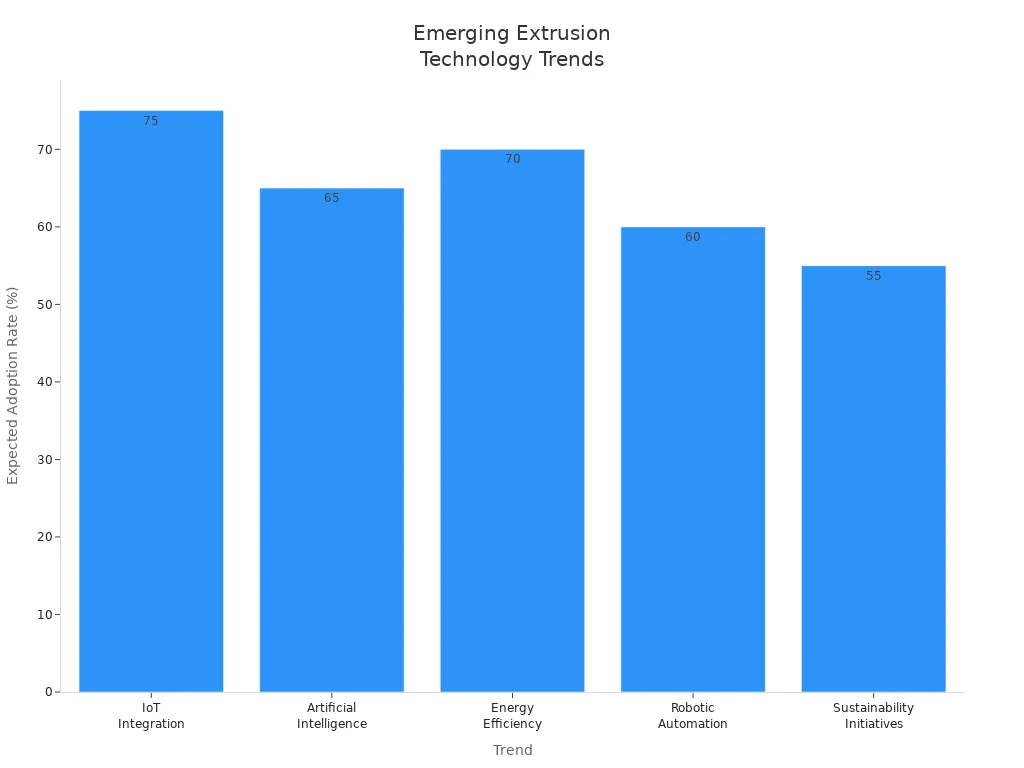
I see rapid changes in extrusion technology shaping the future of manufacturing. IoT integration allows real-time monitoring and analytics, ningkatake efisiensi. Artificial intelligence supports predictive maintenance and optimization, which boosts performance. Energy efficiency is a growing focus, with manufacturers seeking ways to reduce consumption in the extrusion process. Robotic automation streamlines material handling and quality control. Sustainability initiatives drive the use of recycled materials and eco-friendly processes.
| Tren | Katrangan | Dampak ing Efisiensi | Tingkat Adoption sing Dikarepake (%) |
|---|---|---|---|
| Integrasi IoT | Ngawasi lan analytics wektu nyata | dhuwur | 75% |
| Artificial Intelligence | Pangopènan prediktif lan optimalisasi | Dhuwur Banget | 65% |
| Efisiensi Energi | Reducing energy consumption | Sedheng | 70% |
| Otomasi Robot | Penanganan material lan kontrol kualitas | dhuwur | 60% |
| Inisiatif Kelestarian | Bahan daur ulang lan proses sing ramah lingkungan | Sedheng | 55% |
I notice advancements in material compatibility, especially with bioplastics, are transforming the extrusion industry. Many manufacturers now prioritize flexibility in equipment design, with modular systems allowing easy upgrades and modifications. Sustainability is essential, with most manufacturers focusing on energy-efficient equipment and waste reduction strategies. Smart extrusion machines reduce downtime by 20%, which improves overall efficiency and quality control. I always stay updated on these trends to maintain high performance and support new applications in plastic extrusion.
Tip: I recommend reviewing the overview of extruder machines in manufacturing regularly. Staying informed about new types of extrusion machines and screw designs helps me adapt to changing production needs and maintain scalability.
I recognize that each extrusion system offers unique advantages and limitations. My experience shows that single-screw extruders excel in high-volume production, while twin-screw systems provide superior mixing and flexibility. Ram and co-extrusion machines support specialty applications. I always use comparison tables and selection criteria to evaluate:
- Technical capabilities and long-term reliability
- Customer service and design assistance
- Quality standards and energy efficiency
I recommend manufacturers understand their application needs and consult extrusion experts for optimal results.
FAQ
Apa prabédan utama antarane extruders siji-meneng lan kembar-meneng?
I see that single-screw extruders use one rotating screw for basic mixing. Twin-screw extruders use two screws for advanced mixing and better control. I choose twin-screw systems for complex materials and higher flexibility.
How do I decide which extrusion system fits my application?
I start by reviewing my material type, volume produksi, and product complexity. I match these needs to the strengths of each system. I consult with experts if I face unique requirements.
Can I process recycled materials with extrusion systems?
I process recycled materials using twin-screw extruders. These machines handle variable feedstocks and additives better than single-screw systems. I monitor quality closely to ensure consistent results.
How often should I perform maintenance on my extruder?
I schedule routine inspections every month. I check for screw wear, barrel condition, and control system performance. Regular maintenance prevents downtime and extends equipment life.
What are the most common extrusion defects I encounter?
I often see surface roughness, drift dimensi, and melt fractures. I address these by adjusting temperature, kacepetan meneng, and material feed. I use process monitoring to catch issues early.
Is co-extrusion suitable for all materials?
I use co-extrusion mainly for thermoplastics. Some materials may not bond well in multi-layer profiles. I test material compatibility before starting production.
How does automation improve extrusion quality?
I rely on automation for real-time monitoring and precise control. Automated systems reduce human error, maintain consistent output, and improve overall product quality.
What safety measures do I follow during extrusion?
I wear protective gear and follow lockout procedures. I keep the work area clean and check emergency stops regularly. I train my team on safe operation and emergency response.