

Belangrijkste afhaalrestaurants
- Voordat ik een machine evalueer, Ik baseerde mijn inkoop op wat masterbatch eigenlijk is: een geconcentreerd mengsel van pigmenten of additieven, onder hoge belasting gedispergeerd in een compatibele dragerhars, vervolgens geëxtrudeerd, gekoeld, en gepelletiseerd tot korrels (Ampacet Corporation, 2024; Kunststof technologie, 2023). Door deze productiefysica te begrijpen, kan ik beoordelen of een extruder de juiste pigmentdispersie kan leveren.
- Machinetype drijft alles stroomafwaarts aan. In mijn ervaring, een meedraaiende dubbelschroefsextruder is het werkpaard voor kleurmasterbatch en additieve masterbatch vanwege de hoge afschuifmenging, terwijl conische dubbelschroefs- en enkelschroefsextruders smallere rollen of rollen met een lagere doorvoer bedienen. Zorg ervoor dat de schroefgeometrie overeenkomt met het product voordat u de prijzen vergelijkt.
- Groothandelsprijzen bestrijken een breed bereik, en ik traceer altijd de chauffeurs. Dubbelschroefsextruders op laboratoriumschaal beginnen ongeveer $9,900 per setje (25mm schroefdiameter, 7.5kW-motor, 50kg/u), terwijl de productie-masterbatch-dubbelschroefextruders dichtbij zijn $42,000 per stuk (Made-in-China.com, 2026). Schroefdiameter, motorvermogen in kW, en geconfigureerde doorvoer verklaren het grootste deel van die kloof.
- Specificaties betekenen alleen iets in de context. Voor een CaCO3-filler-masterbatch- of high-filler-masterbatchlijn, Ik sta op vacuümontgassing, een robuuste schermwisselaar, een smeltpomp voor outputstabiliteit, en een zijinvoer voor hoge belading. Een specificatieblad zonder deze vertelt mij dat de lijn voor een andere toepassing werd geciteerd.
- Het doorlichten van leveranciers beschermt de aankoop meer dan de prijs. Ik geef prioriteit aan geverifieerde leverancierssignalen, zoals jaren in bedrijf, kopersbeoordelingen, en bestelpercentage. Eén benchmarkvoorbeeld laat dit zien 16 jarenlange ervaring, A 5.0/5.0 beoordeling, en een 25% bestelpercentage (Made-in-China.com, Zhangjiagang vriend machines, 2026). Genoemde fabrikanten zoals Coperion, Leistritz, Milacron, KraussMaffei, en JSW verankeren het premiumniveau (UDTECH, 2025).
- De markt is diep maar luidruchtig. Met voorbij 74,746 groothandel in aanbiedingen van gebruikte dubbelschroefsextruders op één platform (Made-in-China.com, 2026), Ik behandel volume als een filterprobleem, geen selectiesnelkoppeling, en ik decodeer de specificaties van elke aanbieding op basis van mijn samengestelde vereisten in plaats van te vertrouwen op de kopprijzen.
- In de VS gevestigde kopers moeten vroegtijdig hun handelslogistiek plannen. Ik bouw HS Code-classificatie, invoerrechten, en vracht in het landed-cost-model, en ik houd rekening met de realiteit dat masterbatch-apparatuur en -inventaris langere doorlooptijden en een grotere opslagvoetafdruk kunnen hebben dan ruwe pigmenten (Kunststof technologie, 2023).
- Voor de meeste B2B-activiteiten is een volledige extrusielijn beter dan een stand-alone machine. Leveranciers zoals Haisi Extrusie bieden TSE/TSH co-roterende lijnen aan, gebundeld met vul- en high-filler masterbatch-systemen plus hulpapparatuur (Haisi-extrusieapparatuur, 2024), wat de integratie van de pelletiseermachine vereenvoudigt, granulator, en het voeden van systemen in één inbedrijfstelling.
- Ik behandel MOQ, prijzen voor bulkbestellingen, en after-salesondersteuning als onderhandelbare voorwaarden, geen vaste beperkingen. Groothandelprogramma's bedienen steeds meer iedereen, van kleine werkplaatsen tot grote industriële ondernemingen (Exintell-machines, 2024), dus ik vraag direct naar de minimale hoeveelheden, beschikbaarheid van reserveonderdelen, en installatieondersteuning voordat u zich vastlegt.
Wat is een Masterbatch-machine en waarom dit belangrijk is voor groothandelskopers
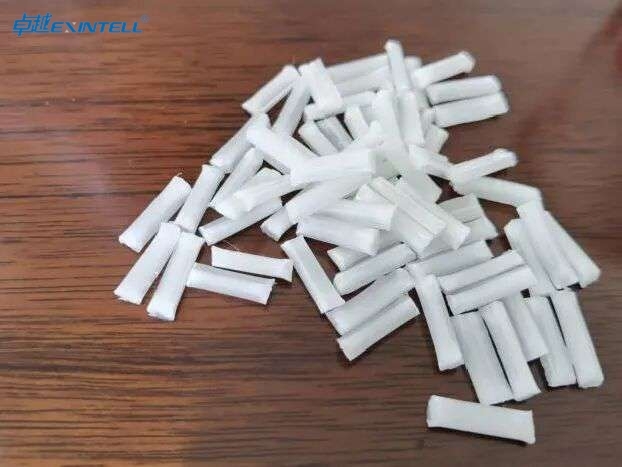
Als ik inkoopteams door hun eerste aankoop van kunststofmengsels begeleid, Ik begin altijd met het product en vóór de machine. Masterbatch is een geconcentreerd mengsel van pigmenten en/of additieven, gemengd en samen geëxtrudeerd in een dragermatrix zoals hars of was (Wikipedia, 2024). Ampacet Corporation beschrijft het nauwkeuriger als een vast product waarin pigmenten of additieven optimaal in hoge concentraties zijn gedispergeerd in een dragermateriaal dat compatibel is met de belangrijkste kunststof (Ampacet Corporation, 2024). In de praktijk, een masterbatchmachine is de extrusielijn die pigmentpoeder losmaakt, additieven, en ruwe polymeerdrager in die uniform, kant-en-klare korrels.

Wat is het doel van Masterbatch?
Het doel van masterbatch is om op een gecontroleerde manier kleur- en functionele eigenschappen aan plastic toe te voegen, herhaalbaar, en schone manier. In plaats van rommelig ruw pigmentpoeder op de productievloer te hanteren, een processor doseert een klein percentage masterbatch in de basishars tijdens het vormen of extruderen. Dit lost drie problemen tegelijk op: het vergrendelt consistente kleuren van batch tot batch, het beschermt werknemers en apparatuur tegen stof in de lucht, en het zorgt ervoor dat een converter snel van product kan wisselen zonder de ruwe formuleringen opnieuw te kalibreren. In mijn ervaring, dat doseergemak is precies de reden waarom masterbatch de standaard drager werd voor pigmentdispersie en additievenlevering in de kunststofindustrie.
De rol van de machine: Compounderen en pelletiseren met hoge afschuiving
Een machine voor het maken van masterbatch doet het zware werk dat het doseren van grondstoffen niet kan. Het maakt gebruik van high-shear-menging in een extrudervat om pigmentdeeltjes uit elkaar te duwen en gelijkmatig door een gesmolten polymeerdrager te verdelen, vervolgens koelt het af en snijdt het gesmolten materiaal via een pelletiseermachine tot afgewerkte pellets. De kern van de meeste moderne lijnen is een meedraaiende dubbelschroefsextruder, gewaardeerd om zijn intens, regelbare afschuiving en modulair schroefontwerp. U zult nog steeds enkelschroefsextruders tegenkomen bij eenvoudiger plamuurwerkzaamheden en conische dubbelschroefsextruders bij bepaalde toepassingen van hard PVC, maar voor geconcentreerd kleur- en additief werk, de meedraaiende dubbele schroef is het werkpaard dat ik de meeste kopers aanbeveel.
Waarom bulkkopers machines kopen in plaats van grondstoffen samen te stellen
Dit is de afweging die de inkoopbeslissing in de groothandel aanstuurt. Het kopen van afgewerkte masterbatch bij een masterbatchfabrikant is eenvoudig, maar het brengt verborgen kosten met zich mee: vergeleken met pure pigmenten, masterbatches hebben extra opslagruimte en langere doorlooptijden nodig (Kunststof technologie, 2023). Voor een converter die grote volumes of eigen kleurrecepten gebruikt, het bezitten van de extrusielijn neemt die afhankelijkheid weg. Het brengt formulering in eigen huis, verlaagt de kosten per kilogram in de loop van de tijd, en beschermt intellectueel eigendom in aangepaste kleur- en additiefmengsels. Daarom zie ik een groeiende vraag naar een Masterbatch Machine Wholesale-leveranciersrelatie in plaats van herhaalde aankopen van afgewerkte pellets.
De markt weerspiegelt die verschuiving. Alleen al Made-in-China.com vermeldt er meer dan 74,746 groothandel gebruikte dubbelschroefsextruderproducten (Made-in-China.com, 2026), en beginnende lab-extruders met dubbele schroef $9,900 per set met een schroefdiameter van 25 mm, 7.5kW-motor, en een output van 50 kg/u, terwijl masterbatch-dubbelschroefextruders van productiekwaliteit ruwweg werken $42,000 per stuk (Made-in-China.com, 2026). Deze niveaus begrijpen, en weten wat de ene leverancier van kunststofextruders onderscheidt van de andere, is van cruciaal belang voor elke B2B-koper die een beslissing neemt over compoundapparatuur (B2B-gids voor leverancier van kunststofextruders, 2024). Ik zal in deze handleiding voortbouwen op die context.
Hoe een masterbatch-maakmachine werkt: Het compoundeerproces
Zodra kopers begrijpen wat ze produceren, de samenstellingsvolgorde wordt veel gemakkelijker te evalueren op een specificatieblad. Masterbatch wordt geproduceerd door kleuren en additieven in een polymeerdrager te verdelen met behulp van een high-shear mengextruder, daarna afkoelen, snijden, en het vormen tot korrels via een pelletiseermachine (Kunststof technologie, 2023). Ik verdeel die stroom in vier fasen, omdat ze allemaal betrekking hebben op een component waarover u zult onderhandelen wanneer u ze koopt.
Fase 1: Voeden, Smeltend, en High-Shear-menging
Het proces begint bij de invoerkeel, waar dragerhars, pigment, en additieven komen in het vat. Gravimetrische of volumetrische feeders doseren de ingrediënten, en een zijtoevoer introduceert vaak warmtegevoelige additieven of hoge hoeveelheden vulmiddel stroomafwaarts, weg van de oorspronkelijke smeltzone. Binnen in het vat, roterende schroeven combineren mechanische afschuiving met vatverwarming om het polymeer te smelten en de vaste stoffen in de smelt te verwerken. Dit is waar de schroefgeometrie zijn brood verdient: hoe agressiever de mengelementen, hoe fijner de spreiding.
Fase 2: Homogene dispersie in het polymeer
Dispersie is de make-or-break-fase voor kwaliteit. Het doel is om pigmentagglomeraten af te breken en elk deeltje gelijkmatig door de smelt te verdelen, zodat het eindproduct plastic gelijkmatig kleurt bij een lage dosering. Zwakke spreiding komt later tot uiting in de vorm van strepen, vlekjes, of inconsistente tintsterkte. In mijn ervaring, dit is de belangrijkste reden om een meedraaiende extruder met dubbele schroef te specificeren voor kleurwerk, omdat de in elkaar grijpende schroeven het duurzame leveren, controleerbare afschuiving die pigmentdispersie vereist.
Fase 3: Koeling, Snijden, en pelletiseren
Nadat de smelt de matrijs verlaat, het moet worden gestold en tot korrels worden vermalen. Twee veelgebruikte methoden domineren. Het pelletiseren van strengen trekt de smelt door een waterbad en in een snijder die gekoelde strengen in uniforme pellets hakt, terwijl het pelletiseren onder water aan het matrijsvlak snijdt voor een hogere doorvoer. Hoe dan ook, de plastic granulator of plastic pelletiseermachine aan het einde van de lijn definieert de pelletvorm, samenhang, en hoe schoon het product later doseert.
Fase 4: Vacuüm ontgassen, Smeltpompen, en schermwisselaars
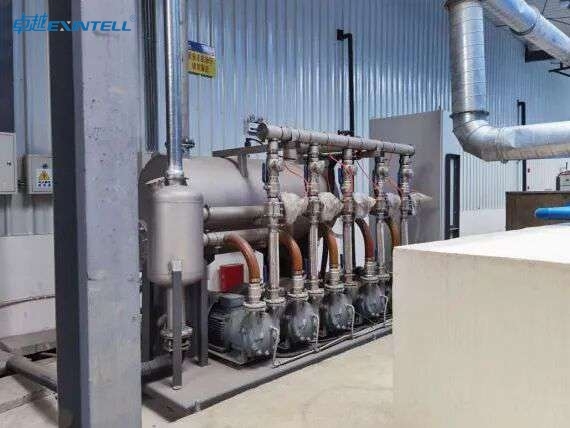
De hulpcomponenten scheiden een adequate lijn van een uitstekende lijn. Door vacuümontgassing worden vocht en vluchtige stoffen uit de smelt onttrokken, wat holtes en oppervlaktedefecten in de pellet voorkomt. Een smeltpomp stabiliseert de druk bij de matrijs, het egaliseren van de doorvoer en het verbeteren van de dimensionale consistentie van de pellets. Een zeefwisselaar filtert verontreinigingen uit de smelt zonder de productie te stoppen. Als ik offertes vergelijk, Ik behandel deze drie items als vermenigvuldigers van de uitvoerkwaliteit en niet als optionele extra's, omdat ze rechtstreeks van invloed zijn op de opbrengst en kwaliteit van wat de granulatie-extruder produceert.
Soorten masterbatch en de machines die ze produceren
Niet elke masterbatch-extrusielijn is gebouwd voor dezelfde taak. De formulering die u wilt gebruiken, moet bepalen welke machine u aanschaft, en door deze twee beslissingen in een vroeg stadium op elkaar af te stemmen, worden kopers later een dure herconfiguratie bespaard. In grote lijnen, Ik groepeer de markt in drie productiecategorieën: kleur, additief, en vulmiddel. Leveranciers zoals Haisi Extrusie verpakken deze als afzonderlijke productfamilies, het aanbieden van co-roterende dubbelschroefsextruders uit de TSE/TSH-serie naast vulmiddel, kleur, en high-filler masterbatch-extrusielijnen plus hulpapparatuur (Haisi-extrusieapparatuur, 2024).
Kleurenmasterbatchmachines voor pigmentconcentratie
Kleurmasterbatchmachines zijn ontworpen voor maximale pigmentdispersie. Omdat de tintsterkte en kleurconsistentie afhankelijk zijn van hoe fijn het pigment is verdeeld, deze lijnen benadrukken schroefconfiguraties met hoge afschuiving en nauwkeurige temperatuurregeling. Dit is de categorie waarin ik kopers het meest consequent in de richting van een meedraaiende dubbelschroefsextruder stuur, omdat kleurafwijzingen duur zijn en de dispersiekwaliteit niet onderhandelbaar is.
Additieve masterbatchmachines voor functionele eigenschappen
Additieve masterbatchmachines leveren functionele prestaties in plaats van kleur. Ze samengestelde UV-stabilisatoren, vlamvertragers, antistatische middelen, en vergelijkbare additieven tot een dragerhars, zodat verwerkers op verzoek specifieke eigenschappen kunnen doseren. Veel van deze additieven zijn hittegevoelig, waardoor de stroomafwaartse plaatsing van de zijfeeder zacht is, gecontroleerde afschuiving belangrijke ontwerpoverwegingen. Het schroefontwerp ruilt hier vaak wat agressie in voor thermische controle om het actieve ingrediënt te beschermen.
Filler Masterbatch-machines en High-Filler-lijnen
Filler masterbatch-machines zijn gebouwd rond kostenreductie. CaCO3-vuller masterbatch vervangt een deel van het nieuwe polymeer door calciumcarbonaat, het verlagen van de materiaalkosten en het verbeteren van bepaalde mechanische en printeigenschappen. Deze lijnen moeten zeer hoge vaste belastingen aan, daarom zijn ze sterk afhankelijk van robuuste zijaanvoer en slijtvaste vaten. Masterbatch-lijnen met een hoog vulvermogen zorgen voor een nog hogere belasting voor gespecialiseerde toepassingen en vereisen de stevigste configuraties. Leveranciers die groothandelsdiensten voor filler-masterbatchmachines aanbieden, melden dat ze kopers van kleinschalige werkplaatsen tot grote industriële ondernemingen bedienen onder strikte kwaliteitsnormen (Exintell-machines, 2024), wat aangeeft hoe breed de vraag van dit segment werkelijk is.
Machinetype afstemmen op toepassing
Om de afwegingen concreet te maken, Hier ziet u hoe de drie categorieën zich verhouden tot de specificaties die er het meest toe doen bij aanbestedingen.
|
Masterbatch-type |
Primaire machine |
Afschuifvereiste |
Belangrijke hulpfocus |
Typische toepassing |
|---|---|---|---|---|
|
Kleur |
Co-roterende dubbelschroefsextruder |
Hoog (fijne pigmentdispersie) |
Vacuüm ontgassen, smelt pomp |
Verpakking, consumptiegoederen, vezels |
|
Additief (UV, vlamvertragend, antistatisch) |
Co-roterende dubbelschroefsextruder |
Gematigd (prioriteit voor thermische regeling) |
Zij-feeder, temperatuur zonering |
Landbouwfilm, elektronica, automobiel |
|
Vuller (CaCO3) |
Dubbelschroefs- of conische dubbelschroefsextruder |
Matig tot hoog (hoge vastestofbelasting) |
Zij-feeder, slijtvast vat, schermwisselaar |
Zakken, vellen, Kostenreductie bij spuitgieten |
|
Hoogvuller / gespecialiseerd |
High-filler masterbatchlijn |
Hoog (extreme belastingen) |
Versterkte voedings- en vatcomponenten |
Geweven zakken, zware industriële producten |
|
Masterbatch-type |
Primaire machine |
Afschuifvereiste |
Belangrijke hulpfocus |
Typische toepassing |
|---|---|---|---|---|
|
Kleur |
Co-roterende dubbelschroefsextruder |
Hoog (fijne pigmentdispersie) |
Vacuüm ontgassen, smelt pomp |
Verpakking, consumptiegoederen, vezels |
|
Additief (UV, vlamvertragend, antistatisch) |
Co-roterende dubbelschroefsextruder |
Gematigd (prioriteit voor thermische regeling) |
Zij-feeder, temperatuur zonering |
Landbouwfilm, elektronica, automobiel |
|
Vuller (CaCO3) |
Dubbelschroefs- of conische dubbelschroefsextruder |
Matig tot hoog (hoge vastestofbelasting) |
Zij-feeder, slijtvast vat, schermwisselaar |
Zakken, vellen, Kostenreductie bij spuitgieten |
|
Hoogvuller / gespecialiseerd |
High-filler masterbatchlijn |
Hoog (extreme belastingen) |
Versterkte voedings- en vatcomponenten |
Geweven zakken, zware industriële producten |
Mijn vuistregel is eenvoudig: definieer eerst de formulering en de doellading, laat die cijfers vervolgens de lijn selecteren. Een koper die een CaCO3-vullermasterbatch inkoopt, heeft fundamenteel andere voedings- en slijtagevereisten dan één lopende fijnpigmentkleur, en ze als uitwisselbaar behandelen is de meest voorkomende specificatiefout die ik in vroege aanhalingstekens tegenkom. Voor diepere details op productniveau over vulconfiguraties, de Exintell filler masterbatch-catalogus is een nuttig referentiepunt (Exintell Machinery vuller masterbatch).
Enkelschroefs versus dubbelschroefsextruders voor masterbatch
De eerste stap bij elke groothandelsbeslissing is de schroefarchitectuur. In mijn ervaring met het specificeren van kunststof compoundapparatuur, de keuze tussen enkelschroefs en dubbelschroefs gaat niet over welke machine het is “beter” in de samenvatting; het gaat om het matchen van schuifenergie, verblijftijd, en dispersiekwaliteit voor de masterbatch die u daadwerkelijk wilt verkopen. Voordat ik de prijsniveaus later in deze handleiding vergelijk, Ik wil dat inkoopteams begrijpen wat ze fysiek kopen, omdat de schroefconfiguratie bijna alles stroomafwaarts aandrijft.
Denk aan de grondbeginselen: masterbatch wordt geproduceerd door kleuren en additieven in een polymeerdrager te verdelen met behulp van een mengextruder met hoge afschuiving, daarna afkoelen, snijden, en het vormen tot korrels via een pelletiseermachine (Kunststof technologie, 2023). Die ene zin bevat het hele argument. De zin “mengen met hoge afschuiving” is de reden waarom zoveel masterbatchproducenten neigen naar ontwerpen met dubbele schroeven, en begrijpen waarom zal je van het einde redden- of onderkoop.
Co-roterende dubbele schroef: Het spreidingswerkpaard
Voor kleurmasterbatch en additieve masterbatch, Ik raad standaard een meedraaiende dubbelschroefsextruder aan. Twee schroeven die in dezelfde richting draaien, volledig in elkaar grijpend, creëer herhaalde gebieden met hoge en lage afschuiving terwijl materiaal van de ene schroef naar de andere wordt overgebracht. Die veegactie zorgt ervoor dat pigmentagglomeraten tot op het niveau van de primaire deeltjes worden verspreid, dat is precies wat Ampacet beschrijft wanneer het masterbatch definieert als een vast product waarin pigmenten of additieven optimaal in hoge concentraties zijn gedispergeerd in een dragermateriaal dat compatibel is met het hoofdplastic (Ampacet Corporation, 2024).
De praktische voordelen die ik consequent zie bij co-roterende ontwerpen zijn sterke distributieve en dispersieve menging, uitstekende controle over de verblijftijd, en modulaire vaten waarmee u zijfeeders kunt toevoegen, vacuümontgassingszones, en meerdere voedingspunten. Leveranciers zoals Haisi Extrusie bouwen hun co-roterende dubbelschroefsextruders uit de TSE/TSH-serie specifiek rond vul- en kleurmasterbatchlijnen plus de hulpapparatuur die die recepten vereisen (Haisi-extrusieapparatuur, 2024). Als uw productroadmap hoge pigmentladingen omvat, temperatuurgevoelige additieven, of CaCO3-vuller masterbatch bij 70 naar 80 procent geladen, dit is de geometrie die ik prioriteit zou geven.
Enkele schroef: Eenvoudiger banen, Lagere overhead
Een enkelschroefsextruder is niet achterhaald voor masterbatchwerk; het is eenvoudigweg beperkter van opzet. Waar de compound vergevingsgezind is en de vraag naar afschuifkrachten bescheiden is, een enkele schroef doet het werk tegen aanzienlijk lagere kapitaal- en onderhoudskosten. Ik wijs kopers op eenheden met één schroef als ze eenvoudige PP- of PE-recycling verwerken, het opnieuw pelletiseren van schoon maalgoed, of het gebruiken van voorgedispergeerde grondstoffen die alleen maar hoeven te smelten en gevormd te worden in plaats van agressieve pigmentafbraak.
De wisselwerking is reëel. Een enkele schroef biedt beperkte distributieve menging en veel minder flexibiliteit voor ontluchting of gefaseerde voeding, het heeft dus moeite met de hoge afschuifmenging die pigmentdispersie vereist. Als een klant mij vertelt dat zijn hele catalogus uit basis-PE-kleurconcentraat bij lage belasting bestaat, een granulatie-extruder met enkele schroef kan pragmatisch zijn, budgetbewust antwoord. Als ze technische harsen noemen, vlamvertragend additief masterbatch, of zware vullerbelading, Ik stuur ze elke keer terug naar de dubbele schroef.
Conische dubbele schroef: De PVC en Rigid Specialist
De conische dubbelschroefsextruder neemt een gespecialiseerde niche in beslag. De schroeven lopen taps toe van een grotere diameter aan het invoeruiteinde naar een kleinere diameter aan de matrijs, waardoor het volume van de invoerzone toeneemt en de schuifkracht wordt verminderd naarmate het materiaal voortschrijdt. Dat profiel is hittegevoelig, rigide formuleringen, vooral PVC, waar overmatige afschuiving het polymeer afbreekt. Als uw masterbatchbedrijf te maken heeft met harde PVC-compounds of droogvoer, de conische geometrie verdient zijn plaats. Voor de meeste kleur- en plamuurmasterbatchproducenten die polyolefinen gebruiken, hoewel, een parallelle meedraaiende machine blijft de meer veelzijdige koop.
In elkaar grijpende en betrokkenheidssystemen
Eén specificatie die veel inkoopteams in verwarring brengt, is het betrokkenheidssysteem. “In elkaar grijpend” betekent dat de vlucht van de ene schroef het kanaal van de andere binnengaat, het creëren van dat zelfvegen, het overbrengen van actie die stagnatie tegengaat en een voorspelbare verblijftijd oplevert. “Niet-ingrijpend” schroeven lopen naast elkaar zonder die vergrendeling, biedt een langere verblijftijd voor reacties maar een zwakkere zelfreiniging. Voor masterbatch, Ik wil bijna altijd volledig in elkaar grijpen, meedraaiende schroeven, omdat het zelfreinigende gedrag de machine schoon houdt tussen kleurwisselingen door en de dispersiekwaliteit levert die klanten verwachten. Wanneer een gegevensblad een machine vermeldt als “meedraaiend, volledig in elkaar grijpend,” dat is een positief signaal voor de masterbatch-plicht.
Belangrijke specificaties die u moet verifiëren voordat u in de groothandel koopt

Marktplaatsvermeldingen zijn berucht vanwege het adverteren van een hoofdprijs, terwijl ze de specificaties begraven die feitelijk de waarde bepalen. Het decoderen van die specificaties is een van de grootste hiaten die ik zie bij groothandelsinkoop, dus hier is de checklist die ik bij elke offerte doorloop voordat ik een koper een opdracht geef. Beschouw elke regel als een vraag die u moet kunnen beantwoorden met een leveranciersdocument, geen gok.
Schroefdiameter en de relatie ervan met de capaciteit
De schroefdiameter is het meest bruikbare getal op een specificatieblad, omdat dit rechtstreeks verband houdt met de doorvoer. Grotere diameter betekent meer vrij volume, dat betekent meer kilogrammen per uur. Als referentiepunt, groothandel laboratorium dubbelschroefsextruders worden vermeld van $9,900 per set met voorbeeldspecificaties van een schroefdiameter van 25 mm, een motor van 7,5 kW, en een output van 50 kg/u (Made-in-China.com, 2026). Die 25 mm-klasse is een laboratorium- en pilotenformaat. Masterbatchlijnen voor productiekleuren liggen gewoonlijk in het bereik van 50 mm tot 75 mm, en masterbatchlijnen met een hoog vulvolume die enkele honderden kilo's per uur aandrijven, worden nog groter. Wanneer een leverancier capaciteit prijsgeeft, Ik vraag naar de schroefdiameter en de L/D-verhouding (cilinderlengte gedeeld door de diameter van de schroef) in dezelfde adem, omdat een langer vat meer mengzones geeft voor dezelfde diameter.
Motorvermogen (kW) en uitvoercapaciteit (kg/u)
Het motorvermogen in kW geeft aan hoeveel schuifenergie de machine kan leveren, en het moet verstandig worden meegeschaald met de geclaimde output in kg/uur. Een mismatch is een waarschuwingssignaal. Als een advertentie een hoge doorvoersnelheid claimt op een te kleine motor, óf het capaciteitscijfer is optimistisch, óf de machine loopt vast op veeleisende verbindingen. Ik kijk naar de verhouding van de specifieke energie-input, ongeveer kW beschikbaar per geproduceerde kg/u, en vergelijk het met soortgelijke machines. De verhouding van 7,5 kW tot 50 kg/u op die laboratoriumunit is een redelijke basis voor licht werk; masterbatch met zware vuller vereist aanzienlijk meer geïnstalleerd vermogen per kilogram omdat de CaCO3-belasting het koppel verhoogt dat nodig is om te transporteren en te verspreiden.
PLC-besturing, Waterkoeling, en zijfeeders
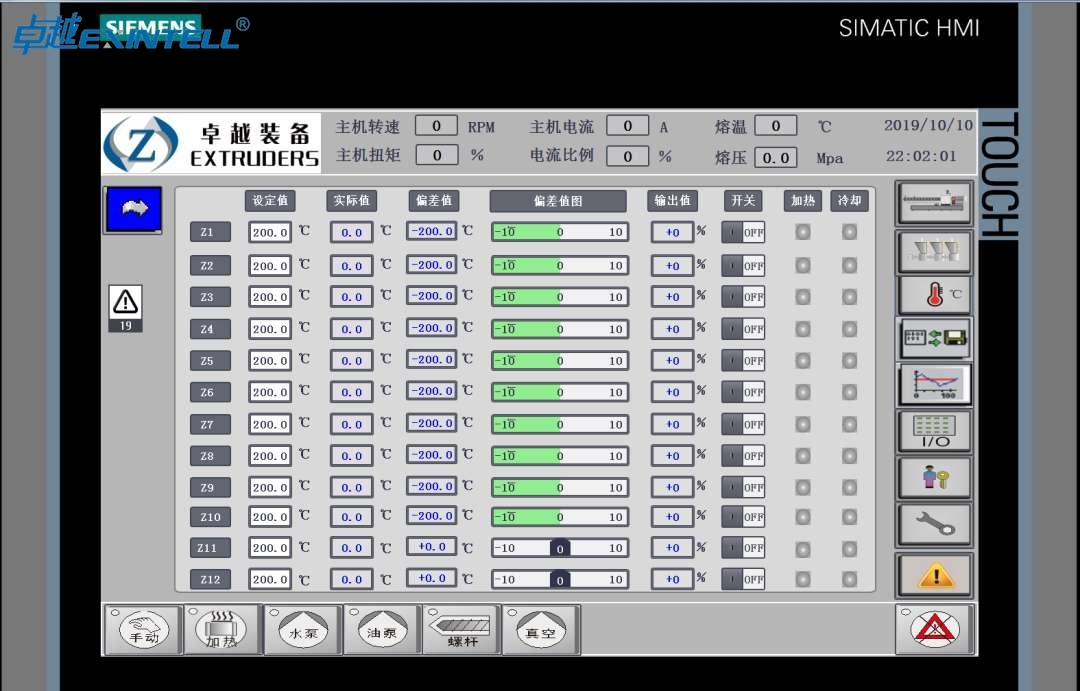
Automatisering en hulpmiddelen scheiden een kale extruder van een productieklare extrusielijn. Ik verifieer drie dingen in het bijzonder. Eerst, het besturingssysteem: een goede PLC met receptopslag, temperatuurzoneregeling, en koppelbewaking is de moeite waard om voor te betalen, omdat het herhaalbare batches en snellere kleurveranderingen oplevert. Seconde, de koelstrategie: vatwaterkoeling met gesloten temperatuurregeling beschermt hittegevoelige masterbatch-additief tegen degradatie. Derde, voeden: een zijtoevoer is essentieel als u van plan bent CaCO3-vuller-masterbatch te gebruiken, aangezien grote hoeveelheden vulmiddel stroomafwaarts van de smelt moeten worden geïntroduceerd om te voorkomen dat de hoofdtoevoeropening wordt overbelast en om de levensduur van de schroef te beschermen.
Schermwisselaar, Vacuüm ontgassen, en smeltpomp
Deze drie componenten bepalen stilletjes de productkwaliteit. Een zeefwisselaar filtert verontreinigingen en gels uit de smelt; voor groothandelsactiviteiten dring ik aan op minimaal een hydraulische zeefwisselaar, en een continu- of backflush-type als u zich geen productiestops voor schermwissels kunt veroorloven. Vacuümontgassing trekt vocht en vluchtige stoffen uit de smelt, wat enorm belangrijk is voor filler masterbatch, waar CaCO3 oppervlaktevocht transporteert dat anders holtes en uitzettingen veroorzaakt. Een smeltpomp, gepositioneerd na de extruder, stabiliseert de uitgangsdruk en geeft de pelletiseermachine een consistente voeding, het aanscherpen van de verdeling van de pelletgrootte. Niet elke koper heeft ze alle drie op de eerste dag nodig, maar ik vraag altijd of de loop vooraf is geconfigureerd om ze later te accepteren. Ombouwen is duur; het kopen van een upgrade-ready machine is dat niet.
Stroomafwaarts: Pelletiseermachine en koeling
De extruder is slechts de helft van een machinelijn voor het maken van masterbatch. De pelletiseermachine, of het nu in strengen is gesneden of onder water, en het bijbehorende koelbad of matrijsvlaksysteem bepalen de uiteindelijke korrelvorm en consistentie. Ik bevestig dat de capaciteit van de pelletiseermachine overeenkomt met de output van de extruder, omdat een ondermaatse plastic pelletiseermachine het knelpunt wordt dat uw hele lijn afdekt. Vraag naar het volledige lijndiagram, niet alleen het gegevensblad van de extruder.
Verificatiesignalen van leveranciers
Specificaties doen er alleen toe als de leverancier er achter staat. Ik weeg de geverifieerde leveranciersstatistieken zwaar. Voorbeeld van geverifieerde leveranciersgegevens tonen één fabrikant met 16 jarenlange ervaring, A 5.0/5.0 beoordeling, en een 25 procent bestelpercentage (Made-in-China.com, Zhangjiagang vriend machines, 2026). Een zo hoog bestelpercentage geeft aan dat terugkerende kopers de apparatuur vertrouwen, wat een sterker signaal is dan welke enkele recensie dan ook. Met voorbij 74,746 groothandel in gebruikte dubbelschroefsextruderproducten die op één enkele marktplaats worden aangeboden (Made-in-China.com, 2026), de catalogus is enorm, zo gedisciplineerd doorlichten van beoordelingen, tenure, and reorder rate is how you separate credible masterbatch manufacturers and plastic extruder suppliers from the noise.
Masterbatch Machine Wholesale Price Ranges Explained

Price is where transparency breaks down most often, so let me lay out the tiers I actually see in the market and, belangrijker nog, explain what moves a quote from one end to the other. Bulk order pricing on masterbatch equipment is not arbitrary; every dollar maps to capacity, automatisering, brand, or configuration. Filler masterbatch machine wholesale services deliberately span the full range, catering to buyers from small-scale workshops to large industrial enterprises under strict quality standards (Exintell-machines, 2024), which is exactly why the spread is so wide.
Entry Tier: Lab- en pilot-eenheden vanaf ~$9.900
Eenheden op laboratoriumschaal beginnen ongeveer $9,900. Zoals hierboven geciteerd, voor die prijs koop je een 25 mm, 7.5kW, 50kg/u dubbelschroefsextruder groothandel (Made-in-China.com, 2026). Dit niveau is geschikt voor R&D, ontwikkeling van formuleringen, en speciale productie in zeer kleine hoeveelheden. Ik raad het aan aan kopers die een masterbatch-recept moeten bewijzen voordat ze kunnen opschalen, of naar laboratoria bij converters die interne bemonsteringsmogelijkheden willen. Wat u voor deze prijs niet krijgt, is de productiedoorvoer, zware automatisering, of de duurzaamheid bij drieploegendiensten.
Middenklasse: Productiemachines van $25,000 naar $42,000
Productiemachines uit het middensegment lopen vanaf ongeveer $25,000 naar $42,000. Aan de top van deze band, masterbatch dubbelschroefsextruders staan vermeld op $42,000 per stuk door een Exintell PP PE-pelletiseermachine (Made-in-China.com, 2026). Dit is de ideale plek voor de meeste B2B-kopers die de productie van kleur- en filler-masterbatches beginnen of uitbreiden. Verwacht betekenisvolle schroefdiameters, een echte PLC, waterkoeling, een zijaanvoer voor vulwerkzaamheden, en een bijpassende plastic granulator of pelletiseermachine. In mijn ervaring levert dit niveau het beste rendement op voor een groeiend masterbatchbedrijf, omdat het capaciteit in evenwicht brengt met kapitaalblootstelling.
Volledige lijnen en speciale systemen tot $80,000
Complete masterbatch-extrusielijnen en speciale configuraties, inclusief masterbatch-lijnconstructies van huisdiervoedingskwaliteit en hoogvuller, reiken tot $80,000. Op dit niveau koopt u een geïntegreerd systeem: extruder, smelt pomp, continue schermwisselaar, vacuüm ontgassen, stroomafwaartse koeling, geautomatiseerd pelletiseren, en vaak gravimetrische dosering gekoppeld aan de PLC. Voor diervoeding geschikte en andere gereguleerde constructies gelden premiumprijzen vanwege de materiaalcertificeringen, hygiënisch ontwerp, en documentatie erbij. Hier wonen de grootste merken, te; de bovenkant 25 fabrikanten van dubbelschroefsextruders voor 2026 inclusief Coperion, Leistritz, Milacron, KraussMaffei, en JSW (UDTECH, 2025), en hun kant-en-klare lijnen kunnen zelfs dit bereik overschrijden, afhankelijk van de omvang.
Prijsvergelijking tussen niveaus
| Laag | Typische prijs | Representatieve specificaties | Beste voor |
|---|---|---|---|
| Laboratorium / Piloot | Vanaf ~$9.900 | 25mm-schroef, 7.5kW, ~50 kg/u | R&D, bemonstering, formuleringsproeven |
| Productie uit het middensegment | $25,000 – $42,000 | Grotere schroef, PLC, waterkoeling, zijtoevoer, bijpassende pelletiseermachine | Groeiende kleur / producenten van filler-masterbatches |
| Volledige lijn / Specialiteit | Tot $80,000 | Geïntegreerde lijn met smeltpomp, vacuüm ontgassen, schermwisselaar, automatisering | Hoog volume, hoge vulstof, huisdiervoeding-kwaliteit, gereguleerde output |
Prijzen weerspiegelen representatieve groothandelsvermeldingen op Made-in-China.com (2026); werkelijke offertes variëren per configuratie en leverancier.
Wat feitelijk de prijs drijft
Vier hefbomen verklaren bijna elk verschil tussen aanhalingstekens. Capaciteit staat voorop: grotere schroefdiameter en hogere kg/u-opbrengst verhogen de prijs ongeveer in lijn met het geïnstalleerde motorvermogen. Automatisering komt op de tweede plaats: een volledige PLC, gravimetrische voeding, en koppelbewaking verhogen de kosten, maar betalen zich terug in consistentie en arbeidsbesparingen. Merk staat op de derde plaats: een naam als Coperion of KraussMaffei heeft een premium die de technische diepgang weerspiegelt, beschikbaarheid van reserveonderdelen, en verkoopwaarde. Configuratie is de vierde en vaak de grootste swing: vacuümontgassing toevoegen, een continue schermwisselaar, een smeltpomp, en gespecialiseerde downstream-apparatuur kan een basisextruder naar een geheel andere prijsklasse tillen.
Eén factor die zelden in vermeldingen wordt genoemd, verdient aandacht in uw totale kostenplanning. In vergelijking met pure pigmenten, masterbatches hebben extra opslagruimte en langere doorlooptijden nodig (Kunststof technologie, 2023). Dezelfde logica geldt voor de apparatuur: op maat geconfigureerde lijnen hebben langere productietijden dan voorraadeenheden, dus integreer dat schema in uw inkoopplan in plaats van uit te gaan van de beschikbaarheid van schappen. Wanneer u evalueert a groothandel in vulmachines voor masterbatches, ask for the delivered configuration in writing, line by line, so the quote you compare is the machine you actually receive.
Understanding MOQ and Bulk Order Terms
When I first started sourcing plastic compounding equipment, I assumed minimum order quantities worked the way they do for consumables — order fifty units, get a better price. Capital machinery does not behave that way. For a masterbatch making machine, the MOQ is almost always one set or one piece. What actually shifts your negotiating position is not volume in the traditional sense, but the total contract value, the promise of repeat orders, and how you structure the payment. Understanding that distinction changed how I approach every quotation.
Wat MOQ werkelijk betekent voor kapitaalgoederen
Op marktplaatsen zoals Made-in-China.com, u zult zien dat groothandel laboratorium-dubbelschroefextruders worden vermeld $9,900 per set, bijvoorbeeld, een eenheid met een schroefdiameter van 25 mm, een motor van 7,5 kW, en een output van 50 kg/u (Made-in-China.com, 2026). Aan de andere kant van het spectrum, een masterbatch-dubbelschroefextruder van productiekwaliteit van een leverancier zoals Exintell kan aanbieden $42,000 per stuk (Made-in-China.com, 2026). In beide gevallen luidt de MOQ als “1.” Dat minimum van één eenheid weerspiegelt de realiteit dat deze zijn geconfigureerd, vrachtzware machines, niet gepalletiseerde voorraad. Dus als een aanbieding een MOQ van één set toont, behandel het als een startpunt voor een gesprek in plaats van als een signaal over prijsniveaus.
Hoe bulk- en herhaalbestellingen uw invloed veranderen
Ook al is de MOQ er één, ordersamenstelling is enorm belangrijk. A buyer purchasing a complete masterbatch extrusion line — a co-rotating twin screw extruder paired with a side feeder, vacuüm ontgassen, a screen changer, een smeltpomp, a pelletizer, and downstream cooling — is presenting a far larger contract than someone buying a bare granulating extruder. In mijn ervaring, bundling auxiliary equipment into a single purchase order unlocks concessions that a standalone machine never will, whether that is discounted spare parts, free commissioning support, or an extended warranty.
Repeat business is the other lever. If you signal a credible roadmap — say, a second high filler masterbatch line within twelve months as your CaCO3 filler masterbatch capacity scales — suppliers price the relationship, not the transaction. I have seen manufacturers hold pricing across a follow-up order and prioritize a returning buyer’s production slot ahead of a one-time purchaser during peak season.
Sampling and Trial Runs Before You Commit
You cannot request a “sample” of a $40,000 extruder, but you can and should ask for evidence that the machine produces to spec before wiring the balance. I always request a trial run: the supplier processes your carrier resin and pigment or additive package on the exact machine model and sends back samples plus process data — throughput, motor load, smelt temperatuur, and pellet consistency. For color masterbatch and additive masterbatch work, that trial validates pigment dispersion and high shear mixing quality against your own formulation, which a spec sheet cannot do. If a supplier resists a documented trial run, I treat that as a meaningful warning sign.
Payment Terms and Deposit Structures for International Orders
Cross-border machinery deals almost always run on a deposit-and-balance model. The most common structure I encounter is 30% down to begin production and 70% vóór verzending, typically against a bill of lading. Some suppliers accept a letter of credit, which shifts risk toward a bank and suits larger contracts, while smaller purchases often settle by T/T (telegrafische overdracht). The key point for procurement teams: tie payment milestones to verifiable events. I structure balances to release only after a successful factory acceptance test or a documented trial run, never against a promise. That single practice has protected me more than any contract clause.
Manufacturer vs Trading Company: Which Supplier Type to Choose
One of the most consequential decisions in any wholesale sourcing project is who you actually buy from. The listing may look identical, but a factory and a trading company operate on different economics, and each fits a different buyer profile. Understanding factory operations and supplier differentiation is genuinely critical for B2B buyers making procurement decisions across plastics compounding equipment (B2B-gids voor leverancier van kunststofextruders, 2024). I have bought successfully through both channels — the trick is matching the channel to the situation.
Benefits of Buying Direct From the Manufacturer
When I buy direct from a masterbatch manufacturer or factory, Ik krijg drie dingen die een tussenpersoon zelden biedt. Eerst, prijstransparantie: Ik betaal voor de machine en de marge van de fabriek, geen extra handelsmarkering. Seconde, technische toegang — Ik kan rechtstreeks spreken met de mensen die de meedraaiende dubbelschroefsextruder ontwerpen en bouwen, wat enorm belangrijk is als ik een niet-standaard schroefconfiguratie of een specifieke schroefdiameter en motorvermogen nodig heb (kW) om mijn doorvoerdoelstellingen te evenaren. Derde, verantwoordelijkheid: wanneer een zeefwisselaar of smeltpomp na twee jaar onderhoud nodig heeft, de fabriek die het heeft gebouwd, is eigenaar van de oplossing.
Een capabele fabriek biedt doorgaans ook een vollediger ecosysteem. Het is geen extrusie, bijvoorbeeld, levert co-roterende dubbelschroefsextruders uit de TSE/TSH-serie naast vul- en kleurmasterbatchlijnen, high filler masterbatch-extrusielijnen, en de hulpapparatuur om ze te voltooien (Haisi-extrusieapparatuur, 2024). Door de hele lijn bij één bouwer te kopen, wordt de integratie vereenvoudigd en wordt de verantwoordelijkheid voor de manier waarop de componenten samenwerken in één hand gelegd.
Wanneer een handelsbedrijf waarde toevoegt voor kleinere kopers
Handelsbedrijven zijn niet alleen maar markup-machines. Voor een kleinere koper of een beginnende importeur, een goed handelsbedrijf verdient zijn marge. Het verzamelt producten uit meerdere fabrieken, zodat een operator op werkplaatsschaal een enkele plastic pelletiseermachine kan aanschaffen zonder te voldoen aan de praktische relatiedrempel van een fabriek. Het verzorgt de exportdocumentatie, consolideert de scheepvaart, en spreekt vaak beter Engels dan de verkoopbalie van een regionale fabriek. Filler masterbatch machine wholesale services increasingly cater to buyers spanning small-scale workshops through large industrial enterprises under consistent quality standards (Exintell-machines, 2024), and a trader can be the bridge that makes a modest first purchase manageable.
Mijn vuistregel: if I am buying a single conical twin screw extruder or a compact single-screw extruder for a pilot operation and I lack import experience, a reputable trader lowers my risk. Once I am buying full masterbatch extrusion lines at scale, I go direct to the factory.
R&D Capacity Signals: ODM, OEM, and Own Brand
The clearest way to tell a real manufacturer from a rebadger is to probe R&D capacity. A factory with genuine engineering depth offers OEM (they build to your specification) and ODM (they design as well as build), en het verkoopt onder zijn eigen merk. Vraag of ze een standaardmodel kunnen aanpassen voor uw dragerhars of uw CaCO3-vuller masterbatchlading. Vraag of u de machines in montage op de vloer kunt zien, niet alleen in een catalogus. Wanneer een leverancier de plaatsing van vacuümontgassing kan bespreken, sequentie van zijfeeders, en pigmentdispersie-afwegingen vloeiend, Je praat met een bouwer. Wanneer de antwoorden vaag blijven en elke vraag terugleidt naar een brochure, u praat waarschijnlijk met een wederverkoper - en dat is prima als u dat weet, maar niet iets om fabrieksdirecte prijzen voor te betalen.
Hoe groothandelsleveranciers te evalueren en te onderzoeken
Bij doorlichting wordt een groothandelsaankoop gewonnen of verloren. De apparatuur is belangrijk, maar de leverancier erachter bepaalt of u een lopende productielijn krijgt of een duur vrachtprobleem. Ik leid elke potentiële leverancier door dezelfde evaluatie, en het heeft me gered van meer dan één deal die er perfect uitzag in een aanbieding. Marktplaatsvermeldingen en educatieve artikelen hebben de neiging dit geheel over te slaan, dus hier is het proces dat ik daadwerkelijk gebruik.
Het verifiëren van fabrieksaudits en productiecapaciteiten
De eerste vraag is of de fabriek kan bouwen wat zij beweert, in het volume dat u nodig heeft. Ik zoek naar een gedocumenteerde fabrieksaudit – een rapport van een derde partij of, minimaal, een door de leverancier geleverde audit van de markt. Ik wil de productiecapaciteit zien, apparatuur op de vloer, en kwaliteitscontroleprocedures. Voor een masterbatchmachine, I specifically ask how many units of my target model they ship per month and request photos or video of that model in assembly, dated and identifiable. A factory that produces a real plastic granulator or twin screw extruder wholesale volume can show it without hesitation.
Checking Verified Supplier Status and Experience Metrics
Marketplaces surface trust signals worth reading carefully. A verified supplier badge, years of operation, buyer rating, and reorder rate together sketch a supplier’s track record. As a concrete benchmark, verified metrics for one supplier — Zhangjiagang Friend Machinery — show 16 jarenlange ervaring, A 5.0/5.0 beoordeling, en een 25% bestelpercentage (Made-in-China.com, 2026). I treat reorder rate as the single most honest metric on the page: it tells me how many buyers came back, and returning industrial buyers do not repurchase capital equipment from a supplier that disappointed them.
Context helps here too. Alleen al Made-in-China.com vermeldt er meer dan 74,746 wholesale twin screw extruder products (Made-in-China.com, 2026), so the market is crowded and the metrics are how you separate serious builders from thin listings.
How to Read Rating and Reorder Rate Together
A high rating with a near-zero reorder rate suggests a supplier that satisfies first-time buyers but rarely earns repeat business — worth a second look. A moderate rating with a strong reorder rate often signals a supplier whose product performs in production even if their sales polish is unremarkable. I weight demonstrated repeat business over presentation every time.
Requesting References and a Factory Visit or Virtual Tour
I always ask for references from buyers in my region or industry, and I follow up on them. A supplier confident in their work provides contacts readily. Where budget and timing allow, I arrange a factory visit; where they do not, a live virtual tour is a strong substitute. On a virtual tour I ask the salesperson to walk to a specific machine I named, power on a running line, and show the pelletizer and downstream section in operation. A pre-recorded, over-produced video is not the same thing, and I say so.
Assessing Responsiveness and Technical Communication
Eindelijk, I evaluate how a supplier communicates, because that pattern predicts the entire post-sale relationship. I send a few pointed technical questions — screw L/D ratio, whether the melt pump is standard or optional, how they handle screen changer maintenance — and I watch for two things: speed and substance. Prompt replies that engage the engineering, ideally routing me to a technical contact rather than a pure salesperson, tell me support will exist when a machine goes down mid-run. Slow, evasive, or purely price-focused answers tell me the opposite. In a cross-border purchase where the machine will run for a decade, that communication quality is not a soft factor — it is central to the decision.
Supplier Vetting Comparison at a Glance
| Vetting Signal | What Strong Looks Like | Warning Sign | Waarom het ertoe doet |
|---|---|---|---|
| Years of experience | 10+ jaar (bijv., 16 jaar, Made-in-China.com, 2026) | Onder 2 jaar, no history | Survival implies delivery and service continuity |
| Buyer rating | 4.5–5.0 / 5.0 across many reviews | Perfect score, few reviews | Aggregate feedback on real transactions |
| Reorder rate | 20%+ (bijv., 25%, Made-in-China.com, 2026) | Near zero or undisclosed | Repeat industrial buyers signal reliable equipment |
| R&D capacity | OEM + ODM, own brand, custom screw configs | Brochure-only answers, no modifications | Separates true manufacturers from resellers |
| Trial run / factory test | Documented run on your resin with process data | Refuses or offers only stock footage | Validates output before you pay the balance |
| Technical responsiveness | Snel, engineer-level answers | Slow, evasive, price-only replies | Predicts post-sale support quality |
One practical planning note that buyers often overlook: because masterbatch itself requires extra storage space and longer lead times compared with pure pigments (Kunststof technologie, 2023), the machine you buy shapes downstream logistics as much as production. A vendor who understands that context — and who answers the underlying question of what your masterbatch is for, namely delivering optimally dispersed pigments or additives at high concentration into a compatible carrier (Ampacet Corporation, 2024) — is a partner, not just a seller. That is the supplier I want on a multi-year filler masterbatch machine programma.
Certifications That Signal Machine Quality
When I evaluate a masterbatch machine wholesale supplier, I treat certifications as the first filter, geen bijzaak. A twin screw extruder wholesale listing can quote an attractive price, but without documented compliance I have no way to verify that the electrical build, safety guarding, and material handling meet the standards my facility and my insurer expect. In mijn ervaring, the certification package tells me more about a plastic extruder supplier’s manufacturing discipline than any glossy brochure.
CE Marking for European Compliance
If you import into or operate within the European Economic Area, CE marking is non-negotiable. It declares that the masterbatch making machine conforms to EU health, veiligheid, and environmental requirements, particularly the Machinery Directive. I always ask for the Declaration of Conformity and the supporting technical file rather than accepting a CE sticker at face value. A legitimate supplier can produce both. When a vendor hesitates, I read that as a signal that the guarding, noodstops, and interlocks on the extrusion line may not have been independently assessed.
ISO 9001 Kwaliteitsbeheer
ISO 9001 (many suppliers still reference the 2008 herziening, hoewel 2015 is now current) certifies the quality management system behind the product, not the product itself. What it tells me is that the masterbatch manufacturer has documented, repeatable processes for design, procurement, montage, and inspection. For plastic compounding equipment, that consistency matters. Two conical twin screw extruders built six months apart should perform identically, and a certified quality system is what makes that likely. I verify the certificate number against the issuing registrar’s database before I rely on it.
RoHS, UL, and CCC
Three more marks round out a serious compliance package. RoHS restricts hazardous substances such as lead and cadmium in electrical components, which matters for both regulatory exposure and end-market acceptance. UL certification signals that the electrical control system has been evaluated to North American safety standards, something I insist on for any machine destined for a US plant. CCC (China Compulsory Certification) applies to products sold within the Chinese market and often appears on equipment from Chinese factories; it is not a substitute for UL or CE when you import elsewhere, and I’ve seen buyers conflate the two to their cost.
How Certifications Reduce Procurement Risk
Certifications convert an abstract quality claim into verifiable evidence, and that directly lowers my procurement risk. A documented UL mark reduces the chance my facility fails an electrical inspection after installation. A valid CE file protects me if a regulator questions the machine on my floor. Pairing certification checks with verified supplier metrics tightens the picture further. When I see a supplier with 16 jarenlange ervaring, A 5.0/5.0 beoordeling, en een 25% bestelpercentage (Made-in-China.com, Zhangjiagang vriend machines, 2026), alongside genuine ISO and CE documentation, I have converging signals rather than a single point of trust. The reorder rate in particular tells me that earlier buyers came back, which no certificate alone can prove.
OEM and ODM Options for Custom Masterbatch Machines
Most reputable factories offer both OEM and ODM arrangements, and understanding the difference shapes how I brief a supplier. With OEM, I bring a defined specification and the factory builds to it. With ODM, the factory adapts one of its existing designs to my requirements. Suppliers such as Haisi Extrusion, which provides TSE/TSH series co-rotating twin screw extruders along with filler and color masterbatch lines plus auxiliary equipment (Haisi-extrusieapparatuur, 2024), typically start from a proven platform and customize outward. That ODM path is usually faster and lower risk than a clean-sheet OEM build.
Customizing Voltage, Kleur, Verpakking, and Logo
The most common customizations are also the least disruptive to lead time. Voltage and frequency matter first: a machine wired for 380V/50Hz will not run correctly on a US 480V/60Hz supply without changes to motors and controls, so I specify this at the quotation stage. Verder dan dat, machine paint color, crate and packaging specification for the shipping mode, and logo or nameplate branding are straightforward for any masterbatch machine wholesale manufacturer to accommodate. These rarely add meaningful cost, but they do need to be in the purchase order rather than assumed.
When to Specify Screw Configuration and Barrel Length
Screw configuration and barrel length are where customization stops being cosmetic and starts driving performance. The screw diameter, de L/D-verhouding (barrel length relative to screw diameter), and the arrangement of conveying, kneden, and mixing elements determine residence time, shear intensity, en doorvoer. For a CaCO3 filler masterbatch running at high loading, I specify a longer barrel and a screw built for high shear mixing and thorough pigment dispersion, often with a side feeder to introduce filler downstream and vacuum degassing to strip moisture and volatiles. For a lightly loaded color masterbatch or an additive masterbatch on a heat-sensitive carrier resin, I keep residence time shorter to avoid degradation. A single-screw extruder can handle some simpler compounding, but a co-rotating twin screw extruder gives the distributive and dispersive mixing that most masterbatch work demands. I only get this right by describing the product and polymer carrier to the supplier, not by copying someone else’s screw drawing.
Balancing Customization Cost Against Standard Models
Every deviation from a standard model carries a cost, and part of my job is deciding which deviations earn their keep. To make that trade-off concrete, here is how I weigh common customizations against standard builds.
| Maatwerk | Typical cost impact | Lead time impact | When I specify it |
|---|---|---|---|
| Voltage / frequency conversion | Laag tot matig | Minimaal | Always, when destination grid differs |
| Paint, verpakking, logo | Laag | Minimaal | Whenever branding or shipping mode requires it |
| Custom screw configuration | Matig tot hoog | Gematigd | When product loading or shear needs differ from standard |
| Extended barrel length / higher L/D | Hoog | Significant | High filler masterbatch line or difficult dispersion |
| Full clean-sheet OEM design | Hoogste | Langste | Only when no existing platform fits |
Standard models benefit from volume production and shorter lead times, which is why bulk order pricing on catalog machines is often keener than on bespoke ones. The wholesale range illustrates the spread: lab twin screw extruders start around $9,900 per set with a 25mm screw, 7.5kW-motor, en een output van 50 kg/u, while a production masterbatch twin screw extruder is listed at $42,000 per stuk (Made-in-China.com, 2026). Customization pushes you up within and beyond those bands, so I reserve it for changes that genuinely affect output quality.
Lead Time Implications of Custom Builds
Custom builds extend lead time in ways that ripple through a project schedule, and I plan for that from the outset. A standard model may ship from stock or near-stock, while a customized screw set, an extended barrel, or a non-standard control system adds design sign-off, component procurement, and additional testing before dispatch. This mirrors a broader trait of masterbatch itself: vergeleken met pure pigmenten, masterbatches hebben extra opslagruimte en langere doorlooptijden nodig (Kunststof technologie, 2023), so both the product and the equipment that makes it reward early planning. I confirm the lead time in writing and tie milestone payments to verified progress rather than to promised dates.
Auxiliary Equipment for a Complete Masterbatch Line
An extruder alone does not make masterbatch. The purpose of masterbatch is to deliver pigments or additives into plastic in a form that disperses evenly at high concentration, and achieving that consistently depends on the equipment surrounding the extruder as much as the extruder itself. When I scope a masterbatch extrusion line, I map every stage from raw material intake to finished granule so nothing becomes an unplanned bottleneck.
Mixing and Feeding Systems
Upstream accuracy sets the ceiling for product quality. High-speed mixers pre-blend pigments, additieven, and carrier resin, while gravimetric or volumetric feeders meter each component into the extruder at a controlled rate. A side feeder becomes essential on a high filler masterbatch line, introducing CaCO3 or similar fillers into the melt downstream of the main feed so the polymer is already molten and shear damage is minimized. Consistent feeding is what allows the co-rotating twin screw extruder to achieve reliable pigment dispersion batch after batch.
Cooling and Pelletizing Systems
Nadat de smelt de matrijs verlaat, it must be cooled and cut into usable granules. Masterbatch wordt geproduceerd door kleuren en additieven in een polymeerdrager te verdelen met behulp van een high-shear mengextruder, daarna afkoelen, snijden, en het vormen tot korrels via een pelletiseermachine (Kunststof technologie, 2023). In practice I choose between strand pelletizing, where cooled strands pass through a water bath before a plastic granulator cuts them, and underwater or die-face pelletizing for higher throughput. A melt pump ahead of the die stabilizes pressure and improves pellet uniformity, and a screen changer upstream removes contaminants without stopping the line. Together these define the finish quality of the plastic pelletizing machine’s output.
Crushers, Electric Control Systems, and Spare Parts
The supporting hardware is easy to overlook and expensive to omit. A crusher reclaims off-spec granules and startup purge so material is not wasted. The electric control system, ideally PLC-based with clear operator screens, governs temperature zones, schroef snelheid, and feed rates, and this is exactly where UL or CE compliance should be evident. I also negotiate a spare parts package at the point of purchase: wear elements such as screw and barrel segments, verwarmingsbanden, thermokoppels, and seals have far longer lead times if ordered reactively after a failure. Buying them alongside the machine is cheaper and protects uptime.
Planning a Full Line Versus a Standalone Extruder
The final decision is whether to buy a complete integrated line or a standalone granulating extruder and assemble the rest. Buying a full line from one masterbatch manufacturer gives me a single point of accountability, matched components, and a supplier who has already solved the integration problems. Buying a standalone extruder and sourcing auxiliaries separately can lower headline cost and lets me reuse existing equipment, but I take on the integration risk myself. For buyers ranging from small-scale workshops to large industrial enterprises, wholesale services are structured to support both paths under defined quality standards (Exintell-machines, 2024). In mijn ervaring, a first line or a new product category is better bought complete; incremental capacity expansion is where a standalone extruder makes the stronger case. Hoe dan ook, I specify the whole workflow before I commit, because the cheapest extruder is a poor bargain if the line around it cannot keep pace.
New vs Used Masterbatch Machines: Trade-offs
Whenever I advise a procurement team on their first extrusion line, the new-versus-used question surfaces within minutes. It deserves a careful answer, because the right choice depends less on the sticker price and more on how the machine will earn its keep. Marketplaces make used equipment tempting: Alleen al Made-in-China.com vermeldt er meer dan 74,746 groothandel gebruikte dubbelschroefsextruderproducten (Made-in-China.com, 2026, made-in-china.com). That depth of supply is real, but so are the trade-offs.
Where the cost savings actually come from
Used masterbatch making machines from established wholesalers typically sell at 40 naar 70 percent below comparable new units, and the discount widens on higher-throughput lines where new pricing climbs quickly. Voor context, a new masterbatch twin screw extruder is listed at $42,000 per stuk (Exintell PP PE Pelletizer, Made-in-China.com, 2026), while entry lab-scale co-rotating twin screw extruders start around $9,900 per set met een schroefdiameter van 25 mm, 7.5kW-motor, en een output van 50 kg/u (Made-in-China.com, 2026). A refurbished mid-range line can land squarely between those figures. In my experience the savings are most defensible when the core extruder — the barrel, schroeven, and gearbox — is fundamentally sound and the discount reflects cosmetic wear or an older control system rather than a fatigued drivetrain.
Inspection and refurbishment considerations
I never buy used plastic compounding equipment sight unseen. The parts that determine dispersion quality wear in predictable ways, and a thorough inspection protects you from a bargain that becomes a liability.
- Slijtage van schroeven en cilinders: measure clearances on the co-rotating twin screw elements. Excessive wear degrades high shear mixing and pigment dispersion, the very functions you bought the machine for.
- Gearbox and drive: check for backlash, oil condition, and bearing noise. This is the most expensive subsystem to rebuild.
- Auxiliary components: confirm the condition of the screen changer, smelt pomp, vacuum degassing system, zijtoevoer, and pelletizer. These are often quietly excluded from a headline price.
- Controls and safety: older PLCs may lack spare parts, and safety interlocks must meet current standards before commissioning.
A reputable wholesaler will document refurbishment work — reground or replaced screws, reconditioned barrels, updated controls. Ask for that record. If it does not exist, price the machine as unrefurbished.
Warranty and spare-part availability
This is where new equipment earns its premium. New masterbatch extrusion lines from a verified manufacturer carry meaningful warranties and a documented spare-parts pipeline. Used machines often come with limited or no warranty, and sourcing wear parts for a discontinued model can stall a line for weeks. Before committing to used, I confirm that screws, screen packs, and the pelletizer knives are still catalog items somewhere in the supply chain.
When used makes sense: pilot and backup lines
Used equipment shines in specific roles. For a pilot line where you are validating a CaCO3 filler masterbatch formulation before scaling, a refurbished conical twin screw extruder or a modest co-rotating unit lets you prove the process without tying up capital. The same logic applies to a backup line that runs occasionally to cover peak demand or maintenance downtime on your primary asset. In both cases the machine does not need to run 6,000 hours a year, so a shorter remaining service life is acceptable. For a primary, high-utilization color or additive masterbatch line, I lean strongly toward new, because unplanned downtime erodes any upfront saving.
Chinese vs European Masterbatch Machine Suppliers
The sourcing map for twin screw extruder wholesale splits cleanly into two tiers, and understanding what each tier optimizes for is the key to a sound decision. The industry’s leading names bear this out: de bovenkant 25 fabrikanten van dubbelschroefsextruders voor 2026 inclusief Coperion, Leistritz, Milacron, KraussMaffei, en JSW (UDTECH, 2025, udtechman.com) — a list that mixes European precision houses with high-volume global builders.
The price advantage of Chinese manufacturers
Chinese suppliers dominate the wholesale market on price and configuration breadth. Builders such as Haisi Extrusion offer TSE/TSH series co-rotating twin screw extruders alongside complete filler masterbatch and high filler masterbatch extrusion lines with auxiliary equipment (Haisi-extrusieapparatuur, 2024). Others, like Exintell, run filler masterbatch machine wholesale programs serving everyone from small workshops to large industrial enterprises under stated quality standards (Exintell-machines, 2024, exintelmach.com). The commercial signals matter here: verified supplier metrics such as 16 jarenlange ervaring, A 5.0/5.0 beoordeling, en een 25 procent bestelpercentage (Zhangjiagang vriend machines, Made-in-China.com, 2026) tell you a builder retains customers, which is the honest measure of after-sale performance. For CaCO3 filler and standard color masterbatch, a well-vetted Chinese line delivers strong value.
What European premium brands buy you
Coperion, Leistritz, and KraussMaffei command a premium because they deliver tightly controlled process precision, mature engineering support, and long-horizon spare-part availability. For demanding additive masterbatch chemistries, sensitive polymer carrier systems, or tight color consistency at high throughput, that precision translates directly into yield and reduced scrap. The trade-off is capital cost and lead time, both of which are materially higher.
Balancing cost, precisie, and support
I frame the decision around three axes rather than price alone. The table below reflects the pattern I see across procurement projects.
| Factor | Chinese suppliers | European premium brands |
|---|---|---|
| Typical capital cost | Lager (often 40–60% less) | Hoger |
| Process precision | Strong for filler/standard color | Best-in-class for demanding chemistries |
| Doorlooptijd | Generally shorter | Langer |
| Spare-part horizon | Good with verified suppliers | Lang, well-documented |
| Technische ondersteuning | Improving; varies by builder | Diep, established |
| Beste pasvorm | CaCO3 filler, kleur masterbatch, cost-sensitive scale-up | High-value additive lines, nauwe toleranties |
Note these are general market patterns from my sourcing work, not fixed figures; verify against current quotes.
Hybrid sourcing strategies for global buyers
The most resilient buyers rarely commit entirely to one tier. A hybrid strategy pairs a European primary line for your most demanding, highest-margin masterbatch grades with Chinese-sourced lines for filler and commodity color production. Some buyers go further and source the core extruder from one region while procuring auxiliaries — the plastic granulator, schermwisselaar, or pelletizer — separately to optimize each line item. This approach spreads supplier risk, balances the capital budget, and lets each machine match the precision its product actually requires.
Importing Masterbatch Machines to the US: Trade and Logistics
US-specific import guidance is thin across most buyer resources, so I want to be concrete here. Importing a masterbatch extrusion line is manageable, but the paperwork and logistics decisions carry real cost, and getting them wrong is expensive to unwind.
HS Code classification for extrusion machinery
Correct classification is the foundation of a clean import. Extrusion machinery for plastics generally falls under Harmonized System heading 8477, die betrekking heeft op machines voor het bewerken van rubber of kunststoffen, with twin screw extruders and complete plastic pelletizing machine lines classified beneath it. The final digits of the HS/HTS code determine the duty rate, so I always confirm the exact subheading with a licensed customs broker before shipment rather than relying on a supplier’s invoice notation. A misclassification can trigger delays, boetes, and back-duties.
Verzending, vracht, en Incoterms
A full masterbatch extrusion line is heavy, oversized freight, typically moving in one or more 40-foot containers or as breakbulk cargo for larger units. The single most consequential contract term is the Incoterm, because it defines exactly where the supplier’s responsibility ends and yours begins.
- EXW (Af fabriek): you assume responsibility at the factory gate — maximum control, maximum burden.
- FOB (Gratis aan boord): the supplier delivers to the origin port; you own ocean freight and everything after. This is my common default for Asia-to-US machinery.
- CIF (Kosten, Verzekering, Vracht): the supplier arranges freight and insurance to the destination port, simplifying logistics at some cost premium.
- DDP (Geleverd met BTW): the supplier handles nearly everything including duties — convenient, but you pay for that convenience and lose visibility.
Whatever the term, I insist on marine cargo insurance covering full replacement value. A damaged gearbox mid-ocean is not a risk worth self-insuring.
Customs duties and trade policy factors
Extruder Twin Screw Wholesale Duty on machinery under heading 8477 is often modest, but the base rate is only part of the picture. Trade policy — including any additional tariffs applied to specific countries of origin — can materially change your landed cost. Because these measures shift with policy cycles, I treat current tariff schedules as something to verify at the time of purchase, not assume from a prior import. Your broker can model the total landed cost, combining duty, any additional tariffs, merchandise processing fees, harbor maintenance fees, en vracht, so there are no surprises at clearance.
Installation and commissioning on arrival
The machine arriving at your dock is a milestone, niet de finishlijn. Plan the receiving side before the container ships: confirm rigging capacity for offloading, foundation and floor loading for the extruder, electrical supply matched to the motor power in kW, and utility connections for cooling water and compressed air. Many wholesale suppliers offer commissioning support, whether on-site engineers or remote guidance, and I strongly recommend budgeting for it. Proper commissioning verifies screw alignment, vacuum degassing performance, melt pump and screen changer operation, and pelletizer output before you commit production material. A line that was tuned correctly at startup runs cleaner for years, which is ultimately what protects the investment you worked so hard to source.
Estimating ROI and Total Cost of Ownership
When I evaluate a masterbatch machine wholesale purchase, the sticker price is only the opening figure. In mijn ervaring, procurement teams that anchor decisions to the quoted machine cost alone routinely underestimate their capital outlay by 30 naar 50 procent. A realistic return-on-investment model has to account for the full total cost of ownership across the equipment’s operating life, not just the day it lands on your floor.
Beyond the Quote: Auxiliary, Verzending, en Installatie
A twin screw extruder wholesale quote usually covers the extruder barrel, schroeven, and drive. It rarely includes the full extrusion line. A complete masterbatch extrusion line needs auxiliary equipment: a side feeder for high filler loading, vacuum degassing to strip moisture and volatiles, a screen changer, sometimes a melt pump for output stability, a water bath, an air knife, and the pelletizer itself. Het is geen extrusie, Bijvoorbeeld, supplies its TSE/TSH co-rotating twin screw extruders bundled with filler and color masterbatch lines plus the auxiliary equipment those lines require (Haisi-extrusieapparatuur, 2024). I always ask suppliers to itemize what the base price excludes, because the auxiliary package can add 20 naar 40 percent to the machine cost.
Ocean freight for a containerized extrusion line, US import duties tied to the relevant HS Code, binnenlands vrachtvervoer, tuigage, and commissioning labor all stack on top. For US buyers importing from China, I budget shipping and install as a distinct line item rather than folding it into a vague contingency. Installation and factory-acceptance commissioning frequently require a supplier technician on site, and that travel cost is negotiable but seldom free.
Energy Consumption and Maintenance Over the Lifespan
Motor power is the largest recurring cost driver. A lab-scale unit listed at $9,900 with a 25mm screw diameter runs a 7.5kW motor at roughly 50kg/h output (Made-in-China.com, 2026). Scale that to an industrial line and you are looking at motors in the 90 to 315kW range operating multiple shifts. Over a 10-year lifespan, energy often exceeds the original purchase price. I model electricity using the motor power kW rating, an assumed load factor of 70 naar 80 procent, local kWh rates, and projected annual run hours.
Maintenance is the other lifespan cost. Slijtage van schroeven en cilinders, especially when processing abrasive CaCO3 filler masterbatch, drives periodic replacement of screw elements. Screen changer screens, zeehonden, and heater bands are routine consumables. I ask every prospective plastic extruder supplier for the wear-part replacement interval and unit cost before signing, because a cheap machine with proprietary, expensive spares can quietly erode any upfront savings.
Output Capacity Versus Production Demand
Buying more capacity than you can sell ties up capital in idle throughput; buying too little forces premature reinvestment. I size the machine against realistic demand, not aspirational demand. If your order book supports 300kg/h of color masterbatch, a line rated at 500kg/h looks like headroom but represents oversized motors burning energy at partial load. Matching rated output to your genuine production demand is the single decision that most influences payback.
Payback Period for Wholesale Volume Production
Payback is where wholesale volume production justifies the investment. My rough framework: divide total cost of ownership at commissioning by annual gross margin generated at your target utilization. The table below illustrates how three common tiers compare on the levers that shape payback. Figures marked with sources are drawn from live wholesale listings; utilization, margin, and payback are illustrative modeling assumptions, not quoted data.
| Laag | Example machine cost | Typical output | Motorvermogen (approx.) | Best-fit buyer | Illustrative payback |
|---|---|---|---|---|---|
| Laboratorium / piloot | $9,900/set (Made-in-China.com, 2026) | ~50 kg/u | 7.5 kW | R&D, bemonstering, small workshop | Not volume-driven; used for validation |
| Production twin screw | ~$42,000/piece (Made-in-China.com, 2026) | Several hundred kg/h | 90–160 kW range | Growing compounder, mid-volume | ~18–36 months at steady utilization |
| Industrial high-filler line | Six figures, quote-based | 500+ kg/u | 160–315 kW range | Large industrial enterprise | ~24–48 months at high utilization |
The payback ranges are deliberately conservative. What tightens them is utilization: a production line running two shifts pays back far faster than the same line idle half the week. That is why I treat demand forecasting as inseparable from the ROI calculation.
Matching Machine Selection to Your Polymer and Application
The right masterbatch making machine is the one configured for your specific polymer carrier and application, not the one with the highest headline output. Masterbatch itself is a concentrated mixture of pigments or additives dispersed at high concentration in a carrier material compatible with the main plastic (Ampacet Corporation, 2024), and it is produced by distributing those colors and additives into the polymer carrier using a high shear mixing extruder, daarna afkoelen, snijden, and forming granules through a pelletiser (Kunststof technologie, 2023). To answer the common question of what masterbatch is for: it lets processors add color and functional properties in clean, dosable pellet form instead of handling loose pigment powders, which improves dispersion consistency and reduces contamination on the shop floor. Getting that dispersion right starts with matching the machine to the material.
Processing Requirements by Resin: PP, PE, HUISDIER, en ABS
Each carrier resin behaves differently under heat and shear, and that dictates configuration.
PP and PE
Polypropylene and polyethylene are the workhorses of color and filler masterbatch. They tolerate high shear well, which makes a co-rotating twin screw extruder the standard choice for good pigment dispersion. These resins are forgiving, and most general-purpose masterbatch extrusion lines are tuned for them out of the box.
HUISDIER
PET is hygroscopic and shear-sensitive. Without proper drying and vacuum degassing to remove moisture, you get hydrolytic degradation and poor pellet quality. For PET masterbatch I insist on effective upstream drying and a degassing zone; skipping this is a frequent cause of brittle, discolored product.
ABS
ABS carries a higher melt viscosity and needs careful temperature control to avoid thermal degradation of the styrene component. A twin screw with a well-designed screw profile and a melt pump for pressure stability helps produce consistent ABS-based additive masterbatch.
Degradable Plastic Granules and WPC Compounding
Biodegradable compounds such as PLA and PBAT are temperature-sensitive and demand tight thermal control to prevent the polymer chain from breaking down during processing. Wood-plastic composite (WPC) compounding introduces a different challenge: high loadings of wood flour that are abrasive and moisture-laden. WPC lines lean on a side feeder to introduce the filler downstream and robust vacuum degassing to drive off the moisture wood carries. If degradable or WPC work is on your roadmap, I specify wear-resistant screw and barrel materials from the start rather than retrofitting later.
Selecting Capacity: Small Workshop Versus Industrial Scale
Scale should follow the business, niet andersom. Filler masterbatch machine wholesale offerings deliberately span the range, serving buyers from small-scale workshops to large industrial enterprises under consistent quality standards (Exintell-machines, 2024). For a small workshop or a startup validating a formulation, a lab or pilot twin screw in the 25mm class is appropriate and keeps capital light. For an established manufacturer, an industrial high filler masterbatch line with hundreds of kilograms per hour of throughput earns its keep only when demand is steady. I map capacity to the demand tiers I outlined in the ROI section so the two decisions reinforce each other.
Configuration for Specific Masterbatch Types
Beyond resin and scale, the masterbatch type itself shapes the build:
- CaCO3-vuller masterbatch: high filler loading, so a side feeder and abrasion-resistant, hardened screw elements are essential. This is the most demanding application on wear parts.
- Kleur masterbatch: dispersion quality is paramount, so the screw profile and shear intensity matter most; a fine screen changer helps catch pigment agglomerates.
- Additive masterbatch: UV-stabilisatoren, antioxidanten, and slip agents are often heat-sensitive, favoring gentle thermal profiles and precise feeding.
Where budget is tight and dispersion demands are modest, a single-screw extruder or conical twin screw extruder can serve, but for concentrated pigment or high filler work I default to a co-rotating twin screw for its superior mixing. I always confirm the specific configuration against the exact formulations you plan to run, because a general-purpose quote and a purpose-built line can differ substantially in real-world output quality.
Common Mistakes to Avoid in Wholesale Procurement
Over years of vetting plastic compounding equipment purchases, I have watched the same avoidable errors surface repeatedly. Each one is preventable with disciplined procurement. Here are the four that cost buyers the most.
Prioritizing Price Over Verified Specifications
The lowest quote is seductive, and it is where most regret begins. Met voorbij 74,746 groothandel in gebruikte dubbelschroefsextruderproducten die op één enkele marktplaats worden aangeboden (Made-in-China.com, 2026), there is always a cheaper option one click away. But a low price attached to vague or unverified specifications is a warning sign, geen koopje. I insist on documented screw diameter, motor power kW, L/D-verhouding, rated output under a stated formulation, and material grades for the screw and barrel. A verified supplier with a track record signals reliability better than a headline price: one example listing shows 16 jarenlange ervaring, A 5.0/5.0 beoordeling, en een 25 procent bestelpercentage (Made-in-China.com, Zhangjiagang vriend machines, 2026). Reorder rate in particular tells me existing customers came back, which is hard to fake.
Ignoring After-Sales and Spare-Part Support
A masterbatch extrusion line is a decade-long relationship, not a one-time transaction. I have seen buyers land a competitively priced machine only to discover that spare screw elements, verwarmingsbanden, or screen changer parts take months to source or come from a supplier that stopped responding after the sale. Voordat u zich engageert, I confirm spare-part availability, doorlooptijden, whether components are standard or proprietary, and what remote or on-site technical support looks like. Understanding supplier differentiation and factory operations is critical for B2B buyers making procurement decisions across plastics compounding equipment (B2B-gids voor leverancier van kunststofextruders, 2024), and after-sales capability is a core part of that differentiation.
Skipping Sample or Trial-Run Validation
No specification sheet substitutes for running your own material. I always request a sample run or trial with your actual resin and formulation before final payment, ideally witnessed or documented on video. This is the only way to confirm that the machine achieves your target pigment dispersion, uitgang, and pellet quality with your inputs, not the supplier’s demo material. It is worth noting that masterbatch, vergeleken met pure pigmenten, requires extra storage space and longer lead times (Kunststof technologie, 2023), so validating that your line produces consistent, storable granules protects against downstream inventory problems too.
Overlooking Certification and Compliance Needs
For US buyers especially, compliance is not optional. Electrical components should meet recognized standards, and the machine should carry appropriate certification for your jurisdiction. I verify CE marking where relevant, electrical safety compliance for the destination voltage and frequency, and any application-specific requirements, such as food-contact suitability if the masterbatch will end up in food packaging. Confirming the correct HS Code and import documentation early also avoids customs delays that can strand a six-figure line at port. Treating certification as a checkbox rather than a genuine requirement is how buyers end up with equipment they cannot legally or safely commission.
Avoiding these four mistakes does not require special expertise, only the discipline to verify specifications, secure support commitments, validate with your own material, and confirm compliance before money changes hands. In mijn ervaring, the buyers who follow that sequence rarely regret the machine they end up with. For further supplier-side context on filler masterbatch equipment, the Exintell filler masterbatch catalog offers useful reference (Exintell-machines).
Ondersteuning na verkoop, Garantie, and Spare Parts
In my experience negotiating bulk equipment contracts, the purchase price is only the visible portion of what a masterbatch making machine actually costs over its life. The support structure behind the sale determines whether a line runs profitably for a decade or becomes an expensive liability. When I evaluate a Masterbatch Machine Wholesale supplier, I weigh warranty scope, spare parts logistics, and technical response times as heavily as screw diameter or motor power in kW.
Evaluating Warranty Terms for Bulk Orders
Warranty language on plastic compounding equipment is rarely uniform, and the differences matter more when you are buying several units at once. I read for three things: duration, coverage boundaries, and the exclusions buried in the fine print. A typical co-rotating twin screw extruder warranty runs twelve months on the main assembly, but wear components such as screw elements, vaten, and the pelletizer knives are often excluded because they degrade with abrasive fillers like CaCO3 filler masterbatch.
For a bulk order, I push for a fleet-level warranty rather than per-unit terms that reset independently. I also ask whether the clock starts at shipment, at commissioning, or at first production run, since ocean freight and customs clearance can consume weeks before a machine ever powers on. Getting the commissioning-based start date in writing has saved my clients meaningful coverage on more than one occasion.
Availability of Critical Spare Parts
Downtime on a masterbatch extrusion line is expensive, so I map spare parts availability before signing. The components that fail or wear first are predictable: screen changer plates, the screw and barrel segments in the high shear mixing zone, seals on the vacuum degassing system, and the melt pump when the line is configured for tight throughput tolerance. I ask the manufacturer to quote a recommended two-year spare kit alongside the machine so I can compare true cost of ownership across suppliers.
Lead time is the hidden variable. A verified supplier with in-house machining can ship a replacement barrel in days, while a trading company may need to source it and add weeks. This is one reason I favor established manufacturers. The Top 25 fabrikanten van dubbelschroefsextruders voor 2026 inclusief Coperion, Leistritz, Milacron, KraussMaffei, en JSW, and their parts networks are a genuine differentiator for buyers who cannot absorb long outages (UDTECH, 2025).
Remote and On-Site Technical Support
Modern extrusion lines increasingly ship with remote diagnostic access, which lets an engineer read PLC fault logs and adjust parameters without traveling. I treat this as a baseline expectation, then confirm what on-site support looks like when a problem cannot be resolved remotely. For a first purchase from a new plastic extruder supplier, I negotiate at least one on-site commissioning visit, because correct setup of the side feeder, schroef configuratie, and degassing pressure has a direct effect on pigment dispersion quality.
Documentation and Operator Training
Good documentation is the cheapest insurance a buyer can get. I require English-language operation and maintenance manuals, an electrical schematic, a spare parts catalog with part numbers, and a recommended maintenance schedule. Beyond paperwork, I ask for structured operator training, whether delivered on-site or through recorded sessions, so that the line does not depend on a single trained employee. Suppliers that support buyers ranging from small workshops to large industrial enterprises under strict quality standards tend to have this training infrastructure already in place (Exintell-machines, 2024).
Frequently Asked Questions About Masterbatch Machine Wholesale
What is the purpose of a masterbatch machine, and what is the purpose of masterbatch itself?
A masterbatch machine produces masterbatch, so it helps to understand the product first. Masterbatch is a solid concentrate in which pigments or additives are optimally dispersed at high concentration in a carrier material compatible with the main plastic (Ampacet Corporation, 2024). Its purpose is to let processors color or functionally modify plastic without handling messy raw pigment powders or dosing unstable additive blends on the shop floor. Instead of coloring polymer directly, a converter meters in a small percentage of masterbatch granules, achieving consistent color, UV-bestendigheid, vlamvertraging, or filler loading with clean, repeatable dosing.
The machine itself, typically a co-rotating twin screw extruder, exists to make that concentrate. It distributes colors and additives into a polymer carrier using a high shear mixing extruder, then cools, cuts, and forms the melt into granules via a pelletiser (Kunststof technologie, 2023). Kortom, the purpose of a masterbatch machine is to convert raw pigments, additieven, or fillers plus a carrier resin into a uniform, easy-to-handle pellet that downstream plastics processors can dose accurately.
What is the typical MOQ and price range?
Minimum order quantity for wholesale masterbatch machines is usually low compared to consumable goods, because these are capital assets. Many manufacturers list an MOQ of one set for standard lines, with volume pricing kicking in on multi-unit orders. Pricing spans a wide range driven by scale and configuration. Wholesale lab twin screw extruders are listed from $9,900 per set with example specs of 25mm screw diameter, 7.5kW-motor, en een output van 50 kg/u, while production-grade masterbatch twin screw extruders are listed at $42,000 per piece by one Made-in-China.com vendor (Made-in-China.com, 2026). I always confirm whether pricing is EXW, FOB, of CIF, since freight on a full extrusion line materially changes the landed cost.
How do I verify a wholesale supplier’s reliability?
I verify reliability through a combination of platform metrics and direct due diligence. On marketplaces, I look at tenure, beoordelingen, en bestelpercentage. As an example, verified supplier metrics for one factory show 16 jarenlange ervaring, A 5.0/5.0 beoordeling, en een 25% bestelpercentage (Made-in-China.com, Zhangjiagang vriend machines, 2026). A strong reorder rate signals that repeat B2B buyers keep coming back, which is hard to fake. Beyond the numbers, I request reference customers, a video factory tour, and proof of in-house manufacturing rather than trading-only operations, because understanding factory operations and supplier differentiation is critical for procurement decisions across plastics compounding equipment (B2B-gids voor leverancier van kunststofextruders, 2024).
What HS Code applies when importing?
Masterbatch extrusion machines generally fall under HS heading 8477, die betrekking heeft op machines voor het bewerken van rubber of kunststoffen, with extruders classified under subheading 8477.20. The exact ten-digit code depends on your destination country’s tariff schedule, so I always confirm the classification with a licensed customs broker before shipment. Getting this right affects duty rates and clearance speed, and misclassification can trigger delays or penalties. For US buyers specifically, I recommend validating the code against the current Harmonized Tariff Schedule and checking for any applicable trade remedies before finalizing an order.
What machine type should I choose for my application?
The choice depends on your product. A co-rotating twin screw extruder is the standard for color masterbatch and additive masterbatch because it delivers superior pigment dispersion through controlled high shear mixing. A conical twin screw extruder or a high filler masterbatch line is better suited to abrasive, highly loaded CaCO3 filler masterbatch. A single-screw extruder is generally too limited for concentrate production but can appear in simpler recycling or reprocessing setups. Matching machine architecture to your formulation is the single most important specification decision.
What Is Masterbatch Machine Wholesale and Why It Matters for B2B Buyers
Definition
When I refer to Masterbatch Machine Wholesale, I mean the bulk procurement of the extrusion equipment used to manufacture masterbatch, purchased directly from manufacturers or verified suppliers at volume-oriented pricing rather than retail. To ground the term, it helps to define the product these machines make. Masterbatch is a concentrated Extrusie met dubbele schroef mixture of pigments and/or additives blended and extruded together in a carrier matrix such as resin or wax (Wikipedia, 2024). The machine that produces it, most often a co-rotating twin screw extruder paired with a pelletizer, blends colorants or additives into a carrier resin under high shear, then cools and cuts the melt into granules.
Buying wholesale means engaging with the manufacturing tier of the supply chain, where you negotiate specifications, MOQ, spare parts kits, and support terms directly. This is a different activity from buying finished masterbatch pellets, and it demands a procurement mindset focused on total cost of ownership rather than unit price alone.
Marktcontext
The wholesale market for this equipment is deep and globally distributed. Alleen al Made-in-China.com vermeldt er meer dan 74,746 groothandel gebruikte dubbelschroefsextruderproducten, which signals both a large secondary market and intense competition among new-equipment sellers (Made-in-China.com, 2026). That breadth is an advantage for buyers because it creates price competition, but it also raises the stakes on supplier vetting, since listing volume says nothing about quality.
Established manufacturers anchor the higher-quality end of the market. Het is geen extrusie, Bijvoorbeeld, provides TSE and TSH series co-rotating twin screw extruders along with filler and color masterbatch lines, high filler masterbatch-extrusielijnen, and auxiliary equipment such as screen changers and vacuum degassing systems (Haisi-extrusieapparatuur, 2024). I read this kind of full-line capability as a positive signal, because a supplier that builds the whole extrusion line is better positioned to support it. For procurement teams, the practical challenge is that marketplace listings rarely explain how to decode specifications, so buyers must bring their own framework for comparing screw diameter, motorvermogen in kW, and throughput against real production needs.
Belangrijkste toepassingen
Masterbatch machines serve three primary output categories, and understanding them clarifies why buyers choose different configurations.
| Masterbatch-type | Primary Function | Typical Machine Configuration | Key Buyer Consideration |
|---|---|---|---|
| Kleur masterbatch | Consistent coloring of plastic products | Co-rotating twin screw extruder with side feeder and melt pump | Dispersion quality and color changeover speed |
| Additive masterbatch | UV-stabiliteit, vlamvertraging, antistatisch, anti-block | Co-rotating twin screw with precise temperature control and vacuum degassing | Additive sensitivity to heat and shear |
| CaCO3-vuller masterbatch | Cost reduction and stiffness via high filler loading | High filler masterbatch line or conical twin screw with wear-resistant elements | Abrasion resistance and spare parts wear rate |
Each application places different demands on the equipment, which is why I never treat these machines as interchangeable commodities. A line optimized for delicate additive masterbatch will not hold up economically under the abrasive load of CaCO3 filler production, and a heavy-duty filler line is overbuilt for fine color work.
Why does this matter for B2B buyers specifically? Because the wholesale decision shapes your production economics for years. Masterbatch also carries operational tradeoffs worth planning around; in comparison with pure pigments, masterbatches hebben extra opslagruimte en langere doorlooptijden nodig (Kunststof technologie, 2023), which affects both your customers’ logistics and your own throughput planning. Choosing the right machine, from the right masterbatch manufacturer and plastic extruder supplier, with clear support and spare parts terms, is what separates a profitable line from a stranded asset. For readers who want the underlying product fundamentals, de Ampacet masterbatch overview is a solid technical reference.
How to Choose the Right Masterbatch Machine Wholesale Supplier
By the time I reach the supplier-selection stage, I already know the specifications I need. What separates a smooth procurement cycle from a costly one is rarely the machine itself — it is the partner behind it. A co-rotating twin screw extruder from a disciplined manufacturer will outlast and outperform a cheaper unit from an opaque trader every time. In mijn ervaring, choosing a Masterbatch Machine Wholesale supplier is less about finding the lowest quote and more about verifying who will still answer the phone eighteen months after commissioning.
Building a Vendor Evaluation Framework
I score every candidate against four weighted pillars: technisch vermogen, verifiable track record, commercial terms, and after-sales infrastructure. Technical capability means the supplier actually manufactures the equipment rather than reselling it. Het is geen extrusie, Bijvoorbeeld, publishes its full TSE/TSH series of co-rotating twin screw extruders alongside dedicated filler and color masterbatch lines, high filler masterbatch lines, and auxiliary equipment — a breadth that signals genuine engineering depth rather than badge-swapping (Haisi-extrusieapparatuur, 2024). When a plastic extruder supplier can speak fluently about screw diameter, L/D-verhouding, vacuum degassing placement, and side feeder configuration for a CaCO3 filler masterbatch application, that is a strong signal.
Verifiable track record is where marketplace data earns its keep. Made-in-China.com surfaces supplier metrics that are difficult to fake at scale. A representative verified supplier — Zhangjiagang Friend Machinery — shows 16 jarenlange ervaring, A 5.0/5.0 beoordeling, en een 25% bestelpercentage (Made-in-China.com, 2026). I treat reorder rate as the single most honest number on any listing: repeat buyers do not return to a vendor whose plastic pelletizing machine failed during ramp-up.
Reading the Price Tiers Correctly
Wholesale pricing spreads far wider than newcomers expect, and understanding what drives the spread is the core of smart procurement. Lab-scale twin screw extruders appear from $9,900 per set met een schroefdiameter van 25 mm, een motor van 7,5 kW, and 50kg/h output — suitable for R&D or small-batch color masterbatch trials (Made-in-China.com, 2026). Production-grade masterbatch twin screw extruders climb to $42,000 per stuk, as listed by Exintell PP PE Pelletizer (Made-in-China.com, 2026). The gap reflects motor power (kW), doorvoer, gearbox rating, and the quality of the pelletizer and screen changer, not arbitrary markup.
Vergelijking: Supplier Tiers Across This Buyer’s Journey
| Supplier tier | Typical price signal | Representative spec | Beste pasvorm | What to verify first |
|---|---|---|---|---|
| Laboratorium / pilot vendor | From ~$9,900/set (Made-in-China.com, 2026) | 25mm-schroef, 7.5kW, 50kg/u | R&D, formuleringsproeven, additive masterbatch samples | Scalability path to production geometry |
| Mid-market production line | ~$42,000/piece (Made-in-China.com, 2026) | Full masterbatch extrusion line with pelletizer | Color and additive masterbatch at commercial volume | Reorder rate, warranty, spare-parts lead time |
| Verified established manufacturer | Quote-based, hoger | 16 yrs experience, 5.0/5.0, 25% reorder (Made-in-China.com, 2026) | High filler masterbatch line, CaCO3-vuller masterbatch | On-site FAT, engineering documentation, referenties |
| Tier-1 global OEM | Premie, project-based | Coperion, Leistritz, KraussMaffei, JSW class (UDTECH, 2025) | Continu, high-uptime industrial operations | Total cost of ownership vs. throughput guarantees |
UDTECH’s 2026 ranking of the top 25 twin screw extruder manufacturers — including Coperion, Leistritz, Milacron, KraussMaffei, and JSW — is a useful shortlist when uptime economics justify a premium (UDTECH, 2025). But for many buyers moving from small-scale workshops to larger industrial enterprises, a mid-market filler masterbatch machine wholesale offering under strict quality standards delivers the better return (Exintell-machines, 2024).
Red Flags I Will Not Ignore
Some warning signs end a conversation immediately. A quote for a masterbatch making machine with no stated screw diameter, motorvermogen, or throughput tells me the seller is a trader, not an engineer. Refusal to permit a factory acceptance test, or vague answers about whether the unit is a single-screw extruder, a conical twin screw extruder, or a true co-rotating twin screw extruder, signals a mismatch between the listing and the hardware. I am equally wary when a vendor cannot name their carrier resin compatibility for my application, because pigment dispersion quality depends entirely on matching the polymer carrier to the end product through correct high shear mixing.
Other flags are commercial. Pressure to skip a written specification sheet, unusually short warranties on the granulating extruder, and no clear parts channel for wear items like the screen changer or melt pump all raise the lifetime cost of ownership. Met voorbij 74,746 groothandel in gebruikte dubbelschroefsextruderproducten die op één enkele marktplaats worden aangeboden (Made-in-China.com, 2026), the abundance of choice is exactly why disciplined filtering matters — volume is not a substitute for verification.
My Due Diligence Checklist
- Confirm the supplier manufactures rather than resells, and request line-reference photos of an equivalent masterbatch extrusion line.
- Pull verified marketplace metrics: years active, beoordeling, en bestelpercentage. Prioritize reorder rate above headline price (Made-in-China.com, 2026).
- Obtain a full specification sheet: diameter van de schroef, L/D, motorvermogen (kW), doorvoer, vacuüm ontgassen, zijtoevoer, schermwisselaar, and pelletizer type.
- Request a factory acceptance test on my actual formulation — CaCO3 filler masterbatch or color masterbatch — before shipment.
- Clarify spare-parts lead times, warranty scope, and remote commissioning support.
- Cross-check bulk order pricing against the tier table above so the quote aligns with the machine class.
- Voor Amerikaanse kopers, confirm the correct HS Code classification and lead time, since masterbatch equipment and consumables can carry longer lead times than pure pigments (Kunststof technologie, 2023).
Understanding factory operations and supplier differentiation is, in my view, the decisive B2B skill in plastics compounding equipment procurement (B2B-gids voor leverancier van kunststofextruders, 2024). The framework above turns a crowded, noisy wholesale market into a shortlist I can actually trust.
What is the Purpose of Master Batch?
Buyers often ask me why they should invest in a masterbatch machine at all when raw pigments or additives seem simpler. The answer sits at the heart of why this equipment category exists. The purpose of masterbatch is to deliver color and functional properties into plastic in a form that is clean, consistent, and precisely dosable — solving the dispersion and handling problems that loose powders create on a production floor.
Masterbatch is a concentrated mixture of pigments and additives blended and extruded together in a carrier matrix such as resin or wax (Wikipedia, 2024). That concentration is the point. Instead of forcing a processor to disperse fine pigment powder evenly throughout a polymer melt — a messy, dust-prone, and inconsistent task — masterbatch pre-disperses those actives at high concentration in a carrier material compatible with the main plastic (Ampacet Corporation, 2024). The processor then simply lets down the masterbatch at a small ratio into their base resin, and the pigment or additive distributes uniformly.
Why Processors Choose Masterbatch Over Raw Pigments
The functional purposes fall into a few clear categories. Color masterbatch delivers reproducible shade and opacity without the dust and cross-contamination of powder pigments. Additive masterbatch introduces properties such as UV stability, anti-static behavior, slip, or flame retardancy at controlled loadings. CaCO3 filler masterbatch reduces raw-material cost and modifies stiffness and printability, which is why high filler masterbatch lines are among the most in-demand extrusion lines in wholesale catalogs today.
The manufacturing route explains the quality advantage. Masterbatch wordt geproduceerd door kleuren en additieven in een polymeerdrager te verdelen met behulp van een high-shear mengextruder, daarna afkoelen, snijden, en het vormen tot korrels via een pelletiseermachine (Kunststof technologie, 2023). That high shear mixing step, typically performed on a co-rotating twin screw extruder, is what achieves the fine, stable pigment dispersion that raw powder blending cannot reliably match. The granular output is easy to meter, winkel, and feed — a practical advantage on any line.
There is a trade-off worth naming honestly. Compared with pure pigments, masterbatches require extra storage space and longer lead times (Kunststof technologie, 2023). For most processors, the gains in consistency, cleanliness, and dosing accuracy outweigh that cost — which is precisely why the equipment to make masterbatch commands the wholesale demand it does.
Buyer FAQ: What is Masterbatch? | Ampacet Corporation Perspective
When buyers reference technical sources during due diligence, one definition surfaces repeatedly, and it is worth answering directly. Ampacet Corporation, a long-established masterbatch manufacturer, defines masterbatch as a solid product in which pigments or additives are optimally dispersed at high concentration in a carrier material compatible with the main plastic (Ampacet Corporation, 2024). I find this the most procurement-useful definition because it names the three variables that determine machine selection: the actives, the concentration, and the carrier resin.
Reconciling the Definitions
Independent sources align closely. Wikipedia describes masterbatch as a concentrated mixture of pigments and/or additives in a carrier matrix such as resin or wax (Wikipedia, 2024), while Plastics Technology emphasizes the production route through a high shear mixing extruder followed by a pelletiser (Kunststof technologie, 2023). Read together, these confirm that “masterbatch” is defined as much by how it is made as by what it contains — and that has direct implications for the machine you buy.
What This Means for Your Machine Purchase
If a supplier’s definition of masterbatch stops at “concentrated color,” I probe further, because it suggests they may not appreciate the dispersion engineering their equipment must deliver. De zin “optimally dispersed at high concentration in a compatible carrier” (Ampacet Corporation, 2024) is effectively a specification: it tells me the machine needs adequate high shear mixing capacity, correct screw geometry, vacuum degassing to remove volatiles, and a reliable pelletizer to form uniform granules. A single-screw extruder rarely achieves the shear needed for demanding formulations, which is why co-rotating twin screw extruders dominate serious masterbatch extrusion lines.
For US buyers building a supplier questionnaire, I recommend translating this definition into vendor questions: What carrier resins do you support? What let-down ratios do your lines target? Can you demonstrate optimal dispersion on my formulation during a factory acceptance test? A supplier who answers these fluently understands both the product and the plastic compounding equipment that makes it. You can review Ampacet’s own explanation directly for reference (Ampacet Corporation, What is Masterbatch?), and cross-reference the neutral technical overview from Kunststof technologie to confirm the manufacturing route matches what your prospective machine is designed to do.
Find wholesale suppliers of masterbatch machines for bulk purchasing
Recycling Extruder Wholesale When I begin a wholesale sourcing project for masterbatch equipment, I start by clarifying what the machine actually needs to do before I ever contact a supplier. Masterbatch itself is a concentrated mixture of pigments and additives blended and extruded together in a carrier matrix such as resin or wax (Wikipedia, 2024). That definition matters at the procurement stage because the carrier resin, the pigment loading, and whether you are producing color masterbatch, additive masterbatch, or CaCO3 filler masterbatch all dictate the class of machine you should be shopping for. In mijn ervaring, buyers who skip this framing end up comparing a lab-scale unit against an industrial line and drawing the wrong conclusions about price.
Where I actually look for wholesale suppliers
My first stop is the large B2B marketplaces, because they aggregate enough listings to establish a realistic price band. Alleen al Made-in-China.com vermeldt er meer dan 74,746 groothandel gebruikte dubbelschroefsextruderproducten (Made-in-China.com, 2026), which gives you a broad enough sample to identify outliers on both ends. From there I move to specialist manufacturers who publish full extrusion line catalogs. Het is geen extrusie, Bijvoorbeeld, provides TSE/TSH series co-rotating twin screw extruders along with filler and color masterbatch and high filler masterbatch extrusion lines plus auxiliary equipment (Haisi-extrusieapparatuur, 2024). Suppliers like this are worth engaging directly because they can quote a complete masterbatch extrusion line rather than a bare extruder that still needs a pelletizer, schermwisselaar, and side feeder bolted on.
Matching supplier tier to order volume
Not every wholesale supplier serves every buyer. Filler masterbatch machine wholesale services cater to buyers ranging from small-scale workshops to large industrial enterprises under strict quality standards (Exintell-machines, 2024). I find it useful to tell a supplier my target throughput and annual purchase volume in the first message, because it filters out vendors who cannot meet the minimum order quantity or, conversely, who only sell single lab units. This single step has saved me weeks of back-and-forth on more than one project.
Practical vetting tips before you request a bulk quote
- Confirm the supplier is a manufacturer, not a trading reseller, if you want direct bulk order pricing and after-sales support on the extrusion line.
- Ask for verified supplier metrics. On Made-in-China.com I have seen documented profiles such as Zhangjiagang Friend Machinery showing 16 jarenlange ervaring, A 5.0/5.0 beoordeling, en een 25% bestelpercentage (Made-in-China.com, 2026). A high reorder rate is one of the more honest signals of repeat-buyer satisfaction.
- Request the full specification sheet, not a headline price. You want screw diameter, motorvermogen in kW, L/D-verhouding, and rated output before comparing anything.
- Clarify what auxiliary equipment ships with the machine. A quote that includes vacuum degassing, een smeltpomp, and a plastic granulator is not comparable to one for the extruder alone.
Compare prices of masterbatch making machines from different manufacturers
Price comparison is where most procurement teams get tripped up, and it is the gap I see left unaddressed across marketplace listings: they publish numbers but rarely decode why one masterbatch making machine costs five times another. In de praktijk, the spread is driven by scale, schroef configuratie, and the completeness of the extrusion line. A wholesale lab twin screw extruder can be listed from $9,900 per setje, with example specs of a 25mm screw diameter, een motor van 7,5 kW, en een output van 50 kg/u (Made-in-China.com, 2026). At the other end, a masterbatch twin screw extruder is listed at $42,000 per piece by Exintell PP PE Pelletizer (Made-in-China.com, 2026). Both are twin screw extruders, but they serve entirely different production realities.
What actually drives the price difference
The single biggest lever is throughput capacity, which scales with screw diameter and motor power. A 25mm lab screw is designed for R&D and small-batch color matching; a production machine with a larger screw and a higher-kW drive moves an order of magnitude more material per hour. Daarna, screw geometry matters. A co-rotating twin screw extruder delivers the high shear mixing needed for uniform pigment dispersion, which is why it dominates color and additive masterbatch production. A single-screw extruder costs less but generally cannot achieve the same dispersion quality, while a conical twin screw extruder occupies a middle ground often used for rigid PVC compounding. Eindelijk, the auxiliary package moves the number substantially: a screen changer, smelt pomp, vacuum degassing section, zijtoevoer, and pelletizer can together rival the cost of the base extruder.
A working price comparison across tiers
I use a table like this to keep quotes honest and to make sure I am comparing equivalent configurations rather than headline figures. The pricing anchors below are drawn from current marketplace listings; treat the wider tiers as planning ranges to validate against live quotes.
| Machine tier | Typische schroefdiameter | Motorvermogen | Indicative output | Price anchor | Beste pasvorm |
|---|---|---|---|---|---|
| Laboratorium / R&D twin screw | ~25mm | ~7.5 kW | ~50 kg/u | From $9,900/set (Made-in-China.com, 2026) | Formulation trials, color matching |
| Production twin screw (masterbatch) | ~65–75mm | Higher-kW drive | Hundreds of kg/h | ~$42,000/piece (Made-in-China.com, 2026) | Kleur / additive masterbatch runs |
| Complete masterbatch extrusion line | Config-dependent | Config-dependent | Line-rated | Quote-based (extruder + auxiliaries) | High filler masterbatch line, turnkey plants |
How I normalize quotes before deciding
Once I have three or more quotes, I convert each to a cost-per-kilogram-of-hourly-capacity figure and note exactly which auxiliary components are included. This exposes the trading resellers who quote a low extruder price and then invoice separately for the pelletizer and screen changer. It also surfaces genuine value: a slightly higher-priced machine that ships with vacuum degassing and a melt pump is frequently the cheaper choice once you account for the plastic compounding equipment you would otherwise have to source independently.
Identify reliable masterbatch machine manufacturers in China
China remains the center of gravity for twin screw extruder wholesale, and understanding factory operations and supplier differentiation is critical for B2B buyers making procurement decisions across plastics compounding equipment (B2B-gids voor leverancier van kunststofextruders, 2024). The challenge is not finding a masterbatch manufacturer; it is separating a genuine factory from the layers of intermediaries that sit in front of them. I anchor my shortlist against the established global benchmark set. The Top 25 fabrikanten van dubbelschroefsextruders voor 2026 inclusief Coperion, Leistritz, Milacron, KraussMaffei, en JSW (UDTECH, 2025). Those names set the engineering bar, and I use them as a reference point when I evaluate the more competitively priced Chinese specialists that most wholesale buyers ultimately purchase from.
The reliability signals I trust
Betrouwbaarheid, for me, comes down to verifiable operating history rather than marketing claims. The verified supplier metrics I mentioned earlier are the most practical filter: years in operation, buyer rating, en bestelpercentage. When I see a documented profile such as 16 jarenlange ervaring, A 5.0/5.0 beoordeling, en een 25% bestelpercentage (Made-in-China.com, 2026), I read the reorder rate as the load-bearing number. Buyers do not return to equipment that fails in the field. Beyond the metrics, I look for a manufacturer that publishes a coherent product family, the way Haisi Extrusion documents its TSE/TSH co-rotating lines alongside filler and color masterbatch and high filler masterbatch extrusion lines with auxiliary equipment (Haisi-extrusieapparatuur, 2024). A full catalog signals in-house engineering depth rather than badge-engineered resale.
Understanding the purpose behind the equipment
It helps to keep the end product in view when judging a manufacturer, because the machine only exists to serve it. The purpose of masterbatch is to deliver pigments or additives that are optimally dispersed at high concentration in a carrier material compatible with the main plastic (Ampacet Corporation, 2024). Praktisch, masterbatch wordt geproduceerd door kleuren en additieven in een polymeerdrager te verdelen met behulp van een mengextruder met hoge afschuiving, daarna afkoelen, snijden, en het vormen tot korrels via een pelletiseermachine (Kunststof technologie, 2023). A reliable manufacturer will speak fluently about how their screw design achieves that dispersion for your specific carrier resin and loading, and will not treat a CaCO3 filler masterbatch line and a color masterbatch line as interchangeable. That fluency in the process, more than any spec sheet, tells me whether the factory understands what it is building.
Industry context US buyers should weigh
For US-based procurement, reliability extends past the factory gate into trade logistics, an area competitor content largely ignores. I plan for classification under the appropriate HS code for extruders and factor in freight, plichten, and lead time when I compare a domestic quote against an imported one. It is also worth remembering a supply-chain trade-off inherent to the product itself: in comparison with pure pigments, masterbatches hebben extra opslagruimte en langere doorlooptijden nodig (Kunststof technologie, 2023). That reality shapes both your inventory planning and your negotiation on delivery schedules. My rule is simple: I confirm the manufacturer can support commissioning, reserveonderdelen, and screw replacement before I commit capital, because a granulating extruder that sits idle waiting for a part erases any savings from a low purchase price.
A short due-diligence checklist
- Verify factory status through documented supplier metrics and, where possible, a video or third-party audit of the production floor.
- Benchmark specifications against recognized manufacturers so you know what a fair engineering standard looks like at your price tier.
- Confirm process expertise for your exact masterbatch type, from carrier resin compatibility to pelletizer configuration.
- Nail down after-sales terms, beschikbaarheid van reserveonderdelen, and import logistics in writing before purchase.
Working through these three lenses in order, sourcing wholesale suppliers, normalizing prices across manufacturers, and vetting Chinese factories against verifiable signals, gives me a repeatable procurement workflow rather than a gamble. For a broader view of factory operations behind these machines, de filler masterbatch equipment catalog from Exintell is een nuttig naslagwerk, en de Plastics Technology masterbatch overview is worth reading to ground your specification decisions in the underlying process.
Understand what a masterbatch machine is and how it works
When procurement teams first approach me about buying compounding equipment, the confusion usually starts with terminology. A masterbatch machine is not one device but a coordinated production line, and understanding its parts is the foundation for making a sound wholesale purchase. In mijn ervaring, buyers who grasp the process end up specifying equipment that matches their throughput instead of overpaying for capacity they never use.
What masterbatch actually is
Masterbatch is een geconcentreerd mengsel van pigmenten en/of additieven, gemengd en samen geëxtrudeerd in een dragermatrix zoals hars of was (Wikipedia, 2024). Put differently, it is a solid product in which pigments or additives are optimally dispersed at high concentration in a carrier material compatible with the main plastic (Ampacet Corporation, 2024). That compatibility with the polymer carrier is the entire point. Instead of dosing raw pigment powder into a molding machine, a processor drops in a small percentage of masterbatch pellets that release color or function uniformly through the melt.
This answers a question I hear often: what is the purpose of masterbatch? It exists to solve the dispersion problem. Raw pigments clump, drift as airborne dust, and produce streaky, inconsistent parts. By pre-dispersing that pigment into a carrier resin at high concentration, the masterbatch delivers repeatable color and consistent additive performance while keeping the plant cleaner and dosing simpler.
How the machine turns raw material into pellets
Masterbatch wordt geproduceerd door kleuren en additieven in een polymeerdrager te verdelen met behulp van een high-shear mengextruder, daarna afkoelen, snijden, en het vormen tot korrels via een pelletiseermachine (Kunststof technologie, 2023). The masterbatch making machine, daarom, is really an extrusion line built around a few core stages:
- Voeden. Carrier resin, pigment, and additives enter through the main hopper, often supplemented by a side feeder that introduces fillers or heat-sensitive materials downstream to protect them from excessive shear.
- Melting and mixing. The screws generate the high shear mixing that drives pigment dispersion. This is where a masterbatch stands or falls, because uneven dispersion shows up as visible defects in the customer’s final part.
- Ontgassen. A vacuum degassing port pulls off moisture and volatiles so the melt stays free of bubbles and voids.
- Filtratie. A screen changer removes contaminants, and a melt pump can stabilize output pressure for consistent pellet geometry.
- Pelletiseren. Finally the plastic pelletizing machine, whether a strand or underwater pelletizer, cools and cuts the melt into uniform granules.
Belangrijke overwegingen
The single most important variable is the type of screw at the heart of the line. A co-rotating twin screw extruder is the workhorse of modern plastic compounding equipment because its intermeshing screws deliver strong distributive and dispersive mixing. A single-screw extruder costs less and suits simpler recolor or reprocessing work, but it cannot match the mixing intensity that high-pigment-load color masterbatch demands. A conical twin screw extruder, In de tussentijd, shows up mostly in PVC processing rather than typical masterbatch compounding.
Praktische tips
Before you request quotes, map your output target in kilograms per hour and your dominant product type. I always tell buyers to write down whether they will run mostly filler, kleur, or additive masterbatch, because that decision cascades into screw configuration, motorvermogen, en hulpapparatuur. A line optimized for CaCO3 filler masterbatch is configured very differently from one built for tight color matching.
Industriecontext
Understanding factory operations and supplier differentiation is critical for B2B buyers making procurement decisions across plastics compounding equipment (B2B-gids voor leverancier van kunststofextruders, 2024). Established suppliers such as Haisi Extrusion provide TSE/TSH series co-rotating twin screw extruders along with filler and color masterbatch and high filler masterbatch extrusion lines plus auxiliary equipment (Haisi-extrusieapparatuur, 2024). That bundling matters, because a granulating extruder is only as good as the pelletizer, schermwisselaar, and feeders paired with it.
Learn the difference between filler, kleur, and additive masterbatch machines
Once buyers understand the general process, the next fork in the road is choosing the right line for the product they intend to sell. Vuller, kleur, and additive masterbatch look similar as finished pellets, but the machines that make them differ in ways that directly affect price and performance. I have watched purchasing teams order a general-purpose line and then struggle for months because it was never tuned for their actual formulation.
Filler masterbatch machines
Filler masterbatch is dominated by calcium carbonate, and the economics are all about volume. CaCO3 filler masterbatch reduces resin cost by replacing a portion of virgin polymer with mineral filler, so these lines run high loading rates, sometimes exceeding 80 percent filler by weight. That demands robust screws, aggressive venting through vacuum degassing, and usually a side feeder to introduce the powder without overwhelming the main throat. Filler masterbatch machine wholesale services cater to buyers from small-scale workshops to large industrial enterprises under strict quality standards (Exintell-machines, 2024), which tells you the demand spans a wide range of plant sizes.
Color masterbatch machines
Color masterbatch is a precision game. The value the end customer pays for is exact, repeatable color, which means dispersion quality outranks raw throughput. Lines built for color work lean on longer processing sections, careful screw design, and often finer filtration to catch pigment agglomerates. Because color runs frequently switch between shades, fast cleanout and a quick screen changer save real production hours.
Additive masterbatch machines
Additive masterbatch carries functional ingredients such as UV stabilizers, antistatics, vlamvertragers, or slip agents. Veel van deze additieven zijn hittegevoelig, so temperature control and gentle shear become the priority. This is where a side feeder earns its keep, letting the operator introduce the additive downstream where it sees less thermal and mechanical stress.
Comparison across the three types
| Attribuut | Vuller masterbatch | Kleur masterbatch | Additive masterbatch |
|---|---|---|---|
| Primary goal | Cost reduction via mineral loading | Precise, repeatable color | Functional performance |
| Typical loading | Zeer hoog (tot 80%+ CaCO3) | Moderate pigment concentration | Laag tot matig, formulation-specific |
| Screw priority | Hoog koppel, slijtvastheid | Strong dispersive mixing | Gentle shear, tight temperature control |
| Auxiliary emphasis | Zij-feeder, strong degassing | Fine screen changer, fast changeover | Downstream side feeding |
| Throughput vs. precisie | Throughput-led | Precision-led | Evenwichtig, additive-dependent |
Belangrijke overwegingen
Decide whether you need a single dedicated line or a flexible one. A high filler masterbatch line built for maximum CaCO3 loading is not ideal for delicate color matching, and forcing one machine to do both usually compromises both. If your product roadmap covers more than one category, I recommend discussing a modular screw configuration with your masterbatch manufacturer rather than assuming one setup fits all.
Praktische tips
Ask suppliers to run a trial with your exact resin and formulation before you commit. A demonstration on their standard recipe tells you little about how the line handles your specific pigment loading or filler grade. When you evaluate a filler masterbatch machine, confirm the wear-resistant barrel and screw specification, because abrasive minerals shorten component life faster than most first-time buyers expect.
Industriecontext
It is worth planning for the logistics that come with masterbatch. In vergelijking met pure pigmenten, masterbatches hebben extra opslagruimte en langere doorlooptijden nodig (Kunststof technologie, 2023). That downstream reality should shape how much output capacity you actually need. Buying an oversized extrusion line that produces more than your storage and sales cycle can absorb ties up capital without improving margins.
Source twin screw extruders for masterbatch production at wholesale prices
This is where the fundamentals translate into a purchase order. Sourcing at wholesale is not simply hunting for the lowest sticker price; it is matching verified specifications to your production needs while vetting the supplier behind them. Marketplace listings rarely explain how to decode specs for a procurement team, so I want to close that gap directly.
Understanding the wholesale price landscape
The spread in twin screw extruder wholesale pricing is wide, and the numbers make the tiers clear. Wholesale lab twin screw extruders are listed from $9,900 per set with example specs of 25mm screw diameter, 7.5kW-motor, en een output van 50 kg/u (Made-in-China.com, 2026). At the production end, masterbatch dubbelschroefsextruders staan vermeld op $42,000 per piece by Exintell PP PE Pelletizer (Made-in-China.com, 2026). The gap reflects real differences in screw diameter, motorvermogen in kW, build quality, and included auxiliary equipment rather than arbitrary markup.
Wholesale tier comparison
| Laag | Example price | Representative specs | Beste pasvorm |
|---|---|---|---|
| Laboratorium / piloot | From $9,900 per setje | 25mm schroefdiameter, 7.5kW-motor, 50kg/u | R&D, bemonstering, formuleringsproeven |
| Production | Around $42,000 per stuk | Larger screw diameter, higher motor power, full line | Commercial masterbatch output |
| Gebruikt / refurbished | Varies widely | Condition-dependent, verify wear | Budget-constrained scale-up |
The used market is enormous. Made-in-China.com lists over 74,746 groothandel gebruikte dubbelschroefsextruderproducten (Made-in-China.com, 2026). That volume is an opportunity and a risk. A refurbished granulating extruder can cut capital cost sharply, but abrasive filler applications wear screws and barrels, so I insist on documented inspection of those components before considering any secondhand line.
Decoding specifications before you buy
Two numbers anchor most quotes. Screw diameter roughly indicates capacity, with larger diameters supporting higher throughput. Motor power in kW signals how much torque the machine can deliver, which matters most for high-loading filler work. When a listing gives you 25mm and 7.5kW, that reads as a pilot-scale plastic granulator, not a commercial line, regardless of how the headline is worded. Reading these figures correctly is how a procurement team avoids buying a lab unit for a production job.
Belangrijke overwegingen
Confirm that the quoted price covers a complete masterbatch extrusion line and not just the extruder body. Ask explicitly whether the pelletizer, schermwisselaar, smelt pomp, voeders, En Fabrikant van extruders control system are included. In mijn ervaring, the difference between a bare co-rotating twin screw extruder and a turnkey line can double the real cost once auxiliaries are added.
Practical tips for vetting a supplier
Look past the marketing page to the supplier’s track record. Example verified supplier metrics show 16 jarenlange ervaring, A 5.0/5.0 beoordeling, en een 25% bestelpercentage (Made-in-China.com, Zhangjiagang vriend machines, 2026). I treat reorder rate as one of the most honest signals available, since repeat buyers are the clearest proof that equipment held up and support delivered. Cross-check any verified supplier badge against those operating metrics rather than trusting the label alone.
The manufacturer landscape gives you reference points. The Top 25 fabrikanten van dubbelschroefsextruders voor 2026 inclusief Coperion, Leistritz, Milacron, KraussMaffei, en JSW (UDTECH, 2025). You do not need a top-tier premium brand for every application, but knowing the benchmark names helps you judge whether a wholesale quote is credible for the specification offered. For further product-level detail, established plastic extruder suppliers publish full filler masterbatch equipment specifications that are worth comparing against any quote you receive.
Industry context and US import notes
Most competitive masterbatch machine wholesale supply routes through China, which means US buyers should budget for trade logistics that domestic listings rarely mention. Twin screw extruders generally classify under HS heading 8477 for machinery for working plastics, and I recommend confirming the exact HS Code with your customs broker before finalizing bulk order pricing, since duty and any applicable tariffs materially change your landed cost. Build ocean freight, binnenlands vervoer, and installation support into your comparison so the cheapest ex-works quote does not become the most expensive delivered line.
Eindelijk, weigh MOQ and lead time against your cash position. A production line is a long-lead capital item, so lock delivery dates in writing and stage payments against verifiable milestones such as factory acceptance testing. That discipline, more than any single price negotiation, is what protects a wholesale masterbatch equipment purchase.
Alles samenbrengen: Turning Specifications into Smart Procurement
After walking through masterbatch fundamentals, machine categories, en leveranciersonderzoek, I want to close with the observation that anchors every successful purchase I have advised on: buying Groothandel in Masterbatch-machines is not a hardware transaction, it is a production decision. The equipment you select defines your dispersion quality, your throughput ceiling, and your cost per kilogram for years. When I evaluate a line, I am not asking “what is cheapest,” I am asking “what will hold tolerance at volume.” A masterbatch is a solid product in which pigments or additives are optimally dispersed at high concentration in a carrier material compatible with the main plastic (Ampacet Corporation, 2024), and only the right machine geometry delivers that dispersion consistently.
The market rewards buyers who read specifications rather than headlines. A co-rotating twin screw extruder handles color masterbatch and additive masterbatch with the high shear mixing those formulations demand, while a conical twin screw extruder or single-screw extruder may suit simpler, lower-shear work at a different price point. The spread I see confirms this: groothandel laboratorium dubbelschroefsextruders worden vermeld van $9,900 per set met een schroefdiameter van 25 mm, 7.5kW-motor, en een output van 50 kg/u, while production masterbatch twin screw extruders run to $42,000 per stuk (Made-in-China.com, 2026). That gap is not arbitrary. It reflects screw diameter, motorvermogen in kW, vacuum degassing capability, and whether the line includes a melt pump, schermwisselaar, zijtoevoer, and matched pelletizer. In mijn ervaring, the buyers who match those features to their actual product mix, rather than over- of onderkoop, are the ones who protect margin. Pellets For
Supplier selection carries equal weight. With Made-in-China.com listing over 74,746 wholesale twin screw extruder products (2026), the challenge is filtering signal from noise. I lean on verified supplier data such as years of operation, review scores, en bestelpercentage. One verified profile shows 16 jarenlange ervaring, A 5.0/5.0 beoordeling, en een 25% bestelpercentage (Made-in-China.com, Zhangjiagang vriend machines, 2026), and metrics like that tell me more than any brochure. Whether you are sourcing a CaCO3 filler masterbatch line, a high filler masterbatch line, or a full color masterbatch extrusion line, the discipline is the same: decode the specs, verify the maker, and confirm the total landed cost before you commit.
Deskundig inzicht
| Sleutelpunt | Uitleg |
|---|---|
| Match screw configuration to formulation, not to price | A co-rotating twin screw extruder delivers the pigment dispersion and high shear mixing that color and additive masterbatch require, using a high shear mixing extruder to distribute additives into a polymer carrier before cooling, snijden, en pelletiseren (Kunststof technologie, 2023). Choosing a lighter machine to save capital often costs more in reject rates. |
| Price tiers reflect capability, not markup | Lab-scale lines start near $9,900 while production masterbatch extruders reach $42,000 per stuk (Made-in-China.com, 2026). The difference is driven by screw diameter, motorvermogen, vacuüm ontgassen, smelt pomp, and screen changer inclusion. Read the spec sheet before comparing quotes. |
| Verified supplier metrics reduce sourcing risk | Reorder rate, tenure, and review score are leading indicators of reliability. A profile showing 16 jarenlange ervaring, A 5.0/5.0 beoordeling, en een 25% bestelpercentage (Made-in-China.com, 2026) signals repeat-buyer confidence that a single low quote cannot match. |
Bruikbare sourcingtips voor B2B-kopers
- Define your product mix first. Decide whether your priority is CaCO3 filler masterbatch, kleur masterbatch, or additive masterbatch, then select the extruder geometry that matches, since filler-heavy work and pigment-heavy work place very different demands on the screw and side feeder.
- Decode the specifications before you compare quotes. Line up screw diameter, motorvermogen in kW, and rated output against your target throughput. A quote is only meaningful once you know what capacity and configuration sit behind the number.
- Confirm the auxiliary equipment is included. Ask explicitly whether vacuum degassing, a screen changer, een smeltpomp, a side feeder, and a matched pelletizer or plastic granulator are part of the quoted extrusion line, because retrofitting these later erodes any upfront savings.
- Vet suppliers with hard metrics. Prioritize a verified supplier with a documented reorder rate, multi-year tenure, and strong ratings over an unproven listing with the lowest price. Repeat-buyer data is the most honest reference you will get.
- Plan storage and lead time into your schedule. Compared with pure pigments, masterbatches hebben extra opslagruimte en langere doorlooptijden nodig (Kunststof technologie, 2023), so factor that into both your machine capacity planning and your delivery expectations.
- Calculate total landed cost, geen stickerprijs. Fold in import duties, HS Code classification, vracht, and commissioning support when weighing bulk order pricing, especially for US buyers where trade logistics can shift the real cost of a masterbatch making machine significantly.
Veelgestelde vragen
What is the purpose of masterbatch?
In mijn ervaring, the core purpose of masterbatch is to deliver color and functional properties into plastic in a controlled, repeatable way. Rather than dosing raw pigment powder or liquid additives directly into a process, a converter adds a small percentage of masterbatch that carries a high concentration of colorant or additive already dispersed in a compatible polymer carrier. That approach improves color consistency, keeps the workspace cleaner, and lets me tune performance without reformulating the base resin. Praktisch, that means a single stock resin can produce dozens of finished shades or performance grades simply by swapping the masterbatch at the hopper. The tradeoff worth flagging: vergeleken met pure pigmenten, masterbatches hebben extra opslagruimte en langere doorlooptijden nodig, per Plastics Technology (2023). China Extruder met dubbele schroef Leverancier
What is masterbatch, according to Ampacet and other authorities?
Ampacet Corporation (2024) defines masterbatch as a solid product in which pigments or additives are optimally dispersed at high concentration in a carrier material compatible with the main plastic. That definition aligns with Wikipedia (2024), which describes masterbatch as a concentrated mixture of pigments and/or additives blended and extruded together in a carrier matrix such as resin or wax. When I explain the concept to a procurement team, Ik kader het eenvoudig in: masterbatch is the concentrate, and the extruder they are buying is the machine that produces it. Understanding that relationship is what turns a marketplace listing into an informed purchasing decision.
What does the masterbatch manufacturing process involve?
The manufacturing process centers on distributing colors and additives into a polymer carrier using a high shear mixing extruder, daarna afkoelen, snijden, and forming the strand into granules through a pelletizer, as described by Plastics Technology (2023). On a typical masterbatch extrusion line, I look for a co-rotating twin screw extruder handling the compounding and pigment dispersion, a side feeder for high loadings such as CaCO3 filler masterbatch, vacuum degassing to pull off moisture and volatiles, a screen changer and often a melt pump ahead of the die, and finally the pelletizer. Kleur masterbatch, additive masterbatch, and high filler masterbatch lines share this backbone but differ in screw configuration and feeding strategy, which is why matching the machine to your product mix matters more than headline output figures.
What is the HS Code for masterbatch, and why does it matter for US buyers?
Masterbatch products are generally classified under Harmonized System heading 3206 (coloring matter and preparations) of 3204 for organic pigment concentrates, though the precise code depends on the carrier and colorant chemistry. I always recommend confirming classification with a licensed customs broker before importing, because the HS Code drives your duty rate, documentatie, and eligibility for trade programs. For the machine itself, twin screw extruders typically fall under HS heading 8477 for plastics machinery. Getting these codes right up front avoids the clearance delays and reclassification penalties that quietly erode the savings of buying wholesale abroad.
How do I choose a masterbatch machine wholesale supplier?
I evaluate a Masterbatch Machine Wholesale supplier on four dimensions: verified track record, technical fit, kwaliteitsnormen, en after-salesondersteuning. Made-in-China.com (2026) shows the kind of metrics I trust, such as one verified supplier with 16 jarenlange ervaring, A 5.0/5.0 beoordeling, en een 25% bestelpercentage. A strong reorder rate tells me existing customers came back, which is a better signal than marketing copy. On technical fit, I match screw diameter and motor power (kW) to my throughput target and confirm whether a co-rotating twin screw extruder, single-screw extruder, or conical twin screw extruder suits my formulation. Suppliers like Haisi Extrusion (2024), which offers TSE/TSH co-rotating lines plus filler and color masterbatch systems with auxiliary equipment, illustrate the breadth I want in a long-term partner. For US-specific sourcing options, I also review filler masterbatch machine listings that serve buyers from small workshops to large enterprises.
How much does a masterbatch machine cost at wholesale?
Groothandelsprijzen bestrijken een breed bereik, and understanding what drives it protects your budget. Made-in-China.com (2026) lists lab twin screw extruders from $9,900 per set with 25mm screw diameter, een motor van 7,5 kW, en een output van 50 kg/u, while production-scale masterbatch twin screw extruders run around $42,000 per piece from suppliers such as Exintell PP PE Pelletizer. The gap reflects throughput, diameter van de schroef, motorvermogen, degassing and screen-changer options, and control-system quality rather than arbitrary markup. Als ik offertes vergelijk, I normalize on cost per kg/h of stable output and factor in shipping, import duty, installatie, en reserveonderdelen. Bulk order pricing on multiple lines can improve unit economics, but only if the supplier can hold quality across the full order.
What certifications and quality standards should I verify before buying?
Voordat u zich engageert, I confirm the machine carries CE marking for the electrical and mechanical safety needed to operate in most jurisdictions, and I check for ISO 9001 quality management at the factory level. For components, I verify that motors, PLC controls, and heating elements come from recognized brands rather than unbranded substitutes, since these drive both reliability and resale value. I also ask for a factory acceptance test video or, ideaal, an in-person or third-party inspection run at target throughput. Exintell-machines (2024) notes that reputable filler masterbatch machine wholesale services operate under strict quality standards regardless of buyer size, and that expectation should hold for any supplier you consider.
What common mistakes should first-time buyers avoid?
The most frequent mistake I see is buying on headline output alone and ignoring formulation fit. A high filler masterbatch line for CaCO3 needs a different screw design and a side feeder compared with a color masterbatch line, and forcing the wrong machine onto a product leads to poor pigment dispersion and downtime. A second mistake is treating branded names such as Clariant Masterbatch or specialty grades like UV masterbatch as machine specifications rather than product formulations. Those are outputs you produce, not equipment you buy. Derde, buyers underestimate total landed cost by overlooking HS Code duties, vracht, en inbedrijfstelling. Eindelijk, skipping supplier vetting is costly. Cross-checking experience, beoordeling, and reorder rate against verified marketplace data, as Made-in-China.com (2026) publishes, is a small step that prevents large regrets.
Referenties
- Masterbatch is een geconcentreerd mengsel van pigmenten en/of additieven, gemengd en samen geëxtrudeerd in een dragermatrix zoals hars of was — Wikipedia (2024)
- Masterbatch wordt geproduceerd door kleuren en additieven in een polymeerdrager te verdelen met behulp van een high-shear mengextruder, daarna afkoelen, snijden, en het vormen tot korrels via een pelletiseermachine — Kunststof technologie (2023)
- Masterbatch is a solid product in which pigments or additives are optimally dispersed at high concentration in a carrier material compatible with the main plastic — Ampacet Corporation (2024)
- Wholesale lab twin screw extruders are listed from $9,900 per set with example specs of 25mm screw diameter, 7.5kW-motor, en een output van 50 kg/u — Made-in-China.com (2026)
- Masterbatch twin screw extruders are listed at $42,000 per piece by Exintell PP PE Pelletizer — Made-in-China.com (2026)
- Made-in-China.com lists over 74,746 groothandel gebruikte dubbelschroefsextruderproducten — Made-in-China.com (2026)
- The Top 25 fabrikanten van dubbelschroefsextruders voor 2026 inclusief Coperion, Leistritz, Milacron, KraussMaffei, en JSW — UDTECH (2025)
- Haisi Extrusion provides TSE/TSH series co-rotating twin screw extruders along with filler/color masterbatch and high filler masterbatch extrusion lines plus auxiliary equipment — Haisi-extrusieapparatuur (2024)
- Filler masterbatch machine wholesale services cater to buyers from small-scale workshops to large industrial enterprises under strict quality standards — Exintell-machines (2024)
- Understanding factory operations and supplier differentiation is critical for B2B buyers making procurement decisions across plastics compounding equipment — B2B-gids voor leverancier van kunststofextruders (2024)