

Masterbatch Extruder Khawv koob: Xav tsis thoob qhov sib txawv Unveiled
When I select a masterbatch extruder, Kuv saib lub ntsiab hom: Ib leeg-ntsia hlau, Ntxaib-ntsia hlau, Thiab tshwj xeeb extruders. Txhua extruder shapes tus masterbatch txheej txheem nyob rau hauv txoj kev tshwj xeeb. Kuv pom tias ntxaib-ntsia hlau qauv sawv tawm nrog zoo dua sib tov efficiency, qhov tseeb tswj kub, Thiab txo cov ntaub ntawv pov tseg. Ntawm no yog ib tug ceev sib piv:
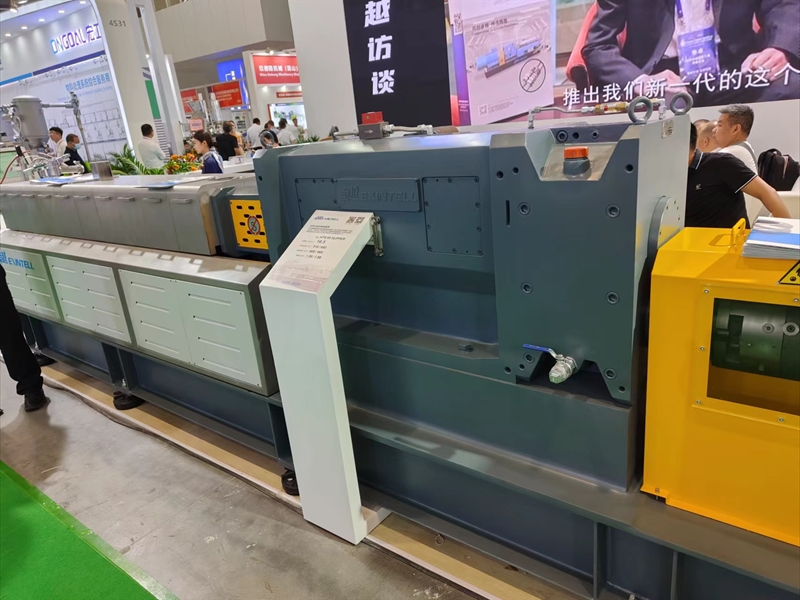
| Sab | Single Screw Extruder | |
|---|---|---|
| a | 30-50% better dispersion quality |
|
| Kev pov tseg khoom siv | Reduces purge material waste by 40-60% | Higher purge material waste |
| Kev tswj kub kub | Precise control prevents thermal degradation | Less precise control |
| Ventilation and Degassing | Effective removal of moisture and volatiles | Less effective ventilation |
I see how these differences change product consistency and quality. Better mixing, tighter temperature control, and cleaner processing often surprise those new to masterbatch production. I always consider these factors before choosing an extruder.
Cov Ntsiab Lus Tseem Ceeb
- Understand the main types of extruders: Ib leeg-ntsia hlau, Ntxaib-ntsia hlau, and specialized. Each type has unique benefits that affect production.
- Cov extruder ob lub nplhaib offer superior mixing efficiency and precise temperature control, reducing material waste significantly compared to single-screw models.
- Single-screw extruders are cost-effective and reliable for simple tasks but struggle with complex formulations and high filler loads.
- Choose twin-screw extruders for high-quality color and additive masterbatch production. Their design ensures uniform dispersion and consistent product quality.
- Consider throughput when selecting an extruder. Twin-screw models generally provide higher throughput, making them ideal for scaling up production.
- Evaluate maintenance needs and operational costs. Single-screw extruders require less maintenance, while twin-screw models may incur higher costs but offer better performance.
- Match the extruder to your material needs. Different polymers and additives require specific extruder capabilities for optimal processing.
- Invest in high-performance extruders for demanding applications. Tus nqi pib raug them rov qab los ntawm kev ua haujlwm zoo dua, txo pov tseg, thiab zoo dua ntawm cov khoom.
Masterbatch Extruder Hom
Ib Lub Nplhaib Extruder
Nta
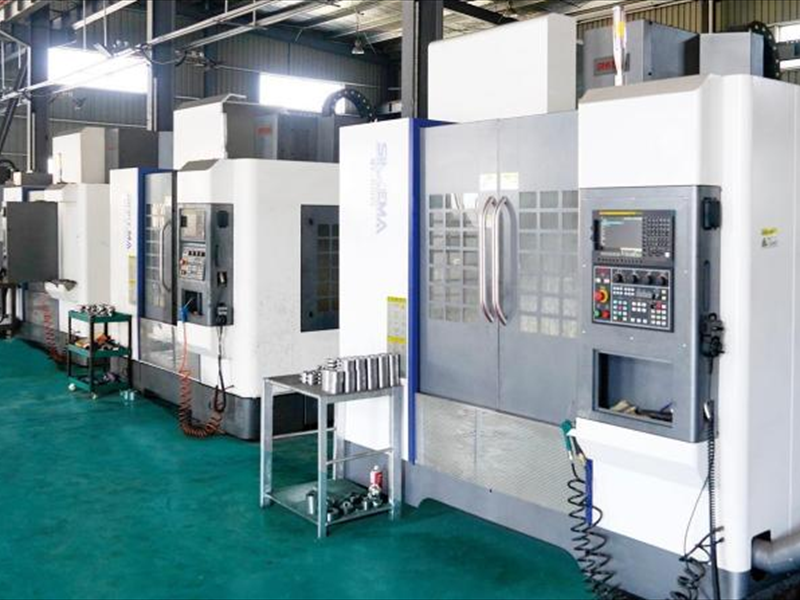
Kuv feem ntau pib nrog ib lub nplhaib extruder thaum kuv xav tau kev yooj yim thiab ntseeg tau. Cov tshuab no siv ib lub nplhaib tig hauv ib lub thawv kub los nqa, melt, thiab tsim polymer. Cov txheej txheem nyob ntawm cov yam ntxwv sib txhuam ntawm cov khoom siv. Thaum kuv ua haujlwm nrog pellets, kev thauj khoom muaj zog nyob siab. However, nrog hmoov, Kuv pom tias kev ua haujlwm poob qis. Kev sib npaug ntawm plasticizing tsis muaj zog li cov tshuab siab dua. Kuv pom kev faib sijhawm nyob hauv tsev dav dua, uas qee zaum ua rau cov khoom nyuaj raug puas tsuaj vim kub.
Daim ntawv qhia: Kev piv ib lub nplhaib thiab ob lub nplhaib Extruders
| Cim tshwj xeeb | Ib Lub Nplhaib Extruder | Ob Lub Nplhaib Extruder |
|---|---|---|
| Kev Ua Haujlwm Thauj Khoom | Nyob ntawm cov khoom muaj zog sib txhuam; drops with powders | Positive displacement ensures high, ruaj khov, and consistent conveying |
| Plasticizing Uniformity | Relatively poorer plasticizing uniformity | More uniform and efficient plasticizing |
| Daim ntawv thov tsim nyog | Not suitable for high homogenization or high-filler loading | Ideal for compounding and modification with excellent mixing |
| Residence Time Distribution | Wider; risk of thermal degradation | Narrow; all materials undergo identical processing history |
| Economic Efficiency | Economical and reliable for standard pellets | Leading for complex formulations and high product uniformity |
| Ideal Use Cases | Melting, homogenizing, shaping without complex mixing | Processing powders, high filler percentages, heat-sensitive materials |
Qhov zoo
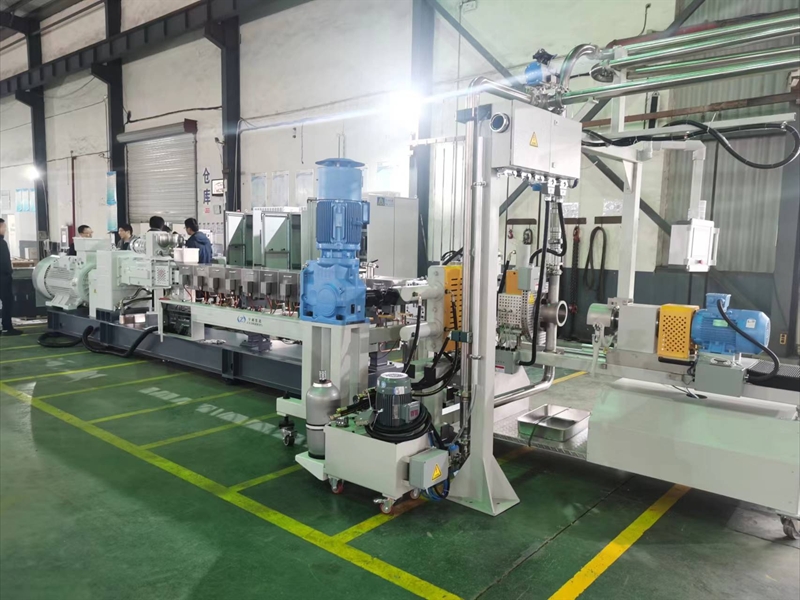
I choose single-screw extruders for their cost-effectiveness and straightforward operation. Maintenance stays low, and I can train new operators quickly. Cov extruders no ua haujlwm zoo rau cov khoom viscosity qis mus rau nruab nrab. Kuv pom lawv pab tau tshwj xeeb hauv cov haujlwm me me uas nyiaj txiag thiab yooj yim yog qhov tseem ceeb tshaj plaws.
a
Cov extruders ib lub nplhaib nyuaj nrog kev sib xyaw siab thiab loading filler siab. Thaum kuv xav tau kev sib tov kom raug lossis ua haujlwm nrog cov qauv nyuaj, Kuv pom lawv cov kev txwv. Kev faib sijhawm nyob dav dua qee zaum ua rau kub degradation, uas cuam tshuam rau qhov zoo ntawm cov khoom. Lawv tsis tswj tau hmoov lossis cov khoom kub tsis zoo li lwm hom.
Applications
Kuv siv ib lub nplhaib extruders feem ntau rau melting, homogenizing, thiab tsim cov pellets yas qauv. Lawv tswj hwm hauv cov kab tsim khoom masterbatch me me vim lawv yooj yim thiab nqi tu qis dua. Lawv lub lag luam feem ntau tseem ceeb, especially in operations that do not require advanced compounding or high filler content.
Ob Lub Nplhaib Extruder
Intermeshing
When I need superior mixing and dispersion, I turn to twin screw extruders. The intermeshing design means the screws overlap, creating strong shear and kneading forces. This setup ensures high mixing efficiency and uniform dispersion of additives. I rely on this type for intensive compounding tasks.
Non-Intermeshing
Non-intermeshing twin screw extruders offer a gentler processing environment. The screws do not overlap, which enhances material exchange without excessive shear. I use this design when I want to avoid degrading sensitive polymers.
Co-Rotating
Co-rotating twin screw extruders have both screws turning in the same direction. This configuration delivers high mixing efficiency and is ideal for uniform dispersion of pigments and additives. Kuv feem ntau xaiv cov qauv co-tig rau cov haujlwm masterbatch nyuaj.
Kev tig rov qab
Cov tshuab extruder ob lub ntsia hlau tig tiv thaiv muaj cov ntsia hlau tig mus rau ob sab sib txawv. Qhov tsim no tsim tau zog thauj khoom muaj zog thaum siv kev txiav qis dua. Kuv siv tshuab tig rov qab rau cov khoom siv uas muaj kev cuam tshuam rau kev txiav thiab kev siv siab siab.
Ob theem
Ob theem ob lub screw extruders sib xyaw ntau hom ntsia hlau lossis thaj chaw ua haujlwm. Kuv siv cov no thaum kuv xav daws cov tshuaj nyuaj lossis ua tau cov khoom tshwj xeeb. Qhov tsim ob theem tso cai rau kuv txhim kho txhua theem rau melting, sib xyaw, lossis venting.
Daim ntawv qhia: Hom twin-screw extruders thiab lawv cov txiaj ntsig tshwj xeeb
| Hom extruder | Qhov zoo tshwj xeeb rau kev tsim masterbatch |
|---|---|
| Intermesh co-rottating | High mixing efficiency, Zoo tagnrho rau kev sib xyaw ntau thiab dispersion sib npaug |
| Intermeshing Counter-Rotating | Lub zog shear muaj zog, haum rau kev siv siab siab |
| Non-Intermeshing | Kev ua haujlwm mos dua, txhim kho kev hloov khoom siv |
| Parallel | Kev sib xyaw zoo thiab sib haum xeeb, zoo tagnrho rau kev faib tawm sib npaug |
| Conical | Kev tswj siab thiab kev txiav zoo dua, haum rau cov khoom muaj viscosity siab |
Filler Masterbatch Role
Kuv siv ob lub nplhaib extruders rau filler masterbatch tsim khoom. Lawv muaj peev xwm sib xyaw thiab faib tawm zoo tshaj plaws kom cov fillers faib sib npaug thoob plaws polymer. Kev tsim qauv sib xyaw ua ke ua tiav over 95% kev sib xyaw sib npaug, uas yog qhov tseem ceeb rau filler masterbatch zoo. Kuv tau pom peev xwm tsim khoom nce ntxiv 40% thiab kev siv hluav taws xob poob qis 22% tom qab hloov mus rau advanced twin screw extruders. Lub sijhawm saib xyuas ntev dua, thiab kuv siv sijhawm thiab nyiaj tsawg dua rau kev kho.
PP Masterbatch Role
Thaum kuv tsim PP masterbatch, I use twin screw extruders to maintain stable performance at high processing temperatures. The precise temperature control prevents discoloration and degradation. I meet strict industry standards, especially for automotive-grade products. The masterbatch I produce passes certifications and meets the demands of major manufacturers.
Lub tswv yim: Twin screw extruders operate continuously, which minimizes downtime and enhances energy efficiency. I also use micro compounders for small-batch trials, reducing material waste and R&D costs.
Specialized Extruder
Multi-Screw
For unique masterbatch applications, I sometimes use multi-screw extruders. These machines have more than two screws, which increases mixing intensity and throughput. I choose them for highly filled or specialty masterbatch formulations.
Planetary
Planetary extruders use a central screw surrounded by several planetary screws. This design creates complex mixing patterns. I use planetary extruders when I need exceptional dispersion of pigments or additives in specialty masterbatch.
Co-Kneader
Co-kneader extruders combine rotating and oscillating screw motions. I use them for processing heat-sensitive or shear-sensitive materials. The gentle kneading action prevents degradation and ensures consistent product quality.
Niche Uses
Specialized extruders solve problems that standard machines cannot. However, I face challenges such as high internal friction, inconsistent melt flow, and pressure fluctuations. Poor dispersion can cause visual defects and inconsistent mechanical properties. Maintaining stable thermal conditions is essential to avoid degradation and process interruptions. I use specialized extruders for color masterbatch, specialty additives, and demanding applications where standard extruders fall short.
Masterbatch Production Differences
Performance
Throughput
When I evaluate masterbatch production, throughput stands out as a key performance metric. Throughput measures how much material I can process in a given time. I notice that single-screw extruders usually deliver lower throughput. Cov extruder ob lub nplhaib, ntawm qhov tod tes, achieve kev ua tau zoo dua due to their advanced screw design and positive displacement action. Specialized extruders, such as multi-screw or planetary models, can push throughput even further for demanding applications.
| Hom extruder | Throughput | Mixing Quality |
|---|---|---|
| Ib lub nplhaib xwb | Txo qis dua | Kev sib tov tsawg |
| Twin Screw | Ntau dua | Kev sib xyaw zoo tshaj |
This table shows how the choice of extruder directly affects the speed and efficiency of masterbatch production. When I need to scale up, I always consider the throughput advantage of twin-screw and specialized extruders.
Mixing Quality
Mixing quality defines the uniformity of pigment and additive distribution in masterbatch. I find that single-screw extruders provide basic distributive mixing, which works for simple formulations. However, when I require high-quality dispersion, especially for color or additive masterbatch, I rely on twin-screw extruders. Their kneading blocks and reversing elements create superior mixing. Specialized extruders can further enhance mixing for niche applications.
Ceeb toom: Superior mixing quality in twin-screw extruders leads to consistent color and property distribution, which is essential for high-performance masterbatch production.
Material Flexibility
Material flexibility refers to how well an extruder handles different polymers and additives. I often process a wide range of materials, from standard polyolefins to engineering plastics. Cov extruder ob lub nplhaib, especially co-rotating types, offer the highest flexibility. They allow me to adjust screw design, tswj kub, and rotational speed for each masterbatch production run.
| Feature | Cov lus piav qhia |
|---|---|
| Kev tswj kub kub | High-precision systems ensure stable temperatures across heating sections for process requirements. |
| Screw Design | Good plasticization and uniform melt flow are essential; larger diameters handle more material but increase energy consumption. |
| Rotational Speed | Needs precise control; higher speeds improve efficiency but can lead to wear and excessive heating. |
| Hom extruder | Ntxaib ntsia hlau extruders, especially co-rotating types, are preferred for PET masterbatch due to their mixing and plasticizing capabilities. |
| Special Configurations | For high-yield or specialized PET masterbatch, unique screw structures may be necessary. |
I adjust these parameters to optimize performance for each masterbatch production batch, ensuring the best results for both additive masterbatch and filler masterbatch.
Kev saib xyuas & Tus Nqi
Maintenance Needs
Maintenance requirements vary widely between extruder types. Single-screw extruders have lower maintenance costs, hais txog 30% below the industry average. Their simple design means fewer parts to service. Cov extruder ob lub nplhaib, with their complex screw assemblies and modular components, require more frequent and skilled maintenance. Specialized extruders may demand even more attention due to their unique configurations.
| Feature | Ib Lub Nplhaib Extruder | Ob Lub Nplhaib Extruder |
|---|---|---|
| Cov nqi kho | 30% below industry avg | Nyuaj |
| Kev siv hluav taws xob | 15% lower | s (Tshuab) |
| v | Lower | Siab dua |
I always factor in these maintenance needs when planning long-term masterbatch production.
Operational Cost
Operational cost includes energy use, kev ua haujlwm, and consumables. Single-screw extruders use about 15% less energy than twin-screw models. However, twin-screw extruders offer higher mixing efficiency and process flexibility, which can offset their higher energy consumption by reducing waste and improving product quality. Specialized extruders often have the highest operational costs, but they deliver unmatched performance for challenging masterbatch production tasks.
Kev ntseeg siab
Reliability in masterbatch production depends on component quality, manufacturing precision, and mechanical design. I choose extruders with premium components, such as motors from Siemens or ABB and precision gearboxes. Rigorous manufacturing and quality control reduce wear and extend service life. Heavy-duty construction and conservative design margins ensure reliable operation, even under demanding conditions.
| Sab | Cov lus piav qhia |
|---|---|
| High-Quality Component Selection | Premium components from reputable manufacturers enhance reliability, reduce failure rates, thiab nce lub neej kev pabcuam. Cov cav los ntawm Siemens lossis ABB thiab cov thawv hloov ceev raug yog piv txwv ntawm kev xaiv zoo. |
| Kev tsim khoom nruj thiab kev tswj xyuas zoo | Kev ua haujlwm raug thiab kev tswj xyuas zoo nruj ua kom cov khoom ua raws li cov cai, txo kev hnav thiab nce lub neej ua haujlwm. Kev kuaj ntev ntxiv pom tau teeb meem ua ntej xa khoom. |
| Kev tsim qauv ruaj khov | Kev tsim qauv txuag thiab kev tsim kho hnyav txo kev ntxhov siab tshuab thiab xyuas kom muaj kev khiav haujlwm ruaj khov hauv cov xwm txheej nyuaj, pab txhawb lub neej ntev ntawm cov extruder. |
Kuv tau pom tias kev nqis peev rau cov extruders ntseeg tau muaj txiaj ntsig nrog tsawg kev puas tsuaj thiab sijhawm kev pabcuam ntev dua, uas yog qhov tseem ceeb rau kev tsim masterbatch txuas ntxiv.
Kev cuam tshuam ntawm kev tsim khoom
Kev faib xim
Kev faib xim yog qhov tshwm sim ncaj qha ntawm kev sib xyaw zoo. Single-screw extruders provide basic distributive mixing, which can limit color uniformity. Cov extruder ob lub nplhaib, with their advanced screw geometry and shear zones, achieve superior color dispersion. This capability is vital for high-quality color masterbatch production, where even minor inconsistencies can lead to visible defects.
| Hom extruder | Kev sib xyaw peev xwm | Design Features |
|---|---|---|
| Single-screw | Basic distributive mixing, limited dispersive ability | Suitable for simple formulations with well-dispersed powders. |
| Twin-screw | Superior mixing due to kneading blocks and reversing elements | Preferred for high-quality dispersion of pigments and functional fillers. |
| Key Design Parameters | Influence on dispersion | Screw geometry, L / D piv, shear zones, and barrel temperature profile are critical for achieving uniform dispersion. |
I always pay close attention to these design parameters to maximize performance in masterbatch production.
Additive Distribution
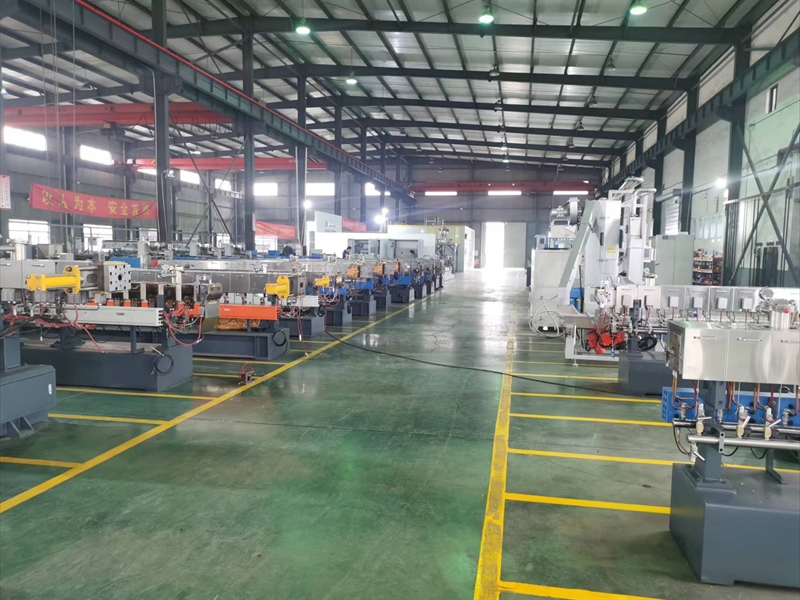
Additive distribution determines the effectiveness of functional masterbatch. Twin-screw extruders excel at dispersing additives evenly, thanks to their modular screw design and precise temperature control. This ensures that every pellet contains the right amount of additive, which is crucial for additive masterbatch performance. Single-screw extruders may struggle with complex formulations, leading to uneven distribution and inconsistent product properties.
Product Properties
The final properties of masterbatch depend on the performance of the extruder. Superior mixing and precise temperature control in twin-screw and specialized extruders result in masterbatch with consistent mechanical, thermal, and optical properties. I have found that these extruders help me meet strict industry standards, especially for automotive, ntim, thiab kev siv kho mob.
Lub tswv yim: For demanding masterbatch production, I always recommend investing in high-performance extruders. The benefits in throughput, mixing quality, and product consistency far outweigh the initial cost.
Choosing Your Masterbatch Extruder
Material Needs
Polymer Hom
When I select a masterbatch extruder, I always start by considering the types of polymers I plan to process. Each polymer has unique melt characteristics and viscosity. Piv txwv li, high-viscosity filler masterbatches require higher torque and more robust extruders than standard color masterbatches. I match the equipment to the polymer’s demands to avoid processing issues.
| Factor | Cov lus piav qhia |
|---|---|
| Muaj peev xwm ntau lawm | Equipment sizing must match throughput rate specifications with expected demand. |
| Material Characteristics | High-viscosity filler masterbatches require higher torque extruders than standard color masterbatches. |
| Quality Requirements | Precision levels needed across feeding, sib xyaw, and pelletizing systems are determined by quality standards. |
| Budget Constraints | Balancing capital investment against operational efficiency is crucial. |
| Equipment Parameters | Temperature settings and feeding systems must be optimized for different types of masterbatches. |
Additive Compatibility
I always check the compatibility of the extruder with the additives I use. Cov choice of extruder type impacts the mixing, plasticization, and dispersion of additives. These factors are critical for the performance and stability of additive masterbatch. I adjust temperature, screw speed, and back pressure to achieve optimal results. Twin-screw extruders enhance mixing and plasticizing, ensuring better dispersion of additives and improving the overall quality of additive masterbatch.
- Quality stability depends on dispersion uniformity and particle size consistency.
- Performance compliance rate must meet industry standards.
- Production efficiency improves with the right extruder and process settings.
Qhov loj ntawm kev tsim khoom
Small Batch
For small batch production or frequent testing, I use laboratory or micro extruders. These machines process between 0.25 kg/h thiab 150 kg / h. Micro extruders help me minimize waste, especially when working with costly additives or specialty polymers. Pilot-scale machines are ideal for sample production and pre-commercial trials.
Large Scale
When I scale up, I focus on output requirements, material characteristics, and process needs. Twin screw extruders handle large-scale additive masterbatch production efficiently. I match the specific mechanical energy (SME) input to ensure consistent product quality.
A key parameter used for scaling up TSEs is the specific mechanical energy (SME) input of the process. The SME provides the energy per unit mass transferred from the extruder drive motor through the screws and into the compound being processed. SME can also influence the properties of the final product, so matching SME can also help to ensure product quality.
Desired Properties
Color Consistency
I rely on additives to achieve consistent color in plastic products. Proper pigment dispersion prevents shade variations and enhances visual appeal. Twin-screw extruders give me the control I need for uniform color in additive masterbatch.
Mechanical Properties
Fillers like calcium carbonate modify mechanical properties such as stiffness and strength. I select the extruder that balances performance and cost while maintaining excellent processing characteristics in additive masterbatch.
Cov qauv zoo
I always set quality requirements before choosing equipment. Precision in feeding, sib xyaw, and pelletizing ensures I meet industry standards for additive masterbatch and filler masterbatch. I avoid common mistakes by carefully controlling feeding section temperature, plasticizing and homogenizing temperatures, and feeding rate.
| Factor | Cov lus piav qhia |
|---|---|
| Muaj peev xwm ntau lawm | Drives equipment sizing decisions to match throughput rate specifications with expected demand. |
| Material Characteristics | High-viscosity filler masterbatches require higher torque extruders than standard color masterbatches. |
| Quality Requirements | Determine precision levels needed across feeding, sib xyaw, and pelletizing systems. |
| Budget Constraints | Require balancing capital investment against operational efficiency. |
| Production Line Strategy | Ensures components work together efficiently, preventing bottlenecks and maximizing system performance. |
Lub tswv yim: I always balance capital investment with operational efficiency. I make sure all production line components work together to prevent bottlenecks and maximize performance.
I see clear differences between extruder types that shape every masterbatch project. My choice depends on fiber characteristics, capacity needs, and environmental standards. Here’s a quick reference:
| Key Consideration | Cov lus piav qhia |
|---|---|
| Fiber Characteristic Matching | Long fibers require high shear dispersing equipment, while short fibers need reduced shear to minimize breakage. |
| Capacity Demand | Small experimental lines (5-50kg / h) use twin screw extruders, while industrial lines (500-2000kg / h) require larger twin-screw extruders. |
| Environmental Requirements | Equipment must comply with wastewater treatment and VOC emission standards. |
- I always check automation levels to control labor costs and production consistency.
- I prioritize energy efficiency for long-term savings.
I recommend exploring new technologies or consulting with experts before making a final decision.
FAQ
What makes twin-screw extruders better for masterbatch production?
Kuv xaiv ob lub nplhaib extruders for their superior mixing, kev ua tau zoo dua, thiab yoog raws. Their design allows me to achieve consistent quality, especially when I produce color masterbatches or filler masterbatches. I see improved efficiency and less material waste compared to single-screw models.
How do I select the right extruder for high-volume production?
I always match the extruder to my production needs. For high-volume production, I rely on robust twin-screw extruders. These machines handle demanding output rates and maintain quality. I consider polymer type, additive compatibility, and process requirements before making my decision.
Why is mixing quality important in masterbatch production?
Mixing quality determines how well pigments and additives disperse. I know that poor mixing leads to uneven color and inconsistent properties. High mixing quality ensures every batch meets my standards, especially for color masterbatches and specialty applications.
Can I use the same extruder for both color masterbatches and filler masterbatches?
I often use twin-screw extruders for both types. Their modular design lets me adjust screw elements for different formulations. This flexibility helps me maintain quality and efficiency, whether I produce color masterbatches or filler masterbatches.
What role does extruder design play in multilayer film production?
Extruder design impacts layer uniformity and additive distribution. I use advanced extruders to ensure each layer in multilayer films receives the right masterbatch. This approach guarantees consistent performance and color across all layers.
How do co-rotating twin screw extruders improve efficiency?
Co-rotating twin screw extruders give me better mixing and higher throughput. Their design reduces downtime and energy use. I see greater efficiency and more reliable production, especially when I need to meet strict quality standards.
What challenges might I face with specialized extruders?
Specialized extruders can present challenges like higher maintenance and complex operation. I address these by following strict maintenance schedules and training my team. I use these machines for unique masterbatch production tasks that standard extruders cannot handle.
Are there tips for maintaining quality in high-volume production?
I monitor process parameters closely. I use automated systems to control feeding, sib xyaw, thiab pelletizing. Regular equipment checks help me maintain consistent quality, even during high-volume production runs.