

Pengambilan Utama
- Permintaan adalah kuat dan stabil. Pasaran penyemperitan plastik global bernilai kira-kira USD 79 bilion dalam 2023 dengan unjuran pertumbuhan yang stabil (Penyelidikan Grand View, 2023), jadi apabila saya memeriksa kilang penyemperitan plastik tersuai, Saya menganggap kapasiti dan kebolehpercayaan masa utama sebagai tidak boleh dirunding dan bukannya diandaikan.
- Padankan polimer dengan aplikasi sebelum perkara lain. Dalam pengalaman saya, kebanyakan geseran memetik hilang sebaik sahaja anda mengetahui sama ada anda memerlukan penyemperitan PVC tegar, pengedap TPE atau TPU yang fleksibel, ABS berstruktur atau polikarbonat, HDPE atau LDPE tahan kimia, PEEK suhu tinggi, atau profil nilon dan akrilik. PVC kekal antara polimer tersemperit yang paling meluas kerana kos dan serba boleh (PlastikEropah, 2023).
- Pensijilan menandakan keupayaan sebenar. Saya mencari ISO 9001, masih merupakan pensijilan pengurusan kualiti yang paling meluas diterima pakai di kalangan pengeluar di seluruh dunia (Tinjauan Pensijilan ISO, 2022), dan ISO 13485 untuk penyemperitan gred perubatan (Pertubuhan Antarabangsa untuk Standardisasi, 2016).
- Pematuhan bergantung pada pasaran dan penggunaan akhir anda. Bergantung kepada produk, Saya mengesahkan UL 94 klasifikasi mudah terbakar (Penyelesaian UL, 2023), REACH (ECHA, 2023) dan RoHS (Suruhanjaya Eropah, 2023) untuk barangan terikat EU, dan keperluan hubungan makanan FDA untuk bahagian tersemperit gred makanan (A.S. FDA, 2023).
- Bertegas pada harga terperinci, bukan “hubungi kami.” Pengeluar penyemperitan plastik yang boleh dipercayai akan memecahkan alatan penyemperitan dan mati, kos bahan, kadar larian, dan perkhidmatan fabrikasi sekunder supaya anda boleh memodelkan ekonomi setiap bahagian yang benar dan mendapatkan sebut harga penyemperitan plastik yang boleh dipertahankan.
- Reka bentuk untuk kebolehkilangan awal. Saya membincangkan toleransi penyemperitan yang realistik, ketebalan dinding, dan pilihan penyemperitan bersama semasa reka bentuk profil plastik, kerana menangkap ini sebelum perkakas menjimatkan paling banyak wang pada penyemperitan profil tersuai.
- Bandingkan jumlah kos pendaratan, bukan harga sticker. Dalam negeri berbanding luar negara jarang kelihatan apabila anda mengambil kira pengangkutan, tugas, masa memimpin, dan risiko kualiti ke dalam perbandingan untuk profil dan tiub plastik tersuai.
- Rancang laluan daripada prototaip kepada pengeluaran. Saya memilih syarikat penyemperitan plastik yang menyokong prototaip penyemperitan dan penyemperitan plastik volum rendah, kemudian skala bersih kepada larian penuh bahagian plastik tersemperit, meterai tersuai, dan gasket.
- Kelestarian semakin praktikal. Plastik kitar semula boleh mengurangkan kesan alam sekitar sambil memenuhi banyak keperluan aplikasi yang tidak kritikal (A.S. EPA, 2023), yang patut dibangkitkan dengan mana-mana pembekal semasa spesifikasi.
Apakah Itu Kilang Penyemperitan Plastik Tersuai?

Apabila saya menerangkan kilang penyemperitan plastik tersuai kepada pembeli, Saya merangkanya sebagai rakan kongsi pembuatan yang dibina berdasarkan satu prinsip: memaksa termoplastik cair melalui acuan yang dibina khas untuk mencipta profil berterusan dengan keratan rentas yang konsisten. Tidak seperti pembekal yang menjual dari katalog bentuk stok, alat jurutera kedai tersuai yang sebenar untuk lukisan anda. Perbezaan itu lebih penting daripada jangkaan kebanyakan pasukan perolehan, dan ia membentuk segala-galanya daripada masa utama kepada ekonomi unit.
Mentakrifkan Penyemperitan Tersuai dan Pembuatan Profil Berterusan
Penyemperitan profil tersuai ialah proses yang berterusan. Mesin tidak pernah menghasilkan diskret “bahagian” cara penekan acuan mengeluarkan satu komponen setiap kitaran. Sebaliknya, ia menghasilkan panjang larian bahan, dipotong atau digulung mengikut spesifikasi yang anda perlukan. Itulah sebabnya saya sentiasa memberitahu pelanggan bahawa penyemperitan pada asasnya mengenai geometri yang berulang sepanjang panjang: gasket tingkap, saluran bingkai panel solar, atau tiub kateter perubatan semuanya berkongsi DNA berterusan itu. Penyemperitan kekal sebagai salah satu kaedah pemprosesan plastik volum tertinggi, menyumbang sebahagian besar penukaran termoplastik mengikut berat (Persatuan Industri Plastik, 2023), dan pasaran penyemperitan plastik global bernilai kira-kira USD 79 bilion dalam 2023 dengan unjuran pertumbuhan yang stabil (Penyelidikan Grand View, 2023).
Jenis Produk yang Dihasilkan oleh Kedai Tersuai
Dalam pengalaman saya, rangkaian produk daripada pengeluar penyemperitan plastik berkebolehan berkumpulan kepada segelintir keluarga:
- Profil: Bentuk pepejal atau berongga seperti trim, pengawal tepi, dan saluran struktur, selalunya dalam penyemperitan PVC tegar atau ABS.
- Tiub: Tiub plastik tersuai untuk pemindahan bendalir, perlindungan kabel, atau penghantaran perubatan, dihasilkan dalam bahan daripada HDPE hingga PEEK.
- Pengedap dan gasket: Pengedap dan gasket tersuai, kerap dalam TPE atau PVC fleksibel, digunakan untuk kalis cuaca dan pengasingan getaran.
- Saluran dan trim: saluran-U, T-slot, dan trim hiasan dalam polikarbonat atau akrilik untuk pencahayaan dan papan tanda.
- Profil tersemperit bersama: Penyemperitan bersama pelbagai bahan yang digabungkan, contohnya, substrat tegar dengan bibir pengedap lembut dalam satu laluan.
Industri Dikhidmat dan Kes Penggunaan Biasa
Keluasan bahagian plastik tersemperit adalah yang memastikan sektor ini berdaya tahan. Saya kerap melihat pembinaan penyusuan penyemperitan profil tersuai (sistem tingkap dan pintu), pengangkutan (trim tepi dan saluran wayar), peranti perubatan (tiub dan kateter yang memerlukan penyemperitan gred perubatan), peralatan, lekapan runcit, dan perkakasan tenaga boleh diperbaharui. A.S. industri plastik menggaji lebih 900,000 pekerja merentasi rantaian bekalan pembuatan (Persatuan Industri Plastik, 2023), dan sebahagian yang bermakna daripada jejak itu menyokong penyemperitan dan perkhidmatan fabrikasi sekunder hilirannya.
Bagaimana Kilang Job-Shop Berbeza Daripada Pembekal Profil Saham
Ini adalah titik kekeliruan paling biasa yang saya jelaskan semasa tapisan. Pembekal berprofil saham menghantar bentuk sedia ada tanpa pelaburan perkakas di sisi anda, yang pantas dan murah tetapi mengekang reka bentuk anda. Kedai kerja tersuai, sebaliknya, memotong die baharu pada keratan rentas anda, mengawal adunan resin, dan dail dalam toleransi khusus untuk aplikasi anda. Anda membayar untuk perkakas sekali, kemudian mendapat manfaat daripada profil yang sesuai dengan produk anda. Apabila jurutera bertanya kepada saya laluan mana yang perlu diambil, jawapan saya bergantung pada sama ada bentuk luar boleh memenuhi keperluan fungsian dan dimensi. Jika tidak boleh, kilang penyemperitan plastik tersuai adalah pilihan yang jujur.
Bagaimana Proses Penyemperitan Plastik Berfungsi

Memahami proses membantu pembeli menulis spesifikasi yang lebih baik dan bertanya soalan yang lebih tajam semasa sebut harga penyemperitan plastik. Saya memandu pelanggan melaluinya sebagai urutan linear: apa yang masuk sebagai pelet keluar sebagai siap, profil dikawal secara dimensi. Setiap peringkat memperkenalkan pembolehubah yang mempengaruhi kualiti, jadi saya menganggap keseluruhan talian sebagai satu sistem bersepadu dan bukannya satu set mesin terpencil.
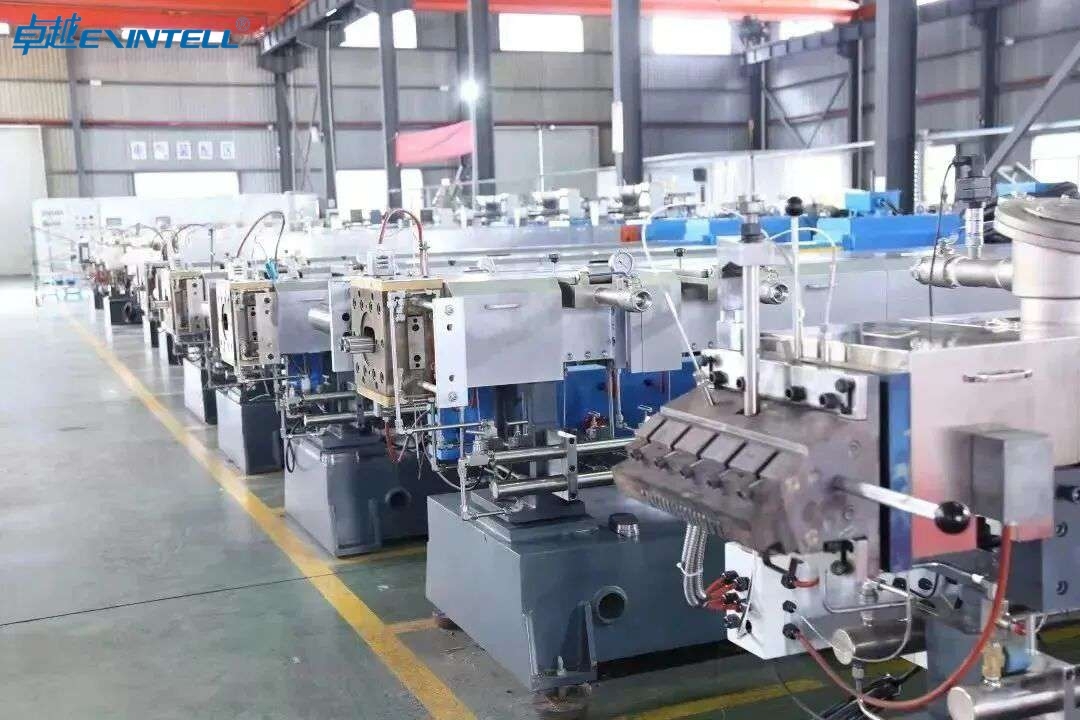
Pengeringan Damar, Memberi makan, dan Lebur dalam Tong Extruder
Segala-galanya bermula dengan pemilihan dan penyediaan resin. Bahan higroskopik seperti polikarbonat, nilon, dan TPU mesti dikeringkan sebelum diproses, atau kelembapan yang terperangkap akan menyebabkan percikan, lompang, dan profil yang lemah. Dari corong, pelet dimasukkan ke dalam tong yang dipanaskan di mana skru berputar menyampaikan, memampatkan, dan mencairkan polimer melalui gabungan haba tong dan ricih. PVC adalah antara polimer yang paling banyak dihasilkan dan tersemperit secara meluas kerana kos dan serba boleh (PlastikEropah, 2023), itulah sebabnya saya melihat ia mendominasi profil pembinaan, walaupun polipropilena, LDPE, dan HDPE masing-masing memiliki niche mereka. Pemprofilan suhu di sepanjang tong adalah tempat kualiti penyemperitan termoplastik dimenangi atau hilang.
Memaksa Lebur Melalui Die Tersuai untuk Membentuk Keratan Rentas
Polimer cair kemudiannya dipaksa melalui acuan, satu-satunya alat penyemperitan yang paling penting. Bukaan dadu menghampiri keratan rentas yang dikehendaki, tetapi saya menekankan perkataan itu “anggaran” dengan sengaja: polimer membengkak dan mengendur apabila ia keluar, jadi reka bentuk die mengambil kira tingkah laku material, bukan hanya geometri sasaran. Inilah sebabnya mengapa reka bentuk profil plastik dan kejuruteraan mati tidak dapat dipisahkan, dan mengapa penyemperitan bersama mati, yang menggabungkan dua atau lebih aliran cair, perintah belanjawan perkakas yang lebih tinggi.
Menyejukkan, Penentukuran, dan Langkah Saiz
Sejurus selepas mati, profil lembut memasuki penyejukan dan penentukuran. Tangki saiz vakum atau lekapan penentukuran memegang keratan rentas mengikut spesifikasi sementara mandi air atau penyejukan udara menguatkan bentuk. Dalam pengalaman saya, peringkat ini mengawal betapa ketat toleransi penyemperitan anda secara realistik. Profil tegar menentukur lebih boleh diramal daripada penyemperitan plastik fleksibel, dan bentuk berongga menuntut kawalan vakum yang teliti untuk mengelakkan keruntuhan.
Menarik, Memotong, dan Menggulung Profil Selesai
Seorang penarik (haul-off) menarik profil melalui garisan pada kelajuan yang dikawal dengan tepat, dan kelajuan talian berbanding dengan kadar keluaran ialah yang memperhalusi ketebalan dinding. Hilir, profil sama ada dipotong mengikut panjang dengan gergaji atau pisau atau bergelung jika ia adalah tiub plastik tersuai yang fleksibel. Perkhidmatan fabrikasi sekunder seperti tebukan, menggerudi, percetakan, atau perhimpunan rekaan sering mengikuti, dan saya syorkan perancangan untuk ini lebih awal kerana ia mempengaruhi timbunan toleransi.
Penyemperitan Tersuai lwn Pengacuan Suntikan: Perbezaan Utama
Buyers frequently ask me to compare these two processes, and the honest answer is that they solve different problems. I never position one as universally better. The decision comes down to geometry, isipadu, and cost structure. Below I lay out how I evaluate the trade-offs, then summarize them in a table you can share with your team.
Continuous Profiles vs Discrete Molded Parts
The defining difference is output form. Extrusion produces a continuous length with a uniform cross-section, while injection molding produces discrete, bahagian tiga dimensi dengan ciri kompleks seperti bos, tulang rusuk, dan benang. If your part has a constant profile along one axis, extrusion is almost always the more economical route. If it has features that vary in all three dimensions, molding is the natural fit.
Tooling Cost and Complexity Comparison
This is where the cost gap is starkest, and where I push back on vague “contact us for pricing” answers. Extrusion dies are relatively simple and affordable to build and modify. Injection molds are precision, multi-cavity tools that can cost an order of magnitude more and take longer to produce. For low volume plastic extrusion and extrusion prototyping, that tooling economics difference is decisive: I can validate a custom profile at a fraction of the mold cost, then scale.
Best-Fit Geometries and Volume Break-Even
Peraturan saya: choose extrusion for long, uniform cross-sections and molding for feature-rich, self-contained parts. On volume, extrusion’s low tooling cost makes it favorable across a wide range, especially at lower quantities where mold amortization would dominate. Molding’s per-part efficiency shines only at very high volumes that justify the tooling investment.
|
Faktor |
Penyemperitan Tersuai |
Pengacuan Suntikan |
|---|---|---|
|
Output form |
Continuous profile, keratan rentas seragam |
Discrete 3D parts |
|
Kos peralatan |
Rendah hingga sederhana (mati) |
tinggi (precision molds) |
|
Tooling lead time |
Lebih pendek |
Lebih lama |
|
Best geometry |
Constant cross-section (tiub, saluran, anjing laut, trim) |
Complex features (bosses, threads, tulang rusuk) |
|
Low-volume fit |
kuat, ideal for prototyping |
Weak, high tooling amortization |
|
High-volume fit |
Strong for profiles |
Strong for discrete parts |
|
Bahan biasa |
PVC, ABS, HDPE, LDPE, polipropilena, TPE, polikarbonat |
ABS, nilon, polikarbonat, polipropilena |
|
Pemandu kos |
Line speed and material throughput |
Cycle time and cavitation |
|
Faktor |
Penyemperitan Tersuai |
Pengacuan Suntikan |
|---|---|---|
|
Output form |
Continuous profile, keratan rentas seragam |
Discrete 3D parts |
|
Kos peralatan |
Rendah hingga sederhana (mati) |
tinggi (precision molds) |
|
Tooling lead time |
Lebih pendek |
Lebih lama |
|
Best geometry |
Constant cross-section (tiub, saluran, anjing laut, trim) |
Complex features (bosses, threads, tulang rusuk) |
|
Low-volume fit |
kuat, ideal for prototyping |
Weak, high tooling amortization |
|
High-volume fit |
Strong for profiles |
Strong for discrete parts |
|
Bahan biasa |
PVC, ABS, HDPE, LDPE, polipropilena, TPE, polikarbonat |
ABS, nilon, polikarbonat, polipropilena |
|
Pemandu kos |
Line speed and material throughput |
Cycle time and cavitation |
When a project sits on the boundary, I look at total landed cost across the expected production life rather than unit price alone. In most profile applications I have quoted, the low tooling threshold of a custom plastic extrusion company wins on both speed to market and financial risk, which is exactly why extrusion remains such a large share of thermoplastic conversion by weight (Persatuan Industri Plastik, 2023).
Bahan Biasa Digunakan dalam Penyemperitan Plastik Tersuai
When a client hands me a drawing and asks what it should be made of, I never start with the polymer. I start with the job the part has to do. Over the years I have learned that material selection is where most extrusion projects quietly succeed or fail, long before a die is ever cut. The good news is that the field of custom profile extrusion runs on a manageable set of workhorse resins, and once you understand how they group, the choices become far less intimidating.
Damar Komoditi: The Everyday Workhorses
Kebanyakan bahagian plastik tersemperit yang saya petik jatuh ke dalam peringkat komoditi, dan untuk alasan yang baik. Resin ini adalah murah, tersedia secara meluas, dan proses boleh diramalkan, yang mengurangkan kos perkakas dan setiap kaki. Pakaian Plastik Kitar Semula Lelaki
- PVC — Lalai saya untuk profil tegar, memangkas, dan tiub plastik tersuai yang memerlukan kekakuan pada harga yang rendah. PVC adalah antara polimer yang paling banyak dihasilkan dan tersemperit secara meluas dengan tepat kerana ia mengimbangi kos dan serba boleh (PlastikEropah, 2023). Ia juga menerima flexibiliser dengan baik, jadi saya boleh menentukan penyemperitan PVC tegar untuk kerja struktur atau lembut, penyemperitan plastik fleksibel untuk gasket daripada bahan kimia yang sama.
- Polietilena (PE) — Kedua-dua HDPE dan LDPE muncul sentiasa. Saya mencapai HDPE apabila saya memerlukan rintangan kimia dan keliatan dalam perkara seperti profil pelapik, and LDPE when I want flexibility and low moisture absorption.
- Polipropilena (PP) — A strong choice for living hinges, chemical containment, and parts that see repeated flexing. It runs light and resists most solvents.
- ABS — When a customer wants a rigid profile with a clean, paintable surface and good impact strength at room temperature, ABS earns its place. It is a frequent pick for consumer and appliance trim.
Engineering and High-Performance Resins
Once the application demands more, panas, memuatkan, dimensional stability, or regulatory pedigree, I move up the ladder. These resins cost more and can be less forgiving on the line, tetapi mereka menyelesaikan masalah plastik komoditi tidak boleh.
- Polikarbonat — My go-to for clear or tinted profiles that must survive impact. It pairs optical clarity with genuine toughness, which is why I specify it for lighting lenses and protective glazing profiles.
- nilon (poliamida) — Rintangan haus yang sangat baik dan kekuatan mekanikal menjadikan nilon sesuai semula jadi untuk profil struktur, pakai jalur, dan panduan geseran rendah.
- MENGINTIP — Ini adalah bahagian atas julat. Apabila bahagian menghadapi suhu berterusan yang tinggi, bahan kimia yang agresif, atau keperluan perubatan dan aeroangkasa, PEEK menyampaikan, walaupun ia mempunyai harga premium dan memerlukan kawalan proses yang ketat.
- Akrilik — Untuk kejelasan optik terbaik dan tegar, kemasan berkilat, akrilik sukar untuk dikalahkan dalam papan tanda dan profil paparan, dengan syarat beban impak kekal sederhana.
Elastomer Fleksibel dan Pilihan Dual-Durometer
Beberapa kerja paling menarik yang saya lakukan melibatkan bahagian yang perlu dibengkokkan, meterai, atau cengkaman. Elastomer termoplastik membuka pintu itu.
- TPE — Keluarga serba boleh untuk pengedap dan gasket tersuai, cuaca buruk, dan tepi sentuhan lembut. Ia memproses seperti termoplastik tetapi berkelakuan seperti getah.
- TPU — When I need abrasion resistance and toughness in a flexible part, TPU outperforms most alternatives, which is why it appears in hoses and protective tubing.
Here is where co-extrusion changes the conversation. Using dual-durometer co-extruded profiles, I can run a rigid PVC backbone and a soft TPE sealing lip in a single pass, bonding them as they exit the die. That eliminates a secondary assembly step and produces a cleaner, more durable part. Whenever a customer describes a rigid channel that also needs a flexible seal, I raise thermoplastic extrusion with co-extrusion early, because it usually reshapes the whole design.
How to Choose the Right Material for Your Profile
Selecting a resin is an exercise in honest trade-offs. Dalam pengalaman saya, the projects that stay on budget are the ones where we define requirements precisely before anyone falls in love with a particular polymer. I work through a consistent set of questions with every client, and I will walk you through the same framework.
Match Material Properties to Application Requirements
I start by separating the requirements into three buckets, because a resin rarely wins on all of them at once.
Mechanical Needs
How much load, kesan, and flexing will the part see? A structural custom plastic profile that supports weight points me toward nylon or rigid PVC, while a part that must survive drops leans toward polycarbonate or ABS. If it needs to bend repeatedly without cracking, polipropilena atau TPE ialah panggilan yang lebih bijak.
Keperluan Terma
Saya meminta suhu perkhidmatan berterusan maksimum, bukan hanya puncak. Damar komoditi melembutkan lebih awal; PVC dan PE selesa dalam keadaan ambien dan agak panas tetapi gagal berhampiran sumber haba. Apabila suhu operasi meningkat, Saya beralih kepada polikarbonat, nilon, atau, untuk penghujung yang melampau, MENGINTIP.
Keperluan Rintangan Kimia
Pendedahan kepada pelarut, minyak, bahan api, atau agen pembersih menyempitkan bidang dengan cepat. HDPE dan polipropilena menolak kebanyakan bahan kimia, itulah sebabnya mereka mendominasi profil pembendungan industri, manakala ABS dan polikarbonat lebih terdedah dan memerlukan pemeriksaan yang teliti.
Faktor Persekitaran dan Ketahanan
Dua soalan menyelamatkan pelanggan daripada kegagalan bidang yang mahal. Pertama, adakah bahagian itu akan tinggal di luar rumah? Kapur plastik tidak stabil, kuning, dan rapuh di bawah pendedahan UV yang berterusan, so for outdoor profiles I specify UV-stabilized grades or inherently stable resins and confirm the expected service life up front. Kedua, does the application involve fire risk? Flammability is not optional in electrical and building products. UL 94 is the standard used to classify the flammability of plastic materials for parts and components (Penyelesaian UL, 2023), and I match the required rating, such as UL 94 V-0, to a resin grade that carries it rather than assuming a base polymer qualifies.
Regulatory Requirements
Compliance is where I see the most costly late-stage Borong Kitar Semula Plastik surprises, so I raise it before design freeze.
- Food contact — The FDA regulates food-contact substances, including plastics used in food-grade extruded products (A.S. Pentadbiran Makanan dan Dadah, 2023), so food and beverage applications require documented compliant resins.
- elektronik — RoHS mengehadkan penggunaan bahan berbahaya tertentu dalam produk elektrik dan elektronik (Suruhanjaya Eropah, 2023), dan peraturan REACH yang lebih luas mengawal pendaftaran dan penggunaan selamat bahan kimia dalam produk yang dijual di EU (Agensi Bahan Kimia Eropah, 2023).
- Perubatan — Penyemperitan gred perubatan biasanya memasangkan resin biokompatibel dengan pembekal yang memegang ISO 13485 pensijilan (Pertubuhan Antarabangsa untuk Standardisasi, 2016).
- Kemudahbakaran — penyenaraian UL, seperti yang dinyatakan di atas, untuk komponen elektrik dan bangunan.
Kos vs Prestasi Trade-Off
Setiap peningkatan dalam prestasi membawa kos, dan sebahagian daripada tugas saya adalah untuk mengelakkan terlalu menentukan. Tidak setiap bahagian memerlukan PEEK. Saya juga mengingatkan pelanggan bahawa plastik kitar semula boleh mengurangkan kesan alam sekitar sambil memenuhi banyak keperluan aplikasi yang tidak kritikal (A.S. Agensi Perlindungan Alam Sekitar, 2023), yang menjadikan mereka pilihan tulen untuk bukan struktur, profil tidak terkawal. Jadual di bawah meringkaskan cara saya menimbang resin biasa merentas faktor yang sebenarnya mendorong pemilihan.
| bahan | kategori | Kos Relatif | Suhu Perkhidmatan Maks | Rintangan Kimia | Luaran/UV | Penggunaan Profil Biasa |
|---|---|---|---|---|---|---|
| PVC (tegar) | Komoditi | rendah | Rendah–Sederhana | bagus | Baik dengan bahan tambahan | Potong, saluran, tiub plastik tersuai |
| HDPE | Komoditi | rendah | Sederhana | Cemerlang | bagus | Pelapik kimia, profil yang sukar |
| LDPE | Komoditi | rendah | rendah | bagus | Sederhana | Tiub fleksibel, bahagian beban rendah |
| Polipropilena | Komoditi | rendah | Sederhana | Cemerlang | Lemah tanpa penstabil | Engsel hidup, pembendungan |
| ABS | Komoditi | Rendah–Pertengahan | Sederhana | Adil | miskin | Kemasan tegar, bahagian yang boleh dicat |
| Polikarbonat | Kejuruteraan | Pertengahan | tinggi | Adil | Baik dengan gred UV | Kosongkan profil kesan, kanta |
| nilon | Kejuruteraan | Pertengahan | tinggi | bagus | Sederhana | Pakai jalur, panduan struktur |
| Akrilik | Kejuruteraan | Pertengahan | Sederhana | Adil | Cemerlang | Papan tanda, memaparkan profil |
| MENGINTIP | Berprestasi tinggi | Sangat Tinggi | Sangat Tinggi | Cemerlang | Cemerlang | Perubatan, aeroangkasa, layanan yang keras |
| TPE / TPU | Elastomer | Pertengahan | Sederhana | bagus | Bergantung kepada gred | Pengedap dan gasket tersuai, bibir dwi-durometer |
Penilaian di atas ialah panduan arah yang diambil daripada gred penyemperitan biasa; formulasi terkompaun tertentu berbeza-beza, jadi saya sentiasa mengesahkan hartanah terhadap helaian data pembekal sebelum melakukan.
Memahami Kos Alatan Penyemperitan dan Die
Tiada apa-apa yang mengejutkan pembeli kali pertama lebih daripada perkakas. Mereka datang menjangkakan untuk membayar setiap kaki dan mendapati bahawa profil itu harus dilahirkan daripada cetakan tersuai terlebih dahulu. Kerana pasaran penyemperitan plastik bernilai lebih kurang USD 79 bilion dalam 2023 dengan unjuran pertumbuhan yang stabil (Penyelidikan Grand View, 2023), terdapat pangkalan bekalan matang untuk perkakas, tetapi harga masih berbeza secara meluas dengan kerumitan. Biar saya nyatakan apa yang sebenarnya anda bayar.
Apakah Itu Die Penyemperitan dan Cara Ia Dibuat
Die penyemperitan ialah plat keluli yang dimesin dengan tepat, kadangkala timbunan kecil pinggan, dengan potongan pembukaan pada keratan rentas profil anda. Resin cair dipaksa melalui bukaan itu, mengambil bentuknya, dan kemudian disejukkan dan ditarik ke panjang. Sebab die memerlukan wang adalah kerana pembukaannya bukanlah salinan mudah bahagian siap. Plastik membengkak dan mengendur apabila ia keluar, jadi pembuat alatan saya sengaja memutarbelitkan geometri die untuk mengimbangi, kemudian perhalusinya melalui larian percubaan. Penalaan berulang itu, bukan sahaja pemesinan mentah, adalah apa yang anda beli. Alat penyemperitan dan die untuk profil tersemperit bersama masih lebih kompleks, kerana mereka mesti menggabungkan dua aliran cair dengan bersih.
Julat Kos Perkakas Biasa mengikut Kerumitan
Saya percaya pada nombor terperinci dan bukannya kabur “contact us for pricing,” jadi berikut adalah julat realistik yang saya lihat untuk profil satu rongga mati di Amerika Utara. Anggap mereka sebagai tokoh perancangan; petikan akhir bergantung pada bahan, toleransi, dan kadar kedai.
- Profil mudah (tiub bulat atau persegi, jalur asas, saluran terbuka): lebih kurang USD 1,500 kepada USD 4,000.
- Profil sederhana (bentuk berbilang kaki, ciri snap, toleransi yang lebih ketat): lebih kurang USD 4,000 kepada USD 8,000.
- Profil kompleks (hollow multi-chamber, dinding nipis, encapsulated features): lebih kurang USD 8,000 kepada USD 15,000.
- Co-extrusion or dual-durometer tooling: often USD 12,000 and up, because it requires additional flow tooling and more tuning.
Prototype tooling is a separate, lighter-weight path. For extrusion prototyping and low volume plastic extrusion, some shops offer soft or modular tooling at a fraction of production cost so you can validate a design before investing in a hardened die.
One-Time Tooling vs Recurring Run Costs
The cleanest way I know to explain extrusion economics is to split your quote into two lines. The first is the one-time tooling charge above, an upfront investment tied to the geometry, not the quantity. The second is the recurring run cost: the per-foot or per-pound price you pay each time you order, driven by resin cost, kelajuan talian, kadar sekerap, dan sebarang perkhidmatan fabrikasi sekunder seperti pemotongan, menumbuk, atau percetakan. Because tooling is amortized across every foot you eventually order, low volumes carry a high effective cost per part, while production volumes spread the die charge thin. When I prepare a plastic extrusion quote, I show both lines separately so you can see exactly where your money goes and model your break-even honestly.
Tooling Ownership, Storage, and Reuse Policies
This is the clause buyers most often overlook, and it matters. Before I place an order with any plastic extrusion manufacturer, I confirm three things in writing:
- Pemilikan — Do you own the die outright after paying for it, or does the supplier retain title? If you pay the full tooling charge, I push for documented customer ownership so you can move the tool if the relationship changes.
- Storage — Reputable shops store your die at no charge between runs, but some impose fees or scrap tooling after a period of inactivity. Get the retention period in writing.
- Reuse and transfer — Confirm that the die can be reused for repeat orders indefinitely and, critically, that it can be released or transferred to another plastic extrusion company if you ever need a second source.
Clarifying ownership up front protects the investment you have made and preserves your leverage. A supplier confident in its work will have no problem putting these terms on paper, and in my experience that willingness is itself a useful signal of a partner worth keeping.
A Transparent Breakdown of Custom Extrusion Costs
When I ask a prospective customer what frustrates them most about sourcing extruded plastic parts, the answer is almost always the same: pricing feels like a black box. Too many quotes arrive as a single lump sum with no explanation of what drives the number. Dalam pengalaman saya, a good plastic extrusion manufacturer should be willing to unbundle the cost so you can see exactly where your money goes. I break every custom profile extrusion project into three components, then account for the extras that quietly inflate a quote.
The Three Core Cost Components
Every extrusion quote I write rests on three pillars: perkakasan, bahan, and processing. Understanding the relative weight of each helps you decide where to negotiate and where to leave well enough alone.
Perkakas
The extrusion die is a one-time capital cost. A simple round profile in rigid PVC extrusion might use a die in the low four figures, while a complex co-extruded profile with multiple durometers and tight internal geometry can run several times higher. Calibration and sizing fixtures add to that figure. I always treat tooling as an amortized investment: on a long production run, the per-foot impact of the die shrinks toward negligible, which is why extrusion tooling and dies rarely make sense to skimp on for a part you plan to run for years.
bahan
Resin is the recurring cost that scales directly with volume. Commodity polymers such as PVC, HDPE, LDPE, and polypropylene sit at the affordable end, which is part of why PVC is among the most produced and widely extruded polymers due to cost and versatility (PlastikEropah, 2023). Engineering and specialty resins move the needle sharply upward. Polikarbonat, ABS, nilon, TPE, and TPU carry meaningful premiums, and high-performance PEEK can cost many times more per pound than a commodity grade. Acrylic sits in the middle for optical applications. Pewarna, Penstabil UV, and flame-retardant additives that satisfy standards like UL 94 (Penyelesaian UL, 2023) each add incremental cost.
Processing
Processing covers machine time, buruh, tenaga, and scrap. Faster line speeds lower the per-foot processing cost, but thick walls, toleransi yang ketat, and difficult geometries slow the line and raise it. Penyemperitan kekal sebagai salah satu kaedah pemprosesan plastik volum tertinggi, menyumbang sebahagian besar penukaran termoplastik mengikut berat (Persatuan Industri Plastik), so processing efficiency is where an experienced plastic extrusion company earns its keep.
How Volume Shapes Per-Foot Pricing
The single largest driver of your unit price is annual volume, because it dictates how tooling amortizes and how much setup time you absorb per foot. Persediaan, pembersihan, and first-article inspection are fixed costs incurred every time we start a run. Spread across 500 kaki, they dominate the price. Spread across 50,000 kaki, they nearly vanish. The illustrative table below reflects the pattern I see across typical custom plastic profiles; treat it as directional rather than a fixed rate sheet, since resin selection and profile complexity shift the absolute numbers.
| Annual volume | Tooling amortization per foot | Setup impact per foot | Relative unit price |
|---|---|---|---|
| 500 ft (prototype) | tinggi | tinggi | Baseline ×3–4 |
| 5,000 ft (isipadu rendah) | Sederhana | Sederhana | Baseline ×1.6–2 |
| 25,000 ft (mid volume) | rendah | rendah | Baseline ×1.1–1.3 |
| 100,000+ ft (pengeluaran) | Negligible | Negligible | Garis dasar |
The takeaway I share with clients running extrusion prototyping is simple: expect prototype pricing to look alarming on a per-foot basis, and judge the true economics only once you model production volume.
Secondary Operation Cost Adders
The extruded length that leaves the die is often not the finished part. Secondary fabrication services add real cost that belongs in your quote, not in a surprise invoice. Common adders I itemize include cut-to-length and tight-tolerance sawing, hole punching and notching, menggerudi, printing or striping, stamping panas, tipping and flaring on custom plastic tubing, ultrasonic welding, perhimpunan, and custom packaging. Each operation introduces its own labor, fixturing, and scrap rate. When you request custom seals and gaskets, corner-cutting and joining steps frequently cost more than the extrusion itself at low volumes.
Where Hidden Costs Typically Appear
Over the years I have learned exactly where budgets get blown. Pertama, freight and dunnage on long or fragile profiles: a lightweight part can still be expensive to ship because it consumes volume, not weight. Kedua, minimum resin purchases for custom compounds and colors, where you pay for a full lot even if your run uses a fraction. Ketiga, scrap and startup allowance, which is real material you fund. Keempat, inspection and certification labor for regulated work such as medical grade extrusion under ISO 13485 (Pertubuhan Antarabangsa untuk Standardisasi, 2016), or documentation for REACH (ECHA, 2023) dan RoHS (Suruhanjaya Eropah, 2023) pematuhan. I flag every one of these line items up front, because a plastic extrusion quote that hides them is not actually cheaper, it is just less honest.
Minimum Order Quantities and Volume Planning
Nearly every conversation about extruded plastic parts eventually reaches the minimum order quantity, and it is often the point where a promising project stalls. I find it helps to explain why MOQs exist before we negotiate around them, because the reasoning reveals where flexibility actually lives.
Mengapa MOQ Wujud dalam Penyemperitan
Penyemperitan adalah proses yang berterusan, not a discrete one. Every run demands the same startup sequence regardless of length: memasang acuan, heating the barrel to temperature, purging the previous material, dialing in dimensions against the calibration tooling, and running scrap until the profile stabilizes. That startup consumes machine time and material whether you order 200 feet or 20,000. The MOQ is how a plastic extrusion manufacturer ensures a run is long enough to justify that fixed setup burden. It is an economic threshold, not an arbitrary barrier.
Typical Minimum Run Lengths and Weights
Dalam amalan, I see MOQs expressed two ways. For simpler commodity profiles, minimums are often stated by weight, commonly in the range of a few hundred pounds of resin per run, which reflects the lot economics of the material. For dimension-driven parts, minimums are stated in linear feet, frequently landing somewhere between 1,000 dan 5,000 feet for a standard profile. Specialty resins such as PEEK or medical-grade compounds carry higher effective minimums because the material lots themselves are large and costly. These figures are typical starting points; kerumitan, tooling status, and resin all move them.
Balancing Inventory Carrying Cost Against Setup Savings
There is a genuine tension here, and I never pretend otherwise. Ordering in large batches lowers your per-foot price by diluting setup cost, but it ties up capital and warehouse space in finished goods that may sit for months. Ordering small keeps inventory lean but pays the setup penalty repeatedly. The right answer depends on your carrying cost, your demand stability, and shelf-life considerations for the polymer. I usually model the crossover point explicitly: at what run frequency does the setup savings from a larger batch exceed the cost of storing the extra inventory? For stable, high-turn products the math favors larger runs. For volatile or short-lifecycle products, smaller and more frequent runs win despite the higher unit cost.
Blanket Orders and Scheduled Releases
For low volume plastic extrusion buyers who cannot absorb a full production batch at once, blanket orders are the tool I recommend most often. Under a blanket order, you commit to a total annual quantity that qualifies for volume pricing, then take delivery in scheduled releases sized to your actual consumption. We run the material efficiently in economical batches, warehouse it, and ship against your call-offs. You capture near-production pricing while keeping your own inventory footprint modest. It is the cleanest way I know to reconcile a supplier’s need for run length with a buyer’s need for cash-flow discipline, and it is a standard offering from any serious plastic extrusion company.
Achievable Tolerances in Plastic Extrusion
Tolerance expectations cause more friction between designers and extruders than almost any other topic. Engineers frequently arrive with drawings dimensioned as if the part were machined, and I have to reset expectations early. Extrusion is a thermoforming process where hot polymer is pushed through a die and then cooled, sized, and pulled. The material shrinks, relaxes, and moves as it solidifies, and those physics set the realistic limits on precision.
Standard Versus Tight Tolerance Ranges
Rather than promise machining-grade numbers, I work from published commercial and precision tolerance bands that reflect what extrusion genuinely delivers. Standard commercial tolerances are appropriate and economical for the majority of custom plastic profiles. Tight tolerances are achievable on select dimensions, but they require better tooling, tighter process control, in-line measurement, and sometimes secondary sizing, all of which raise cost. The table summarizes the practical ranges I quote against, with values expressed as typical deviation for a given dimension size.
| Jenis dimensi | Standard tolerance | Tight tolerance | Nota |
|---|---|---|---|
| Ketebalan dinding | ±0.005 hingga ±0.010 in | ±0.003 in | Thicker walls hold tolerance better than very thin sections |
| Lebar/tinggi keseluruhan (tegar) | ±0.010 hingga ±0.020 in | ±0.005 in | Rigid PVC and ABS hold dimensions more predictably |
| Lebar/tinggi keseluruhan (fleksibel) | ±0.020 to ±0.030 in | ±0.010 in | TPE and flexible PVC move more after the die |
| Sudut | ±2° | ±1° | Sharp corners are harder to hold than radiused ones |
I present these as engineering guidance, not marketing promises. Any reputable plastic extrusion services provider should be willing to review your specific profile and confirm what is achievable before you commit to a drawing.
Faktor Yang Mempengaruhi Kestabilan Dimensi
Several variables govern how tightly a profile holds its shape. Material selection matters first: crystalline polymers such as HDPE, polipropilena, and nylon shrink more and less predictably than amorphous polymers such as ABS, polikarbonat, and acrylic, which makes the amorphous families easier to hold tight. Melt temperature, kelajuan talian, kadar penyejukan, and puller consistency all influence the final dimensions. Ambient conditions and post-extrusion relaxation play a role too, since some materials continue to change slightly for hours after leaving the line. Consistent process control is what separates a capable custom profile extrusion supplier from an inconsistent one.
How Wall Thickness and Geometry Influence Precision
Geometry is destiny in extrusion. Uniform wall thickness cools evenly and holds dimensions well; abrupt transitions between thick and thin sections cool at different rates, inducing warpage, sink, and dimensional drift. I coach designers toward balanced walls, generous internal radii, and symmetry wherever the function allows. Hollow profiles and custom plastic tubing require internal air pressure and mandrels to hold shape, adding another variable to control. Dalam penyemperitan termoplastik, the closer your cross-section approaches uniform wall thickness and gentle curves, the tighter and cheaper the tolerances I can deliver. Co-extrusion of two materials in one profile adds capability but also adds interfaces that must be managed for dimensional consistency.
When to Specify Critical Versus Reference Dimensions
The most valuable habit I can teach a buyer is to distinguish critical dimensions from reference dimensions on the drawing. A critical dimension is one that must be controlled because it mates with another part, seals against a surface, or affects function. A reference dimension merely describes the profile without needing tight control. When every dimension is toleranced tightly, cost rises across the board and inspection slows delivery for no functional gain. When you identify the two or three dimensions that truly matter and let the rest float at standard tolerance, we concentrate tooling and process effort exactly where it counts. That single practice, more than any other, keeps a plastic extrusion quote realistic while still protecting the fit and function your application depends on.
Reka bentuk untuk Kebolehkilangan: Getting Your Profile Right
Dalam pengalaman saya, the single largest driver of scrap, delay, and cost overruns in custom profile extrusion is a drawing that ignores how molten polymer actually behaves as it leaves the die and cools. A part that looks clean in CAD can warp, sink, or bow the moment it hits the cooling bath. Designing for manufacturability is not about compromising your intent; it is about shaping the profile so the physics of thermoplastic extrusion work in your favor. When I evaluate a Custom Plastic Extrusion Factory supplier, I look for engineers who push back on my geometry early rather than quoting whatever I hand them.
Maintaining Uniform Wall Thickness
Uniform wall thickness is the first principle I apply to any custom plastic profile. Thick and thin regions in the same cross-section cool at different rates, and that differential shrinkage pulls the part out of shape. Thick zones stay molten longer, then contract and create sink marks or internal voids, while thin walls set quickly and lock in stress. I aim to keep wall thickness within roughly 10 kepada 15 percent of a nominal value across the profile. Where a functional feature genuinely needs more mass, I core it out or blend the transition rather than leaving an abrupt step. This discipline matters across every resin I specify, from rigid PVC extrusion to flexible plastic extrusion in TPE.
Using Generous Radii and Avoiding Sharp Corners
Sharp internal corners concentrate stress and disrupt melt flow, and they are notoriously hard to fill consistently through extrusion tooling and dies. I replace them with generous radii wherever the function allows, typically an internal radius of at least half the adjacent wall thickness. Rounded corners fill more evenly, cool more predictably, and produce a tougher extruded plastic part in service. They also extend die life, which quietly reduces long-term tooling cost. When a customer insists on a knife edge for sealing or aesthetics, I flag it as a feature that will tighten achievable extrusion tolerances and raise the price.
Designing Hollow Sections That Cool Evenly
Hollow profiles and custom plastic tubing introduce a second cooling surface on the inside, which complicates thermal balance. A hollow section that is dimensionally lopsided will cool unevenly and bow along its length. I keep the walls surrounding a hollow chamber as consistent as possible and, for multi-lumen or complex chambered profiles, I discuss internal air pressure and vacuum sizing with the factory. These process controls hold the bore geometry while the outer surface sets. The takeaway is simple: symmetry in the drawing translates directly into straightness on the production line.
Collaborating with the Factory’s Engineers Early
The best cost savings in plastic profile design happen before the die is cut. I bring the manufacturer’s process engineers into the conversation during concept, not after I have frozen the geometry. They know their line speeds, their calibration hardware, and the quirks of the specific polymer grade. A ten-minute exchange about a radius or a wall transition can eliminate a tooling revision that would otherwise cost thousands and add weeks. Extrusion is one of the highest-volume plastics processing methods, menyumbang sebahagian besar penukaran termoplastik mengikut berat (Persatuan Industri Plastik), which means the collective process knowledge inside a good factory is deep. I treat that knowledge as a design resource, bukan renungan.
Profil Penyemperitan Bersama dan Pelbagai Bahan
When a single resin cannot satisfy every requirement in one cross-section, co-extrusion becomes the tool I reach for. It lets me combine materials with different properties into a single, integrated profile in one continuous operation, which is often more elegant and more economical than assembling separate parts downstream. Plastic Compound Wholesale
How Co-Extrusion Combines Multiple Resins in One Profile
Dalam penyemperitan bersama, two or more extruders feed distinct polymer streams into a shared die, where they merge and bond while still molten. The result is a co-extruded profile with regions of different color, kekerasan, kos, or performance, formed simultaneously. I use this approach to place an expensive, high-performance material only where it is functionally needed while backing it with a lower-cost substrate. It is a practical way to control material spend without sacrificing the properties that matter at the working surface.
Rigid-Flexible Combinations and Dual Durometer
The most common request I handle is a rigid-flexible combination, often called dual durometer. A stiff structural backbone in rigid PVC, ABS, or polycarbonate carries the load, while a soft TPE or TPU section provides a compliant sealing or gripping surface. This pairing delivers a part that mounts firmly yet seals softly, something no single durometer can achieve. The design conversation centers on the interface geometry and on choosing durometers that behave predictably under the compression the application demands.
Aplikasi Biasa: anjing laut, Trims, and More
I see co-extrusion applied most often in custom seals and gaskets, cuaca buruk, trim tepi, dan profil kaca. A window seal might pair a rigid mounting leg with a flexible bulb that compresses against glass. Automotive and appliance trims combine a structural core with a soft-touch or decorative outer layer. These are exactly the parts where a bonded multi-material profile outperforms a mechanically assembled equivalent in both cost and reliability.
Adhesion and Material Compatibility Considerations
Not every pair of polymers bonds well in the melt, and this is where I lean hardest on the manufacturer’s materials expertise. Chemical compatibility, suhu cair, and viscosity matching all govern whether the interface holds under flexing and temperature cycling. Some combinations bond directly; others need a tie layer or a specifically formulated grade to achieve adhesion. I confirm compatibility with sample runs before committing to tooling, because an interface that peels in service is a failure no downstream inspection can fully catch. The table below summarizes the trade-offs I weigh across common approaches.
| Approach | Bahan biasa | Kos perkakas relatif | Aplikasi paling sesuai | Key design concern |
|---|---|---|---|---|
| Single-material extrusion | PVC, HDPE, polipropilena, ABS | Terendah | Framing, tiub, structural trims | Ketebalan dinding seragam |
| Penyemperitan bersama (color/cap layer) | Base resin + UV or cosmetic cap | Sederhana | Weatherable exterior profiles | Layer thickness control |
| Dual durometer (rigid-flexible) | Rigid PVC or PP + TPE/TPU | Lebih tinggi | anjing laut, gasket, kaca, trim | Melt adhesion at interface |
| Co-extrusion with tie layer | Dissimilar resins + bonding layer | Tertinggi | Barrier and specialty profiles | Compatibility and bond durability |
Costs are relative and directional; I always request a specific plastic extrusion quote, because tooling complexity and cavity count shift the numbers considerably.
Operasi Sekunder dan Perkhidmatan Nilai Tambah
Extrusion produces a continuous shape, but rarely a finished component. Secondary fabrication services turn that continuous profile into a part ready to install, and a capable plastic extrusion company folds these operations into a single workflow. In my sourcing decisions, in-house secondary capability is a strong differentiator because it collapses lead time and eliminates the coordination overhead of shipping semi-finished stock to a separate shop.
Memotong ke Panjang, Notching, Menumbuk, and Drilling
The most routine secondary operations are cut-to-length, torehan, menumbuk, and drilling. Precise cutting delivers parts at the exact dimension I specify with clean, square ends. Notching and punching add slots, cutouts, and mounting features, while drilling places holes for fasteners or fluid paths. When these run in line or immediately after extrusion, the factory maintains tighter positional accuracy than I would achieve by outsourcing to a downstream vendor.
In-Line Printing, Labeling, and Hole Placement
Many products need markings, and I prefer to have them applied during production. In-line printing adds part numbers, brand marks, measurement graduations, or safety text directly onto the profile as it runs. Labeling and precise hole placement can be integrated into the same pass, which guarantees registration between printed features and physical features. This is especially valuable for regulated products where traceability markings must appear consistently on every unit.
Perhimpunan, Bonding, and Packaging
Higher-value factories go further, offering assembly, ikatan, and packaging as part of the deliverable. That can mean inserting gaskets, penutup hujung ikatan, joining components into a subassembly, or kitting and packaging parts to my specification so they arrive ready for my own line. Each of these services removes a step I would otherwise own, and it shifts responsibility for that step to the party best equipped to control it.
How These Services Reduce Your Downstream Steps
The strategic value of bundled plastic extrusion services is total-cost reduction, not just convenience. Every operation I keep inside the extrusion supplier is a handoff I remove from my own process: less inventory in transit, fewer purchase orders, fewer quality gates to manage, and shorter overall lead time. For low volume plastic extrusion and extrusion prototyping, this consolidation is often the difference between a manageable project and a logistics headache. Pasaran penyemperitan plastik global bernilai kira-kira USD 79 bilion dalam 2023 dengan unjuran pertumbuhan yang stabil (Penyelidikan Grand View, 2023), and much of the competitive pressure in that market pushes manufacturers to offer exactly this kind of integrated, value-added service. When I compare a Custom Plastic Extrusion Factory manufacturer that stops at the profile against one that delivers a finished, packaged part, the second almost always wins on landed cost even when the per-piece price looks higher on paper.
Prototyping Before Committing to Full Production
Whenever I engage a new custom plastic extrusion factory, I treat prototyping as the single most valuable phase of the whole engagement. It is far cheaper to discover a wall-thickness problem or a dimensional drift on a short sample run than to find it after committing to a full production order. Dalam pengalaman saya, the projects that skip meaningful prototyping are the ones that end up with scrapped inventory, delayed launches, and strained supplier relationships. A disciplined prototype-to-production roadmap protects both your budget and your timeline.
The Value of Sample Runs and Soft Tooling
Soft tooling, sometimes called prototype or bridge tooling, lets me validate a custom profile design without the expense of a fully hardened production die. For custom profile extrusion, a soft aluminum die or a simplified steel insert produces representative extruded plastic parts at a fraction of the cost. I use these early samples to confirm that the material behaves as expected, whether I am working with rigid PVC extrusion, flexible plastic extrusion, or a more demanding polymer like polycarbonate or PEEK. When I need co-extruded profiles that bond a rigid substrate to a soft TPE or TPU sealing lip, sample runs are essential because the interface between two materials rarely behaves perfectly on the first attempt.
Iterating on Fit, Selesai, dan Toleransi
Penyemperitan adalah proses yang berterusan, and small changes in die design, penyejukan, and line speed shift the final geometry. I plan for at least one or two iteration cycles on fit, selesai, and extrusion tolerances before I sign off. Semasa peringkat ini saya menyemak bagaimana profil bergandingan dengan komponen bersebelahan, sama ada kemasan permukaan memenuhi keperluan kosmetik, dan sama ada keratan rentas memegang dimensi merentasi panjang larian. Bahan seperti HDPE, LDPE, dan polipropilena mengecut secara berbeza apabila ia sejuk, jadi saya sentiasa meminta pengeluar penyemperitan plastik untuk mendokumenkan andaian pengecutan yang dibina ke dalam acuan. Untuk kerja toleransi ketat dalam nilon atau akrilik, Saya meminta data yang diukur daripada sampel dan bukannya menerima jaminan lisan.
Meluluskan Sampel Artikel Pertama
Sampel artikel pertama adalah pintu rasmi antara pembangunan dan pengeluaran. Sebelum saya meluluskannya, Saya mahukan laporan dimensi terhadap lukisan itu, pensijilan bahan, dan sampel fizikal yang saya boleh periksa dan, di mana berkaitan, pasang dalam perhimpunan. Peraturan saya mudah: nothing moves to a full production run until the first article is signed off in writing by both parties. That signature becomes the reference standard for every subsequent lot, which matters enormously for traceability and dispute resolution later.
Scaling from Prototype to Production Volume
Once the first article is approved, scaling is a matter of transferring the validated process onto hardened production tooling and confirming that quality holds at volume. Line speed increases, cooling is tuned for throughput, and the factory typically runs a short qualification batch before committing to the full quantity. I ask the plastic extrusion company how they handle the transition from soft to hard tooling, because a die change can reintroduce dimensional variation. For low volume plastic extrusion programs, I sometimes keep production on bridge tooling indefinitely when the annual quantity does not justify a hardened die, and I have found reputable suppliers willing to discuss that tradeoff openly rather than pushing tooling I do not need.
Masa Utama: Perkakas, Persampelan, dan Pengeluaran
Lead time is where expectations most often collide with reality, so I map the entire timeline at the quoting stage rather than after the purchase order lands. A realistic plan accounts for three distinct phases: tooling fabrication, sample and approval cycles, and the production run itself. Each phase has its own risk profile, and compressing one usually pushes cost or quality onto another.
Typical Tooling Fabrication Timelines
Extrusion tooling and dies are far faster to produce than injection molds, which is one of the underappreciated advantages of thermoplastic extrusion. A straightforward single-material die often comes together in a couple of weeks, while complex co-extrusion tooling or profiles with tight internal geometry can take longer. The table below reflects the ranges I typically see when I request a plastic extrusion quote across different profile types; actual figures vary by factory workload and geometry complexity.
| Profil / Program Type | Tooling Fabrication | Persampelan & Approval | Production Run (tipikal) |
|---|---|---|---|
| Simple single-material profile (cth., rigid PVC extrusion) | 1–3 weeks | 1–2 weeks | 2–4 weeks |
| Custom plastic tubing (HDPE, LDPE, nilon) | 2–4 weeks | 1–3 weeks | 2–5 weeks |
| Profil tersemperit bersama / custom seals and gaskets (TPE, TPU) | 3–6 weeks | 2–4 weeks | 3–6 weeks |
| Engineering-grade or medical grade extrusion (MENGINTIP, polikarbonat) | 4–8 weeks | 3–6 weeks | 4–8 weeks |
I treat these as planning ranges, not guarantees. Programs requiring secondary fabrication services such as cutting, menumbuk, menggerudi, or printing add time downstream, and I fold that into the schedule from the start.
Sample and Approval Cycles
The approval cycle is often the least predictable phase because it depends on both the factory and my own internal review speed. Each iteration on fit or finish can add a full cycle, so I try to consolidate feedback and provide clear acceptance criteria up front. When I am specific about extrusion tolerances and cosmetic expectations in the first review, I usually save an entire round of back-and-forth.
Production Run Scheduling
Extrusion lines are scheduled in blocks, and material changeovers cost setup time. A factory running a large volume of a common polymer like polypropylene will slot your order differently than one setting up a specialty run of PEEK. I ask directly where my job sits in the queue and whether the quoted date assumes the line is already configured for my material.
Planning for Demand Spikes and Reorders
Because extrusion is one of the highest-volume plastics processing methods and accounts for a large share of thermoplastic conversion by weight (Persatuan Industri Plastik, 2023), capacity is usually available, but not always on my timeline. To protect against demand spikes, I negotiate a blanket order with scheduled releases, keep a safety stock of long-lead materials, and confirm the reorder lead time in writing. This matters most for custom seals and gaskets and other components where a stockout can halt a downstream assembly line.
Pensijilan dan Pematuhan yang Perlu Diperhatikan
Certifications tell me whether a plastic extrusion manufacturer has built repeatable systems around quality, and compliance markings tell me whether the material and part are legal and safe for my end market. I verify both before I place a first order, because retrofitting compliance after production is expensive and sometimes impossible. Pasaran penyemperitan plastik global bernilai kira-kira USD 79 bilion dalam 2023 dengan unjuran pertumbuhan yang stabil (Penyelidikan Grand View, 2023), and in a market that large, the credible suppliers are the ones who can document their systems rather than simply assert them.
ISO 9001 Quality Management and ISO 13485 for Medical
ISO 9001 is my baseline expectation for any serious plastic extrusion company. It remains the most widely adopted quality management certification among manufacturers globally (Tinjauan Pensijilan ISO, 2022), and its presence signals documented process control, corrective-action procedures, and consistent record-keeping. For any medical grade extrusion, I require ISO 13485, which layers medical-device-specific quality requirements on top of a quality management system (Pertubuhan Antarabangsa untuk Standardisasi, 2016). If a supplier producing extruded plastic parts for a medical application cannot show ISO 13485, I do not proceed, regardless of price.
RoHS, REACH, and Material Compliance
For anything destined for electrical or electronic products, RoHS compliance is non-negotiable because it restricts specific hazardous substances in those products (Suruhanjaya Eropah, 2023). If I am selling into the European Union, I also confirm REACH compliance, which governs the registration and safe use of chemical substances in products (Agensi Bahan Kimia Eropah, 2023). These requirements shape material selection early: they influence which grades of ABS, PVC, or nylon I can specify, and they are far cheaper to design around at the quoting stage than to remediate later.
UL Flammability and FDA Food-Contact Approvals
When flammability performance matters, I specify a UL 94 penilaian, the standard used to classify the flammability of plastic materials for parts and components (Penyelesaian UL, 2023). This is common for enclosures and profiles in electrical assemblies. For any food-grade application, I confirm the plastic meets FDA requirements, since the FDA regulates food-contact substances including plastics used in food-grade extruded products (A.S. Pentadbiran Makanan dan Dadah, 2023). Materials like certain grades of HDPE, polipropilena, and acrylic are frequently chosen for food-contact work precisely because compliant grades are readily available.
Documentation and Traceability Expectations
Certifications mean little without documentation to back them, so I define traceability expectations in the purchase agreement. At minimum I ask for material certificates of compliance, lot and batch traceability tied back to the approved first article, laporan pemeriksaan dimensi, and a documented process for handling nonconformance. When I incorporate recycled content, which can reduce environmental impact while meeting many non-critical application requirements (A.S. Agensi Perlindungan Alam Sekitar, 2023), I request documentation of the recycled percentage and its source so I can substantiate any sustainability claims. Dalam pengalaman saya, a supplier who provides this documentation without being chased is one I can build a long-term relationship with.
How to Vet and Evaluate a Custom Extrusion Factory
When I evaluate a custom plastic extrusion factory, I treat the decision less like a purchase and more like the start of a multi-year partnership. Pelaburan perkakas, material qualification, and process tuning all compound over time, so switching suppliers midstream is expensive and disruptive. Di bawah adalah rangka kerja yang saya gunakan, refined across dozens of sourcing projects for extruded plastic parts ranging from rigid PVC extrusion to medical grade extrusion.
Reviewing Capabilities and Equipment Lists
I start by asking for a plain equipment list: bilangan garisan penyemperitan, screw diameters, tonnage, and the polymers each line is qualified to run. A shop that runs mostly polypropylene and HDPE commodity profiles may not be tooled or trained for engineering resins like polycarbonate, nilon, MENGINTIP, atau TPU. I also confirm whether the factory offers co-extrusion, because co-extruded profiles (rigid core with a flexible TPE seal, contohnya) require multiple coordinated extruders and more sophisticated die design.
Capability depth matters as much as breadth. I want to see that a plastic extrusion manufacturer handles its own extrusion tooling and dies in-house or through a tightly managed partner. In-house die shops iterate faster during extrusion prototyping and correct dimensional drift without waiting weeks for an outside vendor. I also ask about secondary fabrication services such as cutting, menggerudi, menumbuk, percetakan, dan perhimpunan, since consolidating those steps under one roof reduces handling errors and total cost.
Assessing Quality Control Processes and Inspection
Certifications give me a baseline. ISO 9001 remains the most widely adopted quality management certification among manufacturers globally (Tinjauan Pensijilan ISO, 2022), so I treat its absence as a red flag for anything beyond low-stakes commodity work. For regulated applications, I look for domain-specific certification: medical device manufacturing, including extruded components, commonly requires ISO 13485 (Pertubuhan Antarabangsa untuk Standardisasi, 2016). I also confirm relevant material and compliance standards for the end use, such as UL 94 klasifikasi mudah terbakar (Penyelesaian UL, 2023), RoHS for electronics (Suruhanjaya Eropah, 2023), REACH for goods sold in the EU (ECHA, 2023), and FDA food-contact compliance for food-grade profiles (A.S. FDA, 2023).
Beyond the paperwork, I ask how quality is actually measured. Good factories describe in-process checks (dimensional gauging at set intervals), first-article inspection against the print, statistical process control on critical extrusion tolerances, and documented corrective-action procedures. I request a sample inspection report to see whether they measure what my drawing calls out or only what is convenient.
Checking References and Sample Parts
References in a comparable industry tell me whether a plastic extrusion company can hold my tolerances and volumes, not just someone’s. I ask for two or three customers with similar materials and part complexity. I also request sample parts, ideally from a recent production run, and I measure them myself. Consistent wall thickness, clean surface finish, kelurusan, and accurate profile geometry reveal more about day-to-day process control than any brochure.
Komunikasi, Responsif, and Engineering Support
Dalam pengalaman saya, the difference between a smooth program and a painful one is engineering support. I want a supplier that pushes back with realistic design-for-manufacturability feedback: flagging thin walls that will sag, sharp corners that trap stress, or tolerances tighter than extrusion can economically hold. A factory that quietly accepts an unmanufacturable drawing will deliver problems later. I also gauge responsiveness during the quoting phase, because reply speed and clarity before I have spent a dollar are the best predictor of communication after the purchase order lands.
A Copyable Vetting Checklist
- Equipment list with line count, screw sizes, and qualified polymers (PVC, ABS, polikarbonat, HDPE, LDPE, polipropilena, TPE, TPU, nilon, akrilik, MENGINTIP)
- Co-extrusion capability and in-house extrusion tooling and dies
- ISO 9001 as a baseline; ISO 13485 or application-specific certification where required
- Documented in-process inspection, SPC, and first-article reports
- Two or more relevant references plus physical sample parts to measure
- Written DFM feedback on my drawing and a clear tolerance discussion
- Named engineering contact and a demonstrated response time under 48 jam
- Secondary fabrication services and prototype-to-production scaling path
Domestic vs Overseas Extrusion Suppliers
Soalan domestik-berbanding-luar negara jarang mempunyai jawapan universal. I decide it per program, weighing unit price against total landed cost, lead time risk, pendedahan harta intelek, and how much engineering collaboration the part demands. A.S. industri plastik menggaji lebih 900,000 pekerja merentasi rantaian bekalan pembuatan (Persatuan Industri Plastik, 2023), so domestic capacity for custom profile extrusion is deep, but overseas suppliers can be compelling on high-volume, stable designs.
Unit Price vs Total Landed Cost
The single most common mistake I see is comparing quoted unit prices in isolation. A lower overseas piece price often narrows or reverses once I add ocean freight, tugas, pembrokeran kastam, inland transport, currency risk, and the carrying cost of larger safety stock. I always build the comparison on total landed cost per usable part, including scrap and expedite risk, rather than the number on the quote line.
Masa Utama, Penghantaran, and Logistics Risk
Domestic suppliers typically deliver in days to a couple of weeks and let me react quickly to demand swings or engineering changes. Overseas sourcing adds weeks of transit plus port and customs variability, which forces higher inventory and makes last-minute design revisions costly. For products with volatile demand or frequent revisions, that logistics tail can erase any piece-price advantage.
IP Protection and Communication Ease
For proprietary custom plastic profiles or novel co-extruded designs, I weigh IP protection heavily. Enforcing tooling ownership and design confidentiality is generally more straightforward domestically. Time-zone overlap and shared language also speed the tight engineering dialogue that prototyping and low volume plastic extrusion demand, whereas a 12-hour gap can turn a one-hour clarification into a two-day round trip.
Apabila Setiap Pilihan Masuk Masuk akal
| Faktor | Domestic supplier | Overseas supplier |
|---|---|---|
| Harga seunit | Lebih tinggi | Often lower at volume |
| Jumlah kos pendaratan | More predictable | Variable after freight, tugas, inventori |
| Masa utama | Days to ~2 weeks | Several weeks including transit |
| Logistics risk | rendah | Lebih tinggi (port, customs, currency) |
| Engineering collaboration | Cepat, zon waktu yang sama | Lebih perlahan, time-zone dependent |
| Perlindungan IP | Generally stronger | Requires careful contracting |
| Paling sesuai | Prototaip, isipadu rendah, frequent revisions, bahagian terkawal | Kelantangan tinggi, stable design, cost-driven programs |
In practice I lean domestic for extrusion prototyping, medical grade extrusion, custom seals and gaskets with tight tolerances, and any product still evolving. I consider overseas when a design is frozen, volumes are large and steady, and the total landed cost genuinely wins after every hidden cost is counted. Many mature programs land on a hybrid: domestic for prototyping and rapid-turn orders, overseas for high-volume steady runs.
How to Request an Accurate Quote
A precise plastic extrusion quote depends almost entirely on the quality of the information I provide. Vague requests produce padded, non-comparable numbers. When I give a factory a complete package, I get tighter pricing, faster turnaround, and fewer surprises after tooling is cut.
Information the Factory Needs to Quote Precisely
Sekurang-kurangnya, I supply the polymer and grade (contohnya, PVC tegar, ABS, HDPE, polipropilena, or a flexible TPE), the annual and per-release volumes, the cut length or continuous coil requirement, any color or UL 94 flammability requirement, and the compliance standards the part must meet (RoHS, REACH, Hubungan makanan FDA, as applicable). I also state whether I need secondary fabrication services and what packaging the parts require.
Providing Drawings, Sampel, and Material Specs
I include a dimensioned drawing showing the profile geometry, wall thicknesses, and critical dimensions with their tolerances. Marking which tolerances are critical versus reference matters, because extrusion holds some features tighter than others, and demanding uniform tight extrusion tolerances inflates cost unnecessarily. If I have a physical sample or a competitor’s part, I send it; a reference sample resolves ambiguity faster than any note. For material, I specify the resin, any required additives (Penstabil UV, kalis api), and whether recycled content is acceptable, which can lower cost and environmental impact for non-critical applications (A.S. EPA, 2023).
Accepted File Formats and Specification Details
Most plastic extrusion services accept 2D profile drawings as PDF and DXF, and 3D geometry as STEP or IGES. I provide the 2D cross-section with full dimensioning as the primary source of truth and add a STEP file when the geometry is complex. I also list surface finish, any printing or masking, tolerance callouts, and the applicable revision number so the factory and I are working from the same document.
Comparing Quotes Apples-to-Apples
To compare a custom plastic extrusion factory fairly, I insist on itemized quotes rather than a single lump sum. I want tooling and die cost separated from piece price, kuantiti pesanan minimum, lead time for first articles and for production, and any charges for secondary operations, persediaan, or packaging. Transparent, itemized breakdowns let me normalize competing bids and spot where one supplier has buried cost in tooling while another loads the piece price.
I build a simple side-by-side table: kos perkakas, piece price at my target volume, MOQ, first-article lead time, masa utama pengeluaran, and compliance coverage. When every quote lists the same line items Pembekal Extruder Skru Berkembar against the same drawing revision and volume, the comparison becomes genuinely apples-to-apples, and the best-value supplier for my extruded plastic parts becomes obvious rather than guesswork.
Strategies to Reduce Custom Extrusion Costs
Dalam pengalaman saya, the biggest cost drivers in custom profile extrusion are decided long before a single pellet melts. They are locked in during design review. When I work with buyers to bring down the price of extruded plastic parts, I focus on four levers that consistently move the number without compromising the part’s job.
Simplify Profile Geometry
Complex geometry is expensive geometry. Thin walls next to thick sections cool at different rates, which invites warping and drives up scrap. Sharp internal corners concentrate stress and complicate the die. When I simplify a plastic profile design, I aim for uniform wall thickness, jejari yang murah hati, and symmetry wherever the application allows. A cleaner cross-section shortens die development, stabilizes the line, and tightens extrusion tolerances. Every unnecessary undercut or hollow chamber you remove is money saved across the entire production run.
Consolidate Multiple Parts Into One Profile
Part consolidation is one of the most underused cost strategies I see. If two or three components are assembled after molding or fabrication, ask whether a single co-extruded profile can replace them. Co-extrusion lets me combine a rigid PVC extrusion substrate with a flexible TPE sealing lip in one pass, eliminating a secondary bonding step. Consolidating parts reduces tooling count, assembly labor, and inventory complexity. I have seen a three-piece assembly collapse into one co-extruded profile and cut unit cost by double digits.
Choose Cost-Effective Materials Without Sacrificing Function
Material selection is where buyers often overspend. Not every part needs polycarbonate or PEEK. PVC remains among the most produced and widely extruded polymers precisely because it balances cost and versatility (PlastikEropah, 2023). For structural profiles, HDPE or polypropylene frequently deliver the required stiffness at a fraction of engineering-resin cost. I reserve premium materials like polycarbonate, nilon, or PEEK for applications with genuine thermal, optical, or chemical demands. Matching the resin to the actual duty cycle, rather than the worst imaginable case, is the honest path to a lower plastic extrusion quote.
Order in Economical Batch Sizes
Extrusion rewards volume. Persediaan, pembersihan, and die trials are largely fixed costs spread across the run, so the per-foot price drops as quantity climbs. Itu berkata, I never advise overordering just to hit a price break. Sebaliknya, I help buyers find the batch size where amortized setup and inventory carrying cost reach their combined minimum. For teams still validating a design, low volume plastic extrusion and extrusion prototyping keep early spend disciplined before committing to a hardened production die.
| Cost Lever | Typical Relative Unit-Cost Impact | Primary Mechanism |
|---|---|---|
| Simplify geometry (uniform walls, radii) | 5–15% reduction | Lower scrap, faster line speed, simpler die |
| Consolidate parts via co-extrusion | 10–25% reduction | Fewer tools, kurang buruh pemasangan |
| Right-size the resin (cth., HDPE vs. polikarbonat) | 15–40% reduction | Lower material cost per pound |
| Increase batch to optimal run length | 10–30% reduction | Amortized setup and tooling cost |
These ranges are directional, not guarantees. I share them so buyers can reason about tradeoffs rather than accept an opaque “contact us for pricing” wall. The reliable pattern is that geometry and material decisions compound, so addressing them together yields the strongest result.
Sustainable and Recycled Material Options
Sustainability has moved from a nice-to-have to a purchasing criterion in most of the RFQs I review. The encouraging reality is that thoughtful material substitution rarely forces a painful compromise, provided you match the recycled or bio-based option to the application honestly.
Post-Consumer and Post-Industrial Recycled Resins
Plastic Extrusion Factory Manufacturer Plastik kitar semula boleh mengurangkan kesan alam sekitar sambil memenuhi banyak keperluan aplikasi yang tidak kritikal (A.S. Agensi Perlindungan Alam Sekitar, 2023). I distinguish between two streams. Post-industrial recycled resin comes from clean manufacturing offcuts and offers highly consistent properties, making it my default recommendation for structural or hidden profiles. Post-consumer recycled resin carries a stronger sustainability story but more variability, so I qualify it carefully for cosmetic or load-bearing parts. HDPE, LDPE, and polypropylene recycle particularly well and are common choices for construction and industrial extruded parts.
Bio-Based and Recyclable Material Choices
Di luar kandungan kitar semula, buyers increasingly ask about bio-based feedstocks and end-of-life recyclability. Mono-material design helps here. A profile built from a single polymer family recycles far more easily than a multi-resin composite, so I weigh the convenience of co-extruded rigid-and-flexible constructions against downstream recyclability. When a customer prioritizes a circular story, I steer toward recyclable thermoplastics and avoid additives that contaminate the recycling stream.
Balancing Sustainability With Performance
The engineering discipline is refusing to pretend every green option fits every part. Recycled resin can shift color consistency, kekuatan impak, and UV stability. For flexible plastic extrusion such as custom seals and gaskets, I validate that recycled TPE or TPU still meets compression-set targets before I approve it. For demanding medical grade extrusion or high-temperature service, virgin engineering resins like nylon, polikarbonat, or PEEK usually remain the responsible choice. Good sustainability practice is targeted, not universal.
Certifications and Buyer Expectations
Regulatory alignment is inseparable from material selection. Di EU, the REACH regulation governs the registration and safe use of chemical substances in products (Agensi Bahan Kimia Eropah, 2023), while RoHS restricts specific hazardous substances in electrical and electronic products (Suruhanjaya Eropah, 2023). For food-contact profiles, the FDA regulates the plastics used in food-grade extruded products (A.S. Pentadbiran Makanan dan Dadah, 2023). And where flammability matters, UL 94 classifies the flammability of plastic materials for parts and components (Penyelesaian UL, 2023). When I evaluate a plastic extrusion manufacturer, I confirm they can document compliance against the specific standards a buyer’s market demands, because a sustainability claim without traceable certification carries little weight in a serious procurement process.
Industry Applications: Perubatan, Automotif, and More
Custom plastic extrusion services touch a remarkable breadth of industries. Extrusion is one of the highest-volume plastics processing methods, menyumbang sebahagian besar penukaran termoplastik mengikut berat (Persatuan Industri Plastik), and the U.S. plastics industry alone employs over 900,000 pekerja merentasi rantaian bekalan pembuatan (Persatuan Industri Plastik, 2023). Pasaran penyemperitan plastik global bernilai kira-kira USD 79 bilion dalam 2023, with steady projected growth through the decade (Penyelidikan Grand View, 2023). Here is how I see that demand distribute across the sectors I work with most.
Medical Tubing and Device Components
Medical work is the most demanding extrusion environment I operate in. Custom plastic tubing for catheters, drug delivery, and fluid management requires tight dimensional control, biocompatible resins, and validated processes. Medical device manufacturing, including extruded components, commonly requires ISO 13485 pensijilan (Pertubuhan Antarabangsa untuk Standardisasi, 2016). I select materials such as medical-grade TPU, nilon, and polycarbonate for these applications, and I hold the extrusion tolerances far tighter than in general industrial work. This is a domain where medical grade extrusion capability separates a specialized plastic extrusion company from a general-purpose shop.
Automotive Seals, Trims, and Channels
Automotive programs lean heavily on co-extruded profiles that pair a rigid backbone with a flexible sealing element. Weatherstrip seals, window channels, trim tepi, and body-side moldings all rely on this combination, often marrying rigid PVC or a stiff substrate with a soft TPE lip in a single pass. These parts must survive temperature swings, Pendedahan UV, and years of mechanical cycling, so I specify UV-stabilized formulations and validate compression set on every custom seal and gasket design before production release.
Pembinaan dan Produk Binaan
Construction is one of the largest consumers of extruded plastic parts by volume. Window and door profiles, meterai cuaca, pengawal tepi, wire raceways, and decking components are typically extruded from rigid PVC, HDPE, or ABS for their weather resistance and cost efficiency. Because these products often run in long, high-volume batches, they benefit most directly from the geometry-simplification and batch-sizing strategies I described earlier. Recycled resin also finds a natural home here, since many building profiles tolerate the property variation that recycled feedstock introduces.
Retail Displays, Lighting Diffusers, and Appliances
Consumer-facing applications prize appearance and light management. For retail displays and point-of-purchase fixtures, I use acrylic and clear polycarbonate to achieve optical clarity and impact resistance. Lighting diffusers depend on precisely engineered co-extruded profiles that combine a clear body with a diffusing layer to spread LED output evenly. Appliance components, from trim strips to gaskets, blend ABS, polipropilena, and TPE for the right mix of rigidity, selesai, and sealing. Across all of these, secondary fabrication services such as cutting, menumbuk, menggerudi, and printing turn a raw extruded length into a finished, ready-to-assemble part. This is where a capable custom profile extrusion partner adds value well beyond the die.
Signs of a Reliable vs Low-Quality Extrusion Partner
After years of sourcing extruded plastic parts, I have learned that the quality of a supplier reveals itself long before the first production run. The way a plastic extrusion manufacturer handles your initial quote, your sample request, and your hardest technical questions tells you almost everything you need to know. Below I share the specific signals I watch for, framed as a practical comparison you can copy into your own vetting process.
Red Flags in Quoting and Communication
The quoting stage is my first diagnostic. A reliable plastic extrusion company returns an itemized plastic extrusion quote that separates tooling from per-unit pricing, states the assumed material grade, and notes the quantity break points. When I instead receive a single lump-sum number with no breakdown, atau a “contact us for pricing” wall that never resolves into specifics, I treat it as a warning. Vague quoting usually foreshadows vague accountability later.
Communication cadence matters just as much. I expect a technical contact who can discuss custom profile extrusion in engineering terms, not a sales rep who forwards every question to an unnamed shop floor. Slow, evasive, or inconsistent answers during courtship rarely improve once a purchase order is signed.
Consistency in Sample Quality
Any shop can produce one good sample. What I care about is repeatability across a sample lot. When I evaluate custom plastic profiles, I request several pieces pulled from different points in a trial run and measure them myself. Reliable partners deliver dimensionally consistent extruded plastic parts with clean surfaces, stable wall thickness, and no drift in color or gloss. Low-quality suppliers send one hand-finished showpiece that the production line can never reproduce.
Transparency About Tolerances and Limitations
Dalam pengalaman saya, honesty about extrusion tolerances is the single strongest predictor of a good long-term relationship. Penyemperitan adalah proses yang berterusan, so it cannot hold the tight tolerances of injection molding on every dimension. A trustworthy plastic extrusion manufacturer will tell me plainly which features are controllable to a few thousandths of an inch and which will vary more, then offer design-for-manufacturability guidance to relax non-critical dimensions. A supplier who promises to hold impossibly tight tolerances on a flexible plastic extrusion profile is either inexperienced or willing to mislead.
Documented Processes and Warranty Policies
Documentation separates a hobbyist shop from a mature plastic extrusion company. ISO 9001 remains the most widely adopted quality management certification among manufacturers globally (Tinjauan Pensijilan ISO, 2022), and I look for it as a baseline. Untuk kerja terkawal, I expect the relevant supporting standards — ISO 13485 untuk penyemperitan gred perubatan (Pertubuhan Antarabangsa untuk Standardisasi, 2016), UL 94 flammability classification for electrical enclosures and components (Penyelesaian UL, 2023), and material compliance under REACH (Agensi Bahan Kimia Eropah, 2023), RoHS (Suruhanjaya Eropah, 2023), or FDA food-contact rules (A.S. Pentadbiran Makanan dan Dadah, 2023) mana berkenaan. Alongside certifications, I want written inspection procedures, kebolehkesanan bahan, dan polisi jaminan dan ketidakpatuhan yang jelas sebelum saya membuat komitmen.
Rakan Kongsi Boleh Dipercayai lwn Berkualiti Rendah: Perbandingan Pantas
| Kawasan Penilaian | Rakan Penyemperitan Boleh Dipercayai | Rakan Penyemperitan Berkualiti Rendah |
|---|---|---|
| Memetik | Diperincikan: perkakasan, per unit, gred bahan, pecah kuantiti | Sekaligus atau “hubungi kami,” tiada kerosakan |
| Komunikasi | Hubungan teknikal langsung, jawapan kejuruteraan segera | Jualan sahaja, perlahan atau mengelak pada spesifik |
| Sampel | Konsisten merentasi banyak, boleh diukur, boleh berulang | Satu barang pameran yang disiapkan dengan tangan |
| Toleransi | Had jujur serta bimbingan DFM | Menjanjikan ketepatan yang tidak realistik |
| Dokumentasi | ISO 9001, kebolehkesanan, polisi waranti bertulis | Tiada pensijilan, waranti tidak rasmi atau tiada |
Soalan Lazim
Ini adalah soalan yang paling kerap ditanya oleh pembeli kepada saya semasa membuat skop projek. Saya telah memastikan setiap jawapan ringkas dan praktikal supaya anda boleh menggunakan bahagian ini sebagai rujukan pantas semasa perbualan pembekal.
Berapakah kos penyemperitan plastik tersuai?
Cost splits into two parts: one-time extrusion tooling and dies, and recurring per-unit price. Simple profile dies are relatively affordable, while complex or co-extruded profiles and tight-tolerance work cost more. Per-unit price depends on resin choice, ketebalan dinding, daya pengeluaran, dan perkhidmatan fabrikasi sekunder. I always ask for these line items separately so I can model total cost across volumes rather than accept a single blended figure.
What is a typical MOQ for custom profile extrusion?
Minimum order quantity varies widely. Many shops set MOQs by weight or linear footage to justify a die setup and material purge. Some plastic extrusion services specialize in low volume plastic extrusion and extrusion prototyping, which is where I start when validating a design before scaling.
What lead times should I expect?
Wholesale Twin-Screw Extruder For a new profile, tooling typically drives the timeline. Budget several weeks for die fabrication and sampling, then a shorter recurring window for production runs once the die is proven. Reorders of an existing custom profile are far faster.
How do I choose the right material?
Match the polymer to the environment and function. Rigid PVC extrusion suits low-cost structural and building profiles; PVC is among the most produced and widely extruded polymers due to cost and versatility (PlastikEropah, 2023). ABS and polycarbonate offer impact strength, HDPE and LDPE handle chemical resistance and flexibility, polypropylene balances cost and fatigue resistance, TPE and TPU serve custom seals and gaskets and flexible tubing, nylon adds wear resistance, acrylic provides clarity, and PEEK covers extreme temperature and chemical demands. I choose based on mechanical load, suhu, pendedahan kimia, and any regulatory requirement.
What tolerances can extrusion actually hold?
Extrusion holds looser tolerances than molding because the profile is drawn continuously and cools progressively. Wall thickness and overall width can be controlled well, but I plan for more variation on unsupported or thin features. The right partner will provide realistic tolerance bands per dimension and suggest design changes that improve consistency.
Domestic vs overseas: which is better?
It depends on total landed cost, bukan harga seunit sahaja. Overseas suppliers may quote lower per-unit rates, but freight, tugas, masa memimpin, minimum orders, and communication overhead can erode the savings. For time-sensitive, tight-tolerance, or regulated custom plastic tubing, I often favor domestic sourcing; untuk volum tinggi, cost-driven commodity profiles, overseas can win. I evaluate both against the full delivered cost.
What certifications should my supplier hold?
ISO 9001 is my baseline for quality management. For medical grade extrusion I require ISO 13485, and for electrical applications I confirm UL 94 penilaian mudah terbakar. Depending on the market, I also verify REACH, RoHS, or FDA food-contact compliance. Plastik kitar semula boleh mengurangkan kesan alam sekitar sambil memenuhi banyak keperluan aplikasi yang tidak kritikal (A.S. Agensi Perlindungan Alam Sekitar, 2023), which is worth exploring where specs allow.
What are the most common mistakes buyers make?
The recurring ones I see are over-specifying tolerances that extrusion cannot economically hold, skipping a proper sample-lot review, ignoring tooling amortization when comparing quotes, and failing to plan the prototype-to-production scaling path. Addressing these early prevents expensive surprises later.
What Is a Custom Plastic Extrusion Factory and Why It Matters for B2B Buyers
Having covered how to vet suppliers and answered the questions I hear most, I want to close by grounding the term itself. Understanding what a custom plastic extrusion factory does — and why it matters commercially — helps you buy with confidence.
Definisi
A Custom Plastic Extrusion Factory is a manufacturer that melts thermoplastic resin and forces it through a custom-designed die to produce continuous profiles in a cross-sectional shape you specify. The process, thermoplastic extrusion, yields long lengths of extruded plastic parts — tubing, saluran, memangkas, anjing laut, and structural profiles — that are cut to size and often finished through secondary fabrication services. Co-extrusion lets a factory combine two or more materials in a single pass, producing co-extruded profiles such as a rigid PVC body with a soft TPE seal.
Konteks Pasaran
This is a large and growing sector. Pasaran penyemperitan plastik global bernilai kira-kira USD 79 bilion dalam 2023 with steady projected growth through the decade (Penyelidikan Grand View, 2023). Extrusion is also one of the highest-volume plastics processing methods, menyumbang sebahagian besar penukaran termoplastik mengikut berat (Persatuan Industri Plastik). The broader U.S. industri plastik menggaji lebih 900,000 pekerja merentasi rantaian bekalan pembuatan (Persatuan Industri Plastik, 2023), which speaks to the depth of capacity and expertise available to buyers.
Key Applications
Custom profile extrusion reaches nearly every industry. In construction I see rigid PVC extrusion used for window frames, memangkas, dan tepi. In automotive and appliances, flexible plastic extrusion supplies custom seals and gaskets in TPE and TPU. Medical device makers rely on precision custom plastic tubing produced under ISO 13485. Electronics use extruded housings and channels rated to UL 94, while acrylic and polycarbonate serve signage and lighting where clarity matters.
Mengapa Ia Penting untuk Pembeli B2B
For a B2B buyer, the value of the right plastic extrusion company is not just a part — it is predictable cost, kualiti yang konsisten, and a partner who can carry you from extrusion prototyping through full production. When you choose a factory that quotes transparently, states realistic tolerances, holds the certifications your market demands, and documents its processes, you reduce risk across your entire supply chain. That is why the vetting steps and quick references above are worth the effort: they turn a commodity purchase into a durable sourcing decision.
What Is Custom Plastic Extrusion and How Does the Process Work
Before I evaluate any vendor, I make sure the people around the table understand the process we are buying. Custom plastic extrusion is a continuous manufacturing method: thermoplastic pellets are fed through a hopper into a heated barrel, melted and homogenized by a rotating screw, then forced through a shaped die that gives the material its cross-sectional profile. What emerges is a continuous extrudate that is cooled, calibrated, pulled, and cut to length. Kerana die menentukan bentuk, the same line can produce custom plastic profiles, tiub plastik tersuai, or intricate co-extruded profiles simply by changing tooling.
Extrusion earns its place in most industrial supply chains through sheer throughput. It is one of the highest-volume plastics processing methods, menyumbang sebahagian besar penukaran termoplastik mengikut berat (Persatuan Industri Plastik). That volume advantage is why I default to extrusion whenever a part has a constant cross-section and a meaningful annual quantity.
The Core Stages of Thermoplastic Extrusion
Dalam pengalaman saya, understanding five stages is enough to have a credible conversation with any plastic extrusion manufacturer:
- Memberi makan dan mencairkan: Resin pellets enter the barrel where heat and screw shear reduce them to a uniform melt.
- Die membentuk: The molten polymer is pushed through extrusion tooling and dies that establish the profile geometry.
- Calibration and cooling: Vacuum sizing and water baths lock in dimensions and set extrusion tolerances.
- Haul-off: A puller controls line speed, which directly affects wall thickness and consistency.
- Cutting and secondary work: Parts are cut to length, then routed to secondary fabrication services such as drilling, torehan, or tipping.
Co-Extrusion and Material Selection
Co-extrusion combines two or more polymers in a single profile, which lets me pair a rigid substrate with a soft sealing lip, or a UV-stable cap layer over a lower-cost core. This is how most custom seals and gaskets are produced. Material choice drives everything downstream, and the polymer families I specify most often include:
- PVC — among the most produced and widely extruded polymers due to cost and versatility (PlastikEropah, 2023), used for both rigid PVC extrusion and flexible plastic extrusion.
- ABS dan polikarbonat — chosen for impact resistance and dimensional stability.
- HDPE dan LDPE — the workhorses for tubing, paip, and chemically resistant profiles.
- polipropilena — a lightweight, fatigue-resistant option for living hinges and packaging.
- TPE dan TPU — flexible elastomers for grips, anjing laut, and overmold-style co-extrusions.
- MENGINTIP dan nilon — high-performance choices for thermal and mechanical demands.
- akrilik — selected when optical clarity matters.
For sustainability-driven programs, I remind buyers that recycled plastics can reduce environmental impact while meeting many non-critical application requirements (A.S. EPA, 2023). That gives you a lever to lower both cost and carbon footprint on parts that do not require virgin resin.
How to Choose the Right Custom Plastic Extrusion Factory Supplier
Choosing a supplier is a risk-management exercise as much as a sourcing decision. Pasaran penyemperitan plastik global bernilai kira-kira USD 79 bilion dalam 2023 dengan unjuran pertumbuhan yang stabil (Penyelidikan Grand View, 2023), so you have no shortage of options. The challenge is separating a capable partner from a shop that merely quotes low. Di bawah adalah rangka kerja yang saya gunakan, along with the red flags that have saved me from bad contracts.
Kriteria Penilaian Vendor
I weigh candidates against a consistent set of dimensions rather than reacting to whichever price lands first. The criteria that carry the most weight:
- Pensijilan: ISO 9001 remains the most widely adopted quality management certification among manufacturers globally (Tinjauan Pensijilan ISO, 2022). For medical work, insist on ISO 13485, which is commonly required for extruded medical components (ISO, 2016).
- Material and compliance expertise: A serious plastic extrusion company can speak fluently about UL 94 klasifikasi mudah terbakar (Penyelesaian UL, 2023), RoHS restrictions on hazardous substances (Suruhanjaya Eropah, 2023), REACH chemical registration for EU-bound goods (ECHA, 2023), and FDA food-contact requirements for food-grade parts (FDA, 2023).
- Tooling capability: In-house die design and maintenance shortens lead times and gives you control over extrusion prototyping.
- Tolerance realism: A trustworthy partner will push back on unachievable extrusion tolerances rather than quietly accepting a drawing they cannot hit.
- Muatan volum: Some shops thrive on low volume plastic extrusion and prototypes; others need long runs to be economical. Match the shop to your program stage.
Bendera Merah Saya Perhatikan
A polished website is not evidence of capability. These signals consistently correlate with trouble:
- Refusal to provide an itemized plastic extrusion quote, hiding everything behind “contact us for pricing.”
- No documented quality plan, pemeriksaan artikel pertama, or SPC data.
- Vague answers on design-for-manufacturability, especially around wall thickness and corner radii.
- No willingness to sign an NDA or discuss IP ownership of extrusion tooling and dies.
- Unrealistically fast lead times with no capacity data to back them up.
Transparent Cost Breakdown
One competitor gap I see everywhere is opaque pricing. I ask every vendor to itemize the following so I can compare apples to apples for extruded plastic parts:
- Tooling/die charge (one-time), including revisions.
- Material cost per pound, tied to a named resin grade.
- Machine rate and line speed, which determine per-foot conversion cost.
- Operasi sekunder dan pembungkusan.
- Kuantiti pesanan minimum and setup fees per run.
When a plastic extrusion services provider gives you these numbers openly, you can model total cost accurately and negotiate from a position of understanding rather than guesswork.
Senarai Semak Ketekunan Wajar
Here is the copyable checklist I run before awarding custom profile extrusion work. Feel free to adapt it to your program:
- ☐ Verify current ISO 9001 (dan ISO 13485 if medical-grade extrusion) sijil.
- ☐ Request three references in your industry and actually call them.
- ☐ Review a sample first-article inspection report and PPAP-style documentation.
- ☐ Confirm material traceability and access to certificates of compliance.
- ☐ Ask for a written statement on tooling ownership and storage.
- ☐ Tour the facility or request a live video walkthrough of the line.
- ☐ Get an itemized quote with tooling, bahan, and per-unit costs separated.
- ☐ Confirm capacity headroom for your projected growth.
- ☐ Validate compliance coverage: UL 94, RoHS, REACH, FDA as applicable.
- ☐ Clarify the prototype-to-production scaling path and any re-tooling costs.
How to Find a Reliable Custom Plastic Extrusion Factory in the US
Pangkalan bekalan domestik adalah dalam. A.S. industri plastik menggaji lebih 900,000 pekerja merentasi rantaian bekalan pembuatan (Persatuan Industri Plastik, 2023), which means you can usually find a qualified Custom Plastic Extrusion Factory supplier within a reasonable shipping radius. The question I get most often is not whether domestic capacity exists, but how it compares with overseas options once every cost is on the table.
Where I Start My Search
I avoid generic listing sites that reward whoever pays the most for placement. Instead I lean on:
- Industry associations and their verified member directories.
- Trade shows where I can see extruded samples and talk to engineers directly.
- Referrals from peers running similar custom plastic profiles.
- Technical case studies that demonstrate a plastic extrusion manufacturer’s tolerance and material range.
Domestic vs. Luar negara: Total Landed Cost
An honest comparison looks past the unit price to total landed cost. The table below reflects the tradeoffs I weigh on a typical custom profile extrusion program. Treat the figures as directional planning ranges, bukan petikan.
| Faktor | Dalam negeri (AS) Pembekal | Pembekal Luar Negara |
|---|---|---|
| Unit piece price | Lebih tinggi | Lebih rendah |
| Tooling lead time | 2–5 weeks (tipikal) | 4–10 weeks (tipikal) |
| Shipping and logistics | rendah, days in transit | tinggi, weeks in transit plus duties |
| Kuantiti pesanan minimum | Lebih fleksibel, better for low volume | Often high to justify freight |
| IP and quality oversight | Easier, zon waktu yang sama | Lebih keras, requires audits |
| Paling sesuai untuk | Prototaip, rapid iteration, bahagian terkawal | Stable, high-volume, cost-driven runs |
Peraturan saya: for extrusion prototyping, regulated products, and programs where design still changes, domestic wins on responsiveness and total risk. For mature, high-volume products with frozen designs, overseas can be justified once freight, tugas, carrying cost, and quality-oversight travel are added back in.
Practical Tips for Vetting a US Factory
A few habits have consistently improved my outcomes when qualifying a plastic extrusion company:
- Send a real drawing, not a concept. You learn more from how a shop critiques your plastic profile design than from any sales pitch.
- Ask for a sample run. A short qualification run surfaces tolerance and surface-finish issues before you commit to production.
- Map the scaling path early. Confirm what changes between prototype tooling and production tooling so the quote you approve today survives contact with volume tomorrow.
- Match specialization to need. A shop strong in flexible plastic extrusion and TPE seals may not be your best choice for rigid PVC extrusion, dan sebaliknya.
Kebolehpercayaan, dalam pengalaman saya, is not something a factory claims. It is something you verify through documentation, rujukan, and a sample part in your hand. Run the checklist, insist on itemized pricing, and let the total landed cost, not the headline unit price, guide the final decision.
Difference between custom plastic extrusion and injection molding
When buyers ask me which process fits their part, I start by explaining that extrusion and injection molding solve fundamentally different geometric problems. Extrusion pushes molten thermoplastic through a shaped die to produce a continuous profile with a constant cross-section, which we then cut to length. Injection molding forces resin into a closed cavity to form a discrete three-dimensional part with variable geometry. Dalam pengalaman saya, that single distinction (constant cross-section versus fully three-dimensional shape) determines the right choice more often than any cost calculation does.
Key considerations when choosing a process
If your part is a length of custom plastic tubing, a window seal, a channel, or any co-extruded profile with the same shape from end to end, extrusion is almost always the correct route. Extrusion tooling and dies are comparatively inexpensive because they shape a two-dimensional outline rather than a complete cavity. Injection molds, sebaliknya, are precision multi-plate tools that can cost tens of thousands of dollars, but they excel at parts with bosses, tulang rusuk, threads, and enclosed volumes that no die can produce.
Material behavior matters too. Both processes handle common thermoplastics such as PVC, ABS, polikarbonat, HDPE, LDPE, polipropilena, TPE, TPU, nilon, akrilik, and even high-performance PEEK. Itu berkata, extrusion favors polymers with stable melt strength that hold a profile as they cool, which is why rigid PVC extrusion and flexible plastic extrusion are both so common. Injection molding tolerates a wider viscosity range because the mold constrains the material completely.
Konteks industri
Extrusion is one of the highest-volume plastics processing methods, menyumbang sebahagian besar penukaran termoplastik mengikut berat (Persatuan Industri Plastik, 2023). The broader plastic extrusion market was valued at approximately USD 79 bilion dalam 2023 dengan unjuran pertumbuhan yang stabil (Penyelidikan Grand View, 2023). PVC remains among the most produced and widely extruded polymers because of its cost and versatility (PlastikEropah, 2023). Those figures tell me that when a design can be made as a profile, extrusion is usually the economically dominant answer.
Petua praktikal
Before committing, I run a simple test with clients: slice the part mentally along its length. If every cross-section is identical, specify custom profile extrusion. If the cross-section changes, or the part encloses a cavity, plan for injection molding. For hybrid designs, I often recommend an extruded base profile finished with secondary fabrication services such as punching, torehan, or machining, which delivers much of the flexibility of molding at a fraction of the tooling cost.
Cost of custom plastic extrusion for low-volume production
Low-volume buyers are frequently told to “contact us for pricing,” and I understand why that frustrates people trying to budget a project. So I prefer to break the numbers down honestly. The cost of extruded plastic parts at low volume comes from four buckets: perkakasan, persediaan, material and run time, dan operasi sekunder. Understanding each one lets you predict a plastic extrusion quote before you ever send an inquiry.
Where the money goes
Extrusion tooling and dies are the first cost. A single-profile die typically runs from a few hundred to a few thousand dollars depending on complexity, toleransi, and whether the profile is a co-extruded design with multiple materials. This is dramatically lower than injection tooling, which is exactly why low volume plastic extrusion stays viable. Setup charges cover die installation, purging, and dialing in dimensions to hit your extrusion tolerances, and they are usually a fixed fee per run regardless of quantity.
Material cost scales with weight and resin grade. Commodity PVC and polypropylene sit at the low end; engineering grades like polycarbonate and nylon cost more; specialty medical-grade extrusion resins and PEEK sit at the top. Secondary fabrication services (memotong ke panjang, menggerudi, percetakan, assembling custom seals and gaskets) add per-part labor.
Illustrative cost breakdown
The table below shows representative ranges I use for planning conversations. Treat these as directional order-of-magnitude figures rather than quotes, since geometry, toleransi, and resin choice move every line significantly.
| Cost component | Prototaip (under 500 ft) | Low volume (500–5,000 ft) | Scaling to production (5,000+ ft) |
|---|---|---|---|
| Tooling and dies (one-time) | $500–$3,500 | $1,500–$5,000 | $3,000–$10,000+ |
| Setup and purge (per run) | $300–$800 | $300–$800 | Amortized across volume |
| Material and run cost | Highest per unit | Moderate per unit | Lowest per unit |
| Operasi sekunder | Often manual | Semi-automated | Automated/inline |
| Effective per-foot price trend | Premium | Declining | Best unit economics |
Practical tips for controlling low-volume cost
Two levers move the total more than any negotiation. Pertama, loosen tolerances wherever the application allows; tight extrusion tolerances demand more setup time and higher scrap, so I only specify them where the fit genuinely requires it. Kedua, consolidate secondary work. Asking a plastic extrusion manufacturer to cut, notch, and print in a single pass keeps handling costs down. For non-critical applications, recycled plastics can reduce both cost and environmental impact while still meeting requirements (A.S. Agensi Perlindungan Alam Sekitar, 2023).
Domestic versus overseas total landed cost
Overseas quotes often look cheaper on the per-foot line, but I always coach buyers to calculate total landed cost: unit price plus freight, tugas, tooling shipment, risiko kualiti, and lead-time carrying cost. For low-volume and prototype work, a domestic plastic extrusion company frequently wins on total cost once you account for faster iteration and lower minimum order quantities. For large steady production, overseas can pull ahead. The honest answer depends on volume and how much design churn you expect.
How to get a quote from a plastic extrusion manufacturer
A good quote is only as good as the information behind it. The single most common reason I see quotes come back vague or padded is an incomplete request. When you give a plastic extrusion company a complete package, you get a firm price and a realistic lead time instead of a placeholder. Here is the exact information I assemble before requesting extrusion services.
Pertimbangan utama: what to include in your RFQ
- Profile drawing: A dimensioned cross-section of your custom plastic profiles, ideally as a 2D CAD file (DXF or PDF), with the critical dimensions clearly flagged.
- Toleransi: Call out which dimensions are critical and which are reference. Realistic tolerances directly control cost.
- Bahan dan gred: Specify the polymer (for example rigid PVC, ABS, polikarbonat, HDPE, or a TPE/TPU for flexible plastic extrusion) and any required certifications.
- Quantity and cadence: Total footage plus whether it is a one-time prototype or a recurring release schedule.
- Cut length and secondary operations: Any drilling, menumbuk, percetakan, or assembly for extruded plastic parts.
- Compliance requirements: Kemudahbakaran, kimia, and food-contact standards where relevant.
Compliance and certification prompts
Naming the standards up front prevents rework. ISO 9001 remains the most widely adopted quality management certification among manufacturers globally (Tinjauan Pensijilan ISO, 2022), and medical-grade extrusion commonly requires ISO 13485 (Pertubuhan Antarabangsa untuk Standardisasi, 2016). Depending on your market, you may also need UL 94 klasifikasi mudah terbakar (Penyelesaian UL, 2023), REACH compliance for the EU (Agensi Bahan Kimia Eropah, 2023), RoHS for electrical and electronic products (Suruhanjaya Eropah, 2023), or FDA food-contact clearance (A.S. Pentadbiran Makanan dan Dadah, 2023). I list every applicable standard in the RFQ so the supplier can confirm capability before quoting.
Practical tips for a faster, more accurate quote
I request an itemized breakdown rather than a single number, so tooling, persediaan, per-foot price, and secondary operations are separated. That transparency lets me compare a Custom Plastic Extrusion Factory supplier against alternatives on equal terms and spot where costs are negotiable. I also ask for a sample or short prototyping run before committing to production tooling, because extrusion prototyping surfaces plastic profile design issues, such as wall-thickness draw-down, that a drawing alone will not reveal.
Industry context and a scaling roadmap
A.S. industri plastik menggaji lebih 900,000 pekerja merentasi rantaian bekalan pembuatan (Persatuan Industri Plastik, 2023), which means capable suppliers are not scarce, and you can afford to be selective. When I vet a plastic extrusion manufacturer, I confirm relevant certifications, request references in my industry, and evaluate responsiveness during the quoting process itself, since it predicts how they will communicate during production. Dari situ, I map a clear prototype-to-production path: validate the profile with a small run, lock tolerances and material, then release volume against a tooling investment that amortizes as quantities grow. That staged approach keeps early spend low while positioning the program for the best unit economics once demand is proven.
Menyatukan Semuanya: Choosing the Right Partner
After walking through tooling, bahan, toleransi, dan jumlah kos pendaratan, I want to leave you with the mindset I bring to every sourcing decision. Selecting a custom plastic extrusion factory is less about finding the lowest quote and more about finding a plastic extrusion manufacturer whose engineering discipline matches the demands of your application. Dalam pengalaman saya, the suppliers that survive an initial cost comparison but fail during production almost always fall short on the same fundamentals: unclear tolerance commitments, thin documentation, and no honest conversation about design-for-manufacturability.
The market context supports a patient, quality-first approach. Pasaran penyemperitan plastik global bernilai kira-kira USD 79 bilion dalam 2023 and is projected to grow steadily through the decade (Penyelidikan Grand View, 2023), which means capable partners have both the volume and the incentive to invest in process control. Pertumbuhan itu juga bermakna lebih ramai peserta bersaing untuk perniagaan anda, jadi keupayaan anda untuk memeriksa syarikat penyemperitan plastik dengan teliti adalah pertahanan terbaik anda terhadap kesilapan yang mahal.
Mana-mana polimer bahagian anda perlukan — penyemperitan PVC tegar untuk profil struktur, penyemperitan plastik fleksibel untuk pengedap dan gasket tersuai, atau resin kejuruteraan seperti polikarbonat, nilon, atau PEEK untuk menuntut beban terma dan mekanikal — kilang yang betul akan bercakap dengan lancar tentang pertukaran bahan sebelum anda bertanya. Saya mencari rakan kongsi yang boleh membincangkan ABS berbanding HDPE untuk rintangan hentaman, apabila TPE atau TPU masuk akal untuk profil overmolded atau co-extruded, dan bagaimana akrilik atau LDPE berkelakuan di bawah pendedahan UV. Kefasihan itu menandakan kepakaran penyemperitan tulen dan bukannya pengambilan pesanan.
Certifications remain a practical shortcut for narrowing your shortlist. ISO 9001 is still the most widely adopted quality management certification among manufacturers globally (Tinjauan Pensijilan ISO, 2022), and for medical grade extrusion you should expect ISO 13485 (Pertubuhan Antarabangsa untuk Standardisasi, 2016). If your product ships into regulated markets, confirm compliance with UL 94 flammability classifications (Penyelesaian UL, 2023), REACH (Agensi Bahan Kimia Eropah, 2023), RoHS (Suruhanjaya Eropah, 2023), and FDA food-contact requirements (A.S. Pentadbiran Makanan dan Dadah, 2023) as applicable. These are not checkboxes; they are evidence of a factory’s process maturity.
Akhirnya, remember that the relationship extends well past the first purchase order. The strongest partners support extrusion prototyping, offer realistic low volume plastic extrusion runs, and provide a clear prototype-to-production scaling roadmap so you are not re-sourcing the moment demand grows. That continuity, backed by a skilled workforce — the U.S. plastics industry alone employs over 900,000 workers across the supply chain (Persatuan Industri Plastik, 2023) — is what separates a vendor from a genuine manufacturing ally.
Wawasan Pakar
| Perkara Utama | Penjelasan |
|---|---|
| Vet process control before price | A low plastic extrusion quote means little if the factory cannot hold documented extrusion tolerances. I prioritize suppliers who share their inspection methods and tooling-and-dies maintenance practices, because consistent quality lowers total cost far more than a small unit-price discount. |
| Match material to regulation early | Choosing polymers like PVC, polipropilena, or PEEK should happen alongside compliance planning for UL 94, REACH, RoHS, or FDA food-contact rules. Aligning material and regulation upfront prevents expensive redesigns after tooling is cut. |
| Weigh total landed cost, bukan harga sticker | Domestic and overseas suppliers each carry hidden costs — freight, tugas, lead time risk, and communication overhead. I compare the fully loaded landed cost and factor in the value of design collaboration when deciding where to place custom profile extrusion work. |
Petua Penyumberan Boleh Ditindaklanjuti untuk Pembeli B2B
- Request an itemized quote. Ask any prospective plastic extrusion manufacturer to break out tooling, bahan, per-foot or per-part pricing, and secondary fabrication services separately, so you can compare offers on equal terms instead of accepting a single bundled figure.
- Confirm tolerance capability in writing. Have the factory state achievable extrusion tolerances for your specific profile geometry and material, and clarify how they measure and document conformance on extruded plastic parts.
- Validate certifications against your end market. Sahkan ISO 9001 as a baseline, and require ISO 13485 for medical grade extrusion or the relevant UL, REACH, RoHS, and FDA credentials for your application before committing.
- Order a prototype run first. Use extrusion prototyping and low volume plastic extrusion to test fit, selesai, and dimensional stability on custom plastic profiles before authorizing full production tooling.
- Discuss design-for-manufacturability upfront. Share your drawings early and invite feedback on wall thickness, jejari sudut, and co-extruded profiles; a strong partner will improve your plastic profile design rather than simply quoting it as drawn.
- Compare total landed cost across regions. Weigh domestic and overseas custom profile extrusion options on freight, tugas, masa memimpin, and communication, and consider recycled material where suitable for non-critical parts (A.S. Agensi Perlindungan Alam Sekitar, 2023).
Soalan Lazim
How do I choose a reliable custom plastic extrusion supplier?
Dalam pengalaman saya, the strongest signal of a reliable plastic extrusion manufacturer is not the sales pitch but the questions they ask me. A capable partner interrogates my drawings, flags impractical wall transitions, and proposes design-for-manufacturability changes before quoting. I evaluate five things in order: relevant material experience (whether I need rigid PVC extrusion, flexible TPE seals, or medical grade extrusion), documented quality systems, in-house tooling capability, secondary fabrication services, and references from customers in my industry. I also request a plant tour or video walkthrough. A transparent plastic extrusion company will show me its extrusion lines and inspection area without hesitation.
What is the real cost versus quality tradeoff in plastic extrusion?
The tradeoff is rarely cheap-versus-good. It is usually tolerance-versus-price. Tighter extrusion tolerances, cosmetic surface requirements, and demanding materials like polycarbonate or PEEK all raise unit cost because they slow line speed and increase scrap. My advice is to specify tolerances that the application actually needs rather than defaulting to the tightest band. Loosening a non-critical dimension by a few thousandths of an inch can cut cost meaningfully with zero functional penalty. I treat quality as a set of specific, measurable requirements, not a vague premium tier, so I only pay for the precision that earns its keep.
How much does custom extrusion tooling cost?
For a straightforward single-cavity profile die, I typically see extrusion tooling and dies priced from roughly USD 1,500 kepada USD 5,000. Profil kompleks, co-extruded profiles combining two materials, or tight-tolerance parts with calibration and cooling fixtures can push tooling toward USD 8,000 kepada USD 15,000 atau lebih. Tooling is a one-time investment amortized across production, so I evaluate it against projected annual volume rather than as a standalone expense. Beware quotes that hide this line item; a die is unavoidable for custom profile extrusion, and a supplier that buries it in unit price is not being transparent.
What is the minimum order quantity for custom extrusion?
MOQ varies widely by shop and material. Larger plants often set minimums of several hundred to a few thousand pounds per run because line setup and purge consume material and time. For extrusion prototyping and low volume plastic extrusion, I look for suppliers that specialize in short runs and prototype tooling; some will accept 100 kepada 500 feet for validation work. When I anticipate scaling, I negotiate MOQ and tooling terms up front so the prototype-to-production path is defined before I commit.
How long does custom plastic extrusion take from quote to delivery?
A realistic timeline for a new custom plastic profile runs like this: quote in 2 kepada 5 hari perniagaan, tooling design and fabrication in 3 kepada 6 minggu, first-article samples in 1 kepada 2 weeks after tooling, then production lead time of 2 kepada 4 weeks once the sample is approved. So a first order of extruded plastic parts commonly lands 8 kepada 12 weeks from a signed quote. Reorders using existing tooling are far faster, selalunya 2 kepada 3 minggu. Common polymers such as PVC, ABS, HDPE, LDPE, and polypropylene move quickest because material is readily stocked; specialty resins like PEEK or specific TPU grades can add procurement time.
Apakah toleransi yang boleh dicapai oleh penyemperitan plastik?
Thermoplastic extrusion is a continuous process, so tolerances are looser than injection molding. For typical custom plastic tubing and profiles, I plan for dimensional tolerances in the range of ±0.005 to ±0.015 inch on controlled dimensions, with wall thickness and overall size holding tighter than free-standing legs or open sections. Flexible materials hold looser tolerances than rigid ones because they distort during cooling. If I need precision beyond this, I add downstream calibration tooling or secondary fabrication, both of which raise cost. Setting achievable tolerances early is the single best way to avoid quoting surprises.
Which certifications should an extrusion factory have?
The baseline I expect is ISO 9001, which remains the most widely adopted quality management certification among manufacturers globally (Tinjauan Pensijilan ISO, 2022). For regulated work I look further: ISO 13485 untuk penyemperitan gred perubatan (Pertubuhan Antarabangsa untuk Standardisasi, 2016), FDA compliance for food-contact plastics (A.S. Pentadbiran Makanan dan Dadah, 2023), and material-level standards such as UL 94 klasifikasi mudah terbakar (Penyelesaian UL, 2023). If I sell into the EU, I confirm REACH (Agensi Bahan Kimia Eropah, 2023) dan RoHS (Suruhanjaya Eropah, 2023) pematuhan. I always ask for current certificates and, di mana berkaitan, material test reports rather than accepting verbal assurances.
How do I design a profile that is cheap to extrude, and can I get samples first?
The cheapest profiles to extrude share a few traits: uniform wall thickness, generous internal and external radii, symmetry that helps the material cool evenly, and no unsupported thin legs that whip or warp. I avoid abrupt thick-to-thin transitions, which cause sink and dimensional drift. Consolidating features so a single co-extrusion replaces an assembly can also cut total cost. On samples, the answer is almost always yes and I insist on it. A reputable plastic extrusion manufacturer provides first-article samples from production tooling before a full run so I can verify fit, selesai, and tolerances. I treat sample approval as a formal gate and never authorize full production until the extruded parts pass my inspection.
Rujukan
- Pasaran penyemperitan plastik global bernilai kira-kira USD 79 bilion dalam 2023 dengan unjuran pertumbuhan yang stabil — Penyelidikan Grand View (2023)
- ISO 9001 remains the most widely adopted quality management certification among manufacturers globally — Tinjauan Pensijilan ISO (2022)
- Medical device manufacturing, including extruded components, commonly requires ISO 13485 pensijilan — Pertubuhan Antarabangsa untuk Standardisasi (2016)
- A.S. industri plastik menggaji lebih 900,000 pekerja merentasi rantaian bekalan pembuatan — Persatuan Industri Plastik (2023)
- UL 94 is the standard used to classify the flammability of plastic materials for parts and components — Penyelesaian UL (2023)
- REACH regulation governs the registration and safe use of chemical substances in products sold in the EU — Agensi Bahan Kimia Eropah (ECHA) (2023)
- FDA regulates food-contact substances, including plastics used in food-grade extruded products — A.S. Pentadbiran Makanan dan Dadah (2023)
- Plastik kitar semula boleh mengurangkan kesan alam sekitar sambil memenuhi banyak keperluan aplikasi yang tidak kritikal — A.S. Agensi Perlindungan Alam Sekitar (2023)
- PVC is among the most produced and widely extruded polymers due to cost and versatility — PlastikEropah (2023)
- RoHS restricts the use of specific hazardous substances in electrical and electronic products — Suruhanjaya Eropah (2023)