

Како се собираат различни системи за истиснување за производство
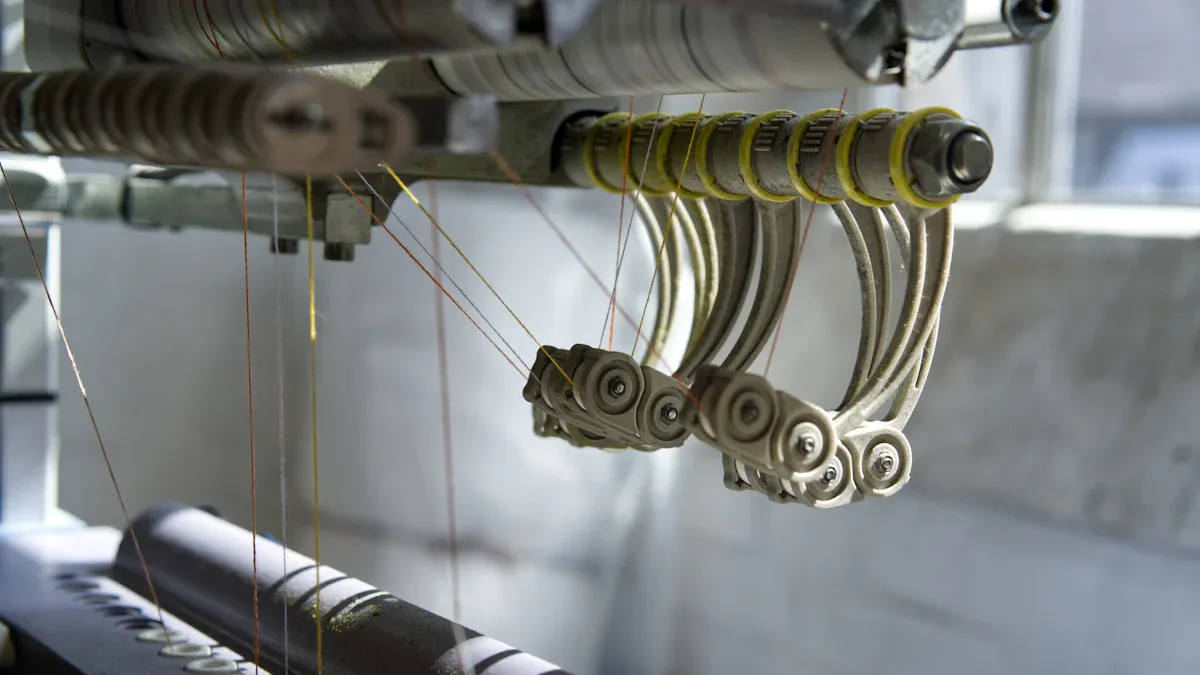
Видов дека изборот на систем за истиснување го обликува целиот производствен процес. Повеќето производители користат системи со една завртка, кои држат а 62% удел на пазарот, додека системите со двојни завртки сметка за 38%.
| Тип на систем за истиснување | Процент на удел на пазарот |
|---|---|
| Еднозавртка | 62% |
| Двојна завртка | 38% |
Изборот помеѓу типовите завртки влијае на ефикасноста, квалитетот на производот, и материјална компатибилност. Кога ја усогласувам технологијата на истиснување со производните цели, Забележувам подобрувања во исплатливоста, разновидност на дизајнот, и одржливост.
| Фактор | Влијание врз ефикасноста на производството | Влијание врз квалитетот на производот |
|---|---|---|
| Контролирани параметри | Одржува унифициран квалитет на производот | Постигнува микрометарски толеранции |
Се потпирам на комплетни системи за истиснување за да дадам доследни резултати и прецизни перформанси на завртките.
Клучни производи за носење
- Изберете го вистинскиот систем за истиснување врз основа на вашите производствени цели и својства на материјалот за да обезбедите оптимални перформанси.
- Екструдерите со една завртка се идеални за производство на едноставни материјали со голем волумен, додека системите со двојни завртки се истакнуваат во мешањето на сложени материјали.
- Regular maintenance and monitoring of extrusion systems prevent downtime and enhance efficiency, ensuring consistent product quality.
- Consider the screw diameter and L/D ratio when selecting an extruder, as these factors impact throughput and mixing efficiency.
- Utilize co-extrusion for creating multi-layered products that combine different materials, enhancing functionality and performance.
- Evaluate the compatibility of materials with the chosen extrusion system to avoid defects and ensure high-quality output.
- Stay informed about emerging trends in extrusion technology, such as IoT and AI, to improve efficiency and adapt to changing production needs.
- Create a checklist of key factors before selecting an машина за истиснување to avoid costly mistakes and ensure the system meets application requirements.
Choosing the Right Extrusion System for Manufacturing
Key Factors in System Selection
I never find a universal “best” extrusion system. My experience tells me that the ideal choice depends on the manufacturing goals, material properties, and product requirements. When I select an extrusion system, I always match its capabilities to the intended application. This approach ensures that the extrusion process delivers consistent quality and optimal performance.
I consider several critical factors before making an extrusion machine selection. I use the following table to guide my decision:
| Фактор | Опис |
|---|---|
| Research Objective | Purpose of the machine (education, material development, or commercial pilot production) |
| Тип на материјал | Type of polymers to be processed (heat-sensitive, volatile, or reactive) |
| Required Output Capacity | Throughput capacity (grams or kilograms per hour) |
| Advanced Process Requirements | Need for gas injection, вакуумско дегасирање, or reactive extrusion capability |
| Budget and Laboratory Space | Consideration for modular expansion for future upgrades |
| Future Scale-Up Needs | Compatibility with industrial extrusion modules for scaling up production |
I always pay attention to the screw diameter and L/D ratio. These parameters determine throughput capacity and mixing efficiency. I select an extruder with the right output capacity, which can range from 0.25 kg/h до 150 kg/h depending on the model. Modular design allows me to replace components quickly, which gives flexibility for research and development. I rely on advanced control systems, such as PLC and HMI, to achieve precise control and data traceability.
When I evaluate types of extrusion machines, I consider the complexity of the profile and the tolerances required. Intricate designs demand precise tooling and can increase costs. I also look at order quantity. Higher volumes reduce the cost per unit because setup costs spread across more units. Finishing and secondary operations, such as anodizing or CNC machining, add value and cost.
Совет: I recommend making a checklist of these factors before starting the extrusion machine selection process. This practice helps avoid costly mistakes and ensures the system matches the intended applications.
Влијание врз ефикасноста на производството
I notice that the extrusion system I choose directly affects manufacturing efficiency. The screw design, mixing capability, and extrusion technology all play a role in how smoothly the process runs. На пример, а екструдер со една завртка often works well for simple polymers and high-volume production. Twin-screw extruders handle complex materials and advanced applications, како што се реактивно истиснување или специјални мешавини.
Видов дека високиот вискозитет и цврстата содржина во енергетските материјали може да предизвикаат затнување, нестабилна екструзија, и абење на млазницата. Овие прашања ја намалуваат ефикасноста и ја загрозуваат безбедноста. Ги решавам овие предизвици со оптимизирање на дизајнот на системот за месење. Подобрената униформност на мешањето и точноста на истиснување ја подобруваат безбедноста и ефикасноста.
Јас користам двостепен систем за истиснување со два завртки кога ми треба поголема стабилност и приспособливост. Симулациите покажуваат дека овој дизајн ги подобрува карактеристиките на протокот и одржува конзистентен излез. Секогаш го надгледувам процесот на истиснување за да обезбедам униформен квалитет и да го минимизирам времето на застој.
| Тип на докази | Опис |
|---|---|
| Предизвици во производството на адитиви | Високиот вискозитет и цврстата содржина на енергетски материјали доведуваат до проблеми како затнување, нестабилна екструзија, и абење на млазницата, кои влијаат на ефикасноста и безбедноста. |
| Изведба на системот за месење | Дизајнот на системот за месење влијае на униформноста на мешањето на материјалите и точноста на истиснување, со специфични оптимизации предложени за подобрување на безбедноста и ефикасноста. |
| Дизајн на систем за истиснување | Двостепен систем за истиснување со два завртки е дизајниран да ја подобри стабилноста и приспособливоста во процесот на истиснување, со симулации кои откриваат карактеристики на проток на различни системи. |
Јас секогаш го совпаѓам системот за истиснување со барањата за производство. Оваа практика осигурува дека екструдерот го дава посакуваниот квалитет и перформанси. Ја избирам конфигурацијата на завртката врз основа на типот на материјалот и сложеноста на апликацијата. Се потпирам на напредната технологија на истиснување за да ја максимизирам ефикасноста и да одржувам високи стандарди за квалитет на производот.
Забелешка: Препорачувам редовно одржување и следење на процесот за да се одржи максималната ефикасност и да се спречи неочекувано прекинување.
Видови на комплетни системи за истиснување
Кога ги оценувам комплетните системи за истиснување за производство, Секогаш започнувам со идентификување на главната видови машини за истиснување. Најчестите опции вклучуваат машини за истиснување со една завртка, машини за истиснување со двојни завртки, и машини за истиснување на овен. Секој систем нуди уникатни силни страни и ограничувања, па се фокусирам на усогласување на вистинската технологија со апликацијата.
| Вид на машина за истиснување |
|---|
| Машини за истиснување со еден завртка |
| Машини за истиснување со двојни завртки |
| Рам екструзија машини |
Екструзија со еден шраф
Јас често користам екструдер со една завртка за едноставни процеси на истиснување. Оваа машина има една ротирачка завртка во загреана буре. Завртката го турка материјалот напред, го топи, и го обликува преку матрица. Се потпирам на овој систем за производство на термопластика со голем волумен, прехранбени производи, и гумени соединенија. Едноставноста на дизајнот го прави лесен за ракување и одржување.
| Индустрија | Опис на апликацијата | Прогнози за раст на пазарот |
|---|---|---|
| Пластика | Топење и формирање на термопластика, поттикнати од зголемената употреба на ПЕ и ПП. | CAGR од приближно 4-5% преку 2030 |
| Преработка на храна | Производство на преработена храна како грицки и житарки. | Пазар за да се достигне $75 милијарди од 2026 |
| Соединување на гума | Мешање и обликување на гума за гуми и автомобилски делови. | Производството на гуми да се надмине 2 милијарди единици од 2025 |
| Биомедицински | Производство на биополимери за пакување и медицински помагала. | Пазар во развој со нова технологија на истиснување |
Сепак, Го препознавам ограничувања на истиснување со една завртка. Може да биде тешко да се постигне еднообразно мешање, особено кога додавам полнила или адитиви. Конзистентноста на притисокот често варира со промените на суровини, а материјалите со висок вискозитет може да не течат добро, што доведува до дефекти. Овие предизвици го водат мојот избор на машина за истиснување кога ми треба поквалитетна или посложена обработка.
Совет: За едноставно, апликации со голем обем, Препорачувам да започнете со екструдер со една завртка. За напредно мешање или специјални материјали, разгледајте други опции.
Истиснување со две завртки
Кога ми е потребна напредна обработка, се свртувам кон екструдер со двојни завртки технологија. Овој систем користи две завртки кои се ротираат заедно во внатрешноста на бурето. Завртките може да се спојат или да работат паралелно, во зависност од дизајнот. Сметам дека екструдерите со двојни завртки обезбедуваат супериорна ефикасност на мешањето, подобро пластифицирање за материјали со висок вискозитет, и подобрена контрола над температурата и притисокот. Овие карактеристики го подобруваат квалитетот на производот и конзистентноста на процесот.
Twin screw extrusion also allows me to perform multiple processing steps in one machine. Можам да мешам, се топи, vent, and even react materials during a single pass. This flexibility reduces waste and speeds up production. When comparing twin screw vs single screw extruders, I see faster return on investment and more uniform results with twin screw systems, especially for complex blends or recycled plastics.
Twin-Screw Subtypes
I always consider the different types of extruder machines within the twin screw category. The screw configuration impacts performance, ефикасност, and the range of applications.
Intermeshing
Intermeshing twin screw extruders feature screws that overlap and mesh together. This design provides precise material transport and high shear forces. I use intermeshing systems for improved compounding and compatibilization, особено кога треба рамномерно да ги распрснувам адитивите или полнилата.
Не-преплетување
Екструдерите со двојни завртки што не се преплетуваат имаат завртки кои ротираат без преклопување. Ова поставување нуди понежно мешање и помалку стрижење. Избирам дизајни што не се преплетуваат за чувствителни материјали кои бараат минимален механички стрес.
Ко-ротирачки
Коротирачките екструдери со двојни завртки имаат завртки кои се вртат во иста насока. Овој подтип се истакнува во ефикасноста на мешањето и транспортот на материјалот. Јас користам коротирачки системи за реактивно истиснување, девалатилизација, и полимерно мешање со високи перформанси. Сепак, високите стапки на смолкнување можат да ги разградат материјалите чувствителни на топлина, па внимателно го набљудувам дизајнот и ладењето на завртките.
| Подтип | Способности и предности за обработка | Ограничувања и размислувања | Најдобри апликации |
|---|---|---|---|
| Ко-ротирачки екструдер со две завртки | Висока ефикасност на мешање, погоден за реактивно истиснување, високи стапки на смолкнување | Ризик од деградација на материјалот, requires precise screw design | Polymer compounding, nanocomposites, lab-to-production workflows |
Контра-ротирачки
Counter-rotating twin screw extruders feature screws that turn in opposite directions. This configuration generates lower shear forces, which protects fragile materials. I rely on counter-rotating systems for ceramics, bio-polymers, and pharmaceutical formulations. The design also provides good pressure build-up and effective sealing, though mixing intensity is lower than with co-rotating systems.
| Подтип | Способности и предности за обработка | Ограничувања и размислувања | Најдобри апликации |
|---|---|---|---|
| Counter-Rotating Twin-Screw Extruder | Lower shear forces, good pressure build-up, effective sealing | Lower mixing intensity, more complex sealing and bearing design | Керамика, bio-polymers, фармацевтски производи |
When I select a complete extrusion system, I always match the screw type and configuration to the material and process requirements. This approach ensures high quality, ефикасност, and reliable performance across all applications.
Рам екструзија
Често избирам истиснување на овен кога треба да обработам материјали кои бараат висок притисок и прецизно обликување. Овој метод користи хидрауличен овен за да го турка материјалот низ загреаното буре и да умре, наместо да се потпира на ротирачка завртка. Сметам дека екструдерите на овен се особено корисни за формирање производи од термореактивна пластика, керамика, и тефлонски. Процесот ми овозможува да создадам прачки, цевки, и профили со конзистентни димензии.
Рам истиснувањето се издвојува меѓу типовите машини за истиснување бидејќи се справува со материјали што традиционалните екструдери со завртки не можат ефикасно да ги обработат. Ја користам оваа технологија во индустриите како што се пластиката, храна, и фармацевтски производи. На пример, Произведувам грицки и житарки со уникатни форми, и произведувам таблети и капсули со точни спецификации.
Забележав неколку предности и предизвици кога користам екструдери со овен:
- Рам екструдерите се одлични во производството на висококвалитетни производи од тешко обработливи материјали.
- Се потпирам на нив за апликации каде што технологијата за истиснување на завртки паѓа, како што се тефлонски и керамички профили.
- Процесот обезбедува постојан квалитет и точност на димензиите.
- Високите оперативни трошоци можат да влијаат на ефикасноста и севкупните перформанси.
- Строгите прописи во производството на пластика бараат внимателна контрола на процесот.
- Конкуренцијата од алтернативните системи за истиснување ме турка да го оптимизирам изборот на мојата машина за истиснување.
Секогаш ги одмерувам овие фактори пред да изберам истиснување на овен за комплетни системи за истиснување. Внимателно го следам процесот за одржување на квалитетот и ефикасноста, особено кога се работи со специјални материјали.
Ко-истиснување
Ко-истиснувањето ми овозможува да комбинирам повеќе материјали во еден производ, создавање повеќеслојни профили со подобрени својства. Ја користам оваа технологија на истиснување за да интегрирам различни термопластики, секој слој нуди уникатни карактеристики. Процесот вклучува туркање на неколку материјали низ една матрица, што резултира со унифициран профил кој ги исполнува сложените барања за производство.
Се потпирам на ко-истиснување за производство на производи кои бараат издржливост, флексибилност, и естетска привлечност. Овој метод ми овозможува да го прилагодам квалитетот на секој слој, подобрување на перформансите и функционалноста. Гледам ко-истиснување како клучен напредок во целосните системи за истиснување, особено кога треба да произведувам предмети со специјализирани карактеристики.
Индустриите имаат корист од ко-истиснувањето на неколку начини:
- Градежништво: Изработувам прозорски прагови, рамки, и исечете парчиња кои комбинираат сила и визуелна привлечност.
- Малопродажба: I build shelving and display systems that are both durable and attractive.
- Табла: I produce illuminated signs and frames with clean finishes and reliable performance.
Co-extrusion expands the range of applications for extrusion technology. I use it to meet demanding production goals and deliver products with superior quality. When I select an extruder for co-extrusion, I consider screw design, process control, и материјална компатибилност. This approach ensures efficiency and consistent results.
Совет: I recommend co-extrusion for projects that require multi-layered profiles and enhanced product functionality. Careful extrusion machine selection and process monitoring are essential for achieving optimal quality.
Structure and Operation of Extrusion Systems
Screw and Barrel Design
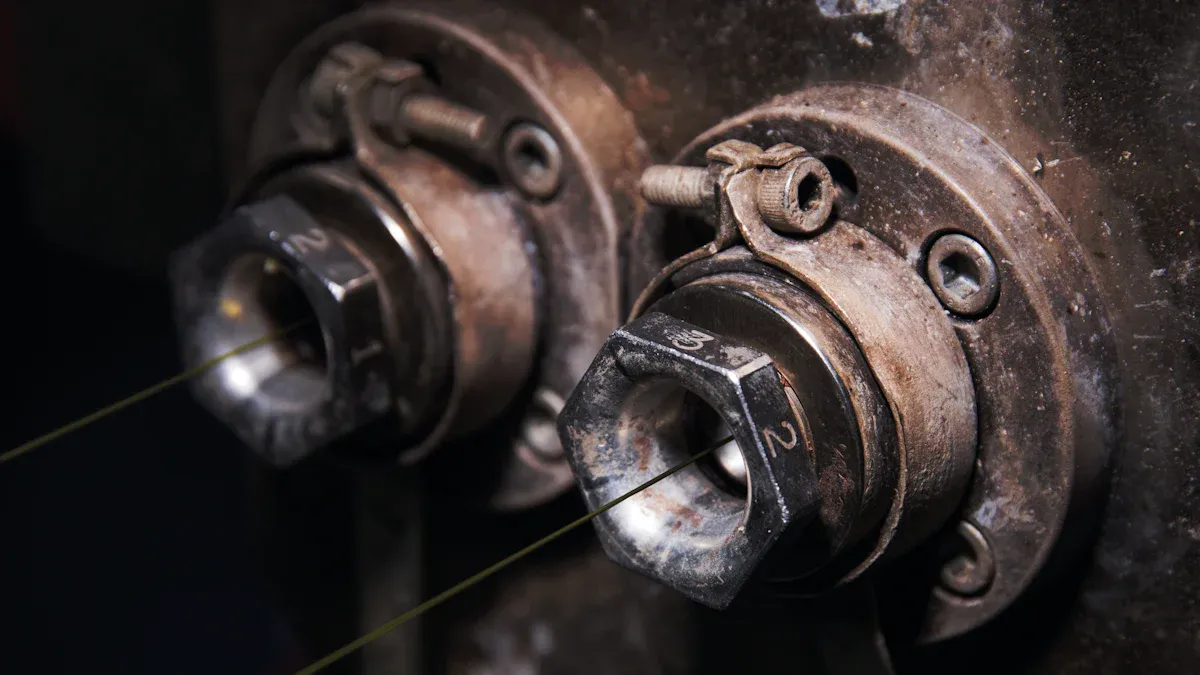
I always start my extrusion machine selection by examining the screw and barrel design. The geometry of the screw determines how efficiently the extruder melts, мешавини, and conveys material. I adjust the length-to-diameter (L/D) ratio to control residence time and mixing. A higher L/D ratio allows the material to melt and blend more thoroughly, which is essential for achieving uniform quality in the final product. I rely on barrier designs in the screw barrel to maintain melt stability and prevent degradation, especially when I process sensitive materials. Parallel twin screw and barrel designs play a critical role in extrusion speed, квалитетот на производот, и енергетска ефикасност. I use zoning and precise temperature control to stabilize melt flow and avoid trapped gases, which improves density and consistency. The surface finish of the barrel and the geometry of the screw also influence energy efficiency and product consistency. I always match the screw design to the specific requirements of the application to maximize performance.
- A higher L/D ratio improves mixing and melt uniformity, which is essential for high-quality products.
- Barrier designs help maintain melt stability and prevent degradation.
- Screw geometry and barrel surface finish impact energy efficiency and product consistency.
Material Movement and Mixing
I focus on efficient material movement and mixing to ensure the extrusion process runs smoothly. I use robust pneumatic or mechanical conveyors to transfer raw materials quickly and with minimal maintenance. Advanced mixer designs guarantee thorough and uniform compounding, which prevents variations in finished products. I integrate automated controls with PLC systems for real-time monitoring and recipe management. This approach allows me to oversee production seamlessly and adjust parameters as needed. I select scalable configurations to accommodate both small workshops and large industrial operations. Enhanced dust control features keep the workplace clean and safe. Доследно, homogeneous blends reduce quality fluctuations and improve throughput. Automated systems minimize manual handling, which shortens production cycles and lowers labor costs. I always prioritize these features when I evaluate types of extrusion machines for new applications.
| Карактеристика | Опис |
|---|---|
| Efficient Material Transfer | Rapid, low-maintenance movement of raw materials |
| Прецизно мешање | Thorough, uniform compounding for consistent quality |
| Автоматски контроли | Real-time monitoring and recipe management |
| Скалабилни конфигурации | Флексибилни распореди за секој производствен капацитет |
| Подобрена контрола на прашина | Почиста, побезбедно работно место |
| Подобрен квалитет на производот | Хомогени мешавини, намалени флуктуации |
| Зголемен проток | Пократки производни циклуси, помалку рачно ракување |
| Намален отпад | Точно мерење, пониски трошоци |
| Пониски трошоци за работна сила | Автоматизацијата го ослободува персоналот за задачи со додадена вредност |
| Побезбедна работна средина | Затворени линии и контрола на прашина |
Контрола на процесот и квалитет на излезот
Зависам од напредната технологија за контрола на процесот за одржување на висок квалитет на излезот во производството со истиснување. избирам висококвалитетна термопластика за да се осигура дека финалните производи ја исполнуваат силата, издржливост, и барања за флексибилност. Внимателно ги следам параметрите на истиснување за да ги намалам несовпаѓањата за време на производството. Прецизноста на димензиите останува главен приоритет за мене, бидејќи гарантира дека компонентите одговараат на нивните наменети апликации. Јас користам површинска инспекција за откривање дефекти како што се искривување или воздушни меури, што ми помага да одржувам постојан квалитет на производот. Раното откривање на проблемите го намалува отпадот и заштедува на трошоците за производство. Секогаш гарантирам дека мојот процес е во согласност со регулаторните стандарди, што го штити и мојот бизнис и моите клиенти. Висококвалитетните производи ја подобруваат репутацијата на мојот бренд и го зголемуваат задоволството на клиентите. Напредните системи за следење ми дозволуваат да ја зголемам брзината на производство без да ја жртвувам точноста, што ја зголемува севкупната ефикасност во комплетните системи за истиснување.
| Елемент/Предност | Опис |
|---|---|
| Избор на материјал | Обезбедува сила, издржливост, и флексибилност |
| Следење на процесот | Ги намалува несовпаѓањата и ја одржува конзистентноста |
| Точност на димензиите | Гарантира соодветно вклопување за сите апликации |
| Површинска инспекција | Рано ги идентификува дефектите за подобар квалитет |
| Конзистентен квалитет на производот | Every batch meets high standards |
| Намалување на отпадот | Saves material and production costs |
| Регулаторна усогласеност | Meets legal and safety requirements |
| Customer Satisfaction | Builds reputation and loyalty |
| Process Efficiency | Increases speed while maintaining accuracy |
Совет: I recommend regular calibration and maintenance of all extrusion technology to sustain peak performance and consistent quality.
Comparing the Extrusion Process
Single-Screw vs. Twin-Screw Process
Кога споредувам single-screw and twin-screw extruders, I focus on how each system handles the extrusion process. The screw design shapes the way material moves and mixes. A single-screw extruder uses one helical screw inside a simple, cylindrical barrel. За разлика од тоа, a twin-screw extruder features two intermeshing screws and a more complex, often segmented barrel. I see that temperature control in single-screw systems remains basic, while twin-screw machines offer advanced control with multiple heating and cooling zones. This difference impacts both throughput and energy efficiency.
| Аспект | Екструдер со еден шраф | Екструдер со две завртки |
|---|---|---|
| Дизајн на завртки | Single helical screw | Two intermeshing screws |
| Barrel Structure | Едноставно, cylindrical | Покомплексно, often segmented |
| Контрола на температурата | Basic heating/cooling | Advanced, multi-zone |
| Излезен капацитет | Умерено | Високо |
| Потрошувачка на енергија | Генерално повисоко | Поефикасно |
| Флексибилност во пропусната моќ | Ограничени | Високо |
I rely on twin-screw extruders for higher output and better energy efficiency. When I need flexibility in throughput or advanced process control, I choose twin-screw systems. For straightforward applications, single-screw extruders still provide reliable performance.
Material Compatibility in the Extrusion Process
Material compatibility plays a critical role in extrusion machine selection. I always match the screw configuration to the type of material I plan to process. Single-screw extruders handle standard thermoplastics well, but they struggle with materials that require intensive mixing or have high filler content. Twin-screw extruders excel with specialty compounds, рециклирана пластика, and reactive materials. I use segmented screws to adjust mixing and shearing for each application.
When I work with complete extrusion systems, I consider how each screw design affects the final product. Twin-screw extruders allow me to process a wider range of materials, including those with additives or sensitive properties. This flexibility supports more types of extrusion machines and expands the range of possible applications.
Совет: I recommend evaluating the chemical and physical properties of your raw materials before choosing an extruder. This step ensures compatibility and reduces the risk of defects.
Квалитет и конзистентност на производот
Знам дека процесот на истиснување директно влијае на квалитетот на готовиот производ. Модерните линии за истиснување ја интегрираат автоматизацијата и напредни контролни платформи. Овие системи анализираат повеќе променливи одеднаш, што ми помага да одржувам постојан квалитет во секоја серија.
Конзистентноста на квалитетот е мултипликатор на продуктивноста. Напредните контролни платформи ги анализираат шемите низ повеќе променливи истовремено, обезбедување дека квалитетот на производот се одржува во текот на процесот на истиснување.
Ги надгледувам клучните фактори како што е стабилен притисок на топење, излезна стапка, и завршна обработка на површината. Стабилниот притисок на топењето го спречува искривувањето и димензионалното поместување. Повисок и постабилен излез ги намалува стапките на отпад и времето на застој. Подобрата завршна обработка на површината и прецизната димензионална контрола го подобруваат влијанието врз квалитетот на готовиот производ.
| Клучни фактори | Impact on Quality and Consistency |
|---|---|
| Stable melt pressure | Prevents dimensions from drifting or warping |
| Повисок и постабилен излез | Reduces scrap rates and downtime |
| Better surface finish | Enhances overall product quality |
| Контрола на димензии | Ensures precision in final product specifications |
| Faster ROI | Improves profitability for manufacturers |
When comparing twin screw vs single screw extruders, I see that twin-screw systems deliver better consistency and lower operational cost. I achieve faster ROI and improved performance by investing in advanced extrusion technology. I always prioritize process monitoring and automation to ensure high quality and efficiency in production.
- Повисок и постабилен излез
- Lower scrap and downtime
- Better surface finish and dimensional control
- Reduced operational cost
- Faster ROI
I rely on these strategies to maximize the benefits of extrusion and deliver products that meet strict manufacturing standards.
Performance Comparison Table
Throughput and Efficiency
I always evaluate throughput and efficiency when I compare types of extrusion machines. Throughput measures how much material the extruder processes in a given time. Efficiency reflects how well the screw design converts raw material into finished products with minimal waste and energy use. I see that single-screw extruders often deliver steady throughput for standard polymers. Екструдери со две завртки, with their advanced screw geometry, handle higher output and maintain better energy efficiency, especially for complex blends.
| Тип на екструдер | Пропусната моќ (kg/h) | Енергетска ефикасност | Best Use Cases |
|---|---|---|---|
| Едно-завртка | 50–500 | Умерено | Висок волумен, simple polymers |
| Двојна завртка | 100–1000+ | Високо | Complex blends, specialty jobs |
| Ram Extruder | 10– 100 | Low–Moderate | Тефлонски, керамика, специјалитет |
| Системи за ко-истиснување | Varies | Високо | Multi-layered profiles |
I always match the screw configuration to the material and production requirements. This approach ensures the process delivers consistent quality and meets manufacturing goals. I rely on complete extrusion systems to maximize throughput and efficiency for every application.
Совет: I recommend monitoring energy consumption and output rates regularly. This practice helps optimize extrusion machine selection and reduces operational costs.
Maintenance and Reliability
I prioritize maintenance and reliability when I select an extruder. The screw and barrel experience constant wear from abrasive materials and high temperatures. I schedule routine inspections and replace worn components to prevent unexpected downtime. Single-screw extruders require less maintenance due to their simple design. Екструдери со две завртки, with more moving parts and segmented screws, need more frequent checks but offer greater flexibility.
| Тип на екструдер | Потреби за одржување | Reliability Level | Common Issues |
|---|---|---|---|
| Едно-завртка | Low–Moderate | Високо | Occasional screw wear |
| Двојна завртка | Moderate–High | Високо | Segment wear, seal failure |
| Ram Extruder | Умерено | Умерено | Hydraulic leaks, die wear |
| Системи за ко-истиснување | Високо (multi-screw) | Високо | Synchronization, screw wear |
I use advanced monitoring systems to track screw wear and process stability. This strategy improves reliability and extends the life of my extrusion technology. I always keep spare screws and barrels on hand to minimize downtime during maintenance.
Product Complexity and Flexibility
I value design flexibility in extrusion. The ability to customize the screw and die allows me to create complex profiles for a wide range of applications. I use extrusion to manufacture everything from simple plastic tubing to intricate window frames. I can add reinforcements or special features within the continuous material, which expands my product offerings.
| Аспект | Опис |
|---|---|
| Флексибилност на дизајнот | Extrusion allows for significant design flexibility through die customization, enabling complex profiles. |
| Апликации | Suitable for various applications, including intricate window frames and simple plastic tubing. |
| Прилагодување | Manufacturers can include reinforcements or additional features within the continuous material. |
- In MedTech, I must achieve tight tolerances for medical devices.
- I ensure biocompatibility for all medical extrusion products.
- I monitor wall thickness closely, since it affects flow rates and structural strength.
I select the screw configuration and extrusion machine based on the complexity of the design and the required tolerances. This approach guarantees high quality and supports advanced manufacturing needs.
Забелешка: I recommend consulting with extrusion experts when planning new product designs. Their experience helps avoid costly mistakes and ensures the right screw and process configuration.
Application Suitability in Manufacturing
High-Volume Manufacturing
I always start my extrusion machine selection by considering the demands of high-volume manufacturing. When I need to produce thousands of units per day, I rely on single-screw extruders. These machines deliver steady throughput and maintain consistent quality. The screw design in single-screw extruders allows me to process standard polymers efficiently. I monitor the process closely to ensure uniform melt and minimize defects. I select the right screw diameter and length to match the production requirements. This approach helps me achieve high efficiency and reduce waste. I use automated controls to track output and maintain quality standards. High-volume applications benefit from robust types of extrusion machines that can operate continuously with minimal downtime. I always keep spare screws and barrels ready to avoid interruptions in production.
Совет: I recommend scheduling regular maintenance for extruders used in high-volume manufacturing. This practice extends the life of the screw and ensures reliable performance.
Complex Product Manufacturing
When I manufacture complex or multi-component products, I turn to advanced extrusion technology. Twin-screw extruders give me greater control over mixing and material distribution. I use segmented screws to adjust shear and optimize the process for each application. Co-extrusion technology enables me to combine different polymers into multi-layer films and pipes. This method improves barrier properties and enhances strength, флексибилност, и хемиска отпорност.
| Технологија | Придобивки |
|---|---|
| Ко-истиснување | Enables the creation of multi-layer films and pipes with improved barrier properties, combining different polymers for strength, флексибилност, и хемиска отпорност. |
I select the screw configuration based on the complexity of the product. For intricate designs, I rely on precise tooling and advanced process monitoring. I always test the extruder setup before full-scale production to ensure quality and performance. Complex applications require careful extrusion machine selection and attention to detail.
Specialty Materials and Customization
I often work with specialty materials that demand custom solutions. I use advanced shaping processes, such as sheet extrusion and thermoforming, to control material characteristics. Sheet extrusion gives me the ability to manage thickness and material distribution with high accuracy. Co-extrusion capabilities allow me to create multi-layer constructions that enhance material properties. I integrate downstream shaping processes to ensure consistent performance in finished components. Engineering services help me optimize component designs and select the best materials for specific applications.
- Advanced shaping processes, such as sheet extrusion and thermoforming, allow for precise control over material characteristics.
- Sheet extrusion provides a foundation for custom material solutions, enabling thickness control and material distribution accuracy.
- Co-extrusion capabilities facilitate the creation of multi-layer constructions, enhancing material properties.
- Integration with downstream shaping processes ensures consistent performance characteristics in finished components.
- Engineering services optimize component designs and material selection, ensuring suitability for specific applications.
I always match the screw design to the requirements of specialty materials. Customization in extrusion depends on selecting the right extruder and process parameters. I monitor quality at every stage to deliver products that meet strict standards. Specialty applications benefit from flexible types of extrusion machines and expert guidance.
Забелешка: I recommend consulting with extrusion specialists when working with new materials or custom designs. Their expertise helps achieve the desired quality and performance.
Selection Criteria for Extrusion Systems
Product Design and Complexity
I always start my extrusion machine selection by analyzing the product design and complexity. The geometry of the profile influences the choice of extruder and screw configuration. Complex shapes increase tooling costs and create production challenges. I simplify profile geometry whenever possible to enhance material flow and reduce defects. Smooth transitions in the design prevent disruptions in material flow, which is crucial for consistent extrusion quality. I select the right material early in the process because material choice affects both the properties of the part and the ease of extrusion. This decision impacts manufacturability and overall performance.
- Simplifying profile geometry lowers tooling costs and reduces production challenges.
- Designing for material flow ensures consistent extrusion quality and minimizes defects.
- Choosing the right material early improves manufacturability and product performance.
I match the screw design to the complexity of the product. For intricate profiles, I use advanced screw configurations that optimize mixing and material transport. I rely on precise tooling and process monitoring to maintain high quality. When I work with complex applications, I consult with extrusion technology experts to avoid costly mistakes and ensure the best results.
Совет: I recommend reviewing the profile geometry and material flow before finalizing the extrusion machine selection. This step helps prevent production issues and supports efficient manufacturing.
Material Properties
Material properties play a critical role in selecting the right extruder and screw configuration. I identify application requirements such as temperature resistance, УВ изложеност, and impact durability. I consider mechanical properties like flexibility, цврстина, and tensile strength for the intended use. Environmental conditions influence my material choice, especially when I need weathering resistance or flexibility in cold environments. I evaluate aesthetic and finish requirements, including color, gloss, and surface texture, based on project needs. Regulatory and compliance needs guide my selection to ensure materials meet industry-specific standards and certifications.
- Application requirements determine the need for temperature resistance, УВ изложеност, and impact durability.
- Mechanical properties such as flexibility, цврстина, and tensile strength affect the choice of extruder and screw.
- Environmental conditions require materials that withstand weathering or remain flexible in cold climates.
- Aesthetic and finish requirements influence color, gloss, and surface texture.
- Regulatory and compliance needs ensure materials meet industry standards.
I select the screw design based on the material’s properties. For heat-sensitive materials, I use screws with gentle mixing zones and precise temperature control. When processing tough or abrasive compounds, I choose robust screw geometries that withstand wear and maintain efficiency. I always test materials in pilot runs to verify compatibility with the extruder and ensure consistent quality.
Забелешка: I recommend consulting material datasheets and industry standards before choosing an extruder. This practice helps match material properties to the extrusion process and supports reliable performance.
Production Volume and Scale
Production volume and scale influence the cost-effectiveness of extrusion machine selection. Higher production volumes reduce unit costs because tooling expenses are spread over more parts. In the prototype stage, tooling costs are high compared to the quantity produced. In mass production, die costs are amortized over larger volumes, leading to lower costs per unit. На пример, a die costing $2,000 with a lifetime of 40,000 kg results in a cost of $0.05 per kg when amortized.
- Higher production volumes lower unit costs by spreading tooling expenses.
- Prototype stages have high tooling costs relative to the number of parts produced.
- Mass production allows die costs to be distributed over larger volumes, reducing per-unit costs.
- Example: A die costing $2,000 with a lifetime of 40,000 kg results in a cost of $0.05 per kg.
I select the extruder and screw configuration based on the expected production volume. For high-volume manufacturing, I use robust types of extrusion machines that deliver steady throughput and maintain efficiency. In low-volume or prototype applications, I prioritize flexibility and rapid changeover. I monitor production rates and adjust screw parameters to optimize output and quality.
Совет: I recommend calculating the amortized tooling cost before committing to a production scale. This step helps determine the most cost-effective extrusion technology and supports long-term manufacturing goals.
Technical and Budget Considerations
I always approach extrusion machine selection with a clear focus on technical requirements and budget constraints. My experience tells me that investing in advanced extrusion technology demands careful planning. I evaluate every aspect of the system, from screw design to process control, to ensure cost-effectiveness and reliable performance.
I start by analyzing the technical specifications of the extruder. I look at screw geometry, должина на барел, and compatibility with different types of extrusion machines. I select a screw that matches the material properties and the complexity of the applications. I check if the extruder can handle the desired throughput and maintain consistent quality. I also assess the integration of feeders, регулатори на температурата, и низводно опрема. System integration plays a crucial role in maximizing efficiency and avoiding bottlenecks in production.
Budget considerations influence every decision I make. I break down the costs into several categories to understand the financial impact. I use the following table to guide my investment strategy:
| Budget Consideration | Опис | Financial Impact / Benefit Example |
|---|---|---|
| Енергетска ефикасност | Reducing energy consumption by upgrading control systems or screws | 33% energy reduction saves nearly $100,000 annually on $288,000 трошоците за енергија |
| Scrap Reduction | Lowering scrap rate from 15% до 5% through data acquisition and process control | Saves $200,000 monthly or $2.4 million yearly in materials, трудот, and energy costs |
| Throughput Increase | Upgrading to twin-screw extruder increases throughput by 30% | Generates $600,000 additional monthly revenue with >50% incremental profit margin |
| Maintenance Cost Reduction | Predictive maintenance and condition monitoring reduce emergency repairs and downtime | Maintenance costs drop 20-30%, equipment availability increases |
| System Integration | Budgeting for compatible feeders, регулатори на температурата, и низводно опрема | Partial upgrades capture only ~40% of potential benefits |
| Обука на оператори | Training on material characteristics, машини, instrumentation, and controls | Essential to fully realize technology benefits; lack wastes investment |
| Data Acquisition Infrastructure | Adequate sensors and analytics software needed for optimization | Insufficient infrastructure limits optimization; too many sensors without analytics causes overload |
| Downstream Constraints | Ensuring cutting, пакување, and inspection keep pace with increased extruder output | Bottlenecks reduce overall system benefit |
I prioritize energy efficiency when selecting an extruder. Upgrading control systems or optimizing screw design can reduce energy consumption by up to 33%. This improvement saves nearly $100,000 each year on a typical $288,000 energy bill. I also focus on scrap reduction. By implementing advanced process control and data acquisition, I lower scrap rates from 15% до 5%. This change saves $200,000 every month in materials, трудот, and energy costs.
Increasing throughput is another key goal. Upgrading to a twin-screw extruder boosts output by 30%. This increase generates $600,000 in additional monthly revenue, with more than a 50% incremental profit margin. I invest in predictive maintenance and condition monitoring to reduce emergency repairs and downtime. Maintenance costs drop by 20-30%, and equipment availability improves.
System integration is essential for maximizing the benefits of extrusion technology. I budget for compatible feeders, регулатори на температурата, и низводно опрема. Partial upgrades capture only about 40% of the potential benefits. Operator training is critical. I ensure my team understands material characteristics, машини, instrumentation, and controls. Without proper training, the investment in advanced extrusion technology goes to waste.
I invest in data acquisition infrastructure. Adequate sensors and analytics software optimize the process. Insufficient infrastructure limits optimization, while too many sensors without analytics cause information overload. I address downstream constraints by ensuring cutting, пакување, and inspection keep pace with increased extruder output. Bottlenecks in these areas reduce the overall benefit of the system.
I always balance technical requirements with budget limitations. I select a screw that delivers high quality and efficiency without exceeding my financial resources. I plan for future upgrades and modular expansion to support changing production needs. I monitor every aspect of the extrusion process to maintain cost-effectiveness and reliable performance.
Совет: I recommend creating a detailed budget plan before investing in new extrusion technology. Include energy costs, одржување, обука на оператор, and system integration. This approach ensures that the extruder delivers maximum value and supports long-term manufacturing goals.
Actionable Insights for Manufacturers
Matching System to Application
I always match the extrusion system to the specific application. Јас optimize material use to balance strength and lightweight design. I define critical dimensional tolerances early, which ensures parts fit and function as intended. I design for manufacturability, making sure shapes can be extruded consistently and cost-effectively. I select aluminum alloys based on application needs, such as strength and corrosion resistance. I simplify designs to reduce costs, avoiding unnecessary complexity in profiles. I prototype and test early, which helps me identify potential challenges before full production. These steps help me achieve high quality and reliable performance in every extrusion process.
- Optimize material use for strength and lightweight design.
- Define critical dimensional tolerances early.
- Дизајн за производство.
- Select appropriate aluminum alloys for application needs.
- Simplify designs to reduce costs.
- Prototype and test early.
I always consider the key components of an extruder, such as screw geometry and barrel design, to ensure the system meets production requirements. I review different types of extruder machines to find the best fit for my applications in пластична екструзија. This approach supports scalability and maintains quality control throughout manufacturing.
Common Selection Mistakes
I have seen many manufacturers make mistakes during extrusion machine selection. Inadequate material blending often leads to product imperfections and increased costs from reprocessing. Outdated or incompatible control systems cause integration issues and inefficiencies. Inconsistent feed rates disrupt the extrusion process, resulting in product variabilities and higher scrap rates. Neglecting preventive maintenance allows minor mechanical issues to escalate into major production problems, affecting revenue. Ignoring operator training leads to misconfigurations and missed optimization opportunities.
- Несоодветното мешање на материјали ги зголемува трошоците и го намалува квалитетот.
- Застарените системи за контрола предизвикуваат неефикасност.
- Inconsistent feed rates disrupt the extrusion process.
- Занемарувањето на превентивното одржување доведува до големи проблеми во производството.
- Игнорирањето на обуката на операторот резултира со пропуштена оптимизација.
Секогаш го набљудувам абењето на завртките и редовно го одржувам екструдерот. Вложувам во обука на оператори за да ја максимизирам ефикасноста и квалитетот. Ги избегнувам овие грешки со фокусирање на стабилноста и перформансите на процесот.
Идни трендови во технологијата за истиснување
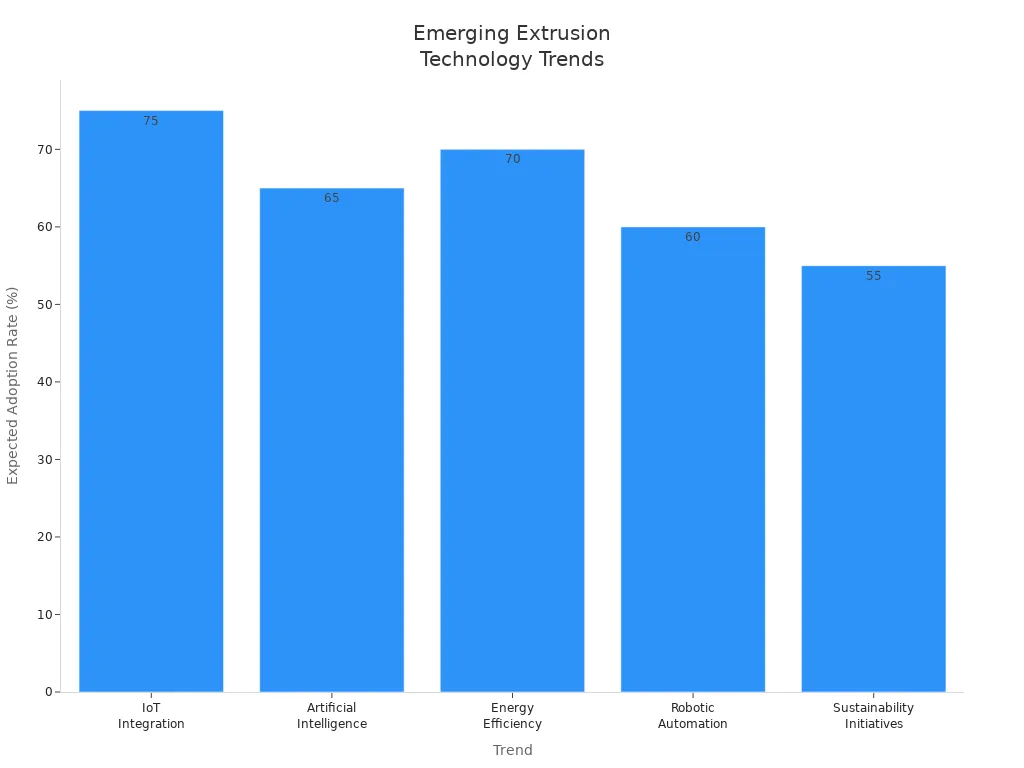
Гледам брзи промени во технологијата на истиснување што ја обликуваат иднината на производството. Интеграцијата на IoT овозможува следење и аналитика во реално време, подобрување на ефикасноста. Вештачката интелигенција поддржува предвидливо одржување и оптимизација, што ги зголемува перформансите. Енергетската ефикасност е се поголем фокус, with manufacturers seeking ways to reduce consumption in the extrusion process. Robotic automation streamlines material handling and quality control. Sustainability initiatives drive the use of recycled materials and eco-friendly processes.
| Тренд | Опис | Impact on Efficiency | Expected Adoption Rate (%) |
|---|---|---|---|
| IoT Integration | Real-time monitoring and analytics | Високо | 75% |
| Artificial Intelligence | Predictive maintenance and optimization | Многу високо | 65% |
| Енергетска ефикасност | Reducing energy consumption | Средно | 70% |
| Robotic Automation | Material handling and quality control | Високо | 60% |
| Иницијативи за одржливост | Recycled materials and eco-friendly processes | Средно | 55% |
I notice advancements in material compatibility, especially with bioplastics, are transforming the extrusion industry. Many manufacturers now prioritize flexibility in equipment design, with modular systems allowing easy upgrades and modifications. Sustainability is essential, with most manufacturers focusing on energy-efficient equipment and waste reduction strategies. Smart extrusion machines reduce downtime by 20%, which improves overall efficiency and quality control. I always stay updated on these trends to maintain high performance and support new applications in plastic extrusion.
Совет: I recommend reviewing the overview of extruder machines in manufacturing regularly. Staying informed about new types of extrusion machines and screw designs helps me adapt to changing production needs and maintain scalability.
I recognize that each extrusion system offers unique advantages and limitations. My experience shows that single-screw extruders excel in high-volume production, while twin-screw systems provide superior mixing and flexibility. Ram and co-extrusion machines support specialty applications. I always use comparison tables and selection criteria to evaluate:
- Technical capabilities and long-term reliability
- Customer service and design assistance
- Quality standards and energy efficiency
I recommend manufacturers understand their application needs and consult extrusion experts for optimal results.
Најчесто поставувани прашања
What is the main difference between single-screw and twin-screw extruders?
I see that single-screw extruders use one rotating screw for basic mixing. Twin-screw extruders use two screws for advanced mixing and better control. I choose twin-screw systems for complex materials and higher flexibility.
How do I decide which extrusion system fits my application?
I start by reviewing my material type, обемот на производството, and product complexity. I match these needs to the strengths of each system. I consult with experts if I face unique requirements.
Can I process recycled materials with extrusion systems?
I process recycled materials using twin-screw extruders. These machines handle variable feedstocks and additives better than single-screw systems. I monitor quality closely to ensure consistent results.
How often should I perform maintenance on my extruder?
I schedule routine inspections every month. I check for screw wear, barrel condition, and control system performance. Regular maintenance prevents downtime and extends equipment life.
What are the most common extrusion defects I encounter?
I often see surface roughness, dimensional drift, and melt fractures. I address these by adjusting temperature, брзина на завртката, and material feed. I use process monitoring to catch issues early.
Is co-extrusion suitable for all materials?
I use co-extrusion mainly for thermoplastics. Some materials may not bond well in multi-layer profiles. I test material compatibility before starting production.
How does automation improve extrusion quality?
I rely on automation for real-time monitoring and precise control. Automated systems reduce human error, maintain consistent output, and improve overall product quality.
What safety measures do I follow during extrusion?
I wear protective gear and follow lockout procedures. I keep the work area clean and check emergency stops regularly. I train my team on safe operation and emergency response.