

Vienas skrūves un divu skrūvju plastmasas ekstrūderu salīdzināšana ražošanai
Es ticu labākajam plastmasas ekstrūderis Jūsu darbība ir atkarīga no produkta mērķiem un apstrādājamajiem materiāliem. Es redzu, ka vienas skrūves ekstrūderi piedāvā daudzpusību un vienkāršu darbību, savukārt divu skrūvju dizains nodrošina precīzu sajaukšanu un konsekventu izvadi. Piemēram, jaunākie inženiertehniskie pētījumi liecina, ka Divskrūvju ekstrūderi nodrošina vienmērīgāku plastificēšanu un labāka maisīšanas kontrole nekā vienas skrūves mašīnām:
| Aspekts | Viena skrūve | Dvīņu skrūve |
|---|---|---|
| Pārvadāšana un plastifikācija | Atkarīgs no materiāla berzes īpašībām; sliktāka plastifikācijas viendabība. | Pozitīva nobīde nodrošina konsekventu pārvietošanu; viendabīgāka plastifikācija. |
| Sajaukšana un izkliedēšana | Nav piemērots augstai homogenizācijai; uzlabošanai nepieciešams sajaukt elementus. | Lieliska sajaukšanas kontrole; ideāli piemērots salikšanai un modificēšanai. |
| Uzturēšanās laika sadalījums | Plašāka izplatīšana; sliktas plastifikācijas vai termiskās noārdīšanās risks. | Šaurs sadalījums; konsekventa termiski jutīgu materiālu apstrādes vēsture. |
Monditech uzlabotā plastmasas ekstrūdera mašīnu tehnoloģija atbalsta tādas nozares kā automobiļu rūpniecība, celtniecība, un iepakojums. Es vienmēr saskaņoju ekstrūdera tipu ar ražošanas prasībām, lai iegūtu optimālus rezultātus.
Key Takeaways
- Vienas skrūves ekstrūderi ir daudzpusīgi un ideāli piemēroti vienkāršu uzdevumu veikšanai, padarot tos piemērotus ražošanas pamatvajadzībām.
- Divskrūvju ekstrūderi ir izcili sarežģītu materiālu sajaukšanā un apstrādē, nodrošinot izcilu produkcijas kvalitāti un konsekvenci.
- Apsveriet īpašās ražošanas prasības, piemēram, materiālu veidi un vēlamā produkcija, izvēloties starp ekstruderu veidiem.
- Divskrūvju ekstrūderi piedāvā labāku energoefektivitāti un zemākas ekspluatācijas izmaksas, padarot tos par gudru ilgtermiņa ieguldījumu.
- Regulāra apkope un kvalitātes nodrošināšana ir ļoti svarīga, lai maksimāli palielinātu jebkura ekstrūdera veiktspēju un kalpošanas laiku.
- Novērtējiet kopējās īpašuma izmaksas, ieskaitot enerģiju un apkopi, nevis tikai sākotnējā pirkuma cena.
- Atlases procesa sākumā iesaistiet ražošanas un apkopes komandas, lai nodrošinātu, ka izvēlētais ekstrūderis atbilst visām darbības vajadzībām.
- Konsultējieties ar ekspertiem, tāpat kā Monditech, lai izvairītos no izplatītām kļūdām un pieņemtu pārdomātus lēmumus par ekstrūzijas tehnoloģiju.
Plastmasas ekstrūdera tehniskās atšķirības
Vienas skrūves ekstrūdera darbība
Princips un īpašības
Es uzskatu, ka vienas skrūves ekstrūderis ir daudzu pamats plastmasas ekstrūzija procesiem. Šī iekārta darbojas pēc vienkārša principa. Skrūve griežas apsildāmas mucas iekšpusē, virzot plastmasas sveķus uz priekšu. Sveķiem ceļojot, temperatūra paaugstinās, un materiāls kūst. Lielākā daļa kušanas notiek netālu no mucas sienas, kur siltuma pārnese ir visefektīvākā. Skrūves griešanās rada berzi un spiedienu, kas palīdz izkausēt un sajaukt sveķus. Es pievēršu lielu uzmanību skrūves temperatūra, slīdēšanas ātrums, un spiedienu, jo šie faktori kontrolē kušanas ātrumu un galaprodukta kvalitāti.
Monditech vienas skrūves ekstrūdera tehnoloģija izceļas ar precīzu temperatūras pārvaldību un izturīgu skrūvju dizainu. Šīs īpašības nodrošina vienmērīgu cieto vielu novadīšanu un efektīvu kausēšanu. Es paļaujos uz šo tehnoloģiju lietojumprogrammām, kurām nepieciešama vienkāršība un uzticamība. Vienas skrūves ekstrūderis vislabāk darbojas ar vienkāršām formulām un standarta materiāliem, padarot to par daudzpusīgu izvēli daudzām ražošanas līnijām.
Galvenās sastāvdaļas
Kad es pārbaudu vienas skrūves ekstrūderi, Es koncentrējos uz vairākām būtiskām daļām:
- Piltuves: Šeit es iekrauju neapstrādātu plastmasas materiālu.
- Skrūve: Mašīnas sirds, atbildīgs par pārvietošanos, kušana, un sajaucot sveķus.
- Muca: Apsildāma kamera, kas ieskauj skrūvi un nodrošina kausēšanai nepieciešamo temperatūru.
- Sildītāji un temperatūras regulatori: Tie uztur optimālu apstrādes temperatūru.
- Mirst: Tas izkausēto plastmasu veido vēlamajā profilā, piemēram, caurules vai loksnes.
- Piedziņas motors: Nodrošina skrūves griešanos.
Es novērtēju šī dizaina vienkāršību. Tas nodrošina vieglu apkopi un ātru tīrīšanu, kas samazina dīkstāves laiku un nodrošina netraucētu ražošanu.
Divskrūvju ekstrūdera darbība
Sajaukšanās vs. Nesavienošanās
Divskrūvju ekstrūderis ievieš jaunu plastmasas ekstrūzijas vadības un elastības līmeni. Es varu izvēlēties starp savstarpēji savienojamām un nesavienojamām skrūvju konfigurācijām. Intermeshing screws fit together like gears, creating a self-wiping action that prevents material buildup. This design ensures efficient mixing and consistent material flow. Non-intermeshing screws operate independently, which I use for specialized applications that require gentle handling of sensitive materials.
Unique Capabilities
I turn to the twin-screw extruder when I need advanced processing capabilities. This machine uses two screws that rotate together, generating high shear forces. These forces guarantee uniform dispersion of additives and fillers, which is critical for producing high-quality compounds. The self-wiping action keeps the barrel clean and minimizes downtime. I also benefit from the energy-efficient design, which lowers operational costs.
Monditech divu skrūvju ekstrūdera tehnoloģija sniedz man elastību, lai apstrādātu plašu materiālu un sastāvu klāstu. Es varu ražot 30-50 dažādi pamatsavienojumu veidi, salīdzinot tikai ar 10-15 ar vienas skrūves sistēmu. Šis paplašinātais klāsts nozīmē, ka varu apmierināt vairāk klientu vajadzības un samazināt produktu atdevi. Ātrais atmaksāšanās periods un augsta ieguldījumu atdeve padara šo tehnoloģiju par gudru izvēli ražotājiem, kuri pieprasa gan kvalitāti, gan efektivitāti.
Tehnisko salīdzinājumu tabula
Es bieži izmantoju salīdzināšanas tabulu, lai izceltu tehniskās atšķirības starp vienas skrūves un divu skrūvju ekstrūderiem:
| Funkcija | Vienas skrūves ekstrūderis | Divu skrūvju ekstrūderis |
|---|---|---|
| Skrūvju skaits | Viena rotējoša skrūve | Divas savstarpēji savienotas vai paralēlas skrūves |
| Sajaukšanas efektivitāte | Pamata sajaukšana, piemērots vienkāršām formulām | Izcila sajaukšana, ideāli piemērots kompleksai salikšanai |
| Materiālu apstrāde | Ierobežota pielāgošanās spēja | Handles a wide variety of materials |
| Caurlaide | Nolaist, best for small to medium production | Augstāks, supports large-scale manufacturing |
| Produkta kvalitāte | Mainīgs, depends on material properties | Konsekventa, augstas kvalitātes produkcija |
| Apkope | Vienkārši, easy to clean | Sarežģītāk, often self-cleaning |
| Elastīgums | Ierobežots, best for standard products | Highly flexible, supports many formulations |
| Enerģijas patēriņš | Generally higher per output | Efektīvāks, lower operational costs |
Padoms: I always match the extruder type to the production requirement. This ensures I achieve the best balance of quality, efektivitāti, and cost for each project.
Key Terms Explained
When I work with plastic extruders, I rely on a set of core technical terms. Understanding these terms helps me communicate clearly with engineers, operators, and decision-makers. Here are the key concepts I use every day:
- Ekstrūderis
I define an extruder as a mechanical apparatus that presses material through a die. Šis process rada nepārtrauktu produktu ar vienmērīgu šķērsgriezumu. Pēc manas pieredzes, ekstrūderi veido daudzu ražošanas līniju mugurkaulu. - Skrūve
Skrūve atrodas ekstrūdera centrā. Tas griežas mucas iekšpusē, virzot neapstrādātu plastmasu uz priekšu. Skrūves dizains nosaka, cik efektīvi es varu izkausēt, sajauc, un nodot materiālu. - Muca
Muca ieskauj skrūvi un nodrošina apsildāmu vidi, kas nepieciešama plastmasas transformācijai. Es rūpīgi uzraugu mucas temperatūru, lai nodrošinātu konsekventu kušanu un produkta kvalitāti. - Piedziņas sistēma
Piedziņas sistēma nodrošina skrūves griešanos. Es esmu atkarīgs no uzticamas piedziņas, lai uzturētu vienmērīgu caurlaidspēju un izvairītos no ražošanas pārtraukumiem. - Mirst
Matrica veido izkusušo plastmasu, kad tā iziet no ekstrūdera. Mainot matricu, Varu ražot caurules, loksnes, filmas, vai pielāgotus profilus. - Materiālu transports
This term refers to the movement of plastic pellets or powder through the extruder. Efficient material transport ensures smooth operation and high output. - Material Transformation
I use this term to describe the melting and mixing of raw plastic inside the extruder. Proper transformation is essential for achieving the desired product properties. - Forming
Forming happens when the melted plastic passes through the die and takes on its final shape. I adjust process parameters to ensure precise forming and minimal waste. - Vienas skrūves ekstrūderis
This type of extruder uses one rotating screw. I choose single-screw machines for straightforward processing tasks and standard materials. - Divu skrūvju ekstrūderis
Twin-screw extruders use two screws, either intermeshing or parallel. I rely on these machines for advanced mixing, salikšana, un speciālās lietojumprogrammas. - Ram Extruder
Although less common in plastics, aunu ekstrūderis izmanto virzuli, lai izstumtu materiālu cauri matricai. Šo dizainu biežāk redzu laboratorijas vai specializētos apstākļos.
Piezīme: Es uzskatu, ka šie termini ir būtiski, lai saprastu, kā Monditech plastmasas ekstrūderi nodrošina uzticamu veiktspēju tādās nozarēs kā automobiļu rūpniecība, celtniecība, un iepakojums. Šīs vārdu krājuma apgūšana palīdz man pieņemt pārdomātus lēmumus un optimizēt katru ekstrūzijas procesa posmu.
Labākās lietojumprogrammas
Vienas skrūves ekstrūdera izmantošana
Kopējie produkti
Es paļaujos uz vienas skrūves ekstrūderi daudziem standarta ražošanas uzdevumiem. Automobiļu rūpniecībā, Es bieži ražoju plombas, blīves, un apdares profili. Šīm daļām ir izšķiroša nozīme noplūžu novēršanā, atbalsta dzinēju bloki, un pievienojot transportlīdzekļiem gan dekoratīvas, gan funkcionālas iezīmes. Līdzīgu pieprasījumu redzu būvniecībā, kur vienas skrūves ekstrūderi veido caurules, cauruļvadi, un pamata piederumi. Iepakojumā, Es izmantoju šo plastmasas ekstrūdera mašīnu, lai ražotu vienkāršas plēves un loksnes. Vienkāršā darbība padara to ideāli piemērotu liela apjoma ikdienas priekšmetu ražošanai.
- Blīves noplūdes novēršanai
- Blīves dzinējiem un mezgliem
- Apdares profili transportlīdzekļu iekšpusei un ārpusei
Es izmantoju arī vienas skrūves ekstrūderus plastmasas pārstrādes projektos. Iekārta efektīvi apstrādā tiešu slīpēšanas materiālus, ļaujot man pārvērst plastmasas atkritumus jaunos produktos. Šī iespēja atbalsta ilgtspējīgu ražošanu un samazina materiālu izmaksas.
Materiālu saderība
Es izvēlos vienas skrūves ekstrūderi, ja man ir nepieciešams apstrādāt plašu materiālu klāstu. Jaunākie materiāli zinātnes pētījumi liecina, ka šī iekārta labi darbojas ar augstas veiktspējas polimēri, ar šķiedru pastiprināti kompozītmateriāli, elastomēri, un tiešās slīpēšanas materiālus. I often refer to the following table when choosing materials for production:
| Materiāla veids |
|---|
| Augstas veiktspējas polimēri |
| Fibre-reinforced composites |
| Elastomers |
| Direct regrind materials |
This compatibility allows me to support recycling initiatives and produce complex profiles for various industries. I find that the single-screw extruder delivers reliable results with basic thermoplastics and fillers, making it a versatile choice for many applications.
Twin-Screw Extruder Uses
Compounding and Blending
I turn to the twin-screw extruder when I need advanced mixing and blending capabilities. This machine excels at compounding thermoplastic materials, melting and shaping plastics, and producing films and sheets for packaging. I often use it to manufacture plastic products for consumer goods and packaging, where consistent quality and precise formulation are essential.
- Termoplastisku materiālu savienošana
- Plastmasas kausēšana un formēšana
- Plēvju un lokšņu ražošana iepakošanai
- Plastmasas izstrādājumu ražošana patēriņa precēm
Divskrūvju ekstrūderis atbalsta liela apjoma ražošanu un sarežģītus profilus, it īpaši, ja man ir jāiekļauj piedevas vai pildvielas. Es paļaujos uz tā izcilo sajaukšanas spēju otrreizējās pārstrādes projektos, kuriem nepieciešama vienmērīga pārstrādātā satura izkliede.
Speciālie pielietojumi
Es izmantoju divu skrūvju ekstrūderi īpašiem lietojumiem celtniecībā un automobiļu ražošanā. Iekārta apstrādā sarežģītas formulas un augstas viskozitātes materiālus, ļaujot man ražot kompozītmateriālus un speciālus savienojumus. Es bieži pielāgoju skrūvju konfigurācijas un pārkārtoju mucas sekcijas, lai optimizētu sajaukšanu un materiāla plūsmu. Šī elastība palīdz man izpildīt stingrus kvalitātes standartus un ražot sarežģītas detaļas prasīgiem projektiem.
Es uzskatu, ka Monditech tehnoloģija ir galvenā priekšrocība šajos scenārijos. Divskrūvju ekstrūderis atbalsta sarežģītu materiālu pārstrādi un ļauj ražot sarežģītus profilus progresīvām nozares vajadzībām.
Lietojumprogrammas lēmuma faktori
Kad es izlemju starp vienas skrūves un divu skrūvju ekstrūderiem celtniecības materiāliem, Es apsveru vairākus faktorus. Es salīdzinu apstrādes iespējas, caurlaidspēja, elastība, materiālu saderība, sajaukšanas spēja, un degazēšanas veiktspēja. Tālāk sniegtā tabula palīdz man izdarīt apzinātu izvēli:
| Funkcija | Vienas skrūves ekstrūderis | Divu skrūvju ekstrūderis |
|---|---|---|
| Apstrādes iespējas | Pamata ekstrūzija un vienkārša sajaukšana. | Tiek galā ar sarežģītiem materiāliem un sarežģītu sajaukšanu. |
| Caurlaide un efektivitāte | Zemāka caurlaidspēja, piemērots neliela apjoma ražošanai. | Lielāka caurlaidspēja, nodrošinot labāku produktu kvalitāti. |
| Elastīgums un daudzpusība | Ierobežota elastība, simpler operation. | Highly flexible with adjustable parameters. |
| Materiāla elastība | Suitable for basic thermoplastics and fillers. | Ideal for complex formulations and high-viscosity materials. |
| Sajaukšanas iespēja | Adequate for simple formulations. | Izcila sajaukšana, perfect for additive incorporation. |
| Degassing and Devolatilization | Limited capability. | Excellent capability, meeting stringent quality standards. |
I also consider elastīgas skrūvju konfigurācijas and rearrangeable barrel sections. These features allow me to optimize mixing and material flow without extensive modifications. I always match the extruder type to the production requirement, ensuring I achieve the best balance of quality, efektivitāti, un izmaksas.
Padoms: I recommend evaluating your material needs, ražošanas apjoms, and desired product complexity before selecting a plastic extruder. Monditech’s solutions support automotive, celtniecība, and packaging industries with reliable technology for both recycling and high-volume production.
Veiktspēja un kvalitāte
Output and Throughput
I always focus on maximizing output and throughput in my extrusion operations. When I compare single-screw and twin-screw extruders, I notice clear performance advantages. Divu skrūvju ekstrūderi piegādā izcila sajaukšanas efektivitāte and better control over the extrusion process. This results in higher output and enhanced product quality. Recent production data confirms that single-screw extruders, while reliable for hydrogel production, yield lower throughput. The less efficient mixing and lower heat transfer limit their output quality. Twin-screw extruders overcome these challenges by providing consistent heat transfer and efficient mixing, which boosts both performance and output.
Padoms: I monitor throughput closely to ensure my manufacturing lines meet demand without sacrificing quality.
Mixing and Consistency
Sajaukšanai un konsistencei ir izšķiroša nozīme augstas produkcijas kvalitātes sasniegšanā. Es paļaujos uz divu skrūvju ekstrūderiem sarežģītām receptēm un salikšanas uzdevumiem. Šīs iekārtas precīzai vadībai izmanto pozitīvu nobīdi, savukārt vienas skrūves ekstrūderi ir atkarīgi no berzes un pretestības plūsmas. Tālāk esošajā tabulā ir izceltas atšķirības:
| Funkcija | Divu skrūvju ekstrūderis | Vienas skrūves ekstrūderis |
|---|---|---|
| Mehānisms | Precīzai kontrolei izmanto pozitīvu nobīdi | Paļaujas uz berzi un pretestības plūsmu |
| Sajaukšanas iespēja | Izcila sajaukšana un elastība sarežģītām receptēm | Ierobežota sajaukšana, bet var panākt izkliedējošu sajaukšanos ar īpašiem elementiem |
| Labākie lietošanas gadījumi | Augstas intensitātes sajaukšana sajaukšanai un otrreizējai pārstrādei | Taisni, nepārtraukti produkti, piemēram, PVC caurules |
Es vienmēr izvēlos ekstrūdera veidu, pamatojoties uz konsistenci, kas nepieciešama gala produktam. Divskrūvju ekstrūderi ir izcili savienošanas un pārstrādes jomā, nodrošinot vienmērīgu piedevu un pildvielu izkliedi. Single-screw extruders perform well for continuous products, piemēram, PVC caurules, where basic mixing suffices. Consistent mixing leads to reliable performance and high product quality.
Flexibility and Control
Flexibility and control define the performance of Monditech’s extruder systems. I benefit from advanced control systems, including PLC-based temperature regulation, which maintains precise temperature within ±1-2°C during continuous operation. Adaptive control features adjust parameters based on process conditions, enhancing stability and efficiency. Sophisticated material handling systems, such as gravimetric feeders, ensure consistent material supply and improve output quality. Automated operation minimizes operator intervention, which is crucial for maintaining optimal performance during 24-hour production cycles.
- Reāllaika temperatūras uzraudzība, spiedienu, un skrūves ātrums uzlabo procesa precizitāti.
- Automātiskās korekcijas, ko izraisa novirzes, uztur optimālus apstākļus un samazina atkritumu daudzumu.
- PLC automatizācijas un mākslīgā intelekta vadītu vadības algoritmu integrācija optimizē enerģijas patēriņu un prognozē apkopes vajadzības.
Es uzticos Monditech tehnoloģijai, kas nodrošina elastīgu darbību un precīzu vadību, kas atbalsta konsekventu izvadi un augstu kvalitāti katrā partijā. Šīs funkcijas ļauj ātri pielāgoties mainīgajām ražošanas prasībām un saglabāt izcilu veiktspēju visā ražošanas procesā.
Kvalitātes nodrošināšana
Es vienmēr piešķiru prioritāti kvalitātes nodrošināšanai, kad izmantoju plastmasas ekstrūderus. Mana pieredze liecina, ka spēcīgs kvalitātes nodrošināšanas protokols ne tikai nodrošina produkta konsekvenci, bet arī uzlabo vispārējo veiktspēju. Es ievēroju sistemātisku pieeju, lai nodrošinātu, ka katra iekārta atbilst visaugstākajiem standartiem, pirms tā nonāk ražošanas telpā.
Šeit ir būtiskākie soļi, ko es veicu kvalitātes nodrošināšanas procesa laikā:
- Novērtēju mehānisko konstrukciju, checking all components, materiāliem, un montāžas precizitāte. Šis solis nodrošina izturību un uzticamu veiktspēju laika gaitā.
- Pārbaudu elektriskās sistēmas, pārliecinoties, ka katrs vadības panelis un vadu instalācija atbilst stingriem drošības un uzticamības standartiem.
- Kontroles iespējas novērtēju, pārbaudot programmatūras un aparatūras saskarnes. Tas palīdz man apstiprināt, ka ekstrūderis precīzi reaģē uz operatora komandām.
- Es veicu veiktspējas testēšanu reālos ražošanas apstākļos. Es izmantoju klientu piegādātos materiālus, lai modelētu faktiskos ražošanas scenārijus un apstiprinātu gaidāmos rezultātus.
- Izskatu visu tehnisko dokumentāciju, ieskaitot mehāniskos un elektriskos rasējumus, ekspluatācijas rokasgrāmatas, un kvalitātes nodrošināšanas ieraksti. Pilnīga dokumentācija nodrošina vienmērīgu uzstādīšanu un pastāvīgu apkopi.
- Es apstiprinu, ka katrai iekārtai ir ISO 9001 sertifikācija un citi attiecīgie drošības sertifikāti. Šie sertifikāti apliecina atbilstību starptautiskajiem standartiem un pastiprina manu apņemšanos nodrošināt kvalitāti.
When I compare single-screw and twin-screw extruders, Es ievēroju skaidras atšķirības kvalitātes nodrošināšanas rezultātos. Tālāk esošajā tabulā ir sniegts kopsavilkums mani novērojumi:
| Funkcija | Vienas skrūves ekstrūderis | Divu skrūvju ekstrūderis |
|---|---|---|
| Caurlaide | Nolaist, piemērots neliela apjoma ražošanai. | Augstāks, ideāli piemērots liela mēroga operācijām. |
| Sajaukšanas iespēja | Ierobežots, piemērots vienkāršiem formulējumiem. | Lieliski, nodrošina vienmērīgu piedevu sadalījumu. |
| Temperatūras viendabīgums | Pamata, var atšķirties dažādās mucu zonās. | Apstiprināta vienveidība, kritiski medicīniskiem lietojumiem. |
Es uzskatu, ka divu skrūvju ekstrūderi nodrošina izcilu veiktspēju prasīgās vidēs. Their advanced mixing capability and validated temperature uniformity make them the preferred choice for applications where product quality cannot be compromised. Single-screw extruders, no otras puses, provide reliable results for straightforward tasks and smaller production runs.
Piezīme: I always recommend regular calibration and preventive maintenance to maintain peak performance and consistent quality. This proactive approach minimizes downtime and extends the lifespan of every Monditech extruder.
By following these protocols, I ensure that every plastic extruder I use or recommend delivers the level of quality and performance that modern manufacturing demands.
Izmaksas un IA
Sākotnējais ieguldījums
When I evaluate plastic extruder options, I always start with the initial investment. The cost varies widely based on the manufacturer, modelis, and production scale. Savā pieredzē esmu redzējis šādus cenu diapazonus:
- Laboratorijas mēroga ekstrūderi var sākt darboties tik zemā līmenī $5,300.
- Rūpnieciskās pūšanas plēves ekstrūderi svārstās no $35,000 viena slāņa sistēmām $150,000 uzlabotām daudzslāņu līnijām.
- Var sasniegt kopējās maza mēroga darbības uzsākšanas izmaksas $50,000.
- Pilnībā automatizēts, daudzslāņu ražošanas iekārtās var būt nepieciešami ieguldījumi, kas pārsniedz $500,000.
Es vienmēr iesaku ražotājiem ņemt vērā ne tikai pirkuma cenu, bet arī uzlaboto funkciju un automatizācijas vērtību. Monditech ekstrūderi piedāvā robustu tehnoloģiju un automatizāciju, kas var attaisnot augstākas sākotnējās izmaksas, nodrošinot lielāku efektivitāti un uzticamību laika gaitā.
Ekspluatācijas izmaksas
Ekspluatācijas izmaksām ir liela nozīme kopējās īpašumtiesību izmaksās. Es koncentrējos uz diviem galvenajiem faktoriem: enerģijas patēriņš un apkope. Šie pastāvīgie izdevumi var ietekmēt rentabilitāti un ilgtermiņa panākumus.
Energy and Maintenance
Energy efficiency stands out as a key differentiator between single-screw and twin-screw extruders. I have compared both types during continuous operation and found clear differences:
| Ekstrūdera tips | Energy Consumption per Ton | Conversion Rate |
|---|---|---|
| Viena skrūve | Augstāks | Nolaist |
| Dvīņu skrūve | Nolaist | >98% |
Twin-screw extruders consistently deliver lower energy consumption per ton of processed material. Their conversion rate exceeds 98%, which means less waste and more efficient use of resources. I have seen energy savings translate directly into lower operating costs, especially in high-volume production environments.
Maintenance also affects operating costs. I choose extruders with self-cleaning features and automated diagnostics, like those from Monditech, to minimize downtime. Regular preventive maintenance keeps machines running smoothly and extends their lifespan. I always factor in the availability of spare parts and technical support when calculating long-term operating expenses.
Long-Term Value
I look beyond immediate costs to assess the long-term value of my investment. Divskrūvju ekstrūderi, jo īpaši, offer significant advantages for specialty manufacturing. The following table summarizes the value drivers I have observed:
| Pierādījumu apraksts | Industry Impact |
|---|---|
| Significant growth potential driven by rising consumer demand, technological advancements, and supportive regulatory frameworks. | Indicates a favorable market environment for investment. |
| Adoption of twin-screw extrusion technology for high-quality, customizable food products. | Enhances product offerings in the food industry. |
| Deployment of twin-screw extruders for recycling and biodegradable materials. | Supports sustainability initiatives in manufacturing. |
| Precision extrusion for complex drug delivery systems and medical devices. | Fosters innovation in healthcare applications. |
I see that investing in advanced extrusion technology positions my business for growth. I can respond to market trends, expand into new sectors, and support sustainability goals. Monditech’s commitment to innovation ensures that my extruders remain competitive and valuable for years to come.
Padoms: I always balance initial investment with long-term value and operating costs to maximize return on investment in my manufacturing operations.
Cost Comparison Table
I always analyze the total cost of ownership before recommending an extruder for any manufacturing operation. The initial purchase price often draws attention, but I look deeper. Enerģijas patēriņš, apkope, and downtime can significantly affect long-term expenses. I have seen many manufacturers focus on upfront savings, only to face higher costs over time.
The following table shows a clear comparison between a cheap extruder and a high-quality model. I use these figures to illustrate how each cost factor contributes to the overall investment:
| Cost Factor | Cheap Extruder ($60k Initial) | Wanplas High-Quality Extruder ($150k Initial) | 5-Year Difference |
|---|---|---|---|
| Initial Purchase | $60,000 | $150,000 | +$90,000 |
| Enerģijas patēriņš | $150,000 | $90,000 | -$60,000 |
| Maintenance/Repairs | $80,000 | $10,000 | -$70,000 |
| Downtime | $200,000 | $20,000 | -$180,000 |
| 5-Year TCO | $490,000 | $270,000 | -$220,000 (Wanplas saves 45%) |
I notice that the high-quality extruder requires a larger initial investment. Tomēr, it delivers substantial savings in energy, apkope, un dīkstāves. Vairāk nekā piecus gadus, the total cost of ownership drops by $220,000. This represents a 45% reduction compared to the cheaper option. I always remind clients that operational efficiency and reliability matter more than the sticker price.
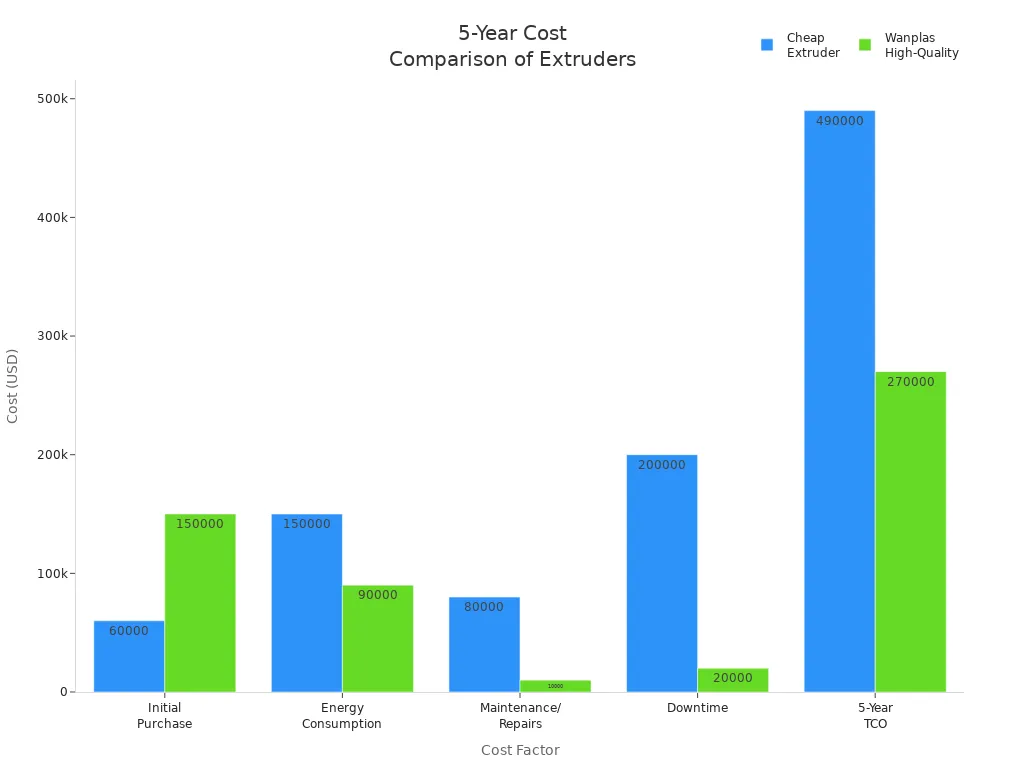
Es izmantoju šo diagrammu, lai vizualizētu katra izmaksu faktora ietekmi. Enerģijas patēriņš un dīkstāves izceļas kā galvenais ilgtermiņa izdevumu veicinātājs. Augstas kvalitātes ekstrūderis samazina šīs izmaksas, ļaujot man uzturēt konsekventu ražošanu un samazināt neparedzētu remontdarbu skaitu. Esmu redzējis, ka uzticamas iekārtas nodrošina nevainojamu ražošanas līniju darbību, kas atbalsta lielāku produkciju un labāku produktu kvalitāti.
Padoms: Es vienmēr novērtēju kopējās īpašuma izmaksas, ne tikai sākotnējā cena. Ieguldījumi progresīvās tehnoloģijās atmaksājas, pateicoties zemākām ekspluatācijas izmaksām un mazākiem traucējumiem. Monditech ekstrūderi nodrošina spēcīgu veiktspēju un efektivitāti, kas palīdz man sasniegt ilgtermiņa ietaupījumus un palielināt ieguldījumu atdevi.
I encourage manufacturers to consider all cost factors when selecting an extruder. A careful analysis ensures that the chosen machine supports both immediate needs and future growth. I trust Monditech’s solutions to deliver value across every stage of the manufacturing process.
Choosing the Right Plastic Extruder
Galvenie jautājumi
When I help manufacturers select the right plastic extruder, I always start by asking targeted questions. These questions clarify production needs and highlight the strengths of each machine type. I use the following table to compare the main considerations for single-screw and twin-screw extruders:
| Funkcija | Divu skrūvju ekstrūderis | Vienas skrūves ekstrūderis |
|---|---|---|
| Sajaukšanas iespējas | Provides both spreading and breaking-up mixing | Ierobežota sajaukšana, mainly pushes material forward |
| Izmaksas | Generally more expensive, suitable for diverse needs | Cheaper, ideal for small companies starting out |
| Production Flexibility | Palielinās, nezaudējot kvalitāti, piemērots dažādām nozarēm | Piemērots neliela apjoma ražošanai ar vienkāršiem pulveriem |
| Consistency in Output | Mazāk sliktu partiju konsekventas sajaukšanas dēļ | Var būt lielāka izlaiduma mainīgums |
| Apkope | Pašattīrīšanās, less downtime | More parts to adjust, potenciāli vairāk dīkstāves |
Es vienmēr jautāju sev: Kādus materiālus es apstrādāšu? Cik liela elastība man ir nepieciešama turpmākai izaugsmei? Kāds maisīšanas un konsistences līmenis ir vajadzīgs manam produktam? Šie jautājumi nosaka manu lēmumu un palīdz pielāgot ekstrūderi maniem ražošanas mērķiem.
Atlases kontrolsaraksts
Es paļaujos uz praktisku kontrolsarakstu, lai pārliecinātos, ka es aptveru visus kritiskos faktorus pirms galīgās izvēles. Lūk, process, kam sekoju:
- Definējiet galvenos produktu veidus un mērķa produkcijas apjomu.
- Uzskaitiet visus materiālus un piedevas, kuras plānoju apstrādāt.
- Assess the required mixing quality and consistency.
- Estimate available floor space and facility requirements.
- Calculate the total budget, including installation and training.
- Evaluate energy efficiency and long-term operating costs.
- Review maintenance needs and technical support options.
- Consult with Monditech’s engineering team for tailored recommendations.
Padoms: I always involve my production and maintenance teams early in the selection process. Their input helps me avoid surprises and ensures a smooth transition to new equipment.
Biežākās kļūdas
I have seen several common mistakes during plastic extruder selection. To avoid these pitfalls, I always take a comprehensive approach:
- Underspecifying—choosing a machine that is too small and running it at full capacity, which leads to rapid wear and quality issues.
- Ignoring the total line—focusing only on the extruder and overlooking downstream equipment, which can create bottlenecks.
- Skipping due diligence—making decisions based only on specifications or factory visits, without consulting current users.
- Neglecting energy costs—selecting a lower-priced machine but facing higher annual electricity expenses.
I trust Monditech’s consultation services to help me navigate these challenges. Their team provides expert guidance, ensuring I select the right machine for my needs and avoid costly mistakes.
Piezīme: Careful planning and expert support make all the difference when investing in new extrusion technology.
I see clear differences between a single-screw extruder and a twin-screw plastic extruder. I focus on quality, output, and performance when I choose equipment. I always consider product quality and recycling goals. I rely on Monditech for reliable technology that supports plastic recycling and delivers consistent output. I recommend reviewing your recycling needs, expected output, un kvalitātes standartiem. I trust Monditech to help you achieve top product quality and performance.
For more guidance, I suggest contacting Monditech’s experts or exploring their resources on recycling and quality improvement.
FAQ
What is the main difference between single-screw and twin-screw extruders?
I see the main difference in the number of screws and their mixing ability. Single-screw extruders handle basic tasks. Twin-screw extruders provide advanced mixing and flexibility for complex materials.
When should I choose a twin-screw extruder?
I choose a twin-screw extruder when I need precise mixing, augsta izlaide, or must process complex formulations. This machine works best for compounding, pārstrāde, un speciālās lietojumprogrammas.
Can I process recycled plastics with Monditech extruders?
Jā, I process recycled plastics efficiently with Monditech’s extruders. Both single-screw and twin-screw models support recycling, but I prefer twin-screw for better mixing and consistent quality.
How do I maintain a plastic extruder for best performance?
I follow a regular maintenance schedule. I clean the screw and barrel, check temperature controls, and inspect moving parts. I trust Monditech’s automated diagnostics to alert me to potential issues early.
What materials can I run on a single-screw extruder?
I run standard thermoplastics, elastomēri, and regrind materials on a single-screw extruder. This machine handles most basic polymers used in automotive, celtniecība, un iepakojums.
Does Monditech offer technical support and training?
Jā, I rely on Monditech’s expert team for technical support and operator training. They provide installation guidance, traucējummeklēšana, and ongoing consultation to keep my production running smoothly.
How do I decide which extruder is right for my operation?
I review my product requirements, materiālu veidi, and production volume. I consult with Monditech’s engineers to match the right extruder to my needs. Their advice helps me avoid costly mistakes.
What certifications do Monditech extruders have?
I confirm that Monditech extruders meet ISO 9001 and other relevant safety standards. These certifications assure me of quality, uzticamība, and compliance with industry regulations.