

Különböző extrudáló rendszerek felhalmozódása a gyártáshoz
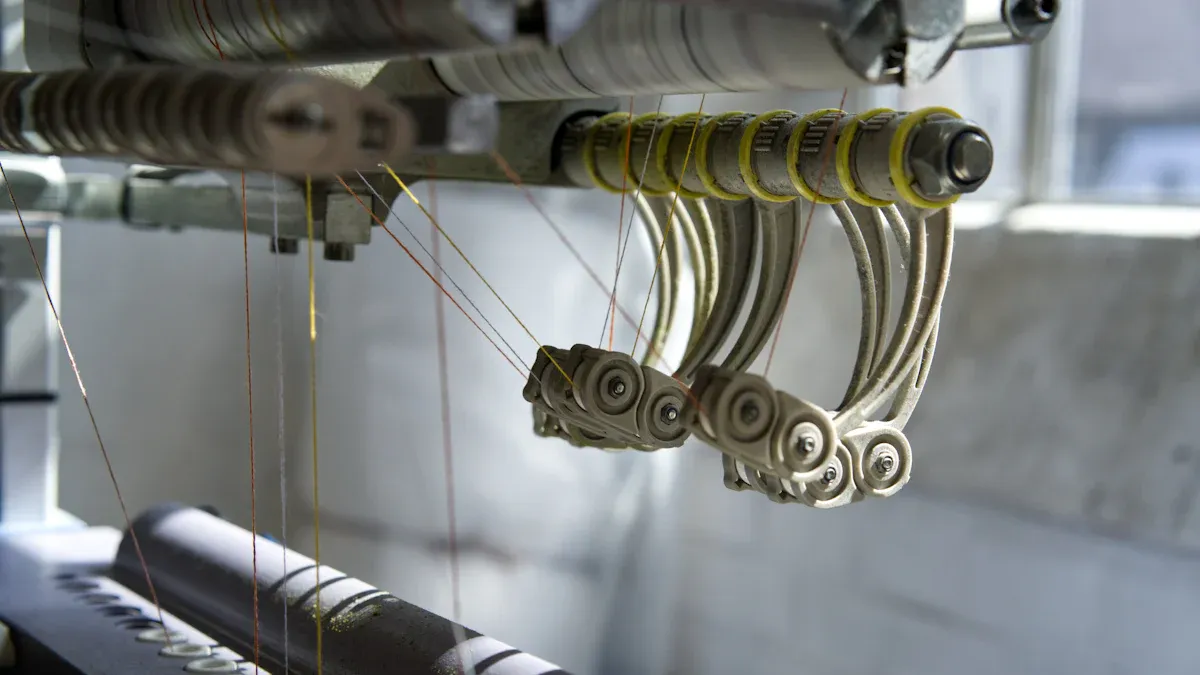
I have seen that the choice of extrusion system shapes the entire manufacturing process. A legtöbb gyártó egycsavaros rendszereket használ, amelyek a 62% piaci részesedés, míg az ikercsavaros rendszerek figyelembe veszik 38%.
| Extrusion System Type | Market Share Percentage |
|---|---|
| Egycsavaros | 62% |
| Ikercsavar | 38% |
A csavartípusok közötti választás befolyásolja a hatékonyságot, termék minősége, és anyagkompatibilitás. When I match extrusion technology to manufacturing goals, I notice improvements in cost-effectiveness, design versatility, és a fenntarthatóság.
| Tényező | Impact on Manufacturing Efficiency | A termék minőségére gyakorolt hatás |
|---|---|---|
| Controlled parameters | Maintains uniform product quality | Achieves micrometer tolerances |
I rely on Complete Extrusion Systems to deliver consistent results and precise screw performance.
Kulcs elvitelek
- Choose the right extrusion system based on your manufacturing goals and material properties to ensure optimal performance.
- Single-screw extruders are ideal for high-volume production of simple materials, while twin-screw systems excel in mixing complex materials.
- Regular maintenance and monitoring of extrusion systems prevent downtime and enhance efficiency, egyenletes termékminőség biztosítása.
- Az extruder kiválasztásakor vegye figyelembe a csavar átmérőjét és az L/D arányt, mivel ezek a tényezők befolyásolják a teljesítményt és a keverési hatékonyságot.
- Használja a koextrudálást többrétegű termékek létrehozásához, amelyek különböző anyagokat kombinálnak, a funkcionalitás és a teljesítmény fokozása.
- Értékelje az anyagok kompatibilitását a kiválasztott extrudáló rendszerrel a hibák elkerülése és a kiváló minőségű kimenet biztosítása érdekében.
- Legyen tájékozott az extrudálási technológia új trendjeiről, mint például az IoT és az AI, a hatékonyság javítása és a változó termelési igényekhez való alkalmazkodás.
- Készítsen egy ellenőrzőlistát a legfontosabb tényezőkről, mielőtt kiválasztana egy extrudáló gép a költséges hibák elkerülése és annak biztosítása, hogy a rendszer megfeleljen az alkalmazás követelményeinek.
A megfelelő extrudáló rendszer kiválasztása a gyártáshoz
A rendszerválasztás kulcstényezői
Soha nem találok univerzálist “legjobb” extrudáló rendszer. Tapasztalataim azt mutatják, hogy az ideális választás a gyártási céloktól függ, anyagtulajdonságok, és termékkövetelmények. Amikor extrudáló rendszert választok, A képességeit mindig a tervezett alkalmazáshoz igazítom. Ez a megközelítés biztosítja, hogy az extrudálási folyamat egyenletes minőséget és optimális teljesítményt biztosítson.
többnek tartom kritikus tényezők az extrudálógép kiválasztása előtt. A következő táblázatot használom a döntésemhez:
| Tényező | Leírás |
|---|---|
| Kutatási cél | A gép célja (oktatás, anyagfejlesztés, vagy kereskedelmi kísérleti gyártás) |
| Anyag típusa | A feldolgozandó polimerek típusa (hőérzékeny, illó, vagy reaktív) |
| Szükséges kimeneti kapacitás | Átmeneti kapacitás (gramm vagy kilogramm óránként) |
| Speciális folyamatkövetelmények | Gázbefecskendezés szükséges, vákuumos gáztalanítás, vagy reaktív extrudálási képesség |
| Költségvetés és laboratóriumi hely | Moduláris bővítés megfontolása a jövőbeli frissítésekhez |
| Jövőbeli bővítési igények | Kompatibilitás az ipari extrudáló modulokkal a termelés növelése érdekében |
Mindig figyelek a csavar átmérőjére és az L/D arányra. Ezek a paraméterek határozzák meg az áteresztőképességet és a keverési hatékonyságot. Megfelelő kimeneti kapacitású extrudert választok, amely től terjedhet 0.25 kg/h-ig 150 kg/h modelltől függően. A moduláris felépítés lehetővé teszi az alkatrészek gyors cseréjét, amely rugalmasságot ad a kutatás és fejlesztés számára. A fejlett vezérlőrendszerekre támaszkodom, mint például a PLC és a HMI, a pontos ellenőrzés és az adatok nyomon követhetősége érdekében.
Amikor az extrudáló gépek típusait értékelem, Figyelembe veszem a profil összetettségét és a szükséges tűréseket. A bonyolult kialakítások precíz szerszámozást igényelnek, és növelhetik a költségeket. Megnézem a rendelési mennyiséget is. A nagyobb mennyiség csökkenti az egységenkénti költséget, mivel a beállítási költségek több egység között oszlanak meg. Befejező és másodlagos műveletek, mint például az eloxálás vagy a CNC megmunkálás, hozzáadott értéket és költséget.
Tipp: Azt javaslom, hogy az extrudálógép kiválasztásának megkezdése előtt készítsen egy ellenőrző listát ezekről a tényezőkről. Ez a gyakorlat segít elkerülni a költséges hibákat, és biztosítja, hogy a rendszer megfeleljen a tervezett alkalmazásoknak.
Impact on Manufacturing Efficiency
Azt vettem észre, hogy az általam választott extrudáló rendszer közvetlenül befolyásolja a gyártás hatékonyságát. A csavar kialakítása, keverési képesség, és az extrudálási technológia mind szerepet játszik abban, hogy a folyamat zökkenőmentesen lezajlik. Például, a egycsavaros extruder gyakran jól működik egyszerű polimerekhez és nagy volumenű gyártáshoz. A kétcsigás extruderek bonyolult anyagokat és fejlett alkalmazásokat kezelnek, mint például a reaktív extrudálás vagy speciális keverékek.
Azt tapasztaltam, hogy az energetikai anyagokban a magas viszkozitás és szilárdanyagtartalom eltömődést okozhat, instabil extrudálás, és a fúvóka kopása. Ezek a problémák csökkentik a hatékonyságot és veszélyeztetik a biztonságot. Ezeket a kihívásokat a dagasztórendszer tervezésének optimalizálásával kezelem. A jobb keverési egyenletesség és az extrudálási pontosság növeli a biztonságot és a hatékonyságot.
Kétlépcsős ikercsavaros extrudáló rendszert használok, ha nagyobb stabilitásra és alkalmazkodóképességre van szükségem. A szimulációk azt mutatják, hogy ez a kialakítás javítja az áramlási jellemzőket és fenntartja az egyenletes kimenetet. Mindig figyelemmel kísérem az extrudálási folyamatot az egyenletes minőség biztosítása és az állásidő minimalizálása érdekében.
| Bizonyíték típusa | Leírás |
|---|---|
| Kihívások az additív gyártásban | A nagy viszkozitás és az energetikai anyagok szilárd tartalma olyan problémákat okoz, mint az eltömődés, instabil extrudálás, és a fúvóka kopása, hatással van a hatékonyságra és a biztonságra. |
| A dagasztórendszer teljesítménye | A dagasztórendszer kialakítása befolyásolja az anyagkeverés egyenletességét és az extrudálás pontosságát, a biztonság és a hatékonyság növelése érdekében javasolt speciális optimalizálásokkal. |
| Extrudáló rendszer tervezése | A kétlépcsős ikercsigás extrudáló rendszert úgy tervezték, hogy javítsa a stabilitást és az alkalmazkodóképességet az extrudálási folyamatban, különböző rendszerek áramlási jellemzőit feltáró szimulációkkal. |
Az extrudáló rendszert mindig a gyártási követelményekhez igazítom. Ez a gyakorlat biztosítja, hogy az extruder a kívánt minőséget és teljesítményt nyújtsa. A csavar konfigurációt az anyag típusa és az alkalmazás összetettsége alapján választom ki. A fejlett extrudálási technológiára támaszkodom a hatékonyság maximalizálása és a termékminőség magas színvonalának fenntartása érdekében.
Jegyzet: Javaslom a rendszeres karbantartást és folyamatfelügyeletet a csúcsteljesítmény fenntartása és a váratlan leállások megelőzése érdekében.
A komplett extrudáló rendszerek típusai
Amikor komplett extrudáló rendszereket értékelek a gyártáshoz, Mindig a fő azonosításával kezdem extrudáló gépek típusai. A leggyakoribb lehetőségek közé tartoznak az egycsavaros extrudáló gépek, ikercsavaros extrudáló gépek, és kos extrudáló gépek. Minden rendszer egyedi erősségeket és korlátokat kínál, ezért arra koncentrálok, hogy a megfelelő technológiát az alkalmazáshoz igazítsam.
| Az extrudáló gép típusa |
|---|
| Egycsavaros extrudáló gépek |
| Kétcsavaros extrudáló gépek |
| Nyomós extrudáló gépek |
Egycsavaros extrudálás
Gyakran használok egycsigás extrudert az egyszerű extrudálási folyamatokhoz. Ez a gép egy forgó csavarral rendelkezik egy fűtött hordóban. A csavar előre tolja az anyagot, megolvasztja, és egy szerszámon keresztül formálja meg. Erre a rendszerre támaszkodom a hőre lágyuló műanyagok nagy volumenű gyártásához, élelmiszeripari termékek, és gumikeverékek. A tervezés egyszerűsége megkönnyíti a kezelést és a karbantartást.
| Ipar | Alkalmazás leírása | Piaci növekedési előrejelzések |
|---|---|---|
| Műanyagok | Hőre lágyuló műanyagok olvasztása és formázása, a növekvő PE és PP használat vezérli. | CAGR kb 4-5% keresztül 2030 |
| Élelmiszer-feldolgozás | Feldolgozott élelmiszerek, például rágcsálnivalók és gabonafélék előállítása. | Piac átnyúlni $75 milliárddal 2026 |
| Gumi összetétele | Gumi keverése és formázása gumiabroncsokhoz és autóalkatrészekhez. | Az abroncsgyártás felülmúlható 2 milliárd egységgel 2025 |
| Orvosbiológiai | Biopolimer gyártás csomagoláshoz és orvosi eszközökhöz. | Feltörekvő piac új extrudálási technológiával |
Viszont, Felismerem a az egycsigás extrudálás korlátai. Az egyenletes keveredés elérése nehéz lehet, főleg ha töltőanyagot vagy adalékanyagot adok hozzá. A nyomás konzisztenciája gyakran változik az alapanyag változásaival, és a nagy viszkozitású anyagok nem folyhatnak jól, hibákhoz vezet. Ezek a kihívások irányítják az extrudálógép kiválasztását, amikor jobb minőségre vagy összetettebb feldolgozásra van szükségem.
Tipp: Egyszerűen, nagy volumenű alkalmazások, Azt javaslom, hogy egycsavaros extruderrel kezdje. Haladó keveréshez vagy speciális anyagokhoz, fontolja meg a többi lehetőséget.
Kétcsavaros extrudálás
Amikor speciális feldolgozást igényelek, felé fordulok ikercsavaros extruder technológia. Ez a rendszer két csavart használ, amelyek együtt forognak a henger belsejében. A csavarok egymásba illeszkedhetnek vagy párhuzamosan futhatnak, a kialakítástól függően. Úgy gondolom, hogy az ikercsigás extruderek kiváló keverési hatékonyságot biztosítanak, jobb lágyítás a nagy viszkozitású anyagoknál, valamint a hőmérséklet és nyomás fokozott szabályozása. Ezek a tulajdonságok javítják a termék minőségét és a folyamat konzisztenciáját.
Az ikercsavaros extrudálás azt is lehetővé teszi, hogy több feldolgozási lépést hajtsak végre egy gépen. tudok keverni, olvad, nyílás, és akár anyagokat is reagáltatnak egyetlen menet alatt. Ez a rugalmasság csökkenti a hulladék mennyiségét és felgyorsítja a termelést. Az ikercsavaros és az egycsigás extruderek összehasonlításakor, Gyorsabb megtérülést és egységesebb eredményeket látok az ikercsavaros rendszereknél, különösen összetett keverékekhez vagy újrahasznosított műanyagokhoz.
Ikercsavaros altípusok
Mindig figyelembe veszem a különböző típusú extruder gépeket az ikercsigás kategóriában. A csavar konfigurációja befolyásolja a teljesítményt, hatékonyság, és az alkalmazások köre.
Összefonódó
Az egymásba nyíló ikercsigás extruderek olyan csavarokkal rendelkeznek, amelyek átfedik egymást és egymásba illeszkednek. Ez a kialakítás biztosítja precíz anyagszállítás és nagy nyíróerők. Intermeshing rendszereket használok a jobb összeállítás és kompatibilitás érdekében, különösen akkor, ha egyenletesen kell eloszlatnom az adalékanyagokat vagy a töltőanyagokat.
Nem összefonódó
A nem összefonódó ikercsigás extruderek olyan csavarokkal rendelkeznek, amelyek átfedés nélkül forognak. Ez a beállítás gyengédebb keverést és kisebb nyírást biztosít. Érzékeny, minimális mechanikai igénybevételt igénylő anyagokhoz nem összefonódó kiviteleket választok.
Együtt forgó
Az együtt forgó ikercsigás extruderek csavarjai ugyanabba az irányba forognak. Ez az altípus a keverési hatékonyságban és az anyagszállításban jeleskedik. A reaktív extrudáláshoz együtt forgó rendszereket használok, devolatilizáció, és nagy teljesítményű polimer kompaundálás. Viszont, a nagy nyírási sebesség tönkreteheti a hőérzékeny anyagokat, ezért szorosan figyelemmel kísérem a csavarok kialakítását és a hűtést.
| Altípus | Feldolgozási képességek és előnyök | Korlátozások és szempontok | Legjobb alkalmazások |
|---|---|---|---|
| Együtt forgó ikercsavaros extruder | Magas keverési hatékonyság, alkalmas reaktív extrudálásra, magas nyírási sebességek | Anyagromlás veszélye, pontos csavartervezést igényel | Polimer kompaundálás, nanokompozitok, labortól gyártásig terjedő munkafolyamatok |
Ellentétesen forgó
Az ellentétes irányban forgó ikercsigás extruderek ellentétes irányban forgó csavarokkal rendelkeznek. Ez a konfiguráció kisebb nyíróerőket generál, amely megvédi a törékeny anyagokat. A kerámiák esetében az ellentétes forgási rendszerekre támaszkodom, biopolimerek, és gyógyszerkészítmények. A kialakítás jó nyomásnövelést és hatékony tömítést is biztosít, bár a keverés intenzitása alacsonyabb, mint az együtt forgó rendszereknél.
| Altípus | Feldolgozási képességek és előnyök | Korlátozások és szempontok | Legjobb alkalmazások |
|---|---|---|---|
| Ellentétesen forgó ikercsavaros extruder | Kisebb nyíróerők, jó nyomásképzés, hatékony tömítés | Alacsonyabb keverési intenzitás, bonyolultabb tömítés és csapágy kialakítás | Kerámia, biopolimerek, gyógyszerek |
Amikor egy komplett extrudáló rendszert választok ki, A csavar típusát és konfigurációját mindig az anyag- és folyamatkövetelményekhez igazítom. Ez a megközelítés biztosítja a magas minőséget, hatékonyság, és megbízható teljesítmény minden alkalmazásban.
Nyomós extrudálás
Gyakran választom a kos extrudálást, amikor nagy nyomást és precíz formázást igénylő anyagokat kell feldolgoznom. Ez a módszer egy hidraulikus munkahenger segítségével nyomja át az anyagot egy fűtött hordón és a szerszámon, nem pedig egy forgó csavarra hagyatkozni. A kos extrudereket különösen hasznosnak találom hőre keményedő műanyagokból készült termékek előállításához, kerámia, és PTFE. Az eljárás lehetővé teszi, hogy rudakat készítsek, csövek, és konzisztens méretű profilok.
Ram extrusion stands out among types of extrusion machines because it handles materials that traditional screw extruders cannot process efficiently. I use this technology in industries mint például a műanyagok, élelmiszer, és gyógyszerek. Például, I produce snacks and cereals with unique shapes, and I manufacture tablets and capsules with exact specifications.
I have noticed several benefits and challenges when using ram extruders:
- Ram extruders excel in producing high-quality products from difficult-to-process materials.
- I rely on them for applications where screw extrusion technology falls short, such as PTFE and ceramic profiles.
- The process delivers consistent quality and dimensional accuracy.
- High operational costs can impact efficiency and overall performance.
- Stringent regulations in plastic manufacturing require careful process control.
- Az alternatív extrudáló rendszerek versenye arra késztet, hogy optimalizáljam az extrudálógép-választásomat.
Mindig mérlegelem ezeket a tényezőket, mielőtt a kos extrudálást választanám komplett extrudáló rendszerekhez. A folyamatot szorosan figyelemmel kísérem a minőség és a hatékonyság megőrzése érdekében, különösen, ha speciális anyagokkal dolgozik.
Együttes extrudálás
A koextrudálás lehetővé teszi, hogy több anyagot egyetlen termékben egyesítsek, többrétegű profilok létrehozása továbbfejlesztett tulajdonságokkal. Ezt az extrudálási technológiát különböző hőre lágyuló műanyagok integrálására használom, minden réteg egyedi tulajdonságokkal rendelkezik. A folyamat során több anyagot nyomnak át egyetlen szerszámon, összetett gyártási követelményeknek megfelelő egységes profilt eredményezve.
A tartósságot igénylő termékek gyártásához a koextrudálásra támaszkodom, rugalmasság, és esztétikai vonzerő. This method allows me to tailor the quality of each layer, improving performance and functionality. I see co-extrusion as a key advancement in complete extrusion systems, especially when I need to produce items with specialized features.
Industries benefit from co-extrusion in several ways:
- Építés: I manufacture window sills, keretek, and trim pieces that combine strength and visual appeal.
- Retail: I build shelving and display systems that are both durable and attractive.
- Jelzés: I produce illuminated signs and frames with clean finishes and reliable performance.
Co-extrusion expands the range of applications for extrusion technology. I use it to meet demanding production goals and deliver products with superior quality. When I select an extruder for co-extrusion, I consider screw design, process control, és anyagkompatibilitás. This approach ensures efficiency and consistent results.
Tipp: I recommend co-extrusion for projects that require multi-layered profiles and enhanced product functionality. Careful extrusion machine selection and process monitoring are essential for achieving optimal quality.
Structure and Operation of Extrusion Systems
Screw and Barrel Design
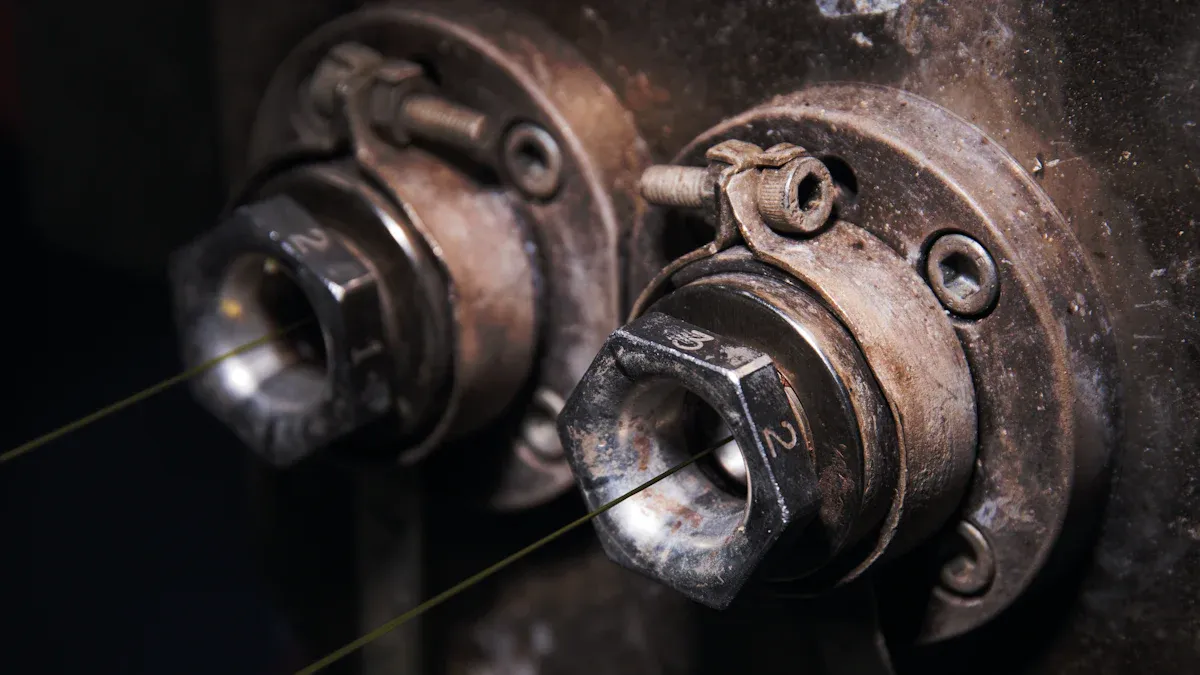
I always start my extrusion machine selection by examining the screw and barrel design. The geometry of the screw determines how efficiently the extruder melts, keverékek, and conveys material. I adjust the length-to-diameter (L/D) ratio to control residence time and mixing. A higher L/D ratio allows the material to melt and blend more thoroughly, which is essential for achieving uniform quality in the final product. I rely on barrier designs in the screw barrel to maintain melt stability and prevent degradation, especially when I process sensitive materials. Parallel twin screw and barrel designs play a critical role in extrusion speed, termék minősége, és az energiahatékonyság. I use zoning and precise temperature control to stabilize melt flow and avoid trapped gases, which improves density and consistency. The surface finish of the barrel and the geometry of the screw also influence energy efficiency and product consistency. I always match the screw design to the specific requirements of the application to maximize performance.
- A higher L/D ratio improves mixing and melt uniformity, which is essential for high-quality products.
- Barrier designs help maintain melt stability and prevent degradation.
- A csavargeometria és a henger felületének kidolgozása befolyásolja az energiahatékonyságot és a termék konzisztenciáját.
Anyagmozgás és keverés
Az extrudálási folyamat zökkenőmentes lefutása érdekében a hatékony anyagmozgatásra és keverésre összpontosítok. használom robusztus pneumatikus vagy mechanikus szállítószalagok a nyersanyagok gyors és minimális karbantartási igényű átadása érdekében. A fejlett keverőkonstrukciók garantálják az alapos és egyenletes keverést, amely megakadályozza a késztermékek eltéréseit. Automatizált vezérléseket integrálok PLC rendszerekkel a valós idejű monitorozás és receptkezelés érdekében. Ez a megközelítés lehetővé teszi számomra, hogy zökkenőmentesen felügyeljem a gyártást, és szükség szerint módosítsam a paramétereket. Skálázható konfigurációkat választok kis műhelyek és nagy ipari műveletek számára egyaránt. A továbbfejlesztett porkezelési funkciók tisztán és biztonságosan tartják a munkahelyet. Következetes, a homogén keverékek csökkentik a minőségi ingadozásokat és javítják az áteresztőképességet. Az automatizált rendszerek minimalizálják a kézi kezelést, ami lerövidíti a gyártási ciklusokat és csökkenti a munkaerőköltségeket. Mindig ezeket a funkciókat helyezem előtérbe, amikor az extrudáló gépek típusait értékelem új alkalmazásokhoz.
| Funkció | Leírás |
|---|---|
| Hatékony anyagszállítás | Gyors, az alapanyagok alacsony karbantartási igényű mozgása |
| Precíziós keverés | Alapos, egységes keverés az egyenletes minőség érdekében |
| Automatizált vezérlések | Valós idejű monitorozás és receptkezelés |
| Skálázható konfigurációk | Rugalmas elrendezések bármilyen termelési kapacitáshoz |
| Továbbfejlesztett porvédelem | Tisztító, biztonságosabb munkahely |
| Jobb termékminőség | Homogén keverékek, csökkentett ingadozások |
| Megnövelt áteresztőképesség | Rövidebb gyártási ciklusok, kevesebb kézi kezelés |
| Csökkentett hulladék | Pontos mérés, alacsonyabb költségek |
| Alacsonyabb munkaerőköltségek | Az automatizálás felszabadítja a személyzetet az értéknövelt feladatokra |
| Biztonságosabb munkakörnyezet | Zárt vezetékek és porszabályozás |
Folyamatszabályozás és kimeneti minőség
A fejlett folyamatszabályozási technológiára támaszkodom a magas kimeneti minőség fenntartása érdekében az extrudálási gyártás során. kiválasztom kiváló minőségű hőre lágyuló műanyagok hogy biztosítsuk a végtermékek szilárdságát, tartósság, és rugalmassági követelmények. Az extrudálási paramétereket szorosan figyelemmel kísérem, hogy csökkentsem a gyártás közbeni eltéréseket. Számomra továbbra is a méretpontosság a legfontosabb, mivel garantálja, hogy az alkatrészek megfelelnek a tervezett alkalmazási területeknek. Felületvizsgálattal olyan hibákat észlelek, mint a vetemedés vagy légbuborékok, ami segít megőrizni a termék állandó minőségét. A problémák korai felismerése csökkenti a pazarlást és a termelési költségeket. Mindig biztosítom, hogy folyamatom megfeleljen a szabályozási előírásoknak, amely mind a vállalkozásomat, mind az ügyfeleimet védi. A kiváló minőségű termékek javítják márkám hírnevét és növelik a vásárlók elégedettségét. Advanced monitoring systems allow me to increase production speed without sacrificing accuracy, which boosts overall efficiency in complete extrusion systems.
| Element/Advantage | Leírás |
|---|---|
| Anyag kiválasztása | Ensures strength, tartósság, és a rugalmasság |
| Folyamatfigyelés | Reduces discrepancies and maintains consistency |
| Méretpontosság | Guarantees proper fit for all applications |
| Felületi vizsgálat | Identifies defects early for better quality |
| Állandó termékminőség | Every batch meets high standards |
| Hulladékcsökkentés | Saves material and production costs |
| Szabályozási megfelelőség | Meets legal and safety requirements |
| Customer Satisfaction | Builds reputation and loyalty |
| Process Efficiency | Increases speed while maintaining accuracy |
Tipp: I recommend regular calibration and maintenance of all extrusion technology to sustain peak performance and consistent quality.
Comparing the Extrusion Process
Egycsavaros vs. Twin-Screw Process
Amikor összehasonlítom single-screw and twin-screw extruders, I focus on how each system handles the extrusion process. The screw design shapes the way material moves and mixes. A single-screw extruder uses one helical screw inside a simple, cylindrical barrel. Ezzel szemben, a twin-screw extruder features two intermeshing screws and a more complex, gyakran tagolt hordó. I see that temperature control in single-screw systems remains basic, while twin-screw machines offer advanced control with multiple heating and cooling zones. This difference impacts both throughput and energy efficiency.
| Vonatkozás | Egycsavaros extruder | Kétcsavaros extruder |
|---|---|---|
| Csavaros kivitel | Single helical screw | Két egymásba illeszkedő csavar |
| Hordó szerkezete | Egyszerű, cylindrical | Bonyolultabb, often segmented |
| Hőmérséklet szabályozás | Basic heating/cooling | Fejlett, multi-zone |
| Kimeneti kapacitás | Mérsékelt | Magas |
| Energiafogyasztás | Általában magasabb | Hatékonyabb |
| Rugalmasság az átvitelben | Korlátozott | Magas |
I rely on twin-screw extruders for higher output and better energy efficiency. When I need flexibility in throughput or advanced process control, I choose twin-screw systems. For straightforward applications, single-screw extruders still provide reliable performance.
Material Compatibility in the Extrusion Process
Material compatibility plays a critical role in extrusion machine selection. I always match the screw configuration to the type of material I plan to process. Single-screw extruders handle standard thermoplastics well, but they struggle with materials that require intensive mixing or have high filler content. Twin-screw extruders excel with specialty compounds, újrahasznosított műanyagok, és reaktív anyagok. I use segmented screws to adjust mixing and shearing for each application.
When I work with complete extrusion systems, I consider how each screw design affects the final product. Twin-screw extruders allow me to process a wider range of materials, including those with additives or sensitive properties. This flexibility supports more types of extrusion machines and expands the range of possible applications.
Tipp: I recommend evaluating the chemical and physical properties of your raw materials before choosing an extruder. This step ensures compatibility and reduces the risk of defects.
Termékminőség és konzisztencia
I know that the extrusion process directly impacts the quality of the finished product. Modern extrusion lines integrate automation and advanced control platforms. These systems analyze multiple variables at once, which helps me maintain consistent quality across every batch.
Quality consistency is a productivity multiplier. Advanced control platforms analyze patterns across multiple variables simultaneously, ensuring that product quality is maintained throughout the extrusion process.
I monitor key factors such as stable melt pressure, output rate, és felületkezelés. Stable melt pressure prevents warping and dimensional drift. Higher and more stable output reduces scrap rates and downtime. Better surface finish and precise dimensional control enhance the impact on the quality of the finished product.
| Key Factors | Impact on Quality and Consistency |
|---|---|
| Stable melt pressure | Prevents dimensions from drifting or warping |
| Higher and more stable output | Reduces scrap rates and downtime |
| Better surface finish | Enhances overall product quality |
| Dimensional control | Ensures precision in final product specifications |
| Faster ROI | Improves profitability for manufacturers |
Az ikercsavaros és az egycsigás extruderek összehasonlításakor, I see that twin-screw systems deliver better consistency and lower operational cost. I achieve faster ROI and improved performance by investing in advanced extrusion technology. I always prioritize process monitoring and automation to ensure high quality and efficiency in production.
- Higher and more stable output
- Lower scrap and downtime
- Better surface finish and dimensional control
- Reduced operational cost
- Faster ROI
I rely on these strategies to maximize the benefits of extrusion and deliver products that meet strict manufacturing standards.
Performance Comparison Table
Teljesítmény és hatékonyság
I always evaluate throughput and efficiency when I compare types of extrusion machines. Throughput measures how much material the extruder processes in a given time. Efficiency reflects how well the screw design converts raw material into finished products with minimal waste and energy use. I see that single-screw extruders often deliver steady throughput for standard polymers. Kétcsigás extruderek, with their advanced screw geometry, handle higher output and maintain better energy efficiency, especially for complex blends.
| Extruder típusa | áteresztőképesség (kg/h) | Energiahatékonyság | Legjobb használati esetek |
|---|---|---|---|
| Egycsavaros | 50–500 | Mérsékelt | Nagy volumenű, simple polymers |
| Ikercsavar | 100–1000+ | Magas | Complex blends, specialty jobs |
| Ram Extruder | 10–100 | Alacsony – Közepes | PTFE, kerámia, különlegesség |
| Ko-extrudáló rendszerek | Változó | Magas | Multi-layered profiles |
I always match the screw configuration to the material and production requirements. This approach ensures the process delivers consistent quality and meets manufacturing goals. I rely on complete extrusion systems to maximize throughput and efficiency for every application.
Tipp: I recommend monitoring energy consumption and output rates regularly. This practice helps optimize extrusion machine selection and reduces operational costs.
Maintenance and Reliability
I prioritize maintenance and reliability when I select an extruder. The screw and barrel experience constant wear from abrasive materials and high temperatures. I schedule routine inspections and replace worn components to prevent unexpected downtime. Single-screw extruders require less maintenance due to their simple design. Kétcsigás extruderek, with more moving parts and segmented screws, need more frequent checks but offer greater flexibility.
| Extruder típusa | Karbantartási igények | Reliability Level | Common Issues |
|---|---|---|---|
| Egycsavaros | Alacsony – Közepes | Magas | Occasional screw wear |
| Ikercsavar | Közepes – Magas | Magas | Segment wear, seal failure |
| Ram Extruder | Mérsékelt | Mérsékelt | Hydraulic leaks, die wear |
| Ko-extrudáló rendszerek | Magas (multi-screw) | Magas | Synchronization, csavarkopás |
I use advanced monitoring systems to track screw wear and process stability. This strategy improves reliability and extends the life of my extrusion technology. I always keep spare screws and barrels on hand to minimize downtime during maintenance.
Product Complexity and Flexibility
I value design flexibility extrudálásnál. The ability to customize the screw and die allows me to create complex profiles for a wide range of applications. I use extrusion to manufacture everything from simple plastic tubing to intricate window frames. I can add reinforcements or special features within the continuous material, which expands my product offerings.
| Vonatkozás | Leírás |
|---|---|
| Tervezési rugalmasság | Extrusion allows for significant design flexibility through die customization, enabling complex profiles. |
| Alkalmazások | Suitable for various applications, including intricate window frames and simple plastic tubing. |
| Testreszabás | Manufacturers can include reinforcements or additional features within the continuous material. |
- In MedTech, I must achieve tight tolerances for medical devices.
- I ensure biocompatibility for all medical extrusion products.
- I monitor wall thickness closely, since it affects flow rates and structural strength.
I select the screw configuration and extrusion machine based on the complexity of the design and the required tolerances. This approach guarantees high quality and supports advanced manufacturing needs.
Jegyzet: I recommend consulting with extrusion experts when planning new product designs. Their experience helps avoid costly mistakes and ensures the right screw and process configuration.
Application Suitability in Manufacturing
High-Volume Manufacturing
I always start my extrusion machine selection by considering the demands of high-volume manufacturing. When I need to produce thousands of units per day, I rely on single-screw extruders. These machines deliver steady throughput and maintain consistent quality. The screw design in single-screw extruders allows me to process standard polymers efficiently. I monitor the process closely to ensure uniform melt and minimize defects. I select the right screw diameter and length to match the production requirements. This approach helps me achieve high efficiency and reduce waste. I use automated controls to track output and maintain quality standards. High-volume applications benefit from robust types of extrusion machines that can operate continuously with minimal downtime. I always keep spare screws and barrels ready to avoid interruptions in production.
Tipp: I recommend scheduling regular maintenance for extruders used in high-volume manufacturing. This practice extends the life of the screw and ensures reliable performance.
Complex Product Manufacturing
When I manufacture complex or multi-component products, I turn to advanced extrusion technology. Twin-screw extruders give me greater control over mixing and material distribution. I use segmented screws to adjust shear and optimize the process for each application. Co-extrusion technology enables me to combine different polymers into multi-layer films and pipes. This method improves barrier properties and enhances strength, rugalmasság, és vegyszerállóság.
| Technológia | Előnyök |
|---|---|
| Koextrudálás | Enables the creation of multi-layer films and pipes with improved barrier properties, combining different polymers for strength, rugalmasság, és vegyszerállóság. |
I select the screw configuration based on the complexity of the product. For intricate designs, I rely on precise tooling and advanced process monitoring. I always test the extruder setup before full-scale production to ensure quality and performance. Complex applications require careful extrusion machine selection and attention to detail.
Specialty Materials and Customization
I often work with specialty materials that demand custom solutions. I use advanced shaping processes, such as sheet extrusion and thermoforming, to control material characteristics. Sheet extrusion gives me the ability to manage thickness and material distribution with high accuracy. Co-extrusion capabilities allow me to create multi-layer constructions that enhance material properties. I integrate downstream shaping processes to ensure consistent performance in finished components. Engineering services help me optimize component designs and select the best materials for specific applications.
- Advanced shaping processes, such as sheet extrusion and thermoforming, allow for precise control over material characteristics.
- Sheet extrusion provides a foundation for custom material solutions, enabling thickness control and material distribution accuracy.
- Co-extrusion capabilities facilitate the creation of multi-layer constructions, enhancing material properties.
- Integration with downstream shaping processes ensures consistent performance characteristics in finished components.
- Engineering services optimize component designs and material selection, ensuring suitability for specific applications.
I always match the screw design to the requirements of specialty materials. Customization in extrusion depends on selecting the right extruder and process parameters. I monitor quality at every stage to deliver products that meet strict standards. Specialty applications benefit from flexible types of extrusion machines and expert guidance.
Jegyzet: I recommend consulting with extrusion specialists when working with new materials or custom designs. Their expertise helps achieve the desired quality and performance.
Selection Criteria for Extrusion Systems
Product Design and Complexity
I always start my extrusion machine selection by analyzing the product design and complexity. The geometry of the profile influences the choice of extruder and screw configuration. Complex shapes increase tooling costs and create production challenges. I simplify profile geometry whenever possible to enhance material flow and reduce defects. Smooth transitions in the design prevent disruptions in material flow, which is crucial for consistent extrusion quality. I select the right material early in the process because material choice affects both the properties of the part and the ease of extrusion. This decision impacts manufacturability and overall performance.
- Simplifying profile geometry lowers tooling costs and reduces production challenges.
- Designing for material flow ensures consistent extrusion quality and minimizes defects.
- Choosing the right material early improves manufacturability and product performance.
I match the screw design to the complexity of the product. For intricate profiles, I use advanced screw configurations that optimize mixing and material transport. I rely on precise tooling and process monitoring to maintain high quality. When I work with complex applications, I consult with extrusion technology experts to avoid costly mistakes and ensure the best results.
Tipp: I recommend reviewing the profile geometry and material flow before finalizing the extrusion machine selection. This step helps prevent production issues and supports efficient manufacturing.
Anyagtulajdonságok
Material properties play a critical role in selecting the right extruder and screw configuration. I identify application requirements such as temperature resistance, UV expozíció, and impact durability. I consider mechanical properties like flexibility, keménység, and tensile strength for the intended use. Environmental conditions influence my material choice, especially when I need weathering resistance or flexibility in cold environments. I evaluate aesthetic and finish requirements, beleértve a színt is, fényes, és felületi textúra, based on project needs. Regulatory and compliance needs guide my selection to ensure materials meet industry-specific standards and certifications.
- Application requirements determine the need for temperature resistance, UV expozíció, and impact durability.
- Mechanical properties such as flexibility, keménység, and tensile strength affect the choice of extruder and screw.
- Environmental conditions require materials that withstand weathering or remain flexible in cold climates.
- Aesthetic and finish requirements influence color, fényes, és felületi textúra.
- Regulatory and compliance needs ensure materials meet industry standards.
I select the screw design based on the material’s properties. For heat-sensitive materials, I use screws with gentle mixing zones and precise temperature control. When processing tough or abrasive compounds, I choose robust screw geometries that withstand wear and maintain efficiency. I always test materials in pilot runs to verify compatibility with the extruder and ensure consistent quality.
Jegyzet: I recommend consulting material datasheets and industry standards before choosing an extruder. This practice helps match material properties to the extrusion process and supports reliable performance.
Production Volume and Scale
Production volume and scale influence the cost-effectiveness of extrusion machine selection. Higher production volumes reduce unit costs because tooling expenses are spread over more parts. In the prototype stage, tooling costs are high compared to the quantity produced. In mass production, die costs are amortized over larger volumes, leading to lower costs per unit. Például, a die costing $2,000 with a lifetime of 40,000 kg results in a cost of $0.05 per kg when amortized.
- Higher production volumes lower unit costs by spreading tooling expenses.
- Prototype stages have high tooling costs relative to the number of parts produced.
- Mass production allows die costs to be distributed over larger volumes, reducing per-unit costs.
- Example: A die costing $2,000 with a lifetime of 40,000 kg results in a cost of $0.05 per kg.
I select the extruder and screw configuration based on the expected production volume. For high-volume manufacturing, I use robust types of extrusion machines that deliver steady throughput and maintain efficiency. In low-volume or prototype applications, I prioritize flexibility and rapid changeover. I monitor production rates and adjust screw parameters to optimize output and quality.
Tipp: I recommend calculating the amortized tooling cost before committing to a production scale. This step helps determine the most cost-effective extrusion technology and supports long-term manufacturing goals.
Technical and Budget Considerations
I always approach extrusion machine selection with a clear focus on technical requirements and budget constraints. My experience tells me that investing in advanced extrusion technology demands careful planning. I evaluate every aspect of the system, from screw design to process control, to ensure cost-effectiveness and reliable performance.
I start by analyzing the technical specifications of the extruder. I look at screw geometry, barrel length, and compatibility with different types of extrusion machines. I select a screw that matches the material properties and the complexity of the applications. I check if the extruder can handle the desired throughput and maintain consistent quality. I also assess the integration of feeders, hőmérséklet-szabályozók, és downstream berendezések. System integration plays a crucial role in maximizing efficiency and avoiding bottlenecks in production.
Budget considerations influence every decision I make. I break down the costs into several categories to understand the financial impact. I use the following table to guide my investment strategy:
| Budget Consideration | Leírás | Financial Impact / Benefit Example |
|---|---|---|
| Energiahatékonyság | Reducing energy consumption by upgrading control systems or screws | 33% energy reduction saves nearly $100,000 annually on $288,000 energia költség |
| Scrap Reduction | Lowering scrap rate from 15% hogy 5% through data acquisition and process control | Saves $200,000 monthly or $2.4 million yearly in materials, munkaerő, and energy costs |
| Throughput Increase | Upgrading to twin-screw extruder increases throughput by 30% | Generates $600,000 additional monthly revenue with >50% incremental profit margin |
| Maintenance Cost Reduction | Predictive maintenance and condition monitoring reduce emergency repairs and downtime | Maintenance costs drop 20-30%, equipment availability increases |
| System Integration | Budgeting for compatible feeders, hőmérséklet-szabályozók, és downstream berendezések | Partial upgrades capture only ~40% of potential benefits |
| Operator Training | Training on material characteristics, gépek, instrumentation, és vezérlők | Essential to fully realize technology benefits; lack wastes investment |
| Data Acquisition Infrastructure | Adequate sensors and analytics software needed for optimization | Insufficient infrastructure limits optimization; too many sensors without analytics causes overload |
| Downstream Constraints | Ensuring cutting, csomagolás, and inspection keep pace with increased extruder output | Bottlenecks reduce overall system benefit |
I prioritize energy efficiency when selecting an extruder. Upgrading control systems or optimizing screw design can reduce energy consumption by up to 33%. This improvement saves nearly $100,000 each year on a typical $288,000 energy bill. I also focus on scrap reduction. By implementing advanced process control and data acquisition, I lower scrap rates from 15% hogy 5%. This change saves $200,000 every month in materials, munkaerő, and energy costs.
Increasing throughput is another key goal. Upgrading to a twin-screw extruder boosts output by 30%. This increase generates $600,000 in additional monthly revenue, with more than a 50% incremental profit margin. I invest in predictive maintenance and condition monitoring to reduce emergency repairs and downtime. Maintenance costs drop by 20-30%, and equipment availability improves.
System integration is essential for maximizing the benefits of extrusion technology. I budget for compatible feeders, hőmérséklet-szabályozók, és downstream berendezések. Partial upgrades capture only about 40% of the potential benefits. Operator training is critical. I ensure my team understands material characteristics, gépek, instrumentation, és vezérlők. Without proper training, the investment in advanced extrusion technology goes to waste.
I invest in data acquisition infrastructure. Adequate sensors and analytics software optimize the process. Insufficient infrastructure limits optimization, while too many sensors without analytics cause information overload. I address downstream constraints by ensuring cutting, csomagolás, and inspection keep pace with increased extruder output. Bottlenecks in these areas reduce the overall benefit of the system.
I always balance technical requirements with budget limitations. I select a screw that delivers high quality and efficiency without exceeding my financial resources. I plan for future upgrades and modular expansion to support changing production needs. I monitor every aspect of the extrusion process to maintain cost-effectiveness and reliable performance.
Tipp: I recommend creating a detailed budget plan before investing in new extrusion technology. Include energy costs, karbantartás, kezelői képzés, and system integration. This approach ensures that the extruder delivers maximum value and supports long-term manufacturing goals.
Actionable Insights for Manufacturers
Matching System to Application
I always match the extrusion system to the specific application. én optimize material use to balance strength and lightweight design. I define critical dimensional tolerances early, which ensures parts fit and function as intended. I design for manufacturability, making sure shapes can be extruded consistently and cost-effectively. I select aluminum alloys based on application needs, such as strength and corrosion resistance. I simplify designs to reduce costs, avoiding unnecessary complexity in profiles. I prototype and test early, which helps me identify potential challenges before full production. These steps help me achieve high quality and reliable performance in every extrusion process.
- Optimize material use for strength and lightweight design.
- Define critical dimensional tolerances early.
- Tervezés a gyárthatóság érdekében.
- Select appropriate aluminum alloys for application needs.
- Simplify designs to reduce costs.
- Prototype and test early.
I always consider the key components of an extruder, such as screw geometry and barrel design, to ensure the system meets production requirements. I review different types of extruder machines to find the best fit for my applications in műanyag extrudálás. This approach supports scalability and maintains quality control throughout manufacturing.
Common Selection Mistakes
I have seen many manufacturers make mistakes during extrusion machine selection. Inadequate material blending often leads to product imperfections and increased costs from reprocessing. Outdated or incompatible control systems cause integration issues and inefficiencies. Inconsistent feed rates disrupt the extrusion process, resulting in product variabilities and higher scrap rates. Neglecting preventive maintenance allows minor mechanical issues to escalate into major production problems, affecting revenue. Ignoring operator training leads to misconfigurations and missed optimization opportunities.
- Inadequate material blending increases costs and reduces quality.
- Outdated control systems cause inefficiencies.
- Inconsistent feed rates disrupt the extrusion process.
- Neglecting preventive maintenance leads to major production problems.
- Ignoring operator training results in missed optimization.
I always monitor screw wear and maintain the extruder regularly. I invest in operator training to maximize efficiency and quality. I avoid these mistakes by focusing on process stability and performance.
Future Trends in Extrusion Technology
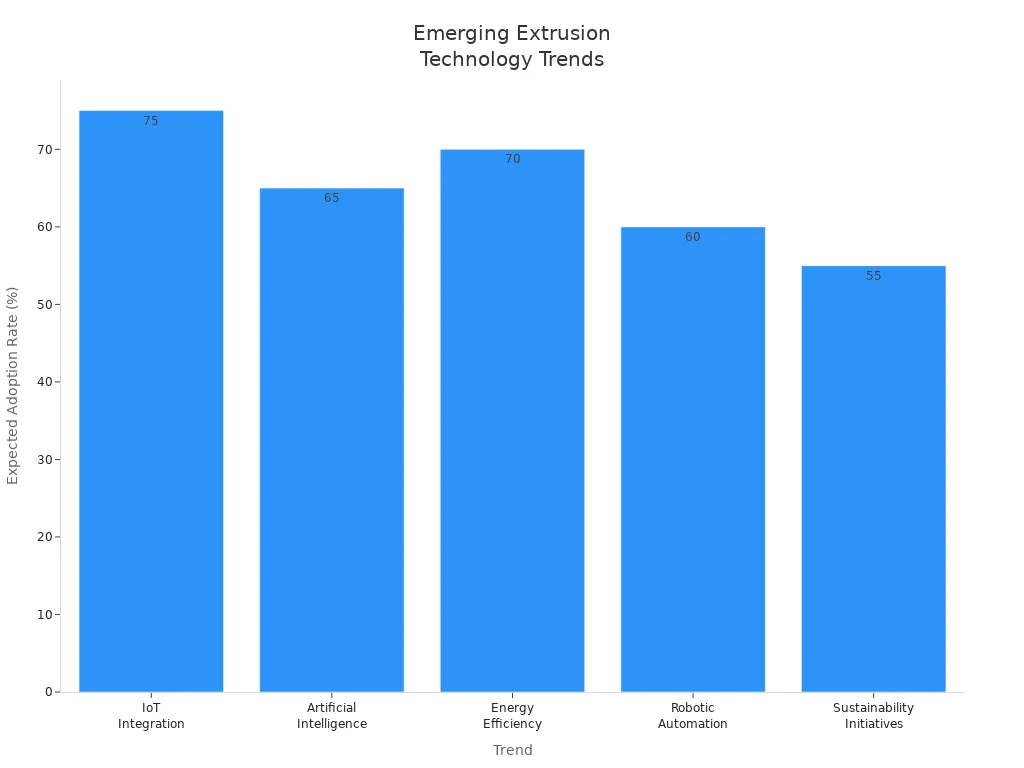
I see rapid changes in extrusion technology shaping the future of manufacturing. IoT integration allows real-time monitoring and analytics, a hatékonyság javítása. Artificial intelligence supports predictive maintenance and optimization, which boosts performance. Energy efficiency is a growing focus, with manufacturers seeking ways to reduce consumption in the extrusion process. Robotic automation streamlines material handling and quality control. Sustainability initiatives drive the use of recycled materials and eco-friendly processes.
| Trend | Leírás | Hatás a hatékonyságra | Várható örökbefogadási arány (%) |
|---|---|---|---|
| IoT integráció | Valós idejű megfigyelés és elemzés | Magas | 75% |
| Mesterséges intelligencia | Prediktív karbantartás és optimalizálás | Nagyon magas | 65% |
| Energiahatékonyság | Az energiafogyasztás csökkentése | Közepes | 70% |
| Robotautomatizálás | Anyagkezelés és minőségellenőrzés | Magas | 60% |
| Fenntarthatósági kezdeményezések | Újrahasznosított anyagok és környezetbarát eljárások | Közepes | 55% |
Fejlődést észlelek az anyagkompatibilitás terén, különösen a bioműanyagokkal, átalakítják az extrudálási ipart. Sok gyártó manapság a rugalmasságot részesíti előnyben a berendezések tervezésében, moduláris rendszerekkel, amelyek lehetővé teszik az egyszerű frissítéseket és módosításokat. A fenntarthatóság elengedhetetlen, a legtöbb gyártó az energiahatékony berendezésekre és a hulladékcsökkentési stratégiákra összpontosít. Intelligens extrudáló gépek csökkenti az állásidőt 20%, ami javítja az általános hatékonyságot és minőségellenőrzést. Mindig naprakész vagyok ezekkel a trendekkel, hogy fenntartsam a nagy teljesítményt és támogassam az új műanyag-extrudálási alkalmazásokat.
Tipp: Javaslom, hogy rendszeresen tekintse át a gyártásban használt extrudergépek áttekintését. Staying informed about new types of extrusion machines and screw designs helps me adapt to changing production needs and maintain scalability.
I recognize that each extrusion system offers unique advantages and limitations. My experience shows that single-screw extruders excel in high-volume production, while twin-screw systems provide superior mixing and flexibility. Ram and co-extrusion machines support specialty applications. I always use comparison tables and selection criteria to evaluate:
- Technical capabilities and long-term reliability
- Customer service and design assistance
- Quality standards and energy efficiency
I recommend manufacturers understand their application needs and consult extrusion experts for optimal results.
GYIK
What is the main difference between single-screw and twin-screw extruders?
I see that single-screw extruders use one rotating screw for basic mixing. Twin-screw extruders use two screws for advanced mixing and better control. I choose twin-screw systems for complex materials and higher flexibility.
How do I decide which extrusion system fits my application?
I start by reviewing my material type, termelési mennyiség, and product complexity. I match these needs to the strengths of each system. I consult with experts if I face unique requirements.
Can I process recycled materials with extrusion systems?
I process recycled materials using twin-screw extruders. These machines handle variable feedstocks and additives better than single-screw systems. I monitor quality closely to ensure consistent results.
How often should I perform maintenance on my extruder?
I schedule routine inspections every month. I check for screw wear, barrel condition, and control system performance. Regular maintenance prevents downtime and extends equipment life.
What are the most common extrusion defects I encounter?
I often see surface roughness, dimensional drift, and melt fractures. I address these by adjusting temperature, csavar sebessége, and material feed. I use process monitoring to catch issues early.
Is co-extrusion suitable for all materials?
I use co-extrusion mainly for thermoplastics. Some materials may not bond well in multi-layer profiles. I test material compatibility before starting production.
How does automation improve extrusion quality?
I rely on automation for real-time monitoring and precise control. Automated systems reduce human error, maintain consistent output, and improve overall product quality.
What safety measures do I follow during extrusion?
I wear protective gear and follow lockout procedures. I keep the work area clean and check emergency stops regularly. I train my team on safe operation and emergency response.