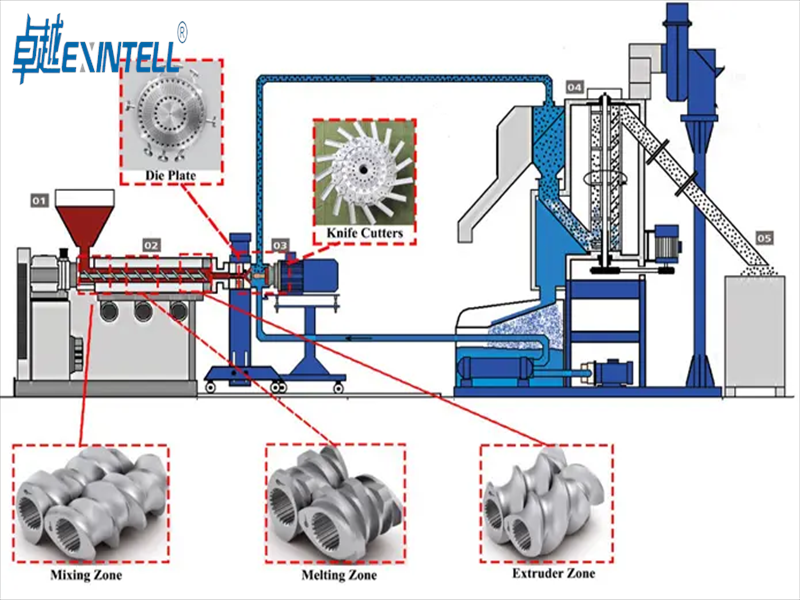
Get the machine ready by loading and heating it. Control how the plastic moves through the machine.
Fix problems to keep everything working well.
Konsènan 53%of plastic makers use extrusion machines, so knowing each step shows why it is important.
Kle Takeaways
Learn about the main parts of aplastik extrusion machin. Each part helps turn raw plastic into finished items.
Pick thebest plastic for your project. The type of plastic changes how it melts and moves. This affects how good the final product is.
Watch the feeding and melting steps closely. Keep moisture and temperature at the right levels. Sa a sispann pwoblèm tankou bul ak tach fèb.
Tcheke presyon an pandan extrusion. Bon kontwòl presyon kenbe fòm nan ak gwosè kòrèk. Sa a asire w ke pwodwi plastik yo se bon jan kalite segondè.
Sèvi ak chèk kalite nan chak etap. Tèks regilye yo ede jwenn pwoblèm bonè. Sa a asire w ke pwodwi yo fò ak gade byen.
Plastik extrusion machin Apèsi sou lekòl la
Konpozan kle
Lè ou gade nan yon machin extrusion plastik, ou wè anpil pati enpòtan. Chak pati ede chanje plastik anvan tout koreksyon an atik fini. Hopper a kenbe plastik la anvan pwosesis la kòmanse. Barik la ak aparèy chofaj yo fonn plastik la pou li ka deplase fasil. Vis la pouse plastik la fonn pi devan. Mouri a fòme plastik la nan sa ou vle. Mekanis refwadisman ede plastik la kenbe fòm li apre li kite mouri a.
Konsèy: Toujou tcheke pati sa yo pou domaj oswa mete anvan ou kòmanse machin nan.
Refwadi plastik la ak chiller lè oswa tank refwadisman.
Metal mouri
Fòm plastik ki fonn nan fòm final la.
A plastik extruder machin asire w ke plastik la deplase nan chak pati nan bon lòd. Si ou kenbe machin nan pwòp epi pran swen li, w ap gen mwens pwoblèm lè w ap fè bagay.
Plastik ou chwazi a chanje fason li fonn, koule, ak refwadi. LDPE ak HDPE yo fleksib ak fò. Polypropylène gen yon gwo pwen k ap fonn epi li pa kraze fasil. PVC se difisil ak bon pou bati bagay sa yo. Polystyrène se rèd epi yo itilize pou anbalaj. ABS sanble bèl epi li santi l lis. Nylon se trè fò. Polycarbonate pa vin domaje nan chalè oswa reyur. PET se pi bon pou boutèy manje ak bwè.
Remak: Plastik ou chwazi a afekte fason li deplase pandan extrusion. Bon materyèl ede sispann akimilasyon nan mouri a epi kenbe pwodwi final la gratis nan domaj.
Ou bezwen chwazi bon plastik pou pwojè ou. Aditif yo ka fè plastik la pi fò oswa pwoteje li kont limyè solèy la. Si w prepare materyèl yo byen, plastik la ap koule san pwoblèm ak pwodwi yo pral bon jan kalite segondè.
Etap pwosesis ekstrizyon
Manje & K ap fonn
You start the extrusion process by feeding raw plastic into the extruder. The hopper holds the plastic, which can be in the form of pellets, granules, oswa poud. As you load the material, you must make sure it is dry and free from moisture. If you skip this step, you may see bubbles or weak spots in the final product. The plastic moves from the hopper into the barrel, where heaters begin to warm it up.
The melting stage is very important for the quality of the extruded plastic. You want the plastic to melt evenly so the finished product looks smooth and strong. Here are some key points to remember:
Moisture control is essential because leftover water can cause bubbles or even break down the plastic.
Proper mixing of additives ensures the plastic has the right color and strength.
You must set the right temperature for the type of plastic you use. Each plastic melts at a different temperature. The table below shows the typical melt temperature ranges for common plastics:
Kalite plastik
Melt Temperature Range (°C)
HDPE
120–130
LDPE
105–115
Polikarbonat (PC)
230–260
Polypropylène (PP)
130–170
PEEK
320–350
PET
250–260
ABS
105–115
Nylon (PA)
190–350
Polystyrène (PS)
around 120
If you control the feeding and melting steps, you will get a smooth flow of melted plastic. This helps the extrusion process run without problems and gives you a better final product.
Vis & Barrel Action
Once the plastic starts to melt, the screw inside the barrel begins to turn. The screw is the heart of the extruder. It moves the plastic forward, mixes it, and helps it melt completely. The screw and barrel work together to make sure the plastic heats up evenly and flows smoothly.
You can think of the screw as having three main jobs:
It moves the solid plastic from the hopper toward the heaters.
It melts the plastic by pressing it against the hot barrel.
It pumps the melted plastic forward so it can be shaped.
The design of the screw and barrel affects how well the plastic mixes and melts. Some screws have special zones for feeding, k ap fonn, and mixing. This design helps you get a steady flow of melted plastic. Pou egzanp, in a toy factory, the screw and barrel help make smooth, perfect partsfor action figures. In a phone case factory, they help create shiny, flawless cases every time.
You also need to set the right screw speed. High-speed extruders can melt more plastic at once, men yo bezwen pi long seksyon k ap fonn ak desen espesyal. Gen kèk machin ka kouri nan vitès jiska 1500 rpm epi pwodui dè milye de liv plastik pou chak èdtan. Si w itilize bon vitès vis ak konsepsyon, ou pral jwenn yon fiks, pwodiksyon-wo kalite soti nan pwosesis extrusion ou a.
Presyon & K ap fonn
Kòm plastik la fonn deplase nan extruder la, presyon ogmante andedan barik la. Presyon sa a trè enpòtan pou pwosesis extrusion pwofil la. Li ede pouse plastik la fonn nan mouri a epi li bay pwodwi a fòm li yo.
Nan zòn tranzisyon an, presyon monte epi yon fim fonn fòme, ki se kritik pou kòmanse pwosesis la k ap fonn. Nan zòn nan mesure, presyon ki estab nesesè asire ke materyèl la konplètman fonn ak omojeneize, kondwi pwodiksyon konsistan.
You control the pressure by adjusting the screw speed. A pressure sensor measures the pressure inside the extruder. If the pressure gets too high or too low, the machine changes the screw speed to keep everything stable. This keeps the melted plastic at the right temperature and flow.
You must watch the pressure closely during the extrusion process. Good pressure control helps you get the right shape, size, and surface finish for your plastic products. It also keeps the profile extrusion process running smoothly and safely.
Shaping and Cooling
Die Shaping
You guide the molten plastic through the die at the end ofthe extruder. The die shapes the plastic into the form you want. The shape and size of the diedecide the final look of your extrusion. If you need a simple tube, you use a standard die. For complex profiles, you pick a special die with unique geometry. The land length, which is the distance from the die entrance to the exit, helps keep the shape and uniformity of the extruded plastic. You must make sure the die fits your product needs. If you choose the right die, you get a smooth and consistent result.
The die plays a big role in the extrusion process. It controls the flow and shape of the plastic as it leaves the extruder.
Cooling Methods
After the plastic leaves the die, you cool it quickly to keep its shape. Cooling stops the plastic from deforming. You can use air chillers or water baths. Water baths work well for most extruder lines because they cool the plastic fast and evenly. Air cooling is good for products that need a softer touch. You must control the cooling speed. If you cool the plastic too fast, it may crack. If you cool it too slow, it may warp. Cooling is a key step in theextrusion process.
Cooling Method
How It Works
Pi bon pou
Water Bath
Submerges extrudate
Pipes, tib, pwofil yo
Air Chiller
Soufle lè fre
Dra, fim
Dimansyon pou konsistans
Ou itilize dimensionnement ekipman touswit apre mouri a pou kenbe fòm ak gwosè plastik extrudée a. Kalibrasyon inite yo, tankou zouti vakyòm oswa dlo refwadi, ede estabilize pwodwi a. Inite sa yo sispann deformation ak asire w ke ekstrizyon ou a satisfè mezi egzak. Ou dwe tcheke gwosè a souvan. Siveyans an tan reyèl nan tanperati ak presyon ede ou kenbe tolerans sere. Si w ap travay nan endistri tankou otomobil oswa medikal, ou bezwen gwo presizyon. Ti chanjman nan pwosesis extrusion la ka lakòz domaj oswa fatra. Pou kèk materyèl, ou ka rive jwenn tolerans osi sere ke +/-.001″. Plastik douser ka bezwen pi laj tolerans.
Reyalize tolerans sere enpòtan anpil nan extrusion plastik.
Zouti kalibrasyon ak basen refwadisman kontwole pousantaj solidifikasyon.
Siveyans an tan reyèl asire presizyon dimansyon.
Precision zafè nan otomobil, medikal, ak pwodwi konstriksyon.
Ti varyasyon ka mennen nan domaj ak materyèl gaspiye.
Dimansyon ki konsistan kenbe extruder ou a kouri san pwoblèm epi li ede ou pwodwi bon jan kalite pwodwi plastik chak fwa.
Koupe ak fini nan machin extrusion plastik
Koupe teknik
Lè w itilize machin extrusion plastik, ou dwe koupe plastik la apre li refwadi. Koupe rive yon fwa plastik la kite extruder la epi li solid. Gen diferan fason pou koupe plastik la. Koupe Rotary sèvi ak yon lam k ap vire pou koupe plastik la. Koupe estasyonè itilize yon lam ki pa deplase. Fason ou koupe chanje fason koupe yo pwòp ak konbyen plastik ou gaspiye. Gen kèk machin ki sèvi ak koupe lazè oswa ultrasons pou koupe trè egzak ak mwens fatra.
Rotary ak estasyonè koupe chanje fason pwòp ak gaspiyaj pwosesis la se.
Lazè ak koupe ultrasons fè kwen trè pwòp ak gwosè sere.
Refwadisman plastik la anvan koupe li enpòtan. Si ou refwadi li vit, deyò a sanble pi bon men anndan an ka jwenn estrès. Refwadisman dousman ede fòm nan rete menm jan an.
Refwadisman lè oswa beny dlo fè plastik la difisil anvan ou koupe li.
Ou fòme plastik la ak yon mouri, fre li, ak Lè sa a, koupe li nan gwosè dwat la. Tout pwosesis sa a chanje fason pwodwi ou vire soti. Si ou bezwen gwosè trè egzak, ou ta ka bezwen zouti espesyal oswa lòt fason pou koupe.
Fini andigman
Apre ou fin koupe plastik la, ou ka fè li gade ak travay pi byen. Fini sifashelps your products look nice and last longer. There are many ways to finish the surface, and each one does something special.
You can make parts in special colors or even use more than one color on a product.
Co-extrusion / tri-extrusion
You combine layers of different plastics for special features in one profile.
Notching and drilling
You add holes or shapes after extrusion.
Plastic gluing and taping
You join parts with glue or tape during or after the process.
Punching
You make cutouts or special shapes to match your design.
Plastic forming
You bend or shape the plastic using heat or pressure.
Heat welding
You join plastic pieces with heat and pressure for strong assemblies.
Surface finishing makes your products smooth and nice to touch. It also makes them stronger and easier to clean. Good finishes keep the colors bright and help your products last longer.
Konsèy: Picking the right surface finish can help your plastic products look great and meet tough rules.
Kontwòl Kalite
You need to check your products at every step when you use extrusion. Quality control starts with the raw plastic. You look at the plastic before it goes into the machine to make sure it is clean and strong. While the machine is running, you watch the temperature, presyon, and speed to keep things steady. After you cut and finish the plastic, you check the final product for color, size, and strength.
You check the plastic for purity and quality before extrusion.
Monitoring During Extrusion
You track temperature, presyon, and speed for steady output.
Final Product Inspections
You look for color, size, and strength in the finished plastic.
Someproblems you might seeare die swell, deformation, rough surfaces, color changes, dirty spots, uneven sizes, bul, shrinking, melt fracture, and die lines. By checking each step, you make sure your factory makes strong and good-looking products every time.
If you know what happens at each stage, you can fix problems faster. You can also make your products better. Training operatorsand using good habits help you get more from your plasticmachin extrusion. If you want to fix mistakes or make things better, look at these steps for help.
FAQ
What is the main purpose of a plastic extrusion machine?
You use a plastic extrusion machine to shape raw plastic into long forms. These forms can be pipes, tib, or sheets. The machine melts the plastic. Then it pushes it through a die. This creates the wanted shape.
How do you choose the right plastic for extrusion?
You pick the plastic based on the product’s needs. Pou egzanp, use PVC for pipes. Use PET for bottles. Check the melting point and strength. Additives can improve color, fleksibilite, or UV resistance.
Poukisa plastik la ekstrè pafwa gen bul oswa tach ki graj?
Ti boul oswa tach ki graj souvan vle di plastik la te gen imidite. Li ka vle di tou li pa t 'fonn respire. Ou ta dwe sèk materyèl la anvan tout koreksyon. Mete tanperati ki kòrèk la tou. Sa a ede ou jwenn yon lis, pwodwi fò.
Èske ou ka resikle plastik ak yon machin extrusion?
Wi, ou kapab resikle plastik lè l sèvi avèk yon machin extrusion. Ou manje netwaye, graje fatra plastik nan Hopper la. Machin nan fonn ak remodel li nan nouvo pwodwi. Sa a diminye fatra ak ekonomize resous yo.
Ki jan ou kenbe pwosesis la ekstrizyon an sekirite?
Ou kenbe pwosesis la an sekirite lè w tcheke tanperati, presyon, ak pati machin souvan. Sèvi ak gad sekirite epi mete ekipman pwoteksyon. Toujou swiv enstriksyon sekirite machin nan. Sa a ede anpeche aksidan.