

Ki jan diferan sistèm extrusion pile pou fabrikasyon
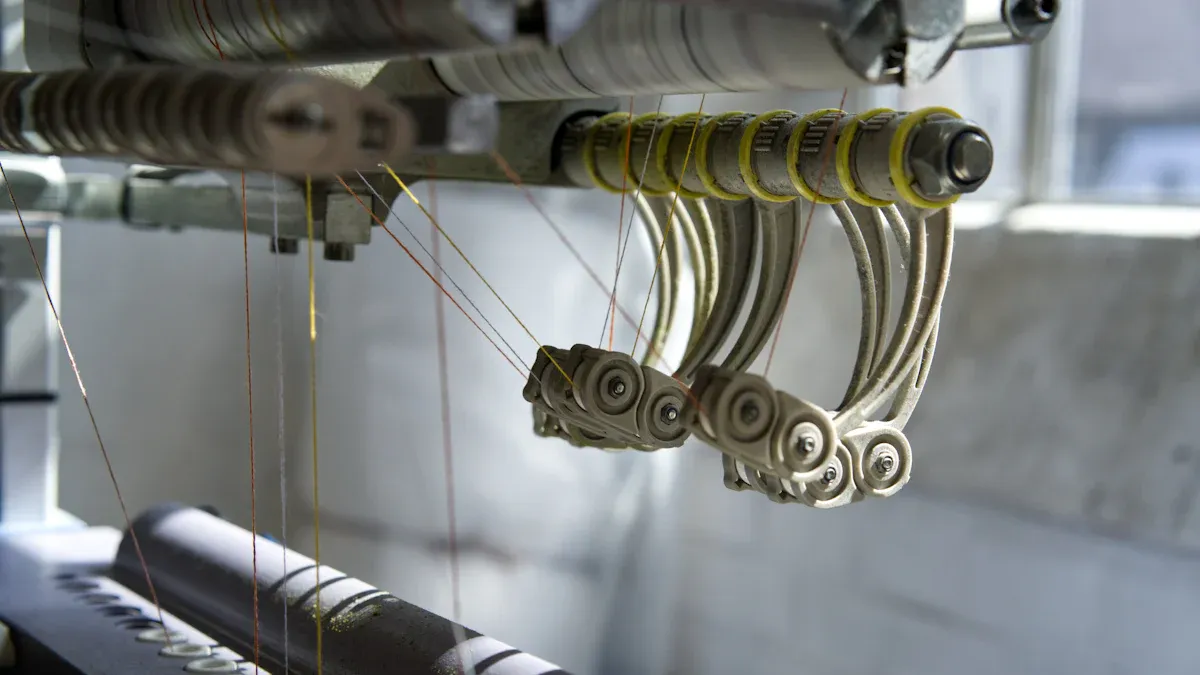
Mwen te wè ke chwa a nan sistèm extrusion fòm pwosesis la fabrikasyon tout antye. Pifò manifaktirè yo sèvi ak sistèm sèl-vis, ki kenbe yon 62% pati nan mache, pandan y ap sistèm jimo-vis kont pou 38%.
| Kalite sistèm extrusion | Pousantaj pati nan mache |
|---|---|
| Single-vis | 62% |
| Twin-vis | 38% |
Chwazi ant kalite vis afekte efikasite, bon jan kalite pwodwi, ak konpatibilite materyèl. Lè mwen matche ak teknoloji extrusion ak objektif fabrikasyon yo, Mwen remake amelyorasyon nan pri-efikasite, adaptabilite konsepsyon, ak dirab.
| Faktè | Enpak sou efikasite fabrikasyon | Enpak sou Kalite pwodwi |
|---|---|---|
| Paramèt kontwole | Kenbe bon jan kalite pwodwi inifòm | Reyalize tolerans mikromèt |
Mwen konte sou Sistèm Extrusion konplè pou delivre rezilta ki konsistan ak pèfòmans vis egzak.
Kle Takeaways
- Chwazi bon sistèm extrusion ki baze sou objektif manifakti ou ak pwopriyete materyèl pou asire pèfòmans optimal.
- Ekstrudeurs sèl-vis yo ideyal pou pwodiksyon gwo volim nan materyèl senp, pandan y ap sistèm jimo-vis briye nan melanje materyèl konplèks.
- Antretyen regilye ak siveyans nan sistèm extrusion anpeche D 'ak amelyore efikasite, asire bon jan kalite pwodwi ki konsistan.
- Konsidere dyamèt vis la ak rapò L/D lè w ap chwazi yon extruder, kòm faktè sa yo afekte debi ak efikasite melanje.
- Itilize ko-extrusion pou kreye pwodwi milti-kouch ki konbine diferan materyèl, amelyore fonksyonalite ak pèfòmans.
- Evalye konpatibilite materyèl yo ak sistèm ekstrizyon chwazi a pou evite domaj epi asire pwodiksyon bon jan kalite.
- Rete enfòme sou tandans émergentes nan teknoloji extrusion, tankou IoT ak AI, pou amelyore efikasite ak adapte yo ak chanjman bezwen pwodiksyon an.
- Kreye yon lis verifikasyon faktè kle anvan ou chwazi yon machin extrusion pou evite erè ki koute chè epi asire ke sistèm nan satisfè kondisyon aplikasyon an.
Chwazi bon sistèm extrusion pou fabrikasyon
Faktè kle nan seleksyon sistèm
Mwen pa janm jwenn yon inivèsèl “pi bon” sistèm extrusion. Eksperyans mwen di m ke chwa ideyal la depann de objektif fabrikasyon yo, pwopriyete materyèl yo, ak kondisyon pwodwi yo. Lè mwen chwazi yon sistèm extrusion, Mwen toujou matche ak kapasite li yo ak aplikasyon an gen entansyon. Apwòch sa a asire ke pwosesis la extrusion delivre bon jan kalite konsistan ak pèfòmans optimal.
Mwen konsidere plizyè faktè kritik anvan ou fè yon seleksyon machin extrusion. Mwen sèvi ak tablo sa a pou gide desizyon mwen an:
| Faktè | Deskripsyon |
|---|---|
| Objektif rechèch | Objektif machin lan (edikasyon, devlopman materyèl, oswa pwodiksyon pilòt komèsyal) |
| Kalite materyèl | Kalite polymère yo dwe trete (chalè-sansib, temèt, oswa reyaktif) |
| Kapasite Sòti obligatwa | Kapasite debi (gram oswa kilogram pou chak èdtan) |
| Kondisyon pou Pwosesis Avanse | Bezwen pou piki gaz, degaze vakyòm, oswa kapasite ekstrizyon reyaktif |
| Bidjè ak Espas Laboratwa | Konsiderasyon pou ekspansyon modilè pou amelyorasyon nan lavni |
| Bezwen Echèl nan lavni | Konpatibilite ak modil extrusion endistriyèl pou ogmante pwodiksyon an |
Mwen toujou peye atansyon sou dyamèt vis ak rapò L/D. Paramèt sa yo detèmine kapasite debi ak efikasite melanje. Mwen chwazi yon extruder ak kapasite pwodiksyon dwat la, ki ka varye de 0.25 kg/h pou 150 kg / h depann sou modèl la. Konsepsyon modilè pèmèt mwen ranplase eleman byen vit, ki bay fleksibilite pou rechèch ak devlopman. Mwen konte sou sistèm kontwòl avanse, tankou PLC ak HMI, reyalize kontwòl egzak ak trasabilite done.
Lè mwen evalye kalite machin extrusion, Mwen konsidere konpleksite pwofil la ak tolerans yo mande yo. Desen konplike mande zouti egzak epi yo ka ogmante depans yo. Mwen gade tou kantite lòd. Pi gwo volim diminye pri pou chak inite paske depans konfigirasyon gaye nan plis inite yo. Fini ak operasyon segondè, tankou anodize oswa CNC D ', ajoute valè ak pri.
Konsèy: Mwen rekòmande pou fè yon lis verifikasyon faktè sa yo anvan yo kòmanse pwosesis seleksyon machin extrusion la. Pratik sa a ede evite erè ki koute chè epi asire sistèm nan matche ak aplikasyon yo gen entansyon.
Enpak sou efikasite fabrikasyon
Mwen remake ke sistèm extrusion mwen chwazi dirèkteman afekte efikasite fabrikasyon an. Konsepsyon vis la, kapasite melanje, ak teknoloji extrusion tout jwe yon wòl nan ki jan pwosesis la fèt san pwoblèm. Pou egzanp, a sèl vis extruder souvan travay byen pou polymères senp ak gwo volim pwodiksyon. Twin-vis extruders okipe materyèl konplèks ak aplikasyon avanse, tankou ekstrizyon reyaktif oswa melanj espesyalite.
Mwen te wè ke gwo viskozite ak kontni solid nan materyèl enèjik ka lakòz bouche, ekstrizyon enstab, ak mete bouch. Pwoblèm sa yo diminye efikasite ak konpwomi sekirite. Mwen adrese defi sa yo lè m optimize konsepsyon sistèm kneading la. Amelyore inifòmite melanje ak presizyon ekstrizyon amelyore tou de sekirite ak efikasite.
Mwen sèvi ak yon sistèm extrusion de-etap twin-vis lè mwen bezwen pi gwo estabilite ak adaptabilite. Simulasyon yo montre ke konsepsyon sa a amelyore karakteristik koule epi kenbe pwodiksyon ki konsistan. Mwen toujou kontwole pwosesis ekstrizyon an pou asire bon jan kalite inifòm epi minimize tan yo.
| Kalite prèv | Deskripsyon |
|---|---|
| Defi nan fabrikasyon aditif | Segondè viskozite ak kontni solid nan materyèl enèjik mennen nan pwoblèm tankou bouche, ekstrizyon enstab, ak mete bouch, ki afekte efikasite ak sekirite. |
| Pèfòmans Sistèm Maladi | Konsepsyon sistèm malaksaj la afekte inifòmite materyèl melanje ak presizyon ekstrizyon, ak optimize espesifik yo pwopoze pou amelyore sekirite ak efikasite. |
| Konsepsyon sistèm ekstrizyon | Yon sistèm extrusion de-etap twin-vis fèt pou amelyore estabilite ak adaptabilite nan pwosesis extrusion., ak simulation revele karakteristik koule nan diferan sistèm. |
Mwen toujou matche ak sistèm nan extrusion ak kondisyon pwodiksyon an. Pratik sa a asire ke extruder la delivre bon jan kalite a vle ak pèfòmans. Mwen chwazi konfigirasyon an vis ki baze sou kalite materyèl la ak konpleksite aplikasyon an. I rely on advanced extrusion technology to maximize efficiency and maintain high standards of product quality.
Remak: I recommend regular maintenance and process monitoring to sustain peak efficiency and prevent unexpected downtime.
Types of Complete Extrusion Systems
When I evaluate complete extrusion systems for manufacturing, I always start by identifying the main types of extrusion machines. The most common options include single screw extrusion machines, twin screw extrusion machines, and ram extrusion machines. Each system offers unique strengths and limitations, so I focus on matching the right technology to the application.
| Type of Extrusion Machine |
|---|
| Single Screw Extrusion Machines |
| Twin Screw Extrusion Machines |
| Ram Extrusion Machines |
Ekstrisyon sèl-vis
I often use a single screw extruder for straightforward extrusion processes. Machin sa a gen yon sèl vis wotasyon andedan yon barik chofe. Vis la pouse materyèl pi devan, fonn li, epi li fòme li atravè yon mouri. Mwen konte sou sistèm sa a pou gwo volim pwodiksyon thermoplastics, pwodwi manje, ak konpoze kawotchou. Senplisite nan konsepsyon an fè li fasil yo opere ak kenbe.
| Endistri | Deskripsyon aplikasyon | Prévisions Kwasans Mache |
|---|---|---|
| Plastik | K ap fonn ak fòme tèrmoplastik, kondwi pa ogmantasyon PE ak PP itilize. | CAGR nan apeprè 4-5% atravè 2030 |
| Pwosesis Manje | Pwodui manje trete tankou ti goute ak sereyal. | Mache rive sou $75 milya pa 2026 |
| Kawotchou konpoze | Melanje ak mete kawotchou pou kawotchou ak pati otomobil. | Pwodiksyon kawotchou depase 2 milya inite pa 2025 |
| Byomedikal | Pwodiksyon biopolymer pou anbalaj ak aparèy medikal. | Mache émergentes ak nouvo teknoloji extrusion |
Sepandan, Mwen rekonèt la limit nan ekstrizyon vis sèl. Reyalize inifòm melanje ka difisil, sitou lè mwen ajoute file oswa aditif. Konsistans presyon souvan varye ak chanjman materyèl, ak materyèl ki gen gwo viskozite ka pa koule byen, ki mennen nan defo. Defi sa yo gide seleksyon machin extrusion mwen lè mwen bezwen pi bon kalite oswa pwosesis ki pi konplèks.
Konsèy: Pou senp, aplikasyon pou gwo volim, Mwen rekòmande kòmanse ak yon extruder vis sèl. Pou avanse melanje oswa materyèl espesyalite, konsidere lòt opsyon.
Twin-Screw Extrusion
Lè mwen bezwen pwosesis avanse, Mwen tounen vin jwenn jimo vis extruder teknoloji. Sistèm sa a sèvi ak de vis ki vire ansanm andedan barik la. Vis yo ka antre oswa kouri paralèl, depann sou konsepsyon an. Mwen jwenn ke extruders jimo vis delivre siperyè efikasite melanje, pi bon plastifikasyon pou materyèl ki wo viskozite, ak amelyore kontwòl sou tanperati ak presyon. Karakteristik sa yo amelyore kalite pwodwi ak konsistans pwosesis.
Twin vis extrusion tou pèmèt mwen fè plizyè etap pwosesis nan yon sèl machin. Mwen ka melanje, fonn, vantilasyon, e menm reyaji materyèl pandan yon sèl pas. Fleksibilite sa a diminye fatra ak akselere pwodiksyon an. Lè konpare vis jimo vs extruders vis sèl, Mwen wè pi vit retounen sou envestisman ak plis rezilta inifòm ak sistèm vis jimo, espesyalman pou melanj konplèks oswa plastik resikle.
Subtip Twin-Screw
Mwen toujou konsidere diferan kalite machin extruder nan kategori a vis jimo. Konfigirasyon vis la afekte pèfòmans, efikasite, ak seri aplikasyon yo.
Intermeshing
Intermeshing jimo vis extruders prezante vis ki sipèpoze ak may ansanm. Konsepsyon sa a bay transpò materyèl egzak ak gwo fòs taye. Mwen sèvi ak sistèm intermeshing pou amelyore konpoze ak konpatibilite, espesyalman lè mwen bezwen dispèse aditif oswa file respire.
Ki pa Peye-Intermeshing
Ki pa-intermeshing jimo vis extruders gen vis ki wotasyon san sipèpoze. Konfigirasyon sa a ofri pi dou melanje ak mwens taye. Mwen chwazi desen ki pa enmeshing pou materyèl sansib ki mande minimòm estrès mekanik.
Ko-wotasyon
Ko-wotasyon jimo vis extruders gen vis ki vire nan menm direksyon an. Subtip sa a ekselan nan melanje efikasite ak transpò materyèl. Mwen sèvi ak sistèm ko-wotasyon pou ekstrizyon reyaktif, devolatilizasyon, ak segondè-pèfòmans polymère konpoze. Sepandan, gwo pousantaj taye ka degrade materyèl chalè-sansib, Se konsa, mwen kontwole konsepsyon vis ak refwadisman byen.
| Soutip | Pwosesis kapasite ak avantaj | Limit ak Konsiderasyon | Pi bon aplikasyon |
|---|---|---|---|
| Ko-wotasyon Twin-Screw Extruder | Segondè efikasite melanje, apwopriye pou ekstrizyon reyaktif, gwo pousantaj taye | Risk pou degradasyon materyèl, mande konsepsyon vis presi | Polymère konpoze, nanokonpoze, workflows laboratwa-a-pwodiksyon |
Counter-wotasyon
Counter-wotasyon jimo vis extruders prezante vis ki vire nan direksyon opoze. Konfigirasyon sa a jenere pi ba fòs taye, ki pwoteje materyèl frajil. Mwen konte sou sistèm counter-wotasyon pou seramik, bio-polymers, ak fòmilasyon pharmaceutique. Konsepsyon an tou bay bon presyon ak sele efikas, menm si entansite melanje pi ba pase ak sistèm ko-wotasyon.
| Soutip | Pwosesis kapasite ak avantaj | Limit ak Konsiderasyon | Pi bon aplikasyon |
|---|---|---|---|
| Counter-Rotating Twin-Screw Extruder | Pi ba fòs taye, bon ogmantasyon presyon, sele efikas | Pi ba entansite melanje, pi konplèks sele ak konsepsyon portant | Seramik, bio-polymers, pharmaceutique |
Lè mwen chwazi yon sistèm extrusion nèt sou tout pwen, Mwen toujou matche ak kalite vis ak konfigirasyon ak kondisyon materyèl ak pwosesis. Apwòch sa a asire kalite siperyè, efikasite, ak pèfòmans serye nan tout aplikasyon yo.
Ekstrisyon Ram
Mwen souvan chwazi ekstrizyon belye mouton lè mwen bezwen trete materyèl ki mande presyon ki wo ak fòm egzak. Metòd sa a sèvi ak yon belye idwolik pou pouse materyèl nan yon barik chofe epi mouri, olye ke repoze sou yon vis wotasyon. Mwen jwenn extruders belye mouton espesyalman itil pou fòme pwodwi ki soti nan plastik thermosetting, seramik, ak PTFE. Pwosesis la pèmèt mwen kreye baton, tib, ak pwofil ak dimansyon ki konsistan.
Extrusion Ram kanpe deyò nan mitan kalite machin extrusion paske li okipe materyèl ke extruders vis tradisyonèl pa ka trete avèk efikasite.. Mwen sèvi ak teknoloji sa a nan endistri yo tankou plastik, manje, ak pharmaceutique. Pou egzanp, Mwen pwodwi ti goute ak sereyal ak fòm inik, epi mwen fabrike tablèt ak kapsil ak espesifikasyon egzak.
Mwen te remake plizyè benefis ak defi lè w ap itilize èkstrudè belye mouton:
- Ram extruders briye nan pwodwi bon jan kalite pwodwi ki soti nan materyèl difisil-a-pwosesis.
- Mwen konte sou yo pou aplikasyon pou kote teknoloji extrusion vis tonbe kout, tankou PTFE ak pwofil seramik.
- Pwosesis la bay bon jan kalite konsistan ak presizyon dimansyon.
- Depans operasyon segondè yo ka afekte efikasite ak pèfòmans jeneral.
- Règleman sevè nan manifakti plastik mande pou kontwòl pwosesis atansyon.
- Konpetisyon nan sistèm extrusion altènatif pouse m 'optimize seleksyon machin extrusion mwen an.
Mwen toujou peze faktè sa yo anvan ou chwazi ekstrizyon belye mouton pou sistèm extrusion konplè. Mwen kontwole pwosesis la byen pou kenbe bon jan kalite ak efikasite, sitou lè w ap travay ak materyèl espesyal.
Ko-Extrusion
Co-extrusion pèmèt mwen konbine plizyè materyèl nan yon sèl pwodwi, kreye pwofil milti-kouch ak pwopriyete amelyore. Mwen sèvi ak teknoloji extrusion sa a pou entegre diferan thermoplastiques, chak kouch ofri karakteristik inik. Pwosesis la enplike pouse plizyè materyèl nan yon sèl mouri, sa ki lakòz yon pwofil inifye ki satisfè kondisyon pwodiksyon konplèks.
Mwen konte sou ko-extrusion pou pwodwi manifakti ki mande durability, fleksibilite, ak apèl ayestetik. Metòd sa a pèmèt mwen tayè kalite chak kouch, amelyore pèfòmans ak fonksyonalite. Mwen wè ko-extrusion kòm yon avansman kle nan sistèm extrusion konplè, sitou lè mwen bezwen pwodwi atik ki gen karakteristik espesyalize.
Endistri yo benefisye de ko-extrusion nan plizyè fason:
- Konstriksyon: Mwen fabrike rebò fenèt yo, ankadreman, epi koupe moso ki konbine fòs ak apèl vizyèl.
- Yo Vann an Detay: Mwen bati sistèm etajè ak ekspozisyon ki dirab ak atire.
- Siyalizasyon: Mwen pwodwi siy eklere ak ankadreman ak fini pwòp ak pèfòmans serye.
Co-extrusion elaji seri aplikasyon pou teknoloji extrusion. Mwen sèvi ak li pou satisfè objektif pwodiksyon ki mande yo ak delivre pwodwi ak bon jan kalite siperyè. Lè mwen chwazi yon extruder pou co-extrusion, Mwen konsidere konsepsyon vis, kontwòl pwosesis, ak konpatibilite materyèl. Apwòch sa a asire efikasite ak rezilta konsistan.
Konsèy: Mwen rekòmande ko-extrusion pou pwojè ki mande pou pwofil milti-kouch ak fonksyonalite pwodwi amelyore. Atansyon seleksyon machin extrusion ak siveyans pwosesis yo esansyèl pou reyalize pi bon kalite.
Estrikti ak operasyon nan sistèm extrusion
Konsepsyon vis ak barik
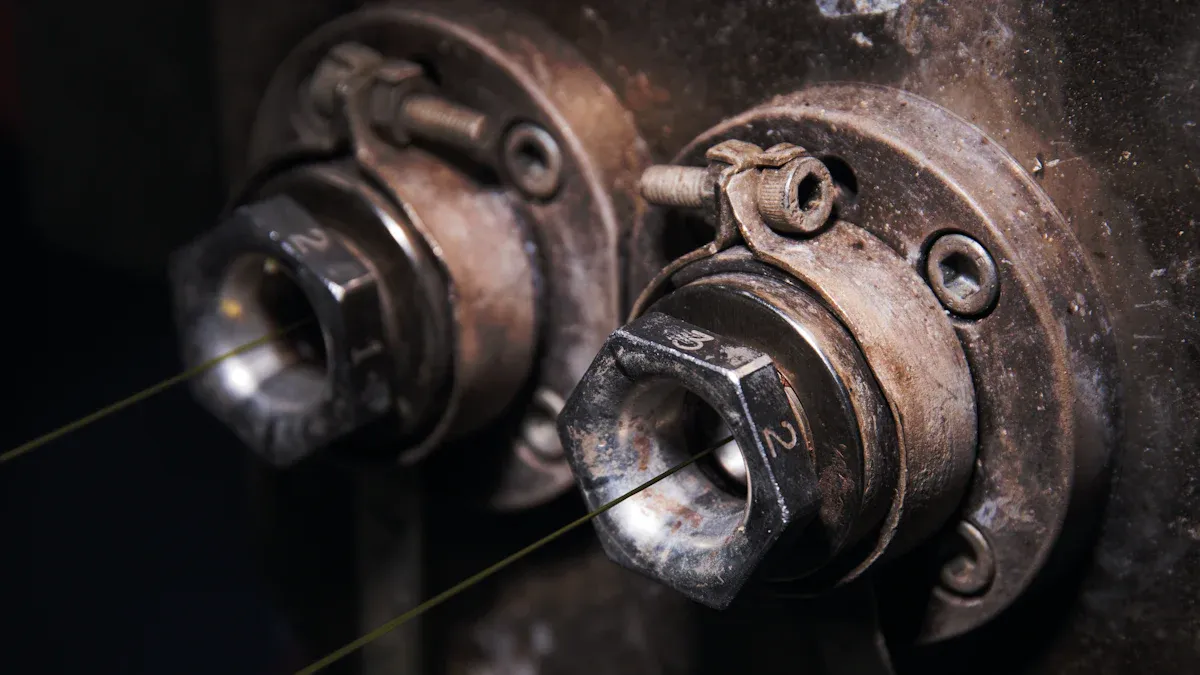
Mwen toujou kòmanse seleksyon machin extrusion mwen an pa egzamine konsepsyon vis ak barik la. Jeyometri vis la detèmine ki jan efikasite èkstrudè a fonn, melanje, epi transmèt materyèl. Mwen ajiste longè-a-dyamèt la (L/D) rapò kontwole tan rezidans ak melanje. Yon pi gwo rapò L/D pèmèt materyèl la fonn ak melanje pi byen, ki esansyèl pou reyalize bon jan kalite inifòm nan pwodwi final la. Mwen konte sou desen baryè nan barik vis la pou kenbe estabilite fonn epi anpeche degradasyon, sitou lè mwen trete materyèl sansib. Paralèl jimo vis ak desen barik jwe yon wòl enpòtan nan vitès ekstrizyon, bon jan kalite pwodwi, ak efikasite enèji. Mwen sèvi ak zòn ak kontwòl tanperati presi pou estabilize koule fonn epi evite gaz ki bloke, which improves density and consistency. The surface finish of the barrel and the geometry of the screw also influence energy efficiency and product consistency. I always match the screw design to the specific requirements of the application to maximize performance.
- A higher L/D ratio improves mixing and melt uniformity, which is essential for high-quality products.
- Barrier designs help maintain melt stability and prevent degradation.
- Screw geometry and barrel surface finish impact energy efficiency and product consistency.
Material Movement and Mixing
I focus on efficient material movement and mixing to ensure the extrusion process runs smoothly. Mwen itilize robust pneumatic or mechanical conveyors to transfer raw materials quickly and with minimal maintenance. Advanced mixer designs guarantee thorough and uniform compounding, ki anpeche varyasyon nan pwodwi fini. Mwen entegre kontwòl otomatik ak sistèm PLC pou siveyans an tan reyèl ak jesyon resèt. Apwòch sa a pèmèt mwen sipèvize pwodiksyon san pwoblèm epi ajiste paramèt jan sa nesesè. Mwen chwazi konfigirasyon évolutive pou akomode tou de ti atelye ak gwo operasyon endistriyèl. Karakteristik kontwòl pousyè amelyore kenbe espas travay la pwòp epi an sekirite. Konsistan, melanj omojèn diminye fluctuations bon jan kalite ak amelyore debi. Sistèm otomatik minimize manyen manyèl, ki diminye sik pwodiksyon ak diminye depans travay yo. Mwen toujou priyorite karakteristik sa yo lè mwen evalye kalite machin extrusion pou nouvo aplikasyon.
| Karakteristik | Deskripsyon |
|---|---|
| Transfè materyèl efikas | Rapid, mouvman ki ba antretyen nan matyè premyè |
| Precision Melanj | Byen, inifòm konpoze pou bon jan kalite konsistan |
| Kontwòl Otomatik | Real-time monitoring and recipe management |
| Scalable Configurations | Flexible layouts for any production capacity |
| Enhanced Dust Control | Cleaner, safer workplace |
| Improved Product Quality | Homogeneous blends, reduced fluctuations |
| Increased Throughput | Shorter production cycles, less manual handling |
| Redwi fatra | Accurate measurement, pi ba pri |
| Lower Labor Costs | Automation frees staff for value-added tasks |
| Safer Working Environment | Enclosed lines and dust control |
Process Control and Output Quality
I depend on advanced process control technology to maintain high output quality in extrusion manufacturing. I select high-quality thermoplastics to ensure the final products meet strength, dirab, and flexibility requirements. I monitor extrusion parameters closely to reduce discrepancies during production. Dimensional accuracy remains a top priority for me, as it guarantees that components fit their intended applications. I use surface inspection to detect defects such as warping or air bubbles, which helps me maintain consistent product quality. Early detection of issues reduces waste and saves on production costs. I always ensure that my process complies with regulatory standards, which protects both my business and my customers. High-quality products enhance my brand reputation and increase customer satisfaction. Advanced monitoring systems allow me to increase production speed without sacrificing accuracy, which boosts overall efficiency in complete extrusion systems.
| Element/Advantage | Deskripsyon |
|---|---|
| Seleksyon materyèl | Ensures strength, dirab, ak fleksibilite |
| Siveyans Pwosesis | Reduces discrepancies and maintains consistency |
| Presizyon dimansyon | Guarantees proper fit for all applications |
| Enspeksyon Sifas | Identifies defects early for better quality |
| Kalite pwodwi ki konsistan | Chak pakèt satisfè estanda ki wo |
| Rediksyon fatra | Enregistre materyèl ak pri pwodiksyon |
| Konfòmite Regilasyon | Satisfè kondisyon legal ak sekirite |
| Satisfaksyon Kliyan | Bati repitasyon ak lwayote |
| Pwosesis Efikasite | Ogmante vitès pandan w ap kenbe presizyon |
Konsèy: Mwen rekòmande regilye kalibrasyon ak antretyen nan tout teknoloji extrusion pou kenbe pik pèfòmans ak bon jan kalite konsistan.
Konpare pwosesis ekstrizyon an
Single-Screw vs. Pwosesis Twin-Screw
Lè mwen konpare yon sèl-vis ak jimo-vis extruders, Mwen konsantre sou fason chak sistèm okipe pwosesis extrusion la. Konsepsyon vis la fòme fason materyèl la deplase ak melanje. Yon extruder sèl-vis sèvi ak yon sèl vis helical andedan yon senp, barik silendrik. Nan kontras, yon extruder jimo-vis karakteristik de vis intermeshing ak yon pi konplèks, souvan segmenté barik. Mwen wè ke kontwòl tanperati nan sistèm sèl-vis rete debaz, while twin-screw machines offer advanced control with multiple heating and cooling zones. This difference impacts both throughput and energy efficiency.
| Aspè | Single vis extruder | Twin vis extruder |
|---|---|---|
| Konsepsyon vis | Single vis helical | De vis intermeshing |
| Estrikti barik | Senp, silendrik | Plis konplèks, souvan segmenté |
| Kontwòl Tanperati | Basic heating/cooling | Avanse, multi-zone |
| Kapasite pwodiksyon | Modere | Segondè |
| Konsomasyon enèji | Anjeneral pi wo | Pi efikas |
| Fleksibilite nan Debi | Limite | Segondè |
I rely on twin-screw extruders for higher output and better energy efficiency. When I need flexibility in throughput or advanced process control, I choose twin-screw systems. For straightforward applications, single-screw extruders still provide reliable performance.
Material Compatibility in the Extrusion Process
Material compatibility plays a critical role in extrusion machine selection. I always match the screw configuration to the type of material I plan to process. Single-screw extruders handle standard thermoplastics well, but they struggle with materials that require intensive mixing or have high filler content. Twin-screw extruders excel with specialty compounds, plastik resikle, and reactive materials. I use segmented screws to adjust mixing and shearing for each application.
When I work with complete extrusion systems, I consider how each screw design affects the final product. Twin-screw extruders allow me to process a wider range of materials, including those with additives or sensitive properties. This flexibility supports more types of extrusion machines and expands the range of possible applications.
Konsèy: I recommend evaluating the chemical and physical properties of your raw materials before choosing an extruder. This step ensures compatibility and reduces the risk of defects.
Kalite pwodwi ak konsistans
I know that the extrusion process directly impacts the quality of the finished product. Modern extrusion lines integrate automation and advanced control platforms. These systems analyze multiple variables at once, which helps me maintain consistent quality across every batch.
Quality consistency is a productivity multiplier. Advanced control platforms analyze patterns across multiple variables simultaneously, ensuring that product quality is maintained throughout the extrusion process.
I monitor key factors such as stable melt pressure, pousantaj pwodiksyon an, and surface finish. Stable melt pressure prevents warping and dimensional drift. Higher and more stable output reduces scrap rates and downtime. Better surface finish and precise dimensional control enhance the impact on the quality of the finished product.
| Faktè kle | Impact on Quality and Consistency |
|---|---|
| Stable melt pressure | Prevents dimensions from drifting or warping |
| Higher and more stable output | Reduces scrap rates and downtime |
| Better surface finish | Enhances overall product quality |
| Kontwòl dimansyon | Ensures precision in final product specifications |
| Faster ROI | Improves profitability for manufacturers |
Lè konpare vis jimo vs extruders vis sèl, I see that twin-screw systems deliver better consistency and lower operational cost. I achieve faster ROI and improved performance by investing in advanced extrusion technology. I always prioritize process monitoring and automation to ensure high quality and efficiency in production.
- Higher and more stable output
- Lower scrap and downtime
- Better surface finish and dimensional control
- Reduced operational cost
- Faster ROI
I rely on these strategies to maximize the benefits of extrusion and deliver products that meet strict manufacturing standards.
Performance Comparison Table
Debi ak efikasite
I always evaluate throughput and efficiency when I compare types of extrusion machines. Throughput measures how much material the extruder processes in a given time. Efficiency reflects how well the screw design converts raw material into finished products with minimal waste and energy use. I see that single-screw extruders often deliver steady throughput for standard polymers. Twin-vis extruders, with their advanced screw geometry, handle higher output and maintain better energy efficiency, especially for complex blends.
| Kalite extruder | Debi (kg/h) | Enèji Efikasite | Pi bon ka itilize |
|---|---|---|---|
| Single-vis | 50–500 | Modere | Gwo volim, simple polymers |
| Twin-vis | 100–1000+ | Segondè | Complex blends, specialty jobs |
| Ram extruder | 10–100 | Ba–Modere | PTFE, seramik, espesyalite |
| Sistèm Co-Extrusion | Varye | Segondè | Multi-layered profiles |
I always match the screw configuration to the material and production requirements. This approach ensures the process delivers consistent quality and meets manufacturing goals. I rely on complete extrusion systems to maximize throughput and efficiency for every application.
Konsèy: I recommend monitoring energy consumption and output rates regularly. This practice helps optimize extrusion machine selection and reduces operational costs.
Maintenance and Reliability
I prioritize maintenance and reliability when I select an extruder. The screw and barrel experience constant wear from abrasive materials and high temperatures. I schedule routine inspections and replace worn components to prevent unexpected downtime. Single-screw extruders require less maintenance due to their simple design. Twin-vis extruders, with more moving parts and segmented screws, need more frequent checks but offer greater flexibility.
| Kalite extruder | Bezwen Antretyen | Reliability Level | Common Issues |
|---|---|---|---|
| Single-vis | Ba–Modere | Segondè | Occasional screw wear |
| Twin-vis | Modere–Segondè | Segondè | Segment wear, seal failure |
| Ram extruder | Modere | Modere | Hydraulic leaks, die wear |
| Sistèm Co-Extrusion | Segondè (multi-screw) | Segondè | Synchronization, screw wear |
I use advanced monitoring systems to track screw wear and process stability. This strategy improves reliability and extends the life of my extrusion technology. I always keep spare screws and barrels on hand to minimize downtime during maintenance.
Product Complexity and Flexibility
I value design flexibility nan ekstrizyon. The ability to customize the screw and die allows me to create complex profiles for a wide range of applications. I use extrusion to manufacture everything from simple plastic tubing to intricate window frames. I can add reinforcements or special features within the continuous material, which expands my product offerings.
| Aspè | Deskripsyon |
|---|---|
| Fleksibilite konsepsyon | Extrusion allows for significant design flexibility through die customization, enabling complex profiles. |
| Aplikasyon | Suitable for various applications, including intricate window frames and simple plastic tubing. |
| Personnalisation | Manufacturers can include reinforcements or additional features within the continuous material. |
- In MedTech, I must achieve tight tolerances for medical devices.
- I ensure biocompatibility for all medical extrusion products.
- I monitor wall thickness closely, since it affects flow rates and structural strength.
I select the screw configuration and extrusion machine based on the complexity of the design and the required tolerances. This approach guarantees high quality and supports advanced manufacturing needs.
Remak: I recommend consulting with extrusion experts when planning new product designs. Their experience helps avoid costly mistakes and ensures the right screw and process configuration.
Application Suitability in Manufacturing
High-Volume Manufacturing
I always start my extrusion machine selection by considering the demands of high-volume manufacturing. When I need to produce thousands of units per day, I rely on single-screw extruders. These machines deliver steady throughput and maintain consistent quality. The screw design in single-screw extruders allows me to process standard polymers efficiently. I monitor the process closely to ensure uniform melt and minimize defects. I select the right screw diameter and length to match the production requirements. This approach helps me achieve high efficiency and reduce waste. I use automated controls to track output and maintain quality standards. High-volume applications benefit from robust types of extrusion machines that can operate continuously with minimal downtime. I always keep spare screws and barrels ready to avoid interruptions in production.
Konsèy: I recommend scheduling regular maintenance for extruders used in high-volume manufacturing. This practice extends the life of the screw and ensures reliable performance.
Complex Product Manufacturing
When I manufacture complex or multi-component products, I turn to advanced extrusion technology. Twin-screw extruders give me greater control over mixing and material distribution. I use segmented screws to adjust shear and optimize the process for each application. Co-extrusion technology enables me to combine different polymers into multi-layer films and pipes. This method improves barrier properties and enhances strength, fleksibilite, ak rezistans chimik.
| Teknoloji | Benefis |
|---|---|
| Ko-extrusion | Enables the creation of multi-layer films and pipes with improved barrier properties, combining different polymers for strength, fleksibilite, ak rezistans chimik. |
I select the screw configuration based on the complexity of the product. For intricate designs, I rely on precise tooling and advanced process monitoring. I always test the extruder setup before full-scale production to ensure quality and performance. Complex applications require careful extrusion machine selection and attention to detail.
Specialty Materials and Customization
I often work with specialty materials that demand custom solutions. I use advanced shaping processes, such as sheet extrusion and thermoforming, to control material characteristics. Sheet extrusion gives me the ability to manage thickness and material distribution with high accuracy. Co-extrusion capabilities allow me to create multi-layer constructions that enhance material properties. I integrate downstream shaping processes to ensure consistent performance in finished components. Engineering services help me optimize component designs and select the best materials for specific applications.
- Advanced shaping processes, such as sheet extrusion and thermoforming, allow for precise control over material characteristics.
- Sheet extrusion provides a foundation for custom material solutions, enabling thickness control and material distribution accuracy.
- Co-extrusion capabilities facilitate the creation of multi-layer constructions, enhancing material properties.
- Integration with downstream shaping processes ensures consistent performance characteristics in finished components.
- Engineering services optimize component designs and material selection, ensuring suitability for specific applications.
I always match the screw design to the requirements of specialty materials. Customization in extrusion depends on selecting the right extruder and process parameters. I monitor quality at every stage to deliver products that meet strict standards. Specialty applications benefit from flexible types of extrusion machines and expert guidance.
Remak: I recommend consulting with extrusion specialists when working with new materials or custom designs. Their expertise helps achieve the desired quality and performance.
Selection Criteria for Extrusion Systems
Product Design and Complexity
I always start my extrusion machine selection by analyzing the product design and complexity. The geometry of the profile influences the choice of extruder and screw configuration. Complex shapes increase tooling costs and create production challenges. I simplify profile geometry whenever possible to enhance material flow and reduce defects. Smooth transitions in the design prevent disruptions in material flow, which is crucial for consistent extrusion quality. I select the right material early in the process because material choice affects both the properties of the part and the ease of extrusion. This decision impacts manufacturability and overall performance.
- Simplifying profile geometry lowers tooling costs and reduces production challenges.
- Designing for material flow ensures consistent extrusion quality and minimizes defects.
- Choosing the right material early improves manufacturability and product performance.
I match the screw design to the complexity of the product. For intricate profiles, I use advanced screw configurations that optimize mixing and material transport. I rely on precise tooling and process monitoring to maintain high quality. When I work with complex applications, I consult with extrusion technology experts to avoid costly mistakes and ensure the best results.
Konsèy: I recommend reviewing the profile geometry and material flow before finalizing the extrusion machine selection. This step helps prevent production issues and supports efficient manufacturing.
Pwopriyete materyèl
Material properties play a critical role in selecting the right extruder and screw configuration. I identify application requirements such as temperature resistance, Ekspozisyon UV, and impact durability. I consider mechanical properties like flexibility, dite, and tensile strength for the intended use. Environmental conditions influence my material choice, sitou lè mwen bezwen rezistans move tan oswa fleksibilite nan anviwònman frèt. Mwen evalye kondisyon estetik ak fini, ki gen ladan koulè, gloss, ak teksti sifas yo, baze sou bezwen pwojè yo. Bezwen regilasyon ak konfòmite yo gide seleksyon mwen an pou asire materyèl yo satisfè nòm ak sètifikasyon espesifik endistri yo.
- Kondisyon aplikasyon detèmine nesesite pou rezistans tanperati, Ekspozisyon UV, and impact durability.
- Pwopriyete mekanik tankou fleksibilite, dite, ak fòs rupture afekte chwa nan extruder ak vis.
- Kondisyon anviwònman yo mande pou materyèl ki kenbe tèt ak move tan oswa rete fleksib nan klima frèt.
- Kondisyon ayestetik ak fini enfliyanse koulè, gloss, ak teksti sifas yo.
- Bezwen regilasyon ak konfòmite asire materyèl yo satisfè estanda endistri yo.
Mwen chwazi konsepsyon vis la ki baze sou pwopriyete materyèl la. Pou materyèl chalè-sansib, I use screws with gentle mixing zones and precise temperature control. When processing tough or abrasive compounds, I choose robust screw geometries that withstand wear and maintain efficiency. I always test materials in pilot runs to verify compatibility with the extruder and ensure consistent quality.
Remak: I recommend consulting material datasheets and industry standards before choosing an extruder. This practice helps match material properties to the extrusion process and supports reliable performance.
Production Volume and Scale
Production volume and scale influence the cost-effectiveness of extrusion machine selection. Higher production volumes reduce unit costs because tooling expenses are spread over more parts. In the prototype stage, tooling costs are high compared to the quantity produced. In mass production, depans mouri yo amortise sou pi gwo volim, ki mennen nan pi ba pri pou chak inite. Pou egzanp, yon mouri koute $2,000 ak yon lavi nan 40,000 kg rezilta nan yon pri de $0.05 pou chak kg lè amorti.
- Pi gwo volim pwodiksyon pi ba pri inite yo lè yo gaye depans zouti yo.
- Etap pwototip yo gen gwo depans zouti anrapò ak kantite pati ki pwodui.
- Pwodiksyon an mas pèmèt depans mouri yo dwe distribye sou pi gwo volim, diminye depans pou chak inite.
- Egzanp: Yon mouri koute $2,000 ak yon lavi nan 40,000 kg rezilta nan yon pri de $0.05 pou chak kg.
Mwen chwazi konfigirasyon extruder ak vis ki baze sou volim pwodiksyon espere. Pou gwo volim manifakti, Mwen sèvi ak kalite gaya nan machin extrusion ki delivre debi fiks epi kenbe efikasite. Nan aplikasyon ki ba-volim oswa pwototip, Mwen priyorite fleksibilite ak chanjman rapid. Mwen kontwole to pwodiksyon ak ajiste paramèt vis pou optimize pwodiksyon ak bon jan kalite.
Konsèy: I recommend calculating the amortized tooling cost before committing to a production scale. This step helps determine the most cost-effective extrusion technology and supports long-term manufacturing goals.
Technical and Budget Considerations
I always approach extrusion machine selection with a clear focus on technical requirements and budget constraints. My experience tells me that investing in advanced extrusion technology demands careful planning. I evaluate every aspect of the system, from screw design to process control, to ensure cost-effectiveness and reliable performance.
I start by analyzing the technical specifications of the extruder. I look at screw geometry, barrel length, and compatibility with different types of extrusion machines. I select a screw that matches the material properties and the complexity of the applications. I check if the extruder can handle the desired throughput and maintain consistent quality. I also assess the integration of feeders, contrôleur tanperati, ak ekipman en. System integration plays a crucial role in maximizing efficiency and avoiding bottlenecks in production.
Budget considerations influence every decision I make. I break down the costs into several categories to understand the financial impact. I use the following table to guide my investment strategy:
| Budget Consideration | Deskripsyon | Financial Impact / Benefit Example |
|---|---|---|
| Enèji Efikasite | Reducing energy consumption by upgrading control systems or screws | 33% energy reduction saves nearly $100,000 annually on $288,000 pri enèji |
| Scrap Reduction | Lowering scrap rate from 15% pou 5% through data acquisition and process control | Saves $200,000 monthly or $2.4 million yearly in materials, travay, and energy costs |
| Throughput Increase | Upgrading to twin-screw extruder increases throughput by 30% | Generates $600,000 additional monthly revenue with >50% incremental profit margin |
| Maintenance Cost Reduction | Predictive maintenance and condition monitoring reduce emergency repairs and downtime | Maintenance costs drop 20-30%, equipment availability increases |
| System Integration | Budgeting for compatible feeders, contrôleur tanperati, ak ekipman en | Partial upgrades capture only ~40% of potential benefits |
| Fòmasyon Operatè | Training on material characteristics, machin, instrumentation, ak kontwòl | Essential to fully realize technology benefits; lack wastes investment |
| Data Acquisition Infrastructure | Adequate sensors and analytics software needed for optimization | Insufficient infrastructure limits optimization; too many sensors without analytics causes overload |
| Downstream Constraints | Ensuring cutting, anbalaj, and inspection keep pace with increased extruder output | Bottlenecks reduce overall system benefit |
I prioritize energy efficiency when selecting an extruder. Upgrading control systems or optimizing screw design can reduce energy consumption by up to 33%. This improvement saves nearly $100,000 each year on a typical $288,000 energy bill. I also focus on scrap reduction. By implementing advanced process control and data acquisition, I lower scrap rates from 15% pou 5%. This change saves $200,000 every month in materials, travay, and energy costs.
Increasing throughput is another key goal. Upgrading to a twin-screw extruder boosts output by 30%. This increase generates $600,000 in additional monthly revenue, with more than a 50% incremental profit margin. I invest in predictive maintenance and condition monitoring to reduce emergency repairs and downtime. Maintenance costs drop by 20-30%, and equipment availability improves.
System integration is essential for maximizing the benefits of extrusion technology. I budget for compatible feeders, contrôleur tanperati, ak ekipman en. Partial upgrades capture only about 40% of the potential benefits. Operator training is critical. I ensure my team understands material characteristics, machin, instrumentation, ak kontwòl. Without proper training, the investment in advanced extrusion technology goes to waste.
I invest in data acquisition infrastructure. Adequate sensors and analytics software optimize the process. Insufficient infrastructure limits optimization, while too many sensors without analytics cause information overload. I address downstream constraints by ensuring cutting, anbalaj, and inspection keep pace with increased extruder output. Bottlenecks in these areas reduce the overall benefit of the system.
I always balance technical requirements with budget limitations. I select a screw that delivers high quality and efficiency without exceeding my financial resources. I plan for future upgrades and modular expansion to support changing production needs. I monitor every aspect of the extrusion process to maintain cost-effectiveness and reliable performance.
Konsèy: I recommend creating a detailed budget plan before investing in new extrusion technology. Include energy costs, antretyen, fòmasyon operatè, and system integration. This approach ensures that the extruder delivers maximum value and supports long-term manufacturing goals.
Actionable Insights for Manufacturers
Matching System to Application
I always match the extrusion system to the specific application. mwen optimize material use to balance strength and lightweight design. I define critical dimensional tolerances early, which ensures parts fit and function as intended. I design for manufacturability, making sure shapes can be extruded consistently and cost-effectively. I select aluminum alloys based on application needs, such as strength and corrosion resistance. I simplify designs to reduce costs, avoiding unnecessary complexity in profiles. I prototype and test early, which helps me identify potential challenges before full production. These steps help me achieve high quality and reliable performance in every extrusion process.
- Optimize material use for strength and lightweight design.
- Define critical dimensional tolerances early.
- Design for manufacturability.
- Select appropriate aluminum alloys for application needs.
- Simplify designs to reduce costs.
- Prototype and test early.
I always consider the key components of an extruder, such as screw geometry and barrel design, to ensure the system meets production requirements. I review different types of extruder machines to find the best fit for my applications in plastik extrusion. This approach supports scalability and maintains quality control throughout manufacturing.
Common Selection Mistakes
I have seen many manufacturers make mistakes during extrusion machine selection. Inadequate material blending often leads to product imperfections and increased costs from reprocessing. Outdated or incompatible control systems cause integration issues and inefficiencies. Inconsistent feed rates disrupt the extrusion process, resulting in product variabilities and higher scrap rates. Neglecting preventive maintenance allows minor mechanical issues to escalate into major production problems, affecting revenue. Ignoring operator training leads to misconfigurations and missed optimization opportunities.
- Inadequate material blending increases costs and reduces quality.
- Outdated control systems cause inefficiencies.
- Inconsistent feed rates disrupt the extrusion process.
- Neglecting preventive maintenance leads to major production problems.
- Ignoring operator training results in missed optimization.
I always monitor screw wear and maintain the extruder regularly. I invest in operator training to maximize efficiency and quality. I avoid these mistakes by focusing on process stability and performance.
Future Trends in Extrusion Technology
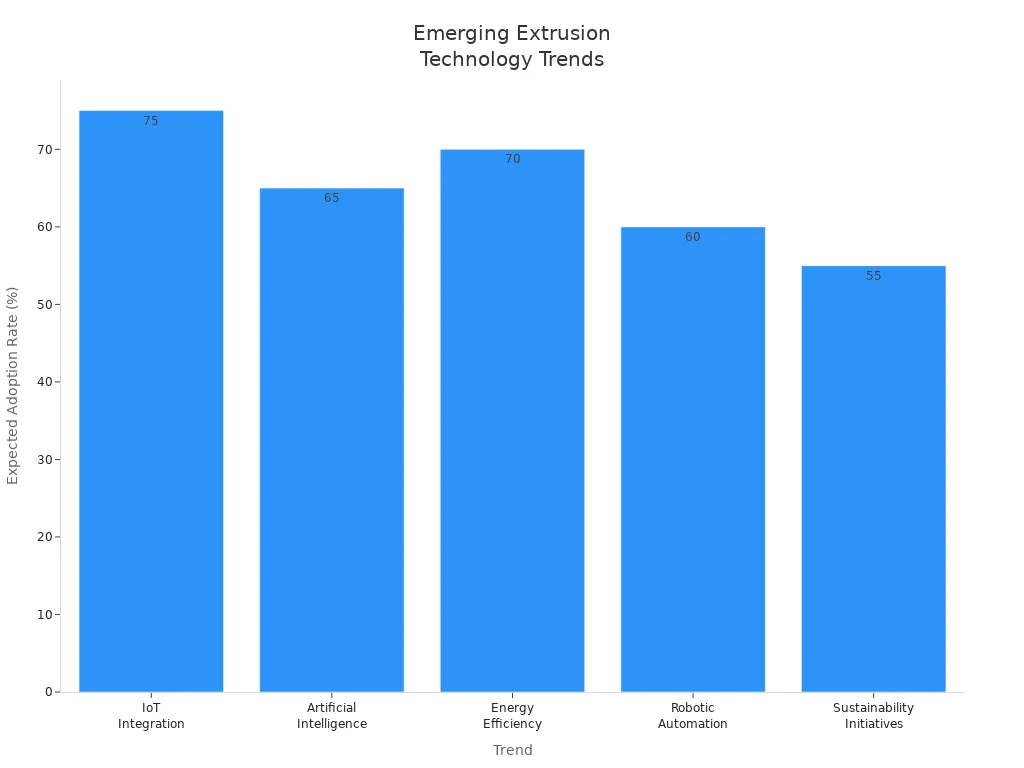
I see rapid changes in extrusion technology shaping the future of manufacturing. IoT integration allows real-time monitoring and analytics, amelyore efikasite. Artificial intelligence supports predictive maintenance and optimization, which boosts performance. Energy efficiency is a growing focus, with manufacturers seeking ways to reduce consumption in the extrusion process. Robotic automation streamlines material handling and quality control. Sustainability initiatives drive the use of recycled materials and eco-friendly processes.
| Tandans | Deskripsyon | Enpak sou efikasite | Pousantaj Adopsyon Espere (%) |
|---|---|---|---|
| Entegrasyon IoT | Siveyans ak analiz an tan reyèl | Segondè | 75% |
| Entèlijans atifisyèl | Antretyen prediksyon ak optimize | Trè wo | 65% |
| Enèji Efikasite | Reducing energy consumption | Mwayen | 70% |
| Otomatik Robotics | Manyen materyèl ak kontwòl kalite | Segondè | 60% |
| Inisyativ dirabilite | Materyèl resikle ak pwosesis ekolojik-zanmi | Mwayen | 55% |
I notice advancements in material compatibility, especially with bioplastics, are transforming the extrusion industry. Many manufacturers now prioritize flexibility in equipment design, with modular systems allowing easy upgrades and modifications. Sustainability is essential, with most manufacturers focusing on energy-efficient equipment and waste reduction strategies. Smart extrusion machines reduce downtime by 20%, which improves overall efficiency and quality control. I always stay updated on these trends to maintain high performance and support new applications in plastic extrusion.
Konsèy: I recommend reviewing the overview of extruder machines in manufacturing regularly. Staying informed about new types of extrusion machines and screw designs helps me adapt to changing production needs and maintain scalability.
I recognize that each extrusion system offers unique advantages and limitations. My experience shows that single-screw extruders excel in high-volume production, while twin-screw systems provide superior mixing and flexibility. Ram and co-extrusion machines support specialty applications. I always use comparison tables and selection criteria to evaluate:
- Technical capabilities and long-term reliability
- Customer service and design assistance
- Quality standards and energy efficiency
I recommend manufacturers understand their application needs and consult extrusion experts for optimal results.
FAQ
What is the main difference between single-screw and twin-screw extruders?
I see that single-screw extruders use one rotating screw for basic mixing. Twin-screw extruders use two screws for advanced mixing and better control. I choose twin-screw systems for complex materials and higher flexibility.
How do I decide which extrusion system fits my application?
I start by reviewing my material type, volim pwodiksyon an, and product complexity. I match these needs to the strengths of each system. I consult with experts if I face unique requirements.
Can I process recycled materials with extrusion systems?
I process recycled materials using twin-screw extruders. These machines handle variable feedstocks and additives better than single-screw systems. I monitor quality closely to ensure consistent results.
How often should I perform maintenance on my extruder?
I schedule routine inspections every month. I check for screw wear, barrel condition, and control system performance. Regular maintenance prevents downtime and extends equipment life.
What are the most common extrusion defects I encounter?
I often see surface roughness, dimensional drift, and melt fractures. I address these by adjusting temperature, vitès vis, and material feed. I use process monitoring to catch issues early.
Is co-extrusion suitable for all materials?
I use co-extrusion mainly for thermoplastics. Some materials may not bond well in multi-layer profiles. I test material compatibility before starting production.
How does automation improve extrusion quality?
I rely on automation for real-time monitoring and precise control. Automated systems reduce human error, maintain consistent output, and improve overall product quality.
What safety measures do I follow during extrusion?
I wear protective gear and follow lockout procedures. I keep the work area clean and check emergency stops regularly. I train my team on safe operation and emergency response.