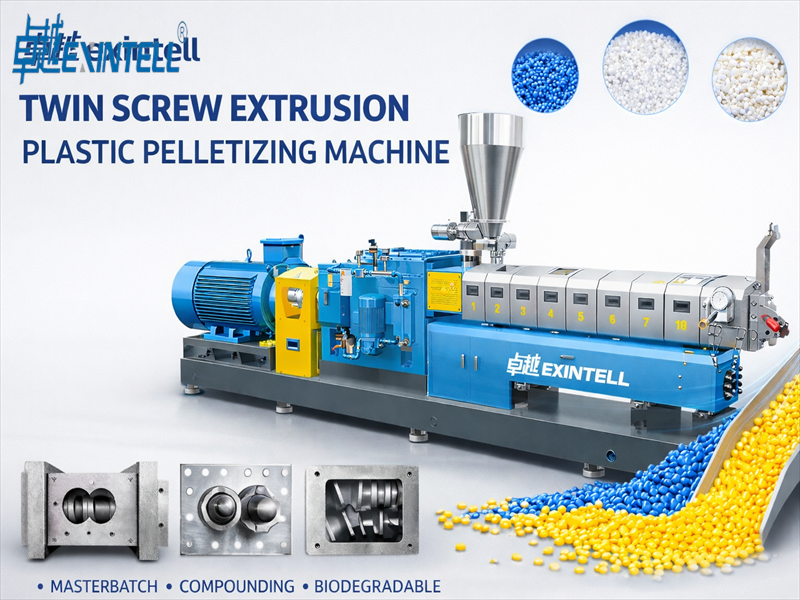
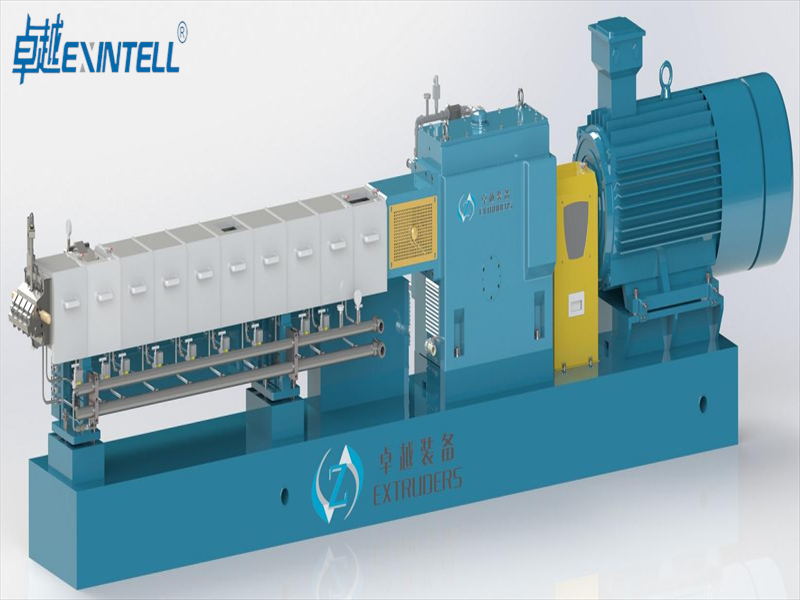
UN extrudeuse à double vishas two screws that spin together inside a barrel. Each screw hassliding parts on its shaftthat fit just right. This helps the screws move smoothly and gives good control. This design lets you mix and process things well. Many businesses, likeplastics and food, use this machine to make products. If you want to use an extruder, you should learn the basics. People new to this often havetrouble with temperatureand telling single and twin screw types apart.
Points clés à retenir
UN extrudeuse à double visuses two screws that turn together. These screws mix and process materials very well. This makes the machine great for plastics and food industries.
This machine mixes better and controls heat more than aextrudeuse monovis. It helps make better products and saves energy.
Knowing the parts, like screws and barrels, helps you change and improve the extruder. This lets you use it for different materials and jobs.
You can change how fast you feed materials and set temperature zones. This makes the twin screw extruder work better and keeps product quality steady.
Picking the right twin screw extruder, like co-rotating or counter-rotating, is important. It can change how well the machine mixes and if it works for certain materials.
What Is a Twin Screw Extruder
Définition de base
UN extrudeuse à double visis a machine with two screws that turn inside a barrel. You put raw materials into the barrel. The screws push the materials forward. As the materials move, the screws mix, fondre, and shape them. This design lets you control mixing and temperature better. You can use aextrudeuse à double visfor many jobs, like making plastics, nourriture, or chemicals.
The main mechanical ideas of aextrudeuse à double vishelp you get good results. Here is a table that explains these ideas:
Principle
Description
Starve-fed mechanism
Lets you feed materials at your own speed without changing the output.
Positive forwarding
Moves materials smoothly, so you do not get blockages or slips.
Low shear rate
Gives you better control of heat and stress on the material.
Dimensional control
Keeps the flow steady, which improves the quality of the final product.
Efficient mixing
Mixes materials well without overheating them.
Efficacité énergétique
Uses less power, so you save energy.
You will see that aextrudeuse à double viskeeps materials inside for a short and even time. This helps stop damage to the material. The machine also mixes and melts materials very well. This is important if you want to change or improve plastics. Unlike single screw machines, extrudeuses à double visuse intermeshing screws. Cela signifie que les vis travaillent ensemble pour faire avancer les matériaux.. Ils n'utilisent pas seulement la friction.
Double vis vs. Vis unique
Vous pourriez vous demander comment un extrudeuse à double vis est différent d'une extrudeuse monovis. La principale différence réside dans la manière dont chaque machine mélange et déplace les matériaux.. Une extrudeuse monovis n'a qu'une seule vis à l'intérieur du canon. C'est simple et facile à utiliser. Mais il ne peut pas mélanger les matériaux aussi bien qu'un extrudeuse à double vis.
Voici quelques principales différences entre les deux types:
Vous pouvez contrôler la force utilisée par les vis, pour ne pas endommager le matériel.
Les vis s'engrenant dans un extrudeuse à double vis faire un mélange et un pétrissage forts. Cela vous aide à mieux mélanger les additifs et les charges.
Les extrudeuses monovis conviennent au mélange de base, mais ils ont du mal avec les mélanges plus durs.
Le tableau ci-dessous montre en quoi les deux machines diffèrent de manière importante:
Fonctionnalité
Extrudeuse à double vis
Extrudeuse à vis unique
Efficacité
Un rendement plus élevé et un traitement plus rapide
Efficacité inférieure
Capacité de mélange
Fort mélange et plastification
Mixage de base uniquement
Consommation d'énergie
Moins d'énergie par unité de produit
Énergie plus élevée par unité de produit
Domaine d'application
Fonctionne pour de nombreux types de produits
Limité aux applications simples
Vous constaterez qu'un extrudeuse à double visest plus efficace et économise de l’énergie. Par exemple, une extrudeuse monovis utilise environ 900-1500 kJ d'énergie pour chaque kilogramme de matériau. UN extrudeuse à double vis n'a besoin que d'environ 400-600 kJ pour le même montant. Cela signifie que vous pouvez traiter plus de matériaux et dépenser moins en énergie..
Conseil: Si vous devez mélanger différents matériaux ou ajouter des charges, un extrudeuse à double vis vous donnera de meilleurs résultats et des produits de meilleure qualité.
Composants de la machine d'extrudeuse à double vis
Une extrudeuse à double vis comporte de nombreuses pièces importantes. These parts work together to process materials. You should know these parts to understand how the machine works. Knowing them helps you change the machine for different jobs.
Screws and Barrel
The screws are the main part of the twin screw extruder machine. They mix materials and move them forward. You can pick differentconceptions de vis, like co-rotating or counter-rotating. This lets you match the screws to the materials you want to use. The barrel goes around the screws and holds them in place. It protects the screws from damage and helps control the temperature. Most screws and barrels are made fromstrong steel. This steel can handle high heat and tough materials.
Component
Function
Conception de vis
Mixes and moves materials; can be customized for different processes.
Baril
Holds screws, controls temperature, and protects against wear.
Conseil: Vous pouvez modifier la configuration des vis et la forme du baril dans une extrudeuse à double vis. Cela facilite le traitement de nombreux matériaux et la fabrication de différents produits.
Alimentation et décharge
Le système d'alimentation amène les matières premières dans la machine d'extrudeuse à double vis. Vous pouvez utiliser des mangeoires spéciales, comme les types volumétriques ou gravimétriques. Ces alimentateurs vous aident à contrôler la quantité de matière entrante. De bons systèmes d’alimentation maintiennent le débit stable et arrêtent les blocages. Le système de déchargement sort le produit fini de la machine. Si vous organisez bien l'alimentation et la décharge, vous pouvez obtenir plus de rendement et économiser de l'énergie.
Alimentation régulière arrête les surtensions et maintient le bon fonctionnement de la machine d'extrudeuse à double vis.
Les mangeoires vibrantes font moins de bruit et sont plus faciles à nettoyer.
The shape and speed of the screws in the feed zone help you control how much material goes in.
Heating, Refroidissement, and Venting
You need to control the temperature inside the twin screw extruder machine. Heaters, like barrel heaters or ceramic heaters, heat up the machine fast and evenly. Cooling jacketsor water systems keep the machine from getting too hot. You can change the heating and cooling zones to fit your materials.
Venting is important too. It removes moisture and gases as materials melt. This step keeps the final product strong and free from defects. If you use sensitive materials, venting stops problems like weak spots or bubbles.
Heating Method
Avantages
Barrel heater
Fast heating, contrôle précis de la température
Ceramic heater
Durable, good for high temperatures
Electromagnetic induction heater
Saves energy, prevents local overheating
Une extrudeuse bivis est spéciale car vous pouvez changer ses pièces. Vous pouvez échanger les vis, barils, et des mangeoires pour manipuler de nouveaux matériaux ou fabriquer de meilleurs produits. Cela rend la machine utile pour de nombreuses industries.
Comment fonctionne l'extrudeuse
Quand tu sais comment un extrudeuse à double vis travaux, tu peux mieux l'utiliser. Le processus comporte quelques étapes principales. Chaque étape fait quelque chose d'important. Chaque partie de la machine contribue à transformer les matières premières en produits finis.
Alimentation matérielle
D'abord, vous ajoutez des matières premières comme des granulés de plastique ou des poudres. La trémie est en haut et contient ces matériaux. La gravité tire le matériau vers le bas dans le baril. Les vis commencent à tourner et saisissent le matériau. Ils le tirent vers l'avant à travers le canon.
Mettez la matière première dans la trémie.
Le matériau tombe dans le baril.
Les vis ramassent le matériau et le font avancer.
Conseil: L'alimentation du matériau à un rythme constant assure le bon fonctionnement. Des alimentateurs spéciaux vous aident à contrôler la quantité de matière entrante.
Mélange et fusion
À mesure que le matériau bouge, les vis pressent et mélangent. Les vis s'emboîtent étroitement. Cela aide à bien mélanger le tout, même si vous ajoutez des charges. Le canon devient chaud, et les vis font du frottement. La chaleur et la pression font fondre le matériau.
Les vis mélangent fortement la matière. Cela rend le mélange uniforme, même avec des additifs coriaces.
Note:You can change the temperature in different parts of the barrel. This helps you keep the material safe from too much heat.
Product Formation
After melting and mixing, the screws push the material to the end. The melted material goes through a die. The die shapes it into rods, feuilles, or pellets. When the material leaves the die, it cools and gets hard.
The screws push the melted material to the die.
The material goes through the die and takes its shape.
The product cools down and becomes solid.
You can see what makes aextrudeuse à double visspecial here. The screws keep the flow steady, so the product is always the same. You can change the screw parts fast. This lets you make new products or use new materials quickly.
Here is a table that shows some special controls you get with aextrudeuse à double vis:
Fonctionnalité
Avantage
Enhanced temperature regulation
Keeps material at the right temperature throughout
Modular screw and barrel design
Lets you adjust for different materials and products
Intensive mixing and pumping mechanism
Gives you even blends and smooth flow
Fast reconfiguration for new products
Saves time and increases flexibility
Conseil:Changing screw parts and controlling temperature in zones gives you more control. This is why many people choose aextrudeuse à double visfor material processing.
Now you can see how the process goes from feeding to finished product. Each step uses the special features of theextrudeuse à double visto give you good results.
Advantages and Applications
Avantages clés
If you use a twin screw extruder, you get many good things. The screwsmix materials together very well. This helps make plastic products strong and even. You can add fillers or colors, et ils se mélangeront bien.
Un meilleur mixage: Les vis travaillent en équipe. Ils mélangent bien et rapidement les matériaux.
Autonettoyant: La machine se nettoie toute seule pendant son fonctionnement. Vous n'avez pas besoin de vous arrêter souvent pour nettoyer ou changer de matériel.
Bonne ventilation: De nombreux évents évacuent l'eau et les gaz. Par exemple, trois évents peuvent couper les objets indésirables 50% à moins de 0.1%. Cela maintient vos produits solides et évite les défauts.
Haut rendement: Vous pouvez fabriquer plus de matériel en moins de temps. Cela aide votre travail à aller plus vite.
Conception flexible: Vous pouvez changer les pièces de vis pour différents travaux ou matériaux.
Note: Les joints doivent être parfaitement ajustés. Si le joint est trop étanche ou si le débit est trop rapide, le matériau peut bloquer l’évent. Vérifiez toujours vos paramètres pour obtenir les meilleurs résultats.
Applications typiques
Les extrudeuses à double vis sont utilisées dans de nombreuses industries. Ils mélangent bien les matériaux et travaillent rapidement. Ces machines sont idéales pour fabriquer du plastique et des aliments. Le tableau ci-dessous montre quelques utilisations courantes:
Domaine d'application
Description
Fabrication de pneus
Fabrique des pneus et du caoutchouc avec un fort mélange.
Mélanges de polymères
Mélange différents polymères et charges pour des résultats uniformes.
Modification de la résine
Ajoute des éléments pour changer la façon dont les polymères agissent.
Transformation des aliments
Cuit et façonne les aliments à base d'amidon.
Recyclage
Fond et remodèle les plastiques pour de nouvelles utilisations.
Produits façonnés
Forme des pièces complexes pour les voitures et les outils médicaux.
Plat & Produits en mousse
Fabrique des emballages et des produits flexibles à partir de plastique.
Vous pouvez également utiliser ces machines pour fabriquer des médicaments, mélange de polymères, et faire des choses tout le temps. Leur fort mélange et leur rapidité de travail en font un choix judicieux pour de nombreux travaux..
Types d'extrudeuses à double vis
Il y a différents types de conceptions à double vis. Chaque type est bon pour certains travaux. You need to know how each one works to pick the right extruder.
Co-rotating
In aco-rotating extruder, both screws spin the same way. This makes the screws mix materials really well. The screws touch and move stuff from one to the other. This helps break up clumps and mix things like fillers or additives.
The co-rotating type mixes better because the screws work together more.
High shear in the middle breaks up big chunks.
You can add kneading blocks to mix even better.
This setup gives steady flow and lots of output.
It works for plastics, nourriture, and rubber.
You can use it with many kinds of materials.
Conseil: Pick a co-rotating extruder if you want strong mixing and fast work.
Contre-rotatif
Counter-rotating extruders have screws that turn in opposite ways. This type pushes material forward and handles it gently. It is good for stuff that cannot take too much force, like PVC or cable coatings.
You can do more than one process, like extrusion and injection.
Custom setups are used in medical, car, and electronics work.
Avantage
Description
Maximize Mixing and Compounding
Special screw parts help mix evenly and make good products.
Enhance Operational Flexibility
You can use the extruder in labs or big factories.
Adapt to Market Demands
You can change your setup when the industry changes.
Note: Modular designs help you keep up with new materials and products. You can change your extruder fast without buying a new one.
Each twin screw design has its own special benefits. If you pick the right type, you get the best results for your job.
You now know how a twin screw extruder works. It mixes things well, keeps them safe, and makes a lot of product. The machine is made from strong materials like 420 stainless steel. This helps it last a long time. You can use the machine all the time and save money. Many businesses use this machine for recycling, nourriture, and plastics. If you want to learn more, look at these links:
You can read school articles or research to see how twin screw extruders help with recycling and making new materials.
FAQ
What materials can you process with a twin screw extruder?
You can process plastics, nourriture, produits chimiques, and even recycled materials. The machine works with powders, pellets, and pastes. You can also mix fillers, colors, or additives.
How do you clean a twin screw extruder?
Most twin screw extruders have a self-cleaning action. You can run a cleaning material through the machine. For deep cleaning, you can remove the screws and barrel.
Why should you choose a twin screw extruder over a single screw extruder?
Vous obtenez un meilleur mixage, faster processing, and more control. Twin screw extruders handle tough blends and sensitive materials. You can also change parts for different jobs.
Can you adjust the output of a twin screw extruder?
Oui! You can change the screw speed, température, and feeding rate. This lets you control how much product you make and its quality.