

Fabrik für Doppelschneckenextruderelemente: Der ultimative B2B-Handelsleitfaden für Hersteller, Lieferanten & Großhandelskäufer in
Der globale Markt für Doppelschneckenextruderelemente erfährt im Zuge der Kunststoffcompoundierung eine erhebliche Dynamik, Lebensmittelverarbeitung, pharmazeutisch, Die chemische Industrie expandiert in ganz Nordamerika und Europa. Für B2B-Käufer, die eine zuverlässige Lösung suchen Fabrik für Doppelschneckenextruderelemente, Verständnis der Fertigungslandschaft, Handelspolitik, Logistikkorridore, und die Beschaffung von Best Practices ist unerlässlich. Dieser Leitfaden bietet eine ausführliche Analyse des Ökosystems der Doppelschneckenextruderelementefabrik—Abdeckung führender Hersteller, Lieferantenbewertung im Großhandel, Handelsdynamik, Tarifüberlegungen, und umsetzbare Prognosen für das dritte Quartal–Q4. Ob Sie Compounder in Deutschland sind, ein Kunststoffverarbeiter in Ohio, or a trading company sourcing screw elements at scale, this resource equips you with the intelligence to make confident procurement decisions.
Understanding Twin Screw Extruder Elements: Core Components and Industrial Applications
Twin screw extruder elements are the modular building blocks inserted onto the shafts of co-rotating or counter-rotating twin screw extruders. These elements—including conveying elements, Knetblöcke, Mischelemente, and reverse-flight elements—determine the shear, residence time, and throughput characteristics of the extrusion process. A specialized Fabrik für Doppelschneckenextruderelemente produces these components from tool steels (z.B., W6Mo5Cr4V2, 38CrMoAlA) or powder-metallurgy alloys with tight tolerances, typischerweise ±0.01 mm on the involute profile.
Key application sectors driving demand include:
- Plastics compounding: Masterbatch-Produktion, polymer blending, filled and reinforced compounds (Glasfaser, Kohlefaser, mineralische Füllstoffe).
- Lebensmittelverarbeitung: Snack-Extrusion, Tiernahrung, strukturiertes pflanzliches Protein (TVP), und Getreideproduktion.
- Arzneimittel: Heißschmelzextrusion für Arzneimittelverabreichungssysteme—ein schnell wachsendes Segment in der EU und den USA.
- Chemische Verarbeitung: Reaktive Extrusion, Entgasung, und kontinuierliches Mischen von Klebstoffen, Dichtstoffe, und Beschichtungen.
- Recycling: Mechanisches Recycling von Post-Consumer-Kunststoffen, Ein Sektor, der durch EU-Vorschriften zur Kreislaufwirtschaft und US-EPA-Initiativen gestärkt wird.
Doppelschneckenextruder Nach Angaben von Grand View-Forschung (2024), Der weltweite Markt für Doppelschneckenextruder wurde auf etwa USD geschätzt 1.2 Milliarden und wird voraussichtlich mit einer jährlichen Wachstumsrate von wachsen 5.2% durch 2030. Der Austausch- und Upgrade-Zyklus für Schneckenelemente—das sind Verschleißteile—generiert einen wiederkehrenden Ersatzteilmarkt, der auf 30 geschätzt wird–40% des gesamten Extruder-Marktwerts, Dadurch wird das Fabriksegment für Doppelschneckenextruderelemente zu einem kritischen Knotenpunkt der Lieferkette. Lieferant von Mischgeräten

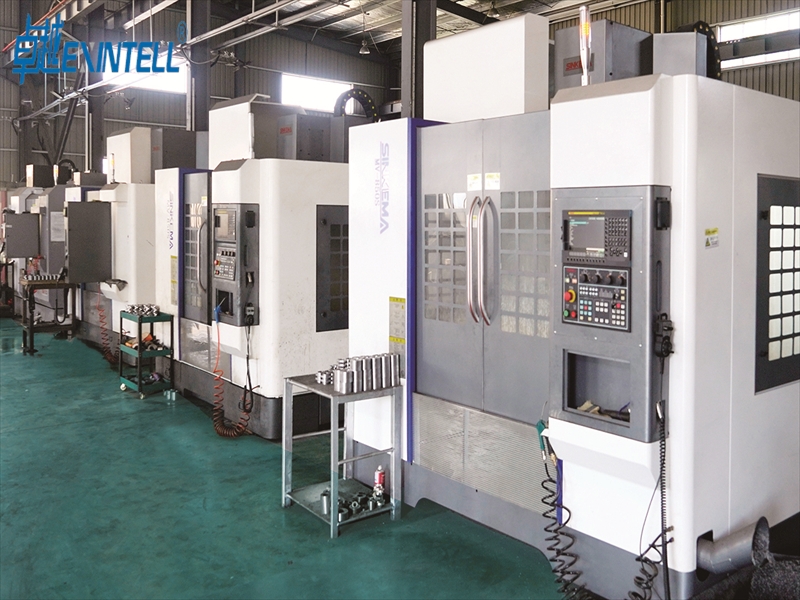
Industrielle Produktionsanlage mit CNC-Maschinen zur Herstellung von Präzisionsmetallkomponenten für Extrusionsanlagen
Die globale Fabriklandschaft für Doppelschneckenextruderelemente: Wer macht was und wo
Die Produktionsbasis für Doppelschneckenextruderelemente ist auf mehrere Schlüsselregionen konzentriert, jeweils mit deutlichen Wettbewerbsvorteilen:
China: Der Volumenführer
In China gibt es die meisten Fabriken für Doppelschneckenextruderelemente, hauptsächlich in Nanjing konzentriert (Provinz Jiangsu), which is often called the "Extruder Capital" der Welt. In Nanjing ansässige Fabriken wie Nanjing Jieya Extrusion Equipment Co., Nanjing Haisi Extrusion Equipment Co., und Nanjing Kerke Extrusion Equipment Co. liefern Schraubenelemente weltweit. Chinese factories offer competitive pricing—often 40–60% below European OEM equivalents—while increasingly matching quality through investments in CNC grinding centers (z.B., Kapp Niles, Reishauer) and metallurgical testing labs. Für Großhandelskäufer, China remains the primary sourcing origin for cost-effective, high-volume orders.
Deutschland: The Precision Benchmark
Pince A Extruder Germany is home to the original twin screw extruder OEMs—Coperion (Stuttgart), KraussMaffei Extrusion (Hannover), und Leistritz (Nürnberg). These companies manufacture proprietary screw elements with the tightest tolerances and premium metallurgy. German-made elements command price premiums of 2–4× over Chinese equivalents but are preferred for critical applications in pharmaceuticals, Hochleistungspolymere, and food-contact extrusion where traceability and certification (FDA, EU 1935/2004) are mandatory.
Vereinigte Staaten: Growing Domestic Capacity
US-based manufacturers like Entek (Lebanon, Oregon), Century Extrusion (Traverse City, Michigan), and CPM Extrusion Group supply both OEM and aftermarket screw elements. The reshoring trend, amplified by Section 301 tariffs on Chinese machinery components and the CHIPS and Science Act's broader manufacturing incentives, is encouraging domestic capacity expansion. Jedoch, US factories still represent a small fraction of global output.
Browse our complete catalog of twin screw extruder elements engineered for Coperion, Leistritz, JSW, and Berstorff shaft profiles. Hersteller von Doppelschneckenextrudermaschinen
Trade Policy and Its Impact on Twin Screw Extruder Elements Sourcing
The transatlantic trade relationship between the United States and the European Union is the world's largest bilateral commercial partnership, Der Waren- und Dienstleistungshandel übersteigt USD 1.3 Billionen pro Jahr nach Angaben der Büro des Handelsvertreters der Vereinigten Staaten (USTR) (2024 Daten). For B2B buyers of twin screw extruder elements, several policy dimensions are directly relevant:
Tariff Structure
Twin screw extruder elements typically fall under HS Code 8477.90 (parts of machinery for working rubber or plastics). The US MFN (Meistbegünstigte Nation) tariff rate for HS 8477.90 is 3.1% for imports from EU member states. EU imports from the US face a comparable rate of 2.7% under the EU Common Customs Tariff. These relatively low tariff rates facilitate bilateral trade in extruder components.
Jedoch, when sourcing from China, US importers face an additional 25% Abschnitt 301 tariff on HS 8477.90 goods, imposed since 2018 and maintained through. This tariff differential has reshaped sourcing strategies: some Extruder Wholesale US compounders now source screw elements from EU factories (particularly Germany and Italy) to avoid the China tariff, while others absorb the cost due to the significant base-price advantage of Chinese elements. Wholesale Lab Extruders
CO2-Grenzausgleichsmechanismus der EU (CBAM)
The EU's CBAM, die im Oktober in die Übergangsphase eintrat 2023 und wird bis dahin voll funktionsfähig sein 2026, applies to imports of steel and aluminum—key raw materials for screw element production. A twin screw extruder elements factory exporting to the EU will need to report embedded carbon emissions, and eventually purchase CBAM certificates. This regulation, documented by the Europäische Kommission – Taxation and Customs Union, adds compliance complexity and potential cost for non-EU manufacturers, particularly those in regions with carbon-intensive steel production.
Handels- und Technologierat (TTC)
Die TTC, gegründet in 2021, verfügt über Arbeitsgruppen zur Widerstandsfähigkeit der Lieferkette und zur Angleichung von Standards. Für Industriemaschinenkomponenten wie Schneckenelemente, the TTC's efforts to harmonize technical standards (z.B., Materialzertifizierungen, Maßtoleranzen) könnten nichttarifäre Handelshemmnisse abbauen und die grenzüberschreitende Beschaffung erleichtern. Der Internationale Handelsverwaltung (ITA) Bietet regelmäßige Updates zum TTC-Fortschritt.

Luftaufnahme eines großen europäischen Hafens mit Containerschiffen und Logistikinfrastruktur zur Unterstützung des internationalen B2B-Handels
B2B-Handelsmöglichkeiten für Doppelschneckenextruderelemente auf US- und EU-Märkten
Die Konvergenz mehrerer Makrotrends schafft erhebliche B2B-Möglichkeiten für Fabriken für Doppelschneckenextruderelemente, die die USA und die EU beliefern:
Gelegenheit 1: Vorschriften zum Kunststoffrecycling
Dispermatmischer The EU's Packaging and Packaging Waste Regulation (PPWR), adoptiert in 2024, schreibt einen Mindestrecyclinganteil in Kunststoffverpackungen vor—30% von 2030 Und 65% von 2040. In den USA, states like California (SB 54), New Jersey, and Oregon have enacted extended producer responsibility (EPR) laws with recycled content requirements. Mechanical recycling Single Screw Extruder Slideshare relies heavily on twin screw extruders for recompounding, and the wear rate on screw elements processing recycled feedstock (which contains contaminants, Füllstoffe, and mixed polymers) is 2–3× higher than virgin material processing. This accelerates the replacement cycle and increases demand for wear-resistant screw elements from specialized factories.
Gelegenheit 2: Pharmazeutische Hot-Melt-Extrusion
The FDA and EMA have approved an increasing number of drug products manufactured via hot-melt extrusion (HME). Laut a 2024 review in the International Journal of Pharmaceutics, über 30 commercial drug products now use HME technology. Schneckenelemente in Pharmaqualität erfordern spezielle Oberflächenbehandlungen (z.B., Elektropolieren auf Ra ≤ 0.4 µM), Materialzertifizierungen (316L Edelstahl oder Hastelloy), und vollständige Rückverfolgbarkeitsdokumentation. Diese margenstarke Nische bevorzugt Fabriken mit ISO 13485 oder gleichwertige Qualitätssysteme.
Gelegenheit 3: Elektrofahrzeug (EV) Batteriematerialien
Doppelschneckenextruder werden zunehmend zum kontinuierlichen Mischen von Kathoden- und Anodenschlämmen in der Herstellung von Lithium-Ionen-Batterien eingesetzt—a process called "dry electrode" Herstellung. Mit der EU-Batterieverordnung (2023) und das US Inflation Reduction Act (IRA) Dies treibt massive Investitionen in die heimische Batterieproduktion voran, Nachfrage nach speziellen Schneckenelementen (korrosionsbeständig, Ausführungen mit hohem Drehmoment) entwickelt sich zu einem neuen Wachstumsvektor. Mixer extrudiert eine Kurve
Herausforderung 1: Qualitätsüberprüfung im großen Maßstab
B2B buyers sourcing from overseas twin screw extruder elements factories face quality verification challenges. Dimensional accuracy, metallurgical composition, and heat treatment consistency can vary between batches. Mitigation strategies include requiring material test certificates (IN 10204 3.1), conducting pre-shipment inspections via third-party agencies (SGS, Bureau Veritas), and requesting sample elements for fit-testing before committing to volume orders.
Herausforderung 2: Bedenken hinsichtlich des geistigen Eigentums
OEM screw element designs are often proprietary, with specific involute profiles, tip angles, and flight geometries. Aftermarket factories that reverse-engineer these designs operate in a legal gray area. B2B buyers should ensure their supplier has legitimate design rights or is producing to openly published specifications to avoid IP infringement risks, particularly when importing into the US (where ITC Section 337 investigations can block infringing goods at the border).
Learn more about our quality inspection process for twin screw extruder elements and how we ensure batch-to-batch consistency.
Geographic and Policy Advantages Enabling B2B Trade in Extruder Components
The US and EU benefit from several structural advantages that facilitate B2B trade in industrial components like twin screw extruder elements:
Logistikinfrastruktur: The transatlantic shipping corridor is among the world's most efficient. Wichtige Häfen—Rotterdam (Europe's largest), Hamburg, Antwerp-Bruges on the EU side; Los Angeles/Long Beach, Savanne, and Newark on the US side—offer frequent sailings with transit times of 10–18 Tage. Containerized shipping costs for machinery parts have normalized post-pandemic, with spot rates on the Asia-Europe and Asia-US routes declining 70–80% aus 2022 peaks according to the Drewry World Container Index (Mai ).
Regulatory alignment: Both the US and EU maintain robust industrial standards ecosystems. Screw elements manufactured to DIN, ISO, or ASTM standards are broadly interchangeable in specification language, reducing technical barriers. The mutual recognition of calibration certificates (ILAC MRA) and testing laboratory accreditations (ISO/IEC 17025) further streamlines cross-border quality assurance.
Trade finance and payment security: transactions benefit from mature trade finance instruments—Akkreditive, Dokumentationssammlungen, und Warenkreditversicherung (Euler Hermes, Coface, Nachdem ich es entdeckt habe)—that reduce counterparty risk. This is a significant advantage compared to sourcing from regions with less developed financial infrastructure.
Free Trade Zones and bonded warehousing: Sowohl die USA (Foreign Trade Zones program, verwaltet von der ITA) und die EU (Free Zones under the Union Customs Code) allow importers to defer or reduce duties on components held in inventory, improving cash flow for distributors who stock screw elements for rapid delivery.
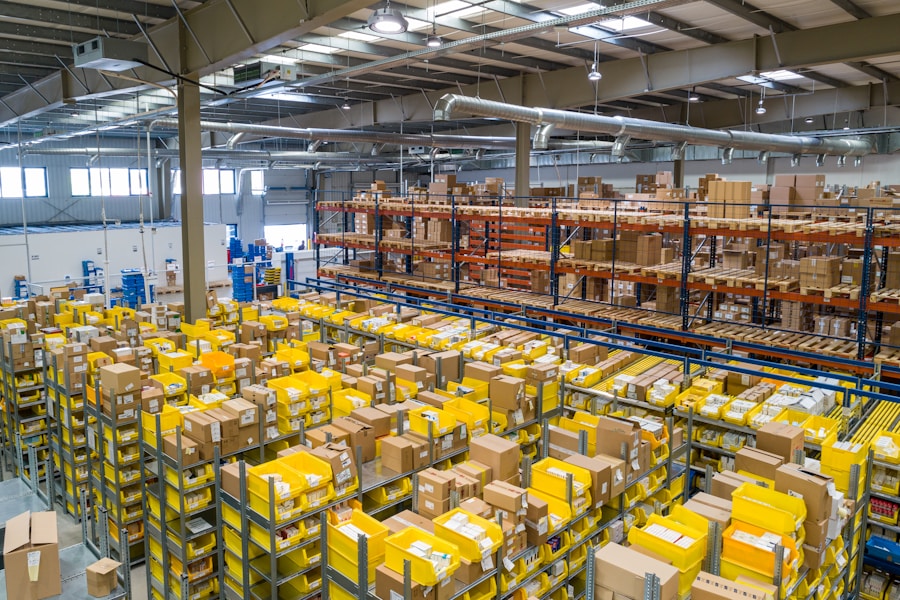
Modern warehouse logistics center with organized inventory shelving for industrial B2B component distribution
Fallstudie: How B2B Enterprises Succeed in the Twin Screw Extruder Elements Market
Fall 1: A Nanjing-Based Factory Expanding into the EU Aftermarket
A mid-sized twin screw extruder elements factory in Nanjing, employing approximately 120 workers and operating 15 CNC profile grinding machines, recognized that its domestic market was becoming saturated with price competition. In 2023, the company pivoted to target the European aftermarket by:
- Obtaining ISO 9001:2015 certification and investing in a coordinate measuring machine (CMM) für 100% dimensional inspection.
- Developing screw element profiles compatible with Coperion ZSK, Leistritz ZSE, and Berstorff ZE series extruders—the three most common platforms in European compounding plants.
- Partnering with a logistics provider to offer DDP (Verzollt geliefert) pricing to EU customers, simplifying the procurement process.
- Attending K Fair (Düsseldorf, October cycle) and Chinaplas to build direct relationships with European compounders.
Innerhalb 18 Monate, the factory grew its EU revenue from near-zero to approximately 25% of total sales, with key accounts in Germany, Polen, und Italien. The company's success hinged on matching OEM dimensional accuracy while offering 45–55% cost savings and 4-week lead times (vs. 8–12 weeks from OEMs).
Fall 2: A US Distributor Building a Dual-Source Supply Chain
Ein spezialisierter Industriehändler mit Sitz in Houston, Texas, bedient den petrochemischen Korridor der Golfküste der USA, Historisch beschaffte Schneckenelemente ausschließlich von einem einzigen deutschen OEM. Wenn sich die Lieferzeiten auf verlängerten 16 Wochen im Jahr 2021–2022 Lieferkettenkrise, Der Distributor hätte beinahe wichtige Kunden verloren. Als Antwort, das Unternehmen:
- Eine zweite Quelle qualifiziert—eine chinesische Fabrik für Doppelschneckenextruderelemente—für Standard-Förder- und Knetelemente (etwa 70% der Nachfrage nach Volumen).
- Pflege der deutschen OEM-Beziehungen für Spezialelemente (z.B., pharmazeutischer Qualität, hochlegierte Zusammensetzungen) wo Zertifizierung und Rückverfolgbarkeit die Prämie rechtfertigten.
- Einrichtung eines Zolllagers in einer US-Außenhandelszone in der Nähe des Hafens von Houston, Halten eines 90-Tage-Sicherheitsvorrats an schnelldrehenden Elementgrößen.
- Implemented a digital inventory management system allowing customers to check stock availability and place orders online.
This dual-source strategy reduced average lead times to 3–5 days for stocked items and 4–6 weeks for custom orders, while reducing procurement costs by approximately 30% on standard elements. The distributor's revenue grew 40% Jahr für Jahr in 2024, according to the company's published case study.
Fall 3: An Italian Manufacturer Leveraging Niche Expertise
A family-owned precision machining company near Brescia, Italien—a region renowned for metalworking—transitioned from general CNC machining to specialized twin screw extruder element production in 2019. The company differentiated by:
- Focusing exclusively on high-performance alloys: PN (Pulvermetallurgie) Werkzeugstähle, tungsten carbide composites, and nickel-based superalloys for corrosive applications.
- Offering in-house PVD (Physikalische Gasphasenabscheidung) coating services (TiAlN, CrN) to extend element wear life by 3–5×.
- Providing engineering consultation—analyzing customers' extrusion processes and recommending optimized screw configurations.
Von 2024, the company had built a client base spanning 14 EU countries and was exporting to the US, commanding prices comparable to German OEMs but with faster turnaround (3–4 weeks vs. 8–12 Wochen). This case illustrates how a twin screw extruder elements factory can compete on value rather than price.
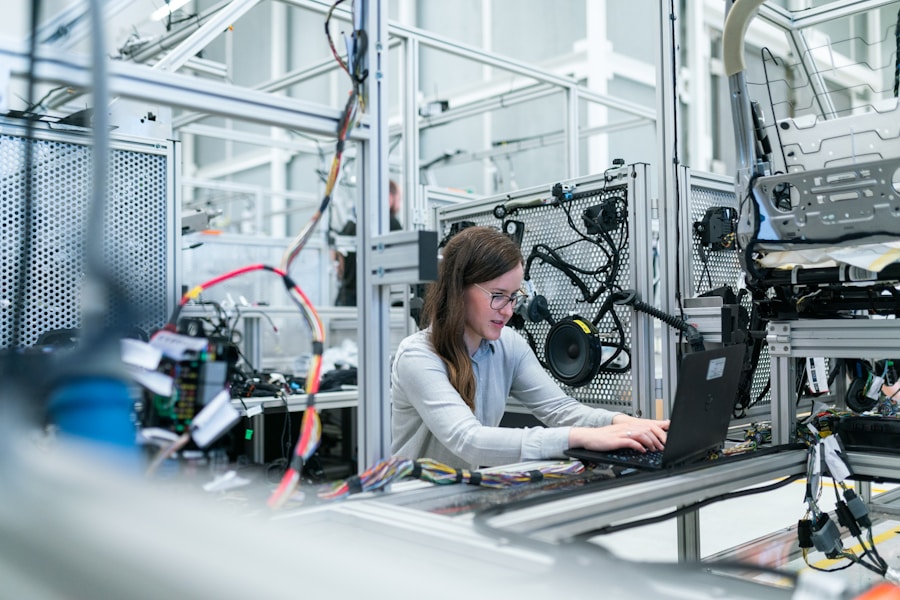
Engineer inspecting precision-machined metal components in a modern manufacturing facility with quality control equipment
Trade Forecasts for Twin Screw Extruder Elements: Q3–Q4-Ausblick
Basierend auf aktuellen Marktsignalen, politische Entwicklungen, und Branchendaten, the following trends are expected to shape the twin screw extruder elements factory sector over the next 1–2 months and into late:
Vorhersage 1: Tariff Volatility Will Persist
The US trade policy environment remains dynamic. Ab Mitte, Abschnitt 301 tariffs on Chinese machinery components (25%) remain in effect, and there is no indication of imminent reduction. Zusätzlich, the US administration has signaled potential adjustments to tariff rates on EU steel and aluminum under Section 232, which could indirectly affect screw element pricing if raw material costs shift. B2B buyers should build tariff scenario planning into their procurement models. Der US-Zoll- und Grenzschutz (CBP) CROSS rulings database is the authoritative source for HS classification guidance.
Vorhersage 2: EU CBAM Compliance Will Become a Competitive Differentiator
As the EU CBAM transitions from reporting-only to certificate-purchase requirements (2026), twin screw extruder elements factories that can demonstrate low-carbon steel sourcing and provide verified emissions data will gain a competitive edge in the EU market. Factories in countries with clean electricity grids (z.B., Scandinavia, Frankreich) or those using electric arc furnace (EAF) steel will be advantaged. Chinese factories relying on blast furnace steel may face CBAM surcharges equivalent to 5–15% of product value, partially eroding their price advantage.
Vorhersage 3: Consolidation in the Aftermarket Segment
The twin screw extruder elements aftermarket is fragmented, with hundreds of small factories globally. Industry analysts expect consolidation through M&A activity, as larger players (z.B., Coperion/Hillenbrand, CPM/IDEX) Sie sind bestrebt, Einnahmen aus dem Ersatzteilmarkt zu erzielen, und kleinere Fabriken stehen unter Margendruck. B2B-Käufer sollten die finanzielle Stabilität der Lieferanten überwachen und langfristige Lieferverträge mit gut kapitalisierten Fabriken in Betracht ziehen.
Vorhersage 4: Die digitale Beschaffung wird sich beschleunigen
B2B-E-Commerce-Plattformen (Alibaba, ThomasNet, Europages) werden zunehmend für die erste Lieferantenfindung im Bereich Schraubenelemente eingesetzt. Jedoch, Der Trend geht hin zur konfiguratorbasierten Bestellung—Hier wählen Käufer das Extrudermodell aus, Wellendurchmesser, Elementtyp, und Material online, Erhalten Sie sofort einen Preis, und Bestellungen digital aufgeben. Fabriken, die in digitale Vertriebsinfrastruktur investieren, werden einen wachsenden Marktanteil erobern, insbesondere bei mittelständischen Compoundeuren, denen es an engagierten Beschaffungsteams mangelt.
Vorhersage 5: Recyclingbedingter Nachfrageanstieg
Da sich der Zeitplan für die EU-PPWR-Implementierung beschleunigt und große Markeninhaber hinzukommen (Nestlé, Unilever, P&G) committing to recycled content targets, the installed base of recycling extruders in Europe is expected to grow 15–20% jährlich durch 2027, pro Kunststoffrecycler Europa estimates. Each new extruder installation represents a recurring screw element replacement opportunity, and the abrasive nature of recycled feedstock ensures high replacement frequency.
Industrial plastics recycling facility with extrusion machinery processing post-consumer materials
Material Science and Wear Protection: Safeguarding Performance and Operator Safety
The performance and longevity of twin screw extruder elements are fundamentally determined by material selection and surface engineering. Für B2B-Käufer, understanding these factors is critical to optimizing total cost of ownership and ensuring safe, reliable operations. Fabrik für Doppelschneckenextruder
Grundmaterialoptionen
Eine professionelle Fabrik für Doppelschneckenextruderelemente bietet in der Regel mehrere Materialqualitäten an:
- Nitrierter Stahl (38CrMoAlA): Das Arbeitspferd für die Allzweck-Compoundierung. Durch Nitrieren entsteht eine harte Oberflächenschicht (900–1100 HV) unter Beibehaltung eines harten Kerns. Kostengünstig für nicht abrasive Anwendungen.
- Werkzeugstahl (W6Mo5Cr4V2 / AISI M2): Schnellarbeitsstahl mit hervorragender Verschleißfestigkeit für mäßig abrasive Verbindungen (Kalziumkarbonat, talkgefüllte Polymere). Härte nach Wärmebehandlung: 62–65 HRC.
- Pulvermetallurgie (PN) Stahl (CPM 9V, CPM 10V): Hergestellt durch heißisostatisches Pressen, PM-Stähle bieten eine gleichmäßige Karbidverteilung und eine außergewöhnliche Abriebfestigkeit—3–5× die Verschleißlebensdauer herkömmlicher Werkzeugstähle. Bevorzugt für glasfaserverstärkte Compounds.
- Legierungen auf Nickelbasis (Hastelloy C-276, Inconel 625): Für korrosive Anwendungen—Verarbeitung von Fluorpolymeren, PVC mit aggressiven Stabilisatorpaketen, or reactive extrusion with acidic byproducts.
- Tungsten carbide composites (HIP-clad): The ultimate wear solution for highly abrasive applications. Tungsten carbide particles in a metallic matrix provide hardness exceeding 1500 HV. Used in recycling applications where contaminated feedstock causes extreme wear.
Surface Treatment Technologies
Beyond base material selection, surface treatments extend element life and improve process performance:
- PVD coatings (TiN, TiAlN, CrN): Thin-film coatings (2–5 µM) applied at low temperatures, preserving substrate properties. TiAlN coatings offer oxidation resistance to 800°C, suitable for high-temperature engineering polymer processing.
- Plasma nitriding: A controlled nitriding process producing a uniform, deep hardened layer without the "white layer" defects common in gas nitriding. Preferred for food-contact applications where surface integrity is critical.
- Verchromt (Hartchrom): Traditionelle Oberflächenbehandlung mit guter Korrosionsbeständigkeit und mäßigem Verschleißschutz. Wird in der EU aufgrund der REACH-Beschränkungen für sechswertiges Chrom schrittweise abgeschafft (Cr6+), mit HVOF (Hochgeschwindigkeits-Oxy-Fuel) Als Ersatz tauchen thermische Spritzbeschichtungen auf.
- Laserauftragschweißen: Additive Fertigungstechnik zur Abscheidung verschleißfester Legierungsschichten (Stellite, Colmonoy) auf Elementoberflächen. Ermöglicht eine lokale Verstärkung stark beanspruchter Zonen (z.B., Knetblockspitzen) ohne das gesamte Element zu behandeln.
Überlegungen zur Bedienersicherheit
Während die Elemente des Doppelschneckenextruders selbst interne Komponenten sind, Ihr Zustand wirkt sich direkt auf die Betriebssicherheit aus:
- Abgenutzte Elemente erhöhen den Energieverbrauch: Verschlechterte Schneckenprofile verringern die Pumpeffizienz, Dies erfordert ein höheres Motordrehmoment und erhöht die Energiekosten um das Zehnfache–25%. Überwachung des spezifischen Energieverbrauchs (kWh/kg) is a key indicator for element replacement timing.
- Metal contamination risk: Severely worn elements can shed metal particles into the product stream—a critical concern in food and pharmaceutical applications. Regular element inspection and proactive replacement prevent contamination events that could trigger product recalls.
- Shaft damage prevention: Worn elements with loose fits on the shaft can cause fretting corrosion and shaft damage. Shaft replacement costs 10–50× the cost of a single element, making timely element replacement a cost-effective maintenance strategy.
- Process stability: Consistent element geometry ensures stable melt temperature, Druck, and output rate. Worn elements cause process variability, leading to off-spec product and potential safety issues in downstream operations (z.B., inconsistent wall thickness in extruded pipe).
Eine verantwortungsbewusste Fabrik für Doppelschneckenextruderelemente stellt detaillierte Verschleißrichtlinien bereit, Empfohlene Austauschintervalle je nach Anwendungstyp, und technischer Support für die Schneckenkonfiguration Extrudiertes PVC Typ A Optimierung. B2B-Käufer sollten Lieferanten nicht nur nach dem Elementpreis bewerten, sondern auf das Gesamtwertversprechen inklusive technischem Service, Verschleißdaten, und anwendungstechnische Unterstützung.
Hersteller von Kunststoffextrusionsunternehmen Greifen Sie auf unsere zu Leitfaden zum Verschleiß und Austausch von Schraubenelementen für detaillierte Wartungsempfehlungen nach Anwendungstyp.

Nahaufnahme präzisionsgefertigter Metallkomponenten mit Oberflächenbehandlung und hochwertiger Endbearbeitung für industrielle Anwendungen
Auswahl der richtigen Doppelschneckenextruder-Elementfabrik: A B2B Buyer's Checklist
Für Beschaffungsexperten, die eine Fabrik für Doppelschneckenextruderelemente evaluieren, Die folgenden Kriterien sollten als Leitfaden für die Lieferantenauswahl dienen:
- Profilkompatibilität: Bestätigen Sie, dass das Werk Elemente herstellen kann, die zu Ihrem spezifischen Extruderwellenprofil passen (Spline-Geometrie, Außen-/Innenmaße). Fordern Sie Musterelemente zur Dichtsitzprüfung an.
- Materialzertifizierungen: Erfordert EN 10204 Typ 3.1 Materialprüfzeugnisse für jede Charge. Für Anwendungen mit Lebensmittelkontakt, Überprüfen Sie die FDA 21 CFR oder EU 1935/2004 Einhaltung.
- Möglichkeit zur Dimensionsprüfung: Das Werk sollte kalibrierte KMGs betreiben (Koordinatenmessgeräte) und legen jeder Sendung Inspektionsberichte bei. Fordern Sie Cpk-Daten für kritische Dimensionen an.
- Kontrolle der Wärmebehandlung: Stellen Sie sicher, dass die Fabrik über eigene oder zertifizierte Wärmebehandlungsanlagen mit Temperaturgleichmäßigkeitsuntersuchungen verfügt (pro AMS 2750 oder gleichwertig).
- Mindestbestellmenge (Mindestbestellmenge) Flexibilität: Großhandelskäufer benötigen Mengenpreise, sondern auch die Möglichkeit, kleine Mengen spezieller Elemente zu bestellen. Evaluate the factory's MOQ policy across its product range.
- Lead time reliability: Request historical on-time delivery data. A factory with 95%+ OTD (on-time delivery) performance demonstrates operational discipline.
- Technische Unterstützung: The best factories offer screw design consultation, Verschleißanalyse, and process optimization support—not just component supply.
- Trade compliance: Für grenzüberschreitende Beschaffung, verify the factory's experience with export documentation, HS classification, and destination-country regulatory requirements.
Request a quote from our factory and receive a detailed proposal including material options, Lieferzeiten, and volume pricing within 24 Std..
Logistics and Shipping Best Practices for Twin Screw Extruder Elements
Twin screw extruder elements are dense, precision-machined metal components that require careful handling during international shipping:
- Verpackung: Individual elements should be wrapped in VCI (Vapor Corrosion Inhibitor) paper or film, then placed in compartmentalized wooden crates. Kneading blocks and mixing elements with protruding features require custom foam inserts to prevent contact damage.
- Shipping mode: For standard orders, LCL (Weniger als Containerladung) ocean freight is cost-effective. For urgent orders or high-value pharmaceutical-grade elements, air freight is justified. A typical set of screw elements for a 40mm–90mm extruder weighs 50–300 kg, making air freight feasible.
- Incoterms: B2B buyers should negotiate FOB (Kostenlos an Bord) or CIF (Kosten, Versicherung, Fracht) terms for ocean shipments. DDP (Verzollt geliefert) simplifies the process for buyers unfamiliar with import procedures but typically costs 5–10% more.
- Versicherung: Marine cargo insurance (Institute Cargo Clauses A—all risks) is recommended for precision components. The cost is typically 0.3–0.5% of declared value.
- Customs documentation: Ensure the commercial invoice includes accurate HS codes (8477.90.XX), material composition, country of origin, and unit values. Incorrect documentation causes customs delays and potential penalty assessments.
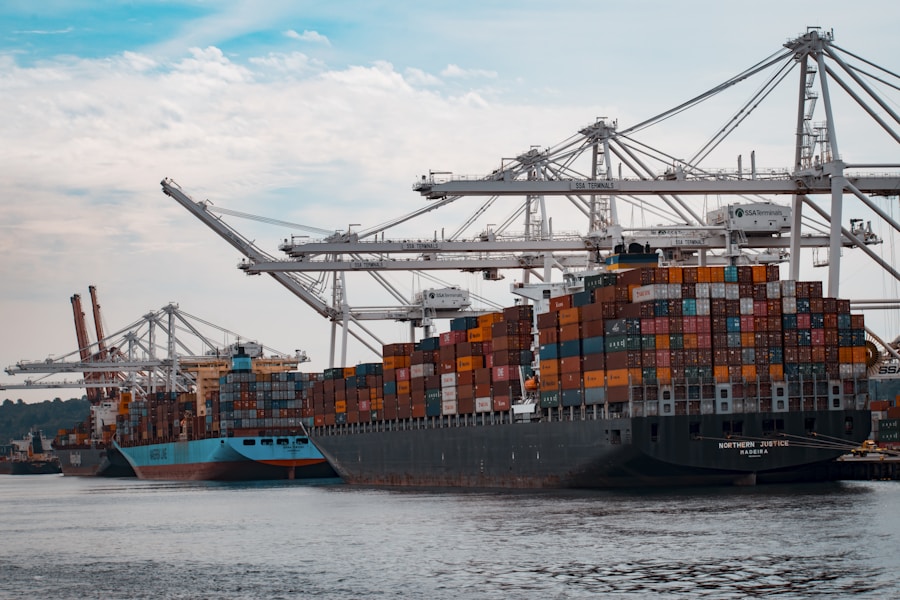
Container port with cargo ships and cranes facilitating global B2B trade logistics for industrial components
Industry Standards and Certifications Relevant to Twin Screw Extruder Elements
Doppelschneckenextruderelemente im Großhandel: Vollständiger B2B-Sourcing-Leitfaden für… · Handelsanalyse der Hersteller von Doppelschneckenextrudergetrieben, Markttrends… · Lieferant von Doppelschneckenextrudergetrieben: Complete B2B Sourcing Guide for T…