

Sådan stables forskellige ekstruderingssystemer op til fremstilling
Jeg har set, at valget af ekstruderingssystem former hele fremstillingsprocessen. De fleste producenter bruger enkeltskruesystemer, som holder en 62% markedsandel, mens dobbeltskruesystemer står for 38%.
| Ekstrusionssystem type | Markedsandel i procent |
|---|---|
| Enkeltskrue | 62% |
| Dobbeltskrue | 38% |
Valg mellem skruetyper påvirker effektiviteten, produktkvalitet, og materialekompatibilitet. Når jeg matcher ekstruderingsteknologi til fremstillingsmål, Jeg bemærker forbedringer i omkostningseffektiviteten, design alsidighed, og bæredygtighed.
| Faktor | Indvirkning på produktionseffektivitet | Indvirkning på produktkvalitet |
|---|---|---|
| Kontrollerede parametre | Opretholder ensartet produktkvalitet | Opnår mikrometertolerancer |
Jeg er afhængig af Complete Extrusion Systems til at levere ensartede resultater og præcis skrueydelse.
Nøgle takeaways
- Vælg det rigtige ekstruderingssystem baseret på dine fremstillingsmål og materialeegenskaber for at sikre optimal ydeevne.
- Enkeltskruede ekstrudere er ideelle til højvolumenproduktion af simple materialer, mens dobbeltskruesystemer udmærker sig ved at blande komplekse materialer.
- Regelmæssig vedligeholdelse og overvågning af ekstruderingssystemer forhindrer nedetid og øger effektiviteten, at sikre ensartet produktkvalitet.
- Overvej skruediameteren og L/D-forholdet, når du vælger en ekstruder, da disse faktorer påvirker gennemløb og blandingseffektivitet.
- Brug co-ekstrudering til at skabe flerlagsprodukter, der kombinerer forskellige materialer, forbedring af funktionalitet og ydeevne.
- Evaluer materialernes kompatibilitet med det valgte ekstruderingssystem for at undgå defekter og sikre output af høj kvalitet.
- Hold dig informeret om nye tendenser inden for ekstruderingsteknologi, såsom IoT og AI, at forbedre effektiviteten og tilpasse sig skiftende produktionsbehov.
- Opret en tjekliste over nøglefaktorer, før du vælger en ekstruderingsmaskine for at undgå dyre fejl og sikre, at systemet opfylder applikationskravene.
Valg af det rigtige ekstruderingssystem til fremstilling
Nøglefaktorer i systemvalg
Jeg finder aldrig en universel “bedst” ekstruderingssystem. Min erfaring siger mig, at det ideelle valg afhænger af fremstillingsmålene, materialeegenskaber, og produktkrav. Når jeg vælger et ekstruderingssystem, Jeg matcher altid dens muligheder til den tilsigtede applikation. Denne tilgang sikrer, at ekstruderingsprocessen leverer ensartet kvalitet og optimal ydeevne.
Jeg betragter flere kritiske faktorer før du vælger en ekstruderingsmaskine. Jeg bruger følgende tabel til at guide min beslutning:
| Faktor | Beskrivelse |
|---|---|
| Forskningsmål | Maskinens formål (undervisning, materialeudvikling, eller kommerciel pilotproduktion) |
| Materiale Type | Type polymerer, der skal forarbejdes (varmefølsomme, flygtige, eller reaktive) |
| Påkrævet udgangskapacitet | Gennemløbskapacitet (gram eller kilogram i timen) |
| Avancerede proceskrav | Behov for gasindsprøjtning, vakuum afgasning, eller reaktiv ekstruderingsevne |
| Budget og laboratorieplads | Overvejelser om modulær udvidelse til fremtidige opgraderinger |
| Fremtidige opskaleringsbehov | Kompatibilitet med industrielle ekstruderingsmoduler til opskalering af produktionen |
Jeg er altid opmærksom på skruediameteren og L/D-forholdet. Disse parametre bestemmer gennemløbskapacitet og blandingseffektivitet. Jeg vælger en ekstruder med den rigtige udgangskapacitet, som kan variere fra 0.25 kg/t til 150 kg/t afhængig af model. Modulært design giver mig mulighed for hurtigt at udskifte komponenter, hvilket giver fleksibilitet til forskning og udvikling. Jeg er afhængig af avancerede kontrolsystemer, såsom PLC og HMI, for at opnå præcis kontrol og datasporbarhed.
Når jeg vurderer typer af ekstruderingsmaskiner, Jeg overvejer kompleksiteten af profilen og de nødvendige tolerancer. Indviklede designs kræver præcist værktøj og kan øge omkostningerne. Jeg ser også på ordremængde. Større mængder reducerer prisen pr. enhed, fordi opsætningsomkostningerne spredes på flere enheder. Efterbehandling og sekundære operationer, såsom anodisering eller CNC-bearbejdning, tilføre værdi og omkostninger.
Tip: Jeg anbefaler at lave en tjekliste over disse faktorer, før du starter udvælgelsen af ekstruderingsmaskinen. Denne praksis hjælper med at undgå dyre fejl og sikrer, at systemet matcher de tilsigtede applikationer.
Indvirkning på produktionseffektivitet
Jeg bemærker, at det ekstruderingssystem, jeg vælger, direkte påvirker produktionseffektiviteten. Skruens design, blandeevne, og ekstruderingsteknologi spiller alle en rolle for, hvor gnidningsløst processen forløber. F.eks, -en enkelt skrue ekstruder fungerer ofte godt til simple polymerer og højvolumen produktion. Ekstrudere med to skruer håndterer komplekse materialer og avancerede applikationer, such as reactive extrusion or specialty blends.
I have seen that high viscosity and solid content in energetic materials can cause clogging, unstable extrusion, and nozzle wear. These issues reduce efficiency and compromise safety. I address these challenges by optimizing the kneading system design. Improved mixing uniformity and extrusion accuracy enhance both safety and efficiency.
I use a two-stage twin-screw extrusion system when I need greater stability and adaptability. Simulations show that this design improves flow characteristics and maintains consistent output. I always monitor the extrusion process to ensure uniform quality and minimize downtime.
| Bevistype | Beskrivelse |
|---|---|
| Challenges in Additive Manufacturing | High viscosity and solid content of energetic materials lead to issues like clogging, unstable extrusion, and nozzle wear, affecting efficiency and safety. |
| Æltningssystemets ydeevne | Æltningssystemets design påvirker materialeblandingens ensartethed og ekstruderingsnøjagtighed, med specifikke optimeringer foreslået for at øge sikkerheden og effektiviteten. |
| Ekstruderingssystem design | Et to-trins dobbeltskrue ekstruderingssystem er designet til at forbedre stabilitet og tilpasningsevne i ekstruderingsprocessen, med simuleringer, der afslører flowkarakteristika for forskellige systemer. |
Jeg matcher altid ekstruderingssystemet til produktionskravene. Denne praksis sikrer, at ekstruderen leverer den ønskede kvalitet og ydeevne. Jeg vælger skruekonfigurationen ud fra materialetypen og kompleksiteten af applikationen. Jeg er afhængig af avanceret ekstruderingsteknologi for at maksimere effektiviteten og opretholde høje standarder for produktkvalitet.
Note: Jeg anbefaler regelmæssig vedligeholdelse og procesovervågning for at opretholde maksimal effektivitet og forhindre uventet nedetid.
Typer af komplette ekstruderingssystemer
Når jeg evaluerer komplette ekstruderingssystemer til fremstilling, Jeg starter altid med at identificere det vigtigste typer af ekstruderingsmaskiner. De mest almindelige muligheder omfatter enkeltskruede ekstruderingsmaskiner, dobbeltskrue ekstruderingsmaskiner, og ram-ekstruderingsmaskiner. Hvert system byder på unikke styrker og begrænsninger, så jeg fokuserer på at matche den rigtige teknologi til applikationen.
| Type ekstruderingsmaskine |
|---|
| Enkeltskrue ekstruderingsmaskiner |
| Dobbeltskrue ekstruderingsmaskiner |
| Ram ekstruderingsmaskiner |
Enkeltskrue ekstrudering
Jeg bruger ofte en enkelt skrueekstruder til ligefremme ekstruderingsprocesser. Denne maskine har en roterende skrue inde i en opvarmet tønde. Skruen skubber materiale fremad, smelter det, og former den gennem en matrice. Jeg er afhængig af dette system til højvolumenproduktion af termoplast, fødevarer, og gummiblandinger. Designets enkelhed gør det nemt at betjene og vedligeholde.
| Industri | Ansøgningsbeskrivelse | Markedsvækstprognoser |
|---|---|---|
| Plast | Smeltning og dannelse af termoplast, drevet af stigende PE- og PP-brug. | CAGR på ca 4-5% ved 2030 |
| Fødevareforarbejdning | Fremstilling af forarbejdede fødevarer som snacks og korn. | Marked at nå over $75 milliarder af 2026 |
| Gummiblanding | Blanding og formning af gummi til dæk og bildele. | Dækproduktion til at overgå 2 milliarder enheder af 2025 |
| Biomedicinsk | Biopolymerproduktion til emballage og medicinsk udstyr. | Emerging market med ny ekstruderingsteknologi |
Imidlertid, Jeg genkender begrænsninger ved enkeltskrueekstrudering. Det kan være svært at opnå ensartet blanding, især når jeg tilføjer fyldstoffer eller tilsætningsstoffer. Trykkonsistensen varierer ofte med råstofskift, og materialer med høj viskositet flyder muligvis ikke godt, fører til defekter. Disse udfordringer styrer mit valg af ekstruderingsmaskine, når jeg har brug for højere kvalitet eller mere kompleks behandling.
Tip: For simpelt, højvolumen applikationer, Jeg anbefaler at starte med en enkelt skrue ekstruder. Til avanceret blanding eller specialmaterialer, overveje andre muligheder.
Twin-screw ekstrudering
Når jeg har brug for avanceret behandling, jeg vender mig til dobbeltskruet ekstruder teknologi. Dette system bruger to skruer, der roterer sammen inde i løbet. Skruerne kan gribe ind i hinanden eller løbe parallelt, afhængig af designet. Jeg synes, at dobbeltskrueekstrudere leverer overlegen blandeeffektivitet, bedre plastificering til højviskositetsmaterialer, og forbedret kontrol over temperatur og tryk. Disse funktioner forbedrer produktkvaliteten og proceskonsistensen.
Ekstrusion med dobbeltskruer giver mig også mulighed for at udføre flere behandlingstrin i en maskine. Jeg kan blande, smelte, aftræk, og endda reagerer materialer i løbet af en enkelt passage. Denne fleksibilitet reducerer spild og fremskynder produktionen. Når man sammenligner dobbeltskruede vs enkeltskruede ekstrudere, Jeg ser hurtigere investeringsafkast og mere ensartede resultater med dobbeltskruesystemer, især til komplekse blandinger eller genbrugsplast.
Twin-screw undertyper
Jeg overvejer altid de forskellige typer ekstrudermaskiner inden for kategorien med dobbeltskruer. Skruekonfigurationen påvirker ydeevnen, effektivitet, og rækken af applikationer.
Sammenhængende
Sammengribende dobbeltskrueekstrudere har skruer, der overlapper og går i indgreb. Dette design giver præcis materialetransport og høje forskydningskræfter. Jeg bruger intermeshing-systemer til forbedret sammensætning og kompatibilisering, især når jeg skal sprede tilsætningsstoffer eller fyldstoffer jævnt.
Ikke-sammengribende
Ikke-sammengribende dobbeltskrueekstrudere har skruer, der roterer uden at overlappe hinanden. This setup offers gentler mixing and less shear. I choose non-intermeshing designs for sensitive materials that require minimal mechanical stress.
Samroterende
Co-rotating twin screw extruders have screws that turn in the same direction. This subtype excels in mixing efficiency and material transport. I use co-rotating systems for reactive extrusion, devolatilisering, and high-performance polymer compounding. Imidlertid, high shear rates can degrade heat-sensitive materials, so I monitor screw design and cooling closely.
| Subtype | Processing Capabilities and Advantages | Limitations and Considerations | Bedste applikationer |
|---|---|---|---|
| Co-Rotating Twin-Screw Extruder | Høj blandingseffektivitet, suitable for reactive extrusion, high shear rates | Risk of material degradation, requires precise screw design | Polymerblanding, nanokompositter, lab-to-production workflows |
Modroterende
Counter-rotating twin screw extruders feature screws that turn in opposite directions. Denne konfiguration genererer lavere forskydningskræfter, som beskytter skrøbelige materialer. Jeg er afhængig af modsat roterende systemer til keramik, biopolymerer, og farmaceutiske formuleringer. Designet giver også god trykopbygning og effektiv tætning, selvom blandingsintensiteten er lavere end med co-roterende systemer.
| Subtype | Processing Capabilities and Advantages | Limitations and Considerations | Bedste applikationer |
|---|---|---|---|
| Modroterende dobbeltskrue ekstruder | Lavere forskydningskræfter, god trykopbygning, effektiv tætning | Lavere blandingsintensitet, mere kompleks tætnings- og lejedesign | Keramik, biopolymerer, lægemidler |
Når jeg vælger et komplet ekstruderingssystem, Jeg matcher altid skruetypen og konfigurationen til materiale- og proceskravene. Denne tilgang sikrer høj kvalitet, effektivitet, og pålidelig ydeevne på tværs af alle applikationer.
Ram ekstrudering
Jeg vælger ofte ram-ekstrudering, når jeg skal bearbejde materialer, der kræver højt tryk og præcis formgivning. This method uses a hydraulic ram to push material through a heated barrel and die, rather than relying on a rotating screw. I find ram extruders especially useful for forming products from thermosetting plastics, keramik, and PTFE. The process allows me to create rods, rør, and profiles with consistent dimensions.
Ram extrusion stands out among types of extrusion machines because it handles materials that traditional screw extruders cannot process efficiently. I use this technology in industries såsom plastik, mad, og lægemidler. F.eks, I produce snacks and cereals with unique shapes, and I manufacture tablets and capsules with exact specifications.
I have noticed several benefits and challenges when using ram extruders:
- Ram extruders excel in producing high-quality products from difficult-to-process materials.
- Jeg stoler på dem til applikationer, hvor skrueekstruderingsteknologien kommer til kort, såsom PTFE og keramiske profiler.
- Processen leverer ensartet kvalitet og dimensionel nøjagtighed.
- Høje driftsomkostninger kan påvirke effektiviteten og den samlede ydeevne.
- Strenge regler inden for plastfremstilling kræver omhyggelig proceskontrol.
- Konkurrence fra alternative ekstruderingssystemer presser mig til at optimere mit udvalg af ekstruderingsmaskiner.
Jeg afvejer altid disse faktorer, før jeg vælger ramekstrudering til komplette ekstruderingssystemer. Jeg følger processen tæt for at opretholde kvalitet og effektivitet, især når der arbejdes med specialmaterialer.
Co-ekstrudering
Co-ekstrudering gør mig i stand til at kombinere flere materialer til et enkelt produkt, skabe flerlagsprofiler med forbedrede egenskaber. Jeg bruger denne ekstruderingsteknologi til at integrere forskellige termoplaster, hvert lag tilbyder unikke egenskaber. Processen involverer at skubbe flere materialer gennem en enkelt matrice, resulterer i en samlet profil, der opfylder komplekse produktionskrav.
Jeg er afhængig af co-ekstrudering for at fremstille produkter, der kræver holdbarhed, fleksibilitet, og æstetisk appel. Denne metode giver mig mulighed for at skræddersy kvaliteten af hvert lag, forbedring af ydeevne og funktionalitet. Jeg ser co-ekstrudering som et vigtigt fremskridt inden for komplette ekstruderingssystemer, især når jeg skal producere varer med specielle funktioner.
Industrier drager fordel af co-ekstrudering på flere måder:
- Konstruktion: Jeg fremstiller vindueskarme, rammer, og trimme stykker der kombinerer styrke og visuel appel.
- Detailhandel: Jeg bygger reoler og displaysystemer, der er både holdbare og attraktive.
- Skiltning: Jeg producerer lysskilte og rammer med rene finish og pålidelig ydeevne.
Co-extrusion expands the range of applications for extrusion technology. I use it to meet demanding production goals and deliver products with superior quality. When I select an extruder for co-extrusion, I consider screw design, process control, og materialekompatibilitet. This approach ensures efficiency and consistent results.
Tip: I recommend co-extrusion for projects that require multi-layered profiles and enhanced product functionality. Careful extrusion machine selection and process monitoring are essential for achieving optimal quality.
Structure and Operation of Extrusion Systems
Screw and Barrel Design
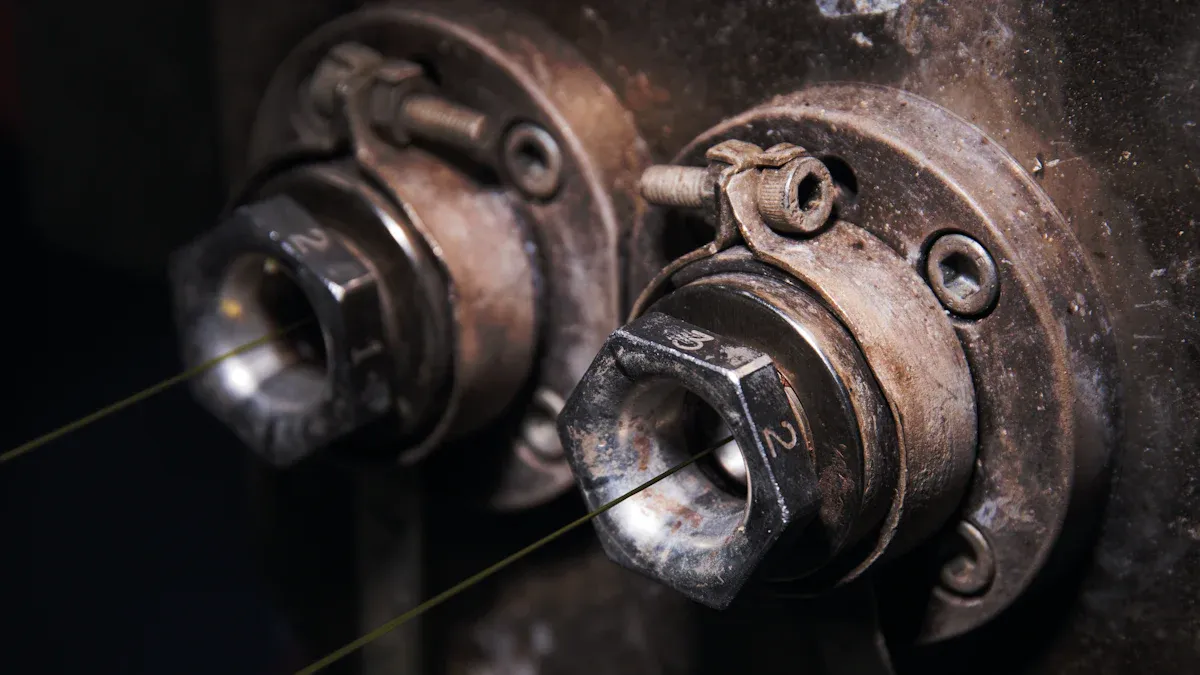
I always start my extrusion machine selection by examining the screw and barrel design. The geometry of the screw determines how efficiently the extruder melts, blander, and conveys material. I adjust the length-to-diameter (L/D) ratio to control residence time and mixing. A higher L/D ratio allows the material to melt and blend more thoroughly, which is essential for achieving uniform quality in the final product. I rely on barrier designs in the screw barrel to maintain melt stability and prevent degradation, especially when I process sensitive materials. Parallel twin screw and barrel designs play a critical role in extrusion speed, produktkvalitet, og energieffektivitet. I use zoning and precise temperature control to stabilize melt flow and avoid trapped gases, which improves density and consistency. The surface finish of the barrel and the geometry of the screw also influence energy efficiency and product consistency. I always match the screw design to the specific requirements of the application to maximize performance.
- Et højere L/D-forhold forbedrer blandingen og smelteensartethed, hvilket er afgørende for produkter af høj kvalitet.
- Barrieredesign hjælper med at opretholde smeltestabilitet og forhindre nedbrydning.
- Skruegeometri og cylinderoverfladefinish påvirker energieffektiviteten og produktets konsistens.
Materiale bevægelse og blanding
Jeg fokuserer på effektiv materialebevægelse og blanding for at sikre, at ekstruderingsprocessen forløber problemfrit. jeg bruger robuste pneumatiske eller mekaniske transportører at overføre råvarer hurtigt og med minimal vedligeholdelse. Avanceret mixerdesign garanterer grundig og ensartet blanding, som forhindrer variationer i færdige produkter. Jeg integrerer automatiserede kontroller med PLC-systemer til realtidsovervågning og receptstyring. Denne tilgang giver mig mulighed for at overskue produktionen problemfrit og justere parametre efter behov. Jeg vælger skalerbare konfigurationer til både små værksteder og store industrivirksomheder. Forbedrede støvkontrolfunktioner holder arbejdspladsen ren og sikker. Konsekvent, homogene blandinger reducerer kvalitetsudsving og forbedrer gennemløbet. Automatiserede systemer minimerer manuel håndtering, hvilket forkorter produktionscyklusser og sænker lønomkostningerne. Jeg prioriterer altid disse funktioner, når jeg evaluerer typer ekstruderingsmaskiner til nye applikationer.
| Feature | Beskrivelse |
|---|---|
| Effektiv materialeoverførsel | Hurtig, lav vedligeholdelses bevægelse af råvarer |
| Præcisionsblanding | Grundig, ensartet blanding for ensartet kvalitet |
| Automatiseret kontrol | Realtidsovervågning og opskriftsstyring |
| Skalerbare konfigurationer | Fleksible layouts til enhver produktionskapacitet |
| Forbedret støvkontrol | Renere, sikrere arbejdsplads |
| Forbedret produktkvalitet | Homogene blandinger, reducerede udsving |
| Øget gennemløb | Kortere produktionscyklusser, mindre manuel håndtering |
| Reduceret spild | Nøjagtig måling, lavere omkostninger |
| Lavere arbejdsomkostninger | Automatisering frigør personale til værdiskabende opgaver |
| Sikkert arbejdsmiljø | Lukkede ledninger og støvkontrol |
Proceskontrol og outputkvalitet
Jeg er afhængig af avanceret processtyringsteknologi for at opretholde høj outputkvalitet i ekstruderingsfremstilling. jeg vælger termoplast af høj kvalitet for at sikre, at de endelige produkter møder styrke, holdbarhed, og fleksibilitetskrav. Jeg overvåger ekstruderingsparametre nøje for at reducere uoverensstemmelser under produktionen. Dimensionsnøjagtighed er fortsat en topprioritet for mig, da det garanterer, at komponenterne passer til deres tilsigtede anvendelser. Jeg bruger overfladeinspektion til at opdage defekter som forvridning eller luftbobler, hvilket hjælper mig med at opretholde en ensartet produktkvalitet. Tidlig opdagelse af problemer reducerer spild og sparer produktionsomkostninger. Jeg sikrer altid, at min proces overholder lovgivningsmæssige standarder, which protects both my business and my customers. High-quality products enhance my brand reputation and increase customer satisfaction. Advanced monitoring systems allow me to increase production speed without sacrificing accuracy, which boosts overall efficiency in complete extrusion systems.
| Element/Advantage | Beskrivelse |
|---|---|
| Materialevalg | Ensures strength, holdbarhed, og fleksibilitet |
| Procesovervågning | Reduces discrepancies and maintains consistency |
| Dimensionsnøjagtighed | Guarantees proper fit for all applications |
| Overfladeinspektion | Identifies defects early for better quality |
| Konsekvent produktkvalitet | Every batch meets high standards |
| Affaldsreduktion | Saves material and production costs |
| Reguleringsoverholdelse | Meets legal and safety requirements |
| Kundetilfredshed | Builds reputation and loyalty |
| Process Efficiency | Increases speed while maintaining accuracy |
Tip: I recommend regular calibration and maintenance of all extrusion technology to sustain peak performance and consistent quality.
Comparing the Extrusion Process
Enkeltskrue vs. Twin-Screw Process
When I compare enkeltskruede og dobbeltskruede ekstrudere, I focus on how each system handles the extrusion process. The screw design shapes the way material moves and mixes. A single-screw extruder uses one helical screw inside a simple, cylindrisk tønde. I modsætning hertil, a twin-screw extruder features two intermeshing screws and a more complex, ofte segmenteret tønde. I see that temperature control in single-screw systems remains basic, while twin-screw machines offer advanced control with multiple heating and cooling zones. This difference impacts both throughput and energy efficiency.
| Aspekt | Enkeltskrue ekstruder | Dobbeltskrueekstruder |
|---|---|---|
| Skrue design | Enkelt skrueformet skrue | To indgribende skruer |
| Tøndestruktur | Enkel, cylindrisk | Mere kompleks, ofte segmenteret |
| Temperaturkontrol | Grundlæggende opvarmning/køling | Fremskreden, multi-zone |
| Udgangskapacitet | Moderat | Høj |
| Energiforbrug | Generelt højere | Mere effektiv |
| Fleksibilitet i gennemløb | Begrænset | Høj |
I rely on twin-screw extruders for higher output and better energy efficiency. When I need flexibility in throughput or advanced process control, I choose twin-screw systems. For straightforward applications, single-screw extruders still provide reliable performance.
Material Compatibility in the Extrusion Process
Materialekompatibilitet spiller en afgørende rolle i valg af ekstruderingsmaskine. Jeg matcher altid skruekonfigurationen til den type materiale, jeg planlægger at behandle. Enkeltskruede ekstrudere håndterer standard termoplast godt, men de kæmper med materialer, der kræver intensiv blanding eller har et højt fyldstofindhold. Dobbeltskrueekstrudere udmærker sig med specialblandinger, genbrugsplast, og reaktive materialer. Jeg bruger segmenterede skruer til at justere blanding og klipning til hver applikation.
Når jeg arbejder med komplette ekstruderingssystemer, Jeg overvejer, hvordan hvert skruedesign påvirker det endelige produkt. Ekstrudere med dobbeltskruer giver mig mulighed for at behandle et bredere udvalg af materialer, inklusive dem med tilsætningsstoffer eller følsomme egenskaber. Denne fleksibilitet understøtter flere typer ekstruderingsmaskiner og udvider rækken af mulige anvendelser.
Tip: I recommend evaluating the chemical and physical properties of your raw materials before choosing an extruder. This step ensures compatibility and reduces the risk of defects.
Produktkvalitet og konsistens
I know that the extrusion process directly impacts the quality of the finished product. Modern extrusion lines integrate automation and advanced control platforms. These systems analyze multiple variables at once, which helps me maintain consistent quality across every batch.
Quality consistency is a productivity multiplier. Advanced control platforms analyze patterns across multiple variables simultaneously, ensuring that product quality is maintained throughout the extrusion process.
I monitor key factors such as stable melt pressure, outputhastighed, and surface finish. Stable melt pressure prevents warping and dimensional drift. Higher and more stable output reduces scrap rates and downtime. Better surface finish and precise dimensional control enhance the impact on the quality of the finished product.
| Nøglefaktorer | Impact on Quality and Consistency |
|---|---|
| Stable melt pressure | Prevents dimensions from drifting or warping |
| Higher and more stable output | Reduces scrap rates and downtime |
| Better surface finish | Enhances overall product quality |
| Dimensionskontrol | Ensures precision in final product specifications |
| Faster ROI | Improves profitability for manufacturers |
Når man sammenligner dobbeltskruede vs enkeltskruede ekstrudere, I see that twin-screw systems deliver better consistency and lower operational cost. I achieve faster ROI and improved performance by investing in advanced extrusion technology. I always prioritize process monitoring and automation to ensure high quality and efficiency in production.
- Higher and more stable output
- Lower scrap and downtime
- Better surface finish and dimensional control
- Reduced operational cost
- Faster ROI
I rely on these strategies to maximize the benefits of extrusion and deliver products that meet strict manufacturing standards.
Performance Comparison Table
Gennemløb og effektivitet
I always evaluate throughput and efficiency when I compare types of extrusion machines. Throughput measures how much material the extruder processes in a given time. Efficiency reflects how well the screw design converts raw material into finished products with minimal waste and energy use. I see that single-screw extruders often deliver steady throughput for standard polymers. Ekstrudere med to skruer, with their advanced screw geometry, handle higher output and maintain better energy efficiency, especially for complex blends.
| Ekstruder type | Gennemløb (kg/t) | Energieffektivitet | Bedste anvendelsestilfælde |
|---|---|---|---|
| Enkelt-skrue | 50–500 | Moderat | Høj lydstyrke, simple polymers |
| Twin-Screw | 100–1000+ | Høj | Complex blends, specialty jobs |
| Ram ekstruder | 10–100 | Lav-Moderat | PTFE, keramik, specialitet |
| Co-ekstruderingssystemer | Varierer | Høj | Multi-layered profiles |
I always match the screw configuration to the material and production requirements. This approach ensures the process delivers consistent quality and meets manufacturing goals. I rely on complete extrusion systems to maximize throughput and efficiency for every application.
Tip: I recommend monitoring energy consumption and output rates regularly. This practice helps optimize extrusion machine selection and reduces operational costs.
Maintenance and Reliability
I prioritize maintenance and reliability when I select an extruder. The screw and barrel experience constant wear from abrasive materials and high temperatures. I schedule routine inspections and replace worn components to prevent unexpected downtime. Single-screw extruders require less maintenance due to their simple design. Ekstrudere med to skruer, with more moving parts and segmented screws, need more frequent checks but offer greater flexibility.
| Ekstruder type | Vedligeholdelsesbehov | Reliability Level | Fælles problemer |
|---|---|---|---|
| Enkelt-skrue | Lav-Moderat | Høj | Occasional screw wear |
| Twin-Screw | Moderat – Høj | Høj | Segment wear, seal failure |
| Ram ekstruder | Moderat | Moderat | Hydraulic leaks, die wear |
| Co-ekstruderingssystemer | Høj (multi-screw) | Høj | Synchronization, screw wear |
I use advanced monitoring systems to track screw wear and process stability. This strategy improves reliability and extends the life of my extrusion technology. I always keep spare screws and barrels on hand to minimize downtime during maintenance.
Product Complexity and Flexibility
I value design flexibility i ekstrudering. The ability to customize the screw and die allows me to create complex profiles for a wide range of applications. I use extrusion to manufacture everything from simple plastic tubing to intricate window frames. I can add reinforcements or special features within the continuous material, which expands my product offerings.
| Aspekt | Beskrivelse |
|---|---|
| Designfleksibilitet | Extrusion allows for significant design flexibility through die customization, enabling complex profiles. |
| Ansøgninger | Suitable for various applications, including intricate window frames and simple plastic tubing. |
| Tilpasning | Manufacturers can include reinforcements or additional features within the continuous material. |
- In MedTech, I must achieve tight tolerances for medical devices.
- I ensure biocompatibility for all medical extrusion products.
- I monitor wall thickness closely, since it affects flow rates and structural strength.
I select the screw configuration and extrusion machine based on the complexity of the design and the required tolerances. This approach guarantees high quality and supports advanced manufacturing needs.
Note: I recommend consulting with extrusion experts when planning new product designs. Their experience helps avoid costly mistakes and ensures the right screw and process configuration.
Application Suitability in Manufacturing
High-Volume Manufacturing
I always start my extrusion machine selection by considering the demands of high-volume manufacturing. When I need to produce thousands of units per day, I rely on single-screw extruders. These machines deliver steady throughput and maintain consistent quality. The screw design in single-screw extruders allows me to process standard polymers efficiently. I monitor the process closely to ensure uniform melt and minimize defects. I select the right screw diameter and length to match the production requirements. This approach helps me achieve high efficiency and reduce waste. I use automated controls to track output and maintain quality standards. High-volume applications benefit from robust types of extrusion machines that can operate continuously with minimal downtime. I always keep spare screws and barrels ready to avoid interruptions in production.
Tip: I recommend scheduling regular maintenance for extruders used in high-volume manufacturing. This practice extends the life of the screw and ensures reliable performance.
Complex Product Manufacturing
When I manufacture complex or multi-component products, I turn to advanced extrusion technology. Twin-screw extruders give me greater control over mixing and material distribution. I use segmented screws to adjust shear and optimize the process for each application. Co-extrusion technology enables me to combine different polymers into multi-layer films and pipes. This method improves barrier properties and enhances strength, fleksibilitet, og kemisk resistens.
| Teknologi | Fordele |
|---|---|
| Co-ekstrudering | Enables the creation of multi-layer films and pipes with improved barrier properties, combining different polymers for strength, fleksibilitet, og kemisk resistens. |
I select the screw configuration based on the complexity of the product. For intricate designs, I rely on precise tooling and advanced process monitoring. I always test the extruder setup before full-scale production to ensure quality and performance. Complex applications require careful extrusion machine selection and attention to detail.
Specialty Materials and Customization
I often work with specialty materials that demand custom solutions. I use advanced shaping processes, such as sheet extrusion and thermoforming, to control material characteristics. Sheet extrusion gives me the ability to manage thickness and material distribution with high accuracy. Co-extrusion capabilities allow me to create multi-layer constructions that enhance material properties. I integrate downstream shaping processes to ensure consistent performance in finished components. Engineering services help me optimize component designs and select the best materials for specific applications.
- Advanced shaping processes, such as sheet extrusion and thermoforming, allow for precise control over material characteristics.
- Sheet extrusion provides a foundation for custom material solutions, enabling thickness control and material distribution accuracy.
- Co-extrusion capabilities facilitate the creation of multi-layer constructions, enhancing material properties.
- Integration with downstream shaping processes ensures consistent performance characteristics in finished components.
- Engineering services optimize component designs and material selection, ensuring suitability for specific applications.
I always match the screw design to the requirements of specialty materials. Customization in extrusion depends on selecting the right extruder and process parameters. I monitor quality at every stage to deliver products that meet strict standards. Specialty applications benefit from flexible types of extrusion machines and expert guidance.
Note: I recommend consulting with extrusion specialists when working with new materials or custom designs. Their expertise helps achieve the desired quality and performance.
Selection Criteria for Extrusion Systems
Product Design and Complexity
I always start my extrusion machine selection by analyzing the product design and complexity. The geometry of the profile influences the choice of extruder and screw configuration. Complex shapes increase tooling costs and create production challenges. I simplify profile geometry whenever possible to enhance material flow and reduce defects. Smooth transitions in the design prevent disruptions in material flow, which is crucial for consistent extrusion quality. I select the right material early in the process because material choice affects both the properties of the part and the ease of extrusion. This decision impacts manufacturability and overall performance.
- Simplifying profile geometry lowers tooling costs and reduces production challenges.
- Designing for material flow ensures consistent extrusion quality and minimizes defects.
- Choosing the right material early improves manufacturability and product performance.
I match the screw design to the complexity of the product. For intricate profiles, I use advanced screw configurations that optimize mixing and material transport. I rely on precise tooling and process monitoring to maintain high quality. When I work with complex applications, I consult with extrusion technology experts to avoid costly mistakes and ensure the best results.
Tip: I recommend reviewing the profile geometry and material flow before finalizing the extrusion machine selection. This step helps prevent production issues and supports efficient manufacturing.
Materialeegenskaber
Material properties play a critical role in selecting the right extruder and screw configuration. I identify application requirements such as temperature resistance, UV eksponering, and impact durability. I consider mechanical properties like flexibility, hårdhed, and tensile strength for the intended use. Environmental conditions influence my material choice, especially when I need weathering resistance or flexibility in cold environments. I evaluate aesthetic and finish requirements, inklusive farve, glans, og overfladestruktur, based on project needs. Regulatory and compliance needs guide my selection to ensure materials meet industry-specific standards and certifications.
- Application requirements determine the need for temperature resistance, UV eksponering, and impact durability.
- Mechanical properties such as flexibility, hårdhed, and tensile strength affect the choice of extruder and screw.
- Environmental conditions require materials that withstand weathering or remain flexible in cold climates.
- Aesthetic and finish requirements influence color, glans, og overfladestruktur.
- Regulatory and compliance needs ensure materials meet industry standards.
I select the screw design based on the material’s properties. For heat-sensitive materials, I use screws with gentle mixing zones and precise temperature control. When processing tough or abrasive compounds, I choose robust screw geometries that withstand wear and maintain efficiency. I always test materials in pilot runs to verify compatibility with the extruder and ensure consistent quality.
Note: I recommend consulting material datasheets and industry standards before choosing an extruder. This practice helps match material properties to the extrusion process and supports reliable performance.
Production Volume and Scale
Production volume and scale influence the cost-effectiveness of extrusion machine selection. Higher production volumes reduce unit costs because tooling expenses are spread over more parts. In the prototype stage, tooling costs are high compared to the quantity produced. In mass production, die costs are amortized over larger volumes, leading to lower costs per unit. F.eks, a die costing $2,000 with a lifetime of 40,000 kg results in a cost of $0.05 per kg when amortized.
- Higher production volumes lower unit costs by spreading tooling expenses.
- Prototype stages have high tooling costs relative to the number of parts produced.
- Mass production allows die costs to be distributed over larger volumes, reducing per-unit costs.
- Example: A die costing $2,000 with a lifetime of 40,000 kg results in a cost of $0.05 per kg.
I select the extruder and screw configuration based on the expected production volume. For high-volume manufacturing, I use robust types of extrusion machines that deliver steady throughput and maintain efficiency. In low-volume or prototype applications, I prioritize flexibility and rapid changeover. I monitor production rates and adjust screw parameters to optimize output and quality.
Tip: I recommend calculating the amortized tooling cost before committing to a production scale. This step helps determine the most cost-effective extrusion technology and supports long-term manufacturing goals.
Technical and Budget Considerations
I always approach extrusion machine selection with a clear focus on technical requirements and budget constraints. My experience tells me that investing in advanced extrusion technology demands careful planning. I evaluate every aspect of the system, from screw design to process control, to ensure cost-effectiveness and reliable performance.
I start by analyzing the technical specifications of the extruder. I look at screw geometry, tøndens længde, and compatibility with different types of extrusion machines. I select a screw that matches the material properties and the complexity of the applications. I check if the extruder can handle the desired throughput and maintain consistent quality. I also assess the integration of feeders, temperaturregulatorer, og downstream udstyr. System integration plays a crucial role in maximizing efficiency and avoiding bottlenecks in production.
Budget considerations influence every decision I make. I break down the costs into several categories to understand the financial impact. I use the following table to guide my investment strategy:
| Budget Consideration | Beskrivelse | Financial Impact / Benefit Example |
|---|---|---|
| Energieffektivitet | Reducing energy consumption by upgrading control systems or screws | 33% energy reduction saves nearly $100,000 annually on $288,000 energy cost |
| Scrap Reduction | Lowering scrap rate from 15% til 5% through data acquisition and process control | Saves $200,000 monthly or $2.4 million yearly in materials, arbejdskraft, and energy costs |
| Throughput Increase | Upgrading to twin-screw extruder increases throughput by 30% | Generates $600,000 additional monthly revenue with >50% incremental profit margin |
| Maintenance Cost Reduction | Predictive maintenance and condition monitoring reduce emergency repairs and downtime | Maintenance costs drop 20-30%, equipment availability increases |
| System Integration | Budgeting for compatible feeders, temperaturregulatorer, og downstream udstyr | Partial upgrades capture only ~40% of potential benefits |
| Operatøruddannelse | Training on material characteristics, maskineri, instrumentering, og kontroller | Essential to fully realize technology benefits; lack wastes investment |
| Data Acquisition Infrastructure | Adequate sensors and analytics software needed for optimization | Insufficient infrastructure limits optimization; too many sensors without analytics causes overload |
| Downstream Constraints | Ensuring cutting, emballage, and inspection keep pace with increased extruder output | Bottlenecks reduce overall system benefit |
I prioritize energy efficiency when selecting an extruder. Upgrading control systems or optimizing screw design can reduce energy consumption by up to 33%. This improvement saves nearly $100,000 each year on a typical $288,000 energy bill. I also focus on scrap reduction. By implementing advanced process control and data acquisition, I lower scrap rates from 15% til 5%. This change saves $200,000 every month in materials, arbejdskraft, and energy costs.
Increasing throughput is another key goal. Upgrading to a twin-screw extruder boosts output by 30%. This increase generates $600,000 in additional monthly revenue, with more than a 50% incremental profit margin. I invest in predictive maintenance and condition monitoring to reduce emergency repairs and downtime. Maintenance costs drop by 20-30%, and equipment availability improves.
System integration is essential for maximizing the benefits of extrusion technology. I budget for compatible feeders, temperaturregulatorer, og downstream udstyr. Partial upgrades capture only about 40% of the potential benefits. Operator training is critical. I ensure my team understands material characteristics, maskineri, instrumentering, og kontroller. Without proper training, the investment in advanced extrusion technology goes to waste.
I invest in data acquisition infrastructure. Adequate sensors and analytics software optimize the process. Insufficient infrastructure limits optimization, while too many sensors without analytics cause information overload. I address downstream constraints by ensuring cutting, emballage, and inspection keep pace with increased extruder output. Bottlenecks in these areas reduce the overall benefit of the system.
I always balance technical requirements with budget limitations. I select a screw that delivers high quality and efficiency without exceeding my financial resources. I plan for future upgrades and modular expansion to support changing production needs. I monitor every aspect of the extrusion process to maintain cost-effectiveness and reliable performance.
Tip: I recommend creating a detailed budget plan before investing in new extrusion technology. Include energy costs, opretholdelse, operatøruddannelse, and system integration. This approach ensures that the extruder delivers maximum value and supports long-term manufacturing goals.
Actionable Insights for Manufacturers
Matching System to Application
I always match the extrusion system to the specific application. jeg optimize material use to balance strength and lightweight design. I define critical dimensional tolerances early, which ensures parts fit and function as intended. I design for manufacturability, making sure shapes can be extruded consistently and cost-effectively. I select aluminum alloys based on application needs, such as strength and corrosion resistance. I simplify designs to reduce costs, avoiding unnecessary complexity in profiles. I prototype and test early, which helps me identify potential challenges before full production. These steps help me achieve high quality and reliable performance in every extrusion process.
- Optimize material use for strength and lightweight design.
- Define critical dimensional tolerances early.
- Design for manufacturability.
- Select appropriate aluminum alloys for application needs.
- Simplify designs to reduce costs.
- Prototype and test early.
I always consider the key components of an extruder, such as screw geometry and barrel design, to ensure the system meets production requirements. I review different types of extruder machines to find the best fit for my applications in plastekstrudering. This approach supports scalability and maintains quality control throughout manufacturing.
Common Selection Mistakes
I have seen many manufacturers make mistakes during extrusion machine selection. Inadequate material blending often leads to product imperfections and increased costs from reprocessing. Outdated or incompatible control systems cause integration issues and inefficiencies. Inconsistent feed rates disrupt the extrusion process, resulting in product variabilities and higher scrap rates. Neglecting preventive maintenance allows minor mechanical issues to escalate into major production problems, affecting revenue. Ignoring operator training leads to misconfigurations and missed optimization opportunities.
- Inadequate material blending increases costs and reduces quality.
- Outdated control systems cause inefficiencies.
- Inconsistent feed rates disrupt the extrusion process.
- Neglecting preventive maintenance leads to major production problems.
- Ignoring operator training results in missed optimization.
I always monitor screw wear and maintain the extruder regularly. I invest in operator training to maximize efficiency and quality. I avoid these mistakes by focusing on process stability and performance.
Future Trends in Extrusion Technology
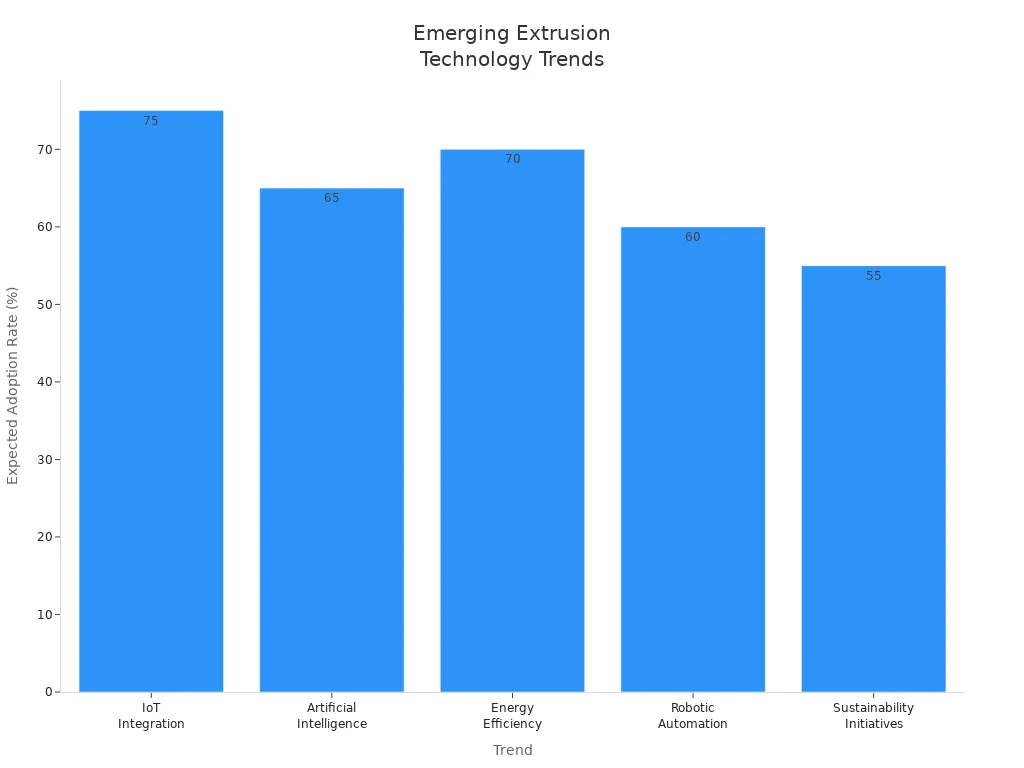
I see rapid changes in extrusion technology shaping the future of manufacturing. IoT integration allows real-time monitoring and analytics, forbedre effektiviteten. Artificial intelligence supports predictive maintenance and optimization, which boosts performance. Energy efficiency is a growing focus, with manufacturers seeking ways to reduce consumption in the extrusion process. Robotic automation streamlines material handling and quality control. Sustainability initiatives drive the use of recycled materials and eco-friendly processes.
| Trend | Beskrivelse | Indvirkning på effektivitet | Forventet adoptionsrate (%) |
|---|---|---|---|
| IoT-integration | Realtidsovervågning og analyser | Høj | 75% |
| Kunstig intelligens | Forudsigende vedligeholdelse og optimering | Meget høj | 65% |
| Energieffektivitet | Reducing energy consumption | Medium | 70% |
| Robotautomatisering | Materialehåndtering og kvalitetskontrol | Høj | 60% |
| Bæredygtighedsinitiativer | Genbrugsmaterialer og miljøvenlige processer | Medium | 55% |
I notice advancements in material compatibility, especially with bioplastics, are transforming the extrusion industry. Many manufacturers now prioritize flexibility in equipment design, with modular systems allowing easy upgrades and modifications. Sustainability is essential, with most manufacturers focusing on energy-efficient equipment and waste reduction strategies. Smart extrusion machines reduce downtime by 20%, which improves overall efficiency and quality control. I always stay updated on these trends to maintain high performance and support new applications in plastic extrusion.
Tip: I recommend reviewing the overview of extruder machines in manufacturing regularly. Staying informed about new types of extrusion machines and screw designs helps me adapt to changing production needs and maintain scalability.
I recognize that each extrusion system offers unique advantages and limitations. My experience shows that single-screw extruders excel in high-volume production, while twin-screw systems provide superior mixing and flexibility. Ram and co-extrusion machines support specialty applications. I always use comparison tables and selection criteria to evaluate:
- Technical capabilities and long-term reliability
- Customer service and design assistance
- Quality standards and energy efficiency
I recommend manufacturers understand their application needs and consult extrusion experts for optimal results.
FAQ
Hvad er hovedforskellen mellem enkeltskruede og dobbeltskruede ekstrudere?
I see that single-screw extruders use one rotating screw for basic mixing. Twin-screw extruders use two screws for advanced mixing and better control. I choose twin-screw systems for complex materials and higher flexibility.
How do I decide which extrusion system fits my application?
I start by reviewing my material type, produktionsvolumen, and product complexity. I match these needs to the strengths of each system. I consult with experts if I face unique requirements.
Can I process recycled materials with extrusion systems?
I process recycled materials using twin-screw extruders. These machines handle variable feedstocks and additives better than single-screw systems. I monitor quality closely to ensure consistent results.
How often should I perform maintenance on my extruder?
I schedule routine inspections every month. I check for screw wear, barrel condition, and control system performance. Regular maintenance prevents downtime and extends equipment life.
What are the most common extrusion defects I encounter?
I often see surface roughness, dimensionsdrift, and melt fractures. I address these by adjusting temperature, skruehastighed, and material feed. I use process monitoring to catch issues early.
Is co-extrusion suitable for all materials?
I use co-extrusion mainly for thermoplastics. Some materials may not bond well in multi-layer profiles. I test material compatibility before starting production.
How does automation improve extrusion quality?
I rely on automation for real-time monitoring and precise control. Automated systems reduce human error, maintain consistent output, and improve overall product quality.
What safety measures do I follow during extrusion?
I wear protective gear and follow lockout procedures. I keep the work area clean and check emergency stops regularly. I train my team on safe operation and emergency response.