

Com s'apilen els diferents sistemes d'extrusió per a la fabricació
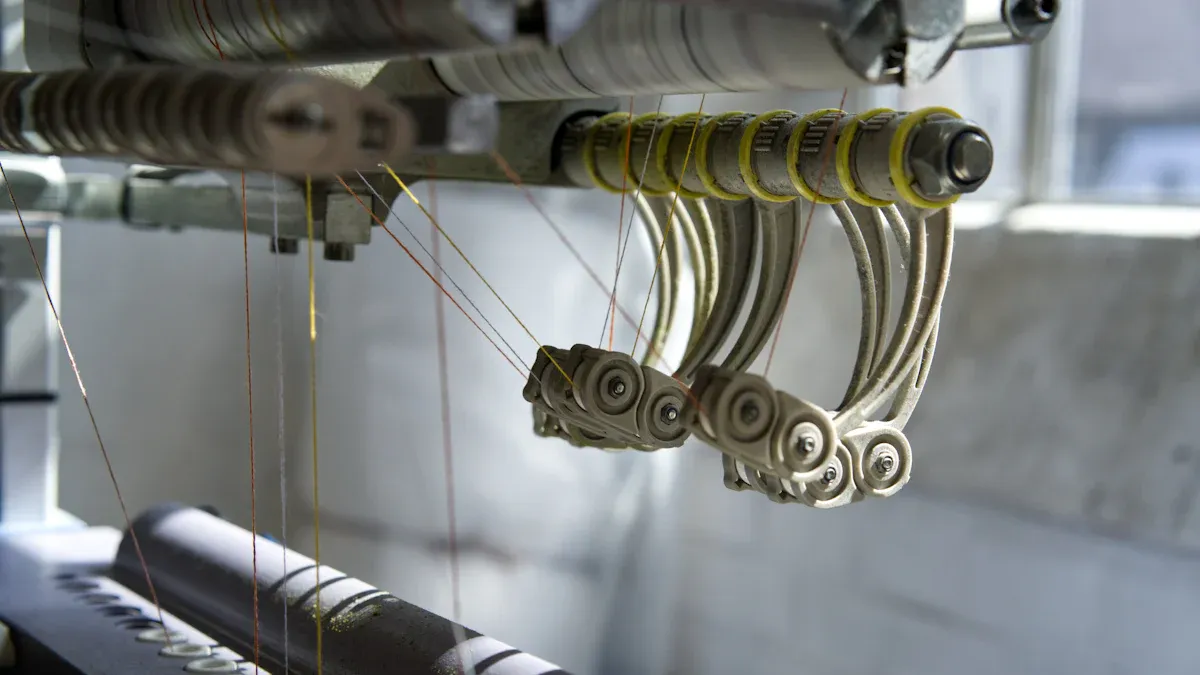
He vist que l'elecció del sistema d'extrusió configura tot el procés de fabricació. La majoria dels fabricants utilitzen sistemes d'un sol cargol, que aguanten a 62% quota de mercat, mentre que els sistemes de doble cargol compten 38%.
| Tipus de sistema d'extrusió | Percentatge de quota de mercat |
|---|---|
| Un sol cargol | 62% |
| Doble cargol | 38% |
La selecció entre els tipus de cargol afecta l'eficiència, qualitat del producte, i compatibilitat de materials. Quan faig coincidir la tecnologia d'extrusió amb els objectius de fabricació, Noto millores en la rendibilitat, versatilitat de disseny, i sostenibilitat.
| Factor | Impacte en l'eficiència de fabricació | Impacte en la qualitat del producte |
|---|---|---|
| Paràmetres controlats | Manté una qualitat uniforme del producte | Aconsegueix toleràncies micròmetres |
Confio en els sistemes d'extrusió complets per oferir resultats consistents i un rendiment precís del cargol.
Aportacions clau
- Trieu el sistema d'extrusió adequat en funció dels vostres objectius de fabricació i propietats del material per garantir un rendiment òptim.
- Les extrusores d'un sol cargol són ideals per a la producció de grans volums de materials senzills, mentre que els sistemes de doble cargol excel·lent en la barreja de materials complexos.
- El manteniment i la supervisió regular dels sistemes d'extrusió eviten temps d'inactivitat i milloren l'eficiència, garantint una qualitat constant del producte.
- Tingueu en compte el diàmetre del cargol i la relació L/D quan seleccioneu una extrusora, ja que aquests factors afecten el rendiment i l'eficiència de la barreja.
- Utilitzeu la coextrusió per crear productes de diverses capes que combinen diferents materials, millorant la funcionalitat i el rendiment.
- Avaluar la compatibilitat dels materials amb el sistema d'extrusió escollit per evitar defectes i garantir una producció d'alta qualitat.
- Manteniu-vos informat sobre les tendències emergents en tecnologia d'extrusió, com ara IoT i IA, per millorar l'eficiència i adaptar-se a les necessitats de producció canviants.
- Creeu una llista de comprovació dels factors clau abans de seleccionar un màquina d'extrusió per evitar errors costosos i garantir que el sistema compleix els requisits de l'aplicació.
Escollir el sistema d'extrusió adequat per a la fabricació
Factors clau en la selecció del sistema
Mai trobo un universal “millor” sistema d'extrusió. La meva experiència em diu que l'elecció ideal depèn dels objectius de fabricació, propietats dels materials, i requisits del producte. Quan selecciono un sistema d'extrusió, Sempre faig coincidir les seves capacitats amb l'aplicació prevista. Aquest enfocament garanteix que el procés d'extrusió ofereix una qualitat constant i un rendiment òptim.
Considero diversos factors crítics abans de seleccionar una màquina d'extrusió. Utilitzo la taula següent per guiar la meva decisió:
| Factor | Descripció |
|---|---|
| Objectiu de recerca | Propòsit de la màquina (educació, desenvolupament material, o producció pilot comercial) |
| Tipus de material | Tipus de polímers a processar (sensible a la calor, volàtil, o reactiu) |
| Capacitat de sortida requerida | Capacitat de rendiment (grams o quilograms per hora) |
| Requisits avançats del procés | Necessitat d'injecció de gas, desgasificació al buit, o capacitat d'extrusió reactiva |
| Pressupost i Espai de Laboratori | Consideració de l'expansió modular per a futures actualitzacions |
| Necessitats futures d'ampliació | Compatibilitat amb mòduls d'extrusió industrial per augmentar la producció |
Sempre presto atenció al diàmetre del cargol i la relació L/D. Aquests paràmetres determinen la capacitat de rendiment i l'eficiència de mescla. Selecciono una extrusora amb la capacitat de sortida adequada, que pot anar des de 0.25 kg/h a 150 kg/h segons model. El disseny modular em permet substituir components ràpidament, que dóna flexibilitat per a la recerca i el desenvolupament. Confio en sistemes de control avançats, com ara PLC i HMI, per aconseguir un control precís i traçabilitat de les dades.
Quan avaluo tipus de màquines d'extrusió, Considero la complexitat del perfil i les toleràncies requerides. Els dissenys complexos requereixen eines precises i poden augmentar els costos. També miro la quantitat de la comanda. Els volums més alts redueixen el cost per unitat perquè els costos de configuració es distribueixen entre més unitats. Acabats i operacions secundàries, com anoditzat o mecanitzat CNC, valor afegit i cost.
Consell: Recomano fer una llista de comprovació d'aquests factors abans d'iniciar el procés de selecció de la màquina d'extrusió. Aquesta pràctica ajuda a evitar errors costosos i garanteix que el sistema coincideixi amb les aplicacions previstes.
Impacte en l'eficiència de fabricació
Noto que el sistema d'extrusió que trio afecta directament l'eficiència de fabricació. El disseny del cargol, capacitat de mescla, i la tecnologia d'extrusió tenen un paper important en la fluïdesa del procés. Per exemple, a extrusora d'un sol cargol sovint funciona bé per a polímers simples i producció de gran volum. Les extrusores de doble cargol gestionen materials complexos i aplicacions avançades, com ara l'extrusió reactiva o les barreges especials.
He vist que l'alta viscositat i el contingut sòlid dels materials energètics poden provocar obstruccions, extrusió inestable, i desgast de broquets. Aquests problemes redueixen l'eficiència i comprometen la seguretat. Afronto aquests reptes optimitzant el disseny del sistema de pastat. La uniformitat de mescla millorada i la precisió d'extrusió milloren tant la seguretat com l'eficiència.
Utilitzo un sistema d'extrusió de doble cargol de dues etapes quan necessito una major estabilitat i adaptabilitat. Les simulacions mostren que aquest disseny millora les característiques del flux i manté una sortida consistent. Sempre controlo el procés d'extrusió per garantir una qualitat uniforme i minimitzar el temps d'inactivitat.
| Tipus d'evidència | Descripció |
|---|---|
| Reptes en la fabricació additiva | L'alta viscositat i el contingut sòlid de materials energètics condueixen a problemes com l'obstrucció, extrusió inestable, i desgast de broquets, afectant l'eficiència i la seguretat. |
| Rendiment del sistema d'amassatge | El disseny del sistema d'amassatge afecta la uniformitat de la barreja de materials i la precisió d'extrusió, amb optimitzacions específiques proposades per millorar la seguretat i l'eficiència. |
| Disseny del sistema d'extrusió | Un sistema d'extrusió de doble cargol de dues etapes està dissenyat per millorar l'estabilitat i l'adaptabilitat en el procés d'extrusió, amb simulacions que revelen les característiques de flux de diferents sistemes. |
Sempre faig coincidir el sistema d'extrusió amb els requisits de producció. Aquesta pràctica garanteix que l'extrusora ofereixi la qualitat i el rendiment desitjats. Selecciono la configuració del cargol en funció del tipus de material i de la complexitat de l'aplicació. Confio en la tecnologia d'extrusió avançada per maximitzar l'eficiència i mantenir alts estàndards de qualitat del producte.
Nota: Recomano el manteniment regular i la supervisió dels processos per mantenir l'eficiència màxima i evitar temps d'inactivitat inesperats.
Tipus de sistemes complets d'extrusió
Quan avaluo sistemes complets d'extrusió per a la fabricació, Sempre començo per identificar el principal tipus de màquines d'extrusió. Les opcions més habituals inclouen màquines d'extrusió d'un sol cargol, màquines d'extrusió de doble cargol, i màquines d'extrusió de ram. Cada sistema ofereix fortaleses i limitacions úniques, així que em concentro a fer coincidir la tecnologia adequada amb l'aplicació.
| Tipus de màquina d'extrusió |
|---|
| Màquines d'extrusió d'un sol cargol |
| Màquines d'extrusió de doble cargol |
| Màquines d'extrusió Ram |
Extrusió d'un sol cargol
Sovint faig servir una extrusora d'un sol cargol per a processos d'extrusió senzills. Aquesta màquina compta amb un cargol giratori dins d'un canó escalfat. El cargol empeny el material cap endavant, el fon, i li dóna forma mitjançant un encuny. Confio en aquest sistema per a la producció de grans volums de termoplàstics, productes alimentaris, i compostos de cautxú. La simplicitat del disseny fa que sigui fàcil d'operar i mantenir.
| Indústria | Descripció de l'aplicació | Previsions de creixement del mercat |
|---|---|---|
| Plàstics | Fundir i formar termoplàstics, impulsat per l'augment de l'ús de PE i PP. | CAGR d'aproximadament 4-5% a través 2030 |
| Processament d'aliments | Produir aliments processats com aperitius i cereals. | Mercat per arribar $75 mil milions per 2026 |
| Composició de cautxú | Mescla i conformació de cautxú per a pneumàtics i peces d'automòbil. | La producció de pneumàtics a superar 2 mil milions d'unitats per 2025 |
| Biomèdica | Producció de biopolímers per a envasos i dispositius mèdics. | Mercat emergent amb nova tecnologia d'extrusió |
No obstant això, Jo reconec el limitacions de l'extrusió d'un sol cargol. Aconseguir una barreja uniforme pot ser difícil, sobretot quan afegeixo farcits o additius. La consistència de la pressió sovint varia amb els canvis de matèria primera, i els materials d'alta viscositat poden no fluir bé, conduint a defectes. Aquests reptes guien la selecció de la meva màquina d'extrusió quan necessito una qualitat més alta o un processament més complex.
Consell: Per senzill, aplicacions de gran volum, Recomano començar amb una extrusora d'un sol cargol. Per a mescla avançada o materials especials, considerar altres opcions.
Extrusió de doble cargol
Quan necessito un processament avançat, Em giro a extrusora de doble cargol tecnologia. Aquest sistema utilitza dos cargols que giren junts dins del canó. Els cargols poden encaixar o anar paral·lels, segons el disseny. Trobo que les extrusores de doble cargol ofereixen una eficiència de mescla superior, millor plastificació per a materials d'alta viscositat, i un control millorat de la temperatura i la pressió. Aquestes característiques milloren la qualitat del producte i la consistència del procés.
L'extrusió de doble cargol també em permet realitzar múltiples passos de processament en una màquina. Puc barrejar, fondre, ventilació, i fins i tot reaccionar materials durant una sola passada. Aquesta flexibilitat redueix els residus i accelera la producció. Quan es comparen extrusores de cargol doble amb extrusores d'un sol cargol, Veig un retorn de la inversió més ràpid i resultats més uniformes amb els sistemes de doble cargol, especialment per a mescles complexes o plàstics reciclats.
Subtipus de doble cargol
Sempre considero els diferents tipus de màquines extrusores dins de la categoria de doble cargol. La configuració del cargol afecta el rendiment, eficiència, i el ventall d'aplicacions.
Entrellaçat
Les extrusores de doble cargol entrellaçades compten amb cargols que se superposen i s'uneixen. Aquest disseny ofereix transport de material precís i altes forces de tall. Utilitzo sistemes d'entrellaçat per millorar la combinació i la compatibilitat, sobretot quan necessito dispersar additius o farcits de manera uniforme.
No entrellaçat
Les extrusores de doble cargol que no s'entrellacen tenen cargols que giren sense solapar-se. Aquesta configuració ofereix una barreja més suau i menys cisalla. Trio dissenys que no s'entrellacen per a materials sensibles que requereixen una tensió mecànica mínima.
Co-rotació
Les extrusores de doble cargol co-rotatius tenen cargols que giren en la mateixa direcció. Aquest subtipus destaca per combinar eficiència i transport de material. Utilitzo sistemes co-rotatius per a l'extrusió reactiva, desvolatilització, i composició de polímers d'alt rendiment. No obstant això, altes velocitats de cisalla poden degradar materials sensibles a la calor, així que vigilo de prop el disseny i la refrigeració del cargol.
| Subtipus | Capacitats de processament i avantatges | Limitacions i consideracions | Millors aplicacions |
|---|---|---|---|
| Extrusora de doble cargol co-rotativa | Alta eficiència de mescla, adequat per a l'extrusió reactiva, altes velocitats de cisalla | Risc de degradació del material, requereix un disseny de cargol precís | Composició de polímers, nanocomposites, fluxos de treball del laboratori a la producció |
Contra-rotació
Les extrusores de doble cargol de rotació inversa disposen de cargols que giren en direccions oposades. Aquesta configuració genera forces de tall més baixes, que protegeix els materials fràgils. Confio en sistemes contra-rotatius per a la ceràmica, biopolímers, i formulacions farmacèutiques. El disseny també proporciona una bona acumulació de pressió i un segellat efectiu, encara que la intensitat de mescla és menor que amb els sistemes co-rotatius.
| Subtipus | Capacitats de processament i avantatges | Limitacions i consideracions | Millors aplicacions |
|---|---|---|---|
| Extrusora de doble cargol giratòria en contra | Menys forces de tall, bona acumulació de pressió, segellat efectiu | Menor intensitat de mescla, disseny de segellat i coixinet més complex | Ceràmica, biopolímers, productes farmacèutics |
Quan selecciono un sistema d'extrusió complet, Sempre faig coincidir el tipus de cargol i la configuració amb els requisits del material i del procés. Aquest enfocament garanteix una alta qualitat, eficiència, i un rendiment fiable en totes les aplicacions.
Extrusió de Ram
Sovint trio l'extrusió de ram quan necessito processar materials que requereixen alta pressió i conformació precisa. Aquest mètode utilitza un ariet hidràulic per empènyer el material a través d'un barril escalfat i morir, en lloc de confiar en un cargol giratori. Trobo que les extrusores de ram són especialment útils per formar productes a partir de plàstics termoestables, ceràmica, i PTFE. El procés em permet crear varetes, tubs, i perfils amb dimensions coherents.
L'extrusió de ram destaca entre els tipus de màquines d'extrusió perquè maneja materials que les extrusores de cargol tradicionals no poden processar de manera eficient.. Utilitzo aquesta tecnologia a les indústries com els plàstics, menjar, i productes farmacèutics. Per exemple, Produeixo aperitius i cereals amb formes úniques, i fabrique pastilles i càpsules amb especificacions exactes.
He notat diversos avantatges i reptes en utilitzar extrusores de ram:
- Les extrusores Ram excel·lent en la producció de productes d'alta qualitat a partir de materials difícils de processar.
- Confio en ells per a aplicacions en què la tecnologia d'extrusió de cargol es queda curta, com ara PTFE i perfils ceràmics.
- El procés ofereix una qualitat constant i una precisió dimensional.
- Els alts costos operatius poden afectar l'eficiència i el rendiment general.
- Les estrictes regulacions en la fabricació de plàstics requereixen un control acurat del procés.
- La competència dels sistemes d'extrusió alternatius m'empeny a optimitzar la selecció de la meva màquina d'extrusió.
Sempre sospeso aquests factors abans de triar l'extrusió de ram per a sistemes complets d'extrusió. Superviso el procés de prop per mantenir la qualitat i l'eficiència, especialment quan es treballa amb materials especials.
Co-extrusió
La coextrusió em permet combinar diversos materials en un sol producte, creant perfils multicapa amb propietats millorades. Utilitzo aquesta tecnologia d'extrusió per integrar diferents termoplàstics, cada capa ofereix unes característiques úniques. El procés consisteix a empènyer diversos materials a través d'una sola matriu, resultant en un perfil unificat que compleix els requisits de producció complexos.
Confio en la coextrusió per a la fabricació de productes que exigeixen durabilitat, flexibilitat, i atractiu estètic. Aquest mètode em permet adaptar la qualitat de cada capa, millorant el rendiment i la funcionalitat. Veig la coextrusió com un avenç clau en els sistemes complets d'extrusió, especialment quan necessito produir articles amb característiques especialitzades.
Les indústries es beneficien de la coextrusió de diverses maneres:
- Construcció: Faig ampits de finestres, marcs, i retallar peces que combinen força i atractiu visual.
- Venda al detall: Construeixo sistemes de prestatgeries i expositors duradors i atractius.
- Senyalització: Produeix rètols i marcs lluminosos amb acabats nets i un rendiment fiable.
La coextrusió amplia el ventall d'aplicacions de la tecnologia d'extrusió. El faig servir per assolir objectius de producció exigents i oferir productes de qualitat superior. Quan selecciono una extrusora per a la coextrusió, Considero el disseny del cargol, control de processos, i compatibilitat de materials. Aquest enfocament garanteix eficiència i resultats coherents.
Consell: Recomano la coextrusió per a projectes que requereixen perfils de diverses capes i una funcionalitat millorada del producte. La selecció acurada de la màquina d'extrusió i el seguiment del procés són essencials per aconseguir una qualitat òptima.
Estructura i funcionament dels sistemes d'extrusió
Disseny de cargol i canó
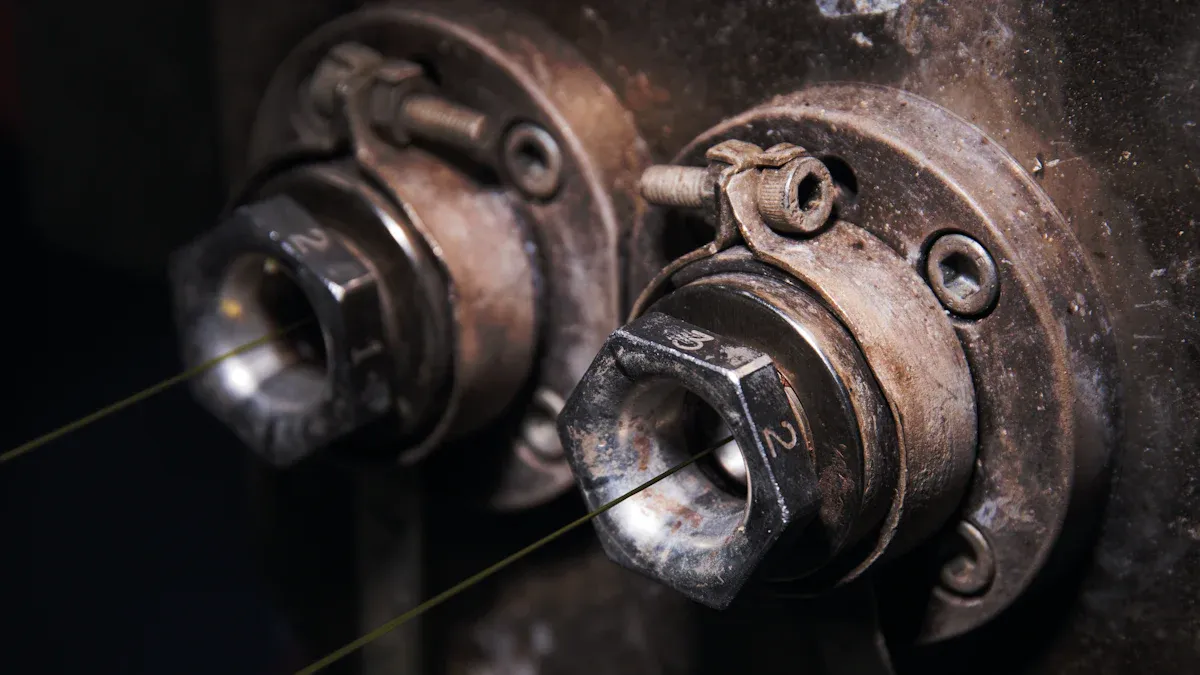
Sempre començo la selecció de la meva màquina d'extrusió examinant el disseny del cargol i el canó. La geometria del cargol determina amb quina eficiència es fon l'extrusora, barreges, i transmet material. Ajusto la longitud al diàmetre (L/D) ratio to control residence time and mixing. A higher L/D ratio allows the material to melt and blend more thoroughly, which is essential for achieving uniform quality in the final product. I rely on barrier designs in the screw barrel to maintain melt stability and prevent degradation, especially when I process sensitive materials. Parallel twin screw and barrel designs play a critical role in extrusion speed, qualitat del producte, i eficiència energètica. I use zoning and precise temperature control to stabilize melt flow and avoid trapped gases, which improves density and consistency. The surface finish of the barrel and the geometry of the screw also influence energy efficiency and product consistency. I always match the screw design to the specific requirements of the application to maximize performance.
- A higher L/D ratio improves mixing i uniformitat de fusió, que és essencial per a productes d'alta qualitat.
- Els dissenys de barrera ajuden a mantenir l'estabilitat de la fusió i prevenir la degradació.
- La geometria del cargol i l'acabat de la superfície del canó afecten l'eficiència energètica i la consistència del producte.
Moviment i mescla de materials
Em concentro en el moviment i la barreja eficients del material per garantir que el procés d'extrusió funcioni sense problemes. faig servir transportadors pneumàtics o mecànics robusts transferir matèries primeres ràpidament i amb un manteniment mínim. Els dissenys de mescladors avançats garanteixen un compostatge exhaustiu i uniforme, que evita variacions en els productes acabats. Integro controls automatitzats amb sistemes PLC per a la supervisió en temps real i la gestió de receptes. Aquest enfocament em permet supervisar la producció sense problemes i ajustar els paràmetres segons sigui necessari. Selecciono configuracions escalables per adaptar-se tant a petits tallers com a grans operacions industrials. Les funcions de control de pols millorades mantenen el lloc de treball net i segur. consistent, les mescles homogènies redueixen les fluctuacions de qualitat i milloren el rendiment. Els sistemes automatitzats minimitzen la manipulació manual, que escurça els cicles de producció i redueix els costos laborals. Sempre prioritzo aquestes característiques quan avaluo tipus de màquines d'extrusió per a noves aplicacions.
| Característica | Descripció |
|---|---|
| Transferència de material eficient | Ràpid, moviment de matèries primeres de baix manteniment |
| Mescla de precisió | minuciosa, Composició uniforme per a una qualitat constant |
| Controls automatitzats | Supervisió en temps real i gestió de receptes |
| Configuracions escalables | Dissenys flexibles per a qualsevol capacitat de producció |
| Control de pols millorat | Netejador, lloc de treball més segur |
| Millora de la qualitat del producte | Barreges homogènies, fluctuacions reduïdes |
| Augment del rendiment | Cicles de producció més curts, menys manipulació manual |
| Reducció de residus | Accurate measurement, costos més baixos |
| Lower Labor Costs | Automation frees staff for value-added tasks |
| Safer Working Environment | Enclosed lines and dust control |
Process Control and Output Quality
I depend on advanced process control technology to maintain high output quality in extrusion manufacturing. I select high-quality thermoplastics to ensure the final products meet strength, durabilitat, and flexibility requirements. I monitor extrusion parameters closely to reduce discrepancies during production. Dimensional accuracy remains a top priority for me, as it guarantees that components fit their intended applications. I use surface inspection to detect defects such as warping or air bubbles, which helps me maintain consistent product quality. Early detection of issues reduces waste and saves on production costs. I always ensure that my process complies with regulatory standards, which protects both my business and my customers. High-quality products enhance my brand reputation and increase customer satisfaction. Advanced monitoring systems allow me to increase production speed without sacrificing accuracy, which boosts overall efficiency in complete extrusion systems.
| Element/Advantage | Descripció |
|---|---|
| Selecció de material | Ensures strength, durabilitat, i flexibilitat |
| Seguiment de processos | Reduces discrepancies and maintains consistency |
| Precisió dimensional | Guarantees proper fit for all applications |
| Inspecció de superfícies | Identifies defects early for better quality |
| Qualitat del producte consistent | Every batch meets high standards |
| Reducció de residus | Saves material and production costs |
| Compliment normatiu | Meets legal and safety requirements |
| Customer Satisfaction | Builds reputation and loyalty |
| Process Efficiency | Increases speed while maintaining accuracy |
Consell: I recommend regular calibration and maintenance of all extrusion technology to sustain peak performance and consistent quality.
Comparing the Extrusion Process
Cargol simple vs. Twin-Screw Process
When I compare extrusores d'un sol cargol i de doble cargol, I focus on how each system handles the extrusion process. The screw design shapes the way material moves and mixes. A single-screw extruder uses one helical screw inside a simple, canó cilíndric. En canvi, a twin-screw extruder features two intermeshing screws and a more complex, barril sovint segmentat. I see that temperature control in single-screw systems remains basic, while twin-screw machines offer advanced control with multiple heating and cooling zones. This difference impacts both throughput and energy efficiency.
| Aspecte | Extrusora d'un sol cargol | Extrusora de doble cargol |
|---|---|---|
| Disseny de cargol | Cargol helicoïdal simple | Dos cargols entrellaçats |
| Estructura de canó | Simple, cilíndric | Més complex, sovint segmentats |
| Control de temperatura | Calefacció/refrigeració bàsica | Avançat, multi-zone |
| Capacitat de sortida | Moderat | Alt |
| Consum d'energia | Generalment més alt | Més eficient |
| Flexibilitat en el rendiment | Limitat | Alt |
I rely on twin-screw extruders for higher output and better energy efficiency. When I need flexibility in throughput or advanced process control, I choose twin-screw systems. For straightforward applications, single-screw extruders still provide reliable performance.
Material Compatibility in the Extrusion Process
Material compatibility plays a critical role in extrusion machine selection. I always match the screw configuration to the type of material I plan to process. Single-screw extruders handle standard thermoplastics well, but they struggle with materials that require intensive mixing or have high filler content. Twin-screw extruders excel with specialty compounds, plàstics reciclats, i materials reactius. I use segmented screws to adjust mixing and shearing for each application.
When I work with complete extrusion systems, I consider how each screw design affects the final product. Twin-screw extruders allow me to process a wider range of materials, including those with additives or sensitive properties. This flexibility supports more types of extrusion machines and expands the range of possible applications.
Consell: I recommend evaluating the chemical and physical properties of your raw materials before choosing an extruder. This step ensures compatibility and reduces the risk of defects.
Qualitat i consistència del producte
I know that the extrusion process directly impacts the quality of the finished product. Modern extrusion lines integrate automation and advanced control platforms. These systems analyze multiple variables at once, which helps me maintain consistent quality across every batch.
Quality consistency is a productivity multiplier. Advanced control platforms analyze patterns across multiple variables simultaneously, ensuring that product quality is maintained throughout the extrusion process.
I monitor key factors such as stable melt pressure, output rate, and surface finish. Stable melt pressure prevents warping and dimensional drift. Higher and more stable output reduces scrap rates and downtime. Better surface finish and precise dimensional control enhance the impact on the quality of the finished product.
| Factors clau | Impact on Quality and Consistency |
|---|---|
| Stable melt pressure | Prevents dimensions from drifting or warping |
| Higher and more stable output | Reduces scrap rates and downtime |
| Better surface finish | Enhances overall product quality |
| Control dimensional | Ensures precision in final product specifications |
| Faster ROI | Improves profitability for manufacturers |
Quan es comparen extrusores de cargol doble amb extrusores d'un sol cargol, I see that twin-screw systems deliver better consistency and lower operational cost. I achieve faster ROI and improved performance by investing in advanced extrusion technology. I always prioritize process monitoring and automation to ensure high quality and efficiency in production.
- Higher and more stable output
- Lower scrap and downtime
- Better surface finish and dimensional control
- Reduced operational cost
- Faster ROI
I rely on these strategies to maximize the benefits of extrusion and deliver products that meet strict manufacturing standards.
Performance Comparison Table
Rendiment i eficiència
I always evaluate throughput and efficiency when I compare types of extrusion machines. Throughput measures how much material the extruder processes in a given time. Efficiency reflects how well the screw design converts raw material into finished products with minimal waste and energy use. Veig que les extrusores d'un sol cargol sovint ofereixen un rendiment constant per als polímers estàndard. Extrusores de doble cargol, amb la seva geometria de cargol avançada, manejar una major producció i mantenir una millor eficiència energètica, especialment per a mescles complexes.
| Tipus d'extrusora | Rendiment (kg/h) | Eficiència energètica | Millors casos d'ús |
|---|---|---|---|
| Un sol cargol | 50–500 | Moderat | Gran volum, polímers simples |
| Doble cargol | 100-1000+ | Alt | Barreges complexes, feines especialitzades |
| Extrusora Ram | 10–100 | Baix-Moderat | PTFE, ceràmica, especialitat |
| Sistemes de coextrusió | Varia | Alt | Perfils multicapa |
Sempre faig coincidir la configuració del cargol amb el material i els requisits de producció. Aquest enfocament garanteix que el procés ofereixi una qualitat constant i compleixi els objectius de fabricació. Confio en sistemes complets d'extrusió per maximitzar el rendiment i l'eficiència per a cada aplicació.
Consell: Recomano controlar el consum d'energia i les taxes de sortida regularment. Aquesta pràctica ajuda a optimitzar la selecció de la màquina d'extrusió i redueix els costos operatius.
Manteniment i fiabilitat
I prioritize maintenance and reliability when I select an extruder. The screw and barrel experience constant wear from abrasive materials and high temperatures. I schedule routine inspections and replace worn components to prevent unexpected downtime. Single-screw extruders require less maintenance due to their simple design. Extrusores de doble cargol, with more moving parts and segmented screws, need more frequent checks but offer greater flexibility.
| Tipus d'extrusora | Necessitats de manteniment | Reliability Level | Common Issues |
|---|---|---|---|
| Un sol cargol | Baix-Moderat | Alt | Occasional screw wear |
| Doble cargol | Moderate–High | Alt | Segment wear, seal failure |
| Extrusora Ram | Moderat | Moderat | Hydraulic leaks, die wear |
| Sistemes de coextrusió | Alt (multi-screw) | Alt | Synchronization, screw wear |
I use advanced monitoring systems to track screw wear and process stability. This strategy improves reliability and extends the life of my extrusion technology. I always keep spare screws and barrels on hand to minimize downtime during maintenance.
Product Complexity and Flexibility
I value design flexibility en extrusió. The ability to customize the screw and die allows me to create complex profiles for a wide range of applications. I use extrusion to manufacture everything from simple plastic tubing to intricate window frames. I can add reinforcements or special features within the continuous material, which expands my product offerings.
| Aspecte | Descripció |
|---|---|
| Flexibilitat de disseny | Extrusion allows for significant design flexibility through die customization, enabling complex profiles. |
| Aplicacions | Suitable for various applications, including intricate window frames and simple plastic tubing. |
| Personalització | Manufacturers can include reinforcements or additional features within the continuous material. |
- In MedTech, I must achieve tight tolerances for medical devices.
- I ensure biocompatibility for all medical extrusion products.
- I monitor wall thickness closely, since it affects flow rates and structural strength.
I select the screw configuration and extrusion machine based on the complexity of the design and the required tolerances. This approach guarantees high quality and supports advanced manufacturing needs.
Nota: I recommend consulting with extrusion experts when planning new product designs. Their experience helps avoid costly mistakes and ensures the right screw and process configuration.
Application Suitability in Manufacturing
High-Volume Manufacturing
I always start my extrusion machine selection by considering the demands of high-volume manufacturing. When I need to produce thousands of units per day, I rely on single-screw extruders. These machines deliver steady throughput and maintain consistent quality. The screw design in single-screw extruders allows me to process standard polymers efficiently. I monitor the process closely to ensure uniform melt and minimize defects. I select the right screw diameter and length to match the production requirements. This approach helps me achieve high efficiency and reduce waste. I use automated controls to track output and maintain quality standards. High-volume applications benefit from robust types of extrusion machines that can operate continuously with minimal downtime. I always keep spare screws and barrels ready to avoid interruptions in production.
Consell: I recommend scheduling regular maintenance for extruders used in high-volume manufacturing. This practice extends the life of the screw and ensures reliable performance.
Complex Product Manufacturing
When I manufacture complex or multi-component products, I turn to advanced extrusion technology. Twin-screw extruders give me greater control over mixing and material distribution. I use segmented screws to adjust shear and optimize the process for each application. Co-extrusion technology enables me to combine different polymers into multi-layer films and pipes. This method improves barrier properties and enhances strength, flexibilitat, i resistència química.
| Tecnologia | Beneficis |
|---|---|
| Coextrusió | Enables the creation of multi-layer films and pipes with improved barrier properties, combining different polymers for strength, flexibilitat, i resistència química. |
I select the screw configuration based on the complexity of the product. For intricate designs, I rely on precise tooling and advanced process monitoring. I always test the extruder setup before full-scale production to ensure quality and performance. Complex applications require careful extrusion machine selection and attention to detail.
Specialty Materials and Customization
I often work with specialty materials that demand custom solutions. I use advanced shaping processes, such as sheet extrusion and thermoforming, to control material characteristics. Sheet extrusion gives me the ability to manage thickness and material distribution with high accuracy. Co-extrusion capabilities allow me to create multi-layer constructions that enhance material properties. I integrate downstream shaping processes to ensure consistent performance in finished components. Engineering services help me optimize component designs and select the best materials for specific applications.
- Advanced shaping processes, such as sheet extrusion and thermoforming, allow for precise control over material characteristics.
- Sheet extrusion provides a foundation for custom material solutions, enabling thickness control and material distribution accuracy.
- Co-extrusion capabilities facilitate the creation of multi-layer constructions, enhancing material properties.
- Integration with downstream shaping processes ensures consistent performance characteristics in finished components.
- Engineering services optimize component designs and material selection, ensuring suitability for specific applications.
I always match the screw design to the requirements of specialty materials. Customization in extrusion depends on selecting the right extruder and process parameters. I monitor quality at every stage to deliver products that meet strict standards. Specialty applications benefit from flexible types of extrusion machines and expert guidance.
Nota: I recommend consulting with extrusion specialists when working with new materials or custom designs. Their expertise helps achieve the desired quality and performance.
Selection Criteria for Extrusion Systems
Product Design and Complexity
I always start my extrusion machine selection by analyzing the product design and complexity. The geometry of the profile influences the choice of extruder and screw configuration. Complex shapes increase tooling costs and create production challenges. I simplify profile geometry whenever possible to enhance material flow and reduce defects. Smooth transitions in the design prevent disruptions in material flow, which is crucial for consistent extrusion quality. I select the right material early in the process because material choice affects both the properties of the part and the ease of extrusion. This decision impacts manufacturability and overall performance.
- Simplifying profile geometry lowers tooling costs and reduces production challenges.
- Designing for material flow ensures consistent extrusion quality and minimizes defects.
- Choosing the right material early improves manufacturability and product performance.
I match the screw design to the complexity of the product. For intricate profiles, I use advanced screw configurations that optimize mixing and material transport. I rely on precise tooling and process monitoring to maintain high quality. When I work with complex applications, I consult with extrusion technology experts to avoid costly mistakes and ensure the best results.
Consell: I recommend reviewing the profile geometry and material flow before finalizing the extrusion machine selection. This step helps prevent production issues and supports efficient manufacturing.
Propietats dels materials
Material properties play a critical role in selecting the right extruder and screw configuration. I identify application requirements such as temperature resistance, Exposició UV, and impact durability. I consider mechanical properties like flexibility, duresa, and tensile strength for the intended use. Environmental conditions influence my material choice, especially when I need weathering resistance or flexibility in cold environments. I evaluate aesthetic and finish requirements, inclòs el color, gloss, and surface texture, based on project needs. Regulatory and compliance needs guide my selection to ensure materials meet industry-specific standards and certifications.
- Application requirements determine the need for temperature resistance, Exposició UV, and impact durability.
- Mechanical properties such as flexibility, duresa, and tensile strength affect the choice of extruder and screw.
- Environmental conditions require materials that withstand weathering or remain flexible in cold climates.
- Aesthetic and finish requirements influence color, gloss, and surface texture.
- Regulatory and compliance needs ensure materials meet industry standards.
I select the screw design based on the material’s properties. For heat-sensitive materials, I use screws with gentle mixing zones and precise temperature control. When processing tough or abrasive compounds, I choose robust screw geometries that withstand wear and maintain efficiency. I always test materials in pilot runs to verify compatibility with the extruder and ensure consistent quality.
Nota: I recommend consulting material datasheets and industry standards before choosing an extruder. This practice helps match material properties to the extrusion process and supports reliable performance.
Production Volume and Scale
Production volume and scale influence the cost-effectiveness of extrusion machine selection. Higher production volumes reduce unit costs because tooling expenses are spread over more parts. In the prototype stage, tooling costs are high compared to the quantity produced. In mass production, die costs are amortized over larger volumes, leading to lower costs per unit. Per exemple, a die costing $2,000 with a lifetime of 40,000 kg results in a cost of $0.05 per kg when amortized.
- Higher production volumes lower unit costs by spreading tooling expenses.
- Prototype stages have high tooling costs relative to the number of parts produced.
- Mass production allows die costs to be distributed over larger volumes, reducing per-unit costs.
- Example: A die costing $2,000 with a lifetime of 40,000 kg results in a cost of $0.05 per kg.
I select the extruder and screw configuration based on the expected production volume. For high-volume manufacturing, I use robust types of extrusion machines that deliver steady throughput and maintain efficiency. In low-volume or prototype applications, I prioritize flexibility and rapid changeover. I monitor production rates and adjust screw parameters to optimize output and quality.
Consell: I recommend calculating the amortized tooling cost before committing to a production scale. This step helps determine the most cost-effective extrusion technology and supports long-term manufacturing goals.
Technical and Budget Considerations
I always approach extrusion machine selection with a clear focus on technical requirements and budget constraints. My experience tells me that investing in advanced extrusion technology demands careful planning. I evaluate every aspect of the system, from screw design to process control, to ensure cost-effectiveness and reliable performance.
I start by analyzing the technical specifications of the extruder. I look at screw geometry, barrel length, and compatibility with different types of extrusion machines. I select a screw that matches the material properties and the complexity of the applications. I check if the extruder can handle the desired throughput and maintain consistent quality. I also assess the integration of feeders, controladors de temperatura, i equips aigües avall. System integration plays a crucial role in maximizing efficiency and avoiding bottlenecks in production.
Budget considerations influence every decision I make. I break down the costs into several categories to understand the financial impact. I use the following table to guide my investment strategy:
| Budget Consideration | Descripció | Financial Impact / Benefit Example |
|---|---|---|
| Eficiència energètica | Reducing energy consumption by upgrading control systems or screws | 33% energy reduction saves nearly $100,000 annually on $288,000 cost energètic |
| Scrap Reduction | Lowering scrap rate from 15% a 5% through data acquisition and process control | Saves $200,000 monthly or $2.4 million yearly in materials, laboral, and energy costs |
| Throughput Increase | Upgrading to twin-screw extruder increases throughput by 30% | Generates $600,000 additional monthly revenue with >50% incremental profit margin |
| Maintenance Cost Reduction | Predictive maintenance and condition monitoring reduce emergency repairs and downtime | Maintenance costs drop 20-30%, equipment availability increases |
| System Integration | Budgeting for compatible feeders, controladors de temperatura, i equips aigües avall | Partial upgrades capture only ~40% of potential benefits |
| Formació d'operadors | Training on material characteristics, maquinària, instrumentation, i controls | Essential to fully realize technology benefits; lack wastes investment |
| Data Acquisition Infrastructure | Adequate sensors and analytics software needed for optimization | Insufficient infrastructure limits optimization; too many sensors without analytics causes overload |
| Downstream Constraints | Ensuring cutting, embalatge, and inspection keep pace with increased extruder output | Bottlenecks reduce overall system benefit |
I prioritize energy efficiency when selecting an extruder. Upgrading control systems or optimizing screw design can reduce energy consumption by up to 33%. This improvement saves nearly $100,000 each year on a typical $288,000 energy bill. I also focus on scrap reduction. By implementing advanced process control and data acquisition, I lower scrap rates from 15% a 5%. This change saves $200,000 every month in materials, laboral, and energy costs.
Increasing throughput is another key goal. Upgrading to a twin-screw extruder boosts output by 30%. This increase generates $600,000 in additional monthly revenue, with more than a 50% incremental profit margin. I invest in predictive maintenance and condition monitoring to reduce emergency repairs and downtime. Maintenance costs drop by 20-30%, and equipment availability improves.
System integration is essential for maximizing the benefits of extrusion technology. I budget for compatible feeders, controladors de temperatura, i equips aigües avall. Partial upgrades capture only about 40% of the potential benefits. Operator training is critical. I ensure my team understands material characteristics, maquinària, instrumentation, i controls. Without proper training, the investment in advanced extrusion technology goes to waste.
I invest in data acquisition infrastructure. Adequate sensors and analytics software optimize the process. Insufficient infrastructure limits optimization, while too many sensors without analytics cause information overload. I address downstream constraints by ensuring cutting, embalatge, and inspection keep pace with increased extruder output. Bottlenecks in these areas reduce the overall benefit of the system.
I always balance technical requirements with budget limitations. I select a screw that delivers high quality and efficiency without exceeding my financial resources. I plan for future upgrades and modular expansion to support changing production needs. I monitor every aspect of the extrusion process to maintain cost-effectiveness and reliable performance.
Consell: I recommend creating a detailed budget plan before investing in new extrusion technology. Include energy costs, manteniment, formació d'operadors, and system integration. This approach ensures that the extruder delivers maximum value and supports long-term manufacturing goals.
Actionable Insights for Manufacturers
Matching System to Application
I always match the extrusion system to the specific application. jo optimize material use to balance strength and lightweight design. I define critical dimensional tolerances early, which ensures parts fit and function as intended. I design for manufacturability, making sure shapes can be extruded consistently and cost-effectively. I select aluminum alloys based on application needs, such as strength and corrosion resistance. I simplify designs to reduce costs, avoiding unnecessary complexity in profiles. I prototype and test early, which helps me identify potential challenges before full production. These steps help me achieve high quality and reliable performance in every extrusion process.
- Optimize material use for strength and lightweight design.
- Define critical dimensional tolerances early.
- Design for manufacturability.
- Select appropriate aluminum alloys for application needs.
- Simplify designs to reduce costs.
- Prototype and test early.
I always consider the key components of an extruder, such as screw geometry and barrel design, to ensure the system meets production requirements. I review different types of extruder machines to find the best fit for my applications in extrusió de plàstic. This approach supports scalability and maintains quality control throughout manufacturing.
Errors comuns de selecció
I have seen many manufacturers make mistakes during extrusion machine selection. Inadequate material blending often leads to product imperfections and increased costs from reprocessing. Outdated or incompatible control systems cause integration issues and inefficiencies. Inconsistent feed rates disrupt the extrusion process, resulting in product variabilities and higher scrap rates. Neglecting preventive maintenance allows minor mechanical issues to escalate into major production problems, affecting revenue. Ignoring operator training leads to misconfigurations and missed optimization opportunities.
- Inadequate material blending increases costs and reduces quality.
- Outdated control systems cause inefficiencies.
- Inconsistent feed rates disrupt the extrusion process.
- Neglecting preventive maintenance leads to major production problems.
- Ignoring operator training results in missed optimization.
I always monitor screw wear and maintain the extruder regularly. I invest in operator training to maximize efficiency and quality. I avoid these mistakes by focusing on process stability and performance.
Future Trends in Extrusion Technology
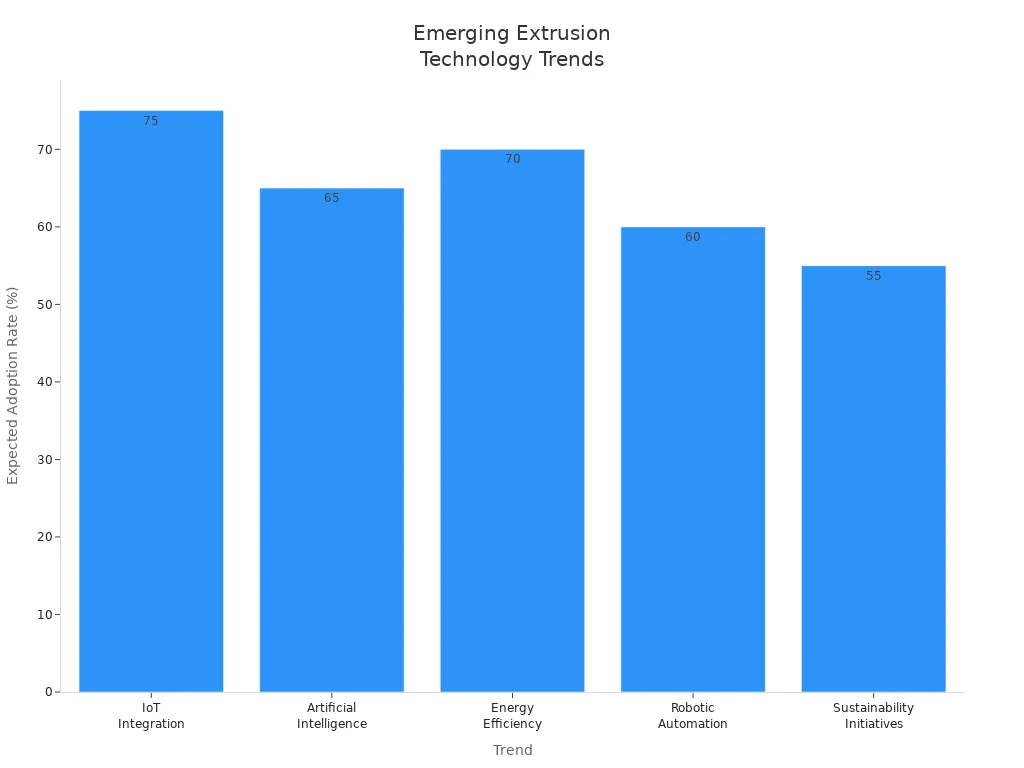
I see rapid changes in extrusion technology shaping the future of manufacturing. IoT integration allows real-time monitoring and analytics, millora de l'eficiència. Artificial intelligence supports predictive maintenance and optimization, which boosts performance. Energy efficiency is a growing focus, with manufacturers seeking ways to reduce consumption in the extrusion process. Robotic automation streamlines material handling and quality control. Sustainability initiatives drive the use of recycled materials and eco-friendly processes.
| Tendència | Descripció | Impacte en l'eficiència | Taxa d'adopció prevista (%) |
|---|---|---|---|
| Integració IoT | Monitorització i anàlisi en temps real | Alt | 75% |
| Intel·ligència artificial | Manteniment predictiu i optimització | Molt alt | 65% |
| Eficiència energètica | Reducing energy consumption | Mitjana | 70% |
| Automatització robòtica | Manipulació de materials i control de qualitat | Alt | 60% |
| Iniciatives de sostenibilitat | Materials reciclats i processos ecològics | Mitjana | 55% |
I notice advancements in material compatibility, especially with bioplastics, are transforming the extrusion industry. Many manufacturers now prioritize flexibility in equipment design, with modular systems allowing easy upgrades and modifications. Sustainability is essential, with most manufacturers focusing on energy-efficient equipment and waste reduction strategies. Smart extrusion machines reduce downtime by 20%, which improves overall efficiency and quality control. I always stay updated on these trends to maintain high performance and support new applications in plastic extrusion.
Consell: I recommend reviewing the overview of extruder machines in manufacturing regularly. Staying informed about new types of extrusion machines and screw designs helps me adapt to changing production needs and maintain scalability.
I recognize that each extrusion system offers unique advantages and limitations. My experience shows that single-screw extruders excel in high-volume production, while twin-screw systems provide superior mixing and flexibility. Ram and co-extrusion machines support specialty applications. I always use comparison tables and selection criteria to evaluate:
- Technical capabilities and long-term reliability
- Customer service and design assistance
- Quality standards and energy efficiency
I recommend manufacturers understand their application needs and consult extrusion experts for optimal results.
PMF
Quina és la diferència principal entre les extrusores d'un sol cargol i de doble cargol?
I see that single-screw extruders use one rotating screw for basic mixing. Twin-screw extruders use two screws for advanced mixing and better control. I choose twin-screw systems for complex materials and higher flexibility.
How do I decide which extrusion system fits my application?
I start by reviewing my material type, volum de producció, and product complexity. I match these needs to the strengths of each system. I consult with experts if I face unique requirements.
Can I process recycled materials with extrusion systems?
I process recycled materials using twin-screw extruders. These machines handle variable feedstocks and additives better than single-screw systems. I monitor quality closely to ensure consistent results.
How often should I perform maintenance on my extruder?
I schedule routine inspections every month. I check for screw wear, barrel condition, and control system performance. Regular maintenance prevents downtime and extends equipment life.
What are the most common extrusion defects I encounter?
I often see surface roughness, dimensional drift, and melt fractures. I address these by adjusting temperature, velocitat del cargol, and material feed. I use process monitoring to catch issues early.
Is co-extrusion suitable for all materials?
I use co-extrusion mainly for thermoplastics. Some materials may not bond well in multi-layer profiles. I test material compatibility before starting production.
How does automation improve extrusion quality?
I rely on automation for real-time monitoring and precise control. Automated systems reduce human error, maintain consistent output, and improve overall product quality.
What safety measures do I follow during extrusion?
I wear protective gear and follow lockout procedures. I keep the work area clean and check emergency stops regularly. I train my team on safe operation and emergency response.