

Indlela Amasistimu Ahlukene Wokuxhuma Anqwabelanisa Ngayo Ukuze Akhiqize
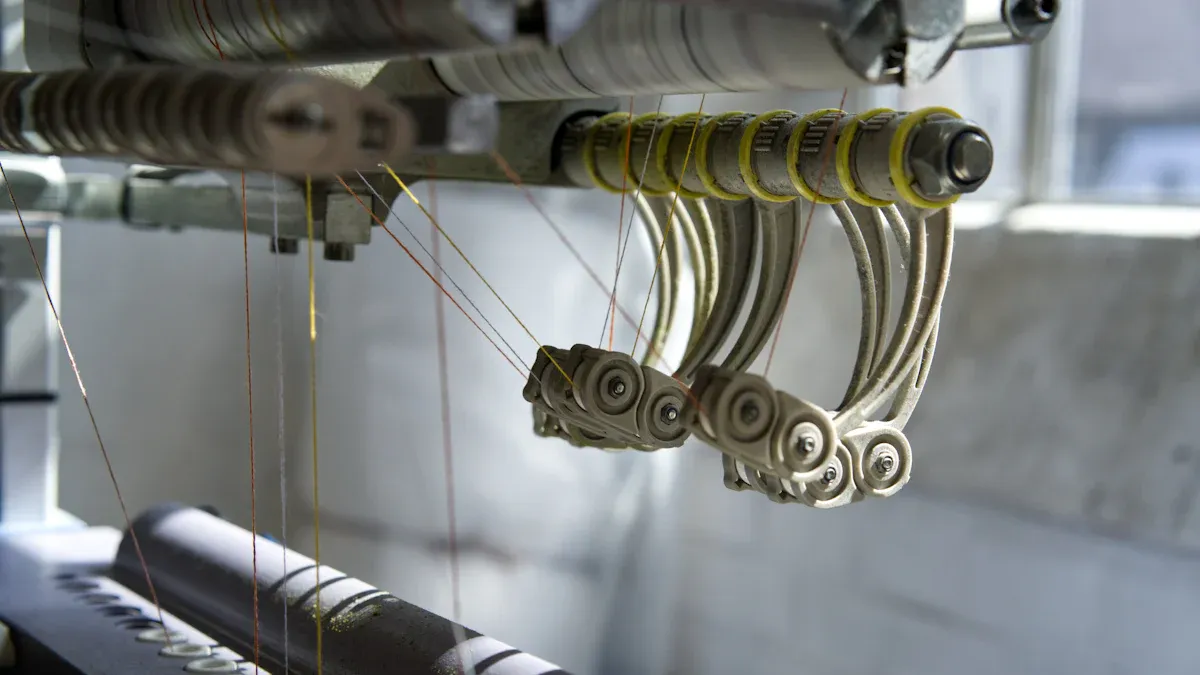
Ngibonile ukuthi ukukhetha kwesistimu ye-extrusion kubumba yonke inqubo yokukhiqiza. Abakhiqizi abaningi basebenzisa amasistimu e-screw eyodwa, ezibamba a 62% isabelo semakethe, kuyilapho ama-twin-screw systems ebala 38%.
| Uhlobo lwesistimu ye-Extrusion | Iphesenti Lokwabelana Kwemakethe |
|---|---|
| Isikulufu esisodwa | 62% |
| I-Twin-screw | 38% |
Ukukhetha phakathi kwezinhlobo zezikulufa kuthinta ukusebenza kahle, izinga lomkhiqizo, nokuhambisana kwezinto. Uma ngifanisa ubuchwepheshe be-extrusion nezinjongo zokukhiqiza, Ngibona ukuthuthuka ekusebenziseni izindleko, ukuklama ukwenza izinto ezihlukahlukene, kanye nokusimama.
| Isici | Umthelela Ekukhiqizeni Ngempumelelo | Umthelela Kwikhwalithi Yomkhiqizo |
|---|---|---|
| Amapharamitha alawulwayo | Igcina ikhwalithi yomkhiqizo ofanayo | Ifinyelela ukubekezelelana kwama-micrometer |
Ngithembela ku-Complete Extrusion Systems ukuletha imiphumela engaguquki nokusebenza okunembayo kwesikulufu.
Okuthathwayo Okubalulekile
- Khetha isistimu ye-extrusion elungile ngokusekelwe ezinhlosweni zakho zokukhiqiza kanye nezakhiwo ezibonakalayo ukuze uqinisekise ukusebenza kahle.
- I-Single-screw extruder ilungele ukukhiqizwa okuphezulu kwevolumu yezinto ezilula, kuyilapho ama-twin-screw systems ehamba phambili ekuxubeni izinto eziyinkimbinkimbi.
- Ukugcinwa njalo nokuqapha amasistimu e-extrusion kuvimbela isikhathi sokuphumula futhi kuthuthukise ukusebenza kahle, ukuqinisekisa ikhwalithi yomkhiqizo engaguquki.
- Cabangela ububanzi besikulufa nesilinganiso se-L/D lapho ukhetha i-extruder, njengoba lezi zici zinomthelela ekusebenzeni nasekuxubeni kahle.
- Sebenzisa i-co-extrusion ukuze udale imikhiqizo enezendlalelo eziningi ehlanganisa izinto ezihlukene, ukuthuthukisa ukusebenza nokusebenza.
- Linganisa ukuhambisana kwezinto ngohlelo olukhethiwe lwe-extrusion ukuze ugweme amaphutha futhi uqinisekise ukuphuma kwekhwalithi ephezulu.
- Hlala unolwazi mayelana nezitayela ezivelayo kubuchwepheshe be-extrusion, njenge-IoT ne-AI, ukwenza ngcono ukusebenza kahle nokuzivumelanisa nezidingo ezishintshayo zokukhiqiza.
- Create a checklist of key factors before selecting an umshini we-extrusion to avoid costly mistakes and ensure the system meets application requirements.
Choosing the Right Extrusion System for Manufacturing
Key Factors in System Selection
I never find a universal “best” extrusion system. My experience tells me that the ideal choice depends on the manufacturing goals, izakhiwo ezibonakalayo, and product requirements. When I select an extrusion system, I always match its capabilities to the intended application. This approach ensures that the extrusion process delivers consistent quality and optimal performance.
I consider several critical factors before making an extrusion machine selection. I use the following table to guide my decision:
| Isici | Incazelo |
|---|---|
| Research Objective | Purpose of the machine (education, material development, or commercial pilot production) |
| Uhlobo Lwezinto | Type of polymers to be processed (izwela ukushisa, volatile, noma esebenzayo) |
| Amandla Okukhiphayo adingekayo | Amandla okusebenzisa (amagremu noma amakhilogremu ngehora) |
| Izidingo Zenqubo Ethuthukisiwe | Isidingo sokujova igesi, i-vacuum degassing, noma amandla e-extrusion asebenzayo |
| Isabelomali kanye Nendawo Yelabhorethri | Ukucatshangelwa kokunwetshwa kwemojula ukuze kuthuthukiswe okuzayo |
| Izidingo Zezinga Elizayo | Ukuhambisana namamojula we-industrision extrusion wokwenyusa ukukhiqizwa |
Ngihlala nginaka ububanzi besikulufa kanye nesilinganiso se-L/D. Le mingcele inquma umthamo wokuphuma kanye nokusebenza kahle kokuxuba. Ngikhetha i-extruder enamandla okukhiphayo alungile, okungasukela ku 0.25 kg/h kuye 150 kg/h kuye ngemodeli. Idizayini ye-modular ingivumela ukuthi ngishintshe izingxenye ngokushesha, okunikeza ukuguquguquka kocwaningo nentuthuko. Ngithembele kumasistimu okulawula athuthukile, njenge-PLC ne-HMI, ukuze kuzuzwe ukulawula okunembayo nokulandelelwa kwedatha.
Uma ngihlola izinhlobo zemishini yokukhipha, Ngibheka ubunkimbinkimbi bephrofayili kanye nokubekezelelana okudingekayo. Imiklamo eyinkimbinkimbi idinga amathuluzi anembile futhi ingakhuphula izindleko. Ngiphinde ngibheke nenani le-oda. Amavolumu aphezulu anciphisa izindleko ngeyunithi ngayinye ngoba izindleko zokusetha zisabalele kumayunithi amaningi. Ukuqeda kanye nemisebenzi yesibili, njenge-anodizing noma i-CNC machining, engeza inani kanye nezindleko.
Ithiphu: Ngincoma ukwenza uhlu lokuhlola lwalezi zici ngaphambi kokuqala inqubo yokukhetha umshini we-extrusion. Lo mkhuba usiza ukugwema amaphutha abizayo futhi uqinisekisa ukuthi uhlelo lufana nezinhlelo ezihlosiwe.
Umthelela Ekukhiqizeni Ngempumelelo
Ngiyaqaphela ukuthi isistimu ye-extrusion engiyikhethayo ithinta ngokuqondile ukusebenza kahle kokukhiqiza. Idizayini yesikulufu, ikhono lokuhlanganisa, kanye nobuchwepheshe be-extrusion bonke badlala indima ekutheni inqubo ihamba kahle kanjani. Ngokwesibonelo, a I-extruder yesikulufu esisodwa ngokuvamile isebenza kahle kuma-polymers alula nokukhiqizwa kwevolumu ephezulu. Ama-extruder ama-twin-screw aphatha izinto eziyinkimbinkimbi kanye nezinhlelo zokusebenza ezithuthukile, njenge-extrusion esebenzayo noma izingxube ezikhethekile.
Ngibonile ukuthi i-viscosity ephezulu kanye nokuqukethwe okuqinile ezintweni ezisebenzayo kungabangela ukuvala, i-extrusion engazinzile, nokugqokwa kwe-nozzle. Lezi zinkinga zehlisa ukusebenza kahle kanye nokuphepha engozini. Ngibhekana nalezi zinselele ngokuthuthukisa ukwakheka kwesistimu yokuxova. Ukufana kokuxuba okuthuthukisiwe nokunemba kwe-extrusion kuthuthukisa kokubili ukuphepha nokusebenza kahle.
Ngisebenzisa isistimu ye-twin-screw extrusion enezigaba ezimbili lapho ngidinga ukuzinza okukhulu nokuzivumelanisa nezimo. Ukulingisa kubonisa ukuthi lo mklamo uthuthukisa izici zokugeleza futhi ugcina okukhiphayo okungaguquki. Ngihlala ngiqapha inqubo ye-extrusion ukuze ngiqinisekise ikhwalithi efanayo futhi nginciphise isikhathi sokuphumula.
| Uhlobo lobufakazi | Incazelo |
|---|---|
| Izinselelo Ekwenzeni Okungeziwe | I-viscosity ephezulu kanye nokuqukethwe okuqinile kwezinto ezisebenzayo kuholela ezindabeni ezifana nokuvala, i-extrusion engazinzile, nokugqokwa kwe-nozzle, ezithinta ukusebenza kahle nokuphepha. |
| Ukusebenza Kwesistimu Yokuxova | Idizayini yesistimu yokuxova ithinta ukufana kokuxutshwa kwempahla kanye nokunemba kwe-extrusion, ngokulungiselelwa okukhethekile okuhlongozwayo ukuze kuthuthukiswe ukuphepha nokusebenza kahle. |
| I-Extrusion System Design | Isistimu ye-twin-screw extrusion enezigaba ezimbili yakhelwe ukuthuthukisa ukuzinza nokuvumelana nezimo enqubweni ye-extrusion., ngemifanekiso eveza izici zokugeleza zamasistimu ahlukene. |
Ngihlala ngifanisa isistimu ye-extrusion nezimfuneko zokukhiqiza. Lo mkhuba uqinisekisa ukuthi i-extruder iletha ikhwalithi kanye nokusebenza okufunayo. Ngikhetha ukucushwa kwesikulufu ngokusekelwe ohlotsheni lwezinto ezibonakalayo kanye nobunzima bohlelo lokusebenza. Ngithembele kubuchwepheshe be-extrusion obuthuthukisiwe ukuze ngikhulise ukusebenza kahle nokugcina amazinga aphezulu ekhwalithi yomkhiqizo.
Qaphela: Ngincoma ukunakekelwa okuvamile kanye nokuqapha inqubo ukuze kugcinwe ukusebenza kahle okuphezulu nokuvimbela isikhathi sokuphumula esingalindelekile.
Izinhlobo ze-Complete Extrusion Systems
Uma ngihlola amasistimu e-extrusion aphelele okukhiqiza, Njalo ngiqala ngokukhomba okuyinhloko izinhlobo zemishini ye-extrusion. Izinketho ezivame kakhulu zihlanganisa imishini yokukhipha isikulufa esisodwa, imishini yokukhipha izikulufu ezimbili, kanye nemishini yokukhipha izinqama. Uhlelo ngalunye lunikeza amandla ahlukile kanye nemikhawulo, ngakho-ke ngigxila ekufaniseni ubuchwepheshe obufanele kuhlelo lokusebenza.
| Uhlobo Lomshini Wokukhipha |
|---|
| Imishini Yokukhipha Isikulufu Eyodwa |
| Ama-Twin Screw Extrusion Machines |
| Ram Extrusion Machines |
I-Single-Screw Extrusion
Ngivame ukusebenzisa isikulufa esisodwa se-extruder ngezinqubo eziqondile zokukhipha. Lo mshini ufaka isikulufu esisodwa esizungezayo ngaphakathi kombhobho oshisayo. Isikulufu siphushela impahla phambili, iyayincibilikisa, futhi uyilolonga ngedayidi. Ngithembele kulolu hlelo lokukhiqiza ivolumu ephezulu ye-thermoplastics, imikhiqizo yokudla, kanye nama-rubber compounds. Ubulula bomklamo kwenza kube lula ukusebenza nokuyinakekela.
| Imboni | Incazelo Yohlelo Lokusebenza | Izibikezelo Zokukhula Kwemakethe |
|---|---|---|
| Ipulasitiki | Ukuncibilika nokwenza i-thermoplastics, iqhutshwa ukukhuphuka kokusetshenziswa kwe-PE ne-PP. | I-CAGR cishe 4-5% ngokusebenzisa 2030 |
| Ukucubungula Ukudla | Ukukhiqiza ukudla okugayiwe njengokudla okulula nokusanhlamvu. | Imakethe ukufinyelela kuyo $75 billion nge 2026 |
| I-Rubber Compounding | Ukuxuba nokubumba irabha yamasondo nezingxenye zezimoto. | Ukukhiqizwa kwamasondo kuzodlula 2 izigidigidi zamayunithi nge 2025 |
| I-Biomedical | Ukukhiqizwa kwe-Biopolymer yokupakisha kanye namadivayisi wezokwelapha. | Imakethe esafufusa enobuchwepheshe obusha be-extrusion |
Nokho, Ngiyayibona imikhawulo ye-scrusion yesikulufa esisodwa. Ukuzuza ukuxuba umfaniswano kungaba nzima, ikakhulukazi uma ngengeza ama-fillers noma izithasiselo. Ukungaguquguquki kwengcindezi kuvame ukuhluka ngokushintsha kwesitoko, futhi izinto ze-viscosity eziphezulu zingase zingagelezi kahle, okuholela emaphutheni. Lezi zinselele ziqondisa ukukhetha kwami komshini we-extrusion lapho ngidinga ikhwalithi ephezulu noma ukucubungula okuyinkimbinkimbi.
Ithiphu: Ukuze elula, izicelo zevolumu ephezulu, Ngincoma ukuthi uqale nge-screw extruder eyodwa. Okokuxuba okuthuthukile noma okukhethekile, cabangela ezinye izinketho.
I-Twin-Screw Extrusion
Lapho ngidinga ukucutshungulwa okuthuthukisiwe, ngiphendukela ku i-twin screw extruder ubuchwepheshe. Lolu hlelo lusebenzisa izikulufu ezimbili ezizungeza ndawonye ngaphakathi komgqomo. Izikulufu zingaba phakathi noma zisebenze ngokuhambisana, kuye ngokuthi umklamo. Ngithola ukuthi ama-twin screw extruder aletha ukusebenza kahle kokuxubana okuphakeme, plasticizing kangcono for high-viscosity materials, kanye nokulawula okuthuthukisiwe kwezinga lokushisa nokucindezela. Lezi zici zithuthukisa ikhwalithi yomkhiqizo kanye nokuvumelana kwenqubo.
I-twin screw extrusion futhi ingivumela ukuthi ngenze izinyathelo zokucubungula eziningi emshinini owodwa. Ngiyakwazi ukuxuba, ncibilika, umoya, futhi ngisho nezinto zokusabela ngesikhathi sokudlula okukodwa. Lokhu kuvumelana nezimo kunciphisa imfucuza futhi kusheshise ukukhiqizwa. Uma uqhathanisa isikulufu esingamawele vs ama-extruder screw single, Ngibona ukubuya okusheshayo ekutshalweni kwezimali kanye nemiphumela efanayo efanayo ngamasistimu angama-twin screw, ikakhulukazi izingxube eziyinkimbinkimbi noma amapulasitiki agaywe kabusha.
Izinhlobo ezingaphansi ze-Twin-Screw
Ngihlale ngicabangela izinhlobo ezahlukene zemishini yokukhipha ngaphakathi kwesigaba sesikulufu esingamawele. Ukulungiswa kwesikulufu kunomthelela ekusebenzeni, ukusebenza kahle, kanye nobubanzi bezinhlelo zokusebenza.
Intermeshing
Ama-intermeshing twin screw extruder afaka izikulufu ezigqagqana futhi ezinezikhala ndawonye. Lo mklamo uhlinzeka izinto zokuthutha eziqondile kanye namandla aphezulu okugunda. Ngisebenzisa amasistimu e-intermeshing ukuze kuhlanganiswe okuthuthukisiwe nokuhambisana, ikakhulukazi uma ngidinga ukuhlakaza izithasiselo noma izigcwalisi ngokulinganayo.
I-Non-Intermeshing
Ama-extruder angamawele angama-non-intermeshing anezikulufu ezizungezisayo ngaphandle kokugqagqana. Lokhu kusetha kunikeza ukuxutshwa okuthambile nokushefa okuncane. Ngikhetha imiklamo engahlanganisi yezinto ezibucayi ezidinga ukucindezeleka okuncane komshini.
Ukuzungezisa ngokuhlanganyela
Ama-extruder ama-twin screw ajikelezayo anezikulufu ezijika ziye ohlangothini olufanayo. Lolu hlobo oluncane luhamba phambili ekuhlanganiseni ukusebenza kahle kanye nokuthutha impahla. Ngisebenzisa amasistimu azungezayo ukuze ngikhiphe i-extrusion esebenzayo, devolatilization, kanye nokusebenza okuphezulu kwe-polymer compounding. Nokho, amazinga aphezulu okugunda angehlisa izinto ezizwela ukushisa, ngakho-ke ngiqapha ukwakheka kwesikulufa nokupholisa eduze.
| Uhlobo oluncane | Ukucubungula Amakhono Nezinzuzo | Imikhawulo kanye Nokucatshangelwa | Best Izicelo |
|---|---|---|---|
| I-Co-Rotateing Twin-Screw Extruder | High ukuxuba ukusebenza kahle, ilungele i-extrusion esebenzayo, amazinga aphezulu e-shear | Ingozi yokuwohloka kwempahla, idinga ukuklama isikulufu esinembile | Ukuhlanganiswa kwe-polymer, ama-nanocomposites, ukugeleza komsebenzi we-lab-to-production |
I-Counter-Rotate
Ama-extruder angama-twin screw ajikelezayo afaka izikulufu ezijika ziye ezinhlangothini eziphambene. Lokhu kulungiselelwa kudala amandla aphansi okugunda, okuvikela izinto ezithambile. Ngithembele kumasistimu ajikelezayo ezitsheni zobumba, ama-biopolymers, kanye nokwakheka kwemithi. Idizayini iphinde inikeze ukwakheka okuhle kwengcindezi nokuvala uphawu okusebenzayo, nakuba ukuqina kokuxuba kuphansi kunamasistimu ajikelezayo.
| Uhlobo oluncane | Ukucubungula Amakhono Nezinzuzo | Imikhawulo kanye Nokucatshangelwa | Best Izicelo |
|---|---|---|---|
| I-Counter-Rotate Twin-Screw Extruder | Amandla okugunda aphansi, i-pressure build-up enhle, ukubekwa uphawu ngempumelelo | Amandla okuhlanganisa aphansi, ukubekwa uphawu okuyinkimbinkimbi kanye nomklamo wokuzala | I-Ceramics, ama-biopolymers, ezemithi |
Uma ngikhetha isistimu ye-extrusion ephelele, Ngihlala ngifanisa uhlobo lwesikulufu nokucushwa kokubalulekile nezidingo zenqubo. Le ndlela iqinisekisa izinga eliphezulu, ukusebenza kahle, nokusebenza okuthembekile kuzo zonke izinhlelo zokusebenza.
I-Ram Extrusion
Ngivame ukukhetha i-ram extrusion lapho ngidinga ukucubungula izinto ezidinga ingcindezi ephezulu kanye nokubunjwa okunembile. Le ndlela isebenzisa i-hydraulic ram ukusunduza impahla emgqonyeni oshisayo futhi ife, kunokuthembela kusikulufa esijikelezayo. Ngithola ama-extruder enqama ewusizo ikakhulukazi ekwenzeni imikhiqizo evela kumapulasitiki we-thermosetting, izitsha zobumba, kanye ne-PTFE. Inqubo ingivumela ukuthi ngidale izinduku, amashubhu, namaphrofayili anobukhulu obungaguquki.
I-Ram extrusion igqama kakhulu phakathi kwezinhlobo zemishini yokukhipha ama-extrusion ngoba iphatha izinto ezisetshenziswa yizikulufu zendabuko ezingakwazi ukuzisebenzisa kahle.. Ngisebenzisa lobu buchwepheshe ezimbonini njengamapulasitiki, ukudla, kanye nemithi. Ngokwesibonelo, Ngikhiqiza ukudla okulula kanye nezinhlamvu ezinomumo oyingqayizivele, futhi ngenza amaphilisi namaphilisi anemininingwane eqondile.
Ngiqaphele izinzuzo nezinselelo ezimbalwa lapho ngisebenzisa ama-ram extruder:
- Ama-Ram extruder ahamba phambili ekukhiqizeni imikhiqizo yekhwalithi ephezulu evela ezintweni okunzima ukuzisebenzisa.
- Ngithembele kuzo ngezinhlelo zokusebenza lapho ubuchwepheshe be-screw extrusion bufushane, njenge-PTFE namaphrofayili e-ceramic.
- Inqubo iletha ikhwalithi engaguquki nokunemba kobukhulu.
- Izindleko eziphezulu zokusebenza zingaba nomthelela ekusebenzeni kahle nokusebenza kukonke.
- Imithetho eqinile ekwenziweni kwepulasitiki idinga ukulawulwa kwenqubo ngokucophelela.
- Ukuncintisana kwezinye izinhlelo ze-extrusion kungiphusha ukuthi ngithuthukise ukukhetha kwami komshini we-extrusion.
Ngihlale ngikala lezi zici ngaphambi kokukhetha i-ram extrusion yezinhlelo eziphelele ze-extrusion. Ngiqapha inqubo ngokucophelela ukuze ngigcine ikhwalithi nokusebenza kahle, ikakhulukazi uma usebenza ngezinto ezikhethekile.
I-Co-Extrusion
I-Co-extrusion ingenza ngikwazi ukuhlanganisa izinto eziningi zibe umkhiqizo owodwa, ukudala amaphrofayili anezendlalelo eziningi anezici ezithuthukisiwe. Ngisebenzisa lobu buchwepheshe be-extrusion ukuhlanganisa ama-thermoplastics ahlukene, isendlalelo ngasinye sinikeza izici eziyingqayizivele. Inqubo ihilela ukusunduza izinto ezimbalwa ngokusebenzisa idayidi elilodwa, okuholela kuphrofayela ebumbene ehlangabezana nezidingo eziyinkimbinkimbi zokukhiqiza.
Ngithembele ku-co-extrusion ukuze ngikhiqize imikhiqizo efuna ukuqina, ukuguquguquka, kanye nokukhanga kobuhle. Le ndlela ingivumela ukuthi ngilungise ikhwalithi yesendlalelo ngasinye, ukuthuthukisa ukusebenza nokusebenza. Ngibona i-co-extrusion njengentuthuko ebalulekile kumasistimu aphelele we-extrusion, ikakhulukazi uma ngidinga ukukhiqiza izinto ezinezici ezikhethekile.
Izimboni ziyahlomula ngokuhlanganyela nge-extrusion ngezindlela eziningi:
- Ukwakha: Ngenza izinsimbi zamawindi, amafreyimu, futhi nquma izingcezu ezihlanganisa amandla nokukhanga okubonakalayo.
- Ukudayisa: Ngakha amasheluvu namasistimu wokubonisa ahlala isikhathi eside futhi akhangayo.
- Izimpawu: Ngikhiqiza izimpawu ezikhanyisiwe namafreyimu anemiphetho ehlanzekile nokusebenza okuthembekile.
I-Co-extrusion yandisa ububanzi bezinhlelo zokusebenza zobuchwepheshe be-extrusion. Ngiyisebenzisela ukuhlangabezana nezinhloso zokukhiqiza ezidingekayo futhi ngilethe imikhiqizo enekhwalithi ephezulu. Uma ngikhetha i-extruder ye-co-extrusion, Ngicabanga i-screw design, ukulawula inqubo, nokuhambisana kwezinto. Le ndlela iqinisekisa ukusebenza kahle nemiphumela engaguquki.
Ithiphu: Ngincoma ukukhishwa ngokubambisana kwamaphrojekthi adinga amaphrofayela anezendlalelo eziningi kanye nokusebenza okuthuthukisiwe komkhiqizo. Ukukhetha ngokucophelela umshini we-extrusion nokuqapha inqubo kubalulekile ukuze kuzuzwe ikhwalithi ephezulu.
Isakhiwo kanye nokusebenza kwe-Extrusion Systems
I-Screw and Barrel Design
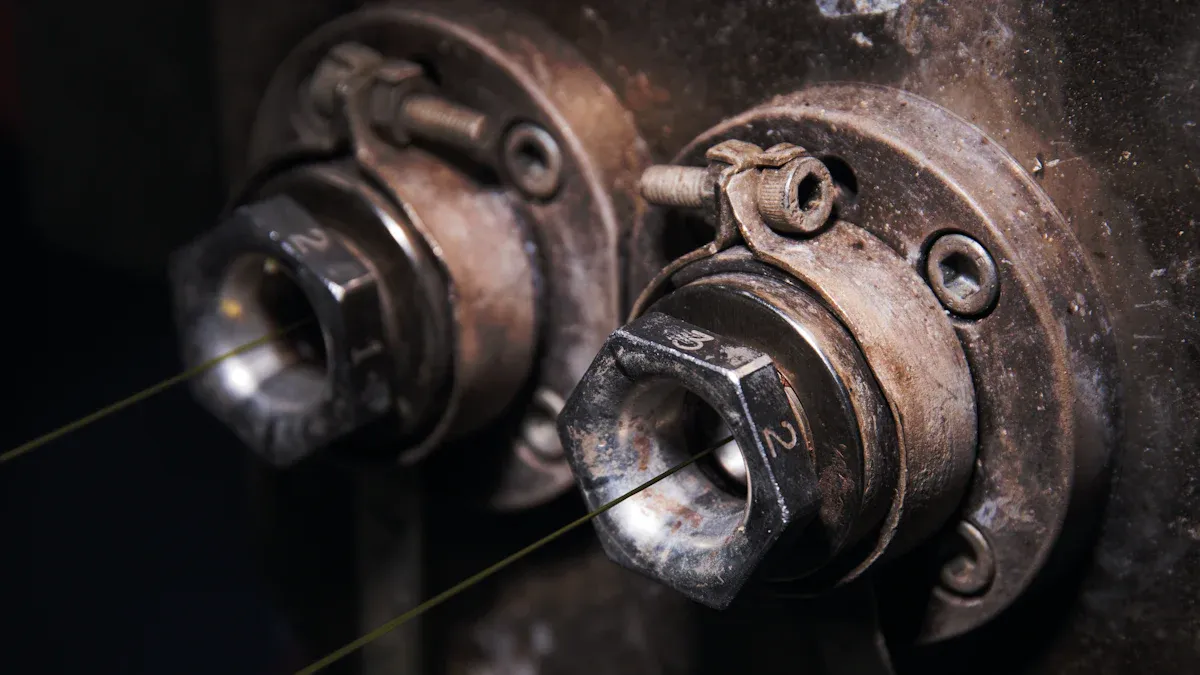
I always start my extrusion machine selection by examining the screw and barrel design. The geometry of the screw determines how efficiently the extruder melts, amamiksi, and conveys material. I adjust the length-to-diameter (L/D) ratio to control residence time and mixing. A higher L/D ratio allows the material to melt and blend more thoroughly, which is essential for achieving uniform quality in the final product. I rely on barrier designs in the screw barrel to maintain melt stability and prevent degradation, especially when I process sensitive materials. Parallel twin screw and barrel designs play a critical role in extrusion speed, izinga lomkhiqizo, kanye nokusebenza kahle kwamandla. I use zoning and precise temperature control to stabilize melt flow and avoid trapped gases, which improves density and consistency. Ukuqedwa okungaphezulu komgqomo kanye nejiyomethri yesikulufu nakho kunomthelela ekusebenzeni kahle kwamandla kanye nokuvumelana komkhiqizo. Ngihlala ngifanisa idizayini yesikulufu nezimfuneko ezithile zohlelo lokusebenza ukukhulisa ukusebenza.
- Isilinganiso esiphezulu se-L/D sithuthukisa ukuxubana futhi ncibilikisa ukufana, okubalulekile emikhiqizweni esezingeni eliphezulu.
- Imiklamo yokuvimbela isiza ekugcineni ukuncibilika kokuqina futhi ivimbele ukuwohloka.
- I-Screw geometry ne-barrel surface finish inomthelela ekusebenzeni kahle kwamandla nokungaguquguquki komkhiqizo.
Ukunyakaza Kwezinto Ezibalulekile Nokuxuba
Ngigxila ekunyakazeni kwezinto ezisebenzayo kanye nokuxuba ukuze ngiqinisekise ukuthi inqubo ye-extrusion ihamba kahle. Ngiyasebenzisa amaconveyor aqinile we-pneumatic noma mechanical ukudlulisa izinto zokusetshenziswa ngokushesha nangokulungiswa okuncane. Imiklamo ye-mixer ethuthukisiwe iqinisekisa ukuhlanganiswa okuphelele nokufana, okuvimbela ukuhluka kwemikhiqizo eqediwe. I integrate automated controls with PLC systems for real-time monitoring and recipe management. This approach allows me to oversee production seamlessly and adjust parameters as needed. I select scalable configurations to accommodate both small workshops and large industrial operations. Enhanced dust control features keep the workplace clean and safe. Kuyavumelana, homogeneous blends reduce quality fluctuations and improve throughput. Automated systems minimize manual handling, which shortens production cycles and lowers labor costs. I always prioritize these features when I evaluate types of extrusion machines for new applications.
| Isici | Incazelo |
|---|---|
| Efficient Material Transfer | Rapid, low-maintenance movement of raw materials |
| Precision Mixing | Thorough, uniform compounding for consistent quality |
| Izilawuli Ezizenzakalelayo | Real-time monitoring and recipe management |
| Scalable Configurations | Flexible layouts for any production capacity |
| Enhanced Dust Control | Cleaner, safer workplace |
| Improved Product Quality | Homogeneous blends, reduced fluctuations |
| Increased Throughput | Shorter production cycles, less manual handling |
| Udoti Owehlisiwe | Accurate measurement, izindleko eziphansi |
| Lower Labor Costs | Automation frees staff for value-added tasks |
| Safer Working Environment | Enclosed lines and dust control |
Process Control and Output Quality
I depend on advanced process control technology to maintain high output quality in extrusion manufacturing. I select high-quality thermoplastics to ensure the final products meet strength, ukuqina, and flexibility requirements. I monitor extrusion parameters closely to reduce discrepancies during production. Dimensional accuracy remains a top priority for me, as it guarantees that components fit their intended applications. I use surface inspection to detect defects such as warping or air bubbles, which helps me maintain consistent product quality. Early detection of issues reduces waste and saves on production costs. I always ensure that my process complies with regulatory standards, which protects both my business and my customers. High-quality products enhance my brand reputation and increase customer satisfaction. Advanced monitoring systems allow me to increase production speed without sacrificing accuracy, which boosts overall efficiency in complete extrusion systems.
| Element/Advantage | Incazelo |
|---|---|
| Ukukhetha Okubalulekile | Ensures strength, ukuqina, kanye nokuvumelana nezimo |
| Ukuqapha Inqubo | Reduces discrepancies and maintains consistency |
| Ukunemba kweDimensional | Guarantees proper fit for all applications |
| Ukuhlola Okuphezulu | Identifies defects early for better quality |
| Ikhwalithi Yomkhiqizo Engaguquki | Every batch meets high standards |
| Ukuncishiswa Kwemfucuza | Saves material and production costs |
| Ukuthobela Umthetho | Meets legal and safety requirements |
| Ukwaneliseka Kwekhasimende | Builds reputation and loyalty |
| Process Efficiency | Increases speed while maintaining accuracy |
Ithiphu: I recommend regular calibration and maintenance of all extrusion technology to sustain peak performance and consistent quality.
Comparing the Extrusion Process
I-Single-Screw vs. Twin-Screw Process
Uma ngiqhathanisa i-single-screw kanye ne-twin-screw extruders, I focus on how each system handles the extrusion process. The screw design shapes the way material moves and mixes. A single-screw extruder uses one helical screw inside a simple, umgqomo we-cylindrical. Ngokungqubuzanayo, a twin-screw extruder features two intermeshing screws and a more complex, umphongolo ovame ukuhlukaniswa. I see that temperature control in single-screw systems remains basic, while twin-screw machines offer advanced control with multiple heating and cooling zones. This difference impacts both throughput and energy efficiency.
| Isici | I-Single Screw Extruder | I-Twin Screw Extruder |
|---|---|---|
| Isikulufa Design | Isikulufu esisodwa se-helical | Izikulufu ezimbili ezihlanganayo |
| Isakhiwo Somgqomo | Kulula, i-cylindrical | Okuningi okuyinkimbinkimbi, ngokuvamile ihlukaniswe |
| Ukulawula izinga lokushisa | Ukushisisa/ukupholisa okuyisisekelo | Okuthuthukile, multi-zone |
| Amandla Okukhiphayo | Kuphakathi | Phezulu |
| Ukusetshenziswa kwamandla | Ngokuvamile ephakeme | Isebenza kahle kakhulu |
| Ukuvumelana nezimo Kokuphuphumayo | Inomkhawulo | Phezulu |
I rely on twin-screw extruders for higher output and better energy efficiency. When I need flexibility in throughput or advanced process control, I choose twin-screw systems. For straightforward applications, single-screw extruders still provide reliable performance.
Material Compatibility in the Extrusion Process
Material compatibility plays a critical role in extrusion machine selection. I always match the screw configuration to the type of material I plan to process. Single-screw extruders handle standard thermoplastics well, but they struggle with materials that require intensive mixing or have high filler content. Twin-screw extruders excel with specialty compounds, amapulasitiki agaywe kabusha, kanye nezinto ezisebenzayo. I use segmented screws to adjust mixing and shearing for each application.
When I work with complete extrusion systems, I consider how each screw design affects the final product. Twin-screw extruders allow me to process a wider range of materials, including those with additives or sensitive properties. This flexibility supports more types of extrusion machines and expands the range of possible applications.
Ithiphu: I recommend evaluating the chemical and physical properties of your raw materials before choosing an extruder. This step ensures compatibility and reduces the risk of defects.
Ikhwalithi yomkhiqizo kanye nokuvumelana
I know that the extrusion process directly impacts the quality of the finished product. Modern extrusion lines integrate automation and advanced control platforms. These systems analyze multiple variables at once, which helps me maintain consistent quality across every batch.
Quality consistency is a productivity multiplier. Advanced control platforms analyze patterns across multiple variables simultaneously, ensuring that product quality is maintained throughout the extrusion process.
I monitor key factors such as stable melt pressure, output rate, kanye nokuphela kwendawo. Stable melt pressure prevents warping and dimensional drift. Higher and more stable output reduces scrap rates and downtime. Better surface finish and precise dimensional control enhance the impact on the quality of the finished product.
| Izici Eziyinhloko | Impact on Quality and Consistency |
|---|---|
| Stable melt pressure | Prevents dimensions from drifting or warping |
| Higher and more stable output | Reduces scrap rates and downtime |
| Better surface finish | Enhances overall product quality |
| Ukulawula ubukhulu | Ensures precision in final product specifications |
| Faster ROI | Improves profitability for manufacturers |
Uma uqhathanisa isikulufu esingamawele vs ama-extruder screw single, I see that twin-screw systems deliver better consistency and lower operational cost. I achieve faster ROI and improved performance by investing in advanced extrusion technology. I always prioritize process monitoring and automation to ensure high quality and efficiency in production.
- Higher and more stable output
- Lower scrap and downtime
- Better surface finish and dimensional control
- Reduced operational cost
- Faster ROI
I rely on these strategies to maximize the benefits of extrusion and deliver products that meet strict manufacturing standards.
Performance Comparison Table
Ukuphumelela kanye Nempumelelo
I always evaluate throughput and efficiency when I compare types of extrusion machines. Throughput measures how much material the extruder processes in a given time. Efficiency reflects how well the screw design converts raw material into finished products with minimal waste and energy use. I see that single-screw extruders often deliver steady throughput for standard polymers. I-Twin-screw extruders, with their advanced screw geometry, handle higher output and maintain better energy efficiency, especially for complex blends.
| Uhlobo lwe-Extruder | Okokusebenza (kg/h) | Ukusebenza Kwamandla | Amacala Okusetshenziswa Kakhulu |
|---|---|---|---|
| Isikulufa Esisodwa | 50–500 | Kuphakathi | Ivolumu ephezulu, simple polymers |
| I-Twin-Screw | 100–1000+ | Phezulu | Complex blends, specialty jobs |
| I-Ram Extruder | 10-100 | Low–Moderate | I-PTFE, izitsha zobumba, okukhethekile |
| I-Co-Extrusion Systems | Iyahlukahluka | Phezulu | Multi-layered profiles |
I always match the screw configuration to the material and production requirements. This approach ensures the process delivers consistent quality and meets manufacturing goals. I rely on complete extrusion systems to maximize throughput and efficiency for every application.
Ithiphu: I recommend monitoring energy consumption and output rates regularly. This practice helps optimize extrusion machine selection and reduces operational costs.
Maintenance and Reliability
I prioritize maintenance and reliability when I select an extruder. The screw and barrel experience constant wear from abrasive materials and high temperatures. I schedule routine inspections and replace worn components to prevent unexpected downtime. Single-screw extruders require less maintenance due to their simple design. I-Twin-screw extruders, with more moving parts and segmented screws, need more frequent checks but offer greater flexibility.
| Uhlobo lwe-Extruder | Izidingo Zesondlo | Reliability Level | Common Issues |
|---|---|---|---|
| Isikulufa Esisodwa | Low–Moderate | Phezulu | Occasional screw wear |
| I-Twin-Screw | Moderate–High | Phezulu | Segment wear, seal failure |
| I-Ram Extruder | Kuphakathi | Kuphakathi | Hydraulic leaks, die wear |
| I-Co-Extrusion Systems | Phezulu (multi-screw) | Phezulu | Synchronization, screw wear |
I use advanced monitoring systems to track screw wear and process stability. This strategy improves reliability and extends the life of my extrusion technology. I always keep spare screws and barrels on hand to minimize downtime during maintenance.
Product Complexity and Flexibility
I value design flexibility ku-extrusion. The ability to customize the screw and die allows me to create complex profiles for a wide range of applications. I use extrusion to manufacture everything from simple plastic tubing to intricate window frames. I can add reinforcements or special features within the continuous material, which expands my product offerings.
| Isici | Incazelo |
|---|---|
| Ukuvumelana nezimo | Extrusion allows for significant design flexibility through die customization, enabling complex profiles. |
| Izinhlelo zokusebenza | Suitable for various applications, including intricate window frames and simple plastic tubing. |
| Ukwenza ngokwezifiso | Manufacturers can include reinforcements or additional features within the continuous material. |
- In MedTech, I must achieve tight tolerances for medical devices.
- I ensure biocompatibility for all medical extrusion products.
- I monitor wall thickness closely, since it affects flow rates and structural strength.
I select the screw configuration and extrusion machine based on the complexity of the design and the required tolerances. This approach guarantees high quality and supports advanced manufacturing needs.
Qaphela: I recommend consulting with extrusion experts when planning new product designs. Their experience helps avoid costly mistakes and ensures the right screw and process configuration.
Application Suitability in Manufacturing
High-Volume Manufacturing
I always start my extrusion machine selection by considering the demands of high-volume manufacturing. When I need to produce thousands of units per day, I rely on single-screw extruders. These machines deliver steady throughput and maintain consistent quality. The screw design in single-screw extruders allows me to process standard polymers efficiently. I monitor the process closely to ensure uniform melt and minimize defects. I select the right screw diameter and length to match the production requirements. This approach helps me achieve high efficiency and reduce waste. I use automated controls to track output and maintain quality standards. High-volume applications benefit from robust types of extrusion machines that can operate continuously with minimal downtime. I always keep spare screws and barrels ready to avoid interruptions in production.
Ithiphu: I recommend scheduling regular maintenance for extruders used in high-volume manufacturing. This practice extends the life of the screw and ensures reliable performance.
Complex Product Manufacturing
When I manufacture complex or multi-component products, I turn to advanced extrusion technology. Twin-screw extruders give me greater control over mixing and material distribution. I use segmented screws to adjust shear and optimize the process for each application. Co-extrusion technology enables me to combine different polymers into multi-layer films and pipes. This method improves barrier properties and enhances strength, ukuguquguquka, kanye nokumelana namakhemikhali.
| Ubuchwepheshe | Izinzuzo |
|---|---|
| I-Co-extrusion | Enables the creation of multi-layer films and pipes with improved barrier properties, combining different polymers for strength, ukuguquguquka, kanye nokumelana namakhemikhali. |
I select the screw configuration based on the complexity of the product. For intricate designs, I rely on precise tooling and advanced process monitoring. I always test the extruder setup before full-scale production to ensure quality and performance. Complex applications require careful extrusion machine selection and attention to detail.
Specialty Materials and Customization
I often work with specialty materials that demand custom solutions. I use advanced shaping processes, such as sheet extrusion and thermoforming, to control material characteristics. Sheet extrusion gives me the ability to manage thickness and material distribution with high accuracy. Co-extrusion capabilities allow me to create multi-layer constructions that enhance material properties. I integrate downstream shaping processes to ensure consistent performance in finished components. Engineering services help me optimize component designs and select the best materials for specific applications.
- Advanced shaping processes, such as sheet extrusion and thermoforming, allow for precise control over material characteristics.
- Sheet extrusion provides a foundation for custom material solutions, enabling thickness control and material distribution accuracy.
- Co-extrusion capabilities facilitate the creation of multi-layer constructions, enhancing material properties.
- Integration with downstream shaping processes ensures consistent performance characteristics in finished components.
- Engineering services optimize component designs and material selection, ensuring suitability for specific applications.
I always match the screw design to the requirements of specialty materials. Customization in extrusion depends on selecting the right extruder and process parameters. I monitor quality at every stage to deliver products that meet strict standards. Specialty applications benefit from flexible types of extrusion machines and expert guidance.
Qaphela: I recommend consulting with extrusion specialists when working with new materials or custom designs. Their expertise helps achieve the desired quality and performance.
Selection Criteria for Extrusion Systems
Product Design and Complexity
I always start my extrusion machine selection by analyzing the product design and complexity. The geometry of the profile influences the choice of extruder and screw configuration. Complex shapes increase tooling costs and create production challenges. I simplify profile geometry whenever possible to enhance material flow and reduce defects. Smooth transitions in the design prevent disruptions in material flow, which is crucial for consistent extrusion quality. I select the right material early in the process because material choice affects both the properties of the part and the ease of extrusion. This decision impacts manufacturability and overall performance.
- Simplifying profile geometry lowers tooling costs and reduces production challenges.
- Designing for material flow ensures consistent extrusion quality and minimizes defects.
- Choosing the right material early improves manufacturability and product performance.
I match the screw design to the complexity of the product. For intricate profiles, I use advanced screw configurations that optimize mixing and material transport. I rely on precise tooling and process monitoring to maintain high quality. When I work with complex applications, I consult with extrusion technology experts to avoid costly mistakes and ensure the best results.
Ithiphu: I recommend reviewing the profile geometry and material flow before finalizing the extrusion machine selection. This step helps prevent production issues and supports efficient manufacturing.
Izinto ezibonakalayo
Material properties play a critical role in selecting the right extruder and screw configuration. I identify application requirements such as temperature resistance, Ukuchayeka kwe-UV, and impact durability. I consider mechanical properties like flexibility, ubulukhuni, and tensile strength for the intended use. Environmental conditions influence my material choice, especially when I need weathering resistance or flexibility in cold environments. I evaluate aesthetic and finish requirements, kuhlanganise nombala, isicwebezelisi, nokuthungwa kwendawo, based on project needs. Regulatory and compliance needs guide my selection to ensure materials meet industry-specific standards and certifications.
- Application requirements determine the need for temperature resistance, Ukuchayeka kwe-UV, and impact durability.
- Mechanical properties such as flexibility, ubulukhuni, and tensile strength affect the choice of extruder and screw.
- Environmental conditions require materials that withstand weathering or remain flexible in cold climates.
- Aesthetic and finish requirements influence color, isicwebezelisi, nokuthungwa kwendawo.
- Regulatory and compliance needs ensure materials meet industry standards.
I select the screw design based on the material’s properties. For heat-sensitive materials, I use screws with gentle mixing zones and precise temperature control. When processing tough or abrasive compounds, I choose robust screw geometries that withstand wear and maintain efficiency. I always test materials in pilot runs to verify compatibility with the extruder and ensure consistent quality.
Qaphela: I recommend consulting material datasheets and industry standards before choosing an extruder. This practice helps match material properties to the extrusion process and supports reliable performance.
Production Volume and Scale
Production volume and scale influence the cost-effectiveness of extrusion machine selection. Higher production volumes reduce unit costs because tooling expenses are spread over more parts. In the prototype stage, tooling costs are high compared to the quantity produced. In mass production, die costs are amortized over larger volumes, leading to lower costs per unit. Ngokwesibonelo, a die costing $2,000 with a lifetime of 40,000 kg results in a cost of $0.05 per kg when amortized.
- Higher production volumes lower unit costs by spreading tooling expenses.
- Prototype stages have high tooling costs relative to the number of parts produced.
- Mass production allows die costs to be distributed over larger volumes, reducing per-unit costs.
- Example: A die costing $2,000 with a lifetime of 40,000 kg results in a cost of $0.05 per kg.
I select the extruder and screw configuration based on the expected production volume. For high-volume manufacturing, I use robust types of extrusion machines that deliver steady throughput and maintain efficiency. In low-volume or prototype applications, I prioritize flexibility and rapid changeover. I monitor production rates and adjust screw parameters to optimize output and quality.
Ithiphu: I recommend calculating the amortized tooling cost before committing to a production scale. This step helps determine the most cost-effective extrusion technology and supports long-term manufacturing goals.
Technical and Budget Considerations
I always approach extrusion machine selection with a clear focus on technical requirements and budget constraints. My experience tells me that investing in advanced extrusion technology demands careful planning. I evaluate every aspect of the system, from screw design to process control, to ensure cost-effectiveness and reliable performance.
I start by analyzing the technical specifications of the extruder. I look at screw geometry, barrel length, and compatibility with different types of extrusion machines. I select a screw that matches the material properties and the complexity of the applications. I check if the extruder can handle the desired throughput and maintain consistent quality. I also assess the integration of feeders, izilawuli lokushisa, kanye nezinto zokusebenza ezansi nomfula. System integration plays a crucial role in maximizing efficiency and avoiding bottlenecks in production.
Budget considerations influence every decision I make. I break down the costs into several categories to understand the financial impact. I use the following table to guide my investment strategy:
| Budget Consideration | Incazelo | Financial Impact / Benefit Example |
|---|---|---|
| Ukusebenza Kwamandla | Reducing energy consumption by upgrading control systems or screws | 33% energy reduction saves nearly $100,000 annually on $288,000 izindleko zamandla |
| Scrap Reduction | Lowering scrap rate from 15% ku 5% through data acquisition and process control | Saves $200,000 monthly or $2.4 million yearly in materials, umsebenzi, and energy costs |
| Throughput Increase | Upgrading to twin-screw extruder increases throughput by 30% | Generates $600,000 additional monthly revenue with >50% incremental profit margin |
| Maintenance Cost Reduction | Predictive maintenance and condition monitoring reduce emergency repairs and downtime | Maintenance costs drop 20-30%, equipment availability increases |
| System Integration | Budgeting for compatible feeders, izilawuli lokushisa, kanye nezinto zokusebenza ezansi nomfula | Partial upgrades capture only ~40% of potential benefits |
| Ukuqeqeshwa Kwabasebenzi | Training on material characteristics, imishini, instrumentation, nezilawuli | Essential to fully realize technology benefits; lack wastes investment |
| Data Acquisition Infrastructure | Adequate sensors and analytics software needed for optimization | Insufficient infrastructure limits optimization; too many sensors without analytics causes overload |
| Downstream Constraints | Ensuring cutting, ukupakisha, and inspection keep pace with increased extruder output | Bottlenecks reduce overall system benefit |
I prioritize energy efficiency when selecting an extruder. Upgrading control systems or optimizing screw design can reduce energy consumption by up to 33%. This improvement saves nearly $100,000 each year on a typical $288,000 energy bill. I also focus on scrap reduction. By implementing advanced process control and data acquisition, I lower scrap rates from 15% ku 5%. This change saves $200,000 every month in materials, umsebenzi, and energy costs.
Increasing throughput is another key goal. Upgrading to a twin-screw extruder boosts output by 30%. This increase generates $600,000 in additional monthly revenue, with more than a 50% incremental profit margin. I invest in predictive maintenance and condition monitoring to reduce emergency repairs and downtime. Maintenance costs drop by 20-30%, and equipment availability improves.
System integration is essential for maximizing the benefits of extrusion technology. I budget for compatible feeders, izilawuli lokushisa, kanye nezinto zokusebenza ezansi nomfula. Partial upgrades capture only about 40% of the potential benefits. Operator training is critical. I ensure my team understands material characteristics, imishini, instrumentation, nezilawuli. Without proper training, the investment in advanced extrusion technology goes to waste.
I invest in data acquisition infrastructure. Adequate sensors and analytics software optimize the process. Insufficient infrastructure limits optimization, while too many sensors without analytics cause information overload. I address downstream constraints by ensuring cutting, ukupakisha, and inspection keep pace with increased extruder output. Bottlenecks in these areas reduce the overall benefit of the system.
I always balance technical requirements with budget limitations. I select a screw that delivers high quality and efficiency without exceeding my financial resources. I plan for future upgrades and modular expansion to support changing production needs. I monitor every aspect of the extrusion process to maintain cost-effectiveness and reliable performance.
Ithiphu: I recommend creating a detailed budget plan before investing in new extrusion technology. Include energy costs, ukunakekela, ukuqeqeshwa komsebenzisi, and system integration. This approach ensures that the extruder delivers maximum value and supports long-term manufacturing goals.
Actionable Insights for Manufacturers
Matching System to Application
I always match the extrusion system to the specific application. I optimize material use to balance strength and lightweight design. I define critical dimensional tolerances early, which ensures parts fit and function as intended. I design for manufacturability, making sure shapes can be extruded consistently and cost-effectively. I select aluminum alloys based on application needs, such as strength and corrosion resistance. I simplify designs to reduce costs, avoiding unnecessary complexity in profiles. I prototype and test early, which helps me identify potential challenges before full production. These steps help me achieve high quality and reliable performance in every extrusion process.
- Optimize material use for strength and lightweight design.
- Define critical dimensional tolerances early.
- Design for manufacturability.
- Select appropriate aluminum alloys for application needs.
- Simplify designs to reduce costs.
- Prototype and test early.
I always consider the key components of an extruder, such as screw geometry and barrel design, to ensure the system meets production requirements. I review different types of extruder machines to find the best fit for my applications in ipulasitiki extrusion. This approach supports scalability and maintains quality control throughout manufacturing.
Common Selection Mistakes
I have seen many manufacturers make mistakes during extrusion machine selection. Inadequate material blending often leads to product imperfections and increased costs from reprocessing. Outdated or incompatible control systems cause integration issues and inefficiencies. Inconsistent feed rates disrupt the extrusion process, resulting in product variabilities and higher scrap rates. Neglecting preventive maintenance allows minor mechanical issues to escalate into major production problems, affecting revenue. Ignoring operator training leads to misconfigurations and missed optimization opportunities.
- Inadequate material blending increases costs and reduces quality.
- Outdated control systems cause inefficiencies.
- Inconsistent feed rates disrupt the extrusion process.
- Neglecting preventive maintenance leads to major production problems.
- Ignoring operator training results in missed optimization.
I always monitor screw wear and maintain the extruder regularly. I invest in operator training to maximize efficiency and quality. I avoid these mistakes by focusing on process stability and performance.
Future Trends in Extrusion Technology
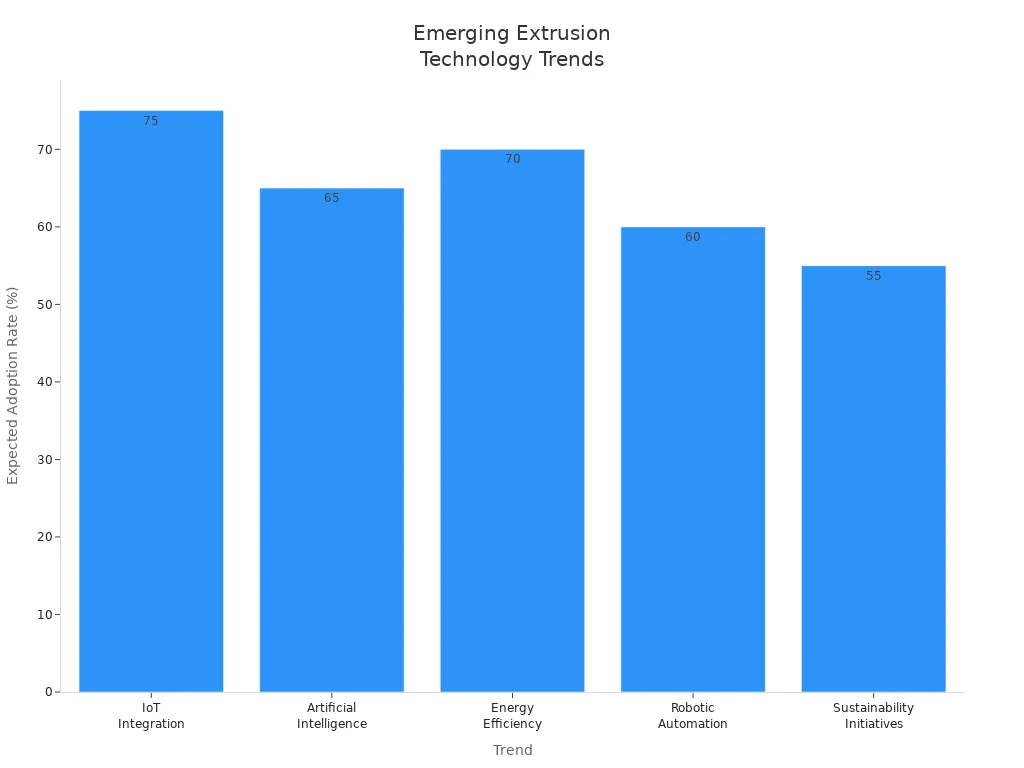
I see rapid changes in extrusion technology shaping the future of manufacturing. IoT integration allows real-time monitoring and analytics, ngcono ukusebenza kahle. Artificial intelligence supports predictive maintenance and optimization, which boosts performance. Energy efficiency is a growing focus, with manufacturers seeking ways to reduce consumption in the extrusion process. Robotic automation streamlines material handling and quality control. Sustainability initiatives drive the use of recycled materials and eco-friendly processes.
| Okuthrendayo | Incazelo | Umthelela Ekusebenzeni Kahle | Isilinganiso Sokutholwa Esilindelwe (%) |
|---|---|---|---|
| Ukuhlanganiswa kwe-IoT | Ukuqapha kwesikhathi sangempela kanye nezibalo | Phezulu | 75% |
| Ukuhlakanipha okungekhona okwangempela | Ukugcinwa kokubikezela kanye nokwenza kahle | Phezulu kakhulu | 65% |
| Ukusebenza Kwamandla | Reducing energy consumption | Maphakathi | 70% |
| I-Robotic Automation | Ukuphatha impahla kanye nokulawulwa kwekhwalithi | Phezulu | 60% |
| Izinyathelo Zokusimama | Izinto ezigaywe kabusha nezinqubo eco-friendly | Maphakathi | 55% |
I notice advancements in material compatibility, especially with bioplastics, are transforming the extrusion industry. Many manufacturers now prioritize flexibility in equipment design, with modular systems allowing easy upgrades and modifications. Sustainability is essential, with most manufacturers focusing on energy-efficient equipment and waste reduction strategies. Smart extrusion machines reduce downtime by 20%, which improves overall efficiency and quality control. I always stay updated on these trends to maintain high performance and support new applications in plastic extrusion.
Ithiphu: I recommend reviewing the overview of extruder machines in manufacturing regularly. Staying informed about new types of extrusion machines and screw designs helps me adapt to changing production needs and maintain scalability.
I recognize that each extrusion system offers unique advantages and limitations. My experience shows that single-screw extruders excel in high-volume production, while twin-screw systems provide superior mixing and flexibility. Ram and co-extrusion machines support specialty applications. I always use comparison tables and selection criteria to evaluate:
- Technical capabilities and long-term reliability
- Customer service and design assistance
- Quality standards and energy efficiency
I recommend manufacturers understand their application needs and consult extrusion experts for optimal results.
FAQ
Uyini umehluko omkhulu phakathi kwe-single-screw kanye ne-twin-screw extruder?
I see that single-screw extruders use one rotating screw for basic mixing. Twin-screw extruders use two screws for advanced mixing and better control. I choose twin-screw systems for complex materials and higher flexibility.
How do I decide which extrusion system fits my application?
I start by reviewing my material type, umthamo wokukhiqiza, and product complexity. I match these needs to the strengths of each system. I consult with experts if I face unique requirements.
Can I process recycled materials with extrusion systems?
I process recycled materials using twin-screw extruders. These machines handle variable feedstocks and additives better than single-screw systems. I monitor quality closely to ensure consistent results.
How often should I perform maintenance on my extruder?
I schedule routine inspections every month. I check for screw wear, barrel condition, and control system performance. Regular maintenance prevents downtime and extends equipment life.
What are the most common extrusion defects I encounter?
I often see surface roughness, ukukhukhuleka kwe-dimensional, and melt fractures. I address these by adjusting temperature, isivinini sesikulufa, and material feed. I use process monitoring to catch issues early.
Is co-extrusion suitable for all materials?
I use co-extrusion mainly for thermoplastics. Some materials may not bond well in multi-layer profiles. I test material compatibility before starting production.
How does automation improve extrusion quality?
I rely on automation for real-time monitoring and precise control. Automated systems reduce human error, maintain consistent output, and improve overall product quality.
What safety measures do I follow during extrusion?
I wear protective gear and follow lockout procedures. I keep the work area clean and check emergency stops regularly. I train my team on safe operation and emergency response.