

IiNkqubo zeExtrusion Ezahlukeneyo ziFumana njani ukuze kwenziwe
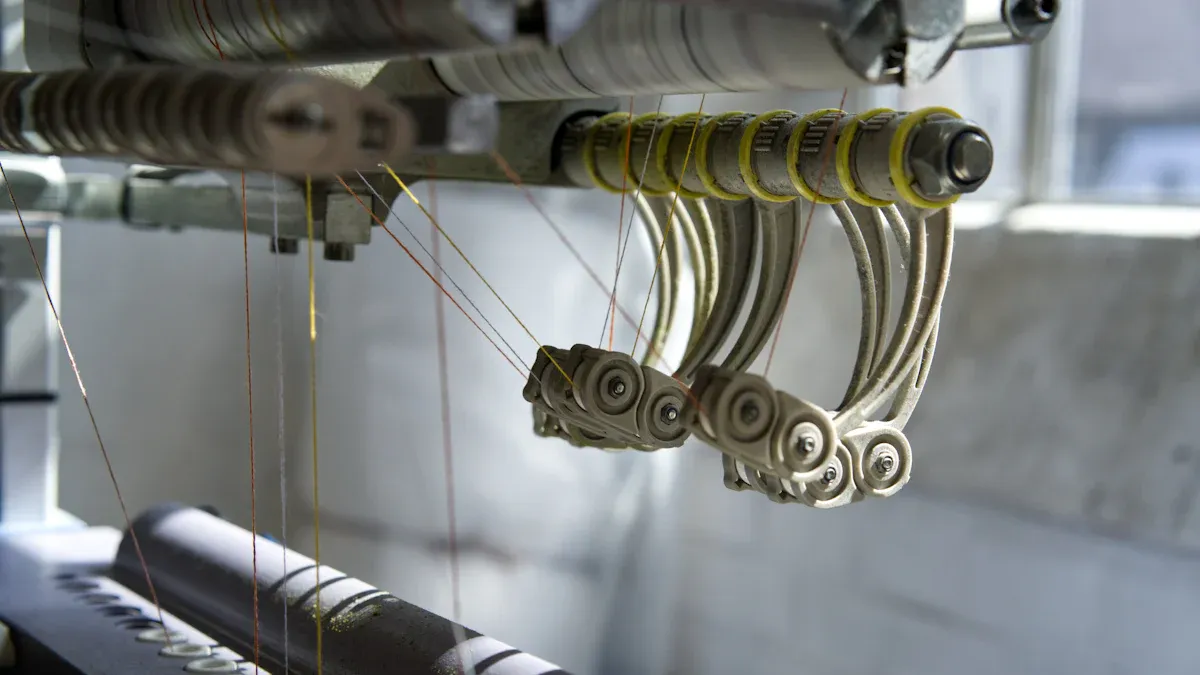
Ndibonile ukuba ukhetho lwenkqubo ye-extrusion ibumba yonke inkqubo yokuvelisa. Uninzi lwabavelisi basebenzisa iisikrikrini esinye, ezibamba a 62% ukwabelana kwimakethi, ngelixa iinkqubo ze-twin-screw ziphendula 38%.
| Uhlobo lweNkqubo ye-Extrusion | Ipesenti yeSabelo seMarike |
|---|---|
| Isikrufu esinye | 62% |
| I-twin-screw | 38% |
Ukukhetha phakathi kweentlobo ze-screw kuchaphazela ukusebenza kakuhle, umgangatho wemveliso, kunye nokuhambelana kwezinto. Xa ndifanisa iteknoloji ye-extrusion kwiinjongo zokuvelisa, Ndiphawula ukuphuculwa kweendleko-zokusebenza, uyilo oluguquguqukayo, kunye nozinzo.
| Umba | Impembelelo kuMveliso ngokuSebenzayo | Impembelelo kuMgangatho weMveliso |
|---|---|---|
| Iiparamitha ezilawulwayo | Ugcina umgangatho wemveliso efanayo | Iphumeza unyamezelo lwemicrometer |
Ndithembele kwiiNkqubo eziGqibeleleyo zokuKhuthaza ukuhambisa iziphumo ezingaguqukiyo kunye nokusebenza okuchanekileyo kwesijiva.
Izinto eziphambili zokuThatha
- Khetha inkqubo efanelekileyo ye-extrusion esekelwe kwiinjongo zakho zokuvelisa kunye neempawu eziphathekayo ukuze uqinisekise ukusebenza kakuhle.
- I-extruders ye-screw single ifanelekile kwimveliso ephezulu yevolumu yezinto ezilula, ngelixa iinkqubo ze-twin-screw zigqwesa ekuxubeni izinto ezinzima.
- Ukugcinwa rhoqo kunye nokubeka iliso kwiinkqubo ze-extrusion kuthintela ixesha lokuphumla kunye nokuphucula ukusebenza kakuhle, ukuqinisekisa umgangatho wemveliso ongaguqukiyo.
- Qwalasela i-screw diameter kunye ne-L / D ratio xa ukhetha i-extruder, njengoko ezi zinto zinempembelelo ekusebenzeni nasekuxubeni kakuhle.
- Sebenzisa i-co-extrusion ekwenzeni iimveliso ezinamaleko amaninzi ezidibanisa izinto ezahlukeneyo, ukwandisa ukusebenza kunye nokusebenza.
- Vavanya ukuhambelana kwezinto kunye nenkqubo ekhethiweyo ye-extrusion ukuphepha iziphene kunye nokuqinisekisa umgangatho ophezulu wemveliso.
- Hlala unolwazi malunga neendlela ezivelayo kwitekhnoloji ye-extrusion, njenge-IoT kunye ne-AI, ukuphucula ukusebenza kakuhle kunye nokuziqhelanisa nokutshintsha iimfuno zemveliso.
- Yenza uluhlu lwezinto ezingundoqo phambi kokuba ukhethe i umatshini wokukhupha ukuphepha iimpazamo ezibiza kakhulu kunye nokuqinisekisa ukuba inkqubo ihlangabezana neemfuno zesicelo.
Ukukhetha iNkqubo eLungileyo yokuVelisa
Imiba ephambili kuKhetho lwesixokelelwano
Andizange ndifumane i-universal “ngcono” inkqubo extrusion. Amava am andixelela ukuba ukhetho olufanelekileyo luxhomekeke kwiinjongo zokuvelisa, iimpawu eziphathekayo, kunye neemfuno zemveliso. Xa ndikhetha inkqubo ye-extrusion, Ndihlala ndithelekisa amandla ayo kwisicelo esicetywayo. Le ndlela iqinisekisa ukuba inkqubo ye-extrusion inikezela umgangatho ohambelanayo kunye nokusebenza kakuhle.
Ndicinga ezininzi izinto ezibalulekileyo ngaphambi kokwenza ukhetho lomatshini we-extrusion. Ndisebenzisa le theyibhile ilandelayo ukukhokela isigqibo sam:
| Umba | Inkcazo |
|---|---|
| Injongo yoPhando | Injongo yomatshini (imfundo, uphuhliso lwezixhobo, okanye imveliso yokulinga yorhwebo) |
| Uhlobo lwezinto eziphathekayo | Uhlobo lwee-polymers eziza kuqhutyelwa phambili (ubushushu-ubuthathaka, eguquguqukayo, okanye esebenzayo) |
| Umthamo Wemveliso ofunekayo | Umthamo wokusebenza (iigram okanye iikhilogram ngeyure) |
| IiMfuno zeNkqubo ePhezulu | Isidingo sesitofu segesi, ivacuum degassing, okanye isakhono se-extrusion esisebenzayo |
| Uhlahlo lwabiwo-mali kunye neNdawo yeLabhoratri | Uqwalaselo lokwandiswa kweemodyuli zohlaziyo lwexesha elizayo |
| IiMfuno zexesha elizayo zokulinganisa | Ukuhambelana neemodyuli ze-industrial extrusion zokunyusa imveliso |
Ndihlala ndinikela ingqalelo kwi-screw diameter kunye ne-L / D ratio. Ezi parameters zinquma umthamo wokuphuma kunye nokusebenza kokuxuba. Ndikhetha i-extruder enemveliso elungileyo, enokuqala ukusuka 0.25 kg/h ukuya 150 kg/h kuxhomekeke kwimodeli. Uyilo lwemodyuli lundivumela ukuba nditshintshe amalungu ngokukhawuleza, enika ukuguquguquka kophando kunye nophuhliso. Ndithembele kwiinkqubo zolawulo oluphezulu, njenge-PLC kunye ne-HMI, ukufezekisa ulawulo oluchanekileyo kunye nokulandelelwa kwedatha.
Xa ndivavanya iintlobo zoomatshini bokukhupha, Ndiqwalasela ubunzima beprofayili kunye nokunyamezela okufunekayo. Uyilo oluntsonkothileyo lufuna izixhobo ezichanekileyo kwaye lunokunyusa iindleko. Ndikwajonga ubungakanani beodolo. Umthamo ophezulu unciphisa iindleko zeyunithi nganye kuba iindleko zokuseta zisasazeka kwiiyunithi ezininzi. Ukugqiba kunye nemisebenzi yesibini, ezifana anodizing okanye CNC machining, yongeza ixabiso kunye neendleko.
Ingcebiso: Ndincoma ukwenza uluhlu lokutshekisha le miba ngaphambi kokuba uqale inkqubo yokukhetha umatshini we-extrusion. Lo mkhuba unceda ukuphepha iimpazamo ezibiza kakhulu kwaye uqinisekisa ukuba inkqubo ihambelana nezicelo ezijoliswe kuyo.
Impembelelo kuMveliso ngokuSebenzayo
Ndiqaphela ukuba inkqubo ye-extrusion endiyikhethayo ichaphazela ngokuthe ngqo ukusebenza kwemveliso. Uyilo lwesijivu, ukukwazi ukuxuba, kunye neteknoloji ye-extrusion zonke zidlala indima kwindlela eqhuba kakuhle ngayo inkqubo. Umzekelo, a isikrufu esinye isikrufu ihlala isebenza kakuhle kwiipolymers ezilula kunye nokuveliswa kwevolumu ephezulu. I-twin-screw extruders iphatha izinto ezinzima kunye nezicelo eziphambili, njenge-extrusion esebenzayo okanye imixube ekhethekileyo.
Ndibonile ukuba i-viscosity ephezulu kunye nomxholo oqinileyo kwizinto ezinamandla zingabangela ukuvala, i-extrusion engazinzanga, kunye nokunxiba imilomo. Le miba inciphisa ukusebenza kakuhle kunye nokukhusela ukhuseleko. Ndilungisa le miceli mngeni ngokulungiselela uyilo lwenkqubo yokuxova. Ukuphucula ukufana kokuxuba kunye nokuchaneka kwe-extrusion kwandisa kokubili ukhuseleko kunye nokusebenza kakuhle.
Ndisebenzisa inkqubo ye-twin-screw extrusion yamanqanaba amabini xa ndifuna ukuzinza okukhulu kunye nokulungelelanisa. Ukulinganisa kubonisa ukuba olu yilo luphucula iimpawu zokuhamba kunye nokugcina umphumo ohambelanayo. Ndihlala ndibeka iliso kwinkqubo ye-extrusion ukuqinisekisa umgangatho ofanayo kunye nokunciphisa ixesha lokunciphisa.
| Uhlobo lobungqina | Inkcazo |
|---|---|
| Imingeni kwiMveliso eyoNgezelelweyo | I-viscosity ephezulu kunye nomxholo oqinileyo wezinto ezinamandla zikhokelela kwimibandela efana nokuvala, i-extrusion engazinzanga, kunye nokunxiba imilomo, echaphazela ukusebenza kakuhle kunye nokhuseleko. |
| Ukuxova iNkqubo yokuSebenza | Uyilo lwenkqubo yokuxova luchaphazela ukufana kokuxuba izinto kunye nokuchaneka kwe-extrusion, ngolungelelwaniso oluthile olucetywayo ukuqinisa ukhuseleko nokusebenza kakuhle. |
| Extrusion System Design | Inkqubo ye-twin-screw extrusion yamanqanaba amabini yenzelwe ukuphucula uzinzo kunye nokulungelelaniswa kwinkqubo yokukhutshwa., ngokulinganisa okutyhila iimpawu zokuhamba kweenkqubo ezahlukeneyo. |
Ndihlala ndifanisa inkqubo ye-extrusion kwiimfuno zemveliso. Lo mkhuba uqinisekisa ukuba i-extruder ihambisa umgangatho ofunekayo kunye nokusebenza. Ndikhetha uqwalaselo lwe-screw olusekwe kuhlobo lwemathiriyeli kunye nobunzima besicelo. Ndithembele kubuchwephesha be-extrusion obuphezulu ukunyusa ukusebenza kakuhle kunye nokugcina imigangatho ephezulu yomgangatho wemveliso.
Phawula: Ndincoma ukugcinwa rhoqo kunye nokuhlolwa kwenkqubo ukugcina ukusebenza kakuhle kunye nokuthintela ixesha lokuphumla elingalindelekanga.
Iindidi zeNkqubo yokuGqibezela yokuGqibela
Xa ndivavanya iinkqubo ezipheleleyo ze-extrusion zokwenza, Ndihlala ndiqala ngokuchonga eyona nto iphambili iintlobo koomatshini extrusion. Olona khetho luxhaphakileyo lubandakanya oomatshini bokukhupha isikrufu esinye, oomatshini be-twin screw extrusion, kunye noomatshini benkunzi yegusha. Inkqubo nganye inika amandla awodwa kunye nemida, ngoko ke ndigxile ekutshatisaseni itekhnoloji efanelekileyo kwisicelo.
| Uhlobo loMtshini wokuKhulisa |
|---|
| Oomatshini beSikruphu esinye |
| Oomatshini be-Twin Screw Extrusion |
| Oomatshini beRam Extrusion |
Ukukhutshwa kweScrew esinye
Ndihlala ndisebenzisa i-screw extruder enye kwiinkqubo ezithe ngqo ze-extrusion. Lo matshini ubonisa isikhonkwane esinye esijikelezayo ngaphakathi komphanda oshushu. Isikrufu sityhala imathiriyeli phambili, iyayinyibilikisa, kwaye uyilonge ngokufa. Ndithembele kule nkqubo yokuvelisa umthamo ophezulu we-thermoplastics, iimveliso zokutya, kunye neekhompawundi zerabha. Ukulula koyilo kwenza kube lula ukusebenza kunye nokugcina.
| Ishishini | Inkcazo yesicelo | Uqikelelo lokuKhula kweMarike |
|---|---|---|
| Iiplastiki | Ukunyibilika kunye nokwenza i-thermoplastics, iqhutywa kukunyuka kwePE kunye nokusetyenziswa kwePP. | CAGR malunga 4-5% nge 2030 |
| Ukulungiswa kokutya | Ukuvelisa ukutya okugayiweyo okufana nesnacks kunye neecereals. | Imarike ukufikelela ngaphaya $75 billion nge 2026 |
| Ukudibanisa irabha | Ukuxuba kunye nokubumba irabha yamatayara kunye neendawo zemoto. | Imveliso yeTire iza kugqitha 2 iiyunithi zeebhiliyoni nge 2025 |
| I-Biomedical | Imveliso ye-Biopolymer yokupakisha kunye nezixhobo zonyango. | Imarike ekhulayo ngeteknoloji entsha ye-extrusion |
Nangona kunjalo, Ndiyayibona i imida yesikrufu esinye. Ukufezekisa ukuxuba okufanayo kunokuba nzima, ngakumbi xa ndongeza izihluzi okanye izongezo. Pressure consistency often varies with feedstock changes, and high-viscosity materials may not flow well, leading to defects. These challenges guide my extrusion machine selection when I need higher quality or more complex processing.
Ingcebiso: For simple, high-volume applications, I recommend starting with a single screw extruder. For advanced mixing or specialty materials, consider other options.
Twin-Screw Extrusion
When I require advanced processing, I turn to i-twin screw extruder iteknoloji. This system uses two screws that rotate together inside the barrel. The screws can intermesh or run parallel, depending on the design. I find that twin screw extruders deliver superior mixing efficiency, better plasticizing for high-viscosity materials, and enhanced control over temperature and pressure. These features improve product quality and process consistency.
I-twin screw extrusion ikwandivumela ukuba ndiqhube amanyathelo amaninzi kumatshini omnye. Ndiyakwazi ukuxuba, nyibilika, ikroba, kunye nezixhobo zokusabela ngexesha lokudlula elinye. Oku bhetyebhetye kunciphisa inkunkuma kunye nokukhawulezisa imveliso. Xa uthelekisa amawele jijwa vs extruders Screw omnye, Ndibona imbuyekezo ekhawulezayo kutyalo-mali kunye neziphumo ezifanayo kunye neenkqubo ze-twin screw, ngakumbi kwimixube entsonkothileyo okanye iiplastiki ezisetyenzisiweyo.
Iintlobo ezincinci ze-Twin-Screw
Ndihlala ndicinga ngeentlobo ezahlukeneyo zoomatshini be-extruder ngaphakathi kodidi lwe-screw yamawele. Ubumbeko lwesijivu luchaphazela ukusebenza, ukusebenza kakuhle, kunye noluhlu lwezicelo.
Intermeshing
I-intermeshing twin screw extruders ibonisa izikrufu ezidibana kunye kunye nemesh kunye. Olu yilo lubonelela uthutho lwemathiriyeli oluchanekileyo kunye nemikhosi ephezulu yokucheba. Ndisebenzisa iisistim zokudibanisa ukuphuculwa kokudibanisa kunye nokuhambelana, ngakumbi xa ndifuna ukusasaza izongezo okanye izihluzi ngokulinganayo.
Non-Intermeshing
I-non-intermeshing twin screw extruders inezikrufu ezijikelezayo ngaphandle kokudibana. Olu cwangciso lubonelela ngokuxuba okuthambileyo kunye nokucheba okuncinci. Ndikhetha uyilo olungaphambanisiyo kwizinto ezibuthathaka ezifuna uxinzelelo oluncinci koomatshini.
Ukujikeleza ngokubambisana
I-twin screw extruders ezijikelezayo zinezikrufu ezijika kwicala elinye. Le subtype igqwesa ekuxubeni ukusebenza kakuhle kunye nokuthuthwa kwezinto eziphathekayo. Ndisebenzisa iinkqubo ezijikelezayo kwi-extrusion esebenzayo, ukutshatyalaliswa, kunye nokusebenza okuphezulu kwepolymer compounding. Nangona kunjalo, Amazinga aphezulu okucheba anokuthoba izinto ezingeva lubushushu, ke ndibeka iliso kuyilo lwe-screw kunye nokupholisa ngokusondeleyo.
| Udidi olusezantsi | Ukusetyenzwa kwezakhono kunye nezinto eziluncedo | Unyino kunye nokuqwalaselwa | Ii-Applications ezilungileyo |
|---|---|---|---|
| Co-Rotating Twin-Screw Extruder | Ukusebenza kokuxuba okuphezulu, ilungele i-extrusion esebenzayo, amazinga aphezulu okucheba | Umngcipheko wokuthotywa kwezinto, ifuna uyilo oluchanekileyo | Polymer compounding, iinanocomposites, I-lab-to-production workflows |
I-Counter-Rotation
I-counter-rotating twin screw extruders ibonisa izikrufu ezijikela kumacala achaseneyo. Olu lungelelwaniso luvelisa amandla asezantsi okucheba, ekhusela izinto ezibuthathaka. Ndithembele kwiinkqubo ezichaseneyo ezijikelezayo kwiiseramikhi, biopolymers, kunye nemixube yamachiza. Uyilo lukwabonelela ngokwakhiwa koxinzelelo oluhle kunye nokutywinwa okusebenzayo, nangona ubunzima bokuxuba busezantsi kuneenkqubo ezijikelezayo.
| Udidi olusezantsi | Ukusetyenzwa kwezakhono kunye nezinto eziluncedo | Unyino kunye nokuqwalaselwa | Ii-Applications ezilungileyo |
|---|---|---|---|
| I-Counter-Rotating Twin-Screw Extruder | Amandla okucheba asezantsi, Ukwakhiwa koxinzelelo oluhle, ukutywinwa okusebenzayo | Ubunzima bokuxuba okuphantsi, ukutywina okunzima ngakumbi kunye noyilo lokuzala | IiCeramics, biopolymers, amayeza |
Xa ndikhetha inkqubo epheleleyo ye-extrusion, Ndihlala ndithelekisa uhlobo lwesijija kunye noqwalaselo kwizinto kunye neemfuno zenkqubo. Le ndlela iqinisekisa umgangatho ophezulu, ukusebenza kakuhle, kunye nokusebenza okuthembekileyo kuzo zonke izicelo.
Ram Extrusion
Ndihlala ndikhetha i-ram extrusion xa ndifuna ukucubungula izinto ezifuna uxinzelelo oluphezulu kunye nokubunjwa okuchanekileyo. Le ndlela isebenzisa inkunzi ye-hydraulic ukutyhala izinto kwi-barrel eshushu kwaye ife, kunokuxhomekeka kwisikrufu esijikelezayo. Ndifumana ii-extruders zenkunzi zegusha ziluncedo ngakumbi ekwenzeni iimveliso ezivela kwiiplastiki ze-thermosetting, iiseramikhi, kunye ne-PTFE. Inkqubo ivumela ukuba ndenze iintonga, imibhobho, kunye neeprofayili ezinemilinganiselo ehambelanayo.
I-Ram extrusion igqame phakathi kweentlobo zoomatshini bokukhupha ngenxa yokuba iphatha izinto ezinokuthi ii-screw extruders zemveli zingakwazi ukuqhubekeka ngokufanelekileyo.. Ndisebenzisa le teknoloji kumashishini njengeeplastiki, ukutya, kunye namayeza. Umzekelo, Ndivelisa amashwamshwam kunye neecereals ezinemilo eyodwa, kwaye ndenza iipilisi kunye ne-capsules kunye neenkcukacha ezichanekileyo.
Ndiqaphele izibonelelo ezininzi kunye nemingeni xa usebenzisa ii-ram extruders:
- IiRam extruders zigqwesa ekuveliseni iimveliso ezikumgangatho ophezulu ukusuka kwizinto ezinzima-ukusetyenzwa.
- Ndithembele kuzo kwizicelo apho itekhnoloji ye-screw extrusion isilela, ezifana ne-PTFE kunye neeprofayili ze-ceramic.
- Inkqubo inikezela ngomgangatho ongaguqukiyo kunye nokuchaneka komda.
- Iindleko eziphezulu zokusebenza zinokuchaphazela ukusebenza kakuhle kunye nokusebenza ngokubanzi.
- Imimiselo engqongqo kwimveliso yeplastiki ifuna ulawulo olucokisekileyo lwenkqubo.
- Ukhuphiswano olusuka kwiinkqubo ezizezinye ze-extrusion lundityhala ekwandiseni ukhetho lwam lomatshini we-extrusion.
Ndihlala ndilinganisa ezi zinto phambi kokukhetha i-ram extrusion kwiinkqubo ezipheleleyo ze-extrusion. Ndibeka iliso kwinkqubo ngokusondeleyo ukugcina umgangatho kunye nokusebenza kakuhle, ngakumbi xa usebenza ngezinto ezikhethekileyo.
Co-Extrusion
I-Co-extrusion indenza ndidibanise izixhobo ezininzi kwimveliso enye, Ukudala iiprofayili ezinomaleko amaninzi ezineempawu eziphuculweyo. Ndisebenzisa le teknoloji ye-extrusion ukudibanisa i-thermoplastics eyahlukeneyo, umaleko ngamnye unika iimpawu ezizodwa. Inkqubo ibandakanya ukutyhala izixhobo ezininzi ngedayisi enye, okukhokelela kwiprofayili emanyeneyo ehlangabezana neemfuno ezintsonkothileyo zemveliso.
Ndithembele kwi-co-extrusion yokuvelisa iimveliso ezifuna ukuqina, ukuba bhetyebhetye, kunye nesibheno sobuhle. Le ndlela indivumela ukuba ndilungelelanise umgangatho womaleko ngamnye, ukuphucula ukusebenza kunye nokusebenza. Ndibona i-co-extrusion njengenkqubela phambili ephambili kwiinkqubo ezipheleleyo ze-extrusion, ngakumbi xa ndifuna ukuvelisa izinto ezineempawu ezizodwa.
Amashishini axhamla kwi-co-extrusion ngeendlela ezininzi:
- Ukwakhiwa: Ndenza iifestile zefestile, izakhelo, kunye neziqwenga ze-trim ezidibanisa amandla kunye nesibheno esibonakalayo.
- Ivenkile: Ndakha iishelufu kunye neenkqubo zokubonisa ezomelele kwaye zinomtsalane.
- Imiqondiso: Ndivelisa iimpawu ezikhanyisiweyo kunye nezakhelo ezinokugqiba okucocekileyo kunye nokusebenza okuthembekileyo.
I-Co-extrusion yandisa uluhlu lwezicelo zeteknoloji ye-extrusion. Ndiyisebenzisa ukuhlangabezana neenjongo zemveliso ezifunekayo kwaye ndihambise iimveliso ezinomgangatho ophezulu. Xa ndikhetha i-extruder ye-co-extrusion, Ndicinga uyilo lokujiya, ulawulo lwenkqubo, kunye nokuhambelana kwezinto. Le ndlela iqinisekisa ukusebenza kakuhle kunye neziphumo ezingaguqukiyo.
Ingcebiso: Ndincoma i-co-extrusion yeeprojekthi ezifuna iiprofayili ezinamaleko amaninzi kunye nokusebenza kwemveliso eyandisiweyo. Ukukhetha ngononophelo umatshini we-extrusion kunye nokujongwa kwenkqubo kubalulekile ekufezekiseni umgangatho ophezulu.
Ulwakhiwo kunye nokuSetyenziswa kweeNkqubo ze-Extrusion
I-Screw kunye ne-Barel Design
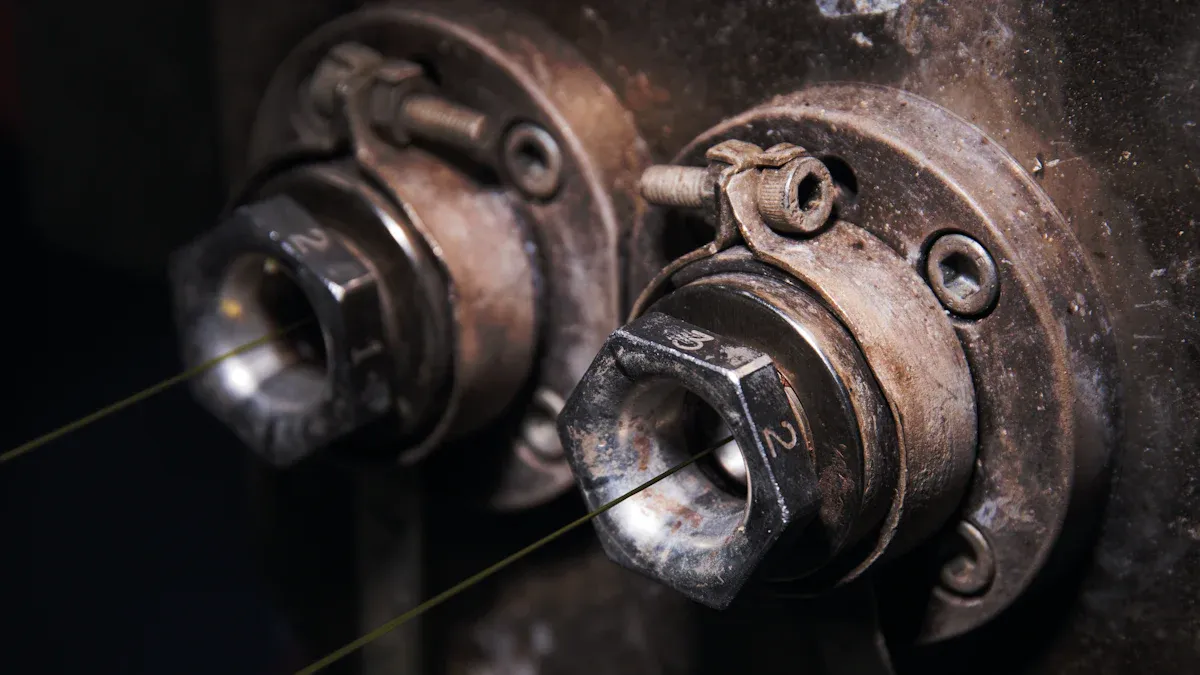
Ndihlala ndiqala ukhetho lwam lomatshini we-extrusion ngokuphonononga isikrufu kunye noyilo lomphanda. Ijometri yesikrufu imisela ukuba i-extruder inyibilika njani ngokufanelekileyo, imixube, kwaye ihambisa imathiriyeli. Ndilungisa ubude ukuya kwi-diameter (L/D) umlinganiselo wokulawula ixesha lokuhlala kunye nokuxuba. Umlinganiselo ophezulu we-L / D uvumela ukuba izinto eziphathekayo zinyibilike kwaye zidibanise ngokucokisekileyo, okuyimfuneko ekuphumezeni umgangatho ofanayo kwimveliso yokugqibela. Ndithembele kuyilo lwesithintelo kwi-screw barrel ukugcina uzinzo olunyibilikayo kunye nokuthintela ukuthotywa, ngakumbi xa ndilungisa izinto ezibuthathaka. I-parallel twin screw kunye noyilo lwemiphanda dlala indima ebalulekileyo kwisantya se-extrusion, umgangatho wemveliso, kunye nokusebenza kakuhle kwamandla. Ndisebenzisa izowuni kunye nolawulo oluchanekileyo lobushushu ukuzinzisa ukunyibilika nokunqanda iigesi ezivalelekileyo, okuphucula ukuxinana kunye nokuhambelana. The surface finish of the barrel and the geometry of the screw also influence energy efficiency and product consistency. I always match the screw design to the specific requirements of the application to maximize performance.
- A higher L/D ratio improves mixing and melt uniformity, which is essential for high-quality products.
- Barrier designs help maintain melt stability and prevent degradation.
- Screw geometry and barrel surface finish impact energy efficiency and product consistency.
Material Movement and Mixing
I focus on efficient material movement and mixing to ensure the extrusion process runs smoothly. ndisebenzise robust pneumatic or mechanical conveyors to transfer raw materials quickly and with minimal maintenance. Advanced mixer designs guarantee thorough and uniform compounding, which prevents variations in finished products. I integrate automated controls with PLC systems for real-time monitoring and recipe management. This approach allows me to oversee production seamlessly and adjust parameters as needed. I select scalable configurations to accommodate both small workshops and large industrial operations. Enhanced dust control features keep the workplace clean and safe. Consistent, homogeneous blends reduce quality fluctuations and improve throughput. Automated systems minimize manual handling, which shortens production cycles and lowers labor costs. I always prioritize these features when I evaluate types of extrusion machines for new applications.
| Uphawu | Inkcazo |
|---|---|
| Efficient Material Transfer | Rapid, low-maintenance movement of raw materials |
| Precision Mixing | Thorough, uniform compounding for consistent quality |
| Ulawulo oluzenzekelayo | Real-time monitoring and recipe management |
| Scalable Configurations | Flexible layouts for any production capacity |
| Enhanced Dust Control | Cleaner, safer workplace |
| Improved Product Quality | Homogeneous blends, reduced fluctuations |
| Increased Throughput | Shorter production cycles, less manual handling |
| Reduced Waste | Accurate measurement, iindleko ezisezantsi |
| Lower Labor Costs | Automation frees staff for value-added tasks |
| Safer Working Environment | Enclosed lines and dust control |
Process Control and Output Quality
I depend on advanced process control technology to maintain high output quality in extrusion manufacturing. I select high-quality thermoplastics to ensure the final products meet strength, ukuqina, and flexibility requirements. I monitor extrusion parameters closely to reduce discrepancies during production. Dimensional accuracy remains a top priority for me, as it guarantees that components fit their intended applications. I use surface inspection to detect defects such as warping or air bubbles, which helps me maintain consistent product quality. Early detection of issues reduces waste and saves on production costs. I always ensure that my process complies with regulatory standards, which protects both my business and my customers. High-quality products enhance my brand reputation and increase customer satisfaction. Advanced monitoring systems allow me to increase production speed without sacrificing accuracy, which boosts overall efficiency in complete extrusion systems.
| Element/Advantage | Inkcazo |
|---|---|
| Ukukhethwa kwezinto | Ensures strength, ukuqina, kunye nokuguquguquka |
| Process Monitoring | Reduces discrepancies and maintains consistency |
| Dimensional Accuracy | Guarantees proper fit for all applications |
| Surface Inspection | Identifies defects early for better quality |
| Umgangatho weMveliso ehambelanayo | Every batch meets high standards |
| UkuNcitshiswa kweNkunkuma | Saves material and production costs |
| Ukuthotyelwa koMgaqo | Meets legal and safety requirements |
| Customer Satisfaction | Builds reputation and loyalty |
| Process Efficiency | Increases speed while maintaining accuracy |
Ingcebiso: I recommend regular calibration and maintenance of all extrusion technology to sustain peak performance and consistent quality.
Comparing the Extrusion Process
Isikruru esinye vs. Twin-Screw Process
When I compare single-screw and twin-screw extruders, I focus on how each system handles the extrusion process. The screw design shapes the way material moves and mixes. A single-screw extruder uses one helical screw inside a simple, cylindrical barrel. Okuchasene, a twin-screw extruder features two intermeshing screws and a more complex, umphanda uhlala wahlulwe. I see that temperature control in single-screw systems remains basic, while twin-screw machines offer advanced control with multiple heating and cooling zones. This difference impacts both throughput and energy efficiency.
| Umba | Isikruru esiNye Extruder | I-Twin Screw Extruder |
|---|---|---|
| I-Screw Design | Single helical screw | Izikrufu ezimbini ezidibanisayo |
| Ulwakhiwo lomphanda | Elula, cylindrical | Ngobunzima ngakumbi, often segmented |
| Ulawulo lobushushu | Basic heating/cooling | Ikwinqanaba eliphezulu, multi-zone |
| Umthamo wemveliso | Phakathi | Phezulu |
| Ukusetyenziswa kwamandla | Ngokubanzi phezulu | Ukusebenza ngakumbi |
| Ukuba bhetyebhetye kwi-Inputput | Ilinganiselwe | Phezulu |
I rely on twin-screw extruders for higher output and better energy efficiency. When I need flexibility in throughput or advanced process control, I choose twin-screw systems. For straightforward applications, single-screw extruders still provide reliable performance.
Material Compatibility in the Extrusion Process
Material compatibility plays a critical role in extrusion machine selection. I always match the screw configuration to the type of material I plan to process. Single-screw extruders handle standard thermoplastics well, but they struggle with materials that require intensive mixing or have high filler content. Twin-screw extruders excel with specialty compounds, iiplastiki ezisetyenzisiweyo, and reactive materials. I use segmented screws to adjust mixing and shearing for each application.
When I work with complete extrusion systems, I consider how each screw design affects the final product. Twin-screw extruders allow me to process a wider range of materials, including those with additives or sensitive properties. This flexibility supports more types of extrusion machines and expands the range of possible applications.
Ingcebiso: I recommend evaluating the chemical and physical properties of your raw materials before choosing an extruder. This step ensures compatibility and reduces the risk of defects.
Umgangatho weMveliso kunye nokuhambelana
I know that the extrusion process directly impacts the quality of the finished product. Modern extrusion lines integrate automation and advanced control platforms. These systems analyze multiple variables at once, which helps me maintain consistent quality across every batch.
Quality consistency is a productivity multiplier. Advanced control platforms analyze patterns across multiple variables simultaneously, ensuring that product quality is maintained throughout the extrusion process.
I monitor key factors such as stable melt pressure, izinga lemveliso, and surface finish. Stable melt pressure prevents warping and dimensional drift. Higher and more stable output reduces scrap rates and downtime. Better surface finish and precise dimensional control enhance the impact on the quality of the finished product.
| Key Factors | Impact on Quality and Consistency |
|---|---|
| Stable melt pressure | Prevents dimensions from drifting or warping |
| Higher and more stable output | Reduces scrap rates and downtime |
| Better surface finish | Enhances overall product quality |
| Dimensional control | Ensures precision in final product specifications |
| Faster ROI | Improves profitability for manufacturers |
Xa uthelekisa amawele jijwa vs extruders Screw omnye, I see that twin-screw systems deliver better consistency and lower operational cost. I achieve faster ROI and improved performance by investing in advanced extrusion technology. I always prioritize process monitoring and automation to ensure high quality and efficiency in production.
- Higher and more stable output
- Lower scrap and downtime
- Better surface finish and dimensional control
- Reduced operational cost
- Faster ROI
I rely on these strategies to maximize the benefits of extrusion and deliver products that meet strict manufacturing standards.
Performance Comparison Table
Ukuphumelela kunye nokuSebenza
I always evaluate throughput and efficiency when I compare types of extrusion machines. Throughput measures how much material the extruder processes in a given time. Efficiency reflects how well the screw design converts raw material into finished products with minimal waste and energy use. I see that single-screw extruders often deliver steady throughput for standard polymers. I-twin-screw extruders, with their advanced screw geometry, handle higher output and maintain better energy efficiency, especially for complex blends.
| Uhlobo lwe-Extruder | Umsebenzi (kg/h) | Ukusebenza kakuhle kwamandla | Best Use Cases |
|---|---|---|---|
| Isikrofoni esinye | 50–500 | Phakathi | Umthamo ophezulu, simple polymers |
| I-Twin-Screw | 100–1000+ | Phezulu | Complex blends, specialty jobs |
| Ram Extruder | 10–100 | Low–Moderate | PTFE, iiseramikhi, okukhethekileyo |
| Co-Extrusion Systems | Iyahluka | Phezulu | Multi-layered profiles |
I always match the screw configuration to the material and production requirements. This approach ensures the process delivers consistent quality and meets manufacturing goals. I rely on complete extrusion systems to maximize throughput and efficiency for every application.
Ingcebiso: I recommend monitoring energy consumption and output rates regularly. This practice helps optimize extrusion machine selection and reduces operational costs.
Maintenance and Reliability
I prioritize maintenance and reliability when I select an extruder. The screw and barrel experience constant wear from abrasive materials and high temperatures. I schedule routine inspections and replace worn components to prevent unexpected downtime. Single-screw extruders require less maintenance due to their simple design. I-twin-screw extruders, with more moving parts and segmented screws, need more frequent checks but offer greater flexibility.
| Uhlobo lwe-Extruder | Iimfuno Zokulondolozwa | Reliability Level | Common Issues |
|---|---|---|---|
| Isikrofoni esinye | Low–Moderate | Phezulu | Occasional screw wear |
| I-Twin-Screw | Moderate–High | Phezulu | Segment wear, seal failure |
| Ram Extruder | Phakathi | Phakathi | Hydraulic leaks, die wear |
| Co-Extrusion Systems | Phezulu (multi-screw) | Phezulu | Synchronization, screw wear |
I use advanced monitoring systems to track screw wear and process stability. This strategy improves reliability and extends the life of my extrusion technology. I always keep spare screws and barrels on hand to minimize downtime during maintenance.
Product Complexity and Flexibility
I value design flexibility in extrusion. The ability to customize the screw and die allows me to create complex profiles for a wide range of applications. I use extrusion to manufacture everything from simple plastic tubing to intricate window frames. I can add reinforcements or special features within the continuous material, which expands my product offerings.
| Umba | Inkcazo |
|---|---|
| Uyilo lokuguquguquka | Extrusion allows for significant design flexibility through die customization, enabling complex profiles. |
| Usetyenziso | Suitable for various applications, including intricate window frames and simple plastic tubing. |
| Ukwenza ngokwezifiso | Manufacturers can include reinforcements or additional features within the continuous material. |
- In MedTech, I must achieve tight tolerances for medical devices.
- I ensure biocompatibility for all medical extrusion products.
- I monitor wall thickness closely, since it affects flow rates and structural strength.
I select the screw configuration and extrusion machine based on the complexity of the design and the required tolerances. This approach guarantees high quality and supports advanced manufacturing needs.
Phawula: I recommend consulting with extrusion experts when planning new product designs. Their experience helps avoid costly mistakes and ensures the right screw and process configuration.
Application Suitability in Manufacturing
High-Volume Manufacturing
I always start my extrusion machine selection by considering the demands of high-volume manufacturing. When I need to produce thousands of units per day, I rely on single-screw extruders. These machines deliver steady throughput and maintain consistent quality. The screw design in single-screw extruders allows me to process standard polymers efficiently. I monitor the process closely to ensure uniform melt and minimize defects. I select the right screw diameter and length to match the production requirements. This approach helps me achieve high efficiency and reduce waste. I use automated controls to track output and maintain quality standards. High-volume applications benefit from robust types of extrusion machines that can operate continuously with minimal downtime. I always keep spare screws and barrels ready to avoid interruptions in production.
Ingcebiso: I recommend scheduling regular maintenance for extruders used in high-volume manufacturing. This practice extends the life of the screw and ensures reliable performance.
Complex Product Manufacturing
When I manufacture complex or multi-component products, I turn to advanced extrusion technology. Twin-screw extruders give me greater control over mixing and material distribution. I use segmented screws to adjust shear and optimize the process for each application. Co-extrusion technology enables me to combine different polymers into multi-layer films and pipes. This method improves barrier properties and enhances strength, ukuba bhetyebhetye, kunye nokumelana neekhemikhali.
| Iteknoloji | Iingenelo |
|---|---|
| Co-extrusion | Enables the creation of multi-layer films and pipes with improved barrier properties, combining different polymers for strength, ukuba bhetyebhetye, kunye nokumelana neekhemikhali. |
I select the screw configuration based on the complexity of the product. For intricate designs, I rely on precise tooling and advanced process monitoring. I always test the extruder setup before full-scale production to ensure quality and performance. Complex applications require careful extrusion machine selection and attention to detail.
Specialty Materials and Customization
I often work with specialty materials that demand custom solutions. I use advanced shaping processes, such as sheet extrusion and thermoforming, to control material characteristics. Sheet extrusion gives me the ability to manage thickness and material distribution with high accuracy. Co-extrusion capabilities allow me to create multi-layer constructions that enhance material properties. I integrate downstream shaping processes to ensure consistent performance in finished components. Engineering services help me optimize component designs and select the best materials for specific applications.
- Advanced shaping processes, such as sheet extrusion and thermoforming, allow for precise control over material characteristics.
- Sheet extrusion provides a foundation for custom material solutions, enabling thickness control and material distribution accuracy.
- Co-extrusion capabilities facilitate the creation of multi-layer constructions, enhancing material properties.
- Integration with downstream shaping processes ensures consistent performance characteristics in finished components.
- Engineering services optimize component designs and material selection, ensuring suitability for specific applications.
I always match the screw design to the requirements of specialty materials. Customization in extrusion depends on selecting the right extruder and process parameters. I monitor quality at every stage to deliver products that meet strict standards. Specialty applications benefit from flexible types of extrusion machines and expert guidance.
Phawula: I recommend consulting with extrusion specialists when working with new materials or custom designs. Their expertise helps achieve the desired quality and performance.
Selection Criteria for Extrusion Systems
Product Design and Complexity
I always start my extrusion machine selection by analyzing the product design and complexity. The geometry of the profile influences the choice of extruder and screw configuration. Complex shapes increase tooling costs and create production challenges. I simplify profile geometry whenever possible to enhance material flow and reduce defects. Smooth transitions in the design prevent disruptions in material flow, which is crucial for consistent extrusion quality. I select the right material early in the process because material choice affects both the properties of the part and the ease of extrusion. This decision impacts manufacturability and overall performance.
- Simplifying profile geometry lowers tooling costs and reduces production challenges.
- Designing for material flow ensures consistent extrusion quality and minimizes defects.
- Choosing the right material early improves manufacturability and product performance.
I match the screw design to the complexity of the product. For intricate profiles, I use advanced screw configurations that optimize mixing and material transport. I rely on precise tooling and process monitoring to maintain high quality. When I work with complex applications, I consult with extrusion technology experts to avoid costly mistakes and ensure the best results.
Ingcebiso: I recommend reviewing the profile geometry and material flow before finalizing the extrusion machine selection. This step helps prevent production issues and supports efficient manufacturing.
Iimpahla zeMathiriyeli
Material properties play a critical role in selecting the right extruder and screw configuration. I identify application requirements such as temperature resistance, Ukuvezwa kwe-UV, and impact durability. I consider mechanical properties like flexibility, ubulukhuni, and tensile strength for the intended use. Environmental conditions influence my material choice, especially when I need weathering resistance or flexibility in cold environments. I evaluate aesthetic and finish requirements, kuquka umbala, gloss, and surface texture, based on project needs. Regulatory and compliance needs guide my selection to ensure materials meet industry-specific standards and certifications.
- Application requirements determine the need for temperature resistance, Ukuvezwa kwe-UV, and impact durability.
- Mechanical properties such as flexibility, ubulukhuni, and tensile strength affect the choice of extruder and screw.
- Environmental conditions require materials that withstand weathering or remain flexible in cold climates.
- Aesthetic and finish requirements influence color, gloss, and surface texture.
- Regulatory and compliance needs ensure materials meet industry standards.
I select the screw design based on the material’s properties. For heat-sensitive materials, I use screws with gentle mixing zones and precise temperature control. When processing tough or abrasive compounds, I choose robust screw geometries that withstand wear and maintain efficiency. I always test materials in pilot runs to verify compatibility with the extruder and ensure consistent quality.
Phawula: I recommend consulting material datasheets and industry standards before choosing an extruder. This practice helps match material properties to the extrusion process and supports reliable performance.
Production Volume and Scale
Production volume and scale influence the cost-effectiveness of extrusion machine selection. Higher production volumes reduce unit costs because tooling expenses are spread over more parts. In the prototype stage, tooling costs are high compared to the quantity produced. In mass production, die costs are amortized over larger volumes, leading to lower costs per unit. Umzekelo, a die costing $2,000 with a lifetime of 40,000 kg results in a cost of $0.05 per kg when amortized.
- Higher production volumes lower unit costs by spreading tooling expenses.
- Prototype stages have high tooling costs relative to the number of parts produced.
- Mass production allows die costs to be distributed over larger volumes, reducing per-unit costs.
- Example: A die costing $2,000 with a lifetime of 40,000 kg results in a cost of $0.05 per kg.
I select the extruder and screw configuration based on the expected production volume. For high-volume manufacturing, I use robust types of extrusion machines that deliver steady throughput and maintain efficiency. In low-volume or prototype applications, I prioritize flexibility and rapid changeover. I monitor production rates and adjust screw parameters to optimize output and quality.
Ingcebiso: I recommend calculating the amortized tooling cost before committing to a production scale. This step helps determine the most cost-effective extrusion technology and supports long-term manufacturing goals.
Technical and Budget Considerations
I always approach extrusion machine selection with a clear focus on technical requirements and budget constraints. My experience tells me that investing in advanced extrusion technology demands careful planning. I evaluate every aspect of the system, from screw design to process control, to ensure cost-effectiveness and reliable performance.
I start by analyzing the technical specifications of the extruder. I look at screw geometry, barrel length, and compatibility with different types of extrusion machines. I select a screw that matches the material properties and the complexity of the applications. I check if the extruder can handle the desired throughput and maintain consistent quality. I also assess the integration of feeders, temperature controllers, kunye nezixhobo ezisezantsi. System integration plays a crucial role in maximizing efficiency and avoiding bottlenecks in production.
Budget considerations influence every decision I make. I break down the costs into several categories to understand the financial impact. I use the following table to guide my investment strategy:
| Budget Consideration | Inkcazo | Financial Impact / Benefit Example |
|---|---|---|
| Ukusebenza kakuhle kwamandla | Reducing energy consumption by upgrading control systems or screws | 33% energy reduction saves nearly $100,000 annually on $288,000 iindleko zamandla |
| Scrap Reduction | Lowering scrap rate from 15% ukuya 5% through data acquisition and process control | Saves $200,000 monthly or $2.4 million yearly in materials, umsebenzi, and energy costs |
| Throughput Increase | Upgrading to twin-screw extruder increases throughput by 30% | Generates $600,000 additional monthly revenue with >50% incremental profit margin |
| Maintenance Cost Reduction | Predictive maintenance and condition monitoring reduce emergency repairs and downtime | Maintenance costs drop 20-30%, equipment availability increases |
| System Integration | Budgeting for compatible feeders, temperature controllers, kunye nezixhobo ezisezantsi | Partial upgrades capture only ~40% of potential benefits |
| Uqeqesho lwabaSebenzisi | Training on material characteristics, oomatshini, instrumentation, kunye nolawulo | Essential to fully realize technology benefits; lack wastes investment |
| Data Acquisition Infrastructure | Adequate sensors and analytics software needed for optimization | Insufficient infrastructure limits optimization; too many sensors without analytics causes overload |
| Downstream Constraints | Ensuring cutting, ukupakishwa, and inspection keep pace with increased extruder output | Bottlenecks reduce overall system benefit |
I prioritize energy efficiency when selecting an extruder. Upgrading control systems or optimizing screw design can reduce energy consumption by up to 33%. This improvement saves nearly $100,000 each year on a typical $288,000 energy bill. I also focus on scrap reduction. By implementing advanced process control and data acquisition, I lower scrap rates from 15% ukuya 5%. This change saves $200,000 every month in materials, umsebenzi, and energy costs.
Increasing throughput is another key goal. Upgrading to a twin-screw extruder boosts output by 30%. This increase generates $600,000 in additional monthly revenue, with more than a 50% incremental profit margin. I invest in predictive maintenance and condition monitoring to reduce emergency repairs and downtime. Maintenance costs drop by 20-30%, and equipment availability improves.
System integration is essential for maximizing the benefits of extrusion technology. I budget for compatible feeders, temperature controllers, kunye nezixhobo ezisezantsi. Partial upgrades capture only about 40% of the potential benefits. Operator training is critical. I ensure my team understands material characteristics, oomatshini, instrumentation, kunye nolawulo. Without proper training, the investment in advanced extrusion technology goes to waste.
I invest in data acquisition infrastructure. Adequate sensors and analytics software optimize the process. Insufficient infrastructure limits optimization, while too many sensors without analytics cause information overload. I address downstream constraints by ensuring cutting, ukupakishwa, and inspection keep pace with increased extruder output. Bottlenecks in these areas reduce the overall benefit of the system.
I always balance technical requirements with budget limitations. I select a screw that delivers high quality and efficiency without exceeding my financial resources. I plan for future upgrades and modular expansion to support changing production needs. I monitor every aspect of the extrusion process to maintain cost-effectiveness and reliable performance.
Ingcebiso: I recommend creating a detailed budget plan before investing in new extrusion technology. Include energy costs, ukugcinwa, uqeqesho lomsebenzisi, and system integration. This approach ensures that the extruder delivers maximum value and supports long-term manufacturing goals.
Actionable Insights for Manufacturers
Matching System to Application
I always match the extrusion system to the specific application. I optimize material use to balance strength and lightweight design. I define critical dimensional tolerances early, which ensures parts fit and function as intended. I design for manufacturability, making sure shapes can be extruded consistently and cost-effectively. I select aluminum alloys based on application needs, such as strength and corrosion resistance. I simplify designs to reduce costs, avoiding unnecessary complexity in profiles. I prototype and test early, which helps me identify potential challenges before full production. These steps help me achieve high quality and reliable performance in every extrusion process.
- Optimize material use for strength and lightweight design.
- Define critical dimensional tolerances early.
- Design for manufacturability.
- Select appropriate aluminum alloys for application needs.
- Simplify designs to reduce costs.
- Prototype and test early.
I always consider the key components of an extruder, such as screw geometry and barrel design, to ensure the system meets production requirements. I review different types of extruder machines to find the best fit for my applications in iplastiki extrusion. This approach supports scalability and maintains quality control throughout manufacturing.
Common Selection Mistakes
I have seen many manufacturers make mistakes during extrusion machine selection. Inadequate material blending often leads to product imperfections and increased costs from reprocessing. Outdated or incompatible control systems cause integration issues and inefficiencies. Inconsistent feed rates disrupt the extrusion process, resulting in product variabilities and higher scrap rates. Neglecting preventive maintenance allows minor mechanical issues to escalate into major production problems, affecting revenue. Ignoring operator training leads to misconfigurations and missed optimization opportunities.
- Inadequate material blending increases costs and reduces quality.
- Outdated control systems cause inefficiencies.
- Inconsistent feed rates disrupt the extrusion process.
- Neglecting preventive maintenance leads to major production problems.
- Ignoring operator training results in missed optimization.
I always monitor screw wear and maintain the extruder regularly. I invest in operator training to maximize efficiency and quality. I avoid these mistakes by focusing on process stability and performance.
Future Trends in Extrusion Technology
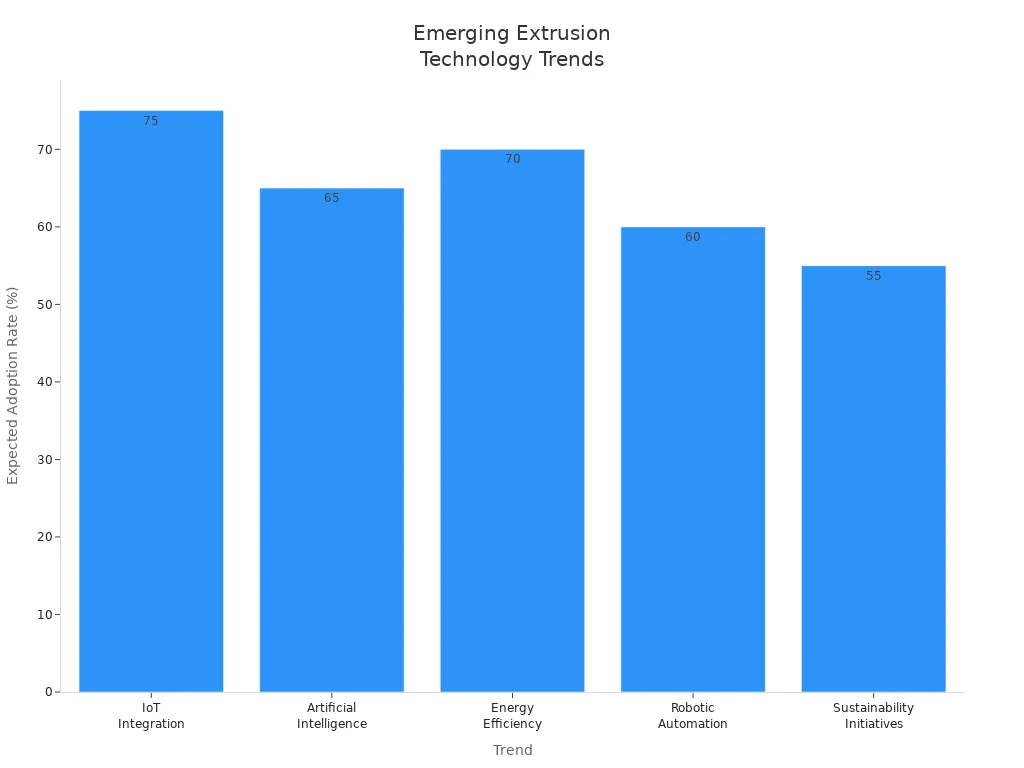
I see rapid changes in extrusion technology shaping the future of manufacturing. IoT integration allows real-time monitoring and analytics, ukuphucula ukusebenza kakuhle. Artificial intelligence supports predictive maintenance and optimization, which boosts performance. Energy efficiency is a growing focus, with manufacturers seeking ways to reduce consumption in the extrusion process. Robotic automation streamlines material handling and quality control. Sustainability initiatives drive the use of recycled materials and eco-friendly processes.
| Umzila | Inkcazo | Impembelelo kuMsebenzi | Izinga elilindelekileyo lokuthatha umntwana njengowakho (%) |
|---|---|---|---|
| Ukudityaniswa kwe-IoT | Ukubeka iliso ngexesha langempela kunye nohlalutyo | Phezulu | 75% |
| Kukubhadla okungeyonyani | Ugcino oluqikelelweyo kunye nokwenza ngcono | Phezulu kakhulu | 65% |
| Ukusebenza kakuhle kwamandla | Reducing energy consumption | Phakathi | 70% |
| Robotic Automation | Ukuphathwa kwezinto kunye nokulawula umgangatho | Phezulu | 60% |
| Amanyathelo oZinzo | Izinto ezisetyenzisiweyo kunye neenkqubo ezilungele i-eco-friendly | Phakathi | 55% |
I notice advancements in material compatibility, especially with bioplastics, are transforming the extrusion industry. Many manufacturers now prioritize flexibility in equipment design, with modular systems allowing easy upgrades and modifications. Sustainability is essential, with most manufacturers focusing on energy-efficient equipment and waste reduction strategies. Smart extrusion machines reduce downtime by 20%, which improves overall efficiency and quality control. I always stay updated on these trends to maintain high performance and support new applications in plastic extrusion.
Ingcebiso: I recommend reviewing the overview of extruder machines in manufacturing regularly. Staying informed about new types of extrusion machines and screw designs helps me adapt to changing production needs and maintain scalability.
I recognize that each extrusion system offers unique advantages and limitations. My experience shows that single-screw extruders excel in high-volume production, while twin-screw systems provide superior mixing and flexibility. Ram and co-extrusion machines support specialty applications. I always use comparison tables and selection criteria to evaluate:
- Technical capabilities and long-term reliability
- Customer service and design assistance
- Quality standards and energy efficiency
I recommend manufacturers understand their application needs and consult extrusion experts for optimal results.
FAQ
What is the main difference between single-screw and twin-screw extruders?
I see that single-screw extruders use one rotating screw for basic mixing. Twin-screw extruders use two screws for advanced mixing and better control. I choose twin-screw systems for complex materials and higher flexibility.
How do I decide which extrusion system fits my application?
I start by reviewing my material type, umthamo wemveliso, and product complexity. I match these needs to the strengths of each system. I consult with experts if I face unique requirements.
Can I process recycled materials with extrusion systems?
I process recycled materials using twin-screw extruders. These machines handle variable feedstocks and additives better than single-screw systems. I monitor quality closely to ensure consistent results.
How often should I perform maintenance on my extruder?
I schedule routine inspections every month. I check for screw wear, barrel condition, and control system performance. Regular maintenance prevents downtime and extends equipment life.
What are the most common extrusion defects I encounter?
I often see surface roughness, dimensional drift, and melt fractures. I address these by adjusting temperature, isantya sokujija, and material feed. I use process monitoring to catch issues early.
Is co-extrusion suitable for all materials?
I use co-extrusion mainly for thermoplastics. Some materials may not bond well in multi-layer profiles. I test material compatibility before starting production.
How does automation improve extrusion quality?
I rely on automation for real-time monitoring and precise control. Automated systems reduce human error, maintain consistent output, kunye nokuphucula umgangatho wemveliso ngokubanzi.
Ngawaphi amanyathelo okhuseleko endiwalandelayo ngexesha le-extrusion?
Ndinxiba izixhobo zokhuselo kwaye ndilandela iinkqubo zokutshixa. Ndigcina indawo yokusebenza icocekile kwaye ndijonga iindawo zokumisa unxunguphalo rhoqo. Ndiqeqesha iqela lam ekusebenzeni ngokukhuselekileyo kunye nempendulo kaxakeka.