

Игезәк винт экструдер күпләп сату нәрсә ул: Глобаль сатып алучылар өчен B2B Сорсинг Белешмәлеге
Twin screw extruders have become the backbone of modern plastics compounding, азык эшкәртү, фармацевтика җитештерү, and chemical engineering. For B2B buyers navigating the wholesale market — whether sourcing from a twin screw extruder manufacturer in China, a European OEM supplier, or a North American factory — understanding the wholesale landscape is critical to securing competitive pricing, ышанычлы сыйфат, and favorable trade terms. This guide breaks down the twin screw extruder wholesale ecosystem, examines trade dynamics shaping procurement in, and provides actionable sourcing intelligence for industrial buyers worldwide.

Industrial manufacturing facility with heavy machinery and extrusion equipment used in B2B wholesale production lines
Understanding Twin Screw Extruders: Core Technology Behind Wholesale Demand
A twin screw extruder is an industrial machine featuring two intermeshing, co-rotating or counter-rotating screws housed within a closed barrel. The screws convey, mix, knead, and shape raw materials — polymers, food ingredients, pharmaceutical compounds, or chemical feedstocks — under controlled temperature and pressure conditions. The result is a continuous, highly efficient processing method that outperforms single screw alternatives in mixing quality, throughput flexibility, and material versatility.
The wholesale market for twin screw extruders exists because industrial buyers rarely purchase a single unit. Compounding plants, food processing facilities, and contract manufacturers typically require multiple machines configured for different product lines, plus spare parts, баррель, винт элементлары, and downstream equipment. This creates a natural wholesale dynamic where volume purchasing from a twin screw extruder factory or authorized distributor yields significant cost advantages.
Key specifications that wholesale buyers evaluate include:
- Винт диаметры (typically 20mm to 135mm for standard models, up to 300mm+ for large-scale production)
- L / D нисбәте (length-to-diameter, commonly 32:1 to 52:1 depending on application)
- Torque rating and specific energy input capacity
- Barrel configuration (number of zones, heating/cooling capability)
- Throughput capacity (kg/hour), ranging from lab-scale 5 kg/h to industrial 20,000+ кг / с
- Material of construction (нитрид корыч, bimetallic, tungsten carbide overlays)
According to data from Гранд күренеш (2024), глобаль игезәк винт экструдер базары якынча АКШ долларында бәяләнде 1.2 миллиард 2023 һәм CAGR-та үсәр дип фаразлана 5.8% аша 2030, driven by demand in plastics compounding, мастербэтч җитештерү, and food extrusion applications.
The Wholesale Ecosystem: Итештерүчеләр, Тапшыручылар, Заводлар & Distributors
Understanding the distinction between different wholesale channel participants is essential for B2B procurement teams:
А. twin screw extruder manufacturer designs and builds machines from the ground up. These companies control R&D, engineering, component fabrication, җыю, and quality testing. Major manufacturers include Coperion (Германия), KraussMaffei (Германия), Леистриц (Германия), JSW (Япония), USEON (Китай), Nanjing Jieya (Китай), and Nanjing Chuangbo (Китай). Buying directly from a manufacturer typically offers the best pricing for large orders but may involve longer lead times and higher MOQs.
А. twin screw extruder supplier may or may not manufacture the equipment. Suppliers often serve as regional distributors, value-added resellers, or trading companies that aggregate products from multiple factories. They provide localized service, faster delivery from regional warehouses, and sometimes financing options. For buyers in the US and EU, working with a local supplier can simplify after-sales service and spare parts logistics.
А. twin screw extruder factory refers specifically to the production facility. In B2B wholesale contexts, "factory direct" pricing is a key selling point, particularly for buyers sourcing from Chinese manufacturing hubs in Nanjing, Чжанцзян, һәм Гуанчжоу — cities that have become global centers for extrusion equipment production.
The wholesale tier adds another layer: bulk purchasing agreements, annual supply contracts, and fleet deals where a buyer commits to purchasing multiple units or a defined dollar volume over a set period in exchange for discounted unit pricing, priority production scheduling, and extended warranty terms.
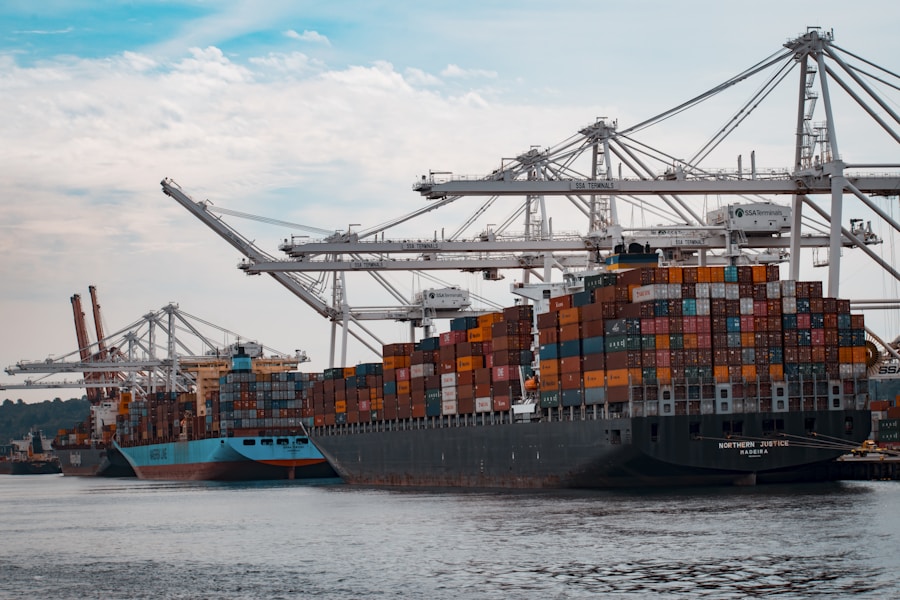
Игезәк винт экструдер заводы Global shipping containers at a major international port representing B2B wholesale trade logistics for industrial machinery Extruder Ender 3 Pro
Trade Policy Landscape Affecting Industrial Machinery Wholesale in
The transatlantic trade corridor between the United States and European Union remains one of the world's largest bilateral trade relationships, with goods and services trade exceeding USD 1.3 trillion annually according to the U.S. Халыкара сәүдә идарәсе (ITA), 2024 мәгълүматлар. For twin screw extruder wholesale buyers, several policy developments in are directly relevant:
Тариф мохите: The US maintains tariffs on certain categories of industrial machinery imports. Гармонизацияләнгән тарифлар графигы буенча (ХТС), twin screw extruders generally fall under heading 8477 (каучук яки пластмасса эшләү өчен техника). Duty rates vary by country of origin. EU-manufactured extruders entering the US face MFN (Иң яраткан халык) rates typically between 3.1% һәм 4.4%, while Chinese-manufactured equipment may be subject to additional Section 301 tariffs ranging from 7.5% to 25%, depending on the specific HTS subheading and any applicable exclusions.
Plastic Pipe Extrusion Wholesaler .Әр сүзнең European Commission's Directorate-General for Trade has been actively negotiating with the US on critical minerals, steel and aluminum tariff adjustments, and technology trade frameworks throughout early. While twin screw extruders are not directly targeted by these negotiations, the broader tariff environment influences procurement decisions — particularly for US buyers evaluating whether to source from EU manufacturers (lower tariff, higher unit cost) versus Chinese factories (potentially higher tariff, lower unit cost).
Supply Chain Due Diligence: The EU's Corporate Sustainability Due Diligence Directive (CSDDD), which entered into force in 2024, requires large EU companies to identify and mitigate adverse human rights and environmental impacts in their supply chains. For EU-based wholesale buyers of twin screw extruders, this means increased scrutiny of manufacturing conditions at supplier factories, particularly those in developing economies. Compliance documentation, factory audits, and sustainability certifications are becoming standard requirements in wholesale procurement contracts.
Export Controls and Technology Transfer: While standard twin screw extruders are not subject to export controls, specialized configurations used in advanced materials processing (мәс., certain polymer composites for aerospace or defense applications) may fall under dual-use technology regulations administered by the U.S. Сәнәгать һәм куркынычсызлык бюросы (BIS) and the EU's Dual-Use Regulation. Wholesale buyers in sensitive industries should verify end-use compliance before placing bulk orders.
B2B Trade Opportunities in the Twin Screw Extruder Wholesale Market
The wholesale twin screw extruder market presents several compelling opportunities for B2B buyers in:
1. Plastics Recycling and Circular Economy Demand: Both the US and EU have implemented aggressive recycling targets. The EU's Packaging and Packaging Waste Regulation (PPWR), updated in 2024, пластик төрүдә минималь эшкәртелгән эчтәлекне мандатлый — 30% тарафыннан 2030 һәм 65% тарафыннан 2040. Игезәк винт пластик экструдер күпләп сату Twin screw extruders are essential for compounding recycled polymers, removing contaminants, and producing recycled pellets that meet virgin-equivalent quality standards. This regulatory push is driving wholesale demand for specialized recycling extruder configurations. Twin Screw Extruder Machine Factory
Буенча the Association of Plastic Recyclers (APR), North American plastics recycling capacity is expected to increase by 40% between 2024 һәм 2028, requiring significant capital investment in extrusion equipment.
Masterbatch Machine Manufacturer 2. Food and Pet Food Extrusion Growth: The global pet food market, valued at over USD 150 миллиард 2024 башына Euromonitor International, relies heavily on twin screw extrusion for producing kibble, treats, and textured protein products. Wholesale buyers in this sector — including contract manufacturers and private-label producers — are expanding capacity across both US and EU markets.
3. Pharmaceutical and Nutraceutical Applications: Hot-melt extrusion (HME) using twin screw extruders has become a mainstream pharmaceutical manufacturing technology for improving drug bioavailability. .Әр сүзнең U.S. FDA һәм European Medicines Agency (EMA) have approved numerous HME-processed drug products, validating the technology and driving wholesale equipment purchases by CDMOs (Contract Development and Manufacturing Organizations).
4. Battery Materials and Energy Transition: Twin screw extruders are increasingly used in lithium-ion battery electrode manufacturing — specifically for dry electrode processing and cathode/anode slurry mixing. With both the US Inflation Reduction Act (ИРА) and the EU Battery Regulation incentivizing domestic battery production, wholesale demand for specialized extruder configurations in this sector is accelerating rapidly.

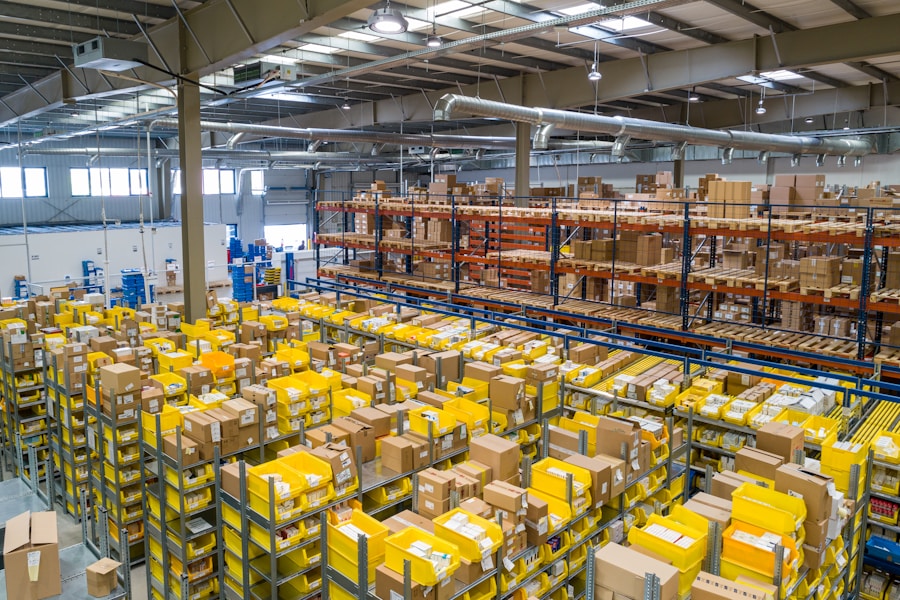
Modern industrial warehouse with organized machinery inventory representing wholesale distribution of manufacturing equipment
Challenges Facing B2B Wholesale Buyers of Twin Screw Extruders
Despite strong market fundamentals, wholesale buyers face several challenges:
Price Volatility and Currency Risk: Twin screw extruder pricing varies dramatically by origin. A standard 65mm co-rotating twin screw extruder line (including feeder, экструдер, pelletizing system, һәм контроль) might cost USD 80,000–150,000 from a Chinese factory, USD 250,000–500,000 from a European manufacturer, and USD 200,000–400,000 from a US-based builder. Currency fluctuations between EUR, АКШ доллары, and CNY can shift the cost calculus significantly over a procurement cycle. In Q1, the EUR/USD exchange rate volatility has added 3–5% uncertainty to transatlantic equipment purchases.
Lead Times and Production Scheduling: Post-pandemic supply chain normalization has improved lead times, but wholesale orders (5+ берәмлекләре) still require 4–8 months from order confirmation to delivery for most manufacturers. Chinese factories typically offer shorter lead times (3–5 айлар) compared to European OEMs (5–10 айлар), a factor that influences wholesale sourcing decisions.
Quality Assurance and Standardization: The absence of a single global standard for twin screw extruder manufacturing creates quality variance across suppliers. European manufacturers typically build to CE marking requirements and often exceed them. Chinese factories vary widely — top-tier producers like USEON and Nanjing Jieya deliver equipment comparable to European quality, while lower-tier factories may cut corners on metallurgy, machining tolerances, and control system integration. Wholesale buyers must implement robust supplier qualification processes including factory audits, reference checks, and acceptance testing protocols.
Сатудан соң хезмәт һәм запчастьләр: For wholesale buyers operating fleets of extruders, after-sales service availability is critical. European and US manufacturers typically maintain regional service centers and spare parts inventories. Кытай җитештерүчеләре Screw Extruder Factory have been investing in overseas service capabilities but coverage remains uneven. A wholesale agreement should explicitly address spare parts pricing, тапшыру сроклары, remote diagnostic support, and on-site service response times.
Интеллектуаль милек турында борчылулар: The twin screw extruder market has seen IP disputes, particularly around screw element designs and barrel configurations. Wholesale buyers should ensure that their suppliers hold valid patents or licenses for the technology they sell, and that purchase agreements include IP indemnification clauses.
Geographic and Policy Advantages in Extruder Trade
The trade corridor offers specific advantages for twin screw extruder wholesale procurement:
Норматив тигезләү: US and EU safety standards for industrial machinery share significant common ground. Б. э (ЕС) and OSHA/NFPA compliance (АКШ) address similar hazard categories, making it relatively straightforward to deploy EU-manufactured extruders in US facilities and vice versa. This regulatory compatibility reduces the compliance burden for wholesale buyers operating on both sides of the Atlantic.
Логистика инфраструктурасы: Major ports including Rotterdam, Гамбург, Антверпен (ЕС) and Los Angeles, Хьюстон, Саванна (АКШ) handle heavy industrial machinery efficiently. Established freight forwarding networks, customs brokerage services, and inland transportation systems support the movement of wholesale extruder shipments. Transit times for ocean freight between EU and US ports average 12–18 көннәр, with well-developed project cargo capabilities for oversized equipment.
Trade Finance and Insurance: The corridor benefits from mature trade finance infrastructure. Кредит агентлыкларын экспортлагыз — including the U.S. Export-Import Bank (ЭКСИМ) and European equivalents like Euler Hermes (Германия) һәм BPI Франция — offer financing and insurance products specifically designed for capital equipment transactions. Wholesale buyers can leverage these programs to improve cash flow and mitigate payment risk.
Free Trade Zones and Bonded Warehouses: АКШ та (Тышкы сәүдә зоналары) һәм мин (Ирекле зоналар) offer duty deferral and reduction programs that benefit wholesale importers of twin screw extruders. By routing equipment through designated zones, buyers can defer tariff payments until machines are deployed, reduce duties on re-exported equipment, and consolidate shipments for cost efficiency.
International trade negotiation meeting between business professionals discussing B2B wholesale agreements
Case Studies Wholesale Extruder Procurement in Practice
Case Study 1: European Compounder Scaling with Chinese Wholesale Supply
A mid-sized German plastics compounder specializing in engineering thermoplastics needed to expand capacity across three EU facilities simultaneously. Rather than purchasing from their traditional European OEM supplier (алып бару вакыты: 8 айлар, unit cost: EUR 420,000), they conducted a global sourcing evaluation and identified a Nanjing-based twin screw extruder factory capable of delivering comparable 75mm extruder lines at EUR 135,000 берәмлеккә.
The company negotiated a wholesale agreement for 8 units with the following terms: factory acceptance testing (FAT) witnessed by their engineers in China, CE certification and documentation, 24-month warranty with guaranteed spare parts availability from a European warehouse, and installation supervision by the manufacturer's field service team. Total project savings exceeded EUR 2 million compared to the European OEM option, with a lead time reduction of 3 айлар. The key success factor was investing in thorough supplier qualification — including two factory visits, reference customer interviews, and independent metallurgical testing of screw elements and barrel liners.
Case Study 2: US Pet Food Manufacturer Building a New Production Campus
A major US pet food company building a greenfield production facility in the Midwest required 12 twin screw extruder lines for producing dry kibble, treats, and textured vegetable protein. The procurement team issued an RFQ to five manufacturers — two European, ике кытай, and one US-based. After technical evaluation, they selected a split-sourcing strategy: 8 units from a Chinese manufacturer for standard kibble production (where the technology is well-established) һәм 4 units from a European OEM for specialty treat lines requiring advanced co-extrusion capabilities.
The wholesale agreement with the Chinese supplier included a 12% volume discount off list pricing, staggered delivery over 6 months to align with construction milestones, and a 5-year spare parts pricing guarantee. The European OEM provided application development support, including recipe optimization trials at their test center, as part of the wholesale package. This hybrid sourcing approach balanced cost optimization with technical capability requirements.
Case Study 3: Contract Pharmaceutical Manufacturer Standardizing Equipment Fleet
A European CDMO operating hot-melt extrusion services for pharmaceutical clients decided to standardize their equipment fleet on a single twin screw extruder platform to simplify validation, күнегүләр, and spare parts management. They negotiated a 5-year framework agreement with a German manufacturer for the wholesale supply of 16mm, 27мм, and 40mm extruder models — covering lab-scale through production-scale requirements.
The framework agreement provided fixed pricing for the contract duration (adjusted annually for inflation), priority production scheduling, dedicated technical support, and collaborative development of pharmaceutical-specific features. The standardization strategy reduced their qualification costs by an estimated 35% per new installation and improved operator cross-training efficiency across facilities in Germany, Ireland, һәм АКШ.

Business professionals analyzing trade data and procurement strategies on digital screens in a modern office
Сәүдә тенденциясе: Twin Screw Extruder Wholesale Market — Mid- Outlook
Хәзерге базар күрсәткечләренә нигезләнеп, политик үсеш, and industry intelligence, several trends are expected to shape the twin screw extruder wholesale market over the next 1–2 айлар:
1. Tariff Uncertainty Will Drive Pre-Buying: With ongoing US trade policy reviews and potential tariff adjustments on Chinese industrial machinery, wholesale buyers are likely to accelerate purchase decisions in Q2 to lock in current duty rates. This "tariff front-loading" behavior was observed in 2018–2019 during the initial Section 301 tariff implementation and is already emerging in early order patterns reported by Chinese manufacturers.
2. Sustainability Specifications Will Become Standard in Wholesale RFQs: Driven by the EU's CSDDD and growing ESG reporting requirements, wholesale buyers will increasingly require manufacturers to provide carbon footprint data, energy efficiency ratings, and sustainability certifications as part of their quotations. Manufacturers who proactively develop this documentation will gain competitive advantage in wholesale tenders.
3. Consolidation Among Chinese Manufacturers: The Chinese twin screw extruder manufacturing sector — currently fragmented with over 100 producers — is expected to continue consolidating. Top-tier factories are acquiring smaller competitors, investing in automation, and expanding international sales teams. Күпләп сатып алучылар өчен, this consolidation should improve average quality levels but may reduce the extreme low-cost options that have historically been available.
4. Санлы сатып алу платформалары тартылачак: B2B platforms including Alibaba.com, Made-in-China.com, and specialized industrial equipment marketplaces are improving their capabilities for complex capital equipment transactions. While wholesale twin screw extruder purchases still require significant offline negotiation and technical evaluation, digital platforms are increasingly used for initial supplier discovery, preliminary quotation, and market intelligence gathering.
5. Nearshoring and Regionalization: US buyers are showing increased interest in Mexican and Turkish manufacturing sources as alternatives to Chinese supply, driven by tariff avoidance, shorter supply chains, and trade agreement benefits (USMCA for Mexico, EU-Turkey Customs Union for European buyers). While twin screw extruder manufacturing capability in these countries is still developing, several Turkish and Mexican companies are investing in production capacity to serve this emerging demand.
6. Service-Inclusive Wholesale Models: The traditional wholesale model of "buy equipment, negotiate service separately" is evolving toward integrated packages that bundle equipment, урнаштыру, файдалануга тапшыру, күнегүләр, запчастьләр инвентаризациясе, and multi-year service agreements into a single wholesale contract. This trend reflects buyer preference for predictable total cost of ownership and reduced procurement complexity.
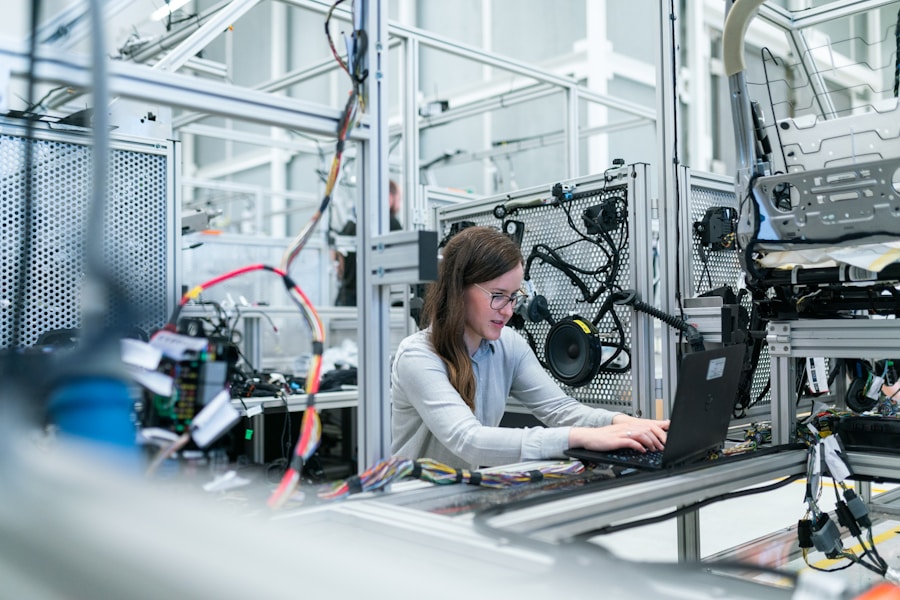
Advanced manufacturing technology and automation systems in a modern industrial production environment
B2B сәнәгать куркынычсызлыгы аяк киеме: Эшчеләрне экструзия җитештерү мохитендә саклау
Twin screw extruder wholesale operations — from factory floors where machines are assembled to production facilities where they operate — present significant occupational hazards that demand proper personal protective equipment (PPE). Among the most critical yet often overlooked PPE categories is safety footwear. In the context of B2B industrial trade, safety shoes and boots designed for manufacturing environments are not optional accessories — they are regulatory requirements and operational necessities. Plastic Extrusion Process Animation
Why Toe Protection Matters in Extrusion Environments:
Twin screw extruder facilities handle heavy components daily. A single screw element can weigh 5–15 кг, a barrel section 50–200 кг, and a complete gearbox 500–2,000 кг яки күбрәк. Урнаштыру вакытында, хезмәт күрсәтү, and wholesale warehouse operations, these components are lifted, ташылган, and positioned — creating constant risk of crush injuries to feet and toes. .Әр сүзнең U.S. Хезмәт статистикасы бюросы (BLS), 2024 мәгълүматлар, аяк җәрәхәтләре якынча 7% of all workplace injuries in manufacturing, уртача 16 бер вакыйгага эш көне югалды. Clear Extruded Acrylic Tubing
The financial impact is substantial. .Әр сүзнең Милли Куркынычсызлык Советы (УСК) Эш урынындагы аяк җәрәхәтләренең уртача бәясен АКШ долларында бәяли 9,600 туры медицина чыгымнарында, with total costs (including lost productivity, эшчеләр' компенсация, and administrative expenses) reaching USD 42,000–58,000 вакыйгага. For a wholesale extruder operation handling hundreds of heavy components monthly, even a single foot injury can exceed the annual cost of providing safety footwear to the entire workforce.
Safety Footwear Standards for Industrial Environments:
B2B buyers sourcing safety footwear for extrusion manufacturing environments should understand the applicable standards:
- ASTM F2413 (АКШ стандарты): Defines performance requirements for protective footwear including impact resistance (I / 75 = 75 ft-lbs impact protection), кысылуга каршы тору (C / 75 = 2,500 lbs compression protection), метатараль саклау, тешләү каршылыгы, электр куркынычыннан саклау, and static dissipative properties.
- ISOда 20345 (EU Standard): Classifies safety footwear into categories — S1 through S5 — based on protection features. S3 is the most common specification for manufacturing environments, requiring a 200-joule toe cap, penetration-resistant midsole, суга чыдам, чистартылган, and energy absorption in the heel region.
- Композит vs.. Корыч бармак капкалары: Modern safety footwear offers both steel and composite (җепселле, углерод җепселләре, яки Кевлар) toe cap options. Composite toe caps are lighter (30–40% авырлыкны киметү), do not conduct heat or cold, and are metal-detector friendly — advantages in food-grade extrusion facilities. Steel toe caps offer slightly higher impact resistance at lower cost and remain the standard choice for heavy industrial environments.
Specific Hazards in Twin Screw Extruder Operations:
Beyond impact and compression risks, extrusion manufacturing environments present additional foot hazards that safety footwear must address:
- Heat Exposure: Игезәк винт экструдерлары 150 дән алып температурада эшли°С - 400°C depending on the material being processed. Molten polymer spills, hot barrel surfaces, and heated die assemblies create burn risks. Heatылылыкка чыдам чыганаклар белән куркынычсызлык аяк киеме (300°EN ISO өчен контакт җылылыгы 20345) and heat-insulating midsoles is essential for operators and maintenance personnel.
- Химик экспозиция: Extrusion processes may involve solvents, пластикизаторлар, майлау материаллары, and cleaning chemicals. Safety footwear with chemical-resistant uppers (polyurethane or nitrile rubber) and sealed seams prevents chemical penetration that can cause skin irritation or burns.
- Куркынычсызлык: Полимер гелец, эшкәртү майлары, and water from cooling systems create slippery floor conditions. SRC бәяләнгән аутсоллар белән куркынычсызлык аяк киеме (керамик һәм корыч өслектә су һәм югыч белән тайпылу) significantly reduces slip-and-fall risk — the leading cause of workplace injuries across all manufacturing sectors.
- Электр куркынычлары: Экструдер белән идарә итү панельләре, drive motors, һәм җылыту системалары югары көчәнештә эшли. Электр куркынычы (Э.Х.) rated footwear provides secondary protection against accidental contact with energized circuits, with insulation rated to 18,000 volts under dry conditions per ASTM F2413.
- Puncture Hazards: Metal shavings, чыбык кисәкләре, and fasteners on factory floors can penetrate standard shoe soles. Пункциягә чыдам — either steel or textile (Кевлар) — prevent penetration injuries. Textile midsoles offer greater flexibility and lighter weight while meeting the same 1,100 Newton puncture resistance requirement.
Extruder Making Noise B2B Change Extruder Mattercontrol Wholesale Sourcing of Safety Footwear:
For companies operating twin screw extruder facilities, safety footwear procurement follows similar B2B wholesale dynamics as equipment purchasing. Key considerations include:
- Volume Pricing: Wholesale safety footwear orders (100+ парлар) typically achieve 20–35% discounts compared to retail pricing. Annual supply agreements with guaranteed sizing availability further reduce per-unit costs.
- Certification Compliance: Ensure all footwear meets the applicable standard for your operating jurisdiction — ASTM F2413 for US facilities, ISOда 20345 for EU operations. Dual-certified footwear is available from major manufacturers and simplifies procurement for companies operating on both sides of the Atlantic.
- Fit Programs: Leading safety footwear suppliers offer on-site fitting programs where trained representatives measure employees and recommend appropriate sizes and widths. Proper fit is critical — ill-fitting safety footwear causes blisters, fatigue, and musculoskeletal issues that reduce productivity and increase injury risk.
- Replacement Schedules: Safety footwear in heavy manufacturing environments typically requires replacement every 6–12 months depending on usage intensity. Wholesale agreements should account for regular replacement cycles and include provisions for expedited delivery of replacement pairs.
- Total Cost of Ownership: Premium safety footwear (USD 120–200 per pair wholesale) typically lasts 2–3 times longer than economy options (USD 40–70 пар өчен) while providing superior comfort and protection. B2B buyers should evaluate cost per wear-day rather than upfront unit cost when making wholesale purchasing decisions.
The integration of safety footwear procurement into broader industrial PPE programs reflects a mature approach to workplace safety management. Companies that invest in proper foot protection for their extrusion facility workers see measurable returns: reduced injury rates, lower workers' компенсация чыгымнары, improved employee satisfaction, and compliance with OSHA (АКШ) and EU-OSHA regulatory requirements.

Industrial safety equipment and protective footwear displayed for B2B wholesale procurement in manufacturing sector
How to Evaluate a Twin Screw Extruder Wholesale Supplier
For B2B buyers entering the wholesale market, a structured supplier evaluation process is essential. The following framework has been validated by procurement professionals across the extrusion industry:
Адым 1 — Technical Capability Assessment: Request detailed technical specifications, engineering drawings, and material certificates for the specific extruder models under consideration. Evaluate the manufacturer's R&D capabilities, patent portfolio, and history of technical innovation. A credible twin screw extruder supplier should be able to provide application-specific recommendations based on your processing requirements.
Адым 2 — Завод аудиты: Conduct an on-site factory audit (or engage a third-party inspection firm) җитештерү мөмкинлекләрен тикшерү, quality management systems (ISO 9001 certification is baseline), machining equipment, assembly processes, and testing facilities. Pay particular attention to CNC machining precision for screw elements and barrels, heat treatment processes, and final assembly quality control procedures.
Адым 3 — Reference Verification: Request and contact at least 3–5 reference customers who have purchased similar equipment at wholesale volumes. Ask about equipment performance, ышанычлылык, after-sales service responsiveness, and whether the supplier met delivery commitments.
Адым 4 — Commercial Terms Negotiation: Wholesale agreements should address pricing (including volume discount tiers), түләү шартлары (гадәттә 30% депозит, 60% җибәрү алдыннан, 10% файдалануга тапшырылганнан соң), delivery schedule with penalties for delays, гарантия шартлары (минимум 12 айлар, preferably 24 айлар), spare parts pricing and availability guarantees, and service level agreements for technical support. Тулы экструзия системалары җитештерә
Адым 5 — Logistics and Import Planning: For cross-border wholesale purchases, plan the logistics chain including freight forwarding, таможня, import duties and taxes, inland transportation, and rigging/installation at the destination facility. Engage an experienced freight forwarder specializing in heavy industrial machinery to optimize costs and minimize transit damage risk.
Key Specifications Comparison: Wholesale Twin Screw Extruder Models
The following comparison provides representative wholesale pricing and specifications for commonly traded twin screw extruder configurations in (prices are indicative and subject to negotiation based on volume, configuration, and supplier):
| Specification | Chinese Factory (Tier 1) | European OEM | US Manufacturer |
|---|---|---|---|
| Model Class | 65mm co-rotating | 65mm co-rotating | 65mm co-rotating |
| L/D Ratio | 40:1 to 48:1 | 40:1 to 52:1 | 40:1 to 48:1 |
| Max Throughput | 800–1 |