

China Lab Twin Screw Extruder Manufacturer: Ang Definitive B2B Sourcing Guide para sa Global Buyers sa
China has cemented its position as the world's leading manufacturing hub for lab twin screw extruders, supplying research institutions, polymer laboratories, and industrial R&D centers across North America, Europa, and emerging markets. For B2B buyers seeking reliable lab twin screw extruder manufacturers, understanding the Chinese supplier landscape — from factory certifications and production capacity to export logistics and trade policy — is essential for making informed procurement decisions. This comprehensive guide examines the current state of China's lab twin screw extruder manufacturing sector, identifies sourcing opportunities and challenges, and provides actionable intelligence for international buyers navigating the trade environment.
Pag-unawa sa Lab Twin Screw Extruders: Pangunahing Teknolohiya at Aplikasyon
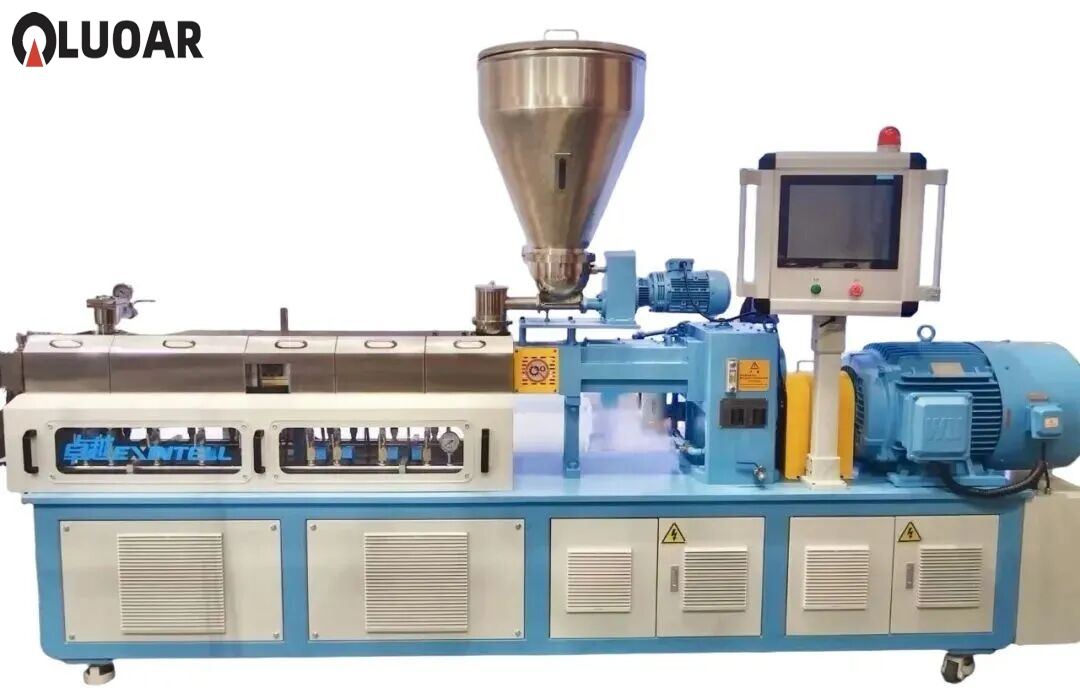
A lab twin screw extruder is a compact, precision-engineered machine designed for small-batch compounding, paghahalo, and processing of polymers, mga plastik, sangkap ng pagkain, mga pharmaceutical, at mga advanced na materyales. Unlike their industrial-scale counterparts, lab-scale twin screw extruders typically feature screw diameters ranging from 10 mm sa 35 mm, with throughput capacities between 0.5 kg/h at 50 kg/h. These machines serve as critical tools for material formulation development, process optimization, and quality control testing before scaling to full production.
The twin screw design — available in co-rotating and counter-rotating configurations — offers superior mixing efficiency, self-cleaning capability, and precise temperature control compared to single screw alternatives. Key applications include:
- Polymer compounding and masterbatch development
- Biodegradable plastics research (PLA, PHA, Pinaghalong PBAT)
- Pharmaceutical hot-melt extrusion for drug delivery systems
- Food extrusion research (pag-prototyp ng meryenda, texturization ng protina na nakabatay sa halaman)
- Nanocomposite and advanced materials development
- Color and additive masterbatch formulation
The growing global emphasis on sustainable materials, bioplastics, and advanced polymer composites has driven demand for lab twin Plastic Extrusion Suppliers Supplier screw extruders sharply upward since 2023, with China's manufacturers positioned to meet this demand at competitive price points. Filler Masterbatch Machine Supplier
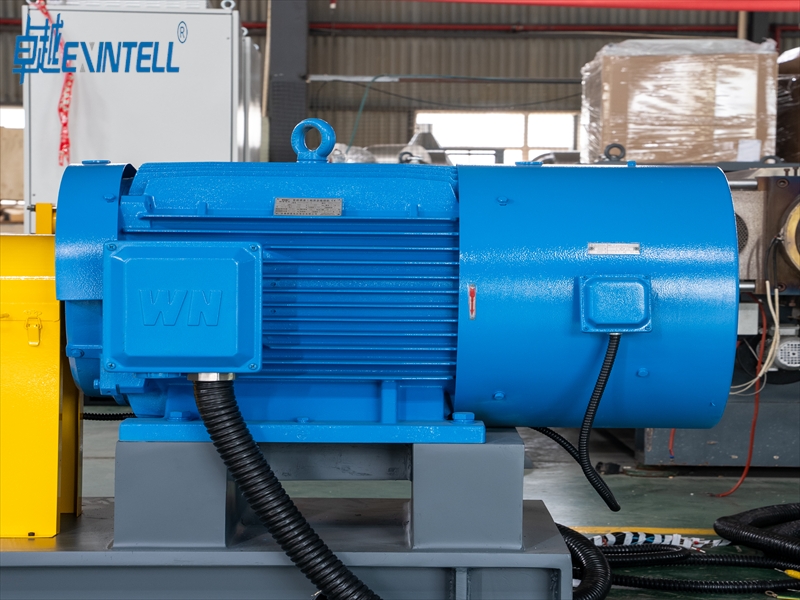
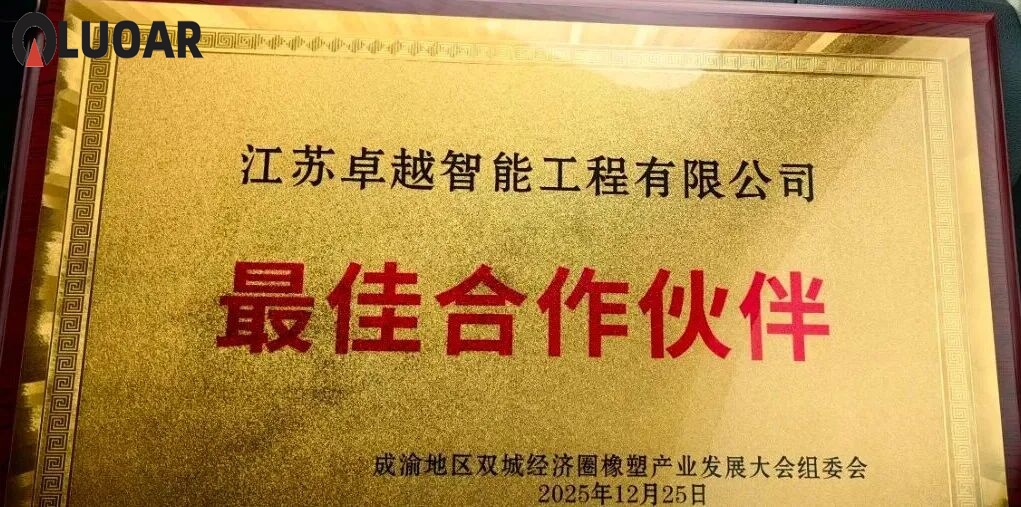
Laboratory research equipment in a modern polymer science facility used for materials compounding and extrusion testing
China's Lab Twin Screw Extruder Manufacturing Landscape in
China's plastics and rubber machinery sector generated over $14.5 billion in output value in 2024, according to data from the China Plastics Machinery Industry Association (CPMIA). Parallel Twin Screw Extruder Factory Within this sector, lab and small-scale extrusion equipment represents a fast-growing segment, driven by both domestic R&D investment and robust export demand.
Extruder Manufacturers The primary manufacturing clusters for lab twin screw extruders in China are concentrated in: Kitchenaid Pasta Recipe Extruder
- Nanjing, Lalawigan ng Jiangsu — The undisputed capital of twin screw extruder manufacturing in China, home to dozens of specialized manufacturers with deep expertise in screw element design and metallurgy.
- Zhangjiagang, Lalawigan ng Jiangsu — A secondary hub with strong capabilities in complete extrusion line integration.
- Lalawigan ng Guangdong (Dongguan, Shenzhen, Foshan) — Manufacturers here often focus on export-oriented production with faster lead times for overseas buyers.
- Qingdao, Lalawigan ng Shandong — Known for cost-competitive options and proximity to major shipping ports.
Chinese lab twin screw extruder manufacturers have made significant strides in closing the technology gap with European brands such as Thermo Fisher Scientific, Coperion, at Leistritz. Modern Chinese-made lab extruders now commonly feature PLC/HMI touchscreen controls, modular barrel and screw configurations, gravimetric feeding systems, and data logging capabilities that meet international laboratory standards.
Key Advantages of Sourcing Lab Twin Screw Extruders from China
For B2B buyers evaluating global sourcing options, Chinese lab twin screw extruder manufacturers offer several compelling advantages that extend beyond simple cost savings:
Presyo Competitiveness
Chinese-manufactured lab twin screw extruders typically cost 40–65% less than equivalent European or American models. A lab-scale co-rotating twin screw extruder with 20 mm screw diameter from a reputable Chinese manufacturer ranges from $15,000 sa $45,000 USD, compared to $60,000–$120,000 for comparable European equipment. This price differential allows research institutions and smaller companies to access twin screw extrusion technology that would otherwise be prohibitively expensive.
Manufacturing Scale and Customization
China's extensive manufacturing ecosystem enables a level of customization that is difficult to achieve elsewhere at comparable cost. Buyers can specify custom screw element profiles, barrel configurations, specialized alloy treatments (nitrided na bakal, bimetallic barrels), and integrated downstream equipment. Many Chinese manufacturers maintain in-house CNC machining, paggamot sa init, at mga kakayahan sa pagpupulong, allowing for rapid prototyping and modification.
Established Export Infrastructure
Major Chinese lab extruder manufacturers have developed mature export operations, including CE marking compliance, English-language documentation, international voltage configurations (220V/380V/440V), and experience with FOB/CIF shipping terms through major ports including Shanghai, Ningbo, and Qingdao. Many suppliers now offer remote commissioning support via video call, reducing the need for on-site installation visits.
Container port with cargo ships and cranes representing international B2B trade logistics from China to global markets
Trade Policy Environment: Navigating Tariffs and Regulations for Extruder Imports
The trade policy landscape for importing Chinese-manufactured machinery into Western markets has grown more complex in recent years. Soil Mixer Machine B2B buyers must account for several regulatory and tariff considerations when sourcing lab twin screw extruders from China.
United States Tariff Situation
Lab twin screw extruders imported from China into the United States are classified under HS Code 8477.20 (mga extruder para sa pagtatrabaho ng goma o plastik). Sa simula pa lang, these products are subject to standard Most Favored Nation (MFN) duty rates plus additional Section 301 tariffs that were imposed during the US-China trade tensions beginning in 2018. The combined effective tariff rate can reach 25–27.5% on declared customs value, ayon sa U.S. International Trade Commission (USITC) harmonized tariff schedule.
Sa kabila ng mga taripa na ito, Chinese lab extruders often remain price-competitive against European alternatives after duty is applied, particularly for mid-range specifications. Some buyers have explored tariff mitigation strategies including Foreign Trade Zone (FTZ) entry, temporary importation bonds for equipment used in research, and sourcing through Chinese manufacturers with assembly operations in third countries.
European Union Import Framework
The EU applies a standard customs duty of 1.7% on plastics machinery imports under CN Code 8477 20 00, making Europe a more straightforward market for Chinese extruder exports. Gayunpaman, EU buyers must ensure compliance with the Machinery Directive 2006/42/EC (being replaced by the new Machinery Regulation EU 2023/1230 epektibo sa Enero 2027), Mga kinakailangan sa pagmamarka ng CE, and applicable EN standards for electrical safety and electromagnetic compatibility.
Ang European Commission's Directorate-General for Trade has not imposed specific anti-dumping duties on lab-scale extrusion equipment from China as of mid-, though buyers should monitor trade defense investigations that could affect future imports.
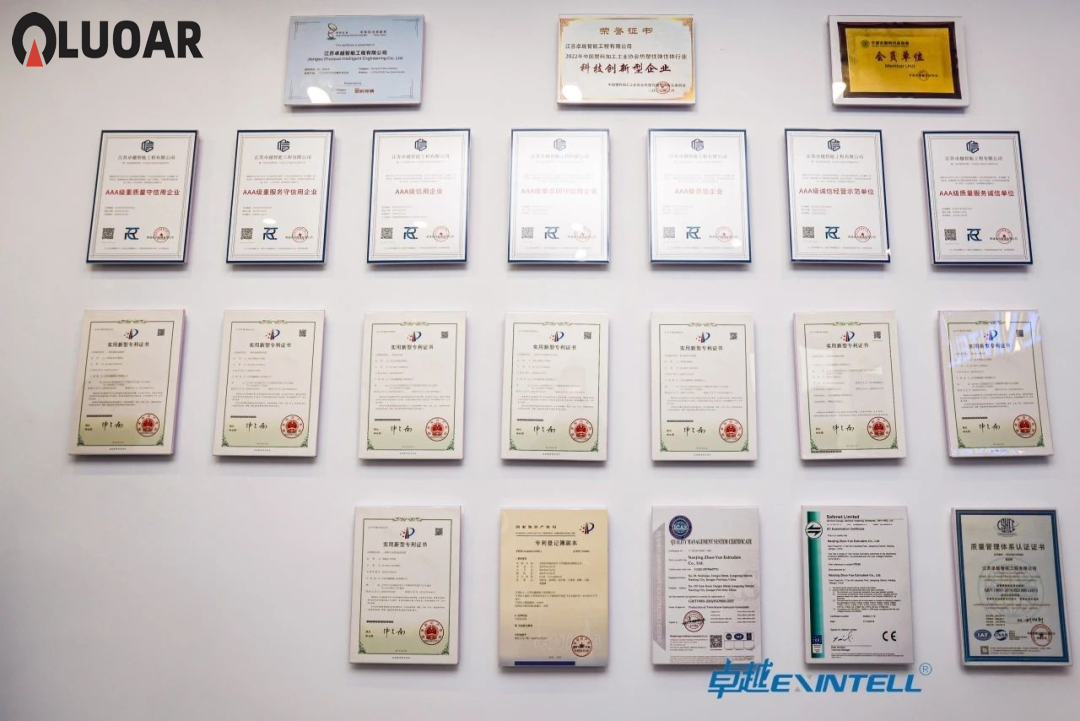
Mga Kinakailangan sa Sertipikasyon at Pagsunod
Reputable China lab twin screw extruder manufacturers now routinely provide: Makerbot Method X Extruders
- CE certification for European market access
- ISO 9001:2015 quality management system certification
- UL-listed electrical components for North American markets
- Material certificates for food-contact or pharmaceutical-grade applications (FDA-compliant materials where specified)
- Full technical documentation packages including electrical schematics, hydraulic diagrams, and operation manuals in English
Business professionals reviewing trade compliance documents and certification paperwork in an office setting
B2B Sourcing Opportunities: Kung Saan Pinakamabilis Lumalago ang Demand
Several converging market trends are creating significant B2B opportunities for lab twin screw extruder manufacturers in China and their international buyers:
Bioplastics and Sustainable Materials Research
The global bioplastics market is projected to reach $29.7 bilyon sa pamamagitan ng 2027, ayon sa European Bioplastics industry data. Universities, corporate R&D labs, and startup companies developing PLA, PHA, starch-based, and other biodegradable polymer formulations require lab twin screw extruders for compounding trials. Chinese manufacturers have responded by developing specialized screw configurations optimized for moisture-sensitive biopolymer processing.
Pharmaceutical Hot-Melt Extrusion
The pharmaceutical industry's adoption of hot-melt extrusion (HME) for improving drug bioavailability and developing sustained-release formulations has created a new buyer segment for lab twin screw extruders. Chinese manufacturers offering GMP-compatible designs with pharmaceutical-grade contact surfaces are gaining traction among contract research organizations (CROs) and generic drug manufacturers in India, Timog-silangang Asya, at Latin America.
Battery and Energy Materials
The lithium-ion battery supply chain increasingly uses twin screw extrusion for electrode slurry mixing and solid-state electrolyte processing. Lab-scale extruders are essential for battery materials R&D, and Chinese manufacturers benefit from proximity to the world's largest battery materials ecosystem.
Food Science and Plant-Based Protein
The plant-based food sector's rapid expansion has driven demand for lab extruders capable of high-moisture extrusion cooking (HMEC) for meat analog development. Chinese lab extruder manufacturers have developed specialized configurations with cooling dies and high-torque drives suited to food science applications.
Challenges in Sourcing from China Lab Twin Screw Extruder Manufacturers
While the advantages are substantial, B2B buyers should be aware of common challenges and develop strategies to mitigate them:
Quality Consistency and Verification
The Chinese lab extruder market includes manufacturers spanning a wide quality spectrum. Entry-level suppliers may use lower-grade steel alloys, less precise machining tolerances, or inferior electrical components that affect long-term reliability. Buyers should request detailed material certificates, conduct factory audits (either in person or through third-party inspection services such as SGS or Bureau Veritas), and ask for reference contacts from existing international customers.
Intellectual Property Considerations
Some Chinese manufacturers have historically replicated screw element geometries and barrel designs from European OEMs. While this has improved access to proven configurations, buyers working with proprietary formulations should ensure appropriate confidentiality agreements are in place and consider whether custom screw designs need IP protection.
After-Sales Service at Spare Parts
Geographic distance can complicate after-sales support. Leading Chinese manufacturers have addressed this by establishing spare parts warehouses in Europe and North America, offering remote diagnostic support via IoT-connected control systems, and partnering with local service agents. Buyers should negotiate comprehensive warranty terms (typically 12–18 buwan) and confirm spare parts availability and lead times before purchase.
Communication and Technical Specification Alignment
Ensuring precise technical specifications are communicated and understood across language barriers remains a practical challenge. Best practice includes providing detailed written specifications with dimensional drawings, requesting 3D CAD models for review before manufacturing, and conducting video calls with the manufacturer's engineering team during the design confirmation phase.
International business team conducting a video conference meeting for B2B trade negotiations and technical discussions
Geographic and Policy Advantages Enabling China's Export Competitiveness
China's dominance in lab twin screw extruder manufacturing is not solely a function of labor cost — it reflects deep structural advantages in the country's industrial ecosystem:
Integrated supply chain: Nanjing's twin screw extruder cluster benefits from co-located suppliers of specialty steel, precision bearings (from nearby Wafangdian and domestic SKF/NSK joint ventures), servo motors, temperature controllers, and PLC systems. This vertical integration reduces lead times to 30–60 days for standard configurations, compared to 90–120 days from European manufacturers.
Government support for advanced manufacturing exports: China's "Made in China " and subsequent industrial policies have directed subsidies and tax incentives toward high-value machinery exports. Lab twin screw extruder manufacturers benefit from VAT export rebates (currently 13% for machinery), subsidized participation in international trade fairs such as Chinaplas, K Fair, at NPE, and access to preferential export credit through policy banks.
Port infrastructure and logistics: China's eastern seaboard ports — Shanghai (Yangshan), Ningbo-Zhoushan, and Qingdao — rank among the world's most efficient for containerized cargo. A standard lab twin screw extruder can be crated and shipped in a 20-foot container, with ocean freight transit times of 25–35 days to major European ports (Rotterdam, Hamburg) and 18–25 araw sa US West Coast port (Los Angeles, Long Beach).
Free Trade Agreements: China's participation in the Regional Comprehensive Economic Partnership (RCEP) and bilateral trade agreements with ASEAN nations, Australia, and New Zealand provides preferential tariff treatment for lab extruder exports to these markets, further expanding the addressable market for Chinese manufacturers.
Modern manufacturing facility with CNC machinery and precision engineering equipment representing Chinese industrial capabili
Case Studies Buyers Successfully Sourcing Lab Extruders from China
Kaso 1: European University Research Consortium
A consortium of three Northern European universities specializing in polymer science needed to equip new materials research laboratories with lab twin screw extruders. With a combined budget of €180,000 for six machines, European OEM pricing (averaging €55,000–€70,000 bawat yunit) was prohibitive. After evaluating five Chinese manufacturers through a structured RFQ process, the consortium selected a Nanjing-based supplier offering co-rotating lab extruders with 20 mm diameter ng tornilyo, segmented barrels, and Siemens PLC controls at €28,000 per unit CIF Rotterdam.
Kasama ang mga pangunahing salik ng tagumpay: conducting a pre-shipment factory inspection through SGS, requiring FAT (Factory Acceptance Testing) with video documentation, and negotiating a 24-month warranty with guaranteed 72-hour spare parts dispatch from a European warehouse. Pagkatapos 18 buwan ng operasyon, the consortium reported machine performance comparable to European alternatives, with one minor issue (a temperature controller replacement) resolved within the warranty period.
Kaso 2: US-Based Contract Research Organization
A pharmaceutical CRO in New Jersey required a lab twin screw extruder for hot-melt extrusion feasibility studies. The company sourced a 16 mm co-rotating twin screw extruder from a Chinese manufacturer specializing in pharmaceutical-grade equipment. The machine featured stainless steel 316L contact surfaces, FDA-compliant gaskets, and a clean-in-place (CIP) compatible design. Kabuuang halaga ng landed kasama ang Seksyon 301 tariffs was approximately $38,000, compared to $85,000+ for a comparable European system.
The CRO implemented a qualification protocol including IQ/OQ/PQ documentation provided by the Chinese manufacturer, with minor modifications to meet their internal quality system requirements. The machine has been operational for over two years, processing over 200 different formulation trials.
Kaso 3: Southeast Asian Food Technology Startup
A Singapore-based food technology startup developing plant-based meat analogs sourced a high-moisture extrusion cooking system built around a Chinese-manufactured lab twin screw extruder with 25 mm screws and a specialized cooling die. The Chinese manufacturer provided application engineering support, including recommended screw configurations for soy and pea protein texturization, based on their experience supplying similar systems to Chinese food research institutes.
The total system cost was approximately $52,000 FOB Shanghai, including the extruder, volumetric feeder, cooling die, and cutting system. The startup reported achieving target product textures within three months of commissioning, enabling them to secure Series A funding based on demonstrated product prototypes.
How to Evaluate and Select a China Lab Twin Screw Extruder Manufacturer
Based on industry best practices and buyer feedback, the following evaluation framework helps B2B purchasers identify reliable Chinese lab extruder suppliers:
Pagsusuri sa Kakayahang Teknikal
- Request detailed screw element catalogs showing available geometries (conveying, kneading, paghahalo, reverse elements)
- Verify barrel metallurgy options (nitrided 38CrMoAlA, bimetallic, stainless steel grades)
- Confirm torque density specifications (Nm/cm³) and compare against application requirements
- Review control system architecture (PLC brand, HMI interface, mga kakayahan sa pag-log ng data)
- Ask for L/D ratio options (karaniwan 32:1 sa 52:1 for lab machines)
Manufacturing Quality Indicators
- ISO 9001:2015 sertipikasyon (verify through certification body, not just supplier claims)
- In-house CNC machining capability for screw elements and barrels
- Heat treatment facilities or verified subcontractor relationships
- Assembly and testing area cleanliness and organization
- Calibrated measurement equipment (CMM, mga tester ng pagkamagaspang sa ibabaw)
Export Experience Verification
- Request export customer references in your target market
- Verify CE/UL certification documentation authenticity
- Confirm experience with your country's import requirements
- Review English-language documentation quality (manuals, electrical schematics)
- Assess responsiveness and English communication capability of sales and engineering teams
Quality control inspection of precision-engineered industrial machinery components in a manufacturing facility
Pagtataya ng Kalakalan: What B2B Buyers Should Expect in the Next 1–2 mga buwan
Several near-term developments are likely to influence the lab twin screw extruder sourcing landscape for B2B buyers through mid-:
Mga Pag-unlad ng Patakaran sa Taripa at Kalakalan
Ang kapaligiran ng patakaran sa kalakalan ng US ay nananatiling dynamic. Ang Pangangasiwa ng Pandaigdigang Kalakalan (ITA) continues to review tariff structures on Chinese machinery imports. B2B buyers with pending purchase decisions should monitor potential tariff adjustments and consider accelerating orders if rate increases appear likely. The EU's Carbon Border Adjustment Mechanism (CBAM), while primarily targeting raw materials, may indirectly affect machinery pricing as Chinese manufacturers absorb higher input costs for steel and aluminum.
Currency and Pricing Trends
The RMB/USD exchange rate has fluctuated within a relatively narrow band in early, but any significant depreciation of the Chinese yuan would further improve pricing competitiveness for international buyers. Raw material costs for specialty steels used in extruder manufacturing have stabilized after the volatility of 2022–2023, suggesting stable equipment pricing in the near term.
Supply Chain and Logistics
China Straw Extruder Machine Ocean freight rates from China to Europe and North America have moderated from the extreme peaks of 2021–2022 but remain above pre-pandemic levels. Ang Journal of Commerce reports that container availability on Asia-Europe and transpacific routes has improved, with transit times normalizing. Buyers should plan for 6–10 week total lead times (manufacturing plus shipping) for standard lab extruder configurations.
Mga Uso sa Teknolohiya
Two Stage Extruder Wholesale Chinese lab extruder manufacturers are increasingly incorporating Industry 4.0 features including IoT connectivity for remote monitoring and diagnostics, cloud-based process data storage, and AI-assisted screw configuration recommendation tools. Buyers evaluating purchases in the coming months should inquire about these capabilities, as they can significantly reduce the total cost of ownership through improved uptime and remote technical support.
Trade Fair Opportunities
Key upcoming industry events where buyers can meet Chinese lab extruder manufacturers face-to-face include Chinaplas (typically held in Q2), NPE in the United States, and K Fair preparation events. These exhibitions provide opportunities for hands-on equipment evaluation, direct price negotiation, and relationship building that can improve long-term sourcing outcomes. Extruder Machine
Workplace Safety in Extrusion Laboratories: Protecting Operators with Proper B2B Safety Equipment
Operating lab twin screw extruders involves inherent workplace hazards that responsible B2B buyers and facility managers must address. The extrusion process involves high temperatures (typically 150–350°C at the barrel), rotating machinery, molten polymer handling, and heavy equipment components. A comprehensive safety program is essential, and one often-overlooked element is proper foot protection for laboratory and production personnel.
Why Safety Footwear Matters in Extrusion Environments
Extrusion laboratories present multiple foot injury risks: heavy screw elements and barrel segments that can weigh 5–15 kg may be dropped during assembly or changeover; molten polymer drips and spills can cause severe burns; and wet floors from cooling water systems create slip hazards. Ayon sa U.S. Pangangasiwa sa Kaligtasan at Kalusugan sa Trabaho (OSHA), humigit-kumulang ang mga pinsala sa paa 60,000 mga pinsala sa lugar ng trabaho taun-taon sa Estados Unidos, with manufacturing environments among the highest-risk settings.
Mga Pamantayan sa Proteksyon sa Pangkaligtasan sa daliri ng paa
B2B buyers sourcing safety footwear for extrusion laboratory personnel should understand the key international standards:
- ASTM F2413 (Hilagang Amerika): Specifies impact resistance (I/75 = 75 mga libra ng paa) at compression resistance (C/75 = 2,500 libra) for protective toe caps. Steel, composite, and aluminum toe options are available.
- SA ISO 20345 (Europa): Defines safety footwear categories from SB (pangunahing proteksyon sa daliri ng paa) through S5 (toe protection + paglaban sa tubig + paglaban sa pagtagos). S3-rated boots with steel or composite toes are most appropriate for extrusion environments.
- GB 21148 (Tsina): The Chinese national standard for safety footwear, largely harmonized with ISO 20345, relevant for buyers sourcing safety shoes alongside extrusion equipment from Chinese manufacturers.
Selecting the Right Safety Footwear for Extrusion Lab Personnel
For workers operating lab twin screw extruders, the ideal safety footwear should provide:
- Impact-resistant toe caps: Steel toes offer maximum protection against heavy falling objects (mga elemento ng tornilyo, die components). Composite toes provide lighter weight and are non-metallic, advantageous in temperature-sensitive environments and where metal detectors are used.
- Heat-resistant soles: Nitrile rubber or Vibram outsoles rated for contact heat resistance up to 300°C protect against accidental contact with hot surfaces or molten polymer on the floor.
- paglaban sa slip: Mga outsole na may rating na SRC (nasubok sa parehong ceramic tile na may dilute na solusyon ng sabon at bakal na may gliserol) are essential given the water and oil exposure common in extrusion environments.
- Mga guwardiya ng metatarsal: For personnel handling heavy barrel segments and die assemblies, proteksyon ng metatarsal (Mt rating under EN ISO 20345) provides additional coverage for the upper foot area beyond the toe cap.
- Anti-static na mga katangian: ESD (electrostatic dissipative) footwear is recommended in environments where static discharge could damage sensitive electronic control equipment or create ignition risks with certain polymer dusts.
B2B Sourcing ng Safety Footwear: Aligning with Equipment Procurement
Forward-thinking B2B buyers increasingly bundle safety equipment procurement with machinery purchases. When sourcing lab twin screw extruders from Chinese manufacturers, consider requesting safety footwear recommendations or supplier referrals, as China is also the world's largest manufacturer of safety footwear. Chinese safety shoe manufacturers in Wenzhou (Zhejiang Province) and Jinjiang (Fujian Province) produce CE-certified, ASTM-compliant safety footwear at highly competitive prices, often with MOQs as low as 100–300 pairs for B2B orders.
Key considerations for B2B safety footwear procurement include:
- Verify third-party certification (CE marking with notified body number, ASTM testing reports from accredited laboratories)
- Request wear-trial samples before committing to bulk orders
- Ensure size availability covers your workforce demographics (European, US, and UK sizing)
- Evaluate comfort features (cushioned insoles, breathable linings, ergonomic design) that affect worker compliance with safety footwear policies
- Consider total cost of ownership including replacement frequency — higher-quality safety shoes with Goodyear welt or direct-injection construction typically last 12–18 months versus 6–9 months for lower-grade alternatives
The ROI of Proper Foot Protection
Aerospace Cable Extruder Manufacturer Investing in quality safety footwear delivers measurable returns for B2B operations. Ang National Safety Council estimates that the average cost of a workplace foot injury (including medical expenses, Anycubic Chiron Dulel Extruder nawalan ng produktibidad, at mga manggagawa' kabayaran) exceeds $9,000 bawat insidente. A pair of high-quality safety boots costs $80–$150 at B2B wholesale pricing from Chinese manufacturers — representing a cost-benefit ratio that makes safety footwear one of the highest-ROI investments in any extrusion laboratory safety program.
Establishing a comprehensive PPE program that includes proper safety footwear also supports regulatory compliance, reduces insurance premiums, and demonstrates the organizational commitment to worker welfare that increasingly influences B2B buyer-supplier relationships and corporate social responsibility reporting.
Industrial safety equipment including protective footwear and personal protective equipment used in manufacturing environment
Mga Madalas Itanong: China Lab Twin Screw Extruder Sourcing
- What is the typical MOQ for lab twin screw extruders from Chinese manufacturers?
- Most Chinese lab twin screw extruder manufacturers accept orders starting from 1 unit for standard configurations. Custom-designed machines may require MOQs of 2–5 units depending on the level of customization. Volume discounts typically begin at 3–5 units for institutional or distributor buyers.
- How long does manufacturing and delivery take for a lab twin screw extruder from China?
- Standard configurations with common screw diameters (16 mm, 20 mm, 25 mm) typically require 30–45 days for manufacturing, plus 20–35 days for ocean freight to European or North American ports. Highly customized machines may require 60–90 days of manufacturing lead time. Air freight is available for urgent orders at approximately 5–8x the cost of ocean shipping.
- What certifications should I require from a Chinese lab extruder manufacturer?
- At minimum, require CE certification (for EU market access), ISO 9001:2015 sertipikasyon sa pamamahala ng kalidad, and material certificates for all product-contact components. For pharmaceutical applications, request documentation of FDA-compliant materials and GMP-compatible design features. Para sa US market, UL-listed electrical components are strongly recommended.
- Can Chinese manufacturers provide application engineering support for screw design?
- Leading Chinese lab twin screw extruder manufacturers employ application engineers with expertise in polymer compounding, food extrusion, and pharmaceutical HME. They can recommend screw configurations based on your material properties and processing objectives. Gayunpaman, for highly specialized or novel applications, consider engaging an independent extrusion consultant to develop screw designs that the manufacturer then produces to specification.
- What payment terms are standard for B2B lab extruder purchases from China?
- Typical payment structures include 30% deposit upon order confirmation with 70% balance before shipment (T/T), or letter of credit (L/C) at sight for larger orders. Some established manufacturers offer 30% deposit, 60% upon pre-shipment inspection, at 10% after commissioning for repeat customers or orders exceeding $100,000.
Konklusyon: Strategic Sourcing from China's Lab Twin Screw Extruder Manufacturers
China's lab twin screw extruder manufacturing sector offers B2B buyers a compelling combination of competitive pricing, improving technical capability, extensive customization options, and mature export infrastructure. Habang ang mga hamon sa pag-verify ng kalidad, trade policy complexity, at ang serbisyo pagkatapos ng benta ay nangangailangan ng maingat na pamamahala, the sourcing strategies and evaluation frameworks outlined in this guide enable international buyers to mitigate risks and capture significant value.
As global demand for lab-scale extrusion equipment continues to grow — driven by bioplastics research, pharmaceutical innovation, battery materials development, and food technology — Chinese manufacturers are well-positioned to serve as strategic partners for B2B buyers worldwide. The key to successful sourcing lies in thorough supplier evaluation, clear technical specification communication, and structured quality assurance processes that build long-term, mutually beneficial trade relationships.
Recommended Video Resources
-
Paano Gumagana ang Twin Screw Extruders — Process Engineering Explained
China Lab Twin Screw Extruder Supplier: Kumpletuhin ang B2B Sourcing Guide para sa · China Lab Twin Screw Extruder Factory: Kumpletuhin ang B2B Sourcing Guide para sa… · China Lab Twin Screw Extruder Wholesale Sourcing Guide for Global Buyer…