

ประเด็นสำคัญ
- ความต้องการมีความแข็งแกร่งและมั่นคง. ตลาดการอัดขึ้นรูปพลาสติกทั่วโลกมีมูลค่าประมาณ USD 79 พันล้านใน 2023 โดยมีการคาดการณ์การเติบโตอย่างมั่นคง (การวิจัยแกรนด์วิว, 2023), ดังนั้นเมื่อฉันพบโรงงานอัดขึ้นรูปพลาสติกตามสั่ง, ฉันปฏิบัติต่อความน่าเชื่อถือด้านกำลังการผลิตและระยะเวลารอคอยสินค้าว่าไม่สามารถต่อรองได้ แทนที่จะคิดไปเอง.
- จับคู่โพลีเมอร์กับการใช้งานก่อนสิ่งอื่นใด. จากประสบการณ์ของฉัน, แรงเสียดทานจากการอ้างอิงส่วนใหญ่จะหายไปเมื่อคุณรู้ว่าคุณต้องการการอัดขึ้นรูป PVC แบบแข็งหรือไม่, ซีล TPE หรือ TPU ที่ยืดหยุ่น, โครงสร้าง ABS หรือโพลีคาร์บอเนต, HDPE หรือ LDPE ทนสารเคมี, PEEK อุณหภูมิสูง, หรือโปรไฟล์ไนลอนและอะคริลิก. พีวีซียังคงเป็นโพลีเมอร์ที่มีการอัดขึ้นรูปอย่างกว้างขวางที่สุดเนื่องจากต้นทุนและความคล่องตัว (พลาสติกยุโรป, 2023).
- การรับรองบ่งบอกถึงความสามารถที่แท้จริง. ฉันมองหาไอเอสโอ 9001, ยังคงเป็นใบรับรองการจัดการคุณภาพที่ได้รับการยอมรับอย่างกว้างขวางมากที่สุดในหมู่ผู้ผลิตทั่วโลก (การสำรวจใบรับรอง ISO, 2022), และไอเอสโอ 13485 สำหรับการอัดขึ้นรูปเกรดทางการแพทย์ (องค์การระหว่างประเทศเพื่อการมาตรฐาน, 2016).
- การปฏิบัติตามข้อกำหนดขึ้นอยู่กับตลาดและการใช้งานปลายทางของคุณ. ขึ้นอยู่กับผลิตภัณฑ์, ฉันยืนยัน UL 94 การจำแนกประเภทความไวไฟ (ยูแอล โซลูชั่น, 2023), เข้าถึง (เอคชา, 2023) และ RoHS (คณะกรรมาธิการยุโรป, 2023) สำหรับสินค้าที่ผูกกับสหภาพยุโรป, และข้อกำหนดการสัมผัสอาหารของ FDA สำหรับชิ้นส่วนอัดขึ้นรูปเกรดอาหาร (เรา. อย, 2023).
- ยืนยันการกำหนดราคาแยกรายการ, ไม่ “ติดต่อเรา” ผู้ผลิตการอัดขึ้นรูปพลาสติกที่น่าเชื่อถือจะแยกเครื่องมือการอัดขึ้นรูปและแม่พิมพ์ออก, ค่าวัสดุ, อัตราการวิ่ง, และบริการการผลิตรอง เพื่อให้คุณสามารถสร้างแบบจำลองเศรษฐศาสตร์ต่อชิ้นส่วนที่แท้จริง และรับใบเสนอราคาการอัดขึ้นรูปพลาสติกที่สามารถป้องกันได้.
- ออกแบบเพื่อความสามารถในการผลิตตั้งแต่เนิ่นๆ. ฉันหารือถึงเกณฑ์ความคลาดเคลื่อนของการอัดขึ้นรูปที่สมจริง, ความหนาของผนัง, และตัวเลือกการอัดขึ้นรูปร่วมในระหว่างการออกแบบโปรไฟล์พลาสติก, เพราะการจับสิ่งเหล่านี้ก่อนใช้เครื่องมือช่วยประหยัดเงินได้มากที่สุดในการอัดขึ้นรูปโปรไฟล์แบบกำหนดเอง.
- เปรียบเทียบต้นทุนที่ดินทั้งหมด, ไม่ใช่ราคาสติ๊กเกอร์. ในประเทศและต่างประเทศไม่ค่อยชัดเจนเมื่อคุณแยกค่าขนส่ง, หน้าที่, เวลานำ, และความเสี่ยงด้านคุณภาพในการเปรียบเทียบโปรไฟล์และท่อพลาสติกแบบกำหนดเอง.
- วางแผนเส้นทางจากต้นแบบไปสู่การผลิต. ฉันชอบบริษัทอัดขึ้นรูปพลาสติกที่รองรับการสร้างต้นแบบการอัดขึ้นรูปและการอัดขึ้นรูปพลาสติกในปริมาณต่ำ, then scales cleanly to full runs of extruded plastic parts, custom seals, และปะเก็น.
- Sustainability is increasingly practical. Recycled plastics can reduce environmental impact while meeting many non-critical application requirements (เรา. สำนักงานปกป้องสิ่งแวดล้อม, 2023), which is worth raising with any supplier during specification.
What Is a Custom Plastic Extrusion Factory?

When I describe a custom plastic extrusion factory to buyers, I frame it as a manufacturing partner built around a single principle: forcing molten thermoplastic through a purpose-built die to create a continuous profile with a consistent cross-section. Unlike a supplier that sells from a catalog of stock shapes, a true custom shop engineers tooling to your drawing. ความแตกต่างดังกล่าวมีความสำคัญมากกว่าที่ทีมจัดซื้อส่วนใหญ่คาดหวัง, และกำหนดทุกอย่างตั้งแต่ระยะเวลารอคอยไปจนถึงเศรษฐศาสตร์หน่วย.
การกำหนดรูปแบบการอัดขึ้นรูปแบบกำหนดเองและการผลิตโปรไฟล์แบบต่อเนื่อง
การอัดขึ้นรูปโปรไฟล์แบบกำหนดเองเป็นกระบวนการต่อเนื่อง. ตัวเครื่องไม่เคยผลิตแบบแยกส่วน “ส่วนหนึ่ง” วิธีที่เครื่องปั้นจะดีดส่วนประกอบหนึ่งชิ้นต่อรอบ. แทน, มันสร้างวัสดุที่มีความยาวต่อเนื่อง, ตัดหรือม้วนตามข้อกำหนดที่คุณต้องการ. นี่คือเหตุผลที่ฉันบอกลูกค้าเสมอว่าการอัดขึ้นรูปเป็นพื้นฐานเกี่ยวกับเรขาคณิตที่ทำซ้ำตามความยาว: ปะเก็นหน้าต่าง, ช่องกรอบแผงโซลาร์เซลล์, หรือสายสวนทางการแพทย์ล้วนมี DNA ต่อเนื่องกัน. การอัดขึ้นรูปยังคงเป็นหนึ่งในวิธีการแปรรูปพลาสติกที่มีปริมาณมากที่สุด, คิดเป็นสัดส่วนขนาดใหญ่ของการแปลงเทอร์โมพลาสติกตามน้ำหนัก (สมาคมอุตสาหกรรมพลาสติก, 2023), และตลาดการอัดขึ้นรูปพลาสติกทั่วโลกมีมูลค่าประมาณ USD 79 พันล้านใน 2023 โดยมีการคาดการณ์การเติบโตอย่างมั่นคง (การวิจัยแกรนด์วิว, 2023).
ประเภทของผลิตภัณฑ์ที่ร้านค้าสั่งทำผลิต
จากประสบการณ์ของฉัน, ผลิตภัณฑ์มีตั้งแต่กลุ่มผู้ผลิตการอัดขึ้นรูปพลาสติกที่มีความสามารถไปจนถึงกลุ่มผลิตภัณฑ์จำนวนหนึ่ง:
- โปรไฟล์: รูปร่างแข็งหรือกลวง เช่น ขอบ, ยามขอบ, และช่องโครงสร้าง, มักผ่านการอัดขึ้นรูป PVC หรือ ABS แบบแข็ง.
- ท่อ: ท่อพลาสติกแบบกำหนดเองสำหรับการถ่ายโอนของเหลว, ป้องกันสายเคเบิล, หรือการจัดส่งทางการแพทย์, ผลิตจากวัสดุตั้งแต่ HDPE ถึง PEEK.
- ซีลและปะเก็น: ซีลและปะเก็นแบบกำหนดเอง, บ่อยครั้งใน TPE หรือ PVC แบบยืดหยุ่น, ใช้สำหรับการทนฝนและแดดและการแยกการสั่นสะเทือน.
- ช่องและการตกแต่ง: U-ช่อง, T-สล็อต, และคิ้วตกแต่งโพลีคาร์บอเนตหรืออะคริลิกสำหรับให้แสงสว่างและป้าย.
- โปรไฟล์อัดรีดร่วม: การอัดรีดร่วมหลายวัสดุที่ผสมผสานกัน, ตัวอย่างเช่น, พื้นผิวแข็งพร้อมขอบซีลแบบอ่อนในการผ่านครั้งเดียว.
อุตสาหกรรมที่ให้บริการและกรณีการใช้งานทั่วไป
ความกว้างของชิ้นส่วนพลาสติกอัดขึ้นรูปคือสิ่งที่ทำให้ภาคส่วนนี้มีความยืดหยุ่น. ฉันมักจะเห็นโครงสร้างการป้อนการอัดขึ้นรูปโปรไฟล์แบบกำหนดเองเป็นประจำ (ระบบหน้าต่างและประตู), การขนส่ง (ขอบตกแต่งขอบและท่อร้อยสายไฟ), อุปกรณ์ทางการแพทย์ (ท่อและสายสวนที่ต้องการการอัดขึ้นรูปเกรดทางการแพทย์), เครื่องใช้ไฟฟ้า, ติดตั้งการค้าปลีก, และฮาร์ดแวร์พลังงานทดแทน. สหรัฐอเมริกา. อุตสาหกรรมพลาสติกมีการจ้างงานมากกว่า 900,000 คนงานทั่วทั้งห่วงโซ่อุปทานการผลิต (สมาคมอุตสาหกรรมพลาสติก, 2023), และส่วนที่มีความหมายของรอยเท้านั้นรองรับการอัดขึ้นรูปและบริการการผลิตรองขั้นปลายน้ำ.
โรงงาน Job-Shop แตกต่างจากซัพพลายเออร์ที่มีประวัติคลังสินค้าอย่างไร
นี่เป็นจุดสับสนที่พบบ่อยที่สุดที่ฉันชี้แจงในระหว่างการตรวจสุขภาพ. ซัพพลายเออร์ที่มีโปรไฟล์สต็อกจัดส่งรูปทรงที่มีอยู่โดยที่คุณไม่ต้องลงทุนด้านเครื่องมือ, ซึ่งรวดเร็วและราคาถูกแต่จำกัดการออกแบบของคุณ. ร้านขายงานตามสั่ง, ในทางตรงกันข้าม, ตัดแม่พิมพ์ใหม่ให้กับหน้าตัดของคุณ, ควบคุมการผสมเรซิน, และหมุนตามเกณฑ์ความคลาดเคลื่อนเฉพาะสำหรับการใช้งานของคุณ. คุณจ่ายค่าเครื่องมือเพียงครั้งเดียว, จากนั้นจะได้รับประโยชน์จากโปรไฟล์ที่เหมาะกับผลิตภัณฑ์ของคุณอย่างแน่นอน. เมื่อวิศวกรถามผมว่าควรใช้เส้นทางไหน, คำตอบของฉันขึ้นอยู่กับว่ารูปทรงที่มีจำหน่ายทั่วไปสามารถตอบสนองความต้องการด้านการใช้งานและมิติได้หรือไม่. ถ้ามันไม่สามารถ, โรงงานอัดขึ้นรูปพลาสติกแบบกำหนดเองเป็นทางเลือกที่ซื่อสัตย์.
กระบวนการอัดขึ้นรูปพลาสติกทำงานอย่างไร
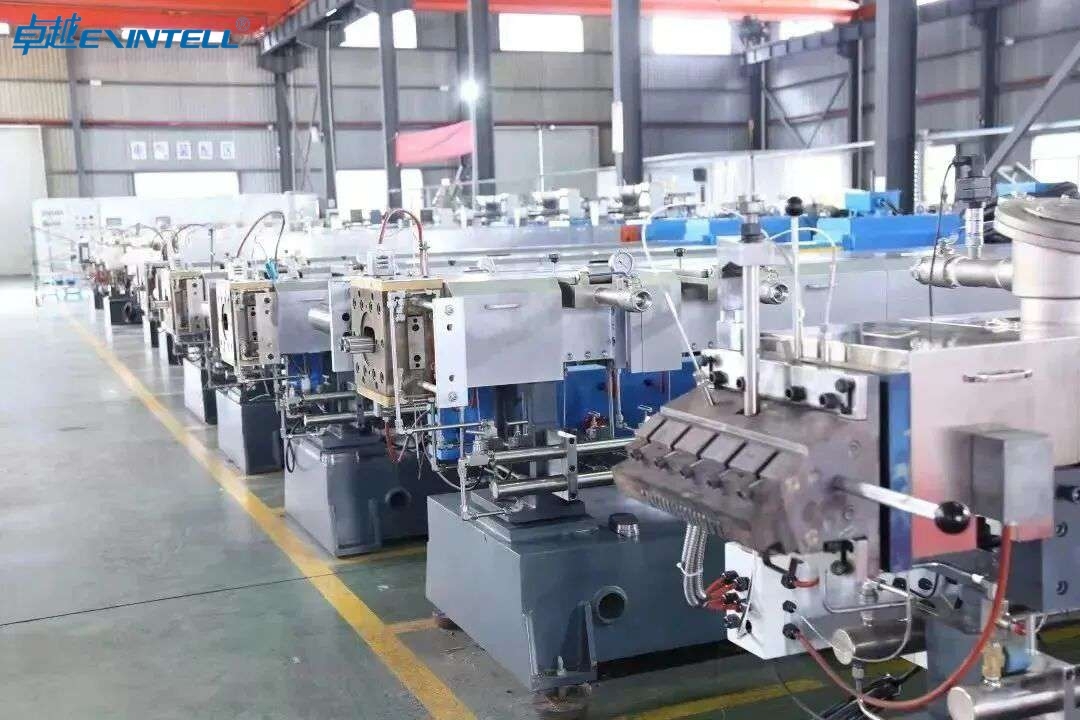
การทำความเข้าใจกระบวนการนี้ช่วยให้ผู้ซื้อเขียนข้อกำหนดเฉพาะได้ดีขึ้น และถามคำถามที่ชัดเจนยิ่งขึ้นในระหว่างการเสนอราคาการอัดขึ้นรูปพลาสติก. ฉันแนะนำลูกค้าผ่านมันเป็นลำดับเชิงเส้น: สิ่งที่เข้าไปเมื่อเม็ดออกมาเมื่อเสร็จแล้ว, โปรไฟล์ควบคุมมิติ. แต่ละขั้นตอนจะแนะนำตัวแปรที่ส่งผลต่อคุณภาพ, ดังนั้นฉันจึงถือว่าทั้งสายการผลิตเป็นระบบบูรณาการเดียวแทนที่จะเป็นชุดเครื่องจักรที่แยกเดี่ยว.
การอบแห้งเรซิน, การให้อาหาร, และการหลอมละลายในถังอัดรีด
ทุกอย่างเริ่มต้นด้วยการเลือกและการเตรียมเรซิน. วัสดุดูดความชื้น เช่น โพลีคาร์บอเนต, ไนลอน, และต้องทำให้ TPU แห้งก่อนแปรรูป, หรือความชื้นที่ติดอยู่จะทำให้เกิดน้ำลาย, ช่องว่าง, และโปรไฟล์ที่อ่อนแอ. จากถัง, เม็ดจะถูกป้อนเข้าไปในถังที่ให้ความร้อนซึ่งมีสกรูหมุนอยู่, บีบอัด, และละลายโพลีเมอร์ด้วยความร้อนและแรงเฉือนจากบาร์เรล. พีวีซีเป็นหนึ่งในโพลีเมอร์ที่ผลิตขึ้นและมีการอัดขึ้นรูปอย่างกว้างขวางที่สุด เนื่องมาจากต้นทุนและความสามารถรอบด้าน (พลาสติกยุโรป, 2023), ซึ่งเป็นเหตุผลว่าทำไมฉันถึงเห็นว่ามันมีอิทธิพลเหนือโปรไฟล์การก่อสร้าง, แม้ว่าโพรพิลีน, แอลดีพีอี, และ HDPE ต่างมีช่องทางของตนเอง. การทำโปรไฟล์อุณหภูมิตามแนวลำกล้องคือจุดที่คุณภาพการอัดขึ้นรูปเทอร์โมพลาสติกได้รับหรือสูญเสียไป.
บังคับให้หลอมผ่านแม่พิมพ์แบบกำหนดเองเพื่อสร้างหน้าตัด
จากนั้นโพลีเมอร์ที่หลอมละลายจะถูกบังคับผ่านแม่พิมพ์, เครื่องมืออัดขึ้นรูปชิ้นเดียวที่สำคัญที่สุด. การเปิดแม่พิมพ์จะใกล้เคียงกับหน้าตัดที่ต้องการ, แต่ฉันเน้นคำว่า “ประมาณ” จงใจ: พอลิเมอร์จะพองตัวและคลายตัวเมื่อออกมา, ดังนั้นการออกแบบแม่พิมพ์จึงคำนึงถึงพฤติกรรมของวัสดุด้วย, ไม่ใช่แค่รูปทรงเป้าหมายเท่านั้น. นี่คือสาเหตุที่ทำให้การออกแบบโปรไฟล์พลาสติกและวิศวกรรมแม่พิมพ์แยกจากกันไม่ได้, และเหตุใดการอัดรีดร่วมถึงตาย, ซึ่งรวมลำธารที่ละลายตั้งแต่สองสายขึ้นไปเข้าด้วยกัน, สั่งงบประมาณเครื่องมือที่สูงขึ้น.
ระบายความร้อน, การสอบเทียบ, และขั้นตอนการปรับขนาด
ทันทีที่เสียชีวิต, โปรไฟล์แบบอ่อนจะเข้าสู่การทำความเย็นและการสอบเทียบ. ถังวัดขนาดสุญญากาศหรืออุปกรณ์สอบเทียบจะยึดส่วนตัดขวางตามข้อกำหนด ในขณะที่อ่างน้ำหรือระบบระบายความร้อนด้วยอากาศจะทำให้รูปร่างแข็งตัว. จากประสบการณ์ของฉัน, ขั้นตอนนี้จะควบคุมว่าค่าเผื่อการอัดขึ้นรูปของคุณเข้มงวดเพียงใด. โปรไฟล์ที่มีความแข็งจะปรับเทียบได้อย่างคาดการณ์ได้ดีกว่าการอัดขึ้นรูปพลาสติกแบบยืดหยุ่น, และรูปทรงกลวงจำเป็นต้องมีการควบคุมสุญญากาศอย่างระมัดระวังเพื่อป้องกันการพังทลาย.
การดึง, การตัด, และการขดโปรไฟล์ที่เสร็จแล้ว
เครื่องดึง (ลากออก) ดึงโปรไฟล์ผ่านเส้นด้วยความเร็วที่ควบคุมได้อย่างแม่นยำ, และความเร็วของเส้นที่สัมพันธ์กับอัตราเอาท์พุตคือสิ่งที่ปรับความหนาของผนังอย่างละเอียด. ปลายน้ำ, โปรไฟล์ถูกตัดให้มีความยาวด้วยเลื่อยหรือมีด หรือขดหากเป็นท่อพลาสติกแบบกำหนดเองที่มีความยืดหยุ่น. บริการการผลิตทุติยภูมิ เช่น การเจาะ, การขุดเจาะ, การพิมพ์, หรือการประกอบประกอบมักจะตามมา, และฉันขอแนะนำให้วางแผนสำหรับสิ่งเหล่านี้ตั้งแต่เนิ่นๆ เพราะมันมีอิทธิพลต่อการสะสมของความอดทน.
การอัดขึ้นรูปแบบกำหนดเองเทียบกับการฉีดขึ้นรูป: ความแตกต่างที่สำคัญ
Buyers frequently ask me to compare these two processes, and the honest answer is that they solve different problems. I never position one as universally better. The decision comes down to geometry, ปริมาณ, and cost structure. Below I lay out how I evaluate the trade-offs, then summarize them in a table you can share with your team.
Continuous Profiles vs Discrete Molded Parts
The defining difference is output form. Extrusion produces a continuous length with a uniform cross-section, while injection molding produces discrete, ชิ้นส่วนสามมิติที่มีคุณสมบัติที่ซับซ้อนเช่นบอส, ซี่โครง, และกระทู้. If your part has a constant profile along one axis, extrusion is almost always the more economical route. If it has features that vary in all three dimensions, molding is the natural fit.
Tooling Cost and Complexity Comparison
This is where the cost gap is starkest, and where I push back on vague “ติดต่อเราเพื่อขอราคา” คำตอบ. แม่พิมพ์อัดขึ้นรูปนั้นค่อนข้างง่ายและราคาไม่แพงในการสร้างและดัดแปลง. แม่พิมพ์ฉีดมีความแม่นยำ, เครื่องมือแบบหลายช่องซึ่งสามารถต้นทุนการผลิตได้มากกว่าและใช้เวลาในการผลิตนานกว่า. สำหรับการอัดขึ้นรูปพลาสติกปริมาณน้อยและการสร้างต้นแบบการอัดขึ้นรูป, ความแตกต่างทางเศรษฐศาสตร์ของเครื่องมือถือเป็นปัจจัยชี้ขาด: ฉันสามารถตรวจสอบโปรไฟล์แบบกำหนดเองได้โดยใช้ต้นทุนแม่พิมพ์เพียงเล็กน้อย, จากนั้นปรับขนาด.
รูปทรงที่เหมาะสมที่สุดและจุดคุ้มทุนของปริมาตร
กฎง่ายๆของฉัน: เลือกการอัดขึ้นรูปเป็นเวลานาน, หน้าตัดที่สม่ำเสมอและการขึ้นรูปเพื่อคุณสมบัติที่หลากหลาย, ชิ้นส่วนที่มีอยู่ในตัวเอง. บนระดับเสียง, ต้นทุนเครื่องมือที่ต่ำของการอัดขึ้นรูปทำให้เป็นที่นิยมในหลากหลายประเภท, โดยเฉพาะอย่างยิ่งในปริมาณที่ต่ำกว่าซึ่งการตัดจำหน่ายเชื้อราจะมีอิทธิพลเหนือ. ประสิทธิภาพต่อชิ้นส่วนของการขึ้นรูปจะโดดเด่นเฉพาะในปริมาณที่สูงมากเท่านั้น ซึ่งสมเหตุสมผลในการลงทุนด้านเครื่องมือ.
|
ปัจจัย |
การอัดขึ้นรูปแบบกำหนดเอง |
การฉีดขึ้นรูป |
|---|---|---|
|
Output form |
Continuous profile, หน้าตัดสม่ำเสมอ |
ชิ้นส่วน 3D แบบแยกส่วน |
|
ค่าเครื่องมือ |
ต่ำถึงปานกลาง (ตาย) |
สูง (precision molds) |
|
Tooling lead time |
สั้นลง |
อีกต่อไป |
|
Best geometry |
หน้าตัดคงที่ (หลอด, ช่อง, แมวน้ำ, ภายนอกข้อมูลรถ) |
Complex features (bosses, หัวข้อ, ซี่โครง) |
|
Low-volume fit |
แข็งแกร่ง, ideal for prototyping |
Weak, high tooling amortization |
|
High-volume fit |
Strong for profiles |
Strong for discrete parts |
|
วัสดุทั่วไป |
พีวีซี, เอบีเอส, เอชดีพีอี, แอลดีพีอี, โพรพิลีน, ทีพีอี, โพลีคาร์บอเนต |
เอบีเอส, ไนลอน, โพลีคาร์บอเนต, โพรพิลีน |
|
Cost driver |
Line speed and material throughput |
Cycle time and cavitation |
|
ปัจจัย |
การอัดขึ้นรูปแบบกำหนดเอง |
การฉีดขึ้นรูป |
|---|---|---|
|
Output form |
Continuous profile, หน้าตัดสม่ำเสมอ |
ชิ้นส่วน 3D แบบแยกส่วน |
|
ค่าเครื่องมือ |
ต่ำถึงปานกลาง (ตาย) |
สูง (precision molds) |
|
Tooling lead time |
สั้นลง |
อีกต่อไป |
|
Best geometry |
หน้าตัดคงที่ (หลอด, ช่อง, แมวน้ำ, ภายนอกข้อมูลรถ) |
Complex features (bosses, หัวข้อ, ซี่โครง) |
|
Low-volume fit |
แข็งแกร่ง, ideal for prototyping |
Weak, high tooling amortization |
|
High-volume fit |
Strong for profiles |
Strong for discrete parts |
|
วัสดุทั่วไป |
พีวีซี, เอบีเอส, เอชดีพีอี, แอลดีพีอี, โพรพิลีน, ทีพีอี, โพลีคาร์บอเนต |
เอบีเอส, ไนลอน, โพลีคาร์บอเนต, โพรพิลีน |
|
Cost driver |
Line speed and material throughput |
Cycle time and cavitation |
When a project sits on the boundary, I look at total landed cost across the expected production life rather than unit price alone. In most profile applications I have quoted, the low tooling threshold of a custom plastic extrusion company wins on both speed to market and financial risk, which is exactly why extrusion remains such a large share of thermoplastic conversion by weight (สมาคมอุตสาหกรรมพลาสติก, 2023).
Common Materials Used in Custom Plastic Extrusion
เมื่อลูกค้าส่งภาพวาดมาให้ฉันและถามว่าควรทำมาจากอะไร, ฉันไม่เคยเริ่มต้นด้วยโพลีเมอร์. ฉันเริ่มต้นด้วยงานส่วนที่ต้องทำ. หลายปีที่ผ่านมา ฉันได้เรียนรู้ว่าการเลือกวัสดุเป็นจุดที่โครงการอัดขึ้นรูปส่วนใหญ่ประสบความสำเร็จหรือล้มเหลวอย่างเงียบๆ, นานก่อนที่จะมีการตัดแม่พิมพ์. ข่าวดีก็คือสาขาการอัดขึ้นรูปโปรไฟล์แบบกำหนดเองนั้นใช้ชุดเรซินเทียมที่สามารถจัดการได้, และเมื่อคุณเข้าใจแล้วว่าพวกมันจัดกลุ่มอย่างไร, ทางเลือกต่างๆ น่ากลัวน้อยลงมาก.
สินค้าโภคภัณฑ์เรซิน: คนทำงานทุกวัน
ชิ้นส่วนพลาสติกอัดขึ้นรูปส่วนใหญ่ที่ฉันเสนอราคาจัดอยู่ในกลุ่มสินค้าโภคภัณฑ์, และด้วยเหตุผลที่ดี. เรซินเหล่านี้มีราคาไม่แพง, ใช้กันอย่างแพร่หลาย, และดำเนินการได้อย่างคาดเดาได้, ซึ่งทำให้ทั้งต้นทุนเครื่องมือและต้นทุนต่อฟุตลดลง. Mens Recycled Plastic Clothing
- พีวีซี — My default for rigid profiles, เล็ม, and custom plastic tubing that needs stiffness at a low price. PVC is among the most produced and widely extruded polymers precisely because it balances cost and versatility (พลาสติกยุโรป, 2023). It also accepts flexibilizers well, so I can specify rigid PVC extrusion for structural work or a soft, flexible plastic extrusion for gaskets from essentially the same chemistry.
- เอทิลีน (วิชาพลศึกษา) — Both HDPE and LDPE show up constantly. I reach for HDPE when I need chemical resistance and toughness in things like liner profiles, and LDPE when I want flexibility and low moisture absorption.
- โพรพิลีน (พีพี) — A strong choice for living hinges, chemical containment, and parts that see repeated flexing. It runs light and resists most solvents.
- เอบีเอส — When a customer wants a rigid profile with a clean, paintable surface and good impact strength at room temperature, ABS earns its place. It is a frequent pick for consumer and appliance trim.
Engineering and High-Performance Resins
Once the application demands more, ความร้อน, load, ความมั่นคงของมิติ, or regulatory pedigree, I move up the ladder. These resins cost more and can be less forgiving on the line, but they solve problems commodity plastics cannot.
- โพลีคาร์บอเนต — My go-to for clear or tinted profiles that must survive impact. It pairs optical clarity with genuine toughness, which is why I specify it for lighting lenses and protective glazing profiles.
- ไนลอน (ใยสังเคราะห์) — Excellent wear resistance and mechanical strength make nylon a natural fit for structural profiles, สวมแถบ, and low-friction guides.
- แอบมอง — This is the top of the range. เมื่อชิ้นส่วนเผชิญกับอุณหภูมิต่อเนื่องสูง, สารเคมีเชิงรุก, หรือข้อกำหนดทางการแพทย์และการบินและอวกาศ, PEEK จัดให้, แม้ว่าจะมีราคาระดับพรีเมียมและต้องการการควบคุมกระบวนการที่เข้มงวดก็ตาม.
- อะคริลิก — เพื่อความชัดเจนของแสงที่ดีที่สุดและความแข็งแกร่ง, เคลือบเงา, อะคริลิกนั้นหาได้ยากในป้ายและโปรไฟล์การแสดงผล, แรงกระแทกที่จัดให้อยู่ในระดับปานกลาง.
อีลาสโตเมอร์ยืดหยุ่นและตัวเลือกดูโรมิเตอร์ดูอัล
งานที่น่าสนใจที่สุดบางส่วนที่ฉันทำเกี่ยวข้องกับชิ้นส่วนที่ต้องโค้งงอ, ผนึก, หรือด้ามจับ. เทอร์โมพลาสติกอีลาสโตเมอร์เปิดประตูนั้น.
- ทีพีอี — กลุ่มผลิตภัณฑ์อเนกประสงค์สำหรับซีลและปะเก็นแบบกำหนดเอง, การลอกสภาพอากาศ, และขอบสัมผัสที่นุ่มนวล. มันดำเนินการเหมือนเทอร์โมพลาสติก แต่มีพฤติกรรมเหมือนยาง.
- ทีพียู — เมื่อฉันต้องการความต้านทานการเสียดสีและความเหนียวในส่วนที่ยืดหยุ่น, TPU มีประสิทธิภาพเหนือกว่าทางเลือกส่วนใหญ่, ด้วยเหตุนี้จึงปรากฏอยู่ในท่ออ่อนและท่อป้องกัน.
นี่คือจุดที่การอัดรีดร่วมเปลี่ยนการสนทนา. การใช้โปรไฟล์อัดรีดร่วมดูโรมิเตอร์, ฉันสามารถใช้แกนหลัก PVC แบบแข็งและขอบซีล TPE แบบอ่อนได้ในครั้งเดียว, ผูกมัดพวกเขาเมื่อพวกเขาออกจากแม่พิมพ์. ซึ่งช่วยลดขั้นตอนการประกอบรองและทำให้เกิดสารทำความสะอาด, ส่วนที่คงทนมากขึ้น. เมื่อใดก็ตามที่ลูกค้าอธิบายถึงช่องทางที่เข้มงวดซึ่งจำเป็นต้องมีการปิดผนึกที่ยืดหยุ่นด้วย, ฉันเพิ่มการอัดขึ้นรูปเทอร์โมพลาสติกด้วยการอัดขึ้นรูปร่วมตั้งแต่เนิ่นๆ, เพราะมันมักจะปรับรูปร่างการออกแบบทั้งหมดใหม่.
วิธีเลือกวัสดุที่เหมาะสมสำหรับโปรไฟล์ของคุณ
การเลือกเรซินเป็นการฝึกหัดในการแลกเปลี่ยนอย่างซื่อสัตย์. จากประสบการณ์ของฉัน, โครงการที่มีงบประมาณจำกัดคือโครงการที่เรากำหนดความต้องการอย่างแม่นยำก่อนที่ใครจะหลงรักโพลีเมอร์ชนิดใดชนิดหนึ่ง. ฉันตอบคำถามที่สม่ำเสมอกับลูกค้าทุกคน, และฉันจะแนะนำคุณผ่านกรอบเดียวกัน.
จับคู่คุณสมบัติของวัสดุให้ตรงกับข้อกำหนดการใช้งาน
ฉันเริ่มต้นด้วยการแยกข้อกำหนดออกเป็นสามกลุ่ม, เพราะเรซินไม่ค่อยจะชนะทุกอย่างในคราวเดียว.
ความต้องการทางกล
โหลดเท่าไหร่ครับ, ผลกระทบ, และส่วนที่งอจะมองเห็น? โปรไฟล์พลาสติกแบบมีโครงสร้างแบบกำหนดเองที่รองรับน้ำหนักชี้ให้ฉันไปที่ไนลอนหรือ PVC แบบแข็ง, ในขณะที่ชิ้นส่วนที่ต้องรอดจากการตกหล่นจะเอียงไปทางโพลีคาร์บอเนตหรือ ABS. หากจำเป็นต้องโค้งงอซ้ำๆ โดยไม่แตกร้าว, โพรพิลีนหรือ TPE เป็นการเรียกที่ชาญฉลาดกว่า.
ความต้องการความร้อน
ฉันขออุณหภูมิบริการต่อเนื่องสูงสุด, ไม่ใช่แค่จุดสูงสุดเท่านั้น. เรซินสินค้าโภคภัณฑ์จะอ่อนตัวลงตั้งแต่เนิ่นๆ; PVC และ PE สวมใส่สบายในสภาพแวดล้อมที่อบอุ่นเล็กน้อย แต่จะไม่ผ่านบริเวณใกล้แหล่งความร้อน. เมื่ออุณหภูมิในการทำงานสูงขึ้น, ฉันย้ายไปที่โพลีคาร์บอเนต, ไนลอน, หรือ, เพื่อจุดจบอันสุดขั้ว, แอบมอง.
ความต้องการความทนทานต่อสารเคมี
การสัมผัสกับตัวทำละลาย, น้ำมัน, เชื้อเพลิง, หรือสารทำความสะอาดจะทำให้สนามแคบลงอย่างรวดเร็ว. HDPE และโพรพิลีนยักไหล่สารเคมีส่วนใหญ่, ซึ่งเป็นสาเหตุที่ว่าทำไมพวกมันจึงครองโปรไฟล์การกักกันทางอุตสาหกรรม, ในขณะที่ ABS และโพลีคาร์บอเนตมีความเสี่ยงมากกว่าและจำเป็นต้องได้รับการตรวจสอบอย่างระมัดระวัง.
ปัจจัยด้านสิ่งแวดล้อมและความทนทาน
คำถามสองข้อช่วยให้ลูกค้ารอดพ้นจากความล้มเหลวในภาคสนามซึ่งมีราคาแพง. อันดับแรก, ส่วนหนึ่งจะอยู่กลางแจ้งหรือไม่? ชอล์กพลาสติกที่ไม่เสถียร, สีเหลือง, และเปราะเมื่อได้รับรังสียูวีอย่างต่อเนื่อง, ดังนั้นสำหรับโปรไฟล์กลางแจ้ง ฉันจึงระบุเกรดที่มีความเสถียรต่อรังสี UV หรือเรซินที่มีความเสถียรโดยธรรมชาติ และยืนยันอายุการใช้งานที่คาดไว้ล่วงหน้า. ที่สอง, แอปพลิเคชันเกี่ยวข้องกับความเสี่ยงจากไฟไหม้หรือไม่? Flammability is not optional in electrical and building products. แอล 94 is the standard used to classify the flammability of plastic materials for parts and components (ยูแอล โซลูชั่น, 2023), and I match the required rating, such as UL 94 วี-0, to a resin grade that carries it rather than assuming a base polymer qualifies.
ข้อกำหนดด้านกฎระเบียบ
Compliance is where I see the most costly late-stage ขายส่งรีไซเคิลพลาสติก surprises, so I raise it before design freeze.
- Food contact — The FDA regulates food-contact substances, including plastics used in food-grade extruded products (เรา. สำนักงานคณะกรรมการอาหารและยา, 2023), so food and beverage applications require documented compliant resins.
- อิเล็กทรอนิกส์ — RoHS restricts the use of specific hazardous substances in electrical and electronic products (คณะกรรมาธิการยุโรป, 2023), and the broader REACH regulation governs the registration and safe use of chemical substances in products sold in the EU (สำนักงานเคมีภัณฑ์แห่งยุโรป, 2023).
- ทางการแพทย์ — Medical grade extrusion typically pairs a biocompatible resin with a supplier holding ISO 13485 การรับรอง (องค์การระหว่างประเทศเพื่อการมาตรฐาน, 2016).
- Flammability — UL listings, as noted above, for electrical and building components.
Cost vs Performance Trade-Offs
Every step up in performance carries a cost, and part of my job is to prevent over-specifying. Not every part needs PEEK. I also remind clients that recycled plastics can reduce environmental impact while meeting many non-critical application requirements (เรา. สำนักงานคุ้มครองสิ่งแวดล้อม, 2023), which makes them a genuine option for non-structural, non-regulated profiles. The table below summarizes how I weigh the common resins across the factors that actually drive selection.
| วัสดุ | หมวดหมู่ | ต้นทุนสัมพัทธ์ | Max Service Temp | ทนต่อสารเคมี | Outdoor/UV | Typical Profile Use |
|---|---|---|---|---|---|---|
| พีวีซี (rigid) | สินค้าโภคภัณฑ์ | ต่ำ | Low–Moderate | ดี | Good with additives | ตัดแต่ง, ช่อง, custom plastic tubing |
| เอชดีพีอี | สินค้าโภคภัณฑ์ | ต่ำ | ปานกลาง | ยอดเยี่ยม | ดี | Chemical liners, tough profiles |
| แอลดีพีอี | สินค้าโภคภัณฑ์ | ต่ำ | ต่ำ | ดี | ปานกลาง | ท่อที่มีความยืดหยุ่น, ชิ้นส่วนที่รับน้ำหนักต่ำ |
| โพรพิลีน | สินค้าโภคภัณฑ์ | ต่ำ | ปานกลาง | ยอดเยี่ยม | Poor without stabilizer | บานพับที่มีชีวิต, containment |
| เอบีเอส | สินค้าโภคภัณฑ์ | Low–Mid | ปานกลาง | ยุติธรรม | ยากจน | Rigid trim, paintable parts |
| โพลีคาร์บอเนต | วิศวกรรม | Mid | สูง | ยุติธรรม | Good with UV grade | Clear impact profiles, lenses |
| ไนลอน | วิศวกรรม | Mid | สูง | ดี | ปานกลาง | Wear strips, structural guides |
| อะคริลิก | วิศวกรรม | Mid | ปานกลาง | ยุติธรรม | ยอดเยี่ยม | ป้าย, display profiles |
| แอบมอง | ประสิทธิภาพสูง | สูงมาก | สูงมาก | ยอดเยี่ยม | ยอดเยี่ยม | ทางการแพทย์, การบินและอวกาศ, harsh service |
| ทีพีอี / ทีพียู | Elastomer | Mid | ปานกลาง | ดี | Grade-dependent | ซีลและปะเก็นแบบกำหนดเอง, dual-durometer lips |
Ratings above are directional guidance drawn from typical extrusion grades; specific compounded formulations vary, so I always confirm properties against a supplier data sheet before committing.
Understanding Extrusion Tooling and Die Costs
Nothing surprises first-time buyers more than tooling. They come expecting to pay per foot and discover that the profile has to be born from a custom-cut die first. Because the plastic extrusion market was valued at approximately USD 79 พันล้านใน 2023 โดยมีการคาดการณ์การเติบโตอย่างมั่นคง (การวิจัยแกรนด์วิว, 2023), there is a mature supply base for tooling, but pricing still varies widely with complexity. Let me demystify what you are actually paying for.
What an Extrusion Die Is and How It’s Made
An extrusion die is a precisely machined steel plate, sometimes a small stack of plates, with an opening cut to the cross-section of your profile. Molten resin is forced through that opening, takes its shape, and is then cooled and pulled to length. The reason a die costs money is that its opening is never a simple copy of the finished part. Plastic swells and relaxes as it exits, so my toolmakers deliberately distort the die geometry to compensate, จากนั้นปรับแต่งผ่านการทดลองใช้งาน. That iterative tuning, not just the raw machining, is what you are buying. Extrusion tooling and dies for co-extruded profiles are more complex still, เพราะจะต้องผสานลำธารที่ละลายสองแห่งเข้าด้วยกันอย่างหมดจด.
ช่วงต้นทุนเครื่องมือทั่วไปตามความซับซ้อน
ฉันเชื่อในตัวเลขแยกรายการมากกว่าคลุมเครือ “ติดต่อเราเพื่อขอราคา,” นี่คือช่วงที่สมจริงที่ฉันเห็นสำหรับโปรไฟล์แบบช่องเดียวในอเมริกาเหนือ. ปฏิบัติต่อพวกเขาเสมือนเป็นตัวเลขในการวางแผน; คำพูดสุดท้ายขึ้นอยู่กับวัสดุ, ความอดทน, และเรทร้านค้า.
- โปรไฟล์ที่เรียบง่าย (ท่อกลมหรือสี่เหลี่ยม, แถบพื้นฐาน, เปิดช่อง): ประมาณ USD 1,500 เป็นดอลลาร์สหรัฐ 4,000.
- โปรไฟล์ปานกลาง (รูปทรงหลายขา, คุณสมบัติสแนป, ความอดทนที่เข้มงวดมากขึ้น): ประมาณ USD 4,000 เป็นดอลลาร์สหรัฐ 8,000.
- โปรไฟล์ที่ซับซ้อน (กลวงหลายห้อง, ผนังบาง, คุณสมบัติที่ห่อหุ้ม): ประมาณ USD 8,000 เป็นดอลลาร์สหรัฐ 15,000.
- การอัดขึ้นรูปร่วมหรือเครื่องมือดูโรมิเตอร์แบบดูอัล: มักจะเป็น USD 12,000 และขึ้น, เพราะมันต้องใช้เครื่องมือการไหลเพิ่มเติมและการปรับแต่งเพิ่มเติม.
เครื่องมือต้นแบบจะแยกจากกัน, เส้นทางน้ำหนักเบา. สำหรับการสร้างต้นแบบการอัดขึ้นรูปและการอัดขึ้นรูปพลาสติกปริมาณน้อย, ร้านค้าบางแห่งเสนอเครื่องมือแบบอ่อนหรือแบบโมดูลาร์โดยมีต้นทุนการผลิตเพียงเล็กน้อย ดังนั้นคุณจึงตรวจสอบการออกแบบได้ก่อนที่จะลงทุนในแม่พิมพ์ชุบแข็ง.
One-Time Tooling vs Recurring Run Costs
The cleanest way I know to explain extrusion economics is to split your quote into two lines. The first is the one-time tooling charge above, an upfront investment tied to the geometry, not the quantity. The second is the recurring run cost: the per-foot or per-pound price you pay each time you order, driven by resin cost, ความเร็วของสาย, อัตราเศษเหล็ก, and any secondary fabrication services such as cutting, ต่อย, or printing. Because tooling is amortized across every foot you eventually order, low volumes carry a high effective cost per part, while production volumes spread the die charge thin. When I prepare a plastic extrusion quote, I show both lines separately so you can see exactly where your money goes and model your break-even honestly.
Tooling Ownership, Storage, and Reuse Policies
This is the clause buyers most often overlook, and it matters. Before I place an order with any plastic extrusion manufacturer, I confirm three things in writing:
- ความเป็นเจ้าของ — Do you own the die outright after paying for it, or does the supplier retain title? If you pay the full tooling charge, I push for documented customer ownership so you can move the tool if the relationship changes.
- Storage — Reputable shops store your die at no charge between runs, but some impose fees or scrap tooling after a period of inactivity. Get the retention period in writing.
- Reuse and transfer — Confirm that the die can be reused for repeat orders indefinitely and, วิกฤต, that it can be released or transferred to another plastic extrusion company if you ever need a second source.
Clarifying ownership up front protects the investment you have made and preserves your leverage. A supplier confident in its work will have no problem putting these terms on paper, and in my experience that willingness is itself a useful signal of a partner worth keeping.
A Transparent Breakdown of Custom Extrusion Costs
When I ask a prospective customer what frustrates them most about sourcing extruded plastic parts, the answer is almost always the same: pricing feels like a black box. Too many quotes arrive as a single lump sum with no explanation of what drives the number. จากประสบการณ์ของฉัน, a good plastic extrusion manufacturer should be willing to unbundle the cost so you can see exactly where your money goes. I break every custom profile extrusion project into three components, then account for the extras that quietly inflate a quote.
The Three Core Cost Components
Every extrusion quote I write rests on three pillars: เครื่องมือ, วัสดุ, and processing. Understanding the relative weight of each helps you decide where to negotiate and where to leave well enough alone.
เครื่องมือ
The extrusion die is a one-time capital cost. A simple round profile in rigid PVC extrusion might use a die in the low four figures, while a complex co-extruded profile with multiple durometers and tight internal geometry can run several times higher. Calibration and sizing fixtures add to that figure. I always treat tooling as an amortized investment: on a long production run, the per-foot impact of the die shrinks toward negligible, ซึ่งเป็นเหตุผลว่าทำไมเครื่องมือและแม่พิมพ์การอัดขึ้นรูปจึงไม่ค่อยสมเหตุสมผลที่จะละทิ้งชิ้นส่วนที่คุณวางแผนจะใช้เป็นเวลาหลายปี.
วัสดุ
เรซินคือต้นทุนที่เกิดซ้ำซึ่งปรับขนาดตามปริมาตรโดยตรง. โพลีเมอร์สินค้าโภคภัณฑ์ เช่น พีวีซี, เอชดีพีอี, แอลดีพีอี, และโพรพิลีนนั่งที่ราคาย่อมเยา, ซึ่งเป็นส่วนหนึ่งของเหตุผลว่าทำไม PVC จึงเป็นหนึ่งในโพลีเมอร์ที่ผลิตขึ้นและมีการอัดขึ้นรูปอย่างกว้างขวางที่สุด เนื่องจากต้นทุนและความคล่องตัว (พลาสติกยุโรป, 2023). วิศวกรรมและเรซินชนิดพิเศษจะเคลื่อนเข็มขึ้นอย่างรวดเร็ว. โพลีคาร์บอเนต, เอบีเอส, ไนลอน, ทีพีอี, และ TPU มอบความพรีเมี่ยมที่มีความหมาย, และ PEEK ที่มีประสิทธิภาพสูงอาจมีราคาต่อปอนด์มากกว่าเกรดสินค้าโภคภัณฑ์หลายเท่า. อะคริลิกตั้งอยู่ตรงกลางสำหรับการใช้งานด้านการมองเห็น. สารแต่งสี, สารเพิ่มความคงตัวของรังสียูวี, และสารเติมแต่งสารหน่วงไฟที่ตรงตามมาตรฐานเช่น UL 94 (ยูแอล โซลูชั่น, 2023) แต่ละรายการจะเพิ่มต้นทุนส่วนเพิ่ม.
กำลังประมวลผล
การประมวลผลครอบคลุมเวลาของเครื่อง, แรงงาน, พลังงาน, และเศษเหล็ก. ความเร็วของสายที่เร็วขึ้นจะช่วยลดต้นทุนการประมวลผลต่อฟุต, แต่มีกำแพงหนา, ความอดทนที่แน่นหนา, และรูปทรงที่ซับซ้อนทำให้เส้นช้าลงและยกขึ้น. การอัดขึ้นรูปยังคงเป็นหนึ่งในวิธีการแปรรูปพลาสติกที่มีปริมาณมากที่สุด, คิดเป็นสัดส่วนขนาดใหญ่ของการแปลงเทอร์โมพลาสติกตามน้ำหนัก (สมาคมอุตสาหกรรมพลาสติก), ดังนั้นประสิทธิภาพในการประมวลผลจึงเป็นจุดที่บริษัทรีดพลาสติกที่มีประสบการณ์สามารถรักษาไว้ได้.
ราคารูปร่างต่อเท้าอย่างไร
ตัวขับเคลื่อนราคาต่อหน่วยที่ใหญ่ที่สุดตัวเดียวของคุณคือปริมาณรายปี, เพราะมันกำหนดวิธีการตัดจำหน่ายเครื่องมือและระยะเวลาในการติดตั้งที่คุณใช้ต่อฟุต. ตั้งค่า, ล้าง, และการตรวจสอบบทความแรกเป็นต้นทุนคงที่ที่เกิดขึ้นทุกครั้งที่เราเริ่มดำเนินการ. กระจายไปทั่ว 500 เท้า, พวกเขาครองราคา. กระจายไปทั่ว 50,000 เท้า, พวกเขาเกือบจะหายไปแล้ว. ตารางภาพประกอบด้านล่างนี้สะท้อนถึงรูปแบบที่ฉันเห็นในโปรไฟล์พลาสติกแบบกำหนดเองทั่วไป; ถือเป็นแนวทางมากกว่าเป็นแผ่นอัตราคงที่, เนื่องจากการเลือกเรซินและความซับซ้อนของโปรไฟล์จะเปลี่ยนจำนวนสัมบูรณ์.
| ปริมาณประจำปี | Tooling amortization per foot | Setup impact per foot | Relative unit price |
|---|---|---|---|
| 500 ฟุต (prototype) | สูง | สูง | Baseline ×3–4 |
| 5,000 ฟุต (ปริมาณต่ำ) | ปานกลาง | ปานกลาง | Baseline ×1.6–2 |
| 25,000 ฟุต (mid volume) | ต่ำ | ต่ำ | Baseline ×1.1–1.3 |
| 100,000+ ฟุต (การผลิต) | Negligible | Negligible | พื้นฐาน |
The takeaway I share with clients running extrusion prototyping is simple: expect prototype pricing to look alarming on a per-foot basis, and judge the true economics only once you model production volume.
Secondary Operation Cost Adders
The extruded length that leaves the die is often not the finished part. Secondary fabrication services add real cost that belongs in your quote, not in a surprise invoice. Common adders I itemize include cut-to-length and tight-tolerance sawing, hole punching and notching, การขุดเจาะ, printing or striping, hot stamping, tipping and flaring on custom plastic tubing, ultrasonic welding, การประกอบ, and custom packaging. Each operation introduces its own labor, fixturing, and scrap rate. When you request custom seals and gaskets, corner-cutting and joining steps frequently cost more than the extrusion itself at low volumes.
Where Hidden Costs Typically Appear
Over the years I have learned exactly where budgets get blown. อันดับแรก, freight and dunnage on long or fragile profiles: a lightweight part can still be expensive to ship because it consumes volume, not weight. ที่สอง, minimum resin purchases for custom compounds and colors, where you pay for a full lot even if your run uses a fraction. ที่สาม, scrap and startup allowance, which is real material you fund. ที่สี่, inspection and certification labor for regulated work such as medical grade extrusion under ISO 13485 (องค์การระหว่างประเทศเพื่อการมาตรฐาน, 2016), or documentation for REACH (เอคชา, 2023) และ RoHS (คณะกรรมาธิการยุโรป, 2023) การปฏิบัติตาม. I flag every one of these line items up front, because a plastic extrusion quote that hides them is not actually cheaper, it is just less honest.
Minimum Order Quantities and Volume Planning
Nearly every conversation about extruded plastic parts eventually reaches the minimum order quantity, and it is often the point where a promising project stalls. I find it helps to explain why MOQs exist before we negotiate around them, because the reasoning reveals where flexibility actually lives.
Why MOQs Exist in Extrusion
การอัดขึ้นรูปเป็นกระบวนการต่อเนื่อง, not a discrete one. Every run demands the same startup sequence regardless of length: mounting the die, heating the barrel to temperature, purging the previous material, dialing in dimensions against the calibration tooling, and running scrap until the profile stabilizes. That startup consumes machine time and material whether you order 200 feet or 20,000. The MOQ is how a plastic extrusion manufacturer ensures a run is long enough to justify that fixed setup burden. It is an economic threshold, not an arbitrary barrier.
Typical Minimum Run Lengths and Weights
ในทางปฏิบัติ, I see MOQs expressed two ways. For simpler commodity profiles, minimums are often stated by weight, commonly in the range of a few hundred pounds of resin per run, which reflects the lot economics of the material. For dimension-driven parts, minimums are stated in linear feet, frequently landing somewhere between 1,000 และ 5,000 feet for a standard profile. Specialty resins such as PEEK or medical-grade compounds carry higher effective minimums because the material lots themselves are large and costly. These figures are typical starting points; ความซับซ้อน, tooling status, and resin all move them.
Balancing Inventory Carrying Cost Against Setup Savings
There is a genuine tension here, and I never pretend otherwise. Ordering in large batches lowers your per-foot price by diluting setup cost, but it ties up capital and warehouse space in finished goods that may sit for months. Ordering small keeps inventory lean but pays the setup penalty repeatedly. The right answer depends on your carrying cost, your demand stability, and shelf-life considerations for the polymer. I usually model the crossover point explicitly: at what run frequency does the setup savings from a larger batch exceed the cost of storing the extra inventory? For stable, high-turn products the math favors larger runs. For volatile or short-lifecycle products, smaller and more frequent runs win despite the higher unit cost.
Blanket Orders and Scheduled Releases
For low volume plastic extrusion buyers who cannot absorb a full production batch at once, blanket orders are the tool I recommend most often. Under a blanket order, you commit to a total annual quantity that qualifies for volume pricing, then take delivery in scheduled releases sized to your actual consumption. We run the material efficiently in economical batches, warehouse it, and ship against your call-offs. You capture near-production pricing while keeping your own inventory footprint modest. It is the cleanest way I know to reconcile a supplier’s need for run length with a buyer’s need for cash-flow discipline, and it is a standard offering from any serious plastic extrusion company.
Achievable Tolerances in Plastic Extrusion
Tolerance expectations cause more friction between designers and extruders than almost any other topic. Engineers frequently arrive with drawings dimensioned as if the part were machined, and I have to reset expectations early. Extrusion is a thermoforming process where hot polymer is pushed through a die and then cooled, ขนาด, and pulled. The material shrinks, relaxes, and moves as it solidifies, and those physics set the realistic limits on precision.
Standard Versus Tight Tolerance Ranges
Rather than promise machining-grade numbers, I work from published commercial and precision tolerance bands that reflect what extrusion genuinely delivers. Standard commercial tolerances are appropriate and economical for the majority of custom plastic profiles. Tight tolerances are achievable on select dimensions, but they require better tooling, tighter process control, in-line measurement, and sometimes secondary sizing, all of which raise cost. The table summarizes the practical ranges I quote against, with values expressed as typical deviation for a given dimension size.
| ประเภทมิติ | Standard tolerance | Tight tolerance | หมายเหตุ |
|---|---|---|---|
| ความหนาของผนัง | ±0.005 ถึง ±0.010 นิ้ว | ±0.003 in | Thicker walls hold tolerance better than very thin sections |
| ความกว้าง/ความสูงโดยรวม (rigid) | ±0.010 ถึง ±0.020 นิ้ว | ±0.005 in | Rigid PVC and ABS hold dimensions more predictably |
| ความกว้าง/ความสูงโดยรวม (ยืดหยุ่นได้) | ±0.020 to ±0.030 in | ±0.010 in | TPE and flexible PVC move more after the die |
| มุม | ±2° | ±1° | Sharp corners are harder to hold than radiused ones |
I present these as engineering guidance, not marketing promises. Any reputable plastic extrusion services provider should be willing to review your specific profile and confirm what is achievable before you commit to a drawing.
Factors That Affect Dimensional Stability
Several variables govern how tightly a profile holds its shape. Material selection matters first: crystalline polymers such as HDPE, โพรพิลีน, and nylon shrink more and less predictably than amorphous polymers such as ABS, โพลีคาร์บอเนต, and acrylic, which makes the amorphous families easier to hold tight. Melt temperature, ความเร็วของสาย, อัตราการทำความเย็น, and puller consistency all influence the final dimensions. Ambient conditions and post-extrusion relaxation play a role too, since some materials continue to change slightly for hours after leaving the line. Consistent process control is what separates a capable custom profile extrusion supplier from an inconsistent one.
How Wall Thickness and Geometry Influence Precision
Geometry is destiny in extrusion. Uniform wall thickness cools evenly and holds dimensions well; abrupt transitions between thick and thin sections cool at different rates, inducing warpage, sink, and dimensional drift. I coach designers toward balanced walls, generous internal radii, and symmetry wherever the function allows. Hollow profiles and custom plastic tubing require internal air pressure and mandrels to hold shape, adding another variable to control. ในการอัดขึ้นรูปเทอร์โมพลาสติก, the closer your cross-section approaches uniform wall thickness and gentle curves, the tighter and cheaper the tolerances I can deliver. Co-extrusion of two materials in one profile adds capability but also adds interfaces that must be managed for dimensional consistency.
When to Specify Critical Versus Reference Dimensions
The most valuable habit I can teach a buyer is to distinguish critical dimensions from reference dimensions on the drawing. A critical dimension is one that must be controlled because it mates with another part, seals against a surface, or affects function. A reference dimension merely describes the profile without needing tight control. When every dimension is toleranced tightly, cost rises across the board and inspection slows delivery for no functional gain. When you identify the two or three dimensions that truly matter and let the rest float at standard tolerance, we concentrate tooling and process effort exactly where it counts. That single practice, more than any other, keeps a plastic extrusion quote realistic while still protecting the fit and function your application depends on.
Design for Manufacturability: Getting Your Profile Right
จากประสบการณ์ของฉัน, the single largest driver of scrap, delay, and cost overruns in custom profile extrusion is a drawing that ignores how molten polymer actually behaves as it leaves the die and cools. A part that looks clean in CAD can warp, sink, or bow the moment it hits the cooling bath. Designing for manufacturability is not about compromising your intent; it is about shaping the profile so the physics of thermoplastic extrusion work in your favor. When I evaluate a Custom Plastic Extrusion Factory supplier, I look for engineers who push back on my geometry early rather than quoting whatever I hand them.
Maintaining Uniform Wall Thickness
Uniform wall thickness is the first principle I apply to any custom plastic profile. Thick and thin regions in the same cross-section cool at different rates, and that differential shrinkage pulls the part out of shape. Thick zones stay molten longer, then contract and create sink marks or internal voids, while thin walls set quickly and lock in stress. I aim to keep wall thickness within roughly 10 ถึง 15 percent of a nominal value across the profile. Where a functional feature genuinely needs more mass, I core it out or blend the transition rather than leaving an abrupt step. This discipline matters across every resin I specify, from rigid PVC extrusion to flexible plastic extrusion in TPE.
Using Generous Radii and Avoiding Sharp Corners
Sharp internal corners concentrate stress and disrupt melt flow, and they are notoriously hard to fill consistently through extrusion tooling and dies. I replace them with generous radii wherever the function allows, typically an internal radius of at least half the adjacent wall thickness. Rounded corners fill more evenly, cool more predictably, and produce a tougher extruded plastic part in service. They also extend die life, which quietly reduces long-term tooling cost. When a customer insists on a knife edge for sealing or aesthetics, I flag it as a feature that will tighten achievable extrusion tolerances and raise the price.
Designing Hollow Sections That Cool Evenly
Hollow profiles and custom plastic tubing introduce a second cooling surface on the inside, which complicates thermal balance. A hollow section that is dimensionally lopsided will cool unevenly and bow along its length. I keep the walls surrounding a hollow chamber as consistent as possible and, for multi-lumen or complex chambered profiles, I discuss internal air pressure and vacuum sizing with the factory. These process controls hold the bore geometry while the outer surface sets. The takeaway is simple: symmetry in the drawing translates directly into straightness on the production line.
Collaborating with the Factory’s Engineers Early
The best cost savings in plastic profile design happen before the die is cut. I bring the manufacturer’s process engineers into the conversation during concept, not after I have frozen the geometry. They know their line speeds, their calibration hardware, and the quirks of the specific polymer grade. A ten-minute exchange about a radius or a wall transition can eliminate a tooling revision that would otherwise cost thousands and add weeks. การอัดขึ้นรูปเป็นหนึ่งในวิธีการแปรรูปพลาสติกที่มีปริมาณมากที่สุด, คิดเป็นสัดส่วนขนาดใหญ่ของการแปลงเทอร์โมพลาสติกตามน้ำหนัก (สมาคมอุตสาหกรรมพลาสติก), which means the collective process knowledge inside a good factory is deep. I treat that knowledge as a design resource, ไม่ใช่ความคิดในภายหลัง.
Co-Extrusion และ Multi-Material Profiles
When a single resin cannot satisfy every requirement in one cross-section, co-extrusion becomes the tool I reach for. It lets me combine materials with different properties into a single, integrated profile in one continuous operation, which is often more elegant and more economical than assembling separate parts downstream. Plastic Compound Wholesale
How Co-Extrusion Combines Multiple Resins in One Profile
ในการอัดรีดร่วม, two or more extruders feed distinct polymer streams into a shared die, where they merge and bond while still molten. The result is a co-extruded profile with regions of different color, ความแข็ง, ค่าใช้จ่าย, or performance, formed simultaneously. I use this approach to place an expensive, high-performance material only where it is functionally needed while backing it with a lower-cost substrate. It is a practical way to control material spend without sacrificing the properties that matter at the working surface.
Rigid-Flexible Combinations and Dual Durometer
The most common request I handle is a rigid-flexible combination, often called dual durometer. A stiff structural backbone in rigid PVC, เอบีเอส, or polycarbonate carries the load, while a soft TPE or TPU section provides a compliant sealing or gripping surface. This pairing delivers a part that mounts firmly yet seals softly, something no single durometer can achieve. The design conversation centers on the interface geometry and on choosing durometers that behave predictably under the compression the application demands.
การใช้งานทั่วไป: ซีล, อุปกรณ์ตกแต่งรถ, and More
I see co-extrusion applied most often in custom seals and gaskets, การลอกสภาพอากาศ, ขอบตกแต่ง, และโปรไฟล์กระจก. A window seal might pair a rigid mounting leg with a flexible bulb that compresses against glass. Automotive and appliance trims combine a structural core with a soft-touch or decorative outer layer. These are exactly the parts where a bonded multi-material profile outperforms a mechanically assembled equivalent in both cost and reliability.
Adhesion and Material Compatibility Considerations
Not every pair of polymers bonds well in the melt, and this is where I lean hardest on the manufacturer’s materials expertise. Chemical compatibility, อุณหภูมิละลาย, and viscosity matching all govern whether the interface holds under flexing and temperature cycling. Some combinations bond directly; others need a tie layer or a specifically formulated grade to achieve adhesion. I confirm compatibility with sample runs before committing to tooling, because an interface that peels in service is a failure no downstream inspection can fully catch. The table below summarizes the trade-offs I weigh across common approaches.
| Approach | วัสดุทั่วไป | Relative tooling cost | Best-fit applications | Key design concern |
|---|---|---|---|---|
| Single-material extrusion | พีวีซี, เอชดีพีอี, โพรพิลีน, เอบีเอส | ต่ำสุด | Framing, ท่อ, structural trims | Uniform wall thickness |
| การอัดขึ้นรูปร่วม (color/cap layer) | Base resin + UV or cosmetic cap | ปานกลาง | Weatherable exterior profiles | Layer thickness control |
| Dual durometer (rigid-flexible) | Rigid PVC or PP + ทีพีอี/ทีพียู | สูงกว่า | ซีล, ปะเก็น, กระจก, ภายนอกข้อมูลรถ | Melt adhesion at interface |
| Co-extrusion with tie layer | Dissimilar resins + bonding layer | สูงสุด | Barrier and specialty profiles | Compatibility and bond durability |
Costs are relative and directional; I always request a specific plastic extrusion quote, because tooling complexity and cavity count shift the numbers considerably.
Secondary Operations and Value-Added Services
Extrusion produces a continuous shape, but rarely a finished component. Secondary fabrication services turn that continuous profile into a part ready to install, and a capable plastic extrusion company folds these operations into a single workflow. In my sourcing decisions, in-house secondary capability is a strong differentiator because it collapses lead time and eliminates the coordination overhead of shipping semi-finished stock to a separate shop.
การตัดตามความยาว, Notching, การต่อย, and Drilling
The most routine secondary operations are cut-to-length, บาก, ต่อย, and drilling. Precise cutting delivers parts at the exact dimension I specify with clean, square ends. Notching and punching add slots, cutouts, and mounting features, while drilling places holes for fasteners or fluid paths. When these run in line or immediately after extrusion, the factory maintains tighter positional accuracy than I would achieve by outsourcing to a downstream vendor.
In-Line Printing, การติดฉลาก, and Hole Placement
Many products need markings, and I prefer to have them applied during production. In-line printing adds part numbers, brand marks, measurement graduations, or safety text directly onto the profile as it runs. Labeling and precise hole placement can be integrated into the same pass, which guarantees registration between printed features and physical features. This is especially valuable for regulated products where traceability markings must appear consistently on every unit.
การประกอบ, Bonding, and Packaging
Higher-value factories go further, offering assembly, bonding, and packaging as part of the deliverable. That can mean inserting gaskets, bonding end caps, joining components into a subassembly, or kitting and packaging parts to my specification so they arrive ready for my own line. Each of these services removes a step I would otherwise own, and it shifts responsibility for that step to the party best equipped to control it.
How These Services Reduce Your Downstream Steps
The strategic value of bundled plastic extrusion services is total-cost reduction, not just convenience. Every operation I keep inside the extrusion supplier is a handoff I remove from my own process: less inventory in transit, fewer purchase orders, fewer quality gates to manage, and shorter overall lead time. สำหรับการอัดขึ้นรูปพลาสติกปริมาณน้อยและการสร้างต้นแบบการอัดขึ้นรูป, this consolidation is often the difference between a manageable project and a logistics headache. The global plastic extrusion market was valued at approximately USD 79 พันล้านใน 2023 โดยมีการคาดการณ์การเติบโตอย่างมั่นคง (การวิจัยแกรนด์วิว, 2023), and much of the competitive pressure in that market pushes manufacturers to offer exactly this kind of integrated, value-added service. When I compare a Custom Plastic Extrusion Factory manufacturer that stops at the profile against one that delivers a finished, packaged part, the second almost always wins on landed cost even when the per-piece price looks higher on paper.
Prototyping Before Committing to Full Production
Whenever I engage a new custom plastic extrusion factory, I treat prototyping as the single most valuable phase of the whole engagement. It is far cheaper to discover a wall-thickness problem or a dimensional drift on a short sample run than to find it after committing to a full production order. จากประสบการณ์ของฉัน, the projects that skip meaningful prototyping are the ones that end up with scrapped inventory, delayed launches, and strained supplier relationships. A disciplined prototype-to-production roadmap protects both your budget and your timeline.
The Value of Sample Runs and Soft Tooling
Soft tooling, sometimes called prototype or bridge tooling, lets me validate a custom profile design without the expense of a fully hardened production die. For custom profile extrusion, a soft aluminum die or a simplified steel insert produces representative extruded plastic parts at a fraction of the cost. I use these early samples to confirm that the material behaves as expected, whether I am working with rigid PVC extrusion, flexible plastic extrusion, or a more demanding polymer like polycarbonate or PEEK. When I need co-extruded profiles that bond a rigid substrate to a soft TPE or TPU sealing lip, sample runs are essential because the interface between two materials rarely behaves perfectly on the first attempt.
Iterating on Fit, เสร็จ, and Tolerances
การอัดขึ้นรูปเป็นกระบวนการต่อเนื่อง, and small changes in die design, ระบายความร้อน, and line speed shift the final geometry. I plan for at least one or two iteration cycles on fit, เสร็จ, and extrusion tolerances before I sign off. During this stage I check how the profile mates with adjacent components, whether the surface finish meets cosmetic requirements, and whether the cross-section holds dimension across the length of the run. Materials such as HDPE, แอลดีพีอี, and polypropylene shrink differently as they cool, so I always ask the plastic extrusion manufacturer to document the shrinkage assumptions built into the die. For tight-tolerance work in nylon or acrylic, I request measured data from the sample rather than accepting a verbal assurance.
Approving First-Article Samples
The first-article sample is the formal gate between development and production. Before I approve it, I want a dimensional report against the drawing, material certification, and a physical sample I can inspect and, where relevant, install in the assembly. My rule is simple: nothing moves to a full production run until the first article is signed off in writing by both parties. That signature becomes the reference standard for every subsequent lot, which matters enormously for traceability and dispute resolution later.
Scaling from Prototype to Production Volume
Once the first article is approved, scaling is a matter of transferring the validated process onto hardened production tooling and confirming that quality holds at volume. Line speed increases, cooling is tuned for throughput, and the factory typically runs a short qualification batch before committing to the full quantity. I ask the plastic extrusion company how they handle the transition from soft to hard tooling, because a die change can reintroduce dimensional variation. For low volume plastic extrusion programs, I sometimes keep production on bridge tooling indefinitely when the annual quantity does not justify a hardened die, and I have found reputable suppliers willing to discuss that tradeoff openly rather than pushing tooling I do not need.
เวลานำ: เครื่องมือ, Sampling, and Production
Lead time is where expectations most often collide with reality, so I map the entire timeline at the quoting stage rather than after the purchase order lands. A realistic plan accounts for three distinct phases: tooling fabrication, sample and approval cycles, and the production run itself. Each phase has its own risk profile, and compressing one usually pushes cost or quality onto another.
Typical Tooling Fabrication Timelines
Extrusion tooling and dies are far faster to produce than injection molds, which is one of the underappreciated advantages of thermoplastic extrusion. A straightforward single-material die often comes together in a couple of weeks, while complex co-extrusion tooling or profiles with tight internal geometry can take longer. The table below reflects the ranges I typically see when I request a plastic extrusion quote across different profile types; actual figures vary by factory workload and geometry complexity.
| ประวัติโดยย่อ / Program Type | Tooling Fabrication | Sampling & Approval | Production Run (ทั่วไป) |
|---|---|---|---|
| Simple single-material profile (เช่น, rigid PVC extrusion) | 1–3 weeks | 1–2 weeks | 2–4 weeks |
| Custom plastic tubing (เอชดีพีอี, แอลดีพีอี, ไนลอน) | 2–4 weeks | 1–3 weeks | 2–5 weeks |
| โปรไฟล์อัดรีดร่วม / custom seals and gaskets (ทีพีอี, ทีพียู) | 3–6 weeks | 2–4 weeks | 3–6 weeks |
| Engineering-grade or medical grade extrusion (แอบมอง, โพลีคาร์บอเนต) | 4–8 weeks | 3–6 weeks | 4–8 weeks |
I treat these as planning ranges, not guarantees. Programs requiring secondary fabrication services such as cutting, ต่อย, การขุดเจาะ, or printing add time downstream, and I fold that into the schedule from the start.
Sample and Approval Cycles
The approval cycle is often the least predictable phase because it depends on both the factory and my own internal review speed. Each iteration on fit or finish can add a full cycle, so I try to consolidate feedback and provide clear acceptance criteria up front. When I am specific about extrusion tolerances and cosmetic expectations in the first review, I usually save an entire round of back-and-forth.
Production Run Scheduling
Extrusion lines are scheduled in blocks, and material changeovers cost setup time. โรงงานที่ใช้โพลีเมอร์ทั่วไปเช่นโพลีโพรพีลีนในปริมาณมากจะสั่งซื้อของคุณแตกต่างจากโรงงานที่ตั้งค่า PEEK แบบพิเศษ. ฉันถามโดยตรงว่างานของฉันอยู่ในคิวไหน และวันที่ที่เสนอราคาถือว่ามีการกำหนดค่ารายการสำหรับวัสดุของฉันแล้วหรือไม่.
การวางแผนสำหรับความต้องการที่เพิ่มขึ้นอย่างรวดเร็วและการเรียงลำดับใหม่
เนื่องจากการอัดขึ้นรูปเป็นวิธีการประมวลผลพลาสติกที่มีปริมาณมากที่สุดวิธีหนึ่ง และมีส่วนทำให้เกิดการแปลงเทอร์โมพลาสติกตามน้ำหนักเป็นจำนวนมาก (สมาคมอุตสาหกรรมพลาสติก, 2023), ความจุมักจะมีให้, แต่ไม่ได้อยู่ในไทม์ไลน์ของฉันเสมอไป. เพื่อป้องกันอุปสงค์พุ่งสูงขึ้น, ฉันเจรจาคำสั่งซื้อแบบครอบคลุมโดยมีกำหนดการเปิดตัว, เก็บสต๊อกความปลอดภัยของวัสดุตะกั่วยาว, และยืนยันระยะเวลารอคอยการสั่งซื้อใหม่เป็นลายลักษณ์อักษร. This matters most for custom seals and gaskets and other components where a stockout can halt a downstream assembly line.
การรับรองและการปฏิบัติตามข้อกำหนดที่ต้องค้นหา
Certifications tell me whether a plastic extrusion manufacturer has built repeatable systems around quality, and compliance markings tell me whether the material and part are legal and safe for my end market. I verify both before I place a first order, because retrofitting compliance after production is expensive and sometimes impossible. The global plastic extrusion market was valued at approximately USD 79 พันล้านใน 2023 โดยมีการคาดการณ์การเติบโตอย่างมั่นคง (การวิจัยแกรนด์วิว, 2023), and in a market that large, the credible suppliers are the ones who can document their systems rather than simply assert them.
ไอเอสโอ 9001 Quality Management and ISO 13485 for Medical
ไอเอสโอ 9001 is my baseline expectation for any serious plastic extrusion company. It remains the most widely adopted quality management certification among manufacturers globally (การสำรวจใบรับรอง ISO, 2022), and its presence signals documented process control, corrective-action procedures, and consistent record-keeping. For any medical grade extrusion, ฉันต้องการ ISO 13485, which layers medical-device-specific quality requirements on top of a quality management system (องค์การระหว่างประเทศเพื่อการมาตรฐาน, 2016). If a supplier producing extruded plastic parts for a medical application cannot show ISO 13485, I do not proceed, regardless of price.
เป็นไปตามมาตรฐาน RoHS, เข้าถึง, and Material Compliance
For anything destined for electrical or electronic products, RoHS compliance is non-negotiable because it restricts specific hazardous substances in those products (คณะกรรมาธิการยุโรป, 2023). If I am selling into the European Union, I also confirm REACH compliance, which governs the registration and safe use of chemical substances in products (สำนักงานเคมีภัณฑ์แห่งยุโรป, 2023). These requirements shape material selection early: they influence which grades of ABS, พีวีซี, or nylon I can specify, and they are far cheaper to design around at the quoting stage than to remediate later.
UL Flammability and FDA Food-Contact Approvals
When flammability performance matters, I specify a UL 94 การให้คะแนน, the standard used to classify the flammability of plastic materials for parts and components (ยูแอล โซลูชั่น, 2023). This is common for enclosures and profiles in electrical assemblies. For any food-grade application, I confirm the plastic meets FDA requirements, since the FDA regulates food-contact substances including plastics used in food-grade extruded products (เรา. สำนักงานคณะกรรมการอาหารและยา, 2023). Materials like certain grades of HDPE, โพรพิลีน, and acrylic are frequently chosen for food-contact work precisely because compliant grades are readily available.
Documentation and Traceability Expectations
Certifications mean little without documentation to back them, so I define traceability expectations in the purchase agreement. At minimum I ask for material certificates of compliance, lot and batch traceability tied back to the approved first article, รายงานการตรวจสอบมิติ, and a documented process for handling nonconformance. When I incorporate recycled content, which can reduce environmental impact while meeting many non-critical application requirements (เรา. สำนักงานคุ้มครองสิ่งแวดล้อม, 2023), I request documentation of the recycled percentage and its source so I can substantiate any sustainability claims. จากประสบการณ์ของฉัน, a supplier who provides this documentation without being chased is one I can build a long-term relationship with.
How to Vet and Evaluate a Custom Extrusion Factory
When I evaluate a custom plastic extrusion factory, I treat the decision less like a purchase and more like the start of a multi-year partnership. การลงทุนด้านเครื่องมือ, material qualification, and process tuning all compound over time, so switching suppliers midstream is expensive and disruptive. Below is the framework I use, refined across dozens of sourcing projects for extruded plastic parts ranging from rigid PVC extrusion to medical grade extrusion.
Reviewing Capabilities and Equipment Lists
I start by asking for a plain equipment list: number of extrusion lines, screw diameters, tonnage, and the polymers each line is qualified to run. A shop that runs mostly polypropylene and HDPE commodity profiles may not be tooled or trained for engineering resins like polycarbonate, ไนลอน, แอบมอง, หรือทีพียู. I also confirm whether the factory offers co-extrusion, because co-extruded profiles (rigid core with a flexible TPE seal, ตัวอย่างเช่น) require multiple coordinated extruders and more sophisticated die design.
Capability depth matters as much as breadth. I want to see that a plastic extrusion manufacturer handles its own extrusion tooling and dies in-house or through a tightly managed partner. In-house die shops iterate faster during extrusion prototyping and correct dimensional drift without waiting weeks for an outside vendor. I also ask about secondary fabrication services such as cutting, การขุดเจาะ, ต่อย, การพิมพ์, และการประกอบ, since consolidating those steps under one roof reduces handling errors and total cost.
Assessing Quality Control Processes and Inspection
Certifications give me a baseline. ไอเอสโอ 9001 remains the most widely adopted quality management certification among manufacturers globally (การสำรวจใบรับรอง ISO, 2022), so I treat its absence as a red flag for anything beyond low-stakes commodity work. For regulated applications, I look for domain-specific certification: medical device manufacturing, including extruded components, commonly requires ISO 13485 (องค์การระหว่างประเทศเพื่อการมาตรฐาน, 2016). I also confirm relevant material and compliance standards for the end use, such as UL 94 การจำแนกประเภทความไวไฟ (ยูแอล โซลูชั่น, 2023), RoHS for electronics (คณะกรรมาธิการยุโรป, 2023), REACH for goods sold in the EU (เอคชา, 2023), and FDA food-contact compliance for food-grade profiles (เรา. อย, 2023).
Beyond the paperwork, I ask how quality is actually measured. Good factories describe in-process checks (dimensional gauging at set intervals), first-article inspection against the print, statistical process control on critical extrusion tolerances, and documented corrective-action procedures. I request a sample inspection report to see whether they measure what my drawing calls out or only what is convenient.
Checking References and Sample Parts
References in a comparable industry tell me whether a plastic extrusion company can hold my tolerances and volumes, not just someone’s. I ask for two or three customers with similar materials and part complexity. I also request sample parts, ideally from a recent production run, and I measure them myself. Consistent wall thickness, clean surface finish, ความตรง, and accurate profile geometry reveal more about day-to-day process control than any brochure.
การสื่อสาร, การตอบสนอง, and Engineering Support
จากประสบการณ์ของฉัน, the difference between a smooth program and a painful one is engineering support. I want a supplier that pushes back with realistic design-for-manufacturability feedback: flagging thin walls that will sag, sharp corners that trap stress, or tolerances tighter than extrusion can economically hold. A factory that quietly accepts an unmanufacturable drawing will deliver problems later. I also gauge responsiveness during the quoting phase, because reply speed and clarity before I have spent a dollar are the best predictor of communication after the purchase order lands.
A Copyable Vetting Checklist
- Equipment list with line count, screw sizes, and qualified polymers (พีวีซี, เอบีเอส, โพลีคาร์บอเนต, เอชดีพีอี, แอลดีพีอี, โพรพิลีน, ทีพีอี, ทีพียู, ไนลอน, อะคริลิก, แอบมอง)
- Co-extrusion capability and in-house extrusion tooling and dies
- ไอเอสโอ 9001 as a baseline; ไอเอสโอ 13485 or application-specific certification where required
- Documented in-process inspection, สพีซี, and first-article reports
- Two or more relevant references plus physical sample parts to measure
- Written DFM feedback on my drawing and a clear tolerance discussion
- Named engineering contact and a demonstrated response time under 48 ชั่วโมง
- Secondary fabrication services and prototype-to-production scaling path
Domestic vs Overseas Extrusion Suppliers
The domestic-versus-overseas question rarely has a universal answer. I decide it per program, weighing unit price against total landed cost, lead time risk, intellectual property exposure, and how much engineering collaboration the part demands. สหรัฐอเมริกา. อุตสาหกรรมพลาสติกมีการจ้างงานมากกว่า 900,000 คนงานทั่วทั้งห่วงโซ่อุปทานการผลิต (สมาคมอุตสาหกรรมพลาสติก, 2023), so domestic capacity for custom profile extrusion is deep, but overseas suppliers can be compelling on high-volume, stable designs.
Unit Price vs Total Landed Cost
The single most common mistake I see is comparing quoted unit prices in isolation. A lower overseas piece price often narrows or reverses once I add ocean freight, หน้าที่, นายหน้าศุลกากร, inland transport, currency risk, and the carrying cost of larger safety stock. I always build the comparison on total landed cost per usable part, including scrap and expedite risk, rather than the number on the quote line.
เวลานำ, การส่งสินค้า, and Logistics Risk
Domestic suppliers typically deliver in days to a couple of weeks and let me react quickly to demand swings or engineering changes. Overseas sourcing adds weeks of transit plus port and customs variability, which forces higher inventory and makes last-minute design revisions costly. For products with volatile demand or frequent revisions, that logistics tail can erase any piece-price advantage.
IP Protection and Communication Ease
For proprietary custom plastic profiles or novel co-extruded designs, I weigh IP protection heavily. Enforcing tooling ownership and design confidentiality is generally more straightforward domestically. Time-zone overlap and shared language also speed the tight engineering dialogue that prototyping and low volume plastic extrusion demand, whereas a 12-hour gap can turn a one-hour clarification into a two-day round trip.
When Each Option Makes Sense
| ปัจจัย | Domestic supplier | Overseas supplier |
|---|---|---|
| Unit price | สูงกว่า | Often lower at volume |
| รวมต้นทุนที่ดิน | More predictable | Variable after freight, หน้าที่, รายการสิ่งของ |
| เวลานำ | Days to ~2 weeks | Several weeks including transit |
| Logistics risk | ต่ำ | สูงกว่า (port, ศุลกากร, currency) |
| Engineering collaboration | เร็ว, same time zone | ช้าลง, time-zone dependent |
| การป้องกัน IP | Generally stronger | Requires careful contracting |
| พอดีที่สุด | การสร้างต้นแบบ, ปริมาณต่ำ, frequent revisions, regulated parts | ปริมาณสูง, stable design, cost-driven programs |
In practice I lean domestic for extrusion prototyping, medical grade extrusion, custom seals and gaskets with tight tolerances, and any product still evolving. I consider overseas when a design is frozen, volumes are large and steady, and the total landed cost genuinely wins after every hidden cost is counted. Many mature programs land on a hybrid: domestic for prototyping and rapid-turn orders, overseas for high-volume steady runs.
How to Request an Accurate Quote
A precise plastic extrusion quote depends almost entirely on the quality of the information I provide. Vague requests produce padded, non-comparable numbers. When I give a factory a complete package, I get tighter pricing, faster turnaround, and fewer surprises after tooling is cut.
Information the Factory Needs to Quote Precisely
อย่างน้อยที่สุด, I supply the polymer and grade (ตัวอย่างเช่น, พีวีซีแข็ง, เอบีเอส, เอชดีพีอี, โพรพิลีน, or a flexible TPE), the annual and per-release volumes, the cut length or continuous coil requirement, any color or UL 94 flammability requirement, and the compliance standards the part must meet (เป็นไปตามมาตรฐาน RoHS, เข้าถึง, อย.สัมผัสอาหารได้, as applicable). I also state whether I need secondary fabrication services and what packaging the parts require.
Providing Drawings, Samples, and Material Specs
I include a dimensioned drawing showing the profile geometry, wall thicknesses, and critical dimensions with their tolerances. Marking which tolerances are critical versus reference matters, because extrusion holds some features tighter than others, and demanding uniform tight extrusion tolerances inflates cost unnecessarily. If I have a physical sample or a competitor’s part, I send it; a reference sample resolves ambiguity faster than any note. For material, I specify the resin, any required additives (สารเพิ่มความคงตัวของรังสียูวี, สารหน่วงไฟ), and whether recycled content is acceptable, which can lower cost and environmental impact for non-critical applications (เรา. สำนักงานปกป้องสิ่งแวดล้อม, 2023).
Accepted File Formats and Specification Details
Most plastic extrusion services accept 2D profile drawings as PDF and DXF, and 3D geometry as STEP or IGES. I provide the 2D cross-section with full dimensioning as the primary source of truth and add a STEP file when the geometry is complex. I also list surface finish, any printing or masking, tolerance callouts, and the applicable revision number so the factory and I are working from the same document.
Comparing Quotes Apples-to-Apples
To compare a custom plastic extrusion factory fairly, I insist on itemized quotes rather than a single lump sum. I want tooling and die cost separated from piece price, ปริมาณการสั่งซื้อขั้นต่ำ, lead time for first articles and for production, and any charges for secondary operations, การตั้งค่า, or packaging. Transparent, itemized breakdowns let me normalize competing bids and spot where one supplier has buried cost in tooling while another loads the piece price.
I build a simple side-by-side table: ค่าเครื่องมือ, piece price at my target volume, ขั้นต่ำ, first-article lead time, เวลานำการผลิต, and compliance coverage. When every quote lists the same line items ผู้จำหน่ายเครื่องอัดรีดสกรูคู่ against the same drawing revision and volume, the comparison becomes genuinely apples-to-apples, and the best-value supplier for my extruded plastic parts becomes obvious rather than guesswork.
Strategies to Reduce Custom Extrusion Costs
จากประสบการณ์ของฉัน, the biggest cost drivers in custom profile extrusion are decided long before a single pellet melts. They are locked in during design review. When I work with buyers to bring down the price of extruded plastic parts, I focus on four levers that consistently move the number without compromising the part’s job.
Simplify Profile Geometry
Complex geometry is expensive geometry. Thin walls next to thick sections cool at different rates, which invites warping and drives up scrap. Sharp internal corners concentrate stress and complicate the die. When I simplify a plastic profile design, I aim for uniform wall thickness, generous radii, and symmetry wherever the application allows. A cleaner cross-section shortens die development, stabilizes the line, and tightens extrusion tolerances. Every unnecessary undercut or hollow chamber you remove is money saved across the entire production run.
Consolidate Multiple Parts Into One Profile
Part consolidation is one of the most underused cost strategies I see. If two or three components are assembled after molding or fabrication, ask whether a single co-extruded profile can replace them. Co-extrusion lets me combine a rigid PVC extrusion substrate with a flexible TPE sealing lip in one pass, eliminating a secondary bonding step. Consolidating parts reduces tooling count, assembly labor, and inventory complexity. I have seen a three-piece assembly collapse into one co-extruded profile and cut unit cost by double digits.
Choose Cost-Effective Materials Without Sacrificing Function
Material selection is where buyers often overspend. Not every part needs polycarbonate or PEEK. PVC remains among the most produced and widely extruded polymers precisely because it balances cost and versatility (พลาสติกยุโรป, 2023). For structural profiles, HDPE or polypropylene frequently deliver the required stiffness at a fraction of engineering-resin cost. I reserve premium materials like polycarbonate, ไนลอน, or PEEK for applications with genuine thermal, optical, or chemical demands. Matching the resin to the actual duty cycle, rather than the worst imaginable case, is the honest path to a lower plastic extrusion quote.
Order in Economical Batch Sizes
ปริมาณรางวัลการอัดขึ้นรูป. ตั้งค่า, ล้าง, and die trials are largely fixed costs spread across the run, so the per-foot price drops as quantity climbs. ที่กล่าวว่า, I never advise overordering just to hit a price break. แทน, I help buyers find the batch size where amortized setup and inventory carrying cost reach their combined minimum. For teams still validating a design, low volume plastic extrusion and extrusion prototyping keep early spend disciplined before committing to a hardened production die.
| Cost Lever | Typical Relative Unit-Cost Impact | Primary Mechanism |
|---|---|---|
| Simplify geometry (uniform walls, radii) | 5–15% reduction | Lower scrap, faster line speed, simpler die |
| Consolidate parts via co-extrusion | 10–25% reduction | Fewer tools, ใช้แรงงานประกอบน้อยลง |
| Right-size the resin (เช่น, HDPE vs. โพลีคาร์บอเนต) | 15–40% reduction | Lower material cost per pound |
| Increase batch to optimal run length | 10–30% reduction | Amortized setup and tooling cost |
These ranges are directional, not guarantees. I share them so buyers can reason about tradeoffs rather than accept an opaque “ติดต่อเราเพื่อขอราคา” wall. The reliable pattern is that geometry and material decisions compound, so addressing them together yields the strongest result.
Sustainable and Recycled Material Options
Sustainability has moved from a nice-to-have to a purchasing criterion in most of the RFQs I review. The encouraging reality is that thoughtful material substitution rarely forces a painful compromise, provided you match the recycled or bio-based option to the application honestly.
Post-Consumer and Post-Industrial Recycled Resins
Plastic Extrusion Factory Manufacturer Recycled plastics can reduce environmental impact while meeting many non-critical application requirements (เรา. สำนักงานคุ้มครองสิ่งแวดล้อม, 2023). I distinguish between two streams. Post-industrial recycled resin comes from clean manufacturing offcuts and offers highly consistent properties, making it my default recommendation for structural or hidden profiles. Post-consumer recycled resin carries a stronger sustainability story but more variability, so I qualify it carefully for cosmetic or load-bearing parts. เอชดีพีอี, แอลดีพีอี, and polypropylene recycle particularly well and are common choices for construction and industrial extruded parts.
Bio-Based and Recyclable Material Choices
Beyond recycled content, buyers increasingly ask about bio-based feedstocks and end-of-life recyclability. Mono-material design helps here. A profile built from a single polymer family recycles far more easily than a multi-resin composite, so I weigh the convenience of co-extruded rigid-and-flexible constructions against downstream recyclability. When a customer prioritizes a circular story, I steer toward recyclable thermoplastics and avoid additives that contaminate the recycling stream.
Balancing Sustainability With Performance
The engineering discipline is refusing to pretend every green option fits every part. Recycled resin can shift color consistency, แรงกระแทก, and UV stability. For flexible plastic extrusion such as custom seals and gaskets, I validate that recycled TPE or TPU still meets compression-set targets before I approve it. For demanding medical grade extrusion or high-temperature service, virgin engineering resins like nylon, โพลีคาร์บอเนต, or PEEK usually remain the responsible choice. Good sustainability practice is targeted, not universal.
Certifications and Buyer Expectations
Regulatory alignment is inseparable from material selection. ในสหภาพยุโรป, the REACH regulation governs the registration and safe use of chemical substances in products (สำนักงานเคมีภัณฑ์แห่งยุโรป, 2023), while RoHS restricts specific hazardous substances in electrical and electronic products (คณะกรรมาธิการยุโรป, 2023). For food-contact profiles, the FDA regulates the plastics used in food-grade extruded products (เรา. สำนักงานคณะกรรมการอาหารและยา, 2023). And where flammability matters, แอล 94 classifies the flammability of plastic materials for parts and components (ยูแอล โซลูชั่น, 2023). When I evaluate a plastic extrusion manufacturer, I confirm they can document compliance against the specific standards a buyer’s market demands, because a sustainability claim without traceable certification carries little weight in a serious procurement process.
การใช้งานในอุตสาหกรรม: ทางการแพทย์, ยานยนต์, and More
Custom plastic extrusion services touch a remarkable breadth of industries. การอัดขึ้นรูปเป็นหนึ่งในวิธีการแปรรูปพลาสติกที่มีปริมาณมากที่สุด, คิดเป็นสัดส่วนขนาดใหญ่ของการแปลงเทอร์โมพลาสติกตามน้ำหนัก (สมาคมอุตสาหกรรมพลาสติก), and the U.S. plastics industry alone employs over 900,000 คนงานทั่วทั้งห่วงโซ่อุปทานการผลิต (สมาคมอุตสาหกรรมพลาสติก, 2023). The global plastic extrusion market was valued at approximately USD 79 พันล้านใน 2023, ด้วยการคาดการณ์การเติบโตอย่างมั่นคงตลอดทศวรรษ (การวิจัยแกรนด์วิว, 2023). Here is how I see that demand distribute across the sectors I work with most.
Medical Tubing and Device Components
Medical work is the most demanding extrusion environment I operate in. Custom plastic tubing for catheters, drug delivery, and fluid management requires tight dimensional control, biocompatible resins, และกระบวนการตรวจสอบ. Medical device manufacturing, including extruded components, commonly requires ISO 13485 การรับรอง (องค์การระหว่างประเทศเพื่อการมาตรฐาน, 2016). I select materials such as medical-grade TPU, ไนลอน, and polycarbonate for these applications, and I hold the extrusion tolerances far tighter than in general industrial work. This is a domain where medical grade extrusion capability separates a specialized plastic extrusion company from a general-purpose shop.
Automotive Seals, อุปกรณ์ตกแต่งรถ, and Channels
Automotive programs lean heavily on co-extruded profiles that pair a rigid backbone with a flexible sealing element. Weatherstrip seals, ช่องหน้าต่าง, ขอบตกแต่ง, and body-side moldings all rely on this combination, often marrying rigid PVC or a stiff substrate with a soft TPE lip in a single pass. These parts must survive temperature swings, การสัมผัสรังสียูวี, and years of mechanical cycling, so I specify UV-stabilized formulations and validate compression set on every custom seal and gasket design before production release.
ผลิตภัณฑ์ก่อสร้างและก่อสร้าง
Construction is one of the largest consumers of extruded plastic parts by volume. Window and door profiles, ซีลสภาพอากาศ, ยามขอบ, wire raceways, and decking components are typically extruded from rigid PVC, เอชดีพีอี, or ABS for their weather resistance and cost efficiency. Because these products often run in long, high-volume batches, they benefit most directly from the geometry-simplification and batch-sizing strategies I described earlier. Recycled resin also finds a natural home here, since many building profiles tolerate the property variation that recycled feedstock introduces.
จอแสดงผลค้าปลีก, Lighting Diffusers, and Appliances
Consumer-facing applications prize appearance and light management. For retail displays and point-of-purchase fixtures, I use acrylic and clear polycarbonate to achieve optical clarity and impact resistance. Lighting diffusers depend on precisely engineered co-extruded profiles that combine a clear body with a diffusing layer to spread LED output evenly. Appliance components, from trim strips to gaskets, blend ABS, โพรพิลีน, and TPE for the right mix of rigidity, เสร็จ, and sealing. Across all of these, secondary fabrication services such as cutting, ต่อย, การขุดเจาะ, and printing turn a raw extruded length into a finished, ready-to-assemble part. This is where a capable custom profile extrusion partner adds value well beyond the die.
Signs of a Reliable vs Low-Quality Extrusion Partner
After years of sourcing extruded plastic parts, I have learned that the quality of a supplier reveals itself long before the first production run. The way a plastic extrusion manufacturer handles your initial quote, your sample request, and your hardest technical questions tells you almost everything you need to know. Below I share the specific signals I watch for, framed as a practical comparison you can copy into your own vetting process.
Red Flags in Quoting and Communication
The quoting stage is my first diagnostic. A reliable plastic extrusion company returns an itemized plastic extrusion quote that separates tooling from per-unit pricing, states the assumed material grade, and notes the quantity break points. When I instead receive a single lump-sum number with no breakdown, หรือก “ติดต่อเราเพื่อขอราคา” wall that never resolves into specifics, I treat it as a warning. Vague quoting usually foreshadows vague accountability later.
Communication cadence matters just as much. I expect a technical contact who can discuss custom profile extrusion in engineering terms, not a sales rep who forwards every question to an unnamed shop floor. Slow, evasive, or inconsistent answers during courtship rarely improve once a purchase order is signed.
Consistency in Sample Quality
Any shop can produce one good sample. What I care about is repeatability across a sample lot. When I evaluate custom plastic profiles, I request several pieces pulled from different points in a trial run and measure them myself. Reliable partners deliver dimensionally consistent extruded plastic parts with clean surfaces, stable wall thickness, and no drift in color or gloss. Low-quality suppliers send one hand-finished showpiece that the production line can never reproduce.
Transparency About Tolerances and Limitations
จากประสบการณ์ของฉัน, honesty about extrusion tolerances is the single strongest predictor of a good long-term relationship. การอัดขึ้นรูปเป็นกระบวนการต่อเนื่อง, so it cannot hold the tight tolerances of injection molding on every dimension. ผู้ผลิตการอัดขึ้นรูปพลาสติกที่น่าเชื่อถือจะบอกฉันอย่างชัดเจนว่าคุณสมบัติใดที่สามารถควบคุมได้จนถึงหนึ่งในพันของนิ้ว และคุณสมบัติใดจะแตกต่างกันไปมากกว่านั้น, จากนั้นจึงเสนอแนวทางการออกแบบเพื่อการผลิตเพื่อลดขนาดที่ไม่สำคัญ. ซัพพลายเออร์ที่สัญญาว่าจะรักษาระดับความคลาดเคลื่อนที่เข้มงวดอย่างเป็นไปไม่ได้ในโปรไฟล์การอัดขึ้นรูปพลาสติกแบบยืดหยุ่นนั้นไม่มีประสบการณ์หรือเต็มใจที่จะเข้าใจผิด.
กระบวนการที่จัดทำเป็นเอกสารและนโยบายการรับประกัน
เอกสารประกอบแยกร้านขายงานอดิเรกออกจากบริษัทรีดพลาสติกที่เติบโตเต็มที่. ไอเอสโอ 9001 remains the most widely adopted quality management certification among manufacturers globally (การสำรวจใบรับรอง ISO, 2022), และฉันมองว่ามันเป็นพื้นฐาน. สำหรับงานที่มีการควบคุม, ฉันคาดหวังมาตรฐานสนับสนุนที่เกี่ยวข้อง — ISO 13485 สำหรับการอัดขึ้นรูปเกรดทางการแพทย์ (องค์การระหว่างประเทศเพื่อการมาตรฐาน, 2016), แอล 94 การจำแนกประเภทความไวไฟสำหรับตู้ไฟฟ้าและส่วนประกอบ (ยูแอล โซลูชั่น, 2023), และการปฏิบัติตามข้อกำหนดด้านวัสดุภายใต้ REACH (สำนักงานเคมีภัณฑ์แห่งยุโรป, 2023), เป็นไปตามมาตรฐาน RoHS (คณะกรรมาธิการยุโรป, 2023), หรือกฎการสัมผัสอาหารของ FDA (เรา. สำนักงานคณะกรรมการอาหารและยา, 2023) ในกรณีที่เกี่ยวข้อง. ควบคู่ไปกับการรับรอง, ฉันต้องการขั้นตอนการตรวจสอบที่เป็นลายลักษณ์อักษร, การตรวจสอบย้อนกลับของวัสดุ, and a clear warranty and non-conformance policy before I commit.
Reliable vs Low-Quality Partner: A Quick Comparison
| Evaluation Area | Reliable Extrusion Partner | Low-Quality Extrusion Partner |
|---|---|---|
| Quoting | Itemized: เครื่องมือ, per-unit, เกรดวัสดุ, quantity breaks | Lump sum or “contact us,” no breakdown |
| การสื่อสาร | Direct technical contact, prompt engineering answers | Sales-only, slow or evasive on specifics |
| Samples | Consistent across a lot, measurable, repeatable | One hand-finished showpiece |
| ความคลาดเคลื่อน | Honest limits plus DFM guidance | Promises unrealistic precision |
| Documentation | ไอเอสโอ 9001, การตรวจสอบย้อนกลับ, written warranty policy | No certifications, informal or absent warranty |
คำถามที่พบบ่อย
These are the questions buyers ask me most often when scoping a project. I have kept each answer brief and practical so you can use this section as a quick reference during supplier conversations.
How much does custom plastic extrusion cost?
Cost splits into two parts: one-time extrusion tooling and dies, and recurring per-unit price. Simple profile dies are relatively affordable, while complex or co-extruded profiles and tight-tolerance work cost more. Per-unit price depends on resin choice, ความหนาของผนัง, ปริมาณงาน, and secondary fabrication services. I always ask for these line items separately so I can model total cost across volumes rather than accept a single blended figure.
What is a typical MOQ for custom profile extrusion?
Minimum order quantity varies widely. Many shops set MOQs by weight or linear footage to justify a die setup and material purge. Some plastic extrusion services specialize in low volume plastic extrusion and extrusion prototyping, which is where I start when validating a design before scaling.
What lead times should I expect?
Wholesale Twin-Screw Extruder For a new profile, tooling typically drives the timeline. Budget several weeks for die fabrication and sampling, then a shorter recurring window for production runs once the die is proven. Reorders of an existing custom profile are far faster.
How do I choose the right material?
Match the polymer to the environment and function. Rigid PVC extrusion suits low-cost structural and building profiles; PVC is among the most produced and widely extruded polymers due to cost and versatility (พลาสติกยุโรป, 2023). ABS and polycarbonate offer impact strength, HDPE and LDPE handle chemical resistance and flexibility, polypropylene balances cost and fatigue resistance, TPE and TPU serve custom seals and gaskets and flexible tubing, nylon adds wear resistance, acrylic provides clarity, and PEEK covers extreme temperature and chemical demands. I choose based on mechanical load, อุณหภูมิ, การสัมผัสสารเคมี, and any regulatory requirement.
What tolerances can extrusion actually hold?
Extrusion holds looser tolerances than molding because the profile is drawn continuously and cools progressively. Wall thickness and overall width can be controlled well, but I plan for more variation on unsupported or thin features. The right partner will provide realistic tolerance bands per dimension and suggest design changes that improve consistency.
Domestic vs overseas: which is better?
It depends on total landed cost, ไม่ใช่ราคาต่อหน่วยเพียงอย่างเดียว. Overseas suppliers may quote lower per-unit rates, but freight, หน้าที่, เวลานำ, minimum orders, and communication overhead can erode the savings. For time-sensitive, tight-tolerance, or regulated custom plastic tubing, I often favor domestic sourcing; สำหรับปริมาณมาก, cost-driven commodity profiles, overseas can win. I evaluate both against the full delivered cost.
What certifications should my supplier hold?
ไอเอสโอ 9001 is my baseline for quality management. For medical grade extrusion I require ISO 13485, and for electrical applications I confirm UL 94 การจัดอันดับความไวไฟ. Depending on the market, I also verify REACH, เป็นไปตามมาตรฐาน RoHS, or FDA food-contact compliance. Recycled plastics can reduce environmental impact while meeting many non-critical application requirements (เรา. สำนักงานคุ้มครองสิ่งแวดล้อม, 2023), which is worth exploring where specs allow.
What are the most common mistakes buyers make?
The recurring ones I see are over-specifying tolerances that extrusion cannot economically hold, skipping a proper sample-lot review, ignoring tooling amortization when comparing quotes, and failing to plan the prototype-to-production scaling path. Addressing these early prevents expensive surprises later.
What Is a Custom Plastic Extrusion Factory and Why It Matters for B2B Buyers
Having covered how to vet suppliers and answered the questions I hear most, I want to close by grounding the term itself. Understanding what a custom plastic extrusion factory does — and why it matters commercially — helps you buy with confidence.
คำนิยาม
A Custom Plastic Extrusion Factory is a manufacturer that melts thermoplastic resin and forces it through a custom-designed die to produce continuous profiles in a cross-sectional shape you specify. The process, thermoplastic extrusion, yields long lengths of extruded plastic parts — tubing, ช่อง, เล็ม, แมวน้ำ, and structural profiles — that are cut to size and often finished through secondary fabrication services. การอัดขึ้นรูปร่วมทำให้โรงงานสามารถรวมวัสดุสองชนิดขึ้นไปในการผ่านครั้งเดียว, ผลิตโปรไฟล์อัดรีดร่วม เช่น ตัว PVC แข็งพร้อมซีล TPE แบบอ่อน.
บริบทของตลาด
นี่เป็นภาคส่วนที่มีขนาดใหญ่และกำลังเติบโต. The global plastic extrusion market was valued at approximately USD 79 พันล้านใน 2023 ด้วยการคาดการณ์การเติบโตอย่างมั่นคงตลอดทศวรรษ (การวิจัยแกรนด์วิว, 2023). การอัดขึ้นรูปยังเป็นหนึ่งในวิธีการแปรรูปพลาสติกที่มีปริมาณมากที่สุดอีกด้วย, คิดเป็นสัดส่วนขนาดใหญ่ของการแปลงเทอร์โมพลาสติกตามน้ำหนัก (สมาคมอุตสาหกรรมพลาสติก). สหรัฐฯ ที่กว้างขึ้น. อุตสาหกรรมพลาสติกมีการจ้างงานมากกว่า 900,000 คนงานทั่วทั้งห่วงโซ่อุปทานการผลิต (สมาคมอุตสาหกรรมพลาสติก, 2023), ซึ่งบ่งบอกถึงความสามารถเชิงลึกและความเชี่ยวชาญที่มีให้กับผู้ซื้อ.
การใช้งานที่สำคัญ
การอัดขึ้นรูปโปรไฟล์แบบกำหนดเองเข้าถึงได้เกือบทุกอุตสาหกรรม. ในการก่อสร้าง ฉันเห็นการอัดขึ้นรูป PVC แบบแข็งที่ใช้กับกรอบหน้าต่าง, เล็ม, และขอบ. ในยานยนต์และเครื่องใช้ไฟฟ้า, การอัดขึ้นรูปพลาสติกแบบยืดหยุ่นทำให้ซีลและปะเก็นแบบกำหนดเองใน TPE และ TPU. ผู้ผลิตอุปกรณ์การแพทย์พึ่งพาท่อพลาสติกสั่งทำพิเศษที่ผลิตภายใต้ ISO 13485. อุปกรณ์อิเล็กทรอนิกส์ใช้ตัวเรือนและช่องที่อัดขึ้นรูปตามมาตรฐาน UL 94, ในขณะที่อะคริลิกและโพลีคาร์บอเนตให้บริการป้ายและไฟส่องสว่างที่ความชัดเจนมีความสำคัญ.
Why It Matters for B2B Buyers
For a B2B buyer, the value of the right plastic extrusion company is not just a part — it is predictable cost, คุณภาพสม่ำเสมอ, and a partner who can carry you from extrusion prototyping through full production. When you choose a factory that quotes transparently, states realistic tolerances, holds the certifications your market demands, and documents its processes, you reduce risk across your entire supply chain. That is why the vetting steps and quick references above are worth the effort: they turn a commodity purchase into a durable sourcing decision.
What Is Custom Plastic Extrusion and How Does the Process Work
Before I evaluate any vendor, ฉันแน่ใจว่าผู้คนที่อยู่รอบโต๊ะเข้าใจกระบวนการที่เรากำลังซื้อ. การอัดขึ้นรูปพลาสติกแบบกำหนดเองเป็นวิธีการผลิตแบบต่อเนื่อง: เม็ดเทอร์โมพลาสติกจะถูกป้อนผ่านถังบรรจุเข้าไปในถังที่ให้ความร้อน, ละลายและทำให้เป็นเนื้อเดียวกันด้วยสกรูหมุน, จากนั้นบังคับผ่านแม่พิมพ์ที่มีรูปทรงซึ่งทำให้วัสดุมีหน้าตัดขวาง. สิ่งที่เกิดขึ้นคือสารอัดรีดต่อเนื่องที่ถูกทำให้เย็นลง, ปรับเทียบแล้ว, ดึง, และตัดให้ยาว. เพราะแม่พิมพ์เป็นตัวกำหนดรูปร่าง, สายการผลิตเดียวกันนี้สามารถสร้างโปรไฟล์พลาสติกแบบกำหนดเองได้, custom plastic tubing, หรือโปรไฟล์อัดรีดร่วมที่ซับซ้อนได้ง่ายๆ โดยการเปลี่ยนเครื่องมือ.
การอัดขึ้นรูปเข้ามามีบทบาทในห่วงโซ่อุปทานทางอุตสาหกรรมส่วนใหญ่ผ่านปริมาณงานที่แท้จริง. เป็นหนึ่งในวิธีการแปรรูปพลาสติกที่มีปริมาณมากที่สุด, คิดเป็นสัดส่วนขนาดใหญ่ของการแปลงเทอร์โมพลาสติกตามน้ำหนัก (สมาคมอุตสาหกรรมพลาสติก). ข้อได้เปรียบด้านปริมาตรคือสาเหตุที่ฉันเริ่มต้นการอัดขึ้นรูปเมื่อใดก็ตามที่ชิ้นส่วนมีส่วนตัดขวางคงที่และมีปริมาณต่อปีที่มีความหมาย.
The Core Stages of Thermoplastic Extrusion
จากประสบการณ์ของฉัน, understanding five stages is enough to have a credible conversation with any plastic extrusion manufacturer:
- การให้อาหารและการละลาย: Resin pellets enter the barrel where heat and screw shear reduce them to a uniform melt.
- ขึ้นรูปตาย: The molten polymer is pushed through extrusion tooling and dies that establish the profile geometry.
- Calibration and cooling: Vacuum sizing and water baths lock in dimensions and set extrusion tolerances.
- Haul-off: A puller controls line speed, which directly affects wall thickness and consistency.
- Cutting and secondary work: Parts are cut to length, then routed to secondary fabrication services such as drilling, บาก, or tipping.
Co-Extrusion and Material Selection
Co-extrusion combines two or more polymers in a single profile, which lets me pair a rigid substrate with a soft sealing lip, หรือชั้นหมวกที่มีความเสถียรต่อรังสี UV เหนือแกนที่มีต้นทุนต่ำกว่า. นี่คือวิธีการผลิตซีลและปะเก็นแบบกำหนดเองส่วนใหญ่. การเลือกใช้วัสดุขับเคลื่อนทุกสิ่งในปลายน้ำ, และตระกูลโพลีเมอร์ที่ฉันระบุบ่อยที่สุดได้แก่:
- พีวีซี — เป็นหนึ่งในโพลีเมอร์ที่ผลิตมากที่สุดและมีการอัดขึ้นรูปอย่างกว้างขวาง เนื่องมาจากต้นทุนและความคล่องตัว (พลาสติกยุโรป, 2023), ใช้สำหรับการอัดขึ้นรูป PVC แบบแข็งและการอัดขึ้นรูปพลาสติกแบบยืดหยุ่น.
- เอบีเอส และ โพลีคาร์บอเนต — เลือกสำหรับการทนต่อแรงกระแทกและความเสถียรของมิติ.
- เอชดีพีอี และ แอลดีพีอี - อุปกรณ์สำหรับวางท่อ, ท่อ, และโปรไฟล์ที่ทนต่อสารเคมี.
- โพรพิลีน — น้ำหนักเบา, ตัวเลือกที่ทนต่อความเมื่อยล้าสำหรับบานพับและบรรจุภัณฑ์ที่มีชีวิต.
- ทีพีอี และ ทีพียู - อีลาสโตเมอร์ยืดหยุ่นสำหรับด้ามจับ, แมวน้ำ, และการอัดขึ้นรูปร่วมแบบโอเวอร์โมลด์.
- แอบมอง และ ไนลอน — ตัวเลือกประสิทธิภาพสูงสำหรับความต้องการด้านความร้อนและทางกล.
- อะคริลิก — เลือกเมื่อความคมชัดของแสงมีความสำคัญ.
สำหรับโปรแกรมที่ขับเคลื่อนด้วยความยั่งยืน, I remind buyers that recycled plastics can reduce environmental impact while meeting many non-critical application requirements (เรา. สำนักงานปกป้องสิ่งแวดล้อม, 2023). That gives you a lever to lower both cost and carbon footprint on parts that do not require virgin resin.
How to Choose the Right Custom Plastic Extrusion Factory Supplier
Choosing a supplier is a risk-management exercise as much as a sourcing decision. The global plastic extrusion market was valued at approximately USD 79 พันล้านใน 2023 โดยมีการคาดการณ์การเติบโตอย่างมั่นคง (การวิจัยแกรนด์วิว, 2023), so you have no shortage of options. The challenge is separating a capable partner from a shop that merely quotes low. Below is the framework I use, along with the red flags that have saved me from bad contracts.
Vendor Evaluation Criteria
I weigh candidates against a consistent set of dimensions rather than reacting to whichever price lands first. The criteria that carry the most weight:
- การรับรอง: ไอเอสโอ 9001 remains the most widely adopted quality management certification among manufacturers globally (การสำรวจใบรับรอง ISO, 2022). For medical work, insist on ISO 13485, which is commonly required for extruded medical components (ไอเอสโอ, 2016).
- Material and compliance expertise: A serious plastic extrusion company can speak fluently about UL 94 การจำแนกประเภทความไวไฟ (ยูแอล โซลูชั่น, 2023), RoHS restrictions on hazardous substances (คณะกรรมาธิการยุโรป, 2023), REACH chemical registration for EU-bound goods (เอคชา, 2023), and FDA food-contact requirements for food-grade parts (อย, 2023).
- Tooling capability: In-house die design and maintenance shortens lead times and gives you control over extrusion prototyping.
- Tolerance realism: A trustworthy partner will push back on unachievable extrusion tolerances rather than quietly accepting a drawing they cannot hit.
- Volume fit: Some shops thrive on low volume plastic extrusion and prototypes; others need long runs to be economical. Match the shop to your program stage.
Red Flags I Watch For
A polished website is not evidence of capability. These signals consistently correlate with trouble:
- Refusal to provide an itemized plastic extrusion quote, hiding everything behind “contact us for pricing.”
- No documented quality plan, การตรวจสอบบทความแรก, or SPC data.
- Vague answers on design-for-manufacturability, especially around wall thickness and corner radii.
- No willingness to sign an NDA or discuss IP ownership of extrusion tooling and dies.
- Unrealistically fast lead times with no capacity data to back them up.
Transparent Cost Breakdown
One competitor gap I see everywhere is opaque pricing. I ask every vendor to itemize the following so I can compare apples to apples for extruded plastic parts:
- Tooling/die charge (one-time), including revisions.
- Material cost per pound, tied to a named resin grade.
- Machine rate and line speed, which determine per-foot conversion cost.
- Secondary operations และบรรจุภัณฑ์.
- ปริมาณการสั่งซื้อขั้นต่ำ and setup fees per run.
When a plastic extrusion services provider gives you these numbers openly, you can model total cost accurately and negotiate from a position of understanding rather than guesswork.
รายการตรวจสอบความรอบคอบ
Here is the copyable checklist I run before awarding custom profile extrusion work. Feel free to adapt it to your program:
- ☐ Verify current ISO 9001 (และไอเอสโอ 13485 if medical-grade extrusion) certificates.
- ☐ Request three references in your industry and actually call them.
- ☐ Review a sample first-article inspection report and PPAP-style documentation.
- ☐ Confirm material traceability and access to certificates of compliance.
- ☐ Ask for a written statement on tooling ownership and storage.
- ☐ เยี่ยมชมสถานที่หรือขอวิดีโอแนะนำแบบสดของสายงาน.
- ☐ รับใบเสนอราคาแยกรายการพร้อมเครื่องมือ, วัสดุ, และแยกต้นทุนต่อหน่วย.
- ☐ ยืนยันความสามารถในการรองรับการเติบโตที่คาดการณ์ไว้.
- ☐ ตรวจสอบความครอบคลุมของการปฏิบัติตามข้อกำหนด: แอล 94, เป็นไปตามมาตรฐาน RoHS, เข้าถึง, อย. ตามความเหมาะสม.
- ☐ ชี้แจงเส้นทางการขยายต้นแบบสู่การผลิตและต้นทุนการปรับเครื่องมือใหม่.
วิธีการค้นหาโรงงานอัดขึ้นรูปพลาสติกแบบกำหนดเองที่เชื่อถือได้ในสหรัฐอเมริกา
ฐานอุปทานภายในประเทศมีความลึก. สหรัฐอเมริกา. อุตสาหกรรมพลาสติกมีการจ้างงานมากกว่า 900,000 คนงานทั่วทั้งห่วงโซ่อุปทานการผลิต (สมาคมอุตสาหกรรมพลาสติก, 2023), ซึ่งหมายความว่าคุณมักจะสามารถค้นหาซัพพลายเออร์โรงงานอัดขึ้นรูปพลาสติกแบบกำหนดเองที่ผ่านการรับรองภายในรัศมีการจัดส่งที่เหมาะสม. คำถามที่ฉันได้รับบ่อยที่สุดไม่ใช่ว่ามีกำลังการผลิตภายในประเทศหรือไม่, but how it compares with overseas options once every cost is on the table.
Where I Start My Search
I avoid generic listing sites that reward whoever pays the most for placement. Instead I lean on:
- Industry associations and their verified member directories.
- Trade shows where I can see extruded samples and talk to engineers directly.
- Referrals from peers running similar custom plastic profiles.
- Technical case studies that demonstrate a plastic extrusion manufacturer’s tolerance and material range.
Domestic vs. ต่างประเทศ: Total Landed Cost
An honest comparison looks past the unit price to total landed cost. The table below reflects the tradeoffs I weigh on a typical custom profile extrusion program. Treat the figures as directional planning ranges, ไม่ใช่คำพูด.
| ปัจจัย | ภายในประเทศ (เรา) ผู้จัดหา | Overseas Supplier |
|---|---|---|
| Unit piece price | สูงกว่า | ต่ำกว่า |
| Tooling lead time | 2–5 weeks (ทั่วไป) | 4–10 weeks (ทั่วไป) |
| Shipping and logistics | ต่ำ, days in transit | สูง, weeks in transit plus duties |
| ปริมาณการสั่งซื้อขั้นต่ำ | มีความยืดหยุ่นมากขึ้น, better for low volume | Often high to justify freight |
| IP and quality oversight | Easier, same time zone | ยากขึ้น, requires audits |
| Best fit for | การสร้างต้นแบบ, rapid iteration, regulated parts | Stable, ปริมาณสูง, cost-driven runs |
กฎง่ายๆของฉัน: for extrusion prototyping, regulated products, and programs where design still changes, domestic wins on responsiveness and total risk. For mature, high-volume products with frozen designs, overseas can be justified once freight, หน้าที่, carrying cost, and quality-oversight travel are added back in.
Practical Tips for Vetting a US Factory
A few habits have consistently improved my outcomes when qualifying a plastic extrusion company:
- Send a real drawing, not a concept. You learn more from how a shop critiques your plastic profile design than from any sales pitch.
- Ask for a sample run. A short qualification run surfaces tolerance and surface-finish issues before you commit to production.
- Map the scaling path early. Confirm what changes between prototype tooling and production tooling so the quote you approve today survives contact with volume tomorrow.
- Match specialization to need. A shop strong in flexible plastic extrusion and TPE seals may not be your best choice for rigid PVC extrusion, และในทางกลับกัน.
ความน่าเชื่อถือ, จากประสบการณ์ของฉัน, is not something a factory claims. It is something you verify through documentation, การอ้างอิง, and a sample part in your hand. Run the checklist, insist on itemized pricing, and let the total landed cost, not the headline unit price, guide the final decision.
Difference between custom plastic extrusion and injection molding
When buyers ask me which process fits their part, I start by explaining that extrusion and injection molding solve fundamentally different geometric problems. Extrusion pushes molten thermoplastic through a shaped die to produce a continuous profile with a constant cross-section, which we then cut to length. Injection molding forces resin into a closed cavity to form a discrete three-dimensional part with variable geometry. จากประสบการณ์ของฉัน, that single distinction (constant cross-section versus fully three-dimensional shape) determines the right choice more often than any cost calculation does.
Key considerations when choosing a process
If your part is a length of custom plastic tubing, a window seal, a channel, or any co-extruded profile with the same shape from end to end, extrusion is almost always the correct route. Extrusion tooling and dies are comparatively inexpensive because they shape a two-dimensional outline rather than a complete cavity. Injection molds, ในทางตรงกันข้าม, are precision multi-plate tools that can cost tens of thousands of dollars, but they excel at parts with bosses, ซี่โครง, หัวข้อ, and enclosed volumes that no die can produce.
Material behavior matters too. Both processes handle common thermoplastics such as PVC, เอบีเอส, โพลีคาร์บอเนต, เอชดีพีอี, แอลดีพีอี, โพรพิลีน, ทีพีอี, ทีพียู, ไนลอน, อะคริลิก, and even high-performance PEEK. ที่กล่าวว่า, extrusion favors polymers with stable melt strength that hold a profile as they cool, which is why rigid PVC extrusion and flexible plastic extrusion are both so common. Injection molding tolerates a wider viscosity range because the mold constrains the material completely.
Industry context
การอัดขึ้นรูปเป็นหนึ่งในวิธีการแปรรูปพลาสติกที่มีปริมาณมากที่สุด, คิดเป็นสัดส่วนขนาดใหญ่ของการแปลงเทอร์โมพลาสติกตามน้ำหนัก (สมาคมอุตสาหกรรมพลาสติก, 2023). The broader plastic extrusion market was valued at approximately USD 79 พันล้านใน 2023 โดยมีการคาดการณ์การเติบโตอย่างมั่นคง (การวิจัยแกรนด์วิว, 2023). PVC remains among the most produced and widely extruded polymers because of its cost and versatility (พลาสติกยุโรป, 2023). Those figures tell me that when a design can be made as a profile, extrusion is usually the economically dominant answer.
Practical tips
ก่อนที่จะกระทำการ, I run a simple test with clients: slice the part mentally along its length. If every cross-section is identical, specify custom profile extrusion. If the cross-section changes, or the part encloses a cavity, plan for injection molding. For hybrid designs, I often recommend an extruded base profile finished with secondary fabrication services such as punching, บาก, or machining, which delivers much of the flexibility of molding at a fraction of the tooling cost.
Cost of custom plastic extrusion for low-volume production
Low-volume buyers are frequently told to “ติดต่อเราเพื่อขอราคา,” and I understand why that frustrates people trying to budget a project. So I prefer to break the numbers down honestly. The cost of extruded plastic parts at low volume comes from four buckets: เครื่องมือ, การตั้งค่า, material and run time, และการดำเนินงานรอง. Understanding each one lets you predict a plastic extrusion quote before you ever send an inquiry.
Where the money goes
Extrusion tooling and dies are the first cost. A single-profile die typically runs from a few hundred to a few thousand dollars depending on complexity, ความคลาดเคลื่อน, and whether the profile is a co-extruded design with multiple materials. This is dramatically lower than injection tooling, which is exactly why low volume plastic extrusion stays viable. Setup charges cover die installation, purging, and dialing in dimensions to hit your extrusion tolerances, and they are usually a fixed fee per run regardless of quantity.
Material cost scales with weight and resin grade. Commodity PVC and polypropylene sit at the low end; engineering grades like polycarbonate and nylon cost more; specialty medical-grade extrusion resins and PEEK sit at the top. Secondary fabrication services (ตัดให้ยาว, การขุดเจาะ, การพิมพ์, assembling custom seals and gaskets) add per-part labor.
Illustrative cost breakdown
The table below shows representative ranges I use for planning conversations. Treat these as directional order-of-magnitude figures rather than quotes, since geometry, ความอดทน, and resin choice move every line significantly.
| Cost component | ต้นแบบ (under 500 ฟุต) | Low volume (500–5,000 ft) | Scaling to production (5,000+ ฟุต) |
|---|---|---|---|
| Tooling and dies (one-time) | $500–$3,500 | $1,500–$5,000 | $3,000–$10,000+ |
| Setup and purge (per run) | $300–$800 | $300–$800 | Amortized across volume |
| Material and run cost | Highest per unit | Moderate per unit | Lowest per unit |
| Secondary operations | Often manual | Semi-automated | Automated/inline |
| Effective per-foot price trend | Premium | Declining | Best unit economics |
Practical tips for controlling low-volume cost
Two levers move the total more than any negotiation. อันดับแรก, loosen tolerances wherever the application allows; tight extrusion tolerances demand more setup time and higher scrap, so I only specify them where the fit genuinely requires it. ที่สอง, consolidate secondary work. Asking a plastic extrusion manufacturer to cut, notch, and print in a single pass keeps handling costs down. For non-critical applications, recycled plastics can reduce both cost and environmental impact while still meeting requirements (เรา. สำนักงานคุ้มครองสิ่งแวดล้อม, 2023).
Domestic versus overseas total landed cost
Overseas quotes often look cheaper on the per-foot line, but I always coach buyers to calculate total landed cost: ราคาต่อหน่วยบวกค่าขนส่ง, หน้าที่, tooling shipment, ความเสี่ยงด้านคุณภาพ, and lead-time carrying cost. For low-volume and prototype work, a domestic plastic extrusion company frequently wins on total cost once you account for faster iteration and lower minimum order quantities. For large steady production, overseas can pull ahead. The honest answer depends on volume and how much design churn you expect.
How to get a quote from a plastic extrusion manufacturer
A good quote is only as good as the information behind it. The single most common reason I see quotes come back vague or padded is an incomplete request. When you give a plastic extrusion company a complete package, you get a firm price and a realistic lead time instead of a placeholder. Here is the exact information I assemble before requesting extrusion services.
ข้อควรพิจารณาที่สำคัญ: what to include in your RFQ
- Profile drawing: A dimensioned cross-section of your custom plastic profiles, ideally as a 2D CAD file (DXF or PDF), with the critical dimensions clearly flagged.
- ความคลาดเคลื่อน: Call out which dimensions are critical and which are reference. Realistic tolerances directly control cost.
- Material and grade: Specify the polymer (for example rigid PVC, เอบีเอส, โพลีคาร์บอเนต, เอชดีพีอี, or a TPE/TPU for flexible plastic extrusion) and any required certifications.
- Quantity and cadence: Total footage plus whether it is a one-time prototype or a recurring release schedule.
- Cut length and secondary operations: Any drilling, ต่อย, การพิมพ์, or assembly for extruded plastic parts.
- Compliance requirements: Flammability, เคมี, and food-contact standards where relevant.
Compliance and certification prompts
Naming the standards up front prevents rework. ไอเอสโอ 9001 remains the most widely adopted quality management certification among manufacturers globally (การสำรวจใบรับรอง ISO, 2022), and medical-grade extrusion commonly requires ISO 13485 (องค์การระหว่างประเทศเพื่อการมาตรฐาน, 2016). Depending on your market, you may also need UL 94 การจำแนกประเภทความไวไฟ (ยูแอล โซลูชั่น, 2023), REACH compliance for the EU (สำนักงานเคมีภัณฑ์แห่งยุโรป, 2023), RoHS for electrical and electronic products (คณะกรรมาธิการยุโรป, 2023), or FDA food-contact clearance (เรา. สำนักงานคณะกรรมการอาหารและยา, 2023). I list every applicable standard in the RFQ so the supplier can confirm capability before quoting.
Practical tips for a faster, more accurate quote
I request an itemized breakdown rather than a single number, so tooling, การตั้งค่า, per-foot price, and secondary operations are separated. That transparency lets me compare a Custom Plastic Extrusion Factory supplier against alternatives on equal terms and spot where costs are negotiable. I also ask for a sample or short prototyping run before committing to production tooling, because extrusion prototyping surfaces plastic profile design issues, such as wall-thickness draw-down, that a drawing alone will not reveal.
Industry context and a scaling roadmap
สหรัฐอเมริกา. อุตสาหกรรมพลาสติกมีการจ้างงานมากกว่า 900,000 คนงานทั่วทั้งห่วงโซ่อุปทานการผลิต (สมาคมอุตสาหกรรมพลาสติก, 2023), which means capable suppliers are not scarce, and you can afford to be selective. When I vet a plastic extrusion manufacturer, I confirm relevant certifications, request references in my industry, and evaluate responsiveness during the quoting process itself, since it predicts how they will communicate during production. จากนั้น, I map a clear prototype-to-production path: validate the profile with a small run, lock tolerances and material, then release volume against a tooling investment that amortizes as quantities grow. That staged approach keeps early spend low while positioning the program for the best unit economics once demand is proven.
Bringing It All Together: Choosing the Right Partner
After walking through tooling, วัสดุ, ความคลาดเคลื่อน, และค่าที่ดินทั้งหมด, I want to leave you with the mindset I bring to every sourcing decision. Selecting a custom plastic extrusion factory is less about finding the lowest quote and more about finding a plastic extrusion manufacturer whose engineering discipline matches the demands of your application. จากประสบการณ์ของฉัน, the suppliers that survive an initial cost comparison but fail during production almost always fall short on the same fundamentals: unclear tolerance commitments, thin documentation, and no honest conversation about design-for-manufacturability.
The market context supports a patient, quality-first approach. The global plastic extrusion market was valued at approximately USD 79 พันล้านใน 2023 and is projected to grow steadily through the decade (การวิจัยแกรนด์วิว, 2023), which means capable partners have both the volume and the incentive to invest in process control. That growth also means more entrants competing for your business, so your ability to vet a plastic extrusion company rigorously is your best defense against costly mistakes.
Whichever polymer your part calls for — rigid PVC extrusion for structural profiles, flexible plastic extrusion for custom seals and gaskets, or engineering resins like polycarbonate, ไนลอน, or PEEK for demanding thermal and mechanical loads — the right factory will speak fluently about material trade-offs before you ask. I look for partners who can discuss ABS versus HDPE for impact resistance, when TPE or TPU makes sense for overmolded or co-extruded profiles, and how acrylic or LDPE behaves under UV exposure. That fluency signals genuine extrusion expertise rather than order-taking.
Certifications remain a practical shortcut for narrowing your shortlist. ไอเอสโอ 9001 is still the most widely adopted quality management certification among manufacturers globally (การสำรวจใบรับรอง ISO, 2022), and for medical grade extrusion you should expect ISO 13485 (องค์การระหว่างประเทศเพื่อการมาตรฐาน, 2016). If your product ships into regulated markets, confirm compliance with UL 94 flammability classifications (ยูแอล โซลูชั่น, 2023), เข้าถึง (สำนักงานเคมีภัณฑ์แห่งยุโรป, 2023), เป็นไปตามมาตรฐาน RoHS (คณะกรรมาธิการยุโรป, 2023), and FDA food-contact requirements (เรา. สำนักงานคณะกรรมการอาหารและยา, 2023) as applicable. These are not checkboxes; they are evidence of a factory’s process maturity.
ในที่สุด, remember that the relationship extends well past the first purchase order. The strongest partners support extrusion prototyping, offer realistic low volume plastic extrusion runs, and provide a clear prototype-to-production scaling roadmap so you are not re-sourcing the moment demand grows. That continuity, backed by a skilled workforce — the U.S. plastics industry alone employs over 900,000 workers across the supply chain (สมาคมอุตสาหกรรมพลาสติก, 2023) — is what separates a vendor from a genuine manufacturing ally.
ข้อมูลเชิงลึกของผู้เชี่ยวชาญ
| จุดสำคัญ | คำอธิบาย |
|---|---|
| Vet process control before price | A low plastic extrusion quote means little if the factory cannot hold documented extrusion tolerances. I prioritize suppliers who share their inspection methods and tooling-and-dies maintenance practices, because consistent quality lowers total cost far more than a small unit-price discount. |
| Match material to regulation early | Choosing polymers like PVC, โพรพิลีน, or PEEK should happen alongside compliance planning for UL 94, เข้าถึง, เป็นไปตามมาตรฐาน RoHS, หรือกฎการสัมผัสอาหารของ FDA. Aligning material and regulation upfront prevents expensive redesigns after tooling is cut. |
| Weigh total landed cost, ไม่ใช่ราคาสติ๊กเกอร์ | Domestic and overseas suppliers each carry hidden costs — freight, หน้าที่, lead time risk, and communication overhead. I compare the fully loaded landed cost and factor in the value of design collaboration when deciding where to place custom profile extrusion work. |
เคล็ดลับการจัดหาที่นำไปปฏิบัติได้จริงสำหรับผู้ซื้อ B2B
- Request an itemized quote. Ask any prospective plastic extrusion manufacturer to break out tooling, วัสดุ, per-foot or per-part pricing, and secondary fabrication services separately, so you can compare offers on equal terms instead of accepting a single bundled figure.
- Confirm tolerance capability in writing. Have the factory state achievable extrusion tolerances for your specific profile geometry and material, and clarify how they measure and document conformance on extruded plastic parts.
- Validate certifications against your end market. ตรวจสอบ ISO 9001 as a baseline, and require ISO 13485 for medical grade extrusion or the relevant UL, เข้าถึง, เป็นไปตามมาตรฐาน RoHS, and FDA credentials for your application before committing.
- Order a prototype run first. Use extrusion prototyping and low volume plastic extrusion to test fit, เสร็จ, and dimensional stability on custom plastic profiles before authorizing full production tooling.
- Discuss design-for-manufacturability upfront. Share your drawings early and invite feedback on wall thickness, รัศมีมุม, และโปรไฟล์อัดรีดร่วม; a strong partner will improve your plastic profile design rather than simply quoting it as drawn.
- Compare total landed cost across regions. Weigh domestic and overseas custom profile extrusion options on freight, หน้าที่, เวลานำ, และการสื่อสาร, and consider recycled material where suitable for non-critical parts (เรา. สำนักงานคุ้มครองสิ่งแวดล้อม, 2023).
คำถามที่พบบ่อย
How do I choose a reliable custom plastic extrusion supplier?
จากประสบการณ์ของฉัน, the strongest signal of a reliable plastic extrusion manufacturer is not the sales pitch but the questions they ask me. A capable partner interrogates my drawings, flags impractical wall transitions, and proposes design-for-manufacturability changes before quoting. I evaluate five things in order: relevant material experience (whether I need rigid PVC extrusion, flexible TPE seals, or medical grade extrusion), documented quality systems, in-house tooling capability, secondary fabrication services, and references from customers in my industry. I also request a plant tour or video walkthrough. A transparent plastic extrusion company will show me its extrusion lines and inspection area without hesitation.
What is the real cost versus quality tradeoff in plastic extrusion?
The tradeoff is rarely cheap-versus-good. It is usually tolerance-versus-price. Tighter extrusion tolerances, cosmetic surface requirements, and demanding materials like polycarbonate or PEEK all raise unit cost because they slow line speed and increase scrap. My advice is to specify tolerances that the application actually needs rather than defaulting to the tightest band. Loosening a non-critical dimension by a few thousandths of an inch can cut cost meaningfully with zero functional penalty. I treat quality as a set of specific, measurable requirements, not a vague premium tier, so I only pay for the precision that earns its keep.
เครื่องมืออัดขึ้นรูปแบบกำหนดเองราคาเท่าไหร่?
For a straightforward single-cavity profile die, I typically see extrusion tooling and dies priced from roughly USD 1,500 เป็นดอลลาร์สหรัฐ 5,000. โปรไฟล์ที่ซับซ้อน, co-extruded profiles combining two materials, or tight-tolerance parts with calibration and cooling fixtures can push tooling toward USD 8,000 เป็นดอลลาร์สหรัฐ 15,000 หรือมากกว่านั้น. Tooling is a one-time investment amortized across production, so I evaluate it against projected annual volume rather than as a standalone expense. Beware quotes that hide this line item; a die is unavoidable for custom profile extrusion, and a supplier that buries it in unit price is not being transparent.
What is the minimum order quantity for custom extrusion?
MOQ varies widely by shop and material. Larger plants often set minimums of several hundred to a few thousand pounds per run because line setup and purge consume material and time. สำหรับการสร้างต้นแบบการอัดขึ้นรูปและการอัดขึ้นรูปพลาสติกปริมาณน้อย, I look for suppliers that specialize in short runs and prototype tooling; some will accept 100 ถึง 500 feet for validation work. When I anticipate scaling, I negotiate MOQ and tooling terms up front so the prototype-to-production path is defined before I commit.
How long does custom plastic extrusion take from quote to delivery?
A realistic timeline for a new custom plastic profile runs like this: quote in 2 ถึง 5 วันทำการ, tooling design and fabrication in 3 ถึง 6 สัปดาห์, first-article samples in 1 ถึง 2 weeks after tooling, then production lead time of 2 ถึง 4 weeks once the sample is approved. So a first order of extruded plastic parts commonly lands 8 ถึง 12 weeks from a signed quote. Reorders using existing tooling are far faster, บ่อยครั้ง 2 ถึง 3 สัปดาห์. Common polymers such as PVC, เอบีเอส, เอชดีพีอี, แอลดีพีอี, and polypropylene move quickest because material is readily stocked; specialty resins like PEEK or specific TPU grades can add procurement time.
What tolerances can plastic extrusion achieve?
Thermoplastic extrusion is a continuous process, so tolerances are looser than injection molding. For typical custom plastic tubing and profiles, I plan for dimensional tolerances in the range of ±0.005 to ±0.015 inch on controlled dimensions, with wall thickness and overall size holding tighter than free-standing legs or open sections. Flexible materials hold looser tolerances than rigid ones because they distort during cooling. If I need precision beyond this, I add downstream calibration tooling or secondary fabrication, both of which raise cost. Setting achievable tolerances early is the single best way to avoid quoting surprises.
Which certifications should an extrusion factory have?
The baseline I expect is ISO 9001, which remains the most widely adopted quality management certification among manufacturers globally (การสำรวจใบรับรอง ISO, 2022). For regulated work I look further: ไอเอสโอ 13485 สำหรับการอัดขึ้นรูปเกรดทางการแพทย์ (องค์การระหว่างประเทศเพื่อการมาตรฐาน, 2016), FDA compliance for food-contact plastics (เรา. สำนักงานคณะกรรมการอาหารและยา, 2023), and material-level standards such as UL 94 การจำแนกประเภทความไวไฟ (ยูแอล โซลูชั่น, 2023). If I sell into the EU, I confirm REACH (สำนักงานเคมีภัณฑ์แห่งยุโรป, 2023) และ RoHS (คณะกรรมาธิการยุโรป, 2023) การปฏิบัติตาม. I always ask for current certificates and, where relevant, material test reports rather than accepting verbal assurances.
How do I design a profile that is cheap to extrude, and can I get samples first?
The cheapest profiles to extrude share a few traits: uniform wall thickness, generous internal and external radii, symmetry that helps the material cool evenly, and no unsupported thin legs that whip or warp. I avoid abrupt thick-to-thin transitions, which cause sink and dimensional drift. Consolidating features so a single co-extrusion replaces an assembly can also cut total cost. On samples, the answer is almost always yes and I insist on it. A reputable plastic extrusion manufacturer provides first-article samples from production tooling before a full run so I can verify fit, เสร็จ, and tolerances. I treat sample approval as a formal gate and never authorize full production until the extruded parts pass my inspection.
อ้างอิง
- The global plastic extrusion market was valued at approximately USD 79 พันล้านใน 2023 โดยมีการคาดการณ์การเติบโตอย่างมั่นคง — การวิจัยแกรนด์วิว (2023)
- ไอเอสโอ 9001 remains the most widely adopted quality management certification among manufacturers globally — การสำรวจใบรับรอง ISO (2022)
- Medical device manufacturing, including extruded components, commonly requires ISO 13485 การรับรอง — องค์การระหว่างประเทศเพื่อการมาตรฐาน (2016)
- สหรัฐอเมริกา. อุตสาหกรรมพลาสติกมีการจ้างงานมากกว่า 900,000 คนงานทั่วทั้งห่วงโซ่อุปทานการผลิต — สมาคมอุตสาหกรรมพลาสติก (2023)
- แอล 94 is the standard used to classify the flammability of plastic materials for parts and components — ยูแอล โซลูชั่น (2023)
- REACH regulation governs the registration and safe use of chemical substances in products sold in the EU — สำนักงานเคมีภัณฑ์แห่งยุโรป (เอคชา) (2023)
- FDA regulates food-contact substances, including plastics used in food-grade extruded products — เรา. สำนักงานคณะกรรมการอาหารและยา (2023)
- Recycled plastics can reduce environmental impact while meeting many non-critical application requirements — เรา. สำนักงานคุ้มครองสิ่งแวดล้อม (2023)
- PVC is among the most produced and widely extruded polymers due to cost and versatility — พลาสติกยุโรป (2023)
- RoHS restricts the use of specific hazardous substances in electrical and electronic products — คณะกรรมาธิการยุโรป (2023)