

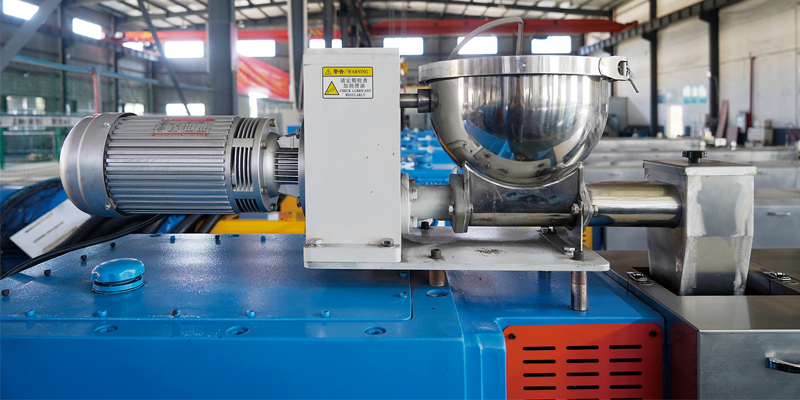
Ka 16 lilemo tsa boiphihlelo ba ho sebetsa ka moralo oa lisebelisoa tsa polasetiki tsa extrusion le ho ntlafatsa, Ke tšehetse ho feta 300 baetsi ho pholletsa le Amerika Leboea, Europe, le Asia ka ho khetha mekhoa e nepahetseng ea ho fepa bakeng sa mela ea bona ea extruder. Volumetric feeder e hlahella e le tharollo e sebetsang ka ho fetisisa bakeng sa 80% ea lisebelisoa tse tloaelehileng tsa extrusion-ho leka-lekanya ho khoneha, tsepahala, le boiketlo ba tšebeliso ha u ntse u fana ka ts'ebetso e tsitsitseng ea ho fepa bakeng sa lisebelisoa tse ngata tsa polasetiki. Ho fapana le li-feeding tsa tahlehelo ea boima ba 'mele tse hlokang matsete a bohlokoa pele, li-feeders tsa volumetric li fana ka khetho e theko e tlaase bakeng sa extrusion ea sepheo se akaretsang, moo ho nepahala ho itekanetseng le katleho e phahameng e leng lipakane tsa mantlha Moetsi oa Volumetric Feeder.
The Mofani oa Feeder ea Volumetric e loketse litharollo tse ngata tsa ho fepa ka extruder, e na le litšoaneleho tsa ho fepa tse theko e tlaase le tse phahameng. E le setsi sa mantlha sa lits'ebetso tsa polasetiki lefatšeng ka bophara, mofuta ona oa phepelo e etselitsoe ho fana ka bongata bo ts'oanang ba lisebelisoa ho li-extruder (sekoahelo se le seng, sekoere-mafahla, kapa mekhahlelo e 'meli) ntle le tlhokahalo ea mekhoa e rarahaneng ea ho lekanya boima ba 'mele. Bonolo bona bo fetolela litšenyehelo tse tlase tsa capital (30-50% tse tlase ho feta tse jellang boima ba mmele) le tlhokomelo e fokolang, ho etsa hore e lokele bahlahisi ba banyane ho isa ho ba mahareng, tlhahiso e phahameng ea sekhahla se tlase e matha, le lits'ebetso moo dosing e nepahetseng e nepahetseng (±0.1%) ha e hlokehe.
Li-feeders tsa volumetric li lumellana hohle le mekhoa ea extrusion ho kenyeletsa:
Likopong tsena, ho nepahala ha molumo oa ± 2% ho feta ho lekana ho boloka tlhahiso e tsitsitseng ea extruder le boleng ba sehlahisoa., ha moralo oa eona o matsutla o tiisa ts'ebetso e tšepahalang maemong a thata a feme (mocheso ho tloha 0°C-45°C, maemo a lerōle ho fihlela ISO 8573-1 Sehlopha 4).
The Feme ea Fepa ea Volumetric e na le sekurufu se senyane sa mafahla, moqomo, le enjene-likarolo tse tharo tsa mantlha tse sebetsang hammoho ho felisa mathata a tloaelehileng a phepelo ea borokho., ho koala, le ho tsoa ho sa tsitsang. Ho fapana le li-feeders tsa volumetric tsa single-screw (tjantjello ya ho thella le ho phalla ho sa lekaneng), moralo oa li-twin-screw o theha ts'ebetso e ntle ea ho falla e netefatsang motsamao o tsitsitseng oa thepa ho tloha ho hopper ho ea ho extruder feed throat..
Ha thepa e kena moqomong, sekoti se fetotsoe feela ke rolara e tsosang, Volumetric Feeder Wholesale e sa suteleng thepa tlase feela, empa hape e fokotsa ho koala, ho etsa hore ho be bonolo ho tsoa, ho boloka nako le matla, le ho rarolla bothata ba ho phalla butle ho ama tlhahiso. Rolara e tsosang (e kentsoeng moo ho kenang sekoti) e hlohlelletsa lisebelisoa tse ngata ho thibela li-rat-holing le bridging-litaba tse tšoenyang li-feeders tse nang le sekheo se le seng ha li sebetsana le lisebelisoa tse phallang tlase joalo ka regrind flakes kapa metsoako e tlatsitsoeng.. Pherekano ena, mmoho le dikurufu tse mafahla tse intermeshing, e etsa bonnete ba hore lintho tse bonahalang li fetisetsoa ka ho tsoelang pele ho extruder, esita le ka litefiso tse tlase tsa phepo (5 kg/hora) kapa litefiso tse phahameng (2000 kg/hora).
Li-feeders tsa volumetric tsa Zhuoyue li sebelisa moralo o kopaneng oa li-twin-screw (bophara - 15-50 mm) e nang le li-screw profiles tse ka khonehang ho tsamaisana le thepa ea phallo ea thepa:
Li-screws tse peli li khannoa ke lebokose la gear le hokahaneng ho netefatsa lebelo le lekanang la ho potoloha, ho felisa ho cheha lintho tse bonahalang le ho futhumatsa ho kuta (E bohlokoa bakeng sa lisebelisoa tse sa utloeng mocheso joalo ka PVC).
Moqomo oa phepelo o entsoe ka tšepe ea carbon e se nang seamless (kapa 304 tšepe e sa hloekang bakeng sa lisebelisoa tsa lijo / tsa bongaka) e nang le bokahare bo boreledi (Ra ≤ 1.6μm) ho fokotsa ho khomarela lintho tse bonahalang. Hopper e fumaneha ka 5L, 10L, 20L, le matla a 50L, ka khetho ea polycarbonate e pepeneneng bakeng sa ho lekola boemo ba lintho tse bonahalang. Setsi sa vibratory ke khetho bakeng sa lisebelisoa tse tlase haholo (mohlala, khalase ea PA pellets e tletseng fiber), ho fokotsa kotsi ea ho koala.
Li-feeders tsa Volumetric li na le li-motor tse sebetsang hantle tsa IE3 (0.75kW-4.0kW) tse kopanang le EU Ecodesign Directive 2009/125/EC le maemo a sebetsang hantle a matla a US DOE. Enjene e khanna li-screws tse peli le rolara e sisinyehang ka ho khanna maqhubu a feto-fetohang (VFD), ho dumella ho lokisa lebelo le nepahetseng (0-100 rpm) ho tsamaisana le litlhoko tsa tlhahiso ea extruder. Likarolo tsa sistimi ea taolo:
Zhuoyue e fana ka mefuta e felletseng ea li-feeders tsa volumetric tse lekantsoeng ho tsamaisana le tlhahiso ea extruder, ho tloha ka lab-scale (5 kg/hora) ho isa boemong ba indasteri (2000 kg/hora) tlhahiso:
| Mohlala | Diameter tsa Twin-Screw (mm) | Lebelo la Lebelo (rpm) | Matla a ho fepa (kg/hora) | Matla a Motlakase (kW) | Bokhoni ba Hopper (L) | Ho nepahala |
|---|---|---|---|---|---|---|
| ZYVF-15 | 15 | 0-80 | 5-50 | 0.75 | 5 | ±2% |
| ZYVF-25 | 25 | 0-90 | 20-150 | 1.5 | 10 | ±2% |
| ZYVF-35 | 35 | 0-100 | 50-500 | 2.2 | 20 | ±2% |
| ZYVF-50 | 50 | 0-100 | 100-2000 | 4.0 | 50 | ±2% |
Litlhaloso tsa Universal: Mefuta eohle e sebetsa ho 220V/380V 50/60Hz matla a le mong/a mekhahlelo e meraro, boima ba 25-85kg (ho itšetlehile ka mohlala), 'me e na le moralo oa flange-mount bakeng sa ho khomarela ka ho toba 'metso oa extruder feed (e tsamaellanang le 99% ea mefuta ea lefatše ea extruder).
Li-feeders tsa volumetric li fana ka litšenyehelo tse tlase haholo tsa ho ba beng (TCO) ea sistimi efe kapa efe ea fepelo ea liindasteri:
Bakeng sa setsi sa extrusion sa boholo bo bohareng se nang le 4 bafepi, sena se fetolela chelete eohle ea ho boloka litšenyehelo tsa $15,000-$25,000 selemong sa pele feela.
Moralo o bonolo oa mochini oa li-feeders tsa volumetric o felisa 90% ea lintlha tse hlolehang tse fumanoang lits'ebetsong tsa tahlehelo ea boima ba 'mele (mohlala, load cell drift, liphoso tsa calibration ea sensor). Lintlha tse tsoang ho 200+ Lisebelisoa tsa Zhuoyue feeder li bontša:
The anti-clogging e susumetsang rolara le moralo oa li-twin-screw le tsona li fokotsa nako e sa reroang ho tsoa ho jam ea lintho tse bonahalang - taba e tloaelehileng ka li-feeders tse nang le sekoaelo se le seng. (u ikarabella 10-15% ea extruder downtime libakeng tsa polasetiki).
Li-feeders tsa volumetric ha li hloke tsebo e khethehileng ea tekheniki ho sebetsa:
Ona ke monyetla oa bohlokoa bakeng sa bahlahisi ba nang le phaello e phahameng ea basebetsi kapa basebetsi ba fokolang ba tekheniki, kaha e fokotsa nako ea koetliso le phoso ea batho.
Li-feeders tsa volumetric tsa Zhuoyue li sebetsana le lisebelisoa tse ngata tsa polasetiki ntle le phetoho:
Bakeng sa likopo tsa ho ikopanya le lijo kapa tsa maemo a bongaka, li-feeders li ka hlophisoa ka 304/316 likarolo tsa tšepe tse sa hloekang le lisebelisoa tse lumellanang le FDA (kopano 21 CFR 177.1520).
Moetsi oa liphaephe tsa PVC tse thehiloeng Texas o ile a nkela li-feeders tsa sekerufu se le seng sebaka ka 4 Zhuoyue ZYVF-50 li-volumetric feeders ka 2024 ho rarolla mathata a tlhahiso:
Ka mor'a ho kenya li-feeders tsa ZYVF-50:
Mookameli oa setsi o tlalehile: "Li-feeders tsa Zhuoyue li fetohile tse fetolang papali - basebelisi ba rona ha ba sa qeta lihora ba ntse ba notlolla li-feeders., 'me boleng ba phala ea rona ha bo e-s'o ka bo tšoana. Re khonne ho tsoela pele 2 bareki ba bacha ba baholo ka lebaka la matla a eketsehileng a tlhahiso. ”
Li-feeders tsa volumetric li etselitsoe ho kenya plug-and-play:
Ho kenya ho nka 1-2 lihora ka ho fepa (ha ho na lisebelisoa tse khethehileng tse hlokahalang) - Sehlopha sa tekheniki sa Zhuoyue se sebakeng sa marang-rang se ka thusa ka ho kenya lisebelisoa tse ngata bakeng sa mela e felletseng ea tlhahiso..
Calibration e netefatsa ho nepahala ha phepo 'me e lokela ho etsoa bakeng sa mofuta o mong le o mong o mocha oa thepa:
Calibration e nka <30 metsotso ka thepa 'me e ka etsoa ke mokhanni ofe kapa ofe ea koetlisitsoeng (ha ho na tšebeletso ea ka ntle ea calibration e hlokahalang).
Tlhokomelo ea kamehla e eketsa bophelo ba lijo le ho boloka ts'ebetso:
Zhuoyue e fana ka bukana ea tlhokomelo e felletseng e nang le linepe le litaelo tsa mohato ka mohato (e fumaneha ka Senyesemane, Sepanish, le Sejeremane) bakeng sa lihlopha tsa ka tlung.
A: Ee. Li-feeders tse ngata tsa volumetric (1 bakeng sa resin e kholo, 1+ bakeng sa li-additives/masterbatch) e ka hokahanngoa le extruder PLC ho boloka litekanyetso tse nepahetseng tsa molumo (mohlala, 95% PVC + 5% mmala masterbatch). Ena ke mokhoa o sa sebetseng hantle ho feta oa lisebelisoa tse ngata tsa tahlehelo ea boima ba 'mele bakeng sa lits'ebetso tse sa hlokeng bohlokoa tsa komporo..
A: Li-feeders tsa volumetric li sebetsa hantle ka ho fetisisa ka thepa e sa lefelloeng (bongata bo boholo 0.5-0.9 g/cm³) joalo ka li-pellets tsa virgin. Bakeng sa lisebelisoa tse fokolang (bongata bo boholo <0.4 g/cm³, mohlala, regrind flakes), re khothaletsa khetho ea screw-pitch e khuts'oane + setsi sa vibratory ho ntlafatsa phallo le ho boloka ho nepahala.
A: Ruri. Zhuoyue's ZYVF letoto le entsoe ka ho khetheha bakeng sa ts'ebetso ea polasetiki e nchafalitsoeng - "rolara e thibelang ho koala e ts'oarellang le moralo oa li-twin-screw" o sebetsana le li-flakes / li-pellets tse nang le pente e nyane.. Re khothaletsa sekoaelo sa screw e sa cheng bakeng sa lisebelisoa tse nchafalitsoeng tse nang le litšila tse ngata (mohlala, ditshila, makumane a tšepe).
A: Mefuta e tloaelehileng (ZYVF-15 ho ea ho ZYVF-50) ba le nako ea pele ea 3-4 libeke. Litlhophiso tsa tloaelo (likarolo tsa tšepe tse sa hloekang, setsi sa vibratory, Taolo ea HMI) hloka 5-6 libeke. Tlhahiso e potlakileng (2-nako ea ho etella pele beke) e fumaneha bakeng sa tlatsetso 15% tefello.
A: Zhuoyue e fana ka tiisetso ea lilemo tse 2 ho lisebelisoa tsohle tsa mochini (likurufu, moqomo, koloi, lebokose la gear) le tiisetso ea selemo se le seng holim'a likarolo tsa motlakase (VFD, lekhotla la taolo). Hape re fana ka likhetho tse atolositsoeng tsa waranti (3-5 lilemo) bakeng sa tefo e eketsehileng, ho kenyeletsa le maeto a selemo le selemo a tlhokomelo ea thibelo.
Bakeng sa ho feta 16 lilemo, Li-feeders tsa volumetric tsa Zhuoyue e bile khetho ea ho khetha bakeng sa bahlahisi ba extrusion ba polasetiki ba batlang e tšepahalang., tharollo ea ho fepa e baballang chelete. Hore na o hlahisa liphaephe tsa PVC, Litlhaku tsa PE, kapa litlaleho tsa polasetiki tse tsosolositsoeng, li-feeders tsa rona li fana ka ts'ebetso e tsitsitseng, nako e fokolang, le boleng bo phahameng - tsohle li tšehelitsoe ke tšehetso ea tekheniki ea lefats'e le rekoto e netefalitsoeng ea katleho. Ikopanye le sehlopha sa rona sa barekisi kajeno ho kopa tataiso ea mahala ea khetho ea li-feeder le quote e lumellanang le litlhoko tse khethehileng tsa extruder ea hau.