

Lits'ebetso tse fapaneng tsa Extrusion li Imahala Joang Bakeng sa Tlhahiso
Ke bone hore khetho ea tsamaiso ea extrusion e bopa ts'ebetso eohle ea tlhahiso. Baetsi ba bangata ba sebelisa litsamaiso tse nang le sekoaelo se le seng, tse tšoereng a 62% karolo ea mmaraka, ha litsamaiso tsa li-twin-screw li ikarabella bakeng sa 38%.
| Mofuta oa Sistimi ea Extrusion | Peresente ea Kabelo ea Maraka |
|---|---|
| Sekoahelo se le seng | 62% |
| Sekoere-mafahla | 38% |
Ho khetha pakeng tsa mefuta ea li-screw ho ama katleho, boleng ba sehlahisoa, le ho lumellana ha lintho. Ha ke bapisa theknoloji ea extrusion le lipakane tsa tlhahiso, Ke hlokomela ntlafatso ea ho boloka litšenyehelo, moralo o fapaneng, le botsitso.
| Ntlha | Tšusumetso ho Katleho ea Tlhahiso | Tšusumetso ho boleng ba Sehlahisoa |
|---|---|---|
| Mekhahlelo e laoloang | E boloka boleng ba sehlahisoa se ts'oanang | E fihlella mamello ea micrometer |
Ke itšetlehile ka Complete Extrusion Systems ho fana ka liphetho tse tsitsitseng le ts'ebetso e nepahetseng ea screw.
Lintlha tsa bohlokoa
- Khetha sistimi e nepahetseng ea extrusion e ipapisitseng le lipheo tsa hau tsa tlhahiso le thepa ea thepa ho netefatsa ts'ebetso e nepahetseng.
- Li-extruder tse nang le sekoti se le seng li loketse tlhahiso e phahameng ea lisebelisoa tse bonolo, ha litsamaiso tsa li-twin-screw li ipabola ka ho kopanya lisebelisoa tse rarahaneng.
- Tlhokomelo ea kamehla le ho beha leihlo litsamaiso tsa extrusion li thibela ho theoha le ho ntlafatsa ts'ebetso, ho netefatsa boleng bo tsitsitseng ba sehlahisoa.
- Nahana ka bophara ba screw le L / D karo-karolelano ha u khetha extruder, kaha lintlha tsena li ama ts'ebetso le ts'ebetso ea ho kopanya.
- Sebelisa co-extrusion bakeng sa ho theha lihlahisoa tse nang le mefuta e mengata tse kopanyang lisebelisoa tse fapaneng, ho matlafatsa tshebetso le tshebetso.
- Lekola tšebelisano ea lisebelisoa le sistimi e khethiloeng ea extrusion ho qoba liphoso le ho netefatsa tlhahiso ea boleng bo holimo..
- Lula u tseba ka mekhoa e hlahang ea theknoloji ea extrusion, joalo ka IoT le AI, ho ntlafatsa ts'ebetso le ho ikamahanya le litlhoko tse fetohang tsa tlhahiso.
- Etsa lethathamo la lintlha tsa bohlokoa pele u khetha mochini oa extrusion ho qoba liphoso tse theko e boima le ho netefatsa hore sistimi e fihlela litlhoko tsa kopo.
Ho Khetha Sisteme e nepahetseng ea Extrusion bakeng sa Tlhahiso
Lintlha tsa Bohlokoa ho Khetho ea Sisteme
Ha ho mohla ke fumanang bokahohle “molemo ka ho fetisisa” tsamaiso ea extrusion. Phihlelo ea ka e mpolella hore khetho e nepahetseng e itšetlehile ka lipakane tsa tlhahiso, thepa ea lintho, le litlhoko tsa sehlahisoa. Ha ke khetha tsamaiso ea extrusion, Kamehla ke bapisa bokhoni ba eona le ts'ebeliso e reriloeng. Mokhoa ona o tiisa hore ts'ebetso ea extrusion e fana ka boleng bo tsitsitseng le ts'ebetso e nepahetseng.
Ke nahana ka tse 'maloa lintlha tse mahlonoko pele o etsa khetho ea mochini oa extrusion. Ke sebelisa tafole e latelang ho tataisa qeto ea ka:
| Ntlha | Tlhaloso |
|---|---|
| Sepheo sa Lipatlisiso | Morero oa mochini (thuto, ntshetsopele ya dintho tse bonahalang, kapa tlhahiso ea lifofane tsa khoebo) |
| Mofuta oa Boitsebiso | Mofuta oa li-polymer tse lokelang ho sebetsoa (e utloang mocheso, feto-fetoha, kapa reactive) |
| Bokhoni ba Tlhahiso bo Hlokehang | Matla a ho fetisa (ligrama kapa lik'hilograma ka hora) |
| Litlhoko tse tsoetseng pele tsa Ts'ebetso | Tlhokahalo ea ente ea khase, vacuum degassing, kapa matla a mahlahahlaha a extrusion |
| Tekanyetso le Sebaka sa Laboratori | Ho nahanoa ka katoloso ea modular bakeng sa lintlafatso tse tlang |
| Litlhoko tsa Tekanyo ea Bokamoso | Ho lumellana le li-module tsa extrusion tsa indasteri bakeng sa ho eketsa tlhahiso |
Ke lula ke ela hloko bophara ba screw le L / D ratio. Mekhahlelo ena e etsa qeto ea bokhoni ba phallo le katleho ea ho kopanya. Ke khetha extruder e nang le bokhoni bo nepahetseng ba tlhahiso, e ka tlohang ho 0.25 kg/h ho 150 kg/h ho itshetlehile ka mohlala. Moralo oa modular o ntumella ho nka sebaka sa likarolo kapele, e fanang ka bonolo bakeng sa lipatlisiso le nts'etsopele. Ke itšetlehile ka litsamaiso tse tsoetseng pele tsa taolo, joalo ka PLC le HMI, ho fihlela taolo e nepahetseng le traceability ya data.
Ha ke lekola mefuta ea mechini ea extrusion, Ke nahana ka ho rarahana ha profil le mamello e hlokahalang. Meralo e rarahaneng e hloka lisebelisoa tse nepahetseng mme e ka eketsa litšenyehelo. Ke boetse ke sheba palo ea odara. Litšenyehelo tse phahameng li fokotsa litšenyehelo tsa yuniti ka 'ngoe hobane litjeo tsa ho seta li hasana ho li-unit tse ngata. Ho qetela le ts'ebetso ea bobeli, joalo ka anodizing kapa CNC machining, eketsa boleng le litšenyehelo.
Keletso: Ke khothaletsa ho etsa lethathamo la lintlha tsena pele ke qala ts'ebetso ea khetho ea mochini oa extrusion. Mokhoa ona o thusa ho qoba liphoso tse theko e boima mme o netefatsa hore sistimi e lumellana le lits'ebetso tse reriloeng.
Tšusumetso ho Katleho ea Tlhahiso
Kea hlokomela hore tsamaiso ea extrusion eo ke e khethang e ama ka ho toba katleho ea tlhahiso. Moralo oa screw, bokgoni ba ho kopanya, le thekenoloji ea extrusion kaofela li phetha karolo ea hore na mokhoa ona o sebetsa hantle hakae. Ka mohlala, a sekrufuru se le seng sa extruder hangata e sebetsa hantle bakeng sa li-polymers tse bonolo le tlhahiso e phahameng ea molumo. Li-extruder tse nang le li-twin-screw li sebetsana le lisebelisoa tse rarahaneng le lits'ebetso tse tsoetseng pele, joalo ka extrusion e sebetsang kapa metsoako e khethehileng.
Ke bone hore viscosity e phahameng le lintho tse tiileng ka thepa e matla li ka baka ho koala, extrusion e sa tsitsang, le ho roala nozzle. Litaba tsena li fokotsa ts'ebetso le ho sekisetsa polokeho. Ke rarolla mathata ana ka ho ntlafatsa moralo oa sistimi ea ho luba. Ho ntlafala ho kopanya ho ts'oanang le ho nepahala ha extrusion ho ntlafatsa polokeho le katleho.
Ke sebelisa tsamaiso ea mekhahlelo e 'meli ea twin-screw extrusion ha ke hloka botsitso le ho ikamahanya le maemo. Lipapiso li bontša hore moralo ona o ntlafatsa litšobotsi tsa phallo le ho boloka tlhahiso e tsitsitseng. Ke lula ke lekola ts'ebetso ea extrusion ho netefatsa boleng bo ts'oanang le ho fokotsa nako ea ho theoha.
| Mofuta oa Bopaki | Tlhaloso |
|---|---|
| Mathata ho Tlhahiso e Kenyellelitsoeng | Viscosity e phahameng le litaba tse tiileng tsa lisebelisoa tse matla li lebisa litabeng tse kang ho koala, extrusion e sa tsitsang, le ho roala nozzle, e amang bokgoni le polokeho. |
| Ts'ebetso ea Sisteme ea Kneading | Moralo oa sistimi ea ho luba o ama ho kopanngoa ha thepa le ho nepahala ha extrusion, ka lintlafatso tse ikhethileng tse reriloeng ho ntlafatsa polokeho le katleho. |
| Moralo oa Sistimi ea Extrusion | Sistimi ea mekhahlelo e 'meli ea li-twin-screw extrusion e etselitsoe ho ntlafatsa botsitso le ho ikamahanya le maemo ts'ebetsong ea extrusion., ka lipapiso tse senolang litšobotsi tsa phallo ea litsamaiso tse fapaneng. |
Kamehla ke bapisa tsamaiso ea extrusion le litlhoko tsa tlhahiso. Mokhoa ona o tiisa hore extruder e fana ka boleng bo lakatsehang le tshebetso. Ke khetha tlhophiso ea screw ho latela mofuta oa lisebelisoa le ho rarahana ha ts'ebeliso. Ke itšetlehile ka theknoloji e tsoetseng pele ea extrusion ho ntlafatsa katleho le ho boloka maemo a holimo a boleng ba sehlahisoa.
Hlokomela: Ke khothaletsa tlhokomelo ea kamehla le ts'ebetso ea ts'ebetso ho boloka ts'ebetso e phahameng le ho thibela ho theoha ho sa lebelloang.
Mefuta e Feletseng ea Extrusion Systems
Ha ke lekola lits'ebetso tse felletseng tsa extrusion bakeng sa tlhahiso, Kamehla ke qala ka ho khetholla ea sehlooho mefuta ea mechine ea extrusion. Likhetho tse atileng haholo li kenyelletsa mochini o le mong oa screw extrusion, metjhini e menahaneng ya twin screw extrusion, le metjhini ya extrusion ya pheleu. Sistimi ka 'ngoe e fana ka matla le mefokolo e ikhethang, kahoo ke tsepamisa maikutlo ho bapisa theknoloji e nepahetseng ho kopo.
| Mofuta oa Mochini oa Extrusion |
|---|
| Mechini e le 'Ngoe ea Screw Extrusion |
| Mechini ea Mechini ea Mafahla a Extrusion |
| Mechini ea Ram Extrusion |
Phatlalatso e le 'ngoe ea Screw
Hangata ke sebelisa screw extruder e le 'ngoe bakeng sa lits'ebetso tse otlolohileng tsa extrusion. Mochini ona o na le screw e le 'ngoe e potolohang ka har'a moqomo o futhumetseng. Sekurufu se sutumelletsa thepa pele, e qhibilihisa, mme e e bopa ka lefi. Ke itšetlehile ka tsamaiso ena bakeng sa tlhahiso e phahameng ea li-thermoplastics, lihlahisoa tsa lijo, le metsoako ea rabara. Bonolo ba moralo bo etsa hore ho be bonolo ho sebetsa le ho hlokomela.
| Indasteri | Tlhaloso ea Kopo | Litekanyetso tsa Kholiso ea 'Maraka |
|---|---|---|
| Plastiki | Ho qhibiliha le ho etsa thermoplastics, e tsamaisoa ke ho phahama ha tšebeliso ea PE le PP. | CAGR ea hoo e ka bang 4-5% ka 2030 |
| Phetoho ea Lijo | Ho hlahisa lijo tse lokisitsoeng joalo ka li-snacks le lijo-thollo. | 'Maraka ho fihlella $75 limilione tse likete ka 2026 |
| Ho Kopanya Rabara | Ho kopanya le ho etsa rabara bakeng sa lithaere le likarolo tsa koloi. | Tlhahiso ea lithaere ho feta 2 limilione tse likete ka 2025 |
| Bongaka ba bophelo | Tlhahiso ea biopolymer bakeng sa ho paka le lisebelisoa tsa bongaka. | Mmaraka o ntseng o hola ka theknoloji e ncha ea extrusion |
Leha ho le joalo, Kea elelloa mefokolo ea sekoti se le seng sa extrusion. Ho finyella ho kopanya ho tšoanang ho ka ba thata, haholo-holo ha ke eketsa li-fillers kapa li-additives. Khatello e tsitsitseng hangata e fapana le liphetoho tsa feedstock, le lisebelisoa tse phahameng tsa viscosity li ka 'na tsa se ke tsa phalla hantle, ho isa bofokoding. Mathata ana a tataisa khetho ea ka ea mochini oa extrusion ha ke hloka boleng bo holimo kapa ts'ebetso e rarahaneng.
Keletso: Bakeng sa bonolo, lisebelisoa tse phahameng, Ke khothaletsa ho qala ka screw extruder e le 'ngoe. Bakeng sa motsoako o tsoetseng pele kapa lisebelisoa tse khethehileng, nahana ka likhetho tse ling.
Tšimoloho ea Twin-Screw
Ha ke hloka ts'ebetso e tsoetseng pele, Ke retelehela ho mafahla a sekoti extruder thekenoloji. Sistimi ena e sebelisa likurufu tse peli tse potolohang hammoho ka har'a moqomo. Li-screws li ka kopanya kapa tsa tsamaisana ka tsela e tšoanang, ho itšetlehile ka moralo. Ke fumana hore li-screw extruder tse peli li fana ka katleho e holimo ea ho kopanya, polasetiki e ntle bakeng sa lisebelisoa tse phahameng tsa viscosity, le taolo e matlafalitsoeng holim'a mocheso le khatello. Likarolo tsena li ntlafatsa boleng ba sehlahisoa le ts'ebetso e tsitsitseng.
Twin screw extrusion e boetse e ntumella ho etsa mehato e mengata ea ts'ebetso mochining o le mong. Nka kopanya, qhibilihisa, moea, esita le ho arabela lisebelisoa nakong ea ho feta e le 'ngoe. Ho tenyetseha hona ho fokotsa litšila le ho potlakisa tlhahiso. Ha u bapisa twin screw vs single screw extruders, Ke bona ho khutla kapele ho tsetelo le liphetho tse ts'oanang tse nang le li-twin screw systems, haholoholo bakeng sa metswako e rarahaneng kapa dipolasetiki tse recycled.
Mefuta e meng ea Twin-Screw
Ke lula ke nahana ka mefuta e fapaneng ea mechini ea extruder ka har'a sehlopha sa "twin screw".. Sebopeho sa screw se ama ts'ebetso, bokgabane, le mefuta e fapaneng ya ditshebediso.
Intermeshing
Li-intermeshing twin screw extruder li na le li-screw tse kopanang le letlooeng hammoho. Moralo ona o fana ka sepalangoang se nepahetseng le matla a phahameng a ho kuta. Ke sebelisa litsamaiso tsa intermeshing bakeng sa ho ntlafatsa ho kopanya le ho lumellana, haholo-holo ha ke hloka ho qhala li-additives kapa li-filler ka ho lekana.
E sa Kopanetseng
Li-extruder tsa "twin screw extruders" tse sa kopanngoeng li na le likurufu tse bilikang ntle le ho fetana. Setupo sena se fana ka motsoako o bonolo le ho kuta ho fokolang. Ke khetha meralo e sa tsitsang bakeng sa lisebelisoa tse bobebe tse hlokang khatello e nyane ea mochini.
Ho potoloha hammoho
Li-extruder tsa "twin screw extruder" li na le likurufu tse thinyetsang nqa e le 'ngoe. Subtype ena e ipabola ka ho kopanya katleho le lipalangoang tsa thepa. Ke sebelisa li-co-rotation system bakeng sa extrusion e sebetsang, devolatilization, le polymer e sebetsang hantle haholo. Leha ho le joalo, litekanyetso tse phahameng tsa ho kuta li ka senya thepa e sa utloeng mocheso, kahoo ke lekola moralo oa screw le ho pholisa haufi-ufi.
| Mofuta o monyane | Bokhoni ba Ts'ebetso le Melemo | Mefokolo le Litlhokomelo | Molemo ka ho Fetisisa Likopo |
|---|---|---|---|
| Co-Rotating Twin-Screw Extruder | Bokhoni bo phahameng ba ho kopanya, e loketseng bakeng sa extrusion e sebetsang, likhahla tse phahameng tsa ho kuta | Kotsi ea ho senyeha ha thepa, e hloka moralo o hlakileng oa screw | Ho kopanya polymer, nanocomposites, Lab-to-production workflows |
Counter-Rotating
Li-scruder tsa li-twin screws tse bilikang li na le likurufu tse thinyetsang mahlakoreng a fapaneng. Sebopeho sena se hlahisa matla a tlase a ho kuta, se tshireletsang disebediswa tse senyehang. Ke itšetlehile ka lisebelisoa tse pota-potileng bakeng sa lirafshoa, li-biopolymers, le metsoako ea meriana. Moqapi o boetse o fana ka ho haha khatello e ntle le ho tiisa ka katleho, le hoja matla a ho kopanya a le tlase ho feta ka mekhoa e pota-potileng.
| Mofuta o monyane | Bokhoni ba Ts'ebetso le Melemo | Mefokolo le Litlhokomelo | Molemo ka ho Fetisisa Likopo |
|---|---|---|---|
| Counter-Rotating Twin-Screw Extruder | Matla a tlase a ho kuta, kaho e ntle ya kgatello, ho tiisa ka katleho | Matla a ho kopanya a tlase, ho rarahana ho feta ho tiisa le ho beha moralo | Li-ceramics, li-biopolymers, meriana |
Ha ke khetha tsamaiso e feletseng ea extrusion, Kamehla ke bapisa mofuta oa screw le tlhophiso le litlhoko tsa thepa le ts'ebetso. Mokhoa ona o netefatsa boleng bo phahameng, bokgabane, le ts'ebetso e tšepahalang ho lits'ebetso tsohle.
Ram Extrusion
Hangata ke khetha pheleu extrusion ha ke hloka ho sebetsana le lisebelisoa tse hlokang khatello e phahameng le sebopeho se nepahetseng. Mokhoa ona o sebelisa pheleu ea haeteroliki ho sutumelletsa lintho ka har'a moqomo o futhumetseng ebe oa shoa, ho ena le ho itshetleha ka sekurufu se potolohang. Ke fumana li-extruder tsa ram li le bohlokoa haholo bakeng sa ho etsa lihlahisoa ka polasetiki ea thermosetting, li-ceramics, le PTFE. Mokhoa ona o ntumella ho etsa lithupa, methapo, le liprofaele tse nang le litekanyo tse lumellanang.
Ram extrusion e hlahella har'a mefuta ea mechini ea extrusion hobane e sebetsana le lisebelisoa tseo li-screw extruder tsa setso li ke keng tsa li sebetsa hantle.. Ke sebelisa theknoloji ena liindastering joalo ka polasetiki, dijo, le meriana. Ka mohlala, Ke hlahisa lijo-thollo le lijo-thollo tse nang le libopeho tse ikhethang, 'me ke etsa matlapa le li-capsules tse nang le litlhaloso tse hlakileng.
Ke hlokometse melemo le mathata a 'maloa ha ke sebelisa li-extruder tsa rama:
- Li-extruder tsa Ram li ipabola ka ho hlahisa lihlahisoa tsa boleng bo holimo ho tsoa ho lisebelisoa tse thata ho sebetsa.
- Ke itšetlehile ka tsona bakeng sa lits'ebetso moo theknoloji ea screw extrusion e haellang, joalo ka PTFE le profiles tsa ceramic.
- Tshebetso e fana ka boleng bo tsitsitseng le ho nepahala ha dimensional.
- Litšenyehelo tse phahameng tsa ts'ebetso li ka ama ts'ebetso le ts'ebetso ka kakaretso.
- Melao e thata ea tlhahiso ea polasetiki e hloka taolo e hlokolosi ea ts'ebetso.
- Tlholisano e tsoang lits'ebetsong tse ling tsa extrusion e ntšusumelletsa ho ntlafatsa khetho ea ka ea mochini oa extrusion.
Ke lula ke lekanya lintlha tsena pele ke khetha pheleu extrusion bakeng sa litsamaiso tse felletseng tsa extrusion. Ke shebella ts'ebetso ka hloko ho boloka boleng le katleho, haholo-holo ha o sebetsa ka lisebelisoa tse khethehileng.
Co-Extrusion
Co-extrusion e nthusa ho kopanya lisebelisoa tse ngata ho etsa sehlahisoa se le seng, ho theha liprofaele tse nang le mekhahlelo e mengata tse nang le thepa e ntlafalitsoeng. Ke sebelisa theknoloji ena ea extrusion ho kopanya thermoplastics tse fapaneng, karolo ka 'ngoe e fana ka litšobotsi tse ikhethang. Mokhoa ona o kenyelletsa ho sutumetsa lisebelisoa tse 'maloa ka lefu le le leng, ho fella ka profil e kopaneng e fihlelang litlhoko tse rarahaneng tsa tlhahiso.
Ke itšetlehile ka co-extrusion bakeng sa lihlahisoa tsa tlhahiso tse hlokang nako e telele, tenyetseha, le boipiletso bo botle. Mokhoa ona o ntumella ho lokisa boleng ba lera ka 'ngoe, ho ntlafatsa tshebetso le tshebetso. Ke bona co-extrusion e le tsoelo-pele ea bohlokoa lits'ebetsong tse felletseng tsa extrusion, haholo-holo ha ke hloka ho hlahisa lintho tse nang le likarolo tse khethehileng.
Liindasteri li rua molemo ho co-extrusion ka litsela tse 'maloa:
- Kaho: Ke etsa lithako tsa lifensetere, liforeimi, le ho fokotsa likotoana tse kopanyang matla le boipiletso ba pono.
- Thekiso: Ke aha lishelefo le lits'ebetso tsa ho bonts'a tse tšoarellang le tse khahlang.
- Letshwao: Ke hlahisa matšoao le liforeimi tse khanyang tse nang le likhahla tse hloekileng le ts'ebetso e tšepahalang.
Co-extrusion e eketsa mefuta e mengata ea lisebelisoa tsa theknoloji ea extrusion. Ke e sebelisa ho fihlela lipheo tse boima tsa tlhahiso le ho fana ka lihlahisoa tsa boleng bo holimo. Ha ke khetha extruder bakeng sa co-extrusion, Ke nahana ka moralo oa screw, taolo ya tshebetso, le ho lumellana ha lintho. Mokhoa ona o netefatsa katleho le liphello tse tsitsitseng.
Keletso: Ke khothaletsa co-extrusion bakeng sa merero e hlokang liprofaele tse nang le mekhahlelo e mengata le ts'ebetso e ntlafalitsoeng ea sehlahisoa. Khetho e hlokolosi ea mochini oa extrusion le ho lekola ts'ebetso li bohlokoa bakeng sa ho fihlela boleng bo nepahetseng.
Sebopeho le Ts'ebetso ea Ts'ebetso ea Extrusion Systems
Moralo oa Screw and Barrel
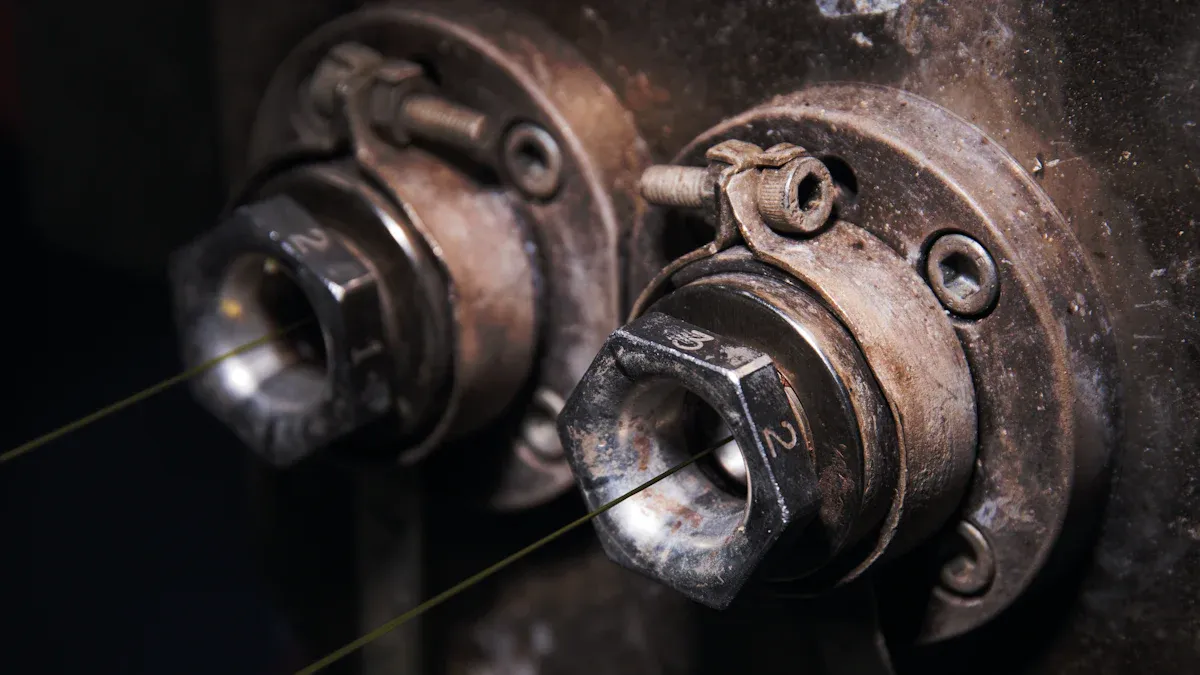
I always start my extrusion machine selection by examining the screw and barrel design. The geometry of the screw determines how efficiently the extruder melts, metsoako, and conveys material. I adjust the length-to-diameter (L/D) ratio to control residence time and mixing. A higher L/D ratio allows the material to melt and blend more thoroughly, which is essential for achieving uniform quality in the final product. I rely on barrier designs in the screw barrel to maintain melt stability and prevent degradation, especially when I process sensitive materials. Parallel twin screw and barrel designs play a critical role in extrusion speed, boleng ba sehlahisoa, le matla a matla. I use zoning and precise temperature control to stabilize melt flow and avoid trapped gases, which improves density and consistency. The surface finish of the barrel and the geometry of the screw also influence energy efficiency and product consistency. I always match the screw design to the specific requirements of the application to maximize performance.
- A higher L/D ratio improves mixing and melt uniformity, which is essential for high-quality products.
- Barrier designs help maintain melt stability and prevent degradation.
- Screw geometry and barrel surface finish impact energy efficiency and product consistency.
Material Movement and Mixing
I focus on efficient material movement and mixing to ensure the extrusion process runs smoothly. Ke sebelisa robust pneumatic or mechanical conveyors to transfer raw materials quickly and with minimal maintenance. Advanced mixer designs guarantee thorough and uniform compounding, which prevents variations in finished products. I integrate automated controls with PLC systems for real-time monitoring and recipe management. This approach allows me to oversee production seamlessly and adjust parameters as needed. I select scalable configurations to accommodate both small workshops and large industrial operations. Enhanced dust control features keep the workplace clean and safe. E tsitsitseng, homogeneous blends reduce quality fluctuations and improve throughput. Automated systems minimize manual handling, which shortens production cycles and lowers labor costs. I always prioritize these features when I evaluate types of extrusion machines for new applications.
| Sebopeho | Tlhaloso |
|---|---|
| Efficient Material Transfer | Rapid, low-maintenance movement of raw materials |
| Precision Mixing | Thorough, uniform compounding for consistent quality |
| Litaolo tse Ikemetseng | Real-time monitoring and recipe management |
| Scalable Configurations | Flexible layouts for any production capacity |
| Enhanced Dust Control | Cleaner, safer workplace |
| Improved Product Quality | Homogeneous blends, reduced fluctuations |
| Increased Throughput | Shorter production cycles, less manual handling |
| Litsila tse Fokotsoeng | Accurate measurement, litšenyehelo tse tlase |
| Lower Labor Costs | Automation frees staff for value-added tasks |
| Safer Working Environment | Enclosed lines and dust control |
Process Control and Output Quality
I depend on advanced process control technology to maintain high output quality in extrusion manufacturing. I select high-quality thermoplastics to ensure the final products meet strength, durability, and flexibility requirements. I monitor extrusion parameters closely to reduce discrepancies during production. Dimensional accuracy remains a top priority for me, as it guarantees that components fit their intended applications. I use surface inspection to detect defects such as warping or air bubbles, which helps me maintain consistent product quality. Early detection of issues reduces waste and saves on production costs. I always ensure that my process complies with regulatory standards, which protects both my business and my customers. High-quality products enhance my brand reputation and increase customer satisfaction. Advanced monitoring systems allow me to increase production speed without sacrificing accuracy, which boosts overall efficiency in complete extrusion systems.
| Element/Advantage | Tlhaloso |
|---|---|
| Khetho ea Lintho | Ensures strength, durability, le ho tenyetseha |
| Tlhokomelo ea Ts'ebetso | Reduces discrepancies and maintains consistency |
| Ho Nepaha ha Dimensional | Guarantees proper fit for all applications |
| Tlhahlobo ea Bokaholimo | Identifies defects early for better quality |
| Boleng bo Tletseng ba Sehlahiswa | Every batch meets high standards |
| Phokotso ea litšila | Saves material and production costs |
| Tumellano ea Taolo | Meets legal and safety requirements |
| Khotsofalo ea Bareki | Builds reputation and loyalty |
| Process Efficiency | Increases speed while maintaining accuracy |
Keletso: I recommend regular calibration and maintenance of all extrusion technology to sustain peak performance and consistent quality.
Comparing the Extrusion Process
Single-Screw vs. Twin-Screw Process
Ha ke bapisa li-extruders tse nang le sekoere se le seng le li-twin-screw, I focus on how each system handles the extrusion process. The screw design shapes the way material moves and mixes. A single-screw extruder uses one helical screw inside a simple, moqomo oa cylindrical. Ka papiso, a twin-screw extruder features two intermeshing screws and a more complex, hangata moqomo o arohaneng. I see that temperature control in single-screw systems remains basic, while twin-screw machines offer advanced control with multiple heating and cooling zones. This difference impacts both throughput and energy efficiency.
| Karolo | Single Screw Extruder | Twin Screw Extruder |
|---|---|---|
| Screw Design | Sekoti se le seng sa helical | Li-screw tse peli tsa intermeshing |
| Sebopeho sa Moqomo | E bonolo, cylindrical | E rarahaneng ho feta, hangata e arotsoe |
| Taolo ea Mocheso | Mocheso oa motheo/ho pholisa | E tsoetseng pele, multi-zone |
| Bokhoni ba Tlhahiso | E itekanetseng | Phahameng |
| Tšebeliso ea Matla | Ka kakaretso holimo | E sebetsa hantle haholoanyane |
| Ho fetoha ha maemo ho Phethahatso | Moedi | Phahameng |
I rely on twin-screw extruders for higher output and better energy efficiency. When I need flexibility in throughput or advanced process control, I choose twin-screw systems. For straightforward applications, single-screw extruders still provide reliable performance.
Material Compatibility in the Extrusion Process
Material compatibility plays a critical role in extrusion machine selection. I always match the screw configuration to the type of material I plan to process. Single-screw extruders handle standard thermoplastics well, but they struggle with materials that require intensive mixing or have high filler content. Twin-screw extruders excel with specialty compounds, lipolasetiki tse nchafalitsoeng, and reactive materials. I use segmented screws to adjust mixing and shearing for each application.
When I work with complete extrusion systems, I consider how each screw design affects the final product. Twin-screw extruders allow me to process a wider range of materials, including those with additives or sensitive properties. This flexibility supports more types of extrusion machines and expands the range of possible applications.
Keletso: I recommend evaluating the chemical and physical properties of your raw materials before choosing an extruder. This step ensures compatibility and reduces the risk of defects.
Boleng ba Sehlahisoa le ho tsitsisa
I know that the extrusion process directly impacts the quality of the finished product. Modern extrusion lines integrate automation and advanced control platforms. These systems analyze multiple variables at once, which helps me maintain consistent quality across every batch.
Quality consistency is a productivity multiplier. Advanced control platforms analyze patterns across multiple variables simultaneously, ensuring that product quality is maintained throughout the extrusion process.
I monitor key factors such as stable melt pressure, output rate, le pheletso e kahodimo. Stable melt pressure prevents warping and dimensional drift. Higher and more stable output reduces scrap rates and downtime. Better surface finish and precise dimensional control enhance the impact on the quality of the finished product.
| Key Factors | Impact on Quality and Consistency |
|---|---|
| Stable melt pressure | Prevents dimensions from drifting or warping |
| Higher and more stable output | Reduces scrap rates and downtime |
| Better surface finish | Enhances overall product quality |
| Taolo ea boholo | Ensures precision in final product specifications |
| Faster ROI | Improves profitability for manufacturers |
Ha u bapisa twin screw vs single screw extruders, I see that twin-screw systems deliver better consistency and lower operational cost. I achieve faster ROI and improved performance by investing in advanced extrusion technology. I always prioritize process monitoring and automation to ensure high quality and efficiency in production.
- Higher and more stable output
- Lower scrap and downtime
- Better surface finish and dimensional control
- Reduced operational cost
- Faster ROI
I rely on these strategies to maximize the benefits of extrusion and deliver products that meet strict manufacturing standards.
Performance Comparison Table
Tšebeliso le Sebetsa
I always evaluate throughput and efficiency when I compare types of extrusion machines. Throughput measures how much material the extruder processes in a given time. Efficiency reflects how well the screw design converts raw material into finished products with minimal waste and energy use. I see that single-screw extruders often deliver steady throughput for standard polymers. Li-extruders tsa li-twin-screw, with their advanced screw geometry, handle higher output and maintain better energy efficiency, especially for complex blends.
| Mofuta oa Extruder | Phello (kg/h) | Matla a Matla | Molemo ka ho Fetisisa Maemo a Tšebeliso |
|---|---|---|---|
| Screw e le 'ngoe | 50–500 | E itekanetseng | Bophahamo bo phahameng, simple polymers |
| Twin-Screw | 100–1000+ | Phahameng | Complex blends, specialty jobs |
| Ram Extruder | 10–100 | Low–Moderate | PTFE, li-ceramics, khethehileng |
| Co-Extrusion Systems | E fapana | Phahameng | Multi-layered profiles |
I always match the screw configuration to the material and production requirements. This approach ensures the process delivers consistent quality and meets manufacturing goals. I rely on complete extrusion systems to maximize throughput and efficiency for every application.
Keletso: I recommend monitoring energy consumption and output rates regularly. This practice helps optimize extrusion machine selection and reduces operational costs.
Maintenance and Reliability
I prioritize maintenance and reliability when I select an extruder. The screw and barrel experience constant wear from abrasive materials and high temperatures. I schedule routine inspections and replace worn components to prevent unexpected downtime. Single-screw extruders require less maintenance due to their simple design. Li-extruders tsa li-twin-screw, with more moving parts and segmented screws, need more frequent checks but offer greater flexibility.
| Mofuta oa Extruder | Litlhoko tsa Tlhokomelo | Reliability Level | Common Issues |
|---|---|---|---|
| Screw e le 'ngoe | Low–Moderate | Phahameng | Occasional screw wear |
| Twin-Screw | Moderate–High | Phahameng | Segment wear, seal failure |
| Ram Extruder | E itekanetseng | E itekanetseng | Hydraulic leaks, die wear |
| Co-Extrusion Systems | Phahameng (multi-screw) | Phahameng | Synchronization, ho roala sekoti |
I use advanced monitoring systems to track screw wear and process stability. This strategy improves reliability and extends the life of my extrusion technology. I always keep spare screws and barrels on hand to minimize downtime during maintenance.
Product Complexity and Flexibility
I value design flexibility ka extrusion. The ability to customize the screw and die allows me to create complex profiles for a wide range of applications. I use extrusion to manufacture everything from simple plastic tubing to intricate window frames. I can add reinforcements or special features within the continuous material, which expands my product offerings.
| Karolo | Tlhaloso |
|---|---|
| Moqapi oa Fetola | Extrusion allows for significant design flexibility through die customization, enabling complex profiles. |
| Lisebelisoa | Suitable for various applications, including intricate window frames and simple plastic tubing. |
| Boikemisetso | Manufacturers can include reinforcements or additional features within the continuous material. |
- In MedTech, I must achieve tight tolerances for medical devices.
- I ensure biocompatibility for all medical extrusion products.
- I monitor wall thickness closely, since it affects flow rates and structural strength.
I select the screw configuration and extrusion machine based on the complexity of the design and the required tolerances. This approach guarantees high quality and supports advanced manufacturing needs.
Hlokomela: I recommend consulting with extrusion experts when planning new product designs. Their experience helps avoid costly mistakes and ensures the right screw and process configuration.
Application Suitability in Manufacturing
High-Volume Manufacturing
I always start my extrusion machine selection by considering the demands of high-volume manufacturing. When I need to produce thousands of units per day, I rely on single-screw extruders. These machines deliver steady throughput and maintain consistent quality. The screw design in single-screw extruders allows me to process standard polymers efficiently. I monitor the process closely to ensure uniform melt and minimize defects. I select the right screw diameter and length to match the production requirements. This approach helps me achieve high efficiency and reduce waste. I use automated controls to track output and maintain quality standards. High-volume applications benefit from robust types of extrusion machines that can operate continuously with minimal downtime. I always keep spare screws and barrels ready to avoid interruptions in production.
Keletso: I recommend scheduling regular maintenance for extruders used in high-volume manufacturing. This practice extends the life of the screw and ensures reliable performance.
Complex Product Manufacturing
When I manufacture complex or multi-component products, I turn to advanced extrusion technology. Twin-screw extruders give me greater control over mixing and material distribution. I use segmented screws to adjust shear and optimize the process for each application. Co-extrusion technology enables me to combine different polymers into multi-layer films and pipes. This method improves barrier properties and enhances strength, tenyetseha, le khanyetso ea lik'hemik'hale.
| Thekenoloji | Melemo |
|---|---|
| Kopanya-kopano | Enables the creation of multi-layer films and pipes with improved barrier properties, combining different polymers for strength, tenyetseha, le khanyetso ea lik'hemik'hale. |
I select the screw configuration based on the complexity of the product. For intricate designs, I rely on precise tooling and advanced process monitoring. I always test the extruder setup before full-scale production to ensure quality and performance. Complex applications require careful extrusion machine selection and attention to detail.
Specialty Materials and Customization
I often work with specialty materials that demand custom solutions. I use advanced shaping processes, such as sheet extrusion and thermoforming, to control material characteristics. Sheet extrusion gives me the ability to manage thickness and material distribution with high accuracy. Co-extrusion capabilities allow me to create multi-layer constructions that enhance material properties. I integrate downstream shaping processes to ensure consistent performance in finished components. Engineering services help me optimize component designs and select the best materials for specific applications.
- Advanced shaping processes, such as sheet extrusion and thermoforming, allow for precise control over material characteristics.
- Sheet extrusion provides a foundation for custom material solutions, enabling thickness control and material distribution accuracy.
- Co-extrusion capabilities facilitate the creation of multi-layer constructions, enhancing material properties.
- Integration with downstream shaping processes ensures consistent performance characteristics in finished components.
- Engineering services optimize component designs and material selection, ensuring suitability for specific applications.
I always match the screw design to the requirements of specialty materials. Customization in extrusion depends on selecting the right extruder and process parameters. I monitor quality at every stage to deliver products that meet strict standards. Specialty applications benefit from flexible types of extrusion machines and expert guidance.
Hlokomela: I recommend consulting with extrusion specialists when working with new materials or custom designs. Their expertise helps achieve the desired quality and performance.
Selection Criteria for Extrusion Systems
Product Design and Complexity
I always start my extrusion machine selection by analyzing the product design and complexity. The geometry of the profile influences the choice of extruder and screw configuration. Complex shapes increase tooling costs and create production challenges. I simplify profile geometry whenever possible to enhance material flow and reduce defects. Smooth transitions in the design prevent disruptions in material flow, which is crucial for consistent extrusion quality. I select the right material early in the process because material choice affects both the properties of the part and the ease of extrusion. This decision impacts manufacturability and overall performance.
- Simplifying profile geometry lowers tooling costs and reduces production challenges.
- Designing for material flow ensures consistent extrusion quality and minimizes defects.
- Choosing the right material early improves manufacturability and product performance.
I match the screw design to the complexity of the product. For intricate profiles, I use advanced screw configurations that optimize mixing and material transport. I rely on precise tooling and process monitoring to maintain high quality. When I work with complex applications, I consult with extrusion technology experts to avoid costly mistakes and ensure the best results.
Keletso: I recommend reviewing the profile geometry and material flow before finalizing the extrusion machine selection. This step helps prevent production issues and supports efficient manufacturing.
Thepa Thepa
Material properties play a critical role in selecting the right extruder and screw configuration. I identify application requirements such as temperature resistance, Ho pepeseha ha UV, and impact durability. I consider mechanical properties like flexibility, thatafalo, and tensile strength for the intended use. Environmental conditions influence my material choice, especially when I need weathering resistance or flexibility in cold environments. I evaluate aesthetic and finish requirements, ho kenyeletsa mmala, gloss, and surface texture, based on project needs. Regulatory and compliance needs guide my selection to ensure materials meet industry-specific standards and certifications.
- Application requirements determine the need for temperature resistance, Ho pepeseha ha UV, and impact durability.
- Mechanical properties such as flexibility, thatafalo, and tensile strength affect the choice of extruder and screw.
- Environmental conditions require materials that withstand weathering or remain flexible in cold climates.
- Aesthetic and finish requirements influence color, gloss, and surface texture.
- Regulatory and compliance needs ensure materials meet industry standards.
I select the screw design based on the material’s properties. For heat-sensitive materials, I use screws with gentle mixing zones and precise temperature control. When processing tough or abrasive compounds, I choose robust screw geometries that withstand wear and maintain efficiency. I always test materials in pilot runs to verify compatibility with the extruder and ensure consistent quality.
Hlokomela: I recommend consulting material datasheets and industry standards before choosing an extruder. This practice helps match material properties to the extrusion process and supports reliable performance.
Production Volume and Scale
Production volume and scale influence the cost-effectiveness of extrusion machine selection. Higher production volumes reduce unit costs because tooling expenses are spread over more parts. In the prototype stage, tooling costs are high compared to the quantity produced. In mass production, die costs are amortized over larger volumes, leading to lower costs per unit. Ka mohlala, a die costing $2,000 with a lifetime of 40,000 kg results in a cost of $0.05 per kg when amortized.
- Higher production volumes lower unit costs by spreading tooling expenses.
- Prototype stages have high tooling costs relative to the number of parts produced.
- Mass production allows die costs to be distributed over larger volumes, reducing per-unit costs.
- Example: A die costing $2,000 with a lifetime of 40,000 kg results in a cost of $0.05 per kg.
I select the extruder and screw configuration based on the expected production volume. For high-volume manufacturing, I use robust types of extrusion machines that deliver steady throughput and maintain efficiency. In low-volume or prototype applications, I prioritize flexibility and rapid changeover. I monitor production rates and adjust screw parameters to optimize output and quality.
Keletso: I recommend calculating the amortized tooling cost before committing to a production scale. This step helps determine the most cost-effective extrusion technology and supports long-term manufacturing goals.
Technical and Budget Considerations
I always approach extrusion machine selection with a clear focus on technical requirements and budget constraints. My experience tells me that investing in advanced extrusion technology demands careful planning. I evaluate every aspect of the system, from screw design to process control, to ensure cost-effectiveness and reliable performance.
I start by analyzing the technical specifications of the extruder. I look at screw geometry, barrel length, and compatibility with different types of extrusion machines. I select a screw that matches the material properties and the complexity of the applications. I check if the extruder can handle the desired throughput and maintain consistent quality. I also assess the integration of feeders, lilaoli tsa mocheso, le lisebelisoa tse tlase. System integration plays a crucial role in maximizing efficiency and avoiding bottlenecks in production.
Budget considerations influence every decision I make. I break down the costs into several categories to understand the financial impact. I use the following table to guide my investment strategy:
| Budget Consideration | Tlhaloso | Financial Impact / Benefit Example |
|---|---|---|
| Matla a Matla | Reducing energy consumption by upgrading control systems or screws | 33% energy reduction saves nearly $100,000 annually on $288,000 litšenyehelo tsa matla |
| Scrap Reduction | Lowering scrap rate from 15% ho 5% through data acquisition and process control | Saves $200,000 monthly or $2.4 million yearly in materials, mosebetsi, and energy costs |
| Throughput Increase | Upgrading to twin-screw extruder increases throughput by 30% | Generates $600,000 additional monthly revenue with >50% incremental profit margin |
| Maintenance Cost Reduction | Predictive maintenance and condition monitoring reduce emergency repairs and downtime | Maintenance costs drop 20-30%, equipment availability increases |
| System Integration | Budgeting for compatible feeders, lilaoli tsa mocheso, le lisebelisoa tse tlase | Partial upgrades capture only ~40% of potential benefits |
| Koetliso ea Basebetsi | Training on material characteristics, mechine, instrumentation, le ditaolo | Essential to fully realize technology benefits; lack wastes investment |
| Data Acquisition Infrastructure | Adequate sensors and analytics software needed for optimization | Insufficient infrastructure limits optimization; too many sensors without analytics causes overload |
| Downstream Constraints | Ensuring cutting, phutheloana, and inspection keep pace with increased extruder output | Bottlenecks reduce overall system benefit |
I prioritize energy efficiency when selecting an extruder. Upgrading control systems or optimizing screw design can reduce energy consumption by up to 33%. This improvement saves nearly $100,000 each year on a typical $288,000 energy bill. I also focus on scrap reduction. By implementing advanced process control and data acquisition, I lower scrap rates from 15% ho 5%. This change saves $200,000 every month in materials, mosebetsi, and energy costs.
Increasing throughput is another key goal. Upgrading to a twin-screw extruder boosts output by 30%. This increase generates $600,000 in additional monthly revenue, with more than a 50% incremental profit margin. I invest in predictive maintenance and condition monitoring to reduce emergency repairs and downtime. Maintenance costs drop by 20-30%, and equipment availability improves.
System integration is essential for maximizing the benefits of extrusion technology. I budget for compatible feeders, lilaoli tsa mocheso, le lisebelisoa tse tlase. Partial upgrades capture only about 40% of the potential benefits. Operator training is critical. I ensure my team understands material characteristics, mechine, instrumentation, le ditaolo. Without proper training, the investment in advanced extrusion technology goes to waste.
I invest in data acquisition infrastructure. Adequate sensors and analytics software optimize the process. Insufficient infrastructure limits optimization, while too many sensors without analytics cause information overload. I address downstream constraints by ensuring cutting, phutheloana, and inspection keep pace with increased extruder output. Bottlenecks in these areas reduce the overall benefit of the system.
I always balance technical requirements with budget limitations. I select a screw that delivers high quality and efficiency without exceeding my financial resources. I plan for future upgrades and modular expansion to support changing production needs. I monitor every aspect of the extrusion process to maintain cost-effectiveness and reliable performance.
Keletso: I recommend creating a detailed budget plan before investing in new extrusion technology. Include energy costs, tlhokomelo, koetliso ea basebetsi, and system integration. This approach ensures that the extruder delivers maximum value and supports long-term manufacturing goals.
Actionable Insights for Manufacturers
Matching System to Application
I always match the extrusion system to the specific application. I optimize material use to balance strength and lightweight design. I define critical dimensional tolerances early, which ensures parts fit and function as intended. I design for manufacturability, making sure shapes can be extruded consistently and cost-effectively. I select aluminum alloys based on application needs, such as strength and corrosion resistance. I simplify designs to reduce costs, avoiding unnecessary complexity in profiles. I prototype and test early, which helps me identify potential challenges before full production. These steps help me achieve high quality and reliable performance in every extrusion process.
- Optimize material use for strength and lightweight design.
- Define critical dimensional tolerances early.
- Design for manufacturability.
- Select appropriate aluminum alloys for application needs.
- Simplify designs to reduce costs.
- Prototype and test early.
I always consider the key components of an extruder, such as screw geometry and barrel design, to ensure the system meets production requirements. I review different types of extruder machines to find the best fit for my applications in extrusion ea polasetiki. This approach supports scalability and maintains quality control throughout manufacturing.
Common Selection Mistakes
I have seen many manufacturers make mistakes during extrusion machine selection. Inadequate material blending often leads to product imperfections and increased costs from reprocessing. Outdated or incompatible control systems cause integration issues and inefficiencies. Inconsistent feed rates disrupt the extrusion process, resulting in product variabilities and higher scrap rates. Neglecting preventive maintenance allows minor mechanical issues to escalate into major production problems, affecting revenue. Ignoring operator training leads to misconfigurations and missed optimization opportunities.
- Inadequate material blending increases costs and reduces quality.
- Outdated control systems cause inefficiencies.
- Inconsistent feed rates disrupt the extrusion process.
- Neglecting preventive maintenance leads to major production problems.
- Ignoring operator training results in missed optimization.
I always monitor screw wear and maintain the extruder regularly. I invest in operator training to maximize efficiency and quality. I avoid these mistakes by focusing on process stability and performance.
Future Trends in Extrusion Technology
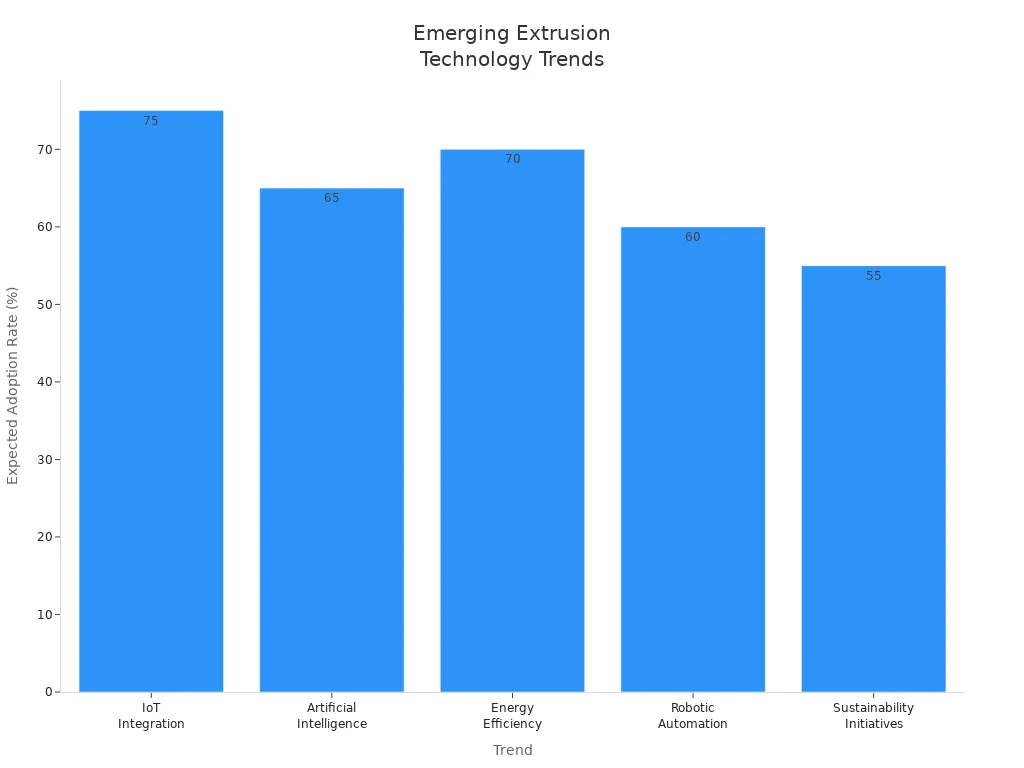
I see rapid changes in extrusion technology shaping the future of manufacturing. IoT integration allows real-time monitoring and analytics, ho ntlafatsa tshebetso. Artificial intelligence supports predictive maintenance and optimization, which boosts performance. Energy efficiency is a growing focus, with manufacturers seeking ways to reduce consumption in the extrusion process. Robotic automation streamlines material handling and quality control. Sustainability initiatives drive the use of recycled materials and eco-friendly processes.
| Tloaelo | Tlhaloso | Tšusumetso ho Katleho | Expected Adoption Rate (%) |
|---|---|---|---|
| IoT Integration | Real-time monitoring and analytics | Phahameng | 75% |
| Artificial Intelligence | Predictive maintenance and optimization | Holimo Haholo | 65% |
| Matla a Matla | Reducing energy consumption | Mahareng | 70% |
| Robotic Automation | Material handling and quality control | Phahameng | 60% |
| Mehato ea Moshoelella | Recycled materials and eco-friendly processes | Mahareng | 55% |
I notice advancements in material compatibility, especially with bioplastics, ba fetola indasteri ea extrusion. Baetsi ba bangata hona joale ba etelletsa pele ho feto-fetoha ha moralo oa lisebelisoa, e nang le litsamaiso tsa modular tse lumellang lintlafatso le liphetoho tse bonolo. Ho tsitsa hoa hlokahala, ka bahlahisi ba bangata ba tsepamisitse maikutlo ho lisebelisoa tse baballang matla le maano a ho fokotsa litšila. Mechini e bohlale ea extrusion fokotsa nako ka 20%, e ntlafatsang katleho ka kakaretso le taolo ea boleng. Kamehla ke lula ke nchafalitsoe ka mekhoa ena ho boloka ts'ebetso e phahameng le ho ts'ehetsa lits'ebetso tse ncha ho extrusion ea polasetiki.
Keletso: Ke khothaletsa ho hlahloba kakaretso ea mechini ea extruder e etsang tlhahiso khafetsa. Ho lula ke tseba ka mefuta e mecha ea mechini ea extrusion le meralo ea li-screw ho nthusa hore ke ikamahanye le litlhoko tse fetohang tsa tlhahiso le ho boloka scalability..
Kea hlokomela hore tsamaiso e 'ngoe le e' ngoe ea extrusion e fana ka melemo le mefokolo e ikhethang. My experience shows that single-screw extruders excel in high-volume production, while twin-screw systems provide superior mixing and flexibility. Ram and co-extrusion machines support specialty applications. I always use comparison tables and selection criteria to evaluate:
- Technical capabilities and long-term reliability
- Customer service and design assistance
- Quality standards and energy efficiency
I recommend manufacturers understand their application needs and consult extrusion experts for optimal results.
LBH
Phapang e kholo ke efe pakeng tsa li-single-screw le li-twin-screw extruders?
I see that single-screw extruders use one rotating screw for basic mixing. Twin-screw extruders use two screws for advanced mixing and better control. I choose twin-screw systems for complex materials and higher flexibility.
How do I decide which extrusion system fits my application?
I start by reviewing my material type, bophahamo ba tlhahiso, and product complexity. I match these needs to the strengths of each system. I consult with experts if I face unique requirements.
Can I process recycled materials with extrusion systems?
I process recycled materials using twin-screw extruders. These machines handle variable feedstocks and additives better than single-screw systems. I monitor quality closely to ensure consistent results.
How often should I perform maintenance on my extruder?
I schedule routine inspections every month. I check for screw wear, barrel condition, and control system performance. Regular maintenance prevents downtime and extends equipment life.
What are the most common extrusion defects I encounter?
I often see surface roughness, ho hoholeha ka dimensional, and melt fractures. I address these by adjusting temperature, lebelo la sekoti, and material feed. I use process monitoring to catch issues early.
Is co-extrusion suitable for all materials?
I use co-extrusion mainly for thermoplastics. Some materials may not bond well in multi-layer profiles. I test material compatibility before starting production.
How does automation improve extrusion quality?
I rely on automation for real-time monitoring and precise control. Automated systems reduce human error, maintain consistent output, and improve overall product quality.
What safety measures do I follow during extrusion?
I wear protective gear and follow lockout procedures. I keep the work area clean and check emergency stops regularly. I train my team on safe operation and emergency response.