

Кеи Такеаваис
- In my experience sourcing extrusion equipment, an underwater pelletizing system earns its premium when you are running sticky or heat-sensitive resins. The die face cutting and immediate pellet cooling water contact produce dust-free, uniform spherical pellets that strand cutting struggles to match (MAAG technical literature, 2023).
- This technology is the practical choice for TPU, TPV, elastomers, and micro-pellet production down to roughly 1 mm and below, a size range that conventional strand systems find difficult to reach (USEON via Polmak Plastik product page, 2024).
- Throughput is a genuine differentiator. Conventional pelletizing often struggles to stay efficient above 1,000 кг/х, whereas USEON systems are rated up to 50 tons per hour, so I always match line capacity to real production forecasts rather than peak marketing figures (USEON via Polmak Plastik, 2024).
- Understand the core components before you compare quotes. The die plate, cutter hub and cutter blade assembly, process water loop, and centrifugal dryer for pellet dewatering are where quality and long-term wear costs live, more so than headline extruder specs.
- Wholesale sourcing spans distinct tiers. European names like MAAG and ECON lead on automatic startup and specialized die technology (ECON GmbH, 2023), while Chinese manufacturers such as Nanjing Chuanqi supply twin screw underwater pelletizing systems directly to wholesalers and distributors at lower entry prices (extruderfactory.com, 2024). Each tier suits a different budget and support expectation.
- Buyer intent data confirms active demand around wholesale price, used and small systems, MAAG and ECON brands, and replacement die plates (Google SERP related searches, 2025), which tells me new versus used versus refurbished is a decision worth working through deliberately.
- Match the extruder to your feedstock. A twin screw extruder handles compounding and reactive work, while a single screw extruder fits simpler single-resin granulation, and that choice shapes both price and the pelletizing line configuration.
- Total landed cost matters as much as unit price. For US buyers I factor import duties, теретни, installation, and PLC/HMI control commissioning into the comparison, along with a supplier vetting and factory-audit step before any deposit.
What Is an Underwater Pelletizing System?
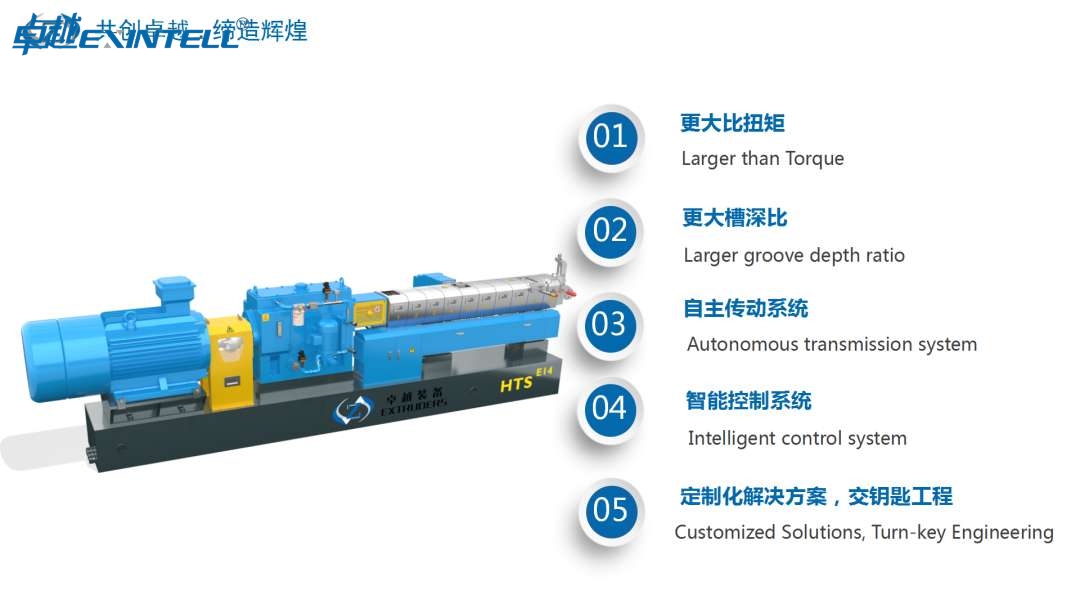
When buyers ask me to explain an underwater pelletizing system in plain terms, I describe it as a machine that cuts molten polymer into finished pellets while the cutting face sits directly in circulating water. Instead of drawing strands into the air, cooling them in a water bath, and chopping them at the end of the line, an underwater pelletizer performs die-face cutting: rotating blades slice the melt into pellets the instant it emerges from a heated die plate, and the surrounding water quenches and conveys those pellets in the same motion. The result is a spherical, dust-free pellet with remarkably uniform size.
In my experience, that single design choice is what separates this technology from strand and water-ring systems. Because the melt never has to survive a fragile strand, the process handles sticky and heat-sensitive resins that would tangle or break elsewhere. According to MAAG technical literature (2023), underwater pelletizing produces dust-free, uniform pellets and is preferred for sticky and heat-sensitive resins compared with strand pelletizing. That is why I steer clients running TPU, TPV, hot-melt adhesives, and elastomers toward this approach almost by default.
Why It Produces Tight Size Tolerances and Dust-Free Output
Two mechanisms drive the consistency. Прво, cutting happens at the die face under controlled water temperature, so every pellet is formed under identical thermal and mechanical conditions. Друго, the pellet is quenched immediately, which locks in a spherical shape before it can deform or fuse to its neighbors. Because the melt is never exposed to open air and the pellets are conveyed as a slurry rather than being crushed or sawn, fines and dust are minimal. For compounders shipping to injection molders and film lines, that translates into fewer bridging problems in hoppers and more predictable feeding.
Typical Output Shapes and Applications
The characteristic output is a near-spherical pellet, and I find that shape especially valuable for micro-pellet production. Polmak Plastik / USEON (2024) notes that underwater pelletizing enables micro-pellets of 1 mm or smaller that are difficult to achieve with conventional strand systems. On the application side, the same source identifies TPU, TPV, elastomers, and micro-pellets as ideal fits, alongside masterbatch, engineering resins, and adhesive compounds. Capacity ranges are broad: conventional systems often struggle to hold efficiency above 1,000 кг/х, while USEON reports capacities up to 50 tons per hour for its underwater pelletizing systems (Polmak Plastik / USEON, 2024). That span is why the technology appears in both small pilot compounding lines and large-scale resin granulation plants.
How Underwater Pelletizing Works: Step by Step
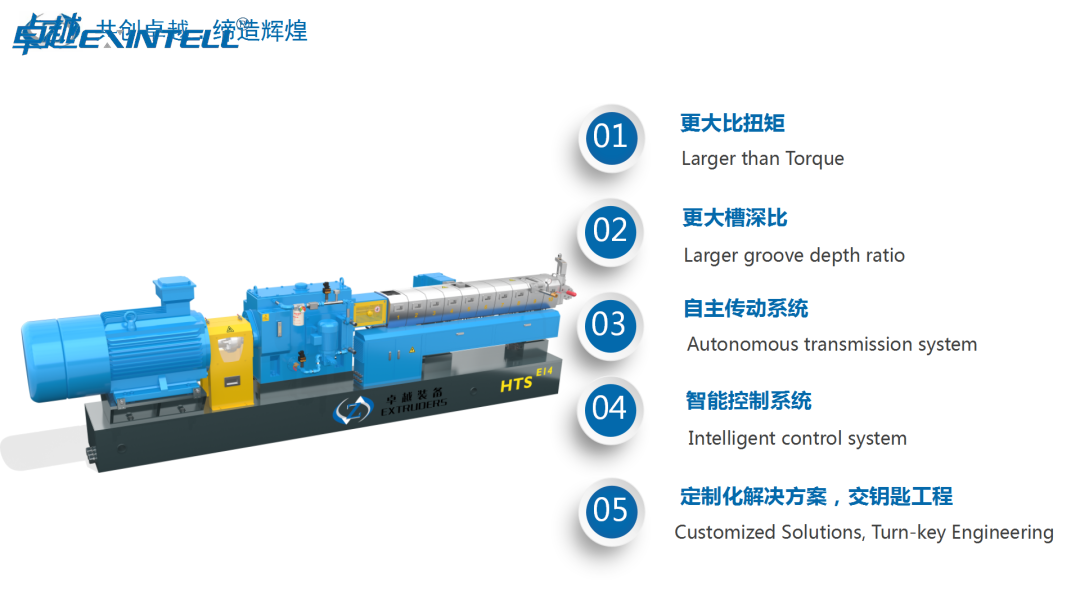
Whenever I walk a buyer through a quote, I map the process as a continuous loop rather than a series of isolated machines. Melt goes in at one end, and clean, dry pellets come out the other, with water doing the heavy lifting of cooling and transport in between. Here is the flow I use to explain what actually happens inside an underwater pelletizing line.
1. The Extruder Feeds Melt Through a Heated Die Plate
The line begins at the extruder, most often a twin screw extruder in compounding applications because it delivers strong mixing and consistent melt homogeneity, though single screw extruders serve simpler recycling and single-resin jobs. The extruder pushes homogenized melt through a die plate perforated with precisely bored holes. That plate is heated to keep the polymer above its melting point right up to the cutting face, which prevents freeze-off and keeps every strand of melt flowing evenly.
2. Rotating Cutter Blades Slice Pellets Underwater
Directly against the die face sits the cutter hub carrying a set of blades. As melt extrudes through the die holes into the water-filled cutting chamber, the rotating blades shear it into individual pellets. This die-face cutting under water is the defining step: the pellet is formed and quenched in the same instant, so it sets into a rounded shape and cannot pick up dust from the air.
3. Water Circulation Cools and Conveys Pellets
Process water enters the cutting chamber, absorbs the pellets’ latent heat, and carries them out as a slurry toward the dewatering stage. This process water loop is temperature-controlled for a reason I stress with every client: too cold and the melt freezes at the die, too warm and pellets stay tacky and agglomerate. Getting that setpoint right for each resin is where operator know-how and good automation earn their keep.
4. Centrifugal Dryer Removes Moisture Before Packaging
The pellet-water slurry passes through a screen that separates most of the water, then into a centrifugal dryer that spins off residual surface moisture. Dry pellets exit to classification and packaging, while the water returns to the temperature-control loop to be reused. That closed circuit is what makes the system efficient on water consumption and keeps the pellet dewatering dryer central to consistent product quality.
Key Components of an Underwater Pelletizing System

When I vet a supplier’s build quality, I look past the glossy line drawing and examine four subsystems. Each one has an outsized influence on pellet quality, време рада, and the resins the machine can realistically run. The table below summarizes how I weigh them before drilling into the details.
|
Компонента |
Primary Function |
What I Check |
Impact on Output |
|---|---|---|---|
|
Die plate & грејање |
Shapes melt and prevents freeze-off at the cutting face |
Hole geometry, hard-facing, heating method |
Pellet size tolerance, ability to run micro-pellets |
|
Cutter hub, лопатице & chamber |
Slices pellets against the die face under water |
Blade material, adjustment mechanism, wear life |
Pellet shape, fines generation, blade change frequency |
|
Process water loop |
Cools and conveys pellets, controls temperature |
Flow control, филтрација, heat exchange capacity |
Agglomeration risk, throughput stability |
|
Centrifugal dryer & controls |
Removes moisture and automates startup/operation |
Residual moisture spec, PLC/HMI logic, auto-start |
Pellet dryness, labor demand, changeover speed |
|
Компонента |
Primary Function |
What I Check |
Impact on Output |
|---|---|---|---|
|
Die plate & грејање |
Shapes melt and prevents freeze-off at the cutting face |
Hole geometry, hard-facing, heating method |
Pellet size tolerance, ability to run micro-pellets |
|
Cutter hub, лопатице & chamber |
Slices pellets against the die face under water |
Blade material, adjustment mechanism, wear life |
Pellet shape, fines generation, blade change frequency |
|
Process water loop |
Cools and conveys pellets, controls temperature |
Flow control, филтрација, heat exchange capacity |
Agglomeration risk, throughput stability |
|
Centrifugal dryer & controls |
Removes moisture and automates startup/operation |
Residual moisture spec, PLC/HMI logic, auto-start |
Pellet dryness, labor demand, changeover speed |
Die Plate and Heating Design
The die plate is the heart of pellet quality. Hole count and diameter set both throughput and pellet size, and the heating design keeps the melt fluid across the entire face. I pay close attention to whether the die uses electrical cartridge heating, steam, or a heat-insulating construction, because uneven face temperature is the most common cause of misshapen pellets and die freeze-off. For abrasive or glass-filled compounds, a hard-faced die plate materially extends service life.
Cutter Hub, Blades, and Cutting Chamber
The cutter hub and its blade set do the actual work of forming pellets. I look for a blade assembly with a reliable way to maintain even blade-to-die contact, since uneven pressure produces tails, fines, and premature wear. Blade metallurgy should Extrusion Systems match the resin: tougher alloys or coatings for filled compounds, sharper geometries for clean elastomer cuts. The cutting chamber itself must maintain water flow across the die face without dead zones where pellets could stall and stick.
Water Circulation and Temperature Control Loop
The process water loop combines a pump, a heat exchanger, филтрација, and instrumentation into a tightly regulated circuit. Because pellet cooling water temperature governs how quickly pellets set, I want to see responsive control and adequate filtration to keep fines out of the die face. A well-designed loop reuses water continuously, which keeps operating cost and water consumption low while holding pellet quality steady across long runs.
Centrifugal Dryer and Control/Automation Package
The centrifugal dryer determines final pellet dryness, which directly affects downstream processing and storage. Just as important is the control package. ECON GmbH (2023) offers underwater pelletizing systems with automatic startup and specialized die technology for elastomers and adhesives, and that kind of automation is what makes difficult resins repeatable rather than operator-dependent. On the PLC/HMI side, I favor systems that sequence startup, monitor water temperature and pressure, and log alarms, because that reduces labor and shortens changeovers. It is also worth noting that Chinese manufacturers such as Nanjing Chuanqi supply twin screw underwater pelletizing systems with comparable automation to wholesalers and distributors (Nanjing Chuanqi, 2024), which widens the sourcing options I present to wholesale buyers evaluating both premium European and cost-competitive OEM builds.
Underwater Pelletizing vs Strand Pelletizing
When I help buyers scope a pelletizing machine, the first fork in the road is almost always underwater versus strand. Both convert melt into salable pellets, but they behave very differently on the plant floor, and that difference drives most of the wholesale purchasing decision. I want to walk through what actually separates them rather than repeat marketing claims.
Throughput and Automation Differences
Underwater pelletizing wins decisively on sustained volume. Conventional strand systems tend to struggle to hold efficiency above roughly 1,000 кг/х, while USEON reports underwater configurations reaching production capacities of up to 50 tons per hour (Извор: USEON via Polmak Plastik product page, 2024). That headroom matters because underwater lines integrate die face cutting, pellet cooling water, and a pellet dewatering dryer into one continuous, closed loop that a PLC/HMI control system supervises end to end.
Странд пеллетизинг, by contrast, asks an operator to thread molten strands across a water bath into a cutter. In my experience that manual startup is where strand lines lose ground on automation. Underwater systems from suppliers like ECON offer automatic startup and specialized die technology, which reduces the skill dependency at every shift change (Извор: ECON GmbH product information, 2023).
Material Handling: Sticky and Low-Viscosity Resins
This is where underwater technology earns its premium. Because cutting happens at the die face inside a water chamber, the polymer is quenched the instant it is cut. That immediate cooling is why underwater pelletizing is preferred for sticky and heat-sensitive resins where strand systems fail (MAAG underwater pelletizing technical literature, 2023). Low-viscosity melts that would sag or break as strands can still be pelletized cleanly under water, which broadens the range of formulations a single line can handle.
Облик пелета, Uniformity, and Dust Generation
Underwater die face cutting produces near-spherical pellets with tight size tolerances and, critically, dust-free output compared with strand cutting (industry consensus; MAAG technical literature, 2023). Strand systems chop cylindrical pellets and tend to shed fines at the blade, which creates dust that has to be screened out downstream. If your customers reject material on dust content or demand uniform pellet size for gravimetric feeding, that alone can justify the underwater route.
When Strand Pelletizing Is Still the Better Fit
I do not treat underwater as universally superior. Strand pelletizing remains the sensible choice for lower-volume runs, for shops that change grades constantly and want fast, low-cost cleanouts, and for stiff, high-viscosity resins that form stable strands without trouble. Strand lines carry a lower capital cost and a simpler water circuit, so for a startup compounding line running well under 1,000 кг/х, the payback math often favors strand.
Single Screw vs Twin Screw Underwater Systems
Once a buyer commits to underwater granulation, the next question is what feeds the die plate. The extruder upstream defines what materials you can run and how much compounding you can do in a single pass, so I treat screw selection as inseparable from the pelletizing head.
Twin Screw Advantages for Compounding and Mixing
A twin screw extruder is the workhorse for compounding. Its intermeshing, co-rotating screws deliver strong distributive and dispersive mixing, which is what you need when you are adding fillers, blending polymers, or feeding a reactive formulation into the melt cutting stage. Chinese manufacturers such as Nanjing Chuanqi supply twin screw underwater pelletizing systems directly to wholesalers and distributors, which makes this configuration widely available at competitive pricing (Извор: extruderfactory.com, 2024). If your business plan is a compounding line producing engineered blends, twin screw is the default answer.
Single Screw Simplicity for Straightforward Throughput
A single screw extruder is mechanically simpler, cheaper to buy, and cheaper to maintain. It shines when you are moving a single, well-behaved resin at volume without needing intensive mixing, for example straight polyolefin repelletizing or virgin resin granulation. In those cases the mixing capability of a twin screw is capacity you pay for and never use.
Matching Screw Type to Material and Formulation
My rule of thumb is to let the formulation decide. If the product requires additives, reinforcement, or multiple polymers combined, specify twin screw. If it is a single-component, high-throughput job, single screw keeps both capital and operating costs down.
| Consideration | Single Screw Underwater | Twin Screw Underwater |
|---|---|---|
| Best use case | Single-resin throughput, repelletizing | Compounding, blending, reactive processing |
| Mixing capability | Ограничено | Високо (distributive and dispersive) |
| Relative capital cost | Lower | Higher |
| Maintenance complexity | Lower (single shaft) | Higher (paired screws, more wear parts) |
| Additive/filler handling | Poor to moderate | Одлично |
| Wholesale availability | Броад | Броад, incl. China OEM (Nanjing Chuanqi, 2024) |
| Consideration | Single Screw Underwater | Twin Screw Underwater |
|---|---|---|
| Best use case | Single-resin throughput, repelletizing | Compounding, blending, reactive processing |
| Mixing capability | Ограничено | Високо (distributive and dispersive) |
| Relative capital cost | Lower | Higher |
| Maintenance complexity | Lower (single shaft) | Higher (paired screws, more wear parts) |
| Additive/filler handling | Poor to moderate | Одлично |
| Wholesale availability | Броад | Броад, incl. China OEM (Nanjing Chuanqi, 2024) |
Cost and Maintenance Implications
Beyond the sticker price, remember that a twin screw line has more wear components in the melt path, and those interact with the pelletizing head. The die plate, cutter hub, and cutter blade assembly all see accelerated wear when you run abrasive filled compounds through a twin screw. Budget for that consumable cycle. A single screw line running clean resin will stretch those same parts much further, which lowers total cost of ownership even if throughput per hour is similar.
Materials You Can Process (ТПУ, TPV, Elastomers, and More)
The reason most of my clients reach for an underwater pelletizer in the first place is material scope. Die Plastic Recycling Manufacturers face cutting under water handles a class of polymers that strand cutting simply cannot manage reliably.
Heat-Sensitive and Sticky Material Suitability
Thermoplastic polyurethane (ТПУ), thermoplastic vulcanizates (TPV), and elastomers are the headline applications. USEON positions its underwater system as ideal precisely for TPU, TPV, elastomers, and micro-pellets, citing high throughput, tight pellet size tolerances, a wide application range, and high automation (Извор: USEON via Polmak Plastik product page, 2024). These materials are tacky and thermally fragile, so the instant quench in the process water loop prevents the pellets from agglomerating before the centrifugal dryer removes surface moisture. ECON similarly targets elastomers and adhesives with specialized die technology and automatic startup (Извор: ECON GmbH, 2023).
Micro-Pellet Production Capability
Underwater pelletizing enables micro-pellet production at or below 1 mm that is difficult to achieve with conventional strand systems (Извор: USEON via Polmak Plastik, 2024). If your customers need micro-pellets for masterbatch dosing, medical compounding, or high-precision feeding, this capability is often the deciding specification. It depends heavily on matching a fine die plate geometry with the right cutter hub speed, so I always confirm the supplier can demonstrate the target pellet size on your actual resin.
Engineering Resins and Recyclate Compatibility
The platform is not limited to soft materials. Engineering resins and recyclate streams also run well on underwater lines, particularly on a twin screw extrusion pelletizing line where you can devolatilize and homogenize a variable recycled feedstock in the same pass. This flexibility is part of what makes underwater equipment attractive to processors who expect their material mix to evolve.
Material-Driven Configuration Choices
Everything I have covered converges on one point: the material drives the configuration, not the other way around. Sticky and heat-sensitive resins push you toward underwater over strand; multi-component formulations push you toward twin screw over single screw; and a micro-pellet target dictates the die and cutter specification. Before you request a wholesale quote, define your primary resins, your throughput target, and your pellet size, because those three inputs determine which polymer pelletizing equipment configuration will actually serve you.
For buyers benchmarking suppliers, I recommend reviewing at least one China OEM offering alongside the European brands to calibrate pricing and specification. Nanjing Chuanqi’s twin screw underwater listing is a useful reference point (extruderfactory.com), as is the USEON system detail (polmakplastik.com).
The Role of the Die Plate (and Why It Matters)
When I evaluate an underwater pelletizing system, I start at the die plate. It is the single component that most directly governs pellet quality, and in my experience it is also the part buyers understand least at the point of purchase. The die plate sits at the interface where molten polymer exits the extruder and meets the rotating cutter blade assembly submerged in circulating process water. Everything about your finished pellet, its shape, its size distribution, and its consistency, is decided in that fraction of a second of die face cutting.
Hole Count, Diameter, and Pellet Size Control
The die plate’s hole pattern determines both throughput and pellet geometry. A higher hole count spreads the melt stream across more channels, which supports higher throughput without overloading any single orifice. Hole diameter, paired with the rotational speed of the cutter hub, sets the pellet size. Larger holes and slower cutting yield larger pellets; smaller holes and faster cutting produce the fine, spherical pellets that underwater systems are known for. Plastic Recycling Extruder Machine Manufacturer
This is where underwater pelletizing separates itself from strand cutting. According to USEON product literature published via Polmak Plastik (2024), underwater systems enable micro-pellet production at or below 1 мм, a size range that is difficult to achieve reliably with conventional strand systems. If you are compounding masterbatch or producing micro-pellets for precision dosing, the die plate specification is not a detail. It is the whole point.
Heating Methods and Thermal Management
Sticky and heat-sensitive resins are the reason many buyers move to underwater pelletizing in the first place. To keep the melt flowing cleanly through every orifice, the die plate must stay hot even though its face is bathed in cooling water. I have seen three common approaches:
- Electrically heated die plates, using cartridge heaters embedded near the die holes. Simple to control, favored on small and mid-range systems.
- Steam or thermal-oil heated plates, which distribute heat more evenly across large-diameter plates on high-throughput lines.
- Insulated die designs that use a low-conductivity barrier between the heated body and the water-cooled cutting face to limit heat loss.
Poor thermal management shows up as die hole freeze-off, where polymer solidifies in individual channels and creates streaks, tails, or oversized fused pellets. For TPU, TPV, and elastomers, which sit at the heat-sensitive end of the spectrum, ECON (2023) notes that specialized die technology is central to running these materials without degradation. This is a point I return to when comparing suppliers, because die heating quality is not visible on a spec sheet.
Wear Characteristics and Replacement Intervals
The die plate and the cutter blades are consumables, not fixtures. Abrasive fillers such as glass fiber, calcium carbonate, or flame retardants accelerate wear on both the die face and the blade edges. In my experience, a die plate running highly filled compounds may need refurbishment or replacement far sooner than one running unfilled TPU.
When I budget a system, I treat the die plate and cutter hub as recurring line items rather than one-time capital. I ask suppliers three questions: what is the expected service life under my specific compound, what does a replacement plate cost, and what is the lead time. A cheap system with an expensive, slow-to-source die plate is not a bargain once you factor in downtime.
Custom Die Plate Options for Pellet Geometry
Most reputable suppliers offer custom die plates, and this is worth using. Beyond standard spherical pellets, you can specify hole geometry tuned to a target pellet shape, tungsten-carbide or hardened facing for abrasive resins, and hole layouts matched to a specific extruder output. If you produce more than one product family, discuss quick-change die plates so you are not fighting the plate every time you switch grades.
Understanding Throughput and Capacity Ratings
Capacity is the number every buyer fixates on, and it is also the number most easily misunderstood. A capacity rating only means something when you know the resin it was measured on and the conditions behind it. I have watched buyers order on a headline kg/h figure and then discover that the figure assumed a low-viscosity polyolefin, not the elastomer they actually run.
How Capacity Is Rated and Measured
Underwater pelletizing capacity is expressed in kilograms per hour (кг/х), and at the top end in tons per hour. USEON, via Polmak Plastik (2024), reports systems reaching up to 50 tons per hour, while noting that conventional pelletizing systems often struggle to maintain efficiency above roughly 1,000 кг/х. That gap is exactly why underwater systems dominate high throughput pelletizing.
The rated figure depends on melt viscosity, melt temperature, die hole count, and cutter speed. When I read a supplier’s rating, I ask for the reference material and whether the number is a peak or a sustained operating rate. A sustained rate on your actual resin is the only number worth planning around.
Matching Pelletizer Output to Extruder Output
The pelletizer does not work alone. It sits at the end of an extrusion pelletizing line, and its capacity must match the output of the twin screw extruder or single screw extruder feeding it. If the extruder can push 800 kg/h and the pelletizer is rated for 500 кг/х, the pelletizer becomes the bottleneck and you have paid for extruder capacity you cannot use. The reverse, an oversized pelletizer on a small extruder, wastes capital and can make it harder to hold consistent pellet quality at low melt flow.
I also match the downstream equipment, the process water loop and the centrifugal dryer, to the same rate. A pellet dewatering dryer sized below the cutter output will let moisture carry over into your finished pellets, which is a quality problem masquerading as a capacity problem.
Scaling for Future Production Growth
There is a real tension between buying for today and buying for tomorrow. My rule of thumb is to size the die plate and pelletizer for a realistic 18 да 36 month growth horizon rather than a best-case forecast. Many systems allow a higher-hole-count die plate to be fitted later, which lets you raise throughput without replacing the whole machine. Ask whether the frame, drive, and water system have headroom before you commit.
Avoiding Oversizing and Undersizing
Both errors are expensive. Undersizing caps your production and forces premature reinvestment. Oversizing inflates capital cost, коришћење енергије, and cooling water demand, and can degrade pellet quality when the line runs far below its design rate. I aim for a system whose sustained rated capacity, on my resin, lands roughly 15 да 25 percent above my current peak demand. That gives operating margin without paying for capacity that sits idle.
Comparison: Capacity Tiers and Typical Fit
| Capacity tier | Typical throughput | Common use case | Typical extruder pairing |
|---|---|---|---|
| Laboratory / pilot | Испод 50 кг/х | R&Д, micro-pellets, small trial batches | Small twin screw extruder |
| Small production | 50–300 kg/h | Specialty compounds, TPU/TPV niche runs | Mid twin screw extruder |
| Mid production | 300–1,000 kg/h | Regional compounding line, мастербатцх | Large twin screw extruder |
| Индустриал | 1,000 кг/х до 50 t/h | Bulk resin granulation, high-volume plastic pellet production | High-output twin or single screw |
| Capacity tier | Typical throughput | Common use case | Typical extruder pairing |
|---|---|---|---|
| Laboratory / pilot | Испод 50 кг/х | R&Д, micro-pellets, small trial batches | Small twin screw extruder |
| Small production | 50–300 kg/h | Specialty compounds, TPU/TPV niche runs | Mid twin screw extruder |
| Mid production | 300–1,000 kg/h | Regional compounding line, мастербатцх | Large twin screw extruder |
| Индустриал | 1,000 кг/х до 50 t/h | Bulk resin granulation, high-volume plastic pellet production | High-output twin or single screw |
Throughput ceilings reflected here draw on USEON figures via Polmak Plastik (2024). Actual capacity on any given resin will vary with viscosity and formulation, so treat these tiers as a planning guide, not a guarantee.
Underwater Pelletizing System Wholesale Price Ranges
Wholesale pricing for underwater pelletizing equipment is one of the least transparent areas in this market, and it frustrates buyers for good reason. Public list prices are rare, quotes are configuration-specific, and the sticker figure rarely captures total cost. I cannot responsibly publish fabricated dollar figures, so instead I will give you the framework I use to read a quote and compare suppliers on equal footing.
What Drives Price: Капацитет, Бранд, and Automation
Three factors move the price of an underwater pelletizing system more than any others:
- Капацитет. Cost scales with rated throughput. Larger die plates, bigger drives, larger process water loops, and higher-capacity centrifugal dryers all add up as you climb the kg/h ladder.
- Brand and origin. European brands such as MAAG and ECON carry a premium tied to engineering depth, documented process support, and specialized die technology (MAAG technical literature, 2023; ECON, 2023). Chinese OEM suppliers such as Nanjing Chuanqi sell to wholesalers and distributors at markedly lower price points (extruderfactory.com, 2024). Neither is automatically the right answer; the gap reflects real differences in support, lead time, and documentation.
- Automation level. A system with full PLC/HMI control, automatic startup, and integrated diagnostics costs more than a manually supervised line. ECON (2023) highlights automatic startup as a differentiator for elastomers and adhesives, where a controlled start protects heat-sensitive resin.
Small vs Industrial-Scale Pricing Tiers
Price tiers track the capacity tiers above. Laboratory and pilot systems sit at the low end of the market, small and mid production systems occupy the broad middle, and industrial lines running into the tons-per-hour range represent the largest capital commitments. The important point for wholesale buyers: the price per kg/h of capacity generally falls as you move up the tiers, because much of the supporting infrastructure does not scale linearly. А 1,000 kg/h system does not cost ten times a 100 kg/h system.
Volume Discounts and MOQ Considerations
When you buy as a wholesaler or distributor rather than a single end user, the pricing conversation changes. Suppliers that sell into the wholesale channel, including Chinese manufacturers supplying distributors (extruderfactory.com, 2024), often structure pricing around minimum order quantities and multi-unit commitments. If you are placing repeat or bulk orders, negotiate on landed unit price, spare die plates and cutter hubs bundled into the order, and priority lead times. In my experience the consumables bundle is where wholesale buyers leave the most money on the table.
Beyond Sticker Price: Consumables and Freight
The quoted machine price is the beginning of your cost, not the end. When I build a total cost of ownership figure, I include:
- Consumables. Replacement die plates and cutter blade assemblies, sized to your resin’s wear profile, plus process water treatment and filtration media.
- Freight and import. For US buyers importing from Asia or Europe, ocean freight, insurance, customs duties, and inland transport can add materially to landed cost. These vary by origin and tariff classification and should be confirmed with a customs broker rather than estimated.
- Installation and commissioning. Rigging, utility connections, and startup support, which some suppliers include and others bill separately.
- Training and spares in
Укупни трошкови власништва: Beyond the Purchase Price
When wholesalers ask me for a quote on an underwater pelletizing system, the first number they focus on is the capital price. In my experience, that figure represents only a fraction of what the equipment actually costs across its service life. A granulation system that looks cheap on the purchase order can become the most expensive line in the plant if energy draw, consumables, and downtime are not modeled up front. Below I break down the cost drivers I track with every extrusion pelletizing line I help spec.
Energy Consumption and Efficiency
Energy is the largest recurring cost on most high throughput pelletizing installations. The main draws are the extruder drive, the heated die plate, the process water loop pumps, and the centrifugal dryer motor. On a twin screw extruder line running elastomers, I typically see the drive account for the bulk of connected load, with die-face heating a distant but constant second. Systems that maintain efficiency above 1,000 kg/h are where the economics shift decisively in favor of underwater pelletizing, since conventional systems often struggle to hold efficiency past that threshold (USEON via Polmak Plastik, 2024). When the connected load is spread across a larger output, the energy cost per kilogram of plastic pellet production falls sharply.
My practical advice: ask every supplier for specific energy consumption in kWh per kilogram at your target throughput, not just nameplate horsepower. Two machines with identical motors can differ by double digits in real draw depending on screw design, insulation on the die, and pump control strategy.
Consumables: Die Plates, Cutter Blades, and Seals
Consumables are the cost line most buyers underestimate. The three I watch are:
- Die plates. The die plate takes thermal cycling and abrasion on every startup. Filled or reinforced polymers wear the die face faster. Coated or carbide-faced plates cost more up front but stretch replacement intervals, which matters when you produce micro-pellets and need tight, uniform pellet size.
- Cutter blades. The cutter blade assembly on the cutter hub is a wear item by design. Blade life depends on resin abrasiveness, cutting speed, and how well blade pressure against the die face is controlled. I budget blades as a per-tonne cost, not a fixed annual figure.
- Seals. Water seals and shaft seals in the cutting chamber and pump circuit fail quietly and cause water intrusion or leaks. They are cheap parts, but a failure mid-run can scrap product and force an unplanned stop.
When I compare a MAAG or ECON system against a China OEM unit, consumable pricing and lead time matter as much as the sticker. A lower machine price paired with expensive, slow-to-ship die plates can erase the saving inside a year.
Одржавање, Downtime, and Labor
Maintenance cost has three parts: scheduled service, unplanned downtime, and the labor to run and clean the line. Underwater pelletizing runs cleaner than strand cutting because die face cutting produces dust-free, uniform pellets and avoids strand breaks (MAAG technical literature, 2023). That cleanliness reduces one category of downtime. What replaces it is water-loop discipline: филтрација, temperature control, and periodic die changes. Systems with strong PLC/HMI control and automatic startup, like those ECON provides for elastomers and adhesives (ECON GmbH, 2023), cut labor at shift change and reduce scrap during warmup.
I estimate labor by asking how many operator-hours per shift the line demands, then how long a die change and a blade change actually take. A machine that needs two hours for a die swap versus forty minutes changes the annual downtime math considerably at high utilization.
ROI Timeline Estimation
To estimate payback, I compare the fully loaded cost per kilogram against the value the underwater process unlocks. For sticky and heat-sensitive resins, ТПУ, and TPV, the process protects product quality that strand systems degrade, so part of the ROI is scrap avoided and premium product retained (USEON via Polmak Plastik, 2024). A simple model:
- Annual output (кг) at realistic uptime.
- Cost per kg = (енергије + consumables + одржавање + labor + amortized capital) / output.
- Margin per kg from the pellets you can now sell.
- Payback = capital / (annual margin gained − annual operating cost delta).
In practice, I see payback pull forward fastest for producers who move into micro-pellets or high-value compounding, where underwater pelletizing enables products that conventional strand systems cannot reliably make.
New vs Used vs Refurbished: Which Should You Buy?
Related searches show steady buyer interest in used systems alongside new equipment (Google SERP related searches, 2025), and I get the question constantly from wholesalers weighing budget against risk. There is no single right answer. The decision turns on how much technical risk your operation can absorb and how critical uptime is to your contracts.
Cost Savings and the Risk of Used Equipment
Used equipment carries the obvious appeal of a lower entry price, and for a proven platform that saving can be real. The risk is that a pelletizing machine is a wear-driven system. The parts most likely to be worn, the die plate, the cutter hub, and the seals, are exactly the parts that determine pellet quality and uptime. A used machine sold without service history is, in my view, a bet. If the water loop has scaled, if the die face is out of flat, or if the extruder barrel is worn, the discount can evaporate into rework and downtime.
What to Inspect on a Used Pelletizer
Before I recommend any used underwater pelletizer, I walk this checklist:
- Die plate condition. Check die face flatness, hole erosion, and any heater element faults. A worn die face produces off-spec, non-spherical pellets.
- Cutter hub and blade assembly. Inspect blade seat wear, hub runout, and the pressure control mechanism.
- Extruder wear. Screw and barrel wear on the twin screw or single screw extruder affects melt quality feeding the die.
- Process water loop. Look for scale, corrosion, pump wear, and heat exchanger fouling.
- Centrifugal dryer. Check rotor balance, screen condition, and bearing noise.
- PLC/HMI control. Confirm the control software is intact, supported, and not orphaned by an obsolete controller.
- Documentation. Service logs, spare parts history, and original commissioning records.
If a seller cannot let you run the machine under load or provide records, treat the quoted savings as optimistic.
Refurbishment Scope and Warranty Differences
Refurbished sits between new and used, but the word covers a wide range. A light refurbishment might mean cleaning and new seals. A full rebuild means replaced die plate, new cutter blade assembly, reconditioned extruder, verified water loop, and updated controls. I always ask for a written scope that lists exactly what was replaced versus inspected. Warranty is the clearest signal of quality: a reputable rebuilder backs the work with a meaningful parts-and-labor warranty, while a used unit typically ships as-is. The gap between an as-is machine and a warrantied refurbishment is where much of the real value difference lives.
When Used Makes Sense for Wholesalers
Used equipment fits well when a wholesaler needs a low-risk, well-understood platform for a stable resin, has in-house maintenance capability, or wants a second line to add capacity without new-machine lead times. It fits poorly when you are moving into demanding materials like TPU, TPV, or micro-pellets, where die technology and tight tolerances matter and where new systems from suppliers like USEON, MAAG, or ECON deliver documented performance. My rule: buy new or fully refurbished when pellet quality is the product, and consider used when the process is routine and your team can service it.
Decision Comparison
Фактор New Refurbished Used (as-is) Upfront cost Highest Умерено Lowest Warranty Full manufacturer Rebuilder warranty (varies) Typically none Consumable & wear risk Ниско (new parts) Low to moderate Високо (unknown history) Lead time Longest Умерено Shortest Fit for TPU/TPV/micro-pellets Best Good if fully rebuilt Risky Best for Quality-critical, new materials Balanced budget and risk Routine resins, in-house maintenance Фактор New Refurbished Used (as-is) Upfront cost Highest Умерено Lowest Warranty Full manufacturer Rebuilder warranty (varies) Typically none Consumable & wear risk Ниско (new parts) Low to moderate Високо (unknown history) Lead time Longest Умерено Shortest Fit for TPU/TPV/micro-pellets Best Good if fully rebuilt Risky Best for Quality-critical, new materials Balanced budget and risk Routine resins, in-house maintenance Table reflects my field experience specifying granulation systems; supplier-specific terms vary and should be confirmed in writing.
Small Underwater Pelletizing Systems for Lower Volumes
Not every buyer needs a line rated toward the upper end of underwater capacity, which can reach up to 50 tons per hour on large USEON systems (USEON via Polmak Plastik, 2024). A growing share of the wholesalers I work with want small systems for lab, pilot, and low-throughput production. These units bring the quality advantages of die face cutting to operations that cannot justify a full compounding line.
Lab and Pilot-Scale Unit Use Cases
Small underwater pelletizing systems earn their place in a few clear scenarios. Compounders developing new elastomer or TPU grades use them to produce representative, dust-free pellets for customer sampling before scaling. Research groups use them to characterize melt cutting behavior and pellet cooling water dynamics on heat-sensitive resins. Specialty producers use them for short runs of high-value micro-pellets, which are difficult to achieve with conventional strand systems. In each case the value is fidelity: a pilot unit that behaves like the production line de-risks scale-up.
Footprint and Utility Requirements
The appeal of a small system is that it fits where a full line cannot. A compact pelletizer paired with a small single screw extruder, a modest process water loop, and a right-sized centrifugal dryer can occupy a corner of a lab rather than a dedicated bay. Utility demands scale down accordingly: lower connected electrical load, smaller cooling water flow, and reduced compressed air. I still advise buyers to confirm three numbers before install: floor footprint including service clearance around the die, electrical service required, and cooling water flow and temperature. Underspecified utilities are the most common reason a small unit underperforms after delivery.
Cost Efficiency at Low Throughput
At low volume, cost efficiency is a different calculation. Fixed costs, capital, floor space, and a baseline operator, dominate over per-kilogram consumables. So the goal is not the lowest energy per kilogram but the lowest total cost to produce the quality of pellet you need. This is where a small underwater system beats trying to force a low-quality strand method onto a sticky or heat-sensitive resin: the underwater route protects the product and reduces scrap, which matters more than raw efficiency when batches are small and materials are expensive.
Upgrade Paths as Demand Grows
The best small systems are bought with growth in mind. When I help a wholesaler choose a pilot-scale unit, I look for an upgrade path: an extruder platform that scales to a larger twin screw extruder, die plates available in higher hole counts for greater output, and PLC/HMI control that carries the same recipes forward to a production line. Chinese manufacturers such as Nanjing Chuanqi supply twin screw underwater pelletizing systems across a range of sizes to wholesalers and distributors (extruderfactory.com, 2024) Nanjing Chuanqi product page, and premium suppliers offer scalable die technology as well USEON via Polmak Plastik. Buying into a family of equipment rather than a one-off unit means the development work you do at pilot scale transfers cleanly when demand justifies a larger polymer pelletizing line.
MAAG vs ECON vs China OEM Suppliers
When buyers ask me where to source an underwater pelletizing system at wholesale volume, the conversation almost always narrows to three camps: premium European brands like MAAG, specialist innovators like ECON, and China OEM manufacturers competing hard on value. I have specified equipment from all three, and each earns its place depending on the resin, the throughput target, and the budget. What follows is the neutral comparison I wish more buyers had before signing a purchase order.
MAAG: Premium Positioning and Engineering Depth
MAAG sits at the top of the market, and its pricing reflects that. In my experience, buyers who choose MAAG are paying for a mature process ecosystem: proven die plate and cutter hub designs, tightly controlled process water loops, and application engineering that shortens commissioning time. MAAG’s technical literature emphasizes dust-free, uniform pellet production and strong performance on sticky and heat-sensitive resins compared with strand pelletizing (MAAG Underwater Pelletizing Technical Literature, 2023, https://www.maag.com/). If you are running high-value engineering polymers where scrap and downtime dwarf the capital difference, that premium tends to pay for itself.
ECON: Specialist Strengths for Difficult Resins
ECON has built a reputation around specific pain points rather than trying to be everything to everyone. Its systems feature automatic startup and specialized die technology aimed at elastomers and adhesives (ECON GmbH Product Information, 2023, https://www.econ.eu/). I recommend ECON to clients who struggle with die freeze-off or messy startups on tacky materials, because the automated start sequence removes a genuine source of operator-dependent variability. It is a focused tool, and on the applications it targets, that focus shows.
China OEM Suppliers: Value and Private-Label Flexibility
China OEM manufacturers have closed much of the technology gap on twin screw underwater pelletizing systems, and their pricing changes the math for many wholesale buyers. Manufacturers such as Nanjing Chuanqi supply twin screw underwater pelletizing systems directly to wholesalers and distributors (extruderfactory.com, 2024). Beyond price, the OEM route opens private-label and configuration options that European brands rarely offer, which matters if you are a distributor building your own catalog. The tradeoff is that quality and support vary widely between factories, so vetting (covered below) does more work here than with an established brand.
Weighing Brand Against Budget
My rule of thumb: match the equipment tier to the cost of failure, not just the cost of purchase. For micro-pellets (≤ 1 мм) or sensitive grades of TPU and TPV, where tight pellet size tolerances directly affect downstream molding, I lean toward MAAG or ECON. For commodity compounding lines or straightforward elastomer granulation at high throughput, a well-vetted China OEM system can deliver the majority of the performance at a fraction of the capital outlay. The right answer is a function of your resin mix and your tolerance for process risk, not a universal winner.
Underwater pelletizing supplier comparison (based on public product information and my field experience) Фактор MAAG ECON China OEM Positioning Premium, broad application coverage Specialist for elastomers and adhesives Value-driven, high configurability Relative capital cost Highest Високо Lowest Standout feature Mature die plate and cutter hub ecosystem Automatic startup, specialized die tech OEM/private-label options Best fit High-value grades, micro-pellets Sticky, tacky, heat-sensitive resins Commodity compounding, cost-sensitive lines Support maturity Extensive global network Focused, application-led Variable — verify per factory Underwater pelletizing supplier comparison (based on public product information and my field experience) Фактор MAAG ECON China OEM Positioning Premium, broad application coverage Specialist for elastomers and adhesives Value-driven, high configurability Relative capital cost Highest Високо Lowest Standout feature Mature die plate and cutter hub ecosystem Automatic startup, specialized die tech OEM/private-label options Best fit High-value grades, micro-pellets Sticky, tacky, heat-sensitive resins Commodity compounding, cost-sensitive lines Support maturity Extensive global network Focused, application-led Variable — verify per factory Sources: MAAG technical literature (2023); ECON GmbH product information (2023); Nanjing Chuanqi via extruderfactory.com (2024).
How to Vet a Wholesale Supplier
A brand name narrows the field, but the actual purchase decision lives in due diligence. Whether I am evaluating a European manufacturer or a China OEM, I run the same checklist. It has saved me from suppliers whose glossy specifications did not survive contact with a real production floor.
Цертификати: ЦЕ, ИСО 9001, and Quality Systems
I treat certifications as a baseline, not a guarantee. A valid CE mark tells me the equipment meets EU health and safety directives, which matters if you resell into or operate under those standards. ИСО 9001 registration signals a documented quality management system behind the factory. What I actually want to see is the certificate scope and issuing body, because a certificate that covers a different product line or comes from an unrecognized registrar is worth little. Ask for the document, verify the number with the registrar, and confirm it covers underwater pelletizing systems specifically.
Factory Audits and Reference Customers
Nothing substitutes for eyes on the floor. When an on-site audit is not feasible, I commission a third-party audit or request a live video walkthrough of the assembly area, machine shop, and QC station. I look for how they machine and inspect die plates and cutter hubs, since those are the wear parts that determine long-term cost of ownership. I also insist on reference customers running comparable resins at comparable throughput, and I call them. A supplier confident in its work will connect you; one that stalls is telling you something.
Sample Runs and Acceptance Testing
Before committing to a full extrusion pelletizing line, I arrange a sample run on my own resin, or a close match, and define acceptance criteria in writing. For an underwater pelletizer, that means measured pellet size distribution, sphericity, moisture after the centrifugal dryer, and throughput held over a sustained period rather than a peak reading. Underwater pelletizing is preferred precisely because it produces dust-free, uniform pellets on sticky and heat-sensitive resins (MAAG technical literature, 2023), so your acceptance test should prove that advantage on your material. Tie a payment milestone to passing a factory acceptance test, and reserve a portion for a site acceptance test after installation.
Communication and Technical Support Quality
The quality of pre-sale communication is the best free predictor of post-sale support. I judge suppliers on how precisely they answer technical questions about the die face cutting geometry, the process water loop temperature control, and the PLC/HMI control interface. Vague or deflecting answers now become slow support tickets later. I also confirm spare parts lead times for cutter blade assemblies and die plates, and whether English-language documentation and remote diagnostics are genuinely available. For a China OEM in particular, јака, responsive engineering contact is often the deciding factor between two similarly priced systems.
Buying Wholesale in the USA: Import, Duties, and Logistics
Sourcing polymer pelletizing equipment overseas is only half the project. The landed cost and the delivery timeline hinge on decisions made in the contract and the freight plan. Here is how I approach the US import side so that a good machine price does not evaporate in surprises at the port.
Incoterms and Who Bears Shipping Risk
The single most consequential line in an international purchase order is the Incoterm. It defines exactly where risk and cost transfer from seller to buyer. I avoid open-ended terms like EXW for buyers new to importing, because you inherit responsibility from the factory door. ФОБ (at the origin port) is a common, workable middle ground where the seller handles export clearance and loading. CIF adds freight and insurance to the destination port but can obscure margins in the freight line. Whichever term you choose, confirm in writing who arranges export documentation, who insures the machine in transit, and at what precise point liability shifts. Ambiguity here is where disputes over a damaged die plate begin.
Duties, Tariffs, and Customs Clearance
Underwater pelletizing systems import under a Harmonized Tariff Schedule classification, and the correct HTS code drives your duty rate. I always confirm classification with a licensed customs broker before shipment rather than accepting the supplier’s guess, because a misclassification can trigger penalties and delays. Note that machinery from China may carry additional Section 301 tariffs on top of the base rate, which materially affects the China OEM value equation. Duty rates and trade measures change, so verify current rates with U.S. Customs and Border Protection (https://www.cbp.gov/) or your broker at the time of purchase rather than relying on a figure from last year.
Container Consolidation and Freight Planning
A complete extrusion pelletizing line, екструдер, die assembly, cutting chamber, process water loop, and centrifugal dryer, is bulky and often ships in multiple crates. I plan whether the equipment fills a full container load or whether consolidating with other cargo makes sense. Wholesale buyers ordering several systems can consolidate to lower per-unit freight, but I weigh that against the risk of tying multiple machines to a single sailing. I also plan for offloading and rigging at the destination, since this equipment is not something a standard dock crew moves without the right gear. Building freight, drayage, and installation rigging into the budget up front prevents the classic mistake of celebrating a low FOB price and then absorbing punishing delivery costs.
Domestic vs Overseas Supplier Tradeoffs
Overseas sourcing usually wins on sticker price, especially through China OEM manufacturers supplying wholesalers directly (extruderfactory.com, 2024). Domestic or domestically stocked suppliers win on lead time, spare parts availability, and the practical ease of warranty support and on-site service. In my experience the deciding questions are: how quickly do you need the line running, and how much downtime can your operation absorb while a cutter blade assembly ships from overseas? For buyers who value fast commissioning and local support, a domestic supplier or a foreign brand with a strong US service presence can justify a higher price. For those with schedule flexibility and internal technical capacity, direct overseas wholesale sourcing captures the largest savings. There is no universal answer, only the one that fits your throughput commitments and your risk tolerance.
Reference product pages I consulted while preparing this guide: Nanjing Chuanqi twin screw underwater pelletizing system и Polmak Plastik / USEON underwater pelletizing systems.
Automation and Control Features to Look For
When I evaluate an underwater pelletizing system for a wholesale purchase, the control architecture is the first thing I scrutinize after the die plate and cutter hub. The mechanical hardware determines what a machine can theoretically do; the automation determines what your operators will actually achieve on a Tuesday afternoon with a difficult TPU grade running. In my experience, two systems with identical throughput ratings can deliver wildly different yield and uptime purely because of how their PLC/HMI control and process logic are designed.
PLC/HMI Control and Recipe Management
I insist on a modern PLC backbone (Siemens or Allen-Bradley are the two I see most often in North American installations) paired with a touchscreen HMI that stores product recipes. Recipe management matters because a compounding line rarely runs one resin. If I switch from a rigid polyolefin to a soft elastomer, I want to recall a saved profile that sets water temperature, cutter speed, blade pressure, and die heating in one action rather than dialing in a dozen parameters by hand. When I request a quote from any Underwater Pelletizing System Wholesale supplier, I ask for a screenshot of the recipe screen and a list of stored parameters. A vendor who cannot produce that quickly usually has a thin control package.
Questions I ask about the HMI
- How many recipes can it store, and can they be exported for backup?
- Is the interface available in English, and are alarm messages translated (a real concern with some China OEM systems)?
- What user permission levels exist, so operators cannot alter safety-critical setpoints?
Automatic Startup and Blade Advance Systems
Die face cutting is unforgiving at startup. Cold die plates, frozen polymer, and misaligned blades are where most scrap and most damaged cutter blade assemblies originate. ECON provides underwater pelletizing systems with automatic startup and specialized die technology for elastomers and adhesives (ECON GmbH Product Information, 2023). I treat automatic startup as close to mandatory for sticky and heat-sensitive resins because it sequences die heating, water diversion, and cutter engagement without relying on operator timing.
Automatic blade advance is the companion feature I look for. As the cutter blades wear against the die face, an automated system maintains contact pressure, which protects uniform pellet size and extends the interval between blade changes. Without it, I have watched pellet quality drift over a shift as blades wear and no one compensates until the tails and fines become obvious in the product.
Process Monitoring and Data Logging
For plastic pellet production at scale, I want trending and logging, not just live gauges. The parameters I insist on logging are melt pressure at the die, water temperature and flow, cutter motor load, and dryer discharge. Cutter motor amperage is my early-warning signal: a slow climb usually means blade wear or a partially blocked die hole before I ever see it in the pellets. Data logging also gives me the evidence I need for warranty conversations and for correlating a bad batch with a specific process excursion.
Integration with Upstream Extrusion Lines
The pelletizer is the tail of an extrusion pelletizing line, and it has to speak to whatever feeds it, whether that is a twin screw extruder on a compounding line or a single screw extruder on a simpler resin granulation duty. I confirm the communication protocol early, because a pelletizer that only runs in local mode forces manual coordination with the extruder. I look for the ability to accept a start/stop and speed reference from the upstream line and to send an interlock back so the extruder trips if the pelletizer faults. Chinese manufacturers such as Nanjing Chuanqi supply twin screw underwater pelletizing systems to wholesalers (extruderfactory.com, 2024), and I always verify their integration package matches the extruder brand already on my floor rather than assuming it is universal.
Water Circulation and Drying System Explained
The process water loop and the centrifugal dryer are, in my view, the underappreciated heart of any underwater pelletizer. Buyers fixate on the die plate and cutter hub, but the water and drying system is what actually delivers the dust-free, uniform pellets the technology is known for. Underwater pelletizing produces dust-free, uniform pellets and is preferred for sticky and heat-sensitive resins compared with strand pelletizing (MAAG Underwater Pelletizing Technical Literature, 2023), and that advantage depends entirely on getting water temperature, flow, and dewatering right.
Process Water Temperature and Flow Control
Pellet cooling water does two jobs at once: it solidifies the melt the instant it is cut at the die face, and it conveys the spherical pellets to the dryer. Both jobs are temperature-sensitive. Run the water too cold and heat-sensitive resins can freeze at the die and cause blockages; run it too warm and pellets stay tacky and agglomerate. I look for closed-loop temperature control with a heat exchanger rather than a simple bleed-and-fill arrangement, because tight control is what protects micro-pellet quality where every degree matters.
Flow rate is the other half. Adequate, stable flow prevents pellets from settling and clumping in the transport line. I ask suppliers for the design flow at my target throughput and confirm the pump has headroom, since undersized circulation is a common shortcut on budget systems.
Filtration and Water Treatment
Fines and stray pellets accumulate in the water loop and will eventually foul the heat exchanger and abrade pump seals. I specify an inline filter or screen changer sized so operators can clean it without shutting the line down. For long production campaigns I also ask about water treatment to control mineral scaling, because scale on the heat exchanger quietly erodes temperature control until pellet quality suffers.
Centrifugal Drying and Residual Moisture Targets
After cooling, the pellet-water slurry hits the pellet dewatering dryer. A centrifugal dryer uses a spinning rotor to fling water off the pellets against a screen. The metric that matters here is residual surface moisture. For most bulk resins I target well under 0.5 percent surface moisture at the dryer discharge, and tighter still for grades headed straight into moisture-sensitive downstream processing. I ask the vendor for a guaranteed residual moisture figure at my throughput and, ideally, sample data from a comparable installation rather than a marketing number.
Energy and Water Efficiency Considerations
The water loop and dryer are the largest continuous energy consumers in the system, so efficiency directly affects operating cost. Below is the framework I use to compare the water and drying subsystem across vendors when I collect quotes.
Subsystem Factor Budget / Entry Configuration Premium Configuration Why It Matters to Me Water temperature control Bleed-and-fill, ±5°C Closed loop with heat exchanger, ±1°C Tight control protects micro-pellets and heat-sensitive resins Filtration Manual basket, line stop to clean Continuous inline screen Uptime and heat exchanger protection Dryer type Fixed-speed centrifugal VFD-driven centrifugal Match spin energy to load, save power and reduce fines Residual moisture (typical target) < 1.0% < 0.3% Downstream moisture sensitivity Water reuse Partial makeup Closed recirculation with treatment Lowers water consumption and discharge cost Subsystem Factor Budget / Entry Configuration Premium Configuration Why It Matters to Me Water temperature control Bleed-and-fill, ±5°C Closed loop with heat exchanger, ±1°C Tight control protects micro-pellets and heat-sensitive resins Filtration Manual basket, line stop to clean Continuous inline screen Uptime and heat exchanger protection Dryer type Fixed-speed centrifugal VFD-driven centrifugal Match spin energy to load, save power and reduce fines Residual moisture (typical target) < 1.0% < 0.3% Downstream moisture sensitivity Water reuse Partial makeup Closed recirculation with treatment Lowers water consumption and discharge cost The values above reflect the configuration ranges I encounter when comparing polymer pelletizing equipment; treat them as a specification checklist rather than fixed guarantees, and require each supplier to state their actual figures at your throughput.
Инсталација, Commissioning, and Training
A well-chosen pelletizing machine can still disappoint if the installation and handover are rushed. Because so many wholesale purchases now involve a China OEM supplier shipping across an ocean, I treat commissioning and training as contractual deliverables, not afterthoughts. The gap between a machine that arrives and a machine that produces qualified pellets is measured in weeks of preparation and a structured startup plan.
Site Preparation and Utilities
Before the crate lands, I want the utility envelope confirmed and installed. That means verifying electrical supply matching the drive package (this is where imported systems often need transformers or frequency conversion for 60 Hz North American power), compressed air, cooling water supply and drain for the process water loop, and adequate floor loading and drainage under the water system. I request a certified utility and layout drawing from the supplier and walk it against my facility months ahead. Uncovered utility surprises are the single most common cause of delayed startups I have seen.
My pre-arrival checklist
- Electrical: voltage, phase, frequency, and any conversion hardware confirmed
- Water: makeup supply, drain capacity, and treatment ready for the process water loop
- Foundation: floor loading, anchor points, and drainage verified against the layout
- Приступ: crane or forklift capacity and clear rigging path to the final position
Vendor Commissioning Support
I negotiate commissioning support into the purchase order with specifics: how many engineer-days on site, whether travel and lodging are included, and what performance criteria define acceptance. For any Underwater Pelletizing System Wholesale manufacturer, I define acceptance as sustained production at the rated throughput with pellets meeting my size and residual moisture targets, run over a defined period rather than a brief demonstration. With overseas suppliers I also clarify visa lead time and whether remote commissioning support is available as a fallback, which became a routine contingency after recent travel disruptions.
Operator Training Requirements
Training is where the automation features I described earlier either pay off or go unused. I want operators trained not just on normal running but on startup sequencing, blade changes on the cutter hub, die plate cleaning, recipe management on the HMI, and reading the alarm and trend screens. I request that training be documented with a written manual in English and, ideally, recorded so I can onboard new staff later without recalling the vendor. Maintenance staff get a separate track focused on the die face cutting hardware, the cutter blade assembly, and the water and drying subsystems, since those drive most service events.
Timeline Expectations
Setting realistic timelines protects the relationship with both my team and the supplier. The ranges below reflect what I plan for on a typical imported underwater pelletizer, though your logistics and site readiness will shift them.
Phase Typical Duration Notes from My Experience Manufacturing lead time 12–24 weeks Varies widely by supplier backlog and customization Ocean freight and customs 4–8 weeks Plan for duties, brokerage, and inland transport Site prep (parallel) 4–8 weeks Start during manufacturing, not after arrival Installation and mechanical setup 1–3 weeks Depends on rigging and utility readiness Commissioning and acceptance 1–3 weeks Includes trial runs and performance verification Operator training 3–10 days Often overlaps the tail of commissioning Phase Typical Duration Notes from My Experience Manufacturing lead time 12–24 weeks Varies widely by supplier backlog and customization Ocean freight and customs 4–8 weeks Plan for duties, brokerage, and inland transport Site prep (parallel) 4–8 weeks Start during manufacturing, not after arrival Installation and mechanical setup 1–3 weeks Depends on rigging and utility readiness Commissioning and acceptance 1–3 weeks Includes trial runs and performance verification Operator training 3–10 days Often overlaps the tail of commissioning My practical advice is to run site preparation in parallel with manufacturing rather than sequentially. Doing so is the most reliable way I know to compress the total timeline without cutting corners on the commissioning and training that ultimately determine whether the system delivers the high throughput pelletizing and uniform pellet size that made underwater technology worth buying in the first place.
Одржавање, Spare Parts, and Troubleshooting
In my experience specifying underwater pelletizing equipment for compounding lines, the difference between a profitable installation and a frustrating one rarely comes down to the initial purchase. It comes down to how well the machine is maintained after commissioning. The die face cutting mechanism operates in a demanding environment where hot polymer melt meets a circulating pellet cooling water stream, and every wear component in that zone deserves a deliberate care plan.
Building a Preventive Maintenance Schedule
I structure maintenance around three intervals rather than treating it as a single annual event. Daily checks cover process water loop temperature, pressure across the die plate, and the sound signature of the cutter hub. Weekly work includes inspecting cutter blade assembly wear, verifying water flow rates, and cleaning strainers in the pellet cooling water circuit. Quarterly service is where I schedule die plate face grinding, seal replacement, and a full calibration check of the PLC/HMI control system.
This tiered approach matters because the underwater pelletizer combines mechanical, термички, and hydraulic subsystems. A blade that dulls gradually will not trigger an alarm, but it will slowly degrade pellet geometry until you are producing tails and fines instead of the uniform pellet size the technology is designed to deliver.
Spare Parts Availability and Stocking Strategy
The parts I recommend keeping on the shelf are the ones whose lead times can idle a plant. For a typical extrusion pelletizing line, my baseline stocking list looks like this:
- One complete cutter hub with a matched set of blades
- A spare die plate compatible with your primary resin and pellet size
- Mechanical seals and O-rings for the cutting chamber
- Centrifugal dryer screen and rotor wear liners
- Process water pump seals and a spare filter cartridge set
When I evaluate suppliers, parts logistics carries as much weight as machine specifications. Chinese manufacturers such as Nanjing Chuanqi supply twin screw underwater pelletizing systems to wholesalers and distributors (Извор: extruderfactory.com, 2024), and I always confirm whether they hold consumables in a regional warehouse or ship every order from the factory. That single detail can swing your effective downtime from days to weeks.
Common Die Plate and Cutter Issues
Related buyer searches consistently surface die plates as a point of concern (Извор: Google SERP Related Searches, 2025), and that tracks with what I see in the field. The die plate and cutter hub are the two components most responsible for melt cutting quality, so I diagnose them together.
Die Plate Freezing and Fouling
When the melt solidifies inside die holes, throughput drops and pellet shape becomes irregular. This is usually a thermal balance problem: insufficient heating at the die face relative to the pellet cooling water temperature. For sticky and heat-sensitive resins, which are exactly the materials underwater pelletizing is preferred for compared with strand pelletizing (Industry consensus; MAAG technical literature, 2023), I pay close attention to die heater performance and startup sequencing.
Cutter Blade Wear and Contact Pressure
Uneven blade wear produces fines, angel hair, and out-of-spec spherical pellets. I check blade contact pressure against the die face, confirm the cutter hub is seated square, and replace the full blade set rather than individual blades to preserve balance.
Minimizing Unplanned Downtime
My rule is that unplanned downtime is almost always a maintenance signal that went unread. Systems with automatic startup, such as those ECON provides with specialized die technology for elastomers and adhesives (Извор: ECON GmbH Product Information, 2023), reduce the operator error that causes many restart failures. Beyond that, I recommend trending your PLC/HMI data so that gradual shifts in die pressure or motor load become early warnings rather than after-the-fact explanations.
Lead Times, Warranty, and After-Sales Support
Once buyers narrow their shortlist, the conversation I have with them shifts from specifications to commitments. A pelletizing machine is a multi-year capital asset, so lead times, warranty scope, and the quality of after-sales support determine the total cost of ownership far more than the sticker price alone.
Typical Manufacturing and Delivery Lead Times
Lead times vary widely by supplier origin and configuration. From the quotations I have reviewed, European premium brands typically require longer build queues for a fully engineered system, while China OEM suppliers often quote shorter manufacturing windows but add ocean transit and customs clearance for US buyers. I always ask for the manufacturing lead time and the delivery lead time as separate numbers, because bundling them hides where the real risk sits.
Warranty Scope and Terms Comparison
Warranty language deserves careful reading. I look specifically at whether wear parts such as the die plate and cutter blade assembly are covered, since those are the components most likely to fail early if there is a manufacturing defect. The table below reflects the general patterns I observe across the three supplier categories buyers evaluate for polymer pelletizing equipment. Treat these as typical ranges to confirm during quotation, not fixed guarantees.
Typical lead time, warranty, and support patterns by supplier category (composite of published product information and quotation review, 2023-2025) Фактор European premium (MAAG, ECON) China OEM (нпр., Nanjing Chuanqi) Refurbished / used Manufacturing lead time Longer engineered build queue Shorter standard build window Shortest; stock dependent Delivery to US Air or sea; established channels Sea freight plus customs clearance Varies by seller location Standard warranty Comprehensive, longer term Умерено; confirm wear-part scope Limited or as-is Wear parts covered Often included initial set Negotiable; clarify in writing Rarely covered Remote support Mature diagnostics and hotline Improving; verify time-zone coverage Third-party dependent On-site service in US Regional service presence common Travel-based; plan visa/timing Buyer-arranged Typical lead time, warranty, and support patterns by supplier category (composite of published product information and quotation review, 2023-2025) Фактор European premium (MAAG, ECON) China OEM (нпр., Nanjing Chuanqi) Refurbished / used Manufacturing lead time Longer engineered build queue Shorter standard build window Shortest; stock dependent Delivery to US Air or sea; established channels Sea freight plus customs clearance Varies by seller location Standard warranty Comprehensive, longer term Умерено; confirm wear-part scope Limited or as-is Wear parts covered Often included initial set Negotiable; clarify in writing Rarely covered Remote support Mature diagnostics and hotline Improving; verify time-zone coverage Third-party dependent On-site service in US Regional service presence common Travel-based; plan visa/timing Buyer-arranged The gap I most often see buyers overlook is a neutral comparison across MAAG, ECON, and China OEM suppliers. Each serves a legitimate need. MAAG and ECON bring deep engineering pedigree and established US service networks, while capable Chinese manufacturers supply twin screw underwater pelletizing systems to wholesalers at competitive pricing (Извор: extruderfactory.com, 2024). The right choice depends on your tolerance for lead time, your in-house maintenance capability, and your budget.
Remote and On-Site Service Options
Remote support has matured considerably. Modern PLC/HMI control platforms allow suppliers to view alarms and adjust parameters over a secure connection, which resolves a meaningful share of issues without a plant visit. For commissioning, complex die changes, or a failed cutter hub, on-site service remains essential. When I evaluate a supplier, I ask for named US service contacts, guaranteed response windows, and the cost structure for a technician visit before I sign anything.
Parts Logistics for US Buyers
For US buyers, parts logistics is the quiet determinant of uptime. A supplier with domestic warehousing for die plates, лопатице, and centrifugal dryer screens can turn an emergency into a next-day shipment. A supplier that airfreights every consumable from overseas cannot. I formalize this by requesting the supplier’s US inventory list and their typical dispatch time for critical spares, then I factor that reality into my own on-site stocking plan.
A Wholesale Procurement Checklist
To close this guide, I want to give you the sequence I actually follow when buying underwater pelletizing equipment at wholesale scale. It moves from internal requirements to supplier selection to contract, and each step reduces the risk of an expensive mismatch.
Корак 1: Define Throughput, Materials, and Budget
I start inside my own operation, not with suppliers. Throughput sets the machine class: conventional systems often struggle to maintain efficiency above 1,000 кг/х, while USEON underwater pelletizing systems can reach production capacities of up to 50 tons per hour (Извор: USEON via Polmak Plastik product page, 2024). Materials narrow the field further, since the technology is particularly suited to TPU, TPV, elastomers, and micro-pellet production at or below one millimeter (Извор: USEON via Polmak Plastik, 2024). I document the resin slate, target pellet size, required uniform pellet size tolerance, and a realistic capital and operating budget before I contact anyone.
Корак 2: Shortlist and Audit Suppliers
With requirements fixed, I build a shortlist that deliberately spans categories: at least one European premium brand and one credible China OEM, plus a refurbished option if budget is tight. Then I audit. My factory-audit steps cover manufacturing quality control, die plate machining tolerances, the availability of spare cutter hubs and blade sets, and documented after-sales performance. Where an on-site audit is impractical, I request a live video walkthrough and references from existing US customers.
Корак 3: Request Samples and Quotations
I never buy a granulation system on specifications alone. I send my own resin for a trial run and evaluate the returned pellets for shape, uniformity, and dust, since dust-free pellet production is a defining advantage of underwater pelletizing compared with strand cutting (Industry consensus; MAAG technical literature, 2023). Alongside samples, I request itemized quotations that separate the extruder, the cutting system, the process water loop, and the pellet dewatering dryer, so I can compare like with like across suppliers.
Корак 4: Negotiate Terms and Finalize the Contract
In final negotiation I focus on the terms that protect uptime and cash flow: payment milestones tied to factory acceptance testing, a clear warranty with defined wear-part coverage, spare-parts pricing locked in the contract, and named service commitments for the US market. For imports I confirm Incoterms, дужности, and the customs clearance responsibility in writing, because ambiguity here creates disputes long after the equipment lands. Only when those terms are explicit do I finalize the contract.
Following this sequence has consistently helped me avoid the two most common procurement failures I see in wholesale plastics machinery: buying more capacity than the application needs, and underestimating the after-sales relationship that keeps the line running. Get those two right, and the rest of the underwater pelletizing investment tends to follow.
Further reading on wholesale supply and system configuration is available from Nanjing Chuanqi’s twin screw underwater pelletizing system page and the USEON underwater pelletizing systems overview via Polmak Plastik.
What Is Underwater Pelletizing System Wholesale and Why It Matters for B2B Buyers
When I evaluate capital equipment for compounding clients, I define an underwater pelletizing system as a die-face cutting line where molten polymer is extruded through a heated die plate directly into a flooded cutting chamber. A rotating cutter hub shears the melt at the die face, and the pellet cooling water instantly quenches each pellet into a near-spherical shape before a centrifugal dryer removes moisture. The whole assembly, from extruder to pellet dewatering dryer, forms one continuous extrusion pelletizing line under PLC/HMI control.
The wholesale angle matters because most B2B buyers are not purchasing a single machine off a showroom floor. They are sourcing polymer pelletizing equipment in volume, negotiating with a manufacturer or distributor for line-level pricing, spare die plates, and cutter blade assemblies. In my experience, treating this as bulk equipment procurement rather than a one-off purchase is what separates buyers who control cost from those who overpay on aftermarket parts.
Why Underwater Pelletizing Instead of Strand Cutting
The core reason I recommend this technology to clients handling difficult resins is melt cutting at the die face. Because the pellet is quenched the instant it leaves the die, the process produces dust-free, uniform pellets and handles sticky, heat-sensitive materials that would smear or clog a strand pelletizer. MAAG’s technical literature makes the same point: underwater pelletizing is the preferred route for sticky and heat-sensitive resins compared with strand pelletizing (MAAG Underwater Pelletizing Technical Literature, 2023, https://www.maag.com/).
Two capabilities drive the buying decision. Прво, micro-pellet production at or below 1 мм, which is genuinely difficult to achieve on conventional strand systems (USEON via Polmak Plastik product page, 2024, https://www.polmakplastik.com/en/productsdetail-underwater-pelletizing-systems-253.html). Друго, high throughput pelletizing. Conventional systems often struggle to hold efficiency above 1,000 кг/х, while USEON reports underwater configurations reaching up to 50 tons per hour (USEON via Polmak Plastik, 2024).
Key Applications I See Most Often
- TPU and TPV compounding — soft, tacky elastomeric grades where die face cutting prevents agglomeration and keeps pellet geometry consistent (USEON via Polmak Plastik, 2024).
- Elastomers and adhesives — ECON supplies underwater systems with automatic startup and specialized die technology aimed specifically at elastomers and adhesives (ECON GmbH Product Information, 2023, https://www.econ.eu/).
- Micro-pellets for masterbatch and additive concentrates — where uniform pellet size feeds downstream metering accuracy.
- High-volume resin granulation — commodity and engineering polymers on twin screw extruder compounding lines pushing beyond 1,000 кг/х.
Market Context
The supplier landscape splits into three tiers, and understanding it changes how you negotiate. European brands like MAAG and ECON anchor the premium end with proven metallurgy and process support. Chinese manufacturers occupy the value tier: Nanjing Chuanqi, на пример, supplies twin screw underwater pelletizing systems directly to wholesalers and distributors (extruderfactory.com, 2024, https://www.extruderfactory.com/product/extruding-machine/twin-screw-underwater-pelletizing-system.html). Between them sits a refurbished and used market. Buyer search behavior confirms this range — related searches cluster around wholesale price, used systems, small systems, MAAG and ECON brands, and die plates (Google SERP Related Searches, 2025).
How to Choose the Right Underwater Pelletizing System Wholesale Supplier
Choosing a supplier is where most of the risk lives. A pelletizing machine looks similar across brochures, but the difference between a line that runs your TPU cleanly for a decade and one that chews through cutter blade assemblies every quarter comes down to who built it and how they support it. Here is the framework I walk clients through.
Vendor Evaluation Criteria
I score every candidate against six factors before price ever enters the conversation:
- Material compatibility evidence — ask for run data on your specific resin family, not a generic capability sheet. A vendor that has cut TPV at your throughput should be able to prove it.
- Die plate and cutter hub engineering — these wear parts define pellet quality and operating cost. Confirm die plate heating method, hole count, and blade metallurgy.
- Process water loop and dryer integration — a properly sized pellet cooling water system and centrifugal dryer determine moisture spec and uptime.
- Control system — PLC/HMI with automatic startup meaningfully reduces scrap and operator dependence, a feature ECON highlights for elastomer lines (ECON GmbH, 2023).
- Spare parts availability and lead time — the single biggest hidden cost in wholesale procurement.
- Commissioning and after-sales support — especially critical for imported equipment.
Neutral Brand Comparison
Competitors rarely put these tiers side by side, so I built the comparison I wish buyers had. Figures reflect typical positioning I observe in the market rather than a single published price list.
Фактор MAAG / ECON (Европа) China OEM (нпр., Nanjing Chuanqi) Used / Refurbished Relative capital cost Highest Lowest new-build 30–60% below new Difficult-resin process support Deep (ТПУ, TPV, adhesives) Growing, verify per grade Depends on prior use Die/cutter part availability Глобал, premium priced Local, lower cost May be discontinued Automation (PLC/HMI, auto start) Напредно (ECON, 2023) Standard to advanced Older generation likely Lead time Longer Умерено Fastest (in stock) Best fit Heat-sensitive, high-value grades Cost-driven volume production Budget-constrained or pilot lines Фактор MAAG / ECON (Европа) China OEM (нпр., Nanjing Chuanqi) Used / Refurbished Relative capital cost Highest Lowest new-build 30–60% below new Difficult-resin process support Deep (ТПУ, TPV, adhesives) Growing, verify per grade Depends on prior use Die/cutter part availability Глобал, premium priced Local, lower cost May be discontinued Automation (PLC/HMI, auto start) Напредно (ECON, 2023) Standard to advanced Older generation likely Lead time Longer Умерено Fastest (in stock) Best fit Heat-sensitive, high-value grades Cost-driven volume production Budget-constrained or pilot lines Sources: MAAG technical literature (2023); ECON GmbH product information (2023); Nanjing Chuanqi / extruderfactory.com (2024). Cost ranges reflect general market positioning.
Red Flags I Refuse to Ignore
- Throughput claims with no resin-specific test data — a number without a material and a temperature profile is marketing, not engineering.
- No named source for performance statistics, or specs that only appear in a sales deck.
- Vague spare parts policy, or die plates and cutter hubs quoted only after purchase.
- No willingness to run a trial with your actual polymer before commitment.
- Missing or unclear commissioning terms for imported lines.
Due Diligence Checklist
- Request a sample run or witnessed trial on your resin at target throughput.
- Obtain a full bill of materials for wear parts, with unit prices and lead times.
- Verify die plate heating design and cutter blade metallurgy against your material.
- Confirm process water loop capacity and dryer moisture spec.
- Audit the factory — in person or by video — to see a comparable line in production.
- Check references from buyers running the same polymer family.
- For imports into the US, price landed cost fully: дужности, теретни, insurance, and installation, not just the FOB machine price.
- Get commissioning, обука, and warranty terms in writing before deposit.
Често постављана питања
How do I balance cost versus quality on a wholesale purchase?
I frame this around total cost of ownership rather than sticker price. A European line from MAAG or ECON carries a higher capital cost but pairs it with proven metallurgy, advanced automation, and global part support (MAAG, 2023; ECON, 2023). A China OEM line from a supplier like Nanjing Chuanqi lowers the new-build cost significantly and supplies wholesalers directly (extruderfactory.com, 2024). My rule: if you are running high-value, heat-sensitive resins where downtime is expensive, invest in process support. If you are running well-understood volume grades and can hold spare parts locally, the value tier often wins on TCO.
How do I actually choose a supplier?
Score vendors on material compatibility evidence, die plate and cutter hub engineering, process water and dryer integration, control system maturity, spare parts lead time, and after-sales support before you compare price. Then run the due diligence checklist above, and never skip the trial run on your own polymer. A supplier that will not run your resin before the sale is telling you something.
Should I buy used, refurbished, or new?
Used and refurbished systems can run 30–60% below new and ship fastest, which makes them attractive for pilot lines or tight budgets. The tradeoffs are older-generation controls, possible discontinued die plates, and unknown wear history. I recommend used only when you can inspect the machine running, confirm parts are still available, and match its original design resin to yours. For heat-sensitive grades like TPU or TPV, I lean toward new or factory-refurbished with a warranty, because a worn cutter hub or misaligned die face shows up immediately in pellet quality.
Which materials suit underwater pelletizing, and which do not?
The technology excels with sticky and heat-sensitive resins — TPU, TPV, elastomers, adhesives, and masterbatch — where die face cutting and instant water quench prevent smearing and produce uniform, dust-free spherical pellets (USEON via Polmak Plastik, 2024; MAAG, 2023). It is also the practical route to micro-pellets at or below 1 мм (USEON via Polmak Plastik, 2024). Highly water-reactive polymers or grades that hydrolyze readily need careful process water loop control and drying, so I always confirm moisture spec with the supplier for those cases.
What throughput can these systems reach?
Underwater configurations scale well beyond conventional systems. Where strand-based lines often struggle above 1,000 кг/х, USEON reports underwater systems reaching up to 50 tons per hour (USEON via Polmak Plastik, 2024). Match the extruder — twin screw for compounding and filled grades, single screw for simpler throughput — to your resin and target rate.
Do I need a twin screw or single screw extruder ahead of the pelletizer?
Twin screw extruders are the standard for compounding, reactive processing, and filled or reinforced grades because of their mixing capability, and Chinese suppliers commonly package twin screw underwater pelletizing systems for wholesale (extruderfactory.com, 2024). Single screw extruders suit straightforward, single-material throughput at lower cost. Choose based on whether you are compounding or simply granulating a finished melt.
What ongoing costs should I budget beyond the machine?
Plan for die plates, cutter blade assemblies, process water treatment, dryer maintenance, and energy. These wear parts are the real recurring spend, which is why I insist on getting the full parts bill of materials with pricing and lead times before purchase. On imported lines, also budget landed cost — duties, теретни, and commissioning — so your wholesale price comparison reflects reality rather than the FOB figure alone.
Is on-site training or certification part of the purchase?
Reputable suppliers include commissioning and operator training, and premium vendors like ECON build automatic startup routines into the control system to lower the operator skill barrier (ECON, 2023). There is no universal industry certification for these lines, so I treat documented training, a signed commissioning plan, and clear warranty terms as the practical equivalent. Get all three in writing before you pay a deposit.
What is an underwater pelletizing system and how does it work
When I explain underwater pelletizing to procurement teams evaluating a new compounding line, I start with the core idea: molten polymer is cut into pellets directly at the die face while submerged in a temperature-controlled water stream. Unlike strand systems that cool a rope of melt before chopping it, an underwater pelletizer performs die face cutting the instant the melt exits, then the pellet cooling water immediately quenches and conveys the pellets away. That single design choice is what gives the process its signature spherical pellets and uniform pellet size.
The main components I look at first
In my experience, the value of any polymer pelletizing equipment lives in a handful of subsystems. I always inspect these before anything else:
- Die plate: A heated plate with precision-drilled holes. Hole geometry and thermal management here decide whether you get clean melt cutting or frozen dies.
- Cutter hub and cutter blade assembly: The rotating cutter hub carries blades that shear pellets flush against the die face. Blade pressure and wear behavior drive pellet consistency.
- Process water loop: The closed circuit that carries pellet cooling water, controls temperature, and moves pellets to the dryer.
- Centrifugal dryer: A pellet dewatering dryer that spins water off before packaging, so pellets arrive dry and free-flowing.
- PLC/HMI control: The automation layer that coordinates startup, cutter advance, water temperature, и пропусност.
How the process flows end to end
Upstream, either a twin screw extruder or a single screw extruder melts and, in compounding applications, mixes the resin. The melt is pumped through the die plate. As it emerges, the spinning cutter hub slices it underwater. The process water loop carries those hot, soft pellets through the system where they solidify into spheres, then the centrifugal dryer removes moisture. From my vantage point running plant evaluations, the extruder choice matters: twin screw extruders dominate compounding and reactive work, while single screw units suit simpler resin granulation.
Where this technology earns its keep
Underwater pelletizing is the method I recommend for sticky and heat-sensitive resins. According to MAAG technical literature (2023), it produces dust-free, uniform pellets and is preferred over strand pelletizing for exactly these difficult materials. The application range is why buyers keep asking about it: it handles TPU, TPV, and elastomers well, and it enables micro-pellet production at or below 1 mm that conventional strand systems struggle to match (USEON via Polmak Plastik product page, 2024).
Capacity is the other headline. Conventional pelletizing systems often struggle to maintain efficiency above 1,000 кг/х, whereas USEON reports underwater systems reaching up to 50 tons per hour (USEON via Polmak Plastik, 2024). That headroom, combined with high automation and tight pellet size tolerances, is what pushes high throughput compounding lines toward this technology.
Where to buy underwater pelletizing systems wholesale in the US
The wholesale market for this equipment splits into three broad supplier groups, and I coach buyers to understand the tradeoffs before requesting quotes. Getting the sourcing channel right matters more than shaving a few percent off a single line item.
The three supplier channels I weigh
- European premium OEMs: MAAG and ECON GmbH sit here. ECON, на пример, provides underwater pelletizing systems with automatic startup and specialized die technology for elastomers and adhesives (ECON GmbH product information, 2023). You pay more, but you get mature engineering and strong service.
- China OEMs and wholesalers: Manufacturers such as Nanjing Chuanqi supply twin screw underwater pelletizing systems directly to wholesalers and distributors (extruderfactory.com, 2024). This channel drives most of the wholesale price interest I see.
- US distributors and refurbishers: These resellers hold inventory stateside, handle installation, and often carry used or refurbished machines.
New vs used vs refurbished
Related searches confirm active buyer demand for used systems, small systems, and specific brands like MAAG and ECON (Google SERP related searches, 2025). Here is how I frame the decision for clients:
- New: Full warranty, current controls, and spec-matched die plates and cutter hubs. Best when the resin or throughput is demanding.
- Refurbished: A reputable rebuilder replaces wear parts and updates the PLC/HMI control. A strong middle path if you vet the shop.
- Used as-is: Lowest cost, highest risk. I only recommend it when the buyer has in-house maintenance capability and can inspect before purchase.
A supplier vetting checklist I use
Before wiring a deposit to any bulk equipment supplier, I work through this list:
- Request a factory acceptance test (FAT) on your actual resin, not a demo material.
- Confirm die plate and cutter blade assembly lead times and spare-part pricing in writing.
- Ask for reference installations running comparable throughput.
- Verify the process water loop and centrifugal dryer are sized for your production, not a smaller default.
- Clarify who provides US-based commissioning and service.
US import, дужности, and logistics
For imported systems, I always budget beyond the quoted machine price. Ocean freight, US customs duties, brokerage, rigging, and installation can add materially to landed cost, and lead times from Asia often run several months. I tell buyers to treat the quoted price as roughly two-thirds of the real commitment once logistics and commissioning are included. Building that framework early prevents budget surprises later.
Compare underwater pelletizing vs strand pelletizing
The question I hear most often is whether a plant even needs underwater pelletizing, or whether a simpler strand line will do. Both are legitimate granulation systems, and the right answer depends on the resin, the pellet shape you need, and your throughput targets.
Head-to-head comparison
Фактор Подводно пелетирање Странд пеллетизинг Cutting method Die face cutting underwater Cool strand, then chop Pellet shape Spherical, uniform Cylindrical Dust Dust-free (MAAG, 2023) More fines and dust Sticky / heat-sensitive resins Preferred (MAAG, 2023) Prone to sticking Micro-pellets (≤1 mm) Achievable (USEON, 2024) Difficult Throughput ceiling До 50 t/h (USEON, 2024) Often strained above ~1,000 kg/h Capital cost Higher Lower Operating complexity Higher (water loop, die heating) Lower Фактор Подводно пелетирање Странд пеллетизинг Cutting method Die face cutting underwater Cool strand, then chop Pellet shape Spherical, uniform Cylindrical Dust Dust-free (MAAG, 2023) More fines and dust Sticky / heat-sensitive resins Preferred (MAAG, 2023) Prone to sticking Micro-pellets (≤1 mm) Achievable (USEON, 2024) Difficult Throughput ceiling До 50 t/h (USEON, 2024) Often strained above ~1,000 kg/h Capital cost Higher Lower Operating complexity Higher (water loop, die heating) Lower When I choose underwater pelletizing
I steer buyers to underwater systems when they run TPU, TPV, or elastomers, when they need micro-pellets, or when they are pushing high throughput pelletizing on a compounding line. The dust-free output and uniform pellet size also matter for downstream molding quality, which is why demanding applications justify the extra capital and the process water loop maintenance.
When strand pelletizing still wins
Strand cutting remains the pragmatic choice for stiff, non-sticky commodity resins at moderate volumes. It carries lower capital cost, simpler operation, and easier troubleshooting. If your material tolerates strand cooling and you do not need spherical pellets, I see no reason to over-invest.
Industry context
The broader trend I observe is that as compounders move into specialty elastomers, adhesives, and micro-pellet grades, underwater pelletizing keeps taking share from strand lines. That shift is exactly what drives the wholesale sourcing questions covered above, and it is why I treat the pelletizing choice as a strategic decision rather than a commodity purchase. For deeper equipment specifications I point clients to supplier documentation such as the USEON underwater pelletizing system overview and the Nanjing Chuanqi twin screw system listing.
Find bulk suppliers of underwater pelletizers for resale
When I source underwater pelletizers for resale, I start by separating true bulk suppliers from single-unit dealers. A bulk supplier can commit to repeatable lead times, consistent die plate and cutter hub specifications, and spare-parts continuity across multiple units. That continuity matters more than a one-time discount, because my downstream customers expect me to support the equipment long after the sale.
Where I look for wholesale supply
In my experience, three channels produce the most viable bulk relationships. Прво, Chinese OEM factories: manufacturers such as Nanjing Chuanqi supply twin screw underwater pelletizing systems directly to wholesalers and distributors (Nanjing Chuanqi / Extruder Factory product page, 2024). Друго, premium European brands like MAAG and ECON, which I approach for high-margin, application-critical resale. Third, refurbishers and used-equipment brokers who consolidate decommissioned lines. Each channel serves a different buyer segment, so I rarely rely on just one.
Key considerations when qualifying a bulk supplier
- Application fit. Underwater pelletizing is preferred for sticky and heat-sensitive resins and produces dust-free, uniform pellets compared with strand cutting (MAAG technical literature, 2023). If my customers process TPU, TPV, or elastomers, I confirm the supplier has proven die face cutting experience with those polymers.
- Throughput range. Conventional systems often struggle above 1,000 кг/х, while USEON-class systems can reach up to 50 tons per hour (USEON via Polmak Plastik, 2024). I ask suppliers to document capacity per die plate configuration so I can match units to resale demand.
- Component transparency. I request the make of the twin screw or single screw extruder, cutter blade assembly, centrifugal dryer, and PLC/HMI control. Vague component lists are a red flag.
- Spare-parts stocking. Die plates and cutter hubs are consumables. A supplier who cannot commit to spares inventory creates a support liability I inherit.
My supplier vetting checklist
Competitors rarely publish a concrete vetting process, so here is the one I use before placing a bulk order:
- Verify business registration and export history, not just a marketing website.
- Request a factory-audit video walk-through or commission a third-party inspection.
- Ask for two reference buyers in my region and actually call them.
- Confirm process water loop and pellet dewatering dryer are included, or priced separately.
- Review the warranty terms and mean time to parts delivery for the die face cutting assembly.
- Test-run a sample with my customer’s target resin before committing to volume.
A supplier who welcomes this scrutiny is usually one worth building a wholesale relationship with.
Best underwater pelletizing system manufacturers for wholesale buyers
Most buyer guides I read pick a favorite brand and stop there. As a wholesale buyer, I need a neutral view across the three tiers I actually purchase from, because each one wins a different deal. Below I compare premium European manufacturers with high-value China OEM suppliers on the factors that drive my resale margins.
Neutral brand comparison
Произвођач / Tier Снаге Best fit Relative price MAAG (Европа, премиум) Dust-free, uniform pellet quality; strong for sticky and heat-sensitive resins (MAAG technical literature, 2023) High-spec compounding lines, demanding resale customers Highest ECON GmbH (Европа, премиум) Automatic startup and specialized die technology for elastomers and adhesives (ECON product information, 2023) Elastomer and adhesive processors needing automation Високо USEON (via Polmak Plastik) High throughput up to 50 t/h, tight pellet size tolerances, micro-pellet capability (USEON via Polmak Plastik, 2024) ТПУ, TPV, micro-pellets, high-volume plastic pellet production Mid to high Nanjing Chuanqi (China OEM) Twin screw underwater pelletizing systems supplied directly to wholesalers (Nanjing Chuanqi, 2024) Price-sensitive wholesale volume, distributor stock Most competitive Произвођач / Tier Снаге Best fit Relative price MAAG (Европа, премиум) Dust-free, uniform pellet quality; strong for sticky and heat-sensitive resins (MAAG technical literature, 2023) High-spec compounding lines, demanding resale customers Highest ECON GmbH (Европа, премиум) Automatic startup and specialized die technology for elastomers and adhesives (ECON product information, 2023) Elastomer and adhesive processors needing automation Високо USEON (via Polmak Plastik) High throughput up to 50 t/h, tight pellet size tolerances, micro-pellet capability (USEON via Polmak Plastik, 2024) ТПУ, TPV, micro-pellets, high-volume plastic pellet production Mid to high Nanjing Chuanqi (China OEM) Twin screw underwater pelletizing systems supplied directly to wholesalers (Nanjing Chuanqi, 2024) Price-sensitive wholesale volume, distributor stock Most competitive Напомена: pricing is relative, not absolute; verify current quotes with each supplier.
How I choose per deal
For customers running micro-pellets (≤ 1 мм) or heat-sensitive TPU, I lean toward manufacturers with documented micro-pellet production, since underwater pelletizing enables sizes that are difficult to achieve with conventional strand systems (Polmak Plastik, 2024). For adhesive and elastomer applications where automatic startup reduces scrap, ECON’s die technology earns its premium. When a distributor needs stockable, cost-effective twin screw units at volume, a vetted China OEM such as Nanjing Chuanqi gives me the margin room I need for resale.
Practical tips for wholesale negotiation
- Negotiate die plate and cutter hub spares into the base order rather than buying them reactively.
- Standardize on one or two extruder configurations to simplify my resale support and training.
- Ask premium brands about refurbishment and trade-in programs; they often feed my used-equipment channel.
- Bundle process water loop and centrifugal dryer commissioning to protect pellet quality on delivery.
Used underwater pelletizing systems available for wholesale purchase
Used systems are a recurring part of my wholesale inventory, and buyer interest is real: related searches show active demand for used systems alongside wholesale price and small systems (Google SERP related searches, 2025). The challenge is that a used underwater pelletizer can be an excellent value or an expensive liability, and the difference comes down to disciplined inspection.
New vs used vs refurbished
I frame this decision for my customers around three paths, because no competitor guide I have seen lays it out clearly:
- New. Full warranty, current PLC/HMI control, and guaranteed spare-parts continuity. Best when the customer runs a mission-critical extrusion pelletizing line.
- Refurbished. Replaced wear parts (cutter blade assembly, die plate), verified process water loop, and a limited warranty. My preferred middle path for value-focused buyers.
- Used, as-is. Lowest cost, highest risk. Only advisable when the buyer has in-house maintenance and I can document machine history.
What I inspect before buying used
- Die face and die plate condition, including bore wear and heater function.
- Cutter hub and blade wear, plus alignment against the die.
- Centrifugal dryer bearings, screen condition, and pellet dewatering performance.
- Process water loop integrity: pumps, temperature control, and corrosion.
- Controller currency; obsolete PLC/HMI hardware can be hard to service.
- Documented run hours and the resins previously processed, since abrasive or filled compounds accelerate wear.
US import, дужности, and logistics guidance
For US wholesale buyers, I factor total landed cost, not just the unit price. That means the correct HTS classification for polymer pelletizing equipment, applicable duties, freight for an oversized crate, and rigging at destination. I also confirm electrical specification (voltage and frequency) so the granulation system matches US infrastructure without a costly retrofit. Building these costs into my resale price up front keeps the deal transparent and protects the relationship.
Industry context
Demand for underwater pelletizing continues to grow because it delivers dust-free, spherical pellets with uniform size and supports high throughput pelletizing that strand systems cannot match on sticky resins (MAAG technical literature, 2023; USEON via Polmak Plastik, 2024). For a wholesale buyer, that durable demand is exactly why a well-vetted used and refurbished channel remains profitable alongside new sales.
Sources cited above draw on published product information from Nanjing Chuanqi (Extruder Factory) и Polmak Plastik / USEON.
Закључак: Making a Confident Wholesale Investment
After walking through the technology, supplier landscape, and cost drivers, my central takeaway is straightforward: buying an underwater pelletizing system at wholesale is less about chasing the lowest quoted price and more about matching the right configuration to your resin chemistry and throughput goals. In my experience specifying granulation systems for compounding lines, the buyers who succeed are the ones who treat the die plate, cutter hub, centrifugal dryer, and process water loop as an integrated system rather than a bundle of discrete parts. When those components are engineered together, you get the dust-free, uniform pellet production that makes underwater pelletizing worth the premium over strand cutting (MAAG technical literature, 2023).
The application fit is what should anchor your decision. If you are running TPU, TPV, elastomers, or targeting micro-pellets at or below 1 мм, die face cutting under water solves problems that conventional strand systems cannot handle cleanly (USEON via Polmak Plastik, 2024). The same technology scales impressively on the high-capacity end, with USEON reporting configurations reaching up to 50 tons per hour where conventional lines often struggle to hold efficiency above 1,000 кг/х (USEON via Polmak Plastik, 2024). That range is precisely why a considered spec matters more than a generic catalog choice.
On supplier selection, I encourage buyers to compare openly across tiers rather than defaulting to a single reputation. European names like MAAG and ECON bring proven die technology and automatic startup features for sticky and heat-sensitive resins (ECON GmbH, 2023), while Chinese manufacturers such as Nanjing Chuanqi supply capable twin screw underwater pelletizing systems to wholesalers at a very different price point (extruderfactory.com, 2024). Neither tier is universally correct. Your throughput, resin sensitivity, service expectations, and total landed cost, including US duties and logistics, should decide the answer.
Expert Insight
Key Point Explanation Specify the system, not the parts The die plate, cutter hub, centrifugal dryer, and process water loop perform as one closed system. Matching them to your polymer and PLC/HMI control needs delivers uniform pellet size and stable die face cutting far more reliably than mixing components across suppliers. Let resin chemistry drive tier choice ТПУ, TPV, and elastomers demand precise melt cutting and heat management. In my experience, sticky and heat-sensitive resins justify premium die technology from MAAG or ECON, while less demanding commodity granulation can be served well by vetted China OEM lines. Total landed cost beats sticker price Wholesale pricing is only the starting figure. Import duties, теретни, пуштање у рад, spare cutter blade assembly stock, and service response all shape the real cost of a polymer pelletizing line over its working life. Key Point Explanation Specify the system, not the parts The die plate, cutter hub, centrifugal dryer, and process water loop perform as one closed system. Matching them to your polymer and PLC/HMI control needs delivers uniform pellet size and stable die face cutting far more reliably than mixing components across suppliers. Let resin chemistry drive tier choice ТПУ, TPV, and elastomers demand precise melt cutting and heat management. In my experience, sticky and heat-sensitive resins justify premium die technology from MAAG or ECON, while less demanding commodity granulation can be served well by vetted China OEM lines. Total landed cost beats sticker price Wholesale pricing is only the starting figure. Import duties, теретни, пуштање у рад, spare cutter blade assembly stock, and service response all shape the real cost of a polymer pelletizing line over its working life. Actionable Sourcing Tips for B2B Buyers
- Lead with your resin spec. Document target polymers, throughput in kg/h, and pellet size before requesting quotes so each underwater pelletizer supplier configures the twin screw or single screw extruder, die plate, and cutter hub to your process rather than a stock template.
- Request a wholesale price framework, not a single number. Ask suppliers to itemize the pelletizing machine, centrifugal dryer, process water loop, controls, spares, and commissioning so you can compare like-for-like across MAAG, ECON, and China OEM bids.
- Vet the factory before you wire funds. Confirm the manufacturer builds the extrusion pelletizing line in-house, ask for a video or on-site audit, and request references running similar resins at comparable high throughput pelletizing rates.
- Decide new, used, or refurbished deliberately. Used and small systems appear often in buyer searches for a reason, but weigh warranty gaps, worn die face tooling, and outdated PLC/HMI control against the savings before committing.
- Plan the US import path early. Clarify HS classification, дужности, Инцотермс, and inland freight up front so landed cost, not the ex-works figure, drives your comparison of a bulk equipment supplier against a domestic alternative.
- Lock in spares and service terms in the contract. Negotiate a starter package of cutter blade assemblies, матрице плоче, and pellet dewatering dryer wear parts, plus a defined response-time commitment, so pellet cooling water and melt cutting performance stay stable after installation.
ФАК
Can I buy a used underwater pelletizing system through wholesale channels?
Да, and I regularly see refurbished units move through the same distributors that handle new equipment. In my experience, the smart move is to insist on documented service history for the die plate, cutter hub, and process water loop, since these wear components determine whether a “bargain” turns into a rebuild project. I always ask for run-hour logs and a video of the machine producing spherical pellets under load before committing. A used underwater pelletizer can cut acquisition cost by 30 да 50 percent, but only if the core melt cutting assembly and PLC/HMI control system have been inspected and, ideally, recertified by the original manufacturer or a qualified integrator.
What is a realistic wholesale price for an underwater pelletizing system?
Pricing spans a wide band because the term covers everything from a compact micro-pellet unit to a 50-ton-per-hour compounding line. For context, USEON systems can reach production capacities of up to 50 tons per hour, while conventional systems often struggle to stay efficient above 1,000 кг/х (USEON via Polmak Plastik, 2024). The main cost drivers I track are throughput rating, extruder type (single screw versus twin screw extruder), automation depth, and included auxiliaries such as the centrifugal dryer and pellet cooling water circuit. As a rough framework, small lab and pilot systems tend to sit in the tens of thousands of dollars, mid-range production lines climb into the low-to-mid six figures, and high-throughput European-branded lines can exceed that considerably. I recommend requesting a line-item quote so you can separate the pelletizing machine itself from ancillary equipment and spares.
How does the wholesale market work for buyers in the USA?
For US buyers, I treat total landed cost as the real number, not the factory quote. Chinese manufacturers such as Nanjing Chuanqi supply twin screw underwater pelletizing systems directly to wholesalers and distributors (extruderfactory.com, 2024), which keeps unit pricing attractive, but import duties, ocean freight, rigging, and customs clearance add meaningful cost. I also factor in the harder-to-quantify items: lead time on replacement die plates, timezone gaps for technical support, and whether the supplier maintains US-based service partners. When domestic uptime matters, I weigh a slightly higher price from a supplier with a stateside spare-parts inventory against a lower quote that leaves me waiting weeks for a cutter blade assembly.
Is a small underwater pelletizing system worth it for low-volume or R&D work?
Апсолутно, and it is often the right entry point. Small systems shine for micro-pellet production at one millimeter or below, which is difficult to achieve with conventional strand systems (USEON via Polmak Plastik, 2024). If your work centers on TPU, TPV, or specialty elastomers in modest batches, a compact granulation system gives you uniform pellet size and dust-free output without the capital burden of a full extrusion pelletizing line. In my experience, buyers underestimate how often a small die-face-cutting unit pays for itself in R&D flexibility and sample consistency before scaling to a larger polymer pelletizing setup.
How do MAAG and ECON underwater pelletizers differ from lower-cost options?
MAAG and ECON represent the premium end of this market, and each has a clear specialty. MAAG’s underwater pelletizing technology is well documented for producing dust-free, uniform pellets and is preferred for sticky and heat-sensitive resins compared with strand pelletizing (MAAG technical literature, 2023). ECON provides systems with automatic startup and specialized die technology aimed at elastomers and adhesives (ECON GmbH, 2023). What you pay for with either brand is engineering maturity, tight process control, and a support network. China OEM suppliers can deliver comparable throughput at a lower entry price, so I frame the decision around your resin difficulty and uptime tolerance rather than brand prestige alone.
Why choose underwater pelletizing over a strand pelletizer?
The choice comes down to resin behavior and pellet quality. A strand pelletizer works well for straightforward, non-tacky polymers and carries a lower capital cost, but it struggles with sticky, heat-sensitive, or low-viscosity materials. Underwater pelletizing performs die face cutting directly into pellet cooling water, which yields dust-free, spherical pellets and handles TPU, TPV, and elastomers that would otherwise gum up a strand line (MAAG technical literature, 2023). When I evaluate the two, I ask whether the material can survive open-air strand handling; if the answer is no, or if micro-pellets and high throughput are on the table, underwater pelletizing is the clear technical fit.
What matters most when choosing an underwater pelletizing system supplier?
I vet suppliers against a short, non-negotiable checklist. Прво, I confirm relevant quality and safety certification, such as ISO 9001 for the manufacturer and CE marking where the equipment will operate under European or harmonized standards. Друго, I request a factory audit, either in person or via live video, to verify machining quality on the die plate and cutter hub. Third, I evaluate spare-parts availability, PLC/HMI control documentation, and the depth of after-sales support. Fourth, I ask for references running similar resins at similar throughput. A capable underwater pelletizing system wholesale supplier should welcome this scrutiny; hesitation on documentation is the single clearest warning sign I watch for.
How should I think about the cost versus quality tradeoff between brands?
The most common mistake I see is optimizing for the lowest sticker price and ignoring cost of ownership. My rule is to match brand tier to application risk. For commodity resins at predictable volumes, a well-audited China OEM twin screw underwater pelletizing system offers strong value (extruderfactory.com, 2024). For sticky elastomers, heat-sensitive polymers, or lines where unplanned downtime is expensive, the premium engineering and support from suppliers like MAAG or ECON often pay back through higher yield and fewer die-plate issues. I quantify the tradeoff by projecting five-year total cost, including spares, енергије, and expected downtime, rather than comparing purchase prices in isolation. For a starting point on wholesale sourcing options, I find it useful to review supplier product pages such as Nanjing Chuanqi и USEON via Polmak Plastik before requesting formal quotes.
References
- USEON's underwater pelletizing system offers high throughput, tight pellet size tolerances, wide application range, and high automation, ideal for TPU, TPV, elastomers, and micro-pellets. — Polmak Plastik / USEON Product Page (2024)
- Chinese manufacturers such as Nanjing Chuanqi supply twin screw underwater pelletizing systems to wholesalers and distributors. — Nanjing Chuanqi (Extruder Factory) Product Page (2024)
- Related searches show active buyer interest in wholesale price, used systems, small systems, MAAG and ECON brands, and die plates. — Google SERP Related Searches (2025)
- Underwater pelletizing produces dust-free, uniform pellets and is preferred for sticky and heat-sensitive resins compared with strand pelletizing. — MAAG Underwater Pelletizing Technical Literature (2023)
- ECON provides underwater pelletizing systems with automatic startup and specialized die technology for elastomers and adhesives. — ECON GmbH Product Information (2023)
- Micro-Pellet Production (≤ 1 мм)
Underwater pelletizing enables micro-pellet production that is difficult to achieve with conventional strand systems.
— Underwater Pelletizing Systems - Exceptional High Capacity
Conventional pelletizing systems often struggle to maintain efficiency above 1,000 кг/х.
— Underwater Pelletizing Systems - USEON underwater pelletizing systems can achieve production capacities of up to 50 tons per hour. — Underwater Pelletizing Systems
- Underwater pelletizing offers high throughput rates and tight pellet size tolerances (Извор: USEON via Polmak Plastik product page, 2024). — Planning analysis
- The technology is particularly ideal for TPU, TPV, elastomers, and micro-pellet production (Извор: USEON via Polmak Plastik, 2024). — Planning analysis