

Faatasi ai ma 16 tausaga o lima-i luga o le poto masani i masini extrusion palasitika mamanu ma optimization, Ua ou lagolagoina 300 gaosi oloa i Amerika i Matu, Europa, ma Asia i le filifilia o faiga fafaga sa'o mo a latou laina extruder. O le fafaga volumetric e tu i fafo o le fofo sili ona aoga mo 80% o fa'aoga masani fa'apipi'i-fa'apaleni le gafatia, faatuatuaina, ma le faigofie o le fa'aoga a'o tu'uina atu fa'atinoga fa'asusu mo le tele o mea fa'apipi'i. Unlike precision loss-in-weight feeders that require significant upfront investment, volumetric feeders offer a cost-effective alternative for general-purpose extrusion, where moderate accuracy and high throughput are the primary goals Volumetric Feeder Manufacturer.
O le Volumetric Feeder Supplier is suitable for most extruder feeding solutions, it has low-cost and high-efficiency feeding characteristics. As a staple in plastic processing facilities worldwide, this feeder type is engineered to deliver a consistent volume of material to extruders (fa'ato'a tasi, masaga fa'aiu, or two-stage) without the need for complex weight measurement systems. This simplicity translates to lower capital expenditure (30-50% less than loss-in-weight feeders) ma le tausiga itiiti, making it ideal for small to mid-sized manufacturers, high-volume low-margin production runs, and applications where tight dosing precision (±0.1%) is not required.
Volumetric feeders are universally compatible with extrusion processes including:
In these applications, the feeder’s ±2% volume accuracy is more than sufficient to maintain consistent extruder output and product quality, while its rugged design ensures reliable operation in harsh factory environments (temperature ranges 0°C-45°C, dust levels up to ISO 8573-1 Class 4).
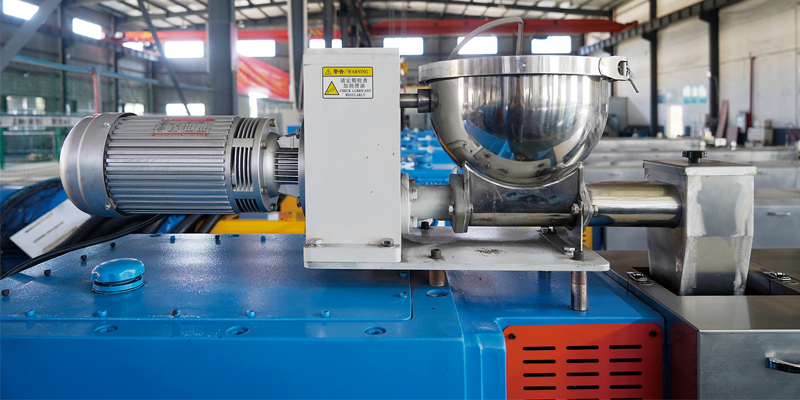
O le Volumetric Feeder Factory consists of a small twin screw, paelo, and motor—three core components that work in tandem to eliminate the common feeding challenges of bridging, clogging, and inconsistent discharge. Unlike single-screw volumetric feeders (prone to material slipping and uneven flow), the twin-screw design creates a positive displacement action that ensures steady material movement from hopper to extruder feed throat.
When the material enters the barrel, the screw is simply rotated by the stirring roller, Volumetric Feeder Wholesale which not only pushes the material to the bottom, but also reduces clogging, making it easier to discharge, saving time and energy, and solving the problem of slow discharging affecting productivity. The stirring roller (mounted at the hopper inlet) agitates bulk materials to prevent rat-holing and bridging—issues that plague single-screw feeders when processing low-flow materials like regrind flakes or filled compounds. This agitation, combined with the intermeshing twin screws, ensures that material is continuously conveyed to the extruder, even at low feed rates (5 kilokalama/itula) or high rates (2000 kilokalama/itula).
Zhuoyue’s volumetric feeders use a compact intermeshing twin-screw design (diameters 15mm-50mm) with customizable screw profiles to match material flow properties:
O sikulima masaga o loʻo faʻauluina e se pusa faʻapipiʻi e faʻamautinoa ai le saoasaoa o le taamilosaga tutusa, fa'ate'aina mea maileia ma le fa'avevela (e taua tele mo mea e maaleale vevela e pei o le PVC).
O le paelo fafaga e fa'amamaina mai le uamea kaponi e leai se mea (pe 304 u'amea u'amea mo mea'ai/foma'i-grade talosaga) fa'atasi ai ma se fa'au'uga lamolemole totonu (Ra ≤ 1.6μm) e faʻaitiitia ai le pipii o mea. O lo'o maua le hopper ile 5L, 10L, 20L, ma 50L malosi, faʻatasi ai ma se filifiliga polycarbonate manino mo le mataʻituina o mea faitino. O se fa'avae vibratory e filifili mo mea e sili ona maualalo le tafe (e.g., tioata fa'atumuina PA pellets), fa'aitiitia atili ai le fa'alavelave.
Volumetric feeders are equipped with IE3 premium efficiency motors (0.75kW-4.0kW) that meet EU Ecodesign Directive 2009/125/EC and US DOE energy efficiency standards. The motor drives the twin screws and stirring roller via a variable frequency drive (VFD), allowing precise speed adjustment (0-100 rpm) to match extruder output requirements. The control system features:
O le Zhuoyue e ofoina atu le tele o fafaga volumetric fa'afuaina e fetaui ma le fa'aulufaleina, mai falesuesue (5 kilokalama/itula) i tulaga tau alamanuia (2000 kilokalama/itula) gaosiga:
| Fa'ata'ita'iga | Lua-Screw Diameter (mm) | Va'aiga Saosaoa (rpm) | Avanoa Fafaga (kilokalama/itula) | Malosiaga afi (kW) | Avanoa o le Hopper (L) | Sa'o |
|---|---|---|---|---|---|---|
| ZYVF-15 | 15 | 0-80 | 5-50 | 0.75 | 5 | ±2% |
| ZYVF-25 | 25 | 0-90 | 20-150 | 1.5 | 10 | ±2% |
| ZYVF-35 | 35 | 0-100 | 50-500 | 2.2 | 20 | ±2% |
| ZYVF-50 | 50 | 0-100 | 100-2000 | 4.0 | 50 | ±2% |
Fa'amatalaga Lautele: O fa'ata'ita'iga uma e fa'aogaina ile 220V/380V 50/60Hz tasi/tolu-vaega mana, mamafa 25-85kg (fa'atatau ile fa'ata'ita'iga), ma fa'aalia ai se fa'ailoga fa'a-mauga mo le fa'apipi'i sa'o i fa'a'i fafaga fa'ameamea (fetaui ma 99% o ituaiga extruder i le lalolagi atoa).
Volumetric feeders e ofoina atu le tau atoa maualalo o le umiaina (TCO) o so'o se faiga fafaga extruder pisinisi:
For a mid-sized extrusion facility with 4 fafaga, this translates to total cost savings of $15,000-$25,000 in the first year alone.
The simple mechanical design of volumetric feeders eliminates 90% of the failure points found in loss-in-weight systems (e.g., load cell drift, sensor calibration errors). Field data from 200+ Zhuoyue feeder installations shows:
The anti-clogging stirring roller and twin-screw design also reduce unplanned downtime from material jams – a common issue with single-screw feeders (responsible for 10-15% of extruder downtime in plastic facilities).
Volumetric feeders require no specialized technical knowledge to operate:
This is a critical advantage for manufacturers with high operator turnover or limited technical staff, as it reduces training time and human error.
Zhuoyue’s volumetric feeders handle a wide range of plastic materials without modification:
Mo talosaga fa'afeso'ota'i mea'ai po'o fa'asoifua maloloina, fafaga e mafai ona configured ma 304/316 u'amea fa'afeso'ota'i uamea ma lubricant fa'amalieina FDA (fonotaga 21 CFR 177.1520).
O se kamupani gaosi paipa PVC e faavae i Texas na suitulaga i fafaga fafaga tasi-screw tuai i 4 Zhuoyue ZYVF-50 fafaga volumetric i totonu 2024 e foia ai faafitauli o le gaosiga:
A maeʻa ona faʻapipiʻi le ZYVF-50 fafaga:
The plant manager reported: “The Zhuoyue feeders have been a game-changer – our operators no longer spend hours unclogging feeders, and our pipe quality has never been more consistent. We’ve been able to take on 2 new large customers thanks to the increased production capacity.”
Volumetric feeders ua mamanuina mo le faʻapipiʻiina o plug-and-play:
Fa'apipi'i e mana'omia 1-2 itula ile fafaga (leai ni meafaigaluega fa'apitoa e mana'omia) - E mafai e le vaega faʻapitoa a le Zhuoyue i luga o le saite ona fesoasoani i faʻapipiʻi faʻapipiʻi tele mo laina gaosiga atoa.
O le fa'avasegaina e fa'amautinoa ai le sa'o lelei o le fafaga ma e tatau ona fa'atino mo ituaiga mea fou ta'itasi:
Calibration takes <30 minutes per material and can be performed by any trained operator (no external calibration service required).
Regular maintenance extends feeder life and preserves performance:
Zhuoyue provides a comprehensive maintenance manual with photos and step-by-step instructions (available in English, Sipaniolo, and German) for in-house teams.
A: Ioe. Tele fafaga volumetric (1 mo resini autu, 1+ mo fa'aopoopoga/masterbatch) e mafai ona faʻamaopoopoina ma le extruder PLC e faʻamautu saʻo le aofaʻi o fuainumera (e.g., 95% PVC + 5% lanu masterbatch). Ole mea lea ole tau e fa'atatau ile tele-vaega gau-in-mamafa faiga mo fa'aoga fa'afefiloi e le taua..
A: Ole fafaga volumetric e sili ona lelei ile mea e tafe fua (mamafa tele 0.5-0.9 g/cm³) pei o pelleti taupou. For low-flow materials (mamafa tele <0.4 g/cm³, e.g., regrind flakes), matou te fautuaina le filifiliga sikulima pupuu + fa'avae vibratory e fa'aleleia ai le tafe ma fa'atumauina le sa'o.
A: E matua'i. Zhuoyue’s ZYVF series is specifically engineered for recycled plastic processing – the anti-clogging stirring roller and twin-screw design handle regrind flakes/pellets with minimal jamming. We recommend the wear-resistant screw coating for recycled materials with high impurity content (e.g., dirt, metal fragments).
A: Standard models (ZYVF-15 to ZYVF-50) have a lead time of 3-4 vaiaso. Fa'atonuga fa'apitoa (u'amea fa'afeso'ota'i vaega, vibratory base, HMI control) mana'omia 5-6 vaiaso. Fa'anatinati le gaosiga (2-vaiaso ta'ita'i) e avanoa mo se faaopoopoga 15% fee.
A: Zhuoyue offers a 2-year warranty on all mechanical components (fa'ailoga, paelo, afi, atigipusa) and a 1-year warranty on electrical components (VFD, control panel). We also offer extended warranty options (3-5 tausaga) for an additional fee, including annual preventive maintenance visits.
Mo le sili atu 16 tausaga, Zhuoyue’s volumetric feeders have been the go-to choice for plastic extrusion manufacturers seeking a reliable, cost-effective feeding solution. Whether you’re producing PVC pipes, PE sheets, or recycled plastic profiles, our feeders deliver consistent performance, minimal downtime, and maximum value – all backed by global technical support and a proven track record of success. Contact our sales team today to request a free feeder selection guide and quote tailored to your extruder’s specific requirements.