

Principais conclusões
- Quando avalio um Fabricante de extrusora reciclada, Começo com engenharia específica para reciclagem, em vez de produção principal. Tolerância a impurezas, desabafar, e os trocadores de tela são mais importantes do que a velocidade bruta. Máquina UET, por exemplo, constrói extrusoras recicladas que toleram mais 30% conteúdo de impurezas usando telas resistentes ao desgaste para reduzir o entupimento (Máquina UET, 2024).
- Combine a arquitetura do parafuso com seu fluxo de resina. Na minha experiência, uma extrusora de parafuso duplo co-rotativa é adequada para extrusão reativa, lote mestre, e composição de resina reciclada, enquanto uma extrusora de parafuso único geralmente é suficiente para a pelotização direta de resíduos de plástico de PE limpo, PP, ou sucata de LDPE.
- Use mapeamento de especificação para saída em vez de adivinhar. As máquinas extrusoras de reciclagem de uso geral normalmente executam proporções L/D de 1:24 para 1:30 (Máquinas Xtrustar, 2024), e modelos de parafuso duplo variam de ~10-15 kg/h em unidades de laboratório a ~150 kg/h em máquinas de tamanho médio (Dados de produtos fabricados na China, 2024), com USEON aumentando a escalabilidade até 60 t/h (USO EM, 2024).
- A estabilidade da temperatura é uma alavanca de qualidade, não é um luxo. Controladores PID multizona que mantêm +/-1°C protegem a integridade da fusão em PET, PEAD, PVC, e matérias-primas PPR (Poliretec, 2024), que afeta diretamente a consistência do pellet e o rendimento a jusante.
- O campo do fornecedor é profundo, então, uma lista neutra supera uma proposta de marca única. Somente o Diretório de Reciclagem ENF lista 191 fabricantes de equipamentos de extrusão, incluindo 127 multiparafuso e 104 fabricantes de parafuso único (Diretório de reciclagem ENF, 2024), e 2025-2026 listas de parafusos duplos ainda apresentam Coperion, Leistritz, Milacron, Krauss Maffei, JSW, e Battenfeld-Cincinnati (Blog da UDTECH, 2026).
- Avalie honestamente o fornecimento da China versus EUA. O fornecimento de fábrica na China pode economizar 35% ou mais no preço de compra (UDTECH, 2024), mas eu considero as tarifas, tempo de espera, disponibilidade de peças sobressalentes, e comissionamento de suporte no custo total de propriedade antes de decidir.
- Pense no custo total de propriedade, não é preço de etiqueta. Design de extrusora com economia de energia, durabilidade do sistema de filtragem por fusão, e a vida útil do parafuso e do cilindro determinam o custo real de uma linha de reciclagem pronta para uso ao longo de sua vida útil, muito mais do que a cotação inicial.
- Os planos de capacidade devem ser baseados em implantações reais. Reciclagem de plástico Inc. investido $10 milhões em dois sistemas extrusores para compor 200 milhões de libras de resina reciclada por ano (Fabricação de máquinas para plásticos, 2024), uma referência útil quando dimensiono a extrusão de alto rendimento em relação à demanda.
- A oportunidade de mercado é estrutural. Com menos de 10% de todos os resíduos plásticos atualmente reciclados (Instrutíveis, 2023), investir no peletizador de plástico reciclado ou na extrusora de composição certa posiciona sua operação diretamente dentro da economia circular para equipamentos de plástico.
O que é uma extrusora de plástico reciclado e como funciona?
Quando os compradores me pedem para explicar uma extrusora de plástico reciclado em termos simples, Eu a descrevo como uma máquina que derrete resíduos de polímeros recuperados e os transforma em resultados utilizáveis, grânulos para revenda ou perfis acabados para fabricação posterior. Ele está no centro de qualquer linha de produção de granulação de plástico, convertendo fardos de sucata em matéria-prima comercializável. O que separa uma máquina extrusora de reciclagem de plástico de uma máquina de processamento geral de polímeros é que ela deve tolerar a contaminação, umidade, e densidade aparente inconsistente que pellets virgens nunca apresentam.
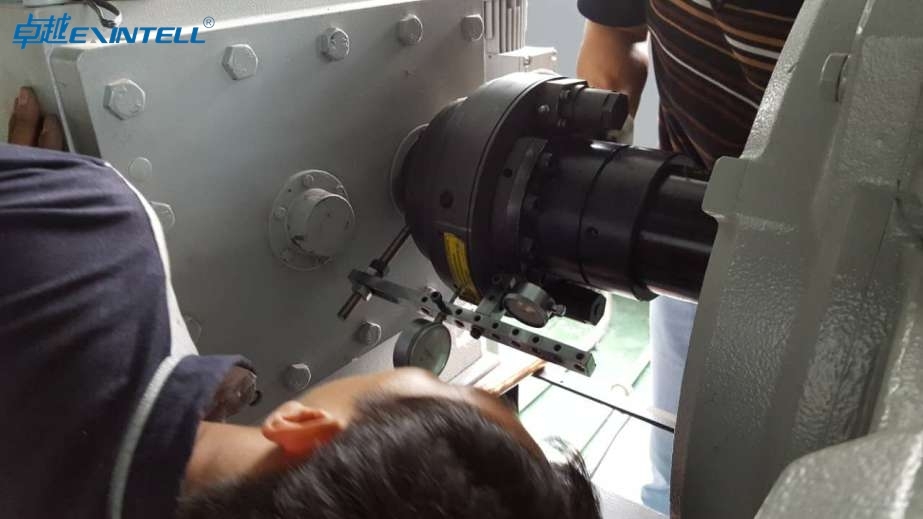
Os principais estágios de processamento
Na minha experiência, linhas de comissionamento, o processo se divide em cinco etapas sequenciais, e uma fraqueza em qualquer um deles limita toda a máquina:
- Alimentação. Um funil, e muitas vezes um alimentador forçado ou alimentador lateral, metros de lascas ou moídos no barril. Filmes de baixa densidade, como o LDPE, exigem alimentadores compactadores para evitar pontes.
- Fusão. Aquecedores de barril e cisalhamento da rosca e do cilindro da extrusora elevam o material além de seu ponto de fusão. O controle multizona mantém o perfil de calor firme; Poliretec (2024) relata a reciclagem de sistemas de temperatura de extrusora mantendo estabilidade dentro de +/- 1°C usando controladores PID multizona.
- Misturando. O fundido homogeneiza para que a cor, aditivos, e qualquer masterbatch se dispersa uniformemente. É aqui que a composição da resina reciclada realmente acontece.
- Desgaseificação (desvolatilização). As aberturas de vácuo retiram a umidade, voláteis, e ar preso. O reciclado é muito mais úmido e carregado de voláteis do que a resina virgem, então a capacidade de ventilação não é opcional.
- Pelotização ou modelagem. O fundido passa por um sistema de filtração por fusão para remover sólidos, então, uma matriz e um peletizador produzem grânulos reciclados, ou uma matriz de perfil molda a peça final.
Por que a extrusão de reciclagem difere da extrusão de resina virgem
A distinção é importante porque orienta toda a especificação. Resina virgem chega limpa, seco, e uniforme, portanto, uma extrusora de resina virgem otimiza o rendimento e o acabamento superficial. A matéria-prima reciclada não coopera. Máquina UET (2024) observa que as extrusoras recicladas são construídas para tolerar mais 30% conteúdo de impurezas e usar telas resistentes ao desgaste para reduzir o entupimento. Isso significa que uma máquina com grau de reciclagem precisa de uma filtragem agressiva por fusão, ventilação robusta, e superfícies de desgaste endurecidas que uma linha virgem consideraria sobrecarregadas. Quando avalio uma cotação, Procuro primeiro esses recursos específicos de reciclagem, porque sua ausência sinaliza um design virgem reaproveitado, em vez de uma extrusora de reciclagem construída especificamente.
Onde fica a extrusora na economia circular
A extrusora é o elo prático que fecha o ciclo do material. Instrutíveis (2023) relata que menos de 10% de todos os resíduos plásticos são atualmente reciclados, e grande parte dessa lacuna vem da dificuldade de sujar, sucata misturada de volta em uma resina de grau específico. Uma extrusora bem combinada é o que torna a recuperação em circuito fechado economicamente real: leva garrafas PET, Recipientes de HDPE, PP, e filme e pellets de retorno que um moldador ou conversor realmente comprará. TECNOVA Reciclagem (2024) descreve linhas que processam matérias-primas que vão desde garrafas PET até recipientes HDPE com automação inteligente, que é o tipo de flexibilidade que as operações da economia circular exigem cada vez mais.
Por que o fabricante certo de extrusora determina o ROI da sua linha
Vi duas fábricas comprarem máquinas nominalmente idênticas e pousarem em posições financeiras completamente diferentes três anos depois. A variável quase nunca foi o título da folha de dados; foi o fabricante por trás disso. Escolher um fabricante de extrusora reciclada é uma decisão importante que se acumula ao longo de uma década de operação, então trato a qualidade do fabricante como uma entrada de ROI, não é uma preferência.

A qualidade da construção gera estabilidade de rendimento e custo de energia
Dois números decidem a rentabilidade de uma linha de reciclagem: rendimento sustentado e consumo específico de energia (o kWh gasto por quilograma de produção). Um fabricante com geometria de parafuso e controle térmico comprovados oferece saída estável com menor consumo de energia, enquanto um cano mal projetado força você a funcionar mais frio e mais devagar para evitar degradação. USO EM (2024) relatórios 2,500+ linhas de extrusora de rosca dupla operando em 70+ países com densidade de torque até 15 Nm/cm3 e escalabilidade para 60 t/h, que é o tipo de evidência de base instalada que desejo antes de confiar em uma declaração de rendimento. Densidade de torque em questões específicas, porque define o quão forte você pode empurrar viscoso, cheio de reciclar antes de bater na parede. Fábrica de fabricante de máquinas extrusoras
Como uma combinação ruim corrói os retornos
Quando a extrusora não corresponde à matéria-prima, os modos de falha são previsíveis e caros:
- Limites de torque. Uma unidade subdimensionada falha em material de alta viscosidade ou muito cheio, limitando a produção bem abaixo do valor nominal.
- Desgaste prematuro. Parafusos e cilindros não endurecidos desgastam-se rapidamente contra cargas abrasivas e contaminantes, e a substituição é um evento de cinco dígitos.
- Rejeições compostas. Mistura ou ventilação inadequada produz pellets com géis fora das especificações, vazios, ou manchas de umidade, que os clientes a jusante rejeitam liminarmente.
Cada um deles se converte diretamente em margem perdida, e nenhum deles aparece em um pedido de compra.
O suporte pós-venda faz parte da máquina
O tempo de atividade é onde o suporte protege silenciosamente seu investimento. Pergunto a todos os possíveis fornecedores sobre o prazo de entrega das peças de reposição, opções de renovação de parafusos e canos, e diagnóstico remoto antes de perguntar sobre preço. Um trocador de parafuso ou elemento filtrante que leva doze semanas para chegar pode deixar uma linha ociosa por tempo suficiente para eliminar um ano de ganhos de eficiência. Isto também é fundamental para o compromisso honesto de fornecimento entre a China e os EUA: UDTECH (2024) indica que o fornecimento de fábrica na China pode economizar pelo menos 35% versus alternativas, mas essa economia deve ser ponderada em relação a prazos de entrega mais longos, exposição tarifária, e logística de peças. Minha regra é simples: modelar o custo total de propriedade, não o preço de etiqueta, antes de comparar regiões.
A lente de 10 anos
Como o equipamento de extrusão funciona rotineiramente por uma década ou mais, pequenas diferenças por quilograma dominam a matemática da vida. Para tornar isso concreto, Reciclagem de plástico Inc. investido $10 milhões em dois sistemas extrusores para compor 200 milhões de libras de resina reciclada por ano (Fabricação de máquinas para plásticos, 2024). Nessa escala, uma mudança de um por cento no consumo de energia ou na taxa de rejeição vale muito mais em dez anos do que qualquer desconto inicial. É por isso que avalio os fabricantes pela confiabilidade e eficiência que sustentam ao longo do ciclo de vida, não na cotação do primeiro dia.
Extrusoras recicladas de parafuso único versus parafuso duplo
A questão do único versus gêmeo é a primeira bifurcação arquitetônica que todo comprador enfrenta, e a resposta honesta é que depende inteiramente da sua matéria-prima e do objetivo do seu produto. O próprio mercado reflete a divisão: o Diretório de Reciclagem ENF (2024) listas 191 fabricantes de equipamentos de extrusão, incluindo 104 parafuso único e 127 fabricantes de multi-parafusos. Ambas as categorias são saudáveis porque resolvem problemas diferentes.
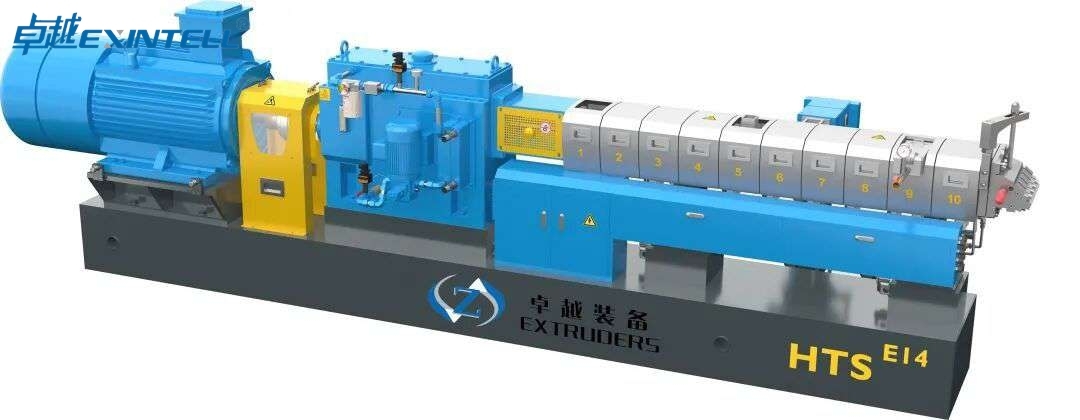
Parafuso Único: Simples, Econômico, e certo para fluxos limpos
Uma extrusora de parafuso único é mecanicamente mais simples, mais barato para comprar e manter, e bem adequado para limpar, fluxos de polímero único, como PE pós-industrial ou material reciclado de PP, destinados à pelotização direta de resíduos de plástico. Quando a alimentação é consistente e você está essencialmente fundindo e repeletizando em vez de compor, o parafuso único é muitas vezes a escolha económica mais inteligente. Máquinas Xtrustar (2024) observa que as máquinas extrusoras de reciclagem de uso geral normalmente usam proporções L/D de 1:24 para 1:30, uma linha que oferece aos projetos de parafuso único tempo de residência suficiente para fusão e homogeneização básicas sem complicar demais a construção.
Parafuso Duplo: Misturando, Devolatilização, e composição de poder
Uma extrusora de rosca dupla ganha seu custo mais alto quando o trabalho é mais difícil. Seus parafusos entrelaçados proporcionam mistura distributiva superior, desvolatilização muito mais forte para reciclados úmidos ou voláteis pesados, e a capacidade de composição necessária para misturar cargas, lote mestre, aditivos, ou vários polímeros em uma resina específica. Se você estiver produzindo compostos reciclados, WPC, ou produtos de extrusão reativa, ou manusear PET contaminado e filme misto, o parafuso duplo é geralmente a única arquitetura que mantém as especificações. É também a plataforma por trás da maioria das linhas de reciclagem prontas para uso de alto rendimento.
Co-Rotação vs Contra-Rotação
Dentro de parafusos duplos, a escolha da configuração molda o que a máquina faz de melhor. Uma extrusora co-rotativa, onde ambos os parafusos giram na mesma direção, é o carro-chefe para composição de resina reciclada e extrusão reativa porque maximiza a ação de mistura e autolimpeza. Parafusos duplos contra-rotativos, onde os parafusos giram em direções opostas, geram alta pressão com cisalhamento mais suave e são tradicionalmente preferidos para materiais sensíveis ao calor, como perfis de PVC rígido. Para aplicações de reciclagem e composição, O padrão é co-rotação, a menos que um requisito específico de PVC ou perfil aponte para o outro lado.
Quando projetos de múltiplos parafusos ou de dois estágios fazem sentido
Algumas matérias-primas derrotam ambas as arquiteturas padrão. Material altamente contaminado ou altamente volátil pode justificar um projeto de dois estágios, onde um primeiro estágio derrete e libera agressivamente e um segundo estágio cria pressão para uma pelotização limpa. Existem layouts multi-parafusos para desvolatilização extrema ou rendimento muito alto. Estes não são padrões; Eu os alcanço apenas quando um único- ou a linha de parafuso duplo não consegue atender à meta de ventilação ou saída, porque a complexidade adicional acarreta seu próprio custo de manutenção.
Comparação entre especificações e saída
A tabela abaixo mapeia as duas arquiteturas para as especificações e resultados que os compradores realmente agem. Os números de produção refletem os intervalos publicados: dados do produto de parafuso duplo (Feito na china, 2024) mostra unidades de laboratório ao redor 10-15 kg/h e máquinas de médio porte próximas 150 kg/h, enquanto USEON (2024) documenta grande escalabilidade de parafuso duplo para 60 t/h.
|
Fator |
Extrusora de parafuso único |
Extrusora de parafuso duplo (Co-Rotação) |
|---|---|---|
|
Melhor matéria-prima |
PE limpo de polímero único, PP, Remoído PPR |
Contaminado, misturado, ou reciclado volátil; BICHO DE ESTIMAÇÃO, filme, WPC |
|
Capacidade de mixagem |
Homogeneização básica |
Mistura distributiva e dispersiva superior |
|
Devolatilização |
Limitado |
Forte; múltiplas zonas de ventilação |
|
Composição / lote mestre |
Não é o ideal |
Construído especificamente |
|
Relação L/D típica |
1:24 para 1:30 |
Mais longo, barris modulares |
|
Faixa de saída indicativa |
Baixo a moderado |
~10-15 kg/h (laboratório) para 60 t/h (industrial) |
|
Custo relativo de capital |
Mais baixo |
Mais alto |
|
Complexidade de manutenção |
Mais simples |
Mais alto; parafusos modulares auxiliam no reparo |
|
Fator |
Extrusora de parafuso único |
Extrusora de parafuso duplo (Co-Rotação) |
|---|---|---|
|
Melhor matéria-prima |
PE limpo de polímero único, PP, Remoído PPR |
Contaminado, misturado, ou reciclado volátil; BICHO DE ESTIMAÇÃO, filme, WPC |
|
Capacidade de mixagem |
Homogeneização básica |
Mistura distributiva e dispersiva superior |
|
Devolatilização |
Limitado |
Forte; múltiplas zonas de ventilação |
|
Composição / lote mestre |
Não é o ideal |
Construído especificamente |
|
Relação L/D típica |
1:24 para 1:30 |
Mais longo, barris modulares |
|
Faixa de saída indicativa |
Baixo a moderado |
~10-15 kg/h (laboratório) para 60 t/h (industrial) |
|
Custo relativo de capital |
Mais baixo |
Mais alto |
|
Complexidade de manutenção |
Mais simples |
Mais alto; parafusos modulares auxiliam no reparo |
Minha lição prática: combine a arquitetura com o mais sujo, matéria-prima mais exigente que você realisticamente espera utilizar, não é o mais limpo. Dimensionar para o caso fácil é o erro que vejo com mais frequência, e é aquele que silenciosamente limita o retorno de uma linha durante toda a sua vida útil.
Quais plásticos você pode reciclar: BICHO DE ESTIMAÇÃO, PEAD, PP, PVC, e PEBD
Quando avalio um fabricante de extrusora reciclada, minha primeira pergunta nunca é sobre potência ou reputação da marca. É sobre química de polímeros. Uma máquina que funciona perfeitamente com material reciclado de HDPE pode queimar um fluxo de PET ou degradar o PVC em gás corrosivo em poucos minutos. A realidade para a qual continuo voltando é preocupante: menor que 10% de todos os resíduos plásticos são atualmente reciclados (Instrutíveis, 2023), e uma grande parte dessa lacuna se deve à má adequação das matérias-primas e dos equipamentos. Conseguir o ajuste correto do polímero à máquina é onde as taxas de recuperação realmente melhoram.
Abaixo eu descrevo as cinco resinas que dominam os fluxos reais de reciclagem, e como cada um deles altera as exigências que você deve colocar na geometria do parafuso, perfil de temperatura, e ventilação.
Correspondência da geometria do parafuso e do perfil de temperatura para cada polímero
Cada polímero possui uma janela de fusão característica, sensibilidade ao cisalhamento, e comportamento de umidade. Na minha experiência, o erro de aquisição mais comum é tratar “plástico” como um material único e comprando um parafuso de uso geral para tudo. Um trabalho de composição de resina reciclada em polipropileno preenchido não tem quase nada em comum com a recuperação de filme LDPE, e o escalonamento da temperatura do barril reflete isso.
Modern lines address this with multi-zone control. Plastic recycling extruder temperature control systems now hold stability within +/-1C using multi-zone PID controllers (Poliretec, 2024), which matters enormously for heat-sensitive resins where a 10-degree overshoot means visible degradation.
BICHO DE ESTIMAÇÃO: Drying and Crystallization Handling
PET is the resin that catches new buyers off guard. É higroscópico, so it must be dried before processing or the moisture triggers hydrolytic chain scission that permanently lowers intrinsic viscosity. On bottle-to-pellet lines, I look for a crystallization stage and a dryer sized to the throughput, not an afterthought bolted on later. Lines from suppliers like TECNOVA Recycling (2024) are built to move feedstock from PET bottles to HDPE containers with the drying and automation those transitions require. If a quoted PET line has no drying and crystallization handling in the scope, the quote is incomplete.
HDPE and PP: The Rigid Packaging Workhorses
HDPE and PP (polipropileno) dominate rigid packaging recyclate streams, from milk jugs and detergent bottles to caps, crates, and automotive trim. These are the resins that keep most recyclers in business, and both tolerate processing reasonably well. PE and PP melt at moderate temperatures and are forgiving of minor contamination, which is why the majority of waste plastic pelletizing capacity I see specified is built around them. A single robust single screw extruder or twin screw extruder configured for polyolefins will handle both with a modest screw or temperature adjustment.
PVC: Careful Temperature Control to Avoid Degradation
PVC is the resin I treat with the most caution. It degrades exothermically and releases hydrogen chloride when overheated, which corrodes barrels and screws and produces genuinely hazardous fumes. PVC needs careful temperature control and a screw designed for low shear and short residence time. This is precisely where the +/-1C multi-zone control cited above earns its keep. If you process PVC and PPR alongside polyolefins, I recommend a dedicated screw set rather than sharing tooling.
LDPE and Film: Low-Bulk-Density Feeding
PEBD, especially in film form, has very low bulk density and a tendency to bridge in the feed throat. The engineering challenge here is feeding, not melting. Force-feeding, compactação, or a purpose-built film-fed screw section is what separates a smooth LDPE line from one that starves and surges. Film reclaim is also where degassing matters most, because trapped air and printing residues need somewhere to escape.
Handling Contaminated and High-Impurity Feedstock
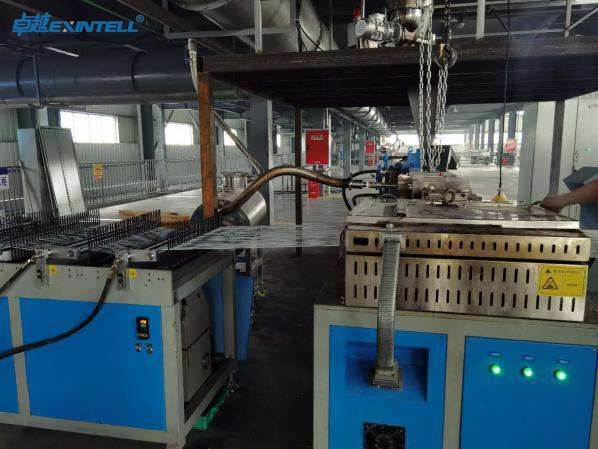
Limpar, single-source regrind is a luxury most recyclers rarely enjoy. The material that actually shows up on the receiving dock carries paper labels, adhesive, umidade, multas, and cross-polymer contamination. In my view, a recycled extruder manufacturer’s real value shows up not in the datasheet output number but in how the line behaves when the feedstock is dirty. This is the engineering that competitor buyer’s guides consistently underweight.
Tolerating Over 30% Impurity Content Without Constant Clogging
The single most useful spec I ask for is verified impurity tolerance. Some purpose-built recycling machines handle it well: Máquina UET (2024) relata que suas extrusoras recicladas toleram mais 30% conteúdo de impurezas e usar telas resistentes ao desgaste para reduzir o entupimento. Esse limite é uma linha divisória prática. Abaixo dele, as falas mais decentes lidam; acima dele, apenas equipamentos projetados especificamente para reciclagem de sucata plástica permanecem produtivos, em vez de parar a cada hora para eliminar um bloqueio.
Opções de filtragem por fusão e troca de tela
Um sistema de filtragem por fusão é o coração do gerenciamento de contaminação. Captura os sólidos que sobrevivem à lavagem e trituração antes de chegarem ao peletizador. A questão é como você muda a tela quando ela carrega:
- Trocadores de tela manuais são baratos, mas forçam um ponto final, o que é adequado para matérias-primas limpas e operações de baixo volume.
- Trocadores hidráulicos de placas deslizantes trocar telas com uma breve interrupção de pressão, um meio-termo razoável.
- Trocadores contínuos ou backflush keep the recycled granules making machine running through screen changes, which is what high-impurity, high-uptime lines need.
Wear-resistant screens and hardened extruder screw and barrel surfaces are non-negotiable for abrasive scrap containing fillers, fibra de vidro, or mineral contamination. Standard nitrided screws wear out fast on abrasive recyclate, so I always confirm the wear package before signing off.
Reducing Downtime Through Robust Degassing and Venting
Contaminated and printed feedstock releases moisture, monomer, and volatile organics during melting. Without adequate degassing, those volatiles create voids in the pellet and pressure instability in the die. Robust venting, often a vacuum vent zone on the barrel, is what lets a line run film reclaim or heavily printed material without constant surging. I treat vent count and vent capacity as core specifications, not options.
Plastic Pellets Suppliers Twin-screw designs have a structural advantage here. The co-rotating extruder geometry generates strong distributive mixing and self-wiping action, which improves both devolatilization and the ability to push contaminated material through without stagnation. That is a large part of why co-rotating twin screws dominate demanding recycled resin compounding work.
Key Specifications to Compare: Screw Diameter, L/D, Torque, e saída
Once the polymer and contamination questions are settled, procurement comes down to four numbers that, together, tell you what a machine can actually do. I always insist on seeing all four in relation to each other, because any one in isolation is misleading. A big screw with weak torque underperforms; high torque on a short barrel limits what compounding you can do. The market itself is large and fragmented, o Diretório de Reciclagem ENF (2024) alone lists 191 fabricantes de equipamentos de extrusão, incluindo 127 multiparafuso e 104 fabricantes de parafuso único, so a disciplined spec comparison is how you cut through the noise.
Diâmetro do parafuso e relação L/D
Screw diameters on standard models commonly range from 22mm up to 50mm and beyond, with production lines going much larger. Diameter scales with throughput, but the L/D ratio (comprimento do cano dividido pelo diâmetro do parafuso) tells you what kind of work the machine does along that length.
Here is a distinction that trips up many buyers: general purpose recycling extrusion machines typically use L/D ratios of 1:24 para 1:30 (Máquinas Xtrustar, 2024), which is plenty for melting, filtragem, e pelotização. Compounding and reactive extrusion, where you need residence time for mixing masterbatch, enchimentos, or additives, push L/D much higher, into the 40 para 80 range on dedicated modular extrusion systems. If a vendor quotes an L/D of 80 for a simple bottle-to-pellet job, you are paying for capability you will never use.
Densidade de Torque: The Real Measure of Capacity
Torque density, expressed in Nm/cm3, is the specification I trust most for predicting mixing capability and sustained output on a twin screw extruder. It normalizes torque against screw volume, so you can compare machines of different sizes fairly. USO EM (2024) reports torque density up to 15 Nm/cm3 across its 2,500+ linhas de extrusora de rosca dupla operando em 70+ países, with scalability to 60 t/h. High torque density means the machine can drive high-viscosity, highly filled recyclate at high output without stalling. For demanding compounding extruder work, I weight torque density heavily.
Saída: From Lab Bench to Production Floor
Output is the number everyone quotes first, and the one that spans the widest range. Twin screw extruder product data shows models running from roughly 10-15 kg/h on lab units up to about 150 kg/h on mid-size machines (Twin Screw Extruder Manufacturer Product Data, 2024), while full high output extrusion production lines scale to 60 t/h. The capital commitment scales accordingly: Reciclagem de plástico Inc. investido $10 milhões em dois sistemas extrusores para compor 200 milhões de libras de resina reciclada por ano (Fabricação de máquinas para plásticos, 2024), which is a useful anchor for what industrial-scale capacity actually costs.
Spec-to-Output Comparison Table
The table below maps typical specification tiers to the jobs they suit. I built it as a starting point for a procurement shortlist, not as a substitute for vendor-specific quotes, but it reflects the ranges I see across current recycled extruder manufacturers.
| Nível | Diâmetro do parafuso | Relação L/D | Saída típica | Best-fit application |
|---|---|---|---|---|
| Laboratório / piloto | 22-26 milímetros | 1:24-40 | ~10-15 kg/h | R&D, ensaios de formulação, small masterbatch batches |
| Small production | 35-45 milímetros | 1:24-1:30 | ~150-500 kg/h | General recycling, HDPE/PP pelletizing, single-site reclaim |
| Mid-size compounding | 50-75 milímetros | 1:40-1:52 | ~0.5-3 t/h | Recycled resin compounding, filled PP, extrusão reativa |
| Industrial line | 75 mm e acima | 1:40-1:80 | Up to ~60 t/h | Turnkey recycling line, high-volume WPC, masterbatch em escala |
Reading this table against your own throughput target and polymer mix is the fastest way to disqualify machines that are wrong for the job. A recycled plastic pelletizer sized for 500 kg/h will never economically feed a plant that needs multi-ton output, and an industrial compounding line is wasted capital on a small film reclaim operation. Match the four numbers to the work, then compare vendors within that tier on impurity tolerance, desabafar, e custo total de propriedade, the factors I cover elsewhere in this guide (China supplier listings e UET Machine specifications are useful reference points for current ranges).
Understanding Output Rates and Throughput Scalability
Quando avalio um fabricante de extrusora reciclada, the first question I ask is not “how big is the machine?” mas “what realistic kilograms-per-hour will this deliver on my actual feedstock?” Nameplate output and effective output are rarely the same number, and the gap is where most procurement budgets quietly bleed. Na minha experiência, mapping model size to honest throughput is the single most useful exercise a buyer can complete before signing anything.
Mapping Model Size to Realistic kg/h Output
Twin screw extruder product models span a wide band. Lab-scale units commonly run around 10 para 15 kg/h, while mid-size machines reach roughly 150 kg/h according to published manufacturer product data (Twin Screw Extruder Manufacturer Product Data, 2024). At the industrial ceiling, USEON reports scalability up to 60 t/h across its installed base of 2,500+ twin screw extruder lines in 70+ países, with torque density up to 15 Nm/cm³ (USO EM, 2024). Torque density matters here: higher torque per unit of screw volume lets you push more recycled resin through without stalling, which is why I treat it as a throughput indicator, not just a durability spec.
L/D ratio also shapes achievable output. General-purpose recycling extrusion machines typically use L/D ratios of 1:24 para 1:30 (Máquinas Xtrustar, 2024). A longer barrel gives melt more residence time for mixing and venting, which helps with contaminated recycled feedstock but does not automatically raise raw throughput. I read L/D as a quality-and-devolatilization lever rather than a speed lever.
How Feedstock Quality Affects Effective Throughput
This is where paper specs meet reality. A single screw extruder rated at 300 kg/h on virgin pellets will not hold that rate on dirty, low-bulk-density flake. Impurity tolerance is the deciding variable. UET Machine reports recycled extruders that tolerate over 30% conteúdo de impurezas e usar telas resistentes ao desgaste para reduzir o entupimento (Máquina UET, 2024). The more your line is engineered for contamination, the closer effective throughput stays to nameplate throughput. When I model capacity, I discount rated output for feedstock quality: clean regrind of PET or HDPE might run near spec, while mixed post-consumer PP or LDPE film with fines and moisture can force a meaningful derate.
The macro context reinforces why this engineering matters. Less than 10% de todos os resíduos plásticos são atualmente reciclados (Instrutíveis, 2023), which means the feedstock reaching your extruder is often the hardest fraction to process. Buying for pristine input is a mistake I see repeatedly.
Lab to Pilot to Full Production Scaling Path
I recommend a staged path rather than a single leap to full scale. A lab unit (aproximadamente 10 para 15 kg/h) validates that your specific recycled resin compounding recipe survives the extrusion granulation process. A pilot line confirms venting, filtração por fusão, and pelletizing behavior on representative volumes. Only then do I commit to full production sizing. The advantage of choosing a manufacturer with a coherent model family is geometric consistency: co-rotating extruder screw profiles that behave predictably as you scale reduce the risk of a pilot recipe failing at production speed.
Planning Capacity Around Annual Resin Volume Targets
Output should be reverse-engineered from your annual target, not chosen from a catalog. Reciclagem de plástico Inc. investido $10 milhões em dois sistemas extrusores para compor 200 milhões de libras de resina reciclada por ano (Fabricação de máquinas para plásticos, 2024). That figure translates to roughly 90,700 tonnes annually, or about 11,600 kg/h across two lines assuming ~7,800 operating hours. The lesson is that redundancy and uptime assumptions drive sizing as much as the headline volume does. I always work backward: annual tonnes, divided by realistic operating hours, divided by an uptime factor, then buffered for feedstock derate. That produces the effective kg/h target I take to suppliers.
Temperature Control and Energy Efficiency
Recycled polymers are unforgiving thermally. Contaminants shift melt behavior batch to batch, and overheating degrades chains while underheating leaves unmelted cores. Precise thermal control is therefore both a quality tool and an energy-cost lever, and I evaluate the two together.
Multi-Zone Heating with PID Control Holding ±1°C Stability
The benchmark I look for is tight, verifiable stability. Plastic recycling extruder temperature control systems maintain stability within ±1°C using multi-zone PID controllers (Poliretec, 2024). Multi-zone heating lets me profile the barrel: gentler in the feed section to avoid premature melting, hotter in compression, and controlled in the metering and die zones. For sensitive materials like PVC and PPR, where the processing window is narrow, that ±1°C band is the difference between saleable recycled granules and scorched scrap. I ask every manufacturer to demonstrate zone-by-zone stability under load, not just at idle.
Variable Frequency Drives to Cut Energy Consumption
Variable frequency drives (VFDs) are the highest-leverage energy feature on a modern line. By matching motor speed to actual load rather than running fixed-speed, VFDs cut consumption during ramp, mudança, and partial-load operation, which in real recycling plants is a large share of runtime. When I compare an energy-saving extruder against a conventional one, VFD-equipped main drives and feeders consistently show lower specific energy consumption across variable feedstock.
Specific Energy Consumption as a Total-Cost Metric
I treat specific energy consumption (SEC), expressed in kWh per kilogram of output, as the truest efficiency metric because it normalizes energy against real production. Two machines with the same motor rating can differ substantially in SEC depending on screw design, isolamento, and drive control. Ao longo da vida de uma máquina, SEC often outweighs purchase price in total cost of ownership. My rule: ask for SEC under representative recycled feedstock, and be skeptical of figures measured only on virgin resin, já que o material contaminado e a maior demanda de torque empurram o SEC do mundo real para cima.
Isolamento de barril com economia de energia e design de resfriamento
O isolamento do barril não é glamoroso e frequentemente subestimado. Barris isolados retêm o calor do processo, reduzindo a carga nos aquecedores de banda e reduzindo as perdas em espera. Do lado do resfriamento, o resfriamento do barril bem zoneado evita overshoot sem desperdício de resfriamento excessivo que os aquecedores terão que combater. Os melhores projetos equilibram o aquecimento e o resfriamento para que os dois sistemas não funcionem um contra o outro, que é uma fonte sutil, mas real, de energia desperdiçada em máquinas de processamento de polímeros. Quando eu inspeciono uma linha, Procuro isolamento encamisado e zonas de resfriamento controladas de forma independente como prova de que o fabricante levou a SEC a sério.
Pelotização, Granulação, e opções de configuração de linha
A extrusora é apenas o coração do sistema. Como você peletiza, quais auxiliares você integra, e se você compra componentes prontos para uso ou de origem, decida se a linha realmente funciona. Na minha experiência, compradores que ficam obcecados com a extrusora e negligenciam o peletizador e o equipamento upstream acabam com uma máquina cara que não consegue manter a produção nominal.
Praia, Anel de Água, e métodos de pelotização subaquática
Três métodos de pelotização dominam as configurações do peletizador de plástico reciclado, e cada um se adapta a um perfil de material e volume diferente. Eu uso a tabela abaixo como minha estrutura de decisão inicial.
| Método | Materiais mais adequados | Ajuste de rendimento típico | Troca importante |
|---|---|---|---|
| Praia (corte frio) | Limpar PE, PP, resinas de engenharia, lote mestre | Baixo a médio | Simples e de baixo custo, but strand breaks disrupt continuous running on contaminated feed |
| Anel de água | PP, PE film regrind, moderate contamination | Meio | Handles unstable melt better than strand, with more water management than cold cut |
| Subaquático | BICHO DE ESTIMAÇÃO, high-volume HDPE, WPC, demanding compounds | Alto | Highest output and pellet uniformity, but higher capital and complexity |
For a high-output extrusion PET line, I lean toward underwater pelletizing because it manages the low melt strength of recycled PET and delivers uniform granules. For a smaller LDPE film operation, water-ring is often the pragmatic choice. Strand cutting remains excellent for clean, well-sorted streams and masterbatch work where pellet consistency is paramount.
Integrating Crushers, Vibrating Sieves, and Dryers
A plastic granulating production line is a chain, and its throughput is capped by the weakest link. Crushers and shredders must feed the extruder at a rate that keeps the screw filled; vibrating sieves remove oversize and fines that would foul the melt filtration system; dryers control moisture, which is non-negotiable for PET where residual water drives hydrolytic degradation. I insist on sizing auxiliaries to slightly exceed extruder capacity so upstream equipment never becomes the bottleneck. This is exactly the kind of integrated plastic scrap recycling equipment that TECNOVA describes, processing feedstock from PET bottles to HDPE containers with smart automation (TECNOVA Reciclagem, 2024).
Two-Stage Extruders for Higher Venting and Quality
For contaminated or moist recycled feedstock, a two-stage extruder configuration earns its cost. The first stage melts and mixes; a decompression zone with venting then pulls off volatiles, umidade, e ar preso antes que o segundo estágio crie pressão para pelotização. O resultado são menos vazios, melhor desgaseificação, e grânulos reciclados de alta qualidade a partir de uma máquina de fabricação de grânulos reciclados que, de outra forma, teria dificuldade com material pós-consumo. Quando combinado com um trocador de tela robusto, ventilação em dois estágios é a combinação que recomendo para quem executa variáveis, sucata do mundo real em vez de material industrial limpo.
Linha pronta para uso versus fornecimento de componentes
A decisão final de configuração é a estratégia de aquisição. Uma linha de reciclagem pronta para uso chega integrada, comissionado, e garantido como um sistema único, o que encurta o tempo de rampa e dá a um parceiro responsável. O fornecimento de componentes permite que você combine os melhores britadores da categoria, extrusora, e peletizador, muitas vezes com custo de título mais baixo, mas você possui o risco de integração. O mercado está profundo em ambos os caminhos: the ENF Recycling Directory lists 191 fabricantes de equipamentos de extrusão, incluindo 127 multiparafuso e 104 fabricantes de parafuso único (Diretório de reciclagem ENF, 2024), so buyers have real choice on either route.
Sourcing geography intersects with this decision. China factory sourcing of extruders can save a minimum of 35% or more versus alternatives (UDTECH, 2024), which is meaningful, though I always weigh it against lead time, tarifas, and service response. For buyers who prioritize established brand support, top twin screw extruder manufacturer lists for 2025-2026 incluir Coperion, Leistritz, Milacron, Krauss Maffei, JSW, e Battenfeld-Cincinnati (Blog da UDTECH, 2026). My guidance is neutral: choose turnkey when speed and single-point accountability matter most, and choose component sourcing when in-house engineering can manage integration and squeeze cost. De qualquer jeito, verify supplier options directly against real product data before committing (see China recycle plastic extruder manufacturers e industrial recycling extruder specifications). Fabricante de fabricantes de extrusora de plástico
Recycled Extruder Manufacturers in the USA
When I begin a sourcing project for a North American buyer, I start close to home. The domestic base for recycled extrusion equipment is smaller than most people expect, but it is established and technically credible. The ENF Recycling Directory lists 191 extrusion equipment manufacturers globally, spanning 127 multiparafuso e 104 fabricantes de parafuso único (Diretório de reciclagem ENF, 2024), and only a fraction of those maintain full manufacturing and service operations inside the United States. That scarcity shapes the entire domestic value proposition.
A limited but established domestic base
US-based makers and compounders tend to compete on service depth rather than unit count. Na minha experiência, the practical advantage of buying domestically shows up after commissioning, when a screw and barrel wears, a melt filtration system needs retrofitting, or a screen changer jams. A supplier in the same time zone, shipping spares without customs delay, materially reduces downtime on a plastic recycling extruder machine.
US compounders investing in recycled resin capacity
The domestic story is increasingly about capacity, not just repair. Reciclagem de plástico Inc. investido $10 milhões em dois sistemas extrusores para compor 200 milhões de libras de resina reciclada por ano (Fabricação de máquinas para plásticos, 2024). Investments of that scale signal that recycled resin compounding is moving from niche to mainstream in the US, and equipment demand for PET, PEAD, PEBD, and PP granulating lines follows that momentum. When I evaluate a domestic compounding extruder, I read this as a sign that the supporting ecosystem, from feedstock to aftermarket parts, is maturing.
When local sourcing justifies a price premium
Domestic equipment usually carries a higher sticker price, and I do not pretend otherwise. Two factors can justify that premium. Primeiro, domestic makers offer faster support and carry no import tariffs, which compresses total lead time and removes a layer of landed-cost uncertainty. Segundo, for buyers running just-in-time production or holding tight contractual delivery windows, an unplanned six-week wait for an overseas spare part can cost more than the entire price gap. I recommend local sourcing when downtime risk is high, throughput is mission-critical, or the line handles complex reactive extrusion or masterbatch work that benefits from hands-on vendor engineering.
China and Global Recycled Extruder Manufacturers
Outside the US, two distinct supplier tiers dominate my shortlists: economical Chinese OEM/ODM factories and premium global engineering houses. Each solves a different procurement problem, and I match them to the buyer’s tolerance for risk, orçamento, and service expectations.
China factories: economical pricing and broad OEM/ODM options
Chinese factories compete aggressively on price and configurability. China factory sourcing of extruders can save a minimum of 35% or more versus alternatives (UDTECH, 2024), and the OEM/ODM flexibility is genuinely broad. I regularly see product models ranging from roughly 10 para 15 kg/h on lab units up to about 150 kg/h on mid-size machines (Twin Screw Extruder Manufacturer Product Data, 2024), with recycling-specific engineering built in. UET Machine recycled extruders, por exemplo, tolerate over 30% conteúdo de impurezas e usar telas resistentes ao desgaste para reduzir o entupimento (Máquina UET, 2024), which matters when feedstock is contaminated post-consumer scrap. For a recycled plastic pelletizer or a turnkey recycling line covering PVC, PPR, Educação Física, or WPC, this tier delivers strong value.
Global leaders and installed-base credibility
At the premium end, the recognized global leaders are consistent across industry lists. Top twin screw extruder manufacturer rankings for 2025-2026 incluir Coperion, Leistritz, Milacron, Krauss Maffei, JSW, e Battenfeld-Cincinnati (Blog da UDTECH, 2026). These names anchor most curated top-20 lists for 2025 as well. What I pay for with these builders is proven co-rotating extruder design, precise polymer processing machinery, and documented reliability at high output extrusion rates.
Installed base is a credibility signal I weigh heavily. USEON reports 2,500+ linhas de extrusora de rosca dupla operando em 70+ países, with torque density up to 15 Nm/cm3 e escalabilidade para 60 t/h (USO EM, 2024). Thousands of lines across dozens of countries tells me a supplier has survived real production conditions, not just controlled demos. Temperature stability is another differentiator worth verifying: some recycling extruder control systems maintain stability within +/-1C using multi-zone PID controllers (Poliretec, 2024), which protects sensitive recycled resin compounding.
Evaluating export experience and English-language support
Price and specs are only half the decision. Before I commit to any overseas supplier, I evaluate export experience and English-language support directly. I ask for reference installations in my region, confirm documentation quality, and test response speed during pre-sale. A factory that answers technical questions clearly in English and ships to my country regularly is far lower risk than one offering a marginally cheaper quote with thin support. Vendors like TECNOVA, whose recycling extrusion lines process feedstock from PET bottles to HDPE containers with smart automation (TECNOVA Reciclagem, 2024), illustrate the automation depth I look for in a modular extrusion system.
China vs USA Sourcing: Custo, Tempo de espera, and Tariffs
The China-versus-USA decision is where I see buyers make the most avoidable mistakes, usually by anchoring on the upfront quote and ignoring Screw Extruder Suppliers landed cost. The honest tradeoff is between a large price advantage on one side and faster, tariff-free service on the other.
The upfront price gap and where it erodes
The imported price advantage is real and can exceed 35% in favor of Chinese equipment (UDTECH, 2024). That gap, no entanto, erodes across freight, installation logistics, and trade policy exposure. Ocean freight for a heavy plastic granulating production line, movimentação portuária, transporte interior, and on-site installation all add cost and weeks of calendar time. Trade policy and tariff exposure on imported equipment can further narrow the delta, and tariff schedules change, so I always price the current rate rather than assume last year’s figure.
Balancing landed cost against service response
My rule is to model total cost of ownership, not purchase price. Eu considero o frete, tarifas, prazo de entrega de peças de reposição, expected downtime, and energy consumption on an energy-saving extruder over its service life. When downtime is cheap and the line is not on a critical path, the import savings usually win. When a single day of stopped production costs more than the price gap, domestic service response justifies the premium. The comparison below summarizes how I weigh the two paths.
| Fator | USA Sourcing | China Sourcing |
|---|---|---|
| Preço inicial do equipamento | Mais alto (baseline) | Mais baixo; savings can exceed 35% (UDTECH, 2024) |
| Tarifas de importação | Nenhum | Applicable; rates vary by policy and HTS code |
| Tempo de espera | Mais curto; no ocean freight or customs | Mais longo; add freight, movimentação portuária, transporte interior |
| Spare parts and service | Rápido, same time zone, no customs on parts | Mais devagar; parts subject to shipping and customs delay |
| OEM/ODM configurability | Solid, often at premium engineering cost | Very broad across PET, PEAD, PEBD, PP, PVC, PPR |
| Melhor ajuste | Critical-path, low downtime tolerance | Cost-sensitive projects with schedule flexibility |
Neither path is universally correct. I choose based on the buyer’s downtime economics and schedule, then verify current tariff rates and supplier service commitments before signing. For a broader sense of the Chinese supplier field, buyer-facing directories such as recycled extruder manufacturer listings on Made-in-China e direct-from-factory options like UDTECH are reasonable starting points for gathering quotes to model against a domestic baseline.
Certifications and Quality Standards That Matter
When I vet a Recycled Extruder Manufacturer, I treat certifications as filters, not guarantees. They tell me a supplier has cleared a baseline of process discipline, but they never replace a factory audit. I look for four signals first: Marcação CE, ISO 9001, and third-party inspection reports from SGS or Bureau Veritas (BV). Each one answers a different question, and knowing what each does and does not cover keeps me from overpaying for a badge.
O que CE, ISO 9001, GV, and BV Actually Certify
CE marking indicates a machine is declared compliant with applicable EU directives, most relevant here being the Machinery Directive on guarding, paradas de emergência, e segurança elétrica. What CE does not do is verify output quality or throughput claims. It is a self-declaration backed by a technical file, so I always ask to see that file rather than accepting the logo on a nameplate.
ISO 9001 certifies that the manufacturer runs a documented quality management system. It tells me the factory has repeatable processes for design review, inspeção de entrada de material, e ação corretiva. It says nothing about whether a specific twin screw extruder will hit its rated 150 kg/h. Think of ISO 9001 as evidence of consistency, not performance.
SGS and BV reports are the ones I weight most heavily, because they are independent inspections tied to a specific order or factory. A pre-shipment SGS report on your actual machine, with photos of the extruder screw and barrel, the melt filtration system, and a witnessed run test, is worth more than any certificate hanging on a wall.
Verifying Claims With Audits and Factory Documentation
Na minha experiência, the gap between marketing and reality closes fastest with three documents. Primeiro, a certified bill of materials naming the gearbox, motor, and PID controller brands. Segundo, a factory acceptance test protocol showing the run conditions for your resin, se isso é PET, PEAD, PEBD, PP (polipropileno), PVC, or PPR. Terceiro, a maintenance and spare parts manual. If a supplier resists sharing these before deposit, I treat that as a warning about their turnkey recycling line documentation overall.
I also cross-check installed-base claims. USO EM, por exemplo, relatórios 2,500+ twin screw extruder lines running across 70+ países (USO EM, 2024). Numbers like that are easy to state and worth confirming with reference customers who process feedstock similar to yours.
Compliance Requirements for US Installation and Safety
A CE-marked machine is not automatically compliant for a US floor. For North American installation I plan for UL or a Nationally Recognized Testing Laboratory listing on the electrical panel, NFPA 70 (NEC) wiring conformance, and OSHA machine-guarding expectations under 29 CFR 1910. Voltage and frequency also differ, so I confirm the control package is built for 480V/60Hz rather than 400V/50Hz. Retrofitting a European panel after arrival is one of the most common hidden costs I see buyers absorb, and it is avoidable by specifying US compliance in the purchase contract.
Custo total de propriedade: Beyond the Sticker Price
The purchase price of a plastic recycling extruder machine is usually 30 para 50 percent of what you will actually spend over its first decade. I model total cost of ownership before I compare quotes, because the cheapest quote frequently carries the highest lifetime cost. Four categories drive that math: energia, peças de desgaste, tempo de inatividade, and spare parts logistics.
Energia, Wear Parts, and Screen Changes Over Years
Energy is the largest recurring line item. On a continuously running compounding extruder, electricity often exceeds the machine cost within a few years, which is why an energy-saving extruder with efficient heating and a right-sized motor pays back quietly. Precise thermal control also matters here; systems that hold stability within ±1°C using multi-zone PID controllers (Poliretec, 2024) waste less energy on overshoot and produce more consistent recycled granules.
Wear parts are the second driver. The extruder screw and barrel degrade faster on contaminated recycled feedstock than on virgin resin. Machines built for waste plastic pelletizing address this directly. UET Machine reports designs that tolerate over 30% conteúdo de impurezas e usar telas resistentes ao desgaste para reduzir o entupimento (Máquina UET, 2024). Screen changes are a routine cost of extrusion granulation on dirty streams, so I budget for screen packs and, ideally, an automatic screen changer that lets the line keep running through a change.
Downtime Cost From Clogging and Unplanned Maintenance
Unplanned downtime is where thin margins disappear. If a melt filtration system clogs and forces a stop, you lose output, trabalho, and often a full purge cycle. I quantify this by estimating hours of lost production times the contribution margin per hour, then comparing that against the premium for better filtration and screen automation. On a high-output extrusion line, avoiding even a handful of unplanned stops per year usually justifies the upgrade.
Spare Parts Lead Time and Screw/Barrel Replacement
Spare parts lead time is the quiet risk in cross-border sourcing. A screw and barrel replacement on an overseas machine can mean weeks of shipping on top of manufacturing time. This is a real tradeoff in the China-versus-USA decision: China factory sourcing can save a minimum of 35% or more versus alternatives (UDTECH, 2024), but that saving erodes fast if a critical part sits on a container for a month. I mitigate this by negotiating a stocked spares kit at purchase and confirming whether local service partners can machine or source consumables.
| Categoria de custo | Share of 10-Year TCO | Primary Driver |
|---|---|---|
| Machine purchase | 30–50% | Tamanho, torque, automação |
| Energia | 25–40% | Motor size, thermal efficiency, run hours |
| Peças de desgaste (parafuso, barril, telas) | 10–20% | Impurity level of feedstock |
| Downtime and maintenance labor | 5–15% | Filtration quality, screen automation |
| Logística de peças de reposição | 2–8% | Sourcing distance, stocked kits |
These ranges are planning estimates, not vendor figures. I recalculate them with real utility rates and resin margins for each project, because a line running PET flake behaves very differently from one compounding WPC or masterbatch.
How Much Does a Recycled Plastic Extruder Cost?
The honest answer is that a Recycled Extruder Manufacturer price spans two orders of magnitude, so any single number is misleading. What I can offer is a framework: understand the price drivers, know the budget bands for lab versus production scale, and calculate payback against your recycled resin margin.
Price Drivers: Tamanho, Torque, Automação, and Line Complexity
Four factors move the number most. Size and throughput set the baseline, since a machine rated for 15 kg/h and one rated for 150 kg/h are structurally different builds (Twin Screw Extruder Manufacturer Product Data, 2024). Torque density is next; a co-rotating extruder with high specific torque handles demanding recycled resin compounding and reactive extrusion but costs more, with premium platforms reaching torque density up to 15 Nm/cm³ and scalability into tons per hour (USO EM, 2024). Automation is the third driver, covering PID thermal control, automatic screen changers, and integrated controls. The fourth is line complexity: a bare extruder is one price, while a plastic granulating production line with washing, secagem, pelotização, and a turnkey control system is another entirely.
Lab Units vs Full Production Line Budget Ranges
For planning, I group budgets into three tiers. A lab or pilot single screw extruder for R&D and small batches sits at the entry level. A mid-size twin screw extruder for steady commercial waste plastic pelletizing sits in the middle. A full turnkey recycling line with front-end washing and back-end pelletizing sits at the top. The market is deep at every tier: the ENF Recycling Directory lists 191 fabricantes de equipamentos de extrusão, incluindo 127 multiparafuso e 104 fabricantes de parafuso único (Diretório de reciclagem ENF, 2024), so competitive quotes are available in each band if you specify clearly.
Example Capital Scale: $10M for Two Systems
To ground the top of the range, consider a real reference point. Reciclagem de plástico Inc. investido $10 milhões em dois sistemas extrusores para compor 200 milhões de libras de resina reciclada por ano (Fabricação de máquinas para plásticos, 2024). That is roughly $5 million per system at genuine production scale, and it reframes the question from “what does an extruder cost” para “what output and reliability am I buying.” At that volume, the capital is justified by throughput and uptime, not by the per-machine sticker.
Calculating Payback Against Recycled Resin Margins
I build payback bottom-up. Annual output in tons multiplied by the margin between your recycled resin sale price and your input plus processing cost gives annual contribution. Dividing installed capital by that contribution gives a rough payback in years, then I stress-test it against downtime and energy from the TCO model above. Because less than 10% de todos os resíduos plásticos são atualmente reciclados (Instrutíveis, 2023), feedstock is generally available and margins on recycled granules can support aggressive payback when the line runs reliably.
Financing and Phased Scaling Strategies
Not every buyer needs to commit full capital at once. I frequently recommend phased scaling: start with one modular extrusion system sized for confirmed demand, prove the economics, then add a parallel line once volumes and offtake contracts justify it. Equipment financing or leasing spreads the capital and preserves working capital for feedstock. This phased approach also de-risks the sourcing decision, since you can validate a manufacturer’s service and spare parts responsiveness on line one before betting the plant on line two. You can compare current model ranges and pricing directly with suppliers through directories such as Made-in-China’s recycle plastic extruder listings and factory-direct sources like UDTECH before finalizing a shortlist.
Automação, Controles, and Smart Monitoring
Quando avalio um fabricante de extrusora reciclada, the control architecture tells me almost as much as the screw geometry. Recycled feedstock is inconsistent by nature, so the machine’s ability to sense and correct in real time is what separates a line that produces uniform pellets from one that produces scrap. Na minha experiência, compradores que se concentram apenas nas especificações de rendimento e ignoram os controles acabam pagando por esse descuido em tempo de inatividade e grânulos fora das especificações.
Controle PLC versus sistemas manuais e semiautomáticos
O mercado ainda oferece três níveis amplos, e cada um tem um caso de uso legítimo. Os sistemas manuais dependem do julgamento do operador quanto aos pontos de ajuste de temperatura e velocidade da rosca, o que mantém o custo de capital baixo, mas torna a qualidade da produção dependente da pessoa no painel. Linhas semiautomáticas automatizam a sequência de extrusão do núcleo ao sair da inicialização, purgar, e mudanças de tela para o operador. O controle PLC totalmente informatizado governa todo o processo, desde a alimentação até a pelotização, com gerenciamento de receitas que armazena parâmetros por tipo de resina.
Para uma máquina extrusora de reciclagem de plástico que utiliza material misto pós-consumo, Eu recomendo controle PLC total em quase todos os casos. A memória da receita por si só justifica o custo quando você alterna entre PET, PEAD, e Produto de extrusão de plástico Fluxos PP, porque cada polímero precisa de um perfil térmico e de cisalhamento distinto. Uma linha manual força o operador a reconstruir essas configurações da memória em cada mudança, e é aí que a variabilidade se insinua.
Monitoramento em tempo real da temperatura, torque, e saída
As três variáveis que observo mais de perto são a temperatura de fusão, torque do parafuso, e produção em massa. Torque é o sistema de alerta precoce para uma linha reciclada: um pico repentino geralmente significa contaminação ou uma carga sub-derretida, e pegá-lo antes que ele pare, a unidade protege a caixa de engrenagens e o parafuso. A Polyretec relata que os sistemas de controle de temperatura da extrusora de reciclagem podem manter a estabilidade dentro de +/- 1°C usando controladores PID multizona (Poliretec, 2024), e essa tolerância é importante quando você está compondo material reciclado sensível ao calor que se degrada sob variações térmicas.
O monitoramento de resultados fecha o ciclo contábil. Alimentadores gravimétricos combinados com uma verificação a jusante permitem que o PLC confirme se a massa que entra no barril corresponde à massa de pellets que sai do peletizador, quais sinalizam vazamentos, perdas de ventilação, ou ponte de alimentação sem verificação manual de pesagem.
Feedback de circuito fechado para qualidade consistente de pellets
O controle de circuito fechado é onde as modernas máquinas de processamento de polímeros ganham seu sustento. Em vez de manter uma velocidade de parafuso fixa, o controlador ajusta a velocidade e a taxa de alimentação para manter o torque e a pressão de fusão dentro de uma faixa alvo. Para composição de resina reciclada, este é o mecanismo que fornece densidade aparente e tamanho de pellet consistentes, corrida após corrida, mesmo que a sucata recebida varie. Quando reviso uma cotação, Pergunto especificamente se o feedback é genuíno em circuito fechado ou simplesmente registro de dados com alarmes, porque esses são recursos muito diferentes vendidos em linguagem semelhante.
Manutenção preditiva e diagnóstico remoto
O diagnóstico remoto passou de uma opção premium para uma expectativa básica em linhas de extrusão de alto rendimento. As tendências de vibração e consumo de corrente permitem que a equipe de suporte do fabricante, ou sua própria equipe de manutenção, prever o desgaste dos rolamentos e da caixa de engrenagens antes da falha. TECNOVA, por exemplo, posiciona suas linhas de extrusão de reciclagem em torno da automação inteligente em matérias-primas que vão desde garrafas PET até recipientes HDPE (TECNOVA Reciclagem, 2024). A recompensa prática é menos paradas não planejadas e a capacidade de agendar o serviço de telas e parafusos durante as janelas planejadas, em vez de no meio do turno. Eu trato o acesso remoto também como uma decisão de segurança: confirme se qualquer link de diagnóstico remoto está autenticado e segmentado pela rede, porque uma conexão industrial aberta é uma exposição real no chão de fábrica.
Linhas de extrusão de polipropileno e polímeros especiais
O polipropileno merece sua própria discussão porque sua reologia e janela térmica diferem significativamente de poliolefinas como HDPE e LDPE. Um fabricante de extrusora reciclada que trata o PP como intercambiável com o PE tende a apresentar uma homogeneidade de fusão decepcionante. Além do PP, o segmento especializado abrange plásticos de engenharia, química reativa, e compósitos de fibra natural, e cada um puxa o design da máquina em uma direção diferente.
Parafusos e perfis térmicos específicos para PP
PP (polipropileno) has a narrow processing window and shear-sensitive behavior, so I look for a screw with a gentle compression profile and controlled mixing zones rather than aggressive high-shear elements. General purpose recycling extrusion machines commonly run L/D ratios between 1:24 e 1:30 (Máquinas Xtrustar, 2024), and for PP I favor the longer end of that range to give the melt adequate residence time for uniform temperature without overheating. Multi-zone barrel heating with tight PID control keeps the profile inside the window that avoids chain scission and the resulting loss of mechanical properties.
Masterbatch and filler compounding with recyclate
Compounding masterbatch and mineral filler into recyclate is one of the most common jobs I spec twin screw extruder lines for. Co-rotating twin screw geometry provides the distributive and dispersive mixing that single screw extruders cannot match for pigment and additive dispersion. USEON reports more than 2,500 twin screw extruder lines running in over 70 países, with torque density up to 15 Nm/cm3 e escalabilidade para 60 t/h (USO EM, 2024), which illustrates the range available once you commit to twin screw architecture for compounding. Side feeders for fillers and multiple venting stations keep the melt clean and degassed during recycled resin compounding.
Engineering plastics and reactive extrusion needs
Engineering polymers and reactive extrusion raise the bar on thermal control, torque, e ventilação. Reactive extrusion uses the extruder as a continuous reactor, so it demands precise residence-time control, robust vacuum venting to remove volatiles, and corrosion-resistant barrel and screw surfaces. Se o seu roteiro incluir química reativa ou plásticos de engenharia de alta temperatura, confirme se o fabricante pode fornecer metalurgia atualizada e portas de ventilação adicionais, porque adaptá-los posteriormente é caro.
Opções de composição biodegradável e WPC
Composto madeira-plástico (WPC) e compostos biodegradáveis trazem suas próprias restrições. Linhas WPC precisam de baixa temperatura, perfis de alto rendimento que evitam queimar a fibra natural, além de componentes resistentes ao desgaste para lidar com a carga de enchimento abrasivo. Polímeros biodegradáveis, como misturas à base de PLA, são resistentes à umidade- e sensível ao calor, então a desvolatilização e o manejo térmico suave tornam-se prioridades. Um fabricante sério sobre equipamentos de plástico para economia circular deve ser capaz de mostrar uma configuração WPC ou de biocomposto, não apenas uma linha de poliolefina padrão renomeada.
Correspondência de necessidades especiais ao tipo de máquina
A tabela abaixo mapeia aplicações comuns recicladas e especiais para a configuração de parafuso que eu especificaria e o raciocínio por trás disso.
| Aplicativo | Máquina recomendada | Prioridade principal de design | Faixa de saída típica |
|---|---|---|---|
| Repelletização limpa de resina única (Educação Física, PP) | Extrusora de parafuso único | Baixo custo por kg, operação simples | Unidades de laboratório de ~10-15 kg/h até ~150 kg/h de tamanho médio (Dados do produto, 2024) |
| Composição de masterbatch e filler | Extrusora de dupla rosca co-rotativa | Mistura dispersiva, alimentação lateral, desabafar | Escalável para 60 t/h em grandes linhas (USO EM, 2024) |
| Composição de reciclagem de PP | Parafuso duplo, L/D 1:28-1:30 | Compressão suave, janela térmica apertada | Dependente do modelo |
| Extrusão reativa / plásticos de engenharia | Parafuso duplo com ventilação a vácuo | Controle de residência, metalurgia resistente à corrosão | Dependente do modelo |
| WPC e compostos biodegradáveis | Parafuso duplo, elementos resistentes ao desgaste | Perfil de baixa temperatura, desvolatilização | Dependente do modelo |
| Sucata pós-consumo altamente contaminada | Rosca simples ou dupla com filtração por fusão | Tolerância a impurezas, trocadores de tela | Tolera 30%+ impureza (Máquina UET, 2024) |
Como avaliar um fabricante confiável de extrusora reciclada
The market is crowded. Somente o Diretório de Reciclagem ENF lista 191 fabricantes de equipamentos de extrusão, incluindo 127 multiparafuso e 104 fabricantes de parafuso único (Diretório de reciclagem ENF, 2024). Sorting a reliable partner from a broker who drop-ships generic equipment is the hardest part of this purchase, so I use a structured checklist rather than reacting to sales claims. What follows is a neutral procurement framework, not a pitch for any single brand.
Reviewing installed base, referências, and case studies
Installed base is my first filter. A manufacturer with thousands of running lines has been forced to solve field problems that a newer supplier has not yet encountered. Named references matter more than logos on a website. I ask for two or three customers running a configuration close to mine and I contact them. Concrete deployments carry weight: Reciclagem de plástico Inc. investido $10 milhões em dois sistemas extrusores para compor 200 milhões de libras de resina reciclada por ano (Fabricação de máquinas para plásticos, 2024), and case studies at that scale reveal how a manufacturer performs on commissioning, ramp-up, e suporte.
Assessing engineering support and process expertise
A recycled extruder manufacturer supplier should be able to discuss your specific feedstock, not just quote a catalog model. I probe how they handle impurity tolerance, desabafar, and screen changers, because those are the recycling-specific details generalists gloss over. Máquina UET, por exemplo, states its recycled extruders tolerate over 30% conteúdo de impurezas e usar telas resistentes ao desgaste para reduzir o entupimento (Máquina UET, 2024). When a supplier can explain why a particular melt filtration system suits my contamination level, I know I am talking to engineers rather than resellers. I also ask them to model total cost of ownership, since energy draw, substituição de peças de desgaste, and downtime over a decade routinely dwarf the purchase price.
Factory audits, testing before shipment, and warranties
I do not buy high-value extrusion granulation equipment without a factory acceptance test. Ideally I run my own scrap through the machine, or send a representative sample, and verify pellet quality and rated output before shipment. A remote video audit is the minimum when travel is not feasible. On sourcing geography, the tradeoffs are real: O fornecimento de fábrica na China pode economizar 35% or more versus alternatives (UDTECH, 2024), but that saving must be weighed against longer lead times, envio, and potential tariffs. Established Western and Japanese names such as Coperion, Leistritz, Milacron, Krauss Maffei, JSW, and Battenfeld-Cincinnati appear consistently on 2025-2026 leader lists (Blog da UDTECH, 2026) and typically offer faster regional support at a higher price. Neither path is universally correct; the right answer depends on your uptime tolerance and total cost model. Whatever the origin, I insist on a clear warranty covering the gearbox, parafuso, and barrel, with defined response times for parts and service.
Red flags in specs, certificações, and communication
A few warning signs reliably predict trouble. Vague throughput figures with no stated resin or L/D ratio suggest the numbers are aspirational rather than tested. Missing or unverifiable certifications, particularly for the electrical and control systems, are a serious concern on equipment that will operate continuously. Lento, evasive answers to direct engineering questions during the sales phase only get worse after the money changes hands. And a quote that omits wear parts, instalação, and commissioning is not actually cheaper, it just hides the cost. Given that less than 10% de todos os resíduos plásticos são atualmente reciclados (Instrutíveis, 2023), the demand for capable recycled granules making machines is only growing, which means more suppliers are entering the space and more diligence is required to separate substance from marketing.
A practical evaluation scorecard
The table below summarizes the criteria I score every candidate against before signing.
| Critério | What to verify | Red flag |
|---|---|---|
| Installed base | Number of running lines, anos em operação | No verifiable deployments |
| Referências | Contactable customers with similar configuration | Only anonymous testimonials |
| Process expertise | Feedstock-specific screw, desabafar, filtration advice | Catalog answers regardless of your material |
| Pre-shipment testing | Factory acceptance test with your scrap sample | Refusal to test before payment |
| Garantia e suporte | Coverage on drivetrain, defined response times | Short or ambiguous warranty terms |
| Custo total de propriedade | Energia, peças de desgaste, downtime modeled over 10 anos | Quote covers purchase price only |
| Sourcing tradeoff | Tempo de espera, tarifas, and regional service factored in | Price compared in isolation |
Run every prospective recycled extruder manufacturer through this framework and the field narrows quickly. The suppliers that answer each question with specifics, welcome a factory audit, and model the full lifecycle cost are the ones I have found deliver a plastic granulating production line that performs as promised for years. For broader market context, buyer-facing directories such as China recycle plastic extruder listings and process references like Polyretec’s recycling extruder overview can help you build an initial shortlist before applying this diligence.
A Procurement Checklist for Buying Your Extruder
When I sit down with a buyer who is about to commit six or seven figures to a recycling line, I always slow the conversation down. The most expensive mistakes I have watched happen were not caused by picking the wrong brand. Eles foram causados por pular o trabalho de definição antes que alguém pedisse um orçamento. Um processo de aquisição de uma máquina extrusora de reciclagem de plástico é na verdade uma sequência de decisões, e cada um estreita o campo de fornecedores legítimos. A lista de verificação abaixo é a mesma que uso em campo, e é deliberadamente neutro em relação ao fornecedor.
Etapa 1: Definir matéria-prima, meta de saída, e produto final
Tudo começa aqui. Antes de comparar uma única folha de especificações, Quero três números e três descrições de materiais bloqueadas. Que polímero estou alimentando, de que forma, e quão limpo é? Uma linha construída para flocos de PET lavados não se comporta como uma linha construída para material reciclado de HDPE pós-industrial ou filme de LDPE misto. Então eu quero uma meta realista de produção por hora, e finalmente o produto final: estamos fazendo grânulos reciclados para revenda, compounding masterbatch, or feeding a downstream sheet or pipe process?
This matters because the answers dictate machine architecture. Reactive extrusion and recycled resin compounding lean toward a co-rotating twin screw extruder, while simple waste plastic pelletizing of a single clean stream can often run on a single screw extruder at a lower capital cost. If your feedstock includes PP (polipropileno), PVC, PPR, or PE mixed together, you are in compounding territory whether you planned for it or not.
Etapa 2: Request full spec sheets and reference contacts
I never accept a marketing brochure in place of an engineering spec sheet. A real specification lists screw diameter, Relação L/D, classificação de torque, installed motor power, zonas de aquecimento, venting configuration, and the melt filtration system. As a benchmark, general purpose recycling extrusion machines typically use L/D ratios of 1:24 para 1:30 (Máquinas Xtrustar, 2024), então uma citação que omite totalmente L/D é uma citação que envio de volta com perguntas.
Os contactos de referência não são negociáveis. Peço dois ou três clientes executando a mesma configuração com matéria-prima semelhante, e eu realmente ligo para eles. A escala de fabricantes sérios torna razoável esperar. USO EM, por exemplo, relatórios 2,500+ linhas de extrusora de rosca dupla operando em 70+ países (USO EM, 2024), o que significa que um fornecedor confiável pode indicar uma instalação semelhante à sua.
Etapa 3: Confirmar certificações, garantia, e termos de peças de reposição
É aqui que separo uma parceria durável de uma transação. Confirmo certificações de segurança e qualidade relevantes para o mercado de destino, então li atentamente o texto da garantia: o que está coberto, por quanto tempo, e o que o anula. As peças de desgaste geralmente são excluídas, o que é esperado, mas as exclusões devem ser explícitas.
Os termos das peças de reposição merecem igual atenção. I want written lead times for the extruder screw and barrel, screen changer components, and the gearbox. A warranty is only as good as the supplier’s ability to ship a replacement part before your throughput collapses.
Etapa 4: Plan installation, comissionamento, e treinamento de operadores
A recycled granules making machine that sits uninstalled is pure cost. I fold installation, comissionamento, and training into the purchase agreement rather than treating them as afterthoughts. Commissioning should include a run on your actual feedstock, not a clean demonstration resin, because that is when temperature control and venting behavior reveal themselves. Modern plastic recycling extruder temperature control systems can hold stability within +/-1C using multi-zone PID controllers (Poliretec, 2024), but that precision only helps if your operators know how to tune the zones for a contaminated stream.
A quick procurement scoring frame
- Fit: Does the configuration match my defined feedstock and output, not a generic use case?
- Evidence: Do I have a full spec sheet and at least two verifiable references?
- Apoiar: Are warranty, salvo, and training terms in writing with lead times?
- Total cost: Have I modeled energy, peças de desgaste, e tempo de inatividade, não apenas o preço de compra?
Manutenção, Wear Parts, and Reducing Downtime
Na minha experiência, the difference between a recycling line that hits its throughput targets and one that quietly bleeds margin is almost never the initial purchase. It is maintenance discipline. Recycled feedstock is abrasive and inconsistent by nature, so the machine that processes it wears faster and clogs more often than a virgin-resin extruder. Planning for that reality is what protects your investment.
Screw and barrel wear monitoring schedules
The extruder screw and barrel are the heart of the machine and the first components to degrade under abrasive scrap. I set a wear monitoring schedule tied to running hours, and I measure clearances at fixed intervals rather than waiting for output quality to drop. When screw-to-barrel clearance opens up, you lose pressure, throughput falls, and energy consumption per kilogram climbs. Catching that trend early lets you plan a rebuild during scheduled downtime instead of an emergency stop.
Screen and filter change routines for dirty feedstock
Contaminated recyclate is the main reason recycling extruders differ from virgin-resin machines. The melt filtration system removes the paper, metal, and unmelted debris that come with real-world scrap. UET Machine reports that its recycled extruders tolerate over 30% conteúdo de impurezas e usar telas resistentes ao desgaste para reduzir o entupimento (Máquina UET, 2024), which tells you how central screen design is to this class of equipment. I build a screen and filter change routine around the dirtiness of the incoming stream, and for heavily contaminated feed I favor a continuous or automatic screen changer so the line does not stop for every filter swap.
Stocking critical spares to avoid long lead times
The parts most likely to fail are also the ones with the longest lead times if you have to order them reactively. I keep a critical spares kit on site: pacotes de tela, selos, bandas de aquecimento, termopares, and at minimum the fast-wearing screw elements for a modular extrusion system. On imported machines the lead-time math is unforgiving, since ocean freight can add weeks to a part that a domestic buyer might receive in days. Stocking spares is cheap insurance against that gap.
Preventive maintenance to protect throughput
A preventive maintenance program is what keeps high output extrusion actually high. I schedule gearbox oil analysis, alignment checks, cooling-system cleaning, and electrical inspections on a calendar, not on failure. This matters at scale: Reciclagem de plástico Inc. investido $10 milhões em dois sistemas extrusores para compor 200 milhões de libras de resina reciclada por ano (Fabricação de máquinas para plásticos, 2024). At that volume, an unplanned outage is measured in tons of lost product, and preventive maintenance is the only thing standing between the plan and the shortfall.
Perguntas frequentes
What is the difference between a plastic extruder and a plastic extrusion machine?
People use the terms interchangeably, and in casual conversation that is fine, but the distinction matters when you write a purchase order. In my usage, a plastic extruder refers to the core unit, the motor, caixa de velocidades, parafuso, and barrel that melts and conveys the polymer. A plastic extrusion machine or plastic granulating production line refers to the full system: the extruder plus feeding, filtração, pelletizing or shaping, resfriamento, e corte. When you buy a turnkey recycling line, you are buying the machine in this broader sense, so confirm exactly which components a quoted price includes.
Which extruder type is best for mixed or contaminated recyclate?
For genuinely mixed or heavily contaminated feedstock, I lean toward a co-rotating twin screw extruder. Its intermeshing screws provide better mixing, more effective devolatilization, and easier handling of variable inputs than a single screw extruder, which is why compounding extruder designs dominate recycled resin compounding. Dito isso, if you are running a single, well-washed stream such as clean PET or HDPE, a robust single screw extruder with a strong melt filtration system can be the more economical choice. The decision follows your feedstock definition, not a blanket rule.
Should US buyers source domestically or import from China?
This is the question I get most, and the honest answer is that it is a tradeoff, not a winner. Importing can cut equipment cost significantly; UDTECH reports that China factory sourcing can save a minimum of 35% or more versus alternatives (UDTECH, 2024). Against that, you weigh import tariffs, frete marítimo, longer spare-parts lead times, and time-zone friction during commissioning. Domestic sourcing costs more upfront but shortens support loops and simplifies service. The market is large on both sides; the ENF Recycling Directory lists 191 fabricantes de equipamentos de extrusão (Diretório de reciclagem ENF, 2024), and well-known twin screw builders for 2025-2026 incluir Coperion, Leistritz, Milacron, Krauss Maffei, JSW, e Battenfeld-Cincinnati (Blog da UDTECH, 2026). My guidance: if you have in-house maintenance depth and can stock spares, importing often pencils out. If uptime support is your constraint, pay for proximity.
What output and energy should I expect by machine size?
Output scales with machine size across a wide range. Lab-scale twin screw units run roughly 10-15 kg/h, while mid-size machines reach about 150 kg/h (Twin Screw Extruder Manufacturer Product Data, 2024), and the largest industrial twin screw platforms scale up to 60 t/h (USO EM, 2024). Energy use tracks installed motor power and, criticamente, screw wear and screen condition, which is why the maintenance practices above are also energy-saving extruder practices. The table below maps typical tiers so you can sanity-check a quote against your throughput target.
| Camada de máquina | Saída típica | Best-fit use | Feedstock cleanliness | Energy consideration |
|---|---|---|---|---|
| Laboratório / piloto | ~10-15 kg/h | R&D, formulation, masterbatch trials | Limpar, controlled | Low absolute draw; high cost per kg |
| Small production | ~50-150 kg/h | Regional recycled granules making machine, WPC | Sorted, moderate impurity | Moderado; screen changes affect efficiency |
| Mid-size industrial | ~500 kg/h – 2 t/h | Composição, plastic scrap recycling equipment | Handles higher impurity with filtration | Higher draw; PID temperature control saves energy |
| Grande indústria | até 60 t/h | High output extrusion, circular economy plastics equipment | Engineered for variable, contaminated streams | Efficiency per kg improves with scale and upkeep |
Figures are indicative starting points; confirm exact numbers against a supplier spec sheet for your specific polymer and feedstock. Fontes: Twin Screw Extruder Manufacturer Product Data (2024) and USEON (2024). For broader supplier comparison, industry listings such as the Diretório de fabricantes de extrusora de plástico reciclado na China e o Visão geral da UDTECH direto da fábrica pode ajudá-lo a verificar preços e opções de configuração.
Como posso evitar os erros de aquisição mais comuns?
Os erros que vejo repetir são previsíveis: comprar apenas pelo preço de compra em vez do custo total de propriedade, ignorando chamadas de referência, e não testar a matéria-prima real durante o comissionamento. Há uma urgência real em fazer isso direito, porque menos de 10% de todos os resíduos plásticos são atualmente reciclados (Instrutíveis, 2023), e cada linha confiável que fica on-line movimenta esse número. Faça a definição funcionar primeiro, insistir em evidências, e modelar os custos de funcionamento. Essa sequência protegeu mais dos meus clientes’ capital do que qualquer recomendação de uma única marca jamais poderia.
O que é um fabricante de extrusora reciclada e por que isso é importante para compradores B2B
Quando avalio fornecedores nesta categoria, Defino um fabricante de extrusoras recicladas como uma empresa que projeta e constrói máquinas que derretem, homogeneiza, filtros, e peletiza resíduos plásticos pós-consumo ou pós-industriais em grânulos utilizáveis. O equipamento principal é a própria máquina extrusora de reciclagem de plástico, mas um fabricante sério fornece a linha completa de produção de granulação de plástico: alimentação, extrusão, filtração por fusão, desgaseificação, e pelotização em fio ou subaquática. Compreender que o escopo é importante, porque vi compradores comprarem uma extrusora simples e depois descobrirem que ainda precisam de uma peletizadora de plástico reciclado, um trocador de tela, e um sistema de secagem para executar a produção.
Definição e Engenharia Central
As duas arquiteturas dominantes são a extrusora de parafuso único e a extrusora de parafuso duplo. Na minha experiência, as alças da extrusora de parafuso único estão limpas, single-resin scrap efficiently and cost-effectively, while a co-rotating twin screw extruder is the workhorse for recycled resin compounding, produção de masterbatch, and reactive extrusion where mixing intensity and devolatilization matter. Screw geometry drives performance: general purpose recycling extrusion machines typically run L/D ratios of 1:24 para 1:30 (Máquinas Xtrustar, 2024), which balances residence time against shear and thermal degradation.
Recycling-specific engineering is where I separate real specialists from generalists. Waste plastic pelletizing exposes the extruder screw and barrel to contamination that virgin processing never sees. UET Machine reports recycled extruders that tolerate over 30% conteúdo de impurezas e usar telas resistentes ao desgaste para reduzir o entupimento (Máquina UET, 2024). Precise thermal control also matters more with mixed feedstock; Polyretec describes plastic recycling extruder temperature control systems that maintain stability within +/-1C using multi-zone PID controllers (Poliretec, 2024). If a vendor cannot discuss impurity tolerance, desabafar, and melt filtration in specifics, I treat that as a signal they build virgin-focused machines and rebrand them for recycling.
Contexto de mercado
The supply base is deep and global. The ENF Recycling Directory lists 191 fabricantes de equipamentos de extrusão, incluindo 127 multiparafuso e 104 fabricantes de parafuso único (Diretório de reciclagem ENF, 2024). That fragmentation is both an opportunity and a risk: plenty of competition on price, but wide variance in build quality and after-sales support. The demand side is compelling too. Less than 10% de todos os resíduos plásticos são atualmente reciclados (Instrutíveis, 2023), which means the addressable market for circular economy plastics equipment has substantial room to grow as brand commitments and regulation tighten.
Scale is achievable at the top of the market. USEON reports 2,500+ linhas de extrusora de rosca dupla operando em 70+ países, with torque density up to 15 Nm/cm3 e escalabilidade para 60 t/h (USO EM, 2024). At the application end, TECNOVA recycling extrusion lines process feedstock ranging from PET bottles to HDPE containers with smart automation (TECNOVA Reciclagem, 2024), and Plastic Recycling Inc. investido $10 milhões em dois sistemas extrusores para compor 200 milhões de libras de resina reciclada por ano (Fabricação de máquinas para plásticos, 2024). Those figures give me realistic anchors when a supplier claims a certain throughput.
Key Applications by Resin
Different polymers demand different configurations, and I always match the machine to the feedstock rather than accepting a one-size-fits-all pitch.
- BICHO DE ESTIMAÇÃO — bottle-to-flake and bottle-to-granule lines need strong devolatilization and crystallization control; moisture management is decisive for quality.
- HDPE and LDPE — flexible and rigid PE scrap benefit from robust melt filtration to catch labels, adesivos, and fines.
- PP (polipropileno) — common in caps and containers, often compounded with masterbatch on a co-rotating extruder.
- PVC and PPR — heat-sensitive materials that require tight temperature windows and gentle shear to avoid degradation.
- PE and WPC — wood-plastic composites need high-torque compounding extruders that handle filler loading.
Because feedstock dictates screw design, desabafar, and screen strategy, I ask every candidate manufacturer to quote against my actual resin mix and contamination profile, not a generic datasheet.
How to Choose the Right Recycled Extruder Manufacturer Supplier
Choosing a supplier is a procurement problem, not a brochure comparison. My approach centers on matching verified specifications to my throughput targets, then stress-testing the vendor on service, peças de reposição, e custo total de propriedade. Below I share the evaluation framework I use, the spec-to-output mapping that keeps me honest, and the due diligence steps that catch problems before a purchase order goes out.
Vendor Evaluation Framework
I score candidates across five dimensions rather than fixating on price. Primeiro, engineering fit for my resin and contamination level. Segundo, demonstrated installed base and references I can actually call. Terceiro, spare parts availability and lead time for wear components like the extruder screw and barrel. Quarto, commissioning and training support. Fifth, consumo de energia, because an energy-saving extruder pays back over years of operation. For context on the current field, top twin screw extruder manufacturer lists for 2025-2026 incluir Coperion, Leistritz, Milacron, Krauss Maffei, JSW, e Battenfeld-Cincinnati (Blog da UDTECH, 2026), and industry roundups such as the Top 20 Twin Screw Extruder Manufacturers list for 2025 are a reasonable starting shortlist. I treat those lists as a research entry point, never as a substitute for my own diligence.
Spec-to-Output Mapping
The single most useful thing I do early is map machine class to realistic output so I can size correctly and avoid overbuying. Twin screw extruder product models range from roughly 10-15 kg/h on lab units to about 150 kg/h on mid-size machines (Twin Screw Extruder Manufacturer Product Data, 2024), while high output extrusion systems from top-tier builders scale far beyond that. The table below consolidates the ranges I work from.
| Machine Class | Typical Output | Common Use Case | Arquitetura |
|---|---|---|---|
| Laboratório / pilot unit | ~10-15 kg/h | R&D, ensaios de formulação, small masterbatch batches | Extrusora de parafuso duplo |
| Mid-size line | ~150 kg/h | Recycled granules making machine, regional compounding | Parafuso simples ou duplo |
| Industrial line | Up to ~60 t/h (top tier) | High-volume recycled resin compounding, WPC | Co-rotating twin screw |
Fontes: Twin Screw Extruder Manufacturer Product Data (2024); USO EM (2024). I always confirm quoted output is measured against my resin, since throughput on contaminated recycled feedstock runs lower than on clean virgin material.
China vs. USA Sourcing Tradeoffs
This is where honesty serves buyers better than a single-brand pitch. China factory sourcing of extruders can save a minimum of 35% or more versus alternatives (UDTECH, 2024), and the depth of the Chinese supply base is real, as the made-in-China listings for recycle plastic extruder manufacturers show. Dito isso, I weigh the savings against tariffs, longer ocean lead times, remote commissioning logistics, and the harder path to warranty service. Domestic or regional suppliers often cost more upfront but reduce downtime risk through local field service and faster spare parts. Minha regra prática: for a first line or a mission-critical operation, the service proximity premium is usually worth it; for a proven, well-documented machine class where I already have in-house maintenance capability, the offshore savings can be compelling.
Custo total de propriedade
Purchase price is the smallest part of the picture over a machine’s life. I model TCO across the full ownership horizon: energy per kilogram of pellets, wear-part replacement intervals for screws, barris, and melt filtration screens, labor for screen changes, scrap and downtime, and any tariff or freight burden. A cheaper turnkey recycling line that burns more power and clogs frequently on my impurity level will lose to a slightly pricier energy-saving extruder within a couple of years. I ask each supplier for kWh per kg and expected wear-part life in writing so the comparison is quantitative rather than anecdotal.
Red Flags
Certain signals reliably predict trouble, and I walk away when I see them.
- Throughput claims with no reference to feedstock type or contamination level.
- No verifiable installed base or reluctance to share customer references.
- Vague answers on impurity tolerance, desabafar, and screen changer design for a machine sold as recycling equipment.
- No local or regional spare parts stock and undefined lead times for wear components.
- Prices far below the market with no explanation, which often means thin barrels, undersized motors, or missing melt filtration.
- Unwillingness to provide energy consumption data or a commissioning plan.
Lista de verificação de devida diligência
Antes de me comprometer, I work through a concrete checklist that I recommend to any buyer sourcing plastic scrap recycling equipment.
- Request a written specification sheet: diâmetro do parafuso, Relação L/D, potência do motor, torque, and rated output against my resin.
- Confirm melt filtration system type and screen changer design for my contamination level.
- Verify impurity tolerance and venting configuration for the target polymers.
- Obtain at least two operating references in a similar application and contact them.
- Get energy consumption in kWh per kg and expected wear-part life in writing.
- Clarify commissioning, treinamento de operadores, and remote or on-site support terms.
- Map spare parts availability, preços, and lead time for screws, barris, e telas.
- Document total landed cost including tariffs, frete, e instalação.
- Confirme o escopo da garantia, duração, e o processo de reclamações.
- Sempre que possível, faça um teste com sua própria matéria-prima ou testemunhe um teste de aceitação de fábrica.
Dicas Práticas e Contexto da Indústria
Alguns hábitos me salvaram repetidamente. Eu sou a favor de um sistema de extrusão modular quando minha matéria-prima pode mudar, já que uma rosca dupla co-rotativa com cilindros segmentados me permite reconfigurar para novas formulações em vez de comprar uma nova linha. Eu dimensiono para um rendimento reciclado realista, não o número otimista de material virgem na folha de dados. E eu trato a filtragem por fusão e o trocador de tela como critérios de compra de primeira classe, porque na granulação por extrusão de sucata contaminada eles determinam o tempo de atividade mais do que a potência bruta.
O contexto mais amplo reforça a oportunidade. Com menos de 10% de resíduos plásticos atualmente reciclados (Instrutíveis, 2023) e um campo de fornecedores fragmentado, mas profundo, de 191 fabricantes de equipamentos de extrusão (Diretório de reciclagem ENF, 2024), os compradores têm poder para negociar tanto o preço quanto as especificações. Os fabricantes que ganharão meu negócio são aqueles que projetam realidades de reciclagem, respaldar suas reivindicações de rendimento com referências, e fique atrás da máquina com peças e serviços. Se você estiver pesquisando fornecedores diretamente, industry listings such as the Diretório de fabricantes de extrusora de plástico reciclado na China e páginas especializadas de fábricas como Linha de extrusoras de plástico reciclado da UDTECH são pontos de partida razoáveis, desde que você os execute através da lista de verificação de devida diligência acima, em vez de confiar na cópia de marketing.
Localize fabricantes de extrusoras recicladas com sede nos EUA
Quando inicio um projeto de sourcing doméstico, eu trato “feito nos EUA” como um espectro em vez de um binário. Alguns fornecedores projetam, elenco, and assemble entire recycling lines stateside; others import barrels and screws from Asia and complete final integration in a US facility. Both can be legitimate choices, but they carry different price, lead-time, and service implications. My first task on any short list is to confirm where the core wear parts, the extruder screw and barrel, are actually manufactured, because that is where quality and replacement economics live.
Key considerations when sourcing domestically
The starting point is the size of the addressable market. The ENF Recycling Directory catalogs 191 extrusion equipment manufacturers worldwide, dos quais 127 build multi-screw machines and 104 build single-screw machines (Diretório de reciclagem ENF, 2024). That global count matters for US buyers because the domestic field is a subset of it, so I expect a shorter list and I plan for longer discovery cycles. Procuro especificamente fornecedores que possam documentar uma referência de linha de produção de granulação de plástico na América do Norte, idealmente, um que eu possa visitar ou verificar por telefone.
Existe prova nacional de capacidade. Reciclagem de plástico Inc. investido $10 milhões em dois sistemas extrusores projetados para compor aproximadamente 200 milhões de libras de resina reciclada por ano (Fabricação de máquinas para plásticos, 2024). Eu uso estudos de caso como este para calibrar a aparência de uma instalação séria de composição de resina reciclada nos EUA, e perguntar aos fornecedores candidatos se seus equipamentos funcionaram com rendimento e ciclo de trabalho comparáveis.
Dicas práticas para construir uma lista curta dos EUA
- Pergunte diretamente se o fornecedor é um OEM ou um revendedor de valor agregado. Um revendedor ainda pode ser excelente para integração de linha de reciclagem pronta para uso, mas você precisa saber quem é o dono da engenharia.
- Solicite a base instalada doméstica para seu polímero específico, se isso é PET, PEAD, PEBD, PP (polipropileno), PVC, PPR, ou um fluxo PE misto. Máquinas comprovadas em flocos de garrafas PET se comportam de maneira muito diferente daquelas comprovadas em embalagens de HDPE.
- Confirme o estoque de peças de reposição em solo americano. Uma placa de identificação nacional significa pouco se uma seção de parafuso de reposição for enviada do exterior com prazo de entrega de seis semanas.
- Verifique a cobertura do serviço de campo e o tempo médio de resposta em sua região antes de pesar o preço.
Contexto da indústria
Mesmo os líderes globais nesta categoria operam frotas predominantemente importadas, que molda o que “doméstico” realisticamente significa. Somente a USEON relata mais de 2.500 linhas de extrusoras de dupla rosca operando em mais de 70 países, with torque density up to 15 Nm/cm³ e escalabilidade para 60 t/h (USO EM, 2024). Para compradores dos EUA, a conclusão prática é que a tecnologia de granulação por extrusão de classe mundial está amplamente disponível, portanto, um fornecedor nacional deve ser julgado pelo suporte de engenharia, logística de peças, e a aplicação é adequada e não apenas à origem nacional.
Compare recycled extruder suppliers by price and quality
Na minha experiência, the fastest way to make a bad procurement decision is to compare machines on sticker price alone. A recycled plastic pelletizer that looks cheap on the quote can carry the highest total cost of ownership once you fold in energy draw, screen-change downtime, and wear-part replacement. I build every comparison around throughput-normalized cost, meaning cost per kilogram of finished recycled granules over a realistic service life, not the purchase figure in isolation.
The China-versus-USA sourcing tradeoff
Offshore sourcing carries a real and consistent price advantage. Buyers sourcing extruders directly from Chinese factories can save a minimum of 35% or more versus alternatives (UDTECH, 2024). That gap is large enough to fund a lot of spare inventory. What it does not automatically buy is short lead time, tariff certainty, or on-site service, and those three factors are where I see domestic and European suppliers earn their premium. Minha regra é simples: if downtime costs you more than the freight and tariff differential over three years, buy closer to home.
Mapping specifications to output
Quality claims mean little without a spec-to-output mapping I can act on. Twin screw extruder product data shows lab units running roughly 10 para 15 kg/h and mid-size machines reaching around 150 kg/h (Twin Screw Extruder Manufacturer Product Data, 2024), while general-purpose recycling extrusion machines typically use L/D ratios of 1:24 para 1:30 (Máquinas Xtrustar, 2024). I use L/D as a first-pass quality signal because it governs melt residence time, desabafar, and how well the machine handles contaminated feedstock.
| Nível | Saída típica | Configuração comum | Best-fit application | Sinal de preço relativo |
|---|---|---|---|---|
| Laboratório / piloto | ~10–15 kg/h | Parafuso duplo, L/D 1:24–1:30 | Testes de masterbatch, extrusão reativa R&D | Capital mais baixo, maior custo/kg |
| Mid-size compounding | ~150 kg/h | Co-rotating twin screw, filtração por fusão | Recycled resin compounding, WPC, lote mestre | Custo equilibrado/kg |
| Parafuso único industrial | Dependente de linha | Parafuso único, telas resistentes ao desgaste | Pelotização de resíduos plásticos de PE, PP, Filme HDPE | Baixo custo/kg em fluxos limpos |
| Linha de alto rendimento | Até 60 t/h (escala de frota) | Parafuso duplo, densidade de torque para 15 Nm/cm³ | Turnkey recycling line, extrusão de alto rendimento | Capital mais alto, menor custo/kg em escala |
Custo total de propriedade, não é preço de etiqueta
Dois detalhes de engenharia dominam o custo operacional da matéria-prima reciclada, e eu sempre coloco preços explicitamente. Primeiro, tolerância a impurezas: As extrusoras recicladas da UET Machine são construídas para lidar com 30% conteúdo de impurezas usando telas resistentes ao desgaste que reduzem o entupimento (Máquina UET, 2024). Maior tolerância reduz diretamente a frequência de troca de peneira e perdas de refugo. Segundo, controle térmico: recycling extruder systems with multi-zone PID controllers can hold temperature within ±1°C (Poliretec, 2024), which protects melt quality and reduces off-spec pellets. Quando comparo cotações, I convert both into projected downtime hours and reject-rate percentages, then add them to the capital and energy figures.
Practical tips for supplier comparison
- Request a signed throughput guarantee for your feedstock, not the vendor’s clean reference material.
- Ask for the melt filtration system change-out interval at your expected contamination level.
- Compare energy consumption per kg of finished granules, since an energy-saving extruder can offset a higher purchase price within a year on a two-shift operation.
- Cross-reference vendor claims against the market. Top twin screw extruder lists for 2025–2026 consistently include Coperion, Leistritz, Milacron, Krauss Maffei, JSW, e Battenfeld-Cincinnati (Blog da UDTECH, 2026); use-os como referências de engenharia, mesmo se você comprar de um especialista menor.
Para digitalização ao vivo de modelos e preços em vários fornecedores ao mesmo tempo, Mantenho um diretório de listagens de OEM chineses aberto durante o fornecimento (reciclar fabricantes de extrusoras de plástico) e associe-o à documentação específica do fornecedor do aplicativo (Extrusora de plástico reciclado UDTECH).
Entenda o que é uma extrusora de plástico reciclado e como funciona
Uma extrusora de plástico reciclado é uma máquina extrusora de reciclagem de plástico que derrete, homogeneiza, descontamina, e transforma sucata de plástico em pellets ou perfis utilizáveis. A razão pela qual os equipamentos de reciclagem diferem das máquinas de polímero virgem é a contaminação: fluxos reciclados carregam umidade, rótulos, multas, e polímeros mistos, então a máquina tem que desgaseificar, filtro, and stabilize a much dirtier melt. Understanding the flow path helps you read spec sheets critically instead of taking marketing language at face value.
How the process works, stage by stage
- Alimentação. Washed and shredded plastic scrap recycling equipment output enters the throat, sometimes force-fed for low-bulk-density film.
- Conveying and melting. The extruder screw and barrel convey material forward while shear and barrel heat melt it. This is where L/D ratio matters, desde 1:24 para 1:30 gives enough length for consistent melting and mixing (Máquinas Xtrustar, 2024).
- Ventilação. Vacuum vents pull out moisture and volatiles, a stage that is far more critical for recycled feedstock than for virgin resin.
- Filtragem por fusão. Screen changers trap contaminants; wear-resistant screens let robust machines tolerate over 30% impurity content while limiting clogging (Máquina UET, 2024).
- Pelotização. O fundido limpo passa por uma matriz e é cortado em grânulos reciclados, completando o ciclo de granulação por extrusão em uma máquina de fabricação de grânulos reciclados.
Parafuso único versus parafuso duplo
A principal escolha arquitetônica é parafuso único versus parafuso duplo. Uma extrusora de parafuso único é mais simples, menor custo, e bem adequado para limpar, Pelotização de resíduos plásticos de polímero único de PE, PP, ou filme LDPE. Uma extrusora de rosca dupla co-rotativa oferece mistura superior, desvolatilização, e controle, é por isso que domina a composição de resina reciclada, lote mestre, WPC, e extrusão reativa. O design do sistema de extrusão modular da maioria das extrusoras de composição de rosca dupla também permite reconfigurar a rosca para diferentes polímeros, de PET a HDPE a PVC ou PPR. Linhas de extrusão de reciclagem TECNOVA, por exemplo, processar matérias-primas que vão desde garrafas PET até recipientes HDPE com automação inteligente (TECNOVA Reciclagem, 2024), ilustrando a flexibilidade que os compradores esperam agora.
Why thermal precision matters
Recycled polymers have a narrow processing window because prior heat history has already degraded them. Systems that maintain temperature within ±1°C using multi-zone PID controllers (Poliretec, 2024) protect what viscosity and mechanical properties remain in the material. In my experience this single specification separates lines that produce sellable pellets from lines that produce inconsistent, discounted output.
Industry context and why this matters
The engineering ambition here is not academic. Less than 10% de todos os resíduos plásticos são atualmente reciclados (Instrutíveis, 2023), which means the equipment described above is the physical bottleneck between waste and a functioning circular economy for plastics. Every gain in impurity tolerance, eficiência energética, and thermal control widens the range of feedstock a converter can profitably process. That is why I encourage buyers to view a recycled extruder not as a commodity purchase but as circular economy plastics equipment whose specifications directly determine how much material stays out of landfill and back in production.
Identify the best recycled extruder brands for 2025-2026
When buyers ask me which manufacturers deserve a spot on their shortlist, I resist the urge to name a single winner. The right brand depends on your feedstock, your target output, and how much post-sale engineering support you actually need. Dito isso, a credible 2025-2026 shortlist does exist, and it helps to know who sits on it before you start sending inquiries.
Who consistently shows up on the shortlists
Industry roundups of twin screw extruder manufacturers for 2025-2026 repeatedly include Coperion, Leistritz, Milacron, Krauss Maffei, JSW, e Battenfeld-Cincinnati, according to a UDTECH Blog compilation (2026, ud-machine.com). These are the names I expect to see when a project involves demanding recycled resin compounding or high-throughput masterbatch work. On the Asian supply side, USEON reports 2,500+ twin screw extruder lines running across 70+ países, with torque density up to 15 Nm/cm³ e escalabilidade para 60 t/h (USO EM, 2024, useon.com). That installed base matters more to me than marketing claims, because it signals field-proven reliability across varied plastic scrap recycling equipment applications.
Why a curated list beats a single-brand pitch
One list I found useful frames the market plainly: “To help you stay informed about the key players in this dynamic market, we’ve compiled an updated list of the Top 20 Twin Screw Extruder Manufacturers for 2025” (Lista: Principal 20 Fabricantes de extrusora de parafuso duplo, Updated 2025). I treat lists like this as a starting map, not a ranking to obey. The broader pool is large. The ENF Recycling Directory lists 191 fabricantes de equipamentos de extrusão, incluindo 127 multiparafuso e 104 fabricantes de parafuso único (Diretório de reciclagem ENF, 2024, enfplastic.com). No buyer needs 191 quotes, but that number tells you the market is deep enough to negotiate hard.
My neutral evaluation checklist
Rather than anchoring on a logo, I score candidates against criteria that predict long-term satisfaction:
- Recycling-specific engineering: tolerância a impurezas, ventilação robusta, and screen changer design. Máquina UET, por exemplo, states its recycled extruders tolerate over 30% conteúdo de impurezas e usar telas resistentes ao desgaste para reduzir o entupimento (Máquina UET, 2024, uetmachine.com).
- Process control precision: multi-zone temperature stability. Polyretec reports its plastic recycling extruder machine temperature systems hold within ±1°C using multi-zone PID controllers (Poliretec, 2024, polyretec.com).
- Amplitude de materiais: confirmed capability across PET, PEAD, PEBD, PP, PVC, PPR, Educação Física, and WPC. TECNOVA Recycling notes its lines process feedstock ranging from PET bottles to HDPE containers with smart automation (TECNOVA Reciclagem, 2024, tecnovarecycling.com).
- Installed base and support footprint in your region.
Uma marca com boa pontuação nesses quatro pontos geralmente servirá melhor a você do que o nome mais famoso que não possui serviço local..
Solicite um orçamento para uma linha de extrusão de plástico reciclado
A qualidade do orçamento que você recebe é diretamente proporcional à qualidade do briefing que você envia. Na minha experiência, pedidos vagos produzem preços acolchoados e máquinas incompatíveis. Uma especificação rigorosa produz lances comparáveis que você pode avaliar lado a lado.
O que colocar no seu pedido de orçamento
eu incluo, no mínimo, meu polímero primário e perfil de contaminação, produção alvo em kg/h, forma de pellet desejada, espaço disponível e utilidades, e se eu quero uma linha de reciclagem pronta para uso ou uma extrusora independente. I also ask each supplier to state the L/D ratio explicitly. General purpose recycling extrusion machines typically use L/D ratios of 1:24 para 1:30 (Máquinas Xtrustar, 2024, xtrustar.com), and knowing where a quote sits in that band tells me how much residence time and mixing I am buying.
Honest China-vs-USA sourcing tradeoffs
Price is where sourcing geography shows up first. China factory sourcing of extruders can save a minimum of 35% or more versus alternatives (UDTECH, 2024, ud-machine.com). That figure is real, but I never treat it as the whole story. Against those savings I weigh ocean freight and lead time, import tariffs that can swing with trade policy, spare-parts logistics, and the practical difficulty of getting an engineer on site quickly. A domestic supplier often costs more upfront while shortening commissioning and reducing downtime risk. The honest answer is that neither wins universally; the right choice depends on your capital budget, your uptime tolerance, and how mature your maintenance team is.
Model total cost of ownership, não apenas o preço de compra
The sticker price is the smallest number in the equation over a decade of operation. I build a simple TCO model that adds energy consumption, screw and barrel wear replacement, melt filtration system consumables, trabalho, and expected downtime to the purchase price. An energy-saving extruder that costs more can win the TCO comparison outright once you annualize power draw. For scale context, Reciclagem de plástico Inc. investido $10 milhões em dois sistemas extrusores para compor 200 milhões de libras de resina reciclada por ano (Fabricação de máquinas para plásticos, 2024, plasticsmachinerymanufacturing.com). At that volume, a fraction of a cent per pound in energy or scrap savings dwarfs the difference between two competing quotes.
Industry context worth remembering
Demand for this equipment is structurally supported. Less than 10% de todos os resíduos plásticos são atualmente reciclados (Instrutíveis, 2023, instructables.com). That gap is the entire investment thesis behind circular economy plastics equipment, and it is why I advise buyers to specify capacity with room to grow rather than sizing tightly to today’s throughput.
Find twin screw extruders suitable for recycling applications
Not every recycling job needs a twin screw. But when the feedstock is contaminated, highly variable, or destined for compounding, I reach for a co-rotating twin screw extruder because it handles mixing, desvolatilização, and additive dosing far better than a single screw extruder. The modular extrusion system layout also lets me reconfigure the screw for a new material instead of buying a new machine.
Single screw versus twin screw for recycling
A single screw extruder remains the economical choice for clean, single-polymer waste plastic pelletizing, such as in-house PE or PP scrap. A twin screw earns its premium when you need reactive extrusion, masterbatch or filled-compound production, or aggressive venting to strip moisture and volatiles from dirty PET. The decision is really about feedstock consistency: the messier and more variable the input, the stronger the case for twin screw.
Spec-to-output mapping you can act on
Buyers regularly ask me how machine size maps to real throughput. Twin screw extruder product models range from roughly 10-15 kg/h output on lab units to about 150 kg/h on mid-size machines (Twin Screw Extruder Manufacturer Product Data, 2024, made-in-china. com), while flagship compounding lines scale far higher, up to the 60 t/h USEON reports for its largest configurations (USO EM, 2024). The table below maps common tiers to typical applications so you can locate your project quickly.
| Camada de máquina | Saída típica | Relação L/D | Best-fit application | Materiais típicos |
|---|---|---|---|---|
| Laboratório / parafuso duplo piloto | ~10-15 kg/h | 1:24-1:30 | Ensaios de formulação, R&D, small masterbatch batches | BICHO DE ESTIMAÇÃO, PP, Educação Física, WPC samples |
| Mid-size twin screw | ~150 kg/h | 1:28-1:40+ | Recycled resin compounding, granulação por extrusão | PEAD, PEBD, PP, PVC, PPR |
| Industrial single screw | Varies by barrel | 1:24-1:30 | Clean single-polymer plastic granulating production line | Educação Física, PP in-house scrap |
| High-output twin screw | Até 60 t/h | Application-specific | Large-scale compounding, extrusão de alto rendimento | Multi-polymer, compostos preenchidos |
Output figures for the lab and mid-size tiers come from Made-in-China product data (2024); the high-output figure reflects USEON’s stated scalability (2024). Actual results always depend on polymer, projeto de parafuso, e nível de contaminação, so I treat these as planning ranges rather than guarantees.
Practical tips for recycling-grade twin screws
A few engineering details separate a machine that survives real recycled feedstock from one that clogs by lunchtime. I insist on generous venting and, where moisture is a factor, vacuum devolatilization. I specify a screen changer sized for my contamination load, guided by the fact that purpose-built recycled extruders can tolerate over 30% impurity content with wear-resistant screens (Máquina UET, 2024). I confirm the screw and barrel use hardened or bimetallic surfaces, because abrasive fillers and residual glass will chew through standard steel. And I ask for the temperature control specification in writing; the ±1°C multi-zone PID stability Polyretec cites (2024) is the kind of number that protects product quality when your feedstock quality wobbles.
Contexto da indústria
The multi-screw segment is well supplied, with the ENF directory listing 127 multi-screw makers among 191 extrusion manufacturers (Diretório de reciclagem ENF, 2024). That competition works in your favor. It means you can hold out for a Recycled Extruder Manufacturer that meets your full specification on impurity tolerance, desabafar, and control precision rather than settling for whichever machine is nearest to your target price.
Juntando tudo: Choosing the Right Recycled Extruder Manufacturer
After years of evaluating polymer processing machinery for recycling operations, I have learned that the right partner rarely reveals itself through a glossy spec sheet alone. The decision comes down to matching engineering fundamentals to your actual feedstock, then modeling the total cost of ownership honestly. A plastic recycling extruder machine that handles clean PET flake beautifully may choke on contaminated HDPE regrind, so I always start with the material and work backward toward the screw geometry, melt filtration system, and venting design.
The market gives you room to be selective. The ENF Recycling Directory lists 191 fabricantes de equipamentos de extrusão, incluindo 127 multiparafuso e 104 fabricantes de parafuso único (Diretório de reciclagem ENF, 2024), which means competitive pricing and genuine engineering choice. That breadth cuts both ways, no entanto. It rewards buyers who ask precise questions and penalizes those who chase the lowest quote. When I compare a co-rotating twin screw extruder for masterbatch and recycled resin compounding against a rugged single screw extruder for straightforward waste plastic pelletizing, the conversation is never about which brand is best. It is about which machine survives your specific PP, PVC, PPR, PEBD, Educação Física, or WPC stream at your target throughput.
On sourcing geography, I stay candid with clients. China factory sourcing can save a minimum of 35% or more versus alternatives (UDTECH, 2024), and suppliers like USEON have proven scale, with 2,500-plus twin screw extruder lines running in 70-plus countries and torque density up to 15 Nm/cm3 (USO EM, 2024). Yet established Western names such as Coperion, Leistritz, Milacron, Krauss Maffei, JSW, and Battenfeld-Cincinnati still lead many 2025 shortlists (Blog da UDTECH, 2026) for a reason: shorter support loops and lower tariff exposure. The right answer depends on your lead-time tolerance, service expectations, and duty structure, not on a single-brand pitch.
Engineering details decide whether a turnkey recycling line delivers for a decade. UET Machine recycled extruders tolerate over 30% conteúdo de impurezas e usar telas resistentes ao desgaste para reduzir o entupimento (Máquina UET, 2024), and tight thermal control matters just as much, with multi-zone PID systems holding stability within +/-1C (Poliretec, 2024). Given that less than 10% de todos os resíduos plásticos são atualmente reciclados (Instrutíveis, 2023), the operators who scale the circular economy will be those who buy equipment built for real-world contamination, not laboratory-clean inputs.
Visão especializada
| Ponto-chave | Explicação |
|---|---|
| Match the machine to the feedstock, not the marketing | Impurity tolerance and screen-changer design determine uptime. Equipment rated for 30%-plus contamination (Máquina UET, 2024) protects you from the clogging that stalls lines built for clean flake only. |
| Model total cost of ownership, não é preço de etiqueta | China sourcing can cut 35% or more on purchase (UDTECH, 2024), but energy draw, wear-part replacement on the extruder screw and barrel, tarifas, and lead time reshape the real five-year figure. |
| Verify scale and service track record | Proven installed base signals reliability. A supplier with 2,500-plus lines across 70-plus countries (USO EM, 2024) offers spare-parts depth and process support that a first-time exporter cannot match. |
Dicas úteis de sourcing para compradores B2B
- Send real feedstock samples first. Ask any Recycled Extruder Manufacturer to run your actual PET, PEAD, or mixed PP scrap on a test line and share output data before you commit to specifications.
- Confirm the spec-to-output mapping in writing. Lab units may run 10-15 kg/h while mid-size machines reach ~150 kg/h (Twin Screw Extruder Manufacturer Product Data, 2024), so tie throughput guarantees to your target resin, not a generic maximum.
- Scrutinize the melt filtration and venting system. For contaminated streams, prioritize wear-resistant screen changers and adequate degassing over headline horsepower to keep the recycled plastic pelletizer running clean.
- Price the total cost of ownership. Layer energy consumption, wear-part cycles, tarifas, and freight onto the quote so an energy-saving extruder with a higher upfront price can win on the five-year number.
- Compare China and Western sourcing on your own terms. Weigh the 35%-plus cost advantage (UDTECH, 2024) against lead time, exposição tarifária, and local service response before shortlisting a supplier.
- Demand a documented commissioning and support plan. Require installation, treinamento de operadores, and a defined spare-parts lead time in the contract, especially for a turnkey plastic granulating production line running around the clock.
Perguntas frequentes
How do I choose a reliable recycled extruder manufacturer?
Na minha experiência, reliability comes down to five things I verify before shortlisting any plastic recycled extruder manufacturer: proven installed base, recycling-specific engineering, transparent specs, aftermarket support, and documented references. Peço o número de linhas em execução na minha categoria de resina, não apenas folhetos brilhantes. USO EM, por exemplo, relatórios 2,500+ linhas de extrusoras de rosca dupla operando em 70+ países (USO EM, 2024), qual é o tipo de dados de campo que quero ver. Também insisto em recursos de grau de reciclagem, como alta tolerância a impurezas e filtragem robusta por fusão. A UET Machine afirma que suas extrusoras recicladas toleram mais 30% conteúdo de impurezas usando telas resistentes ao desgaste para reduzir o entupimento (Máquina UET, 2024), e essa tolerância é exatamente o que separa uma verdadeira linha de reciclagem de uma máquina reaproveitada de resina virgem.
Qual é a compensação entre custo e qualidade entre fornecedores da China e dos EUA?
Essa é a pergunta que mais me fazem, e a resposta honesta é que nenhuma das regiões ganha de imediato. China factory sourcing can save a minimum of 35% ou mais no preço de compra versus alternativas (UDTECH, 2024), o que é um capital significativo para uma linha de produção de granulação de plástico. Mas eu modelo o custo total de propriedade, não é preço de etiqueta. Eu adiciono tarifas, frete marítimo, prazos de entrega mais longos, and the practical cost of getting a service technician on site. A USA-based supplier often carries a higher upfront figure but shortens lead time, simplifies warranty claims, and reduces language and time-zone friction. My rule: if my process is standardized (Educação Física, PP, HDPE pelletizing) and I have in-house maintenance, the China savings are hard to ignore; if I am running reactive extrusion, tolerâncias apertadas, or masterbatch compounding where downtime is expensive, the closer support of a domestic partner usually pays for itself.
Is a twin screw extruder or a single screw extruder better for recycling?
It depends on what I am asking the machine to do. A single screw extruder is my default for straightforward waste plastic pelletizing of a clean, consistent feedstock because it is simpler, cheaper, and easier to maintain. I reach for a co-rotating twin screw extruder when I need recycled resin compounding, carregamento de enchimento, desvolatilização, or reactive extrusion, because the intermeshing screws give better mixing and venting. The ENF Recycling Directory lists 191 fabricantes de equipamentos de extrusão, incluindo 127 multiparafuso e 104 fabricantes de parafuso único (Diretório de reciclagem ENF, 2024), so both architectures have deep supplier support. General-purpose recycling extrusion machines typically run L/D ratios of 1:24 para 1:30 (Máquinas Xtrustar, 2024), and I use that range as a sanity check when a vendor quotes an unusually short barrel.
What output should I expect from a polymer extruder machine at different sizes?
I always map specifications to realistic throughput before signing anything. Reported twin screw extruder models range from roughly 10 para 15 kg/h on lab units up to about 150 kg/h on mid-size machines (Twin Screw Extruder Manufacturer Product Data, 2024), while high-output industrial plastic extruder platforms scale far higher. USO EM, por exemplo, offers scalability up to 60 t/h (USO EM, 2024). My guidance: size for your realistic annual volume plus a growth buffer, not for a peak you may never hit, porque uma máquina de produção de grânulos reciclados superdimensionada desperdiça energia e capital. Reciclagem de plástico Inc. investido $10 milhões em dois sistemas extrusores para compor 200 milhões de libras de resina reciclada por ano (Fabricação de máquinas para plásticos, 2024), que mostra como os compradores deliberadamente sérios combinam o capital com a produção comprometida.
Existem fabricantes de extrusoras recicladas nos EUA, e o que eles oferecem?
Sim. Quando olho para o cenário do fabricante de extrusoras recicladas nos EUA, Eu vejo dois grupos: OEMs nacionais construindo linhas completas de reciclagem prontas para uso e braços norte-americanos de marcas globais. Listas amplamente citadas dos principais fabricantes de extrusoras de rosca dupla para 2025-2026 incluir Coperion, Leistritz, Milacron, Krauss Maffei, JSW, e Battenfeld-Cincinnati (Blog da UDTECH, 2026), vários dos quais mantêm fortes EUA. redes de vendas e serviços. O que mais valorizo num parceiro nacional é o comissionamento ágil e a logística de peças de reposição para a rosca e o cilindro da extrusora, uma vez que esses componentes de desgaste determinam o tempo de atividade em uma linha de equipamentos de reciclagem de sucata plástica.
Uma máquina extrusora de plástico pode lidar com PET, PEAD, PEBD, PP, PVC, e PPR?
Não está bem, and I am skeptical of any vendor who claims otherwise. Each polymer has its own thermal window and shear sensitivity. PET needs careful drying and precise heat; PVC degrades if it dwells too long; PP (polipropileno) extrusion is comparatively forgiving; and PE grades like HDPE and LDPE pelletize readily. Precise multi-zone control matters here. Some plastic recycling extruder machines maintain temperature stability within +/-1C using multi-zone PID controllers (Poliretec, 2024), which is what makes flexible processing viable. In practice I specify a modular extrusion system with configurable screw geometry and a screen changer so I can switch between resin families and even produce WPC or masterbatch, rather than forcing one fixed setup to do everything.
What are the most common mistakes B2B buyers make when purchasing an industrial plastic extruder?
The mistakes I see repeat themselves. Primeiro, buying on purchase price alone and ignoring total cost of ownership, consumo de energia, and wear-part replacement. Segundo, underspecifying the melt filtration system for dirty feedstock, then fighting clogging every shift. Terceiro, skipping impurity-tolerance verification even though contamination is the defining challenge of recycling, given that less than 10% de todos os resíduos plásticos são atualmente reciclados (Instrutíveis, 2023) and much of what enters a line is far from clean. Quarto, treating certification and references as formalities instead of requesting real installations to visit or call. Fifth, forgetting to confirm energy-saving features and venting design for the specific polymer, since these drive both quality and operating cost.
Which certifications and documentation should I require before buying?
I never release a deposit without a documentation package in hand. At minimum I request CE marking for machines destined for Europe, ISO 9001 quality-management evidence, e, para os EUA. installations, UL or equivalent electrical compliance plus OSHA-aligned safety guarding. I also ask for a factory acceptance test protocol, a written warranty on the extruder screw and barrel, and a spare-parts and service-level commitment. For a plastic granulating production line I add a run-off test on my own scrap so I can confirm output, consumo de energia, and pellet quality against the quoted specifications. Suppliers who process real feedstock from PET bottles to HDPE containers with smart automation (TECNOVA Reciclagem, 2024) can usually accommodate a sample trial, and a vendor’s willingness to run one tells me a great deal about their confidence.
Referências
- Reciclagem de plástico Inc. investido $10 milhões em dois sistemas extrusores para compor 200 milhões de libras de resina reciclada por ano - Fabricação de máquinas para plásticos (2024)
- USEON has 2,500+ linhas de extrusora de rosca dupla operando em 70+ países com densidade de torque até 15 Nm/cm3 e escalabilidade para 60 t/h - USO EM (2024)
- UET Machine recycled extruders tolerate over 30% conteúdo de impurezas e usar telas resistentes ao desgaste para reduzir o entupimento - Máquina UET (2024)
- Plastic recycling extruder temperature control systems maintain stability within +/-1C using multi-zone PID controllers - Poliretec (2024)
- The ENF Recycling Directory lists 191 fabricantes de equipamentos de extrusão, incluindo 127 multiparafuso e 104 fabricantes de parafuso único - Diretório de reciclagem ENF (2024)
- General purpose recycling extrusion machines typically use L/D ratios of 1:24 para 1:30 - Máquinas Xtrustar (2024)
- Less than 10% de todos os resíduos plásticos são atualmente reciclados - Instrutíveis (2023)
- China factory sourcing of extruders can save a minimum of 35% or more versus alternatives - UDTECH (2024)
- Top twin screw extruder manufacturer lists for 2025-2026 incluir Coperion, Leistritz, Milacron, Krauss Maffei, JSW, e Battenfeld-Cincinnati - Blog da UDTECH (2026)
- TECNOVA recycling extrusion lines process feedstock from PET bottles to HDPE containers with smart automation - TECNOVA Reciclagem (2024)