

Principais conclusões
- Antes de avaliar qualquer máquina, Baseei meu sourcing no que realmente é masterbatch: uma mistura concentrada de pigmentos ou aditivos dispersos em alta carga em uma resina transportadora compatível, então extrudado, resfriado, e peletizado em grânulos (Ampacet Corporation, 2024; Tecnologia de Plásticos, 2023). Compreender esta física de produção é o que me permite avaliar se uma extrusora pode fornecer a dispersão adequada do pigmento.
- O tipo de máquina conduz tudo a jusante. Na minha experiência, uma extrusora de rosca dupla co-rotativa é o carro-chefe para masterbatch de cores e masterbatch aditivo devido à sua mistura de alto cisalhamento, enquanto as extrusoras cônicas de parafuso duplo e de parafuso único atendem a funções mais estreitas ou de menor rendimento. Combine a geometria do parafuso com o produto antes de comparar preços.
- Os preços no atacado abrangem uma ampla gama, e eu sempre rastreio os drivers. Extrusoras de parafuso duplo em escala de laboratório começam $9,900 por conjunto (25mm diâmetro do parafuso, 7.5motor kW, 50kg/h), enquanto a lista de extrusoras de parafuso duplo masterbatch de produção está próxima $42,000 por peça (Feito na China.com, 2026). Diâmetro do parafuso, potência do motor em kW, e a taxa de transferência configurada explicam a maior parte dessa lacuna.
- As especificações significam apenas algo no contexto. Para um masterbatch de enchimento de CaCO3 ou uma linha de masterbatch de alto enchimento, Insisto na desgaseificação a vácuo, um trocador de tela robusto, uma bomba de fusão para estabilidade de saída, e um alimentador lateral para alta carga. Uma folha de especificações sem isso me diz que a linha foi cotada para uma aplicação diferente.
- A verificação do fornecedor protege a compra mais do que o preço. Priorizo sinais verificados de fornecedores, como anos de operação, avaliações do comprador, e taxa de novo pedido. Um exemplo de benchmark mostra 16 anos de experiência, um 5.0/5.0 avaliação, e um 25% taxa de novo pedido (Feito na China.com, Máquinas amigas de Zhangjiagang, 2026). Fabricantes nomeados como Coperion, Leistritz, Milacron, Krauss Maffei, e JSW ancoram o nível premium (UDTECH, 2025).
- O mercado é profundo, mas barulhento. Com mais 74,746 listagens de extrusoras de parafuso duplo usadas no atacado em uma única plataforma (Feito na China.com, 2026), Eu trato o volume como um problema de filtragem, não é um atalho de seleção, e eu decodifico as especificações de cada listagem de acordo com meus requisitos compostos, em vez de confiar no preço do título.
- Compradores baseados nos EUA devem planejar a logística comercial com antecedência. Eu construo a classificação do Código HS, direitos de importação, e frete no modelo de custo no destino, e considero a realidade de que o equipamento e o estoque de masterbatch podem ter prazos de entrega mais longos e áreas de armazenamento maiores do que os pigmentos brutos (Tecnologia de Plásticos, 2023).
- Uma linha de extrusão completa supera uma máquina autônoma para a maioria das operações B2B. Fornecedores como a Haisi Extrusion oferecem linhas co-rotativas TSE/TSH agrupadas com sistemas de enchimento e masterbatch de alto enchimento, além de equipamentos auxiliares (Equipamento de extrusão Haisi, 2024), o que simplifica a integração do peletizador, granulador, e sistemas de alimentação em uma configuração comissionada.
- Eu trato MOQ, preços para pedidos em grandes quantidades, e suporte pós-venda como termos negociáveis, restrições não fixas. Os programas de atacado atendem cada vez mais a todos, desde pequenas oficinas até grandes empresas industriais (Exintell Máquinas, 2024), então pergunto diretamente sobre quantidades mínimas, disponibilidade de peças de reposição, e suporte de instalação antes de confirmar.
O que é uma máquina Masterbatch e por que ela é importante para compradores atacadistas
Quando acompanho as equipes de compras em sua primeira compra de compostos de plástico, Eu sempre começo com o produto antes da máquina. Masterbatch é uma mistura concentrada de pigmentos e/ou aditivos misturados e extrudados juntos em uma matriz transportadora, como resina ou cera. (Wikipédia, 2024). A Ampacet Corporation descreve-o mais precisamente como um produto sólido no qual pigmentos ou aditivos são dispersos de forma ideal em alta concentração em um material transportador que é compatível com o plástico principal. (Ampacet Corporation, 2024). Na prática, uma máquina masterbatch é a linha de extrusão que transforma pó de pigmento solto, aditivos, e transportador de polímero bruto naqueles uniformes, grânulos prontos para dosar.

Qual é o objetivo do Masterbatch?
O objetivo do masterbatch é fornecer cor e propriedades funcionais ao plástico de forma controlada., repetível, e de maneira limpa. Em vez de manusear pó de pigmento bruto bagunçado na área de produção, um processador dosa uma pequena porcentagem do masterbatch na resina base durante a moldagem ou extrusão. Isso resolve três problemas de uma vez: ele bloqueia em cores consistentes de lote para lote, protege trabalhadores e equipamentos contra poeira transportada pelo ar, e permite que um conversor troque de produto rapidamente sem recalibrar as formulações brutas. Na minha experiência, essa conveniência de dosagem é exatamente o motivo pelo qual o masterbatch se tornou o transportador padrão para dispersão de pigmentos e entrega de aditivos em toda a indústria de plásticos.
O papel da máquina: Composição e pelotização de alto cisalhamento
Uma máquina de fabricação de masterbatch faz o trabalho pesado que a dosagem bruta não consegue. Ele usa mistura de alto cisalhamento dentro de um cilindro extrusor para separar as partículas de pigmento e distribuí-las uniformemente através de um suporte de polímero fundido, em seguida, esfria e corta o que derrete em pellets acabados por meio de um peletizador. O núcleo da maioria das linhas modernas é uma extrusora de dupla rosca co-rotativa, valorizado por sua intensa, cisalhamento controlável e design de parafuso modular. Você ainda verá extrusoras de parafuso único em trabalhos de enchimento mais simples e extrusoras cônicas de parafuso duplo em certas aplicações de PVC rígido., mas para cores concentradas e trabalhos aditivos, o parafuso duplo co-rotativo é o carro-chefe que recomendo para a maioria dos compradores.
Por que os compradores em massa adquirem máquinas em vez de compor matérias-primas
Aqui está a compensação que orienta a decisão de aquisição no atacado. Comprar masterbatch acabado de um fabricante de masterbatch é simples, mas tem um custo oculto: em comparação com pigmentos puros, masterbatches precisam de espaço de armazenamento extra e prazos de entrega mais longos (Tecnologia de Plásticos, 2023). Para um conversor executando grandes volumes ou receitas de cores proprietárias, possuir a linha de extrusão remove essa dependência. Traz formulação interna, reduz o custo por quilograma ao longo do tempo, e protege a propriedade intelectual em cores personalizadas e misturas de aditivos. É por isso que vejo uma demanda crescente por um relacionamento com fornecedor atacadista de máquinas Masterbatch, em vez de compras repetidas de pellets acabados..
O mercado reflete essa mudança. Somente Made-in-China.com lista mais de 74,746 produtos de extrusora de parafuso duplo usados no atacado (Feito na China.com, 2026), e extrusoras de parafuso duplo de laboratório de nível básico começam $9,900 por conjunto com parafuso de diâmetro de 25 mm, 7.5motor kW, e produção de 50kg/h, enquanto as extrusoras de rosca dupla masterbatch de nível de produção funcionam aproximadamente $42,000 por peça (Feito na China.com, 2026). Compreendendo essas camadas, e saber o que separa um fornecedor de extrusora de plástico de outro, é fundamental para qualquer comprador B2B que tome uma decisão de composição de equipamentos (Guia B2B do fornecedor de extrusora de plástico, 2024). Vou desenvolver esse contexto ao longo deste guia.
Como funciona uma máquina de fazer masterbatch: O Processo de Composição
Depois que os compradores entenderem o que estão produzindo, a sequência de composição torna-se muito mais fácil de avaliar em uma folha de especificações. Masterbatch é produzido distribuindo cores e aditivos em um suporte de polímero usando uma extrusora de mistura de alto cisalhamento, então esfriando, corte, e formando grânulos através de um peletizador (Tecnologia de Plásticos, 2023). Eu quebro esse fluxo em quatro estágios, porque cada um mapeia para um componente que você negociará quando comprar.
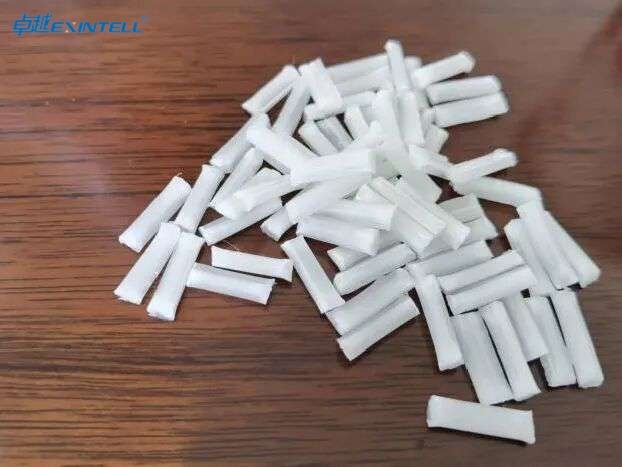
Estágio 1: Alimentação, Fusão, e mistura de alto cisalhamento
O processo começa na garganta de alimentação, onde a resina transportadora, pigmento, e aditivos entram no barril. Alimentadores gravimétricos ou volumétricos dosam os ingredientes, e um alimentador lateral frequentemente introduz aditivos sensíveis ao calor ou altas cargas de enchimento a jusante, longe da zona de fusão inicial. Dentro do barril, parafusos rotativos combinam cisalhamento mecânico com aquecimento de barril para derreter o polímero e começar a trabalhar os sólidos no fundido. É aqui que a geometria do parafuso ganha força: mais agressivos os elementos de mistura, quanto mais fina for a dispersão.
Estágio 2: Dispersão homogênea no polímero
A dispersão é o estágio decisivo para a qualidade. O objetivo é quebrar os aglomerados de pigmentos e distribuir cada partícula uniformemente através do fundido, para que o produto final colora o plástico uniformemente em baixa dosagem.. Weak dispersion shows up later as streaking, specking, or inconsistent tint strength. Na minha experiência, this is the single most important reason to specify a co-rotating twin screw extruder for color work, since its intermeshing screws deliver the sustained, controllable shear that pigment dispersion demands.
Estágio 3: Resfriamento, Corte, and Pelletizing
After the melt exits the die, it must be solidified and sized into granules. Two common methods dominate. Strand pelletizing pulls the melt through a water bath and into a cutter that chops cooled strands into uniform pellets, while underwater pelletizing cuts at the die face for higher throughput. Either way, the plastic granulator or plastic pelletizing machine at the end of the line defines pellet shape, consistência, and how cleanly the product doses later.
Estágio 4: Vacuum Degassing, Melt Pumps, and Screen Changers
Os componentes auxiliares separam uma linha adequada de uma excelente. A desgaseificação a vácuo retira a umidade e os voláteis do fundido, o que evita vazios e defeitos superficiais no pellet. Uma bomba de fusão estabiliza a pressão na matriz, suavizando o rendimento e melhorando a consistência dimensional do pellet. Um trocador de tela filtra os contaminantes do fundido sem interromper a produção. Quando comparo cotações, Eu trato esses três itens como multiplicadores de qualidade de saída, em vez de extras opcionais, porque afetam diretamente o rendimento e o grau do que a extrusora de granulação produz.
Tipos de Masterbatch e as máquinas que os produzem
Nem toda linha de extrusão de masterbatch é construída para o mesmo trabalho. A formulação que você pretende executar deve ditar a máquina que você compra, and matching those two decisions early saves buyers from costly reconfiguration later. Broadly, I group the market into three production categories: color, additive, and filler. Suppliers like Haisi Extrusion package these as distinct product families, offering TSE/TSH series co-rotating twin screw extruders alongside filler, color, and high-filler masterbatch extrusion lines plus auxiliary equipment (Equipamento de extrusão Haisi, 2024).
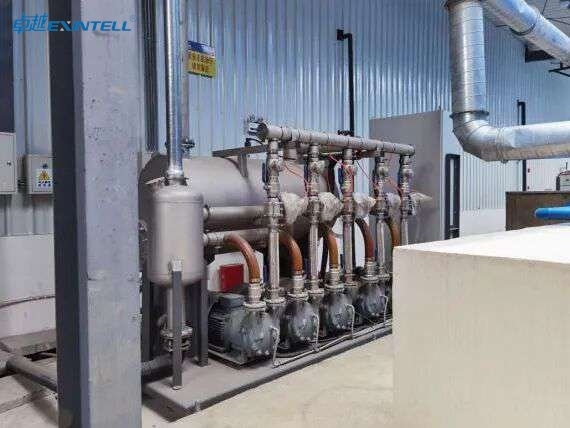
Color Masterbatch Machines for Pigment Concentration
Color masterbatch machines are engineered for maximum pigment dispersion. Because tint strength and shade consistency depend on how finely pigment is distributed, these lines emphasize high-shear screw configurations and precise temperature control. Esta é a categoria onde eu mais consistentemente oriento os compradores em direção a uma extrusora de rosca dupla co-rotativa, já que as rejeições de cores são caras e a qualidade da dispersão não é negociável.
Máquinas Masterbatch Aditivas para Propriedades Funcionais
Máquinas masterbatch aditivas oferecem desempenho funcional em vez de cor. Eles compõem estabilizadores UV, retardadores de chama, agentes antiestáticos, e aditivos semelhantes em uma resina transportadora para que os conversores possam dosar propriedades específicas sob demanda. Muitos desses aditivos são sensíveis ao calor, o que torna a colocação do alimentador lateral a jusante e suave, cisalhamento controlado considerações importantes de projeto. O design do parafuso aqui muitas vezes troca alguma agressividade pelo controle térmico para proteger o ingrediente ativo.
Máquinas Masterbatch de enchimento e linhas de alto enchimento
As máquinas de enchimento masterbatch são construídas com base na redução de custos. Masterbatch de enchimento CaCO3 substitui uma porção de polímero virgem por carbonato de cálcio, reduzindo o custo do material e melhorando certas propriedades mecânicas e de impressão. Estas linhas devem suportar cargas sólidas muito altas, então eles dependem fortemente de alimentadores laterais robustos e barris resistentes ao desgaste. As linhas de masterbatch com alto teor de enchimento aumentam ainda mais as cargas para aplicações especializadas e exigem as configurações mais robustas. Fornecedores que oferecem serviços de atacado de máquinas masterbatch de enchimento relatam atender compradores de oficinas de pequena escala a grandes empresas industriais sob rígidos padrões de qualidade (Exintell Máquinas, 2024), o que sinaliza o quão ampla é realmente a demanda deste segmento.
Correspondência do tipo de máquina à aplicação
Para tornar as compensações concretas, aqui está como as três categorias se comparam entre as especificações que mais importam em compras.
|
Tipo de lote mestre |
Máquina Primária |
Requisito de cisalhamento |
Foco auxiliar principal |
Aplicação Típica |
|---|---|---|---|---|
|
Cor |
Extrusora de dupla rosca co-rotativa |
Alto (dispersão fina de pigmento) |
Desgaseificação a vácuo, bomba de derretimento |
Embalagem, bens de consumo, fibras |
|
Aditivo (ultravioleta, retardador de chama, antiestático) |
Extrusora de dupla rosca co-rotativa |
Moderado (prioridade de controle térmico) |
Alimentador lateral, zoneamento de temperatura |
Filme sobre agricultura, eletrônica, automotivo |
|
Preenchimento (CaCO3) |
Extrusora de parafuso duplo ou cônica de parafuso duplo |
Moderado a alto (carregamento de alto teor de sólidos) |
Alimentador lateral, cano resistente ao desgaste, trocador de tela |
Bolsas, folhas, redução de custos de moldagem por injeção |
|
Alto preenchimento / especializado |
Linha masterbatch de alto enchimento |
Alto (cargas extremas) |
Componentes reforçados de alimentação e barril |
Sacos tecidos, produtos industriais pesados |
|
Tipo de lote mestre |
Máquina Primária |
Requisito de cisalhamento |
Foco auxiliar principal |
Aplicação Típica |
|---|---|---|---|---|
|
Cor |
Extrusora de dupla rosca co-rotativa |
Alto (dispersão fina de pigmento) |
Desgaseificação a vácuo, bomba de derretimento |
Embalagem, bens de consumo, fibras |
|
Aditivo (ultravioleta, retardador de chama, antiestático) |
Extrusora de dupla rosca co-rotativa |
Moderado (prioridade de controle térmico) |
Alimentador lateral, zoneamento de temperatura |
Filme sobre agricultura, eletrônica, automotivo |
|
Preenchimento (CaCO3) |
Extrusora de parafuso duplo ou cônica de parafuso duplo |
Moderado a alto (carregamento de alto teor de sólidos) |
Alimentador lateral, cano resistente ao desgaste, trocador de tela |
Bolsas, folhas, redução de custos de moldagem por injeção |
|
Alto preenchimento / especializado |
Linha masterbatch de alto enchimento |
Alto (cargas extremas) |
Componentes reforçados de alimentação e barril |
Sacos tecidos, produtos industriais pesados |
Minha regra prática é direta: defina a formulação e o carregamento alvo primeiro, então deixe esses números selecionarem a linha. Um comprador que adquire um masterbatch de enchimento de CaCO3 tem requisitos de alimentação e desgaste fundamentalmente diferentes de uma cor de pigmento fino em execução, and treating them as interchangeable is the most common specification mistake I see in early quotes. For deeper product-level detail on filler configurations, the Exintell filler masterbatch catalog is a useful reference point (Exintell Machinery filler masterbatch).
Single-Screw vs Twin-Screw Extruders for Masterbatch
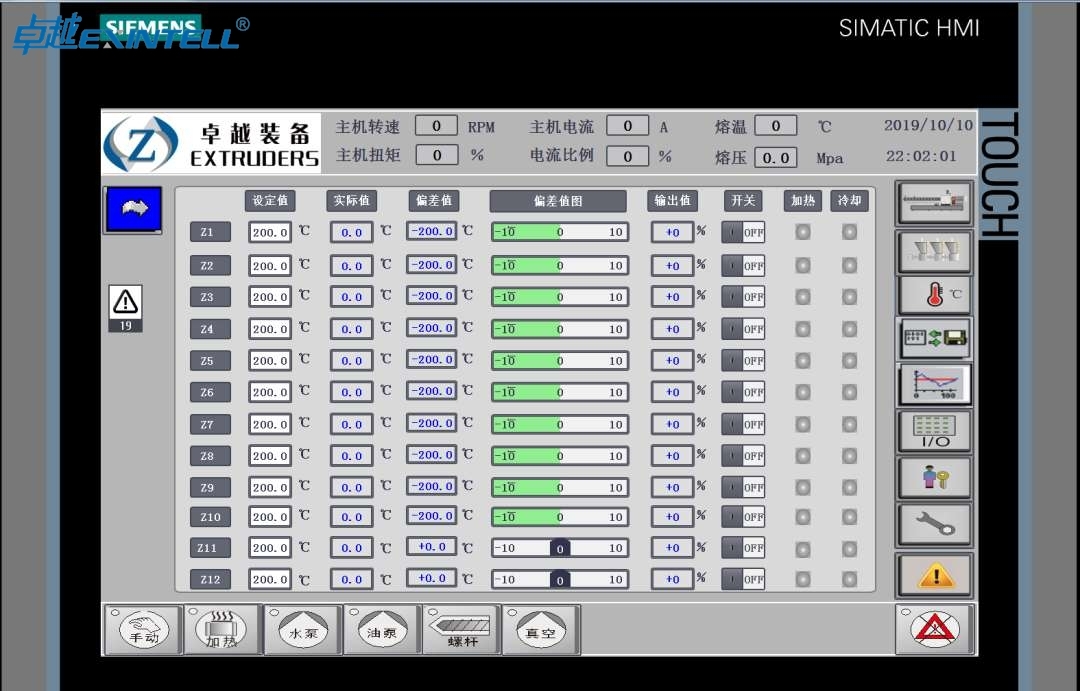
The first fork in any wholesale sourcing decision is screw architecture. In my experience specifying plastic compounding equipment, the choice between single-screw and twin-screw is not about which machine is “better” in the abstract; it is about matching shear energy, residence time, and dispersion quality to the masterbatch you actually intend to sell. Before I compare price tiers later in this guide, I want procurement teams to understand what they are physically buying, because the screw configuration drives almost everything downstream.
Recall the fundamentals: masterbatch is produced by distributing colors and additives into a polymer carrier using a high shear mixing extruder, então esfriando, corte, e formando grânulos através de um peletizador (Tecnologia de Plásticos, 2023). That single sentence contains the whole argument. The phrase “high shear mixing” is why so many masterbatch producers gravitate toward twin-screw designs, and understanding why will save you from over- or under-buying.
Co-Rotating Twin-Screw: The Dispersion Workhorse
For color masterbatch and additive masterbatch, I default to recommending a co-rotating twin screw extruder. Two screws rotating in the same direction, fully intermeshing, create repeated regions of high and low shear as material transfers from one screw to the other. Essa ação de limpeza é o que dispersa os aglomerados de pigmentos até o nível da partícula primária, que é exatamente o que Ampacet descreve quando define masterbatch como um produto sólido no qual pigmentos ou aditivos são dispersos de maneira ideal em alta concentração em um material transportador compatível com o plástico principal (Ampacet Corporation, 2024).
As vantagens práticas que vejo consistentemente nos projetos co-rotativos são a forte mistura distributiva e dispersiva, excelente controle sobre o tempo de residência, e barris modulares que permitem adicionar alimentadores laterais, zonas de desgaseificação a vácuo, e vários pontos de alimentação. Fornecedores como a Haisi Extrusion constroem suas extrusoras de rosca dupla co-rotativas da série TSE/TSH especificamente em torno de linhas de enchimento e masterbatch de cores, além do equipamento auxiliar que essas receitas exigem (Equipamento de extrusão Haisi, 2024). If your product roadmap includes high pigment loadings, temperature-sensitive additives, or CaCO3 filler masterbatch at 70 para 80 percent loading, this is the geometry I would prioritize.
Single-Screw: Simpler Jobs, Lower Overhead
A single-screw extruder is not obsolete for masterbatch work; it is simply narrower in scope. Where the compound is forgiving and the shear demand is modest, a single screw does the job at meaningfully lower capital and maintenance cost. I point buyers toward single-screw units when they are processing straightforward PP or PE recycling, re-pelletizing clean regrind, or running pre-dispersed feedstock that only needs melting and forming rather than aggressive pigment breakdown.
The tradeoff is real. A single screw offers limited distributive mixing and far less flexibility for venting or staged feeding, so it struggles with the high shear mixing that pigment dispersion requires. When a client tells me their entire catalog is basic PE color concentrate at low loading, a single-screw granulating extruder can be the pragmatic, budget-conscious answer. When they mention engineering resins, flame-retardant additive masterbatch, or heavy filler loading, I steer them back to twin-screw every time.
Conical Twin-Screw: The PVC and Rigid Specialist
The conical twin screw extruder occupies a specialized niche. Its screws taper from a larger diameter at the feed end to a smaller diameter at the die, which increases the feed-zone volume and lowers shear as material advances. That profile suits heat-sensitive, rigid formulations, most notably PVC, where excessive shear degrades the polymer. If your masterbatch business touches rigid PVC compounds or dry-blend feeds, the conical geometry earns its place. For most color and filler masterbatch producers running polyolefins, no entanto, a parallel co-rotating machine remains the more versatile buy.
Intermeshing and Engagement Systems
One specification that confuses many procurement teams is the engagement system. “Intermeshing” means the flight of one screw enters the channel of the other, creating that self-wiping, conveying action that resists stagnation and gives predictable residence time. “Non-intermeshing” screws run side by side without that interlock, offering longer residence time for reactions but weaker self-cleaning. For masterbatch, I almost always want fully intermeshing, co-rotating screws, because the self-wiping behavior keeps the machine clean between color changes and delivers the dispersion quality customers expect. When a data sheet lists a machine as “co-rotativo, fully intermeshing,” that is a positive signal for masterbatch duty.
Key Specifications to Verify Before Buying Wholesale

Marketplace listings are notorious for advertising a headline price while burying the specifications that actually determine value. Decoding those specs is one of the biggest gaps I see in wholesale sourcing, so here is the checklist I run through on every quote before I let a buyer commit. Treat each line as a question you should be able to answer with a supplier document, not a guess.
Diâmetro do parafuso e sua relação com a capacidade
O diâmetro do parafuso é o número mais útil em uma folha de especificações porque se correlaciona diretamente com o rendimento. Diâmetro maior significa mais volume livre, o que significa mais quilogramas por hora. Como ponto de referência, extrusoras de parafuso duplo de laboratório no atacado estão listadas em $9,900 por conjunto com especificações de exemplo de diâmetro de parafuso de 25 mm, um motor de 7,5 kW, e produção de 50kg/h (Feito na China.com, 2026). Essa classe de 25 mm é do tamanho de um laboratório e piloto. As linhas de masterbatch de cores de produção geralmente ficam na faixa de 50 mm a 75 mm, e linhas de masterbatch de alto enchimento que empurram várias centenas de quilogramas por hora são ainda maiores. Quando um fornecedor cota capacidade, Peço o diâmetro do parafuso e a relação L/D (comprimento do cano dividido pelo diâmetro do parafuso) no mesmo fôlego, porque um cano mais longo proporciona mais zonas de mistura para o mesmo diâmetro.
Potência do motor (kW) and Output Capacity (kg/h)
Motor power in kW tells you how much shear energy the machine can deliver, and it should scale sensibly with the claimed output in kg/h. A mismatch is a warning sign. If a listing claims high throughput on an undersized motor, either the capacity figure is optimistic or the machine will bog down on demanding compounds. I look at the ratio of specific energy input, roughly kW available per kg/h produced, and compare it against similar machines. The 7.5kW-to-50kg/h relationship on that lab unit is a reasonable baseline for light-duty work; heavy filler masterbatch demands considerably more installed power per kilogram because CaCO3 loading raises the torque required to convey and disperse.
PLC Control, Resfriamento de água, and Side Feeders
Automation and auxiliaries separate a bare extruder from a production-ready extrusion line. I verify three things in particular. Primeiro, the control system: a proper PLC with recipe storage, temperature zone control, and torque monitoring is worth paying for, because it delivers repeatable batches and faster color changes. Segundo, the cooling strategy: barrel water cooling with closed-loop temperature control protects heat-sensitive additive masterbatch from degradation. Terceiro, feeding: a side feeder is essential if you plan to run CaCO3 filler masterbatch, since high filler loadings must be introduced downstream of the melt to avoid overwhelming the main feed throat and to protect screw life.
Screen Changer, Vacuum Degassing, and Melt Pump
These three components quietly determine product quality. A screen changer filters contaminants and gels from the melt; for wholesale operations I insist on at least a hydraulic screen changer, and a continuous or backflush type if you cannot afford production stops for screen swaps. Vacuum degassing pulls moisture and volatiles out of the melt, which matters enormously for filler masterbatch, where CaCO3 carries surface moisture that will otherwise cause voids and splay. A melt pump, positioned after the extruder, stabilizes output pressure and gives the pelletizer a consistent feed, tightening pellet size distribution. Not every buyer needs all three on day one, but I always ask whether the barrel is pre-configured to accept them later. Retrofitting is expensive; buying an upgrade-ready machine is not.
Downstream: Pelletizer and Cooling
The extruder is only half of a masterbatch making machine line. The pelletizer, whether strand-cut or underwater, and its associated cooling bath or die-face system determine final granule shape and consistency. I confirm the pelletizer capacity matches the extruder output, because an undersized plastic pelletizing machine becomes the bottleneck that caps your entire line. Ask for the complete line diagram, not just the extruder data sheet.
Supplier Verification Signals
Specifications only matter if the supplier stands behind them. I weight verified supplier metrics heavily. Example verified supplier data shows one manufacturer with 16 anos de experiência, um 5.0/5.0 avaliação, e um 25 percent reorder rate (Feito na China.com, Máquinas amigas de Zhangjiagang, 2026). A reorder rate that high tells me repeat buyers trust the equipment, which is a stronger signal than any single review. Com mais 74,746 wholesale used twin screw extruder products listed on a single marketplace (Feito na China.com, 2026), the catalog is enormous, so disciplined vetting of ratings, tenure, and reorder rate is how you separate credible masterbatch manufacturers and plastic extruder suppliers from the noise.
Masterbatch Machine Wholesale Price Ranges Explained

Price is where transparency breaks down most often, so let me lay out the tiers I actually see in the market and, more importantly, explain what moves a quote from one end to the other. Bulk order pricing on masterbatch equipment is not arbitrary; every dollar maps to capacity, automação, brand, or configuration. Filler masterbatch machine wholesale services deliberately span the full range, catering to buyers from small-scale workshops to large industrial enterprises under strict quality standards (Exintell Máquinas, 2024), which is exactly why the spread is so wide.
Entry Tier: Lab and Pilot Units from ~$9,900
Lab-scale units start around $9,900. As cited above, that price point buys a 25mm, 7.5kW, 50kg/h twin screw extruder wholesale (Feito na China.com, 2026). This tier is right for R&D, formulation development, and very low-volume specialty production. I recommend it to buyers who need to prove a masterbatch recipe before scaling, or to labs at converters who want in-house sampling capability. What you do not get at this price is production throughput, heavy automation, or the durability for three-shift operation.
Médio alcance: Production Machines from $25,000 para $42,000
Mid-range production machines run from roughly $25,000 para $42,000. At the top of this band, masterbatch twin screw extruders are listed at $42,000 per piece by an Exintell PP PE pelletizer offering (Feito na China.com, 2026). This is the sweet spot for most B2B buyers entering or expanding color and filler masterbatch production. Expect meaningful screw diameters, a real PLC, water cooling, a side feeder for filler work, and a matched plastic granulator or pelletizer. In my experience this tier delivers the best return for a growing masterbatch business, because it balances capacity against capital exposure.
Full Lines and Specialty Systems up to $80,000
Complete masterbatch extrusion lines and specialty configurations, including pet-food-grade and high filler masterbatch line builds, reach up to $80,000. At this level you are buying an integrated system: extrusora, bomba de derretimento, continuous screen changer, vacuum degassing, downstream cooling, automated pelletizing, and often gravimetric dosing tied into the PLC. Pet-food-grade and other regulated builds carry premium pricing because of the material certifications, hygienic design, and documentation involved. This is where the biggest brands live, too; the Top 25 twin screw extruder manufacturers for 2026 include Coperion, Leistritz, Milacron, Krauss Maffei, and JSW (UDTECH, 2025), and their turnkey lines can exceed even this range depending on scope.
Price Comparison Across Tiers
| Nível | Typical Price | Representative Specs | Best For |
|---|---|---|---|
| Lab / Pilot | From ~$9,900 | 25mm screw, 7.5kW, ~50 kg/h | R&D, sampling, formulation trials |
| Mid-Range Production | $25,000 – $42,000 | Larger screw, CLP, water cooling, side feeder, matched pelletizer | Growing color / filler masterbatch producers |
| Full Line / Especialidade | Até $80,000 | Integrated line with melt pump, vacuum degassing, trocador de tela, automação | Alto volume, high filler, pet-food-grade, regulated output |
| Nível | Typical Price | Representative Specs | Best For |
|---|---|---|---|
| Lab / Pilot | From ~$9,900 | 25mm screw, 7.5kW, ~50 kg/h | R&D, sampling, formulation trials |
| Mid-Range Production | $25,000 – $42,000 | Larger screw, CLP, water cooling, side feeder, matched pelletizer | Growing color / filler masterbatch producers |
| Full Line / Especialidade | Até $80,000 | Integrated line with melt pump, vacuum degassing, trocador de tela, automação | Alto volume, high filler, pet-food-grade, regulated output |
Prices reflect representative wholesale listings on Made-in-China.com (2026); actual quotes vary by configuration and supplier.
What Actually Drives the Price
Four levers explain nearly every difference between quotes. Capacity comes first: larger screw diameter and higher kg/h output raise the price roughly in step with installed motor power. Automation is second: a full PLC, gravimetric feeding, and torque monitoring add cost but pay back in consistency and labor savings. Brand is third: a name like Coperion or KraussMaffei carries a premium that reflects engineering depth, disponibilidade de peças de reposição, and resale value. Configuration is fourth and often the largest swing: adding vacuum degassing, a continuous screen changer, a melt pump, and specialized downstream equipment can lift a base extruder into a fully different price class.
One factor rarely mentioned in listings deserves a note in your total-cost planning. In comparison with pure pigments, masterbatches precisam de espaço de armazenamento extra e prazos de entrega mais longos (Tecnologia de Plásticos, 2023). The same logic applies to the equipment: custom-configured lines carry longer manufacturing lead times than stock units, so build that schedule into your procurement plan rather than assuming shelf availability. When you evaluate a filler masterbatch machine wholesale supplier, ask for the delivered configuration in writing, line by line, so the quote you compare is the machine you actually receive.
Understanding MOQ and Bulk Order Terms
When I first started sourcing plastic compounding equipment, I assumed minimum order quantities worked the way they do for consumables — order fifty units, get a better price. Capital machinery does not behave that way. For a masterbatch making machine, the MOQ is almost always one set or one piece. What actually shifts your negotiating position is not volume in the traditional sense, but the total contract value, the promise of repeat orders, and how you structure the payment. Understanding that distinction changed how I approach every quotation.
What MOQ Really Means for Capital Equipment
On marketplaces like Made-in-China.com, you will see wholesale lab twin screw extruders listed from $9,900 per set — for example, a unit with a 25mm screw diameter, um motor de 7,5 kW, e produção de 50kg/h (Feito na China.com, 2026). At the other end of the spectrum, a production-grade masterbatch twin screw extruder from a supplier like Exintell can list at $42,000 por peça (Feito na China.com, 2026). In both cases the MOQ reads as “1.” That single-unit minimum reflects the reality that these are configured, freight-heavy machines, not palletized inventory. So when a listing shows an MOQ of one set, treat it as a starting point for conversation rather than a signal about pricing tiers.
How Bulk and Repeat Orders Change Your Leverage
Even though the MOQ is one, order composition matters enormously. A buyer purchasing a complete masterbatch extrusion line — a co-rotating twin screw extruder paired with a side feeder, vacuum degassing, a screen changer, a melt pump, a pelletizer, and downstream cooling — is presenting a far larger contract than someone buying a bare granulating extruder. Na minha experiência, bundling auxiliary equipment into a single purchase order unlocks concessions that a standalone machine never will, whether that is discounted spare parts, free commissioning support, or an extended warranty.
Repeat business is the other lever. If you signal a credible roadmap — say, a second high filler masterbatch line within twelve months as your CaCO3 filler masterbatch capacity scales — suppliers price the relationship, not the transaction. I have seen manufacturers hold pricing across a follow-up order and prioritize a returning buyer’s production slot ahead of a one-time purchaser during peak season.
Sampling and Trial Runs Before You Commit
You cannot request a “sample” of a $40,000 extrusora, but you can and should ask for evidence that the machine produces to spec before wiring the balance. I always request a trial run: the supplier processes your carrier resin and pigment or additive package on the exact machine model and sends back samples plus process data — throughput, motor load, melt temperature, and pellet consistency. For color masterbatch and additive masterbatch work, that trial validates pigment dispersion and high shear mixing quality against your own formulation, which a spec sheet cannot do. If a supplier resists a documented trial run, I treat that as a meaningful warning sign.
Payment Terms and Deposit Structures for International Orders
Cross-border machinery deals almost always run on a deposit-and-balance model. The most common structure I encounter is 30% down to begin production and 70% antes do envio, typically against a bill of lading. Some suppliers accept a letter of credit, which shifts risk toward a bank and suits larger contracts, while smaller purchases often settle by T/T (telegraphic transfer). The key point for procurement teams: tie payment milestones to verifiable events. I structure balances to release only after a successful factory acceptance test or a documented trial run, never against a promise. That single practice has protected me more than any contract clause.
Manufacturer vs Trading Company: Which Supplier Type to Choose
One of the most consequential decisions in any wholesale sourcing project is who you actually buy from. The listing may look identical, but a factory and a trading company operate on different economics, and each fits a different buyer profile. Understanding factory operations and supplier differentiation is genuinely critical for B2B buyers making procurement decisions across plastics compounding equipment (Guia B2B do fornecedor de extrusora de plástico, 2024). I have bought successfully through both channels — the trick is matching the channel to the situation.
Benefits of Buying Direct From the Manufacturer
When I buy direct from a masterbatch manufacturer or factory, I gain three things a middleman rarely provides. Primeiro, price transparency: I am paying for the machine and the factory’s margin, not an additional trading markup. Segundo, engineering access — I can speak directly with the people who design and build the co-rotating twin screw extruder, which matters enormously when I need a non-standard screw configuration or a specific screw diameter and motor power (kW) to match my throughput targets. Terceiro, accountability: when a screen changer or melt pump needs service two years in, the factory that built it owns the fix.
A capable factory also tends to offer a fuller ecosystem. Haisi Extrusion, for instance, provides TSE/TSH series co-rotating twin screw extruders alongside filler and color masterbatch lines, high filler masterbatch extrusion lines, and the auxiliary equipment to complete them (Equipamento de extrusão Haisi, 2024). Buying the whole line from one builder simplifies integration and puts responsibility for how the components work together in a single set of hands.
When a Trading Company Adds Value for Smaller Buyers
Trading companies are not simply markup machines. For a smaller buyer or a first-time importer, a good trading company earns its margin. It aggregates products from multiple factories, so a workshop-scale operator can source a single plastic pelletizing machine without meeting a factory’s practical relationship threshold. It handles export documentation, consolidates shipping, and often speaks better English than a regional factory’s sales desk. Filler masterbatch machine wholesale services increasingly cater to buyers spanning small-scale workshops through large industrial enterprises under consistent quality standards (Exintell Máquinas, 2024), and a trader can be the bridge that makes a modest first purchase manageable.
My rule of thumb: if I am buying a single conical twin screw extruder or a compact single-screw extruder for a pilot operation and I lack import experience, a reputable trader lowers my risk. Once I am buying full masterbatch extrusion lines at scale, I go direct to the factory.
R&D Capacity Signals: ODM, OEM, and Own Brand
The clearest way to tell a real manufacturer from a rebadger is to probe R&D capacity. A factory with genuine engineering depth offers OEM (they build to your specification) and ODM (they design as well as build), and it sells under its own brand. Ask whether they can modify a standard model for your carrier resin or your CaCO3 filler masterbatch loading. Ask to see machines under assembly on the floor, not just in a catalog. When a supplier can discuss vacuum degassing placement, side feeder sequencing, and pigment dispersion tradeoffs fluently, you are talking to a builder. When answers stay vague and every question routes back to a brochure, you are likely talking to a reseller — which is fine if you know that going in, but not something to pay factory-direct prices for.
How to Evaluate and Vet Wholesale Suppliers
Vetting is where a wholesale purchase is won or lost. The equipment matters, but the supplier behind it determines whether you get a running production line or an expensive freight problem. I run every prospective vendor through the same evaluation, and it has saved me from more than one deal that looked flawless in a listing. Marketplace listings and educational articles alike tend to skip this entirely, so here is the process I actually use.
Verifying Factory Audits and Production Capability
The first question is whether the factory can build what it claims at the volume you need. I look for a documented factory audit — either a third-party report or, at minimum, a supplier-supplied audit from the marketplace. I want to see production capacity, equipment on the floor, and quality control procedures. For a masterbatch machine, I specifically ask how many units of my target model they ship per month and request photos or video of that model in assembly, dated and identifiable. A factory that produces a real plastic granulator or twin screw extruder wholesale volume can show it without hesitation.
Checking Verified Supplier Status and Experience Metrics
Marketplaces surface trust signals worth reading carefully. A verified supplier badge, years of operation, buyer rating, and reorder rate together sketch a supplier’s track record. As a concrete benchmark, verified metrics for one supplier — Zhangjiagang Friend Machinery — show 16 anos de experiência, um 5.0/5.0 avaliação, e um 25% taxa de novo pedido (Feito na China.com, 2026). I treat reorder rate as the single most honest metric on the page: it tells me how many buyers came back, and returning industrial buyers do not repurchase capital equipment from a supplier that disappointed them.
Context helps here too. Somente Made-in-China.com lista mais de 74,746 wholesale twin screw extruder products (Feito na China.com, 2026), so the market is crowded and the metrics are how you separate serious builders from thin listings.
How to Read Rating and Reorder Rate Together
A high rating with a near-zero reorder rate suggests a supplier that satisfies first-time buyers but rarely earns repeat business — worth a second look. A moderate rating with a strong reorder rate often signals a supplier whose product performs in production even if their sales polish is unremarkable. I weight demonstrated repeat business over presentation every time.
Requesting References and a Factory Visit or Virtual Tour
I always ask for references from buyers in my region or industry, and I follow up on them. A supplier confident in their work provides contacts readily. Where budget and timing allow, I arrange a factory visit; where they do not, a live virtual tour is a strong substitute. On a virtual tour I ask the salesperson to walk to a specific machine I named, power on a running line, and show the pelletizer and downstream section in operation. A pre-recorded, over-produced video is not the same thing, and I say so.
Assessing Responsiveness and Technical Communication
Finalmente, I evaluate how a supplier communicates, because that pattern predicts the entire post-sale relationship. I send a few pointed technical questions — screw L/D ratio, whether the melt pump is standard or optional, how they handle screen changer maintenance — and I watch for two things: speed and substance. Prompt replies that engage the engineering, ideally routing me to a technical contact rather than a pure salesperson, tell me support will exist when a machine goes down mid-run. Slow, evasive, or purely price-focused answers tell me the opposite. In a cross-border purchase where the machine will run for a decade, that communication quality is not a soft factor — it is central to the decision.
Supplier Vetting Comparison at a Glance
| Vetting Signal | What Strong Looks Like | Warning Sign | Por que é importante |
|---|---|---|---|
| Years of experience | 10+ anos (por exemplo, 16 anos, Feito na China.com, 2026) | Under 2 anos, no history | Survival implies delivery and service continuity |
| Buyer rating | 4.5–5.0 / 5.0 across many reviews | Perfect score, few reviews | Aggregate feedback on real transactions |
| Reorder rate | 20%+ (por exemplo, 25%, Feito na China.com, 2026) | Near zero or undisclosed | Repeat industrial buyers signal reliable equipment |
| R&D capacity | OEM + ODM, own brand, custom screw configs | Brochure-only answers, no modifications | Separates true manufacturers from resellers |
| Trial run / factory test | Documented run on your resin with process data | Refuses or offers only stock footage | Validates output before you pay the balance |
| Technical responsiveness | Fast, engineer-level answers | Slow, evasive, price-only replies | Predicts post-sale support quality |
| Vetting Signal | What Strong Looks Like | Warning Sign | Por que é importante |
|---|---|---|---|
| Years of experience | 10+ anos (por exemplo, 16 anos, Feito na China.com, 2026) | Under 2 anos, no history | Survival implies delivery and service continuity |
| Buyer rating | 4.5–5.0 / 5.0 across many reviews | Perfect score, few reviews | Aggregate feedback on real transactions |
| Reorder rate | 20%+ (por exemplo, 25%, Feito na China.com, 2026) | Near zero or undisclosed | Repeat industrial buyers signal reliable equipment |
| R&D capacity | OEM + ODM, own brand, custom screw configs | Brochure-only answers, no modifications | Separates true manufacturers from resellers |
| Trial run / factory test | Documented run on your resin with process data | Refuses or offers only stock footage | Validates output before you pay the balance |
| Technical responsiveness | Fast, engineer-level answers | Slow, evasive, price-only replies | Predicts post-sale support quality |
One practical planning note that buyers often overlook: because masterbatch itself requires extra storage space and longer lead times compared with pure pigments (Tecnologia de Plásticos, 2023), the machine you buy shapes downstream logistics as much as production. Um fornecedor que entende esse contexto – e que responde à questão subjacente de para que serve o seu masterbatch, ou seja, fornecer pigmentos ou aditivos perfeitamente dispersos em alta concentração em um transportador compatível (Ampacet Corporation, 2024) - é um parceiro, não apenas um vendedor. Esse é o fornecedor que desejo em um contrato plurianual máquina de masterbatch de enchimento programa.
Certificações que sinalizam a qualidade da máquina
Quando avalio um fornecedor atacadista de máquina masterbatch, Eu trato as certificações como o primeiro filtro, não é uma reflexão tardia. Uma lista de atacado de extrusora de parafuso duplo pode citar um preço atraente, mas sem conformidade documentada não tenho como verificar se a construção elétrica, proteção de segurança, e manuseio de materiais atendem aos padrões que minhas instalações e minha seguradora esperam. Na minha experiência, o pacote de certificação me diz mais sobre a disciplina de fabricação de um fornecedor de extrusora de plástico do que qualquer folheto brilhante.
Marcação CE para conformidade europeia
Se você importar ou operar dentro do Espaço Econômico Europeu, A marcação CE não é negociável. Declara que a máquina de fabricação de masterbatch está em conformidade com as normas de saúde da UE, segurança, e requisitos ambientais, particularmente a Diretiva Máquinas. Eu sempre peço a Declaração de Conformidade e o arquivo técnico de apoio em vez de aceitar um adesivo CE pelo valor nominal. Um fornecedor legítimo pode produzir tanto. Quando um fornecedor hesita, Eu li isso como um sinal de que a guarda, paradas de emergência, e intertravamentos na linha de extrusão podem não ter sido avaliados de forma independente.
ISO 9001 Quality Management
ISO 9001 (many suppliers still reference the 2008 revisão, no entanto 2015 is now current) certifies the quality management system behind the product, not the product itself. What it tells me is that the masterbatch manufacturer has documented, repeatable processes for design, procurement, assembly, and inspection. For plastic compounding equipment, that consistency matters. Two conical twin screw extruders built six months apart should perform identically, and a certified quality system is what makes that likely. I verify the certificate number against the issuing registrar’s database before I rely on it.
RoHS, UL, and CCC
Three more marks round out a serious compliance package. RoHS restricts hazardous substances such as lead and cadmium in electrical components, which matters for both regulatory exposure and end-market acceptance. UL certification signals that the electrical control system has been evaluated to North American safety standards, something I insist on for any machine destined for a US plant. CCC (China Compulsory Certification) applies to products sold within the Chinese market and often appears on equipment from Chinese factories; it is not a substitute for UL or CE when you import elsewhere, and I’ve seen buyers conflate the two to their cost.
How Certifications Reduce Procurement Risk
Certifications convert an abstract quality claim into verifiable evidence, and that directly lowers my procurement risk. A documented UL mark reduces the chance my facility fails an electrical inspection after installation. A valid CE file protects me if a regulator questions the machine on my floor. Pairing certification checks with verified supplier metrics tightens the picture further. When I see a supplier with 16 anos de experiência, um 5.0/5.0 avaliação, e um 25% taxa de novo pedido (Feito na China.com, Máquinas amigas de Zhangjiagang, 2026), alongside genuine ISO and CE documentation, I have converging signals rather than a single point of trust. The reorder rate in particular tells me that earlier buyers came back, which no certificate alone can prove.
OEM and ODM Options for Custom Masterbatch Machines
Most reputable factories offer both OEM and ODM arrangements, and understanding the difference shapes how I brief a supplier. With OEM, I bring a defined specification and the factory builds to it. With ODM, the factory adapts one of its existing designs to my requirements. Suppliers such as Haisi Extrusion, which provides TSE/TSH series co-rotating twin screw extruders along with filler and color masterbatch lines plus auxiliary equipment (Equipamento de extrusão Haisi, 2024), typically start from a proven platform and customize outward. That ODM path is usually faster and lower risk than a clean-sheet OEM build.
Customizing Voltage, Cor, Embalagem, and Logo
The most common customizations are also the least disruptive to lead time. Voltage and frequency matter first: a machine wired for 380V/50Hz will not run correctly on a US 480V/60Hz supply without changes to motors and controls, so I specify this at the quotation stage. Beyond that, machine paint color, crate and packaging specification for the shipping mode, and logo or nameplate branding are straightforward for any masterbatch machine wholesale manufacturer to accommodate. These rarely add meaningful cost, but they do need to be in the purchase order rather than assumed.
When to Specify Screw Configuration and Barrel Length
Screw configuration and barrel length are where customization stops being cosmetic and starts driving performance. The screw diameter, the L/D ratio (barrel length relative to screw diameter), and the arrangement of conveying, kneading, and mixing elements determine residence time, shear intensity, e rendimento. For a CaCO3 filler masterbatch running at high loading, I specify a longer barrel and a screw built for high shear mixing and thorough pigment dispersion, often with a side feeder to introduce filler downstream and vacuum degassing to strip moisture and volatiles. For a lightly loaded color masterbatch or an additive masterbatch on a heat-sensitive carrier resin, I keep residence time shorter to avoid degradation. A single-screw extruder can handle some simpler compounding, but a co-rotating twin screw extruder gives the distributive and dispersive mixing that most masterbatch work demands. I only get this right by describing the product and polymer carrier to the supplier, not by copying someone else’s screw drawing.
Balancing Customization Cost Against Standard Models
Every deviation from a standard model carries a cost, and part of my job is deciding which deviations earn their keep. To make that trade-off concrete, here is how I weigh common customizations against standard builds.
| Personalização | Typical cost impact | Lead time impact | When I specify it |
|---|---|---|---|
| Voltage / frequency conversion | Low to moderate | Minimal | Always, when destination grid differs |
| Paint, embalagem, logo | Baixo | Minimal | Whenever branding or shipping mode requires it |
| Custom screw configuration | Moderado a alto | Moderado | When product loading or shear needs differ from standard |
| Extended barrel length / higher L/D | Alto | Significant | High filler masterbatch line or difficult dispersion |
| Full clean-sheet OEM design | Highest | Longest | Only when no existing platform fits |
| Personalização | Typical cost impact | Lead time impact | When I specify it |
|---|---|---|---|
| Voltage / frequency conversion | Low to moderate | Minimal | Always, when destination grid differs |
| Paint, embalagem, logo | Baixo | Minimal | Whenever branding or shipping mode requires it |
| Custom screw configuration | Moderado a alto | Moderado | When product loading or shear needs differ from standard |
| Extended barrel length / higher L/D | Alto | Significant | High filler masterbatch line or difficult dispersion |
| Full clean-sheet OEM design | Highest | Longest | Only when no existing platform fits |
Standard models benefit from volume production and shorter lead times, which is why bulk order pricing on catalog machines is often keener than on bespoke ones. The wholesale range illustrates the spread: lab twin screw extruders start around $9,900 per set with a 25mm screw, 7.5motor kW, e produção de 50kg/h, while a production masterbatch twin screw extruder is listed at $42,000 por peça (Feito na China.com, 2026). Customization pushes you up within and beyond those bands, so I reserve it for changes that genuinely affect output quality.
Lead Time Implications of Custom Builds
Construções personalizadas estendem o prazo de entrega de maneiras que se refletem no cronograma do projeto, e planejo isso desde o início. Um modelo padrão pode ser enviado em estoque ou quase em estoque, enquanto um conjunto de parafusos personalizado, um cano estendido, ou um sistema de controle não padrão adiciona aprovação de projeto, aquisição de componentes, e testes adicionais antes do envio. Isso reflete uma característica mais ampla do próprio masterbatch: em comparação com pigmentos puros, masterbatches precisam de espaço de armazenamento extra e prazos de entrega mais longos (Tecnologia de Plásticos, 2023), então tanto o produto quanto o equipamento que o faz recompensam o planejamento antecipado. Confirmo o prazo de entrega por escrito e vinculo os pagamentos dos marcos ao progresso verificado, em vez de às datas prometidas.
Equipamento Auxiliar para Linha Completa de Masterbatch
Uma extrusora sozinha não faz masterbatch. The purpose of masterbatch is to deliver pigments or additives into plastic in a form that disperses evenly at high concentration, and achieving that consistently depends on the equipment surrounding the extruder as much as the extruder itself. When I scope a masterbatch extrusion line, I map every stage from raw material intake to finished granule so nothing becomes an unplanned bottleneck.
Mixing and Feeding Systems
Upstream accuracy sets the ceiling for product quality. High-speed mixers pre-blend pigments, aditivos, and carrier resin, while gravimetric or volumetric feeders meter each component into the extruder at a controlled rate. A side feeder becomes essential on a high filler masterbatch line, introducing CaCO3 or similar fillers into the melt downstream of the main feed so the polymer is already molten and shear damage is minimized. Consistent feeding is what allows the co-rotating twin screw extruder to achieve reliable pigment dispersion batch after batch.
Cooling and Pelletizing Systems
After the melt exits the die, it must be cooled and cut into usable granules. Masterbatch é produzido distribuindo cores e aditivos em um suporte de polímero usando uma extrusora de mistura de alto cisalhamento, então esfriando, corte, e formando grânulos através de um peletizador (Tecnologia de Plásticos, 2023). In practice I choose between strand pelletizing, where cooled strands pass through a water bath before a plastic granulator cuts them, and underwater or die-face pelletizing for higher throughput. A melt pump ahead of the die stabilizes pressure and improves pellet uniformity, and a screen changer upstream removes contaminants without stopping the line. Together these define the finish quality of the plastic pelletizing machine’s output.
Crushers, Electric Control Systems, and Spare Parts
The supporting hardware is easy to overlook and expensive to omit. A crusher reclaims off-spec granules and startup purge so material is not wasted. The electric control system, ideally PLC-based with clear operator screens, governs temperature zones, velocidade do parafuso, and feed rates, and this is exactly where UL or CE compliance should be evident. I also negotiate a spare parts package at the point of purchase: wear elements such as screw and barrel segments, bandas de aquecimento, termopares, and seals have far longer lead times if ordered reactively after a failure. Buying them alongside the machine is cheaper and protects uptime.
Planning a Full Line Versus a Standalone Extruder
The final decision is whether to buy a complete integrated line or a standalone granulating extruder and assemble the rest. Buying a full line from one masterbatch manufacturer gives me a single point of accountability, matched components, and a supplier who has already solved the integration problems. Buying a standalone extruder and sourcing auxiliaries separately can lower headline cost and lets me reuse existing equipment, but I take on the integration risk myself. For buyers ranging from small-scale workshops to large industrial enterprises, wholesale services are structured to support both paths under defined quality standards (Exintell Máquinas, 2024). Na minha experiência, a first line or a new product category is better bought complete; incremental capacity expansion is where a standalone extruder makes the stronger case. Either way, I specify the whole workflow before I commit, because the cheapest extruder is a poor bargain if the line around it cannot keep pace.
New vs Used Masterbatch Machines: Trade-offs
Whenever I advise a procurement team on their first extrusion line, the new-versus-used question surfaces within minutes. It deserves a careful answer, because the right choice depends less on the sticker price and more on how the machine will earn its keep. Marketplaces make used equipment tempting: Somente Made-in-China.com lista mais de 74,746 produtos de extrusora de parafuso duplo usados no atacado (Feito na China.com, 2026, made-in-china.com). That depth of supply is real, but so are the trade-offs.
Where the cost savings actually come from
Used masterbatch making machines from established wholesalers typically sell at 40 para 70 percent below comparable new units, and the discount widens on higher-throughput lines where new pricing climbs quickly. For context, a new masterbatch twin screw extruder is listed at $42,000 por peça (Exintell PP PE Pelletizer, Feito na China.com, 2026), while entry lab-scale co-rotating twin screw extruders start around $9,900 por conjunto com parafuso de diâmetro de 25 mm, 7.5motor kW, e produção de 50kg/h (Feito na China.com, 2026). A refurbished mid-range line can land squarely between those figures. In my experience the savings are most defensible when the core extruder — the barrel, parafusos, and gearbox — is fundamentally sound and the discount reflects cosmetic wear or an older control system rather than a fatigued drivetrain.
Inspection and refurbishment considerations
I never buy used plastic compounding equipment sight unseen. The parts that determine dispersion quality wear in predictable ways, and a thorough inspection protects you from a bargain that becomes a liability.
- Screw and barrel wear: measure clearances on the co-rotating twin screw elements. Excessive wear degrades high shear mixing and pigment dispersion, the very functions you bought the machine for.
- Gearbox and drive: check for backlash, oil condition, and bearing noise. This is the most expensive subsystem to rebuild.
- Auxiliary components: confirm the condition of the screen changer, bomba de derretimento, vacuum degassing system, side feeder, and pelletizer. These are often quietly excluded from a headline price.
- Controls and safety: older PLCs may lack spare parts, and safety interlocks must meet current standards before commissioning.
A reputable wholesaler will document refurbishment work — reground or replaced screws, reconditioned barrels, updated controls. Ask for that record. If it does not exist, price the machine as unrefurbished.
Warranty and spare-part availability
This is where new equipment earns its premium. New masterbatch extrusion lines from a verified manufacturer carry meaningful warranties and a documented spare-parts pipeline. Used machines often come with limited or no warranty, and sourcing wear parts for a discontinued model can stall a line for weeks. Before committing to used, I confirm that screws, screen packs, and the pelletizer knives are still catalog items somewhere in the supply chain.
When used makes sense: pilot and backup lines
Used equipment shines in specific roles. For a pilot line where you are validating a CaCO3 filler masterbatch formulation before scaling, a refurbished conical twin screw extruder or a modest co-rotating unit lets you prove the process without tying up capital. The same logic applies to a backup line that runs occasionally to cover peak demand or maintenance downtime on your primary asset. In both cases the machine does not need to run 6,000 hours a year, so a shorter remaining service life is acceptable. For a primary, high-utilization color or additive masterbatch line, I lean strongly toward new, because unplanned downtime erodes any upfront saving.
Chinese vs European Masterbatch Machine Suppliers
The sourcing map for twin screw extruder wholesale splits cleanly into two tiers, and understanding what each tier optimizes for is the key to a sound decision. The industry’s leading names bear this out: the Top 25 twin screw extruder manufacturers for 2026 include Coperion, Leistritz, Milacron, Krauss Maffei, and JSW (UDTECH, 2025, udtechman.com) — a list that mixes European precision houses with high-volume global builders.
The price advantage of Chinese manufacturers
Chinese suppliers dominate the wholesale market on price and configuration breadth. Builders such as Haisi Extrusion offer TSE/TSH series co-rotating twin screw extruders alongside complete filler masterbatch and high filler masterbatch extrusion lines with auxiliary equipment (Equipamento de extrusão Haisi, 2024). Others, like Exintell, run filler masterbatch machine wholesale programs serving everyone from small workshops to large industrial enterprises under stated quality standards (Exintell Máquinas, 2024, exintellmach.com). The commercial signals matter here: verified supplier metrics such as 16 anos de experiência, um 5.0/5.0 avaliação, e um 25 percent reorder rate (Máquinas amigas de Zhangjiagang, Feito na China.com, 2026) tell you a builder retains customers, which is the honest measure of after-sale performance. For CaCO3 filler and standard color masterbatch, a well-vetted Chinese line delivers strong value.
What European premium brands buy you
Copérion, Leistritz, and KraussMaffei command a premium because they deliver tightly controlled process precision, mature engineering support, and long-horizon spare-part availability. For demanding additive masterbatch chemistries, sensitive polymer carrier systems, or tight color consistency at high throughput, that precision translates directly into yield and reduced scrap. The trade-off is capital cost and lead time, both of which are materially higher.
Balancing cost, precisão, e suporte
I frame the decision around three axes rather than price alone. The table below reflects the pattern I see across procurement projects.
| Fator | Chinese suppliers | European premium brands |
|---|---|---|
| Typical capital cost | Mais baixo (often 40–60% less) | Mais alto |
| Process precision | Strong for filler/standard color | Best-in-class for demanding chemistries |
| Lead time | Generally shorter | Mais longo |
| Spare-part horizon | Good with verified suppliers | Long, well-documented |
| Engineering support | Improving; varies by builder | Deep, established |
| Best fit | CaCO3 filler, color masterbatch, cost-sensitive scale-up | High-value additive lines, tight tolerances |
| Fator | Chinese suppliers | European premium brands |
|---|---|---|
| Typical capital cost | Mais baixo (often 40–60% less) | Mais alto |
| Process precision | Strong for filler/standard color | Best-in-class for demanding chemistries |
| Lead time | Generally shorter | Mais longo |
| Spare-part horizon | Good with verified suppliers | Long, well-documented |
| Engineering support | Improving; varies by builder | Deep, established |
| Best fit | CaCO3 filler, color masterbatch, cost-sensitive scale-up | High-value additive lines, tight tolerances |
Note these are general market patterns from my sourcing work, not fixed figures; verify against current quotes.
Hybrid sourcing strategies for global buyers
The most resilient buyers rarely commit entirely to one tier. A hybrid strategy pairs a European primary line for your most demanding, highest-margin masterbatch grades with Chinese-sourced lines for filler and commodity color production. Some buyers go further and source the core extruder from one region while procuring auxiliaries — the plastic granulator, trocador de tela, or pelletizer — separately to optimize each line item. This approach spreads supplier risk, balances the capital budget, and lets each machine match the precision its product actually requires.
Importing Masterbatch Machines to the US: Trade and Logistics
US-specific import guidance is thin across most buyer resources, so I want to be concrete here. Importing a masterbatch extrusion line is manageable, but the paperwork and logistics decisions carry real cost, and getting them wrong is expensive to unwind.
HS Code classification for extrusion machinery
Correct classification is the foundation of a clean import. Extrusion machinery for plastics generally falls under Harmonized System heading 8477, which covers machinery for working rubber or plastics, with twin screw extruders and complete plastic pelletizing machine lines classified beneath it. The final digits of the HS/HTS code determine the duty rate, so I always confirm the exact subheading with a licensed customs broker before shipment rather than relying on a supplier’s invoice notation. A misclassification can trigger delays, penalties, and back-duties.
Shipping, frete, e Incoterms
A full masterbatch extrusion line is heavy, oversized freight, typically moving in one or more 40-foot containers or as breakbulk cargo for larger units. The single most consequential contract term is the Incoterm, because it defines exactly where the supplier’s responsibility ends and yours begins.
- EXW (Ex-obra): you assume responsibility at the factory gate — maximum control, maximum burden.
- FOB (Grátis a bordo): o fornecedor entrega no porto de origem; você possui frete marítimo e tudo depois. Este é o meu padrão comum para máquinas da Ásia para os EUA.
- CIF (Custo, Seguro, Frete): o fornecedor organiza frete e seguro para o porto de destino, simplificando a logística com algum custo adicional.
- DDP (Entregue com Imposto Pago): o fornecedor cuida de quase tudo, incluindo tarefas – conveniente, mas você paga por essa comodidade e perde visibilidade.
Qualquer que seja o termo, Insisto em um seguro de carga marítima que cubra o valor total de reposição. Uma caixa de câmbio danificada no meio do oceano não é um risco que valha a pena auto-segurar.
Direitos aduaneiros e fatores de política comercial
Extrusora de parafuso duplo atacado Imposto sobre máquinas sob o título 8477 muitas vezes é modesto, mas a taxa básica é apenas parte do quadro. Trade policy — including any additional tariffs applied to specific countries of origin — can materially change your landed cost. Because these measures shift with policy cycles, I treat current tariff schedules as something to verify at the time of purchase, not assume from a prior import. Your broker can model the total landed cost, combining duty, any additional tariffs, merchandise processing fees, harbor maintenance fees, e frete, so there are no surprises at clearance.
Installation and commissioning on arrival
The machine arriving at your dock is a milestone, not the finish line. Plan the receiving side before the container ships: confirm rigging capacity for offloading, foundation and floor loading for the extruder, electrical supply matched to the motor power in kW, and utility connections for cooling water and compressed air. Many wholesale suppliers offer commissioning support, whether on-site engineers or remote guidance, and I strongly recommend budgeting for it. Proper commissioning verifies screw alignment, vacuum degassing performance, melt pump and screen changer operation, and pelletizer output before you commit production material. A line that was tuned correctly at startup runs cleaner for years, which is ultimately what protects the investment you worked so hard to source.
Estimating ROI and Total Cost of Ownership
When I evaluate a masterbatch machine wholesale purchase, the sticker price is only the opening figure. Na minha experiência, procurement teams that anchor decisions to the quoted machine cost alone routinely underestimate their capital outlay by 30 para 50 percent. A realistic return-on-investment model has to account for the full total cost of ownership across the equipment’s operating life, not just the day it lands on your floor.
Beyond the Quote: Auxiliary, Shipping, and Installation
A twin screw extruder wholesale quote usually covers the extruder barrel, parafusos, and drive. It rarely includes the full extrusion line. A complete masterbatch extrusion line needs auxiliary equipment: a side feeder for high filler loading, vacuum degassing to strip moisture and volatiles, a screen changer, sometimes a melt pump for output stability, a water bath, an air knife, and the pelletizer itself. Haisi Extrusion, por exemplo, supplies its TSE/TSH co-rotating twin screw extruders bundled with filler and color masterbatch lines plus the auxiliary equipment those lines require (Equipamento de extrusão Haisi, 2024). I always ask suppliers to itemize what the base price excludes, because the auxiliary package can add 20 para 40 percent to the machine cost.
Ocean freight for a containerized extrusion line, US import duties tied to the relevant HS Code, inland trucking, aparelhamento, and commissioning labor all stack on top. For US buyers importing from China, I budget shipping and install as a distinct line item rather than folding it into a vague contingency. Installation and factory-acceptance commissioning frequently require a supplier technician on site, and that travel cost is negotiable but seldom free.
Energy Consumption and Maintenance Over the Lifespan
Motor power is the largest recurring cost driver. A lab-scale unit listed at $9,900 with a 25mm screw diameter runs a 7.5kW motor at roughly 50kg/h output (Feito na China.com, 2026). Scale that to an industrial line and you are looking at motors in the 90 to 315kW range operating multiple shifts. Over a 10-year lifespan, energy often exceeds the original purchase price. I model electricity using the motor power kW rating, an assumed load factor of 70 para 80 percent, local kWh rates, and projected annual run hours.
Maintenance is the other lifespan cost. Screw and barrel wear, especially when processing abrasive CaCO3 filler masterbatch, drives periodic replacement of screw elements. Screen changer screens, selos, and heater bands are routine consumables. I ask every prospective plastic extruder supplier for the wear-part replacement interval and unit cost before signing, because a cheap machine with proprietary, expensive spares can quietly erode any upfront savings.
Output Capacity Versus Production Demand
Buying more capacity than you can sell ties up capital in idle throughput; buying too little forces premature reinvestment. I size the machine against realistic demand, not aspirational demand. If your order book supports 300kg/h of color masterbatch, a line rated at 500kg/h looks like headroom but represents oversized motors burning energy at partial load. Matching rated output to your genuine production demand is the single decision that most influences payback.
Payback Period for Wholesale Volume Production
Payback is where wholesale volume production justifies the investment. My rough framework: divide total cost of ownership at commissioning by annual gross margin generated at your target utilization. The table below illustrates how three common tiers compare on the levers that shape payback. Figures marked with sources are drawn from live wholesale listings; utilization, margin, and payback are illustrative modeling assumptions, not quoted data.
| Nível | Example machine cost | Typical output | Motor power (approx.) | Best-fit buyer | Illustrative payback |
|---|---|---|---|---|---|
| Lab / pilot | $9,900/set (Feito na China.com, 2026) | ~50 kg/h | 7.5 kW | R&D, sampling, small workshop | Not volume-driven; used for validation |
| Production twin screw | ~$42,000/piece (Feito na China.com, 2026) | Several hundred kg/h | 90–160 kW range | Growing compounder, mid-volume | ~18–36 months at steady utilization |
| Industrial high-filler line | Six figures, quote-based | 500+ kg/h | 160–315 kW range | Large industrial enterprise | ~24–48 months at high utilization |
| Nível | Example machine cost | Typical output | Motor power (approx.) | Best-fit buyer | Illustrative payback |
|---|---|---|---|---|---|
| Lab / pilot | $9,900/set (Feito na China.com, 2026) | ~50 kg/h | 7.5 kW | R&D, sampling, small workshop | Not volume-driven; used for validation |
| Production twin screw | ~$42,000/piece (Feito na China.com, 2026) | Several hundred kg/h | 90–160 kW range | Growing compounder, mid-volume | ~18–36 months at steady utilization |
| Industrial high-filler line | Six figures, quote-based | 500+ kg/h | 160–315 kW range | Large industrial enterprise | ~24–48 months at high utilization |
The payback ranges are deliberately conservative. What tightens them is utilization: a production line running two shifts pays back far faster than the same line idle half the week. That is why I treat demand forecasting as inseparable from the ROI calculation.
Matching Machine Selection to Your Polymer and Application
The right masterbatch making machine is the one configured for your specific polymer carrier and application, not the one with the highest headline output. Masterbatch itself is a concentrated mixture of pigments or additives dispersed at high concentration in a carrier material compatible with the main plastic (Ampacet Corporation, 2024), and it is produced by distributing those colors and additives into the polymer carrier using a high shear mixing extruder, então esfriando, corte, and forming granules through a pelletiser (Tecnologia de Plásticos, 2023). To answer the common question of what masterbatch is for: it lets processors add color and functional properties in clean, dosable pellet form instead of handling loose pigment powders, which improves dispersion consistency and reduces contamination on the shop floor. Getting that dispersion right starts with matching the machine to the material.
Processing Requirements by Resin: PP, Educação Física, BICHO DE ESTIMAÇÃO, and ABS
Each carrier resin behaves differently under heat and shear, and that dictates configuration.
PP and PE
Polypropylene and polyethylene are the workhorses of color and filler masterbatch. They tolerate high shear well, which makes a co-rotating twin screw extruder the standard choice for good pigment dispersion. These resins are forgiving, and most general-purpose masterbatch extrusion lines are tuned for them out of the box.
BICHO DE ESTIMAÇÃO
PET is hygroscopic and shear-sensitive. Without proper drying and vacuum degassing to remove moisture, you get hydrolytic degradation and poor pellet quality. For PET masterbatch I insist on effective upstream drying and a degassing zone; skipping this is a frequent cause of brittle, discolored product.
ABS
ABS carries a higher melt viscosity and needs careful temperature control to avoid thermal degradation of the styrene component. A twin screw with a well-designed screw profile and a melt pump for pressure stability helps produce consistent ABS-based additive masterbatch.
Degradable Plastic Granules and WPC Compounding
Biodegradable compounds such as PLA and PBAT are temperature-sensitive and demand tight thermal control to prevent the polymer chain from breaking down during processing. Wood-plastic composite (WPC) compounding introduces a different challenge: high loadings of wood flour that are abrasive and moisture-laden. WPC lines lean on a side feeder to introduce the filler downstream and robust vacuum degassing to drive off the moisture wood carries. If degradable or WPC work is on your roadmap, I specify wear-resistant screw and barrel materials from the start rather than retrofitting later.
Selecting Capacity: Small Workshop Versus Industrial Scale
Scale should follow the business, não o contrário. Filler masterbatch machine wholesale offerings deliberately span the range, serving buyers from small-scale workshops to large industrial enterprises under consistent quality standards (Exintell Máquinas, 2024). For a small workshop or a startup validating a formulation, a lab or pilot twin screw in the 25mm class is appropriate and keeps capital light. For an established manufacturer, an industrial high filler masterbatch line with hundreds of kilograms per hour of throughput earns its keep only when demand is steady. I map capacity to the demand tiers I outlined in the ROI section so the two decisions reinforce each other.
Configuration for Specific Masterbatch Types
Beyond resin and scale, the masterbatch type itself shapes the build:
- CaCO3 filler masterbatch: high filler loading, so a side feeder and abrasion-resistant, hardened screw elements are essential. This is the most demanding application on wear parts.
- Color masterbatch: dispersion quality is paramount, so the screw profile and shear intensity matter most; a fine screen changer helps catch pigment agglomerates.
- Additive masterbatch: UV stabilizers, antioxidantes, and slip agents are often heat-sensitive, favoring gentle thermal profiles and precise feeding.
Where budget is tight and dispersion demands are modest, a single-screw extruder or conical twin screw extruder can serve, but for concentrated pigment or high filler work I default to a co-rotating twin screw for its superior mixing. I always confirm the specific configuration against the exact formulations you plan to run, because a general-purpose quote and a purpose-built line can differ substantially in real-world output quality.
Common Mistakes to Avoid in Wholesale Procurement
Over years of vetting plastic compounding equipment purchases, I have watched the same avoidable errors surface repeatedly. Each one is preventable with disciplined procurement. Here are the four that cost buyers the most.
Prioritizing Price Over Verified Specifications
The lowest quote is seductive, and it is where most regret begins. Com mais 74,746 wholesale used twin screw extruder products listed on a single marketplace (Feito na China.com, 2026), there is always a cheaper option one click away. But a low price attached to vague or unverified specifications is a warning sign, not a bargain. I insist on documented screw diameter, motor power kW, Relação L/D, rated output under a stated formulation, and material grades for the screw and barrel. A verified supplier with a track record signals reliability better than a headline price: one example listing shows 16 anos de experiência, um 5.0/5.0 avaliação, e um 25 percent reorder rate (Feito na China.com, Máquinas amigas de Zhangjiagang, 2026). Reorder rate in particular tells me existing customers came back, which is hard to fake.
Ignoring After-Sales and Spare-Part Support
A masterbatch extrusion line is a decade-long relationship, not a one-time transaction. I have seen buyers land a competitively priced machine only to discover that spare screw elements, bandas de aquecimento, or screen changer parts take months to source or come from a supplier that stopped responding after the sale. Before committing, I confirm spare-part availability, lead times, whether components are standard or proprietary, and what remote or on-site technical support looks like. Understanding supplier differentiation and factory operations is critical for B2B buyers making procurement decisions across plastics compounding equipment (Guia B2B do fornecedor de extrusora de plástico, 2024), and after-sales capability is a core part of that differentiation.
Skipping Sample or Trial-Run Validation
No specification sheet substitutes for running your own material. I always request a sample run or trial with your actual resin and formulation before final payment, ideally witnessed or documented on video. This is the only way to confirm that the machine achieves your target pigment dispersion, output, and pellet quality with your inputs, not the supplier’s demo material. It is worth noting that masterbatch, em comparação com pigmentos puros, requires extra storage space and longer lead times (Tecnologia de Plásticos, 2023), so validating that your line produces consistent, storable granules protects against downstream inventory problems too.
Overlooking Certification and Compliance Needs
For US buyers especially, compliance is not optional. Electrical components should meet recognized standards, and the machine should carry appropriate certification for your jurisdiction. I verify CE marking where relevant, electrical safety compliance for the destination voltage and frequency, and any application-specific requirements, such as food-contact suitability if the masterbatch will end up in food packaging. Confirming the correct HS Code and import documentation early also avoids customs delays that can strand a six-figure line at port. Treating certification as a checkbox rather than a genuine requirement is how buyers end up with equipment they cannot legally or safely commission.
Avoiding these four mistakes does not require special expertise, only the discipline to verify specifications, secure support commitments, validate with your own material, and confirm compliance before money changes hands. Na minha experiência, the buyers who follow that sequence rarely regret the machine they end up with. For further supplier-side context on filler masterbatch equipment, the Exintell filler masterbatch catalog offers useful reference (Exintell Máquinas).
Suporte pós-venda, Garantia, and Spare Parts
In my experience negotiating bulk equipment contracts, the purchase price is only the visible portion of what a masterbatch making machine actually costs over its life. The support structure behind the sale determines whether a line runs profitably for a decade or becomes an expensive liability. When I evaluate a Masterbatch Machine Wholesale supplier, I weigh warranty scope, spare parts logistics, and technical response times as heavily as screw diameter or motor power in kW.
Evaluating Warranty Terms for Bulk Orders
Warranty language on plastic compounding equipment is rarely uniform, and the differences matter more when you are buying several units at once. I read for three things: duration, coverage boundaries, and the exclusions buried in the fine print. A typical co-rotating twin screw extruder warranty runs twelve months on the main assembly, but wear components such as screw elements, barris, and the pelletizer knives are often excluded because they degrade with abrasive fillers like CaCO3 filler masterbatch.
For a bulk order, I push for a fleet-level warranty rather than per-unit terms that reset independently. I also ask whether the clock starts at shipment, at commissioning, or at first production run, since ocean freight and customs clearance can consume weeks before a machine ever powers on. Getting the commissioning-based start date in writing has saved my clients meaningful coverage on more than one occasion.
Availability of Critical Spare Parts
Downtime on a masterbatch extrusion line is expensive, so I map spare parts availability before signing. The components that fail or wear first are predictable: screen changer plates, the screw and barrel segments in the high shear mixing zone, seals on the vacuum degassing system, and the melt pump when the line is configured for tight throughput tolerance. I ask the manufacturer to quote a recommended two-year spare kit alongside the machine so I can compare true cost of ownership across suppliers.
Lead time is the hidden variable. A verified supplier with in-house machining can ship a replacement barrel in days, while a trading company may need to source it and add weeks. This is one reason I favor established manufacturers. The Top 25 twin screw extruder manufacturers for 2026 include Coperion, Leistritz, Milacron, Krauss Maffei, and JSW, and their parts networks are a genuine differentiator for buyers who cannot absorb long outages (UDTECH, 2025).
Remote and On-Site Technical Support
Modern extrusion lines increasingly ship with remote diagnostic access, which lets an engineer read PLC fault logs and adjust parameters without traveling. I treat this as a baseline expectation, then confirm what on-site support looks like when a problem cannot be resolved remotely. For a first purchase from a new plastic extruder supplier, I negotiate at least one on-site commissioning visit, because correct setup of the side feeder, configuração de parafuso, and degassing pressure has a direct effect on pigment dispersion quality.
Documentation and Operator Training
Good documentation is the cheapest insurance a buyer can get. I require English-language operation and maintenance manuals, an electrical schematic, a spare parts catalog with part numbers, and a recommended maintenance schedule. Beyond paperwork, I ask for structured operator training, whether delivered on-site or through recorded sessions, so that the line does not depend on a single trained employee. Suppliers that support buyers ranging from small workshops to large industrial enterprises under strict quality standards tend to have this training infrastructure already in place (Exintell Máquinas, 2024).
Frequently Asked Questions About Masterbatch Machine Wholesale
What is the purpose of a masterbatch machine, and what is the purpose of masterbatch itself?
A masterbatch machine produces masterbatch, so it helps to understand the product first. Masterbatch is a solid concentrate in which pigments or additives are optimally dispersed at high concentration in a carrier material compatible with the main plastic (Ampacet Corporation, 2024). Seu objetivo é permitir que os processadores coloram ou modifiquem funcionalmente o plástico sem manusear pigmentos em pó brutos ou dosar misturas de aditivos instáveis no chão de fábrica.. Em vez de colorir o polímero diretamente, um conversor mede uma pequena porcentagem de grânulos de masterbatch, alcançando cores consistentes, Resistência UV, retardamento de chama, ou carregamento de enchimento com limpo, dosagem repetível.
A própria máquina, normalmente uma extrusora de parafuso duplo co-rotativa, existe para fazer esse concentrado. Distribui cores e aditivos em um suporte de polímero usando uma extrusora de mistura de alto cisalhamento, então esfria, cortes, e forma o fundido em grânulos através de um peletizador (Tecnologia de Plásticos, 2023). Resumidamente, o objetivo de uma máquina masterbatch é converter pigmentos brutos, aditivos, ou enchimentos mais uma resina transportadora em um uniforme, pellet fácil de manusear que os processadores de plásticos posteriores podem dosar com precisão.
Qual é o MOQ típico e faixa de preço?
A quantidade mínima de pedido para máquinas masterbatch no atacado é geralmente baixa em comparação com bens consumíveis, porque estes são bens de capital. Muitos fabricantes listam um MOQ de um conjunto para linhas padrão, com preços por volume entrando em vigor em pedidos de várias unidades. Os preços abrangem uma ampla variedade de acordo com a escala e a configuração. As extrusoras de parafuso duplo de laboratório no atacado estão listadas em $9,900 por conjunto com especificações de exemplo de diâmetro de parafuso de 25 mm, 7.5motor kW, e produção de 50kg/h, enquanto as extrusoras de rosca dupla masterbatch de nível de produção estão listadas em $42,000 por peça por um fornecedor Made-in-China.com (Feito na China.com, 2026). Eu sempre confirmo se o preço é EXW, FOB, ou CIF, já que o frete em uma linha de extrusão completa altera materialmente o custo no destino.
Como posso verificar a confiabilidade de um fornecedor atacadista?
I verify reliability through a combination of platform metrics and direct due diligence. On marketplaces, I look at tenure, ratings, e taxa de novo pedido. As an example, verified supplier metrics for one factory show 16 anos de experiência, um 5.0/5.0 avaliação, e um 25% taxa de novo pedido (Feito na China.com, Máquinas amigas de Zhangjiagang, 2026). A strong reorder rate signals that repeat B2B buyers keep coming back, which is hard to fake. Beyond the numbers, I request reference customers, a video factory tour, and proof of in-house manufacturing rather than trading-only operations, because understanding factory operations and supplier differentiation is critical for procurement decisions across plastics compounding equipment (Guia B2B do fornecedor de extrusora de plástico, 2024).
What HS Code applies when importing?
Masterbatch extrusion machines generally fall under HS heading 8477, which covers machinery for working rubber or plastics, with extruders classified under subheading 8477.20. The exact ten-digit code depends on your destination country’s tariff schedule, so I always confirm the classification with a licensed customs broker before shipment. Getting this right affects duty rates and clearance speed, and misclassification can trigger delays or penalties. For US buyers specifically, I recommend validating the code against the current Harmonized Tariff Schedule and checking for any applicable trade remedies before finalizing an order.
What machine type should I choose for my application?
The choice depends on your product. A co-rotating twin screw extruder is the standard for color masterbatch and additive masterbatch because it delivers superior pigment dispersion through controlled high shear mixing. A conical twin screw extruder or a high filler masterbatch line is better suited to abrasive, highly loaded CaCO3 filler masterbatch. A single-screw extruder is generally too limited for concentrate production but can appear in simpler recycling or reprocessing setups. Matching machine architecture to your formulation is the single most important specification decision.
What Is Masterbatch Machine Wholesale and Why It Matters for B2B Buyers
Definition
When I refer to Masterbatch Machine Wholesale, I mean the bulk procurement of the extrusion equipment used to manufacture masterbatch, purchased directly from manufacturers or verified suppliers at volume-oriented pricing rather than retail. To ground the term, it helps to define the product these machines make. Masterbatch is a concentrated Twin Screw Extrud mixture of pigments and/or additives blended and extruded together in a carrier matrix such as resin or wax (Wikipédia, 2024). The machine that produces it, most often a co-rotating twin screw extruder paired with a pelletizer, blends colorants or additives into a carrier resin under high shear, then cools and cuts the melt into granules.
Buying wholesale means engaging with the manufacturing tier of the supply chain, where you negotiate specifications, Quantidade mínima, spare parts kits, and support terms directly. This is a different activity from buying finished masterbatch pellets, and it demands a procurement mindset focused on total cost of ownership rather than unit price alone.
Market Context
The wholesale market for this equipment is deep and globally distributed. Somente Made-in-China.com lista mais de 74,746 produtos de extrusora de parafuso duplo usados no atacado, which signals both a large secondary market and intense competition among new-equipment sellers (Feito na China.com, 2026). That breadth is an advantage for buyers because it creates price competition, but it also raises the stakes on supplier vetting, since listing volume says nothing about quality.
Established manufacturers anchor the higher-quality end of the market. Haisi Extrusion, por exemplo, provides TSE and TSH series co-rotating twin screw extruders along with filler and color masterbatch lines, high filler masterbatch extrusion lines, and auxiliary equipment such as screen changers and vacuum degassing systems (Equipamento de extrusão Haisi, 2024). I read this kind of full-line capability as a positive signal, because a supplier that builds the whole extrusion line is better positioned to support it. For procurement teams, the practical challenge is that marketplace listings rarely explain how to decode specifications, so buyers must bring their own framework for comparing screw diameter, potência do motor em kW, and throughput against real production needs.
Key Applications
Masterbatch machines serve three primary output categories, and understanding them clarifies why buyers choose different configurations.
| Tipo de lote mestre | Primary Function | Typical Machine Configuration | Key Buyer Consideration |
|---|---|---|---|
| Color masterbatch | Consistent coloring of plastic products | Co-rotating twin screw extruder with side feeder and melt pump | Dispersion quality and color changeover speed |
| Additive masterbatch | UV stability, retardamento de chama, antiestático, anti-block | Co-rotating twin screw with precise temperature control and vacuum degassing | Additive sensitivity to heat and shear |
| CaCO3 filler masterbatch | Cost reduction and stiffness via high filler loading | High filler masterbatch line or conical twin screw with wear-resistant elements | Abrasion resistance and spare parts wear rate |
| Tipo de lote mestre | Primary Function | Typical Machine Configuration | Key Buyer Consideration |
|---|---|---|---|
| Color masterbatch | Consistent coloring of plastic products | Co-rotating twin screw extruder with side feeder and melt pump | Dispersion quality and color changeover speed |
| Additive masterbatch | UV stability, retardamento de chama, antiestático, anti-block | Co-rotating twin screw with precise temperature control and vacuum degassing | Additive sensitivity to heat and shear |
| CaCO3 filler masterbatch | Cost reduction and stiffness via high filler loading | High filler masterbatch line or conical twin screw with wear-resistant elements | Abrasion resistance and spare parts wear rate |
Each application places different demands on the equipment, which is why I never treat these machines as interchangeable commodities. A line optimized for delicate additive masterbatch will not hold up economically under the abrasive load of CaCO3 filler production, and a heavy-duty filler line is overbuilt for fine color work.
Why does this matter for B2B buyers specifically? Because the wholesale decision shapes your production economics for years. Masterbatch also carries operational tradeoffs worth planning around; in comparison with pure pigments, masterbatches precisam de espaço de armazenamento extra e prazos de entrega mais longos (Tecnologia de Plásticos, 2023), which affects both your customers’ logistics and your own throughput planning. Choosing the right machine, from the right masterbatch manufacturer and plastic extruder supplier, with clear support and spare parts terms, is what separates a profitable line from a stranded asset. For readers who want the underlying product fundamentals, o Ampacet masterbatch overview is a solid technical reference.
How to Choose the Right Masterbatch Machine Wholesale Supplier
By the time I reach the supplier-selection stage, I already know the specifications I need. What separates a smooth procurement cycle from a costly one is rarely the machine itself — it is the partner behind it. A co-rotating twin screw extruder from a disciplined manufacturer will outlast and outperform a cheaper unit from an opaque trader every time. Na minha experiência, choosing a Masterbatch Machine Wholesale supplier is less about finding the lowest quote and more about verifying who will still answer the phone eighteen months after commissioning.
Building a Vendor Evaluation Framework
I score every candidate against four weighted pillars: technical capability, verifiable track record, commercial terms, and after-sales infrastructure. Technical capability means the supplier actually manufactures the equipment rather than reselling it. Haisi Extrusion, por exemplo, publishes its full TSE/TSH series of co-rotating twin screw extruders alongside dedicated filler and color masterbatch lines, high filler masterbatch lines, and auxiliary equipment — a breadth that signals genuine engineering depth rather than badge-swapping (Equipamento de extrusão Haisi, 2024). When a plastic extruder supplier can speak fluently about screw diameter, Relação L/D, vacuum degassing placement, and side feeder configuration for a CaCO3 filler masterbatch application, that is a strong signal.
Verifiable track record is where marketplace data earns its keep. Made-in-China.com surfaces supplier metrics that are difficult to fake at scale. A representative verified supplier — Zhangjiagang Friend Machinery — shows 16 anos de experiência, um 5.0/5.0 avaliação, e um 25% taxa de novo pedido (Feito na China.com, 2026). I treat reorder rate as the single most honest number on any listing: repeat buyers do not return to a vendor whose plastic pelletizing machine failed during ramp-up.
Reading the Price Tiers Correctly
Wholesale pricing spreads far wider than newcomers expect, and understanding what drives the spread is the core of smart procurement. Lab-scale twin screw extruders appear from $9,900 por conjunto com parafuso de diâmetro de 25 mm, um motor de 7,5 kW, and 50kg/h output — suitable for R&D or small-batch color masterbatch trials (Feito na China.com, 2026). Production-grade masterbatch twin screw extruders climb to $42,000 por peça, as listed by Exintell PP PE Pelletizer (Feito na China.com, 2026). The gap reflects motor power (kW), rendimento, gearbox rating, and the quality of the pelletizer and screen changer, not arbitrary markup.
Comparação: Supplier Tiers Across This Buyer’s Journey
| Supplier tier | Typical price signal | Representative spec | Best fit | What to verify first |
|---|---|---|---|---|
| Lab / pilot vendor | From ~$9,900/set (Feito na China.com, 2026) | 25mm screw, 7.5kW, 50kg/h | R&D, formulation trials, additive masterbatch samples | Scalability path to production geometry |
| Mid-market production line | ~$42,000/piece (Feito na China.com, 2026) | Full masterbatch extrusion line with pelletizer | Color and additive masterbatch at commercial volume | Reorder rate, warranty, spare-parts lead time |
| Verified established manufacturer | Quote-based, higher | 16 yrs experience, 5.0/5.0, 25% reorder (Feito na China.com, 2026) | High filler masterbatch line, CaCO3 filler masterbatch | On-site FAT, engineering documentation, references |
| Tier-1 global OEM | Premium, project-based | Copérion, Leistritz, Krauss Maffei, JSW class (UDTECH, 2025) | Continuous, high-uptime industrial operations | Total cost of ownership vs. throughput guarantees |
| Supplier tier | Typical price signal | Representative spec | Best fit | What to verify first |
|---|---|---|---|---|
| Lab / pilot vendor | From ~$9,900/set (Feito na China.com, 2026) | 25mm screw, 7.5kW, 50kg/h | R&D, formulation trials, additive masterbatch samples | Scalability path to production geometry |
| Mid-market production line | ~$42,000/piece (Feito na China.com, 2026) | Full masterbatch extrusion line with pelletizer | Color and additive masterbatch at commercial volume | Reorder rate, warranty, spare-parts lead time |
| Verified established manufacturer | Quote-based, higher | 16 yrs experience, 5.0/5.0, 25% reorder (Feito na China.com, 2026) | High filler masterbatch line, CaCO3 filler masterbatch | On-site FAT, engineering documentation, references |
| Tier-1 global OEM | Premium, project-based | Copérion, Leistritz, Krauss Maffei, JSW class (UDTECH, 2025) | Continuous, high-uptime industrial operations | Total cost of ownership vs. throughput guarantees |
UDTECH’s 2026 ranking of the top 25 twin screw extruder manufacturers — including Coperion, Leistritz, Milacron, Krauss Maffei, and JSW — is a useful shortlist when uptime economics justify a premium (UDTECH, 2025). But for many buyers moving from small-scale workshops to larger industrial enterprises, a mid-market filler masterbatch machine wholesale offering under strict quality standards delivers the better return (Exintell Máquinas, 2024).
Red Flags I Will Not Ignore
Some warning signs end a conversation immediately. A quote for a masterbatch making machine with no stated screw diameter, motor power, or throughput tells me the seller is a trader, not an engineer. Refusal to permit a factory acceptance test, or vague answers about whether the unit is a single-screw extruder, a conical twin screw extruder, or a true co-rotating twin screw extruder, signals a mismatch between the listing and the hardware. I am equally wary when a vendor cannot name their carrier resin compatibility for my application, because pigment dispersion quality depends entirely on matching the polymer carrier to the end product through correct high shear mixing.
Other flags are commercial. Pressure to skip a written specification sheet, unusually short warranties on the granulating extruder, and no clear parts channel for wear items like the screen changer or melt pump all raise the lifetime cost of ownership. Com mais 74,746 wholesale used twin screw extruder products listed on a single marketplace (Feito na China.com, 2026), the abundance of choice is exactly why disciplined filtering matters — volume is not a substitute for verification.
My Due Diligence Checklist
- Confirm the supplier manufactures rather than resells, and request line-reference photos of an equivalent masterbatch extrusion line.
- Pull verified marketplace metrics: years active, avaliação, e taxa de novo pedido. Prioritize reorder rate above headline price (Feito na China.com, 2026).
- Obtain a full specification sheet: diâmetro do parafuso, L/D, motor power (kW), rendimento, vacuum degassing, side feeder, trocador de tela, and pelletizer type.
- Request a factory acceptance test on my actual formulation — CaCO3 filler masterbatch or color masterbatch — before shipment.
- Clarify spare-parts lead times, warranty scope, and remote commissioning support.
- Cross-check bulk order pricing against the tier table above so the quote aligns with the machine class.
- For US buyers, confirm the correct HS Code classification and lead time, since masterbatch equipment and consumables can carry longer lead times than pure pigments (Tecnologia de Plásticos, 2023).
Understanding factory operations and supplier differentiation is, in my view, the decisive B2B skill in plastics compounding equipment procurement (Guia B2B do fornecedor de extrusora de plástico, 2024). The framework above turns a crowded, noisy wholesale market into a shortlist I can actually trust.
What is the Purpose of Master Batch?
Buyers often ask me why they should invest in a masterbatch machine at all when raw pigments or additives seem simpler. The answer sits at the heart of why this equipment category exists. The purpose of masterbatch is to deliver color and functional properties into plastic in a form that is clean, consistent, and precisely dosable — solving the dispersion and handling problems that loose powders create on a production floor.
Masterbatch is a concentrated mixture of pigments and additives blended and extruded together in a carrier matrix such as resin or wax (Wikipédia, 2024). That concentration is the point. Instead of forcing a processor to disperse fine pigment powder evenly throughout a polymer melt — a messy, dust-prone, and inconsistent task — masterbatch pre-disperses those actives at high concentration in a carrier material compatible with the main plastic (Ampacet Corporation, 2024). The processor then simply lets down the masterbatch at a small ratio into their base resin, and the pigment or additive distributes uniformly.
Why Processors Choose Masterbatch Over Raw Pigments
The functional purposes fall into a few clear categories. Color masterbatch delivers reproducible shade and opacity without the dust and cross-contamination of powder pigments. Additive masterbatch introduces properties such as UV stability, anti-static behavior, slip, or flame retardancy at controlled loadings. CaCO3 filler masterbatch reduces raw-material cost and modifies stiffness and printability, which is why high filler masterbatch lines are among the most in-demand extrusion lines in wholesale catalogs today.
The manufacturing route explains the quality advantage. Masterbatch é produzido distribuindo cores e aditivos em um suporte de polímero usando uma extrusora de mistura de alto cisalhamento, então esfriando, corte, e formando grânulos através de um peletizador (Tecnologia de Plásticos, 2023). That high shear mixing step, typically performed on a co-rotating twin screw extruder, is what achieves the fine, stable pigment dispersion that raw powder blending cannot reliably match. The granular output is easy to meter, store, and feed — a practical advantage on any line.
There is a trade-off worth naming honestly. Compared with pure pigments, masterbatches require extra storage space and longer lead times (Tecnologia de Plásticos, 2023). For most processors, the gains in consistency, cleanliness, and dosing accuracy outweigh that cost — which is precisely why the equipment to make masterbatch commands the wholesale demand it does.
Buyer FAQ: What is Masterbatch? | Ampacet Corporation Perspective
When buyers reference technical sources during due diligence, one definition surfaces repeatedly, and it is worth answering directly. Ampacet Corporation, a long-established masterbatch manufacturer, defines masterbatch as a solid product in which pigments or additives are optimally dispersed at high concentration in a carrier material compatible with the main plastic (Ampacet Corporation, 2024). I find this the most procurement-useful definition because it names the three variables that determine machine selection: the actives, the concentration, and the carrier resin.
Reconciling the Definitions
Independent sources align closely. Wikipedia describes masterbatch as a concentrated mixture of pigments and/or additives in a carrier matrix such as resin or wax (Wikipédia, 2024), while Plastics Technology emphasizes the production route through a high shear mixing extruder followed by a pelletiser (Tecnologia de Plásticos, 2023). Read together, these confirm that “lote mestre” is defined as much by how it is made as by what it contains — and that has direct implications for the machine you buy.
What This Means for Your Machine Purchase
If a supplier’s definition of masterbatch stops at “concentrated color,” I probe further, because it suggests they may not appreciate the dispersion engineering their equipment must deliver. The phrase “optimally dispersed at high concentration in a compatible carrier” (Ampacet Corporation, 2024) is effectively a specification: it tells me the machine needs adequate high shear mixing capacity, correct screw geometry, vacuum degassing to remove volatiles, and a reliable pelletizer to form uniform granules. A single-screw extruder rarely achieves the shear needed for demanding formulations, which is why co-rotating twin screw extruders dominate serious masterbatch extrusion lines.
For US buyers building a supplier questionnaire, I recommend translating this definition into vendor questions: What carrier resins do you support? What let-down ratios do your lines target? Can you demonstrate optimal dispersion on my formulation during a factory acceptance test? A supplier who answers these fluently understands both the product and the plastic compounding equipment that makes it. You can review Ampacet’s own explanation directly for reference (Ampacet Corporation, What is Masterbatch?), and cross-reference the neutral technical overview from Tecnologia de Plásticos to confirm the manufacturing route matches what your prospective machine is designed to do.
Find wholesale suppliers of masterbatch machines for bulk purchasing
Recycling Extruder Wholesale When I begin a wholesale sourcing project for masterbatch equipment, I start by clarifying what the machine actually needs to do before I ever contact a supplier. Masterbatch itself is a concentrated mixture of pigments and additives blended and extruded together in a carrier matrix such as resin or wax (Wikipédia, 2024). That definition matters at the procurement stage because the carrier resin, the pigment loading, and whether you are producing color masterbatch, additive masterbatch, or CaCO3 filler masterbatch all dictate the class of machine you should be shopping for. Na minha experiência, buyers who skip this framing end up comparing a lab-scale unit against an industrial line and drawing the wrong conclusions about price.
Where I actually look for wholesale suppliers
My first stop is the large B2B marketplaces, because they aggregate enough listings to establish a realistic price band. Somente Made-in-China.com lista mais de 74,746 produtos de extrusora de parafuso duplo usados no atacado (Feito na China.com, 2026), which gives you a broad enough sample to identify outliers on both ends. From there I move to specialist manufacturers who publish full extrusion line catalogs. Haisi Extrusion, por exemplo, provides TSE/TSH series co-rotating twin screw extruders along with filler and color masterbatch and high filler masterbatch extrusion lines plus auxiliary equipment (Equipamento de extrusão Haisi, 2024). Suppliers like this are worth engaging directly because they can quote a complete masterbatch extrusion line rather than a bare extruder that still needs a pelletizer, trocador de tela, and side feeder bolted on.
Matching supplier tier to order volume
Not every wholesale supplier serves every buyer. Filler masterbatch machine wholesale services cater to buyers ranging from small-scale workshops to large industrial enterprises under strict quality standards (Exintell Máquinas, 2024). I find it useful to tell a supplier my target throughput and annual purchase volume in the first message, because it filters out vendors who cannot meet the minimum order quantity or, conversely, who only sell single lab units. This single step has saved me weeks of back-and-forth on more than one project.
Practical vetting tips before you request a bulk quote
- Confirm the supplier is a manufacturer, not a trading reseller, if you want direct bulk order pricing and after-sales support on the extrusion line.
- Ask for verified supplier metrics. On Made-in-China.com I have seen documented profiles such as Zhangjiagang Friend Machinery showing 16 anos de experiência, um 5.0/5.0 avaliação, e um 25% taxa de novo pedido (Feito na China.com, 2026). A high reorder rate is one of the more honest signals of repeat-buyer satisfaction.
- Request the full specification sheet, not a headline price. You want screw diameter, potência do motor em kW, Relação L/D, and rated output before comparing anything.
- Clarify what auxiliary equipment ships with the machine. A quote that includes vacuum degassing, a melt pump, and a plastic granulator is not comparable to one for the extruder alone.
Compare prices of masterbatch making machines from different manufacturers
Price comparison is where most procurement teams get tripped up, and it is the gap I see left unaddressed across marketplace listings: they publish numbers but rarely decode why one masterbatch making machine costs five times another. Na prática, the spread is driven by scale, configuração de parafuso, and the completeness of the extrusion line. A wholesale lab twin screw extruder can be listed from $9,900 por conjunto, with example specs of a 25mm screw diameter, um motor de 7,5 kW, e produção de 50kg/h (Feito na China.com, 2026). At the other end, a masterbatch twin screw extruder is listed at $42,000 per piece by Exintell PP PE Pelletizer (Feito na China.com, 2026). Both are twin screw extruders, but they serve entirely different production realities.
What actually drives the price difference
The single biggest lever is throughput capacity, which scales with screw diameter and motor power. A 25mm lab screw is designed for R&D and small-batch color matching; a production machine with a larger screw and a higher-kW drive moves an order of magnitude more material per hour. After that, screw geometry matters. A co-rotating twin screw extruder delivers the high shear mixing needed for uniform pigment dispersion, which is why it dominates color and additive masterbatch production. A single-screw extruder costs less but generally cannot achieve the same dispersion quality, while a conical twin screw extruder occupies a middle ground often used for rigid PVC compounding. Finalmente, the auxiliary package moves the number substantially: a screen changer, bomba de derretimento, vacuum degassing section, side feeder, and pelletizer can together rival the cost of the base extruder.
A working price comparison across tiers
I use a table like this to keep quotes honest and to make sure I am comparing equivalent configurations rather than headline figures. The pricing anchors below are drawn from current marketplace listings; treat the wider tiers as planning ranges to validate against live quotes.
| Machine tier | Typical screw diameter | Motor power | Indicative output | Price anchor | Best fit |
|---|---|---|---|---|---|
| Lab / R&D twin screw | ~25mm | ~7.5 kW | ~50 kg/h | From $9,900/set (Feito na China.com, 2026) | Formulation trials, color matching |
| Production twin screw (lote mestre) | ~65–75mm | Higher-kW drive | Hundreds of kg/h | ~$42,000/piece (Feito na China.com, 2026) | Cor / additive masterbatch runs |
| Complete masterbatch extrusion line | Config-dependent | Config-dependent | Line-rated | Quote-based (extrusora + auxiliaries) | High filler masterbatch line, turnkey plants |
| Machine tier | Typical screw diameter | Motor power | Indicative output | Price anchor | Best fit |
|---|---|---|---|---|---|
| Lab / R&D twin screw | ~25mm | ~7.5 kW | ~50 kg/h | From $9,900/set (Feito na China.com, 2026) | Formulation trials, color matching |
| Production twin screw (lote mestre) | ~65–75mm | Higher-kW drive | Hundreds of kg/h | ~$42,000/piece (Feito na China.com, 2026) | Cor / additive masterbatch runs |
| Complete masterbatch extrusion line | Config-dependent | Config-dependent | Line-rated | Quote-based (extrusora + auxiliaries) | High filler masterbatch line, turnkey plants |
How I normalize quotes before deciding
Once I have three or more quotes, I convert each to a cost-per-kilogram-of-hourly-capacity figure and note exactly which auxiliary components are included. This exposes the trading resellers who quote a low extruder price and then invoice separately for the pelletizer and screen changer. It also surfaces genuine value: a slightly higher-priced machine that ships with vacuum degassing and a melt pump is frequently the cheaper choice once you account for the plastic compounding equipment you would otherwise have to source independently.
Identify reliable masterbatch machine manufacturers in China
China remains the center of gravity for twin screw extruder wholesale, e compreender as operações da fábrica e a diferenciação de fornecedores é fundamental para compradores B2B que tomam decisões de aquisição de equipamentos de composição de plásticos (Guia B2B do fornecedor de extrusora de plástico, 2024). O desafio não é encontrar um fabricante de masterbatch; é separar uma fábrica genuína das camadas de intermediários que estão à sua frente. Eu baseio minha lista no conjunto de referência global estabelecido. The Top 25 twin screw extruder manufacturers for 2026 include Coperion, Leistritz, Milacron, Krauss Maffei, and JSW (UDTECH, 2025). Esses nomes definem o padrão da engenharia, e eu os uso como ponto de referência quando avalio os especialistas chineses com preços mais competitivos que a maioria dos compradores atacadistas acaba comprando..
Os sinais de confiabilidade em que confio
Confiabilidade, para mim, se resume ao histórico operacional verificável, e não às afirmações de marketing. As métricas de fornecedores verificados que mencionei anteriormente são o filtro mais prático: anos em operação, buyer rating, e taxa de novo pedido. When I see a documented profile such as 16 anos de experiência, um 5.0/5.0 avaliação, e um 25% taxa de novo pedido (Feito na China.com, 2026), I read the reorder rate as the load-bearing number. Buyers do not return to equipment that fails in the field. Beyond the metrics, I look for a manufacturer that publishes a coherent product family, the way Haisi Extrusion documents its TSE/TSH co-rotating lines alongside filler and color masterbatch and high filler masterbatch extrusion lines with auxiliary equipment (Equipamento de extrusão Haisi, 2024). A full catalog signals in-house engineering depth rather than badge-engineered resale.
Understanding the purpose behind the equipment
It helps to keep the end product in view when judging a manufacturer, because the machine only exists to serve it. The purpose of masterbatch is to deliver pigments or additives that are optimally dispersed at high concentration in a carrier material compatible with the main plastic (Ampacet Corporation, 2024). Practically, masterbatch is produced by distributing colors and additives into a polymer carrier using a high shear mixing extruder, então esfriando, corte, e formando grânulos através de um peletizador (Tecnologia de Plásticos, 2023). A reliable manufacturer will speak fluently about how their screw design achieves that dispersion for your specific carrier resin and loading, and will not treat a CaCO3 filler masterbatch line and a color masterbatch line as interchangeable. That fluency in the process, more than any spec sheet, tells me whether the factory understands what it is building.
Industry context US buyers should weigh
For US-based procurement, reliability extends past the factory gate into trade logistics, an area competitor content largely ignores. I plan for classification under the appropriate HS code for extruders and factor in freight, duties, and lead time when I compare a domestic quote against an imported one. It is also worth remembering a supply-chain trade-off inherent to the product itself: in comparison with pure pigments, masterbatches precisam de espaço de armazenamento extra e prazos de entrega mais longos (Tecnologia de Plásticos, 2023). That reality shapes both your inventory planning and your negotiation on delivery schedules. Minha regra é simples: I confirm the manufacturer can support commissioning, peças de reposição, and screw replacement before I commit capital, because a granulating extruder that sits idle waiting for a part erases any savings from a low purchase price.
A short due-diligence checklist
- Verify factory status through documented supplier metrics and, sempre que possível, a video or third-party audit of the production floor.
- Benchmark specifications against recognized manufacturers so you know what a fair engineering standard looks like at your price tier.
- Confirm process expertise for your exact masterbatch type, from carrier resin compatibility to pelletizer configuration.
- Nail down after-sales terms, spare parts availability, and import logistics in writing before purchase.
Working through these three lenses in order, sourcing wholesale suppliers, normalizing prices across manufacturers, and vetting Chinese factories against verifiable signals, gives me a repeatable procurement workflow rather than a gamble. For a broader view of factory operations behind these machines, o filler masterbatch equipment catalog from Exintell is a useful reference, e o Plastics Technology masterbatch overview is worth reading to ground your specification decisions in the underlying process.
Understand what a masterbatch machine is and how it works
When procurement teams first approach me about buying compounding equipment, the confusion usually starts with terminology. A masterbatch machine is not one device but a coordinated production line, and understanding its parts is the foundation for making a sound wholesale purchase. Na minha experiência, buyers who grasp the process end up specifying equipment that matches their throughput instead of overpaying for capacity they never use.
What masterbatch actually is
Masterbatch é uma mistura concentrada de pigmentos e/ou aditivos misturados e extrudados juntos em uma matriz transportadora, como resina ou cera. (Wikipédia, 2024). Put differently, it is a solid product in which pigments or additives are optimally dispersed at high concentration in a carrier material compatible with the main plastic (Ampacet Corporation, 2024). That compatibility with the polymer carrier is the entire point. Instead of dosing raw pigment powder into a molding machine, a processor drops in a small percentage of masterbatch pellets that release color or function uniformly through the melt.
This answers a question I hear often: what is the purpose of masterbatch? It exists to solve the dispersion problem. Raw pigments clump, drift as airborne dust, and produce streaky, inconsistent parts. By pre-dispersing that pigment into a carrier resin at high concentration, the masterbatch delivers repeatable color and consistent additive performance while keeping the plant cleaner and dosing simpler.
How the machine turns raw material into pellets
Masterbatch é produzido distribuindo cores e aditivos em um suporte de polímero usando uma extrusora de mistura de alto cisalhamento, então esfriando, corte, e formando grânulos através de um peletizador (Tecnologia de Plásticos, 2023). The masterbatch making machine, therefore, is really an extrusion line built around a few core stages:
- Alimentação. Carrier resin, pigmento, and additives enter through the main hopper, often supplemented by a side feeder that introduces fillers or heat-sensitive materials downstream to protect them from excessive shear.
- Melting and mixing. The screws generate the high shear mixing that drives pigment dispersion. This is where a masterbatch stands or falls, because uneven dispersion shows up as visible defects in the customer’s final part.
- Degassing. A vacuum degassing port pulls off moisture and volatiles so the melt stays free of bubbles and voids.
- Filtration. A screen changer removes contaminants, and a melt pump can stabilize output pressure for consistent pellet geometry.
- Pelotização. Finally the plastic pelletizing machine, whether a strand or underwater pelletizer, cools and cuts the melt into uniform granules.
Key considerations
The single most important variable is the type of screw at the heart of the line. A co-rotating twin screw extruder is the workhorse of modern plastic compounding equipment because its intermeshing screws deliver strong distributive and dispersive mixing. A single-screw extruder costs less and suits simpler recolor or reprocessing work, but it cannot match the mixing intensity that high-pigment-load color masterbatch demands. A conical twin screw extruder, enquanto isso, shows up mostly in PVC processing rather than typical masterbatch compounding.
Practical tips
Before you request quotes, map your output target in kilograms per hour and your dominant product type. I always tell buyers to write down whether they will run mostly filler, color, or additive masterbatch, because that decision cascades into screw configuration, motor power, and auxiliary equipment. A line optimized for CaCO3 filler masterbatch is configured very differently from one built for tight color matching.
Industry context
Understanding factory operations and supplier differentiation is critical for B2B buyers making procurement decisions across plastics compounding equipment (Guia B2B do fornecedor de extrusora de plástico, 2024). Established suppliers such as Haisi Extrusion provide TSE/TSH series co-rotating twin screw extruders along with filler and color masterbatch and high filler masterbatch extrusion lines plus auxiliary equipment (Equipamento de extrusão Haisi, 2024). That bundling matters, because a granulating extruder is only as good as the pelletizer, trocador de tela, and feeders paired with it.
Learn the difference between filler, color, and additive masterbatch machines
Once buyers understand the general process, the next fork in the road is choosing the right line for the product they intend to sell. Preenchimento, color, and additive masterbatch look similar as finished pellets, but the machines that make them differ in ways that directly affect price and performance. I have watched purchasing teams order a general-purpose line and then struggle for months because it was never tuned for their actual formulation.
Filler masterbatch machines
Filler masterbatch is dominated by calcium carbonate, and the economics are all about volume. CaCO3 filler masterbatch reduces resin cost by replacing a portion of virgin polymer with mineral filler, so these lines run high loading rates, sometimes exceeding 80 percent filler by weight. That demands robust screws, aggressive venting through vacuum degassing, and usually a side feeder to introduce the powder without overwhelming the main throat. Filler masterbatch machine wholesale services cater to buyers from small-scale workshops to large industrial enterprises under strict quality standards (Exintell Máquinas, 2024), which tells you the demand spans a wide range of plant sizes.
Color masterbatch machines
Color masterbatch is a precision game. The value the end customer pays for is exact, repeatable color, which means dispersion quality outranks raw throughput. Lines built for color work lean on longer processing sections, careful screw design, and often finer filtration to catch pigment agglomerates. Because color runs frequently switch between shades, fast cleanout and a quick screen changer save real production hours.
Additive masterbatch machines
Additive masterbatch carries functional ingredients such as UV stabilizers, antistatics, retardadores de chama, or slip agents. Muitos desses aditivos são sensíveis ao calor, so temperature control and gentle shear become the priority. This is where a side feeder earns its keep, letting the operator introduce the additive downstream where it sees less thermal and mechanical stress.
Comparison across the three types
| Attribute | Masterbatch de preenchimento | Color masterbatch | Additive masterbatch |
|---|---|---|---|
| Primary goal | Cost reduction via mineral loading | Precise, repeatable color | Functional performance |
| Typical loading | Very high (até 80%+ CaCO3) | Moderate pigment concentration | Low to moderate, formulation-specific |
| Screw priority | Alto torque, wear resistance | Strong dispersive mixing | Gentle shear, tight temperature control |
| Auxiliary emphasis | Alimentador lateral, strong degassing | Fine screen changer, fast changeover | Downstream side feeding |
| Throughput vs. precisão | Throughput-led | Precision-led | Balanced, additive-dependent |
| Attribute | Masterbatch de preenchimento | Color masterbatch | Additive masterbatch |
|---|---|---|---|
| Primary goal | Cost reduction via mineral loading | Precise, repeatable color | Functional performance |
| Typical loading | Very high (até 80%+ CaCO3) | Moderate pigment concentration | Low to moderate, formulation-specific |
| Screw priority | Alto torque, wear resistance | Strong dispersive mixing | Gentle shear, tight temperature control |
| Auxiliary emphasis | Alimentador lateral, strong degassing | Fine screen changer, fast changeover | Downstream side feeding |
| Throughput vs. precisão | Throughput-led | Precision-led | Balanced, additive-dependent |
Key considerations
Decide whether you need a single dedicated line or a flexible one. A high filler masterbatch line built for maximum CaCO3 loading is not ideal for delicate color matching, and forcing one machine to do both usually compromises both. If your product roadmap covers more than one category, I recommend discussing a modular screw configuration with your masterbatch manufacturer rather than assuming one setup fits all.
Practical tips
Ask suppliers to run a trial with your exact resin and formulation before you commit. A demonstration on their standard recipe tells you little about how the line handles your specific pigment loading or filler grade. When you evaluate a filler masterbatch machine, confirm the wear-resistant barrel and screw specification, because abrasive minerals shorten component life faster than most first-time buyers expect.
Industry context
It is worth planning for the logistics that come with masterbatch. In comparison with pure pigments, masterbatches precisam de espaço de armazenamento extra e prazos de entrega mais longos (Tecnologia de Plásticos, 2023). That downstream reality should shape how much output capacity you actually need. Buying an oversized extrusion line that produces more than your storage and sales cycle can absorb ties up capital without improving margins.
Source twin screw extruders for masterbatch production at wholesale prices
This is where the fundamentals translate into a purchase order. Sourcing at wholesale is not simply hunting for the lowest sticker price; it is matching verified specifications to your production needs while vetting the supplier behind them. Marketplace listings rarely explain how to decode specs for a procurement team, so I want to close that gap directly.
Understanding the wholesale price landscape
The spread in twin screw extruder wholesale pricing is wide, and the numbers make the tiers clear. As extrusoras de parafuso duplo de laboratório no atacado estão listadas em $9,900 por conjunto com especificações de exemplo de diâmetro de parafuso de 25 mm, 7.5motor kW, e produção de 50kg/h (Feito na China.com, 2026). At the production end, masterbatch twin screw extruders are listed at $42,000 per piece by Exintell PP PE Pelletizer (Feito na China.com, 2026). The gap reflects real differences in screw diameter, potência do motor em kW, build quality, and included auxiliary equipment rather than arbitrary markup.
Wholesale tier comparison
| Nível | Example price | Representative specs | Best fit |
|---|---|---|---|
| Lab / pilot | From $9,900 por conjunto | 25mm diâmetro do parafuso, 7.5motor kW, 50kg/h | R&D, sampling, formulation trials |
| Production | Around $42,000 por peça | Larger screw diameter, higher motor power, full line | Commercial masterbatch output |
| Used / remodelado | Varies widely | Condition-dependent, verify wear | Budget-constrained scale-up |
| Nível | Example price | Representative specs | Best fit |
|---|---|---|---|
| Lab / pilot | From $9,900 por conjunto | 25mm diâmetro do parafuso, 7.5motor kW, 50kg/h | R&D, sampling, formulation trials |
| Production | Around $42,000 por peça | Larger screw diameter, higher motor power, full line | Commercial masterbatch output |
| Used / remodelado | Varies widely | Condition-dependent, verify wear | Budget-constrained scale-up |
The used market is enormous. Made-in-China.com lists over 74,746 produtos de extrusora de parafuso duplo usados no atacado (Feito na China.com, 2026). That volume is an opportunity and a risk. A refurbished granulating extruder can cut capital cost sharply, but abrasive filler applications wear screws and barrels, so I insist on documented inspection of those components before considering any secondhand line.
Decoding specifications before you buy
Two numbers anchor most quotes. Screw diameter roughly indicates capacity, with larger diameters supporting higher throughput. Motor power in kW signals how much torque the machine can deliver, which matters most for high-loading filler work. When a listing gives you 25mm and 7.5kW, that reads as a pilot-scale plastic granulator, not a commercial line, regardless of how the headline is worded. Reading these figures correctly is how a procurement team avoids buying a lab unit for a production job.
Key considerations
Confirm that the quoted price covers a complete masterbatch extrusion line and not just the extruder body. Ask explicitly whether the pelletizer, trocador de tela, bomba de derretimento, alimentadores, e Extruder Manufacturer control system are included. Na minha experiência, the difference between a bare co-rotating twin screw extruder and a turnkey line can double the real cost once auxiliaries are added.
Practical tips for vetting a supplier
Look past the marketing page to the supplier’s track record. Example verified supplier metrics show 16 anos de experiência, um 5.0/5.0 avaliação, e um 25% taxa de novo pedido (Feito na China.com, Máquinas amigas de Zhangjiagang, 2026). I treat reorder rate as one of the most honest signals available, since repeat buyers are the clearest proof that equipment held up and support delivered. Cross-check any verified supplier badge against those operating metrics rather than trusting the label alone.
The manufacturer landscape gives you reference points. The Top 25 twin screw extruder manufacturers for 2026 include Coperion, Leistritz, Milacron, Krauss Maffei, and JSW (UDTECH, 2025). You do not need a top-tier premium brand for every application, but knowing the benchmark names helps you judge whether a wholesale quote is credible for the specification offered. For further product-level detail, established plastic extruder suppliers publish full filler masterbatch equipment specifications that are worth comparing against any quote you receive.
Industry context and US import notes
Most competitive masterbatch machine wholesale supply routes through China, which means US buyers should budget for trade logistics that domestic listings rarely mention. Twin screw extruders generally classify under HS heading 8477 for machinery for working plastics, and I recommend confirming the exact HS Code with your customs broker before finalizing bulk order pricing, since duty and any applicable tariffs materially change your landed cost. Build ocean freight, inland transport, and installation support into your comparison so the cheapest ex-works quote does not become the most expensive delivered line.
Finalmente, weigh MOQ and lead time against your cash position. A production line is a long-lead capital item, so lock delivery dates in writing and stage payments against verifiable milestones such as factory acceptance testing. That discipline, more than any single price negotiation, is what protects a wholesale masterbatch equipment purchase.
Bringing It All Together: Turning Specifications into Smart Procurement
After walking through masterbatch fundamentals, machine categories, and supplier vetting, I want to close with the observation that anchors every successful purchase I have advised on: buying Máquina Masterbatch no atacado is not a hardware transaction, it is a production decision. The equipment you select defines your dispersion quality, your throughput ceiling, and your cost per kilogram for years. When I evaluate a line, I am not asking “what is cheapest,” I am asking “what will hold tolerance at volume.” A masterbatch is a solid product in which pigments or additives are optimally dispersed at high concentration in a carrier material compatible with the main plastic (Ampacet Corporation, 2024), and only the right machine geometry delivers that dispersion consistently.
The market rewards buyers who read specifications rather than headlines. A co-rotating twin screw extruder handles color masterbatch and additive masterbatch with the high shear mixing those formulations demand, while a conical twin screw extruder or single-screw extruder may suit simpler, lower-shear work at a different price point. The spread I see confirms this: extrusoras de parafuso duplo de laboratório no atacado estão listadas em $9,900 por conjunto com parafuso de diâmetro de 25 mm, 7.5motor kW, e produção de 50kg/h, while production masterbatch twin screw extruders run to $42,000 por peça (Feito na China.com, 2026). That gap is not arbitrary. It reflects screw diameter, potência do motor em kW, vacuum degassing capability, and whether the line includes a melt pump, trocador de tela, side feeder, and matched pelletizer. Na minha experiência, the buyers who match those features to their actual product mix, rather than over- or under-buying, are the ones who protect margin. Pellets For
Supplier selection carries equal weight. With Made-in-China.com listing over 74,746 wholesale twin screw extruder products (2026), the challenge is filtering signal from noise. I lean on verified supplier data such as years of operation, review scores, e taxa de novo pedido. One verified profile shows 16 anos de experiência, um 5.0/5.0 avaliação, e um 25% taxa de novo pedido (Feito na China.com, Máquinas amigas de Zhangjiagang, 2026), and metrics like that tell me more than any brochure. Whether you are sourcing a CaCO3 filler masterbatch line, a high filler masterbatch line, or a full color masterbatch extrusion line, the discipline is the same: decode the specs, verify the maker, and confirm the total landed cost before you commit.
Expert Insight
| Key Point | Explanation |
|---|---|
| Match screw configuration to formulation, not to price | A co-rotating twin screw extruder delivers the pigment dispersion and high shear mixing that color and additive masterbatch require, using a high shear mixing extruder to distribute additives into a polymer carrier before cooling, corte, and pelletizing (Tecnologia de Plásticos, 2023). Choosing a lighter machine to save capital often costs more in reject rates. |
| Price tiers reflect capability, not markup | Lab-scale lines start near $9,900 while production masterbatch extruders reach $42,000 por peça (Feito na China.com, 2026). The difference is driven by screw diameter, motor power, vacuum degassing, bomba de derretimento, and screen changer inclusion. Read the spec sheet before comparing quotes. |
| Verified supplier metrics reduce sourcing risk | Reorder rate, tenure, and review score are leading indicators of reliability. A profile showing 16 anos de experiência, um 5.0/5.0 avaliação, e um 25% taxa de novo pedido (Feito na China.com, 2026) signals repeat-buyer confidence that a single low quote cannot match. |
| Key Point | Explanation |
|---|---|
| Match screw configuration to formulation, not to price | A co-rotating twin screw extruder delivers the pigment dispersion and high shear mixing that color and additive masterbatch require, using a high shear mixing extruder to distribute additives into a polymer carrier before cooling, corte, and pelletizing (Tecnologia de Plásticos, 2023). Choosing a lighter machine to save capital often costs more in reject rates. |
| Price tiers reflect capability, not markup | Lab-scale lines start near $9,900 while production masterbatch extruders reach $42,000 por peça (Feito na China.com, 2026). The difference is driven by screw diameter, motor power, vacuum degassing, bomba de derretimento, and screen changer inclusion. Read the spec sheet before comparing quotes. |
| Verified supplier metrics reduce sourcing risk | Reorder rate, tenure, and review score are leading indicators of reliability. A profile showing 16 anos de experiência, um 5.0/5.0 avaliação, e um 25% taxa de novo pedido (Feito na China.com, 2026) signals repeat-buyer confidence that a single low quote cannot match. |
Actionable Sourcing Tips for B2B Buyers
- Define your product mix first. Decide whether your priority is CaCO3 filler masterbatch, color masterbatch, or additive masterbatch, then select the extruder geometry that matches, since filler-heavy work and pigment-heavy work place very different demands on the screw and side feeder.
- Decode the specifications before you compare quotes. Line up screw diameter, potência do motor em kW, and rated output against your target throughput. A quote is only meaningful once you know what capacity and configuration sit behind the number.
- Confirm the auxiliary equipment is included. Ask explicitly whether vacuum degassing, a screen changer, a melt pump, a side feeder, and a matched pelletizer or plastic granulator are part of the quoted extrusion line, because retrofitting these later erodes any upfront savings.
- Vet suppliers with hard metrics. Prioritize a verified supplier with a documented reorder rate, multi-year tenure, and strong ratings over an unproven listing with the lowest price. Repeat-buyer data is the most honest reference you will get.
- Plan storage and lead time into your schedule. Compared with pure pigments, masterbatches precisam de espaço de armazenamento extra e prazos de entrega mais longos (Tecnologia de Plásticos, 2023), so factor that into both your machine capacity planning and your delivery expectations.
- Calculate total landed cost, not sticker price. Fold in import duties, HS Code classification, frete, and commissioning support when weighing bulk order pricing, especially for US buyers where trade logistics can shift the real cost of a masterbatch making machine significantly.
Perguntas frequentes
What is the purpose of masterbatch?
Na minha experiência, the core purpose of masterbatch is to deliver color and functional properties into plastic in a controlled, repeatable way. Rather than dosing raw pigment powder or liquid additives directly into a process, a converter adds a small percentage of masterbatch that carries a high concentration of colorant or additive already dispersed in a compatible polymer carrier. That approach improves color consistency, keeps the workspace cleaner, and lets me tune performance without reformulating the base resin. Practically, that means a single stock resin can produce dozens of finished shades or performance grades simply by swapping the masterbatch at the hopper. The tradeoff worth flagging: em comparação com pigmentos puros, masterbatches precisam de espaço de armazenamento extra e prazos de entrega mais longos, per Plastics Technology (2023). China Twin Screw Extruder Supplier
What is masterbatch, according to Ampacet and other authorities?
Ampacet Corporation (2024) defines masterbatch as a solid product in which pigments or additives are optimally dispersed at high concentration in a carrier material compatible with the main plastic. That definition aligns with Wikipedia (2024), which describes masterbatch as a concentrated mixture of pigments and/or additives blended and extruded together in a carrier matrix such as resin or wax. When I explain the concept to a procurement team, I frame it simply: masterbatch is the concentrate, and the extruder they are buying is the machine that produces it. Understanding that relationship is what turns a marketplace listing into an informed purchasing decision.
What does the masterbatch manufacturing process involve?
The manufacturing process centers on distributing colors and additives into a polymer carrier using a high shear mixing extruder, então esfriando, corte, and forming the strand into granules through a pelletizer, as described by Plastics Technology (2023). On a typical masterbatch extrusion line, I look for a co-rotating twin screw extruder handling the compounding and pigment dispersion, a side feeder for high loadings such as CaCO3 filler masterbatch, vacuum degassing to pull off moisture and volatiles, a screen changer and often a melt pump ahead of the die, and finally the pelletizer. Color masterbatch, additive masterbatch, and high filler masterbatch lines share this backbone but differ in screw configuration and feeding strategy, which is why matching the machine to your product mix matters more than headline output figures.
What is the HS Code for masterbatch, and why does it matter for US buyers?
Masterbatch products are generally classified under Harmonized System heading 3206 (coloring matter and preparations) ou 3204 for organic pigment concentrates, though the precise code depends on the carrier and colorant chemistry. I always recommend confirming classification with a licensed customs broker before importing, because the HS Code drives your duty rate, documentation, and eligibility for trade programs. For the machine itself, twin screw extruders typically fall under HS heading 8477 for plastics machinery. Getting these codes right up front avoids the clearance delays and reclassification penalties that quietly erode the savings of buying wholesale abroad.
How do I choose a masterbatch machine wholesale supplier?
I evaluate a Masterbatch Machine Wholesale supplier on four dimensions: verified track record, technical fit, quality standards, e suporte pós-venda. Feito na China.com (2026) shows the kind of metrics I trust, such as one verified supplier with 16 anos de experiência, um 5.0/5.0 avaliação, e um 25% taxa de novo pedido. A strong reorder rate tells me existing customers came back, which is a better signal than marketing copy. On technical fit, I match screw diameter and motor power (kW) to my throughput target and confirm whether a co-rotating twin screw extruder, single-screw extruder, or conical twin screw extruder suits my formulation. Suppliers like Haisi Extrusion (2024), which offers TSE/TSH co-rotating lines plus filler and color masterbatch systems with auxiliary equipment, illustrate the breadth I want in a long-term partner. For US-specific sourcing options, I also review filler masterbatch machine listings that serve buyers from small workshops to large enterprises.
How much does a masterbatch machine cost at wholesale?
Os preços no atacado abrangem uma ampla gama, and understanding what drives it protects your budget. Feito na China.com (2026) lists lab twin screw extruders from $9,900 per set with 25mm screw diameter, um motor de 7,5 kW, e produção de 50kg/h, while production-scale masterbatch twin screw extruders run around $42,000 per piece from suppliers such as Exintell PP PE Pelletizer. The gap reflects throughput, diâmetro do parafuso, motor power, degassing and screen-changer options, and control-system quality rather than arbitrary markup. Quando comparo cotações, I normalize on cost per kg/h of stable output and factor in shipping, import duty, instalação, and spare parts. Bulk order pricing on multiple lines can improve unit economics, but only if the supplier can hold quality across the full order.
What certifications and quality standards should I verify before buying?
Before committing, I confirm the machine carries CE marking for the electrical and mechanical safety needed to operate in most jurisdictions, and I check for ISO 9001 quality management at the factory level. For components, I verify that motors, PLC controls, and heating elements come from recognized brands rather than unbranded substitutes, since these drive both reliability and resale value. I also ask for a factory acceptance test video or, ideally, an in-person or third-party inspection run at target throughput. Exintell Máquinas (2024) notes that reputable filler masterbatch machine wholesale services operate under strict quality standards regardless of buyer size, and that expectation should hold for any supplier you consider.
What common mistakes should first-time buyers avoid?
The most frequent mistake I see is buying on headline output alone and ignoring formulation fit. A high filler masterbatch line for CaCO3 needs a different screw design and a side feeder compared with a color masterbatch line, and forcing the wrong machine onto a product leads to poor pigment dispersion and downtime. A second mistake is treating branded names such as Clariant Masterbatch or specialty grades like UV masterbatch as machine specifications rather than product formulations. Those are outputs you produce, not equipment you buy. Terceiro, buyers underestimate total landed cost by overlooking HS Code duties, frete, e comissionamento. Finalmente, skipping supplier vetting is costly. Cross-checking experience, avaliação, and reorder rate against verified marketplace data, as Made-in-China.com (2026) publishes, is a small step that prevents large regrets.
References
- Masterbatch é uma mistura concentrada de pigmentos e/ou aditivos misturados e extrudados juntos em uma matriz transportadora, como resina ou cera. — Wikipédia (2024)
- Masterbatch é produzido distribuindo cores e aditivos em um suporte de polímero usando uma extrusora de mistura de alto cisalhamento, então esfriando, corte, e formando grânulos através de um peletizador — Tecnologia de Plásticos (2023)
- Masterbatch is a solid product in which pigments or additives are optimally dispersed at high concentration in a carrier material compatible with the main plastic — Ampacet Corporation (2024)
- As extrusoras de parafuso duplo de laboratório no atacado estão listadas em $9,900 por conjunto com especificações de exemplo de diâmetro de parafuso de 25 mm, 7.5motor kW, e produção de 50kg/h — Feito na China.com (2026)
- Masterbatch twin screw extruders are listed at $42,000 per piece by Exintell PP PE Pelletizer — Feito na China.com (2026)
- Made-in-China.com lists over 74,746 produtos de extrusora de parafuso duplo usados no atacado — Feito na China.com (2026)
- The Top 25 twin screw extruder manufacturers for 2026 include Coperion, Leistritz, Milacron, Krauss Maffei, and JSW — UDTECH (2025)
- Haisi Extrusion provides TSE/TSH series co-rotating twin screw extruders along with filler/color masterbatch and high filler masterbatch extrusion lines plus auxiliary equipment — Equipamento de extrusão Haisi (2024)
- Filler masterbatch machine wholesale services cater to buyers from small-scale workshops to large industrial enterprises under strict quality standards — Exintell Máquinas (2024)
- Understanding factory operations and supplier differentiation is critical for B2B buyers making procurement decisions across plastics compounding equipment — Guia B2B do fornecedor de extrusora de plástico (2024)