

Porównanie mieszania i granulowania tworzyw sztucznych w nowoczesnej produkcji
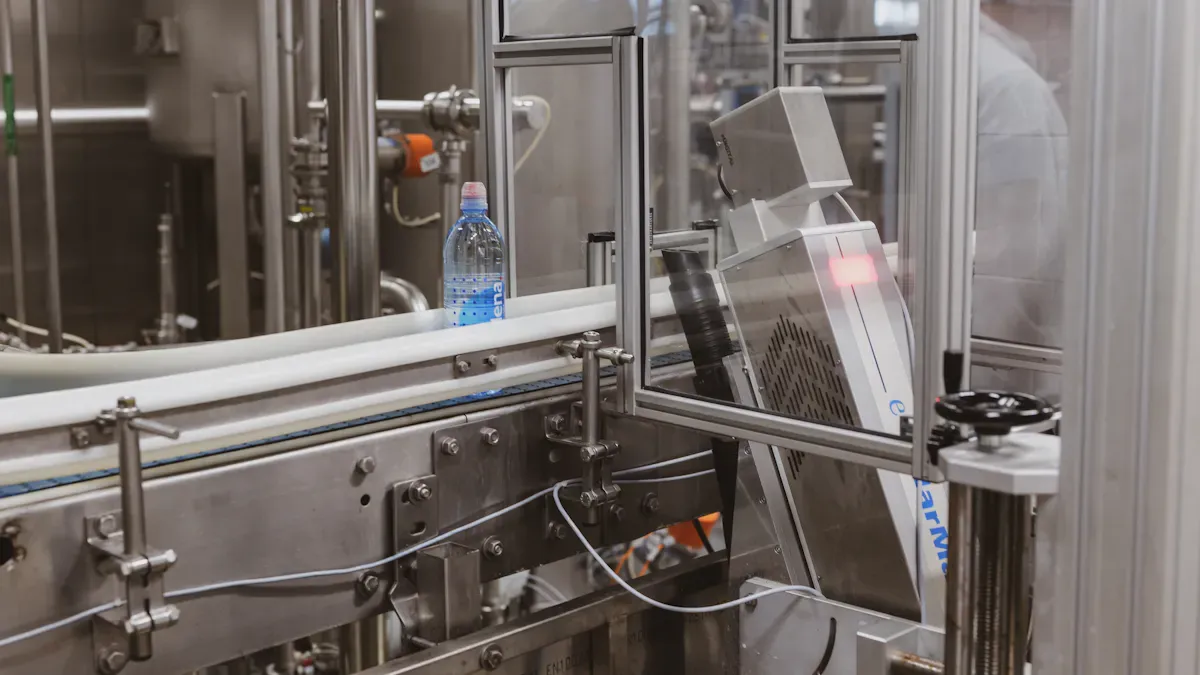
Plastic Compounding customizes base resins with additives, tworzenie materiałów dostosowanych do konkretnych zastosowań. Peletyzowanie przekształca te złożone materiały w jednolite peletki, gotowy do wydajnego dalszego wykorzystania. Producenci i inżynierowie, którzy rozumieją różnicę między każdym procesem, mogą zwiększyć wydajność i zapewnić jakość produktu.
Recent market data shows that the global market value for these technologies will reach $82 miliard przez 2025 I $182 miliard przez 2035, driven by growth in automotive and packaging sectors.
| Proces | Efficiency Impact | Product Quality Impact |
|---|---|---|
| Mieszanie | Tailors materials, enhances performance, reduces cost | Enables better quality control |
| Peletyzowanie | Provides consistent material form for processing | Ensures uniformity in final product quality |
Kluczowe dania na wynos
- Plastic compounding customizes base resins with additives to create materials for specific uses.
- Pelletizing transforms compounded materials into uniform pellets for easy processing and handling.
- Understanding the differences between compounding and pelletizing helps manufacturers improve efficiency and product quality.
- Compounding involves mixing, topienie, and extruding materials to achieve desired properties.
- Pelletizing focuses on creating consistent pellet sizes, which is crucial for reliable manufacturing.
- Quality control is essential in both processes to ensure that the final products meet industry standards.
- Both compounding and pelletizing play vital roles in sectors like automotive, elektronika, and healthcare.
- Choosing the right process depends on material characteristics, production needs, and cost considerations.
Definitions and Differences
Plastic Compounding Defined
Plastic compounding refers to the process of mixing polymers with additives, wypełniacze, and reinforcements to modify and enhance the physical and chemical properties of the material. Industry standards define this process as a method to tailor a polymer so that it includes all desired features in a single material. Manufacturers use plastic compounding to improve product quality, obniżyć koszty, and increase productivity. The process typically involves melting, blending, and extrusion to achieve a uniform dispersion of components.
A wide range of ingredients and additives play a role in plastic compounding:
- Przedmieszka: A concentrated mix of pigments and additives within a carrier resin, ensuring even dispersion.
- Antioxidants: Prevent polymer degradation from heat and oxygen, maintaining strength and flexibility.
- UV Stabilizers: Protect polymers used outdoors by absorbing or dissipating harmful ultraviolet radiation.
- Flame Retardants: Inhibit or delay flame production, especially important in electronics and construction.
- Barwniki: Allow for color selection in compounded plastics.
- Strength and Flexibility Modifiers: Achieve specific mechanical properties.
- Antimicrobial Additives: Inhibit germ growth, important for medical products.
- Fillers: Such as talc, włókno szklane, and calcium carbonate, improve strength, obniżyć koszty, and enhance heat resistance.
- Performance Enhancers: Tailor properties like thermal stability, flame retardancy, i odporność na promieniowanie UV.
This process enables manufacturers to create materials with precise characteristics for demanding applications.
Plastic Pelletizing Defined
Plastic pelletizing is a process that converts raw or recycled plastic into small, jednolite granulki. This transformation is essential for efficient manufacturing and recycling. The plastic pelletizer converts cleaned and often shredded or molten plastic into uniform pellets, which are then reintroduced into manufacturing processes. Pelletization addresses challenges such as uneven feeding and material handling, making it vital in sectors like automotive and packaging where product quality is critical.
| Type of Evidence | Bliższe dane |
|---|---|
| Raw Materials | Various types of plastics, w tym polietylen (PE) i polipropylen (PP) |
| Wyjścia | Granulki tworzyw sztucznych produkowane przez topienie, chłodzenie, i procesy cięcia |
Granulowanie zwiększa efektywność produkcji tworzyw sztucznych i pozwala na tworzenie tworzyw specjalistycznych przy zachowaniu łatwości obróbki.
Przegląd kluczowych różnic
Tabela porównawcza
| Aspekt | Mieszanka tworzyw sztucznych | Granulowanie tworzyw sztucznych |
|---|---|---|
| Główny cel | Modyfikuje skład i właściwości polimeru | Przekształca materiał w jednolitą formę granulatu |
| Kluczowe kroki | Mieszanie, topienie, blending, wyrzucenie | Topienie, chłodzenie, cięcie |
| Typowe dodatki | Fillers, barwniki, stabilizatory, wzmacniacze wydajności | Zwykle nie jest dodawany podczas granulowania |
| Wyjście | Dostosowane tworzywo sztuczne (może występować w różnych formach) | Jednolite granulki |
| Aplikacja | Bezpośrednie zastosowanie w produktach lub dalsze przetwarzanie | Używany do formowania, wyrzucenie, lub transportu |
Punkty podsumowujące
- Mieszanie tworzyw sztucznych skupia się na zmianie składu plastiku poprzez zmieszanie różnych składników, co wpływa na jego właściwości fizyczne.
- Plastic pelletizing converts compounded plastic into uniform pellets, primarily concerned with the physical form for ease of use in manufacturing.
- Compounded plastics can be directly shaped into products, while pelletized plastics are typically used for further processing.
- Both processes play a critical role in modern manufacturing, but they address different needs within the production chain.
Wskazówka: Understanding the distinction between these processes helps manufacturers select the right approach for their specific application, ensuring optimal performance and efficiency.
Plastic Compounding Process

Process Steps
Plastic compounding transforms raw materials into high-performance plastics through a series of precise steps. Manufacturers begin by storing raw materials such as resin, dodatki, and fillers in bags, big bags, or silos. Następnie systemy pneumatyczne lub mechaniczne transportują te materiały do obszaru przetwarzania. Operatorzy wprowadzają materiały do cylindra prasy, w sposób ciągły lub partiami. Proces łączenia jest kontynuowany poprzez topienie i mieszanie, gdzie polimer i dodatki mieszają się w celu uzyskania jednorodności. Ostatnim etapem jest kształtowanie, chłodzenie, i cięcie produktu, po której następuje rygorystyczna kontrola jakości.
| Krok | Opis |
|---|---|
| 1 | Przechowywanie surowców w workach, big bags, i silosy |
| 2 | Pneumatyczny lub mechaniczny system transportu materiału |
| 3 | Podawanie materiału do cylindra prasy (napełnianie ciągłe/nieciągłe) |
| 4 | Faza topienia i mieszania |
| 5 | Produkt końcowy i kontrola |
Notatka: Insight Polymers wykorzystuje szybką realizację i specjalistyczne mieszanie, aby dostarczać niestandardowe rozwiązania w zakresie mieszania tworzyw sztucznych, optymalizując każdy etap pod kątem wydajności i jakości.
Sprzęt używany
Plastic compounding facilities rely on advanced equipment to ensure consistent results. Extruders set the pace for processing and play a central role in melting and mixing. Continuous mixers work alongside extruders to handle materials like acrylics, nylons, and PVC. Mixing systems prepare additive pre-blends, while dosing systems guarantee precise ingredient ratios. Material handling technologies, such as rotary feeders and diverter valves, support the smooth distribution and dosing of bulk materials. Integrated compounding lines combine these systems, allowing for flexible production rates and configurations. Insight Polymers utilizes internal twin-screw extrusion pilot assets to conduct small development batch trials, enabling efficient screening of product and processing parameters.
Types of Compounding
Mieszanie tworzyw sztucznych obejmuje kilka podejść, każdy dostosowany do konkretnych potrzeb aplikacji. Producenci mogą dodawać barwniki w celu poprawy wyglądu lub stabilizatory w celu poprawy odporności na ciepło i promieniowanie UV. Środki zmniejszające palność zwiększają bezpieczeństwo, zwłaszcza w budownictwie i elektronice. Modyfikatory udarności zwiększają wytrzymałość, podczas gdy wypełniacze i wzmocnienia dostosowują koszt, sztywność, lub siła. Związki o niestandardowym składzie mogą również obejmować środki przeciwdrobnoustrojowe do produktów medycznych lub wzmacniacze UV do użytku na zewnątrz. Insight Polymers specjalizuje się w rozwiązaniach w zakresie mieszania polimerów, które spełniają unikalne cele w zakresie wydajności, oferując koncentraty przedmieszek i niestandardowe mieszanki tworzyw sztucznych do formowania wtryskowego, włókna, filmy, i produkcja przyrostowa.
- Wybór koloru ze względu na estetykę
- Bezpieczne dla żywności receptury do pakowania
- Środki zmniejszające palność w budownictwie
- Regulacja wytrzymałości i elastyczności w zależności od potrzeb konkretnego produktu
- Antimicrobial properties for healthcare
- Enhanced UV tolerance for outdoor durability
This comprehensive approach ensures that every polymer compounding solution meets the demands of modern manufacturing.
Material States
Plastic compounding involves several material states as raw ingredients transform into high-performance compounds. The process begins with solid resins, dodatki, i wypełniacze. Operators feed these materials into the compounding system, where they remain in a granular or powder form. As the process advances, the extruder heats and melts the mixture, converting it into a viscous, molten state. This molten blend allows for thorough mixing and dispersion of all components.
Once homogenization is complete, the material exits the extruder. At this stage, it can take several forms depending on the application. Niektórzy producenci schładzają i kroją ekstrudat na peletki, podczas gdy inne mogą wytwarzać pasma, prześcieradła, lub bezpośrednio uformowane kształty. Stan końcowy – czy pellet, pasmo, lub arkusz — zależy od wymagań dalszego przetwarzania. Na przykład, Insight Polymers często dostarcza niestandardowe mieszanki tworzyw sztucznych w postaci granulek, co ułatwia obsługę i spójne podawanie na liniach do formowania wtryskowego lub wytłaczania.
Możliwość kontrolowania stanów materiałów w trakcie całego procesu gwarantuje, że produkt końcowy spełnia rygorystyczne kryteria wydajnościowe. Ta elastyczność obsługuje szeroki zakres zastosowań, od części samochodowych po urządzenia medyczne, i umożliwia szybkie dostosowanie się do potrzeb klienta.
Kontrola jakości
Kontrola jakości stanowi podstawę każdej udanej operacji mieszania tworzyw sztucznych. Producenci polegają na zaawansowanych, automatycznych systemach sterowania spójne właściwości pelletu podczas wytłaczania. Systemy te monitorują i dostosowują parametry przetwarzania w czasie rzeczywistym, zapewniając, że stopiona mieszanina pozostaje homogenizowana. W rezultacie, pigmenty i dodatki rozprowadzają się równomiernie, w celu uzyskania jednolitej przedmieszki.
Operatorzy stosują kilka praktycznych metod weryfikacji konsystencji produktu. The metoda wypierania wody zapewnia niezawodny sposób pomiaru gęstości na hali produkcyjnej. Technika ta polega na pomiarze początkowego poziomu wody, ważenie próbki, i obliczanie gęstości na podstawie wypartej objętości. Poprawia dokładność recepturowania, zapobiega marnowaniu materiału, i zapewnia stałą wagę produktu. Korzyści te wspierają lepszą kontrolę kosztów i zmniejszają problemy z jakością produkcji.
Kompleksowy program kontroli jakości obejmuje szereg badań:
- Color matching tests use spectrophotometers to evaluate color differences and ensure visual consistency.
- Thermal stability tests validate pigment endurance at molding temperatures.
- Dispersion tests confirm even additive distribution through microscopic observation.
- Mechanical performance tests review tensile strength and impact resistance.
Insight Polymers integrates these quality control measures into every batch, ensuring that their polymer compounding solutions deliver reliable performance. This commitment to quality supports industries that demand precision, such as automotive, elektronika, and healthcare.
Wskazówka: Consistent quality control not only enhances product reliability but also strengthens customer trust in custom plastic compounding services.
Plastic Pelletizing Process
Process Steps
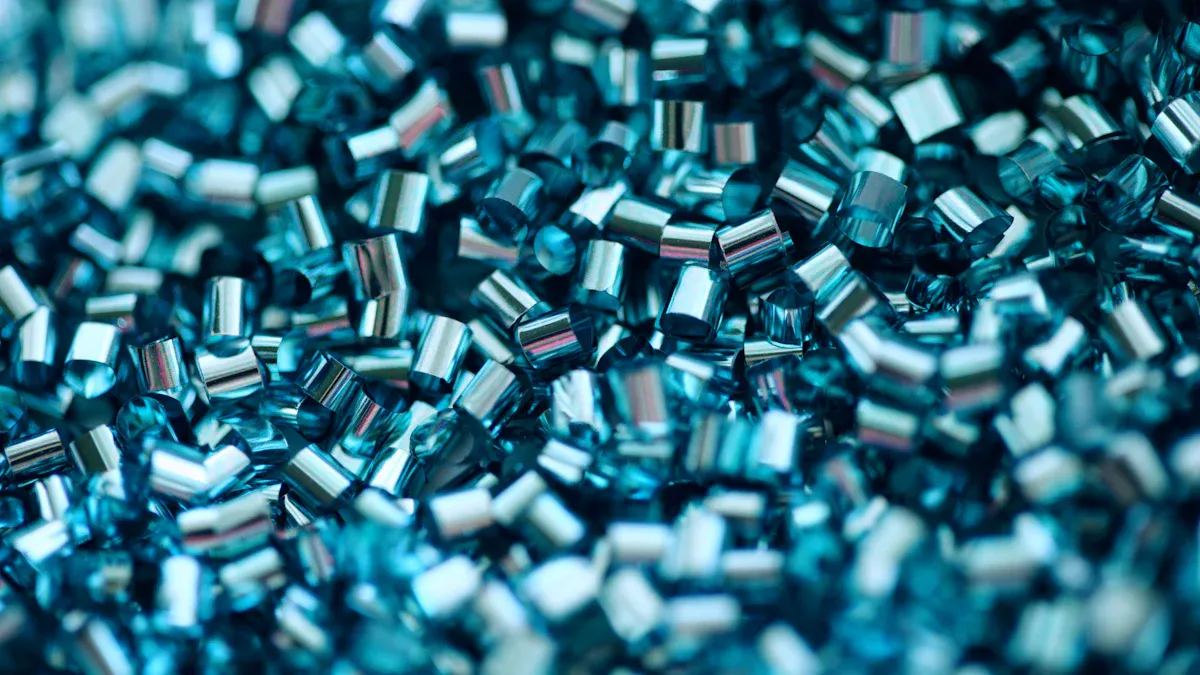
Granulowanie tworzyw sztucznych przekształca surową lub przetworzoną żywicę w jednolite pelety w szeregu dobrze zdefiniowanych etapów. Operatorzy zaczynają od sortowania odpadów z tworzyw sztucznych według rodzaju polimeru, kolor, i poziom zanieczyszczenia. Następnie rozdrabniają posortowane tworzywa sztuczne na mniejsze płatki, co poprawia skuteczność prania. Po umyciu, czyste płatki przechodzą do etapu topienia, gdzie są podgrzewane i wytłaczane. Roztopiony plastik przechodzi przez filtr, który usuwa wszelkie pozostałe zanieczyszczenia. Gdy przefiltrowany stop opuszcza płytę matrycy, tworzy ciągłe pasma. Pasma te poddawane są szybkiemu chłodzeniu w kąpieli wodnej lub w układzie chłodzenia powietrzem, stabilizujące ich strukturę. Wreszcie, ochłodzone pasma pocięto na peletki, które są gotowe do dalszej produkcji.
Efektywne granulowanie zapewnia stałą wielkość i jakość pelletu, which is critical for reliable processing in molding and extrusion applications.
Sprzęt używany
Pelletizing operations rely on specialized machinery to achieve high throughput and consistent results. Strand pelletizers handle the extrusion of molten plastic into strands and cut them into pellets. Underwater pelletizers cut the molten plastic directly under water, which instantly cools and solidifies the pellets. Cold pelletizers produce pellets from hot extrudate without using water cooling. Each machine type supports different process requirements and material characteristics. Operators select equipment based on the type of resin, the presence of additives, and the desired pellet properties.
- Granulatory pasmowe: Cut extruded strands into uniform pellets.
- Podwodne granulatory: Cut and cool pellets simultaneously in a water chamber.
- Cold pelletizers: Produce pellets without water, nadaje się do materiałów wrażliwych na ciepło.
Rodzaje technologii granulowania
Producenci stosują kilka technologii granulowania, każdy oferuje unikalne zalety w zakresie wydajności i jakości wyjściowej. Granulowanie nici działa najlepiej w celu zapewnienia czystości, stabilne materiały i zapewnia wysoką jakość wydruku. Granulowanie z pierścieniem wodnym tnie stopione tworzywo sztuczne na powierzchni matrycy i chłodzi ją w krążącym pierścieniu wodnym, co zwiększa efektywność. Podwodne granulowanie tnie pelety w komorze wodnej, zapewniając równomierne chłodzenie i bardzo wysoką jakość wyjściową.
| Technologia granulowania | Opis | Efektywność | Jakość wyjściowa |
|---|---|---|---|
| Granulatory nici | Pellet cięty w pasma i nadaje się do czystych materiałów. | Umiarkowany | Wysoki |
| Granulatory matrycowe | Uwzględnij systemy podwodne i pierścienie wodne, zapewniając szybkie chłodzenie. | Wysoki | Bardzo wysoki |
Operatorzy wybierają odpowiednią technologię w zależności od rodzaju żywicy, the presence of additives, i wymagane właściwości pelletu. The right selection ensures that pellets meet strict quality standards for downstream processing.
Material States
Pelletizing transforms plastics through several distinct material states. The process begins with solid plastic feedstock, which can include virgin resin, recycled flakes, or regrind. Operators load these materials into hoppers or feeders. The material then enters the extruder, where heat and mechanical force convert the solid particles into a molten state. This molten plastic flows through the extruder barrel, ensuring thorough mixing and homogenization.
As the molten mass exits the extruder, it passes through a die plate. At this stage, the material forms continuous strands or droplets, depending on the pelletizing technology. In strand pelletizing, the molten plastic emerges as long, spaghetti-like strands. These strands move through a cooling system, często kąpiel wodna, co szybko utwardza materiał. Po ochłodzeniu, zestalone pasma wchodzą do komory cięcia, gdzie obrotowe noże siekają je na jednolite granulki.
Inne metody granulowania, takie jak systemy podwodne lub systemy pierścieni wodnych, przetnij stopione tworzywo sztuczne natychmiast po wyjściu z matrycy. Pelety schładzają się i twardnieją niemal natychmiast w środowisku wodnym. Produkt końcowy składa się z małych, gęste granulki o stałym rozmiarze i kształcie. Pellety te są łatwe w obsłudze, transport, i wprowadzane do dalszych procesów produkcyjnych.
Wskazówka: Kontrolowanie każdego stanu materiału podczas granulowania zapewnia, że końcowe pelety spełniają rygorystyczne standardy jakości i wydajności.
Kontrola jakości
Kontrola jakości podczas granulowania odgrywa kluczową rolę w utrzymaniu jednorodności i czystości pelletu. Operators implement several protocols throughout the process to ensure high-quality output:
- Pre-sorting and washing remove contaminants and non-target materials. Automated sorting systems and washing lines help achieve a clean feedstock.
- Drying and decontamination eliminate moisture and impurities. High-temperature drying and vacuum purification prepare the material for extrusion.
- Extrusion and pelletization melt purified flakes or resin into uniform pellets. Twin-screw extruders provide excellent mixing and consistency.
- Vacuum degassing removes gases and volatile compounds under high vacuum conditions. This step prevents defects and improves pellet quality.
- Crystallization and solid-state polymerization (SSP) enhance the intrinsic viscosity of certain polymers, such as PET. These steps ensure that the pellets meet application-specific requirements.
Operatorzy monitorują rozmiar peletu, kształt, i kolor w trakcie całego procesu. Używają sit, kontrola wizualna, oraz zautomatyzowane czujniki wykrywające wszelkie odchylenia. Konsekwentna kontrola jakości zmniejsza ilość odpadów, poprawia efektywność procesu, i gwarantuje, że pelety będą działać niezawodnie podczas formowania, wyrzucenie, lub inne aplikacje.
Notatka: Niezawodna kontrola jakości w procesie peletowania wspiera producentów w wytwarzaniu wysokowydajnych produktów dla wymagających gałęzi przemysłu.
Aplikacje
Aplikacje złożone
Mieszanie tworzyw sztucznych umożliwia producentom tworzenie materiałów o właściwościach dostosowanych do wymagających sektorów. Poniższa tabela podkreśla powszechnych zastosowań przemysłowych:
| Sektor | Aplikacje |
|---|---|
| Automobilowy | Lekkie materiały, tworzywa sztuczne odporne na ciepło, polimery odporne na uderzenia |
| Elektronika | Związki zmniejszające palność, tworzywa sztuczne przewodzące ciepło, materiały antystatyczne |
| Produkty konsumenckie | Trwałe tworzywa sztuczne, materiały bezpieczne dla żywności, Związki odporne na promieniowanie UV |
| Zastosowania przemysłowe | Chemical-resistant polymers, reinforced plastics, abrasion-resistant materials |
Automobilowy
Automotive manufacturers rely on advanced compounds for lightweighting and structural integrity. High-performance plastic compounds replace metal in interior panels, zderzaki, and under-the-hood components. These materials offer comparable strength and thermal performance, which improves fuel efficiency and safety. Insight Polymers delivers custom compounding for injection molding, enabling rapid prototyping and production of automotive parts that meet strict industry standards.
Elektronika
Electronics producers use specialty compounds for housings, złącza, and insulators. Flame-retardant and thermally conductive plastics protect sensitive components from heat and electrical hazards. Anti-static materials prevent damage from static discharge. Insight Polymers supports electronics manufacturers with masterbatch concentrates that enhance safety and performance in consumer devices and renewable energy systems.
Medyczny
Medical device manufacturers require compounds with precise mechanical and chemical properties. Custom formulations provide antimicrobial protection and biocompatibility for diagnostic equipment and surgical tools. Insight Polymers develops specialty compounds for fibers and films used in medical packaging and devices, ensuring compliance with healthcare regulations.
Pelletizing Applications
Pelletizing transforms raw or recycled plastics into uniform pellets, supporting a wide range of manufacturing processes.
Molding & Extrusion
Pellets serve as the standard feedstock for molding and extrusion. Their consistent size and shape ensure reliable machine operation and product quality. Manufacturers use pellets to produce daily-use products such as trash bins, hangers, and flower pots, as well as industrial items like pallets and automotive interior base materials.
Recykling
Pelletizing plays a vital role in recycling. Operators sort, shred, and melt plastic waste, then re-extrude and pelletize it into high-quality, reusable pellets. This process closes the loop in the plastic lifecycle, allowing manufacturers to reintroduce recycled material into new products. Applications include construction materials like plastic lumber and municipal covers.
By turning plastic waste into a consistent raw material, pelletizing helps close the loop in the plastic lifecycle.
Bulk Handling
Large-scale manufacturers benefit from pelletizing in bulk handling and logistics. The process includes material intake, sorting, shredding, wyrzucenie, granulowanie, i opakowanie. Uniform pellets simplify storage, transport, and return shipping, supporting efficient supply chains. Manufacturers can ship pellets back for reuse or send them to third parties for new product applications.
Insight Polymers’ expertise in custom compounding and pelletizing supports diverse applications, from injection molding and additive manufacturing to sustainable recycling initiatives.
Process Selection
Czynniki do rozważenia
Manufacturers must evaluate several factors when selecting the right process for their production needs. These considerations help ensure that the chosen method aligns with both operational goals and product requirements:
- Material characteristics play a central role. Zrozumienie właściwości fizycznych i chemicznych materiałów wejściowych określa zgodność z niestandardowymi mieszankami tworzyw sztucznych lub granulowaniem.
- Wymagania dotyczące wydajności muszą odpowiadać wydajności granulatora i poprzedzającego systemu wytłaczania. Takie ustawienie zapobiega powstawaniu wąskich gardeł i maksymalizuje wydajność.
- Wymagania dotyczące jakości pelletu zależą od specyfikacji użytkownika końcowego. Precyzja w zakresie wielkości i kształtu peletu zapewnia spójne przetwarzanie na dalszym etapie.
- Środowisko operacyjne i dostępne narzędzia mają wpływ na wybór systemu. Obiekty muszą spełniać wymagania wybranego procesu.
- Konserwacja i łatwość obsługi wpływają na długoterminową produktywność. Maszyny wymagające mniej konserwacji i zapewniające wyższą dostępność skracają przestoje.
- Względy kosztów i zwrotu z inwestycji kierują podejmowaniem decyzji. Ocena całkowitych kosztów posiadania, including operating expenses and potential product loss, ensures financial sustainability.
- Companies often require components with exceptional durability. Design flexibility remains essential for meeting unique application needs. Cost efficiency continues to influence the choice of manufacturing methods.
Understanding the unique mechanical properties, odporność chemiczna, and processing characteristics of different plastics is vital. These factors directly impact durability, efektywność kosztowa, and compliance with industry standards.
Case Studies
| Application Area | Evidence of Success | Outcome Description |
|---|---|---|
| Resin Manufacturing and Polymerization | Increased output by 40% with underwater pelletizing system. | Effective for continuous production of consistent pellets. |
| Mieszanie i produkcja koncentratów | Improved color pellet performance in customer processes using underwater systems. | Ideal for color concentrates and filled compounds. |
| Recycling and Reclaim Operations | Customized system for PET bottle recycling to handle changing materials. | Strand systems for consistent scrap; underwater for mixed materials. |
Manufacturers in the medical sector have achieved low extractables profiles in blood set tubing by selecting TPE or DEHP-free PVC. Autoclavable device components benefit from TPE compounds, which resist embrittlement during repeated sterilization. Full batch genealogy ensures traceability of all components, supporting quality assurance in medical device manufacturing.
Challenges & Rozwiązania
Manufacturers often encounter challenges during implementation. Addressing these issues quickly ensures consistent quality and operational efficiency:
- Irregular pellet size and shape can occur. Operators adjust die temperature, inspect cutting blades, and set the correct blade gap to resolve this.
- Zmniejszona przepustowość lub zakleszczenie maszyny może zakłócić produkcję. Oczyszczanie otworów matrycy, zapewniając stały przepływ materiału, i monitorowanie elementów sekcji podajnika pomagają utrzymać stabilną pracę.
- Przegrzanie maszyny lub silnika stwarza ryzyko. Sprawdzanie układów chłodzenia, sprawdzenie nadmiernego tarcia, i zapewnienie odpowiedniej prędkości cięcia zapobiegają uszkodzeniom.
- Zła jakość pelletu wpływa na wydajność w dalszej części procesu. Weryfikacja profili temperaturowych, wdrażanie rygorystycznego postępowania z materiałami, i wstępne suszenie materiałów higroskopijnych poprawiają wyniki.
Stosując te rozwiązania, firmy mogą zoptymalizować swoje rozwiązania w zakresie mieszania polimerów i utrzymywać wysokie standardy w niestandardowych procesach mieszania i wytłaczania tworzyw sztucznych.
Trendy w technologii granulowania
Postępy w mieszaniu
Ostatnie postępy w zakresie łączenia składników zmieniły podejście producentów do projektowania i produkcji materiałów. Companies now use recycled resins and bio-based polymers to zmniejszyć ilość odpadów and support sustainability. They rejuvenate old plastic streams, restoring their properties and extending their lifecycle. Advanced compounding techniques allow plastics to replace metals and ceramics in many applications, improving efficiency and reducing costs.
Manufacturers benefit from several key developments:
- Flexibility in creating components without traditional dies or tooling.
- Cost-effective solutions for prototyping and short-run production.
- Enhanced mechanical strength and durability in finished parts.
- Integration of nanotechnology to improve material properties.
- Adoption of Industry 4.0 technologies for better process control and customization.
These innovations enable the use of a wide range of additives, including those that improve conductivity, flame retardance, and structural strength. Koncentracja na materiałach zrównoważonych i nadających się do recyklingu w dalszym ciągu napędza ewolucję procesów łączenia.
Innowacje w granulowaniu
Technologia granulowania uległa znacznej poprawie, szczególnie w kontroli jakości i wydajności operacyjnej. Wiodący producenci przyjęli zaawansowane systemy filtracji, które wykorzystują wiele etapów filtracji z mniejszymi rozmiarami oczek. Takie podejście usuwa zanieczyszczenia i zapewnia doskonałą jakość pelletu, ochrona późniejszego sprzętu.
| Typ innowacji | Opis |
|---|---|
| Zaawansowane systemy filtracji | Wiele etapów filtracji dla czystszego pelletu i ochrony sprzętu. |
| Inteligentne systemy sterowania | Monitorowanie w czasie rzeczywistym i konserwacja predykcyjna za pośrednictwem interfejsów dotykowych. |
| Jednostka dynamicznego przygotowania wstępnego | Jednoetapowe przygotowanie tworzyw do wytłaczania, zachowanie właściwości materiału. |
| Integracja IoT i AI | Predictive maintenance and real-time adjustments for improved efficiency and lower costs. |
Dynamic preconditioning units combine several steps into one, preparing plastics for extrusion while maintaining high end-product quality. Intelligent control systems provide operators with real-time data, allowing quick adjustments to the process. IoT and AI integration further enhance pelletizing by enabling predictive maintenance and reducing downtime.
Zrównoważony rozwój
Sustainability initiatives have become central to the development of both compounding and pelletizing technology. Companies like LyondellBasell focus on improving the quality of mechanical plastic recycling through research and development. Their efforts ensure that recycled materials meet strict safety and performance standards. Primex demonstrates a commitment to sustainability by operating an in-house recycling facility. This facility processes post-industrial and post-consumer materials through collection, sorting, shredding, washing, i granulowanie. The result is high-quality recycled resin suitable for manufacturing.
Manufacturers now prioritize the use of sustainable additives and recyclable materials in their processes. They design pelletizing systems to handle a variety of recycled plastics, supporting closed-loop recycling and reducing environmental impact. These trends reflect a broader industry shift toward responsible production and resource conservation.
Wskazówka: Embracing new pelletizing technology and sustainable practices helps manufacturers stay competitive while meeting environmental goals.
Manufacturers rely on both processes for different application needs. Plastic compounding creates materials with specific properties, podczas gdy granulowanie przygotowuje te materiały do efektywnego wykorzystania. Wybór odpowiedniego procesu gwarantuje, że każda aplikacja spełni cele w zakresie jakości i wydajności.
- Przed wybraniem procesu należy ocenić wymagania każdej aplikacji.
- Aby uzyskać wskazówki dotyczące złożonych zastosowań, skonsultuj się z ekspertami branżowymi.
Aby uzyskać więcej informacji na temat rozwiązań niestandardowych, producenci mogą skontaktować się z Insight Polymers lub zapoznać się z zasobami technicznymi.
Często zadawane pytania
Jaka jest główna różnica między mieszaniem tworzyw sztucznych a granulowaniem?
Mieszanie tworzyw sztucznych zmienia właściwości tworzyw sztucznych poprzez zmieszanie żywic z dodatkami. Granulowanie kształtuje te materiały w jednolite peletki, co ułatwia przetwarzanie. Każdy proces pełni wyjątkową rolę w produkcji.
Kiedy producent powinien wybrać niestandardowe mieszanki tworzyw sztucznych?
Manufacturers select custom plastic compounding when they need materials with specific properties, such as flame resistance or enhanced strength. Insight Polymers offers rapid, tailored solutions for these requirements.
Can pelletizing improve recycled plastic quality?
Tak. Pelletizing cleans, melts, and reforms recycled plastics into uniform pellets. This process removes contaminants and improves consistency, making recycled materials suitable for new products.
What equipment does Insight Polymers use for compounding?
Insight Polymers uses twin-screw extruders, advanced mixers, and precise dosing systems. These tools allow for efficient blending and rapid development of custom compounds.
How do manufacturers ensure quality during compounding?
Manufacturers use real-time monitoring, color matching, and mechanical testing. They check density and dispersion to guarantee consistent results. Quality control remains essential for reliable performance.
Are compounded pellets ready for injection molding?
Tak. Compounded pellets from Insight Polymers are designed for direct use in injection molding, wyrzucenie, i produkcja przyrostowa. Their uniformity ensures smooth processing and high-quality finished parts.
What industries benefit most from these processes?
Automobilowy, elektronika, medyczny, and packaging industries rely on compounding and pelletizing. These sectors demand materials with precise properties and consistent quality.