

Kon Diferente Sistemanan di Ekstrushon ta Stack Up pa Fabrikashon
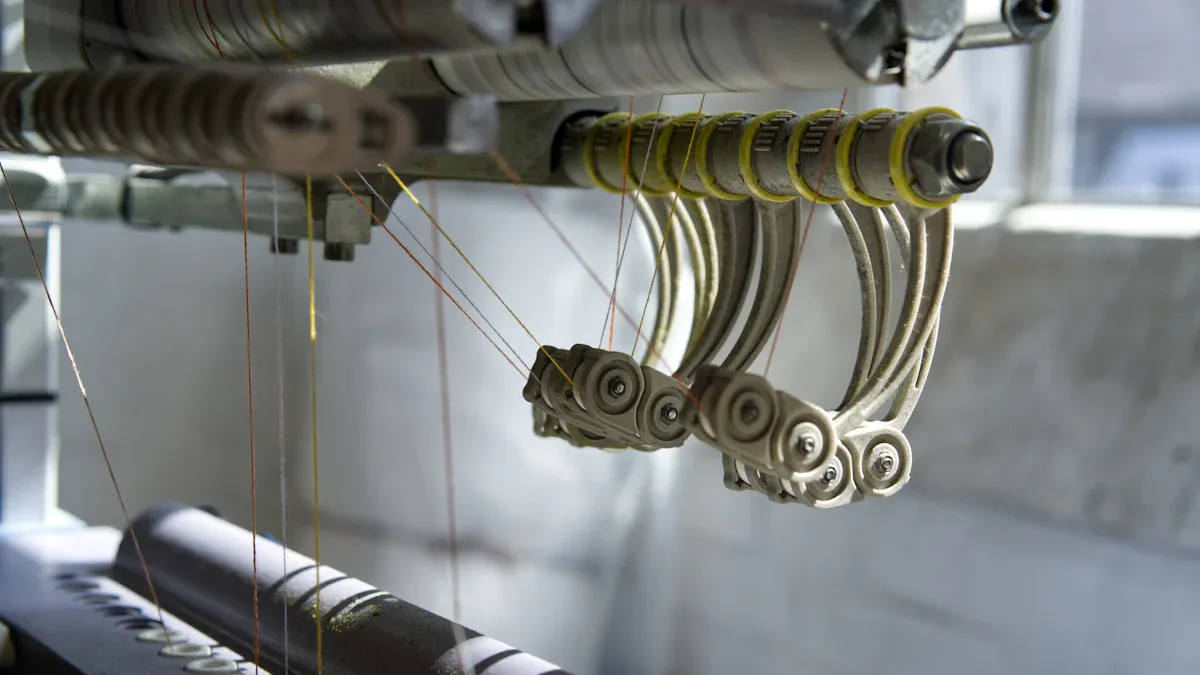
Mi a mira ku e eskoho di sistema di ekstrushon ta forma henter e proseso di fabrikashon. Mayoria di fabrikante ta usa sistemanan di un solo skru, ku ta tene un 62% parti di merkado, miéntras ku sistemanan di dos skru ta konta pa 38%.
| Tipo di Sistema di Ekstrushon | Porsentahe di Parti di Merkado |
|---|---|
| Un solo skru | 62% |
| Twin-screw | 38% |
Selekshoná entre tipo di skru ta afektá efisiensia, kalidat di produkto, i kompatibilidat di material. Ora mi ta kuadra teknologia di ekstrushon ku metanan di fabrikashon, Mi ta nota mehorashonnan den kosto-efektividat, versatilidat di diseño, i sostenibilidat.
| Faktor | Impakto riba Efisiensia di Fabrikashon | Impakto riba Kalidat di Produkto |
|---|---|---|
| Parameternan kontrolá | Mantené kalidat di produkto uniforme | Ta logra toleransianan di mikrometer |
Mi ta dependé di Sistemanan di Ekstrushon Kompleto pa entregá resultadonan konsistente i rendimentu di skru presis.
Puntonan Klave
- Skohe e sistema di ekstrushon korekto basá riba bo metanan di fabrikashon i propiedatnan di material pa garantisá un rendimentu optimal.
- Ekstrudernan di un solo skru ta ideal pa produkshon di volúmen haltu di materialnan simpel, miéntras ku sistemanan di dos skru ta sobresalí den meskla materialnan kompleho.
- Mantenshon i monitoreo regular di sistemanan di ekstrushon ta prevení tempu di inaktividat i ta mehorá efisiensia, garantisá kalidat di produkto konsistente.
- Konsiderá e diameter di skru i e relashon L/D ora di selektá un ekstruder, komo ku e faktornan aki ta impaktá e rendimentu i efisiensia di meskla.
- Utilisá ko-ekstrushon pa krea produktonan multi-kapa ku ta kombiná diferente material, mehorá funshonalidat i rendimentu.
- Evaluá e kompatibilidat di materialnan ku e sistema di ekstrushon skohé pa evitá defektonan i garantisá un produkshon di kalidat haltu.
- Keda informá tokante tendensianan emergente den teknologia di ekstrushon, manera IoT i AI, pa mehorá efisiensia i adaptá na nesesidatnan di produkshon ku ta kambia.
- Krea un lista di kòntròl di faktornan klave promé ku selektá un mashin di ekstrushon pa evitá erornan kostoso i sigurá ku e sistema ta kumpli ku e rekisitonan di aplikashon.
Skohe e Sistema di Ekstrushon Korekto pa Fabrikashon
Faktornan Klave den Selekshon di Sistema
Nunka mi no a haña un universal “mihó” sistema di ekstrushon. Mi eksperensia ta bisa mi ku e eskoho ideal ta dependé di e metanan di fabrikashon, propiedatnan di material, i rekisitonan di produkto. Ora mi selektá un sistema di ekstrushon, Semper mi ta kuadra su kapasidatnan ku e aplikashon intenshoná. E aserkamentu aki ta sigurá ku e proseso di ekstrushon ta entregá kalidat konsistente i rendimentu optimal.
Mi ta konsiderá vários faktornan krítiko promé ku hasi un selekshon di mashin di ekstrushon. Mi ta usa e siguiente tabel pa guia mi desishon:
| Faktor | Deskripshon |
|---|---|
| Ophetivo di Investigashon | Propósito di e mashin (edukashon, desaroyo material, òf produkshon piloto komersial) |
| Tipo di Material | Tipo di polímero ku mester wòrdu prosesá (sensitivo na kalor, volátil, òf reaktivo) |
| Kapasidat di Salida Rekerí | Kapasidat di rendimentu (gram òf kilogram pa ora) |
| Rekisitonan di Proseso Avansá | Mester di inyekshon di gas, desgasamentu di vakuo, òf kapasidat di ekstrushon reaktivo |
| Presupuesto i Espasio di Laboratorio | Konsiderashon pa ekspanshon modular pa mehorashonnan den futuro |
| Nesesidatnan di Eskala den Futuro | Kompatibilidat ku mòdulnan di ekstrushon industrial pa oumentá produkshon |
Semper mi ta paga tinu na e diameter di e skru i e relashon L/D. E parameternan aki ta determiná kapasidat di rendimentu i efisiensia di meskla. Mi ta selektá un ekstruder ku e kapasidat di salida korekto, ku por varia di 0.25 kg/h pa 150 kg/h dependiendo di e modelo. Diseño modular ta permití mi remplasá komponentenan lihé, ku ta duna fleksibilidat pa investigashon i desaroyo. Mi ta dependé di sistemanan di kòntròl avansá, manera PLC i HMI, pa logra un kòntròl presis i trasabilidat di dato.
Ora mi evaluá tipo di mashinnan di ekstrushon, Mi ta konsiderá e kompleksidat di e profil i e toleransianan nesesario. Diseñonan kompliká ta eksigí hermentnan presis i por oumentá gastunan. Mi ta wak tambe e kantidat di pedido. Volúmennan mas haltu ta redusí e gastu pa unidat pasobra e gastunan di setup ta plama den mas unidat. Operashonnan di kabamentu i sekundario, manera anodisashon òf mashin CNC, agregá balor i kosto.
Tep: Mi ta rekomendá pa traha un lista di kòntròl di e faktornan aki promé ku kuminsá e proseso di selekshon di e mashin di ekstrushon. E práktika aki ta yuda evitá erornan kostoso i ta sigurá ku e sistema ta kuadra ku e aplikashonnan previsto.
Impakto riba Efisiensia di Fabrikashon
Mi ta nota ku e sistema di ekstrushon ku mi ta skohe ta afektá efisiensia di fabrikashon direktamente. E diseño di skru, kapasidat di meskla, i teknologia di ekstrushon tur ta hunga un ròl den kon suave e proseso ta kana. Por ehèmpel, un ekstruder di un solo skru hopi bia ta funshoná bon pa polímeronan simpel i produkshon di volúmen haltu. Ekstrudernan di dos skru ta manehá materialnan kompleho i aplikashonnan avansá, manera ekstrushon reaktivo òf meskla spesial.
Mi a mira ku viskosidat haltu i kontenido sólido den materialnan energétiko por kousa obstrukshon, ekstrushon instabil, e desgaste di botter. E asuntunan aki ta redusí efisiensia i ta komprometé seguridat. Mi ta atendé e retonan aki dor di optimalisá e diseño di e sistema di masa. Mehorá uniformidat di meskla i eksaktitut di ekstrushon ta mehorá tantu seguridat komo efisiensia.
Mi ta usa un sistema di ekstrushon di dos etapa di dos skru ora mi mester di mas stabilidat i adaptabilidat. Simulashonnan ta mustra ku e diseño aki ta mehorá karakterístika di fluho i ta mantené un salida konsistente. Semper mi ta monitoriá e proseso di ekstrushon pa garantisá kalidat uniforme i minimalisá tempu di inaktividat.
| Tipo di Evidensia | Deskripshon |
|---|---|
| Retonan den Fabrikashon Aditivo | Viskosidat haltu i kontenido sólido di materialnan energétiko ta kondusí na problemanan manera obstrukshon, ekstrushon instabil, e desgaste di botter, afektando efisiensia i seguridat. |
| Rendimentu di Sistema di Amasamentu | E diseño di e sistema di amasamentu ta impaktá uniformidat di meskla di material i eksaktitut di ekstrushon, ku optimalisashonnan spesífiko proponé pa mehorá seguridat i efisiensia. |
| Diseño di Sistema di Ekstrushon | Un sistema di ekstrushon di dos etapa di dos skru ta diseñá pa mehorá stabilidat i adaptabilidat den e proseso di ekstrushon, ku simulashonnan ku ta revelá karakterístika di fluho di diferente sistema. |
Semper mi ta kuadra e sistema di ekstrushon ku e rekisitonan di produkshon. E práktika aki ta sigurá ku e ekstruder ta entregá e kalidat i rendimentu deseá. Mi ta selektá e konfigurashon di skru basá riba e tipo di material i e kompleksidat di e aplikashon. Mi ta dependé di teknologia di ekstrushon avansá pa maksimisá efisiensia i mantené normanan haltu di kalidat di produkto.
Nota: Mi ta rekomendá mantenshon regular i monitoreo di proseso pa sostené efisiensia máksimo i prevení tempu di inaktividat inesperá.
Tipo di Sistemanan di Ekstrushon Kompleto
Ora mi evaluá sistemanan di ekstrushon kompleto pa fabrikashon, Semper mi ta kuminsá identifiká e prinsipal tipo di mashinnan di ekstrushon. E opshonnan mas komun ta inkluí mashinnan di ekstrushon di un solo skru, mashinnan di ekstrushon di dos schroef, i mashinnan di ekstrushon di ram. Kada sistema ta ofresé forsa i limitashonnan úniko, pues mi ta enfoká riba match e teknologia korekto ku e aplikashon.
| Tipo di Mashin di Ekstrushon |
|---|
| Mashinnan di Ekstrushon di Un Skrof |
| Mashinnan di Ekstrushon di Dos Skruf |
| Mashinnan di Ekstrushon di Ram |
Ekstrushon di un solo skru
Hopi bia mi ta usa un ekstruder di un solo skru pa prosesonan di ekstrushon simpel. E mashin aki ta konta ku un skru ku ta drai paden di un bari kayente. E skru ta pusha material bai dilanti, ta smelt e, i ta forma esaki a traves di un dado. Mi ta dependé di e sistema aki pa produkshon di volúmen haltu di termoplástiko, produktonan di kuminda, i komponentenan di rubber. E simplisidat di e diseño ta hasié fásil pa operá i mantené.
| Industria | Deskripshon di Aplikashon | Pronóstikonan di Kresementu di Merkado |
|---|---|---|
| Plástik | Smeltmentu i formashon di termoplástiko, impulsá pa oumento di PE i uso di PP. | CAGR di aproksimadamente 4-5% dor di 2030 |
| Prosesamentu di kuminda | Produkshon di kuminda prosesá manera snek i sereal. | Merkado a yega riba $75 mil mion pa 2026 |
| Komposishon di rubber | Meskla i forma rubber pa taira i piesanan di outo. | Produkshon di taira a surpasá 2 mil mion unidat pa 2025 |
| Biomédiko | Produkshon di biopolímero pa pakete i aparatonan médiko. | Merkado emergente ku teknologia nobo di ekstrushon |
Pero, Mi ta rekonosé e limitashonnan di ekstrushon di un solo skru. Logra un meskla uniforme por ta difísil, spesialmente ora mi agregá yena òf aditivo. Konsistensia di preshon hopi bia ta varia ku kambionan di materia prima, i materialnan di viskosidat haltu no por flui bon, kondusí na defektonan. E retonan aki ta guia mi selekshon di mashin di ekstrushon ora mi mester di kalidat mas haltu òf prosesamentu mas kompleho.
Tep: Pa simpel, aplikashonnan di volúmen haltu, Mi ta rekomendá pa kuminsá ku un ekstruder di un solo skru. Pa meskla avansá òf materialnan spesial, konsiderá otro opshonnan.
Ekstrushon di dos skruf
Ora mi mester di prosesamentu avansá, Mi ta bira pa ekstruder di dos schroef teknología. E sistema aki ta usa dos skru ku ta drai huntu paden di e bari. E skruunan por intermesh òf kore paralelo, dependiendo di e diseño. Mi ta haña ku e ekstrudernan di dos skru ta entregá un efisiensia di meskla superior, mihó plastifikashon pa materialnan di viskosidat haltu, i kontrol mehorá riba temperatura i preshon. E karakterístikanan aki ta mehorá kalidat di produkto i konsistensia di proseso.
Ekstrushon di dos skru tambe ta permití mi hasi múltiple pasonan di prosesamentu den un mashin. Mi por meskla, smèlt, ventilashon, i asta reakshoná materialnan durante un solo pasa. E fleksibilidat aki ta redusí desperdisio i ta aselerá produkshon. Ora di kompará dos skru vs ekstrudónan di un solo skru, Mi ta mira un rendimentu mas lihé riba invershon i resultadonan mas uniforme ku sistemanan di dos skru, spesialmente pa meskla kompleho òf plèstik resiklá.
Subtipo di Twin-Screw
Semper mi ta konsiderá e diferente tipo di mashinnan di ekstruder denter di e kategoria di schroef gemelo. E konfigurashon di skru ta impaktá e rendimentu, efisiensia, i e rango di aplikashonnan.
Intermeshing
Extrudernan di schroef gemelo intermeshing ta presenta schroefnan cu ta overlap y ta malla hunto. E diseño aki ta proveé transporte di material presis i forsanan haltu di kòrtamentu. Mi ta usa sistemanan di intermeshing pa mehorá komposishon i kompatibilisashon, spesialmente ora mi mester plama aditivonan òf yenadónan uniformemente.
No-Intermeshing
Extrudernan di schroef gemelo no-intermeshing tin schroefnan cu ta draai sin overlap. E setup aki ta ofresé un meskla mas suave i ménos shear. Mi ta skohe diseñonan no-intermeshing pa materialnan sensitivo ku ta rekerí strès mekaniko mínimo.
Ko-Rotando
Extrudernan di dos schroef cu ta draai hunto tin schroefnan cu ta draai den e mesun direccion. E subtipo aki ta sobresalí den efisiensia di meskla i transporte di material. Mi ta usa sistemanan ko-rotativo pa ekstrushon reaktivo, devolatilisashon, i komposishon di polímero di haltu rendimentu. Pero, tasanan haltu di kòrtamentu por degradá materialnan sensitivo na kalor, pues mi ta monitoriá diseño di skru i friamentu di aserka.
| Subtipo | Kapasidatnan di Prosesamentu i Bentahanan | Limitashonnan i Konsiderashonnan | Mihó Aplikashonnan |
|---|---|---|---|
| Extruder di Dos Schroef cu ta Rota Co-Rotativo | Efisiensia haltu di meskla, adekuá pa ekstrushon reaktivo, tarifanan haltu di kòrtamentu | Riesgo di degradashon di material, ta rekerí diseño di skru presis | Komposishon di polímero, nanokompositonan, fluhonan di trabou di laboratorio pa produkshon |
Kontra-Rotashon
Extrudernan di dos schroef cu ta draai contrario ta presenta schroefnan cu ta draai den direccionnan contrario. E konfigurashon aki ta generá forsanan di kòrtamentu mas abou, ku ta protehá materialnan frágil. Mi ta dependé di sistemanan di kontra-rotashon pa serámika, bio-polímeronan, i formulashonnan farmasuétiko. E diseño tambe ta proveé bon akumulamentu di preshon i seyamentu efektivo, ounke e intensidat di meskla ta mas abou ku ku sistemanan ko-rotativo.
| Subtipo | Kapasidatnan di Prosesamentu i Bentahanan | Limitashonnan i Konsiderashonnan | Mihó Aplikashonnan |
|---|---|---|---|
| Extruder di Dos Schroef Contra-Rotativo | Forsanan di kòrtamentu mas abou, bon akumulamentu di preshon, seyamentu efektivo | Intensidat di meskla mas abou, diseño di seyamentu i bearing mas kompleho | Serámika, bio-polímeronan, produktonan farmaséutiko |
Ora mi selektá un sistema di ekstrushon kompleto, Semper mi ta kuadra e tipo di skru i konfigurashon ku e rekisitonan di material i proseso. E aserkamentu aki ta garantisá kalidat haltu, efisiensia, i rendimentu konfiabel den tur aplikashon.
Ekstrushon di Ram
Hopi bia mi ta skohe ekstrushon di ram ora mi mester prosesá materialnan ku ta rekerí preshon haltu i formashon presis. E método aki ta usa un ram hidráuliko pa pusha material dor di un bari kayente i muri, en bes di dependé riba un skru ku ta drai. Mi ta haña ram extruders spesialmente útil pa forma produktonan for di plèstik termoenduresivo, serámika, i PTFE. E proseso ta permití mi krea bara, tubonan, i profilnan ku dimenshonnan konsistente.
Ram ekstrushon ta destaká entre e tiponan di mashin di ekstrushon pasobra e ta manehá materialnan ku ekstrudónan di skru tradishonal no por prosesá efisientemente. Mi ta usa e teknologia aki den industrianan manera plèstik, kuminda, i produktonan farmasu. Por ehèmpel, Mi ta produsí snèk i sereal ku formanan úniko, i mi ta fabriká tablet i kapsula ku spesifikashonnan eksakto.
Mi a nota vários benefisio i reto ora di usa ram extruders:
- Ram extruders ta sobresalí den produsí produktonan di kalidat haltu for di materialnan difísil pa prosesá.
- Mi ta dependé riba nan pa aplikashonnan kaminda teknologia di ekstrushon di skru ta kai kòrtiku, manera PTFE i profilnan di serámika.
- E proseso ta entregá kalidat konsistente i eksaktitut dimenshonal.
- Gastunan operashonal haltu por impaktá efisiensia i rendimentu general.
- Regulashonnan estrikto den fabrikashon di plèstik ta rekerí un kòntròl di proseso kuidadoso.
- Kompetensia di sistemanan di ekstrushon alternativo ta pusha mi pa optimalisá mi selekshon di mashin di ekstrushon.
Semper mi ta pisa e faktornan aki promé ku mi skohe ekstrushon di ram pa sistemanan di ekstrushon kompleto. Mi ta monitoriá e proseso di aserka pa mantené kalidat i efisiensia, spesialmente ora ta traha ku materialnan spesial.
Ko-Ekstrushon
Ko-ekstrushon ta permití mi kombiná vários material den un solo produkto, kreando profilnan multi-kapa ku propiedatnan mehorá. Mi ta usa e teknologia di ekstrushon aki pa integrá diferente termoplástiko, kada kapa ta ofresé karakterístika úniko. E proseso ta enserá pusha vários material dor di un solo matriz, resultando den un profil unifiká ku ta kumpli ku rekisitonan di produkshon kompleho.
Mi ta dependé di ko-ekstrushon pa fabriká produktonan ku ta eksigí durabilidat, fleksibilidat, i apelashon estétiko. E método aki ta permití mi adaptá e kalidat di kada kapa, mehorashon di rendimentu i funshonalidat. Mi ta mira ko-ekstrushon komo un avanse klave den sistemanan di ekstrushon kompleto, spesialmente ora mi mester produsí artíkulonan ku karakterístika spesialisá.
Industrianan ta benefisiá di ko-ekstrushon di vários manera:
- Konstrukshon: Mi ta fabriká bentana, kuadronan, i pidanan di trim ku ta kombiná forsa i apelashon visual.
- Komèrsio minorista: Mi ta konstruí sistemanan di rèki i pantaya ku ta tantu duradero komo atraktivo.
- Señalisashon: Mi ta produsí bòrchi i kuadro iluminá ku kabamentu limpi i rendimentu konfiabel.
Ko-ekstrushon ta ekspandé e rango di aplikashonnan pa teknologia di ekstrushon. Mi ta us’é pa kumpli ku metanan di produkshon eksigente i entregá produktonan ku kalidat superior. Ora mi selektá un ekstruder pa ko-ekstrushon, Mi ta konsiderá diseño di skru, kòntròl di proseso, i kompatibilidat di material. E aserkamentu aki ta garantisá efisiensia i resultadonan konsistente.
Tep: Mi ta rekomendá ko-ekstrushon pa proyektonan ku ta rekerí profilnan multi-kapa i funshonalidat di produkto mehorá. Selekshon kuidadoso di mashin di ekstrushon i monitoreo di proseso ta esensial pa logra kalidat optimal.
Struktura i Operashon di Sistemanan di Ekstrushon
Diseño di Schroef i Bari
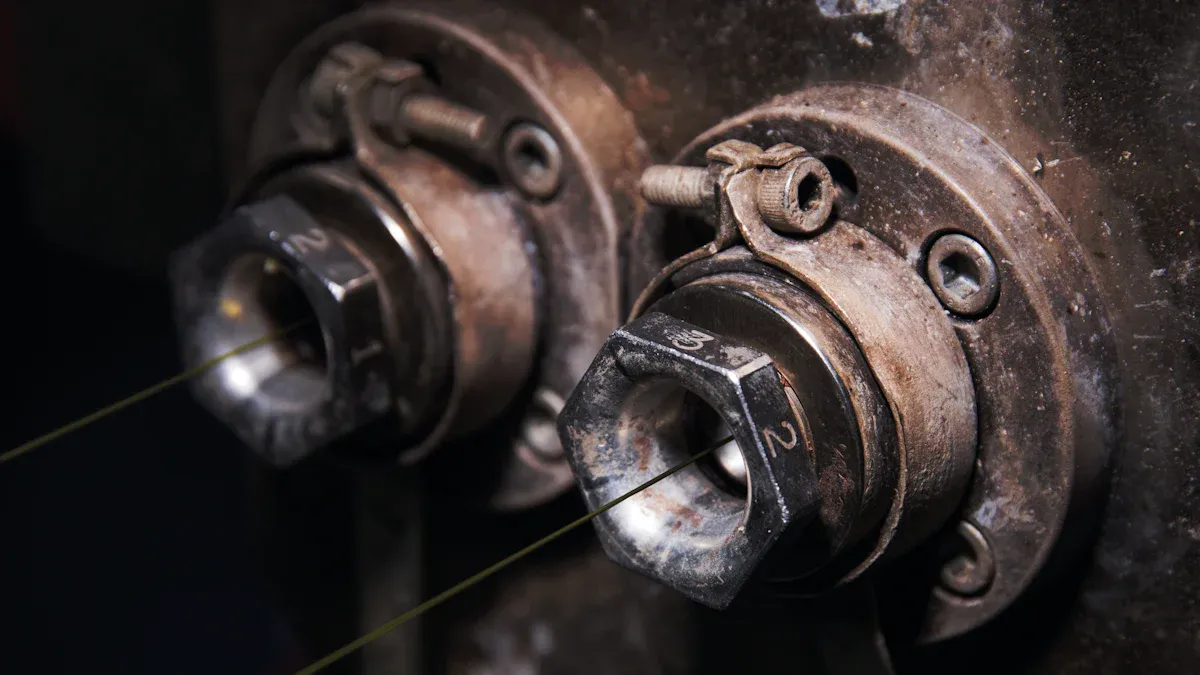
Semper mi ta kuminsá mi selekshon di mashin di ekstrushon dor di analisá e diseño di skru i bari. E geometria di e skru ta determiná kon efisiente e ekstruder ta smelt, meskla, i ta transmití material. Mi ta ahusta e largura-pa-diameter (L/D) proporshon pa kontrolá tempu di residensia i meskla. Un relashon L/D mas haltu ta permití e material pa smelt i meskla mas kompletamente, ku ta esensial pa logra kalidat uniforme den e produkto final. Mi ta dependé di diseñonan di barera den e bari di skru pa mantené stabilidat di smelt i prevení degradashon, spesialmente ora mi ta prosesá materialnan delikado. Diseñonan di schroef i bari paralelo hunga un ròl krusial den velosidat di ekstrushon, kalidat di produkto, i efisiensia di energia. Mi ta usa zonifikashon i kòntròl di temperatura presis pa stabilisá fluho di smelt i evitá gasnan atrapá, ku ta mehorá densidat i konsistensia. E kabamentu di superfisie di e bari i e geometria di e skru tambe ta influensiá efisiensia di energia i konsistensia di produkto. Semper mi ta kuadra e diseño di skru na e rekisitonan spesífiko di e aplikashon pa maksimisá rendimentu.
- Un relashon L/D mas haltu ta mehorá e meskla i uniformidat di smelt, ku ta esensial pa produktonan di kalidat haltu.
- Diseñonan di barera ta yuda mantené stabilidat di smelt i prevení degradashon.
- Geometria di skru i kabamentu di superfisie di bari ta impaktá efisiensia di energia i konsistensia di produkto.
Moveshon i Meskla di Material
Mi ta enfoká riba moveshon i meskla di material efisiente pa garantisá ku e proseso di ekstrushon ta kana sin problema. Mi ta usa transportadónan neumátiko òf mekániko robusto pa transferí materia prima lihé i ku mínimo mantenshon. Diseñonan di mixer avansá ta garantisá un komposishon profundo i uniforme, ku ta prevení variashonnan den produktonan kaba. Mi ta integrá kòntròlnan outomatisá ku sistemanan PLC pa monitoreo i maneho di reseta den tempu real. E aserkamentu aki ta permití mi supervisá produkshon sin problema i ahusta parameternan segun nesesidat. Mi ta selektá konfigurashonnan skalabel pa akomodá tantu tayernan chikí komo operashonnan industrial grandi. Karakterístika di kontrol di stòf mehorá ta tene e lugá di trabou limpi i sigur. Konsistente, mesklanan homogéneo ta redusí fluktuashonnan di kalidat i mehorá e rendimentu. Sistemanan outomatisá ta minimalisá maneho manual, ku ta kòrta siklonan di produkshon i ta baha gastunan di labor. I always prioritize these features when I evaluate types of extrusion machines for new applications.
| Karakterístika | Deskripshon |
|---|---|
| Efficient Material Transfer | Rapid, moveshon di materia prima di mantenshon abou |
| Meskla di Presishon | Riguroso, komposishon uniforme pa kalidat konsistente |
| Kontrolnan outomatisá | Monitoreo i maneho di reseta den tempu real |
| Konfigurashonnan Eskalabel | Diseñonan fleksibel pa kualke kapasidat di produkshon |
| Kontrol di Stòf Mehorá | Limpiador, lugá di trabou mas sigur |
| Kalidat di Produkto Mehorá | Mesklanan homogéneo, fluktuashonnan redusí |
| Aumento di Rendimentu | Siklonan di produkshon mas kòrtiku, ménos maneho manual |
| Redukshon di Desperdisio | Midimentu eksakto, gastunan mas abou |
| Baha Gastonan di Trabou | Outomatisashon ta liberá personal pa tareanan di balor agregá |
| Ambiente di Trabou Mas Sigur | Liñanan será i kontrol di stòf |
Kontrol di Proseso i Kalidat di Salida
Mi ta dependé di teknologia avansá di kontrol di proseso pa mantené kalidat haltu di produkshon den fabrikashon di ekstrushon. Mi ta selektá termoplastikonan di kalidat haltu pa garantisá ku e produktonan final ta kumpli ku forsa, durabilidat, i rekisitonan di fleksibilidat. I monitor extrusion parameters closely to reduce discrepancies during production. Dimensional accuracy remains a top priority for me, as it guarantees that components fit their intended applications. I use surface inspection to detect defects such as warping or air bubbles, which helps me maintain consistent product quality. Early detection of issues reduces waste and saves on production costs. I always ensure that my process complies with regulatory standards, which protects both my business and my customers. High-quality products enhance my brand reputation and increase customer satisfaction. Advanced monitoring systems allow me to increase production speed without sacrificing accuracy, ku ta impulsá efisiensia general den sistemanan di ekstrushon kompleto.
| Elemento/Bentaha | Deskripshon |
|---|---|
| Selekshon di Material | Ta garantisá forsa, durabilidat, i fleksibilidat |
| Monitoreo di Proseso | Ta redusí diskrepansianan i mantené konsistensia |
| Eksaktitut Dimenshonal | Ta garantisá un bon ahuste pa tur aplikashon |
| Inspekshon di Superfisie | Identifiká defektonan trempan pa mihó kalidat |
| Kalidat di Produkto Konsistente | Tur lote ta kumpli ku normanan haltu |
| Redukshon di Desperdisio | Ta spar gastunan di material i produkshon |
| Kumplimentu ku Regulashon | Ta kumpli ku rekisitonan legal i di seguridat |
| Satisfakshon di Kliente | Konstruí reputashon i fieldat |
| Efisiensia di Proseso | Ta oumentá velosidat miéntras ta mantené e eksaktitut |
Tep: Mi ta rekomendá kalibrashon i mantenshon regular di tur teknologia di ekstrushon pa sostené rendimentu máksimo i kalidat konsistente.
Komparashon di e Proseso di Ekstrushon
Un solo skru vs. Proseso di dos skru
Ora mi kompará ekstrusornan di un solo schroef i di dos schroef, Mi ta enfoká riba kon kada sistema ta manehá e proseso di ekstrushon. E diseño di skru ta forma e manera ku material ta move i meskla. Un ekstruder di un solo skru ta usa un skru helikal paden di un simpel, bari silíndriko. Na kontraste, un ekstruder di dos skru ta konta ku dos skru ku ta interkambiá i un mas kompleho, hopi bia bari segmentá. Mi ta mira ku kontrol di temperatura den sistemanan di un solo skru ta keda básiko, miéntras ku mashinnan di dos skru ta ofresé kòntròl avansá ku múltiple zona di keintamentu i friamentu. E diferensia aki ta impaktá tantu e rendimentu komo e efisiensia di energia.
| Aspekto | Extruder di un solo schroef | Extruder di dos schroef |
|---|---|---|
| Diseño di Schroef | Skruf heliksal úniko | Dos skru ku ta interkambiá |
| Struktura di bari | Simpel, silíndriko | Mas kompleho, hopi bia segmentá |
| Kontrol di Temperatura | Kalentamentu/friamentu básiko | Avansá, multi-zona |
| Kapasidat di Salida | Moderá | Haltu |
| Konsumo di Energia | Generalmente mas haltu | Mas efisiente |
| Fleksibilidat den Rendimentu | Limitá | Haltu |
Mi ta dependé di ekstrudernan di dos skru pa un produkshon mas haltu i mihó efisiensia di energia. Ora mi mester di fleksibilidat den rendimentu òf kontrol di proseso avansá, Mi ta skohe sistemanan di dos skru. Pa aplikashonnan simpel, ekstrusornan di un solo skru ainda ta proveé rendimentu konfiabel.
Kompatibilidat di Material den e Proseso di Ekstrushon
Kompatibilidat di material ta hunga un ròl krusial den selekshon di mashin di ekstrushon. Semper mi ta kuadra e konfigurashon di skru ku e tipo di material ku mi tin plania pa prosesá. Ekstrudernan di un solo skru ta manehá termoplástikonan standart bon, pero nan ta lucha ku materialnan ku ta rekerí meskla intensivo òf tin kontenido haltu di yena. Extrudernan di dos skru ta sobresalí ku komposishonnan spesial, plèstik resiklá, i materialnan reaktivo. Mi ta usa skru segmentá pa ahusta meskla i kòrta pa kada aplikashon.
Ora mi ta traha ku sistemanan di ekstrushon kompleto, Mi ta konsiderá kon kada diseño di skru ta afektá e produkto final. Ekstrudernan di dos skru ta permití mi prosesá un rango mas amplio di material, inkluyendo esnan ku aditivo òf propiedatnan sensitivo. E fleksibilidat aki ta sostené mas tipo di mashin di ekstrushon i ta amplia e rango di aplikashonnan posibel.
Tep: Mi ta rekomendá pa evaluá e propiedatnan kímiko i físiko di bo materia prima promé ku skohe un ekstruder. E paso aki ta garantisá kompatibilidat i ta redusí e riesgo di defektonan.
Kalidat i Konsistensia di Produkto
Mi sa ku e proseso di ekstrushon ta impaktá direktamente e kalidat di e produkto final. Liñanan di ekstrushon moderno ta integrá outomatisashon i plataformanan di kòntròl avansá. E sistemanan aki ta analisá vários variabel pareu, ku ta yuda mi mantené kalidat konsistente den tur lote.
Konsistensia di kalidat ta un multiplikadó di produktividat. Plataformanan di kòntròl avansá ta analisá patronchinan den vários variabel simultáneamente, sigurando ku kalidat di produkto ta keda mantené durante henter e proseso di ekstrushon.
Mi ta monitoriá faktornan klave manera preshon di smelt stabil, tasa di salida, i kabamentu di superfisie. Preshon stabil di smelt ta prevení deformashon i drif dimenshonal. Output mas haltu i mas stabil ta redusí e tarifanan di skrap i tempu di inaktividat. Mihó acabado di superfisie i kòntròl dimenshonal presis ta mehorá e impakto riba e kalidat di e produkto kaba.
| Faktornan Klave | Impakto riba Kalidat i Konsistensia |
|---|---|
| Preshon di smelt stabil | Ta prevení dimenshonnan di drif òf deformashon |
| Output mas haltu i mas stabil | Ta redusí e tarifanan di skrap i tempu di inaktividat |
| Mihó kabamentu di superfisie | Ta mehorá kalidat di produkto en general |
| Kontrol dimenshonal | Ta garantisá presishon den spesifikashonnan di produkto final |
| ROI mas lihé | Mehorá e rentabilidat pa fabrikantenan |
Ora di kompará dos skru vs ekstrudónan di un solo skru, Mi ta mira ku sistemanan di dos skru ta entregá mihó konsistensia i kosto operashonal mas abou. Mi ta logra un ROI mas lihé i un rendimentu mehorá dor di invertí den teknologia di ekstrushon avansá. I always prioritize process monitoring and automation to ensure high quality and efficiency in production.
- Output mas haltu i mas stabil
- Lower scrap and downtime
- Better surface finish and dimensional control
- Reduced operational cost
- ROI mas lihé
I rely on these strategies to maximize the benefits of extrusion and deliver products that meet strict manufacturing standards.
Performance Comparison Table
Rendimentu i Efisiensia
I always evaluate throughput and efficiency when I compare types of extrusion machines. Throughput measures how much material the extruder processes in a given time. Efficiency reflects how well the screw design converts raw material into finished products with minimal waste and energy use. I see that single-screw extruders often deliver steady throughput for standard polymers. Extrudernan di dos skru, with their advanced screw geometry, manehá un produkshon mas haltu i mantené un mihó efisiensia di energia, spesialmente pa meskla kompleho.
| Tipo di Ekstruder | Rendimentu (kg/h) | Efisiensia di Energia | Mihó Kasonan di Uso |
|---|---|---|---|
| Un solo Schroef | 50–500 | Moderá | Volúmen haltu, polímeronan simpel |
| Twin-Screw | 100–1000+ | Haltu | Mesklanan kompleho, trabounan spesialisá |
| Ram Extruder | 10–100 | Abou-Moderá | PTFE, serámika, spesialidat |
| Sistemanan di Ko-Ekstrushon | Ta varia | Haltu | Profilnan multi-kapa |
Semper mi ta kuadra e konfigurashon di skru ku e rekisitonan di material i produkshon. E aserkamentu aki ta sigurá ku e proseso ta entregá kalidat konsistente i ta kumpli ku metanan di fabrikashon. Mi ta dependé di sistemanan di ekstrushon kompleto pa maksimisá rendimentu i efisiensia pa kada aplikashon.
Tep: Mi ta rekomendá pa monitor e konsumo di energia i e tarifanan di produkshon regularmente. E práktika aki ta yuda optimalisá selekshon di mashin di ekstrushon i ta redusí gastunan operashonal.
Mantenshon i Konfiabilidat
Mi ta priorisá mantenshon i konfiabilidat ora mi ta selektá un ekstruder. E skru i bari ta eksperensiá desgaste konstante dor di materialnan abrasivo i temperaturanan haltu. Mi ta programá inspekshonnan di rutina i remplasá komponentenan gastá pa prevení tempu di inaktividat inesperá. Extrudernan di un solo skru ta rekerí ménos mantenshon debí na nan diseño simpel. Extrudernan di dos skru, ku mas piesa ku ta move i skru segmentá, mester di kòntròl mas frekuente pero ofresé mas fleksibilidat.
| Tipo di Ekstruder | Nesesidatnan di Mantenshon | Nivel di Konfiabilidat | Asuntunan Komun |
|---|---|---|---|
| Un solo Schroef | Abou-Moderá | Haltu | Desgaste di schroef okashonal |
| Twin-Screw | Moderá–Haltu | Haltu | Desgaste di segmento, fayo di seyo |
| Ram Extruder | Moderá | Moderá | Leaknan hidráuliko, muri bisti |
| Sistemanan di Ko-Ekstrushon | Haltu (multi-skru) | Haltu | Sinkronisashon, desgaste di skru |
Mi ta usa sistemanan di monitoreo avansá pa sigui desgaste di skru i stabilidat di proseso. E strategia aki ta mehorá konfiabilidat i ta prolongá e bida di mi teknologia di ekstrushon. Semper mi ta tene skru i bari di reserva na man pa minimalisá tempu di inaktividat durante mantenshon.
Kompleksidat i Fleksibilidat di Produkto
Mi ta balorá fleksibilidat di diseño den ekstrushon. E abilidat pa personalisá e skru i e die ta permití mi krea profilnan kompleho pa un rango amplio di aplikashon. Mi ta usa ekstrushon pa fabriká tur kos for di tubo di plèstik simpel te na kuadro di bentana kompliká. Mi por agregá refuerso òf karakterístika spesial denter di e material kontinuo, ku ta amplia mi ofertanan di produkto.
| Aspekto | Deskripshon |
|---|---|
| Fleksibilidat di Diseño | Ekstrushon ta pèrmití fleksibilidat signifikante di diseño a traves di personalisashon di matriz, habilitá profilnan kompleho. |
| Aplikashonnan | Adekuá pa vários aplikashon, inkluyendo kuadro di bentana kompliká i tubonan di plèstik simpel. |
| Personalisashon | Fabrikantenan por inkluí refuerso òf karakterístika adishonal denter di e material kontinuo. |
- Den MedTech, Mi mester logra toleransianan estrikto pa aparatonan médiko.
- Mi ta garantisá biokompatibilidat pa tur produkto di ekstrushon médiko.
- Mi ta monitoriá e diki di muraya di aserka, ya ku e ta afektá e fluho i forsa struktural.
Mi ta selektá e konfigurashon di skru i e mashin di ekstrushon basá riba e kompleksidat di e diseño i e toleransianan nesesario. E aserkamentu aki ta garantisá kalidat haltu i ta sostené nesesidatnan di fabrikashon avansá.
Nota: Mi ta rekomendá pa konsultá ku ekspertonan di ekstrushon ora di plania diseñonan di produkto nobo. Nan eksperensia ta yuda evitá erornan kostoso i ta garantisá e konfigurashon korekto di skru i proseso.
Adekuá di Aplikashon den Fabrikashon
Fabrikashon di Volúmen Haltu
Semper mi ta kuminsá mi selekshon di mashin di ekstrushon dor di konsiderá e eksigensianan di fabrikashon di volúmen haltu. Ora mi mester produsí míles di unidat pa dia, Mi ta dependé di ekstrudernan di un solo skru. E mashinnan aki ta entregá un rendimentu konstante i ta mantené kalidat konsistente. E diseño di skru den ekstrudernan di un solo skru ta permití mi prosesá polímeronan standart efisientemente. I monitor the process closely to ensure uniform melt and minimize defects. I select the right screw diameter and length to match the production requirements. This approach helps me achieve high efficiency and reduce waste. I use automated controls to track output and maintain quality standards. High-volume applications benefit from robust types of extrusion machines that can operate continuously with minimal downtime. I always keep spare screws and barrels ready to avoid interruptions in production.
Tep: I recommend scheduling regular maintenance for extruders used in high-volume manufacturing. This practice extends the life of the screw and ensures reliable performance.
Complex Product Manufacturing
When I manufacture complex or multi-component products, I turn to advanced extrusion technology. Ekstrudernan di dos skru ta duna mi un kontrol mas grandi riba meskla i distribushon di material. Mi ta usa skru segmentá pa ahusta shear i optimalisá e proseso pa kada aplikashon. Teknologia di ko-ekstrushon ta permití mi kombiná diferente polímero den pelíkulanan i tubonan di vários kapa. E método aki ta mehorá propiedatnan di barera i ta mehorá forsa, fleksibilidat, i resistensia kímiko.
| Teknología | Benefisionan |
|---|---|
| Ko-ekstrushon | Ta permití e kreashon di pelíkula i tubonan multi-kapa ku propiedatnan di barera mehorá, kombiná diferente polímero pa forsa, fleksibilidat, i resistensia kímiko. |
Mi ta selektá e konfigurashon di skru basá riba e kompleksidat di e produkto. Pa diseñonan kompliká, Mi ta dependé di hermentnan presis i monitoreo di proseso avansá. Semper mi ta tèst e setup di e ekstruder promé ku produkshon na eskala kompletu pa garantisá kalidat i rendimentu. Aplikashonnan kompleho ta rekerí selekshon kuidadoso di mashin di ekstrushon i atenshon na detaye.
Materialnan di Spesialidat i Personalisashon
Hopi bia mi ta traha ku materialnan spesialisá ku ta eksigí solushonnan personalisá. Mi ta usa prosesonan di forma avansá, manera ekstrushon di blachi i termoformashon, pa kontrolá karakterístika di material. Ekstrushon di blachi ta duna mi e abilidat pa manehá diki i distribushon di material ku un eksaktitut haltu. Kapasidatnan di ko-ekstrushon ta permití mi krea konstrukshonnan multi-kapa ku ta mehorá propiedatnan di material. Mi ta integrá prosesonan di formashon abou pa garantisá rendimentu konsistente den komponentenan kaba. Servisio di ingenieria ta yuda mi optimalisá diseñonan di komponente i selektá e mihó materialnan pa aplikashonnan spesífiko.
- Prosesonan di formashon avansá, manera ekstrushon di blachi i termoformashon, pèrmití pa kòntròl presis riba karakterístika di material.
- Ekstrushon di blachi ta proveé un fundeshi pa solushonnan di material personalisá, permitiendo kontrol di diki i eksaktitut di distribushon di material.
- Kapasidatnan di ko-ekstrushon ta fasilitá e kreashon di konstrukshonnan multi-kapa, mehorá propiedatnan di material.
- Integrashon ku prosesonan di formashon abou ta garantisá karakterístikanan di rendimentu konsistente den komponentenan kaba.
- Servisio di ingenieria ta optimalisá diseñonan di komponente i selekshon di material, garantisá adekuashon pa aplikashonnan spesífiko.
Semper mi ta kuadra e diseño di skru ku e rekisitonan di materialnan spesial. Personalisashon den ekstrushon ta dependé di selekshon di e parameternan di ekstruder i proseso korekto. Mi ta monitoriá kalidat na kada etapa pa entregá produktonan ku ta kumpli ku normanan estrikto. Aplikashonnan spesialisá ta benefisiá di tiponan fleksibel di mashinnan di ekstrushon i guia di eksperto.
Nota: Mi ta rekomendá pa konsultá ku spesialistanan di ekstrushon ora di traha ku materialnan nobo òf diseñonan personalisá. Their expertise helps achieve the desired quality and performance.
Selection Criteria for Extrusion Systems
Product Design and Complexity
I always start my extrusion machine selection by analyzing the product design and complexity. The geometry of the profile influences the choice of extruder and screw configuration. Complex shapes increase tooling costs and create production challenges. I simplify profile geometry whenever possible to enhance material flow and reduce defects. Smooth transitions in the design prevent disruptions in material flow, which is crucial for consistent extrusion quality. I select the right material early in the process because material choice affects both the properties of the part and the ease of extrusion. This decision impacts manufacturability and overall performance.
- Simplifiká geometria di profil ta baha gastunan di hèrmènt i ta redusí retonan di produkshon.
- Diseñá pa fluho di material ta garantisá kalidat di ekstrushon konsistente i ta minimalisá defektonan.
- Skohe e material korekto trempan ta mehorá e fabrikabilidat i e rendimentu di e produkto.
Mi ta kuadra e diseño di skru ku e kompleksidat di e produkto. Pa profilnan kompliká, Mi ta usa konfigurashonnan avansá di skru ku ta optimalisá meskla i transporte di material. Mi ta dependé di herment presis i monitoreo di proseso pa mantené kalidat haltu. Ora mi ta traha ku aplikashonnan kompleho, Mi ta konsultá ku ekspertonan di teknologia di ekstrushon pa evitá erornan kostoso i garantisá e mihó resultadonan.
Tep: Mi ta rekomendá pa revisá e geometria di e profil i e fluho di material promé ku finalisá e selekshon di e mashin di ekstrushon. E paso aki ta yuda prevení problemanan di produkshon i ta sostené fabrikashon efisiente.
Propiedatnan di Material
Material properties play a critical role in selecting the right extruder and screw configuration. I identify application requirements such as temperature resistance, UV exposure, and impact durability. I consider mechanical properties like flexibility, dureza, and tensile strength for the intended use. Environmental conditions influence my material choice, especially when I need weathering resistance or flexibility in cold environments. I evaluate aesthetic and finish requirements, inkluyendo koló, briyo, i tekstura di superfisie, based on project needs. Regulatory and compliance needs guide my selection to ensure materials meet industry-specific standards and certifications.
- Application requirements determine the need for temperature resistance, UV exposure, and impact durability.
- Mechanical properties such as flexibility, dureza, and tensile strength affect the choice of extruder and screw.
- Kondishonnan ambiental ta rekerí materialnan ku ta wanta wer òf ta keda fleksibel den klimanan friu.
- Rekisitonan estétiko i di kabamentu ta influensiá koló, briyo, i tekstura di superfisie.
- Nesesidatnan di regulashon i kumplimentu ta sigurá ku materialnan ta kumpli ku normanan di industria.
Mi ta selektá e diseño di skru basá riba e propiedatnan di e material. Pa materialnan sensitivo na kalor, Mi ta usa skru ku zona di meskla suave i kontrol di temperatura presis. Ora di prosesá komponentenan duru òf abrasivo, Mi ta skohe geometrianan di skru robusto ku ta wanta desgaste i mantené efisiensia. Semper mi ta tèst materialnan den piloto pa verifiká kompatibilidat ku e ekstruder i garantisá kalidat konsistente.
Nota: Mi ta rekomendá pa konsultá e blachinan di dato di material i e normanan di industria promé ku skohe un ekstruder. E práktika aki ta yuda match propiedatnan di material na e proseso di ekstrushon i ta sostené rendimentu konfiabel.
Production Volume and Scale
Production volume and scale influence the cost-effectiveness of extrusion machine selection. Higher production volumes reduce unit costs because tooling expenses are spread over more parts. In the prototype stage, tooling costs are high compared to the quantity produced. In mass production, die costs are amortized over larger volumes, leading to lower costs per unit. Por ehèmpel, a die costing $2,000 with a lifetime of 40,000 kg results in a cost of $0.05 per kg when amortized.
- Higher production volumes lower unit costs by spreading tooling expenses.
- Prototype stages have high tooling costs relative to the number of parts produced.
- Mass production allows die costs to be distributed over larger volumes, reducing per-unit costs.
- Example: A die costing $2,000 with a lifetime of 40,000 kg results in a cost of $0.05 per kg.
I select the extruder and screw configuration based on the expected production volume. For high-volume manufacturing, I use robust types of extrusion machines that deliver steady throughput and maintain efficiency. In low-volume or prototype applications, I prioritize flexibility and rapid changeover. I monitor production rates and adjust screw parameters to optimize output and quality.
Tep: I recommend calculating the amortized tooling cost before committing to a production scale. This step helps determine the most cost-effective extrusion technology and supports long-term manufacturing goals.
Technical and Budget Considerations
I always approach extrusion machine selection with a clear focus on technical requirements and budget constraints. Mi eksperensia ta bisa mi ku invertí den teknologia di ekstrushon avansá ta rekerí un planifikashon kuidadoso. Mi ta evaluá tur aspekto di e sistema, for di diseño di skru te na kontrol di proseso, pa garantisá kosto-efektividat i rendimentu konfiabel.
Mi ta kuminsá dor di analisá e spesifikashonnan tékniko di e ekstruder. Mi ta wak e geometria di skru, largura di bari, i kompatibilidat ku diferente tipo di mashin di ekstrushon. Mi ta selektá un skru ku ta kuadra ku e propiedatnan di material i e kompleksidat di e aplikashonnan. Mi ta kontrolá si e ekstruder por manehá e rendimentu deseá i mantené kalidat konsistente. Mi ta evaluá tambe e integrashon di alimentadónan, kontroladónan di temperatura, i ekipo di awa abou. Integrashon di sistema ta hunga un ròl krusial den maksimisá efisiensia i evitá bottlenecks den produkshon.
Konsiderashonnan di presupuesto ta influensiá kada desishon Mi ta traha. I break down the costs into several categories to understand the financial impact. I use the following table to guide my investment strategy:
| Budget Consideration | Deskripshon | Financial Impact / Benefit Example |
|---|---|---|
| Efisiensia di Energia | Reducing energy consumption by upgrading control systems or screws | 33% energy reduction saves nearly $100,000 annually on $288,000 kosto di energia |
| Scrap Reduction | Lowering scrap rate from 15% pa 5% through data acquisition and process control | Saves $200,000 monthly or $2.4 million yearly in materials, trabou, and energy costs |
| Throughput Increase | Upgrading to twin-screw extruder increases throughput by 30% | Generates $600,000 additional monthly revenue with >50% incremental profit margin |
| Maintenance Cost Reduction | Predictive maintenance and condition monitoring reduce emergency repairs and downtime | Maintenance costs drop 20-30%, equipment availability increases |
| System Integration | Budgeting for compatible feeders, kontroladónan di temperatura, i ekipo di awa abou | Partial upgrades capture only ~40% of potential benefits |
| Entrenamentu di Operadó | Training on material characteristics, mashinnan, instrumentation, i kòntròlnan | Essential to fully realize technology benefits; lack wastes investment |
| Data Acquisition Infrastructure | Adequate sensors and analytics software needed for optimization | Insufficient infrastructure limits optimization; too many sensors without analytics causes overload |
| Downstream Constraints | Ensuring cutting, pakete, and inspection keep pace with increased extruder output | Bottlenecks reduce overall system benefit |
I prioritize energy efficiency when selecting an extruder. Upgrading control systems or optimizing screw design can reduce energy consumption by up to 33%. This improvement saves nearly $100,000 each year on a typical $288,000 energy bill. I also focus on scrap reduction. By implementing advanced process control and data acquisition, I lower scrap rates from 15% pa 5%. This change saves $200,000 every month in materials, trabou, and energy costs.
Increasing throughput is another key goal. Upgrading to a twin-screw extruder boosts output by 30%. This increase generates $600,000 in additional monthly revenue, with more than a 50% incremental profit margin. I invest in predictive maintenance and condition monitoring to reduce emergency repairs and downtime. Maintenance costs drop by 20-30%, and equipment availability improves.
System integration is essential for maximizing the benefits of extrusion technology. I budget for compatible feeders, kontroladónan di temperatura, i ekipo di awa abou. Partial upgrades capture only about 40% of the potential benefits. Operator training is critical. I ensure my team understands material characteristics, mashinnan, instrumentation, i kòntròlnan. Without proper training, the investment in advanced extrusion technology goes to waste.
I invest in data acquisition infrastructure. Adequate sensors and analytics software optimize the process. Insufficient infrastructure limits optimization, while too many sensors without analytics cause information overload. I address downstream constraints by ensuring cutting, pakete, and inspection keep pace with increased extruder output. Bottlenecks in these areas reduce the overall benefit of the system.
I always balance technical requirements with budget limitations. I select a screw that delivers high quality and efficiency without exceeding my financial resources. I plan for future upgrades and modular expansion to support changing production needs. I monitor every aspect of the extrusion process to maintain cost-effectiveness and reliable performance.
Tep: I recommend creating a detailed budget plan before investing in new extrusion technology. Include energy costs, mantenementu, entrenamentu di operadó, and system integration. This approach ensures that the extruder delivers maximum value and supports long-term manufacturing goals.
Actionable Insights for Manufacturers
Matching System to Application
I always match the extrusion system to the specific application. ami optimize material use to balance strength and lightweight design. I define critical dimensional tolerances early, which ensures parts fit and function as intended. I design for manufacturability, making sure shapes can be extruded consistently and cost-effectively. I select aluminum alloys based on application needs, such as strength and corrosion resistance. I simplify designs to reduce costs, avoiding unnecessary complexity in profiles. Mi ta prototipo i tèst trempan, ku ta yuda mi identifiká retonan potensial promé ku produkshon kompletu. E pasonan aki ta yuda mi logra kalidat haltu i rendimentu konfiabel den kada proseso di ekstrushon.
- Optimalisá uso di material pa forsa i diseño lihé.
- Definí toleransianan di dimenshon krítiko trempan.
- Diseño pa fabrikabilidat.
- Selektá aleashonnan di aluminio apropiá pa nesesidatnan di aplikashon.
- Simplifiká diseñonan pa redusí gastunan.
- Prototipo i prueba trempan.
Semper mi ta konsiderá e komponentenan klave di un ekstruder, manera geometria di skru i diseño di bari, pa garantisá ku e sistema ta kumpli ku e rekisitonan di produkshon. Mi ta revisá diferente tipo di mashin di ekstruder pa haña esun mihó pa mi aplikashonnan den ekstrushon di plèstik. E aserkamentu aki ta sostené skalabilidat i ta mantené kontrol di kalidat durante henter e fabrikashon.
Erornan Komun di Selekshon
I have seen many manufacturers make mistakes during extrusion machine selection. Inadequate material blending often leads to product imperfections and increased costs from reprocessing. Outdated or incompatible control systems cause integration issues and inefficiencies. Inconsistent feed rates disrupt the extrusion process, resulting in product variabilities and higher scrap rates. Neglecting preventive maintenance allows minor mechanical issues to escalate into major production problems, affecting revenue. Ignoring operator training leads to misconfigurations and missed optimization opportunities.
- Inadequate material blending increases costs and reduces quality.
- Outdated control systems cause inefficiencies.
- Inconsistent feed rates disrupt the extrusion process.
- Neglecting preventive maintenance leads to major production problems.
- Ignoring operator training results in missed optimization.
I always monitor screw wear and maintain the extruder regularly. I invest in operator training to maximize efficiency and quality. I avoid these mistakes by focusing on process stability and performance.
Future Trends in Extrusion Technology
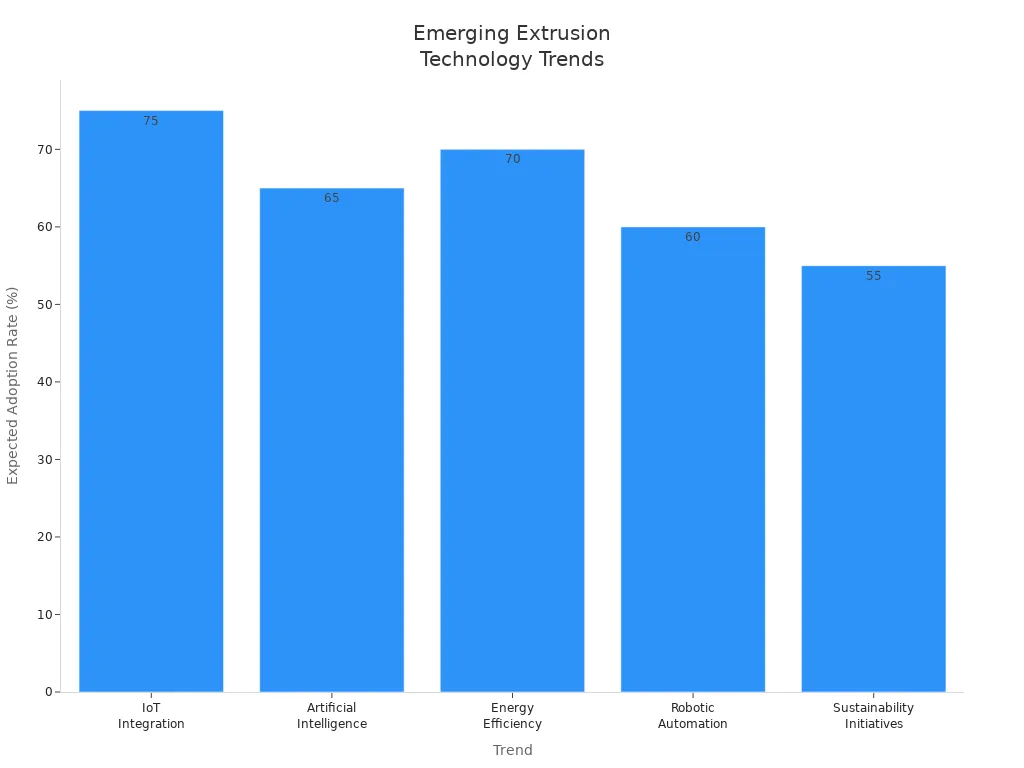
I see rapid changes in extrusion technology shaping the future of manufacturing. IoT integration allows real-time monitoring and analytics, mehorashon di efisiensia. Artificial intelligence supports predictive maintenance and optimization, which boosts performance. Energy efficiency is a growing focus, with manufacturers seeking ways to reduce consumption in the extrusion process. Robotic automation streamlines material handling and quality control. Sustainability initiatives drive the use of recycled materials and eco-friendly processes.
| Tendensia | Deskripshon | Impakto riba Efisiensia | Tasa di Adopshon Sperá (%) |
|---|---|---|---|
| Integrashon di IoT | Monitoreo i analisis den tempu real | Haltu | 75% |
| Inteligensia Artifisial | Mantenshon i optimalisashon prediktivo | Hopi Haltu | 65% |
| Efisiensia di Energia | Reducing energy consumption | Mediano | 70% |
| Outomatisashon Robótiko | Maneho di material i kontrol di kalidat | Haltu | 60% |
| Inisiativanan di Sostenibilidat | Materialnan resiklá i prosesonan eko-amikal | Mediano | 55% |
I notice advancements in material compatibility, especially with bioplastics, are transforming the extrusion industry. Many manufacturers now prioritize flexibility in equipment design, with modular systems allowing easy upgrades and modifications. Sustainability is essential, with most manufacturers focusing on energy-efficient equipment and waste reduction strategies. Smart extrusion machines reduce downtime by 20%, which improves overall efficiency and quality control. Semper mi ta keda na altura di e tendensianan aki pa mantené rendimentu haltu i sostené aplikashonnan nobo den ekstrushon di plèstik.
Tep: Mi ta rekomendá pa revisá e bista di mashinnan di ekstruder den fabrikashon regularmente. Keda informá tokante tiponan nobo di mashin di ekstrushon i diseñonan di skru ta yuda mi adaptá na nesesidatnan di produkshon ku ta kambia i mantené skalabilidat.
Mi ta rekonosé ku kada sistema di ekstrushon ta ofresé bentaha i limitashonnan úniko. Mi eksperensia ta mustra ku ekstrudónan di un solo skru ta sobresalí den produkshon di volúmen haltu, miéntras ku sistemanan di dos skru ta proveé meskla i fleksibilidat superior. Mashinnan di Ram i ko-ekstrushon ta sostené aplikashonnan spesialisá. Semper mi ta usa tabelnan di komparashon i kriterionan di selekshon pa evaluá:
- Kapasidatnan tékniko i konfiabilidat a largu plaso
- Servisio na kliente i asistensia den diseño
- Normanan di kalidat i efisiensia di energia
I recommend manufacturers understand their application needs and consult extrusion experts for optimal results.
FAQ
What is the main difference between single-screw and twin-screw extruders?
I see that single-screw extruders use one rotating screw for basic mixing. Twin-screw extruders use two screws for advanced mixing and better control. I choose twin-screw systems for complex materials and higher flexibility.
How do I decide which extrusion system fits my application?
I start by reviewing my material type, volúmen di produkshon, and product complexity. I match these needs to the strengths of each system. I consult with experts if I face unique requirements.
Can I process recycled materials with extrusion systems?
I process recycled materials using twin-screw extruders. These machines handle variable feedstocks and additives better than single-screw systems. I monitor quality closely to ensure consistent results.
How often should I perform maintenance on my extruder?
I schedule routine inspections every month. I check for screw wear, barrel condition, and control system performance. Regular maintenance prevents downtime and extends equipment life.
What are the most common extrusion defects I encounter?
I often see surface roughness, drif dimenshonal, and melt fractures. I address these by adjusting temperature, velosidat di skru, and material feed. I use process monitoring to catch issues early.
Is co-extrusion suitable for all materials?
I use co-extrusion mainly for thermoplastics. Some materials may not bond well in multi-layer profiles. I test material compatibility before starting production.
How does automation improve extrusion quality?
I rely on automation for real-time monitoring and precise control. Automated systems reduce human error, maintain consistent output, and improve overall product quality.
What safety measures do I follow during extrusion?
I wear protective gear and follow lockout procedures. I keep the work area clean and check emergency stops regularly. I train my team on safe operation and emergency response.