Choosing Between Water-Ring and Underwater Pelletizer Machines for Plastics
Table of Contents
Choosing Between Water-Ring and Underwater Pelletizer Machines for Plastics
Selecting the right pelletizer machine plastic type shapes your production efficiency and end-product quality. You will find three main options: water-ring, underwater, ne strand pelletizers. Each system offers unique advantages. ngu, strand pelletizers provide flexibility and work well for rigid plastics, while underwater models deliver instant cooling for sticky or heat-sensitive materials. Water-ring systems strike a balance between flexibility and automation, making them ideal for medium viscosity plastics in recycling. Compare features, rendimiento, and cost. Always match your choice with your material, throughput, and quality requirements.
Considerproduction speed and qualitywhen choosing a pelletizer. Underwater systems provide high-quality pellets, while strand systems offer cost-effectiveness for general use.
Evaluate your facility’s space and maintenance capabilities. Water-ring systems require moderate upkeep, underwater systems need more attention, and strand systems are easier to maintain.
Match your pelletizer’s throughput with your production needs. Ensure the machine can handle your expected output to avoid bottlenecks in your process.
Use a screening machine for consistent pellet quality. This equipment helps remove impurities and ensures your final product meets industry standards.
Core Differences Comparison Chart
When you evaluate pelletizer machines for plastic processing, you need a clear overview of how each system performs. The followingcore differences comparison chartgives you a side-by-side look at water-ring, underwater, and strand pelletizers. This chart helps you quickly identify which machine aligns with your production goals.
Ts'u̲ni:If you process sticky or heat-sensitive plastic, you will benefit most from an underwater pelletizer. For rigid materials, a strand pelletizer offers simplicity and lower costs.
Key Features and Performance
You should focus on several key features when choosing a pelletizer. Each system delivers unique performance characteristics:
Water-Ring Pelletizer: You getmoderate pellet qualityand consistent sizing. This system works best for medium viscosity or recycled plastic. Maintenance and operating costs remain manageable. Production speed fits most recycling operations.
Underwater Pelletizer: You achieve premium pellet quality with uniform shape and minimal dust. This system excels with sticky, elastic, or heat-sensitive plastic. You will see higher initial and operating costs, but you gain top-tier performance and high throughput.
Strand Pelletizer: You benefit from a straightforward design and low investment. Pellet quality can vary, especially if you process materials with inconsistent melt flow. This system suits rigid or semi-rigid plastic and general-purpose applications.
Hñeti:Industry benchmarks show that underwater pelletizers consistently deliver the most uniform pellets. Water-ring systems offer a balance between cost and quality, while strand pelletizers provide flexibility for a wide range of plastics.
By reviewing this core differences comparison chart, you can match your production needs with the right pelletizer system. Consider your material type, desired pellet quality, and budget to make the best choice.
Pelletizer Machine Plastic Types
Water-Ring Pelletizer Features
You will find thewater-ring pelletizing systemoperates by cutting molten plastic at the die face, where a rotating water ring instantly cools and solidifies the pellets. This process supports a broad range of thermoplastics, including soft, tacky, brittle, and temperature-sensitive compounds. The enclosed design of the water-ring pelletizing system reduces operator exposure to fumes and dust, making your workspace safer.
Key features of the water-ring pelletizing system include:
Direct water contact for rapid and uniform pellet cooling.
Automated operation that minimizes manual intervention.
Compact layout for efficient use of space.
Advantage
Descripción
Uniform and Consistent Pellet Shape
Ensures uniform grain geometry and smooth surfaces.
No Strand Breakage
Eliminates strand instability, ideal for wet or flexible materials.
Excellent Cooling Efficiency
Prevents deformation at high throughput.
Ideal for Soft or Low-Viscosity Materials
Handles materials that struggle in strand systems.
You should note that the water-ring pelletizing system requires precise water temperature control and regular maintenance, especially for the die plate and cutting chamber. The initial investment can be higher than other systems, but you gain reliability and quality.
Underwater Pelletizer Features
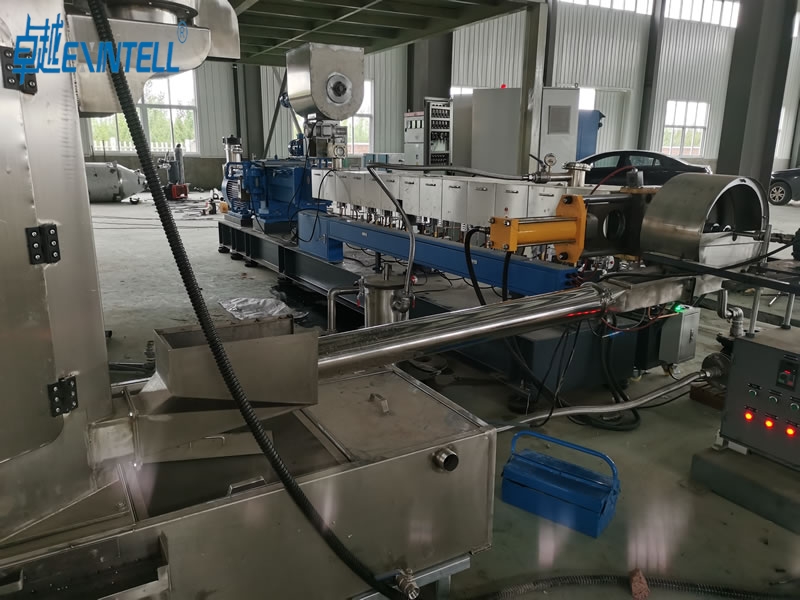
The underwater pelletizer machine cuts molten polymer strands in a water-filled chamber. This method cools and solidifies pellets instantly, combining cooling and cutting in one efficient step. You will achieve high-quality pellets with minimal defects, making this system a top choice for specialty applications.
Automatic, continuous production with energy savings.
Clean, low-noise environment with no dust.
However, you may encounter challenges with high-viscosity or amorphous polymers, and the equipment size can be large. The underwater pelletizer also consumes more power and may require more complex maintenance.
Strand Pelletizer Features
The strand pelletizing system extrudes molten plastic into strands, cools them in a water or air bath, and then cuts them into pellets. This approach works best forhard, rigid plasticswith stable melt flow, such as ABS, PC, and PP homopolymer.
Feature
Strand Pelletizers
Optimal Material Type
Hard, rigid plastics (ABS, PC, PP homopolymer)
Pellet Shape & Quality
Cylindrical, uniform dimensions
Production Capacity
50-1,500 kg/h
Maintenance
Knife sharpening/replacement
Pellet Uniformity
±0,3 mm consistencia ar longitud
ko peletización hebras ar hei ar zeti ne ya familiar pa mäs xingu ya operadores.
Nu'i gí encontrará nä'ä mäs adecuado pa nt'ot'e prima mäs limpia ne njapu'befi njapu'befi Nxoge .
ko ya ofrece consumo energía made ne niveles mafi moderados.
Nu'bu̲ gí t'ot'e 'nar flexible, ko peletizador plástico rentable pa materiales rígidos, ko peletización hebras proporciona 'nar njäts'i confiable.
Avanzado Plastic Pelletizer Opciones
Honto vs. Sistemas doble etapa
Nu'i gi da jäts'i ja ya sistemas Honto etapa ne doble etapa ja ar diseñar 'nar ko ya reprocesamiento plástico nt'ot'e xi hño. Sistemas Honto etapa ofrecen 'nar huella mäs t'olo ne zu'we inversión inicial. Nu'i gí encontrará ya mäs fáciles instalar ne da zeti, hontho nu'bu gí procesa materiales xi hño clasificados. Double-stage systems provide superior mixing and independent temperature control for each stage. These systems handle diverse or contaminated materials, including those requiring pre-processing impurity removal. The following table highlights the main differences:
Feature
Single-Stage Systems
Sistemas doble etapa
Initial Investment
Inferior (40-60% less)
Mäs xi ngu
Maintenance
Inferior, simpler
Mäs xi ngu, more complex
Footprint
Smaller
Larger
Mixing Capability
limitado
Superior
Throughput Efficiency
Inferior
Mäs xi ngu
Flexibilidad
Less flexible
More flexible
If you need high-volume output and flexibility for various plastic types, double-stage systems deliver better results.
Process Control and Monitoring
Modern pelletizer machines use advanced process controls andreal-time monitoring. You can adjust temperature, presión, and cutting speed automatically. This technology ensures consistent pellet size and shape, which is critical for downstream applications. Real-time data analysis helps you optimize production and reduce downtime. You gain higher operational efficiency and product quality. Advanced diagnostics also identify potential issues before they affect your process.
Price Range and Investment
You should consider both upfront and ongoing costs when investing in a pelletizer machine. The typicalprice rangevaries by machine type:
Klase ar máquina
Price Range
Water-Ring Pelletizer
$38,000
Underwater Pelletizer
$95,000
Strand Pelletizer
$8,000 – $18,000
Keyinvestment considerationsinclude maintenance costs, access to spare parts, production capacity, and material processing capabilities. You should also evaluate the potential return on investment to ensure long-term value for your operation.
Key Factors for Choosing a Pelletizer Machine Plastic
Material Compatibility
You must evaluate material compatibility before you select apelletizer machine plasticfor your operation. Each system handles different polymers and additives with varying efficiency. The following list shows themost common materials processedwith these machines:
PP
PE
PET
TPU
PA
EVA
PLA
PBAT
PHA
starch-based polymers
ABS
TPE
engineering plastics
hot-melt adhesives
elastómeros
reactive polymers
Material properties such as melt flow index (MFI), stickiness, elasticity, brittleness, and thermal sensitivity directly affect your choice. You can use thetable belowto match your material’s MFI with the recommended pelletizer machine plastic type:
MFI Range
Recommended System
Low MFI (<5 g/10 min)
Strand or underwater pelletizer
Medium MFI (5–30 g/10 min)
Water-ring or underwater pelletizer
High MFI (>30 g/10 min)
Underwater pelletizer preferred
Tacky or elastic materials like TPE and EVA perform best in water-ring or underwater systems.
Brittle compounds, such as glass-filled plastics, may shatter in strand systems. Hot-cut or underwater methods are preferable.
Thermal-sensitive plastics, including PVC and some bioplastics, require air-cooled configurations to prevent degradation.
You should always align your pelletizer machine plastic selection with the physical and chemical properties of your feedstock to ensure optimal performance and minimal waste during recycling or reprocessing plastic materials.
Throughput and Capacity
Throughput and capacity determine the efficiency of your production line. You need to match the pelletizer’s output with your extrusion system to avoid bottlenecks. High-volume operations benefitfrom advanced pelletizer machine plastic systems that maximize throughput and minimize downtime. Medium and low-volume operations often prefer strand systems for their flexibility and lower initial costs. This adaptability supports manufacturers who anticipate growth in production needs.
The table below helps you select the right system based on your required throughput:
Throughput Range (kg/h)
Recommended Pelletizer Type
Below 300
Strand or air-cooled systems
300–1,000
Water-ring pelletizers
Above 1,000
Underwater pelletizers
The pelletizer’s capacity should always match or exceed the upstream extrusion output.
A mismatch of 10–15% can cause melt-pressure fluctuations, which negatively impact pellet quality and grading.
You must consider future expansion and the potential for increased recycling volumes when choosing a pelletizer machine plastic. This ensures your investment remains valuable as your business grows.
Pellet Quality and Screening
Pellet quality plays a critical role in downstream applications, especially in industries that demand high consistency and purity. You achieve this through effective grading and screening. Plastic pellet screening machines are essential for separating granules by size and removing unwanted parts. This process ensures that your final product meets strict specifications for injection molding, extrusion, or medical-grade plastic purity screening.
Plastic pellet screening machines provide several benefits:
Consistent size, which is critical for injection molding performance.
Removal of impurities such as oversized materials and fines, preventing defects in final products.
Prevention of variations in shot weight and dimensional inconsistencies in molded parts.
Support for rapid screening of bulk plastics in high-throughput environments.
Enhanced screening accuracy for precision grading and particle size classification.
Selecting common plastic pellet screening machines for your line ensures that you maintain strict quality control. You can achieve consistent grading and size, which supports both recycling and new product manufacturing. Screening also enables you to meet regulatory requirements for medical and food-grade applications.
Maintenance and Space
Maintenance and space requirements influence your operational costs and facility layout. Each pelletizer machine plastic type has unique maintenance needs. The table below summarizes the main focus areas:
Pelletizer Type
Maintenance Focus
Special Notes
Water-ring Pelletizer
Maintain appropriate contact pressure between blades and die surface.
Check seal integrity of the water ring cover and ensure stable cooling water temperature.
Strand Pelletizing System
Ensure blade sharpness and adjust the gap between moving and stationary blades.
Pellets must be fully cooled and dry to prevent sticking to blades.
Submarino ar agua peletización
Maintain cleanliness of the die surface and inspect water circulation system.
Impurity buildup affects pellet shape; regular checks on bypass valve functionality are needed.
You should schedule regular inspections and preventive maintenance to avoid unplanned downtime. This practice extends equipment life and maintains grading and screening performance.
Facility space also impacts your decision. Larger systems require more floor area, which affects your plant layout and workflow. The chart below illustrates the floor space required for different pelletizer machine plastic models:
You must plan for adequate space not only for the pelletizer but also for plastic pellet screening machines, storage, and material handling. Efficient use of space supports safe operations and smooth recycling processes.
Ts'u̲ni: When you design your production line, always consider the integration of grading and screening equipment. This approach ensures you achieve the highest quality pellets and maintain efficient recycling operations.
Use Cases for Plastic Pelletizer System
Water-Ring Applications
You will findwater-ring pelletizer systemsin many industrial environments that require stable, producción continua. These machines handle a wide range of plastic materials, especially those with medium viscosity. Water-ring systems suit recycling plants, compounding facilities, and masterbatch production lines. Operators prefer these machines for their easy operation and simple maintenance. The table below highlights themain advantages:
Advantage
Descripción
Easy to operate
Machine start-up is faster and requires less operator intervention.
Stable production
Continuous running without the risk of strand-breaking.
Nja simple
Replacement of pelletizing knife is easy and at a lower cost.
Ts'u̲ni: You can reduce downtime and training costs by choosing water-ring systems for large-scale plastic recycling.
Underwater Applications
Underwater pelletizer machines excel in industries that demand high-quality, Uniforme pellets. You will see these systems in packaging, automotriz, and medical sectors. Kadu̲ 'nar industria valora ya características precisas ar pelotilla ne ar hño nzäm'bu. Tabla da ku̲hu̲ gi 'ñudi Honja 'na'ño industrias benefician:
requiere ya ar pellets nzäm'bu̲ pa ar dätä nt'ot'e ar producción.
Médica
t'ot'e características precisas ar pelotilla pa materiales 'mui médico.
Da seleccionar sistemas submarinos nu'bu̲ t'ot'e refrigeración instantánea ne mínimo polvo, Ho̲ntho nu'u̲ pa compuestos plásticos sensibles jar pa wa especialidad.
Aplicaciones ar hebra
sistemas pelotizadores hebras funcionan hño pa xingu ya plástico rígido ne semirrígido. Gi tini gi máquinas jar fabricación 'mu̲i Nxoge, procesamiento plásticos ingeniería, ne líneas producción tamaño pequeño da median. Ya operadores aprecian ar diseño sencillo ne xí hñets'i'i inversión. You can easily maintain these systems, making them ideal for facilities with limited technical staff.
Hñeti: Choose strand pelletizers if you process clean, stable-melt plastics and want a cost-effective solution.
Matching System to Production Needs
You must match your pelletizer system to your production requirements for optimal results. Consider the following factors:
Factor
Descripción
Material Type
Consider the hardness, moisture content, and temperature sensitivity.
Production Scale
Match the pelletizer’s capacity with your production needs.
Desired Pellet Size
Choose a machine that produces pellets suitable for your application.
Industry Requirements
Ensure compliance with industry-specific standards.
Understand the types of plastic materials you plan to recycle.
Calculate your output requirement.
Select the machine features, including cutting and feeding types.
Choose additional equipment options for your process.
You will achieve the best performance when you align your system choice with your material, capacity, and quality goals.
Decision Checklist for Pelletizer Machine Plastic
Essential Questions
Before you select a pelletizer machine, you should ask yourself several critical questions. These will help you clarify your requirements and avoid costly mistakes:
What type of plastic do you process most often?
What is your target throughput in kilograms per hour?
How important is pellet uniformity and surface quality for your end product?
Do you need to process sticky, elastic, or heat-sensitive materials?
What is your available floor space for new equipment?
How much can you invest in initial purchase and ongoing maintenance?
Will you require advanced process control or automation features?
¿T'ot'e da tsoni estándares wa certificaciones ar industria específicas?
Ts'u̲ni: Anote yá nthädi gi nt'a̲ni. 'Me̲hna bí da mats'i comparar ya 'na'ño sistemas pelotizadores mäs xi hño.
Pasos finales
mbi pe̲ts'i yá nthädi, Tsa̲ da seguir ya'bu̲ ko confianza. deni nuya pasos pa finalizar ár nja ntsoni :
Revise ár compatibilidad hñei ne emparejar nä'ä ko ar klase ar peletador recomendado.
Comparar ar rendimiento kadu̲ 'nar ko ko yá 'befi producción.
evaluar ya requisitos hño pa yá pellets ne nt'ent'i nu'bu̲ t'ot'e 'nar máquina cribado.
Compruebe ya ndu nja ne xi hño da ja da ár equipo to apoyar ko ya elegido.
Evaluar ár espacio disponible ne planear pa futura expansión nu'bu mahyoni.
Solicite citas proveedores reputados ne pide referencias wa nsadi ar nt'ot'e.
Schedule a trial run or visit an existing installation if possible.
You should always align yourfinal choice with your long-termbusiness strategy. The right pelletizer machine will help you achieve consistent plastic quality, efficient production, and lower operational costs.
You can see clear differences amongwater-ring, underwater, and strandpelletizer machine types. Water-ring systems balance automation and flexibility. Underwater machines deliver high-quality pellets for heat-sensitive plastic. Strand pelletizers offer cost-effective solutions for rigid plastic. The comparison chartbelow helps you match features and throughput to your needs:
Pelletizer Type
Key Features
Applications
Rendimiento (kg/h)
Strand Pelletizers
Cuts extruded strands, cost-effective
PP, PE
500–2,000
Underwater Pelletizers
Water cooling, heat-sensitive materials
PET, nylon
1,000–5,000
Air-Cooled Strand Pelletizers
Air cooling, budget-friendly
HDPE
300–1,500
Die Face Pelletizers
Cuts at die face, water cooling
PVC, viscous polymers
500–3,000
You should use the comparison chart and decision checklist to select the best system. Daily, check knives and dies. Weekly, sharpen knives and calibrate settings. Monthly, clean the system and inspect cooling. Align your machine choice with your material, throughput, and pellet quality goals for efficient plastic production.
FAQ
What is the main advantage of an underwater pelletizer?
You achieve the highest pellet uniformity and quality withunderwater pelletizers. This system instantly cools pellets, which prevents sticking and deformation. You should choose this option for heat-sensitive or specialty plastics.
How do I know which pelletizer suits my material?
You must check your material’s melt flow index and sensitivity to heat. For sticky or elastic plastics, Seleccione sistemas ar anillo submarinos wa ar dehe. Pa plásticos rígidos, pelotizadores ar hebra funcionan mäs xi hño.
Ar tsa̲ ga actualizar ma ko ya pelotizador mäs ya'bu̲?
Tso̲kwa menudo tsa̲ da actualizar ko ya controles avanzados wa máquinas apantallamiento. However, Gi confirmar compatibilidad ko ár equipo nu'bya. Consulte ár proveedor pa opciones da 'mui.
Tengu nja requiere kadu̲ 'nar klase ar peletizado?
Anillo ar dehe: Moderado, Centrar ar jar die ne Ntheti ar hoja.
Ar dehe: Alta, Limpieza regular ne comprobaciones ko ya dehe.
Strand: Low, principalmente afilado ar cuchillo.
Ts'u̲ni: Programar nja preventivo pa nu'bu costoso pa inactividad.
Di ne 'nar máquina cribado pa ma pellets?
Gi utilizar 'nar máquina cribado nu'bu̲ requiere tamaño ar pellet consistente ne ar polvo mínimo. Cribado mejora ya ar producto ne soporta estándares estrictos ar industria.