

Belangrijkste afhaalrestaurants
- In mijn ervaring, De slimste groothandelsbeslissingen beginnen met het afstemmen van de machineklasse op de grondstof: enkelschroefsextruders verwerken eenvoudig PVC, HDPE, en polypropyleenprofielen, dubbelschroefsextruders zijn geschikt voor compounding en veeleisende polymeren, en er bestaan speciale extruders voor plasticrecycling als een aparte klasse voor teruggewonnen plastic vlokken (bron: ThoYu, 2024).
- Ik evalueer altijd de specificaties vóór de prijs. Kerncijfers zoals de L/D-ratio, aantal vatenzones, reductieverhouding van de versnellingsbak, servicefactor, en motorvermogen vertellen u veel meer over de werkelijke capaciteit dan een hoofdproductiecijfer. Ter referentie, een gebruikte Davis Standard 9-inch extruderparen a 32:1 L/D-verhouding en vat met 7 zones en een 900 PK DC-motor (bron: Aaron uitrustingslijst).
- Fabrieksdirecte prijzen van in China gevestigde fabrikanten zijn echt concurrerend voor nieuwe apparatuur (bron: ThoYu, 2024), maar ik weeg het af tegen een volledig beeld van de totale eigendomskosten, inclusief invoerrechten, zeevracht, tuigage, installatie, en toegang tot after-salesondersteuning.
- Ik behandel nieuw, gebruikt, en geïmporteerd als drie afzonderlijke inkoopsporen, elk met zijn eigen afwegingen. De tweedehandsmarkt is volwassen geworden, merkspecifieke vermeldingen voor extruders met enkele schroef (bron: Aaron-apparatuur), waardoor het een haalbaar pad is als ik de staat en slijtage kan verifiëren.
- Controle van leveranciers en betalingsbescherming zijn net zo belangrijk als het specificatieblad. Voordat u zich engageert, Ik bevestig de minimale bestelhoeveelheid, doorlooptijden, garantievoorwaarden, en beschikbaarheid van reserveonderdelen, en ik structureer betalingen om te beschermen tegen niet-levering.
- De basisbeginselen van het proces vormen de leidraad voor mijn controles: De grondstof komt via een hoppertoevoer in poedervorm binnen, pellet, of korrelvorm, wordt gesmolten door elektrische verwarmingsbuizen, en wordt gehomogeniseerd door het afschuiven van de schroeven voordat de extrusiematrijs een doorlopend dwarsdoorsnedeprofiel vormt (bronnen: ThoYu; Amade-Tech).
- Ik bevestig het thermisch beheer vooraf. Vaten met meerdere zones combineren doorgaans elektrische verwarming met waterkoeling met gesloten circuit (bron: Aaron Apparatuurspecificatie), en een betrouwbare regeling van de smelttemperatuur zorgt ervoor dat de output qua afmetingen consistent blijft in alle leidingen, buizen, films, planken, en flessen.
- Schroefconfiguratie en aangepaste matrijsgereedschappen bepalen wat een lijn daadwerkelijk kan maken, dus ik beperk deze tegen mijn productmix in plaats van generieke capaciteit te kopen. Voor R&D of kleine oplagen, een extruder op laboratoriumschaal die is gebouwd voor continue output met uniforme doorsnede, is vaak het juiste instappunt (bron: Amade-Tech).
Wat is een kunststof extrusiemachine en hoe werkt deze??
Wanneer ik een polymeerverwerkingsmachine evalueer, Ik begin met hetzelfde mentale model: een extruder is een gecontroleerd smelt- en vormsysteem. Stevig plastic gaat aan het ene uiteinde, en een continu, uniform dwarsdoorsnedeprofiel komt uit de andere. Alles tussen deze twee punten gaat over het toepassen van warmte en mechanische afschuiving in de juiste mate. Het begrijpen van die stroom is wat een zelfverzekerde koper onderscheidt van iemand die naar specificatiebladen gokt, en het bepaalt direct hoe ik een benader Groothandel in kunststof extrusiemachines aankoop.
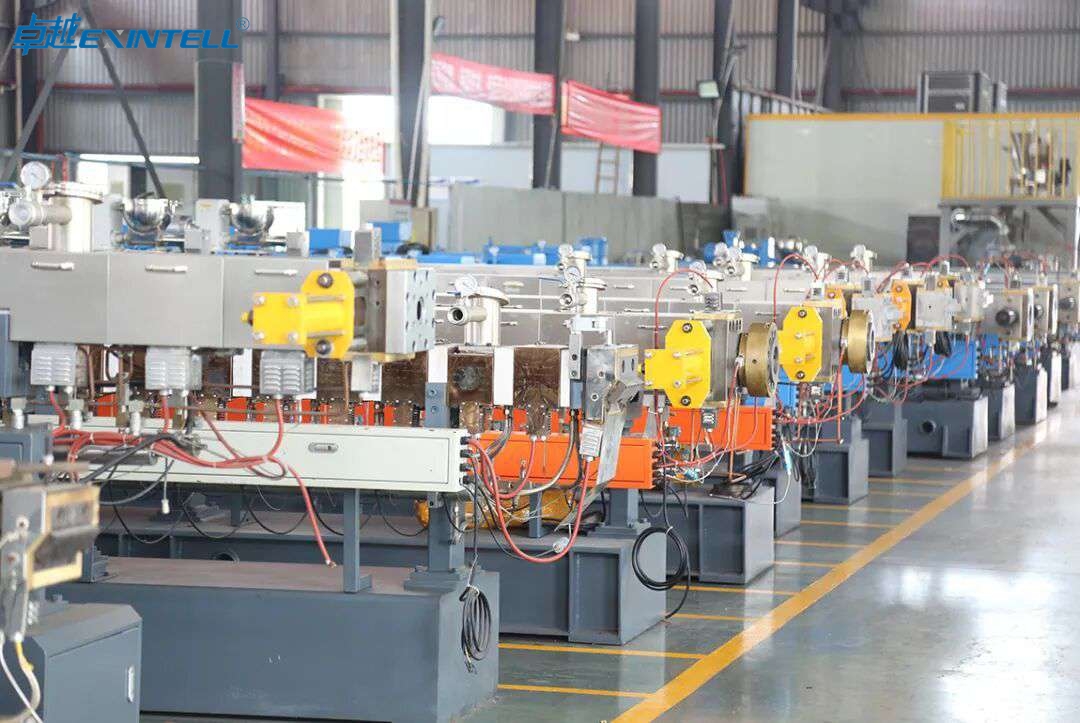
Het kernsmeltproces
Binnenin de machine, massief plastic wordt naar voren getransporteerd door een roterende schroef, terwijl elektrische verwarmingsbuizen de loop in meerdere zones omwikkelen. Het plastic smelt door een combinatie van die externe hitte en de interne schuifkracht die ontstaat wanneer de schroef materiaal tegen de wand van het vat duwt. Volgens ThoYu, plastic in een extruder wordt gesmolten door elektrische verwarmingsbuizen en omgezet in een uniforme smelt door middel van schroefextrusie en afschuifwerking (ThoYu, 2024). Dat dubbele mechanisme, geleidende warmte plus mechanische wrijving, Daarom is de geometrie van de schroef net zo belangrijk als de cilindertemperatuur.
De controle van de smelttemperatuur is het onderdeel dat ik in elk citaat het meest onder de loep neem. Vaten met meerdere zones combineren gewoonlijk elektrische verwarming met waterkoeling met gesloten lus om elke zone binnen een smalle band te houden (Aaron Equipment-specificatie). Als een vat niet zo nauwkeurig kan koelen als het verwarmt, je verliest het vermogen om hittegevoelige harsen schoon te verwerken.
Feedstockformulieren die u kunt uitvoeren
Het materiaal dat u invoert, vormt de machine die u koopt. In de praktijk zie ik vier veel voorkomende grondstofvormen:
- Pellets — de standaard voor nieuwe hars, gemakkelijk te doseren en te smelten
- Korrels – iets grover, gebruikelijk in samengestelde lijnen
- Poeder — typisch voor droge PVC-mengsels en werk op laboratoriumschaal
- Gerecycleerde vlok — teruggewonnen materiaal met variabele bulkdichtheid
Amade-Tech merkt op dat laboratorium-plastic-extrusiemachines grondstoffen in poeder verwerken, pellet, of korrelvorm om continue polymeerproducten met uniforme dwarsdoorsnede te produceren (Amade-Tech, 2024). Een op de trechter gemonteerde voedingsschroef levert de grondstof vervolgens gelijkmatig in het vat (ThoYu, 2024). Zelfs voeren is geen klein detail; inconsistente trechterafgifte komt tot uiting in de vorm van golflijnen en dimensionale afwijkingen in het voltooide profiel.
Hoe de matrijs de uitvoer vormt
De extrusiematrijs is het laatste gereedschap waar de smelt doorheen gaat, en het definieert de productdoorsnede. Pijpen, buizen, films, planken, en flessen komen allemaal uit hetzelfde vat met verschillende matrijzen (Amade-Tech, 2024). Omdat de matrijs een continu dwarsdoorsnedeprofiel produceert, één machine kan meerdere productlijnen bedienen als u investeert in op maat gemaakte matrijsgereedschappen. Die flexibiliteit op het gebied van gereedschap is een van de redenen waarom ik de inventaris als onderdeel van de totale aankoopbeslissing beschouw en niet als een bijzaak.
Kerncomponenten die ik op elke machine inspecteer
Of ik nu een industriële extruder te koop of een gebruikte eenheid aan het beoordelen ben, Ik doorloop dezelfde componentenchecklist:
- Loop — de verwarmde cilinder, idealiter meerdere zones met koeling met gesloten circuit
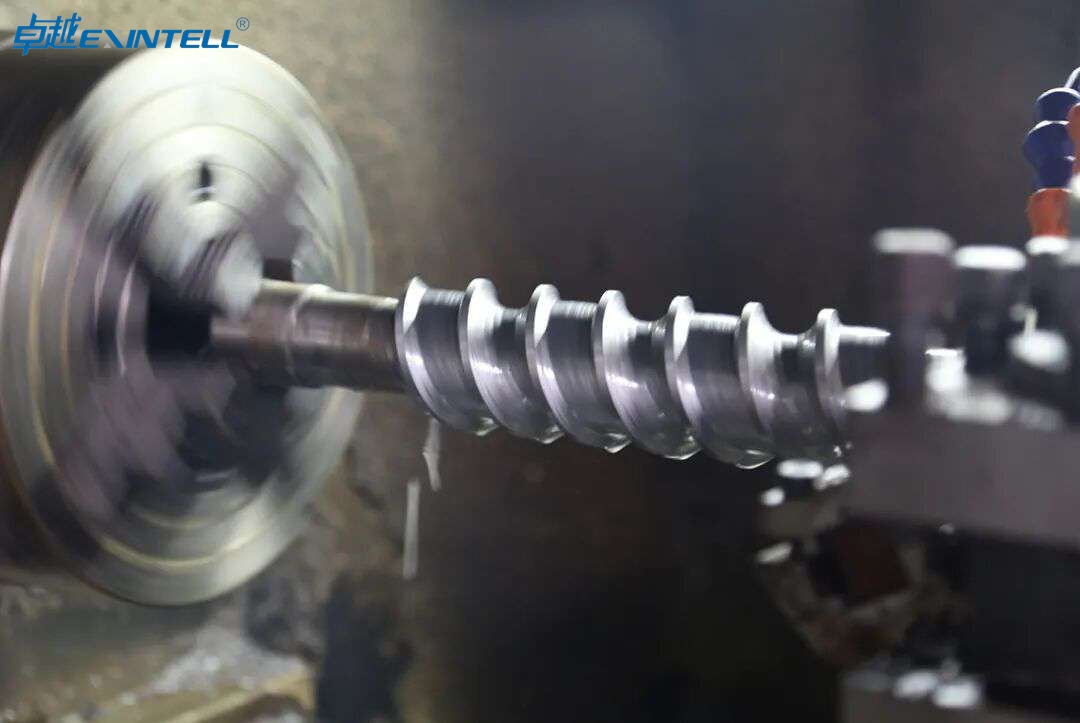
- Schroef – het hart van smelten en overbrengen; schroefconfiguratie bepaalt de uitvoerkwaliteit
- Motor — het aantal pk's van de extrudermotor bepaalt uw doorvoerplafond
- Versnellingsbak — de reductieverhouding en de servicefactor bepalen het bruikbare koppel
- Controles — regeling van de smelttemperatuur en zonebeheer
- Sterven — het gereedschap voor het vormen van profielen
Twee specificaties verankeren deze evaluatie. Eerst, de L/D-verhouding, de cilinderlengte gedeeld door de schroefdiameter, vertelt me hoeveel verblijftijd de smelt krijgt; een gebruikte Davis Standard 9-inch extruder (Model 80IN80HT) ingebouwd 2001 paren een 32:1 L/D-verhouding met een vat met 7 zones en een 900 PK DC-motor (Aaron uitrustingslijst). Seconde, de reductieverhouding van de versnellingsbak en de servicefactor bepalen de koppelafgifte; industriële eenheden vermelden gewoonlijk verhoudingen zoals 10.15:1 met een servicefactor van 1.5 (Aaron-apparatuur). Deze cijfers vertalen zich direct in hoe hard je viskeuze materialen zoals HDPE of gevulde verbindingen kunt duwen zonder te stoppen.
Waarom kunststof extrusiemachines in de groothandel kopen?
De groothandelsroute is waar de inkoopstrategie zijn geld verdient. In mijn ervaring, het verschil tussen detailhandel en directe inkoop in de fabriek is zelden een klein percentage; het hervormt de economie van een volledige extrusieproductielijn. Hieronder noem ik de vier redenen waarom ik consequent aanbeveel om bulkextrusieapparatuur via groothandelskanalen te kopen.
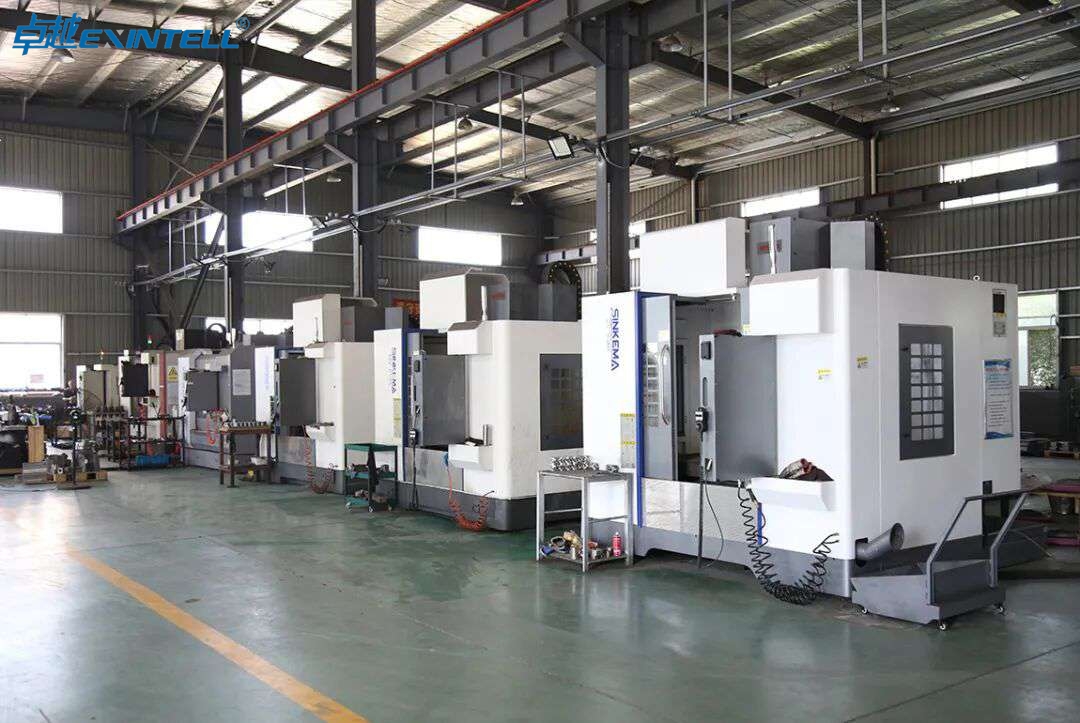
Kostenbesparingen op bulk- en fabrieksbestellingen
Fabrieksgerichte prijzen verwijderen de lagen van distributeurmarkeringen die de prijs van een plastic extrudermachine opdrijven. In China gevestigde fabrikanten, Bijvoorbeeld, bieden fabrieksdirecte groothandelsprijzen voor plastic extruders (ThoYu, 2024), Daarom wijst zoveel prijsgerelateerde zoekintentie naar buitenlandse leveranciers. Wanneer ik een enkele winkeleenheid vergelijk met een bulkbestelling bij een machinegroothandel, de kosten per machine dalen doorgaans voldoende om de terugverdienberekening voor het hele project te wijzigen. Dat gezegd hebbende, Fabrieksgerichte prijzen zijn alleen rendabel als u rekening houdt met de totale eigendomskosten, een leemte die ik later in deze handleiding zal behandelen.
Toegang tot OEM- en ODM-aanpassing
Groothandelsrelaties openen de deur naar OEM- en ODM-aanpassingen die retailkanalen zelden bieden. In plaats van een voorraadconfiguratie te accepteren, Ik kan de schroeflengte opgeven, vat zones, controle pakketten, en op maat gemaakte matrijsgereedschappen afgestemd op mijn product. Voor iedereen die een gespecialiseerd continu dwarsdoorsnedeprofiel gebruikt, dit is het sterkste argument om rechtstreeks bij een fabrikant van extrusiemachines te kopen in plaats van bij een wederverkoper.
Betere voorwaarden voor gereedschap en reserveonderdelen
In het gesprek over matrijzen en reserveonderdelen worden de groothandelsvoorwaarden stilletjes in uw voordeel samengesteld. Het onderhandelen over gereedschap en een pakket met reserveonderdelen in de oorspronkelijke bestelling is bijna altijd beter dan het later stukje bij beetje inkopen. Ik behandel slijtageartikelen, schroeven, verwarmingsbanden, en vatvoeringen, als onderdeel van het oorspronkelijke contract, en ik dring aan op schriftelijke toezeggingen voor after-salesondersteuning. Een sterke after-salesondersteuning zorgt ervoor dat een lijn draaiende blijft; zonder, een goedkope machine wordt een dure bottleneck.
Efficiënt opschalen van de productiecapaciteit
Eindelijk, Met groothandelsaankopen kan ik de output van de extrudercapaciteit opschalen zonder de volledige inkoopcyclus elke keer te herhalen. Standaardiseren op het platform van één leverancier betekent consistente reserveonderdelen, bekende bedieningselementen, en herhaalbare operatortraining voor meerdere machines. Wanneer de vraag groeit, het toevoegen van een tweede of derde identieke eenheid gaat veel soepeler dan het integreren van niet-overeenkomende apparatuur van verschillende leveranciers.
Soorten kunststofextruders: Enkele schroef versus dubbele schroef
De keuze tussen een extruder met enkele schroef en een extruder met dubbele schroef is de technische beslissing met de meeste gevolgen bij een groothandelsaankoop. Ik kader het eenvoudig in: machines met één schroef transporteren en smelten efficiënt, terwijl machines met dubbele schroef mixen en compounderen. Als deze match goed is, valt de rest van de specificatie op zijn plaats.
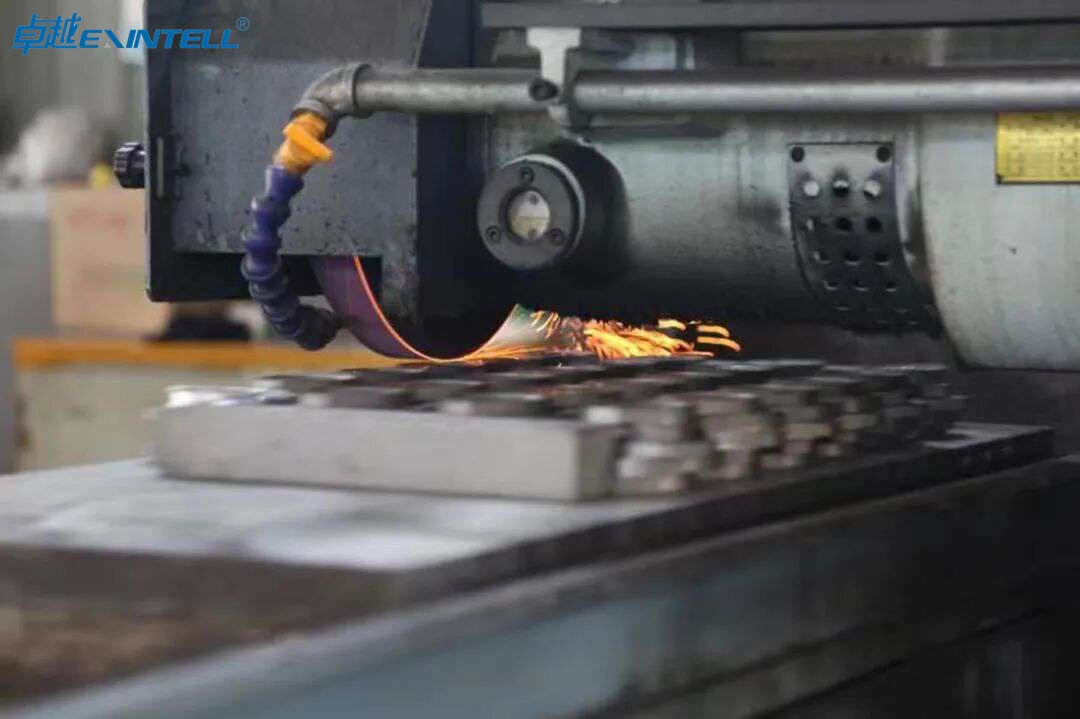
Extruders met enkele schroef
De enkelschroefsextruder is het werkpaard voor standaardprofielen tegen lagere kosten. Het blinkt uit in het smelten van nieuwe hars en het met een constante output door een matrijs te duwen, waardoor het ideaal is voor pijpen, buizen, en eenvoudige doorlopende profielen. Het is ook de meest voorkomende categorie gebruikte apparatuur, met merkspecifieke wederverkooplijsten die overal beschikbaar zijn (Aaron-apparatuur). Als uw productlijn consistente materialen zoals HDPE of polypropyleen door een vaste matrijs verwerkt, een machine met één schroef levert doorgaans de beste waarde per outputeenheid.
Extruders met dubbele schroef
De dubbelschroefsextruder verdient zijn hogere kosten door de mengmogelijkheid. Twee in elkaar grijpende schroeven zorgen voor de distributieve en dispersieve menging die nodig is voor het compounderen, vulstoffen toevoegen, kleurstoffen, en stabilisatoren, en voor de verwerking van gerecyclede materialen met variabele eigenschappen. Als ik werk met gerecyclede plastic vlokken of warmtegevoelige technische polymeren zoals PEEK, de superieure controle van de dubbele schroef over afschuiving en verblijftijd is doorslaggevend. Het is vermeldenswaard dat recyclingextruders een aparte machineklasse vormen die speciaal is gebouwd voor teruggewonnen grondstoffen (ThoYu, 2024), en veel van deze lijnen zijn om precies deze reden afhankelijk van ontwerpen met dubbele schroeven.
Uitvoersnelheid en materiaalcompatibiliteit
De twee typen lopen sterk uiteen wat betreft uitvoergedrag en materiaalpassing. De output van een enkele schroef is grotendeels afhankelijk van de schroefsnelheid en het motorvermogen, waardoor het voorspelbaar is voor een enkele hars. De output met dubbele schroef is flexibeler in alle formuleringen, maar wordt vaak geoptimaliseerd voor de kwaliteit van het mengsel in plaats van voor de ruwe doorvoer. Materialen zoals droge PVC-mengsels en gerecyclede vlokken profiteren van de dubbele schroefbehandeling, terwijl een schone enkele hars economisch op een enkele schroef draait.
Enkele schroef versus dubbele schroef: Vergelijkingstabel
|
Factor |
Extruder met enkele schroef |
Extruder met dubbele schroef |
|---|---|---|
|
Primaire kracht |
Smelten en transporteren van standaardprofielen |
Mengen, samenstelling, en devolatilisatie |
|
Relatieve kosten |
Lager |
Hoger |
|
Beste materialen |
HDPE, polypropyleen, enkelvoudige maagdelijke harsen |
PVC droge mengsels, gerecycleerde vlok, gevulde of PEEK-verbindingen |
|
Mengkwaliteit |
Beperkt |
Uitstekend (distributief en verspreid) |
|
Typische producten |
Pijpen, buizen, eenvoudige profielen |
Verbindingen, masterbatch, gerecyclede pellet |
|
Beschikbaarheid op de tweedehandsmarkt |
Breed, merkspecifieke vermeldingen gebruikelijk |
Smaller, meer gespecialiseerd |
|
Ideale koper |
Vaste productlijn, kostengericht |
Recycling, aangepaste formuleringen, R&D |
|
Factor |
Extruder met enkele schroef |
Extruder met dubbele schroef |
|---|---|---|
|
Primaire kracht |
Smelten en transporteren van standaardprofielen |
Mengen, samenstelling, en devolatilisatie |
|
Relatieve kosten |
Lager |
Hoger |
|
Beste materialen |
HDPE, polypropyleen, enkelvoudige maagdelijke harsen |
PVC droge mengsels, gerecycleerde vlok, gevulde of PEEK-verbindingen |
|
Mengkwaliteit |
Beperkt |
Uitstekend (distributief en verspreid) |
|
Typische producten |
Pijpen, buizen, eenvoudige profielen |
Verbindingen, masterbatch, gerecyclede pellet |
|
Beschikbaarheid op de tweedehandsmarkt |
Breed, merkspecifieke vermeldingen gebruikelijk |
Smaller, meer gespecialiseerd |
|
Ideale koper |
Vaste productlijn, kostengericht |
Recycling, aangepaste formuleringen, R&D |
Het type afstemmen op uw productlijn
Mijn beslissingsregel is eenvoudig. Als ik een consistent materiaal extrudeer tot een stabiel profiel, Ik kies voor een machine met één schroef en besteed de besparingen aan aangepaste matrijsgereedschappen en reserveonderdelen. Als mijn proces compounding inhoudt, kleurveranderingen, of een kunststofrecycling-extruder die teruggewonnen grondstoffen verwerkt, Ik specificeer een platform met dubbele schroef en accepteer de hogere prijs als de kosten van procescontrole. Voor kopers die een extruder op laboratoriumschaal wegen voor productontwikkeling, dezelfde logica is van toepassing op een kleinere output: Zorg ervoor dat het schroeftype overeenkomt met de vraag of u een formulering aan het testen bent (tweeling) of een profiel (enkel). Het verankeren van de schroefbeslissing aan uw daadwerkelijke productlijn, in plaats van alleen de prijs te vermelden, is wat ervoor zorgt dat een groothandelsaankoop gedurende de volledige levensduur loont. U kunt configuraties uit de echte wereld bekijken op leveranciers- en wederverkooplijsten, zoals De gebruikte inventaris met enkele schroeven van Aaron Equipment En ThoYu's groothandel extruderpagina's om te zien hoe deze specificaties er in de praktijk uitzien.
Hoeveel kost een kunststof extrusiemachine?
Als klanten mij om één nummer vragen, Ik vertel ze het eerlijke antwoord: een plastic extrusiemachine kost ergens tussen een paar duizend dollar en ruim een miljoen, en de verspreiding gaat volledig over schaal. In mijn ervaring inkoop ik apparatuur op drie niveaus, de prijsbanden lopen netjes uiteen langs de productiecapaciteit, schroef configuratie, en het automatiseringsniveau dat u nodig heeft. Voordat u een offerte aanvraagt, het helpt om te weten tot welk niveau je eigenlijk behoort, omdat een extruder op laboratoriumschaal en een industriële extrusieproductielijn niet dezelfde aankoop zijn met een verschillend prijskaartje. Het zijn verschillende machines. Lichtgewicht recyclebare plastic verpakking
Prijsklassen per schaal: Laboratorium, Klein, en Industrieel
Ik groepeer kopers in drie praktische categorieën. Extruders op laboratoriumschaal zijn compact, tafel- of vloerunits gebouwd voor R&D, samengestelde proeven, en materiaalkarakterisering. Zij verwerken grondstoffen in poedervorm, pellet, of korrelvorm om continue polymeerproducten met een uniforme dwarsdoorsnede te produceren (Amade-Tech). Kleine commerciële eenheden verzorgen de productie in kleine volumes, prototypen loopt, en nicheprofielwerk. Industriële machines drijven volledige extrusieproductielijnen voor buizen aan, film, bord, en flessenproductie de klok rond.
Hier ziet u hoe de cijfers doorgaans terechtkomen op basis van offertes die ik heb verzameld en openbare vermeldingen. Behandel deze als planningsbereiken, geen vaste prijzen, aangezien de schroefconfiguratie en het gereedschap deze aanzienlijk verschuiven.
| Laag | Typische uitvoer | Schroeftype | Nieuwe prijsklasse (USD) | Gebruikte prijsklasse (USD) |
|---|---|---|---|---|
| Extruder op laboratoriumschaal | Tot ~5 kg/uur | Enkele of dubbele schroef | $8,000 – $45,000 | $4,000 – $25,000 |
| Kleine commerciële | ~20 – 150 kg/uur | Extruder met enkele schroef | $30,000 – $120,000 | $12,000 – $60,000 |
| Industriële lijn | 300 kg/uur en hoger | Extruder met enkele of dubbele schroef | $150,000 – $1,000,000+ | $50,000 – $400,000 |
Het bovenste uiteinde van de industriële band weerspiegelt volledige lijnen met stroomafwaartse apparatuur zoals afvoeren, koeltanks, en winders, plus geavanceerde smelttemperatuurregeling. Een kale extruderkop kost veel minder dan een kant-en-klare lijn, Controleer dus altijd wat de offerte daadwerkelijk inhoudt voordat u leveranciers vergelijkt.
Wat zit er achter de stickerprijs
Vier variabelen verplaatsen het getal meer dan wat dan ook. Capaciteit ligt voor de hand: doorvoerschalen met cilinderdiameter en motorvermogen, en beide brengen kosten met zich mee. Merk is belangrijk, omdat een machine van een gevestigde fabrikant van extrusiemachines een premie met zich meebrengt die verband houdt met betrouwbaarheid en beschikbaarheid van onderdelen. Conditie splitst de hele markt op in nieuw en gebruikt, die ik hieronder in detail bespreek. En tooling is de stille budgetbreker. Een op maat gemaakte matrijs voor een specifiek doorlopend doorsnedeprofiel kan tienduizenden dollars toevoegen, en het wordt vaak afzonderlijk van de machine zelf geciteerd.
Verborgen kosten buiten de offerte
De aankoopprijs bedraagt zelden de totale eigendomskosten, en dit is waar ik zie dat starters op de brandstapel terechtkomen. Voorbij de machine, budget voor deze regelitems:
- Aangepaste matrijsgereedschappen voor elk productprofiel dat u wilt gebruiken.
- Installatie en tuigage voor zware industriële eenheden, waarvoor vaak kraanonderhoud en versterkte vloeren nodig zijn.
- Upgrades van elektriciteit en nutsvoorzieningen voor het leveren van motoren met een hoog vermogen en vatenkoelsystemen met gesloten circuit.
- Vracht en, voor import, plichten die ik uiteenzet in het logistieke gedeelte van deze gids.
- Reserve slijtagedelen zoals vervangende schroeven, vaten, en verwarmingsbanden.
- Inbedrijfstelling en training van operators, vooral voor geautomatiseerde besturingssystemen.
Mijn vuistregel: toevoegen 15 naar 30 procent van de machineprijs om het volledig geïnstalleerde bedrag te schatten, productieklare kosten. Het overslaan van deze wiskunde is de meest voorkomende planningsfout die ik tegenkom.
Groothandelsprijs voor kunststof extrusiemachines: Wat drijft het?
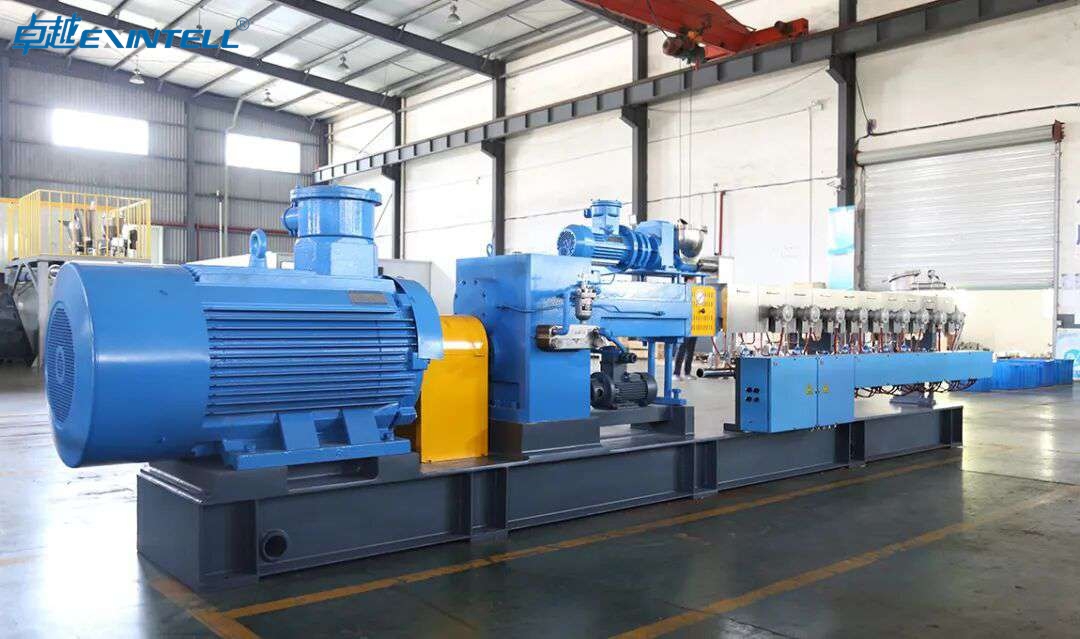
Groothandelsprijzen volgen dezelfde logica als detailhandel, maar met meer ruimte om te onderhandelen en meer variabelen om nauwkeurig te onderzoeken. Wanneer ik een fabrieksdirecte extruderprijs evalueer, of het nu gaat om een binnenlandse dealer of een in China gevestigde leverancier die groothandelstarieven aanbiedt (ThoYu), Ik werk via een consistente checklist met specificaties. Elk ervan heeft een directe lijn naar de kosten, Als u ze begrijpt, kunt u offertes op gelijke voorwaarden vergelijken in plaats van te raden.
Schroef- en vatspecificaties
De schroef en de cilinder vormen het hart van de machine, en ze definiëren zowel de mogelijkheden als de prijs. De belangrijkste specificatie is de L/D-verhouding, de lengte-diameterverhouding van de schroef. Een hogere L/D-verhouding zorgt voor een betere meng- en smeltuniformiteit, wat belangrijk is voor veeleisende polymeren. Ter referentie, een gebruikte Davis Standard 9-inch extruder (Model 80IN80HT) loopt een 32:1 L/D-verhouding met een vat met 7 zones (Aaron uitrustingslijst). Meer zones betekenen een fijnere regeling van de smelttemperatuur, omdat plastic wordt gesmolten door elektrische verwarmingsbuizen en wordt omgezet in een uniforme smelt door het afschuiven van de schroef (ThoYu).
De schroefconfiguratie bepaalt ook de machineklasse. Een enkelschroefsextruder is het werkpaard voor eenvoudige profielen en is de meest voorkomende categorie van gebruikte apparatuur (Aaron-apparatuur). Een dubbelschroefsextruder kost meer, maar blinkt uit in compounding, additieven mengen, en verwerking van gerecycleerde plastic vlokken. Als u PVC gebruikt, HDPE, of polypropyleen op volume, De geometrie van de schroef moet overeenkomen met de hars; PEEK en andere hoogwaardige polymeren duwen u richting specialist, duurdere configuraties. Fabrikant van dubbelschroefsextruders
Motor- en versnellingsbakvermogen
Het aantal pk's van de extrudermotor is een directe indicatie voor de doorvoer en, daarom, prijs. Diezelfde Davis Standard-eenheid combineert zijn loop met een 900 PK DC-motor (Aaron uitrustingslijst), wat aangeeft dat het gebouwd is voor zware industriële productie. De tandwielkast vertaalt het motorvermogen in bruikbaar koppel op de schroef. Reductieverhoudingen zoals 10.15:1 gecombineerd met een servicefactor rond 1.5 definieer hoeveel koppel de machine veilig kan leveren onder belasting (Aaron-apparatuur). Als ik twee vergelijkbare geprijsde machines vergelijk, een hogere servicefactor duidt op meer duurzaamheidsruimte, wat de moeite waard is om te betalen voor apparatuur die u van plan bent hard te gebruiken.
Automatisering en besturingssystemen
Besturingssystemen scheiden een basismachine van een moderne machine. Handmatige temperatuurregelaars en eenvoudige relais houden de prijs laag, maar vereisen bekwame operators en produceren meer afval. PLC-aangedreven systemen met gesloten vatkoeling, recept opslag, en datalogging kost vooraf meer, maar betaalt zich terug door consistentie en minder verspilling. Een hopperfeeder met een op de hopper gemonteerde voedingsschroef die de grondstoffen gelijkmatig in het vat levert (ThoYu) is standaard, maar gravimetrische invoer en geautomatiseerd mengen zorgen voor extra kosten en precisie. Voor operaties met grote volumes, Ik beschouw automatisering eerder als een waardedriver dan als een luxe.
Certificeringen en herkomst
Herkomst en certificering bepalen zowel de prijs als het risico. Binnenlandse en Europese machines vragen hogere prijzen, deels vanwege de bouwkwaliteit en deels vanwege de nabijheid van ondersteuning. Fabrieksdirecte prijzen van in China gevestigde fabrikanten (ThoYu) kan de machinekosten aanzienlijk verlagen, maar u moet de CE-markering verifiëren, UL-conformiteit voor de Amerikaanse markt, en gedocumenteerde elektrische veiligheid voordat u zich ertoe verbindt. Ik vraag altijd schriftelijk om certificeringsdocumenten, omdat het achteraf inbouwen van een niet-gecertificeerde machine om aan de Amerikaanse elektrische code te voldoen, de besparingen uitwist die de import in de eerste plaats aantrekkelijk maakten.
Nieuwe versus gebruikte plastic extrusiemachines

Dit is de beslissing waar ik het meest naar gevraagd word, en mijn antwoord is altijd hetzelfde: het hangt af van uw risicotolerantie en uw tijdlijn. Gebruikte extrusieapparatuur kan de kapitaalkosten met de helft of meer verlagen, maar de besparingen gaan gepaard met echte exposure. Nieuwe machines kosten meer en hebben vaak langere doorlooptijden, toch komen ze met garanties, huidige controles, en voorspelbare prestaties. Laat me beide kanten indelen zoals ik dat voor een klant zou doen.
Kapitaalbesparingen versus risico op gebruikte eenheden
De financiële argumenten voor gebruikte apparatuur zijn sterk. Zoals de prijstabel hierboven laat zien, een gebruikte industriële unit kan draaien 40 naar 60 procent onder nieuw, kapitaal vrijmaken voor gereedschap en downstreamapparatuur. Voor een startup of een winkel die een nieuwe productlijn test, dat verschil kan de hele business case zijn. Het risico is dat een polymeerverwerkingsmachine slijtageonderdelen heeft, schroeven en vaten verslechteren, verwarmingsbanden falen, en motoren verliezen efficiëntie, en die problemen zijn niet altijd zichtbaar op een advertentiefoto. De besparingen zijn reëel, en dat geldt ook voor de mogelijkheid om het probleem van iemand anders te kopen.
Conditie inspecteren, Uur, en bouwjaar
Ik koop nooit gebruikte apparatuur ongezien, en ik raad je aan dat ook niet te doen. Mijn inspectieprioriteiten, in volgorde:
- Slijtage van schroeven en cilinders: meet indien mogelijk de speling. Overmatige speling heeft een negatieve invloed op de output en de smeltkwaliteit, en een vervangende schroef- en cilinderset is duur.
- Bouwjaar en bedrijfsuren: een ingebouwde machine 2001, zoals het Davis Standard-voorbeeld, kan nog steeds uitstekend zijn als het wordt onderhouden, maar je hebt servicegegevens nodig om te kunnen oordelen.
- Verwarmings- en koelsystemen: bevestig dat alle vatzones correct verwarmen en dat de waterkoeling met gesloten lus de temperatuur vasthoudt.
- Staat van motor en versnellingsbak: luister naar lagergeluiden en controleer op olielekkage en speling van de versnellingsbak.
- Functie van het bedieningspaneel: controleer of elke zone nauwkeurig wordt gelezen en gecontroleerd, omdat oudere bedieningselementen mogelijk geen vervangende onderdelen hebben.
Wanneer haalbaar, aandringen op een aangedreven demonstratie die daadwerkelijk wordt uitgevoerd Fabrikanten van kunststofpellets materiaal. Een koude machine verbergt de meeste problemen.
Garantie- en ondersteuningshiaten op gebruikte apparatuur
Het ondersteuningsgat zijn de kosten die niet op de factuur staan. Nieuwe machines van een fabrikant van extrusiemachines omvatten doorgaans garantiedekking, hulp bij inbedrijfstelling, en toegang tot after-salesondersteuning. Gebruikte eenheden worden meestal verkocht zoals ze zijn, zodat u vanaf dag één eigenaar bent van elke mislukking. Voordat ik tweedehands koop, Ik bevestig twee dingen: dat er voor dat model reserveonderdelen beschikbaar blijven, en dat er een servicemonteur bereikbaar is die bekend is met het merk. Een goedkope machine zonder onderdelenpijplijn is een risico, geen koopje.
Overwegingen bij de verkoopwaarde
Eindelijk, denk na over de uitgang voordat je naar binnen gaat. Machines van erkende merken behouden hun waarde veel beter op de secundaire markt, en dat is precies de reden waarom merkspecifieke wederverkoopaanbiedingen een constante vraag oproepen (Aaron-apparatuur). Als de kans bestaat dat u binnen een paar jaar het formaat wijzigt of stopt, het kopen van een bekende enkelschroefsextruder, zelfs tegen een premie, beschermt uw kapitaal op weg naar buiten. In mijn ervaring, verkoopsterkte is de meest over het hoofd geziene factor in het debat over nieuw versus gebruikt, en het leidt vaak tot een grensbeslissing in de richting van het gevestigde merk.
Mijn uitgangspunt: koop nieuw wanneer uptime van cruciaal belang is, ondersteunende zaken, en je bent van plan de machine tien jaar te laten draaien. Koop gebruikt wanneer het kapitaal krap is, je beschikt over de technische capaciteit om de apparatuur te inspecteren en te onderhouden, en je houdt het bij gerenommeerde merken met levering van levende onderdelen. Hoe dan ook, doe eerst de totale eigendomskosten, omdat de offerte slechts het begin van de uitgaven is.
Bronnen: Aaron-apparatuur, Gebruikte extruders met enkele schroef; ThoYu, Groothandelsprijs China kunststof extruder; Amade-Tech, Laboratorium kunststof extrusiemachine.
Waar vindt u gebruikte kunststof extrusiemachines in de groothandel
Wanneer ik apparatuur aanschaf met een krap kapitaalbudget, de tweedehandsmarkt is meestal mijn eerste stop. Een goed onderhouden tweedehands extruder kan uitkomst bieden 80 naar 90 procent van de levensduur van een nieuw apparaat tegen een fractie van de kosten, op voorwaarde dat u weet hoe u een vermelding moet lezen en de staat moet verifiëren voordat u geld overboekt. De uitdaging is niet het vinden van machines. Het scheidt een echt koopje van een buiten gebruik gestelde aansprakelijkheid.
Marktplaatsen en dealers die de moeite waard zijn om te kennen
De meeste van mijn gebruikte aankopen zijn gedaan via gevestigde dealernetwerken in plaats van via open advertenties. Gespecialiseerde wederverkopers zoals Aaron Equipment onderhouden roterende voorraden van enkelschroefs- en dubbelschroefsextruders, en ze fotograferen, label, en test vaak elke eenheid voordat u deze op de markt brengt. Die doorlichting is belangrijk. Een dealer met een fysieke werkplaats en een reputatie die beschermd moet worden, geeft mij een verhaal dat een anonieme post op de markt nooit zal doen. Ik controleer nog steeds veilinghuizen en branchespecifieke noteringsborden, maar ik behandel een gerenommeerde dealer als basis voor gebruikte extrusieapparatuur.
Een vermelding lezen als een ingenieur
Een gebruikte aanbieding is een vermomd specificatieblad, en drie nummers vertellen me het meeste van wat ik moet weten voordat ik ooit bel. Denk eens aan een reëel voorbeeld: een gebruikte Davis Standard 9-inch extruder (Model 80IN80HT) ingebouwd 2001, geadverteerd met een 32:1 L/D-verhouding, een 7-zonevat, en een 900 PK DC-motor (bron: Aaron uitrustingslijst).
- L/D-verhouding. De verhouding vatlengte tot diameter regelt de verblijftijd en het mengen. A 32:1 verhouding is geschikt voor veeleisend smelthomogeniteitswerk; kortere verhoudingen rond 24:1 omgaan met eenvoudigere profielen. Als uw polymeer grondig moet worden gesmolten, koop niet kort.
- Vatzones. Zeven onafhankelijk geregelde verwarmingszones geven mij een korrelige regeling van de smelttemperatuur over de gehele lengte van het vat. Meer zones betekenen een fijnere thermische afstemming, wat van cruciaal belang is voor warmtegevoelige harsen.
- Motorvermogen. A 900 HP-drive signaleert een productiemachine met hoge doorvoer, geen laboratoriumhulpmiddel. Motor HP schaalt grofweg met de uitvoercapaciteit, dus stem het af op uw beoogde lijnsnelheid in plaats van meer drive te kopen dan uw dobbelsteen kan gebruiken.
In de lijsten worden ook de reductieverhouding en de servicefactor van de versnellingsbak vermeld, die samen het bruikbare koppel definiëren. A 10.15:1 reductie met een 1.5 servicefactor, bijvoorbeeld, vertelt me dat de aandrijflijn hoofdruimte heeft voor langdurig gebruik (bron: Aaron-apparatuur). Ik lees die cijfers als een duurzaamheidssignaal, geen voetnoot.
Merken die waarde behouden op de wederverkoopmarkt
Merkreputatie volgt een machine in zijn tweede leven. Davis-standaard, in mijn ervaring, juist vanwege onderdelen een premie op de wederverkoopmarkt afdwingt, schroeven, en servicedocumentatie blijven jaren na productie beschikbaar. Die liquiditeit snijdt aan twee kanten: Ik betaal meer vooraf, maar ik herstel meer als ik doorverkoop, en ik besteed minder tijd aan het zoeken naar een vervangende extruderschroefconfiguratie of cilindervoering. Als ik twee vergelijkbare gebruikte eenheden vergelijk, een ondersteund merk wint bijna altijd wat betreft de totale eigendomskosten, zelfs bij een hogere stickerprijs.
Conditie verifiëren voordat u zich ertoe verbindt
Ik koop nooit een gebruikte extruder alleen op basis van foto's. Mijn checklist vóór aankoop loopt langs de slijtagepunten die stilletjes de prestaties verminderen:
- Slijtage van schroeven en cilinders. Boringmetingen aanvragen. Versleten spelingen verslechteren de output- en drukstabiliteit, en het reconditioneren van een vat is duur.
- Heater and thermocouple health. Confirm every zone reaches and holds setpoint. Dead zones on a multi-zone barrel are a red flag.
- Drive and gearbox. Listen for bearing noise and check for oil leaks. A failing gearbox can cost as much as the machine.
- Koelsysteem. Many industrial units use electric heating with closed-loop water cooling (bron: Aaron Apparatuurspecificatie). Verify the cooling circuit is intact and free of scale.
- Run test. Whenever possible, I insist on a powered demonstration under load, not just a cold spin.
If a seller resists an inspection or a run test, I walk. The savings on a used polymer processing machine evaporate the moment you have to rebuild a drivetrain.
Small and Lab-Scale Plastic Extrusion Machines
Not every buyer needs a 900 HP monster. Een groot deel van de zoekinteresse rond dit zoekwoord verwijst naar kleine machines en machines die bij mij in de buurt zijn, en dat komt overeen met wat ik in de praktijk zie: R&D-teams, universiteiten, en startups hebben compacte extruders nodig die op een laboratoriumbank passen en op standaardstroom werken. Deze machines ruilen doorvoer in voor flexibiliteit, en voor de juiste gebruikssituatie is dat precies de transactie die u zoekt.
Wat machines op laboratoriumschaal eigenlijk doen
Een extruder op laboratoriumschaal verwerkt grondstoffen tot poeder, pellet, of korrelvorm om continue polymeerproducten met een uniforme dwarsdoorsnede te produceren (bron: Amade-Tech). De kernfysica is identiek aan die van productieapparatuur: een hopperfeeder levert de grondstof gelijkmatig in het vat, elektrische verwarmingsbuizen smelten het polymeer, en de schroef knipt en homogeniseert het tot een uniforme smelt voordat de extrusiematrijs de output vormt (bron: ThoYu). Het verschil is de schaal, niet principe, dat is wat laboratoriummachines zo nuttig maakt voor procesontwikkeling. Wat u op bankschaal leert, wordt toegepast op de productie.
Typische producten en gebruiksscenario's
In drie situaties reik ik naar een eenheid op laboratoriumschaal:
- R&D en formulering. Nieuwe harsmengsels testen, additieven, of gerecyclede plastic vlokken zonder een productielijn te belasten.
- Prototyping. Het maken van voorbeeldfilms, buizen, en kleine profielen voor klantgoedkeuring of gereedschapsvalidatie.
- Productie in kleine volumes. Het bedienen van nichemarkten waar de vraag geen volledige extrusieproductielijn rechtvaardigt.
Deze machines kunnen gemakkelijk gewone thermoplastische materialen zoals PVC verwerken, HDPE, en polypropyleen, en eenheden met hogere specificaties strekken zich uit tot technische polymeren zoals PEEK wanneer de loop en de schroef geschikt zijn voor de verhoogde smelttemperaturen.
Voetafdruk en stroomvereisten
De praktische aantrekkingskracht van een laboratoriumextruder is dat deze in een gewone kamer staat. Many bench units draw single-phase or light three-phase power and occupy a footprint measured in a few square feet, versus the dedicated bay and heavy three-phase service a production extruder demands. Before buying, Ik bevestig twee dingen: the electrical service my facility can supply, and whether the cooling requirement is air or water. Getting the utilities wrong is the most common reason a small machine sits idle after delivery.
Knowing When to Upgrade to Production Scale
A lab machine has a ceiling, and recognizing it early saves money. I plan the jump to production scale when sustained order volume outpaces the machine’s extruder capacity output, when I am running multiple shifts just to keep up, or when per-unit cost on the small line exceeds what a production extruder would deliver. The signal is economic, not emotional: once the lab unit becomes the bottleneck rather than the tool, it is time to scale. I typically keep the lab machine anyway, redeployed for the R&D work it does best.
Lab-Scale vs Production Extruders at a Glance
| Attribuut | Laboratorium / Small-Scale Extruder | Production Extruder |
|---|---|---|
| Primary use | R&D, prototypen, low-volume runs | Continuous commercial production |
| Typical motor | Fractional to ~20 HP | 50 naar 900+ HP (bijv., 900 HP Davis Standard) |
| L/D-verhouding | ~20:1 naar 25:1 | 24:1 naar 32:1 |
| Vatzones | 2 naar 4 | 5 naar 7+ |
| Power service | Single-phase / light 3-phase | Heavy 3-phase |
| Voetafdruk | Benchtop to compact floor unit | Dedicated production bay |
| Uitvoer | Grams to low kg/hr | Hundreds of kg/hr |
Figures for the production column reflect the specification range seen in listings such as the Davis Standard 80IN80HT (bron: Aaron-apparatuur); lab-scale ranges reflect typical bench-unit configurations.
Buying Plastic Extrusion Machines Wholesale in the USA
Search intent around this keyword leans heavily toward USA and near-me queries, and that reflects a real procurement decision every US buyer faces: buy domestic or import. Factory-direct pricing from overseas manufacturers is genuinely attractive, and I have bought imported equipment when the numbers justified it. But the sticker price is only one line in the ledger. Here is how I weigh the domestic option.
The Case for Domestic Dealers
Buying from a US-based dealer or manufacturer gives me three advantages that rarely show up on a spec sheet but always show up in operations:
- Faster lead times. A machine in a domestic yard ships in days, not the weeks of ocean transit and customs clearance an import requires. When a line is down, that speed is worth real money.
- Easier service and parts. Domestic support means same-timezone technicians, stocked spare parts, and no international freight on a replacement gearbox or barrel. After-sales support is the single most underrated factor in extruder ownership.
- Standards compliance. US machines are typically built or certified to UL and NEC electrical requirements. That compliance simplifies installation, satisfies insurers, and passes inspection without the retrofit an uncertified import may need.
Compliance Is Not Optional
I want to be direct about this because it trips up first-time importers. An extruder that is not UL-listed or NEC-compliant can fail a facility electrical inspection, void insurance coverage, and create OSHA exposure. Retrofitting an imported machine to meet US standards, rewiring controls, replacing heaters, adding certified safety interlocks, can consume much of the money you saved on purchase price. Before I import, I confirm exactly what certification the unit carries and what it will cost to close any gap.
Cost Tradeoffs: Domestic vs Imported
China-based manufacturers offer factory-direct wholesale pricing on plastic extruders (bron: ThoYu), and for high-volume standardized equipment that pricing can be compelling. But the landed cost of an import includes freight, verzekering, invoerrechten, douane makelaardij, and inland transport, none of which appear in the quoted machine price. Layer on longer lead times, potential language and timezone friction on support, and any compliance retrofit, and the gap narrows considerably. Mijn vuistregel: I model total cost of ownership over the first three years, not the purchase price, before deciding. On that basis, domestic often wins for equipment I need serviced quickly, while imports can win for planned capacity additions where lead time is not urgent.
How I Vet a Wholesale Supplier
Whether domestic or overseas, I run every wholesale machinery supplier through the same gate before committing capital. I confirm the minimum order quantity and whether it fits my actual need, request references from buyers running the same machine class, verify certifications in writing rather than taking a catalog claim at face value, and structure payment with protection, staged milestone payments or an escrow arrangement rather than a full wire against a promise. For imports specifically, I clarify Incoterms so I know exactly where the seller’s responsibility ends and mine begins. A supplier who answers these questions clearly is one I can build a relationship with; one who deflects is one I pass on.
Finding Wholesale Suppliers Near You
When I start a sourcing project for bulk extrusion equipment, I map suppliers in concentric circles: local, regional, then global. Proximity carries real value that rarely shows up on a quote, and I have learned to weigh it deliberately before chasing the lowest number.
Local vs Regional Sourcing Benefits
A supplier within a few hours’ drive lets me tour the floor, watch a machine run my resin, and shake hands with the service manager who will pick up the phone at 2 a.m. during a line-down event. Regional suppliers widen the pool of available inventory and specialization while keeping domestic warranty terms and familiar payment protections intact. In mijn ervaring, the closer the vendor, the shorter the mean-time-to-repair, and for a single screw extruder running continuous cross-section profile work, downtime is the expense that quietly dwarfs the purchase price.
Installation and Service Proximity
Tuigage, leveling, wiring a 900 HP DC drive, and commissioning a 7-zone barrel with closed-loop cooling all go smoother when the technician is local. A used Davis Standard 9-inch extruder (Model 80IN80HT) with a 32:1 L/D ratio and 900 HP motor, ingebouwd 2001, is a serious piece of iron to install and dial in (bron: Aaron uitrustingslijst). I want the people who know that machine within reach for melt temperature control tuning and screw configuration adjustments during the first production weeks.
Trade Shows and Industry Directories
Two channels consistently surface credible vendors for me. Trade shows such as NPE: De Plastics Show en Fakuma zetten tientallen fabrikanten van extrusiemachines in één hal, waar ik een dubbelschroefsextruder kan vergelijken met een enkele schroef naast elkaar en echte specificatiebladen kan verzamelen. Voor gestructureerd zoeken, Ik vertrouw op Thomasnet en de marktplaatsen voor gebruikte apparatuur, zoals Aaron Equipment, die merkspecifieke wederverkooplijsten bijhoudt voor extruders met enkele schroef (bron: Aaron-apparatuur). Directories zijn een beginnende shortlist, geen oordeel, dus ik volg altijd een fabrieksbezoek of een video-walkthrough.
China versus Amerikaanse leveranciers: Het afwegen van de afwegingen
De beslissing waarmee ik het vaakst te maken krijg, is de directe fabrieksprijsstelling vanuit het buitenland versus de servicedichtheid van een binnenlandse partner. Geen van beide wint direct. Het juiste gesprek hangt af van uw volume, your in-house maintenance capability, and how much lead-time risk your production schedule can absorb.
Balancing Local Price with Global Options
China-based manufacturers offer factory-direct wholesale pricing on plastic extruders, and that gap can be substantial on comparable specifications (bron: ThoYu). US suppliers, and used domestic equipment, close part of that gap when you factor in freight, plichten, and the cost of coordinating support across time zones. I treat the sticker price as one input into total cost of ownership, not the deciding figure.
Lead Time and Shipping Considerations
Domestic used equipment can ship in days; a new overseas extrusion production line typically runs on a build-plus-ocean-freight timeline measured in months. Ocean transit, port handling, and inland drayage all add weeks and variability. If your project has a hard launch date, that schedule risk deserves a line in your model alongside the price advantage.
Steun, Parts, and Language Logistics
This is where I have seen buyers underestimate the friction. Time-zone offsets stretch troubleshooting cycles, spare gearbox and screw components may ship internationally, and technical documentation quality varies. Before committing overseas, I confirm English-language manuals, a named support contact, and a stocked or expedited parts channel for wear items like screws, vaten, en verwarmingsbanden.
China vs US Sourcing at a Glance
| Factor | Overzee (bijv., China) factory-direct | US supplier / domestic used |
|---|---|---|
| Eenheidsprijs | Laagste, factory-direct wholesale (bron: ThoYu) | Higher new; competitive on used inventory (bron: Aaron-apparatuur) |
| Doorlooptijd | Build plus ocean freight, typically months | Days to weeks for in-stock units |
| Landingskosten | Add freight, plichten, vervelling | Add domestic freight and rigging |
| Service proximity | Op afstand, tijdzone afhankelijk | On-site or regional |
| Parts availability | Internationale verzending, plan ahead | Domestic stock, snellere doorloop |
| Documentation & taal | Verify English manuals and support | Native-language support |
Mijn vuistregel: high volume with a capable maintenance team favors overseas factory-direct; tight timelines or lean staffing favor domestic. Note that SERP demand for this keyword splits evenly across manufacturer, ecommerce, and informational content at roughly 33.3% each (bron: SERP analysis, 2025), and buyer searches cluster around price, “bij mij in de buurt,” “VS,” En “gebruikt” intents (bron: SERP/PAA data, 2025) — a fair reflection of how mixed real purchasing behavior is.
How to Choose a Plastic Extrusion Machine Manufacturer
Once I have a shortlist, I run every candidate through the same vetting sequence. The goal is to separate a genuine polymer processing machine partner from a broker who will disappear after the wire transfer clears.
Quality Assurance and Factory Verification
I verify the factory before I verify the price. For overseas vendors that means a live video walkthrough or a third-party inspection of the production floor, weld quality on the extruder barrel, and evidence they actually build rather than resell. I ask to see a machine running feedstock in powder, pellet, or granule form to confirm they handle continuous polymer output the way their marketing claims (bron: Amade-Tech). Seeing the heating tubes and screw shearing melt real resin into a uniform stream tells me more than any brochure (bron: ThoYu).
Track Record and Reference Customers
I request three reference customers running similar materials, whether that is PVC pipe, HDPE-profiel, polypropylene sheet, of een veeleisend technisch polymeer zoals PEEK. A manufacturer with a documented history in your specific application has already solved the problems you are about to encounter. If a vendor cannot produce references, I treat that as a signal, not an oversight.
Customization and Application Expertise
The best manufacturers speak fluently about screw configuration, L/D ratio selection, and custom die tooling for your exact profile. Extruders produce a wide range of continuous products, including pipes, buizen, films, planken, en flessen (bron: Amade-Tech), and each demands different tooling and thermal setup. I probe how they size the gearbox reduction ratio and service factor to my torque needs, drawing on published industrial examples such as a 10.15:1 ratio at a 1.5 servicefactor (bron: Aaron-apparatuur). A vendor who can discuss whether a single screw or twin screw extruder fits my recycled plastic flake feedstock, and how the hopper feeder delivers material evenly, has earned a closer look.
After-Sales Support and Parts Availability
I put the support terms in writing before purchase: response-time commitments, commissioning assistance, opleiding van operators, and guaranteed availability of wear parts like screws, vaten, and heater elements. For a plastic recycling extruder or any line running abrasive reclaimed material, wear-part supply is not optional, it is the difference between a productive asset and expensive scrap. I confirm lead times on those parts specifically, since that is what governs real-world uptime.
Certifications and Quality Systems
Eindelijk, I check the paperwork that signals a disciplined operation. ISO 9001 indicates a functioning quality management system, and CE marking matters if the equipment enters or transits European jurisdictions. For a US install I confirm the electrical build can meet UL and NFPA 79 verwachtingen, since a 900 HP DC drive with multi-zone electric heating and closed-loop water cooling (bron: Aaron Apparatuurspecificatie) has to satisfy my local inspector and my insurer. Certifications do not guarantee quality on their own, but their absence usually correlates with corners cut elsewhere.
Vetting sources I return to include ThoYu for factory-direct wholesale context (ThoYu wholesale listing) and Aaron Equipment for used single screw extruder benchmarks (Aaron Equipment used extruders).
Decoding Key Specifications Before You Buy
Every wholesale quote I review lists a wall of specifications, and most buyers I coach fixate on price before they understand what those numbers actually deliver. In mijn ervaring, four figures tell you more about a machine’s real capability than the headline output rate does: de L/D-verhouding, the number of heating and cooling zones, the screw diameter, and the motor-to-gearbox pairing. Read those correctly and you can predict melt quality, energy draw, and output ceiling before the machine ever ships.
L/D Ratio and Its Impact on Melting and Mixing
The L/D ratio expresses the screw’s effective length divided by its diameter, and it governs how much residence time the polymer gets inside the barrel. A longer L/D gives the melt more distance to homogenize, which matters when you run temperature-sensitive or highly filled compounds. Ter referentie, een gebruikte Davis Standard 9-inch extruder (Model 80IN80HT) I analyzed lists a 32:1 L/D-verhouding (bron: Aaron uitrustingslijst), which sits at the higher end for single-screw machines and signals strong melting and mixing headroom.
As a rough guide, Ik behandel 24:1 naar 26:1 as adequate for straightforward commodity resins, 28:1 naar 32:1 as the sweet spot for consistent mixing and venting, and anything longer as specialty territory for demanding compounds. A single screw extruder built for basic profile work rarely needs the same length as one processing recycled plastic flake with variable bulk density. If a supplier can’t tell you the L/D ratio, that’s a signal the listing is thin on engineering detail.
Number of Heating and Cooling Zones
Multi-zone barrels let you stage the temperature profile from feed throat to die, and more zones mean finer control over melt temperature. The Davis Standard unit referenced above uses a 7-zone barrel (bron: Aaron Apparatuurspecificatie), which gives an operator granular control across the length of the screw. Plastic in an extruder is melted by electric heating tubes and converted into a uniform melt through screw shearing (bron: ThoYu), so the zone count directly shapes how evenly that transition happens.
Cooling is the other half of the equation. Multi-zone barrels commonly pair electric heating with closed-loop water cooling (bron: Aaron Apparatuurspecificatie), which pulls heat back out when shear or process feedback pushes a zone above setpoint. When I vet a machine, I confirm both the heating zone count and whether cooling is air or closed-loop water. Water cooling responds faster and holds tighter melt temperature control, which pays off on precision products.
Screw Diameter and Output Rate
Screw diameter is the single strongest predictor of throughput. Output scales roughly with the cube of the diameter, so a modest jump in screw size produces a large jump in kilograms per hour. That relationship is why a 9-inch machine like the Davis Standard example carries a 900 PK DC-motor (bron: Aaron uitrustingslijst) — the mass of material moving through a large-diameter screw demands proportionally more drive power.
When comparing wholesale offers, always normalize output against diameter and resin type. A quoted output of, inspraak, 300 kg/hr means little without knowing whether it was measured on low-density film resin or a stiff PVC compound. I ask suppliers to state the resin, smelt temperatuur, and screw speed used for their rated output, then compare like with like.
Motor HP and Gearbox Reduction Ratio
The motor and gearbox work as a matched pair. Motor horsepower sets the available power, while the gearbox reduction ratio converts high-speed, low-torque motor output into the low-speed, high-torque rotation the screw needs. Industrial extruders publish both the ratio and a service factor — for example, A 10.15:1 reductie met een 1.5 servicefactor (bron: Aaron-apparatuur) — and that service factor tells you how much margin the drivetrain carries above nominal load.
I treat the service factor as a durability indicator. A gearbox rated 1.5 is designed to absorb shock loads and continuous duty without premature wear, which is exactly what you want on a machine running multiple shifts. A hopper-mounted feeding screw delivers raw material evenly into the barrel (bron: ThoYu), and that steady feed keeps torque demand predictable so the gearbox operates within its rated envelope.
Matching Machine Capacity to Your Production Volume
Specifications only matter once you tie them to your actual demand. The most expensive mistakes I see in wholesale procurement come from sizing decisions, not from picking a bad brand. Online Plastics Recycling Marketplace Buy too small and you’ll run the line flat out with no cushion for growth; buy too large and you’ll carry idle capital, higher energy bills, and startup scrap on every short run.
Estimating Throughput Needs
Start with your target finished-product volume, then work backward. I calculate required output in kilograms per hour by taking monthly demand, dividing by realistic operating hours, and adding an allowance for scrap and changeover. A useful sanity check: if you need 40,000 kg per month and run a single shift of about 160 productive hours, you need roughly 250 kg/hr of sustained output, and I’d size for 300 kg/hr to leave headroom.
Feedstock form affects this math too. Lab and production extruders process feedstock in powder, pellet, or granule form for continuous polymer products with uniform cross section (bron: Amade-Tech), and bulk density varies enough between those forms that the same screw can deliver noticeably different mass throughput. Confirm your rated output against the feedstock you’ll actually run.
Avoiding Under- and Over-Sizing
Undersizing forces the machine to run at maximum screw speed constantly, which raises melt temperature, accelerates wear, and leaves zero margin for demand spikes. Oversizing is subtler but real: an oversized extruder run at low speed can produce poor mixing and unstable output, and you pay for motor and heating capacity you never use. My rule is to target a machine that hits your peak demand at roughly 75 naar 85 percent of its rated capacity, which keeps it in an efficient, controllable band.
Planning for Future Growth
Wholesale machinery is a multi-year commitment, so I plan sizing against a two-to-three-year demand forecast, not today’s orders. Dat gezegd hebbende, buying far ahead of demand ties up capital you could deploy elsewhere. A middle path I often recommend: size the extruder for near-term growth, but confirm the extrusion production line’s downstream equipment and the supplier’s screw and die options can scale, so you upgrade tooling rather than replacing the whole line.
Batch vs Continuous Production
Extrusion is inherently a continuous process — extruders produce continuous profiles including pipes, buizen, films, planken, en flessen (bron: Amade-Tech) — so the batch-versus-continuous question is really about how your business schedules work. If you run long stable jobs, a larger continuous line maximizes efficiency. If you run many short jobs with frequent material and color changes, prioritize fast changeover and quick thermal response over raw size, because your losses will come from transitions, not from top-line speed.
| Production profile | Typische schroefdiameter | Indicative output | Suggested L/D | Beste pasvorm |
|---|---|---|---|---|
| Laboratorium / R&D and small runs | 20–45 mm | Up to ~50 kg/hr | 24:1–28:1 | Bemonstering, small-batch, PEEK trials |
| Kleine commerciële | 50–75 mm | ~80–250 kg/hr | 26:1–30:1 | Profielen, small pipe, specialty film |
| Mid-volume production | 90–120 mm | ~300–600 kg/hr | 28:1–32:1 | HDPE pipe, laken, continuous profile |
| Hoog volume / heavy industrial | 150 mm and up | 600 kg/uur en hoger | 30:1–32:1+ | Large pipe lines, pallet, gerecycleerde vlok |
I treat these ranges as a starting frame for supplier conversations, not fixed rules. Actual output always depends on resin, melt temperature control, and screw configuration, so I verify each figure against a supplier’s tested data for my specific material.
Extruders for Specific Products: Pijp, Film, Laken, Pallet
The extruder is only the melt engine. What defines your finished product is the extrusion die and the downstream line built around it. When I evaluate a wholesale package, I look at the die and tooling as closely as the machine itself, because that’s where product quality and application fit are actually determined.
Pipe and Tube Extrusion Lines
Pipe and tube lines pair the extruder with an annular die, a vacuum calibration and cooling tank, a haul-off, and a cutter or coiler. For PVC and HDPE pipe, dimensional stability and wall concentricity are everything, so tight melt temperature control and steady output matter more than peak speed. I confirm the die is matched to my target diameter range and that the calibration tooling is included or clearly quoted, since retooling for a new pipe size is a recurring cost buyers often overlook.
Film and Sheet Die Configurations
Film and sheet share extrusion fundamentals but diverge at the die. Blown film uses an annular die with an air ring and tower; cast film and sheet use a flat T-die or coat-hanger die feeding a chill-roll or three-roll stack. Polypropylene and polyethylene dominate here, and die width plus lip adjustment set your thickness tolerance. When comparing offers, I ask specifically which die configuration is included and whether the lip is manually or automatically adjustable, because that determines how tightly you can hold gauge across the web.
Pallet and Profile Applications
Pallet and heavy-profile production is where large machines and recycled feedstock meet. Chinese manufacturers offer factory-direct wholesale pricing on plastic extruders built for pallet production (bron: ThoYu, ThoYu pallet extruder), and these lines frequently run reclaimed material. Recycling extruders are a distinct machine class designed for reclaimed plastic feedstock (bron: ThoYu), so if you plan to process recycled plastic flake, I strongly advise sourcing a machine engineered for it rather than adapting a virgin-resin extruder — the feed section, ontluchten, and wear surfaces are built differently.
Custom Die and Tooling Options
Custom die tooling is what turns a general-purpose extruder into a machine that makes your exact product. Whether you need a bespoke profile cross section, a specific pipe wall structure, or a particular sheet width, I confirm three things with the supplier upfront: lead time for custom tooling, whether tooling design is in-house or subcontracted, and the cost of future die changes. A capable extrusion machine manufacturer will quote tooling as a clear line item and stand behind dimensional performance, which also tells you something about the after-sales support you’ll receive once the line is running.
For buyers exploring the used market, single screw extruders are a well-established resale category with brand-specific listings (bron: Aaron-apparatuur). When I consider used equipment for a specific product, I always verify that compatible dies and calibration tooling exist for my application, since a bargain machine with no path to the right tooling isn’t a bargain at all.
Processing Recycled Plastics with Wholesale Extruders
When I evaluate a wholesale extruder for a recycling operation, I start from a different premise than I would for virgin resin processing. Reclaimed feedstock is inconsistent, verontreinigd, and thermally sensitive, so the machine has to compensate for material variability that a virgin-only line never sees. Recycling extruders are a distinct machine class built for reclaimed plastic feedstock (bron: ThoYu, 2025), and treating them as interchangeable with standard profile extruders is one of the more expensive mistakes I have watched buyers make.
Recycling Extruders and Material Preparation
The extruder itself is only one stage in a longer chain. Before recycled plastic flake reaches the hopper feeder, it typically passes through washing, drogen, and size reduction. A hopper-mounted feeding screw delivers raw material evenly into the barrel (bron: ThoYu, 2025), and even that step becomes harder when the input is irregular flake rather than uniform pellets. In mijn ervaring, the quality of upstream preparation determines whether the extruder runs stably or surges. If you are quoting a wholesale line and the supplier only prices the extruder, ask specifically about the material prep equipment, because the melt quality you get downstream depends on it.
The core melting mechanism is unchanged: plastic is melted by electric heating tubes and transformed into a uniform melt through screw extrusion and shearing (bron: ThoYu, 2025). What changes with reclaim is how much shear and residence time the material can tolerate before it degrades. HDPE and polypropylene reclaim are relatively forgiving; PVC regrind is far less so and punishes overheating quickly.
Why Twin Screw Extruders Excel with Reclaim
For consistent recycled output, I lean toward a twin screw extruder over a single screw extruder in most reclaim applications. The reason is mechanical. Twin screw configurations provide better mixing, more controllable shear, and stronger devolatilization, which matters when the feedstock carries moisture and volatiles picked up during its first life. A single screw extruder remains a common and cost-effective used-equipment category with brand-specific resale listings (bron: Aaron-apparatuur, 2025), and it can handle clean, well-prepared regrind. But when feedstock quality is uneven, the extruder screw configuration in a twin screw machine gives me the process latitude to keep melt temperature control tight across batches.
The tradeoff is cost. Twin screw machines carry higher purchase and tooling prices, and the gearbox is more complex. That is a real budget line, not a rounding error, so I weigh it against the value of the finished product. High-value recycled compounds justify the investment; commodity reclaim often does not.
Contamination and Filtration Considerations
Contamination is the defining challenge of recycled feedstock, and filtration is how you manage it. A melt filtration system, usually a screen changer with a fine mesh pack, removes particulate before the melt reaches the extrusion die. Without adequate filtration, contaminants cause surface defects, weak spots, and clogged dies. I always confirm two things with a wholesale supplier: the screen changer type (manual, hydraulic, or continuous) and the finest mesh the system supports without excessive pressure buildup. For heavily contaminated post-consumer streams, a continuous screen changer avoids the production stoppages that manual changes force.
Multi-zone barrels commonly use electric heating with closed-loop water cooling (bron: Aaron Apparatuurspecificatie, 2025), and precise zone control becomes even more important with reclaim because you are trying to melt inconsistent material without scorching the fraction that heats fastest.
Circular Manufacturing Opportunities
The commercial case for recycling extruders keeps strengthening. Brand commitments to recycled content and tightening regulation on single-use plastics are pushing demand for in-house reprocessing. I see two viable models. The first is closed-loop: reprocessing your own production scrap back into the same line, which improves yield and reduces raw material spend. The second is a dedicated recycling line that converts purchased post-industrial or post-consumer feedstock into salable pellets or profiles. Both turn a waste stream into either cost savings or revenue, and the extruder is the pivot point of that conversion.
Certifications and Standards to Look For
Certification is where wholesale procurement, vooral van buitenlandse leveranciers, gets serious. China-based manufacturers offer factory-direct wholesale pricing on plastic extruders (bron: ThoYu, 2025), and that pricing is genuinely attractive. But a low quote means nothing if the machine cannot be legally installed, insured, or operated in your jurisdiction. I treat certification as a gating requirement, not a nice-to-have.
CE Marking for European Compliance
If you operate in or export to the European Economic Area, CE-markering is verplicht. It signals that the machine conforms to relevant EU directives, most notably the Machinery Directive, covering mechanical safety, bewaken, and emergency stops. For a US buyer this may seem irrelevant, but I raise it because many buyers plan to resell finished goods into Europe or operate multinational facilities. Confirm the CE marking is backed by an actual Declaration of Conformity and a technical file, not just a sticker on the frame. A legitimate manufacturer produces the paperwork on request.
ISO 9001 Kwaliteitsbeheer
ISO 9001 certifies that the manufacturer runs a documented quality management system. It does not certify any individual machine, and I want to be precise about that distinction because suppliers sometimes blur it. What ISO 9001 tells me is that the factory has repeatable processes for design, productie, and inspection, which correlates with more consistent build quality across units. For wholesale buyers ordering multiple machines or planning repeat purchases, that process consistency is exactly what protects you from unit-to-unit variation.
UL for US Electrical Safety
For the US market, UL certification on electrical components is the one I refuse to compromise on. Extruders draw significant power through motors, verwarmingsbanden, en schakelkasten. A used Davis Standard 9-inch extruder, Bijvoorbeeld, loopt een 900 HP DC motor across a 7-zone barrel (bron: Aaron uitrustingslijst, 2025), and that scale of electrical load makes safety certification a genuine risk-management issue, geen formaliteit. UL or an equivalent NRTL listing affects your ability to pass local electrical inspection, secure insurance, and satisfy OSHA expectations. Imported machines frequently ship with control systems that are not UL-listed, so budget for potential panel rework or re-certification in the US.
Documentation and Compliance Verification
Certificates are only as good as your ability to verify them. My verification routine is straightforward:
- Request certificate numbers and check them against the issuing body’s public database rather than trusting a PDF.
- Confirm the certificate covers the specific model, not a different machine in the product family.
- Ask for the Declaration of Conformity, wiring diagrams, and the operation and maintenance manual before you release final payment.
- Where feasible, commission a third-party pre-shipment inspection to confirm the physical machine matches the documentation.
Tying compliance verification to your payment milestones is the single most effective piece of leverage you have as a wholesale buyer. Once the machine ships, that leverage is gone.
Understanding Total Cost of Ownership
The purchase price is the number everyone fixates on, and it is the one that matters least over the life of the machine. When I model total cost of ownership, I fold in energy, onderhoud, stilstand, en installatie, and the ranking of suppliers frequently reverses once those costs are included. This is the analysis that most wholesale buying guides skip, and it is where a slightly cheaper machine can quietly become the expensive one.
Energy Consumption and Operating Cost
Energy is the largest recurring cost for most extrusion operations, and it is driven by motor horsepower and heater load. A 900 PK DC-motor (bron: Aaron uitrustingslijst, 2025) running multiple shifts represents a substantial electricity bill, and small efficiency differences compound over thousands of operating hours. Multi-zone barrels using electric heating with closed-loop water cooling (bron: Aaron Apparatuurspecificatie, 2025) are more efficient at holding temperature than older uninsulated designs. I ask suppliers for the connected load and, where possible, the specific energy consumption per kilogram of throughput, because that figure lets me compare machines on an operating-cost basis rather than a sticker basis.
Maintenance and Spare Parts
Slijtage is onvermijdelijk. The screw and barrel are the primary wear components, and processing abrasive or filled materials accelerates it. Recycled plastic flake with residual contamination wears tooling faster than clean virgin resin. Gearbox maintenance also matters: industrial extruders define torque through gearbox reduction ratios such as 10.15:1 met een servicefactor van 1.5 (bron: Aaron-apparatuur, 2025), and that gearbox needs scheduled lubrication and periodic inspection. My practical concern with wholesale and imported machines is spare parts lead time. A cheap machine whose screw takes three months to replace from overseas is not cheap when the line sits idle waiting.
Downtime en betrouwbaarheid
Downtime is the cost that does not appear on any invoice, which is exactly why it gets underestimated. Every hour a line is down is lost production plus fixed overhead still accruing. Reliability is where established brands and ISO 9001 manufacturers tend to justify their premium. When I assess reliability, I look at build quality on the components that fail expensively, the availability of local service technicians, and the supplier’s after-sales support commitments. A responsive supplier that ships parts quickly is worth more than a marginally lower purchase price.
Installation and Commissioning Expenses
The final and most frequently forgotten category is getting the machine running. Installation and commissioning cover rigging and placement of heavy equipment, electrical and cooling-water hookups, control integration, and the trial runs needed to dial in melt temperature control and output. For imported machines I also budget for potential electrical re-certification and any adaptation to US voltage and plant infrastructure. Commissioning support from the manufacturer, whether on-site or remote, has real value here, and I confirm whether it is included in the quote or billed separately.
Total Cost of Ownership Comparison
The table below illustrates how the cost picture shifts across three common procurement paths. The figures are representative ranges for planning purposes, not fixed quotes, and actual costs vary with capacity, specificatie, en leverancier.
| Cost Factor | New Domestic (ONS) | Imported Factory-Direct | Gebruikt / Refurbished |
|---|---|---|---|
| Purchase price | Hoogste | Laagste | Laag tot matig |
| Certification readiness | UL/CE typically included | Often needs verification or rework | Varieert; verify by age and origin |
| Energie-efficiëntie | Current-generation controls | Varies by build quality | Older units may run less efficiently |
| Spare parts lead time | Kort | Lang (overseas shipping) | Depends on brand support |
| Installatie / inbedrijfstelling | Vendor support common | May require added budget | Often buyer-managed |
| Downtime risk | Laagste | Matig tot hoog | Gematigd; condition-dependent |
My takeaway from running this comparison repeatedly is that the imported factory-direct route wins on purchase price but requires you to budget deliberately for certification, spare parts logistics, en inbedrijfstelling. The used route can be excellent value when the machine comes from a reputable brand with parts still available, which is why brand-specific resale listings (bron: Aaron-apparatuur, 2025) are worth studying carefully. New domestic equipment costs the most up front and often justifies it through lower downtime and simpler compliance. Decide by modeling your own numbers across the full ownership horizon, not by the quote alone.
Verzending, Import Duties, en Logistiek
When I buy a plastic extrusion machine wholesale from an overseas source, the quoted machine price is only the beginning of the conversation. The moment I move from a domestic used unit to factory-direct extruder pricing out of China, logistics becomes a project in its own right. A single screw extruder with a long barrel, a heavy gearbox, and a full extrusion production line footprint does not travel like a pallet of parts. I plan the freight and customs path before I sign, because a surprise here erases the savings that made the import attractive in the first place.
Vracht, Crating, en Incoterms
The first term I nail down is the Incoterm, because it defines exactly where the seller’s responsibility ends and mine begins. In my experience three matter most for extrusion equipment:
- EXW (Af fabriek) — I take ownership at the factory gate and pay for everything after, including inland transport in the origin country. Cheapest on paper, most work for me.
- FOB (Gratis aan boord) — the supplier delivers to the origin port and loads the vessel. This is my default for a first deal with a new wholesale machinery supplier because it splits responsibility at a clean point.
- CIF (Kosten, Verzekering, Vracht) — the seller arranges ocean freight and insurance to my destination port. Convenient, but I always ask for the itemized breakdown so I can compare it against an independent forwarder quote.
Crating is not a line item I skip. An industrial extruder for sale overseas ships as a heavy, oddly balanced load, and the extruder barrel, extrusion die, and hopper feeder each need to be secured against vibration and moisture during a five- to eight-week ocean transit. I insist on a fumigated hardwood or steel-reinforced crate, desiccant packs inside sealed control cabinets, and a packing list that itemizes every component. For anything over roughly two meters wide or 10 ton, I confirm whether the load qualifies as out-of-gauge, because that changes the container type and the price.
US Import Duties and Customs
US import duty on plastics processing machinery generally falls under Harmonized Tariff Schedule heading 8477, die betrekking heeft op machines voor het bewerken van rubber of kunststoffen. Base most-favored-nation duty rates in this heading are frequently low or zero, but I never assume the rate — I confirm the exact HTS subheading for my specific machine with a licensed customs broker before purchase (bron: Amerikaanse Internationale Handelscommissie, Harmonized Tariff Schedule, 2025, hts.usitc.gov). Beyond the base duty, I check for any additional Section 301 tariffs that apply to goods of Chinese origin, since those have been adjusted repeatedly and can add a meaningful percentage to landed cost.
On top of duty I budget for the standard federal fees: the Merchandise Processing Fee and, for ocean shipments, the Harbor Maintenance Fee. I also file the ISF (Beveiligingsdossier importeur, de “10+2”) at least 24 hours before the goods load overseas, because a late filing draws a penalty that has nothing to do with the machine’s value. A customs broker handles these filings for me, and their fee is small relative to the risk of getting them wrong.
Lead Time Planning
I build my schedule backward from the date I need the polymer processing machine running. A realistic timeline for a made-to-order extrusion production line from Asia looks like this:
- Manufacturing and assembly: 6 naar 12 weeks depending on custom die tooling and screw configuration
- Factory acceptance and third-party inspection: 1 naar 2 weken
- Ocean transit to a US West Coast port: 3 naar 5 weken (longer to East Coast)
- Customs clearance and drayage: 1 naar 2 weken
- Inland freight, tuigage, en installatie: 1 naar 3 weken
That puts a typical door-to-commissioning window at three to six months. I treat any supplier who promises dramatically less with healthy skepticism.
Rigging and Site Delivery
The final hundred meters are the ones people underestimate. A loaded extruder does not roll off a truck on its own. I arrange a rigging crew with the right forklift or crane capacity, verify that my facility’s dock, doorways, and floor loading can accept the machine’s footprint and weight, and confirm the power drop matches the extruder motor horsepower — a 900 HP DC motor draws very differently than a modest lab-scale extruder. On one project I nearly missed that the closed-loop barrel cooling system needed a dedicated water supply already plumbed before the rigging crew arrived. Now that check is on my pre-delivery list every time.
Payment Terms and Buyer Protections
Sending a large deposit to a factory I have never visited on another continent is the moment where a wholesale extruder deal feels riskiest. I manage that risk with payment structure, not just trust. The goal is simple: I want money to move only as the supplier hits verifiable milestones, and I want a neutral mechanism holding the leverage until I confirm the machine is what I paid for.
Letters of Credit and Escrow
For larger orders I favor a documentary kredietbrief (LC). My bank commits to pay the supplier only when the supplier presents the exact documents my LC specifies — bill of lading, paklijst, inspection certificate, and so on. The paperwork discipline of an LC protects both sides, and it signals to a serious extrusion machine manufacturer that I am a professional counterparty. The tradeoff is bank fees and rigidity: any document discrepancy can hold up release, so I draft the required-documents list carefully.
For mid-sized deals, a third-party escrow service or a marketplace with built-in trade assurance offers similar protection with less overhead. The escrow agent holds my funds and releases them on agreed conditions. I read the release triggers closely, because an escrow that releases on shipment rather than on acceptance does far less for me.
Deposit and Milestone Structures
The structure I return to most often for a factory-direct order is a 30/40/30 split, and I have found it balances the supplier’s cash-flow needs against my protection:
- 30% borg to begin production
- 40% on completion, paid after a successful factory acceptance test and third-party inspection, before the machine ships
- 30% balance after delivery, installatie, and successful commissioning at my site
I resist any pressure toward a 50% or larger upfront deposit from a supplier I do not have history with. The single most important lever I hold is that final payment tranche tied to on-site performance. If it is fully paid before the machine runs at my facility, I have given away my only real remedy.
Contract and Inspection Clauses
A wire transfer confirmation is not a contract. I insist on a purchase agreement that spells out, minimaal:
- Detailed technical specifications: diameter van de schroef, L/D-verhouding, extruder screw configuration, gearbox reduction ratio and service factor, vat zones, heating and cooling method, and rated capacity output
- Acceptance criteria tied to measurable output — for example, a specified throughput in kilograms per hour on a named resin such as HDPE or PVC, at a stated melt temperature control tolerance
- Right to third-party inspection before shipment, at my discretion
- Penalty and remedy clauses for late delivery or failed acceptance
- Governing law, dispute resolution venue, and warranty terms
I tie the acceptance clause to a real production condition rather than a vague “machine works” statement. “Produces continuous cross-section profile at 300 kg/hr on virgin polypropylene within spec” is enforceable. “Functional” is not.
Reducing Overseas Transaction Risk
Beyond structure, a few habits reduce my exposure. I pay to the company’s registered corporate bank account, never to a personal account or a sudden last-minute change of banking details — that redirection is a common fraud pattern. I keep all commitments in writing. And I match my payment protection to deal size: an LC for a full extrusion production line, escrow or trade assurance for a single mid-range machine, and even for a modest used unit I still hold a meaningful balance until commissioning.
Vetting Suppliers and Verifying Quality
Payment protection limits my downside, but it does not put a working machine on my floor. That comes from vetting the supplier well and verifying the equipment before it ships. Since the SERP for this category splits evenly across manufacturers, ecommerce platforms, and other content (bron: SERP analysis, 2025), buyers land in front of very different seller types, and the diligence I apply has to flex accordingly. A factory-direct manufacturer, a marketplace reseller, and a used-equipment dealer each deserve a different set of questions.
Factory Audits and References
Before I commit to a new extrusion machine manufacturer, I verify they actually build what they sell. I ask for their business license and registration, confirm how long they have operated, and request references from prior US or export customers — then I actually call those references. When the order justifies it, I commission an on-site factory audit, either through a sourcing agent or an inspection firm. The auditor confirms the factory exists, has real production capacity, and is not simply a trading company drop-shipping another workshop’s output. Trading companies are not automatically a problem, but I want to know which one I am dealing with, because it changes who is accountable for after-sales support.
Third-Party Inspection Services
I treat pre-shipment inspection as non-negotiable on any significant purchase. An independent inspector — from a global firm like SGS, TÜV, Bureau Veritas, or a specialist machinery inspector — visits the factory before the balance-triggering milestone. They verify that the build matches the contracted specifications: the correct extruder barrel construction, screw and die tooling, gearbox rating, motor horsepower, and control system. A pre-shipment inspection report is one of the documents I list in my letter of credit, which links the money release directly to verified quality. The inspection fee is trivial next to the cost of receiving a machine that does not meet spec after it has cleared customs.
Sample Runs and Acceptance Testing
Specifications on paper are a promise; a sample run is proof. I ask the supplier to run the machine on my actual feedstock — whether that is virgin resin, recycled plastic flake, or a specific grade of PEEK or polypropylene — and produce the profile I intend to make. I want to see documented throughput, dimensional tolerance on the continuous cross-section, surface quality, and stable melt temperature control across the barrel zones. For a recycling extruder in particular, testing on real reclaimed material rather than clean pellets tells me whether the screw configuration and feeding system will actually handle my input. Where possible, I have this run witnessed by my third-party inspector or captured on video with live instrument readings.
Warranty and Service Commitments
The last thing I verify is what happens after the machine is running. I get the warranty in writing — typical coverage runs 12 maanden, sometimes longer on the mechanical structure — and I read what it excludes. Then I look past the warranty to practical serviceability: whether spare parts for the gearbox, heaters, and screw are stocked or reasonably available, what the lead time is for a critical replacement, whether the supplier provides commissioning support and operator training, and whether remote technical support is available in a time zone and language I can work with. A cheaper machine from a supplier with no realistic service path is not the bargain it looks like.
Supplier Vetting Comparison
To make the tradeoffs concrete, here is how I weigh the three seller types I most often evaluate when buying extrusion equipment. This maps to the new-versus-used-versus-imported procurement decision that runs through the whole purchase.
| Vetting factor | Factory-direct manufacturer (in het buitenland) | Online marketplace / reseller | Domestic used-equipment dealer |
|---|---|---|---|
| Typical price position | Lowest per-spec; factory-direct extruder pricing | Midden; platform markup added | Variabel; strong value on legacy brands |
| Maatwerk (schroef, sterven, L/D-verhouding) | High — built to order | Laag tot matig | None — as-is condition |
| Lead time to running | 3–6 months incl. logistiek | Varies with stock and origin | Fastest — often weeks |
| Inspection method | Fabrieksaudit + pre-shipment inspection | Platform assurance + independent check | In-person condition assessment |
| Payment protection | Letter of credit / milestone escrow | Trade assurance / escrow | Standard domestic terms |
| Garantie & dienst | New warranty; verify parts pipeline | Depends on seller | Limited or none; dealer-dependent |
| Beste pasvorm | Custom production line, cost-driven | Standard machines, moderate volume | Proven brands like a used single screw extruder, fast need |
Both ends of that table are legitimate paths. China-based manufacturers offer genuine factory-direct wholesale pricing on plastic extruders (bron: ThoYu, ThoYu), while the domestic used market lists brand-specific machines such as a Davis-Standard 9-inch single screw extruder with a 32:1 L/D-verhouding, seven-zone barrel, En 900 PK DC-motor (bron: Aaron uitrustingslijst, Aaron-apparatuur). The right choice depends on how much customization, snelheid, and service I need, and the vetting discipline above is what turns any of these into a purchase I can stand behind.
Installatie, Inbedrijfstelling, and Training
Buying the machine is only half the transaction. In mijn ervaring, the gap between a signed purchase order and a line running at rated output is where most first-time buyers lose weeks and margin. I treat installation, inbedrijfstelling, and training as a single project with its own timeline, not an afterthought bundled into shipping. What follows is the sequence I use to bring a new or used extruder from crate to steady-state production.
Site and Utility Requirements
Before the freight arrives, I confirm the site can actually support the equipment. Industrial extruders draw serious power and generate real heat, so utility planning comes first. A used Davis Standard 9-inch extruder, Bijvoorbeeld, ships with a 900 HP DC motor and a 7-zone barrel (bron: Aaron uitrustingslijst, 2024), which tells me immediately that a standard 240V shop feed will not cut it. I map four requirements before delivery:
- Electrical service: Confirm voltage, fase, and amperage against the motor and heater load. Extruder motor horsepower drives the largest single draw, and multi-zone barrels add electric heating loads on top of that.
- Koeling: Multi-zone barrels commonly pair electric heating with water-based closed-loop cooling (bron: Aaron Apparatuurspecificatie, 2024). I verify chiller capacity, stroomsnelheid, and water quality before day one.
- Floor and access: An extrusion production line with downstream haul-off, koeltanks, and cutters needs linear floor space and a level, load-rated slab. I measure the full line, not just the extruder footprint.
- Ventilation and safety: Melt temperature control means heat and, with some polymers, fume management. Local exhaust and clearances matter for both compliance and operator comfort.
Setup and Calibration Steps
Once the machine is positioned and services are connected, I run commissioning as a checklist rather than a feel. The core polymer processing machine converts feedstock in powder, pellet, or granule form into a continuous cross-section profile (bron: Amade-Tech, 2024), and every stage of that conversion needs to be dialed in:
- Mechanical alignment: Confirm the gearbox, schroef, and barrel are aligned and torqued. Gearbox reduction ratios and service factors define torque delivery (bron: Aaron-apparatuur, 2024), so I verify the drivetrain before applying load.
- Heater and thermocouple verification: Plastic is melted by electric heating tubes and homogenized through screw shearing (bron: ThoYu, 2024). I check each zone independently and confirm every thermocouple reads accurately.
- Feed system check: Hopper-mounted feeding screws deliver raw material evenly into the barrel (bron: ThoYu, 2024). I confirm consistent feed with the actual resin, of dat PVC is, HDPE, polypropyleen, or recycled plastic flake.
- Die and tooling fit-up: Install the extrusion die, confirm the screw configuration suits the resin, and set the melt temperature profile for a stable, uniform cross section.
- Dry run then wet run: Cycle the line empty, then purge and run production resin, adjusting zone temperatures and screw speed until dimensions hold to spec.
Operator Training Needs
A calibrated machine still fails without trained operators. I schedule training to overlap with commissioning so the team learns on the exact line they will run. My minimum curriculum covers startup and shutdown sequencing, purge procedures between resin changes, reading and adjusting melt temperature control, recognizing off-spec output, and routine maintenance of screw, loop, en sterf. For used equipment where the manufacturer is not on site, I budget for a third-party commissioning engineer or negotiate remote support into the deal. After-sales ondersteuning is een specificatie die de moeite waard is om vóór aankoop te bevestigen, niet na.
Opgang naar volledige productie
Ik ga nooit uit van het nominale vermogen op de eerste dag. De gepubliceerde capaciteit van de extruder is onder ideale omstandigheden een plafond, en echte stijging volgt het harsgedrag, gereedschap, en bekendheid van de operator. Ik ensceneer het: draaien met een lagere doorvoer om de kwaliteit te valideren, log elke instelling die goede onderdelen oplevert, verhoog vervolgens de output stapsgewijs terwijl u let op dimensionale drift en thermische stabiliteit. In mijn projecten, een goed uitgeruste enkelschroefsextruder bereikt binnen één tot drie weken een stabiele volledige productie; een dubbelschroefsextruder of een compoundeerlijn kan langer duren omdat er meer variabelen moeten worden afgestemd.
Controlelijst voor groothandelkopers en volgende stappen
Wanneer ik een inkoopcyclus voer voor bulkextrusieapparatuur, Ik doorloop elke keer dezelfde vijf fasen. Dit is het uniforme raamwerk waarvan ik zou willen dat meer kopers het hadden bij het vergelijken van nieuwe producten, gebruikt, en geïmporteerde opties, omdat elk kanaal verschillende risico's met zich meebrengt en elke fase een categorie vermijdbare verliezen wegneemt.
1. Definieer toepassing, Volume, en Begroting
Ik begin met het product, niet de machine. Welk doorlopend doorsnedeprofiel maak ik?, in welk polymeer, bij welk dagelijks volume? Pijp, film, bord, en profiellijnen hebben verschillende matrijsgereedschappen, L/D-verhouding, en schroefconfiguratievereisten (bron: Amade-Tech, 2024). Een extruder op laboratoriumschaal past bij R&D en korte runs; een industriële extruder te koop past bij het vastgelegde volume. Ik heb een budget ingesteld dat rekening houdt met de totale eigendomskosten, niet alleen de stickerprijs.
2. Maak een shortlist van leveranciers via verschillende kanalen
The market for this keyword splits evenly across manufacturer, ecommerce, and other content types, roughly a third each (bron: SERP analysis, 2024). I mirror that in sourcing by building three shortlists: OEM manufacturers, used-equipment dealers, and factory-direct import suppliers. China-based manufacturers offer factory-direct wholesale pricing on plastic extruders (bron: ThoYu, 2024), while dealers like Aaron Equipment list brand-specific used single screw extruders with full specs. Casting across all three channels is the only way to know what a fair price actually is.
3. Compare Specs and Total Cost
I compare specifications on a single sheet so nothing hides in a footnote. The table below shows how I frame the three channels for a mid-range single screw extruder.
| Factor | New (OEM) | Gebruikt (Dealer) | Imported (Factory-Direct) |
|---|---|---|---|
| Upfront price | Hoogste | Lowest for equivalent size | Low to mid, before landed costs |
| Doorlooptijd | Moderate to long (build to order) | Kortste (op voorraad) | Langste (build plus ocean freight) |
| Garantie / steun | Full OEM warranty and support | Limited or as-is | Varieert; confirm in writing |
| Spec certainty | Exact to order | Fixed by the listed unit | Configurable, verify against quote |
| Hidden costs | Installatie, gereedschap | Refurbishment, unknown wear | Import duties, verzending, inbedrijfstelling |
| Beste pasvorm | Long-term critical production | Fast start, tight capital | Volume buyers comfortable with logistics |
Total cost of ownership is where imported equipment surprises people. The quoted extruder machine price is not the landed cost. I add ocean freight, US import duties, binnenlands vervoer, tuigage, installatie, and commissioning before I compare across channels. A low factory-direct number can equal or exceed a domestic used price once everything lands.
4. Negotiate Terms and Finalize Protections
Once I have a preferred supplier, I negotiate the terms that protect the money, not just the price. My payment-protection playbook is consistent:
- Staged payments tied to milestones: borg, pre-shipment inspection, and balance on acceptance rather than 100% upfront.
- Third-party inspection before shipment for imported or used units, confirming the machine matches the quoted specifications.
- Written performance criteria: rated output, dimensional tolerance, and acceptance test conditions defined in the contract.
- After-sales terms in writing: beschikbaarheid van reserveonderdelen, warranty scope, and remote or on-site support.
- Clear minimum order quantity and Incoterms so responsibility for freight, verzekering, and duties is unambiguous.
Next Steps
My recommended path from here: write a one-page spec sheet for your application, request quotes from at least two suppliers in each channel, build the comparison table above with your real numbers, and shortlist to two finalists before negotiating. That sequence keeps leverage on your side and turns a large capital purchase into a controlled decision.
Veelgestelde vragen
How much does a plastic extrusion machine cost?
Price depends far more on size, screw type, and condition than on any single list figure. In mijn ervaring, a compact lab-scale or single screw extruder sits at the low end, while a large industrial line with a high L/D ratio, a multi-zone extruder barrel, and downstream equipment costs many times more. Used units, such as brand-name single screw extruders sold through dealers, typically undercut new OEM pricing for equivalent size (bron: Aaron-apparatuur, 2024). Always compare the plastic extruder machine price as a landed, total cost of ownership number rather than the headline quote.
Where can I find a plastic extrusion machine near me or in the USA?
Voor binnenlandse inkoop, US-based used-equipment dealers are the fastest route because units are in stock and shipping is inland rather than international. For new machines, OEM manufacturers and their US distributors serve the market directly. If you are open to factory-direct wholesale pricing, China-based manufacturers ship internationally (bron: ThoYu, 2024), but you take on import duties, zeevracht, and commissioning logistics. My rule is simple: buy near you when speed and support matter, and import when volume justifies the added logistics.
Should I buy a new or used extruder?
Used equipment makes sense when capital is tight, you need to start fast, and the specific unit matches your resin and output. A used single screw extruder with documented specs, such as a Davis Standard unit with a 32:1 L/D ratio and 7-zone barrel (bron: Aaron uitrustingslijst, 2024), can be an excellent value. New OEM equipment makes sense for long-term critical production where warranty, exact-to-spec configuration, and factory support outweigh the higher upfront cost. I steer buyers toward used for a first line or a proven process, and new for mission-critical or novel applications.
How do I choose a reliable manufacturer or wholesale supplier?
I vet suppliers on four things: verifiable references for the exact machine class I need, clear written specifications, defined after-sales support and spare-parts availability, and willingness to accept staged payments with pre-shipment inspection. A credible extrusion machine manufacturer will document gearbox reduction ratios, service factors, and torque delivery rather than quoting output alone (bron: Aaron-apparatuur, 2024). If a supplier resists third-party inspection or written performance criteria, I treat that as a red flag.
What is the difference between a single screw and a twin screw extruder?
A single screw extruder is the workhorse for straightforward profiles, pijp, and film in resins like PVC, HDPE, en polypropyleen. A twin screw extruder provides stronger mixing and better control for compounding, high-fill formulations, and demanding materials such as PEEK. Twin screw lines cost more and take longer to tune, so I only recommend them when the application genuinely needs the mixing performance. Match the screw configuration to the polymer and product, not to a general preference.
Can I use an extruder for recycled plastic?
Ja, but often on a purpose-built machine. Recycling extruders are a distinct machine class designed for reclaimed feedstock (bron: ThoYu, 2024). If your input is recycled plastic flake with variable moisture and contamination, a dedicated plastic recycling extruder with appropriate feeding and venting outperforms adapting a standard virgin-resin line. Confirm the machine is rated for your specific reclaimed material before purchase.
What ongoing costs should I budget beyond the purchase price?
Total cost of ownership includes electricity for the motor and heaters, closed-loop cooling water, wear parts for the screw and barrel, custom die tooling for new products, opleiding van operators, and periodic maintenance. For imported machines, add duties, vracht, en inbedrijfstelling. Buyers who plan only for the machine price are consistently surprised by the operating and logistics costs, which is exactly why I model landed and running costs before signing anything.
What Is Plastic Extrusion Machine Wholesale and Why It Matters for B2B Buyers
When I talk with procurement teams about buying extrusion equipment in volume, the first thing I clarify is what “groothandel” actually means in this category. It is not a discount aisle. It is a procurement channel where you buy directly from manufacturers, geautoriseerde distributeurs, or used-equipment dealers at factory-direct or bulk-negotiated pricing, usually bypassing the retail markup that comes with single-unit retail sales. In mijn ervaring, understanding that distinction changes how you negotiate, how you vet, and how you budget.
Definition: What a Plastic Extrusion Machine Actually Does
A plastic extrusion machine converts raw polymer feedstock into a continuous product with a uniform cross section. Lab and production units process feedstock in powder, pellet, of korrelvorm om continue polymeerproducten te produceren (bron: Amade-Tech, 2024). Het kernproces is eenvoudig als je het eenmaal ziet: grondstof valt uit een hopperfeeder in een verwarmd vat, waar een roterende schroef smelt en het polymeer tot een homogene smelt schuift. Zoals ThoYu het beschrijft, het plastic wordt gesmolten door elektrische verwarmingsbuizen en omgezet in een uniforme smelt door middel van schroefextrusie en afschuiving (bron: ThoYu, 2024). Die smelt wordt vervolgens door een extrusiematrijs geperst die het uiteindelijke profiel vormt.
De machinearchitectuur is van belang als u offertes vergelijkt. Een enkelschroefsextruder is het werkpaard voor veel standaardprofielen en is de meest voorkomende categorie op de gebruikte markt, met merkspecifieke wederverkooplijsten die overal beschikbaar zijn (bron: Aaron-apparatuur, 2024). Een dubbelschroefsextruder zorgt voor een betere menging en is typisch voor compounding, gevulde polymeren, en recycling. Twee specificaties definiëren de capaciteit meer dan welke marketingclaim dan ook:
- L/D-verhouding — the length-to-diameter ratio of the screw and barrel. A used Davis Standard 9-inch extruder (Model 80IN80HT), Bijvoorbeeld, features a 32:1 L/D-verhouding, een 7-zonevat, en een 900 PK DC-motor (bron: Aaron uitrustingslijst). Higher L/D generally means more melting and mixing capacity.
- Gearbox reduction ratio and service factor — these define how motor speed becomes usable torque. Industrial units commonly quote figures such as a 10.15:1 reduction ratio with a 1.5 servicefactor (bron: Aaron-apparatuur). If a supplier cannot give you these, treat that as a data gap.
Supporting systems round out the package: the hopper-mounted feeding screw delivers raw material evenly into the barrel (bron: ThoYu), and multi-zone barrels commonly pair electric heating with closed-loop water cooling for melt temperature control (bron: Aaron Apparatuurspecificatie).
Marktcontext: Where Wholesale Buyers Actually Source Equipment
The sourcing landscape is more fragmented than most first-time buyers expect. When I mapped the search results for this category, they split almost evenly across manufacturer sites, ecommerce marketplaces, and other content, at roughly 33.3% each (bron: SERP analysis). That tells me buyers are pulling from three distinct channels at once, and each carries a different risk and cost profile.
China-based manufacturers openly advertise factory-direct wholesale pricing on plastic extruders (bron: ThoYu), which is why imported equipment dominates a large share of price-sensitive inquiries. Tegelijkertijd, buyer search behavior clusters heavily around price, “bij mij in de buurt,” “VS,” “gebruikt,” and small-machine intents (bron: SERP/PAA data). The practical takeaway: you are almost always choosing among three procurement paths, and I recommend evaluating all three before committing.
New vs. Used vs. Imported: A Procurement Framework
| Factor | New (domestic OEM) | Gebruikt (dealer/resale) | Imported (factory-direct) |
|---|---|---|---|
| Upfront cost | Hoogste | Laagste per eenheid | Laag tot matig |
| Doorlooptijd | Weeks to months (build to order) | Kortste (op voorraad) | Langste (productie + zeevracht) |
| Garantie / ondersteuning na verkoop | Strongest | Limited or as-is | Varies widely; verify carefully |
| Spec transparency | Hoog | Hoog (documented history) | Requires diligence |
| Hidden costs | Installatie, gereedschap | Refurb, wear parts | Import duties, verzending, logistiek |
| Beste pasvorm | Long-run production, critical tolerances | Budget projects, proven models | Cost-driven scale-up with in-house maintenance |
I built this framework because it is the piece most buyers are missing. Comparing a used single screw extruder listing against an imported quote on price alone ignores the total cost of ownership, and that gap is where budgets get blown.
Belangrijkste toepassingen: Matching the Machine to Your Output
Extruders produce continuous profiles including pipes, buizen, films, planken, en flessen (bron: Amade-Tech). The polymer you run dictates screw configuration, barrel design, en temperatuurregeling. In my experience the most common wholesale buyers fall into a few groups:
- Rigid profile and pipe producers running PVC and HDPE, who need robust torque and stable melt temperature control.
- Packaging and film converters running polypropylene and HDPE for continuous cross-section profiles.
- Recyclers, where a plastic recycling extruder is a distinct machine class purpose-built for reclaimed feedstock and recycled plastic flake (bron: ThoYu). Do not repurpose a virgin-resin single screw for heavy recycling duty.
- R&D and specialty labs running lab-scale extruders, sometimes with high-performance polymers like PEEK, where a small, precise machine beats a large production line.
Why It Matters for B2B Buyers
Wholesale procurement of a polymer processing machine is a capital decision with a multi-year payback. Getting the L/D ratio, extruder motor horsepower, and extruder capacity output right the first time is the difference between a line that runs profitably and one that bottlenecks your throughput. That is exactly why the supplier you choose matters as much as the machine.
How to Choose the Right Plastic Extrusion Machine Wholesale Supplier
Once buyers accept that the supplier decision drives the outcome, the next question is how to actually evaluate one. I use a repeatable process built around evidence, not sales pitches. Below is the vendor evaluation approach I apply before I recommend committing capital.
Vendor Evaluation: What Separates a Real Supplier From a Broker
A credible extrusion machine manufacturer or wholesale machinery supplier should be able to answer technical questions without deflecting. I evaluate on four dimensions:
- Specification transparency. They should provide the L/D ratio, reductieverhouding van de versnellingsbak, servicefactor, motor horsepower, aantal vatenzones, and cooling method in writing. Recall the benchmarks: a documented industrial unit lists a 32:1 L/D ratio and a 900 HP motor (bron: Aaron uitrustingslijst). If a quote omits these, the supplier either does not know the equipment or does not want you to.
- Technical fit to your polymer. A serious supplier asks what you are running (PVC, HDPE, polypropyleen, KIJKJE, or recycled flake) before quoting. The right extruder screw configuration depends on the answer.
- Ondersteuning na verkoop. Ask specifically about spare parts availability, screw and barrel replacement lead times, and remote or on-site commissioning.
- Verifiable track record. Documented resale history, reference customers, and real installation photos. Factory-direct sellers advertising wholesale pricing (bron: ThoYu) still need to clear this bar.
Rode vlaggen: When to Walk Away
These are the warning signs that have saved me from bad purchases:
- Refusal or inability to share core specifications (L/D-verhouding, gearbox ratio, motor HP).
- Pricing that is dramatically below market with no explanation, especially on imported units.
- Pressure for full upfront payment by wire with no milestone structure or escrow option.
- No written warranty terms and no clear after-sales support contact.
- Vague answers on import duties, verzending, and logistics for cross-border deals, leaving those costs entirely on you.
- Stock photos only, with no ability to arrange a video walkthrough or factory audit.
Due diligence-checklist
I run every serious quote through this list before signing:
- Confirm full specifications in writing and match them to your production requirements.
- Verify business registration, export licensing (voor import), and years in operation.
- Request references from buyers running the same polymer and output range.
- Voor gebruikte apparatuur, obtain maintenance records and, where possible, arrange an inspection or test run. Single screw extruders are a well-documented resale category, so history should be available (bron: Aaron-apparatuur).
- Get a landed-cost breakdown: unit price, custom die tooling, kratten, ocean or freight cost, invoerrechten, en installatie.
- Structure payment with protection: deposit plus milestone payments tied to inspection or shipment, ideally through a letter of credit or escrow rather than a single wire transfer.
- Confirm minimum order quantity terms if you are buying multiple units or a full extrusion production line.
- Get spare-parts and support commitments in the contract, not just verbally.
Belangrijke overwegingen: Totale eigendomskosten
The plastic extruder machine price on the quote is the smallest part of the story. Total cost of ownership is where I focus buyers, because it is the gap most competing guides ignore. For an imported unit, the sticker price can be misleading once you add:
- Logistics and duties — ocean freight, verzekering, douane makelaardij, and import duties on cross-border purchases.
- Gereedschap — custom die tooling for your specific profile, which is rarely bundled.
- Energie — electric heating tubes and motor horsepower drive a meaningful ongoing utility cost.
- Wear parts and maintenance — screws, vaten, and gearbox service over the machine’s life.
- Downtime risk — a cheaper machine with no local support can cost more per year in lost production than a pricier one with strong after-sales coverage.
Practical Tips From Experience
A few habits that consistently pay off:
- Get at least three quotes across the new, gebruikt, and imported channels so you can compare on landed cost, geen stickerprijs.
- Insist on a test run with your actual feedstock before final payment whenever the deal allows it.
- Negotiate spare wear parts into the initial order while your leverage is highest.
- For imports, budget a realistic timeline; factory-direct pricing (bron: ThoYu) komt met langere doorlooptijden en verzendrisico's waar u rekening mee moet houden.
- Documenteer elke spec-afspraak in het koopcontract, zodat er geen onduidelijkheid bestaat bij de levering.
Industriecontext
Omdat zoekgedrag in deze categorie neigt naar prijs, “bij mij in de buurt,” gebruikt, en Amerikaanse bedoelingen (bron: SERP/PAA data), leveranciers weten dat kopers prijsshoppen en met het nummer voorop zullen lopen. Mijn advies is om ze te laten, herformuleer het gesprek vervolgens rond specificaties, steun, en de totale eigendomskosten. De leverancier die serieus met deze voorwaarden aan de slag gaat, is doorgaans degene die de moeite waard is om van te kopen. Voor meer informatie over gebruikte wederverkooplijsten met enkele schroeven en specificatiebenchmarks, dealercatalogi zoals Aaron Equipment zijn een handig startpunt (Gebruikte extruders met enkele schroef), en fabrieksdirecte groothandelsprijsstructuren worden geïllustreerd door fabrikanten als ThoYu (ThoYu groothandel plastic extruder).
Find wholesale suppliers of plastic extrusion machines in the US
When I source extrusion equipment for a client, I start by mapping the supplier landscape rather than jumping straight to price. The keyword’s search results split almost perfectly into three buckets: manufacturer sites, ecommerce marketplaces, and everything else, each roughly a third of the page (bron: SERP analysis, 2025). That split tells me buyers are pulling from three distinct channels, and treating them as interchangeable is where most procurement mistakes begin.
The four supplier channels I evaluate
In mijn ervaring, every viable wholesale source falls into one of four categories, and each carries a different risk-and-cost profile.
- Domestic new-equipment manufacturers and their distributors. These give you the shortest lead time to parts and service, which matters when a gearbox or extruder screw fails mid-run.
- Used and refurbished dealers. Aaron-apparatuur, Bijvoorbeeld, maintains an active inventory of used single screw extruders with brand-specific resale listings, including a Davis Standard 9-inch unit (Model 80IN80HT) with a 32:1 L/D-verhouding, 7-zone barrel, En 900 HP DC motor built in 2001 (bron: Aaron uitrustingslijst). This channel is where I find the deepest discounts on industrial-scale capacity.
- Import-direct manufacturers. China-based makers such as ThoYu offer factory-direct extruder pricing on both virgin-polymer and plastic recycling extruders (bron: ThoYu). The unit cost is lower, but you take on shipping, plichten, and vetting.
- Specialty and lab-scale suppliers. Amade-Tech supplies lab plastic extrusion machines that process feedstock in powder, pellet, or granule form for continuous polymer products with uniform cross section (bron: Amade-Tech). Useful when you need R&D throughput rather than production volume.
Belangrijke overwegingen bij het doorlichten van een leverancier
Price is the loudest signal in this market, but it’s rarely the one I weigh first. Before I request a quote, I confirm the supplier can document the machine’s core specifications: schroef configuratie, L/D-verhouding, barrel heating and cooling design, reductieverhouding van de versnellingsbak, and motor horsepower. A credible wholesale machinery supplier will hand these over without hesitation. Multi-zone barrels commonly pair electric heating with closed-loop water cooling (bron: Aaron Apparatuurspecificatie), so I ask specifically whether the cooling loop is intact on used units.
I also insist on a payment-protection structure. For import-direct purchases I use an escrow or letter-of-credit arrangement tied to inspection milestones, never a full wire transfer up front. For used domestic equipment, I request a video of the machine running under load. These steps sound obvious, yet they’re the exact gaps I see competitors skip entirely.
Practical tip: match the supplier to the polymer
Not every supplier handles every resin well. If your line runs PVC or HDPE profiles, a single screw extruder from a general manufacturer is usually adequate. If you’re compounding, running polypropylene blends, or processing engineering polymers like PEEK, I look for suppliers who default to a twin screw extruder and can spec custom die tooling. And if your feedstock is recycled plastic flake, a purpose-built plastic recycling extruder is a distinct machine class (bron: ThoYu), not a general-purpose unit you retrofit.
Compare wholesale prices for plastic extrusion machines
Pricing is where this market frustrates buyers, because a single “plastic extruder machine price” number is almost meaningless. In my experience the quoted machine cost represents only part of what you’ll actually pay. Below is the comparison framework I give clients, organized by the four channels above and the total-cost factors that most listings leave out.
Channel comparison across new, gebruikt, imported, and lab-scale
| Channel | Typical unit cost position | Lead time to service | Beste pasvorm | Main hidden cost |
|---|---|---|---|---|
| Domestic new (manufacturer/distributor) | Hoogste | Fastest — local parts and techs | Production lines needing uptime guarantees | Premium on capacity |
| Gebruikt / refurbished (bijv., Aaron-apparatuur) | Lowest per unit of capacity | Moderate — depends on age and brand | High-horsepower industrial throughput on a budget | Wear on screw, loop, and gearbox |
| Import-direct (bijv., ThoYu) | Low sticker, variable landed | Slow — ocean freight plus support gap | Volume buyers who can absorb logistics | Taken, verzending, and after-sales distance |
| Lab-scale specialty (bijv., Amade-Tech) | Low absolute, high per-kg | Gematigd | R&D, bemonstering, small-batch trials | Not built for production volume |
The total cost of ownership factors most quotes omit
When I compare factory-direct extruder pricing against a domestic quote, I normalize both against total cost of ownership, geen stickerprijs. The line items that reshape the decision are:
- Import duties and freight. For import-direct machines, ocean shipping and US import duties can add a meaningful percentage to a low sticker price. I always model the landed cost before comparing.
- Minimale bestelhoeveelheid. Several wholesale suppliers price attractively only at a stated MOQ. If you need one machine, the per-unit rate can climb sharply.
- After-sales support and parts distance. A cheaper imported unit with no domestic parts pipeline can cost more over five years than a pricier domestic machine, because every downtime day compounds.
- Energy and throughput. Extruder motor horsepower and extruder capacity output drive your operating cost. A 900 HP unit (bron: Aaron uitrustingslijst) is only economical if you’re running near its rated capacity.
Industriecontext: why price intent runs so high
The search behavior around this category is dominated by price, “bij mij in de buurt,” VS, gebruikt, and small-machine intents (bron: SERP/PAA data, 2025). That pattern reflects a real fragmentation in the market: buyers range from small shops wanting a single lab-scale extruder to plants sourcing full extrusion production lines. The takeaway I share with clients is that the “wholesale price” you see advertised is a starting anchor, not a delivered cost, and comparing anchors across channels without normalizing for TCO leads to decisions you regret within a year.
Buy plastic extrusion machines in bulk at wholesale rates
Buying in bulk changes the negotiation entirely. When you commit to multiple units, you gain leverage on price, gereedschap, and support terms, but you also concentrate risk. Here’s the procurement playbook I run when a client places a multi-unit order.
Key considerations for a bulk purchase
Eerst, standardize your specification across the order. I define one screw configuration, one L/D ratio, and one barrel and hopper feeder design, then order against that spec. Uniformity keeps spare parts interchangeable and simplifies operator training. Plastic in these machines is melted by electric heating tubes and converted to a uniform melt through screw extrusion and shearing (bron: ThoYu), so a consistent thermal profile across identical units also stabilizes product quality line to line.
Seconde, negotiate custom die tooling into the bulk deal. Extruders produce continuous profiles including pipes, buizen, films, planken, en flessen (bron: Amade-Tech), and the extrusion die determines which of those you can make. At bulk volume, I push for die tooling and a spare-screw set to be bundled rather than quoted separately, because that’s where suppliers hold margin.
Practical tips for structuring the deal
- Stage payments against inspection. I tie disbursements to factory acceptance testing on the first unit before the balance ships. This protects you if the first machine reveals a spec deviation.
- Confirm gearbox and service factor. Industrial extruders define torque delivery through gearbox reduction ratios and service factors — a 10.15:1 ratio with a 1.5 service factor is one documented example (bron: Aaron-apparatuur). Controleer of deze overeenkomen met uw koppelbehoefte voordat u de bestelling vermenigvuldigt.
- Leg de after-salesvoorwaarden schriftelijk vast. Prijzen van reserveonderdelen, reactietijd, en garantie moeten deel uitmaken van het bulkcontract, geen handdruk. Dit is de meest over het hoofd geziene clausule die ik zie.
- Splits kanalen als dit het risico verlaagt. Voor een grote bestelling, Soms koop ik bewezen productie-eenheden in het binnenland en voeg ik directe importcapaciteit toe van een doorgelichte maker, zoals ThoYu voor niet-kritieke lijnen, kosten in evenwicht brengen met de nabijheid van ondersteuning.
Industriecontext: waar bulkkopers waarde vinden
Voor fabrieken die capaciteit opbouwen, de tweedehandsmarkt is vaak het slimste bulkspel. Dealers houden van Aaron-apparatuur draag merkspecifieke enkelschroefsextruderinventaris waarmee u een hoge capaciteit kunt verwerven tegen een fractie van de kosten voor nieuwe apparatuur, op voorwaarde dat u de slijtage van de schroef inspecteert, loop, and gearbox. Voor productie van continuprofielen op volume, I weigh that against a new twin screw line when the resin mix demands tighter melt temperature control. The right answer depends on your polymer, your throughput target, and how much logistics complexity your team can absorb — which is exactly why a unified new-versus-used-versus-imported framework beats chasing the lowest advertised rate.
Bringing Your Extruder Sourcing Strategy Together
Na het doorlopen van machineklassen, specifications, and procurement channels, mijn slotadvies is eenvoudig: treat a wholesale extruder purchase as a total-cost decision, not a sticker-price one. Whether you lean toward a factory-direct China wholesale plastic extruder, a refurbished single screw unit, or a domestically supported line, the machine only earns its keep when the L/D ratio, barrel zoning, reductieverhouding van de versnellingsbak, and motor horsepower match the polymer you actually run.
In mijn ervaring, the buyers who avoid expensive mistakes are the ones who define their feedstock and output profile before they shop. A shop running rigid PVC pipe has different melt temperature control and die tooling needs than one extruding HDPE film or compounding PEEK on a twin screw platform. Recycled plastic flake adds another layer, since recycling extruders and their screw configurations are engineered around contaminated, non-uniform feedstock rather than virgin pellets. Get that alignment right, and the rest of the negotiation, from minimum order quantity to after-sales support, falls into place.
Used equipment can be a genuine bargain when the provenance is clear. A documented listing such as a Davis Standard 9-inch extruder with a 32:1 L/D-verhouding, 7-zone barrel, En 900 PK DC-motor (Aaron uitrustingslijst) gives you verifiable specifications to price against. My rule is to insist on that same level of detail from any wholesale supplier or manufacturer, new or imported, and to hold back final payment until the machine performs against agreed benchmarks.
Deskundig inzicht
| Sleutelpunt | Uitleg |
|---|---|
| Match the machine to the polymer, not the price tag | Screw configuration, L/D-verhouding, and closed-loop barrel cooling should be selected around your resin. PVC, HDPE, polypropyleen, and PEEK each demand different melt temperature control and die tooling (Amade-Tech; ThoYu). |
| Demand verifiable specifications before you commit | Reputable listings publish concrete figures, such as a 32:1 L/D-verhouding, 7-zone barrel, En 900 HP motor with a defined gearbox reduction ratio and service factor (Aaron-apparatuur). Vague specs are a warning sign. |
| Factory-direct pricing still needs a landed-cost check | China-based manufacturers offer competitive wholesale pricing (ThoYu), but import duties, verzending, and commissioning can reshape the true total cost of ownership versus a domestically supported unit. |
Bruikbare sourcingtips voor B2B-kopers
- Document your feedstock form (powder, pellet, granule, or recycled flake) and target continuous cross-section profile before requesting quotes, so suppliers spec the right hopper feeder and screw configuration.
- Build a total-cost-of-ownership model that adds import duties, vracht, installatie, spare barrels and screws, and energy draw to the base plastic extruder machine price.
- Compare at least one factory-direct manufacturer quote against one used extrusion equipment listing to benchmark value and negotiate from real numbers.
- Vet every wholesale machinery supplier for verifiable specs, referenties, en after-salesondersteuning, and confirm minimum order quantity terms up front.
- Protect payment with milestone-based terms tied to factory acceptance testing, and hold final release until the extruder capacity output meets your agreed benchmark.
- Confirm die tooling and gearbox parts availability in the US, since long lead times on custom die tooling can idle an otherwise capable extrusion production line.
Veelgestelde vragen
Where can I find plastic extrusion machine wholesale suppliers near me?
In mijn ervaring, “bij mij in de buurt” matters less than it feels like it should. Domestic dealers of used extrusion equipment give you faster inspection access and simpler logistics, and outfits like Aaron-apparatuur list single screw extruders with searchable specifications. But the wholesale market is genuinely global. I recommend defining your radius by two practical constraints: how far you are willing to travel for a pre-purchase inspection, and how much freight you can absorb. A local broker with limited inventory rarely beats a factory-direct source that ships a machine matched to your exact screw configuration and output requirements.
What determines plastic extruder machine price at wholesale?
Price tracks a handful of variables far more than brand alone. Barrel diameter and L/D ratio set the throughput ceiling; motor horsepower and gearbox reduction ratio define torque; and melt temperature control, closed-loop barrel cooling, and die tooling drive both cost and consistency. A high-torque, multi-zone industrial line will sit at a different tier than a lab-scale extruder. When I benchmark factory-direct extruder pricing, I ask suppliers to itemize the barrel, schroef, motor, and control package separately. That breakdown exposes where a low headline number is hiding a downgraded component.
Is a used plastic extrusion machine a smart wholesale buy?
It can be, provided you buy the physics rather than the price tag. Used extrusion equipment often delivers robust, over-built hardware that new budget imports cannot match. As an example of what to scrutinize, one used Davis Standard 9-inch extruder (Model 80IN80HT) ingebouwd 2001 paren een 32:1 L/D-verhouding, een 7-zonevat, en een 900 PK DC-motor (bron: Aaron uitrustingslijst). Those specs signal serious capacity. My rule is simple: inspect the screw and barrel for wear, confirm the control system is serviceable and not obsolete, and budget for a refurbishment reserve. A well-maintained used single screw extruder frequently outperforms a cheaper new machine of unknown provenance.
Can I buy a small plastic extrusion machine at wholesale scale?
Profiel extrusie Ja, and small does not mean unserious. Lab-scale and pilot extruders process feedstock in powder, pellet, or granule form for continuous polymer products with uniform cross section (bron: Amade-Tech). I steer smaller operations, product developers, and R&D teams toward these because they let you validate melt behavior and die tooling for materials like polypropylene, HDPE, or PEEK before committing to a full extrusion production line. Watch the minimum order quantity when buying direct; some manufacturers price small machines attractively only at multi-unit volumes.
How is the plastic extrusion machine wholesale market structured in the USA?
Praktisch, US buyers work three channels: domestic manufacturers and dealers, importers reselling overseas builds, and factory-direct purchases from foreign makers. China-based manufacturers openly offer factory-direct wholesale pricing on plastic extruders (bron: ThoYu), which is why import routes dominate on cost. Search demand in this space splits fairly evenly across manufacturer, ecommerce, and informational sources (bron: SERP analysis, 2025), which mirrors how fragmented the buying journey actually is. Voor binnenlandse inkoop, established equipment marketplaces remain the most transparent starting point for an industrial extruder for sale.
How do I choose a reliable plastic extrusion machine supplier?
I vet suppliers on evidence, not promises. I ask for documented specifications, reference customers running comparable materials, and a clear after-sales support commitment covering spare screws, vaten, and control components. Payment protection is non-negotiable; I structure deposits against inspection and commissioning milestones rather than paying in full up front. For imports, I confirm the supplier can produce accurate specs for customs and provide the closed-loop barrel cooling, versnellingsbak, and hopper feeder details that let me verify torque and throughput claims independently. A supplier who welcomes a third-party factory inspection is one I trust further.
What is the tradeoff between wholesale price and machine quality?
Headline price and total cost of ownership are different numbers. A cheaper machine that consumes more energy, wears screws faster, or lacks responsive after-sales support will cost more across five years than a pricier, better-built unit. My framework weighs four factors against the quote: energy draw, expected component life, downtime risk, and parts availability. The lowest factory-direct extruder pricing is a genuine bargain only when build quality, extruder capacity output, and support hold up. When they do not, I have watched buyers pay twice.
Where can I find a used plastic extrusion machine for sale I can trust?
Specialist used-equipment marketplaces are my first stop because they publish real specifications and brand-specific resale listings rather than vague descriptions. ThoYu, bijvoorbeeld, positions itself as a factory-direct wholesale source and also highlights recycling extruders as a distinct class for reclaimed plastic flake feedstock (bron: ThoYu). Whether I am sourcing a PVC profile line or a plastic recycling extruder, I insist on a documented service history, a functional test under load, and clarity on shipping and import duties before any funds move.
Referenties
- Used Davis Standard 9-inch extruder (Model 80IN80HT) features a 32:1 L/D-verhouding, 7-zone barrel, En 900 PK DC-motor, built 2001 — source: Aaron uitrustingslijst — Planning analysis
- Lab plastic extrusion machines process feedstock in powder, pellet, or granule form for continuous polymer products with uniform cross section — source: Amade-Tech — Planning analysis
- Plastic in een extruder wordt gesmolten door elektrische verwarmingsbuizen en omgezet in een uniforme smelt via schroefextrusie en afschuiving - bron: ThoYu — Planning analysis
- Extruders produce continuous profiles including pipes, buizen, films, planken, en flessen — bron: Amade-Tech — Planning analysis
- Vaten met meerdere zones maken gewoonlijk gebruik van elektrische verwarming met water (gesloten lus) koeling – bron: Aaron Apparatuurspecificatie — Planning analysis
- Reductieverhoudingen van de versnellingsbak (bijv., 10.15:1) en servicefactoren (1.5) koppelafgifte in industriële extruders definiëren - bron: Aaron-apparatuur — Planning analysis
- Op de vultrechter gemonteerde voedingsschroeven leveren de grondstoffen gelijkmatig in het vat – bron: ThoYu — Planning analysis
- In China gevestigde fabrikanten bieden fabrieksdirecte groothandelsprijzen voor plastic extruders – bron: ThoYu — Planning analysis
- Recycling-extruders vormen een aparte machineklasse voor teruggewonnen plastic grondstoffen: ThoYu — Planning analysis
- Enkelschroefsextruders zijn een veelgebruikte categorie gebruikte apparatuur met merkspecifieke wederverkooplijsten – bron: Aaron-apparatuur — Planning analysis