Hoe kunststof extrusiemachines stap voor stap werken
Inhoudsopgave
Hoe kunststof extrusiemachines stap voor stap werken
Je gebruikt een Kunststof extrusiemachine om plastic in lange vormen te maken. De machine duwt het plastic door een matrijs. Dit proces bestaat uit een aantal hoofdstappen:
Maak de machine gereed door deze te laden en te verwarmen. Controleer hoe het plastic door de machine beweegt.
Los problemen op om alles goed te laten werken.
Over 53% van de kunststofproducenten maakt gebruik van extrusiemachines, Door elke stap te kennen, wordt duidelijk waarom deze belangrijk is.
Belangrijkste afhaalrestaurants
Leer meer over de belangrijkste onderdelen van a kunststof extrusie machine. Elk onderdeel helpt bij het omzetten van ruw plastic in eindproducten.
Kies de beste kunststof voor uw project. Het type plastic verandert de manier waarop het smelt en beweegt. Dit heeft invloed op hoe goed het eindproduct is.
Houd de voedings- en smeltstappen nauwlettend in de gaten. Houd vocht en temperatuur op het juiste niveau. Dit stopt problemen zoals luchtbellen en zwakke plekken.
Controleer de druk tijdens het extruderen. Een goede drukcontrole houdt de vorm en maat correct. Hierdoor zijn de kunststofproducten van hoge kwaliteit.
Gebruik kwaliteitscontroles bij elke stap. Regelmatige controles helpen problemen vroegtijdig op te sporen. Dit zorgt ervoor dat de producten sterk zijn en er goed uitzien.
Overzicht kunststof extrusiemachines
Belangrijkste componenten
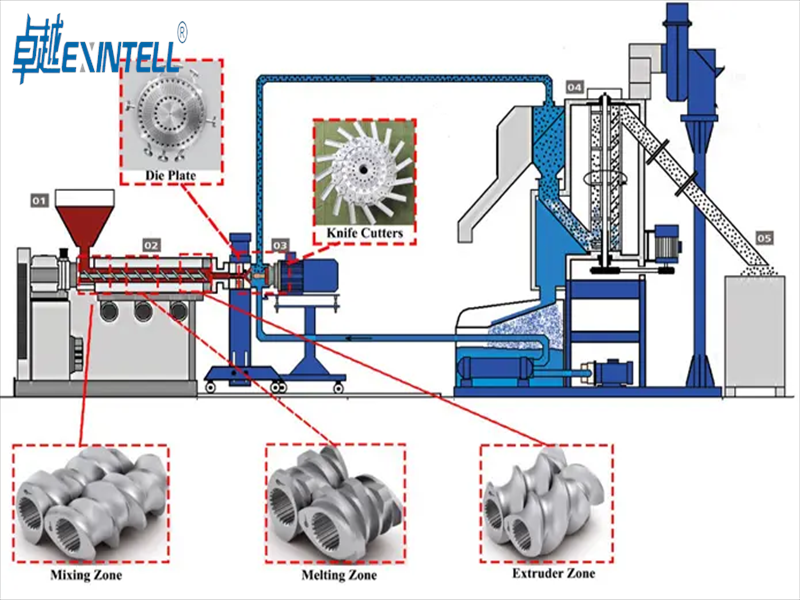
Wanneer je kijkt naar een kunststof extrusiemachine, je ziet veel belangrijke onderdelen. Elk onderdeel helpt bij het veranderen van ruw plastic in afgewerkte items. De trechter houdt het plastic vast voordat het proces begint. Het vat en de verwarmingselementen smelten het plastic zodat het gemakkelijk kan bewegen. De schroef duwt het gesmolten plastic naar voren. De matrijs vormt het plastic tot wat jij wilt. Koelmechanismen zorgen ervoor dat het plastic zijn vorm behoudt nadat het de matrijs heeft verlaten.
Tip: Always check these parts for damage or wear before you start the machine.
Cools the plastic with air chillers or cooling tanks.
Metal Die
Shapes the melted plastic into the final form.
A kunststof extrudermachine makes sure the plastic moves through each part in the right order. If you keep the machine clean and take care of it, you will have fewer problems when making things.
The plastic you choose changes how it melts, flows, and cools. LDPE en HDPE zijn flexibel en sterk. Polypropyleen heeft een hoog smeltpunt en breekt niet gemakkelijk. PVC is sterk en goed voor het bouwen van dingen. Polystyreen is stijf en wordt gebruikt voor verpakkingen. ABS ziet er mooi uit en voelt soepel aan. Nylon is erg sterk. Polycarbonaat wordt niet beschadigd door hitte of krassen. PET is het beste voor voedsel- en drankflessen.
Opmerking: Het plastic dat u kiest, heeft invloed op de manier waarop het beweegt tijdens de extrusie. Goede materialen helpen de opbouw in de matrijs tegen te gaan en houden het eindproduct vrij van defecten.
U moet het juiste plastic voor uw project kiezen. Additieven kunnen het plastic sterker maken of beschermen tegen zonlicht. Als je de materialen goed voorbereidt, het plastic zal soepel vloeien en de producten zullen van hoge kwaliteit zijn.
Extrusieprocesstappen
Voeden & Smeltend
You start the extrusion process by feeding raw plastic into the extruder. The hopper holds the plastic, which can be in the form of pellets, granules, or powders. As you load the material, you must make sure it is dry and free from moisture. If you skip this step, you may see bubbles or weak spots in the final product. The plastic moves from the hopper into the barrel, where heaters begin to warm it up.
The melting stage is very important for the quality of the extruded plastic. You want the plastic to melt evenly so the finished product looks smooth and strong. Here are some key points to remember:
Moisture control is essential because leftover water can cause bubbles or even break down the plastic.
Proper mixing of additives ensures the plastic has the right color and strength.
You must set the right temperature for the type of plastic you use. Each plastic melts at a different temperature. The table below shows the typical melt temperature ranges for common plastics:
Kunststof soort
Melt Temperature Range (°C)
HDPE
120–130
LDPE
105–115
Polycarbonaat (PC)
230–260
Polypropyleen (PP)
130–170
KIJKJE
320–350
HUISDIER
250–260
ABS
105–115
Nylon (PA)
190–350
Polystyreen (PS)
around 120
If you control the feeding and melting steps, you will get a smooth flow of melted plastic. This helps the extrusion process run without problems and gives you a better final product.
Screw & Barrel Action
Once the plastic starts to melt, the screw inside the barrel begins to turn. The screw is the heart of the extruder. It moves the plastic forward, mixes it, and helps it melt completely. De schroef en de cilinder zorgen er samen voor dat het plastic gelijkmatig opwarmt en soepel vloeit.
Je kunt denken dat de schroef drie hoofdtaken heeft:
Het verplaatst het vaste plastic van de trechter naar de verwarmingselementen.
Het smelt het plastic door het tegen het hete vat te drukken.
Het pompt het gesmolten plastic naar voren zodat het kan worden gevormd.
Het ontwerp van de schroef en de cilinder beïnvloedt hoe goed het plastic mengt en smelt. Sommige schroeven hebben speciale voedingszones, smeltend, en mixen. Dit ontwerp zorgt voor een gestage stroom gesmolten plastic. Bijvoorbeeld, in een speelgoedfabriek, de schroef en de loop helpen het soepel te maken, perfecte onderdelen voor actiefiguren. In een fabriek voor telefoonhoesjes, ze helpen bij het creëren van glans, keer op keer onberispelijke gevallen.
Ook moet u de juiste schroefsnelheid instellen. Hogesnelheidsextruders kunnen meer plastic in één keer smelten, but they need longer melting sections and special designs. Some machines can run at speeds up to 1500 rpm and produce thousands of pounds of plastic per hour. If you use the right screw speed and design, you will get a steady, high-quality output from your extrusion process.
Pressure & Smeltend
As the melted plastic moves through the extruder, pressure builds up inside the barrel. This pressure is very important for the profile extrusion process. It helps push the melted plastic through the die and gives the product its shape.
In the transition zone, pressure rises and a melt film forms, which is critical for initiating the melting process. In the metering zone, stable pressure is necessary to ensure that the material is fully molten and homogenized, driving consistent output.
You control the pressure by adjusting the screw speed. A pressure sensor measures the pressure inside the extruder. If the pressure gets too high or too low, the machine changes the screw speed to keep everything stable. This keeps the melted plastic at the right temperature and flow.
You must watch the pressure closely during the extrusion process. Good pressure control helps you get the right shape, maat, and surface finish for your plastic products. It also keeps the profile extrusion process running smoothly and safely.
Shaping and Cooling
Die Shaping
You guide the molten plastic through the die at the end ofthe extruder. The die shapes the plastic into the form you want. The shape and size of the diedecide the final look of your extrusion. If you need a simple tube, you use a standard die. For complex profiles, you pick a special die with unique geometry. The land length, which is the distance from the die entrance to the exit, helps keep the shape and uniformity of the extruded plastic. You must make sure the die fits your product needs. If you choose the right die, you get a smooth and consistent result.
The die plays a big role in the extrusion process. It controls the flow and shape of the plastic as it leaves the extruder.
Cooling Methods
Nadat het plastic de matrijs heeft verlaten, you cool it quickly to keep its shape. Cooling stops the plastic from deforming. You can use air chillers or water baths. Water baths work well for most extruder lines because they cool the plastic fast and evenly. Air cooling is good for products that need a softer touch. You must control the cooling speed. If you cool the plastic too fast, it may crack. If you cool it too slow, it may warp. Cooling is a key step in theextrusion process.
Cooling Method
How It Works
Beste voor
Water Bath
Submerges extrudate
Pijpen, tubes, profielen
Air Chiller
Blows cool air
Sheets, films
Sizing for Consistency
You usesizing equipment right after the dieto keep the shape and size of the extruded plastic. Calibration units, like vacuum or water-cooled tools, help stabilize the product. These units stop warping and make sure your extrusion meets exact measurements. You must check the size often. Real-time monitoring of temperature and pressure helps you keep tight tolerances. If you work in industries like automotive or medical, you need high precision. Small changes in the extrusion process can cause defects or waste. For some materials, you can reach tolerances as tight as+/-.001″. Softer plastics may need broader tolerances.
Achieving tight tolerances is crucial in plastic extrusion.
Calibration tools and cooling baths control solidification rates.
Precision matters in automotive, medisch, and construction products.
Small variations can lead to defects and wasted materials.
Consistent sizing keeps your extruder running smoothly and helps you produce high-quality plastic products every time.
Cutting and Finishing in Plastic Extrusion Machinery
Cutting Techniques
When you useplastic extrusion machinery, you have to cut the plastic after it cools. Cutting happens once the plastic leaves the extruder and is solid. There are different ways to cut the plastic. Rotary cutting uses a spinning blade to slice the plastic. Stationary cutting uses a blade that does not move. The way you cut changes how neat your cuts are and how much plastic you waste. Some machines use laser or ultrasonic cutting for very exact cuts and less waste.
Rotary and stationary cutting change how neat and wasteful the process is.
Laser and ultrasonic cutting make very clean edges and tight sizes.
Cooling the plastic before cutting is important. If you cool it fast, the outside looks better but the inside can get stressed. Slow cooling helps the shape stay the same.
Air cooling or water baths make the plastic hard before you cut it.
You shape the plastic with a die, koel het, and then cut it to the right size. This whole process changes how your product turns out. If you need very exact sizes, you might need special tools or other ways to cut.
Surface Finishing
After you cut the plastic, you can make it look and work better. Surface finishinghelps your products look nice and last longer. There are many ways to finish the surface, and each one does something special.
Je kunt onderdelen in speciale kleuren maken of zelfs meer dan één kleur op een product gebruiken.
Co-extrusie / tri-extrusie
Je combineert lagen van verschillende kunststoffen voor bijzondere eigenschappen in één profiel.
Kerven en boren
Na het extruderen voeg je gaten of vormen toe.
Kunststof lijmen en tapen
Tijdens of na het proces verbind je onderdelen met lijm of tape.
Ponsen
Je maakt uitsparingen of speciale vormen passend bij jouw ontwerp.
Kunststof vormen
Je buigt of vormt het plastic door middel van hitte of druk.
Warmte lassen
Je verbindt plastic stukken met hitte en druk voor sterke verbindingen.
Oppervlakteafwerking zorgt ervoor dat uw producten glad zijn en prettig aanvoelen. Het maakt ze ook sterker en gemakkelijker schoon te maken. Een goede afwerking houdt de kleuren helder en zorgt ervoor dat uw producten langer meegaan.
Tip: Door de juiste oppervlakteafwerking te kiezen, kunnen uw kunststofproducten er geweldig uitzien en aan strenge regels voldoen.
Kwaliteitscontrole
Wanneer u extrusie gebruikt, moet u uw producten bij elke stap controleren. Kwaliteitscontrole begint bij het ruwe plastic. Je kijkt naar het plastic voordat het de machine in gaat om er zeker van te zijn dat het schoon en sterk is. Terwijl de machine draait, je let op de temperatuur, druk, en snelheid om alles stabiel te houden. Nadat je het plastic hebt gesneden en afgewerkt, je controleert het eindproduct op kleur, maat, en kracht.
Je controleert het plastic vóór het extruderen op zuiverheid en kwaliteit.
Controle tijdens extrusie
Je houdt de temperatuur bij, druk, en snelheid voor een stabiele output.
Inspecties van eindproducten
Je zoekt naar kleur, maat, en sterkte in het afgewerkte plastic.
Sommige problemen die u mogelijk tegenkomt zijn deining, kromtrekken, ruwe oppervlakken, kleurveranderingen, dirty spots, uneven sizes, bubbels, shrinking, melt fracture, and die lines. By checking each step, you make sure your factory makes strong and good-looking products every time.
If you know what happens at each stage, you can fix problems faster. You can also make your products better. Training operatorsand using good habits help you get more from your plasticextrusie machine. If you want to fix mistakes or make things better, look at these steps for help.
Veelgestelde vragen
What is the main purpose of a plastic extrusion machine?
You use a plastic extrusion machine to shape raw plastic into long forms. These forms can be pipes, tubes, or sheets. The machine melts the plastic. Then it pushes it through a die. This creates the wanted shape.
How do you choose the right plastic for extrusion?
You pick the plastic based on the product’s needs. Bijvoorbeeld, use PVC for pipes. Use PET for bottles. Check the melting point and strength. Additives can improve color, flexibiliteit, or UV resistance.
Why does the extruded plastic sometimes have bubbles or rough spots?
Bubbles or rough spots often mean the plastic had moisture. It may also mean it did not melt evenly. You should dry the raw material. Set the correct temperature too. This helps you get a smooth, strong product.
Can you recycle plastic with an extrusion machine?
Ja, you canrecycle plastic usingan extrusion machine. You feed cleaned, shredded plastic waste into the hopper. The machine melts and reshapes it into new products. This reduces waste and saves resources.
How do you keep the extrusion process safe?
You keep the process safe by checking temperatures, pressures, and machine parts often. Use safety guards and wear protective gear. Always follow the machine’s safety instructions. This helps prevent accidents.