Get the machine ready by loading and heating it. Control how the plastic moves through the machine.
Fix problems to keep everything working well.
About53%of plastic makers use extrusion machines, so knowing each step shows why it is important.
Pengambilan Utama
Learn about the main parts of apenyemperitan plastik mesin. Each part helps turn raw plastic into finished items.
Pick thebest plastic for your project. The type of plastic changes how it melts and moves. This affects how good the final product is.
Watch the feeding and melting steps closely. Keep moisture and temperature at the right levels. This stops problems like bubbles and weak spots.
Check the pressure during extrusion. Good pressure control keeps the shape and size correct. This makes sure the plastic products are high quality.
Usequality checks at every step. Regular checks help find problems early. This makes sure the products are strong and look good.
Plastic Extrusion Machine Overview
Komponen Utama
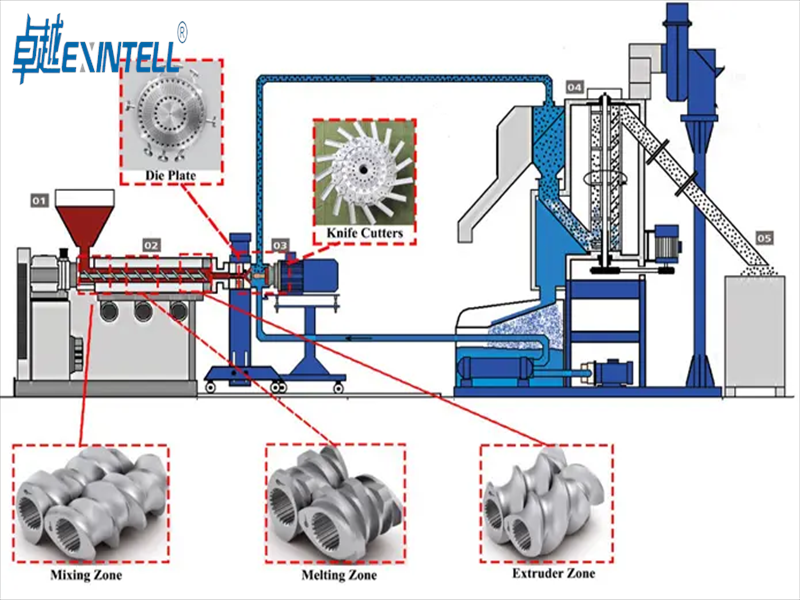
When you look at aplastic extrusion machine, you see many important parts. Each part helps change raw plastic into finished items. The hopper holds the plastic before the process starts. The barrel and heaters melt the plastic so it can move easily. The screw pushes the melted plastic forward. The die shapes the plastic into what you want. Cooling mechanisms help the plastic keep its shape after it leaves the die.
Petua: Sentiasa periksa bahagian ini untuk kerosakan atau haus sebelum anda menghidupkan mesin.
Sejukkan plastik dengan penyejuk udara atau tangki penyejuk.
Mati Logam
Bentuk plastik cair ke dalam bentuk akhir.
A penyemperit plastik mesin memastikan plastik bergerak melalui setiap bahagian dalam susunan yang betul. Jika anda memastikan mesin bersih dan menjaganya, anda akan mempunyai lebih sedikit masalah apabila membuat sesuatu.
Plastik yang anda pilih mengubah cara ia cair, mengalir, dan menyejukkan. LDPE dan HDPE adalah fleksibel dan kuat. Polipropilena mempunyai takat lebur yang tinggi dan tidak mudah pecah. PVC adalah sukar dan baik untuk membina sesuatu. Polistirena adalah kaku dan digunakan untuk pembungkusan. ABS kelihatan bagus dan terasa licin. Nilon sangat kuat. Polikarbonat tidak rosak akibat haba atau calar. PET adalah terbaik untuk botol makanan dan minuman.
Nota: Plastik yang anda pilih mempengaruhi cara ia bergerak semasa penyemperitan. Bahan yang baik membantu menghentikan pembentukan dalam cetakan dan memastikan produk akhir bebas daripada kecacatan.
Anda perlu memilih plastik yang sesuai untuk projek anda. Bahan tambahan boleh menjadikan plastik lebih kuat atau melindunginya daripada cahaya matahari. Jika anda menyediakan bahan dengan baik, plastik akan mengalir dengan lancar dan produk akan berkualiti tinggi.
Langkah Proses Penyemperitan
Memberi makan & Meleleh
You start the extrusion process by feeding raw plastic into the extruder. The hopper holds the plastic, which can be in the form of pellets, butiran, atau serbuk. As you load the material, you must make sure it is dry and free from moisture. If you skip this step, you may see bubbles or weak spots in the final product. The plastic moves from the hopper into the barrel, where heaters begin to warm it up.
The melting stage is very important for the quality of the extruded plastic. You want the plastic to melt evenly so the finished product looks smooth and strong. Here are some key points to remember:
Moisture control is essential because leftover water can cause bubbles or even break down the plastic.
Campuran bahan tambahan yang betul memastikan plastik mempunyai warna dan kekuatan yang betul.
Anda mesti menetapkan suhu yang sesuai untuk jenis plastik yang anda gunakan. Setiap plastik cair pada suhu yang berbeza. Jadual di bawah menunjukkan julat suhu cair biasa untuk plastik biasa:
Jenis Plastik
Julat Suhu Lebur (°C)
HDPE
120–130
LDPE
105–115
Polikarbonat (PC)
230–260
Polipropilena (PP)
130–170
MENGINTIP
320–350
PET
250–260
ABS
105–115
nilon (PA)
190–350
Polistirena (PS)
sekeliling 120
Jika anda mengawal langkah penyusuan dan pencairan, anda akan mendapat aliran plastik cair yang lancar. Ini membantu proses penyemperitan berjalan tanpa masalah dan memberikan anda produk akhir yang lebih baik.
skru & Barrel Action
Sebaik sahaja plastik mula cair, skru di dalam tong mula berputar. Skru adalah jantung penyemperit. Ia menggerakkan plastik ke hadapan, mencampurkannya, dan membantu ia cair sepenuhnya. The screw and barrel work together to make sure the plastic heats up evenly and flows smoothly.
You can think of the screw as having three main jobs:
It moves the solid plastic from the hopper toward the heaters.
It melts the plastic by pressing it against the hot barrel.
It pumps the melted plastic forward so it can be shaped.
The design of the screw and barrel affects how well the plastic mixes and melts. Some screws have special zones for feeding, lebur, dan mencampurkan. This design helps you get a steady flow of melted plastic. Contohnya, in a toy factory, the screw and barrel help make smooth, perfect partsfor action figures. In a phone case factory, they help create shiny, flawless cases every time.
You also need to set the right screw speed. High-speed extruders can melt more plastic at once, tetapi mereka memerlukan bahagian lebur yang lebih lama dan reka bentuk khas. Sesetengah mesin boleh berjalan pada kelajuan sehingga 1500 rpm dan menghasilkan beribu-ribu paun plastik setiap jam. Jika anda menggunakan kelajuan dan reka bentuk skru yang betul, anda akan mendapat yang mantap, output berkualiti tinggi daripada proses penyemperitan anda.
Tekanan & Meleleh
Apabila plastik cair bergerak melalui penyemperit, tekanan terkumpul di dalam tong. Tekanan ini sangat penting untuk proses penyemperitan profil. Ia membantu menolak plastik cair melalui acuan dan memberikan produk bentuknya.
Dalam zon peralihan, tekanan meningkat dan filem cair terbentuk, yang penting untuk memulakan proses lebur. Dalam zon pemeteran, tekanan yang stabil adalah perlu untuk memastikan bahan itu cair sepenuhnya dan dihomogenkan, memacu keluaran yang konsisten.
Anda mengawal tekanan dengan melaraskan kelajuan skru. Sensor tekanan mengukur tekanan di dalam penyemperit. Jika tekanan menjadi terlalu tinggi atau terlalu rendah, mesin menukar kelajuan skru untuk memastikan semuanya stabil. Ini memastikan plastik cair pada suhu dan aliran yang betul.
Tekanan mati membentuk produk. Jika terlalu rendah, bentuk tidak akan terbentuk dengan baik. Jika terlalu tinggi, plastik mungkin membengkak atau berubah bentuk.
Tekanan belakang membantu mencampurkan plastik dan memastikan cairnya sekata.
Pengawal tekanan dan peranti keselamatan seperti palam pecah memastikan proses penyemperitan selamat dan lancar.
Jika anda tidak mengawal tekanan, anda mungkin melihat masalah seperti:
You must watch the pressure closely during the extrusion process. Good pressure control helps you get the right shape, saiz, and surface finish for your plastic products. It also keeps the profile extrusion process running smoothly and safely.
Shaping and Cooling
Die Shaping
You guide the molten plastic through the die at the end ofthe extruder. The die shapes the plastic into the form you want. The shape and size of the diedecide the final look of your extrusion. If you need a simple tube, you use a standard die. For complex profiles, you pick a special die with unique geometry. The land length, which is the distance from the die entrance to the exit, helps keep the shape and uniformity of the extruded plastic. You must make sure the die fits your product needs. If you choose the right die, you get a smooth and consistent result.
The die plays a big role in the extrusion process. It controls the flow and shape of the plastic as it leaves the extruder.
Cooling Methods
After the plastic leaves the die, you cool it quickly to keep its shape. Cooling stops the plastic from deforming. You can use air chillers or water baths. Water baths work well for most extruder lines because they cool the plastic fast and evenly. Air cooling is good for products that need a softer touch. You must control the cooling speed. If you cool the plastic too fast, it may crack. If you cool it too slow, it may warp. Cooling is a key step in theextrusion process.
Kaedah Penyejukan
How It Works
Terbaik Untuk
Water Bath
Submerges extrudate
Pipes, tiub, profil
Air Chiller
Blows cool air
Sheets, filem
Sizing for Consistency
awak guna peralatan saiz sejurus selepas die untuk mengekalkan bentuk dan saiz plastik tersemperit. Unit penentukuran, seperti vakum atau alat yang disejukkan dengan air, membantu menstabilkan produk. Unit ini berhenti meleding dan pastikan penyemperitan anda memenuhi ukuran yang tepat. Anda mesti kerap menyemak saiznya. Pemantauan masa nyata suhu dan tekanan membantu anda mengekalkan toleransi yang ketat. Jika anda bekerja dalam industri seperti automotif atau perubatan, anda memerlukan ketepatan yang tinggi. Perubahan kecil dalam proses penyemperitan boleh menyebabkan kecacatan atau pembaziran. Untuk beberapa bahan, anda boleh mencapai toleransi seketat +/-.001″. Plastik yang lebih lembut mungkin memerlukan toleransi yang lebih luas.
Mencapai toleransi yang ketat adalah penting dalam penyemperitan plastik.
Alat penentukuran dan mandian penyejuk mengawal kadar pemejalan.
Pemantauan masa nyata memastikan ketepatan dimensi.
Perkara ketepatan dalam automotif, perubatan, dan produk pembinaan.
Variasi kecil boleh menyebabkan kecacatan dan bahan terbuang.
Saiz yang konsisten memastikan penyemperit anda berjalan lancar dan membantu anda menghasilkan produk plastik berkualiti tinggi setiap kali.
Memotong dan Menamat dalam Jentera Penyemperitan Plastik
Teknik Memotong
Apabila anda menggunakan mesin penyemperitan plastik, anda perlu memotong plastik selepas ia sejuk. Pemotongan berlaku sebaik sahaja plastik meninggalkan penyemperit dan pepejal. Terdapat pelbagai cara untuk memotong plastik. Pemotongan berputar menggunakan pisau berputar untuk menghiris plastik. Pemotongan pegun menggunakan bilah yang tidak bergerak. Cara anda memotong mengubah betapa kemas potongan anda dan berapa banyak plastik yang anda buang. Sesetengah mesin menggunakan pemotongan laser atau ultrasonik untuk pemotongan yang sangat tepat dan kurang sisa.
Pemotongan berputar dan pegun mengubah betapa kemas dan membazir proses itu.
Pemotongan laser dan ultrasonik membuat tepi yang sangat bersih dan saiz yang ketat.
Menyejukkan plastik sebelum memotong adalah penting. Jika anda menyejukkannya dengan cepat, luaran nampak lebih bagus tapi dalaman boleh stress. Penyejukan perlahan membantu bentuk kekal sama.
Penyejukan udara atau mandi air menjadikan plastik keras sebelum anda memotongnya.
Anda membentuk plastik dengan die, sejukkan, dan kemudian potong mengikut saiz yang betul. Keseluruhan proses ini mengubah penampilan produk anda. Jika anda memerlukan saiz yang sangat tepat, anda mungkin memerlukan alat khas atau cara lain untuk memotong.
Kemasan Permukaan
Selepas anda memotong plastik, anda boleh menjadikannya kelihatan dan berfungsi dengan lebih baik. Kemasan permukaan membantu produk anda kelihatan cantik dan tahan lebih lama. Terdapat banyak cara untuk menyelesaikan permukaan, and each one does something special.
You can make parts in special colors or even use more than one color on a product.
Co-extrusion / tri-extrusion
You combine layers of different plastics for special features in one profile.
Notching and drilling
You add holes or shapes after extrusion.
Plastic gluing and taping
You join parts with glue or tape during or after the process.
Punching
You make cutouts or special shapes to match your design.
Plastic forming
You bend or shape the plastic using heat or pressure.
Heat welding
You join plastic pieces with heat and pressure for strong assemblies.
Surface finishing makes your products smooth and nice to touch. It also makes them stronger and easier to clean. Good finishes keep the colors bright and help your products last longer.
Petua: Picking the right surface finish can help your plastic products look great and meet tough rules.
Quality Control
You need to check your products at every step when you use extrusion. Quality control starts with the raw plastic. You look at the plastic before it goes into the machine to make sure it is clean and strong. While the machine is running, you watch the temperature, tekanan, and speed to keep things steady. After you cut and finish the plastic, you check the final product for color, saiz, and strength.
You check the plastic for purity and quality before extrusion.
Monitoring During Extrusion
You track temperature, tekanan, and speed for steady output.
Final Product Inspections
You look for color, saiz, dan kekuatan dalam plastik siap.
Beberapa masalah yang mungkin anda lihat die membengkak, meledingkan, permukaan kasar, perubahan warna, bintik-bintik kotor, saiz tidak sekata, buih, mengecut, patah cair, dan garisan mati. Dengan menyemak setiap langkah, anda memastikan kilang anda menghasilkan produk yang kukuh dan cantik setiap masa.
Mengekalkan kualiti tinggi dan mengurangkan kecacatan
Memberi makan kepada extruder
Memastikan pengeluaran yang stabil dan hasil yang lebih baik
Meleleh
Mencegah buih dan permukaan tidak rata
Membentuk mati
Memberi anda bentuk yang betul setiap masa
Menyejukkan
Mengunci dalam bentuk dan kekuatan
Memotong dan menamatkan
Menyampaikan secara konsisten, produk berkualiti
Jika anda tahu apa yang berlaku pada setiap peringkat, you can fix problems faster. You can also make your products better. Training operatorsand using good habits help you get more from your plasticextrusion machine. If you want to fix mistakes or make things better, look at these steps for help.
Soalan Lazim
What is the main purpose of a plastic extrusion machine?
You use a plastic extrusion machine to shape raw plastic into long forms. These forms can be pipes, tiub, or sheets. The machine melts the plastic. Then it pushes it through a die. This creates the wanted shape.
Bagaimana anda memilih plastik yang sesuai untuk penyemperitan?
You pick the plastic based on the product’s needs. Contohnya, use PVC for pipes. Use PET for bottles. Check the melting point and strength. Additives can improve color, fleksibiliti, or UV resistance.
Why does the extruded plastic sometimes have bubbles or rough spots?
Buih atau bintik kasar selalunya bermakna plastik itu mempunyai kelembapan. Ia juga mungkin bermakna ia tidak cair secara sekata. Anda harus mengeringkan bahan mentah. Tetapkan suhu yang betul juga. Ini membantu anda mendapatkan kelancaran, produk yang kukuh.
Bolehkah anda mengitar semula plastik dengan mesin penyemperitan?
ya, awak boleh kitar semula plastik menggunakan sebuah mesin penyemperitan. Anda suapan dibersihkan, sisa plastik yang dicincang ke dalam corong. The machine melts and reshapes it into new products. Ini mengurangkan pembaziran dan menjimatkan sumber.
Bagaimana anda memastikan proses penyemperitan selamat?
Anda memastikan proses selamat dengan memeriksa suhu, tekanan, dan bahagian mesin selalunya. Gunakan pelindung keselamatan dan pakai alat pelindung. Sentiasa ikuti arahan keselamatan mesin. Ini membantu mengelakkan kemalangan.