

He pehea te rereke o nga punaha tangohanga mo te hanga
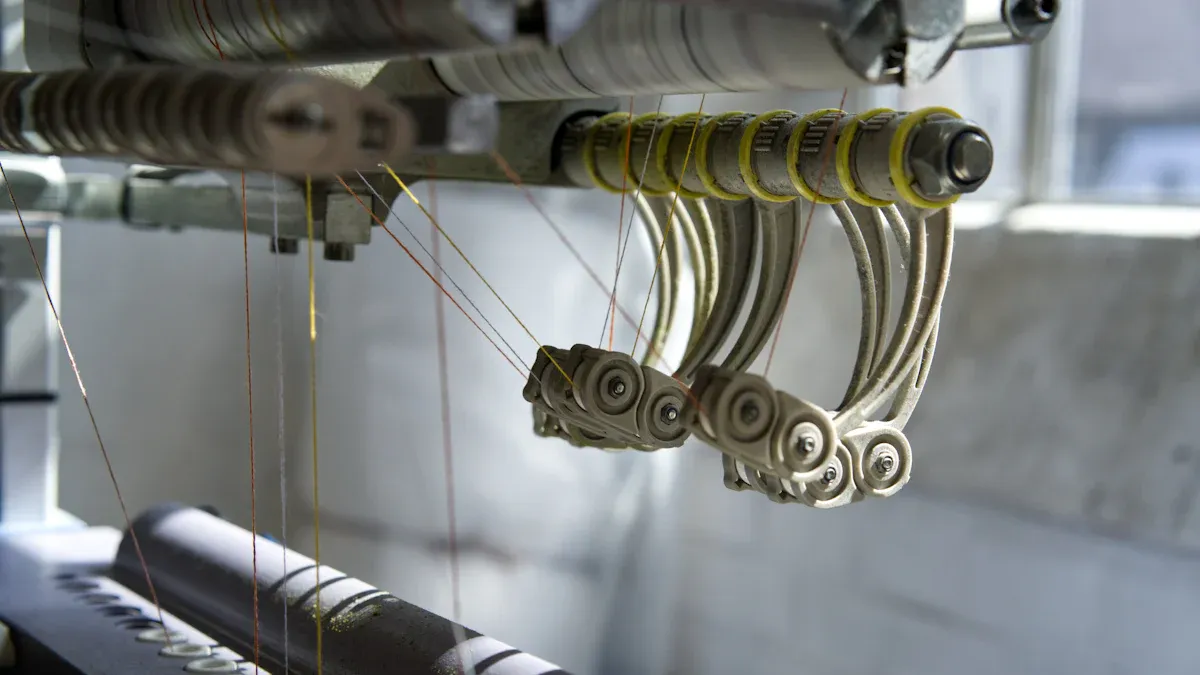
Kua kite ahau ko te kowhiringa o te punaha tangohanga te hanga i te katoa o nga mahi whakangao. Ko te nuinga o nga kaihanga e whakamahi ana i nga punaha hiko-kotahi, e mau nei a 62% wahanga maakete, i te wa e mau ana nga punaha mahanga 38%.
| Momo Pūnaha Tangohanga | Te Paheketanga o te Maakete |
|---|---|
| Kotahi-wiri | 62% |
| Mahanga-wiri | 38% |
Ko te kowhiri i waenga i nga momo wiri ka pa ki te pai, kounga hua, me te hototahi rauemi. Ina taurite au i te hangarau tangohanga ki nga whaainga whakangao, Ka kite ahau i nga whakapainga ake o te utu-whai hua, te maha o nga hoahoa, me te oranga tonutanga.
| Tauwehe | Te Paanga ki runga i te Mahinga Whakangao | Paanga ki te Kounga Hua |
|---|---|---|
| Tawhā whakahaere | Ka mau tonu te kounga o te hua | Ka eke ki te moroiti i te pai |
Ka whakawhirinaki ahau ki nga punaha Whakaoti Whakaoti ki te whakaputa i nga hua rite me te mahi tika.
Nga Taketake matua
- Whiriwhiria te punaha tangohanga tika i runga i o whaainga hangahanga me o rawa rawa kia pai ai te mahi.
- He pai rawa nga extruders kotahi-screw mo te hanga nui o nga rauemi ngawari, i te wa e pai ana nga punaha mahanga ki te whakaranu i nga rawa uaua.
- Ko te tiaki me te aro turuki i nga punaha tangohanga ka aukati i te waatea me te whakarei ake i te pai, te whakarite i te kounga o te hua.
- Whakaarohia te diameter tīwiri me te ōwehenga L/D i te wā e kōwhiri ana i te extruder, i te mea ko enei mea ka pa ki te urunga me te pai o te whakaranu.
- Whakamahi tahi-tangohanga mo te hanga hua maha-paparanga e whakakotahi rauemi rerekē, te whakarei ake i te mahi me te mahi.
- Aromātaihia te hototahitanga o nga rawa me te punaha tangohanga kua kowhiria kia kore ai nga koha me te whakarite i te putanga o te kounga teitei.
- Kia noho mohio mo nga ahuatanga hou o te hangarau tangohanga, penei i te IoT me AI, ki te whakapai ake i te pai me te urutau ki te whakarereke i nga hiahia whakaputa.
- Waihangahia he rarangi arowhai o nga mea matua i mua i te kowhiri i tetahi miihini tangohanga ki te karo i nga hapa utu nui me te whakarite kia tutuki te punaha ki nga whakaritenga tono.
Te whiriwhiri i te Pūnaha Tango Tika mo te Hangahanga
Nga Waahanga Matua i te Whiriwhiringa Pūnaha
E kore ahau e kitea he ao “pai rawa atu” pūnaha tangohanga. Ko taku wheako e kii ana ko te whiringa pai ka whakawhirinaki ki nga whaainga hangahanga, āhuatanga rawa, me nga whakaritenga hua. Ina whiriwhiria e au he punaha tangohanga, Ka rite tonu ahau ki ona kaha ki te tono kua whakaritea. Ko tenei huarahi e whakarite ana ka tukuna e te tukanga tangohanga te kounga riterite me te mahi tino pai.
Ka whakaarohia e ahau etahi nga take whakahirahira i mua i te kowhiringa miihini tangohanga. Ka whakamahi ahau i te ripanga e whai ake nei hei arahi i taku whakatau:
| Tauwehe | Whakaahuatanga |
|---|---|
| Kaupapa Rangahau | Te kaupapa o te miihini (mātauranga, whanaketanga rauemi, te hanga pairati arumoni ranei) |
| Momo Rawa | Momo polymers hei tukatuka (wera-tairongo, karekau, tauhohenga ranei) |
| Rahi Putanga e hiahiatia ana | Te kaha puta (karamu kirokaramu ranei ia haora) |
| Nga Whakaritenga Tukatuka Arā Atu Anō | Me wero hau, korehau degassing, te kaha tangohanga urupare ranei |
| Putea me te waahi taiwhanga | Te whakaaro mo te whakawhanuitanga mo nga whakamohoatanga a meake nei |
| Nga Hiahia Whakanuia Ake | Ko te hototahi ki nga waahanga whakangao ahumahi mo te whakanui ake i te hanga |
I nga wa katoa ka aro tonu ahau ki te diameter wiri me te ōwehenga L/D. Ko enei tawhā ka whakatau i te kaha o te urunga me te pai o te whakaranu. Ka whiriwhiria e ahau tetahi extruder me te kaha whakaputa tika, e taea te awhe mai 0.25 kg/h ki 150 kg/h i runga i te tauira. Ko te hoahoa modular ka taea e au te whakakapi tere i nga waahanga, e whakawariwari ana mo te rangahau me te whanaketanga. Ka whakawhirinaki ahau ki nga punaha whakahaere matatau, penei i te PLC me te HMI, ki te whakatutuki i te mana tika me te whaiwhai raraunga.
Ina arotake au i nga momo miihini tangohanga, Ka whakaaro ahau ki te whīwhiwhi o te kōtaha me ngā whakaāetanga e hiahiatia ana. Ko nga hoahoa maamaa e tono ana i nga taputapu tika, ka piki ake nga utu. Ka titiro ano ahau ki te rahinga ota. Ko nga pukapuka teitei ake ka whakaiti i te utu mo ia waeine na te mea ka horahia nga utu tatūnga puta noa i nga waahanga. Te whakaoti me nga mahi tuarua, penei i te anodizing, te miihini CNC ranei, tāpiri uara me te utu.
Aki: Ka tūtohu ahau kia hanga he rarangi arowhai o enei mea i mua i te tiimata i te mahi whiriwhiri miihini tangohanga. Ka awhina tenei mahi ki te karo i nga hapa utu nui me te whakarite kia rite te punaha ki nga tono e hiahiatia ana.
Te Paanga ki runga i te Mahinga Whakangao
Ka kite ahau ko te punaha tangohanga ka tohua e au ka pa tika ki te mahi hangahanga. Te hoahoa tīwiri, te kaha whakauru, me te hangarau tangohanga ka whai waahi katoa ki te ngawari o te mahi. Hei tauira, a extruder tīwiri kotahi he pai tonu te mahi mo nga polymers ngawari me te hanga pukapuka-nui. Ka mau nga kaiwhakaputa mahanga-rua ki nga rauemi uaua me nga tono matatau, pērā i te tangohanga urupare, te whakakotahitanga motuhake ranei.
Kua kite ahau ko te pokey teitei me te kiko totoka i roto i nga rawa hihiko ka taea te kato, te tangohanga korekore, me te kakahu pupuha. Ko enei take ka whakaiti i te pai me te whakaiti i te haumaru. Ka whakatika ahau i enei wero ma te arotau i te hoahoa o te punaha pokepoke. Ko te pai ake o te whakakotahitanga me te tika o te tangohanga ka whakarei ake i te haumaru me te pai.
Ka whakamahi ahau i te punaha tangohanga mahanga-rua-waahanga ina hiahia au ki te pumau me te urutau. Ko nga whaihanga e whakaatu ana ka pai ake tenei hoahoa i nga ahuatanga o te rere me te pupuri i nga putanga rite. I nga wa katoa ka aro turuki ahau i te tukanga tangohanga hei whakarite kia rite te kounga me te whakaiti i te wa heke.
| Momo Whakaaturanga | Whakaahuatanga |
|---|---|
| Nga wero i roto i te hanga taapiri | Ko te pokey teitei me te kiko totoka o nga rawa hihiko ka arai i nga take penei i te kati, te tangohanga korekore, me te kakahu pupuha, e pa ana ki te pai me te haumaru. |
| Te Poono Mahi Pūnaha | Ko te hoahoa o te punaha pokepoke e pa ana ki te whakakotahitanga o nga rawa me te tika o te tangohanga, me nga arotautanga motuhake e whakaarohia ana hei whakarei ake i te haumaru me te whai hua. |
| Hoahoa Pūnaha Tangohanga | He punaha tangohanga mahanga-rua-waahanga kua hangaia hei whakapai ake i te pumau me te urutau i roto i te mahi tangohanga., me nga whaihanga e whakaatu ana i nga ahuatanga rere o nga punaha rereke. |
Ka rite tonu ahau ki te punaha tangohanga ki nga whakaritenga whakaputa. Ko tenei mahi ka whakarite kia tukuna e te extruder te kounga me te mahi e hiahiatia ana. Ka tohua e ahau te whirihoranga wiri i runga i te momo rauemi me te uaua o te tono. Ka whakawhirinaki ahau ki te hangarau o te tangohanga matatau ki te whakanui i te pai me te pupuri i nga paerewa teitei o te kounga hua.
Tuhipoka: Ka tūtohu ahau ki te tiaki auau me te aro turuki i nga mahi kia mau tonu ai te pai o te tihi me te aukati i te hekenga ohorere.
Nga Momo Punaha Tangohanga Katoa
Ina arotake au i nga punaha tangohanga katoa mo te hanga, Ka timata tonu ahau ma te tautuhi i te mea matua momo miihini tangohanga. Ko nga whiringa tino noa ko nga miihini tangohanga wiri kotahi, nga miihini tangohanga mahanga, me nga miihini whakaheke hipi. Ka whakawhiwhia e ia punaha nga kaha me nga here motuhake, no reira ka aro ahau ki te whakaorite i te hangarau tika ki te tono.
| Momo Miihini Tangohanga |
|---|
| Nga Miihini Tango Tiu Kotahi |
| Nga Miihini Tiu Tiu Maarua |
| Miihini Ram Extrusion |
Tangohanga Takitahi-Screw
He maha nga wa ka whakamahia e au tetahi kaitahuri huri noa mo nga tukanga tangohanga ngawari. Kei roto i tenei miihini tetahi wiri hurihuri i roto i te oko wera. Ka panaia e te tīwiri ngā rauemi ki mua, ka rewa, me te hanga ma te mate. Kei te whakawhirinaki ahau ki tenei punaha mo te whakaputa nui o nga thermoplastics, hua kai, me nga huinga rapa. Ko te ngawari o te hoahoa ka ngawari ki te whakahaere me te pupuri.
| Ahumahi | Whakaahuatanga Tono | Matapae Tipu Maakete |
|---|---|---|
| Kirihou | Te rewa me te hanga i nga thermoplastics, i peia e te piki ake o te whakamahi PE me te PP. | CAGR tata 4-5% mā 2030 |
| Tukatuka Kai | Te whakaputa kai tukatuka penei i te paramanawa me te pata. | Te maakete kia tae atu $75 piriona na 2026 |
| Ruapapa Whakahuihui | Te whakaranu me te hanga rapa mo nga potae me nga waahanga motuka. | Ka nui ake te whakaputanga o nga potae 2 piriona wae na 2025 |
| Biomedical | Ko te hanga biopolymer mo te takai me nga taputapu rongoa. | Te maakete hou me te hangarau tangohanga hou |
Heoi ano, E mohio ana ahau ki te whakawhāititanga o te tangohanga tīwiri kotahi. He uaua ki te whakatutuki i te whakakotahitanga kakahu, ina koa ka taapirihia e au nga whakakii, taapiri ranei. He rereke te rite o te pehanga ki te whakarereketanga o nga kai whangai, me te kore e pai te rere o nga rawa pokey teitei, e arahina ana ki nga koha. Ko enei wero e arahi ana i taku kowhiringa miihini tangohanga ina hiahia au ki te kounga teitei ake, ki te tukatuka uaua ake ranei.
Aki: Mo te ngawari, tono reo-nui, Ka tūtohu ahau ki te timata me te extruder tīwiri kotahi. Mo te whakaranu matatau, mo nga rauemi motuhake ranei, whakaarohia etahi atu whiringa.
Tangohanga Mahanga-Tiu
Ina hiahia au ki te tukatuka matatau, Ka huri ahau ki mahanga wiri extruder hangarau. Ka whakamahia e tenei punaha nga wiri e rua ka huri tahi i roto i te oko. Ka taea e nga wiri te hono, te rere whakarara ranei, i runga i te hoahoa. Ka kitea e au ko nga extruder wiri mahanga e tuku pai ana te whakaranu, he pai ake te whakaraerae mo nga rawa-nui, me te whakapai ake i te mana o te pāmahana me te pehanga. Ko enei ahuatanga ka whakapai ake i te kounga o te hua me te riterite o te tukanga.
Ka taea hoki e ahau te mahi i nga mahi tukatuka maha i roto i te miihini kotahi. Ka taea e au te whakakotahi, rewa, hau, a tae noa ki te tauhohe i nga rauemi i roto i te waa kotahi. Ko tenei ngawari ka whakaiti i te ururua me te tere ake te whakaputa. I te whakatairite i te wiri mahanga ki nga extruder wiri kotahi, Ka kite ahau i te tere ake o te hokinga mai mo te haumi me nga hua riterite me nga punaha hurihuri mahanga, ina koa mo nga whakaranu matatini, nga kirihou hangarua ranei.
Nga Momoroto Matarua-Mahanga
I nga wa katoa ka whakaarohia e au nga momo miihini whakamohio i roto i te waahanga takirua mahanga. Ka pa te whirihoranga wiri ki te mahi, whai huatanga, me te whānuitanga o nga tono.
Whakawhitiwhiti
Kei roto i nga miihini whakakorikori mahanga e whiti ana, e whiti tahi ana. Ka whakaratohia e tenei hoahoa te kawe rawa tika me te kaha kutikuti teitei. Ka whakamahi ahau i nga punaha intermeshing hei whakapai ake i te whakakotahitanga me te hototahi, ina koa ka hiahia au ki te marara atu i nga taapiri, whakakii ranei kia rite.
Kore-Waewaenga
Ko nga extruders wiri mahanga kore-intermeshing he wiri ka huri me te kore e inaki. Ko tenei tatūnga he pai ake te whakaranu me te iti o te kutikuti. Ka whiriwhiri au i nga hoahoa kore-whakawhitiwhitinga mo nga rawa tairongo me iti te ahotea miihini.
Hurihuri tahi
Ko nga extruder wiri mahanga hurihuri tahi he wiri ka huri ki te huarahi kotahi. He pai tenei momo iti ki te whakakotahi i te pai me te kawe rawa. Ka whakamahi ahau i nga punaha hurihuri tahi mo te tangohanga urupare, whakahekenga, me te whakahuihui polymer tino mahi. Heoi ano, ka taea e nga reiti kutikuti teitei te whakaheke i nga mea wera-tairongo, no reira ka aro turuki ahau i te hoahoa wiri me te whakamatao tata.
| Momoroto | Tukatuka kaha me nga Painga | Nga here me nga whakaaro | Nga Tono Pai |
|---|---|---|---|
| Co-Rotating Twin-Screw Extruder | Te pai o te whakaranu, suitable for reactive extrusion, high shear rates | Risk of material degradation, requires precise screw design | Te whakahuihui polymer, nanocomposites, lab-to-production workflows |
Takahuri-hurihuri
Counter-rotating twin screw extruders feature screws that turn in opposite directions. This configuration generates lower shear forces, which protects fragile materials. I rely on counter-rotating systems for ceramics, bio-polymers, and pharmaceutical formulations. The design also provides good pressure build-up and effective sealing, though mixing intensity is lower than with co-rotating systems.
| Momoroto | Tukatuka kaha me nga Painga | Nga here me nga whakaaro | Nga Tono Pai |
|---|---|---|---|
| Counter-Rotating Twin-Screw Extruder | Lower shear forces, good pressure build-up, effective sealing | Lower mixing intensity, more complex sealing and bearing design | Nga karamu, bio-polymers, rongoā |
When I select a complete extrusion system, Ka rite tonu ahau ki te momo wiri me te whirihoranga ki nga rauemi me nga whakaritenga o te tukanga. Ko tenei huarahi ka whakarite i te kounga teitei, whai huatanga, me te mahi pono puta noa i nga tono katoa.
Ram Extrusion
He maha nga wa ka whiriwhiri au i te tangohanga hipi ina hiahia au ki te tukatuka i nga rawa e hiahia ana kia pehanga teitei me te hanga tika. Ka whakamahia e tenei tikanga he hipi toa waipēhi ki te pana rauemi i roto i te oko wera ka mate, kaua ki te ti'aturi ki te huri hurihuri. Ka kitea e au he mea tino whai hua mo te hanga hua mai i nga kirihou whakamatao, karamu, me te PTFE. Ko te tukanga ka taea e au te hanga rakau, ngongo, me ngā pūkete e rite ana te rahi.
Ko te tangohanga Ram e tu ana i waenga i nga momo miihini tangohanga na te mea ka mau i nga rawa e kore e taea e nga kaitahuri hiko tuku iho te whakahaere pai.. Ka whakamahi ahau i tenei hangarau i roto i nga ahumahi penei i nga kirihou, kai, me nga rongoa. Hei tauira, Ka whakaputa au i nga paramanawa me nga pata me nga ahua ahurei, a ka hangaia e ahau nga papa me nga kapene me nga korero tika.
He maha nga painga me nga wero kua kitea e au i te wa e whakamahi ana i nga extruder hipi:
- He pai rawa atu a Ram extruders ki te whakaputa hua kounga teitei mai i nga rauemi uaua-ki-tukatuka.
- Ka whakawhirinaki ahau ki a raatau mo nga tono ka iti te hangarau o te tangohanga hiko, penei i te PTFE me nga tuhinga uku.
- Ko te tukanga e whakarato ana i te kounga me te tika o te rahi.
- Ko nga utu whakahaere nui ka pa ki te pai me te mahi katoa.
- Ko nga ture kaha i roto i te hanga kirihou me tupato ki te whakahaere i nga mahi.
- Ko te whakataetae mai i nga punaha tangohanga rereke e akiaki ana i ahau ki te arotau i taku whiringa miihini tango.
I nga wa katoa ka paunatia e au enei mea i mua i te kowhiri i te tangohanga hipi mo nga punaha tangohanga oti. Ka aro turuki ahau i te tukanga kia mau tonu te kounga me te whai hua, ina koa ka mahi me nga rawa motuhake.
Tango-tahi
Ka taea e te Co-extrusion te whakakotahi i nga rawa maha ki te hua kotahi, te hanga pūkete maha-paparanga me nga taonga whakarei. Ka whakamahi ahau i tenei hangarau tangohanga ki te whakauru i nga momo thermoplastics, ia paparanga whakahere āhuatanga ahurei. Ko te tukanga ko te pana i te maha o nga rawa i roto i te mate kotahi, ka puta he kotaha whakakotahi e tutuki ana i nga whakaritenga whakangao uaua.
Ka whakawhirinaki ahau ki te tango-tahi mo nga hua hanga e hiahia ana kia mau tonu, ngawari, me te ahua rerehua. Ma tenei tikanga ka taea e au te whakarite i te kounga o ia paparanga, te whakapai ake i te mahi me te mahi. Ki taku titiro ko te mahi-tahi hei ahunga whakamua i roto i nga punaha tangohanga katoa, ina koa ka hiahia au ki te whakaputa taonga me nga ahuatanga motuhake.
Ka whai hua nga umanga mai i te urunga-tahi i roto i nga huarahi maha:
- Hangahanga: Ka hangaia e ahau nga matapihi matapihi, papa, me nga wahi kuti e whakakotahi ana i te kaha me te whakakitenga.
- Te hokohoko: Ka hanga e ahau nga whata me nga punaha whakaatu he roa, he ataahua hoki.
- Waitohu: Ka whakaputahia e au nga tohu maramara me nga papa me nga otinga maamaa me te mahi pono.
Ko te Co-extrusion ka whakawhānui ake i te whānuitanga o nga tono mo te hangarau tangohanga. Ka whakamahia e au ki te whakatutuki i nga whaainga whakangao me te whakaputa hua me te kounga pai ake. Ina kowhiria e au he kaihoroi mo te tango-tahi, Ka whakaaro ahau ki te hoahoa wiri, whakahaere tukanga, me te hototahi rauemi. Ko tenei huarahi ka whakarite i te pai me nga hua rite.
Aki: Ka tūtohu ahau ki te tango-tahi mo nga kaupapa e hiahia ana ki nga tuhinga maha-paparanga me te mahi hua pai ake. He mea nui te kowhiringa mihini tohanga me te aro turuki i nga mahi kia pai ai te kounga.
Hanganga me te Mahi o nga Pūnaha Tangohanga
Hoahoa Tiu me te Paera
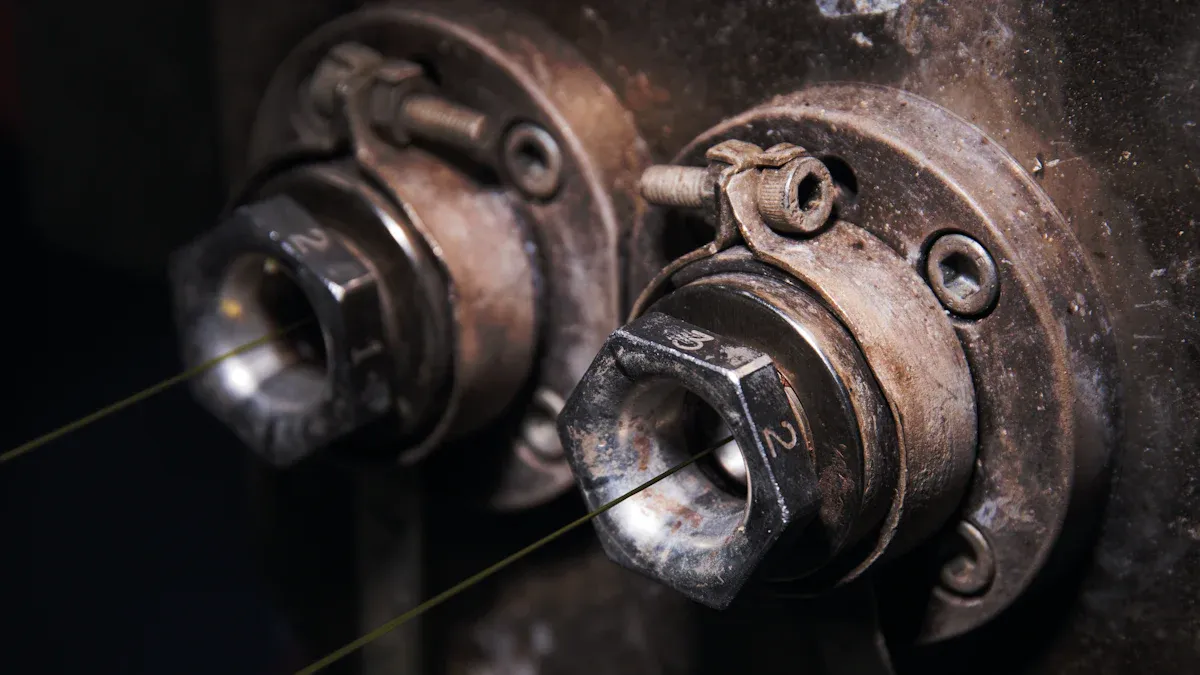
Ka tiimata tonu ahau i taku kowhiringa miihini tango ma te tirotiro i te hoahoa wiri me te oko. Ko te āhuahanga o te tīwiri ka whakatau i te pai o te rewa o te extruder, whakaranu, me te kawe rauemi. Ka whakatikahia e ahau te roa-ki-diameter (L/D) ōwehenga ki te whakahaere i te wa noho me te ranu. Ko te teitei L/D ōwehenga ka taea te rewa te rauemi me te whakakotahi pai ake, he mea nui mo te whakatutuki i te kounga orite o te hua whakamutunga. Ka whakawhirinaki ahau ki nga hoahoa arai i roto i te oko wiri kia mau tonu te rewa me te aukati i te paheketanga, ina koa ka tukatuka ahau i nga rauemi tairongo. Whakarara mahanga tīwiri me te oko hoahoa whai wāhi nui i roto i te tere extrusion, kounga hua, me te kaha o te kaha. I use zoning and precise temperature control to stabilize melt flow and avoid trapped gases, which improves density and consistency. The surface finish of the barrel and the geometry of the screw also influence energy efficiency and product consistency. I always match the screw design to the specific requirements of the application to maximize performance.
- A higher L/D ratio improves mixing and melt uniformity, which is essential for high-quality products.
- Barrier designs help maintain melt stability and prevent degradation.
- Screw geometry and barrel surface finish impact energy efficiency and product consistency.
Material Movement and Mixing
I focus on efficient material movement and mixing to ensure the extrusion process runs smoothly. Ka whakamahi ahau robust pneumatic or mechanical conveyors to transfer raw materials quickly and with minimal maintenance. Advanced mixer designs guarantee thorough and uniform compounding, which prevents variations in finished products. I integrate automated controls with PLC systems for real-time monitoring and recipe management. This approach allows me to oversee production seamlessly and adjust parameters as needed. I select scalable configurations to accommodate both small workshops and large industrial operations. Enhanced dust control features keep the workplace clean and safe. Totonu, homogeneous blends reduce quality fluctuations and improve throughput. Automated systems minimize manual handling, which shortens production cycles and lowers labor costs. I always prioritize these features when I evaluate types of extrusion machines for new applications.
| Āhuahira | Whakaahuatanga |
|---|---|
| Efficient Material Transfer | Rapid, low-maintenance movement of raw materials |
| Whakaranu Tika | Thorough, uniform compounding for consistent quality |
| Mana Aunoa | Real-time monitoring and recipe management |
| Scalable Configurations | Flexible layouts for any production capacity |
| Enhanced Dust Control | Cleaner, safer workplace |
| Improved Product Quality | Homogeneous blends, reduced fluctuations |
| Increased Throughput | Shorter production cycles, less manual handling |
| Kua Whakaitihia te Parapara | Accurate measurement, lower costs |
| Lower Labor Costs | Automation frees staff for value-added tasks |
| Safer Working Environment | Enclosed lines and dust control |
Process Control and Output Quality
I depend on advanced process control technology to maintain high output quality in extrusion manufacturing. I select high-quality thermoplastics to ensure the final products meet strength, mauroa, and flexibility requirements. I monitor extrusion parameters closely to reduce discrepancies during production. Dimensional accuracy remains a top priority for me, as it guarantees that components fit their intended applications. I use surface inspection to detect defects such as warping or air bubbles, which helps me maintain consistent product quality. Early detection of issues reduces waste and saves on production costs. I always ensure that my process complies with regulatory standards, which protects both my business and my customers. High-quality products enhance my brand reputation and increase customer satisfaction. Advanced monitoring systems allow me to increase production speed without sacrificing accuracy, which boosts overall efficiency in complete extrusion systems.
| Element/Advantage | Whakaahuatanga |
|---|---|
| Te Kōwhiringa Rawa | Ensures strength, mauroa, me te ngawari |
| Te Aroturuki Tukanga | Reduces discrepancies and maintains consistency |
| Tikanga Ahu | Guarantees proper fit for all applications |
| Tirohanga Mata | Identifies defects early for better quality |
| Kounga Hua Totonu | Every batch meets high standards |
| Te Whakaiti Parapara | Saves material and production costs |
| Whakaritenga Ture | Meets legal and safety requirements |
| Te Kaihoko Kaihoko | Builds reputation and loyalty |
| Process Efficiency | Increases speed while maintaining accuracy |
Aki: I recommend regular calibration and maintenance of all extrusion technology to sustain peak performance and consistent quality.
Comparing the Extrusion Process
Takitahi-Tiki vs. Twin-Screw Process
When I compare kotahi-wiri me mahanga-wiri extruders, I focus on how each system handles the extrusion process. The screw design shapes the way material moves and mixes. A single-screw extruder uses one helical screw inside a simple, oko porotakaroa. He rereke, a twin-screw extruder features two intermeshing screws and a more complex, he maha nga wa e wehea ana te paera. I see that temperature control in single-screw systems remains basic, while twin-screw machines offer advanced control with multiple heating and cooling zones. This difference impacts both throughput and energy efficiency.
| Ahuatanga | Kaituku Tiu Kotahi | Mahanga Tiu Extruder |
|---|---|---|
| Hoahoa Tiu | Kore helical screw | E rua nga kaitao whakawhiti |
| Hanganga Paera | Maamaa, porotakaroa | He uaua ake, he maha nga waahanga |
| Te Mana Mana | Te whakamahana / whakamatao taketake | Arā atu, multi-zone |
| Raukaha Putanga | Whakaōrite | Teitei |
| Te Whakamahi Pungao | Ko teitei ake | He pai ake |
| Te ngawari i roto i te Whakaputa | He iti | Teitei |
I rely on twin-screw extruders for higher output and better energy efficiency. When I need flexibility in throughput or advanced process control, I choose twin-screw systems. For straightforward applications, single-screw extruders still provide reliable performance.
Material Compatibility in the Extrusion Process
Material compatibility plays a critical role in extrusion machine selection. I always match the screw configuration to the type of material I plan to process. Single-screw extruders handle standard thermoplastics well, but they struggle with materials that require intensive mixing or have high filler content. Twin-screw extruders excel with specialty compounds, kirihou hangarua, me nga rauemi reactive. I use segmented screws to adjust mixing and shearing for each application.
When I work with complete extrusion systems, I consider how each screw design affects the final product. Twin-screw extruders allow me to process a wider range of materials, including those with additives or sensitive properties. This flexibility supports more types of extrusion machines and expands the range of possible applications.
Aki: I recommend evaluating the chemical and physical properties of your raw materials before choosing an extruder. This step ensures compatibility and reduces the risk of defects.
Kounga Hua me te Tauritenga
I know that the extrusion process directly impacts the quality of the finished product. Modern extrusion lines integrate automation and advanced control platforms. These systems analyze multiple variables at once, which helps me maintain consistent quality across every batch.
Quality consistency is a productivity multiplier. Advanced control platforms analyze patterns across multiple variables simultaneously, ensuring that product quality is maintained throughout the extrusion process.
I monitor key factors such as stable melt pressure, output rate, and surface finish. Stable melt pressure prevents warping and dimensional drift. Higher and more stable output reduces scrap rates and downtime. Better surface finish and precise dimensional control enhance the impact on the quality of the finished product.
| Key Factors | Impact on Quality and Consistency |
|---|---|
| Stable melt pressure | Prevents dimensions from drifting or warping |
| Higher and more stable output | Reduces scrap rates and downtime |
| Better surface finish | Enhances overall product quality |
| Mana ahu | Ensures precision in final product specifications |
| Faster ROI | Improves profitability for manufacturers |
I te whakatairite i te wiri mahanga ki nga extruder wiri kotahi, I see that twin-screw systems deliver better consistency and lower operational cost. I achieve faster ROI and improved performance by investing in advanced extrusion technology. I always prioritize process monitoring and automation to ensure high quality and efficiency in production.
- Higher and more stable output
- Lower scrap and downtime
- Better surface finish and dimensional control
- Reduced operational cost
- Faster ROI
I rely on these strategies to maximize the benefits of extrusion and deliver products that meet strict manufacturing standards.
Performance Comparison Table
Putanga me te Putanga
I always evaluate throughput and efficiency when I compare types of extrusion machines. Throughput measures how much material the extruder processes in a given time. Efficiency reflects how well the screw design converts raw material into finished products with minimal waste and energy use. I see that single-screw extruders often deliver steady throughput for standard polymers. Ko nga extruders mahanga, with their advanced screw geometry, handle higher output and maintain better energy efficiency, especially for complex blends.
| Momo Extruder | Putanga (kg/h) | Pungao Pungao | Nga Take Whakamahi Pai |
|---|---|---|---|
| Takirua-kotahi | 50–500 | Whakaōrite | Nui-rōrahi, simple polymers |
| Wiu-Mahanga | 100–1000+ | Teitei | Complex blends, specialty jobs |
| Ram Extruder | 10–100 | Iti–Te Tauwari | PTFE, karamu, motuhake |
| Pūnaha Tango-tahi | He rereke | Teitei | Multi-layered profiles |
I always match the screw configuration to the material and production requirements. This approach ensures the process delivers consistent quality and meets manufacturing goals. I rely on complete extrusion systems to maximize throughput and efficiency for every application.
Aki: I recommend monitoring energy consumption and output rates regularly. This practice helps optimize extrusion machine selection and reduces operational costs.
Maintenance and Reliability
I prioritize maintenance and reliability when I select an extruder. The screw and barrel experience constant wear from abrasive materials and high temperatures. I schedule routine inspections and replace worn components to prevent unexpected downtime. Single-screw extruders require less maintenance due to their simple design. Ko nga extruders mahanga, with more moving parts and segmented screws, need more frequent checks but offer greater flexibility.
| Momo Extruder | Nga Hiahia Tiaki | Reliability Level | Common Issues |
|---|---|---|---|
| Takirua-kotahi | Iti–Te Tauwari | Teitei | Occasional screw wear |
| Wiu-Mahanga | Taurite–Teitei | Teitei | Segment wear, seal failure |
| Ram Extruder | Whakaōrite | Whakaōrite | Hydraulic leaks, die wear |
| Pūnaha Tango-tahi | Teitei (multi-screw) | Teitei | Synchronization, screw wear |
I use advanced monitoring systems to track screw wear and process stability. This strategy improves reliability and extends the life of my extrusion technology. I always keep spare screws and barrels on hand to minimize downtime during maintenance.
Product Complexity and Flexibility
I value design flexibility in extrusion. The ability to customize the screw and die allows me to create complex profiles for a wide range of applications. I use extrusion to manufacture everything from simple plastic tubing to intricate window frames. I can add reinforcements or special features within the continuous material, which expands my product offerings.
| Ahuatanga | Whakaahuatanga |
|---|---|
| Te Hangawari Hoahoa | Extrusion allows for significant design flexibility through die customization, enabling complex profiles. |
| Nga tono | Suitable for various applications, including intricate window frames and simple plastic tubing. |
| Whakaritenga | Manufacturers can include reinforcements or additional features within the continuous material. |
- In MedTech, I must achieve tight tolerances for medical devices.
- I ensure biocompatibility for all medical extrusion products.
- I monitor wall thickness closely, since it affects flow rates and structural strength.
I select the screw configuration and extrusion machine based on the complexity of the design and the required tolerances. This approach guarantees high quality and supports advanced manufacturing needs.
Tuhipoka: I recommend consulting with extrusion experts when planning new product designs. Their experience helps avoid costly mistakes and ensures the right screw and process configuration.
Application Suitability in Manufacturing
High-Volume Manufacturing
I always start my extrusion machine selection by considering the demands of high-volume manufacturing. When I need to produce thousands of units per day, I rely on single-screw extruders. These machines deliver steady throughput and maintain consistent quality. The screw design in single-screw extruders allows me to process standard polymers efficiently. I monitor the process closely to ensure uniform melt and minimize defects. I select the right screw diameter and length to match the production requirements. This approach helps me achieve high efficiency and reduce waste. I use automated controls to track output and maintain quality standards. High-volume applications benefit from robust types of extrusion machines that can operate continuously with minimal downtime. I always keep spare screws and barrels ready to avoid interruptions in production.
Aki: I recommend scheduling regular maintenance for extruders used in high-volume manufacturing. This practice extends the life of the screw and ensures reliable performance.
Complex Product Manufacturing
When I manufacture complex or multi-component products, I turn to advanced extrusion technology. Twin-screw extruders give me greater control over mixing and material distribution. I use segmented screws to adjust shear and optimize the process for each application. Co-extrusion technology enables me to combine different polymers into multi-layer films and pipes. This method improves barrier properties and enhances strength, ngawari, me te ātete matū.
| Hangarau | Nga painga |
|---|---|
| Tango-tahi | Enables the creation of multi-layer films and pipes with improved barrier properties, combining different polymers for strength, ngawari, me te ātete matū. |
I select the screw configuration based on the complexity of the product. For intricate designs, I rely on precise tooling and advanced process monitoring. I always test the extruder setup before full-scale production to ensure quality and performance. Complex applications require careful extrusion machine selection and attention to detail.
Specialty Materials and Customization
I often work with specialty materials that demand custom solutions. I use advanced shaping processes, such as sheet extrusion and thermoforming, to control material characteristics. Sheet extrusion gives me the ability to manage thickness and material distribution with high accuracy. Co-extrusion capabilities allow me to create multi-layer constructions that enhance material properties. I integrate downstream shaping processes to ensure consistent performance in finished components. Engineering services help me optimize component designs and select the best materials for specific applications.
- Advanced shaping processes, such as sheet extrusion and thermoforming, allow for precise control over material characteristics.
- Sheet extrusion provides a foundation for custom material solutions, enabling thickness control and material distribution accuracy.
- Co-extrusion capabilities facilitate the creation of multi-layer constructions, enhancing material properties.
- Integration with downstream shaping processes ensures consistent performance characteristics in finished components.
- Engineering services optimize component designs and material selection, ensuring suitability for specific applications.
I always match the screw design to the requirements of specialty materials. Customization in extrusion depends on selecting the right extruder and process parameters. I monitor quality at every stage to deliver products that meet strict standards. Specialty applications benefit from flexible types of extrusion machines and expert guidance.
Tuhipoka: I recommend consulting with extrusion specialists when working with new materials or custom designs. Their expertise helps achieve the desired quality and performance.
Selection Criteria for Extrusion Systems
Product Design and Complexity
I always start my extrusion machine selection by analyzing the product design and complexity. The geometry of the profile influences the choice of extruder and screw configuration. Complex shapes increase tooling costs and create production challenges. I simplify profile geometry whenever possible to enhance material flow and reduce defects. Smooth transitions in the design prevent disruptions in material flow, which is crucial for consistent extrusion quality. I select the right material early in the process because material choice affects both the properties of the part and the ease of extrusion. This decision impacts manufacturability and overall performance.
- Whakamaamaa ahuahanga ahua ka whakaheke i nga utu taputapu me te whakaheke i nga wero whakaputa.
- Ko te hoahoa mo te rerenga rauemi ka whakarite kia rite tonu te kounga o te tangohanga me te whakaiti i nga hapa.
- Ma te kowhiri i nga rawa tika ka pai ake te hanga me te mahi hua.
Ka rite ahau ki te hoahoa wiri ki te uaua o te hua. Mo nga korero whakahirahira, Ka whakamahi ahau i nga whirihoranga hurihuri matatau e arotau ana ki te whakaranu me te kawe rawa. Ka whakawhirinaki ahau ki te taputapu tika me te aroturuki i te tukanga kia mau tonu te kounga teitei. Ina mahi au me nga tono uaua, Ka korero ahau ki nga tohunga hangarau tangohanga ki te karo i nga hapa utu nui me te whakarite i nga hua pai.
Aki: Ka tūtohu ahau ki te arotake i te ahuahanga kōtaha me te rerenga rauemi i mua i te whakaotinga i te kowhiringa miihini tangohanga. Ka awhina tenei taahiraa ki te aukati i nga take whakangao me te tautoko i nga mahi whakangao pai.
Nga Taonga Rawa
Material properties play a critical role in selecting the right extruder and screw configuration. I identify application requirements such as temperature resistance, Te whakaaturanga UV, and impact durability. I consider mechanical properties like flexibility, pakeke, and tensile strength for the intended use. Environmental conditions influence my material choice, especially when I need weathering resistance or flexibility in cold environments. I evaluate aesthetic and finish requirements, tae atu ki te tae, gloss, and surface texture, based on project needs. Regulatory and compliance needs guide my selection to ensure materials meet industry-specific standards and certifications.
- Application requirements determine the need for temperature resistance, Te whakaaturanga UV, and impact durability.
- Mechanical properties such as flexibility, pakeke, and tensile strength affect the choice of extruder and screw.
- Environmental conditions require materials that withstand weathering or remain flexible in cold climates.
- Aesthetic and finish requirements influence color, gloss, and surface texture.
- Regulatory and compliance needs ensure materials meet industry standards.
I select the screw design based on the material’s properties. For heat-sensitive materials, I use screws with gentle mixing zones and precise temperature control. When processing tough or abrasive compounds, I choose robust screw geometries that withstand wear and maintain efficiency. I always test materials in pilot runs to verify compatibility with the extruder and ensure consistent quality.
Tuhipoka: I recommend consulting material datasheets and industry standards before choosing an extruder. This practice helps match material properties to the extrusion process and supports reliable performance.
Production Volume and Scale
Production volume and scale influence the cost-effectiveness of extrusion machine selection. Higher production volumes reduce unit costs because tooling expenses are spread over more parts. In the prototype stage, tooling costs are high compared to the quantity produced. In mass production, die costs are amortized over larger volumes, leading to lower costs per unit. Hei tauira, a die costing $2,000 with a lifetime of 40,000 kg results in a cost of $0.05 per kg when amortized.
- Higher production volumes lower unit costs by spreading tooling expenses.
- Prototype stages have high tooling costs relative to the number of parts produced.
- Mass production allows die costs to be distributed over larger volumes, reducing per-unit costs.
- Example: A die costing $2,000 with a lifetime of 40,000 kg results in a cost of $0.05 per kg.
I select the extruder and screw configuration based on the expected production volume. For high-volume manufacturing, I use robust types of extrusion machines that deliver steady throughput and maintain efficiency. In low-volume or prototype applications, I prioritize flexibility and rapid changeover. I monitor production rates and adjust screw parameters to optimize output and quality.
Aki: I recommend calculating the amortized tooling cost before committing to a production scale. This step helps determine the most cost-effective extrusion technology and supports long-term manufacturing goals.
Technical and Budget Considerations
I always approach extrusion machine selection with a clear focus on technical requirements and budget constraints. My experience tells me that investing in advanced extrusion technology demands careful planning. I evaluate every aspect of the system, from screw design to process control, to ensure cost-effectiveness and reliable performance.
I start by analyzing the technical specifications of the extruder. I look at screw geometry, barrel length, and compatibility with different types of extrusion machines. I select a screw that matches the material properties and the complexity of the applications. I check if the extruder can handle the desired throughput and maintain consistent quality. I also assess the integration of feeders, pūmana pāmahana, me nga taputapu o raro. System integration plays a crucial role in maximizing efficiency and avoiding bottlenecks in production.
Budget considerations influence every decision I make. I break down the costs into several categories to understand the financial impact. I use the following table to guide my investment strategy:
| Budget Consideration | Whakaahuatanga | Financial Impact / Benefit Example |
|---|---|---|
| Pungao Pungao | Reducing energy consumption by upgrading control systems or screws | 33% energy reduction saves nearly $100,000 annually on $288,000 utu pūngao |
| Scrap Reduction | Lowering scrap rate from 15% ki 5% through data acquisition and process control | Saves $200,000 monthly or $2.4 million yearly in materials, mahi, and energy costs |
| Throughput Increase | Upgrading to twin-screw extruder increases throughput by 30% | Generates $600,000 additional monthly revenue with >50% incremental profit margin |
| Maintenance Cost Reduction | Predictive maintenance and condition monitoring reduce emergency repairs and downtime | Maintenance costs drop 20-30%, equipment availability increases |
| System Integration | Budgeting for compatible feeders, pūmana pāmahana, me nga taputapu o raro | Partial upgrades capture only ~40% of potential benefits |
| Whakangungu Kaiwhakahaere | Training on material characteristics, mihini, instrumentation, me nga mana whakahaere | Essential to fully realize technology benefits; lack wastes investment |
| Data Acquisition Infrastructure | Adequate sensors and analytics software needed for optimization | Insufficient infrastructure limits optimization; too many sensors without analytics causes overload |
| Downstream Constraints | Ensuring cutting, tākainga, and inspection keep pace with increased extruder output | Bottlenecks reduce overall system benefit |
I prioritize energy efficiency when selecting an extruder. Upgrading control systems or optimizing screw design can reduce energy consumption by up to 33%. This improvement saves nearly $100,000 each year on a typical $288,000 energy bill. I also focus on scrap reduction. By implementing advanced process control and data acquisition, I lower scrap rates from 15% ki 5%. This change saves $200,000 every month in materials, mahi, and energy costs.
Increasing throughput is another key goal. Upgrading to a twin-screw extruder boosts output by 30%. This increase generates $600,000 in additional monthly revenue, with more than a 50% incremental profit margin. I invest in predictive maintenance and condition monitoring to reduce emergency repairs and downtime. Maintenance costs drop by 20-30%, and equipment availability improves.
System integration is essential for maximizing the benefits of extrusion technology. I budget for compatible feeders, pūmana pāmahana, me nga taputapu o raro. Partial upgrades capture only about 40% of the potential benefits. Operator training is critical. I ensure my team understands material characteristics, mihini, instrumentation, me nga mana whakahaere. Without proper training, the investment in advanced extrusion technology goes to waste.
I invest in data acquisition infrastructure. Adequate sensors and analytics software optimize the process. Insufficient infrastructure limits optimization, while too many sensors without analytics cause information overload. I address downstream constraints by ensuring cutting, tākainga, and inspection keep pace with increased extruder output. Bottlenecks in these areas reduce the overall benefit of the system.
I always balance technical requirements with budget limitations. I select a screw that delivers high quality and efficiency without exceeding my financial resources. I plan for future upgrades and modular expansion to support changing production needs. I monitor every aspect of the extrusion process to maintain cost-effectiveness and reliable performance.
Aki: I recommend creating a detailed budget plan before investing in new extrusion technology. Include energy costs, tiaki, whakangungu kaiwhakahaere, and system integration. This approach ensures that the extruder delivers maximum value and supports long-term manufacturing goals.
Actionable Insights for Manufacturers
Matching System to Application
I always match the extrusion system to the specific application. I optimize material use to balance strength and lightweight design. I define critical dimensional tolerances early, which ensures parts fit and function as intended. I design for manufacturability, making sure shapes can be extruded consistently and cost-effectively. I select aluminum alloys based on application needs, such as strength and corrosion resistance. I simplify designs to reduce costs, avoiding unnecessary complexity in profiles. I prototype and test early, which helps me identify potential challenges before full production. These steps help me achieve high quality and reliable performance in every extrusion process.
- Optimize material use for strength and lightweight design.
- Define critical dimensional tolerances early.
- Design for manufacturability.
- Select appropriate aluminum alloys for application needs.
- Simplify designs to reduce costs.
- Prototype and test early.
I always consider the key components of an extruder, such as screw geometry and barrel design, to ensure the system meets production requirements. I review different types of extruder machines to find the best fit for my applications in te tangohanga kirihou. This approach supports scalability and maintains quality control throughout manufacturing.
Nga Hapa Whiriwhiringa noa
I have seen many manufacturers make mistakes during extrusion machine selection. Inadequate material blending often leads to product imperfections and increased costs from reprocessing. Outdated or incompatible control systems cause integration issues and inefficiencies. Inconsistent feed rates disrupt the extrusion process, resulting in product variabilities and higher scrap rates. Neglecting preventive maintenance allows minor mechanical issues to escalate into major production problems, affecting revenue. Ignoring operator training leads to misconfigurations and missed optimization opportunities.
- Inadequate material blending increases costs and reduces quality.
- Outdated control systems cause inefficiencies.
- Inconsistent feed rates disrupt the extrusion process.
- Neglecting preventive maintenance leads to major production problems.
- Ignoring operator training results in missed optimization.
I always monitor screw wear and maintain the extruder regularly. I invest in operator training to maximize efficiency and quality. I avoid these mistakes by focusing on process stability and performance.
Future Trends in Extrusion Technology
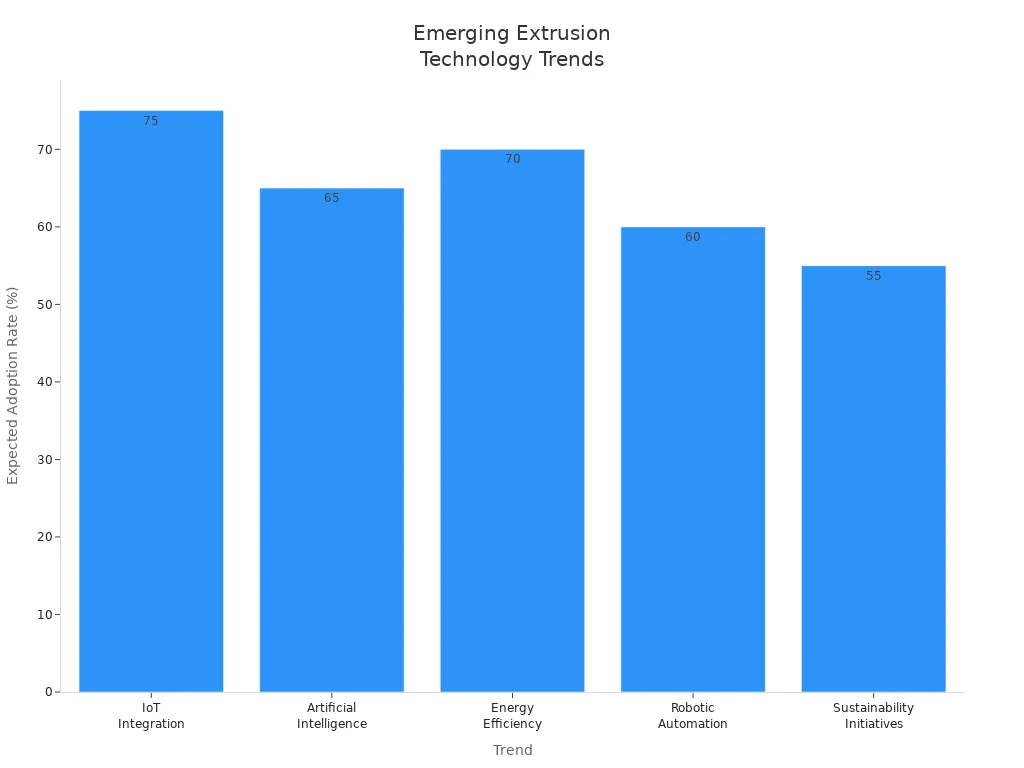
I see rapid changes in extrusion technology shaping the future of manufacturing. IoT integration allows real-time monitoring and analytics, te whakapai ake i te pai. Artificial intelligence supports predictive maintenance and optimization, which boosts performance. Energy efficiency is a growing focus, with manufacturers seeking ways to reduce consumption in the extrusion process. Robotic automation streamlines material handling and quality control. Sustainability initiatives drive the use of recycled materials and eco-friendly processes.
| Te ia | Whakaahuatanga | Te Paanga ki te Kakama | Reiti Whakamaorihia (%) |
|---|---|---|---|
| Whakakotahitanga IoT | Te aro turuki me te tātaritanga | Teitei | 75% |
| Maamaa Artificial | Te tiaki matapae me te arotautanga | Tino Teitei | 65% |
| Pungao Pungao | Reducing energy consumption | Waenga | 70% |
| Robotic Aunoatanga | Te whakahaere rauemi me te whakahaere kounga | Teitei | 60% |
| Kaupapa Roopumautanga | Ko nga rauemi hangarua me nga tikanga whakahoahoa | Waenga | 55% |
I notice advancements in material compatibility, especially with bioplastics, are transforming the extrusion industry. Many manufacturers now prioritize flexibility in equipment design, with modular systems allowing easy upgrades and modifications. Sustainability is essential, with most manufacturers focusing on energy-efficient equipment and waste reduction strategies. Smart extrusion machines reduce downtime by 20%, which improves overall efficiency and quality control. I always stay updated on these trends to maintain high performance and support new applications in plastic extrusion.
Aki: I recommend reviewing the overview of extruder machines in manufacturing regularly. Staying informed about new types of extrusion machines and screw designs helps me adapt to changing production needs and maintain scalability.
I recognize that each extrusion system offers unique advantages and limitations. My experience shows that single-screw extruders excel in high-volume production, while twin-screw systems provide superior mixing and flexibility. Ram and co-extrusion machines support specialty applications. I always use comparison tables and selection criteria to evaluate:
- Technical capabilities and long-term reliability
- Customer service and design assistance
- Quality standards and energy efficiency
I recommend manufacturers understand their application needs and consult extrusion experts for optimal results.
FAQ
What is the main difference between single-screw and twin-screw extruders?
I see that single-screw extruders use one rotating screw for basic mixing. Twin-screw extruders use two screws for advanced mixing and better control. I choose twin-screw systems for complex materials and higher flexibility.
How do I decide which extrusion system fits my application?
I start by reviewing my material type, rōrahi whakaputa, and product complexity. I match these needs to the strengths of each system. I consult with experts if I face unique requirements.
Can I process recycled materials with extrusion systems?
I process recycled materials using twin-screw extruders. These machines handle variable feedstocks and additives better than single-screw systems. I monitor quality closely to ensure consistent results.
How often should I perform maintenance on my extruder?
I schedule routine inspections every month. I check for screw wear, barrel condition, and control system performance. Regular maintenance prevents downtime and extends equipment life.
What are the most common extrusion defects I encounter?
I often see surface roughness, toronga ahu, and melt fractures. I address these by adjusting temperature, tere tīwiri, and material feed. I use process monitoring to catch issues early.
Is co-extrusion suitable for all materials?
I use co-extrusion mainly for thermoplastics. Some materials may not bond well in multi-layer profiles. I test material compatibility before starting production.
How does automation improve extrusion quality?
I rely on automation for real-time monitoring and precise control. Automated systems reduce human error, maintain consistent output, and improve overall product quality.
What safety measures do I follow during extrusion?
I wear protective gear and follow lockout procedures. I keep the work area clean and check emergency stops regularly. I train my team on safe operation and emergency response.