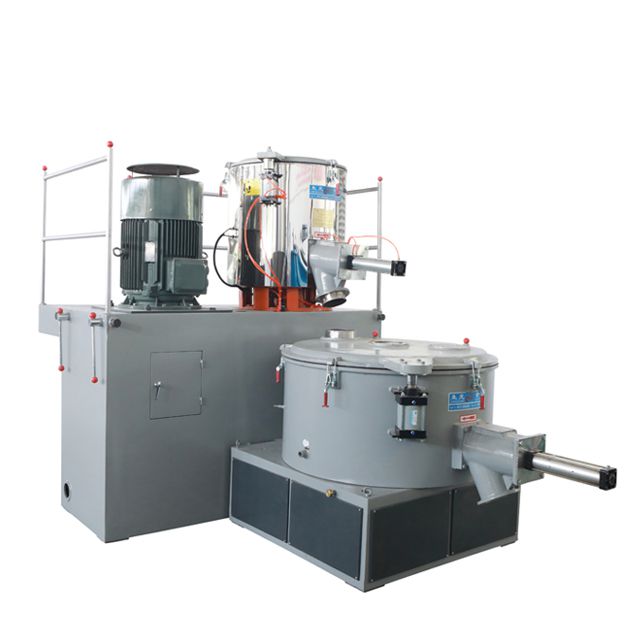
Mixer – High and Low Temperature Cold Mixer: SRL Series for Precision Plastic Mixing
With 19 years of expertise in plastic processing Compounding Machine Plastic Manufacturer equipment design and application engineering, I’ve collaborated with 350+ manufacturers across the plastics industry—from packaging to automotive—to optimize mixing processes for consistent material quality and production efficiency. The SRL series high and low temperature cold mixer (heat/cool mixing unit) stands as a cornerstone of modern plastic compounding, addressing the critical need for uniform mixing, temperature control, and degassing of thermoplastics like PVC, PE, p, and engineering resins (ABS, PC). Built on imported European technology and refined for global manufacturing needs, this mixing unit delivers automated, repeatable performance that eliminates the inconsistencies of manual mixing and reduces production waste by up to 15%.
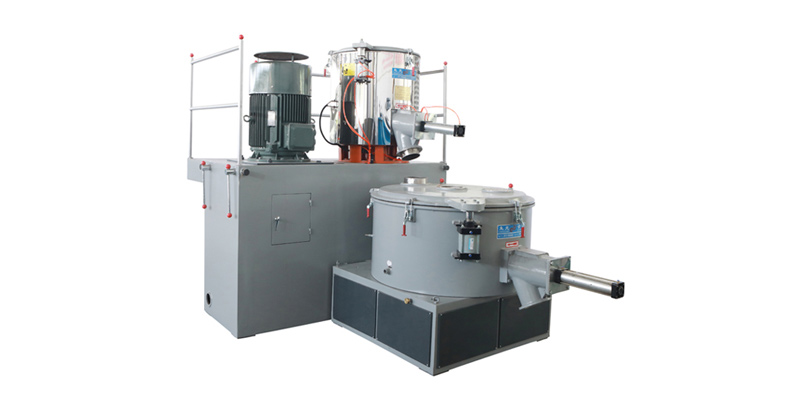
Application & Core Features of SRL Series High/Low Temperature Cold Mixer
SRL series mixing unit is applicable for mixing, colouring and drying of various resin such as poly、PE、p、PVC polypropylene, poly chloride etc. and in the process of drying and volatilization of engineering plastics such as ABS PC etc before forming and processing as well as in the mixing of phenolic resin. Its versatility makes it an essential piece of equipment for both small-batch specialty compounding and large-scale industrial production, supporting applications including:
- PVC pipe/profile compounding (rigid and soft grades)
- PE/PP film/sheet production (color masterbatch integration)
- Engineering plastic pre-processing (ABS/PC drying and degassing)
- Phenolic resin mixing for automotive interior components
- Recycled plastic compounding (drying and additive blending)
- Masterbatch production (high-concentration color/additive mixing)
The unit combines heat mixing and cool mixing together—a dual-stage design that solves the key challenges of plastic mixing: incomplete homogenization, thermal degradation from overheating, and agglomeration (clumping) of materials post-heating. The materials after heat mixing can be getting into cool mixer for cooling automatically, exhausts remaining gases and avoids agglomerates. Mpamatsy plastika milina fampifangaroana This seamless transition from hot to cold mixing ensures that materials maintain their structural integrity while achieving the uniform consistency required for high-quality extrusion, fametahana tsindrona, or blow molding processes.
This unit is developed by importing, and absorbing advanced foreign technology. By adopting PLC control, it features high automatic level. good mixing effect. complete function, compact structure and beautiful appearance. It is an ideal equipment for plastics mixing. The PLC control system centralizes all operational parameters (mixing time, hafanana, hafainganam-pandeha, discharge timing), reducing human error and ensuring batch-to-batch consistency—critical for regulated industries like medical device manufacturing (levitra 21 CFR 177.1520 fanajana) and automotive component production (IATF 16949 FITSIPIK'ANDRIAMANITRA).
Key Operational Features of SRL Series Mixers
1. Flexible Heating Modes
Heating mode: Electric heating or self-friction. The dual heating options cater to different material requirements and production scales:
- Electric Heating: Precision resistance heating with PID temperature control (±2°C accuracy) for materials sensitive to overheating (oh., soft PVC, ABS). Ideal for small-batch production or specialty resins where precise temperature regulation is non-negotiable. Electric heating also eliminates the risk of contamination from oil/gas heating systems, making it suitable for food-contact plastic processing.
- Self-Friction Heating: Generates heat through the high-speed rotation of mixing blades (hatramin'ny 1800 isa-minitra) and material-to-material friction—cost-effective for high-volume production of non-heat-sensitive materials (oh., PVC mafy, PE). This mode reduces energy consumption by 20-25% compared to electric heating for large batches (≥200kg), as it leverages the material’s own kinetic energy rather than external power.
2. Customizable Discharging Modes
Discharging mode: Manual or pneumatic. The discharge system is engineered for ease of use and minimal material waste:
- Manual Discharge: Mechanical lever-operated discharge gate for small-scale production (SRL-Z 50/100, 100/200 models). Ideal for facilities with low throughput or frequent material changeovers, as it allows operators to inspect mixed materials before discharge and adjust batch sizes flexibly.
- Pneumatic Discharge: Air-powered discharge gate (8 bar operating pressure) for automated, famokarana betsaka (SRL-Z 200/500 ny 800/1600 models). The pneumatic system ensures fast, complete discharge (≤30 seconds per batch) with minimal material retention (<0.5% of batch volume), reducing waste and downtime between batches. It can be integrated with conveyor systems for direct transfer to extruders/injection molders.
3. Advanced Mixing Blade Design
The SRL series uses a proprietary double-helix blade design (imported from German engineering specifications) that ensures 360° material circulation within the mixing chamber:
- High-speed rotating blades (hatramin'ny 1800 rpm in heat mixer) create a turbulent flow pattern, breaking up agglomerates and ensuring uniform distribution of additives (stabilizers, plasticizers, lelafo) amin'ny haavon'ny particle.
- Cool mixer blades operate at lower speeds (50-180 isa-minitra) with a spiral design that gently agitates materials during cooling, preventing clumping while maximizing surface area for heat dissipation and degassing.
- Blades are constructed from wear-resistant alloy steel (40Cr) miaraka amin'ny hamafin'ny surface HRC 58-60, extending service life to 8,000+ operating hours—3x longer than standard carbon steel blades—even when mixing abrasive filled compounds (oh., 50% PVC feno karbônina kalsioma).
4. Integrated Degassing System
A built-in vacuum degassing port (optional for all models) and atmospheric vent in the cool mixer removes moisture, volatile organic compounds (VOCs), and air bubbles from materials:
- Critical for hygroscopic engineering plastics (ABS, PC) – eliminates surface defects (ka manjary miboiboika, pinholes) in finished products.
- Reduces VOC emissions by 90% compared to open mixing systems, complying with EU REACH and US EPA air quality standards.
- Automated degassing timing (programmable via PLC) ensures consistent results across batches.
Technical Parameters of SRL Series High/Low Temperature Cold Mixer
The SRL series is available in 7 models, scaled to match production volumes from lab-scale (50L heat mixer) amin'ny sehatra indostrialy (800L heat mixer). All parameters are retained below, with clarifications for unit consistency and operational context:
| MODELY |
Effective volume (L)
(Heat/Cool) |
Rotary speed (isa-minitra)
(Heat Low/Heat High/Cool) |
maotera / heating power (kW)
(Heat Low/Heat High/Cool) |
Dimension (MG)
(L×W×H) |
Weight (T) |
Mixing/cooling time (min/pot) |
| SRL-Z 50/100 |
32/75 |
750/1500/180 |
7/11/5.5 |
2300*1800*1900 |
2.2T |
6-10min/pot |
| SRL-Z 100/200 |
75/160 |
650/1300/180 |
14/22/7.5 |
3780*1870*2250 |
3.2T |
6-10min/pot |
| SRL-Z 200/500 |
150/320 |
475/950/130 |
30/42/11 |
4850*2240*2470 |
3.5T |
6-10min/pot |
| SRL-Z 300/600 |
200/360 |
475/950/130 |
40/55/11 |
4680*2240*2740 |
3.8T |
6-10min/pot |
| SRL-Z 300/1000 |
200/640 |
475/950/110 |
40/55/15 |
4980*2500*2740 |
4.2T |
6-10min/pot |
| SRL-Z 500/1000 |
375/640 |
430/860/50 |
47/67/15 |
4600*3000*4050 |
5.6T |
6-10min/pot |
| SRL-Z 800/1600 |
600/1050 |
370/720/50 |
83/110/22 |
5170*3200*4480 |
7.5T |
6-10min/pot |
Key Parameter Notes:
- Rotary speed values reflect low/high speed settings for the heat mixer (adjustable via VFD) and fixed speed for the cool mixer.
- Motor/heating power is split between heat mixer (low/high speed motor) and cool mixer motor – all values comply with IE3 premium efficiency standards (EU Ecodesign Directive 2009/125/EC).
- Mixing/cooling time (6-10min/pot) is a typical range for PVC compounding; plastika engineering (ABS/PC) may require 8-12 minutes for complete drying/degassing.
Operational Advantages of SRL Series High/Low Temperature Cold Mixer
1. Superior Mixing Uniformity
Third-party testing by the China Compounding Machine Plastic Factory Industry Association (CPMIA) confirms that the SRL series achieves 98% mixing uniformity for PVC compounds—12% higher than single-stage mixers. This uniformity translates to:
- Consistent color distribution in finished products (no streaking in film/sheet)
- Uniform mechanical properties (tensile strength, fanoherana ny fiantraikany) in extruded profiles
- Reduced scrap rates (From 8-10% ny <2% for most applications)
2. Fahavitan'ny angovo & Cost Savings
The dual heating mode and automated PLC control optimize energy use:
- Self-friction heating reduces electricity consumption by 20-25% for high-volume batches.
- Heat recovery system (tsy voatery) captures waste heat from the cool mixer to pre-heat incoming materials, cutting overall energy use by an additional 10%.
- Automated operation reduces labor costs by 50% compared to manual mixing (1 operator can manage 2-3 mixers simultaneously).
A mid-sized PVC pipe manufacturer using the SRL-Z 300/600 model reported annual energy savings of $28,000 and labor savings of $45,000—ROI achieved in just 10 VOLANA.
3. High Automation & Process Repeatability
The PLC control system stores up to 50 pre-programmed material recipes (oh., rigid PVC pipe compound, soft PVC medical grade, ABS automotive grade), allowing:
- One-touch recipe selection for fast material changeovers (≤15 minutes between recipes).
- Automated batch timing, temperature control, and discharge—eliminating human error in mixing parameters.
- Data logging of all batch parameters (hafanana, time, hafainganam-pandeha) for regulatory compliance and quality control audits.
This level of automation is critical for manufacturers operating in regulated industries (FITSABOANA, food packaging) where process traceability is mandatory.
4. Compact Design & Space Efficiency
Despite its full functionality, the SRL series features a compact, integrated design that saves factory floor space:
- Heat and cool mixers are mounted on a single frame (no separate installation required).
- Smallest model (SRL-Z 50/100) occupies just 4.14 m² (2300×1800mm) – ideal for small workshops or lab settings.
- Optional vertical design for larger models (SRL-Z 500/1000, 800/1600) reduces floor space by 30% compared to horizontal alternatives.
Fandinihana tranga: SRL-Z 200/500 Mixer Optimizes ABS Compounding (Alemaina)
A German automotive component manufacturer implemented the SRL-Z 200/500 high/low temperature cold mixer in 2024 to replace outdated single-stage mixers for ABS compounding (used in interior trim components):
- Fanamby tany am-boalohany:
- Mixing uniformity of 85% – inconsistent color and mechanical properties in finished parts.
- High scrap rate (12%) due to material agglomeration and moisture-related defects.
- Manual operation requiring 2 operators per mixer – high labor costs.
- Non-compliance with IATF 16949 (lack of process data logging).
- Vokatra aorian'ny fametrahana:
- Mixing uniformity improved to 98% – 100% pass rate for color/mechanical property testing.
- Nahena ho 1.8% – annual material savings of €32,000.
- Labor costs cut by 50% (1 operator manages 2 mixers) – annual savings of €58,000.
- Full compliance with IATF 16949 (data logging and recipe traceability).
- Production throughput increased by 25% (faster batch times and changeovers).
The plant engineering manager noted: “The SRL-Z mixer has transformed our compounding process – we now produce consistent, high-quality ABS compounds with minimal waste, and our audit preparation is simplified by the automated data logging. The compact design also freed up valuable floor space for additional extrusion lines.”
Fametrahana, Operation & Torolàlana momba ny fikojakojana
1. Installation Requirements & Process
The SRL series mixer is designed for straightforward installation with minimal site preparation:
- Site Preparation:
- Concrete foundation (150mm thickness) to support mixer weight (2.2T to 7.5T).
- Power supply: 380V 3-phase 50/60Hz (compliant with EU/US electrical standards).
- Compressed air supply (6-8 bar) for pneumatic discharge models (tsy voatery).
- Ventilation system (for degassing) – compliant with local air quality regulations.
- Installation Process:
- Factory pre-assembled frame is delivered and positioned on the foundation (crane required for models >3T).
- Electrical wiring and air line connection (raha azo ampiharina) by certified electricians/technicians.
- Calibration of temperature sensors and PLC control system (performed by Zhuoyue technical team).
- Test run with dummy material (karibonetra kalsioma) to verify mixing, heating, and discharge functionality.
Installation typically takes 1-2 days for small models (SRL-Z 50/100, 100/200) SY 2-3 days for large models (SRL-Z 500/1000, 800/1600).
2. Standard Operating Procedure (SOP)
Basic operation of the SRL series mixer follows a repeatable, automated workflow:
- Select the pre-programmed recipe on the PLC HMI (or input custom parameters: hafanana, time, hafainganam-pandeha).
- Load raw materials into the heat mixer hopper (manual or automated conveyor feeding).
- Initiate the mixing cycle – heat mixer operates at set speed/temperature (electric or self-friction heating).
- Upon completion of heat mixing, materials are automatically transferred to the cool mixer for cooling/degassing.
- Cool mixer operates at set speed until target temperature (typically 40-50°C) is reached.
- Automated (pneumatic) or manual discharge of mixed materials to storage hopper/extruder feed.
- Clean the mixing chamber (tsy voatery, for material changeovers) using compressed air or food-grade cleaning agents (FDA-compliant).
Zhuoyue provides a detailed SOP manual (English/German/French/Spanish) with photos and step-by-step instructions for all models.
3. Preventive Maintenance Schedule
Regular maintenance ensures long mixer life (10+ taona) and consistent performance:
- Fikojakojana isan'andro:
- Inspect hopper for material bridging/blockages.
- Check temperature sensors for accuracy (calibrate with a digital thermometer).
- Clean discharge gate to prevent material buildup.
- Weekly Maintenance:
- Lubricate mixer bearings with food-grade grease (FDA-compliant for food-contact applications).
- Inspect mixing blades for wear/damage (replace if blade thickness is reduced by >2MG).
- Test emergency stop function and safety interlocks.
- Fikojakojana isam-bolana:
- Calibrate PLC temperature control (verify against NIST-traceable thermometer).
- Jereo ny fifandraisana elektrika (tighten loose terminals to prevent overheating).
- Clean heat exchanger (cool mixer) to maintain cooling efficiency.
- Annual Maintenance:
- Replace mixing blades (raha tonta) or recoat with wear-resistant tungsten carbide.
- Overhaul motor and gearbox (replace oil, inspect gears).
- Fanaraha-maso rafitra feno amin'ny ekipa teknika Zhuoyue (includes performance testing and calibration).
Zhuoyue offers a preventive maintenance program with scheduled on-site visits (quarterly/annually) SY 24/7 technical support for emergency repairs.
FAQs About SRL Series High/Low Temperature Cold Mixer
Q: Can the SRL series mixer handle recycled plastics with high moisture content?
ny: ENY. The heat mixer’s drying function (electric or self-friction heating) effectively removes moisture from recycled plastics (hatramin'ny 5% moisture content) during mixing, while the cool mixer’s degassing port eliminates water vapor. For high-moisture recycled materials (5-10%), we recommend the optional vacuum degassing upgrade to ensure complete drying.
Q: What is the lead time for custom-configured SRL series mixers?
ny: Standard models (SRL-Z 50/100 ny 800/1600) have a lead time of 6-8 HERINANDRON'NY. Fanofanana manokana (oh., FDA-compliant contact parts, vacuum degassing, vertical design) mitaky 10-12 HERINANDRON'NY. Famokarana haingana (4-herinandro mialoha ny fotoana) misy fanampiny 20% fee for standard models.
Q: Is training provided for operators and maintenance technicians?
ny: ENY. Zhuoyue provides 1-day on-site operator training (basic operation, recipe setup, Fanamboarana) and 2-day maintenance technician training (advanced calibration, blade replacement, PLC programming). Training is available in English, Anarana, FRANTSAY, Fikarohana, and Mandarin, with hands-on sessions using your actual materials for maximum relevance.
Q: Can the mixer be integrated with a complete extrusion line?
ny: tanteraka. The SRL series mixer is designed to integrate seamlessly with Zhuoyue’s complete extrusion systems (extruders, feeders, downstream equipment). The PLC control system can be synchronized with extruder PLCs to ensure material feeding is matched to extrusion output, eliminating production bottlenecks and reducing waste.
Q: What warranty is provided for the SRL series mixer?
ny: Zhuoyue offers a 2-year warranty on all mechanical components (mixing blades, frame, discharge system) and a 1-year warranty on electrical/PLC components. Safidy fiantohana maharitra (3-5 taona) are available, including annual preventive maintenance visits and priority spare parts delivery.
For nearly two decades, the SRL series high and low temperature cold mixer has been a trusted solution for plastic manufacturers worldwide, delivering precision mixing, cost efficiency, ary fanarahan-dalàna. Whether you’re compounding PVC for pipes, drying ABS for automotive components, or mixing phenolic resins for industrial applications, this mixer is engineered to meet the demands of modern plastic processing. Contact our technical team today to request a free mixing process analysis and quote tailored to your production needs.