

重要なポイント
- 需要は強く安定している. 世界のプラスチック押出市場の価値はおよそ米ドル 79 億で 2023 着実な成長が見込まれる (グランドビューリサーチ, 2023), カスタムプラスチック押出工場を精査したとき, 私は生産能力とリードタイムの信頼性を想定ではなく交渉の余地のないものとして扱います.
- 何よりもまずポリマーを用途に適合させる. 私の経験では, 硬質 PVC 押出が必要かどうかがわかれば、ほとんどの見積もりの摩擦はなくなります。, 柔軟な TPE または TPU シール, 構造用ABSまたはポリカーボネート, 耐薬品性のHDPEまたはLDPE, 高温PEEK, またはナイロンとアクリルのプロファイル. PVC は、コストと多用途性により、最も広く押出成形されるポリマーの 1 つです。 (プラスチックヨーロッパ, 2023).
- 認証は実際の能力を示します. ISOを探します 9001, 現在でも世界中の製造業者の間で最も広く採用されている品質管理認証 (ISO 認証調査, 2022), およびISO 13485 医療グレードの押出用 (国際標準化機構, 2016).
- コンプライアンスは市場と最終用途によって異なります. 商品によっては, ULを確認します 94 可燃性分類 (ULソリューション, 2023), 到着 (ECHA, 2023) およびRoHS (欧州委員会, 2023) EU向け商品の場合, および食品グレードの押出成形部品に対する FDA の食品接触要件 (私たち. FDA, 2023).
- 項目別の価格設定を要求する, ない “お問い合わせ。” 信頼できるプラスチック押出メーカーが押出工具と金型を開発します, 材料費, 実行速度, 二次製造サービスにより、部品ごとの真の経済性をモデル化し、正当なプラスチック押出の見積もりを取得できます。.
- 早期に製造可能性を考慮した設計. 現実的な押し出し公差について説明します, 壁の厚さ, プラスチックプロファイル設計時の共押出オプション, ツールを使用する前にこれらを捕捉することで、カスタム プロファイルの押し出しにかかる費用を最も節約できるためです。.
- 総陸揚げコストを比較する, ステッカー価格ではありません. 運賃を考慮すると、国内と海外が明確になることはほとんどありません, 義務, リードタイム, カスタムプラスチックプロファイルとチューブの比較に品質リスクを考慮.
- プロトタイプから本番までのパスを計画する. 押出プロトタイピングと少量のプラスチック押出をサポートするプラスチック押出会社を好みます, その後、押し出しプラスチック部品のフルランまできれいにスケールアップします。, カスタムシール, とガスケット.
- サステナビリティはますます現実的になる. リサイクルされたプラスチックは、多くの重要ではない用途要件を満たしながら、環境への影響を軽減できます。 (私たち. EPA, 2023), 仕様の際にサプライヤーに相談する価値があること.
カスタムプラスチック押出工場とは?

バイヤーにカスタムプラスチック押出工場について説明するとき, 私は、単一の原則に基づいて構築された製造パートナーとしてそれを構築します: 溶融した熱可塑性プラスチックを専用の金型に押し込み、一貫した断面を持つ連続的なプロファイルを作成します。. 在庫形状のカタログから販売するサプライヤーとは異なります, 真のカスタムショップのエンジニアがあなたの図面に合わせてツールを作成します. この区別は、ほとんどの調達チームが期待している以上に重要です, リードタイムからユニットエコノミクスまであらゆるものを形成します.
カスタム押出と連続プロファイル製造の定義
カスタムプロファイルの押し出しは連続プロセスです. 機械は決してディスクリートを生成しません “一部” 成形プレスがサイクルごとに 1 つのコンポーネントを取り出す方法. その代わり, 材料の長さを生成します, 必要な仕様に合わせてカットまたはコイル状に加工. これが、押し出しとは基本的に長さに沿って繰り返すジオメトリであると私が常にクライアントに伝える理由です。: 窓のガスケット, ソーラーパネルフレームチャンネル, 医療用カテーテル チューブもすべてその連続した DNA を共有しています. 押出成形は依然として最も生産量の多いプラスチック加工法の 1 つです, 重量で熱可塑性プラスチック変換の大部分を占める (プラスチック工業協会, 2023), そして世界のプラスチック押出市場の価値はおよそ米ドルでした 79 億で 2023 着実な成長が見込まれる (グランドビューリサーチ, 2023).
カスタムショップが製造する製品の種類
私の経験では, 有能なプラスチック押出成形メーカーの製品範囲は、いくつかのファミリーに分類されています:
- プロフィール: トリムなどの中実または中空の形状, エッジガード, と構造チャネル, 多くの場合、硬質 PVC 押し出し材または ABS で作られます。.
- チューブ: 流体移送用のカスタムプラスチックチューブ, ケーブル保護, または医療提供, HDPE から PEEK までの素材で製造.
- シールとガスケット: カスタムシールとガスケット, 多くの場合、TPE または柔軟な PVC で使用されます, 耐候性と防振のために使用されます.
- チャンネルとトリム: Uチャンネル, Tスロット, 照明や看板用のポリカーボネートまたはアクリル製の装飾トリム.
- 共押出プロファイル: 複数の材料を組み合わせた共押出, 例えば, シングルパスで柔らかいシールリップを備えた硬質基板.
対象となる業界と典型的な使用例
幅広いプラスチック押出成形部品がこの分野の回復力を維持しています. カスタムプロファイル押出フィード構造を定期的に目にします (窓とドアのシステム), 交通機関 (エッジトリムとワイヤーコンジット), 医療機器 (医療グレードの押出成形が必要なチューブおよびカテーテル), 家電製品, 小売備品, および再生可能エネルギーハードウェア. 米国. プラスチック業界の雇用者数 900,000 製造サプライチェーン全体の労働者 (プラスチック工業協会, 2023), そしてそのフットプリントの重要な部分は、押出成形とその下流の二次加工サービスをサポートしています。.
ジョブショップ工場と在庫プロファイルのサプライヤーの違い
これは、精査中に私が明らかにした最も一般的な混乱点です. 在庫プロファイルのサプライヤーは、お客様側での工具投資なしで既存の形状を出荷します。, これは高速かつ安価ですが、設計に制約がかかります. カスタムジョブショップ, 対照的に, 断面に合わせて新しい金型を切り出します, 樹脂ブレンドを制御します, アプリケーションに固有の許容誤差を調整します. ツールの料金は 1 回だけ支払う, 製品に正確に適合するプロファイルの恩恵を受けることができます. エンジニアにどのルートをとるべきか尋ねられたとき, 私の答えは、既製の形状が機能的および寸法的要件を満たせるかどうかにかかっています。. それができない場合, カスタムプラスチック押出工場が正直な選択です.
プラスチック押出プロセスのしくみ
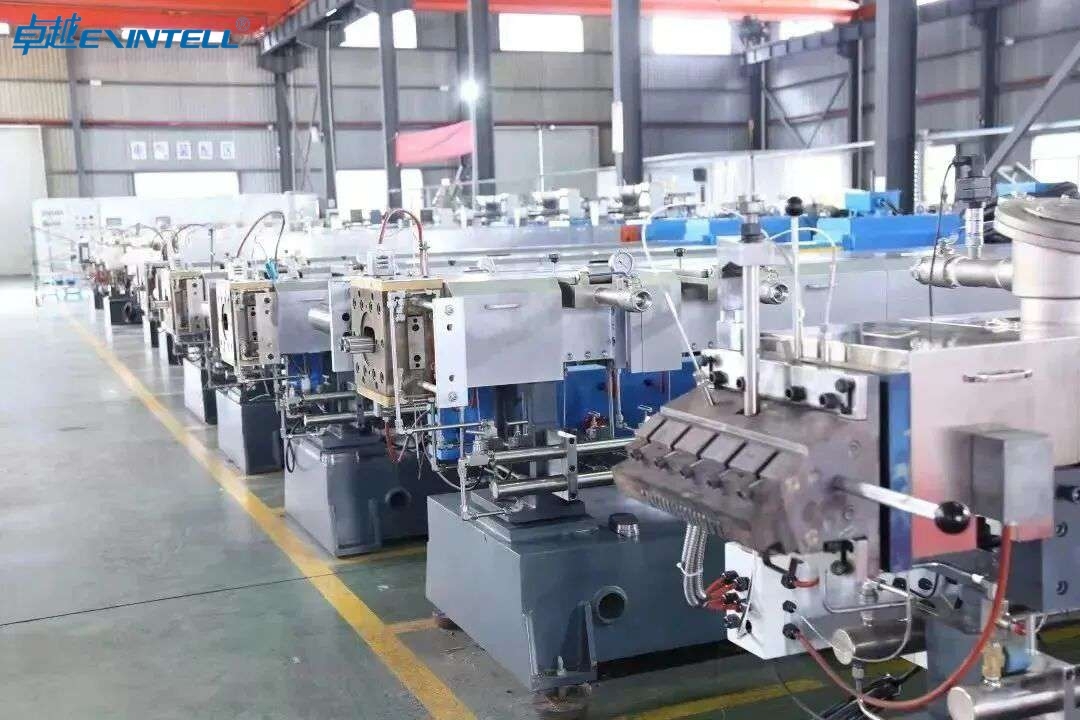
プロセスを理解することで、購入者はより適切な仕様を作成し、プラスチック押出の見積もり時に鋭い質問をすることができます。. 私はクライアントにそれを線形シーケンスとして説明します: ペレットとして何が入って完成品として出てくるか, 寸法管理されたプロファイル. 各段階では品質に影響を与える変数が導入されます, そのため、ライン全体を独立したマシンのセットではなく、1 つの統合システムとして扱います。.
樹脂の乾燥, 餌やり, エクストルーダーバレル内での溶解
すべては樹脂の選択と準備から始まります. ポリカーボネートなどの吸湿性素材, ナイロン, TPU は加工前に乾燥させる必要があります, 湿気が溜まると広がりの原因となります, ボイド, そして弱いプロフィール. ホッパーから, ペレットは加熱されたバレルに供給され、そこで回転スクリューが搬送されます。, 圧縮する, バレルの熱と剪断力の組み合わせによってポリマーを溶かします。. PVC は、そのコストと多用途性により、最も多く生産され、広く押出成形されているポリマーの 1 つです。 (プラスチックヨーロッパ, 2023), それが建設プロファイルを支配していると私が見ている理由です, ポリプロピレンですが, LDPE, と HDPE はそれぞれ独自のニッチを持っています. バレルに沿った温度プロファイリングは、熱可塑性プラスチック押出の品質が決まるかどうかを左右します。.
カスタムダイに強制的に溶解して断面を形成する
次に、溶融したポリマーがダイから押し出されます。, 押出成形ツールの唯一の最も重要な部分. ダイの開口部は希望の断面に近づきます。, しかし私はその言葉を強調します “近似値” 故意に: ポリマーは膨潤し、出るときに緩和します, したがって、金型の設計は材料の挙動を考慮します, ターゲットジオメトリだけでなく. まさにこれが、プラスチックプロファイル設計と金型エンジニアリングが切り離せない理由です。, そしてなぜ共押出が廃止されるのか, 2 つ以上のメルト ストリームをマージする, より高い工具予算を要求する.
冷却, 較正, およびサイズ設定の手順
死んだ直後, ソフトプロファイルは冷却と校正に入ります. 真空サイジングタンクまたは校正治具は、ウォーターバスまたは空冷によって形状を固化させながら、断面を仕様に合わせて保持します。. 私の経験では, この段階では、押し出し公差を現実的にどれだけ厳しくできるかを決定します。. 剛性プロファイルは、柔軟なプラスチック押出成形よりも予測どおりに校正されます。, 中空の形状では、崩壊を防ぐために慎重な真空制御が必要です.
引っ張る, 切断, 完成したプロファイルをコイル状に巻きます
引き手 (引き取り) 正確に制御された速度でラインに沿ってプロファイルを描画します, 出力レートに対するライン速度によって壁の厚さを微調整します. 下流, プロファイルは、鋸またはナイフで所定の長さに切断されるか、柔軟なカスタムプラスチックチューブの場合はコイル状に巻かれます。. パンチング等の二次加工サービス, 掘削, 印刷, またはアセンブリの製造が続くことがよくあります, これらは公差の積み重ねに影響を与えるため、早めに計画することをお勧めします。.
カスタム押出成形 vs 射出成形: 主な違い
バイヤーはよく、これら 2 つのプロセスを比較してほしいと私に尋ねます。, 正直な答えは、それらはさまざまな問題を解決するということです. 私はどちらかが普遍的に優れているとは決して位置づけません. 決定はジオメトリに帰着します, 音量, とコスト構造. 以下に、私がトレードオフをどのように評価するかを示します。, 次に、チームと共有できる表にまとめます。.
連続プロファイル vs 個別成形部品
決定的な違いは出力形式です. 押し出しにより、均一な断面を持つ連続した長さが生成されます。, 射出成形ではディスクリートが製造されますが、, ボスなどの複雑な形状を持つ立体部品, 肋骨, とスレッド. パーツが 1 つの軸に沿って一定のプロファイルを持っている場合, ほとんどの場合、押出成形がより経済的な方法です. 3 つの次元すべてで異なる特徴がある場合, 成形は自然なフィット感です.
工具のコストと複雑さの比較
ここがコストギャップが最も激しいところです, そして曖昧なことを押し返すところ “価格についてはお問い合わせください” 答え. 押出ダイは比較的シンプルで手頃な価格で構築および変更できます。. 射出成形金型は精密です, 複数のキャビティを持つツールは、コストが桁違いに高く、製造に時間がかかる可能性があります。. 少量のプラスチック押出および押出試作用, 工具の経済性の違いは決定的である: 金型コストの数分の一でカスタム プロファイルを検証できます, 次にスケールします.
最適な形状と損益分岐点のボリューム
私の経験則: 長い押し出しを選択する, 均一な断面と成形により機能が豊富, 内蔵パーツ. 音量について, 押出成形は工具コストが低いため、幅広い範囲で有利です, 特に、金型の償却が大部分を占める少量の場合には. 成形品の部品ごとの効率は、工具への投資を正当化する非常に大量の場合にのみ発揮されます。.
|
要素 |
カスタム押し出し |
射出成形 |
|---|---|---|
|
出力フォーム |
連続プロファイル, 均一な断面 |
個別の 3D パーツ |
|
工具費 |
低から中程度 (死ぬ) |
高い (精密金型) |
|
ツーリングのリードタイム |
短い |
より長い |
|
最適な形状 |
一定の断面積 (チューブ, チャンネル, シール, トリム) |
複雑な機能 (上司, スレッド, 肋骨) |
|
少量のフィット感 |
強い, プロトタイピングに最適 |
弱い, 高額な工具の償却費 |
|
ハイボリュームフィット |
プロファイルに強い |
ディスクリート部品に強い |
|
代表的な材質 |
PVC, ABS, HDPE, LDPE, ポリプロピレン, TPE, ポリカーボネート |
ABS, ナイロン, ポリカーボネート, ポリプロピレン |
|
コスト要因 |
ライン速度と材料スループット |
サイクルタイムとキャビテーション |
|
要素 |
カスタム押し出し |
射出成形 |
|---|---|---|
|
出力フォーム |
連続プロファイル, 均一な断面 |
個別の 3D パーツ |
|
工具費 |
低から中程度 (死ぬ) |
高い (精密金型) |
|
ツーリングのリードタイム |
短い |
より長い |
|
最適な形状 |
一定の断面積 (チューブ, チャンネル, シール, トリム) |
複雑な機能 (上司, スレッド, 肋骨) |
|
少量のフィット感 |
強い, プロトタイピングに最適 |
弱い, 高額な工具の償却費 |
|
ハイボリュームフィット |
プロファイルに強い |
ディスクリート部品に強い |
|
代表的な材質 |
PVC, ABS, HDPE, LDPE, ポリプロピレン, TPE, ポリカーボネート |
ABS, ナイロン, ポリカーボネート, ポリプロピレン |
|
コスト要因 |
ライン速度と材料スループット |
サイクルタイムとキャビテーション |
プロジェクトが境界線上にある場合, 単価だけではなく、予想される生産期間全体にわたる総陸揚げコストを検討します。. 私が引用したほとんどのプロフィールアプリケーションでは, カスタムプラスチック押出会社の工具の敷居の低さは、市場投入までのスピードと財務リスクの両方で勝利を収めます, これがまさに、押出成形が重量ベースで熱可塑性プラスチック変換の大きなシェアを占めている理由です。 (プラスチック工業協会, 2023).
カスタムプラスチック押出成形で使用される一般的な材料
クライアントが私に図面を渡し、何で作るべきかを尋ねたとき, ポリマーから始めることはない. そのパートがやらなければならない仕事から始めます. 長年にわたって私は、ほとんどの押出プロジェクトが成功するか失敗するかは材料の選択にあると学びました。, サイコロが切られるずっと前に. 良いニュースは、カスタムプロファイル押出の分野は管理しやすい主力樹脂のセットで稼働していることです。, そして、それらがどのようにグループ化されるかを理解すると、, 選択肢はそれほど怖くないものになります.
汎用樹脂: 日常の主力製品
私が引用する押出プラスチック部品のほとんどはコモディティ層に分類されます。, そして正当な理由から. これらの樹脂は安価です, 広く入手可能, 予測通りに処理する, これにより、工具コストと 1 フィートあたりのコストの両方を抑えることができます。. メンズリサイクルプラスチック衣類
- PVC — 私のデフォルトの剛体プロファイル, トリム, 剛性が必要なカスタムプラスチックチューブを低価格で提供. PVC は、まさにコストと多用途性のバランスが取れているため、最も多く生産され、広く押出成形されているポリマーの 1 つです。 (プラスチックヨーロッパ, 2023). 柔軟剤もよく受け入れます, そのため、構造工事用の硬質 PVC 押出材や軟質 PVC 押出材を指定できます。, 本質的に同じ化学反応からなるガスケット用の柔軟なプラスチック押出材.
- ポリエチレン (PE) — HDPE とLDPE の両方が常に表示されます. ライナープロファイルなどで耐薬品性と靭性が必要な場合は、HDPE を使用します。, 柔軟性と低吸湿性が必要な場合はLDPE.
- ポリプロピレン (PP) — リビングヒンジの有力な選択肢, 化学物質の封じ込め, 繰り返し屈曲する部分や. 軽く動き、ほとんどの溶剤に耐性があります.
- ABS — 顧客がきれいな剛性のプロファイルを望んでいる場合, 塗装可能な表面と室温での優れた衝撃強度, ABS がその地位を獲得. 消費者向けおよび家電製品のトリムによく選ばれています.
エンジニアリング樹脂および高性能樹脂
アプリケーションがさらに多くの要求を要求すると、, 熱, 負荷, 寸法安定性, または規制の流れ, 私ははしごを上っていきます. これらの樹脂はコストが高く、ラインでの許容度が低い場合があります, しかし、それらは汎用プラスチックでは解決できない問題を解決します.
- ポリカーボネート — 衝撃に耐えなければならないクリアまたは着色されたプロファイルの私の頼りになる. 光学的な透明性と本物の靭性を組み合わせます, だからこそ私は照明レンズと保護ガラスのプロファイルにそれを指定しています。.
- ナイロン (ポリアミド) — 優れた耐摩耗性と機械的強度により、ナイロンは構造プロファイルに自然に適合します, ストリップを着用する, 低摩擦ガイド.
- ピーク — これは範囲の最高値です. 部品が継続的に高い温度にさらされる場合, 攻撃的な化学物質, または医療および航空宇宙要件, PEEK が提供するもの, ただし、価格は高く、厳密なプロセス管理が必要です.
- アクリル — 最高の光学的透明性と剛性を実現します。, 光沢仕上げ, アクリルは看板やディスプレイのプロファイルで勝るものはありません, 衝撃荷重が適度に保たれる限り.
柔軟なエラストマーとデュアルデュロメーターのオプション
私が行う最も興味深い作業には、曲げる必要がある部品が含まれます。, シール, またはグリップ. 熱可塑性エラストマーがその扉を開く.
- TPE — カスタムシールおよびガスケットの多用途ファミリー, ウェザーストリップ, ソフトタッチのエッジ. 熱可塑性プラスチックのように加工できますが、ゴムのように動作します。.
- TPU — When I need abrasion resistance and toughness in a flexible part, TPU outperforms most alternatives, which is why it appears in hoses and protective tubing.
Here is where co-extrusion changes the conversation. Using dual-durometer co-extruded profiles, I can run a rigid PVC backbone and a soft TPE sealing lip in a single pass, bonding them as they exit the die. That eliminates a secondary assembly step and produces a cleaner, more durable part. Whenever a customer describes a rigid channel that also needs a flexible seal, I raise thermoplastic extrusion with co-extrusion early, because it usually reshapes the whole design.
How to Choose the Right Material for Your Profile
Selecting a resin is an exercise in honest trade-offs. 私の経験では, the projects that stay on budget are the ones where we define requirements precisely before anyone falls in love with a particular polymer. I work through a consistent set of questions with every client, and I will walk you through the same framework.
Match Material Properties to Application Requirements
I start by separating the requirements into three buckets, because a resin rarely wins on all of them at once.
機械的ニーズ
How much load, インパクト, and flexing will the part see? A structural custom plastic profile that supports weight points me toward nylon or rigid PVC, while a part that must survive drops leans toward polycarbonate or ABS. If it needs to bend repeatedly without cracking, ポリプロピレンか TPE の方が賢明です.
熱のニーズ
連続使用最高温度を教えてください, 頂点だけではない. 汎用樹脂は早期に軟化する; PVC と PE は周囲環境や穏やかに暖かい環境では快適ですが、熱源の近くでは機能しません。. 動作温度が上昇した場合, ポリカーボネートに移行します, ナイロン, または, 極限の終わりに向けて, ピーク.
耐薬品性のニーズ
溶剤への曝露, 油, 燃料, または洗浄剤がフィールドを急速に狭めてしまう. HDPE とポリプロピレンはほとんどの化学物質をはねのけます, それが、それらが産業用封じ込めプロファイルを支配する理由です, 一方、ABS とポリカーボネートはより脆弱であり、慎重な精査が必要です。.
環境と耐久性の要因
2 つの質問により、クライアントは費用のかかる現場での失敗から救われます. 初め, そのパートは屋外に住んでいますか? 不安定なプラスチックチョーク, 黄色, 紫外線にさらされ続けると脆くなる, so for outdoor profiles I specify UV-stabilized grades or inherently stable resins and confirm the expected service life up front. 2番, does the application involve fire risk? Flammability is not optional in electrical and building products. UL 94 is the standard used to classify the flammability of plastic materials for parts and components (ULソリューション, 2023), and I match the required rating, such as UL 94 V-0, to a resin grade that carries it rather than assuming a base polymer qualifies.
Regulatory Requirements
Compliance is where I see the most costly late-stage プラスチックリサイクル卸売 surprises, so I raise it before design freeze.
- 食品との接触 — The FDA regulates food-contact substances, including plastics used in food-grade extruded products (私たち. 食品医薬品局, 2023), so food and beverage applications require documented compliant resins.
- エレクトロニクス — RoHS restricts the use of specific hazardous substances in electrical and electronic products (欧州委員会, 2023), and the broader REACH regulation governs the registration and safe use of chemical substances in products sold in the EU (欧州化学庁, 2023).
- 医学 — Medical grade extrusion typically pairs a biocompatible resin with a supplier holding ISO 13485 認証 (国際標準化機構, 2016).
- Flammability — UL listings, as noted above, for electrical and building components.
Cost vs Performance Trade-Offs
Every step up in performance carries a cost, and part of my job is to prevent over-specifying. Not every part needs PEEK. I also remind clients that recycled plastics can reduce environmental impact while meeting many non-critical application requirements (私たち. 環境保護庁, 2023), which makes them a genuine option for non-structural, non-regulated profiles. The table below summarizes how I weigh the common resins across the factors that actually drive selection.
| 材料 | カテゴリ | 相対コスト | Max Service Temp | 耐薬品性 | Outdoor/UV | Typical Profile Use |
|---|---|---|---|---|---|---|
| PVC (硬い) | 商品 | 低い | Low–Moderate | 良い | Good with additives | トリム, チャンネル, custom plastic tubing |
| HDPE | 商品 | 低い | 適度 | 素晴らしい | 良い | Chemical liners, tough profiles |
| LDPE | 商品 | 低い | 低い | 良い | 適度 | フレキシブルチューブ, 低負荷部品 |
| ポリプロピレン | 商品 | 低い | 適度 | 素晴らしい | Poor without stabilizer | リビングヒンジ, containment |
| ABS | 商品 | Low–Mid | 適度 | 公平 | 貧しい | リジッドトリム, paintable parts |
| ポリカーボネート | エンジニアリング | ミッド | 高い | 公平 | Good with UV grade | Clear impact profiles, レンズ |
| ナイロン | エンジニアリング | ミッド | 高い | 良い | 適度 | Wear strips, structural guides |
| アクリル | エンジニアリング | ミッド | 適度 | 公平 | 素晴らしい | 看板, ディスプレイプロファイル |
| ピーク | 高性能 | 非常に高い | 非常に高い | 素晴らしい | 素晴らしい | 医学, 航空宇宙, harsh service |
| TPE / TPU | エラストマー | ミッド | 適度 | 良い | Grade-dependent | カスタムシールとガスケット, dual-durometer lips |
Ratings above are directional guidance drawn from typical extrusion grades; specific compounded formulations vary, so I always confirm properties against a supplier data sheet before committing.
Understanding Extrusion Tooling and Die Costs
Nothing surprises first-time buyers more than tooling. They come expecting to pay per foot and discover that the profile has to be born from a custom-cut die first. Because the plastic extrusion market was valued at approximately USD 79 億で 2023 着実な成長が見込まれる (グランドビューリサーチ, 2023), there is a mature supply base for tooling, but pricing still varies widely with complexity. Let me demystify what you are actually paying for.
What an Extrusion Die Is and How It’s Made
An extrusion die is a precisely machined steel plate, sometimes a small stack of plates, with an opening cut to the cross-section of your profile. Molten resin is forced through that opening, takes its shape, and is then cooled and pulled to length. The reason a die costs money is that its opening is never a simple copy of the finished part. Plastic swells and relaxes as it exits, so my toolmakers deliberately distort the die geometry to compensate, その後、試運転を通じて改良していきます. That iterative tuning, not just the raw machining, is what you are buying. Extrusion tooling and dies for co-extruded profiles are more complex still, because they must merge two melt streams cleanly.
Typical Tooling Cost Ranges by Complexity
I believe in itemized numbers rather than a vague “価格についてはお問い合わせください,” so here are realistic ranges I see for a single-cavity profile die in North America. Treat them as planning figures; final quotes depend on material, 許容範囲, and shop rate.
- シンプルなプロファイル (round or square tube, basic strip, open channel): roughly USD 1,500 米ドルへ 4,000.
- Moderate profiles (multi-leg shapes, スナップ機能, より厳しい公差): roughly USD 4,000 米ドルへ 8,000.
- 複雑なプロファイル (hollow multi-chamber, thin walls, encapsulated features): roughly USD 8,000 米ドルへ 15,000.
- Co-extrusion or dual-durometer tooling: often USD 12,000 and up, because it requires additional flow tooling and more tuning.
Prototype tooling is a separate, lighter-weight path. For extrusion prototyping and low volume plastic extrusion, some shops offer soft or modular tooling at a fraction of production cost so you can validate a design before investing in a hardened die.
One-Time Tooling vs Recurring Run Costs
The cleanest way I know to explain extrusion economics is to split your quote into two lines. The first is the one-time tooling charge above, an upfront investment tied to the geometry, not the quantity. The second is the recurring run cost: the per-foot or per-pound price you pay each time you order, driven by resin cost, 回線速度, スクラップ率, 切断などの二次加工サービス, パンチング, または印刷. Because tooling is amortized across every foot you eventually order, low volumes carry a high effective cost per part, while production volumes spread the die charge thin. When I prepare a plastic extrusion quote, I show both lines separately so you can see exactly where your money goes and model your break-even honestly.
Tooling Ownership, ストレージ, and Reuse Policies
This is the clause buyers most often overlook, and it matters. Before I place an order with any plastic extrusion manufacturer, I confirm three things in writing:
- 所有 — Do you own the die outright after paying for it, or does the supplier retain title? If you pay the full tooling charge, I push for documented customer ownership so you can move the tool if the relationship changes.
- ストレージ — Reputable shops store your die at no charge between runs, but some impose fees or scrap tooling after a period of inactivity. Get the retention period in writing.
- Reuse and transfer — Confirm that the die can be reused for repeat orders indefinitely and, 批判的に, that it can be released or transferred to another plastic extrusion company if you ever need a second source.
Clarifying ownership up front protects the investment you have made and preserves your leverage. A supplier confident in its work will have no problem putting these terms on paper, and in my experience that willingness is itself a useful signal of a partner worth keeping.
A Transparent Breakdown of Custom Extrusion Costs
When I ask a prospective customer what frustrates them most about sourcing extruded plastic parts, the answer is almost always the same: pricing feels like a black box. Too many quotes arrive as a single lump sum with no explanation of what drives the number. 私の経験では, a good plastic extrusion manufacturer should be willing to unbundle the cost so you can see exactly where your money goes. I break every custom profile extrusion project into three components, then account for the extras that quietly inflate a quote.
The Three Core Cost Components
Every extrusion quote I write rests on three pillars: ツーリング, 材料, and processing. Understanding the relative weight of each helps you decide where to negotiate and where to leave well enough alone.
ツーリング
The extrusion die is a one-time capital cost. A simple round profile in rigid PVC extrusion might use a die in the low four figures, while a complex co-extruded profile with multiple durometers and tight internal geometry can run several times higher. Calibration and sizing fixtures add to that figure. I always treat tooling as an amortized investment: on a long production run, the per-foot impact of the die shrinks toward negligible, which is why extrusion tooling and dies rarely make sense to skimp on for a part you plan to run for years.
材料
Resin is the recurring cost that scales directly with volume. Commodity polymers such as PVC, HDPE, LDPE, and polypropylene sit at the affordable end, which is part of why PVC is among the most produced and widely extruded polymers due to cost and versatility (プラスチックヨーロッパ, 2023). Engineering and specialty resins move the needle sharply upward. ポリカーボネート, ABS, ナイロン, TPE, and TPU carry meaningful premiums, and high-performance PEEK can cost many times more per pound than a commodity grade. Acrylic sits in the middle for optical applications. 着色剤, 紫外線安定剤, and flame-retardant additives that satisfy standards like UL 94 (ULソリューション, 2023) each add incremental cost.
処理
Processing covers machine time, 労働, エネルギー, and scrap. Faster line speeds lower the per-foot processing cost, but thick walls, 厳しい公差, and difficult geometries slow the line and raise it. 押出成形は依然として最も生産量の多いプラスチック加工法の 1 つです, 重量で熱可塑性プラスチック変換の大部分を占める (プラスチック工業協会), so processing efficiency is where an experienced plastic extrusion company earns its keep.
How Volume Shapes Per-Foot Pricing
The single largest driver of your unit price is annual volume, because it dictates how tooling amortizes and how much setup time you absorb per foot. 設定, パージ, and first-article inspection are fixed costs incurred every time we start a run. Spread across 500 足, they dominate the price. Spread across 50,000 足, they nearly vanish. The illustrative table below reflects the pattern I see across typical custom plastic profiles; treat it as directional rather than a fixed rate sheet, since resin selection and profile complexity shift the absolute numbers.
| 年間生産量 | Tooling amortization per foot | Setup impact per foot | Relative unit price |
|---|---|---|---|
| 500 フィート (プロトタイプ) | 高い | 高い | Baseline ×3–4 |
| 5,000 フィート (小さい音量) | 適度 | 適度 | Baseline ×1.6–2 |
| 25,000 フィート (mid volume) | 低い | 低い | Baseline ×1.1–1.3 |
| 100,000+ フィート (生産) | 無視できる | 無視できる | ベースライン |
The takeaway I share with clients running extrusion prototyping is simple: expect prototype pricing to look alarming on a per-foot basis, and judge the true economics only once you model production volume.
Secondary Operation Cost Adders
The extruded length that leaves the die is often not the finished part. Secondary fabrication services add real cost that belongs in your quote, not in a surprise invoice. Common adders I itemize include cut-to-length and tight-tolerance sawing, hole punching and notching, 掘削, printing or striping, ホットスタンピング, tipping and flaring on custom plastic tubing, ultrasonic welding, 組み立て, and custom packaging. Each operation introduces its own labor, fixturing, and scrap rate. When you request custom seals and gaskets, corner-cutting and joining steps frequently cost more than the extrusion itself at low volumes.
Where Hidden Costs Typically Appear
Over the years I have learned exactly where budgets get blown. 初め, freight and dunnage on long or fragile profiles: a lightweight part can still be expensive to ship because it consumes volume, not weight. 2番, minimum resin purchases for custom compounds and colors, where you pay for a full lot even if your run uses a fraction. 三番目, scrap and startup allowance, which is real material you fund. 4番目, inspection and certification labor for regulated work such as medical grade extrusion under ISO 13485 (国際標準化機構, 2016), or documentation for REACH (ECHA, 2023) およびRoHS (欧州委員会, 2023) コンプライアンス. I flag every one of these line items up front, because a plastic extrusion quote that hides them is not actually cheaper, it is just less honest.
最小注文数量と数量計画
Nearly every conversation about extruded plastic parts eventually reaches the minimum order quantity, and it is often the point where a promising project stalls. I find it helps to explain why MOQs exist before we negotiate around them, because the reasoning reveals where flexibility actually lives.
押出成形にMOQが存在する理由
押出は連続プロセスです, not a discrete one. Every run demands the same startup sequence regardless of length: 金型の取り付け, heating the barrel to temperature, purging the previous material, dialing in dimensions against the calibration tooling, and running scrap until the profile stabilizes. That startup consumes machine time and material whether you order 200 足か 20,000. The MOQ is how a plastic extrusion manufacturer ensures a run is long enough to justify that fixed setup burden. It is an economic threshold, not an arbitrary barrier.
Typical Minimum Run Lengths and Weights
実際に, I see MOQs expressed two ways. For simpler commodity profiles, minimums are often stated by weight, commonly in the range of a few hundred pounds of resin per run, which reflects the lot economics of the material. For dimension-driven parts, minimums are stated in linear feet, frequently landing somewhere between 1,000 そして 5,000 feet for a standard profile. Specialty resins such as PEEK or medical-grade compounds carry higher effective minimums because the material lots themselves are large and costly. These figures are typical starting points; 複雑, tooling status, and resin all move them.
Balancing Inventory Carrying Cost Against Setup Savings
There is a genuine tension here, and I never pretend otherwise. Ordering in large batches lowers your per-foot price by diluting setup cost, but it ties up capital and warehouse space in finished goods that may sit for months. Ordering small keeps inventory lean but pays the setup penalty repeatedly. The right answer depends on your carrying cost, your demand stability, and shelf-life considerations for the polymer. I usually model the crossover point explicitly: at what run frequency does the setup savings from a larger batch exceed the cost of storing the extra inventory? For stable, high-turn products the math favors larger runs. For volatile or short-lifecycle products, smaller and more frequent runs win despite the higher unit cost.
Blanket Orders and Scheduled Releases
For low volume plastic extrusion buyers who cannot absorb a full production batch at once, blanket orders are the tool I recommend most often. Under a blanket order, you commit to a total annual quantity that qualifies for volume pricing, then take delivery in scheduled releases sized to your actual consumption. We run the material efficiently in economical batches, warehouse it, and ship against your call-offs. You capture near-production pricing while keeping your own inventory footprint modest. It is the cleanest way I know to reconcile a supplier’s need for run length with a buyer’s need for cash-flow discipline, and it is a standard offering from any serious plastic extrusion company.
Achievable Tolerances in Plastic Extrusion
Tolerance expectations cause more friction between designers and extruders than almost any other topic. Engineers frequently arrive with drawings dimensioned as if the part were machined, and I have to reset expectations early. Extrusion is a thermoforming process where hot polymer is pushed through a die and then cooled, サイズのある, and pulled. The material shrinks, relaxes, and moves as it solidifies, and those physics set the realistic limits on precision.
Standard Versus Tight Tolerance Ranges
Rather than promise machining-grade numbers, I work from published commercial and precision tolerance bands that reflect what extrusion genuinely delivers. Standard commercial tolerances are appropriate and economical for the majority of custom plastic profiles. Tight tolerances are achievable on select dimensions, but they require better tooling, tighter process control, in-line measurement, and sometimes secondary sizing, all of which raise cost. The table summarizes the practical ranges I quote against, with values expressed as typical deviation for a given dimension size.
| 寸法タイプ | Standard tolerance | Tight tolerance | 注意事項 |
|---|---|---|---|
| 肉厚 | ±0.005~±0.010インチ | ±0.003 in | Thicker walls hold tolerance better than very thin sections |
| 全幅/全高 (硬い) | ±0.010~±0.020インチ | ±0.005 in | Rigid PVC and ABS hold dimensions more predictably |
| 全幅/全高 (フレキシブル) | ±0.020 to ±0.030 in | ±0.010 in | TPE and flexible PVC move more after the die |
| 角度 | ±2° | ±1° | Sharp corners are harder to hold than radiused ones |
I present these as engineering guidance, not marketing promises. Any reputable plastic extrusion services provider should be willing to review your specific profile and confirm what is achievable before you commit to a drawing.
Factors That Affect Dimensional Stability
Several variables govern how tightly a profile holds its shape. Material selection matters first: crystalline polymers such as HDPE, ポリプロピレン, and nylon shrink more and less predictably than amorphous polymers such as ABS, ポリカーボネート, and acrylic, which makes the amorphous families easier to hold tight. Melt temperature, 回線速度, 冷却速度, and puller consistency all influence the final dimensions. Ambient conditions and post-extrusion relaxation play a role too, since some materials continue to change slightly for hours after leaving the line. Consistent process control is what separates a capable custom profile extrusion supplier from an inconsistent one.
How Wall Thickness and Geometry Influence Precision
Geometry is destiny in extrusion. Uniform wall thickness cools evenly and holds dimensions well; abrupt transitions between thick and thin sections cool at different rates, inducing warpage, sink, そして次元漂流. I coach designers toward balanced walls, generous internal radii, and symmetry wherever the function allows. Hollow profiles and custom plastic tubing require internal air pressure and mandrels to hold shape, adding another variable to control. 熱可塑性押出成形において, the closer your cross-section approaches uniform wall thickness and gentle curves, the tighter and cheaper the tolerances I can deliver. Co-extrusion of two materials in one profile adds capability but also adds interfaces that must be managed for dimensional consistency.
When to Specify Critical Versus Reference Dimensions
The most valuable habit I can teach a buyer is to distinguish critical dimensions from reference dimensions on the drawing. 限界寸法とは、別の部品と嵌合するため、制御する必要がある寸法です。, 表面をシールします, または機能に影響を与える. 参照寸法は単にプロファイルを記述するだけであり、厳密な制御は必要ありません。. すべての寸法が厳密に公差される場合, コストは全体的に上昇し、検査により機能上の利益は得られずに納品が遅くなる. 本当に重要な 2 つまたは 3 つの次元を特定し、残りは標準公差に任せる場合, 重要な箇所にツールとプロセスの労力を集中させます. そのたった一つの練習, 他の誰よりも, プラスチック押し出しの見積もりを現実的に保ちながら、アプリケーションが依存するフィット感と機能を保護します。.
製造可能性を考慮した設計: プロフィールを正しく作成する
私の経験では, スクラップの最大の推進要因, delay, and cost overruns in custom profile extrusion is a drawing that ignores how molten polymer actually behaves as it leaves the die and cools. A part that looks clean in CAD can warp, sink, or bow the moment it hits the cooling bath. Designing for manufacturability is not about compromising your intent; it is about shaping the profile so the physics of thermoplastic extrusion work in your favor. When I evaluate a Custom Plastic Extrusion Factory supplier, I look for engineers who push back on my geometry early rather than quoting whatever I hand them.
Maintaining Uniform Wall Thickness
Uniform wall thickness is the first principle I apply to any custom plastic profile. Thick and thin regions in the same cross-section cool at different rates, and that differential shrinkage pulls the part out of shape. Thick zones stay molten longer, then contract and create sink marks or internal voids, while thin walls set quickly and lock in stress. I aim to keep wall thickness within roughly 10 に 15 percent of a nominal value across the profile. Where a functional feature genuinely needs more mass, I core it out or blend the transition rather than leaving an abrupt step. This discipline matters across every resin I specify, from rigid PVC extrusion to flexible plastic extrusion in TPE.
Using Generous Radii and Avoiding Sharp Corners
Sharp internal corners concentrate stress and disrupt melt flow, and they are notoriously hard to fill consistently through extrusion tooling and dies. I replace them with generous radii wherever the function allows, typically an internal radius of at least half the adjacent wall thickness. Rounded corners fill more evenly, cool more predictably, and produce a tougher extruded plastic part in service. They also extend die life, which quietly reduces long-term tooling cost. When a customer insists on a knife edge for sealing or aesthetics, I flag it as a feature that will tighten achievable extrusion tolerances and raise the price.
Designing Hollow Sections That Cool Evenly
Hollow profiles and custom plastic tubing introduce a second cooling surface on the inside, which complicates thermal balance. A hollow section that is dimensionally lopsided will cool unevenly and bow along its length. I keep the walls surrounding a hollow chamber as consistent as possible and, for multi-lumen or complex chambered profiles, I discuss internal air pressure and vacuum sizing with the factory. These process controls hold the bore geometry while the outer surface sets. The takeaway is simple: symmetry in the drawing translates directly into straightness on the production line.
Collaborating with the Factory’s Engineers Early
The best cost savings in plastic profile design happen before the die is cut. I bring the manufacturer’s process engineers into the conversation during concept, not after I have frozen the geometry. They know their line speeds, their calibration hardware, and the quirks of the specific polymer grade. A ten-minute exchange about a radius or a wall transition can eliminate a tooling revision that would otherwise cost thousands and add weeks. 押出成形は、最も生産量の多いプラスチック加工法の 1 つです, 重量で熱可塑性プラスチック変換の大部分を占める (プラスチック工業協会), which means the collective process knowledge inside a good factory is deep. I treat that knowledge as a design resource, 思いつきではない.
共押出および複数材料プロファイル
When a single resin cannot satisfy every requirement in one cross-section, co-extrusion becomes the tool I reach for. It lets me combine materials with different properties into a single, integrated profile in one continuous operation, which is often more elegant and more economical than assembling separate parts downstream. Plastic Compound Wholesale
How Co-Extrusion Combines Multiple Resins in One Profile
共押出では, two or more extruders feed distinct polymer streams into a shared die, where they merge and bond while still molten. The result is a co-extruded profile with regions of different color, 硬度, 料金, or performance, formed simultaneously. I use this approach to place an expensive, high-performance material only where it is functionally needed while backing it with a lower-cost substrate. It is a practical way to control material spend without sacrificing the properties that matter at the working surface.
Rigid-Flexible Combinations and Dual Durometer
The most common request I handle is a rigid-flexible combination, often called dual durometer. A stiff structural backbone in rigid PVC, ABS, or polycarbonate carries the load, while a soft TPE or TPU section provides a compliant sealing or gripping surface. This pairing delivers a part that mounts firmly yet seals softly, something no single durometer can achieve. The design conversation centers on the interface geometry and on choosing durometers that behave predictably under the compression the application demands.
一般的なアプリケーション: シール, トリム, and More
I see co-extrusion applied most often in custom seals and gaskets, ウェザーストリップ, エッジトリム, およびガラスプロファイル. A window seal might pair a rigid mounting leg with a flexible bulb that compresses against glass. Automotive and appliance trims combine a structural core with a soft-touch or decorative outer layer. These are exactly the parts where a bonded multi-material profile outperforms a mechanically assembled equivalent in both cost and reliability.
Adhesion and Material Compatibility Considerations
Not every pair of polymers bonds well in the melt, and this is where I lean hardest on the manufacturer’s materials expertise. Chemical compatibility, 溶解温度, and viscosity matching all govern whether the interface holds under flexing and temperature cycling. Some combinations bond directly; others need a tie layer or a specifically formulated grade to achieve adhesion. I confirm compatibility with sample runs before committing to tooling, because an interface that peels in service is a failure no downstream inspection can fully catch. The table below summarizes the trade-offs I weigh across common approaches.
| Approach | 代表的な材質 | 相対的な工具コスト | 最適なアプリケーション | Key design concern |
|---|---|---|---|---|
| Single-material extrusion | PVC, HDPE, ポリプロピレン, ABS | 最低 | Framing, チューブ, structural trims | 均一な肉厚 |
| 共押出 (color/cap layer) | Base resin + UV or cosmetic cap | 適度 | Weatherable exterior profiles | Layer thickness control |
| Dual durometer (rigid-flexible) | Rigid PVC or PP + TPE/TPU | より高い | シール, ガスケット, ガラス, トリム | Melt adhesion at interface |
| Co-extrusion with tie layer | Dissimilar resins + bonding layer | 最高 | Barrier and specialty profiles | Compatibility and bond durability |
Costs are relative and directional; I always request a specific plastic extrusion quote, because tooling complexity and cavity count shift the numbers considerably.
二次的なオペレーションと付加価値サービス
Extrusion produces a continuous shape, but rarely a finished component. Secondary fabrication services turn that continuous profile into a part ready to install, and a capable plastic extrusion company folds these operations into a single workflow. In my sourcing decisions, in-house secondary capability is a strong differentiator because it collapses lead time and eliminates the coordination overhead of shipping semi-finished stock to a separate shop.
長さに合わせてカットする, Notching, パンチング, and Drilling
The most routine secondary operations are cut-to-length, ノッチング, パンチング, and drilling. Precise cutting delivers parts at the exact dimension I specify with clean, square ends. Notching and punching add slots, cutouts, and mounting features, while drilling places holes for fasteners or fluid paths. When these run in line or immediately after extrusion, the factory maintains tighter positional accuracy than I would achieve by outsourcing to a downstream vendor.
In-Line Printing, ラベリング, and Hole Placement
Many products need markings, and I prefer to have them applied during production. In-line printing adds part numbers, brand marks, measurement graduations, or safety text directly onto the profile as it runs. Labeling and precise hole placement can be integrated into the same pass, which guarantees registration between printed features and physical features. This is especially valuable for regulated products where traceability markings must appear consistently on every unit.
組み立て, Bonding, and Packaging
Higher-value factories go further, offering assembly, bonding, and packaging as part of the deliverable. That can mean inserting gaskets, bonding end caps, joining components into a subassembly, or kitting and packaging parts to my specification so they arrive ready for my own line. Each of these services removes a step I would otherwise own, and it shifts responsibility for that step to the party best equipped to control it.
How These Services Reduce Your Downstream Steps
The strategic value of bundled plastic extrusion services is total-cost reduction, not just convenience. Every operation I keep inside the extrusion supplier is a handoff I remove from my own process: less inventory in transit, fewer purchase orders, fewer quality gates to manage, and shorter overall lead time. 少量のプラスチック押出および押出試作用, this consolidation is often the difference between a manageable project and a logistics headache. The global plastic extrusion market was valued at approximately USD 79 億で 2023 着実な成長が見込まれる (グランドビューリサーチ, 2023), and much of the competitive pressure in that market pushes manufacturers to offer exactly this kind of integrated, value-added service. When I compare a Custom Plastic Extrusion Factory manufacturer that stops at the profile against one that delivers a finished, packaged part, the second almost always wins on landed cost even when the per-piece price looks higher on paper.
Prototyping Before Committing to Full Production
Whenever I engage a new custom plastic extrusion factory, I treat prototyping as the single most valuable phase of the whole engagement. It is far cheaper to discover a wall-thickness problem or a dimensional drift on a short sample run than to find it after committing to a full production order. 私の経験では, the projects that skip meaningful prototyping are the ones that end up with scrapped inventory, delayed launches, and strained supplier relationships. A disciplined prototype-to-production roadmap protects both your budget and your timeline.
The Value of Sample Runs and Soft Tooling
Soft tooling, sometimes called prototype or bridge tooling, lets me validate a custom profile design without the expense of a fully hardened production die. For custom profile extrusion, a soft aluminum die or a simplified steel insert produces representative extruded plastic parts at a fraction of the cost. I use these early samples to confirm that the material behaves as expected, whether I am working with rigid PVC extrusion, flexible plastic extrusion, or a more demanding polymer like polycarbonate or PEEK. When I need co-extruded profiles that bond a rigid substrate to a soft TPE or TPU sealing lip, sample runs are essential because the interface between two materials rarely behaves perfectly on the first attempt.
Iterating on Fit, 仕上げる, と公差
押出は連続プロセスです, and small changes in die design, 冷却, and line speed shift the final geometry. I plan for at least one or two iteration cycles on fit, 仕上げる, and extrusion tolerances before I sign off. During this stage I check how the profile mates with adjacent components, whether the surface finish meets cosmetic requirements, and whether the cross-section holds dimension across the length of the run. Materials such as HDPE, LDPE, and polypropylene shrink differently as they cool, so I always ask the plastic extrusion manufacturer to document the shrinkage assumptions built into the die. For tight-tolerance work in nylon or acrylic, I request measured data from the sample rather than accepting a verbal assurance.
Approving First-Article Samples
The first-article sample is the formal gate between development and production. Before I approve it, I want a dimensional report against the drawing, material certification, and a physical sample I can inspect and, 関連する場合, install in the assembly. 私のルールはシンプルです: nothing moves to a full production run until the first article is signed off in writing by both parties. That signature becomes the reference standard for every subsequent lot, which matters enormously for traceability and dispute resolution later.
Scaling from Prototype to Production Volume
Once the first article is approved, scaling is a matter of transferring the validated process onto hardened production tooling and confirming that quality holds at volume. Line speed increases, cooling is tuned for throughput, and the factory typically runs a short qualification batch before committing to the full quantity. I ask the plastic extrusion company how they handle the transition from soft to hard tooling, because a die change can reintroduce dimensional variation. For low volume plastic extrusion programs, I sometimes keep production on bridge tooling indefinitely when the annual quantity does not justify a hardened die, and I have found reputable suppliers willing to discuss that tradeoff openly rather than pushing tooling I do not need.
リードタイム: ツーリング, Sampling, and Production
Lead time is where expectations most often collide with reality, so I map the entire timeline at the quoting stage rather than after the purchase order lands. A realistic plan accounts for three distinct phases: 金型製作, sample and approval cycles, and the production run itself. Each phase has its own risk profile, and compressing one usually pushes cost or quality onto another.
Typical Tooling Fabrication Timelines
Extrusion tooling and dies are far faster to produce than injection molds, which is one of the underappreciated advantages of thermoplastic extrusion. A straightforward single-material die often comes together in a couple of weeks, while complex co-extrusion tooling or profiles with tight internal geometry can take longer. The table below reflects the ranges I typically see when I request a plastic extrusion quote across different profile types; actual figures vary by factory workload and geometry complexity.
| プロフィール / Program Type | Tooling Fabrication | Sampling & Approval | Production Run (典型的な) |
|---|---|---|---|
| Simple single-material profile (例えば, rigid PVC extrusion) | 1–3週間 | 1–2 weeks | 2–4 weeks |
| Custom plastic tubing (HDPE, LDPE, ナイロン) | 2–4 weeks | 1–3週間 | 2–5週間 |
| 共押出プロファイル / custom seals and gaskets (TPE, TPU) | 3–6週間 | 2–4 weeks | 3–6週間 |
| Engineering-grade or medical grade extrusion (ピーク, ポリカーボネート) | 4–8週間 | 3–6週間 | 4–8週間 |
I treat these as planning ranges, not guarantees. Programs requiring secondary fabrication services such as cutting, パンチング, 掘削, or printing add time downstream, and I fold that into the schedule from the start.
Sample and Approval Cycles
The approval cycle is often the least predictable phase because it depends on both the factory and my own internal review speed. Each iteration on fit or finish can add a full cycle, so I try to consolidate feedback and provide clear acceptance criteria up front. When I am specific about extrusion tolerances and cosmetic expectations in the first review, I usually save an entire round of back-and-forth.
生産実行のスケジュール設定
Extrusion lines are scheduled in blocks, and material changeovers cost setup time. A factory running a large volume of a common polymer like polypropylene will slot your order differently than one setting up a specialty run of PEEK. I ask directly where my job sits in the queue and whether the quoted date assumes the line is already configured for my material.
Planning for Demand Spikes and Reorders
Because extrusion is one of the highest-volume plastics processing methods and accounts for a large share of thermoplastic conversion by weight (プラスチック工業協会, 2023), capacity is usually available, but not always on my timeline. To protect against demand spikes, I negotiate a blanket order with scheduled releases, keep a safety stock of long-lead materials, and confirm the reorder lead time in writing. This matters most for custom seals and gaskets and other components where a stockout can halt a downstream assembly line.
必要な認証とコンプライアンス
Certifications tell me whether a plastic extrusion manufacturer has built repeatable systems around quality, and compliance markings tell me whether the material and part are legal and safe for my end market. I verify both before I place a first order, because retrofitting compliance after production is expensive and sometimes impossible. The global plastic extrusion market was valued at approximately USD 79 億で 2023 着実な成長が見込まれる (グランドビューリサーチ, 2023), and in a market that large, the credible suppliers are the ones who can document their systems rather than simply assert them.
ISO 9001 Quality Management and ISO 13485 for Medical
ISO 9001 is my baseline expectation for any serious plastic extrusion company. It remains the most widely adopted quality management certification among manufacturers globally (ISO 認証調査, 2022), and its presence signals documented process control, 是正措置の手順, and consistent record-keeping. For any medical grade extrusion, ISOが必要です 13485, which layers medical-device-specific quality requirements on top of a quality management system (国際標準化機構, 2016). If a supplier producing extruded plastic parts for a medical application cannot show ISO 13485, I do not proceed, 価格に関係なく.
RoHS, 到着, and Material Compliance
For anything destined for electrical or electronic products, RoHS compliance is non-negotiable because it restricts specific hazardous substances in those products (欧州委員会, 2023). If I am selling into the European Union, I also confirm REACH compliance, which governs the registration and safe use of chemical substances in products (欧州化学庁, 2023). These requirements shape material selection early: they influence which grades of ABS, PVC, or nylon I can specify, and they are far cheaper to design around at the quoting stage than to remediate later.
UL Flammability and FDA Food-Contact Approvals
When flammability performance matters, I specify a UL 94 評価, the standard used to classify the flammability of plastic materials for parts and components (ULソリューション, 2023). This is common for enclosures and profiles in electrical assemblies. For any food-grade application, I confirm the plastic meets FDA requirements, since the FDA regulates food-contact substances including plastics used in food-grade extruded products (私たち. 食品医薬品局, 2023). Materials like certain grades of HDPE, ポリプロピレン, and acrylic are frequently chosen for food-contact work precisely because compliant grades are readily available.
Documentation and Traceability Expectations
Certifications mean little without documentation to back them, so I define traceability expectations in the purchase agreement. At minimum I ask for material certificates of compliance, lot and batch traceability tied back to the approved first article, dimensional inspection reports, and a documented process for handling nonconformance. When I incorporate recycled content, which can reduce environmental impact while meeting many non-critical application requirements (私たち. 環境保護庁, 2023), I request documentation of the recycled percentage and its source so I can substantiate any sustainability claims. 私の経験では, a supplier who provides this documentation without being chased is one I can build a long-term relationship with.
How to Vet and Evaluate a Custom Extrusion Factory
When I evaluate a custom plastic extrusion factory, I treat the decision less like a purchase and more like the start of a multi-year partnership. 工具への投資, material qualification, and process tuning all compound over time, so switching suppliers midstream is expensive and disruptive. Below is the framework I use, refined across dozens of sourcing projects for extruded plastic parts ranging from rigid PVC extrusion to medical grade extrusion.
Reviewing Capabilities and Equipment Lists
I start by asking for a plain equipment list: number of extrusion lines, screw diameters, tonnage, and the polymers each line is qualified to run. A shop that runs mostly polypropylene and HDPE commodity profiles may not be tooled or trained for engineering resins like polycarbonate, ナイロン, ピーク, またはTPU. I also confirm whether the factory offers co-extrusion, because co-extruded profiles (rigid core with a flexible TPE seal, 例えば) require multiple coordinated extruders and more sophisticated die design.
Capability depth matters as much as breadth. I want to see that a plastic extrusion manufacturer handles its own extrusion tooling and dies in-house or through a tightly managed partner. In-house die shops iterate faster during extrusion prototyping and correct dimensional drift without waiting weeks for an outside vendor. I also ask about secondary fabrication services such as cutting, 掘削, パンチング, 印刷, そして組み立て, since consolidating those steps under one roof reduces handling errors and total cost.
Assessing Quality Control Processes and Inspection
Certifications give me a baseline. ISO 9001 remains the most widely adopted quality management certification among manufacturers globally (ISO 認証調査, 2022), so I treat its absence as a red flag for anything beyond low-stakes commodity work. For regulated applications, I look for domain-specific certification: medical device manufacturing, including extruded components, commonly requires ISO 13485 (国際標準化機構, 2016). I also confirm relevant material and compliance standards for the end use, such as UL 94 可燃性分類 (ULソリューション, 2023), RoHS for electronics (欧州委員会, 2023), REACH for goods sold in the EU (ECHA, 2023), and FDA food-contact compliance for food-grade profiles (私たち. FDA, 2023).
Beyond the paperwork, I ask how quality is actually measured. Good factories describe in-process checks (dimensional gauging at set intervals), first-article inspection against the print, statistical process control on critical extrusion tolerances, and documented corrective-action procedures. I request a sample inspection report to see whether they measure what my drawing calls out or only what is convenient.
Checking References and Sample Parts
References in a comparable industry tell me whether a plastic extrusion company can hold my tolerances and volumes, not just someone’s. I ask for two or three customers with similar materials and part complexity. I also request sample parts, ideally from a recent production run, and I measure them myself. Consistent wall thickness, clean surface finish, 真直度, and accurate profile geometry reveal more about day-to-day process control than any brochure.
コミュニケーション, 応答性, and Engineering Support
私の経験では, the difference between a smooth program and a painful one is engineering support. I want a supplier that pushes back with realistic design-for-manufacturability feedback: flagging thin walls that will sag, sharp corners that trap stress, or tolerances tighter than extrusion can economically hold. A factory that quietly accepts an unmanufacturable drawing will deliver problems later. I also gauge responsiveness during the quoting phase, because reply speed and clarity before I have spent a dollar are the best predictor of communication after the purchase order lands.
A Copyable Vetting Checklist
- Equipment list with line count, screw sizes, and qualified polymers (PVC, ABS, ポリカーボネート, HDPE, LDPE, ポリプロピレン, TPE, TPU, ナイロン, アクリル, ピーク)
- Co-extrusion capability and in-house extrusion tooling and dies
- ISO 9001 ベースラインとして; ISO 13485 or application-specific certification where required
- Documented in-process inspection, SPC, and first-article reports
- Two or more relevant references plus physical sample parts to measure
- Written DFM feedback on my drawing and a clear tolerance discussion
- Named engineering contact and a demonstrated response time under 48 時間
- Secondary fabrication services and prototype-to-production scaling path
Domestic vs Overseas Extrusion Suppliers
The domestic-versus-overseas question rarely has a universal answer. I decide it per program, weighing unit price against total landed cost, lead time risk, 知的財産の露出, and how much engineering collaboration the part demands. 米国. プラスチック業界の雇用者数 900,000 製造サプライチェーン全体の労働者 (プラスチック工業協会, 2023), so domestic capacity for custom profile extrusion is deep, but overseas suppliers can be compelling on high-volume, stable designs.
Unit Price vs Total Landed Cost
The single most common mistake I see is comparing quoted unit prices in isolation. A lower overseas piece price often narrows or reverses once I add ocean freight, 義務, 通関業, 内陸輸送, currency risk, より大きな安全在庫の維持コスト. I always build the comparison on total landed cost per usable part, including scrap and expedite risk, rather than the number on the quote line.
リードタイム, 配送, and Logistics Risk
Domestic suppliers typically deliver in days to a couple of weeks and let me react quickly to demand swings or engineering changes. Overseas sourcing adds weeks of transit plus port and customs variability, which forces higher inventory and makes last-minute design revisions costly. For products with volatile demand or frequent revisions, that logistics tail can erase any piece-price advantage.
IP Protection and Communication Ease
For proprietary custom plastic profiles or novel co-extruded designs, I weigh IP protection heavily. Enforcing tooling ownership and design confidentiality is generally more straightforward domestically. Time-zone overlap and shared language also speed the tight engineering dialogue that prototyping and low volume plastic extrusion demand, whereas a 12-hour gap can turn a one-hour clarification into a two-day round trip.
それぞれのオプションに意味がある場合
| 要素 | Domestic supplier | Overseas supplier |
|---|---|---|
| Unit price | より高い | Often lower at volume |
| 総陸揚げ費用 | More predictable | Variable after freight, 義務, 在庫 |
| リードタイム | Days to ~2 weeks | Several weeks including transit |
| Logistics risk | 低い | より高い (port, 税関, currency) |
| Engineering collaboration | 速い, 同じタイムゾーン | もっとゆっくり, time-zone dependent |
| 知的財産保護 | Generally stronger | Requires careful contracting |
| ベストフィット | プロトタイピング, 小さい音量, frequent revisions, 規制部品 | 大音量, stable design, cost-driven programs |
In practice I lean domestic for extrusion prototyping, 医療グレードの押出成形, custom seals and gaskets with tight tolerances, and any product still evolving. I consider overseas when a design is frozen, volumes are large and steady, and the total landed cost genuinely wins after every hidden cost is counted. Many mature programs land on a hybrid: domestic for prototyping and rapid-turn orders, overseas for high-volume steady runs.
How to Request an Accurate Quote
A precise plastic extrusion quote depends almost entirely on the quality of the information I provide. Vague requests produce padded, non-comparable numbers. When I give a factory a complete package, I get tighter pricing, faster turnaround, and fewer surprises after tooling is cut.
Information the Factory Needs to Quote Precisely
少なくとも, I supply the polymer and grade (例えば, 硬質PVC, ABS, HDPE, ポリプロピレン, or a flexible TPE), the annual and per-release volumes, the cut length or continuous coil requirement, any color or UL 94 flammability requirement, and the compliance standards the part must meet (RoHS, 到着, FDA食品接触者, as applicable). I also state whether I need secondary fabrication services and what packaging the parts require.
Providing Drawings, Samples, and Material Specs
I include a dimensioned drawing showing the profile geometry, wall thicknesses, and critical dimensions with their tolerances. Marking which tolerances are critical versus reference matters, because extrusion holds some features tighter than others, and demanding uniform tight extrusion tolerances inflates cost unnecessarily. If I have a physical sample or a competitor’s part, I send it; a reference sample resolves ambiguity faster than any note. For material, I specify the resin, any required additives (紫外線安定剤, 難燃剤), and whether recycled content is acceptable, which can lower cost and environmental impact for non-critical applications (私たち. EPA, 2023).
Accepted File Formats and Specification Details
Most plastic extrusion services accept 2D profile drawings as PDF and DXF, and 3D geometry as STEP or IGES. I provide the 2D cross-section with full dimensioning as the primary source of truth and add a STEP file when the geometry is complex. I also list surface finish, any printing or masking, 公差コールアウト, and the applicable revision number so the factory and I are working from the same document.
Comparing Quotes Apples-to-Apples
To compare a custom plastic extrusion factory fairly, I insist on itemized quotes rather than a single lump sum. I want tooling and die cost separated from piece price, 最低注文数量, lead time for first articles and for production, and any charges for secondary operations, 設定, または包装. Transparent, itemized breakdowns let me normalize competing bids and spot where one supplier has buried cost in tooling while another loads the piece price.
I build a simple side-by-side table: 工具費, piece price at my target volume, MOQ, first-article lead time, 生産リードタイム, and compliance coverage. When every quote lists the same line items 二軸スクリュー押出機のサプライヤー against the same drawing revision and volume, the comparison becomes genuinely apples-to-apples, and the best-value supplier for my extruded plastic parts becomes obvious rather than guesswork.
Strategies to Reduce Custom Extrusion Costs
私の経験では, the biggest cost drivers in custom profile extrusion are decided long before a single pellet melts. They are locked in during design review. When I work with buyers to bring down the price of extruded plastic parts, I focus on four levers that consistently move the number without compromising the part’s job.
Simplify Profile Geometry
Complex geometry is expensive geometry. Thin walls next to thick sections cool at different rates, which invites warping and drives up scrap. Sharp internal corners concentrate stress and complicate the die. When I simplify a plastic profile design, I aim for uniform wall thickness, generous radii, and symmetry wherever the application allows. A cleaner cross-section shortens die development, stabilizes the line, and tightens extrusion tolerances. Every unnecessary undercut or hollow chamber you remove is money saved across the entire production run.
Consolidate Multiple Parts Into One Profile
Part consolidation is one of the most underused cost strategies I see. If two or three components are assembled after molding or fabrication, ask whether a single co-extruded profile can replace them. Co-extrusion lets me combine a rigid PVC extrusion substrate with a flexible TPE sealing lip in one pass, eliminating a secondary bonding step. Consolidating parts reduces tooling count, assembly labor, and inventory complexity. I have seen a three-piece assembly collapse into one co-extruded profile and cut unit cost by double digits.
Choose Cost-Effective Materials Without Sacrificing Function
Material selection is where buyers often overspend. Not every part needs polycarbonate or PEEK. PVC remains among the most produced and widely extruded polymers precisely because it balances cost and versatility (プラスチックヨーロッパ, 2023). For structural profiles, HDPE or polypropylene frequently deliver the required stiffness at a fraction of engineering-resin cost. I reserve premium materials like polycarbonate, ナイロン, or PEEK for applications with genuine thermal, 光学的, or chemical demands. Matching the resin to the actual duty cycle, rather than the worst imaginable case, is the honest path to a lower plastic extrusion quote.
Order in Economical Batch Sizes
押し出し報酬の量. 設定, パージ, and die trials are largely fixed costs spread across the run, so the per-foot price drops as quantity climbs. そうは言っても, I never advise overordering just to hit a price break. その代わり, I help buyers find the batch size where amortized setup and inventory carrying cost reach their combined minimum. For teams still validating a design, low volume plastic extrusion and extrusion prototyping keep early spend disciplined before committing to a hardened production die.
| Cost Lever | Typical Relative Unit-Cost Impact | Primary Mechanism |
|---|---|---|
| Simplify geometry (uniform walls, radii) | 5–15% reduction | Lower scrap, faster line speed, simpler die |
| Consolidate parts via co-extrusion | 10–25% reduction | Fewer tools, 組み立ての労力が軽減される |
| Right-size the resin (例えば, HDPE vs. ポリカーボネート) | 15–40% reduction | Lower material cost per pound |
| Increase batch to optimal run length | 10–30% reduction | Amortized setup and tooling cost |
These ranges are directional, not guarantees. I share them so buyers can reason about tradeoffs rather than accept an opaque “価格についてはお問い合わせください” wall. The reliable pattern is that geometry and material decisions compound, so addressing them together yields the strongest result.
持続可能でリサイクルされた材料のオプション
Sustainability has moved from a nice-to-have to a purchasing criterion in most of the RFQs I review. The encouraging reality is that thoughtful material substitution rarely forces a painful compromise, provided you match the recycled or bio-based option to the application honestly.
Post-Consumer and Post-Industrial Recycled Resins
Plastic Extrusion Factory Manufacturer リサイクルされたプラスチックは、多くの重要ではない用途要件を満たしながら、環境への影響を軽減できます。 (私たち. 環境保護庁, 2023). I distinguish between two streams. Post-industrial recycled resin comes from clean manufacturing offcuts and offers highly consistent properties, making it my default recommendation for structural or hidden profiles. Post-consumer recycled resin carries a stronger sustainability story but more variability, so I qualify it carefully for cosmetic or load-bearing parts. HDPE, LDPE, and polypropylene recycle particularly well and are common choices for construction and industrial extruded parts.
Bio-Based and Recyclable Material Choices
リサイクルされたコンテンツを超えて, buyers increasingly ask about bio-based feedstocks and end-of-life recyclability. Mono-material design helps here. A profile built from a single polymer family recycles far more easily than a multi-resin composite, so I weigh the convenience of co-extruded rigid-and-flexible constructions against downstream recyclability. When a customer prioritizes a circular story, I steer toward recyclable thermoplastics and avoid additives that contaminate the recycling stream.
Balancing Sustainability With Performance
The engineering discipline is refusing to pretend every green option fits every part. Recycled resin can shift color consistency, 衝撃強度, and UV stability. For flexible plastic extrusion such as custom seals and gaskets, I validate that recycled TPE or TPU still meets compression-set targets before I approve it. For demanding medical grade extrusion or high-temperature service, virgin engineering resins like nylon, ポリカーボネート, or PEEK usually remain the responsible choice. Good sustainability practice is targeted, not universal.
Certifications and Buyer Expectations
Regulatory alignment is inseparable from material selection. EUでは, the REACH regulation governs the registration and safe use of chemical substances in products (欧州化学庁, 2023), while RoHS restricts specific hazardous substances in electrical and electronic products (欧州委員会, 2023). For food-contact profiles, the FDA regulates the plastics used in food-grade extruded products (私たち. 食品医薬品局, 2023). And where flammability matters, UL 94 classifies the flammability of plastic materials for parts and components (ULソリューション, 2023). When I evaluate a plastic extrusion manufacturer, I confirm they can document compliance against the specific standards a buyer’s market demands, because a sustainability claim without traceable certification carries little weight in a serious procurement process.
産業用途: 医学, 自動車, and More
Custom plastic extrusion services touch a remarkable breadth of industries. 押出成形は、最も生産量の多いプラスチック加工法の 1 つです, 重量で熱可塑性プラスチック変換の大部分を占める (プラスチック工業協会), そして米国. plastics industry alone employs over 900,000 製造サプライチェーン全体の労働者 (プラスチック工業協会, 2023). The global plastic extrusion market was valued at approximately USD 79 億で 2023, 10年間を通じて安定した成長が見込まれる (グランドビューリサーチ, 2023). Here is how I see that demand distribute across the sectors I work with most.
Medical Tubing and Device Components
Medical work is the most demanding extrusion environment I operate in. Custom plastic tubing for catheters, drug delivery, and fluid management requires tight dimensional control, biocompatible resins, and validated processes. Medical device manufacturing, including extruded components, commonly requires ISO 13485 認証 (国際標準化機構, 2016). I select materials such as medical-grade TPU, ナイロン, and polycarbonate for these applications, and I hold the extrusion tolerances far tighter than in general industrial work. This is a domain where medical grade extrusion capability separates a specialized plastic extrusion company from a general-purpose shop.
自動車用シール, トリム, and Channels
Automotive programs lean heavily on co-extruded profiles that pair a rigid backbone with a flexible sealing element. Weatherstrip seals, ウィンドウチャンネル, エッジトリム, and body-side moldings all rely on this combination, often marrying rigid PVC or a stiff substrate with a soft TPE lip in a single pass. These parts must survive temperature swings, 紫外線への曝露, and years of mechanical cycling, そのため、製品リリース前に、UV 安定化配合を指定し、すべてのカスタム シールとガスケット設計の圧縮永久歪みを検証します。.
建設および建築製品
建設業界は、プラスチック押出成形部品の量的に最大の消費者の 1 つです。. 窓とドアのプロファイル, ウェザーシール, エッジガード, ワイヤー軌道, デッキコンポーネントは通常、硬質 PVC から押し出し成形されます。, HDPE, 耐候性とコスト効率の点で ABS を使用することもできます。. これらの製品は長時間稼働することが多いため、, 大量のバッチ, 前に説明したジオメトリの簡略化とバッチサイジング戦略から最も直接的な恩恵を受けます。. リサイクル樹脂もここに自然に生息しています, 多くの建築プロファイルは、リサイクル原料によってもたらされる特性の変動を許容するためです。.
小売ディスプレイ, 照明ディフューザー, および家電製品
消費者向けアプリケーションは外観と照明管理を重視します. 小売店のディスプレイや店頭什器に, I use acrylic and clear polycarbonate to achieve optical clarity and impact resistance. Lighting diffusers depend on precisely engineered co-extruded profiles that combine a clear body with a diffusing layer to spread LED output evenly. Appliance components, from trim strips to gaskets, blend ABS, ポリプロピレン, and TPE for the right mix of rigidity, 仕上げる, and sealing. Across all of these, secondary fabrication services such as cutting, パンチング, 掘削, and printing turn a raw extruded length into a finished, ready-to-assemble part. This is where a capable custom profile extrusion partner adds value well beyond the die.
Signs of a Reliable vs Low-Quality Extrusion Partner
After years of sourcing extruded plastic parts, I have learned that the quality of a supplier reveals itself long before the first production run. The way a plastic extrusion manufacturer handles your initial quote, your sample request, and your hardest technical questions tells you almost everything you need to know. Below I share the specific signals I watch for, framed as a practical comparison you can copy into your own vetting process.
Red Flags in Quoting and Communication
The quoting stage is my first diagnostic. A reliable plastic extrusion company returns an itemized plastic extrusion quote that separates tooling from per-unit pricing, states the assumed material grade, and notes the quantity break points. When I instead receive a single lump-sum number with no breakdown, or a “価格についてはお問い合わせください” wall that never resolves into specifics, I treat it as a warning. Vague quoting usually foreshadows vague accountability later.
Communication cadence matters just as much. I expect a technical contact who can discuss custom profile extrusion in engineering terms, not a sales rep who forwards every question to an unnamed shop floor. 遅い, evasive, or inconsistent answers during courtship rarely improve once a purchase order is signed.
Consistency in Sample Quality
Any shop can produce one good sample. What I care about is repeatability across a sample lot. When I evaluate custom plastic profiles, I request several pieces pulled from different points in a trial run and measure them myself. Reliable partners deliver dimensionally consistent extruded plastic parts with clean surfaces, stable wall thickness, and no drift in color or gloss. Low-quality suppliers send one hand-finished showpiece that the production line can never reproduce.
Transparency About Tolerances and Limitations
私の経験では, honesty about extrusion tolerances is the single strongest predictor of a good long-term relationship. 押出は連続プロセスです, so it cannot hold the tight tolerances of injection molding on every dimension. A trustworthy plastic extrusion manufacturer will tell me plainly which features are controllable to a few thousandths of an inch and which will vary more, then offer design-for-manufacturability guidance to relax non-critical dimensions. A supplier who promises to hold impossibly tight tolerances on a flexible plastic extrusion profile is either inexperienced or willing to mislead.
Documented Processes and Warranty Policies
Documentation separates a hobbyist shop from a mature plastic extrusion company. ISO 9001 remains the most widely adopted quality management certification among manufacturers globally (ISO 認証調査, 2022), and I look for it as a baseline. 規制された作業の場合, I expect the relevant supporting standards — ISO 13485 医療グレードの押出用 (国際標準化機構, 2016), UL 94 flammability classification for electrical enclosures and components (ULソリューション, 2023), and material compliance under REACH (欧州化学庁, 2023), RoHS (欧州委員会, 2023), or FDA food-contact rules (私たち. 食品医薬品局, 2023) 該当する場合. Alongside certifications, I want written inspection procedures, 材料のトレーサビリティ, and a clear warranty and non-conformance policy before I commit.
Reliable vs Low-Quality Partner: A Quick Comparison
| Evaluation Area | Reliable Extrusion Partner | Low-Quality Extrusion Partner |
|---|---|---|
| Quoting | Itemized: ツーリング, per-unit, material grade, quantity breaks | Lump sum or “contact us,” no breakdown |
| コミュニケーション | Direct technical contact, prompt engineering answers | Sales-only, slow or evasive on specifics |
| Samples | Consistent across a lot, measurable, repeatable | One hand-finished showpiece |
| 公差 | Honest limits plus DFM guidance | Promises unrealistic precision |
| Documentation | ISO 9001, トレーサビリティ, written warranty policy | No certifications, informal or absent warranty |
よくある質問
These are the questions buyers ask me most often when scoping a project. I have kept each answer brief and practical so you can use this section as a quick reference during supplier conversations.
カスタムプラスチック押出の費用はいくらですか?
Cost splits into two parts: one-time extrusion tooling and dies, and recurring per-unit price. Simple profile dies are relatively affordable, while complex or co-extruded profiles and tight-tolerance work cost more. Per-unit price depends on resin choice, 壁の厚さ, スループット, および二次加工サービス. I always ask for these line items separately so I can model total cost across volumes rather than accept a single blended figure.
What is a typical MOQ for custom profile extrusion?
Minimum order quantity varies widely. Many shops set MOQs by weight or linear footage to justify a die setup and material purge. Some plastic extrusion services specialize in low volume plastic extrusion and extrusion prototyping, which is where I start when validating a design before scaling.
What lead times should I expect?
Wholesale Twin-Screw Extruder For a new profile, tooling typically drives the timeline. Budget several weeks for die fabrication and sampling, then a shorter recurring window for production runs once the die is proven. Reorders of an existing custom profile are far faster.
How do I choose the right material?
Match the polymer to the environment and function. Rigid PVC extrusion suits low-cost structural and building profiles; PVC is among the most produced and widely extruded polymers due to cost and versatility (プラスチックヨーロッパ, 2023). ABS and polycarbonate offer impact strength, HDPE and LDPE handle chemical resistance and flexibility, polypropylene balances cost and fatigue resistance, TPE and TPU serve custom seals and gaskets and flexible tubing, nylon adds wear resistance, acrylic provides clarity, and PEEK covers extreme temperature and chemical demands. I choose based on mechanical load, 温度, 化学物質への曝露, and any regulatory requirement.
What tolerances can extrusion actually hold?
Extrusion holds looser tolerances than molding because the profile is drawn continuously and cools progressively. Wall thickness and overall width can be controlled well, but I plan for more variation on unsupported or thin features. The right partner will provide realistic tolerance bands per dimension and suggest design changes that improve consistency.
Domestic vs overseas: which is better?
It depends on total landed cost, 単価だけではない. Overseas suppliers may quote lower per-unit rates, but freight, 義務, リードタイム, minimum orders, and communication overhead can erode the savings. For time-sensitive, tight-tolerance, or regulated custom plastic tubing, I often favor domestic sourcing; for high-volume, コスト重視の商品プロファイル, overseas can win. I evaluate both against the full delivered cost.
What certifications should my supplier hold?
ISO 9001 is my baseline for quality management. For medical grade extrusion I require ISO 13485, and for electrical applications I confirm UL 94 可燃性評価. 市場に応じて, I also verify REACH, RoHS, or FDA food-contact compliance. リサイクルされたプラスチックは、多くの重要ではない用途要件を満たしながら、環境への影響を軽減できます。 (私たち. 環境保護庁, 2023), which is worth exploring where specs allow.
購入者が犯す最も一般的な間違いは何ですか?
The recurring ones I see are over-specifying tolerances that extrusion cannot economically hold, skipping a proper sample-lot review, ignoring tooling amortization when comparing quotes, and failing to plan the prototype-to-production scaling path. Addressing these early prevents expensive surprises later.
What Is a Custom Plastic Extrusion Factory and Why It Matters for B2B Buyers
Having covered how to vet suppliers and answered the questions I hear most, I want to close by grounding the term itself. Understanding what a custom plastic extrusion factory does — and why it matters commercially — helps you buy with confidence.
意味
A Custom Plastic Extrusion Factory is a manufacturer that melts thermoplastic resin and forces it through a custom-designed die to produce continuous profiles in a cross-sectional shape you specify. The process, 熱可塑性押出成形品, yields long lengths of extruded plastic parts — tubing, チャンネル, トリム, シール, and structural profiles — that are cut to size and often finished through secondary fabrication services. Co-extrusion lets a factory combine two or more materials in a single pass, producing co-extruded profiles such as a rigid PVC body with a soft TPE seal.
市場の状況
This is a large and growing sector. The global plastic extrusion market was valued at approximately USD 79 億で 2023 10年間を通じて安定した成長が見込まれる (グランドビューリサーチ, 2023). 押出成形は、最も生産量の多いプラスチック加工方法の 1 つでもあります, 重量で熱可塑性プラスチック変換の大部分を占める (プラスチック工業協会). The broader U.S. プラスチック業界の雇用者数 900,000 製造サプライチェーン全体の労働者 (プラスチック工業協会, 2023), which speaks to the depth of capacity and expertise available to buyers.
主な用途
Custom profile extrusion reaches nearly every industry. In construction I see rigid PVC extrusion used for window frames, トリム, and edging. In automotive and appliances, flexible plastic extrusion supplies custom seals and gaskets in TPE and TPU. Medical device makers rely on precision custom plastic tubing produced under ISO 13485. Electronics use extruded housings and channels rated to UL 94, while acrylic and polycarbonate serve signage and lighting where clarity matters.
B2Bバイヤーにとってなぜそれが重要なのか
For a B2B buyer, the value of the right plastic extrusion company is not just a part — it is predictable cost, 一貫した品質, and a partner who can carry you from extrusion prototyping through full production. When you choose a factory that quotes transparently, states realistic tolerances, holds the certifications your market demands, and documents its processes, you reduce risk across your entire supply chain. That is why the vetting steps and quick references above are worth the effort: they turn a commodity purchase into a durable sourcing decision.
What Is Custom Plastic Extrusion and How Does the Process Work
Before I evaluate any vendor, I make sure the people around the table understand the process we are buying. Custom plastic extrusion is a continuous manufacturing method: thermoplastic pellets are fed through a hopper into a heated barrel, melted and homogenized by a rotating screw, then forced through a shaped die that gives the material its cross-sectional profile. What emerges is a continuous extrudate that is cooled, calibrated, pulled, そして長さに合わせてカットします. 金型が形状を決めるため, the same line can produce custom plastic profiles, custom plastic tubing, or intricate co-extruded profiles simply by changing tooling.
Extrusion earns its place in most industrial supply chains through sheer throughput. It is one of the highest-volume plastics processing methods, 重量で熱可塑性プラスチック変換の大部分を占める (プラスチック工業協会). That volume advantage is why I default to extrusion whenever a part has a constant cross-section and a meaningful annual quantity.
The Core Stages of Thermoplastic Extrusion
私の経験では, understanding five stages is enough to have a credible conversation with any plastic extrusion manufacturer:
- 摂食と溶解: Resin pellets enter the barrel where heat and screw shear reduce them to a uniform melt.
- 金型成形: The molten polymer is pushed through extrusion tooling and dies that establish the profile geometry.
- Calibration and cooling: Vacuum sizing and water baths lock in dimensions and set extrusion tolerances.
- Haul-off: A puller controls line speed, which directly affects wall thickness and consistency.
- Cutting and secondary work: Parts are cut to length, then routed to secondary fabrication services such as drilling, ノッチング, or tipping.
Co-Extrusion and Material Selection
Co-extrusion combines two or more polymers in a single profile, which lets me pair a rigid substrate with a soft sealing lip, or a UV-stable cap layer over a lower-cost core. This is how most custom seals and gaskets are produced. 材料の選択がすべてを下流に導きます, and the polymer families I specify most often include:
- PVC — among the most produced and widely extruded polymers due to cost and versatility (プラスチックヨーロッパ, 2023), used for both rigid PVC extrusion and flexible plastic extrusion.
- ABS そして ポリカーボネート — chosen for impact resistance and dimensional stability.
- HDPE そして LDPE — the workhorses for tubing, パイプ, and chemically resistant profiles.
- ポリプロピレン — a lightweight, fatigue-resistant option for living hinges and packaging.
- TPE そして TPU — flexible elastomers for grips, シール, and overmold-style co-extrusions.
- ピーク そして ナイロン — high-performance choices for thermal and mechanical demands.
- アクリル — selected when optical clarity matters.
For sustainability-driven programs, I remind buyers that recycled plastics can reduce environmental impact while meeting many non-critical application requirements (私たち. EPA, 2023). That gives you a lever to lower both cost and carbon footprint on parts that do not require virgin resin.
How to Choose the Right Custom Plastic Extrusion Factory Supplier
Choosing a supplier is a risk-management exercise as much as a sourcing decision. The global plastic extrusion market was valued at approximately USD 79 億で 2023 着実な成長が見込まれる (グランドビューリサーチ, 2023), so you have no shortage of options. 課題は、有能なパートナーと、単に低価格の見積もりを提示するショップを区別することです. Below is the framework I use, 悪い契約から私を救ってくれた危険信号とともに.
ベンダーの評価基準
どちらの価格が先に着いたかに反応するのではなく、一貫した一連の要素に照らして候補を比較検討します。. 最も重要な基準:
- 認証: ISO 9001 remains the most widely adopted quality management certification among manufacturers globally (ISO 認証調査, 2022). 医療関係の仕事に, ISOを主張する 13485, これは押出成形された医療部品に一般的に必要です (ISO, 2016).
- マテリアルとコンプライアンスの専門知識: 本格的なプラスチック押出成形会社は UL について流暢に話すことができます 94 可燃性分類 (ULソリューション, 2023), RoHS の有害物質制限 (欧州委員会, 2023), EU向け商品のREACH化学物質登録 (ECHA, 2023), および食品グレードの部品に対する FDA の食品接触要件 (FDA, 2023).
- ツーリング機能: 社内の金型設計とメンテナンスによりリードタイムが短縮され、押出プロトタイピングを制御できるようになります。.
- 許容現実主義: A trustworthy partner will push back on unachievable extrusion tolerances rather than quietly accepting a drawing they cannot hit.
- Volume fit: Some shops thrive on low volume plastic extrusion and prototypes; others need long runs to be economical. Match the shop to your program stage.
私が注目する危険信号
A polished website is not evidence of capability. These signals consistently correlate with trouble:
- Refusal to provide an itemized plastic extrusion quote, hiding everything behind “contact us for pricing.”
- No documented quality plan, 初品検査, or SPC data.
- Vague answers on design-for-manufacturability, especially around wall thickness and corner radii.
- No willingness to sign an NDA or discuss IP ownership of extrusion tooling and dies.
- Unrealistically fast lead times with no capacity data to back them up.
Transparent Cost Breakdown
One competitor gap I see everywhere is opaque pricing. I ask every vendor to itemize the following so I can compare apples to apples for extruded plastic parts:
- Tooling/die charge (一度), including revisions.
- Material cost per pound, tied to a named resin grade.
- Machine rate and line speed, which determine per-foot conversion cost.
- 二次的な操作 と包装.
- 最低注文数量 and setup fees per run.
When a plastic extrusion services provider gives you these numbers openly, you can model total cost accurately and negotiate from a position of understanding rather than guesswork.
デューデリジェンスチェックリスト
Here is the copyable checklist I run before awarding custom profile extrusion work. Feel free to adapt it to your program:
- ☐ Verify current ISO 9001 (およびISO 13485 if medical-grade extrusion) 証明書.
- ☐ Request three references in your industry and actually call them.
- ☐ Review a sample first-article inspection report and PPAP-style documentation.
- ☐ Confirm material traceability and access to certificates of compliance.
- ☐ Ask for a written statement on tooling ownership and storage.
- ☐ Tour the facility or request a live video walkthrough of the line.
- ☐ Get an itemized quote with tooling, 材料, and per-unit costs separated.
- ☐ Confirm capacity headroom for your projected growth.
- ☐ Validate compliance coverage: UL 94, RoHS, 到着, FDA as applicable.
- ☐ Clarify the prototype-to-production scaling path and any re-tooling costs.
How to Find a Reliable Custom Plastic Extrusion Factory in the US
国内の供給基盤は厚い. 米国. プラスチック業界の雇用者数 900,000 製造サプライチェーン全体の労働者 (プラスチック工業協会, 2023), which means you can usually find a qualified Custom Plastic Extrusion Factory supplier within a reasonable shipping radius. The question I get most often is not whether domestic capacity exists, but how it compares with overseas options once every cost is on the table.
Where I Start My Search
I avoid generic listing sites that reward whoever pays the most for placement. Instead I lean on:
- Industry associations and their verified member directories.
- Trade shows where I can see extruded samples and talk to engineers directly.
- Referrals from peers running similar custom plastic profiles.
- Technical case studies that demonstrate a plastic extrusion manufacturer’s tolerance and material range.
Domestic vs. 海外: Total Landed Cost
An honest comparison looks past the unit price to total landed cost. The table below reflects the tradeoffs I weigh on a typical custom profile extrusion program. Treat the figures as directional planning ranges, 引用符ではありません.
| 要素 | 国内 (私たち) サプライヤー | 海外サプライヤー |
|---|---|---|
| Unit piece price | より高い | より低い |
| ツーリングのリードタイム | 2–5週間 (典型的な) | 4–10 weeks (典型的な) |
| Shipping and logistics | 低い, days in transit | 高い, weeks in transit plus duties |
| 最低注文数量 | より柔軟に, better for low volume | Often high to justify freight |
| IP and quality oversight | Easier, 同じタイムゾーン | もっと強く, requires audits |
| に最適 | プロトタイピング, rapid iteration, 規制部品 | Stable, 大容量, cost-driven runs |
私の経験則: for extrusion prototyping, regulated products, and programs where design still changes, domestic wins on responsiveness and total risk. For mature, high-volume products with frozen designs, overseas can be justified once freight, 義務, carrying cost, and quality-oversight travel are added back in.
Practical Tips for Vetting a US Factory
A few habits have consistently improved my outcomes when qualifying a plastic extrusion company:
- Send a real drawing, not a concept. You learn more from how a shop critiques your plastic profile design than from any sales pitch.
- Ask for a sample run. A short qualification run surfaces tolerance and surface-finish issues before you commit to production.
- Map the scaling path early. Confirm what changes between prototype tooling and production tooling so the quote you approve today survives contact with volume tomorrow.
- Match specialization to need. A shop strong in flexible plastic extrusion and TPE seals may not be your best choice for rigid PVC extrusion, そしてその逆もまた然り.
信頼性, in my experience, is not something a factory claims. It is something you verify through documentation, 参考文献, and a sample part in your hand. Run the checklist, insist on itemized pricing, and let the total landed cost, not the headline unit price, guide the final decision.
Difference between custom plastic extrusion and injection molding
When buyers ask me which process fits their part, I start by explaining that extrusion and injection molding solve fundamentally different geometric problems. Extrusion pushes molten thermoplastic through a shaped die to produce a continuous profile with a constant cross-section, which we then cut to length. Injection molding forces resin into a closed cavity to form a discrete three-dimensional part with variable geometry. 私の経験では, that single distinction (constant cross-section versus fully three-dimensional shape) determines the right choice more often than any cost calculation does.
Key considerations when choosing a process
If your part is a length of custom plastic tubing, a window seal, a channel, or any co-extruded profile with the same shape from end to end, extrusion is almost always the correct route. Extrusion tooling and dies are comparatively inexpensive because they shape a two-dimensional outline rather than a complete cavity. Injection molds, 対照的に, are precision multi-plate tools that can cost tens of thousands of dollars, but they excel at parts with bosses, 肋骨, スレッド, and enclosed volumes that no die can produce.
Material behavior matters too. Both processes handle common thermoplastics such as PVC, ABS, ポリカーボネート, HDPE, LDPE, ポリプロピレン, TPE, TPU, ナイロン, アクリル, and even high-performance PEEK. そうは言っても, extrusion favors polymers with stable melt strength that hold a profile as they cool, which is why rigid PVC extrusion and flexible plastic extrusion are both so common. Injection molding tolerates a wider viscosity range because the mold constrains the material completely.
業界の背景
押出成形は、最も生産量の多いプラスチック加工法の 1 つです, 重量で熱可塑性プラスチック変換の大部分を占める (プラスチック工業協会, 2023). The broader plastic extrusion market was valued at approximately USD 79 億で 2023 着実な成長が見込まれる (グランドビューリサーチ, 2023). PVC remains among the most produced and widely extruded polymers because of its cost and versatility (プラスチックヨーロッパ, 2023). Those figures tell me that when a design can be made as a profile, extrusion is usually the economically dominant answer.
実践的なヒント
コミットする前に, I run a simple test with clients: slice the part mentally along its length. If every cross-section is identical, specify custom profile extrusion. If the cross-section changes, or the part encloses a cavity, plan for injection molding. For hybrid designs, I often recommend an extruded base profile finished with secondary fabrication services such as punching, ノッチング, or machining, which delivers much of the flexibility of molding at a fraction of the tooling cost.
Cost of custom plastic extrusion for low-volume production
Low-volume buyers are frequently told to “価格についてはお問い合わせください,” and I understand why that frustrates people trying to budget a project. So I prefer to break the numbers down honestly. The cost of extruded plastic parts at low volume comes from four buckets: ツーリング, 設定, material and run time, および二次的な操作. Understanding each one lets you predict a plastic extrusion quote before you ever send an inquiry.
Where the money goes
Extrusion tooling and dies are the first cost. A single-profile die typically runs from a few hundred to a few thousand dollars depending on complexity, 公差, and whether the profile is a co-extruded design with multiple materials. This is dramatically lower than injection tooling, which is exactly why low volume plastic extrusion stays viable. Setup charges cover die installation, purging, and dialing in dimensions to hit your extrusion tolerances, and they are usually a fixed fee per run regardless of quantity.
Material cost scales with weight and resin grade. Commodity PVC and polypropylene sit at the low end; engineering grades like polycarbonate and nylon cost more; specialty medical-grade extrusion resins and PEEK sit at the top. 二次加工サービス (長さに合わせてカットする, 掘削, 印刷, assembling custom seals and gaskets) add per-part labor.
Illustrative cost breakdown
The table below shows representative ranges I use for planning conversations. Treat these as directional order-of-magnitude figures rather than quotes, since geometry, 許容範囲, and resin choice move every line significantly.
| Cost component | プロトタイプ (下 500 フィート) | Low volume (500–5,000 ft) | Scaling to production (5,000+ フィート) |
|---|---|---|---|
| 工具と金型 (一度) | $500–$3,500 | $1,500–$5,000 | $3,000–$10,000+ |
| Setup and purge (per run) | $300–$800 | $300–$800 | Amortized across volume |
| Material and run cost | Highest per unit | Moderate per unit | Lowest per unit |
| 二次的な操作 | Often manual | Semi-automated | Automated/inline |
| Effective per-foot price trend | プレミアム | Declining | Best unit economics |
Practical tips for controlling low-volume cost
Two levers move the total more than any negotiation. 初め, loosen tolerances wherever the application allows; tight extrusion tolerances demand more setup time and higher scrap, so I only specify them where the fit genuinely requires it. 2番, consolidate secondary work. Asking a plastic extrusion manufacturer to cut, notch, and print in a single pass keeps handling costs down. For non-critical applications, recycled plastics can reduce both cost and environmental impact while still meeting requirements (私たち. 環境保護庁, 2023).
Domestic versus overseas total landed cost
Overseas quotes often look cheaper on the per-foot line, but I always coach buyers to calculate total landed cost: unit price plus freight, 義務, tooling shipment, 品質リスク, and lead-time carrying cost. For low-volume and prototype work, a domestic plastic extrusion company frequently wins on total cost once you account for faster iteration and lower minimum order quantities. For large steady production, overseas can pull ahead. The honest answer depends on volume and how much design churn you expect.
How to get a quote from a plastic extrusion manufacturer
A good quote is only as good as the information behind it. The single most common reason I see quotes come back vague or padded is an incomplete request. When you give a plastic extrusion company a complete package, you get a firm price and a realistic lead time instead of a placeholder. Here is the exact information I assemble before requesting extrusion services.
主な考慮事項: what to include in your RFQ
- Profile drawing: A dimensioned cross-section of your custom plastic profiles, ideally as a 2D CAD file (DXF or PDF), with the critical dimensions clearly flagged.
- 公差: Call out which dimensions are critical and which are reference. Realistic tolerances directly control cost.
- 材質とグレード: Specify the polymer (for example rigid PVC, ABS, ポリカーボネート, HDPE, or a TPE/TPU for flexible plastic extrusion) および必要な証明書.
- Quantity and cadence: Total footage plus whether it is a one-time prototype or a recurring release schedule.
- Cut length and secondary operations: Any drilling, パンチング, 印刷, or assembly for extruded plastic parts.
- Compliance requirements: Flammability, 化学薬品, and food-contact standards where relevant.
Compliance and certification prompts
Naming the standards up front prevents rework. ISO 9001 remains the most widely adopted quality management certification among manufacturers globally (ISO 認証調査, 2022), and medical-grade extrusion commonly requires ISO 13485 (国際標準化機構, 2016). Depending on your market, you may also need UL 94 可燃性分類 (ULソリューション, 2023), REACH compliance for the EU (欧州化学庁, 2023), RoHS for electrical and electronic products (欧州委員会, 2023), or FDA food-contact clearance (私たち. 食品医薬品局, 2023). I list every applicable standard in the RFQ so the supplier can confirm capability before quoting.
Practical tips for a faster, more accurate quote
I request an itemized breakdown rather than a single number, so tooling, 設定, 1フィートあたりの価格, and secondary operations are separated. That transparency lets me compare a Custom Plastic Extrusion Factory supplier against alternatives on equal terms and spot where costs are negotiable. I also ask for a sample or short prototyping run before committing to production tooling, because extrusion prototyping surfaces plastic profile design issues, such as wall-thickness draw-down, that a drawing alone will not reveal.
Industry context and a scaling roadmap
米国. プラスチック業界の雇用者数 900,000 製造サプライチェーン全体の労働者 (プラスチック工業協会, 2023), which means capable suppliers are not scarce, and you can afford to be selective. When I vet a plastic extrusion manufacturer, I confirm relevant certifications, request references in my industry, and evaluate responsiveness during the quoting process itself, since it predicts how they will communicate during production. そこから, I map a clear prototype-to-production path: validate the profile with a small run, lock tolerances and material, then release volume against a tooling investment that amortizes as quantities grow. That staged approach keeps early spend low while positioning the program for the best unit economics once demand is proven.
すべてをひとつにまとめる: Choosing the Right Partner
After walking through tooling, 材料, 公差, and total landed cost, I want to leave you with the mindset I bring to every sourcing decision. Selecting a custom plastic extrusion factory is less about finding the lowest quote and more about finding a plastic extrusion manufacturer whose engineering discipline matches the demands of your application. 私の経験では, the suppliers that survive an initial cost comparison but fail during production almost always fall short on the same fundamentals: unclear tolerance commitments, thin documentation, and no honest conversation about design-for-manufacturability.
The market context supports a patient, quality-first approach. The global plastic extrusion market was valued at approximately USD 79 億で 2023 and is projected to grow steadily through the decade (グランドビューリサーチ, 2023), which means capable partners have both the volume and the incentive to invest in process control. That growth also means more entrants competing for your business, so your ability to vet a plastic extrusion company rigorously is your best defense against costly mistakes.
Whichever polymer your part calls for — rigid PVC extrusion for structural profiles, flexible plastic extrusion for custom seals and gaskets, or engineering resins like polycarbonate, ナイロン, or PEEK for demanding thermal and mechanical loads — the right factory will speak fluently about material trade-offs before you ask. I look for partners who can discuss ABS versus HDPE for impact resistance, when TPE or TPU makes sense for overmolded or co-extruded profiles, and how acrylic or LDPE behaves under UV exposure. That fluency signals genuine extrusion expertise rather than order-taking.
Certifications remain a practical shortcut for narrowing your shortlist. ISO 9001 is still the most widely adopted quality management certification among manufacturers globally (ISO 認証調査, 2022), and for medical grade extrusion you should expect ISO 13485 (国際標準化機構, 2016). If your product ships into regulated markets, confirm compliance with UL 94 flammability classifications (ULソリューション, 2023), 到着 (欧州化学庁, 2023), RoHS (欧州委員会, 2023), and FDA food-contact requirements (私たち. 食品医薬品局, 2023) as applicable. These are not checkboxes; they are evidence of a factory’s process maturity.
ついに, remember that the relationship extends well past the first purchase order. The strongest partners support extrusion prototyping, offer realistic low volume plastic extrusion runs, and provide a clear prototype-to-production scaling roadmap so you are not re-sourcing the moment demand grows. That continuity, backed by a skilled workforce — the U.S. plastics industry alone employs over 900,000 workers across the supply chain (プラスチック工業協会, 2023) — is what separates a vendor from a genuine manufacturing ally.
専門家の洞察
| キーポイント | 説明 |
|---|---|
| Vet process control before price | A low plastic extrusion quote means little if the factory cannot hold documented extrusion tolerances. I prioritize suppliers who share their inspection methods and tooling-and-dies maintenance practices, because consistent quality lowers total cost far more than a small unit-price discount. |
| Match material to regulation early | Choosing polymers like PVC, ポリプロピレン, or PEEK should happen alongside compliance planning for UL 94, 到着, RoHS, or FDA food-contact rules. Aligning material and regulation upfront prevents expensive redesigns after tooling is cut. |
| Weigh total landed cost, ステッカー価格ではありません | Domestic and overseas suppliers each carry hidden costs — freight, 義務, lead time risk, and communication overhead. I compare the fully loaded landed cost and factor in the value of design collaboration when deciding where to place custom profile extrusion work. |
B2B バイヤー向けの実用的な調達のヒント
- Request an itemized quote. Ask any prospective plastic extrusion manufacturer to break out tooling, 材料, per-foot or per-part pricing, and secondary fabrication services separately, so you can compare offers on equal terms instead of accepting a single bundled figure.
- Confirm tolerance capability in writing. Have the factory state achievable extrusion tolerances for your specific profile geometry and material, and clarify how they measure and document conformance on extruded plastic parts.
- Validate certifications against your end market. ISO を検証する 9001 ベースラインとして, and require ISO 13485 for medical grade extrusion or the relevant UL, 到着, RoHS, and FDA credentials for your application before committing.
- Order a prototype run first. Use extrusion prototyping and low volume plastic extrusion to test fit, 仕上げる, and dimensional stability on custom plastic profiles before authorizing full production tooling.
- Discuss design-for-manufacturability upfront. Share your drawings early and invite feedback on wall thickness, コーナー半径, および共押出プロファイル; a strong partner will improve your plastic profile design rather than simply quoting it as drawn.
- Compare total landed cost across regions. Weigh domestic and overseas custom profile extrusion options on freight, 義務, リードタイム, and communication, and consider recycled material where suitable for non-critical parts (私たち. 環境保護庁, 2023).
よくある質問
How do I choose a reliable custom plastic extrusion supplier?
私の経験では, the strongest signal of a reliable plastic extrusion manufacturer is not the sales pitch but the questions they ask me. A capable partner interrogates my drawings, flags impractical wall transitions, and proposes design-for-manufacturability changes before quoting. I evaluate five things in order: 関連する物質的な経験 (whether I need rigid PVC extrusion, flexible TPE seals, or medical grade extrusion), documented quality systems, 社内のツーリング機能, 二次加工サービス, and references from customers in my industry. I also request a plant tour or video walkthrough. A transparent plastic extrusion company will show me its extrusion lines and inspection area without hesitation.
What is the real cost versus quality tradeoff in plastic extrusion?
The tradeoff is rarely cheap-versus-good. It is usually tolerance-versus-price. Tighter extrusion tolerances, cosmetic surface requirements, and demanding materials like polycarbonate or PEEK all raise unit cost because they slow line speed and increase scrap. My advice is to specify tolerances that the application actually needs rather than defaulting to the tightest band. Loosening a non-critical dimension by a few thousandths of an inch can cut cost meaningfully with zero functional penalty. I treat quality as a set of specific, measurable requirements, not a vague premium tier, so I only pay for the precision that earns its keep.
How much does custom extrusion tooling cost?
For a straightforward single-cavity profile die, I typically see extrusion tooling and dies priced from roughly USD 1,500 米ドルへ 5,000. 複雑なプロファイル, co-extruded profiles combining two materials, or tight-tolerance parts with calibration and cooling fixtures can push tooling toward USD 8,000 米ドルへ 15,000 以上. Tooling is a one-time investment amortized across production, so I evaluate it against projected annual volume rather than as a standalone expense. Beware quotes that hide this line item; a die is unavoidable for custom profile extrusion, and a supplier that buries it in unit price is not being transparent.
カスタム押し出しの最小注文数量はいくらですか?
MOQ varies widely by shop and material. Larger plants often set minimums of several hundred to a few thousand pounds per run because line setup and purge consume material and time. For extrusion prototyping and low volume plastic extrusion, I look for suppliers that specialize in short runs and prototype tooling; some will accept 100 に 500 feet for validation work. When I anticipate scaling, I negotiate MOQ and tooling terms up front so the prototype-to-production path is defined before I commit.
How long does custom plastic extrusion take from quote to delivery?
A realistic timeline for a new custom plastic profile runs like this: quote in 2 に 5 営業日, tooling design and fabrication in 3 に 6 週, first-article samples in 1 に 2 weeks after tooling, then production lead time of 2 に 4 weeks once the sample is approved. So a first order of extruded plastic parts commonly lands 8 に 12 weeks from a signed quote. Reorders using existing tooling are far faster, 頻繁 2 に 3 週. Common polymers such as PVC, ABS, HDPE, LDPE, and polypropylene move quickest because material is readily stocked; specialty resins like PEEK or specific TPU grades can add procurement time.
プラスチック押出成形で達成できる公差はどれくらいですか?
Thermoplastic extrusion is a continuous process, so tolerances are looser than injection molding. For typical custom plastic tubing and profiles, I plan for dimensional tolerances in the range of ±0.005 to ±0.015 inch on controlled dimensions, with wall thickness and overall size holding tighter than free-standing legs or open sections. Flexible materials hold looser tolerances than rigid ones because they distort during cooling. If I need precision beyond this, I add downstream calibration tooling or secondary fabrication, both of which raise cost. Setting achievable tolerances early is the single best way to avoid quoting surprises.
Which certifications should an extrusion factory have?
The baseline I expect is ISO 9001, which remains the most widely adopted quality management certification among manufacturers globally (ISO 認証調査, 2022). For regulated work I look further: ISO 13485 医療グレードの押出用 (国際標準化機構, 2016), FDA compliance for food-contact plastics (私たち. 食品医薬品局, 2023), and material-level standards such as UL 94 可燃性分類 (ULソリューション, 2023). If I sell into the EU, I confirm REACH (欧州化学庁, 2023) およびRoHS (欧州委員会, 2023) コンプライアンス. I always ask for current certificates and, 関連する場合, material test reports rather than accepting verbal assurances.
How do I design a profile that is cheap to extrude, and can I get samples first?
The cheapest profiles to extrude share a few traits: uniform wall thickness, generous internal and external radii, symmetry that helps the material cool evenly, and no unsupported thin legs that whip or warp. I avoid abrupt thick-to-thin transitions, which cause sink and dimensional drift. Consolidating features so a single co-extrusion replaces an assembly can also cut total cost. On samples, the answer is almost always yes and I insist on it. A reputable plastic extrusion manufacturer provides first-article samples from production tooling before a full run so I can verify fit, 仕上げる, and tolerances. I treat sample approval as a formal gate and never authorize full production until the extruded parts pass my inspection.
参考文献
- The global plastic extrusion market was valued at approximately USD 79 億で 2023 着実な成長が見込まれる — グランドビューリサーチ (2023)
- ISO 9001 remains the most widely adopted quality management certification among manufacturers globally — ISO 認証調査 (2022)
- Medical device manufacturing, including extruded components, commonly requires ISO 13485 認証 — 国際標準化機構 (2016)
- 米国. プラスチック業界の雇用者数 900,000 製造サプライチェーン全体の労働者 — プラスチック工業協会 (2023)
- UL 94 is the standard used to classify the flammability of plastic materials for parts and components — ULソリューション (2023)
- REACH regulation governs the registration and safe use of chemical substances in products sold in the EU — 欧州化学庁 (ECHA) (2023)
- FDA regulates food-contact substances, including plastics used in food-grade extruded products — 私たち. 食品医薬品局 (2023)
- リサイクルされたプラスチックは、多くの重要ではない用途要件を満たしながら、環境への影響を軽減できます。 — 私たち. 環境保護庁 (2023)
- PVC is among the most produced and widely extruded polymers due to cost and versatility — プラスチックヨーロッパ (2023)
- RoHS restricts the use of specific hazardous substances in electrical and electronic products — 欧州委員会 (2023)