

製造のために異なる押出システムをどのように積み重ねるか
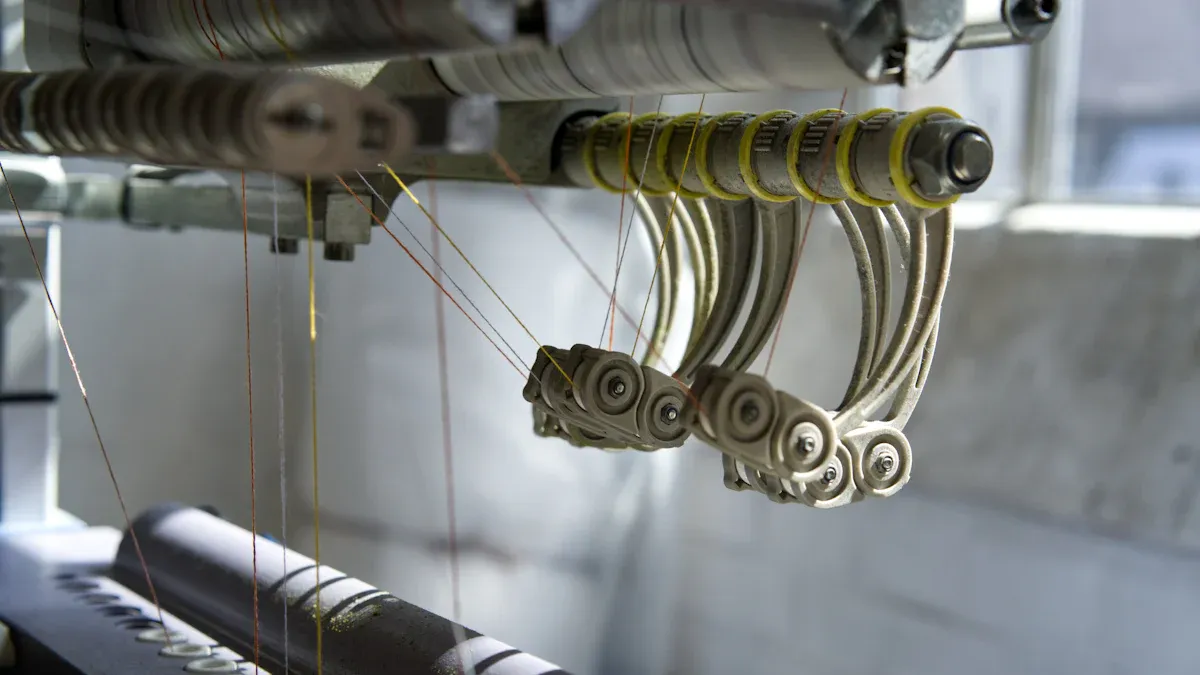
押出システムの選択が製造プロセス全体を形作ることを見てきました。. ほとんどのメーカーは単一ネジシステムを使用しています, を保持する 62% 市場占有率, 一方、二軸スクリューシステムは 38%.
| 押出システムのタイプ | 市場シェアの割合 |
|---|---|
| 単ネジ | 62% |
| ツインスクリュー | 38% |
ネジの種類の選択は効率に影響します, 製品の品質, 材料の互換性. 押出技術を製造目標に適合させる場合, 費用対効果の向上を実感, デザインの多様性, そして持続可能性.
| 要素 | 製造効率への影響 | 製品の品質への影響 |
|---|---|---|
| 制御パラメータ | 均一な製品品質を維持します | マイクロメートルの公差を実現 |
一貫した結果と正確なスクリュー性能を実現するために、私は完全な押出システムに依存しています。.
重要なポイント
- 最適なパフォーマンスを確保するには、製造目標と材料特性に基づいて適切な押出システムを選択してください。.
- 単軸押出機は、単純な材料の大量生産に最適です, 一方、二軸スクリューシステムは複雑な材料の混合に優れています。.
- 押出システムの定期的なメンテナンスと監視により、ダウンタイムを防止し、効率を向上させます。, 一貫した製品品質の確保.
- 押出機を選択する際は、スクリュー径とL/D比を考慮してください。, これらの要因はスループットと混合効率に影響を与えるため、.
- 共押出成形を利用して、異なる材料を組み合わせた多層製品を作成します, 機能とパフォーマンスの向上.
- 材料と選択した押出システムとの適合性を評価して、欠陥を回避し、高品質の生産を保証します.
- 押出技術の新たなトレンドに関する最新情報を入手, IoTやAIなど, 効率を向上させ、変化する生産ニーズに適応するため.
- 選択する前に、主要な要素のチェックリストを作成します。 押出機 コストのかかるミスを回避し、システムがアプリケーション要件を確実に満たすようにするため.
製造に適した押出システムの選択
システム選択の重要な要素
普遍的なものは決して見つからない “最高” 押出システム. 私の経験によると、理想的な選択は製造の目標によって異なります。, 材料特性, および製品要件. 押出システムを選択する場合, 私は常にその機能を意図したアプリケーションに合わせます. このアプローチにより、押出プロセスで一貫した品質と最適なパフォーマンスが保証されます。.
いくつか検討します 重要な要素 押出機を選ぶ前に. 次の表を意思決定の参考にします:
| 要素 | 説明 |
|---|---|
| 研究の目的 | 機械の目的 (教育, 素材開発, または商業パイロット生産) |
| 材質の種類 | 加工するポリマーの種類 (熱に弱い, 揮発性の, または反応的な) |
| 必要な出力容量 | スループット容量 (グラムまたはキログラム/時) |
| 高度なプロセス要件 | ガス注入の必要性, 真空脱泡, または反応性押出機能 |
| 予算と実験スペース | 将来のアップグレードに備えたモジュール拡張の検討 |
| 将来のスケールアップのニーズ | 生産をスケールアップするための産業用押出モジュールとの互換性 |
ネジ径とL/D比には常に気を配っています. これらのパラメータは処理能力と混合効率を決定します。. 適切な出力能力を持つ押出機を選択します, 範囲は次のとおりです 0.25 kg/h ~ 150 kg/h(モデルに応じて). モジュラー設計により、コンポーネントを迅速に交換できます, 研究開発に柔軟性を与える. 高度な制御システムに依存しています, PLCやHMIなど, 正確な制御とデータのトレーサビリティを実現する.
押出機の種類を検討する場合, プロファイルの複雑さと必要な公差を考慮します. 複雑な設計には正確な工具が必要となり、コストが増加する可能性があります. 注文数量も見ます. セットアップコストがより多くのユニットに分散されるため、ボリュームが増えるとユニットあたりのコストが削減されます。. 仕上げ加工と二次加工, 陽極酸化やCNC加工など, 価値とコストを追加する.
ヒント: 押出機の選択プロセスを開始する前に、これらの要素のチェックリストを作成することをお勧めします。. この実践は、コストのかかる間違いを回避し、システムが意図したアプリケーションに適合することを保証するのに役立ちます。.
製造効率への影響
選択した押出システムが製造効率に直接影響することに気づきました. ネジのデザイン, 混合能力, および押出技術はすべて、プロセスがいかにスムーズに実行されるかに役割を果たします。. 例えば, ある 単軸押出機 多くの場合、単純なポリマーや大量生産に適しています。. 二軸押出機は複雑な材料や高度な用途に対応します, 反応性押出成形や特殊ブレンドなど.
高エネルギー材料の高粘度および固形分が目詰まりを引き起こす可能性があることを確認しました。, 不安定な押し出し, ノズルの磨耗. これらの問題により効率が低下し、安全性が損なわれます. 混練システムの設計を最適化することでこれらの課題に対処します。. 混合均一性と押出精度の向上により、安全性と効率性の両方が向上します。.
より高い安定性と適応性が必要な場合は、2 段階二軸押出システムを使用します。. シミュレーションにより、この設計により流量特性が改善され、一貫した出力が維持されることが示されています。. 均一な品質を確保し、ダウンタイムを最小限に抑えるために、押出プロセスを常に監視しています。.
| 証拠の種類 | 説明 |
|---|---|
| 積層造形における課題 | 粘度が高く、高エネルギー物質の固形分が含まれるため、目詰まりなどの問題が発生します。, 不安定な押し出し, ノズルの磨耗, 効率と安全性に影響を与える. |
| 混練システムの性能 | 混練システムの設計は材料混合の均一性と押出精度に影響を与えます, 安全性と効率性を高めるために提案された特定の最適化を伴う. |
| 押出システムの設計 | 2 段二軸押出システムは、押出プロセスの安定性と適応性を向上させるように設計されています。, さまざまなシステムの流れ特性を明らかにするシミュレーションを使用. |
私は常に押出システムを生産要件に合わせます. これにより、押出機が望ましい品質と性能を確実に提供できるようになります。. 材料の種類と用途の複雑さに基づいてスクリュー構成を選択します. 効率を最大化し、高水準の製品品質を維持するために、高度な押出技術に依存しています。.
注記: ピーク効率を維持し、予期せぬダウンタイムを防ぐために、定期的なメンテナンスとプロセス監視をお勧めします。.
完全な押出システムの種類
製造用の完全な押出システムを評価するとき, 私はいつもメインを特定することから始めます 押出機の種類. 最も一般的なオプションには単軸押出機が含まれます。, 二軸押出機, ラム押出機. 各システムには独自の長所と制限があります, そのため、私は適切なテクノロジーをアプリケーションに適合させることに重点を置いています.
| 押出機の種類 |
|---|
| 単軸押出機 |
| 二軸押出機 |
| ラム押出機 |
単軸押出成形
私は単純な押出プロセスに単軸押出機をよく使用します。. This machine features one rotating screw inside a heated barrel. ネジが材料を前方に押し出す, それを溶かす, 金型を通して形を整えます. I rely on this system for high-volume production of thermoplastics, food products, and rubber compounds. The simplicity of the design makes it easy to operate and maintain.
| 業界 | Application Description | Market Growth Forecasts |
|---|---|---|
| プラスチック | Melting and forming thermoplastics, driven by rising PE and PP use. | CAGR of approximately 4-5% を通して 2030 |
| 食品加工 | Producing processed foods like snacks and cereals. | Market to reach over $75 10億まで 2026 |
| Rubber Compounding | Mixing and shaping rubber for tires and automotive parts. | Tire production to surpass 2 billion units by 2025 |
| Biomedical | Biopolymer production for packaging and medical devices. | Emerging market with new extrusion technology |
しかし, I recognize the limitations of single screw extrusion. 均一な混合を達成するのは難しい場合があります, 特にフィラーや添加剤を加える場合. 圧力の一貫性は原料の変更により変化することがよくあります, 粘度の高い材料はうまく流れない可能性があります, 欠陥につながる. 高品質またはより複雑な加工が必要な場合、これらの課題が押出機の選択の指針となります.
ヒント: シンプルな場合, 大容量アプリケーション, 単軸押出機から始めることをお勧めします. 高度な混合または特殊材料向け, 他の選択肢を検討する.
二軸押出成形
高度な加工が必要な場合, 私は向きを変えます 二軸押出機 テクノロジー. このシステムはバレル内で一緒に回転する 2 本のネジを使用します。. ネジは噛み合うことも平行することもできます, デザインに応じて. 二軸押出機は優れた混合効率を実現していることがわかりました, 高粘度材料の可塑化を改善, 温度と圧力の制御を強化. これらの機能により、製品の品質とプロセスの一貫性が向上します。.
二軸押出により、1 台の機械で複数の加工ステップを実行することもできます. 混ぜてもいいよ, 溶ける, 通気口, 単一パス中に材料を反応させることもできます. この柔軟性により無駄が削減され、生産速度が向上します。. 二軸押出機と一軸押出機を比較する場合, ツイン スクリュー システムを使用すると、投資収益率が向上し、より均一な結果が得られます。, 特に複雑なブレンドや再生プラスチックの場合.
ツインスクリューのサブタイプ
私は常に、二軸スクリューのカテゴリー内でさまざまなタイプの押出機を検討しています。. ネジの構成は性能に影響します, 効率, そして応用範囲.
噛み合う
噛み合う二軸押出機は、スクリューが重なり合い、噛み合うのが特徴です. このデザインが提供するのは、 正確な材料輸送 高いせん断力. 配合と相溶性を向上させるために噛み合いシステムを使用しています, 特に添加剤や充填剤を均一に分散させる必要がある場合.
非噛み合い
非噛み合い二軸押出機には、スクリューが重なり合うことなく回転します。. この設定では、より穏やかな混合とより少ない剪断力が得られます。. 最小限の機械的ストレスを必要とする繊細な素材には、噛み合わないデザインを選択します.
共回転
共回転二軸押出機には、同じ方向に回転するスクリューが付いています。. このサブタイプは混合効率と材料輸送に優れています。. 反応性押出には共回転システムを使用しています, 揮発分除去, 高性能ポリマー配合. しかし, 高いせん断速度は熱に弱い材料を劣化させる可能性があります, そのため、ネジの設計と冷却を注意深く監視しています.
| サブタイプ | 処理能力と利点 | 制限事項と考慮事項 | ベストアプリケーション |
|---|---|---|---|
| 共回転二軸押出機 | 高い混合効率, 反応性押出に適しています, 高いせん断速度 | 材料劣化の危険性, 精密なネジ設計が必要 | ポリマー配合, ナノコンポジット, ラボから本番環境へのワークフロー |
逆回転
逆回転二軸押出機は、反対方向に回転するスクリューを備えています. この構成により、発生するせん断力が低くなります, 壊れやすい材料を保護します. セラミックスには二重反転システムを使用しています, バイオポリマー, および医薬品製剤. この設計により、良好な圧力上昇と効果的なシールも実現します。, ただし、混合強度は共回転システムよりも低くなります。.
| サブタイプ | 処理能力と利点 | 制限事項と考慮事項 | ベストアプリケーション |
|---|---|---|---|
| 二重反転二軸押出機 | より低いせん断力, 良好な圧力上昇, 効果的なシール | 混合強度が低い, より複雑なシールとベアリングの設計 | セラミックス, バイオポリマー, 医薬品 |
完全な押出システムを選択する場合, I always match the screw type and configuration to the material and process requirements. This approach ensures high quality, 効率, and reliable performance across all applications.
Ram Extrusion
I often choose ram extrusion when I need to process materials that require high pressure and precise shaping. This method uses a hydraulic ram to push material through a heated barrel and die, rather than relying on a rotating screw. I find ram extruders especially useful for forming products from thermosetting plastics, ceramics, and PTFE. The process allows me to create rods, チューブ, and profiles with consistent dimensions.
Ram extrusion stands out among types of extrusion machines because it handles materials that traditional screw extruders cannot process efficiently. I use this technology in industries such as plastics, 食べ物, と医薬品. 例えば, ユニークな形のスナックやシリアルを作っています, 正確な仕様で錠剤とカプセルを製造します.
ラム押出機を使用すると、いくつかの利点と課題に気づきました:
- ラム押出機は難加工材料からの高品質製品の生産に優れています。.
- スクリュー押出技術では不十分な用途に頼りにしています。, PTFEやセラミックプロファイルなど.
- このプロセスにより、一貫した品質と寸法精度が実現します。.
- 高い運用コストが効率と全体的なパフォーマンスに影響を与える可能性がある.
- プラスチック製造における厳しい規制には、慎重なプロセス管理が必要です.
- 代替押出システムとの競争により、押出機の選択を最適化する必要に迫られています.
完全な押出システムとしてラム押出を選択する前に、私は常にこれらの要素を比較検討します。. 品質と効率を維持するためにプロセスを注意深く監視します, 特に特殊な材料を扱う場合.
共押出
共押出により、複数の材料を単一の製品に組み合わせることができます, 強化されたプロパティを備えた多層プロファイルの作成. この押出技術を使用して、さまざまな熱可塑性プラスチックを統合します, 各層が独自の特性を発揮. このプロセスには、複数の材料を単一の金型に押し込むことが含まれます。, その結果、複雑な生産要件を満たす統一されたプロファイルが得られます。.
耐久性が求められる製品の製造には共押出法を使用しています, 柔軟性, そして美的魅力. この方法により、各レイヤーの品質を調整できます, パフォーマンスと機能の向上. 私は共押出が完全な押出システムにおける重要な進歩であると考えています。, 特に特殊な機能を備えたアイテムを作成する必要がある場合.
業界は共押出からさまざまな恩恵を受けています:
- 工事: 窓枠を製作しています, フレーム, そしてトリムピース 強度と見た目の魅力を兼ね備えた.
- 小売り: 耐久性と魅力を兼ね備えた棚とディスプレイシステムを構築しています.
- 看板: きれいな仕上げと信頼性の高い性能を備えた照明付きサインとフレームを製造します.
共押出により押出技術の応用範囲が拡大. 厳しい生産目標を達成し、優れた品質の製品を提供するためにこれを使用しています. 共押出用の押出機を選択する場合, ネジの設計を考える, プロセス制御, 材料の互換性. このアプローチにより、効率と一貫した結果が保証されます.
ヒント: 多層プロファイルと強化された製品機能を必要とするプロジェクトには共押出をお勧めします. 最適な品質を達成するには、慎重な押出機の選択とプロセスの監視が不可欠です.
押出システムの構造と操作
スクリューとバレルの設計
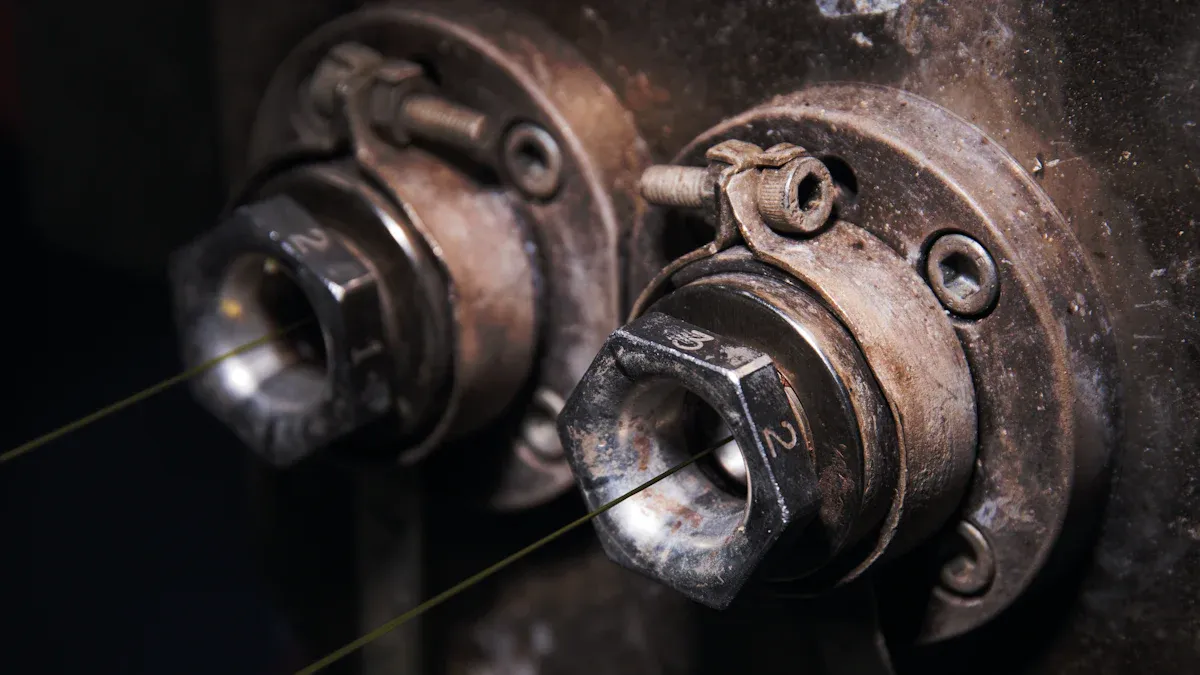
私は常にスクリューとバレルの設計を検討することから押出機の選択を始めます。. スクリューの形状により、押出機の溶融効率が決まります。, ミックス, そして物質を伝える. 長さと直径を調整します (L/D) 滞留時間と混合を制御する比率. L/D 比が高いほど、材料がより完全に溶けてブレンドされます。, 最終製品の均一な品質を達成するために不可欠です. 溶融安定性を維持し、劣化を防ぐためにスクリューバレルのバリア設計に依存しています。, 特に機密性の高い素材を処理する場合. パラレルツインスクリューとバレルの設計 押出速度に重要な役割を果たします, 製品の品質, とエネルギー効率. ゾーニングと正確な温度制御を使用してメルトフローを安定させ、閉じ込められたガスを回避します, 密度と一貫性が向上します. バレルの表面仕上げとスクリューの形状もエネルギー効率と製品の一貫性に影響します。. パフォーマンスを最大化するために、ネジの設計をアプリケーションの特定の要件に常に一致させます。.
- L/D 比が高いほど混合が向上します 溶融均一性, 高品質な製品には欠かせないものです.
- バリア設計により、溶融物の安定性を維持し、劣化を防ぐことができます。.
- スクリューの形状とバレルの表面仕上げはエネルギー効率と製品の一貫性に影響を与えます.
物質の移動と混合
押出プロセスがスムーズに進むよう、材料の効率的な移動と混合に重点を置いています。. 私は使用します 堅牢な空気圧または機械式コンベア 最小限のメンテナンスで原材料を迅速に移送します. 高度なミキサー設計により、徹底した均一な配合が保証されます。, which prevents variations in finished products. I integrate automated controls with PLC systems for real-time monitoring and recipe management. This approach allows me to oversee production seamlessly and adjust parameters as needed. I select scalable configurations to accommodate both small workshops and large industrial operations. Enhanced dust control features keep the workplace clean and safe. 一貫性のある, homogeneous blends reduce quality fluctuations and improve throughput. Automated systems minimize manual handling, which shortens production cycles and lowers labor costs. I always prioritize these features when I evaluate types of extrusion machines for new applications.
| 特徴 | 説明 |
|---|---|
| Efficient Material Transfer | Rapid, low-maintenance movement of raw materials |
| 精密混合 | Thorough, uniform compounding for consistent quality |
| 自動制御 | Real-time monitoring and recipe management |
| Scalable Configurations | Flexible layouts for any production capacity |
| Enhanced Dust Control | Cleaner, safer workplace |
| Improved Product Quality | Homogeneous blends, reduced fluctuations |
| Increased Throughput | Shorter production cycles, less manual handling |
| 廃棄物の削減 | Accurate measurement, コストの削減 |
| Lower Labor Costs | Automation frees staff for value-added tasks |
| Safer Working Environment | Enclosed lines and dust control |
Process Control and Output Quality
I depend on advanced process control technology to maintain high output quality in extrusion manufacturing. I select high-quality thermoplastics to ensure the final products meet strength, 耐久性, and flexibility requirements. I monitor extrusion parameters closely to reduce discrepancies during production. Dimensional accuracy remains a top priority for me, as it guarantees that components fit their intended applications. I use surface inspection to detect defects such as warping or air bubbles, which helps me maintain consistent product quality. Early detection of issues reduces waste and saves on production costs. I always ensure that my process complies with regulatory standards, which protects both my business and my customers. High-quality products enhance my brand reputation and increase customer satisfaction. Advanced monitoring systems allow me to increase production speed without sacrificing accuracy, which boosts overall efficiency in complete extrusion systems.
| Element/Advantage | 説明 |
|---|---|
| 材料の選択 | Ensures strength, 耐久性, と柔軟性 |
| プロセス監視 | Reduces discrepancies and maintains consistency |
| 寸法精度 | Guarantees proper fit for all applications |
| Surface Inspection | Identifies defects early for better quality |
| 一貫した製品品質 | Every batch meets high standards |
| 廃棄物の削減 | Saves material and production costs |
| 規制の遵守 | Meets legal and safety requirements |
| 顧客満足度 | Builds reputation and loyalty |
| Process Efficiency | Increases speed while maintaining accuracy |
ヒント: I recommend regular calibration and maintenance of all extrusion technology to sustain peak performance and consistent quality.
Comparing the Extrusion Process
単ネジ vs. Twin-Screw Process
When I compare 単軸および二軸押出機, I focus on how each system handles the extrusion process. The screw design shapes the way material moves and mixes. A single-screw extruder uses one helical screw inside a simple, 円筒バレル. 対照的に, a twin-screw extruder features two intermeshing screws and a more complex, 多くの場合セグメント化されたバレル. I see that temperature control in single-screw systems remains basic, while twin-screw machines offer advanced control with multiple heating and cooling zones. This difference impacts both throughput and energy efficiency.
| 側面 | 単軸押出機 | 二軸押出機 |
|---|---|---|
| ネジの設計 | シングルヘリカルスクリュー | 2本の噛み合うネジ |
| バレル構造 | 単純, 円筒形 | より複雑な, セグメント化されることが多い |
| 温度制御 | 基本的な暖房/冷房 | 高度な, multi-zone |
| 出力容量 | 適度 | 高い |
| エネルギー消費量 | 一般に高い | より効率的 |
| スループットの柔軟性 | 限定 | 高い |
I rely on twin-screw extruders for higher output and better energy efficiency. When I need flexibility in throughput or advanced process control, I choose twin-screw systems. For straightforward applications, single-screw extruders still provide reliable performance.
Material Compatibility in the Extrusion Process
Material compatibility plays a critical role in extrusion machine selection. I always match the screw configuration to the type of material I plan to process. Single-screw extruders handle standard thermoplastics well, but they struggle with materials that require intensive mixing or have high filler content. Twin-screw extruders excel with specialty compounds, リサイクルプラスチック, and reactive materials. I use segmented screws to adjust mixing and shearing for each application.
When I work with complete extrusion systems, I consider how each screw design affects the final product. Twin-screw extruders allow me to process a wider range of materials, including those with additives or sensitive properties. This flexibility supports more types of extrusion machines and expands the range of possible applications.
ヒント: I recommend evaluating the chemical and physical properties of your raw materials before choosing an extruder. This step ensures compatibility and reduces the risk of defects.
Product Quality and Consistency
I know that the extrusion process directly impacts the quality of the finished product. Modern extrusion lines integrate automation and advanced control platforms. These systems analyze multiple variables at once, which helps me maintain consistent quality across every batch.
Quality consistency is a productivity multiplier. Advanced control platforms analyze patterns across multiple variables simultaneously, ensuring that product quality is maintained throughout the extrusion process.
I monitor key factors such as stable melt pressure, output rate, and surface finish. Stable melt pressure prevents warping and dimensional drift. Higher and more stable output reduces scrap rates and downtime. Better surface finish and precise dimensional control enhance the impact on the quality of the finished product.
| Key Factors | Impact on Quality and Consistency |
|---|---|
| Stable melt pressure | Prevents dimensions from drifting or warping |
| Higher and more stable output | Reduces scrap rates and downtime |
| Better surface finish | Enhances overall product quality |
| 寸法管理 | Ensures precision in final product specifications |
| Faster ROI | Improves profitability for manufacturers |
二軸押出機と一軸押出機を比較する場合, I see that twin-screw systems deliver better consistency and lower operational cost. I achieve faster ROI and improved performance by investing in advanced extrusion technology. I always prioritize process monitoring and automation to ensure high quality and efficiency in production.
- Higher and more stable output
- Lower scrap and downtime
- Better surface finish and dimensional control
- Reduced operational cost
- Faster ROI
I rely on these strategies to maximize the benefits of extrusion and deliver products that meet strict manufacturing standards.
Performance Comparison Table
スループットと効率
I always evaluate throughput and efficiency when I compare types of extrusion machines. Throughput measures how much material the extruder processes in a given time. Efficiency reflects how well the screw design converts raw material into finished products with minimal waste and energy use. I see that single-screw extruders often deliver steady throughput for standard polymers. 二軸押出機, with their advanced screw geometry, handle higher output and maintain better energy efficiency, especially for complex blends.
| 押出機の種類 | スループット (kg/h) | エネルギー効率 | Best Use Cases |
|---|---|---|---|
| 単ネジ | 50–500 | 適度 | 大容量, simple polymers |
| ツインスクリュー | 100–1000+ | 高い | Complex blends, specialty jobs |
| Ram Extruder | 10–100 | Low–Moderate | PTFE, ceramics, specialty |
| 共押出システム | さまざま | 高い | Multi-layered profiles |
I always match the screw configuration to the material and production requirements. This approach ensures the process delivers consistent quality and meets manufacturing goals. I rely on complete extrusion systems to maximize throughput and efficiency for every application.
ヒント: I recommend monitoring energy consumption and output rates regularly. This practice helps optimize extrusion machine selection and reduces operational costs.
Maintenance and Reliability
I prioritize maintenance and reliability when I select an extruder. The screw and barrel experience constant wear from abrasive materials and high temperatures. I schedule routine inspections and replace worn components to prevent unexpected downtime. Single-screw extruders require less maintenance due to their simple design. 二軸押出機, with more moving parts and segmented screws, need more frequent checks but offer greater flexibility.
| 押出機の種類 | メンテナンスの必要性 | Reliability Level | Common Issues |
|---|---|---|---|
| 単ネジ | Low–Moderate | 高い | Occasional screw wear |
| ツインスクリュー | 中~高 | 高い | Segment wear, seal failure |
| Ram Extruder | 適度 | 適度 | Hydraulic leaks, die wear |
| 共押出システム | 高い (multi-screw) | 高い | Synchronization, screw wear |
I use advanced monitoring systems to track screw wear and process stability. This strategy improves reliability and extends the life of my extrusion technology. I always keep spare screws and barrels on hand to minimize downtime during maintenance.
Product Complexity and Flexibility
I value design flexibility in extrusion. The ability to customize the screw and die allows me to create complex profiles for a wide range of applications. I use extrusion to manufacture everything from simple plastic tubing to intricate window frames. I can add reinforcements or special features within the continuous material, which expands my product offerings.
| 側面 | 説明 |
|---|---|
| 設計の柔軟性 | Extrusion allows for significant design flexibility through die customization, enabling complex profiles. |
| アプリケーション | Suitable for various applications, including intricate window frames and simple plastic tubing. |
| カスタマイズ | Manufacturers can include reinforcements or additional features within the continuous material. |
- In MedTech, I must achieve tight tolerances for medical devices.
- I ensure biocompatibility for all medical extrusion products.
- I monitor wall thickness closely, since it affects flow rates and structural strength.
I select the screw configuration and extrusion machine based on the complexity of the design and the required tolerances. This approach guarantees high quality and supports advanced manufacturing needs.
注記: I recommend consulting with extrusion experts when planning new product designs. Their experience helps avoid costly mistakes and ensures the right screw and process configuration.
Application Suitability in Manufacturing
High-Volume Manufacturing
I always start my extrusion machine selection by considering the demands of high-volume manufacturing. When I need to produce thousands of units per day, I rely on single-screw extruders. These machines deliver steady throughput and maintain consistent quality. The screw design in single-screw extruders allows me to process standard polymers efficiently. I monitor the process closely to ensure uniform melt and minimize defects. I select the right screw diameter and length to match the production requirements. This approach helps me achieve high efficiency and reduce waste. I use automated controls to track output and maintain quality standards. High-volume applications benefit from robust types of extrusion machines that can operate continuously with minimal downtime. I always keep spare screws and barrels ready to avoid interruptions in production.
ヒント: I recommend scheduling regular maintenance for extruders used in high-volume manufacturing. This practice extends the life of the screw and ensures reliable performance.
Complex Product Manufacturing
When I manufacture complex or multi-component products, I turn to advanced extrusion technology. Twin-screw extruders give me greater control over mixing and material distribution. I use segmented screws to adjust shear and optimize the process for each application. Co-extrusion technology enables me to combine different polymers into multi-layer films and pipes. This method improves barrier properties and enhances strength, 柔軟性, 耐薬品性.
| テクノロジー | 利点 |
|---|---|
| 共押出 | Enables the creation of multi-layer films and pipes with improved barrier properties, combining different polymers for strength, 柔軟性, 耐薬品性. |
I select the screw configuration based on the complexity of the product. For intricate designs, I rely on precise tooling and advanced process monitoring. I always test the extruder setup before full-scale production to ensure quality and performance. Complex applications require careful extrusion machine selection and attention to detail.
Specialty Materials and Customization
I often work with specialty materials that demand custom solutions. I use advanced shaping processes, such as sheet extrusion and thermoforming, to control material characteristics. Sheet extrusion gives me the ability to manage thickness and material distribution with high accuracy. Co-extrusion capabilities allow me to create multi-layer constructions that enhance material properties. I integrate downstream shaping processes to ensure consistent performance in finished components. Engineering services help me optimize component designs and select the best materials for specific applications.
- Advanced shaping processes, such as sheet extrusion and thermoforming, allow for precise control over material characteristics.
- Sheet extrusion provides a foundation for custom material solutions, enabling thickness control and material distribution accuracy.
- Co-extrusion capabilities facilitate the creation of multi-layer constructions, enhancing material properties.
- Integration with downstream shaping processes ensures consistent performance characteristics in finished components.
- Engineering services optimize component designs and material selection, ensuring suitability for specific applications.
I always match the screw design to the requirements of specialty materials. Customization in extrusion depends on selecting the right extruder and process parameters. I monitor quality at every stage to deliver products that meet strict standards. Specialty applications benefit from flexible types of extrusion machines and expert guidance.
注記: I recommend consulting with extrusion specialists when working with new materials or custom designs. Their expertise helps achieve the desired quality and performance.
Selection Criteria for Extrusion Systems
Product Design and Complexity
I always start my extrusion machine selection by analyzing the product design and complexity. The geometry of the profile influences the choice of extruder and screw configuration. Complex shapes increase tooling costs and create production challenges. I simplify profile geometry whenever possible to enhance material flow and reduce defects. Smooth transitions in the design prevent disruptions in material flow, which is crucial for consistent extrusion quality. I select the right material early in the process because material choice affects both the properties of the part and the ease of extrusion. This decision impacts manufacturability and overall performance.
- Simplifying profile geometry lowers tooling costs and reduces production challenges.
- Designing for material flow ensures consistent extrusion quality and minimizes defects.
- Choosing the right material early improves manufacturability and product performance.
I match the screw design to the complexity of the product. For intricate profiles, I use advanced screw configurations that optimize mixing and material transport. I rely on precise tooling and process monitoring to maintain high quality. When I work with complex applications, I consult with extrusion technology experts to avoid costly mistakes and ensure the best results.
ヒント: I recommend reviewing the profile geometry and material flow before finalizing the extrusion machine selection. This step helps prevent production issues and supports efficient manufacturing.
Material Properties
Material properties play a critical role in selecting the right extruder and screw configuration. I identify application requirements such as temperature resistance, 紫外線への曝露, and impact durability. I consider mechanical properties like flexibility, 硬度, and tensile strength for the intended use. Environmental conditions influence my material choice, especially when I need weathering resistance or flexibility in cold environments. I evaluate aesthetic and finish requirements, 色も含めて, 光沢, and surface texture, based on project needs. Regulatory and compliance needs guide my selection to ensure materials meet industry-specific standards and certifications.
- Application requirements determine the need for temperature resistance, 紫外線への曝露, and impact durability.
- Mechanical properties such as flexibility, 硬度, and tensile strength affect the choice of extruder and screw.
- Environmental conditions require materials that withstand weathering or remain flexible in cold climates.
- Aesthetic and finish requirements influence color, 光沢, and surface texture.
- Regulatory and compliance needs ensure materials meet industry standards.
I select the screw design based on the material’s properties. For heat-sensitive materials, I use screws with gentle mixing zones and precise temperature control. When processing tough or abrasive compounds, I choose robust screw geometries that withstand wear and maintain efficiency. I always test materials in pilot runs to verify compatibility with the extruder and ensure consistent quality.
注記: I recommend consulting material datasheets and industry standards before choosing an extruder. This practice helps match material properties to the extrusion process and supports reliable performance.
Production Volume and Scale
Production volume and scale influence the cost-effectiveness of extrusion machine selection. Higher production volumes reduce unit costs because tooling expenses are spread over more parts. In the prototype stage, tooling costs are high compared to the quantity produced. In mass production, die costs are amortized over larger volumes, leading to lower costs per unit. 例えば, a die costing $2,000 with a lifetime of 40,000 kg results in a cost of $0.05 per kg when amortized.
- Higher production volumes lower unit costs by spreading tooling expenses.
- Prototype stages have high tooling costs relative to the number of parts produced.
- Mass production allows die costs to be distributed over larger volumes, reducing per-unit costs.
- Example: A die costing $2,000 with a lifetime of 40,000 kg results in a cost of $0.05 per kg.
I select the extruder and screw configuration based on the expected production volume. For high-volume manufacturing, I use robust types of extrusion machines that deliver steady throughput and maintain efficiency. In low-volume or prototype applications, I prioritize flexibility and rapid changeover. I monitor production rates and adjust screw parameters to optimize output and quality.
ヒント: I recommend calculating the amortized tooling cost before committing to a production scale. This step helps determine the most cost-effective extrusion technology and supports long-term manufacturing goals.
Technical and Budget Considerations
I always approach extrusion machine selection with a clear focus on technical requirements and budget constraints. My experience tells me that investing in advanced extrusion technology demands careful planning. I evaluate every aspect of the system, from screw design to process control, to ensure cost-effectiveness and reliable performance.
I start by analyzing the technical specifications of the extruder. I look at screw geometry, barrel length, and compatibility with different types of extrusion machines. I select a screw that matches the material properties and the complexity of the applications. I check if the extruder can handle the desired throughput and maintain consistent quality. I also assess the integration of feeders, 温度コントローラー, および下流の機器. System integration plays a crucial role in maximizing efficiency and avoiding bottlenecks in production.
Budget considerations influence every decision I make. I break down the costs into several categories to understand the financial impact. I use the following table to guide my investment strategy:
| Budget Consideration | 説明 | Financial Impact / Benefit Example |
|---|---|---|
| エネルギー効率 | Reducing energy consumption by upgrading control systems or screws | 33% energy reduction saves nearly $100,000 annually on $288,000 energy cost |
| Scrap Reduction | Lowering scrap rate from 15% に 5% through data acquisition and process control | Saves $200,000 monthly or $2.4 million yearly in materials, 労働, and energy costs |
| Throughput Increase | Upgrading to twin-screw extruder increases throughput by 30% | Generates $600,000 additional monthly revenue with >50% incremental profit margin |
| Maintenance Cost Reduction | Predictive maintenance and condition monitoring reduce emergency repairs and downtime | Maintenance costs drop 20-30%, equipment availability increases |
| System Integration | Budgeting for compatible feeders, 温度コントローラー, および下流の機器 | Partial upgrades capture only ~40% of potential benefits |
| Operator Training | Training on material characteristics, 機械, instrumentation, とコントロール | Essential to fully realize technology benefits; lack wastes investment |
| Data Acquisition Infrastructure | Adequate sensors and analytics software needed for optimization | Insufficient infrastructure limits optimization; too many sensors without analytics causes overload |
| Downstream Constraints | Ensuring cutting, 梱包, and inspection keep pace with increased extruder output | Bottlenecks reduce overall system benefit |
I prioritize energy efficiency when selecting an extruder. Upgrading control systems or optimizing screw design can reduce energy consumption by up to 33%. This improvement saves nearly $100,000 each year on a typical $288,000 energy bill. I also focus on scrap reduction. By implementing advanced process control and data acquisition, I lower scrap rates from 15% に 5%. This change saves $200,000 every month in materials, 労働, and energy costs.
Increasing throughput is another key goal. Upgrading to a twin-screw extruder boosts output by 30%. This increase generates $600,000 in additional monthly revenue, with more than a 50% incremental profit margin. I invest in predictive maintenance and condition monitoring to reduce emergency repairs and downtime. Maintenance costs drop by 20-30%, and equipment availability improves.
System integration is essential for maximizing the benefits of extrusion technology. I budget for compatible feeders, 温度コントローラー, および下流の機器. Partial upgrades capture only about 40% of the potential benefits. Operator training is critical. I ensure my team understands material characteristics, 機械, instrumentation, とコントロール. Without proper training, the investment in advanced extrusion technology goes to waste.
I invest in data acquisition infrastructure. Adequate sensors and analytics software optimize the process. Insufficient infrastructure limits optimization, while too many sensors without analytics cause information overload. I address downstream constraints by ensuring cutting, 梱包, and inspection keep pace with increased extruder output. Bottlenecks in these areas reduce the overall benefit of the system.
I always balance technical requirements with budget limitations. I select a screw that delivers high quality and efficiency without exceeding my financial resources. I plan for future upgrades and modular expansion to support changing production needs. I monitor every aspect of the extrusion process to maintain cost-effectiveness and reliable performance.
ヒント: I recommend creating a detailed budget plan before investing in new extrusion technology. Include energy costs, メンテナンス, オペレータートレーニング, and system integration. This approach ensures that the extruder delivers maximum value and supports long-term manufacturing goals.
Actionable Insights for Manufacturers
Matching System to Application
I always match the extrusion system to the specific application. 私 optimize material use to balance strength and lightweight design. I define critical dimensional tolerances early, which ensures parts fit and function as intended. I design for manufacturability, making sure shapes can be extruded consistently and cost-effectively. I select aluminum alloys based on application needs, such as strength and corrosion resistance. I simplify designs to reduce costs, avoiding unnecessary complexity in profiles. I prototype and test early, which helps me identify potential challenges before full production. These steps help me achieve high quality and reliable performance in every extrusion process.
- Optimize material use for strength and lightweight design.
- Define critical dimensional tolerances early.
- 製造可能性を考慮した設計.
- Select appropriate aluminum alloys for application needs.
- Simplify designs to reduce costs.
- Prototype and test early.
I always consider the key components of an extruder, such as screw geometry and barrel design, to ensure the system meets production requirements. I review different types of extruder machines to find the best fit for my applications in プラスチック押出成形品. This approach supports scalability and maintains quality control throughout manufacturing.
Common Selection Mistakes
I have seen many manufacturers make mistakes during extrusion machine selection. Inadequate material blending often leads to product imperfections and increased costs from reprocessing. Outdated or incompatible control systems cause integration issues and inefficiencies. Inconsistent feed rates disrupt the extrusion process, resulting in product variabilities and higher scrap rates. Neglecting preventive maintenance allows minor mechanical issues to escalate into major production problems, affecting revenue. Ignoring operator training leads to misconfigurations and missed optimization opportunities.
- Inadequate material blending increases costs and reduces quality.
- Outdated control systems cause inefficiencies.
- Inconsistent feed rates disrupt the extrusion process.
- Neglecting preventive maintenance leads to major production problems.
- Ignoring operator training results in missed optimization.
I always monitor screw wear and maintain the extruder regularly. I invest in operator training to maximize efficiency and quality. I avoid these mistakes by focusing on process stability and performance.
Future Trends in Extrusion Technology
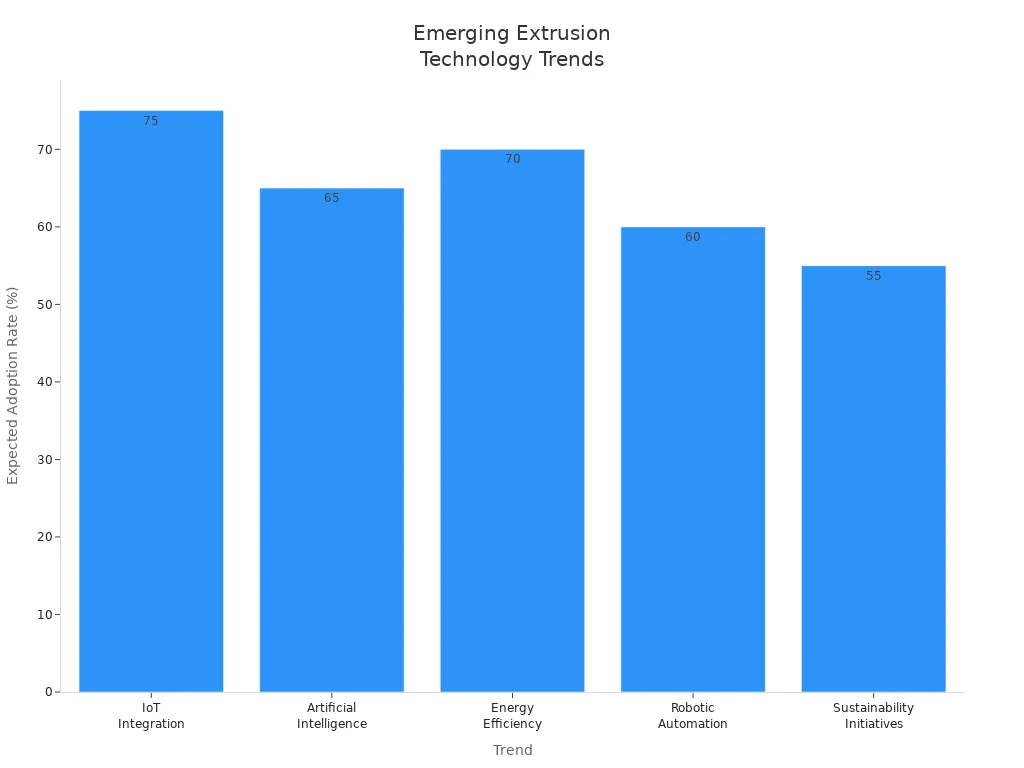
I see rapid changes in extrusion technology shaping the future of manufacturing. IoT integration allows real-time monitoring and analytics, improving efficiency. Artificial intelligence supports predictive maintenance and optimization, which boosts performance. Energy efficiency is a growing focus, with manufacturers seeking ways to reduce consumption in the extrusion process. Robotic automation streamlines material handling and quality control. Sustainability initiatives drive the use of recycled materials and eco-friendly processes.
| 傾向 | 説明 | Impact on Efficiency | Expected Adoption Rate (%) |
|---|---|---|---|
| IoTの統合 | Real-time monitoring and analytics | 高い | 75% |
| Artificial Intelligence | Predictive maintenance and optimization | 非常に高い | 65% |
| エネルギー効率 | Reducing energy consumption | 中くらい | 70% |
| Robotic Automation | Material handling and quality control | 高い | 60% |
| サステナビリティへの取り組み | Recycled materials and eco-friendly processes | 中くらい | 55% |
I notice advancements in material compatibility, especially with bioplastics, are transforming the extrusion industry. Many manufacturers now prioritize flexibility in equipment design, with modular systems allowing easy upgrades and modifications. Sustainability is essential, with most manufacturers focusing on energy-efficient equipment and waste reduction strategies. Smart extrusion machines reduce downtime by 20%, which improves overall efficiency and quality control. I always stay updated on these trends to maintain high performance and support new applications in plastic extrusion.
ヒント: I recommend reviewing the overview of extruder machines in manufacturing regularly. Staying informed about new types of extrusion machines and screw designs helps me adapt to changing production needs and maintain scalability.
I recognize that each extrusion system offers unique advantages and limitations. My experience shows that single-screw extruders excel in high-volume production, while twin-screw systems provide superior mixing and flexibility. Ram and co-extrusion machines support specialty applications. I always use comparison tables and selection criteria to evaluate:
- Technical capabilities and long-term reliability
- Customer service and design assistance
- Quality standards and energy efficiency
I recommend manufacturers understand their application needs and consult extrusion experts for optimal results.
よくある質問
What is the main difference between single-screw and twin-screw extruders?
I see that single-screw extruders use one rotating screw for basic mixing. Twin-screw extruders use two screws for advanced mixing and better control. I choose twin-screw systems for complex materials and higher flexibility.
How do I decide which extrusion system fits my application?
I start by reviewing my material type, 生産量, and product complexity. I match these needs to the strengths of each system. I consult with experts if I face unique requirements.
Can I process recycled materials with extrusion systems?
I process recycled materials using twin-screw extruders. These machines handle variable feedstocks and additives better than single-screw systems. I monitor quality closely to ensure consistent results.
How often should I perform maintenance on my extruder?
I schedule routine inspections every month. I check for screw wear, barrel condition, and control system performance. Regular maintenance prevents downtime and extends equipment life.
What are the most common extrusion defects I encounter?
I often see surface roughness, dimensional drift, and melt fractures. I address these by adjusting temperature, スクリュー速度, and material feed. I use process monitoring to catch issues early.
Is co-extrusion suitable for all materials?
I use co-extrusion mainly for thermoplastics. Some materials may not bond well in multi-layer profiles. I test material compatibility before starting production.
How does automation improve extrusion quality?
I rely on automation for real-time monitoring and precise control. Automated systems reduce human error, maintain consistent output, and improve overall product quality.
What safety measures do I follow during extrusion?
I wear protective gear and follow lockout procedures. I keep the work area clean and check emergency stops regularly. I train my team on safe operation and emergency response.