

Hvernig mismunandi útpressunarkerfi safnast saman fyrir framleiðslu
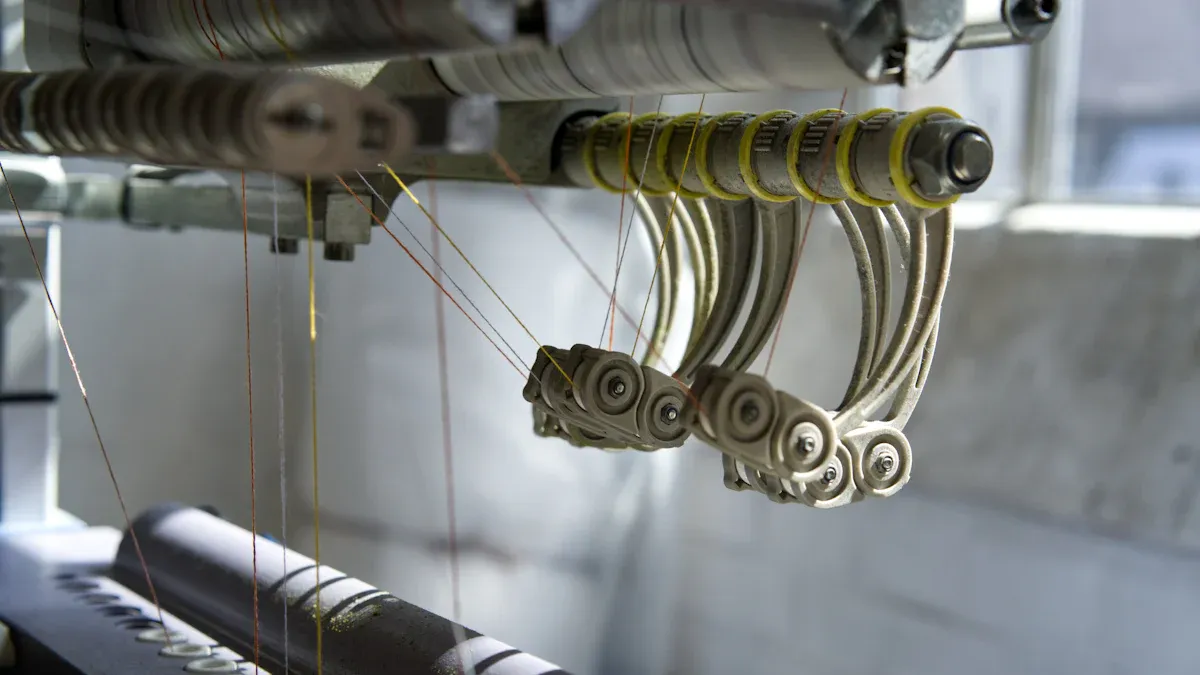
Ég hef séð að val á útpressunarkerfi mótar allt framleiðsluferlið. Flestir framleiðendur nota einskrúfukerfi, sem halda a 62% markaðshlutdeild, á meðan tveggja skrúfa kerfi gera grein fyrir 38%.
| Tegund útdráttarkerfis | Hlutfall markaðshlutdeildar |
|---|---|
| Einskrúfa | 62% |
| Tvískrúfa | 38% |
Val á milli skrúfa hefur áhrif á skilvirkni, vörugæði, og efnissamhæfi. Þegar ég passa extrusion tækni við framleiðslu markmið, Ég tek eftir framförum í hagkvæmni, hönnun fjölhæfni, og sjálfbærni.
| Þáttur | Áhrif á skilvirkni framleiðslu | Áhrif á gæði vöru |
|---|---|---|
| Stýrðar breytur | Viðheldur samræmdum gæðum vöru | Nær míkrómetravikmörk |
Ég treysti á Complete Extrusion Systems til að skila stöðugum árangri og nákvæmum skrúfuafköstum.
Helstu veitingar
- Veldu rétta útpressunarkerfið byggt á framleiðslumarkmiðum þínum og efniseiginleikum til að tryggja hámarksafköst.
- Single-screw extruders are ideal for high-volume production of simple materials, while twin-screw systems excel in mixing complex materials.
- Regular maintenance and monitoring of extrusion systems prevent downtime and enhance efficiency, tryggja stöðug vörugæði.
- Consider the screw diameter and L/D ratio when selecting an extruder, as these factors impact throughput and mixing efficiency.
- Utilize co-extrusion for creating multi-layered products that combine different materials, enhancing functionality and performance.
- Evaluate the compatibility of materials with the chosen extrusion system to avoid defects and ensure high-quality output.
- Stay informed about emerging trends in extrusion technology, such as IoT and AI, to improve efficiency and adapt to changing production needs.
- Create a checklist of key factors before selecting an extrusion vél til að forðast dýr mistök og tryggja að kerfið uppfylli umsóknarkröfur.
Að velja rétta útpressunarkerfið fyrir framleiðslu
Lykilþættir í kerfisvali
Ég finn aldrei alhliða “best” extrusion kerfi. Reynsla mín segir mér að kjörið val veltur á framleiðslumarkmiðum, efniseiginleikar, og vörukröfur. Þegar ég vel extrusion kerfi, Ég passa alltaf getu þess við fyrirhugaða umsókn. Þessi nálgun tryggir að útpressunarferlið skilar stöðugum gæðum og bestu frammistöðu.
Ég tel nokkra mikilvægir þættir áður en þú velur extrusion vél. Ég nota eftirfarandi töflu til að leiðbeina ákvörðun minni:
| Þáttur | Lýsing |
|---|---|
| Rannsóknarmarkmið | Tilgangur vélarinnar (menntun, efnisþróun, eða atvinnuflugmannsframleiðslu) |
| Tegund efnis | Tegund fjölliða sem á að vinna (hitaviðkvæmur, óstöðugt, eða hvarfgjarnt) |
| Nauðsynleg úttaksgeta | Afkastagetu (grömm eða kíló á klukkustund) |
| Ítarlegar ferliskröfur | Þörf fyrir gasinnsprautun, lofttæmandi afgasun, eða hvarfgjörn extrusion getu |
| Fjárhagsáætlun og rannsóknarstofurými | Íhugun fyrir stækkun mát fyrir framtíðaruppfærslur |
| Framtíðaruppbyggingarþarfir | Samhæfni við iðnaðarútdráttareiningar til að auka framleiðslu |
Ég tek alltaf eftir skrúfuþvermáli og L/D hlutfalli. Þessar breytur ákvarða afkastagetu og blöndunarvirkni. Ég vel extruder með rétta framleiðslugetu, sem getur verið allt frá 0.25 kg/klst til 150 kg/klst eftir gerð. Modular hönnun gerir mér kleift að skipta um íhluti fljótt, sem gefur sveigjanleika til rannsókna og þróunar. Ég treysti á háþróuð stjórnkerfi, eins og PLC og HMI, til að ná nákvæmri stjórn og rekjanleika gagna.
Þegar ég met gerðir af extrusion vélum, Ég tel hversu flókið sniðið er og þau vikmörk sem krafist er. Flókin hönnun krefst nákvæms verkfæra og getur aukið kostnað. Ég skoða líka pöntunarmagn. Hærra magn lækkar kostnað á hverja einingu vegna þess að uppsetningarkostnaður dreifist á fleiri einingar. Frágangur og aukarekstur, svo sem anodizing eða CNC vinnslu, auka verðmæti og kostnað.
Ábending: Ég mæli með því að búa til gátlista yfir þessa þætti áður en þú byrjar á valferli pressuvéla. Þessi aðferð hjálpar til við að forðast dýr mistök og tryggir að kerfið passi við fyrirhuguð forrit.
Áhrif á skilvirkni framleiðslu
Ég tek eftir því að útpressunarkerfið sem ég vel hefur bein áhrif á framleiðsluhagkvæmni. Skrúfuhönnunin, blöndunargetu, og extrusion tækni gegnir öll hlutverki í því hversu vel ferlið gengur. Til dæmis, a einskrúfa extruder virkar oft vel fyrir einfaldar fjölliður og framleiðslu í miklu magni. Tvískrúfa extruders höndla flókin efni og háþróaða notkun, eins og hvarfgjörn útpressun eða sérblöndur.
Ég hef séð að mikil seigja og fast efni í orkumiklum efnum geta valdið stíflu, óstöðug útpressun, og slit á stútum. Þessi atriði draga úr skilvirkni og skerða öryggi. Ég tek á þessum áskorunum með því að fínstilla hönnun hnoðunarkerfisins. Bætt einsleitni í blöndun og útpressunarnákvæmni eykur bæði öryggi og skilvirkni.
Ég nota tveggja þrepa tvískrúfa útpressunarkerfi þegar ég þarf meiri stöðugleika og aðlögunarhæfni. Eftirlíkingar sýna að þessi hönnun bætir flæðiseiginleika og viðheldur stöðugri framleiðslu. Ég fylgist alltaf með útpressunarferlinu til að tryggja samræmd gæði og lágmarka niður í miðbæ.
| Tegund sönnunargagna | Lýsing |
|---|---|
| Áskoranir í aukefnaframleiðslu | Mikil seigja og fast innihald orkumikilla efna leiða til vandamála eins og stíflu, óstöðug útpressun, og slit á stútum, sem hefur áhrif á skilvirkni og öryggi. |
| Afköst hnoðakerfisins | Hönnun hnoðunarkerfisins hefur áhrif á efnisblöndun einsleitni og útpressunarnákvæmni, með sérstökum hagræðingum sem lagðar eru til til að auka öryggi og skilvirkni. |
| Hönnun útpressunarkerfis | Tveggja þrepa tveggja skrúfa útpressunarkerfi er hannað til að bæta stöðugleika og aðlögunarhæfni í útpressunarferlinu, með uppgerðum sem sýna flæðiseiginleika mismunandi kerfa. |
Ég passa alltaf útpressunarkerfið við framleiðslukröfurnar. Þessi framkvæmd tryggir að þrýstivélin skili æskilegum gæðum og afköstum. Ég vel skrúfustillingu út frá efnisgerð og flóknu forriti. Ég treysti á háþróaða extrusion tækni til að hámarka skilvirkni og viðhalda háum gæðastöðlum.
Athugið: Ég mæli með reglulegu viðhaldi og eftirliti með ferlum til að viðhalda hámarks skilvirkni og koma í veg fyrir óvæntan niður í miðbæ.
Tegundir fullkominna útpressunarkerfa
Þegar ég met heill extrusion kerfi fyrir framleiðslu, Ég byrja alltaf á því að bera kennsl á það helsta tegundir af extrusion vélum. Algengustu valkostirnir eru einskrúfa útpressunarvélar, tvískrúfa extrusion vélar, og hrútapressuvélar. Hvert kerfi býður upp á einstaka styrkleika og takmarkanir, svo ég einbeiti mér að því að passa rétta tækni við forritið.
| Tegund extrusion vél |
|---|
| Einskrúfa útpressunarvélar |
| Tvískrúfa útpressunarvélar |
| Ram extrusion vélar |
Einskrúfa útpressun
Ég nota oft einn skrúfa extruder fyrir einfalt extrusion ferli. Þessi vél er með einni snúningsskrúfu inni í upphitaðri tunnu. Skrúfan ýtir efni áfram, bræðir það, og mótar það í gegnum tening. Ég treysti á þetta kerfi fyrir framleiðslu á hitaplasti í miklu magni, matvörur, og gúmmíblöndur. Einfaldleiki hönnunarinnar gerir það auðvelt í notkun og viðhaldi.
| Iðnaður | Umsókn Lýsing | Markaðsvaxtarspár |
|---|---|---|
| Plast | Bráðnun og myndun hitaplasts, knúin áfram af vaxandi PE og PP notkun. | CAGR um það bil 4-5% í gegnum 2030 |
| Matvælavinnsla | Framleiða unnin matvæli eins og snakk og morgunkorn. | Markaður til að ná yfir $75 milljarða um 2026 |
| Gúmmíblöndur | Blanda og móta gúmmí fyrir dekk og bílavarahluti. | Dekkjaframleiðsla að fara fram úr 2 milljarða eininga um 2025 |
| Lífeðlisfræði | Líffjölliðaframleiðsla fyrir umbúðir og lækningatæki. | Nýmarkaður með nýrri extrusion tækni |
Hins vegar, Ég kannast við takmarkanir á útpressun með einni skrúfu. Það getur verið erfitt að ná samræmdri blöndun, sérstaklega þegar ég bæti við fylliefnum eða aukaefnum. Pressure consistency often varies with feedstock changes, and high-viscosity materials may not flow well, leading to defects. These challenges guide my extrusion machine selection when I need higher quality or more complex processing.
Ábending: Fyrir einfalt, high-volume applications, I recommend starting with a single screw extruder. For advanced mixing or specialty materials, consider other options.
Twin-Screw Extrusion
When I require advanced processing, ég sný mér að tvískrúfa extruder tækni. This system uses two screws that rotate together inside the barrel. The screws can intermesh or run parallel, depending on the design. I find that twin screw extruders deliver superior mixing efficiency, better plasticizing for high-viscosity materials, and enhanced control over temperature and pressure. These features improve product quality and process consistency.
Tvískrúfa útpressun gerir mér einnig kleift að framkvæma mörg vinnsluþrep í einni vél. Ég get blandað, bráðna, loftræsting, og jafnvel hvarfast efni í einni umferð. Þessi sveigjanleiki dregur úr sóun og flýtir fyrir framleiðslu. Þegar borið er saman tvískrúfa vs einskrúfa extruders, Ég sé hraðari arðsemi og jafnari árangur með tvískrúfakerfum, sérstaklega fyrir flóknar blöndur eða endurunnið plast.
Tvískrúfa undirgerðir
Ég íhuga alltaf mismunandi gerðir af extruder vélum innan tveggja skrúfa flokksins. Skrúfastillingin hefur áhrif á frammistöðu, skilvirkni, og úrval af forritum.
Samþætting
Tvíþættir skrúfupressar eru með skrúfum sem skarast og tengja saman. Þessi hönnun veitir nákvæmur efnisflutningur og háir skurðarkraftar. Ég nota samþættingarkerfi til að bæta samsetningu og samhæfingu, sérstaklega þegar ég þarf að dreifa aukefnum eða fylliefnum jafnt.
Ekki innbyrðis
Tvískrúfaþrýstivélar sem ekki eru í bland eru með skrúfum sem snúast án þess að skarast. Þessi uppsetning býður upp á mildari blöndun og minni klippingu. Ég vel hönnun fyrir viðkvæm efni sem krefjast lágmarks vélrænnar álags.
Samsnúningur
Samsnúningur með tvískrúfum er með skrúfum sem snúa í sömu átt. Þessi undirtegund skarar fram úr í því að blanda saman skilvirkni og efnisflutningi. Ég nota samsnúningskerfi fyrir viðbragðsútpressun, loftvæðing, og afkastamikil fjölliðablöndun. Hins vegar, hár klippihlutfall getur brotið niður hitanæm efni, svo ég fylgist vel með skrúfuhönnun og kælingu.
| Undirgerð | Vinnslugeta og kostir | Takmarkanir og sjónarmið | Bestu forritin |
|---|---|---|---|
| Samsnúinn tvískrúfa útpressari | Mikil blöndunarvirkni, hentugur fyrir viðbragðsútpressun, háum klippum | Hætta á niðurbroti efnis, krefst nákvæmrar skrúfuhönnunar | Fjölliða blanda, nanósamsett efni, verkflæði frá rannsóknarstofu til framleiðslu |
Gagnsnúningur
Tvískrúfur sem snúa á móti eru með skrúfum sem snúa í gagnstæðar áttir. Þessi uppsetning myndar lægri klippikrafta, sem verndar viðkvæm efni. Ég treysti á gagnsnúningskerfi fyrir keramik, líffjölliður, og lyfjaform. Hönnunin veitir einnig góða þrýstingsuppbyggingu og skilvirka þéttingu, þó blöndunarstyrkur sé minni en með samsnúningskerfum.
| Undirgerð | Vinnslugeta og kostir | Takmarkanir og sjónarmið | Bestu forritin |
|---|---|---|---|
| Tvískrúfa útsnúningsvél með gagnsnúningi | Minni klippikraftar, góð þrýstingsuppbygging, áhrifarík þéttingu | Minni blöndunarstyrkur, flóknari þéttingu og leguhönnun | Keramik, líffjölliður, lyfjum |
Þegar ég vel fullkomið extrusion kerfi, Ég passa alltaf skrúfugerðina og uppsetninguna við kröfurnar um efni og ferli. Þessi nálgun tryggir hágæða, skilvirkni, og áreiðanleg frammistaða í öllum forritum.
Ram Extrusion
Ég vel oft hrútapressu þegar ég þarf að vinna efni sem krefjast mikillar þrýstings og nákvæmrar mótunar. Þessi aðferð notar vökvahrút til að ýta efni í gegnum upphitaða tunnu og deyja, frekar en að treysta á snúningsskrúfu. Mér finnst hrútapressar sérstaklega gagnlegir til að mynda vörur úr hitaherðandi plasti, keramik, og PTFE. Ferlið gerir mér kleift að búa til stangir, rör, og snið með samræmdum stærðum.
Ram extrusion sker sig úr meðal tegunda extrusion véla vegna þess að það meðhöndlar efni sem hefðbundin skrúfa extruders geta ekki unnið á skilvirkan hátt. Ég nota þessa tækni í iðnaði eins og plast, mat, og lyfjum. Til dæmis, Ég framleiði snakk og morgunkorn með einstökum sniðum, og ég framleiði töflur og hylki með nákvæmum forskriftum.
Ég hef tekið eftir nokkrum kostum og áskorunum við að nota hrútapressu:
- Rampressuvélar skara fram úr í því að framleiða hágæða vörur úr efnum sem erfitt er að vinna úr.
- Ég treysti á þá fyrir forrit þar sem skrúfaútpressunartækni fellur stutt, eins og PTFE og keramik snið.
- Ferlið skilar stöðugum gæðum og víddarnákvæmni.
- Hár rekstrarkostnaður getur haft áhrif á skilvirkni og heildarafköst.
- Strangar reglur í plastframleiðslu krefjast vandlegrar vinnslustjórnunar.
- Samkeppni frá öðrum extrusion kerfum ýtir mér til að hámarka val á extrusion vél.
Ég veg alltaf þessa þætti áður en ég vel hrútapressu fyrir fullkomin útpressunarkerfi. Ég fylgist vel með ferlinu til að viðhalda gæðum og skilvirkni, sérstaklega þegar unnið er með sérefni.
Co-extrusion
Co-extrusion gerir mér kleift að sameina mörg efni í eina vöru, búa til marglaga snið með auknum eiginleikum. Ég nota þessa extrusion tækni til að samþætta mismunandi hitauppstreymi, hvert lag býður upp á einstaka eiginleika. Ferlið felur í sér að ýta nokkrum efnum í gegnum einn deyja, sem leiðir til sameinaðs sniðs sem uppfyllir flóknar framleiðslukröfur.
Ég treysti á co-extrusion til að framleiða vörur sem krefjast endingar, sveigjanleika, og fagurfræðilega skírskotun. Þessi aðferð gerir mér kleift að sérsníða gæði hvers lags, bæta árangur og virkni. Ég lít á co-extrusion sem lykilframfarir í fullkomnum extrusion kerfum, sérstaklega þegar ég þarf að framleiða hluti með sérhæfðum eiginleikum.
Atvinnugreinar njóta góðs af co-extrusion á nokkra vegu:
- Framkvæmdir: Ég framleiði gluggakistur, ramma, og snyrta stykki sem sameina styrk og sjónræna aðdráttarafl.
- Smásala: Ég smíða hillur og skjákerfi sem eru bæði endingargóð og aðlaðandi.
- Merki: Ég framleiði upplýst skilti og ramma með hreinum áferð og áreiðanlegri frammistöðu.
Co-extrusion stækkar úrval af forritum fyrir extrusion tækni. Ég nota það til að uppfylla krefjandi framleiðslumarkmið og afhenda vörur með yfirburða gæðum. Þegar ég vel extruder fyrir co-extrusion, Ég lít á skrúfuhönnun, ferli stjórna, og efnissamhæfi. Þessi nálgun tryggir skilvirkni og stöðugan árangur.
Ábending: Ég mæli með co-extrusion fyrir verkefni sem krefjast margra laga sniða og aukinnar vöruvirkni. Nákvæmt val á þrýstivélum og eftirlit með ferli eru nauðsynleg til að ná sem bestum gæðum.
Uppbygging og rekstur extrusion kerfa
Skrúfa og tunnu hönnun
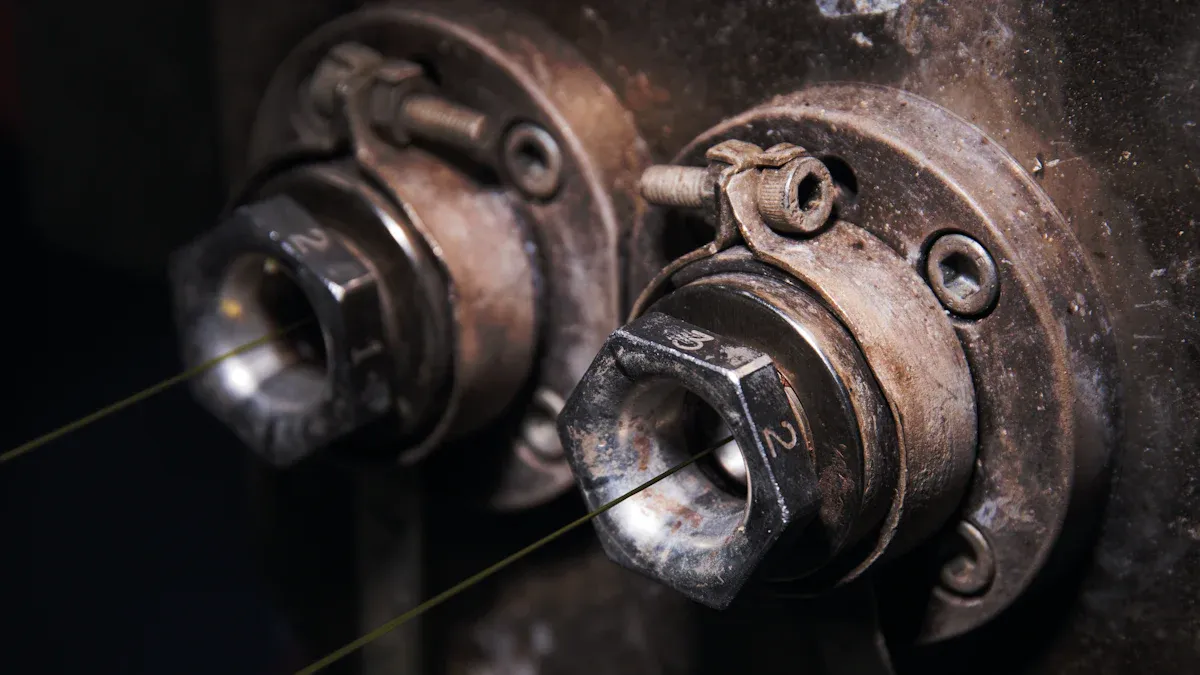
Ég byrja alltaf val á extrusion vél með því að skoða skrúfu og tunnu hönnun. Rúmfræði skrúfunnar ákvarðar hversu skilvirkt extruderinn bráðnar, blandar saman, og flytur efni. Ég stilli lengdina í þvermál (L/D) hlutfall til að stjórna dvalartíma og blöndun. Hærra L/D hlutfall gerir efnið kleift að bráðna og blandast betur, sem er nauðsynlegt til að ná fram jöfnum gæðum í endanlegri vöru. Ég treysti á hindrunarhönnun í skrúfunni til að viðhalda bræðslustöðugleika og koma í veg fyrir niðurbrot, sérstaklega þegar ég vinn viðkvæm efni. Samhliða tvískrúfa og tunnuhönnun gegna mikilvægu hlutverki í útpressunarhraða, vörugæði, og orkunýtingu. Ég nota svæðisskipulag og nákvæma hitastýringu til að koma á stöðugleika í bræðsluflæði og forðast fastar lofttegundir, sem bætir þéttleika og samkvæmni. The surface finish of the barrel and the geometry of the screw also influence energy efficiency and product consistency. I always match the screw design to the specific requirements of the application to maximize performance.
- A higher L/D ratio improves mixing and melt uniformity, which is essential for high-quality products.
- Barrier designs help maintain melt stability and prevent degradation.
- Screw geometry and barrel surface finish impact energy efficiency and product consistency.
Material Movement and Mixing
I focus on efficient material movement and mixing to ensure the extrusion process runs smoothly. ég nota robust pneumatic or mechanical conveyors to transfer raw materials quickly and with minimal maintenance. Advanced mixer designs guarantee thorough and uniform compounding, which prevents variations in finished products. Ég samþætti sjálfvirkar stýringar við PLC kerfi fyrir rauntíma eftirlit og uppskriftastjórnun. Þessi nálgun gerir mér kleift að hafa umsjón með framleiðslu óaðfinnanlega og stilla breytur eftir þörfum. Ég vel skalanlegar stillingar til að koma til móts við bæði lítil verkstæði og stór iðnaðarstarfsemi. Aukinn rykstýribúnaður heldur vinnustaðnum hreinum og öruggum. Stöðugt, einsleitar blöndur draga úr gæðasveiflum og bæta afköst. Sjálfvirk kerfi lágmarka handvirka meðhöndlun, sem styttir framleiðslulotur og lækkar launakostnað. Ég forgangsraða þessum eiginleikum alltaf þegar ég meta gerðir af extrusion vélum fyrir ný forrit.
| Eiginleiki | Lýsing |
|---|---|
| Skilvirk efnisflutningur | Hratt, viðhaldslítil hreyfing hráefna |
| Nákvæmni blöndun | Ítarlegt, samræmd blanda fyrir stöðug gæði |
| Sjálfvirk stýring | Rauntíma eftirlit og uppskriftastjórnun |
| Skalanlegar stillingar | Flexible layouts for any production capacity |
| Enhanced Dust Control | Cleaner, safer workplace |
| Improved Product Quality | Homogeneous blends, reduced fluctuations |
| Increased Throughput | Shorter production cycles, less manual handling |
| Minni sóun | Accurate measurement, lægri kostnaður |
| Lower Labor Costs | Automation frees staff for value-added tasks |
| Safer Working Environment | Enclosed lines and dust control |
Process Control and Output Quality
I depend on advanced process control technology to maintain high output quality in extrusion manufacturing. I select high-quality thermoplastics to ensure the final products meet strength, endingu, and flexibility requirements. I monitor extrusion parameters closely to reduce discrepancies during production. Dimensional accuracy remains a top priority for me, as it guarantees that components fit their intended applications. Ég nota yfirborðsskoðun til að greina galla eins og vinda eða loftbólur, sem hjálpar mér að viðhalda stöðugum gæðum vöru. Snemma uppgötvun vandamála dregur úr sóun og sparar framleiðslukostnað. Ég tryggi alltaf að ferlið mitt sé í samræmi við eftirlitsstaðla, sem verndar bæði fyrirtæki mitt og viðskiptavini mína. Hágæða vörur auka orðspor vörumerkis míns og auka ánægju viðskiptavina. Háþróuð eftirlitskerfi gera mér kleift að auka framleiðsluhraða án þess að fórna nákvæmni, sem eykur heildar skilvirkni í fullkomnum extrusion kerfum.
| Eining/kostur | Lýsing |
|---|---|
| Efnisval | Tryggir styrk, endingu, og sveigjanleika |
| Ferlaeftirlit | Dregur úr misræmi og viðheldur samræmi |
| Málnákvæmni | Tryggir rétta passa fyrir allar umsóknir |
| Yfirborðsskoðun | Greinir galla snemma fyrir betri gæði |
| Stöðug vörugæði | Sérhver lota uppfyllir háar kröfur |
| Minnkun úrgangs | Sparar efnis- og framleiðslukostnað |
| Reglufestingar | Uppfyllir laga- og öryggiskröfur |
| Ánægja viðskiptavina | Builds reputation and loyalty |
| Process Efficiency | Increases speed while maintaining accuracy |
Ábending: I recommend regular calibration and maintenance of all extrusion technology to sustain peak performance and consistent quality.
Comparing the Extrusion Process
Einskrúfa vs. Twin-Screw Process
When I compare single-screw and twin-screw extruders, I focus on how each system handles the extrusion process. The screw design shapes the way material moves and mixes. A single-screw extruder uses one helical screw inside a simple, sívalur tunnu. Aftur á móti, a twin-screw extruder features two intermeshing screws and a more complex, oft sundurliðuð tunna. I see that temperature control in single-screw systems remains basic, while twin-screw machines offer advanced control with multiple heating and cooling zones. This difference impacts both throughput and energy efficiency.
| Hluti | Einskrúfa extruder | Tvískrúfa extruder |
|---|---|---|
| Skrúfuhönnun | Ein skrúfa skrúfa | Tvær samfléttaðar skrúfur |
| Tunnubygging | Einfalt, sívalur | Flóknara, oft skipt í sundur |
| Hitastýring | Grunnhitun/kæling | Ítarlegri, multi-zone |
| Úttaksgeta | Í meðallagi | Hátt |
| Orkunotkun | Almennt hærri | Skilvirkari |
| Sveigjanleiki í gegnumstreymi | Takmarkað | Hátt |
I rely on twin-screw extruders for higher output and better energy efficiency. When I need flexibility in throughput or advanced process control, I choose twin-screw systems. For straightforward applications, single-screw extruders still provide reliable performance.
Material Compatibility in the Extrusion Process
Material compatibility plays a critical role in extrusion machine selection. I always match the screw configuration to the type of material I plan to process. Single-screw extruders handle standard thermoplastics well, but they struggle with materials that require intensive mixing or have high filler content. Twin-screw extruders excel with specialty compounds, endurunnið plast, og hvarfgjarn efni. I use segmented screws to adjust mixing and shearing for each application.
When I work with complete extrusion systems, I consider how each screw design affects the final product. Twin-screw extruders allow me to process a wider range of materials, including those with additives or sensitive properties. This flexibility supports more types of extrusion machines and expands the range of possible applications.
Ábending: I recommend evaluating the chemical and physical properties of your raw materials before choosing an extruder. This step ensures compatibility and reduces the risk of defects.
Vörugæði og samræmi
I know that the extrusion process directly impacts the quality of the finished product. Modern extrusion lines integrate automation and advanced control platforms. These systems analyze multiple variables at once, which helps me maintain consistent quality across every batch.
Quality consistency is a productivity multiplier. Advanced control platforms analyze patterns across multiple variables simultaneously, ensuring that product quality is maintained throughout the extrusion process.
I monitor key factors such as stable melt pressure, output rate, and surface finish. Stable melt pressure prevents warping and dimensional drift. Higher and more stable output reduces scrap rates and downtime. Better surface finish and precise dimensional control enhance the impact on the quality of the finished product.
| Lykilþættir | Impact on Quality and Consistency |
|---|---|
| Stable melt pressure | Prevents dimensions from drifting or warping |
| Higher and more stable output | Reduces scrap rates and downtime |
| Better surface finish | Enhances overall product quality |
| Málstýring | Ensures precision in final product specifications |
| Faster ROI | Improves profitability for manufacturers |
Þegar borið er saman tvískrúfa vs einskrúfa extruders, I see that twin-screw systems deliver better consistency and lower operational cost. I achieve faster ROI and improved performance by investing in advanced extrusion technology. I always prioritize process monitoring and automation to ensure high quality and efficiency in production.
- Higher and more stable output
- Lower scrap and downtime
- Better surface finish and dimensional control
- Reduced operational cost
- Faster ROI
I rely on these strategies to maximize the benefits of extrusion and deliver products that meet strict manufacturing standards.
Performance Comparison Table
Afköst og skilvirkni
I always evaluate throughput and efficiency when I compare types of extrusion machines. Throughput measures how much material the extruder processes in a given time. Skilvirkni endurspeglar hversu vel skrúfuhönnunin breytir hráefni í fullunnar vörur með lágmarks sóun og orkunotkun. Ég sé að einskrúfa extruders skila oft stöðugu afköstum fyrir venjulegar fjölliður. Tvískrúfa extruders, með háþróaðri skrúfu rúmfræði þeirra, höndla meiri afköst og viðhalda betri orkunýtni, sérstaklega fyrir flóknar blöndur.
| Tegund extruder | Afköst (kg/klst) | Orkunýting | Bestu notkunartilvikin |
|---|---|---|---|
| Einskrúfa | 50–500 | Í meðallagi | Hátt hljóðstyrkur, einfaldar fjölliður |
| Tvískrúfa | 100-1000+ | Hátt | Flóknar blöndur, sérgreinastörf |
| Ram Extruder | 10–100 | Lágt – í meðallagi | PTFE, keramik, sérgrein |
| Co-Extrusion Systems | Mismunandi | Hátt | Marglaga snið |
Ég passa alltaf skrúfustillingarnar við efnis- og framleiðslukröfur. Þessi nálgun tryggir að ferlið skilar stöðugum gæðum og uppfyllir framleiðslumarkmið. Ég treysti á fullkomin útpressunarkerfi til að hámarka afköst og skilvirkni fyrir hverja notkun.
Ábending: Ég mæli með því að fylgjast reglulega með orkunotkun og framleiðsluhraða. This practice helps optimize extrusion machine selection and reduces operational costs.
Maintenance and Reliability
I prioritize maintenance and reliability when I select an extruder. The screw and barrel experience constant wear from abrasive materials and high temperatures. I schedule routine inspections and replace worn components to prevent unexpected downtime. Single-screw extruders require less maintenance due to their simple design. Tvískrúfa extruders, with more moving parts and segmented screws, need more frequent checks but offer greater flexibility.
| Tegund extruder | Viðhaldsþarfir | Reliability Level | Algeng mál |
|---|---|---|---|
| Einskrúfa | Lágt – í meðallagi | Hátt | Occasional screw wear |
| Tvískrúfa | Moderate–High | Hátt | Segment wear, seal failure |
| Ram Extruder | Í meðallagi | Í meðallagi | Hydraulic leaks, die wear |
| Co-Extrusion Systems | Hátt (multi-screw) | Hátt | Synchronization, screw wear |
I use advanced monitoring systems to track screw wear and process stability. This strategy improves reliability and extends the life of my extrusion technology. I always keep spare screws and barrels on hand to minimize downtime during maintenance.
Product Complexity and Flexibility
I value design flexibility í extrusion. The ability to customize the screw and die allows me to create complex profiles for a wide range of applications. I use extrusion to manufacture everything from simple plastic tubing to intricate window frames. I can add reinforcements or special features within the continuous material, which expands my product offerings.
| Hluti | Lýsing |
|---|---|
| Hönnunarsveigjanleiki | Extrusion allows for significant design flexibility through die customization, enabling complex profiles. |
| Umsóknir | Suitable for various applications, including intricate window frames and simple plastic tubing. |
| Sérsniðin | Manufacturers can include reinforcements or additional features within the continuous material. |
- In MedTech, I must achieve tight tolerances for medical devices.
- I ensure biocompatibility for all medical extrusion products.
- I monitor wall thickness closely, since it affects flow rates and structural strength.
I select the screw configuration and extrusion machine based on the complexity of the design and the required tolerances. This approach guarantees high quality and supports advanced manufacturing needs.
Athugið: I recommend consulting with extrusion experts when planning new product designs. Their experience helps avoid costly mistakes and ensures the right screw and process configuration.
Application Suitability in Manufacturing
High-Volume Manufacturing
I always start my extrusion machine selection by considering the demands of high-volume manufacturing. When I need to produce thousands of units per day, I rely on single-screw extruders. These machines deliver steady throughput and maintain consistent quality. The screw design in single-screw extruders allows me to process standard polymers efficiently. I monitor the process closely to ensure uniform melt and minimize defects. I select the right screw diameter and length to match the production requirements. This approach helps me achieve high efficiency and reduce waste. I use automated controls to track output and maintain quality standards. High-volume applications benefit from robust types of extrusion machines that can operate continuously with minimal downtime. I always keep spare screws and barrels ready to avoid interruptions in production.
Ábending: I recommend scheduling regular maintenance for extruders used in high-volume manufacturing. This practice extends the life of the screw and ensures reliable performance.
Complex Product Manufacturing
When I manufacture complex or multi-component products, I turn to advanced extrusion technology. Twin-screw extruders give me greater control over mixing and material distribution. I use segmented screws to adjust shear and optimize the process for each application. Co-extrusion technology enables me to combine different polymers into multi-layer films and pipes. This method improves barrier properties and enhances strength, sveigjanleika, og efnaþol.
| Tækni | Fríðindi |
|---|---|
| Co-extrusion | Enables the creation of multi-layer films and pipes with improved barrier properties, combining different polymers for strength, sveigjanleika, og efnaþol. |
I select the screw configuration based on the complexity of the product. For intricate designs, I rely on precise tooling and advanced process monitoring. I always test the extruder setup before full-scale production to ensure quality and performance. Complex applications require careful extrusion machine selection and attention to detail.
Specialty Materials and Customization
I often work with specialty materials that demand custom solutions. I use advanced shaping processes, such as sheet extrusion and thermoforming, to control material characteristics. Sheet extrusion gives me the ability to manage thickness and material distribution with high accuracy. Co-extrusion capabilities allow me to create multi-layer constructions that enhance material properties. I integrate downstream shaping processes to ensure consistent performance in finished components. Engineering services help me optimize component designs and select the best materials for specific applications.
- Advanced shaping processes, such as sheet extrusion and thermoforming, allow for precise control over material characteristics.
- Sheet extrusion provides a foundation for custom material solutions, enabling thickness control and material distribution accuracy.
- Co-extrusion capabilities facilitate the creation of multi-layer constructions, enhancing material properties.
- Integration with downstream shaping processes ensures consistent performance characteristics in finished components.
- Engineering services optimize component designs and material selection, ensuring suitability for specific applications.
I always match the screw design to the requirements of specialty materials. Customization in extrusion depends on selecting the right extruder and process parameters. I monitor quality at every stage to deliver products that meet strict standards. Specialty applications benefit from flexible types of extrusion machines and expert guidance.
Athugið: I recommend consulting with extrusion specialists when working with new materials or custom designs. Their expertise helps achieve the desired quality and performance.
Selection Criteria for Extrusion Systems
Product Design and Complexity
I always start my extrusion machine selection by analyzing the product design and complexity. The geometry of the profile influences the choice of extruder and screw configuration. Complex shapes increase tooling costs and create production challenges. I simplify profile geometry whenever possible to enhance material flow and reduce defects. Smooth transitions in the design prevent disruptions in material flow, which is crucial for consistent extrusion quality. I select the right material early in the process because material choice affects both the properties of the part and the ease of extrusion. This decision impacts manufacturability and overall performance.
- Simplifying profile geometry lowers tooling costs and reduces production challenges.
- Designing for material flow ensures consistent extrusion quality and minimizes defects.
- Choosing the right material early improves manufacturability and product performance.
I match the screw design to the complexity of the product. For intricate profiles, I use advanced screw configurations that optimize mixing and material transport. I rely on precise tooling and process monitoring to maintain high quality. When I work with complex applications, I consult with extrusion technology experts to avoid costly mistakes and ensure the best results.
Ábending: I recommend reviewing the profile geometry and material flow before finalizing the extrusion machine selection. This step helps prevent production issues and supports efficient manufacturing.
Efniseiginleikar
Material properties play a critical role in selecting the right extruder and screw configuration. I identify application requirements such as temperature resistance, UV útsetning, and impact durability. I consider mechanical properties like flexibility, hörku, and tensile strength for the intended use. Environmental conditions influence my material choice, especially when I need weathering resistance or flexibility in cold environments. I evaluate aesthetic and finish requirements, þar á meðal litur, gljáa, og yfirborðsáferð, based on project needs. Regulatory and compliance needs guide my selection to ensure materials meet industry-specific standards and certifications.
- Application requirements determine the need for temperature resistance, UV útsetning, and impact durability.
- Mechanical properties such as flexibility, hörku, and tensile strength affect the choice of extruder and screw.
- Environmental conditions require materials that withstand weathering or remain flexible in cold climates.
- Aesthetic and finish requirements influence color, gljáa, og yfirborðsáferð.
- Regulatory and compliance needs ensure materials meet industry standards.
I select the screw design based on the material’s properties. For heat-sensitive materials, I use screws with gentle mixing zones and precise temperature control. When processing tough or abrasive compounds, I choose robust screw geometries that withstand wear and maintain efficiency. I always test materials in pilot runs to verify compatibility with the extruder and ensure consistent quality.
Athugið: I recommend consulting material datasheets and industry standards before choosing an extruder. This practice helps match material properties to the extrusion process and supports reliable performance.
Production Volume and Scale
Production volume and scale influence the cost-effectiveness of extrusion machine selection. Higher production volumes reduce unit costs because tooling expenses are spread over more parts. In the prototype stage, tooling costs are high compared to the quantity produced. In mass production, die costs are amortized over larger volumes, leading to lower costs per unit. Til dæmis, a die costing $2,000 with a lifetime of 40,000 kg results in a cost of $0.05 per kg when amortized.
- Higher production volumes lower unit costs by spreading tooling expenses.
- Prototype stages have high tooling costs relative to the number of parts produced.
- Mass production allows die costs to be distributed over larger volumes, reducing per-unit costs.
- Example: A die costing $2,000 with a lifetime of 40,000 kg results in a cost of $0.05 per kg.
I select the extruder and screw configuration based on the expected production volume. For high-volume manufacturing, I use robust types of extrusion machines that deliver steady throughput and maintain efficiency. In low-volume or prototype applications, I prioritize flexibility and rapid changeover. I monitor production rates and adjust screw parameters to optimize output and quality.
Ábending: I recommend calculating the amortized tooling cost before committing to a production scale. This step helps determine the most cost-effective extrusion technology and supports long-term manufacturing goals.
Technical and Budget Considerations
I always approach extrusion machine selection with a clear focus on technical requirements and budget constraints. My experience tells me that investing in advanced extrusion technology demands careful planning. I evaluate every aspect of the system, from screw design to process control, to ensure cost-effectiveness and reliable performance.
I start by analyzing the technical specifications of the extruder. I look at screw geometry, barrel length, and compatibility with different types of extrusion machines. I select a screw that matches the material properties and the complexity of the applications. I check if the extruder can handle the desired throughput and maintain consistent quality. I also assess the integration of feeders, hitastýringar, og niðurstreymisbúnaði. System integration plays a crucial role in maximizing efficiency and avoiding bottlenecks in production.
Budget considerations influence every decision I make. I break down the costs into several categories to understand the financial impact. I use the following table to guide my investment strategy:
| Budget Consideration | Lýsing | Financial Impact / Benefit Example |
|---|---|---|
| Orkunýting | Reducing energy consumption by upgrading control systems or screws | 33% energy reduction saves nearly $100,000 annually on $288,000 orkukostnað |
| Scrap Reduction | Lowering scrap rate from 15% til 5% through data acquisition and process control | Saves $200,000 monthly or $2.4 million yearly in materials, vinnuafl, and energy costs |
| Throughput Increase | Upgrading to twin-screw extruder increases throughput by 30% | Generates $600,000 additional monthly revenue with >50% incremental profit margin |
| Maintenance Cost Reduction | Predictive maintenance and condition monitoring reduce emergency repairs and downtime | Maintenance costs drop 20-30%, equipment availability increases |
| System Integration | Budgeting for compatible feeders, hitastýringar, og niðurstreymisbúnaði | Partial upgrades capture only ~40% of potential benefits |
| Þjálfun rekstraraðila | Training on material characteristics, vélar, instrumentation, og stýringar | Essential to fully realize technology benefits; lack wastes investment |
| Data Acquisition Infrastructure | Adequate sensors and analytics software needed for optimization | Insufficient infrastructure limits optimization; too many sensors without analytics causes overload |
| Downstream Constraints | Ensuring cutting, umbúðir, and inspection keep pace with increased extruder output | Bottlenecks reduce overall system benefit |
I prioritize energy efficiency when selecting an extruder. Upgrading control systems or optimizing screw design can reduce energy consumption by up to 33%. This improvement saves nearly $100,000 each year on a typical $288,000 energy bill. I also focus on scrap reduction. By implementing advanced process control and data acquisition, I lower scrap rates from 15% til 5%. This change saves $200,000 every month in materials, vinnuafl, and energy costs.
Increasing throughput is another key goal. Upgrading to a twin-screw extruder boosts output by 30%. This increase generates $600,000 in additional monthly revenue, with more than a 50% incremental profit margin. I invest in predictive maintenance and condition monitoring to reduce emergency repairs and downtime. Maintenance costs drop by 20-30%, and equipment availability improves.
System integration is essential for maximizing the benefits of extrusion technology. I budget for compatible feeders, hitastýringar, og niðurstreymisbúnaði. Partial upgrades capture only about 40% of the potential benefits. Operator training is critical. I ensure my team understands material characteristics, vélar, instrumentation, og stýringar. Without proper training, the investment in advanced extrusion technology goes to waste.
I invest in data acquisition infrastructure. Adequate sensors and analytics software optimize the process. Insufficient infrastructure limits optimization, while too many sensors without analytics cause information overload. I address downstream constraints by ensuring cutting, umbúðir, and inspection keep pace with increased extruder output. Bottlenecks in these areas reduce the overall benefit of the system.
I always balance technical requirements with budget limitations. I select a screw that delivers high quality and efficiency without exceeding my financial resources. I plan for future upgrades and modular expansion to support changing production needs. I monitor every aspect of the extrusion process to maintain cost-effectiveness and reliable performance.
Ábending: I recommend creating a detailed budget plan before investing in new extrusion technology. Include energy costs, viðhald, þjálfun rekstraraðila, and system integration. This approach ensures that the extruder delivers maximum value and supports long-term manufacturing goals.
Actionable Insights for Manufacturers
Matching System to Application
I always match the extrusion system to the specific application. ég optimize material use to balance strength and lightweight design. I define critical dimensional tolerances early, which ensures parts fit and function as intended. I design for manufacturability, making sure shapes can be extruded consistently and cost-effectively. I select aluminum alloys based on application needs, such as strength and corrosion resistance. I simplify designs to reduce costs, avoiding unnecessary complexity in profiles. I prototype and test early, which helps me identify potential challenges before full production. These steps help me achieve high quality and reliable performance in every extrusion process.
- Optimize material use for strength and lightweight design.
- Define critical dimensional tolerances early.
- Design for manufacturability.
- Select appropriate aluminum alloys for application needs.
- Simplify designs to reduce costs.
- Prototype and test early.
I always consider the key components of an extruder, such as screw geometry and barrel design, to ensure the system meets production requirements. I review different types of extruder machines to find the best fit for my applications in plast útpressun. This approach supports scalability and maintains quality control throughout manufacturing.
Common Selection Mistakes
I have seen many manufacturers make mistakes during extrusion machine selection. Inadequate material blending often leads to product imperfections and increased costs from reprocessing. Outdated or incompatible control systems cause integration issues and inefficiencies. Inconsistent feed rates disrupt the extrusion process, resulting in product variabilities and higher scrap rates. Neglecting preventive maintenance allows minor mechanical issues to escalate into major production problems, affecting revenue. Ignoring operator training leads to misconfigurations and missed optimization opportunities.
- Inadequate material blending increases costs and reduces quality.
- Outdated control systems cause inefficiencies.
- Inconsistent feed rates disrupt the extrusion process.
- Neglecting preventive maintenance leads to major production problems.
- Ignoring operator training results in missed optimization.
I always monitor screw wear and maintain the extruder regularly. I invest in operator training to maximize efficiency and quality. I avoid these mistakes by focusing on process stability and performance.
Future Trends in Extrusion Technology
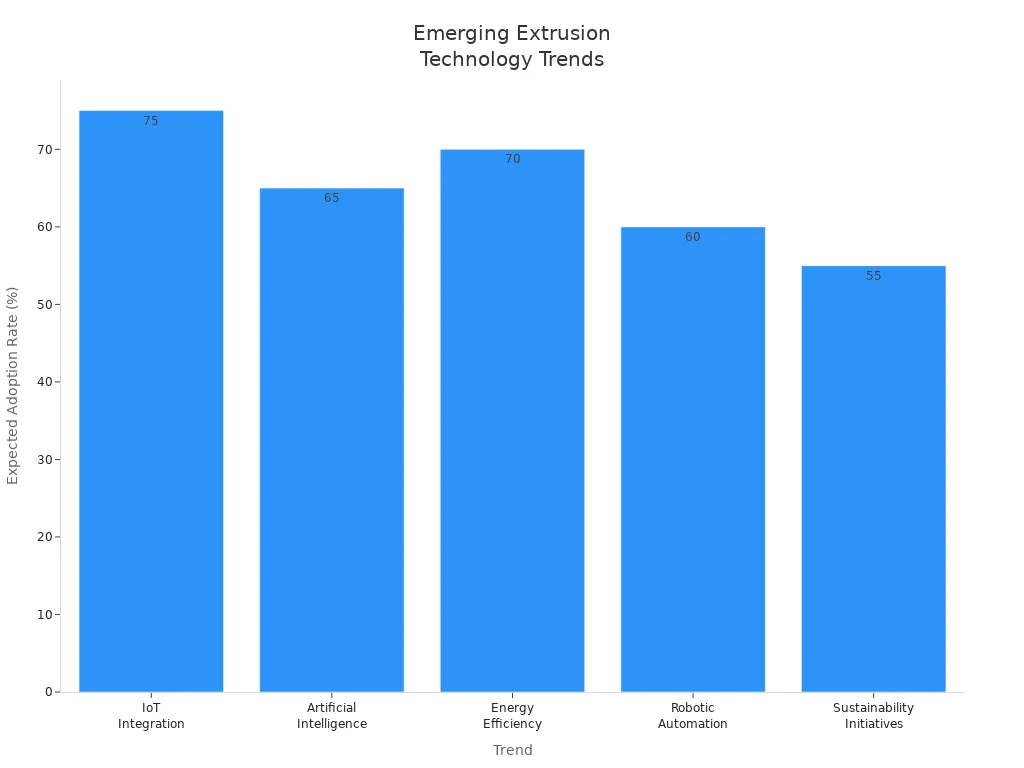
I see rapid changes in extrusion technology shaping the future of manufacturing. IoT integration allows real-time monitoring and analytics, bæta skilvirkni. Artificial intelligence supports predictive maintenance and optimization, which boosts performance. Energy efficiency is a growing focus, with manufacturers seeking ways to reduce consumption in the extrusion process. Robotic automation streamlines material handling and quality control. Sustainability initiatives drive the use of recycled materials and eco-friendly processes.
| Stefna | Lýsing | Áhrif á skilvirkni | Áætlað ættleiðingarhlutfall (%) |
|---|---|---|---|
| IoT samþætting | Rauntíma eftirlit og greiningar | Hátt | 75% |
| Gervigreind | Forspár viðhald og hagræðing | Mjög hár | 65% |
| Orkunýting | Reducing energy consumption | Miðlungs | 70% |
| Vélfærafræði sjálfvirkni | Efnismeðferð og gæðaeftirlit | Hátt | 60% |
| Sjálfbærni frumkvæði | Endurunnið efni og vistvæn ferli | Miðlungs | 55% |
I notice advancements in material compatibility, especially with bioplastics, are transforming the extrusion industry. Many manufacturers now prioritize flexibility in equipment design, with modular systems allowing easy upgrades and modifications. Sustainability is essential, with most manufacturers focusing on energy-efficient equipment and waste reduction strategies. Smart extrusion machines reduce downtime by 20%, which improves overall efficiency and quality control. I always stay updated on these trends to maintain high performance and support new applications in plastic extrusion.
Ábending: I recommend reviewing the overview of extruder machines in manufacturing regularly. Staying informed about new types of extrusion machines and screw designs helps me adapt to changing production needs and maintain scalability.
I recognize that each extrusion system offers unique advantages and limitations. My experience shows that single-screw extruders excel in high-volume production, while twin-screw systems provide superior mixing and flexibility. Ram and co-extrusion machines support specialty applications. I always use comparison tables and selection criteria to evaluate:
- Technical capabilities and long-term reliability
- Customer service and design assistance
- Quality standards and energy efficiency
I recommend manufacturers understand their application needs and consult extrusion experts for optimal results.
Algengar spurningar
What is the main difference between single-screw and twin-screw extruders?
I see that single-screw extruders use one rotating screw for basic mixing. Twin-screw extruders use two screws for advanced mixing and better control. I choose twin-screw systems for complex materials and higher flexibility.
How do I decide which extrusion system fits my application?
I start by reviewing my material type, framleiðslumagn, and product complexity. I match these needs to the strengths of each system. I consult with experts if I face unique requirements.
Can I process recycled materials with extrusion systems?
I process recycled materials using twin-screw extruders. These machines handle variable feedstocks and additives better than single-screw systems. I monitor quality closely to ensure consistent results.
How often should I perform maintenance on my extruder?
I schedule routine inspections every month. I check for screw wear, barrel condition, and control system performance. Regular maintenance prevents downtime and extends equipment life.
What are the most common extrusion defects I encounter?
I often see surface roughness, víddarsvif, and melt fractures. I address these by adjusting temperature, skrúfa hraða, and material feed. I use process monitoring to catch issues early.
Is co-extrusion suitable for all materials?
I use co-extrusion mainly for thermoplastics. Some materials may not bond well in multi-layer profiles. I test material compatibility before starting production.
How does automation improve extrusion quality?
I rely on automation for real-time monitoring and precise control. Automated systems reduce human error, maintain consistent output, and improve overall product quality.
What safety measures do I follow during extrusion?
I wear protective gear and follow lockout procedures. I keep the work area clean and check emergency stops regularly. I train my team on safe operation and emergency response.