

Twin Screw thiab Single Screw Extruders muab piv rau cov khoom siv
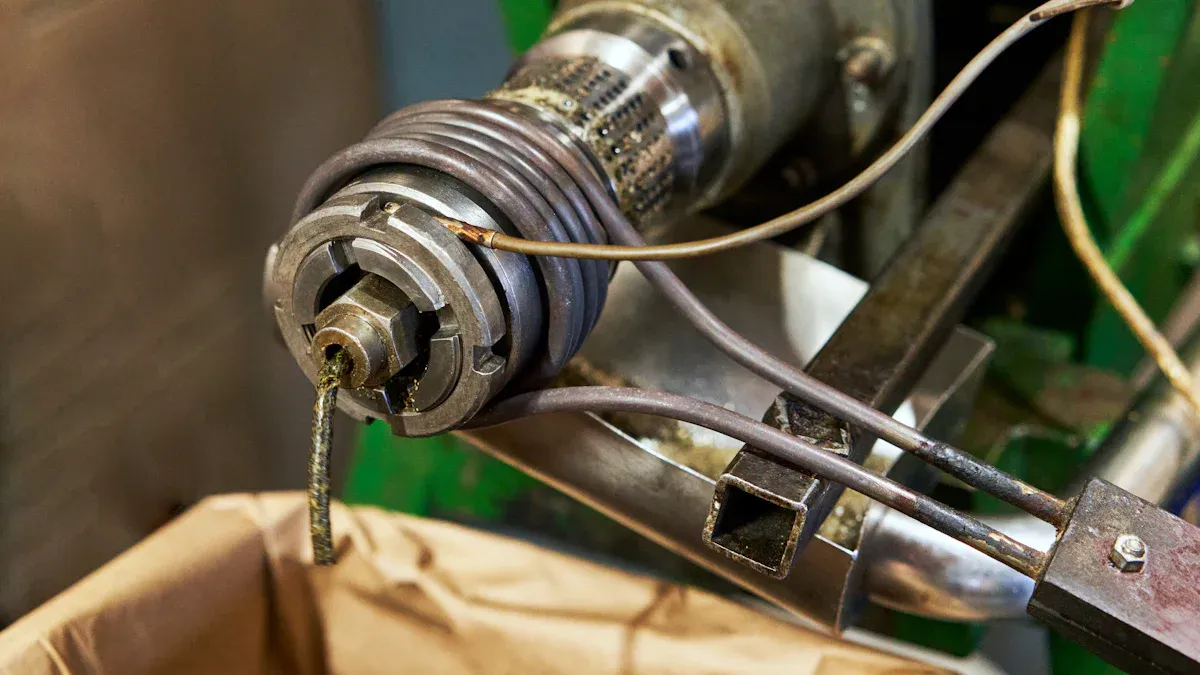
Kuv feem ntau pom manufacturers nug uas extruder muab cov txiaj ntsig zoo tshaj plaws rau cov khoom siv. Cov lus teb nyob ntawm kev xav tau, cov hom phiaj ua haujlwm, thiab kev txwv cov nqi. Hauv 2024, co-rotating Twin Screw extruders dominate lub ntiaj teb no kev ua lag luam nrog a 71% cov nyiaj tau los vim lawv txawj sib tov, kev tu tus kheej, thiab degassing. Yog hais tias koj xav tau high throughput los yog tuav cov ntaub ntawv complex, Twin Screw extruders muab kev yooj yim thiab kev ua haujlwm zoo. Sib piv cov yam ntxwv tseem ceeb hauv cov lus hauv qab no los pab koj txiav txim siab:
| Feature | Ib leeg-Screw Extruder | Twin-Screw Extruder |
|---|---|---|
| Thauj Mechanism | Kev sib txhuam / Luag ntws | Kev hloov pauv zoo |
| Kev sib xyaw muaj peev xwm | Tsawg | Siab |
| Kev Tu Tus Kheej | Tsis muaj | Zoo heev |
| Kev nqis peev pib | qis ($) | Siab dua ($$$) |
Tswv yim: Ntsuam xyuas koj cov khoom complexity thiab ntau lawm cov hom phiaj ua ntej xaiv ib tug extruder.
Ntsiab Cai
- Twin ntsia hlau extruders ua tau zoo hauv kev sib xyaw, kev tu tus kheej, thiab tuav cov ntaub ntawv complex, ua rau lawv zoo tagnrho rau cov ntawv thov siab heev.
- Ib leeg ntsia hlau extruders yog tus nqi-zoo thiab yooj yim rau kev khiav lag luam, zoo tshaj plaws haum rau high-volume zus tau tej cov ntaub ntawv homogeneous.
- Xav txog cov khoom siv thiab qhov nyuaj thaum xaiv ib qho extruder; Twin screws tuav cov khoom sib xyaw thiab cov khoom ntxiv zoo dua li cov ntsia hlau ib leeg.
- Ntsuas qhov ntim ntau lawm xav tau; twin screws muab kev yooj yim rau kev hloov khoom siv tsis tu ncua, thaum ib leeg screws ua haujlwm zoo rau kev khiav haujlwm zoo ib yam.
- Cov kev txwv nyiaj txiag tseem ceeb; ntxaib screws xav tau kev nqis peev ntau dua tab sis tuaj yeem ua rau kom zoo dua thiab txo cov khoom pov tseg hauv cov ntawv thov nyuaj.
- Kev sim nrog cov ntaub ntawv tiag tiag yog qhov tseem ceeb rau kev ua haujlwm zoo ua ntej cog lus rau kev yuav khoom extruder.
- Nyob twj ywm tshiab ntawm kev lag luam tiam sis xws li automation thiab sustainability los txhim kho efficiency thiab txo cov nqi khiav lag luam.
- Consult with vendors and gather real-world references to ensure the chosen extruder meets your specific production goals.
Technical Comparison
Twin Screw Mechanism
Positive Displacement
When I work with a ntxaib ntsia hlau extruder, I notice how the positive displacement mechanism stands out. The twin screws rotate together, grabbing and moving material forward in a controlled way. This action creates a steady flow, which means I can predict how long materials stay inside the extruder. I see this as a big advantage for process control. The twin screw design almost eliminates back-mixing, so every bit of material gets the same treatment. This level of control helps me avoid under- or over-processing, which can ruin product quality.
Mixing Efficiency
Mixing efficiency is where the twin screw truly shines. The intermeshing screws divide and recombine the material streams over and over. I often see this described as exponential layer multiplication. This action ensures that additives, fillers, or colorants spread evenly, even when I use very small amounts. The twin screw mechanism creates a high-intensity mixing environment, which is essential for complex formulations. I rely on this when I need uniformity and consistency in the final product.
Here’s a table that summarizes the mechanism differences in conveying and mixing:
| Aspect | Twin Screw Mechanism | Single Screw Design |
|---|---|---|
| Mixing Efficiency | Controlled, repetitive, and high-intensity mixing environment | Chaotic mixing dependent on turbulence |
| Residence Time Control | Approximates ‘plug flow’ with minimal back-mixing | Broad residence time distribution leading to under- and over-processed material |
| Layer Multiplication | Exponential multiplication ntawm cov khaubncaws sab nraud povtseg ua kom muaj kev faib tawm ntawm cov khoom ntxiv | Kev txwv tsis pub muaj peev xwm ua tau zoo ib yam, tshwj xeeb tshaj yog nyob rau hauv tsawg concentrations |
| Kev Tswj Kub Kub | Kev nplawm tas li tshem tawm cov chaw nyob ruaj khov, xyuas kom meej viscosity | Ncua rau qhov kub hloov pauv ua rau cov dej tsis ruaj khov thiab tsis zoo sib xyaw |
Kuv ib txwm pom zoo kom ntxaib ntsia hlau extruder thaum kuv xav tau kev tswj xyuas meej ntawm kev sib xyaw thiab kub. Qhov kev sib txawv no ua rau kev ua haujlwm zoo dua, tshwj xeeb tshaj yog rau cov khoom siv ua haujlwm siab heev.
Ib leeg ntsia hlau Extruder tsim
Kev sib txhuam thiab Drag Flow
A ib leeg ntsia hlau extruder cia siab rau kev sib txhuam thiab rub ntws los txav cov khoom. Cov ntsia hlau rotates hauv ib lub thoob, thawb cov khoom rau pem hauv ntej. Kuv pom tias txoj kev no ua haujlwm zoo rau qhov yooj yim, homogeneous cov ntaub ntawv. Txawm li cas los, cov txheej txheem nyob ntawm kev sib txhuam ntawm cov ntsia hlau, lub cev, thiab cov khoom nws tus kheej. Qhov no tuaj yeem ua rau cov dej ntws tsis sib xws thiab kev sib xyaw ua ke tsis sib xws. Thaum kuv ua cov ntaub ntawv uas yuav tsum tau ceev faj additive dispersion, Kuv pom tias ib tus ntsia hlau tsim tawm tsam kom haum rau kev sib xyaw ua haujlwm ntawm lub hau ntswj ntxaib.
Simplicity thiab Nqi
Ib qho laj thawj kuv feem ntau xaiv ib tus ntsia hlau extruder rau kev siv yooj yim yog nws txoj kev yooj yim. Kev tsim qauv siv cov khoom siv tsawg dua, uas txhais tau tias kev tsim kho qis dua thiab kho kom yooj yim dua. Kuv tuaj yeem cob qhia cov neeg ua haujlwm sai, thiab kuv siv tsawg dua ntawm cov khoom seem. Kev nqis peev thawj zaug yog qis dua piv rau cov ntsia hlau ntxaib extruder. Ntawm no yog ib lub rooj uas qhia txog kev sib txawv ntawm kev tsim kho thiab kev saib xyuas:
| Feature | Ib leeg ntsia hlau Extruder | Twin Ntsia Hlau Extruder |
|---|---|---|
| Kev tsim kho complex | Kev tsim kho yooj yim | Ntau dua tshuab |
| Number of Components | Tsawg cov khoom xyaw | Cov khoom siv ntau dua |
| Nqi-zoo | Tsawg tus qauv tsim thiab cov nqi ua haujlwm | Kev nqis peev pib siab dua |
| Kev Kho Kom Zoo | Cov nqi kho mob qis dua vim muaj qhov tsawg dua | Cov nqi kho mob siab dua vim muaj ntau qhov chaw |
Thaum kuv yuav tsum tau ua cov ntim loj ntawm ib leeg, cov ntaub ntawv zoo ib yam, Kuv pom cov ntsia hlau ib leeg extruder yog qhov kev xaiv zoo tshaj plaws thiab txhim khu kev qha. Lub tshuab sib txawv ntawm ntxaib thiab ib qho ntsia hlau tsim ncaj qha cuam tshuam rau kev ua haujlwm nyuaj, kev saib xyuas, thiab tag nrho efficiency.
Nco tseg: Kuv ib txwm phim hom extruder rau cov khoom siv thiab cov txheej txheem. Rau kev sib xyaw ua ke thiab kev tswj kom meej, Kuv xaiv ib tug ntxaib ntsia hlau. Rau qhov ncaj, ntim ntau lawm, Kuv vam khom ib leeg ntsia hlau.
Kev ua tau zoo thiab zoo
Kev ua haujlwm thiab kev ua haujlwm
Tus nqi tso zis
Thaum kuv piv cov nqi tso zis, Kuv pom tias ntxaib ntsia hlau extruders xa ntau lawm efficiency, tshwj xeeb tshaj yog nrog cov khoom siv sib xyaw ua ke. Qhov txiaj ntsig zoo ntawm kev hloov pauv ntawm cov ntsia hlau ntxaib ua kom cov zis zoo ib yam, txawm tias thaum kuv ua cov txheej txheem nyuaj. Hauv kuv qhov kev paub, ib qho ntsia hlau extruder ua haujlwm zoo tshaj plaws rau kev ncaj ncees, homogeneous cov ntaub ntawv. Nws muab cov khoom tso tawm ntseeg tau, tab sis tawm tsam nrog cov khoom sib xyaw lossis cov khoom siv uas xav tau kev sib xyaw hnyav. Kuv ib txwm xav txog cov khoom siv thiab cov khoom tsim tawm uas xav tau ua ntej kev xaiv.
Kev siv zog
Kev siv zog ua lub luag haujlwm tseem ceeb hauv kuv txoj kev txiav txim siab. Nov yog qhov kuv tau pom:
- Twin ntsia hlau extruders feem ntau siv zog ntau dua tshaj ib qho ntsia hlau extruders vim lawv siv dual-tsav tshuab.
- Qhov yuav tsum tau tig ob qhov sib txuas sib txuas ua kom lub zog xav tau, tsim kom muaj zog dua shear thiab torque xav tau.
- Ib leeg ntsia hlau extruders muaj zog ntau dua, tab sis lawv tsis tuaj yeem lis cov ntaub ntawv nyuaj lossis cov viscosity siab zoo.
- Twin ntsia hlau extruders muab kev sib xyaw ua ke zoo dua thiab kev tswj xyuas zoo dua ntawm cov khoom siv, uas tuaj yeem pom tseeb lawv cov kev siv hluav taws xob ntau dua hauv cov ntawv thov.
- Kuv ib txwm sib npaug ntawm kev siv lub zog nrog qhov xav tau kev hloov pauv thiab cov khoom zoo.
Txawm tias siv zog ntau dua, ntxaib ntsia hlau extruders feem ntau offset cov nqi los ntawm kev txo cov khoom pov tseg thiab txhim kho cov zis zoo hauv cov khoom loj.
Kev sib xyaw thiab homogeneity
Additive Dispersion
Kev sib xyaw ua haujlwm teeb tsa cov ntsia hlau ntxaib sib nrug. Kuv vam khom nws lub peev xwm los disperse additives, fillers, thiab colorants sib npaug, txawm nyob rau hauv tsawg concentrations. Lub ntxaib ntsia hlau mechanism tsim kom muaj kev sib xyaw ua haujlwm siab, uas yog qhov tseem ceeb rau cov txheej txheem siab heev. Thaum kuv siv ib leeg-ntsia hlau extruder, I notice it cannot match the dispersion quality, especially with multi-phase blends.
Product Consistency
I have found that product consistency improves dramatically with a twin screw extruder. The table below highlights key differences in mixing and homogeneity:
| Feature | Twin Ntsia Hlau Extruder | Ib leeg ntsia hlau Extruders |
|---|---|---|
| Material Dispersion | Superior dispersion of PC and ABS phases | Insufficient dispersion, leading to phase separation |
| Thermal stability | Enhanced thermal stability | Localized overheating in high-shear zones |
| Blend Quality | Higher overall blend quality | Inconsistent melt homogeneity |
| Mechanical Properties | Improved elongation at break, higher impact strength | Inferior mechanical performance |
| Mixing Element Optimization | Use of advanced elements (FME, OSE, DSE) | Basic conveying and kneading elements |
I always choose a twin screw when I need uniformity and high-quality blends. This choice leads to better mechanical properties and consistent product quality.
Process Control
Modularity
Modularity gives me flexibility in process design. A twin-screw extruder allows me to customize the screw configuration and barrel sections for each application. I can adapt quickly to new materials or process changes. Qhov sib txawv, a single screw extruder has a fixed design, which limits adaptability.
Precision
Precision in process control matters for advanced production. I benefit from the full channel mixing and controlled shear that a twin screw provides. This design minimizes pressure drop and enables high throughput with efficient mixing. I can create multiple high-shear zones without stressing the entire melt, which enhances material processing. The table below summarizes the differences:
| Feature | Twin-Screw Extruder | Ib leeg-Screw Extruder |
|---|---|---|
| Mixing Efficiency | Superior mixing, dispersing, and melting | Yooj yim tsim, less efficient mixing |
| Modularity | Modular design allows for customization | Fixed design, less adaptable |
| Process Control Precision | Enhanced control over complex formulations | Basic control, less precision |
| Khoom Compatibility | Handles a broader range of materials | Limited to simpler materials |
| Nqi | Typically higher price | More cost-effective |
Hauv kuv qhov kev paub, the twin screw stands out for its versatility, precision, and ability to handle complex materials. I always match the extruder to the process requirements to achieve the best performance and quality.
Kev thov kom haum
Twin Screw Applications
Complex Formulations
I often select a twin screw extruder when I work with complex formulations. The twin screw design gives me precise control over mixing and temperature, which is essential for advanced blends. I process cereal and starch-based products, snacks, tsiaj noj, and confectionery using this technology. Tus qauv tsim qauv tso cai rau kuv hloov kho sai rau cov zaub mov txawv tshiab lossis cov khoom hloov pauv. Kuv kuj siv ntxaib ntsia hlau extruders rau cov kws kho mob thiab dej pub, qhov twg uniformity thiab txhim khu kev qha scale-up teeb meem. Hauv plastics thiab polymer ua, Kuv vam khom ntxaib ntsia hlau rau kev hloov kho qhov cuab lub zog, kev hloov kho, polymer alloying, thiab recycling granulation. Lub peev xwm los disperse additives tusyees ua rau ntxaib ntsia hlau qhov zoo tshaj plaws daim ntaub ntawv xaiv rau masterbatch ntau lawm thiab kuaj kev sim.
- Cereal thiab starch-based khoom
- Khoom txom ncauj thiab zaub mov tsiaj
- Khoom qab zib
- Pharmaceuticals
- Pub dej
- Polymer alloying thiab recycling
- Masterbatch ntau lawm
- Kev tshawb fawb thiab kev tsim qauv
High Precision Xav Tau
Kuv ntseeg ntxaib ntsia hlau extruders rau siab precision xav tau. Thaum kuv tsim hybrid hydrogels, Kuv xav tau uniform crosslinking thiab tej yam kev mob tshwm sim. Lub ntxaib ntsia hlau mechanism cia kuv ua tiav cov hom phiaj no, which is crucial for biomedicine and advanced materials. I also benefit from throughput rates up to 40 kg/h with the ZSK MEGAlab, which supports reliable scale-up and modular process design. The twin-screw extruder operates continuously, with optimized wear resistance, making it ideal for industries that demand stable production over long periods.
Single Screw Extruder Uses
Homogeneous Materials
I choose a single screw extruder for homogeneous materials. This extruder works best for simple blends that do not require intensive mixing. I process films, nplooj ntawv, and containers for plastic packaging. The single screw extruder also handles seals, gaskets, and trim profiles in automotive applications. I use it for pipes, qhov rais profiles, and insulation in construction. Medical tubing and catheters, as well as casings and internal components for consumer electronics, kuj tsim tau zoo nrog cov tshuab no.
- Ntim yas: zaj duab xis, nplooj ntawv, thawv
- Automotive: cov ntsaws ruaj ruaj, gaskets, trim profiles
- Kev tsim kho: cev, qhov rais profiles, rwb thaiv tsev
- Kho mob: cev, catheters
- Cov khoom siv hluav taws xob: casings, cov khoom siv sab hauv
Kev ua haujlwm yooj yim
Kuv vam khom ib qho ntsia hlau extruders rau kev ua haujlwm yooj yim. Tus qauv ncaj nraim txo cov kev tu thiab kev cob qhia. Kuv tuaj yeem ua tiav cov ntim ntau lawm nrog tsawg qhov nyuaj. Txoj hauv kev no haum rau kev lag luam uas cov khoom sib xws thiab kev xa tawm tseem ceeb dua li kev sib xyaw ua ke.
Kev lag luam piv txwv
Ntim
Kuv siv cov ntsia hlau ntxaib extruders rau ntim thaum kuv xav tau los koom nrog cov khoom siv rov ua dua tshiab lossis cov khoom siv tshwj xeeb. Rau cov yeeb yaj kiab txheem thiab ntim, Kuv nyiam ib qho ntsia hlau extruders vim lawv cov kev ua tau zoo thiab kev ntseeg tau.
Automotive
Hauv automotive, Kuv xaiv ntxaib ntsia hlau extruders rau cov ntaub ntawv zoo siv dua tshiab thiab complex polymer blends. Single screw extruders remain my choice for seals, gaskets, and trim profiles where material homogeneity is critical.
Medical and Food
For medical and food applications, I depend on twin screw extruders when I require precise control and uniformity, such as in pharmaceutical formulations or textured vegetable protein. Single screw extruders handle tubing, catheters, and basic food packaging with ease.
Tswv yim: I always match the extruder type to the complexity of the material and the precision required by the application. Twin screw excels in advanced and high-precision production, while single screw extruder is best for simple, homogeneous cov ntaub ntawv.
Cost and ROI
Kev nqis peev pib
Equipment Cost
When I evaluate new equipment, I always compare the price ranges for each extruder type. Twin screw models cover a wide range, los ntawm $20,000 for lab-scale units to $800,000 for large industrial machines. Most medium-sized twin screw extruders fall between $80,000 thiab $300,000. Single screw extruders usually cost less, with prices ranging from $50,000 rau $150,000. I find that the lower price point makes single screw extruders attractive for straightforward applications.
| Hom Extruder | Nqe Ntau (USD) |
|---|---|
| Twin Screw | $20,000 – $800,000 |
| Single Screw | $50,000 – $150,000 |
Kev teeb tsa
Installation costs can add a significant amount to the initial investment. For twin screw extruders, installation often adds 10–30% to the base price, which can mean an extra $5,000 rau $60,000 depending on the model and facility requirements. Single screw extruders usually have lower installation costs, sometimes included in the equipment price.
Tswv yim: I always include installation costs in my budget planning to avoid surprises.
Operational Expenses
Zog thiab Kev Kho
Energy use and maintenance impact my long-term expenses. Twin screw extruders require more energy because they use dual-drive systems and create higher shear forces. I see this reflected in my utility bills, especially during high-volume production. Routine inspections, timely part replacements, and proper lubrication help me maintain efficiency and extend equipment life. Maintenance for twin screw extruders is more complex and costly due to the number of components. Single screw extruders are more cost-effective to operate and maintain, which suits simpler production needs.
Labor
Labor costs also differ. I need skilled operators for twin screw extruders because of their modular design and process control features. Training takes more time, and troubleshooting requires technical knowledge. Single screw extruders are easier to run, so I can train staff quickly and keep labor costs low.
Long-Term Value
Productivity
I focus on productivity and output when I assess long-term value. Twin screw extruders deliver consistent output and handle a wide range of materials. Their modular design lets me adjust for different products, which increases my production capacity. Single screw extruders work best for high-volume runs of simple, homogeneous cov ntaub ntawv.
Quality Impact
Product quality matters in every industry. Twin screw extruders give me superior mixing efficiency and process flexibility. This leads to better product quality and less waste. I see faster returns on investment with twin screw extruders in complex or high-value applications. Single screw extruders provide reliable quality for basic products at a lower cost.
| Feature | Twin Ntsia Hlau Extruder | Ib leeg ntsia hlau Extruder |
|---|---|---|
| Mixing Efficiency | Siab (Dispersive) | Nruab nrab (Yooj yim) |
| Process Flexibility | Siab (Modular) | Tsawg (Fixed) |
| Pumping Ability | 100% (Zoo ib yam) | 40–60% (Pressure-reliant) |
| Tus nqi pib | Siab dua | qis |
| Kev tu | nyuaj | Yooj yim |
Nco tseg: Kuv ib txwm phim kuv qhov kev xaiv extruder rau kuv cov hom phiaj tsim khoom, khoom complexity, thiab pob nyiaj siv. Txoj hauv kev no ua kom kuv ua kom zoo tshaj plaws thiab rov qab los ntawm kev nqis peev.
Xaiv Txoj Cai Extruder
Yam Tseem Ceeb
Hom khoom
Kuv ib txwm pib los ntawm kev ntsuas cov khoom uas kuv npaj yuav ua. Cov khoom siv txiav txim siab qhov extruder configuration thiab cuam tshuam cov khoom zoo kawg nkaus. Piv txwv li, cov ntaub ntawv uas yuav tsum tau zoo melting thiab ruaj khov shear, xws li polypropylene (PP) los yog polyethylene (PE), tau txais txiaj ntsig los ntawm qhov ntev L / D piv. Cov ntaub ntawv noo noo zoo li PET thiab PA xav tau cov seem degassing los tiv thaiv qhov tsis xws luag. Recycled plastics feem ntau xav tau qhov chaw melting txuas ntxiv rau qhov sib xws. Thaum kuv ua haujlwm nrog PVC, Kuv tsis txhob overheating los ntawm kev xaiv nruab nrab L / D ratios. ABS xav tau maj mam sib xyaw kom tsis txhob daj.
Twin screw extruders excel when I process complex or contaminated feedstocks. Their superior mixing and process stability allow me to handle multiple resins, tshuaj ntxiv, and colorants. I rely on twin screw for blends, masterbatches, and materials that require uniform dispersion. Qhov sib txawv, a single screw extruder is ideal for clean, consistent materials. I use it for melting and pelletizing single resins, especially when the process is straightforward and does not require extensive mixing.
Ntau lawm ntim
Production volume shapes my extruder choice. I assess how much material I need to process daily or monthly. Twin screw extruders offer flexibility and high throughput, making them suitable for large-scale operations or frequent product changes. I can adjust screw configurations and barrel sections to match production demands. When I run high-volume batches of homogeneous materials, I prefer a single-screw extruder. Its simple design and reliable output make it efficient for continuous production.
Budget
Budget constraints guide my decision. I compare initial investment, kev teeb tsa, and operational costs. Twin screw extruders require higher upfront spending, but deliver superior mixing and process control. They justify their cost in complex or high-value applications. Single screw extruders cost less and are easier to maintain. I choose them for basic products and when my budget is limited.
I always consider future expansion or material diversification plans. If I expect to process new materials or increase capacity, I invest in modular extruders that support upgrades.
Here is a table summarizing the key factors:
| Qhov xwm txheej | Twin Ntsia Hlau Extruder | Ib leeg ntsia hlau Extruder |
|---|---|---|
| Khoom complexity | Handles blends, tshuaj ntxiv | Best for single resins |
| Ntau lawm ntim | Yooj yim, high throughput | Efficient for large batches |
| Budget | Higher investment, modular | Tus nqi qis dua, simple design |
| Expansion Potential | Supports upgrades | Txwv tsis pub yooj yim |
When to Use Twin Screw
I choose twin screw extruders when I need advanced mixing, kev sib xyaw, or process flexibility. They handle contaminated or multi-component feedstocks with ease. I rely on twin screw for applications that demand uniform dispersion, such as color masterbatches, polymer blends, and recycled materials. When I process moisture-sensitive or high-viscosity materials, twin screw extruders provide stable operation and consistent quality. Their modular design allows me to adapt quickly to new formulations or production requirements.
- Complex formulations with multiple additives
- Processing recycled or contaminated materials
- Applications requiring precise mixing and temperature control
- Frequent product changes or expansion plans
Twin ntsia hlau extruders xa cov kev ua tau zoo tshaj plaws hauv kev xav tau ib puag ncig. Kuv xav kom lawv rau manufacturers nrhiav versatility thiab high-zoo tso zis.
Thaum Yuav Siv Ib Lub Ntsia Hlau Extruder
Kuv xaiv ib tus ntsia hlau extruder rau kev ua haujlwm ncaj qha. Nws ua haujlwm zoo tshaj plaws nrog kev huv, homogeneous cov ntaub ntawv thiab ib tug resins. Kuv siv nws rau melting, pelletizing, thiab shaping cov khoom uas advanced mixing yog tsis yuav tsum tau. Cov qauv tsim yooj yim txo cov kev tu thiab kev cob qhia. Thaum kuv khiav high-volume ntau lawm ntawm cov khoom yooj yim, ib leeg ntsia hlau extruder muaj kev txhim khu kev qha thiab cov nqi ua haujlwm.
- Ua nkauj xwb los yog siv ib zaug xwb resins
- High-volume ntau lawm ntawm cov khoom yooj yim
- Cov ntawv thov nrog qhov sib xyaw tsawg kawg nkaus
- Tej yaam num uas txwv tsis pub siv nyiaj los yog technical complexity
I rely on single screw extruders for consistent output and low operating costs. They suit industries where material consistency and throughput matter most.
Practical Tips
Vendor Consultation
I always start my extruder selection process by consulting with reputable vendors. This step helps me avoid costly mistakes and ensures I get the right machine for my needs. I define my output requirements with precision. I specify the product type, qhov ntev, target output, kab ceev, and production goals. I add 20–30% capacity headroom to my calculations. This practice prevents overloading and gives me flexibility for future growth.
I match the screw configuration to the material I plan to process. For rigid PVC, I choose a twin screw extruder. For flexible PVC or pre-compounded materials, I select a single screw extruder. Kuv ua qhov tseem ceeb ntawm kev siv hluav taws xob los ntawm kev nrhiav cov tshuab nrog servo lub cev muaj zog tsav, muaj peev xwm gearboxes, thiab insulated chim. Cov yam ntxwv no pab kuv txo cov nqi khiav haujlwm dhau sijhawm.
Thaum kuv ntsuam xyuas gearboxes, Kuv txiav txim siab tus neeg tsim khoom lub koob npe nrov, torque ntsuas, hom kabmob, thiab lubrication system. Gearbox tsis ua hauj lwm tuaj yeem ua rau kim downtime, yog li kuv yeej tsis saib qhov nthuav dav no. Kuv kuj ua kom paub tseeb tias tag nrho cov khoom siv downstream yog sib xws nrog extruder. Kuv xav yuav cov kab ua tiav extrusion los ntawm ib tus neeg muag khoom. Txoj kev no txo cov teeb meem kev sib koom ua ke thiab ua kom yooj yim rau kev teeb tsa.
Kuv ib txwm tshawb xyuas cov ntaub ntawv hauv ntiaj teb tiag tiag ua ntej txiav txim siab zaum kawg. Kuv hu rau cov neeg siv uas twb muaj lawm los xyuas qhov kev ua haujlwm ntawm lub tshuab, sijhawm ua haujlwm, thiab kev pab cuam. Kuv nug txog kev txhawb nqa tom qab muag thiab cov khoom seem muaj. Kuv nyiam cov neeg muag khoom nrog cov tsev khaws khoom hauv cheeb tsam thiab muaj peev xwm xa khoom sai. Qhov no ua kom kuv tuaj yeem daws cov teeb meem sai sai thiab ua kom kuv cov khoom ua haujlwm zoo.
Tswv yim: Kuv pom zoo kom tsim kev sib raug zoo nrog koj tus neeg muag khoom. Kev sib txuas lus qhib ua rau muaj kev txhawb nqa zoo dua thiab kev vam meej mus ntev.
Kev sim tsav
Ua ntej kuv cog lus rau kev nqis peev loj, Kuv npaj pilot test nrog cov extruder khoom. Cov kauj ruam no tso cai rau kuv kom siv tau cov tshuab ua haujlwm nrog kuv cov ntaub ntawv thiab cov qauv. Kuv nqa cov qauv batch thiab khiav lawv raws li cov khoom siv tiag tiag. Kuv soj ntsuam qhov sib tov zoo, hla dhau, thiab siv zog. Kuv kuj tshawb xyuas cov kev sib tw ua haujlwm lossis cov txiaj ntsig tsis tau xav txog.
Kev sim ntsuas ua rau kuv muaj kev ntseeg siab hauv kuv qhov kev xaiv khoom siv. Kuv tuaj yeem hloov kho cov txheej txheem tsis zoo thiab txheeb xyuas qhov muaj peev xwm fwj xeeb ua ntej kev tsim tawm tag nrho. I involve my technical team in the testing process. Their feedback helps me make informed decisions and ensures a smooth transition to commercial operation.
I document all test results and compare them to my production targets. If the extruder meets or exceeds my expectations, I proceed with the purchase. If not, I discuss adjustments or alternative configurations with the vendor. This hands-on approach reduces risk and maximizes my return on investment.
Nco tseg: I never skip pilot testing, especially for new materials or complex formulations. It is the best way to ensure the extruder will deliver the results I need.
By following these practical steps, I make confident, data-driven decisions when selecting an extruder. I secure reliable performance, efficient operation, and long-term value for my production line.
Kev lag luam Trends
Hybrid Solutions
Emerging Technologies
I see a wave of innovation transforming extruder systems. Manufacturers now invest heavily in research and development. I notice new machines equipped with advanced sensors and data analytics. These features allow me to monitor the extrusion process in real time. Artificial intelligence integration makes the process more predictive and efficient. I can adjust parameters quickly, which aligns with Industry 4.0 principles. Smart technology helps me reduce downtime by up to 20%. This improvement boosts overall performance and keeps my production line running smoothly.
- Advanced sensors detect anomalies early, preventing costly failures.
- Data-driven insights help me maintain consistent quality.
- Next-generation machines adapt to changing materials and recipes.
Automation Integration
Automation has changed how I manage extrusion lines. Kuv vam khom rau cov tshuab ua haujlwm automated los txhawb kev ua haujlwm thiab txo cov kev cuam tshuam ntawm phau ntawv. Kev saib xyuas lub sijhawm tiag tiag cia kuv pom cov teeb meem ua ntej lawv dhau los ua teeb meem. Predictive tu ncua sij hawm kho ntawm lub sijhawm, uas txiav kev poob siab poob qis. Kuv pom tias automation coj txoj kev kawm nkhaus rau kuv pab neeg. Txawm li cas los, lub sij hawm ntev nce nyob rau hauv productivity thiab zoo ua rau lub peev tsim nyog.
- Automated tswj optimize zog siv thiab cov khoom ntws.
- Kev koom ua ke nrog lub Hoobkas ntse tshuab txhawb nqa seamless ntau lawm.
- Kev cob qhia thiab kev txhawb nqa kuv cov neeg ua haujlwm ua kom peb tau txais txiaj ntsig zoo tshaj plaws los ntawm cov cuab yeej tshiab.
Sustainability
Zog Efficiency
Sustainability tsav ntau yam ntawm kuv cov kev txiav txim siab. Kuv xaiv extruders nrog high-efficiency motors thiab cov tshuab cua sov siab heev. Cov nta no txo qis zog thov thiab txo kuv cov nqi hluav taws xob. kuv siv induction cua sov coils kom sai, tsom qhov cua sov. Intelligent automation adjusts energy input in real time, minimizing idle consumption. I also upgrade to AC vector drives for better speed control and energy savings. Direct-drive extruders eliminate inefficient gearboxes, further cutting energy use.
| Improvement Type | Kev piav qhia |
|---|---|
| High-Efficiency Motors | Reduce overall power demand |
| Advanced Heating Systems | Ceramic or induction heaters for better heat distribution |
| Intelligent Automation | Real-time monitoring and adjustments to optimize energy input |
| Mechanical Design Enhancements | Lightweight parts and optimized screws to lower resistance and energy usage |
| Waste Heat Recovery | Capture and recycle heat to preheat incoming feedstock |
Waste Reduction
I focus on reducing waste at every stage. Twin screw extruders help me recycle yas, even those with contaminants. This capability supports a circular economy by turning waste into valuable products. I use smart process controls that adjust settings automatically to minimize scrap. Predictive maintenance keeps my equipment running efficiently, which reduces material loss. I also implement waste heat recovery systems to capture hot exhaust and preheat feedstock, saving both energy and resources.
- Twin screw extruders enable advanced recycling and material reuse.
- Optimized cooling systems prevent overcooling and unnecessary waste.
- Smart controls and predictive maintenance improve yield and lower environmental impact.
I believe that embracing these trends positions my operation for long-term success and sustainability.
I always match my extruder choice to the material, production goals, thiab pob nyiaj siv. Here’s a quick comparison:
| Feature | Single Screw | Twin Screw |
|---|---|---|
| Nqi | qis | Siab dua |
| Kev sib xyaw muaj peev xwm | Adequate | Superior |
| Yooj yim | txwv | Highly flexible |
| Application | Simple materials | Complex formulations |
To ensure the best outcome, Kuv consult with vendors, request trial reports, and arrange pilot testing. This approach helps me confirm equipment compatibility and long-term value.
FAQ
What is the main advantage of a twin screw extruder?
I find that twin screw extruders offer superior mixing and process control. They handle complex materials and additives with ease. This makes them ideal for advanced formulations and high-precision applications.
When should I choose a single screw extruder?
I choose a single screw extruder for simple, homogeneous cov ntaub ntawv. It works best for high-volume production where advanced mixing is not required. The lower cost and easy maintenance make it a practical choice.
How do energy costs compare between the two types?
Twin ntsia hlau extruders siv zog ntau dua vim yog ob lub zog thiab siab dua shear. Ib leeg ntsia hlau extruders haus tsawg zog. Kuv ib txwm sib npaug ntawm kev siv lub zog nrog qhov xav tau ntawm cov khoom zoo thiab cov txheej txheem yooj.
Kuv tuaj yeem ua cov ntaub ntawv siv dua tshiab nrog ob qho tib si extruders?
Kuv ua cov ntaub ntawv siv tau zoo dua nrog cov ntsia hlau ntxaib extruders. Lawv cov qauv tsim tswj cov kab mob sib kis thiab cov khoom noj sib txawv tau zoo dua. Ib leeg ntsia hlau extruders ua haujlwm kom huv si, zoo ib yam recycled resins.
Yuav ua li cas cov kev sib tw tu kuv yuav tsum xav txog?
Twin ntsia hlau extruders yuav tsum tau ntau zaus thiab txawj tu. Lub complex tsim txhais tau tias ntau qhov chaw los tshuaj xyuas thiab hloov. Ib qho ntsia hlau extruders muaj tsawg dua cov khoom, yog li kuv siv sijhawm tsawg thiab nyiaj txiag rau kev tu.
Kuv yuav txiav txim siab li cas extruder haum rau kuv xav tau?
Kuv pib los ntawm kev ntsuas kuv cov khoom siv, ntau lawm ntim, thiab pob nyiaj siv. I consult with vendors and arrange pilot testing. This approach ensures I select the right extruder for my process.
Are twin screw extruders harder to operate?
Yog lawm, I find twin screw extruders require more training and technical knowledge. Their modular design and process controls add complexity. Single screw extruders are easier to operate and train staff on.
What industries benefit most from twin screw extruders?
Industries like plastics, tshuaj, and food processing benefit most. I use twin screw extruders for applications needing advanced mixing, tswj tau meej, and flexibility with different materials.