

Twin Ntsia Hlau Extruder Tuam Tshoj Chaw tsim tshuaj paus: Lub ntsiab lus B2B Sourcing Guide rau Cov Neeg Yuav Khoom Ntiaj Teb hauv
The global twin screw extruder market is experiencing unprecedented growth, driven by expanding applications in plastics compounding, kev ua zaub mov, tshuaj, thiab cov khoom siv siab heev. China has emerged as the world's largest manufacturing hub for twin screw extrusion equipment, muab tshaj 45% of global demand according to industry estimates from the China Plastics Machinery Industry Association (CPMIA). Rau cov neeg yuav khoom B2B thoob plaws Tebchaws Europe, North America, and emerging markets, understanding how to source from a reliable twin screw extruder China manufacturer is critical to securing competitive pricing, zoo ib yam, and long-term supply chain stability. Cov lus qhia dav dav no tshuaj xyuas cov toj roob hauv pes kev lag luam tam sim no, evaluates sourcing opportunities and challenges, and provides actionable intelligence for procurement professionals navigating the China extrusion equipment market in.
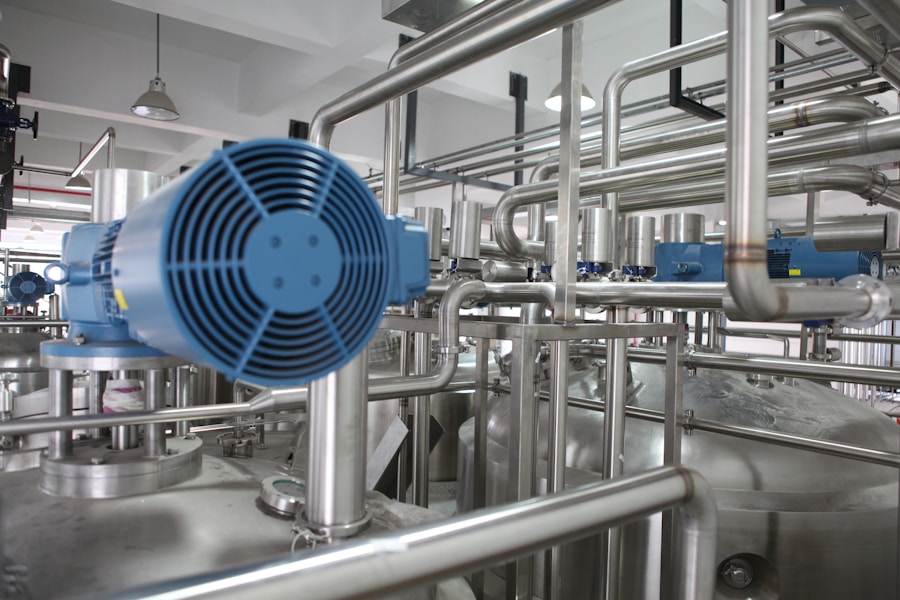
Industrial manufacturing facility with heavy machinery representing twin screw extruder production lines in China
Current State of the Twin Screw Extruder Industry in China
China's twin screw extruder manufacturing sector has matured significantly over the past two decades. What began as a low-cost alternative to European and Japanese equipment has evolved into a sophisticated industrial ecosystem capable of producing machines that rival global benchmarks in performance and reliability.
Raws li cov ntaub ntawv los ntawm lub General Administration of Customs of China, exports ntawm plastics ua machinery (HS Code 8477) tshaj USD 4.2 billion hauv 2024, with twin screw extruders representing a substantial and growing share. Key manufacturing clusters are concentrated in:
- Nanjing, Jiangsu xeev — Home to the highest concentration of twin screw extruder manufacturers globally, including both large-scale enterprises and specialized component suppliers. Nanjing is often referred to as the "capital of twin screw extrusion" in China.
- Zhangjiagang, Jiangsu xeev — A major hub for complete extrusion line integration, particularly for PVC and pipe extrusion applications.
- Dalian, Liaoning Province — Known for heavy-duty and large-tonnage extrusion systems serving petrochemical and engineering plastics sectors.
- Guangzhou and Shunde, Guangdong xeev — Focused on co-rotating twin screw extruders for masterbatch, color compounding, and food-grade applications.
The industry structure includes approximately 200+ manufacturers of varying scale, from large enterprises with annual revenues exceeding RMB 500 million to specialized SMEs producing niche configurations. Major Chinese manufacturers such as Nanjing Coperion (joint venture), Nanjing Jieya, USEON, Nanjing Kerke, and Lantai Plastics Machinery have invested heavily in R&D, CNC machining centers, and metallurgical capabilities to produce screw elements and barrels that meet international standards including CE, ISO 9001:2015, and specific industry certifications for food-contact and pharmaceutical applications.
Trade Policy Framework: China's Export Environment for Industrial Machinery
Understanding the trade policy environment is essential for any B2B buyer sourcing twin screw extruders Cr10 Extruder Stepper Noisy from China. Several policy dimensions directly impact pricing, lead times, and compliance requirements.
China's Export Support Policies
Extrusion Molding Plastic Manufacturer The Chinese government continues to support high-value manufacturing exports through several mechanisms documented Spice Blending Machine by the Ministry of Commerce of China (MOFCOM):
- VAT Export Rebates: Twin screw extruders classified under HS 8477.20 typically qualify for a 13% VAT export rebate, which Chinese manufacturers factor into FOB pricing. This effectively reduces the cost basis for international buyers.
- Free Trade Zone Benefits: Manufacturers operating within designated FTZs (e.g., Tuam Tshoj (Shanghai) Pilot Free Trade Zone) can access streamlined customs procedures and reduced administrative costs.
- Made in China Legacy: While the formal program has been de-emphasized in official communications, its successor policies continue to channel subsidies and low-interest financing toward advanced manufacturing equipment producers, including twin screw extruder factories investing in Industry 4.0 peev xwm.
Import Tariffs in Key Destination Markets
B2B buyers must account for import duties in their total landed cost calculations:
- Tebchaws Meskas: Following Section 301 tariff actions, certain Chinese-origin plastics machinery faces additional duties of 25% on top of the standard MFN rate of approximately 3.3%. Buyers should verify current HTS classifications with the International Trade Administration (ITA) as exemption processes and tariff adjustments remain fluid in.
- European Union: The standard EU tariff for twin screw extruders from China is approximately 1.7% under CN code 8477 20 00, raws li cov European Commission Directorate-General for Trade. The EU's Carbon Border Adjustment Mechanism (CAM) does not currently apply to machinery imports but is being monitored for potential scope expansion.
- Southeast Asia and Latin America: RCEP member states benefit from preferential tariff schedules on Chinese machinery exports, making these markets increasingly attractive for re-export and regional distribution strategies.

Container port with cargo ships and cranes representing international trade logistics for industrial machinery exports from C
B2B Sourcing Opportunities: Why Global Buyers Choose China for Twin Screw Extruders
The value proposition of sourcing twin screw extruders from Chinese manufacturers extends well beyond price competitiveness. For B2B procurement teams evaluating global supply options, several structural advantages merit careful consideration.
Cost Advantage Without Compromising Quality
A comparable-specification co-rotating twin screw extruder (e.g., 65mm screw diameter, 40:1 L/D ratio, 200-400 kg/hr output for polymer compounding) from a reputable Chinese manufacturer typically costs 40-60% less than equivalent European-made equipment from brands like Coperion, KraussMaffei, or Leistritz. This pricing differential reflects lower labor costs, integrated domestic supply chains for components (gearboxes, cov thoob, ntsia hlau ntsiab, control systems), and economies of scale — not inferior engineering.
Top-tier Chinese manufacturers now use:
- Imported tool steels (e.g., Böhler W360, Uddeholm Vanadis) for screw elements
- Siemens or ABB drive systems and PLCs
- Precision CNC machining with tolerances matching European standards (±0.01mm on screw profiles)
- In-house metallurgical labs for hardness testing (HRC 58-62 for nitrided barrels) and material verification
Full Customization and Flexible MOQ
Unlike many Western OEMs that offer standardized product lines with limited customization, Chinese twin screw extruder manufacturers routinely offer:
- Custom screw configurations designed for specific materials (e.g., calcium carbonate filler masterbatch, TPU compounding, WPC profiles)
- Complete turnkey production lines including feeders, cov pelletizers, cua txias tshuab, thiab ntim
- MOQ as low as 1 unit for standard models, with competitive pricing even for single-machine orders
- Private labeling and OEM manufacturing for international machinery distributors
Rapid Production and Delivery
Lead times from Chinese manufacturers typically range from 45-90 days for standard configurations, compared to 4-8 months from European manufacturers. This speed advantage is critical for buyers facing urgent capacity expansion needs or project deadlines.
Key Challenges in Sourcing Twin Screw Extruders from China
While the opportunities are compelling, B2B buyers must navigate several challenges to ensure successful procurement outcomes.
Quality Verification and Due Diligence
The wide range of manufacturer capabilities in China means that quality varies significantly. Buyers should implement rigorous supplier qualification processes:
- Factory Audits: Conduct in-person or third-party factory audits (SGS, TUV, Bureau Veritas) to verify manufacturing capabilities, quality management systems, and actual production capacity versus claimed capacity.
- Reference Checks: Request and verify customer references, particularly from buyers in your target application and geographic market.
- Sample Testing: For critical applications, arrange material processing trials at the manufacturer's facility using your actual raw materials.
- Certification Verification: Confirm that CE declarations of conformity are backed by actual testing (not self-declared without technical file support), and verify ISO certifications through accreditation body databases.
Intellectual Property Considerations
IP protection remains a concern, particularly for buyers sharing proprietary screw designs or process parameters. Mitigation strategies include:
- Executing NNN agreements (Non-Disclosure, Non-Use, Non-Circumvention) under Chinese law, enforceable in Chinese courts
- Registering key patents and trademarks with China's National Intellectual Property Administration (CNIPA)
- Working with manufacturers who have established track records with international clients and demonstrable IP respect
After-Sales Service and Technical Support
Geographic distance creates challenges for after-sales support. Leading Chinese manufacturers are addressing this through:
- Establishing overseas service centers or partnerships with local engineering firms in key markets
- Providing remote diagnostics via IoT-enabled control systems
- Maintaining spare parts inventories at bonded warehouses in Europe and North America
- Offering video-guided installation and commissioning support
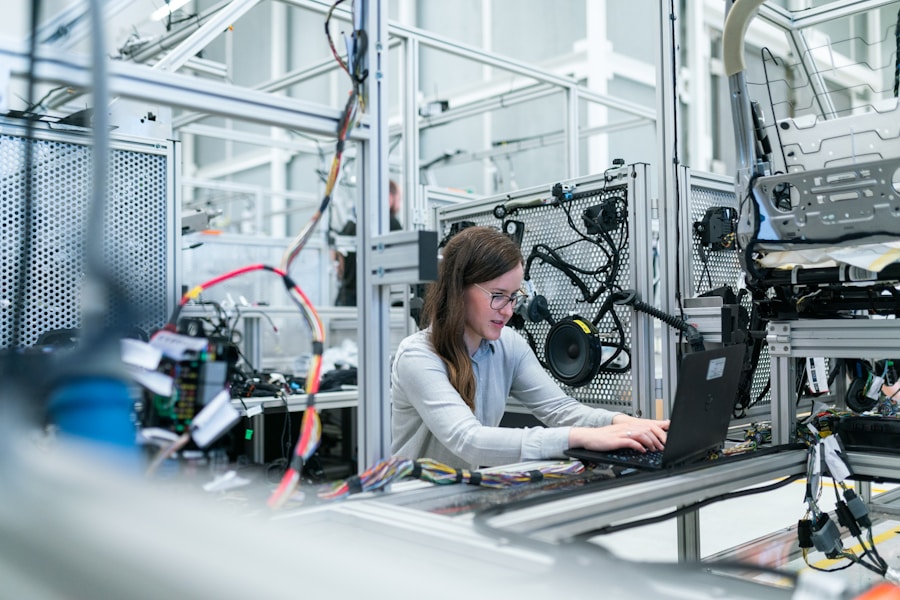
Engineer inspecting industrial machinery in a modern manufacturing plant representing quality control for twin screw extruder
Geographic and Policy Advantages Enabling China's Twin Screw Extruder Exports
China's dominance in twin screw extruder manufacturing is reinforced by several geographic and policy-driven structural advantages that directly benefit B2B buyers.
Plastic Extruder In Egypt Integrated Supply Chain Ecosystem: The concentration of component suppliers — gearbox manufacturers, chim thiab ntsia hlau ntsiab producers, electrical component suppliers, and steel mills — within a 200km radius of major manufacturing hubs like Nanjing creates unmatched supply chain efficiency. This integration reduces lead times, lowers logistics costs, and enables rapid iteration during custom equipment development.
Chaw nres nkoj Infrastructure: China's major export ports (Shanghai, Ningbo-Zhoushan, Shenzhen) are among the world's most efficient, with direct container shipping routes to every major global market. A twin screw extruder shipped from Shanghai reaches Rotterdam in approximately 28-32 days and Los Angeles in 14-18 hnub, with competitive ocean freight rates due to high container volumes.
Belt and Road Initiative (BRI) Connectivity: For buyers in Central Asia, Middle East, and parts of Africa, BRI-funded infrastructure improvements have created new logistics corridors (rail and road) that reduce transit times and costs for heavy machinery shipments.
Trade Agreement Network: China's participation in RCEP and bilateral trade agreements with numerous countries provides preferential tariff treatment for machinery exports to a growing number of markets, further enhancing the cost competitiveness of Chinese-manufactured twin screw extruders.
Practical Case Studies Success Stories in Twin Screw Extruder Sourcing from China
Case Study 1: European Masterbatch Producer Reduces CAPEX by 52%
A mid-sized masterbatch compounder based in Germany needed to expand capacity with three new twin screw compounding lines (75mm, 44:1 L/D). After evaluating quotes from two European OEMs and three Chinese manufacturers, the company selected a Nanjing-based manufacturer. Key outcomes:
- Total equipment cost (3 lines, complete with feeders, strand pelletizers, and control systems): EUR 890,000 vs. EUR 1.85 million from the lowest European bidder
- The buyer conducted a 5-day factory audit and ran processing trials with their own PP and PE base resins at the manufacturer's test center
- Equipment was delivered within 75 hnub, installed with remote video support from the Chinese engineering team, and achieved target output rates within 2 weeks of commissioning
- Tom qab 18 lub hlis ua haujlwm, the company reports comparable uptime and product quality to their existing European-made lines
Case Study 2: US Plastics Recycling Startup Achieves Rapid Market Entry
A venture-backed plastics recycling company in Ohio needed a specialized twin screw extruder system for processing post-consumer HDPE and PP waste streams. Requirements included aggressive Compounding Extruder Machine Factory screw designs for devolatilization, melt filtration integration, and compliance with US electrical codes (UL/NEC). The company sourced from a Guangdong-based manufacturer that:
- Provided a custom screw design validated through simulation software (Ludovic) before manufacturing
- Integrated UL-listed electrical components and provided a complete technical file for US regulatory compliance
- Delivered the system in 60 days at approximately 45% below comparable US-assembled alternatives
- Stationed a commissioning engineer on-site for 10 days during installation and startup
Case Study 3: Southeast Asian Food Processor Sources Pharma-Grade Equipment
A food and nutraceutical company in Thailand required a twin screw extruder for producing textured vegetable protein (TVP) and nutritional supplements. The equipment needed to meet food-contact material standards and GMP requirements. Working with a Chinese manufacturer experienced in food-grade extrusion systems:
- All product-contact surfaces were manufactured in SUS 304/316L stainless steel with Ra ≤ 0.8μm surface finish
- The system included CIP (Clean-in-Place) capability and full material traceability documentation
- RCEP preferential tariff treatment reduced import duties to 0% (phased reduction schedule)
- Total project cost was approximately 55% below a comparable European food extrusion system

Modern factory floor with automated production equipment representing advanced manufacturing capabilities of Chinese twin scr
How to Evaluate and Select a Twin Screw Extruder China Manufacturer
For B2B buyers ready to engage with Chinese suppliers, ib lub moj khaum kev ntsuam xyuas yog qhov tseem ceeb. The following criteria should guide your supplier selection process:
Kev ntsuam xyuas muaj peev xwm
- Screw and Barrel Manufacturing: Does the manufacturer produce screw elements and barrels in-house, or outsource? In-house production indicates deeper technical capability and better quality control.
- Metallurgical Expertise: Verify the types of tool steels used, heat treatment processes (nitriding depth, HRC hardness), and whether the manufacturer has in-house metallurgical testing equipment.
- Gearbox Source: The gearbox is the most critical and expensive component. Top Chinese manufacturers use imported gearboxes (e.g., Flender/Siemens, Zambello) or high-quality domestic alternatives with proven reliability records.
- Tswj Systems: Siemens, ABB, or Schneider PLCs and drives are standard on export-grade machines. Verify the specific models and configurations offered.
Commercial and Compliance Evaluation
- Export Experience: Prioritize manufacturers with documented export history to your target market. Request shipping records, customs documentation samples, and references from buyers in your region.
- Payment Terms: Standard terms are typically 30% T/T deposit with 70% ua ntej khoom xa tuaj, or letter of credit. Established manufacturers may offer more flexible terms for repeat buyers.
- Warranty and Service: Expect 12-month warranties on complete machines with defined response time commitments for technical support. Clarify spare parts pricing and availability upfront.
- Compliance Documentation: For CE-marked equipment, request the full technical file including risk assessment, electrical schematics, and test reports — not just the declaration of conformity.
Industry Applications Driving Twin Screw Extruder Demand in
Understanding the application landscape helps buyers contextualize their sourcing decisions and identify manufacturers with relevant expertise.

Plastic pellets and polymer materials used in twin screw extrusion compounding processes for industrial manufacturing
Polymer Compounding and Masterbatch
The largest application segment, encompassing color masterbatch, additive masterbatch, filler compounding (CaCO3, talc, iav fiber), and engineering plastics compounding. Chinese manufacturers have deep expertise in this segment, with many offering application-specific screw designs and complete downstream systems.
Plastics Recycling
Lub ntiaj teb kev thawb mus rau cov qauv kev lag luam ncig yog tsav kev nqis peev loj hauv cov khoom siv yas rov ua dua tshiab. Twin screw extruders are essential for processing post-consumer and post-industrial waste streams, requiring specialized devolatilization, lim, and compounding capabilities. Raws li the Association of Plastic Recyclers (APR), global investment in recycling infrastructure is expected to exceed USD 50 billion los ntawm 2027.
Food and Feed Processing
Twin screw extrusion is increasingly used for producing textured proteins, khoom noj txom ncauj, tsiaj noj, and aquafeed. This segment requires food-grade construction, hygienic design, and specific certifications that a growing number of Chinese manufacturers can provide.
Battery Materials and Advanced Compounds
The EV revolution is creating new demand for twin screw extruders in battery electrode material processing, thermal interface material compounding, and specialty polymer production. This high-value segment represents a significant growth opportunity for technically advanced Chinese manufacturers.
Workplace Safety in Manufacturing: Protecting Workers in Extrusion Environments
Operating twin screw extruders and associated downstream equipment presents significant workplace safety considerations. For B2B buyers establishing or expanding extrusion operations, investing in proper personal protective equipment (PPE) — particularly safety footwear — is not optional but a fundamental operational requirement.
Why Safety Footwear Is Critical in Extrusion Facilities
Twin screw extrusion environments present multiple hazards to workers' ko taw:
- Heavy Object Impact: Ntsia hlau ntsiab, cov seem, daim hlau tuag, and gearbox components routinely weigh 10-50+ kg. A single dropped screw element can cause severe crush injuries to unprotected feet. Safety shoes with steel or composite toe caps rated to EN ISO 20345:2022 S3 standard provide impact protection of 200 joules ua — equivalent to a 20kg object dropped from 1 meter.
- Hot Material Exposure: Molten polymer at temperatures of 180-350°C can splash or drip during die changes, screen changes, or purging operations. Heat-resistant safety footwear with appropriate sole ratings (HRO — Heat Resistant Outsole, withstanding 300°C contact for 60 vib nas this) prevents severe burns.
- Txhab phom sij: Extrusion facilities often have floors contaminated with polymer dust, pellet spillage, cooling water, and hydraulic oil. SRC-rated anti-slip soles (tested on both steel and ceramic tile with soap solution) reduce slip-and-fall incidents by up to 67% according to workplace safety studies cited by the European Lub Chaw Haujlwm Saib Xyuas Kev Nyab Xeeb thiab Kev Noj Qab Haus Huv ntawm Kev Ua Haujlwm (EU-OSHA).
- Puncture Risks: Metal fragments from screw wear, wire strands from heating elements, and sharp-edged polymer flash create puncture hazards on workshop floors. Midsole penetration resistance (rated P) protects against objects up to 1,100 Newtons of force.
- Hluav Taws Xob Hluav Taws Xob: Workers performing maintenance on extruder drive systems and control panels face electrical contact risks. ESD (Electrostatic Dissipative) or electrically insulating safety footwear provides appropriate protection depending on the specific hazard assessment.
- Compression Injuries: Heavy machinery, mobile equipment (forklifts transporting raw materials and finished goods), and rolling loads create metatarsal compression risks that metatarsal guard-equipped safety boots address.
Safety Footwear Standards and Certifications for Industrial Environments
B2B buyers procuring safety footwear for extrusion facility workers should understand the applicable standards: Automatic Butyl Extruder Manufacturer
- Hauv ISO 20345:2022 (Teb chaws Europe): The primary European standard defining safety footwear categories (S1, S1 P, S2, S3, S3L, S3S, lwm.) nrog rau cov kev cai tshwj xeeb rau kev tiv thaiv ntiv taw, sole properties, dej tsis kam, and additional protections.
- ASTM F 2413-18 Cov Lus Qhia (North America): The American standard specifying impact resistance (kuv/75 or 50), compression tsis kam (C/75 los yog C/50), kev tiv thaiv metatarsal (Mt), puncture tsis kam (PR), hluav taws xob txaus ntshai (EH), and static dissipative (SD) ratings.
- GB 21148-2020 (Tuam Tshoj): China's national standard for safety footwear, largely harmonized with ISO standards, relevant for buyers sourcing PPE from Chinese manufacturers alongside their machinery purchases.
Selecting the Right Safety Footwear for Extrusion Operations
For twin screw extruder operations specifically, the recommended minimum specification is: Masterbatch Twin-Screw Extruder Machine Factory Extruder Machine Factory
- S3 rating (Hauv ISO 20345) or equivalent ASTM rating: kaw pob taws, fuel oil resistant sole, water-penetration resistant upper, anti-static, lub zog nqus hauv pob taws, puncture-resistant midsole, 200J toe cap
- HRO (Heat Resistant Outsole) for operators working near die faces and downstream equipment
- SRC slip resistance for all production floor personnel
- Composite toe caps as an alternative to steel for workers who prefer lighter footwear or work near metal detectors in food-grade facilities
- Ankle-height boots (not low-cut shoes) for maintenance personnel who work around hot polymer and heavy components
The economic case for quality safety footwear is compelling: the average cost of a workplace foot injury in the US exceeds USD 9,000 in direct medical costs alone (rau National Safety Council cov ntaub ntawv), tsis suav nrog poob tsim khoom, cov neeg ua haujlwm' compensation premium increases, and potential OSHA citations. A pair of high-quality S3 safety boots costs USD 80-200 — a negligible investment relative to the risk.

Co-Rotating Parallel Twin-Screw Extruder For B2B buyers sourcing twin screw extruders from China, many manufacturers can also supply or recommend appropriate PPE as part of their turnkey project scope, ensuring that safety equipment meets the regulatory requirements of the buyer's jurisdiction. Hdpe Extruder For Sale
Yav tom ntej Trends: Twin Screw Extruder Market Outlook for Mid- and Beyond
Raws li kev lag luam ntsuas tam sim no, kev tsim kho kev lag luam, and technology trends, several predictions can be made for the near-term outlook of the twin screw extruder sourcing landscape.
Pricing Trends
Raw material costs for twin screw extruder manufacturing (tool steel, structural steel, copper for motors) have stabilized in early after the volatility of 2022-2024. Chinese manufacturers are expected to maintain current pricing levels through Q3, with potential modest increases (3-5%) in Q4 if energy costs rise. The RMB/USD exchange rate remains a key variable — the current rate of approximately 7.2-7.3 RMB/USD favors international buyers.
Technology Evolution
- Kev lag luam 4.0 Kev koom ua ke: Expect accelerated adoption of IoT-enabled extruders with remote monitoring, kev kwv yees txij nkawm algorithms, and cloud-based process data analytics. Leading Chinese manufacturers are already offering these capabilities, often at no additional cost to remain competitive.
- Zog Efficiency: New-generation direct-drive motor systems and optimized screw designs are reducing specific energy consumption (kWh/kg) los ntawm 15-25% piv rau cov tshuab tsim 5 xyoo dhau los. This is a significant selling point as energy costs remain elevated globally.
- Larger Machines: Chinese manufacturers are increasingly capable of producing large-diameter twin screw extruders (133mm, 150mm, and above) that were previously the exclusive domain of European manufacturers. This opens new sourcing options for high-volume compounders.
Trade Policy Developments to Monitor
- US Tariff Landscape: The ongoing review of Section 301 tariffs and potential new trade actions in create uncertainty for US-based buyers. Strategies to mitigate tariff risk include sourcing through ASEAN-based intermediaries (where Chinese manufacturers have established assembly operations), applying for tariff exclusions, and evaluating total cost of ownership rather than purchase price alone.
- EU CBAM Expansion: While machinery is not currently in scope, the EU's Carbon Border Adjustment Mechanism could eventually impact the competitive dynamics if expanded to cover embedded carbon in manufactured goods. Chinese manufacturers with documented carbon footprint data and renewable energy usage will be better positioned.
- RCEP Deepening: As RCEP tariff reductions continue their phased implementation through 2035, buyers in ASEAN, Australia, New Zealand, Nyiv, and South Korea will see progressively lower duties on Chinese machinery imports.
Supply Chain Resilience
Twin-Screw Extruders Supplier The lessons of 2020-2023 supply chain disruptions have prompted both buyers and manufacturers to build greater resilience. Expect Chinese twin screw extruder manufacturers to continue investing in:
- Overseas spare parts warehousing
- Diversified shipping route options (including rail via China-Europe freight trains)
- Digital twin technology for remote commissioning and troubleshooting
- Strategic partnerships with local service providers in key markets


Global trade and logistics network visualization representing international B2B supply chains for industrial machinery
Cov lus nug nquag: Twin Screw Extruder China Manufacturer Sourcing
- Q1: What is the typical lead time for a twin screw extruder from a China manufacturer?
- Standard configuration twin screw extruders typically require 45-90 days from order confirmation to ex-works readiness. Highly customized systems or large-diameter machines may require 90-120 hnub. Ocean freight adds 14-32 days depending on destination port.
- Q2: How can I verify the quality of a Chinese twin screw extruder before purchasing?
- Recommended steps include: conducting a factory audit (in-person or via third-party inspection firms like SGS or TÜV), requesting processing trials with your materials at the manufacturer's test center, verifying certifications through issuing body databases, checking customer references in your application segment, and reviewing the manufacturer's export history and documentation quality.
- Q3: What certifications should a twin screw extruder from China have for export to Europe or the US?
- Rau EU ua lag luam: CE marking with a complete technical file including risk assessment per Machinery Directive 2006/42/EC (transitioning to EU Machinery Regulation 2023/1230 los ntawm Lub Ib Hlis 2027). Rau Asmeskas kev lag luam: compliance with OSHA requirements, UL cov npe hluav taws xob cov khoom siv, and NEC-compliant wiring. ISO 9001:2015 quality management certification is expected as a baseline.
- Q4: What payment terms are standard when purchasing from Chinese manufacturers?
- The most common arrangement is 30% T/T (telegraphic transfer) deposit upon order confirmation, with 70% T/T before shipment after pre-shipment inspection. Cov ntawv credit (L/C at sight) are also widely accepted. Some established manufacturers offer 30/70 terms with the balance payable after commissioning for repeat customers.
- Q5: Can Chinese manufacturers provide complete turnkey extrusion lines, not just the extruder?
- Yog lawm. Most established Chinese twin screw extruder manufacturers offer complete production lines including volumetric/gravimetric feeders, ntxaib ntsia hlau extruder, melt pump (if required), screen changer, die face/strand pelletizer or underwater pelletizing system, cooling and drying systems, and packaging equipment. Turnkey solutions typically offer better integration and single-source accountability.
Xaus: Strategic Sourcing from Twin Screw Extruder China Manufacturers
The twin screw extruder manufacturing sector in China has reached a level of maturity, technical capability, and export sophistication that makes it an essential sourcing option for B2B buyers worldwide. The combination of competitive pricing (40-60% below European alternatives), rapid delivery
Twin Ntsia Hlau Extruder Tuam Tshoj tsum: Ua kom tiav B2B Sourcing Guide rau Glo… · Twin Ntsia Hlau Extruder Tuam Tshoj Hoobkas: Ua kom tiav B2B Sourcing Guide for Glob… · Twin Screw Extruder China Wholesale Sourcing Guide for Global Buyers