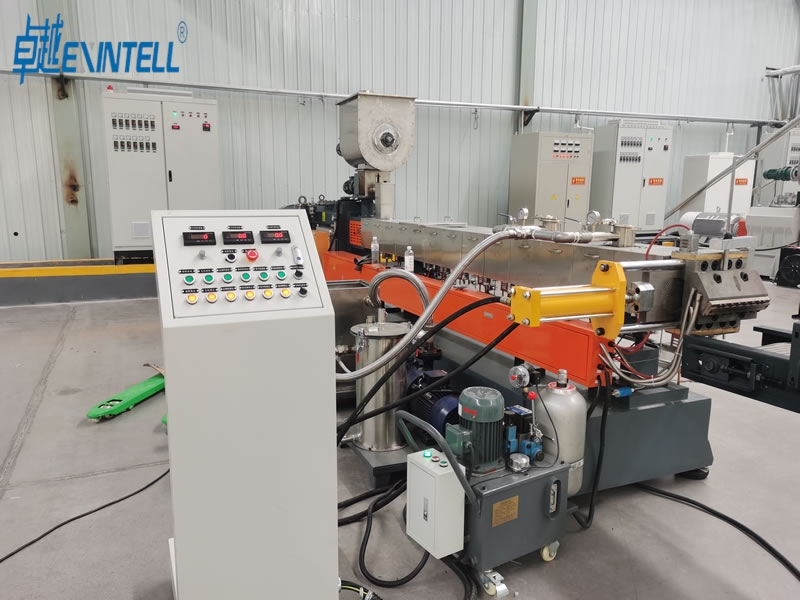
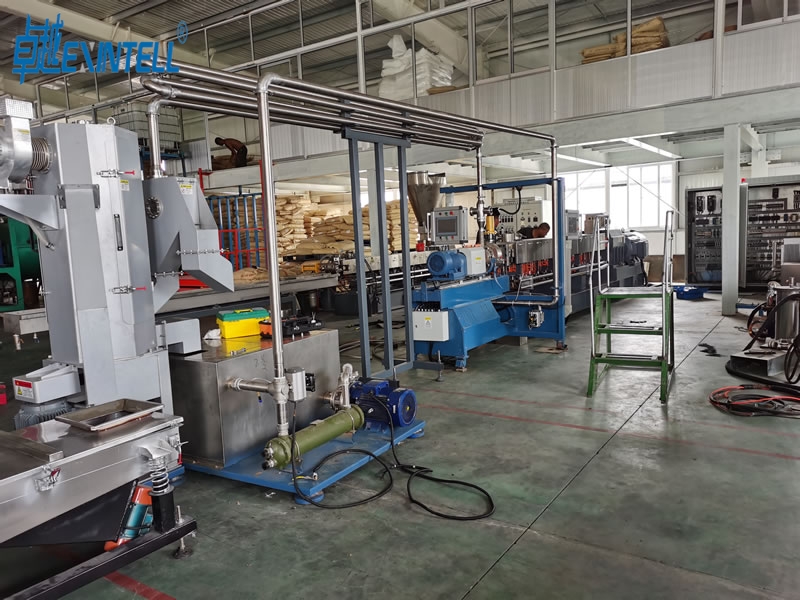
Selecting the right pelletizer machine plastic type shapes your production efficiency and end-product quality. You will find three main options: water-ring, underwater, thiab strand pelletizers. Each system offers unique advantages. Piv txwv li, strand pelletizers provide flexibility and work well for rigid plastics, while underwater models deliver instant cooling for sticky or heat-sensitive materials. Water-ring systems strike a balance between flexibility and automation, making them ideal for medium viscosity plastics in recycling. Compare features, performance, and cost. Always match your choice with your material, hla dhau, thiab cov kev xav tau zoo.
Considerproduction speed and qualitywhen choosing a pelletizer. Underwater systems provide high-quality pellets, while strand systems offer cost-effectiveness for general use.
Evaluate your facility’s space and maintenance capabilities. Water-ring systems require moderate upkeep, underwater systems need more attention, and strand systems are easier to maintain.
Match your pelletizer’s throughput with your production needs. Ensure the machine can handle your expected output to avoid bottlenecks in your process.
Use a screening machine for consistent pellet quality. This equipment helps remove impurities and ensures your final product meets industry standards.
Core Differences Comparison Chart
When you evaluate pelletizer machines for plastic processing, you need a clear overview of how each system performs. The followingcore differences comparison chartgives you a side-by-side look at water-ring, underwater, and strand pelletizers. This chart helps you quickly identify which machine aligns with your production goals.
Koj yuav tsum tsom mus rau ntau yam tseem ceeb thaum xaiv tus pelletizer. Txhua qhov system muab cov yam ntxwv ua tau zoo:
Water-Ring Pelletizer:
Koj tau txais nruab nrab pellet zoo thiab qhov loj me zoo ib yam. Cov txheej txheem no ua haujlwm zoo tshaj plaws rau nruab nrab viscosity lossis cov yas rov ua dua tshiab. Kev tu thiab kev khiav hauj lwm cov nqi tseem tswj tau. Kev ceev ntau lawm haum rau feem ntau cov khoom siv rov ua dua tshiab.
Underwater Pelletizer:
Koj ua tau zoo pellet zoo nrog cov duab zoo thiab cov plua plav tsawg. Qhov system no zoo heev nrog nplaum, elastic, los yog kub-sensitive yas. Koj yuav pom cov nqi pib thiab kev khiav hauj lwm ntau dua, tab sis koj tau txais kev ua tau zoo tshaj plaws thiab kev ua haujlwm siab.
Strand Pelletizer: You benefit from a straightforward design and low investment. Pellet quality can vary, especially if you process materials with inconsistent melt flow. This system suits rigid or semi-rigid plastic and general-purpose applications.
Nco tseg:Industry benchmarks show that underwater pelletizers consistently deliver the most uniform pellets. Water-ring systems offer a balance between cost and quality, while strand pelletizers provide flexibility for a wide range of plastics.
By reviewing this core differences comparison chart, you can match your production needs with the right pelletizer system. Consider your material type, desired pellet quality, and budget to make the best choice.
Pelletizer Machine Plastic Types
Water-Ring Pelletizer Features
You will find thewater-ring pelletizing systemoperates by cutting molten plastic at the die face, where a rotating water ring instantly cools and solidifies the pellets. This process supports a broad range of thermoplastics, including soft, tacky, nkaws, and temperature-sensitive compounds. The enclosed design of the water-ring pelletizing system reduces operator exposure to fumes and dust, making your workspace safer.
Key features of the water-ring pelletizing system include:
Direct water contact for rapid and uniform pellet cooling.
Automated operation that minimizes manual intervention.
Compact layout for efficient use of space.
Qhov zoo
Kev piav qhia
Uniform and Consistent Pellet Shape
Ensures uniform grain geometry and smooth surfaces.
No Strand Breakage
Eliminates strand instability, ideal for wet or flexible materials.
Excellent Cooling Efficiency
Prevents deformation at high throughput.
Ideal for Soft or Low-Viscosity Materials
Handles materials that struggle in strand systems.
You should note that the water-ring pelletizing system requires precise water temperature control and regular maintenance, especially for the die plate and cutting chamber. The initial investment can be higher than other systems, but you gain reliability and quality.
Underwater Pelletizer Features
The underwater pelletizer machine cuts molten polymer strands in a water-filled chamber. This method cools and solidifies pellets instantly, combining cooling and cutting in one efficient step. You will achieve high-quality pellets with minimal defects, making this system a top choice for specialty applications.
Yog tias koj xav tau kev hloov pauv, nqi-zoo yas pelletizer system rau cov ntaub ntawv nruj, cov strand pelletizing system muab kev txhim khu kev qha.
Advanced Yas Pelletizer System Options
Ib leeg vs. Ob-Stage Systems
Koj yuav tsum txiav txim siab ntawm ib-theem thiab ob-theem systems thaum tsim kom muaj cov txheej txheem rov ua dua tshiab. Single-theem systems muab cov hneev taw me me thiab qis pib nqis peev. Koj yuav pom lawv yooj yim rau nruab thiab tswj, tshwj xeeb tshaj yog tias koj ua cov ntaub ntawv zoo. Ob-theem tshuab muab kev sib xyaw ua ke zoo tshaj thiab kev tswj hwm qhov kub thiab txias rau txhua theem. Cov tshuab no tswj cov khoom sib txawv lossis cov khoom tsis huv, suav nrog cov uas yuav tsum tau ua ua ntej kev tshem tawm impurity. Cov lus hauv qab no qhia txog qhov sib txawv tseem ceeb:
Feature
Single-Stage Systems
Ob-Stage Systems
Kev nqis peev pib
qis (40-60% tsawg)
Siab dua
Kev tu
qis, yooj yim dua
Siab dua, nyuaj dua
Hneev taw
Me me
Loj dua
Kev sib xyaw muaj peev xwm
txwv
Superior
Kev Ua Haujlwm Zoo
qis
Siab dua
Yooj yim
Yooj yim dua
Hloov tau yooj yim dua
Yog tias koj xav tau cov zis ntau thiab qhov yooj yim rau ntau hom yas, ob-theem systems muab cov txiaj ntsig zoo dua.
Txheej txheem tswj thiab saib xyuas
Cov tshuab pelletizer niaj hnub siv cov txheej txheem kev tswj hwm qib siab thiab saib xyuas lub sijhawm. Koj tuaj yeem kho qhov kub thiab txias, siab, thiab txiav ceev txiav. Cov tshuab no ua kom cov pellet loj thiab cov duab zoo ib yam, uas yog ib qho tseem ceeb rau kev siv downstream. Cov ntaub ntawv tshawb xyuas lub sijhawm tiag tiag pab koj txhim kho kev tsim khoom thiab txo qis sijhawm. Koj tau txais kev ua haujlwm siab dua thiab cov khoom zoo. Advanced diagnostics also identify potential issues before they affect your process.
Price Range and Investment
You should consider both upfront and ongoing costs when investing in a pelletizer machine. The typicalprice rangevaries by machine type:
Machine Type
Nqe Ntau
Water-Ring Pelletizer
$38,000
Underwater Pelletizer
$95,000
Strand Pelletizer
$8,000 - $18,000
Keyinvestment considerationsinclude maintenance costs, access to spare parts, muaj peev xwm ntau lawm, and material processing capabilities. You should also evaluate the potential return on investment to ensure long-term value for your operation.
Key Factors for Choosing a Pelletizer Machine Plastic
Khoom Compatibility
You must evaluate material compatibility before you select apelletizer machine plasticfor your operation. Each system handles different polymers and additives with varying efficiency. The following list shows themost common materials processedwith these machines:
PP
PE
PET
TPU
PA
EVA
PLA
PBAT
PHA
starch-based polymers
ABS
TPE
engineering plastics
kub-melt adhesives
elastomers
reactive polymers
Cov khoom siv xws li melt flow index (MFI), nplaum, elasticity, brittleness, thiab thermal rhiab heev cuam tshuam ncaj qha rau koj xaiv. Koj tuaj yeem siv lub rooj hauv qab no kom phim koj cov ntaub ntawv MFI nrog rau kev pom zoo pelletizer tshuab yas hom:
MFI Ntau
Pom zoo System
Tsawg MFI (<5 g/10 min)
Strand los yog underwater pelletizer
Medium MFI (5- 30 g / 10 feeb)
Dej-ntiv nplhaib lossis underwater pelletizer
Siab MFI (>30 g/10 min)
Underwater pelletizer nyiam
Tacky lossis elastic cov ntaub ntawv zoo li TPE thiab EVA ua tau zoo tshaj plaws hauv dej-ntiv nplhaib lossis hauv qab dej.
Brittle compounds, xws li iav puv yas, yuav tawg nyob rau hauv strand systems. Txoj kev kub-txiav lossis hauv qab dej yog qhov zoo dua.
Thermal-sensitive plastics, suav nrog PVC thiab qee yam bioplastics, xav tau cua txias configurations los tiv thaiv degradation.
Koj yuav tsum ua tib zoo saib xyuas koj lub tshuab pelletizer yas xaiv nrog lub cev thiab tshuaj lom neeg ntawm koj cov khoom noj kom ntseeg tau tias kev ua tau zoo thiab cov pov tseg tsawg kawg thaum rov ua dua lossis rov ua cov ntaub ntawv yas..
Peev Xwm thiab Peev Xwm
Peev thiab muaj peev xwm txiav txim qhov ua tau zoo ntawm koj cov kab ntau lawm. Koj yuav tsum ua kom haum cov pelletizer cov zis nrog koj cov txheej txheem extrusion kom tsis txhob muaj fwj. Kev ua haujlwm siab tau txais txiaj ntsig los ntawm qib siab pelletizer tshuab yas tshuab uas ua kom muaj kev sib tw thiab txo qis qis. Kev ua haujlwm nruab nrab thiab qis qis feem ntau nyiam cov tshuab strand rau lawv qhov yooj yim thiab qis dua tus nqi pib. Qhov kev hloov pauv no txhawb nqa cov tuam txhab uas xav tias yuav loj hlob hauv kev xav tau ntau lawm.
Cov lus hauv qab no pab koj xaiv qhov system raws li koj qhov kev xav tau:
Throughput Range (kg/h)
Recommended Pelletizer Type
Below 300
Strand or air-cooled systems
300–1,000
Water-ring pelletizers
Above 1,000
Underwater pelletizers
The pelletizer’s capacity should always match or exceed the upstream extrusion output.
A mismatch of 10–15% can cause melt-pressure fluctuations, which negatively impact pellet quality and grading.
You must consider future expansion and the potential for increased recycling volumes when choosing a pelletizer machine plastic. This ensures your investment remains valuable as your business grows.
Pellet Quality and Screening
Pellet quality plays a critical role in downstream applications, especially in industries that demand high consistency and purity. You achieve this through effective grading and screening. Plastic pellet screening machines are essential for separating granules by size and removing unwanted parts. This process ensures that your final product meets strict specifications for injection molding, extrusion, or medical-grade plastic purity screening.
Plastic pellet screening machines provide several benefits:
Koj yuav tsum teem sijhawm kuaj xyuas thiab kev tiv thaiv kev tiv thaiv kom tsis txhob muaj lub sijhawm poob qis. Qhov kev coj ua no txuas ntxiv lub neej ntawm cov cuab yeej siv thiab tswj kev ntsuas ntsuas thiab ntsuas kev ua haujlwm.
Qhov chaw nyob kuj cuam tshuam koj qhov kev txiav txim siab. Cov tshuab loj dua yuav tsum muaj ntau qhov chaw hauv pem teb, uas cuam tshuam rau koj cov nroj tsuag layout thiab workflow. The chart below illustrates the floor space required for different pelletizer machine plastic models:
You must plan for adequate space not only for the pelletizer but also for plastic pellet screening machines, storage, and material handling. Efficient use of space supports safe operations and smooth recycling processes.
Tswv yim: When you design your production line, always consider the integration of grading and screening equipment. This approach ensures you achieve the highest quality pellets and maintain efficient recycling operations.
Use Cases for Plastic Pelletizer System
Water-Ring Applications
You will findwater-ring pelletizer systemsin many industrial environments that require stable, continuous production. These machines handle a wide range of plastic materials, especially those with medium viscosity. Dej-ring systems haum rau cov nroj tsuag rov ua dua tshiab, compounding chaw, thiab masterbatch ntau lawm kab. Cov neeg ua haujlwm nyiam cov tshuab no rau lawv txoj haujlwm yooj yim thiab kev saib xyuas yooj yim. Cov lus hauv qab no qhia txog qhov lub ntsiab zoo:
Qhov zoo
Kev piav qhia
Yooj yim rau kev khiav lag luam
Lub tshuab pib ua haujlwm sai dua thiab yuav tsum muaj kev cuam tshuam tus neeg teb xov tooj tsawg dua.
Underwater pelletizer tshuab ua tau zoo hauv kev lag luam uas xav tau cov khoom zoo, uniform pellets. Koj yuav pom cov tshuab no hauv ntim, tsheb, thiab kho mob sectors. Txhua qhov kev lag luam muaj nuj nqis rau cov yam ntxwv pellet meej thiab zoo ib yam. The following table shows how different industries benefit:
Kev lag luam
Benefit Description
Ntim
High demand for uniform, zoo pelletsfor manufacturing processes.
Automotive
Requires consistent pellet quality for production efficiency.
Kho mob
Needs precise pellet characteristics for medical-grade materials.
You should select underwater systems when you need instant cooling and minimal dust, especially for heat-sensitive or specialty plastic compounds.
Strand Applications
Strand pelletizer systems work best for rigid and semi-rigid plastic types. You will find these machines in general-purpose manufacturing, engineering plastics processing, and small to medium-sized production lines. Operators appreciate the straightforward design and low investment. You can easily maintain these systems, making them ideal for facilities with limited technical staff.
Nco tseg: Choose strand pelletizers if you process clean, stable-melt plastics and want a cost-effective solution.
Matching System to Production Needs
You must match your pelletizer system to your production requirements for optimal results. Consider the following factors:
Qhov xwm txheej
Kev piav qhia
Hom khoom
Consider the hardness, noo noo cov ntsiab lus, and temperature sensitivity.
Production Scale
Match the pelletizer’s capacity with your production needs.
Desired Pellet Size
Choose a machine that produces pellets suitable for your application.
Industry Requirements
Ensure compliance with industry-specific standards.
Understand the types of plastic materials you plan to recycle.
Calculate your output requirement.
Select the machine features, including cutting and feeding types.
Choose additional equipment options for your process.
Koj yuav ua tiav qhov kev ua tau zoo tshaj plaws thaum koj kho koj qhov kev xaiv qhov system nrog koj cov khoom siv, muaj peev xwm, thiab cov hom phiaj zoo.
Daim ntawv txiav txim rau Pelletizer Tshuab Yas
Cov lus nug tseem ceeb
Ua ntej koj xaiv lub tshuab pelletizer, koj yuav tsum nug koj tus kheej ntau cov lus nug tseem ceeb. Cov no yuav pab koj qhia meej koj cov kev xav tau thiab zam kev ua yuam kev kim:
Hom yas dab tsi koj ua feem ntau?
Koj lub hom phiaj yog dab tsi hauv kilos ib teev?
Qhov tseem ceeb npaum li cas yog pellet uniformity thiab nto zoo rau koj cov khoom kawg?
Koj puas yuav tsum tau ua cov nplaum, elastic, los yog cov ntaub ntawv kub-rhiab?
Dab tsi yog koj qhov chaw hauv pem teb rau cov khoom siv tshiab?
Koj tuaj yeem nqis peev ntau npaum li cas hauv kev yuav khoom pib thiab kev saib xyuas tsis tu ncua?
Koj puas xav tau cov txheej txheem kev tswj hwm qib siab lossis automation nta?
Koj puas yuav tsum tau ua raws li cov qauv kev lag luam tshwj xeeb lossis cov ntawv pov thawj?