

Me ka oi 17 mau makahiki o ka ʻike lima i ka ʻenehana extrusion plastic optimization a me nā ʻōnaehana hoʻokele waiwai, Ua hana au me 250+ nā mea hana ma ka honua holoʻokoʻa e hoʻoponopono i nā hemahema o ka hānai ʻana-kekahi o nā bottlenecks maʻamau i ka hana extrusion. ʻO ka mea hoʻohana ʻana i ka mea hoʻoemi i ke kaumaha (KULA) a ʻo nā ʻōnaehana feeder volumetric ke kumu i ka hana extruder mau, directly impacting product quality, material waste, and overall production efficiency. While volumetric feeders offer cost-effective solutions for standard applications, loss-in-weight scales deliver the precision required for high-value, tight-tolerance extrusion processes—making both systems critical tools in the modern plastic processing facility.
The volumetric feeder is suitable for most extruder feeding solutions, it has low-cost and high-efficiency feeding characteristics. As the most widely used feeding system for general extrusion applications, volumetric feeders balance affordability with reliable performance, making them ideal for small to mid-sized manufacturers processing non-critical materials (e.g., general purpose PE/PP, rigid PVC compounds) where precise dosing is not a primary requirement.
Unlike loss-in-weight scales that measure material weight in real-time, volumetric feeders deliver a consistent volume of material to the extruder—controlled by screw rotation speed and screw geometry. This simplicity translates to lower upfront costs (30-50% less than loss-in-weight systems) and minimal maintenance, making volumetric feeders a practical choice for high-volume, low-margin production runs.
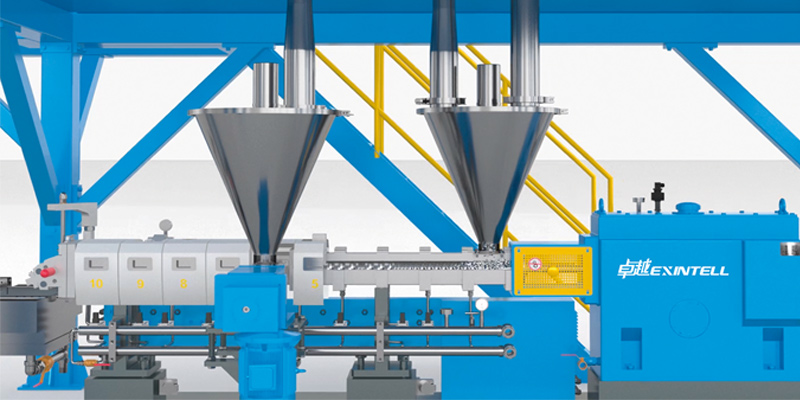
The volumetric feeder consists of a small twin screw, barela, and motor Mea Hana Mīkini Filler Masterbatch engineered for reliable material flow and minimal downtime. The compact twin-screw design addresses two key challenges of single-screw volumetric feeders: material bridging and inconsistent discharge, which directly impact extruder throughput and product quality.
When the material enters the barrel, the screw is simply rotated by the stirring roller, which not only pushes the material to the bottom, but also reduces clogging, making it easier to discharge, saving time and energy, and solving the problem of slow discharging affecting productivity. The intermeshing twin screws create a positive displacement action, ensuring that material is consistently conveyed to the extruder feed throat—even for materials with poor flow characteristics (e.g., regrind flakes, pelletized PVC with high filler content).
Key design features of Zhuoyue’s volumetric feeders include:
Loaʻa i nā mea hānai Volumetric ke kumu kūʻai haʻahaʻa haʻahaʻa loa o kekahi ʻōnaehana hānai ʻoihana, me ka liʻiliʻi o ka mālama mau ʻana (ʻaʻohe ukana ukana, nā mea ʻike, a i ʻole nā mea uila paʻakikī e calibrate). Hoʻopili ʻia ka mālama maʻamau i ka lubrication o nā ʻāpana neʻe a me ka nānā ʻana i ka screw/barrel i kēlā me kēia manawa - nā hana i hiki ke hana ʻia e nā hui mālama hale me ka ʻole o ka hoʻomaʻamaʻa kūikawā..
No nā pellets kahe manuahi (e.g., puʻupaʻa PE/PP) a me nā noi hoʻohuihui koʻikoʻi ʻole, hāʻawi nā mea hānai volumetric 95% pono hanai (mea i haawiia vs. mea hoppered), me ka hoʻokuʻu ʻana o ± 2%— lawa no nā noi e like me ka extrusion paipu kumu nui, hana pepa, a i ʻole extrusion profile kahi i koi ʻole ʻia ai nā hoʻomanawanui paʻa.
Me ka mana maʻalahi (kelepona wikiwiki analog a i ʻole mea hoʻoponopono kikohoʻe kumu), Pono nā mea hānai volumetric i ka liʻiliʻi o ka hoʻomaʻamaʻa ʻana i ka mea hoʻohana-maʻamau 1-2 hola o ke aʻo lima. This is a critical advantage for manufacturers with high operator turnover or limited technical staff.
Zhuoyue’s volumetric feeders handle a broad range of plastic materials, including:
While volumetric feeders excel in cost-effective, standard applications, Hale Hana Mīkini Filler Masterbatch Loss-In-Weight (KULA) scale metering feeders are engineered for precision dosing—essential for high-value extrusion processes where material consistency directly impacts product performance, hoʻokō hoʻoponopono, or production yield. LIW feeders measure the weight of material being discharged in real-time, ka hoʻololi ʻana i ka wikiwiki o ka wili e mālama pono i ka nui o ka dosing (± 0.1% pololei), e hoʻolilo iā lākou i kumu gula no ka lāʻau lapaʻau, kaʻa kaʻa, a me ka hana ʻana i ka plastik aerospace.
Hana nā mea hānai LIW ma ke kumu o ke ana kaumaha mau:
ʻO kēia ʻōnaehana hoʻomalu pani pani e hōʻoia i ka loaʻa ʻana o ka extruder i ke kaumaha mau o nā mea i kēlā me kēia manawa, me ka nānā ʻole i nā hiʻohiʻona kahe waiwai (e.g., nā ʻano like ʻole o ka puʻupuʻu nui i ka regrind, ka hoʻopili ʻana i ka haʻahaʻa i nā mea hygroscopic e like me PA/PC).
Hoʻokumu ʻia nā mea hoʻohana ana i nā mea hoʻohana ana i ke kaumaha o ke kaumaha o Zhuoyue ma luna o ka mea i hōʻoia ʻia China Underwater Pelletizer System Wholesale hoʻolālā māhoe-screw o kā mākou mea hānai volumetric, ka hoʻohui ʻana i nā ʻōnaehana kikoʻī a me nā ʻōnaehana hoʻokele e hāʻawi i ka pololei alakaʻi ʻoihana:
With dosing accuracy of ±0.1% and repeatability of ±0.05%, LIW feeders ensure consistent material input to the extruder—critical for:
Third-party testing by the International Society of Automation (ISA) confirms that Zhuoyue’s LIW feeders maintain precision even with material bulk density variations of up to 15%—a common issue with recycled or filled plastics.
Precision dosing eliminates over-feeding (a common issue with volumetric feeders), reducing material waste by 3-5% per production run. For high-value materials (e.g., medical-grade TPU at $5/kg), this translates to annual cost savings of $50,000-$150,000 for a 24/7 production facility.
Built-in data logging and audit trails make LIW feeders ideal for regulated industries. All dosing parameters (setpoint, actual rate, material type, operator ID) are recorded and can be exported to CSV/PDF format for regulatory inspections—critical for FDA 21 Mahele CFR 11 hoʻokō (electronic records/signatures) in medical device manufacturing.
Consistent material feeding stabilizes the entire extrusion process, reducing variation in melt pressure, mahana wela, and product dimensions. This results in:
| Hoʻohālike | Anawaena māhoe māhoe (mm) | Laulā māmā (rpm) | Kaha Hanai (kg/h) | Mana Mana (kW) | Ka pololei |
|---|---|---|---|---|---|
| ZYVF-15 | 15 | 0-80 | 5-50 | 0.75 | ±2% |
| ZYVF-25 | 25 | 0-90 | 20-150 | 1.5 | ±2% |
| ZYVF-35 | 35 | 0-100 | 50-500 | 2.2 | ±2% |
| ZYVF-50 | 50 | 0-100 | 100-2000 | 4.0 | ±2% |
| Hoʻohālike | Anawaena māhoe māhoe (mm) | Laulā māmā (rpm) | Kaha Hanai (kg/h) | Mana Mana (kW) | Hiki ke hoʻouka i ke kelepona (kg) | Ka pololei |
|---|---|---|---|---|---|---|
| ZYLIW-15 | 15 | 0-80 | 5-50 | 0.75 | 50 | ±0.1% |
| ZYLIW-25 | 25 | 0-90 | 20-150 | 1.5 | 150 | ±0.1% |
| ZYLIW-35 | 35 | 0-100 | 50-500 | 2.2 | 500 | ±0.1% |
| ZYLIW-50 | 50 | 0-100 | 100-2000 | 4.0 | 2000 | ±0.1% |
Ke koho ʻana i ka ʻōnaehana hānai kūpono e pili ana i kāu ʻano mea, pono huahana, a me ke kālā. Aia ma lalo kahi alakaʻi maopopo e kōkua iā ʻoe e koho:
| Kumukumu | E koho i ka mea hānai Volumetric inā… | E koho i ka mea hānai LIW inā… | |
|---|---|---|---|
| ʻAno Mea | Virgin pellets, pūhui kumu nui, kumu kūʻai haʻahaʻa rerind | ʻO nā lāʻau lapaʻau i hoʻopaʻa ʻia, i hoʻopiha ʻia/i hoʻoikaika ʻia ka ʻenekinia plastik, LSZH/XLPE mea uwea, rerind waiwai nui | |
| Pono Pono | Ua lawa ka ± 2% pololei (paipu maʻamau/profile/sheet extrusion) | Pono ± 0.1% pololei (paipu lapaau, ʻāpana kaʻa, hoʻokuʻu uwea) | |
| Hoʻokō hoʻoponopono | ʻAʻohe koi koʻikoʻi traceability/hoʻokō | FDA, ISO, IATF 16949, a i ʻole ka hoʻokō ʻana o ATEX | |
| Puke kālā | ʻO ke kumu kūʻai mua ka manaʻo nui (30-50% kumu kūʻai haʻahaʻa ma mua o LIW) | Hoʻoko kālā lōʻihi (hōʻemi ʻōpala, hoʻomaikaʻi maikaʻi) hōʻoia i ke kumu kūʻai kiʻekiʻe | |
| Volume Hana | Nui-nui, hana palena haʻahaʻa | leo waena a kiʻekiʻe, hana palena kiʻekiʻe |
Ua hoʻololi kekahi mea hana lāʻau lapaʻau EU koʻikoʻi i nā mea hānai volumetric me nā Zhuoyue ZYLIW-25 LIW feeders no kā lākou laina hana maʻi PVC maʻemaʻe. 2024. ʻO nā pilikia nui o ka mea kūʻai aku:
Ma hope o ka hoʻokomo ʻana i nā mea hānai LIW:
The client reported that the LIW feeders not only improved product Mea Hoʻolako Mīkini Filler Masterbatch quality and compliance but also reduced operator intervention by 50%—freeing staff to focus on other critical production tasks.
Zhuoyue’s metering feeders are designed for easy installation:
Hoʻoponopono kā mākou hui ʻenehana ma ka pūnaewele i nā hoʻonohonoho a me nā wili, hōʻoia i ka hoʻokō ʻana i nā code uila kūloko (CE, UL, NEC).
He mea koʻikoʻi ka calibration no ka pololei o ka mea hānai:
Hāʻawi ʻo Zhuoyue i kahi palapala calibration no kēlā me kēia mea hānai, kūpono me ISO 9001 nā kūlana maikaʻi.
Preventive maintenance ensures long feeder life and consistent performance:
Zhuoyue offers a preventive maintenance program with scheduled on-site visits (quarterly/annually) a 24/7 technical support for emergency repairs.
A: ʻAe. Zhuoyue’s LIW feeders use dynamic speed adjustment to compensate for bulk density variations (a hiki i 15%) in recycled plastics. Hāʻawi pū mākou i nā kiʻi kiʻi maʻamau no nā mea regrind e hoʻomaikaʻi i ke kahe a hōʻemi i ka hewa ana.
A: Nā hiʻohiʻona maʻamau (ZYLIW-15 a i ZYLIW-50) loaʻa i kahi manawa alakaʻi o 4-6 pule pule. Nā hoʻonohonoho maʻamau (Palapala hōʻoia ATEX, ka launa pū ʻana o ka lumi maʻemaʻe, nā koho hoʻoponopono waiwai) koi 8-10 pule pule. Hana wikiwiki (3-manawa alakaʻi pule) loaʻa no ka mea hou aku 20% uku.
A: ʻAe. Hāʻawi mākou i ka hoʻomaʻamaʻa ʻana i 1 lā ma ka pūnaewele no nā mea hana (hana kumu, hoʻolālikelike, hoʻoponopono pilikia) a me 2-lā hoʻomaʻamaʻa no ka mālama ʻenehana (hoʻolālikelike kiʻekiʻe, hoʻoponopono, pani hapa). Loaʻa ke aʻo ʻana ma ka ʻōlelo Pelekania, Alemania, Palani, Kepania, a me Mandarin.
A: ʻAe. Hiki i ka Zhuoyue ke kikowaena hoʻomalu pūnaewele hiki ke hoʻonohonoho i ka 4 mea hānai (mea nui + mea hoʻohui / hoʻopiha) me kahi extruder hoʻokahi, e hōʻoia ana i ka mana ratio pololei (e.g., 95% PE + 5% kala kala). He kūpono kēia no ka hoʻohui ʻana i nā noi e koi ana i nā mea waiwai he nui.
A: Volumetric feeders: 2-makahiki palapala hoʻokō ma nā mea mechanical (wiliwili, barela, nā motika), 1-makahiki palapala hoʻokō ma ka uila. LIW feeders: 3-makahiki palapala hoʻopaʻa ma luna o ka ukana a me nā mea mechanical, 2-makahiki palapala hoʻokō ma ka uila. Hāʻawi pū mākou i nā koho palapala hoʻopaʻa lōʻihi (a hiki i 5 makahiki) no ka uku hou.
Ma ke ʻano he mea hoʻolako hilinaʻi o nā ʻōnaehana feeder metering no ka ʻoi aku 17 makahiki, Hoʻolālā ʻia nā mea hānai volumetric a me nā poho-i-kaumaha o Zhuoyue e hoʻokō i nā pono like ʻole o nā mea hana extrusion plastic-mai ka hānai maʻamau kūpono i ka dosing precision no nā ʻoihana i hoʻoponopono ʻia.. ʻO kā mākou nānā i ka hilinaʻi, pololei, a me ka maʻalahi o ka hoʻohana e hōʻoia i ka maikaʻi o kāu hana hānai extruder, kūlike, a me ke kumu kūʻai-e kōkua ana iā ʻoe e hoʻonui i ka hua hana a me ka maikaʻi o ka huahana. E hoʻokaʻaʻike i kā mākou hui ʻenehana i kēia lā e kūkākūkā i kāu koi hānai a noi i kahi alakaʻi koho feeder manuahi i hoʻohālikelike ʻia i kāu noi extrusion..