

Pehea e hoʻopaʻa ai nā ʻōnaehana Extrusion ʻokoʻa no ka hana ʻana
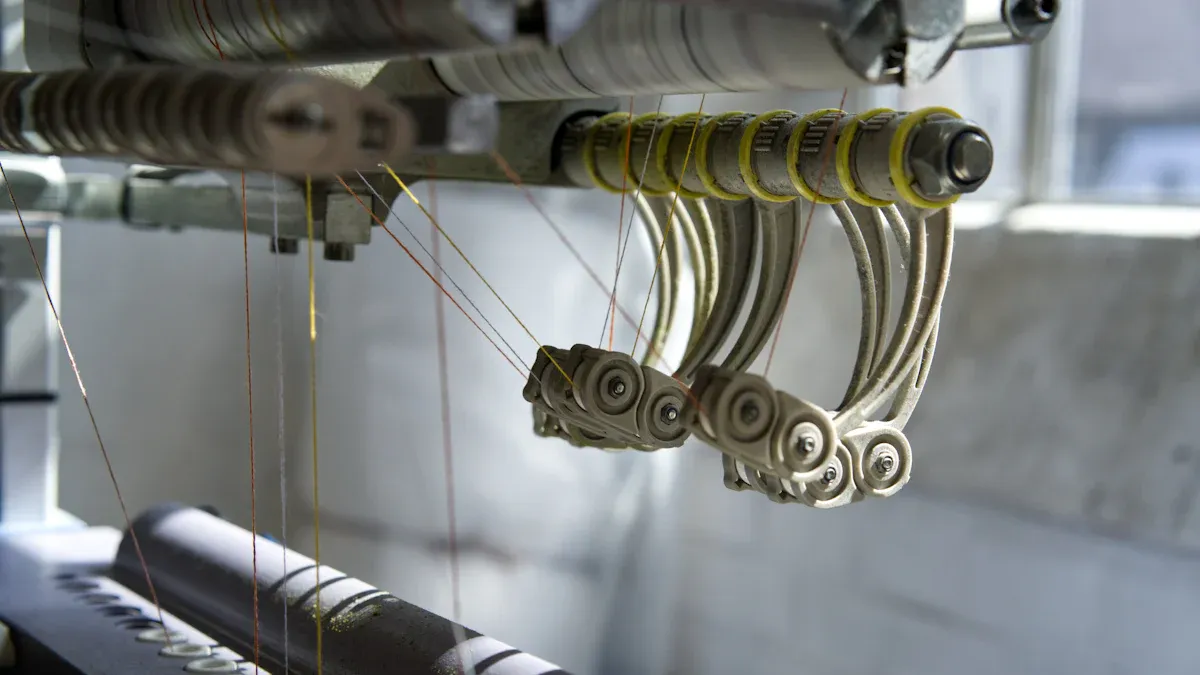
Ua ʻike au i ke koho ʻana o ka ʻōnaehana extrusion e hoʻohālikelike i ke kaʻina hana holoʻokoʻa. Hoʻohana ka hapa nui o nā mea hana i nā ʻōnaehana hoʻokahi-screw, ka mea e paa ana a 62% mahele makeke, ʻoiai nā ʻōnaehana māhoe māhoe 38%.
| ʻAno Pūnaehana Extrusion | Pākēneka Māhele Mākeke |
|---|---|
| Hoʻokahi-pōkole | 62% |
| māhoe māhoe | 38% |
ʻO ke koho ʻana ma waena o nā ʻano screw e pili ana i ka pono, maikaʻi huahana, a me ka pili waiwai. Ke hoʻohālikelike au i ka ʻenehana extrusion i nā pahuhopu hana, ʻIke au i ka hoʻomaikaʻi ʻana i ka uku-pono, hoʻolālā versatility, a me ka hoomau.
| Kumukumu | Ka hopena i ka pono hana | Ka hopena i ka maikaʻi o ka huahana |
|---|---|---|
| Nā palena hoʻomalu | Mālama i ka maikaʻi o ka huahana like | Loaʻa i ka micrometer tolerances |
Ke hilinaʻi nei au i nā Pūnaehana Extrusion Complete e hāʻawi i nā hopena kūlike a me ka hoʻokō pololei ʻana.
Nā mea lawe nui
- E koho i ka ʻōnaehana extrusion kūpono e pili ana i kāu mau pahuhopu hana a me nā waiwai waiwai e hōʻoia i ka hana maikaʻi loa.
- He mea kūpono nā extruders hoʻokahi-screw no ka hana kiʻekiʻe o nā mea maʻalahi, ʻoiai ʻoi aku ka maikaʻi o nā ʻōnaehana māhoe-screw i ka hui ʻana i nā mea paʻakikī.
- Regular maintenance and monitoring of extrusion systems prevent downtime and enhance efficiency, hōʻoia i ka maikaʻi o ka huahana.
- Consider the screw diameter and L/D ratio when selecting an extruder, as these factors impact throughput and mixing efficiency.
- Utilize co-extrusion for creating multi-layered products that combine different materials, enhancing functionality and performance.
- Evaluate the compatibility of materials with the chosen extrusion system to avoid defects and ensure high-quality output.
- Stay informed about emerging trends in extrusion technology, such as IoT and AI, to improve efficiency and adapt to changing production needs.
- Create a checklist of key factors before selecting an mīkini extrusion to avoid costly mistakes and ensure the system meets application requirements.
Choosing the Right Extrusion System for Manufacturing
Key Factors in System Selection
I never find a universal “maikaʻi loa” extrusion system. My experience tells me that the ideal choice depends on the manufacturing goals, waiwai waiwai, and product requirements. When I select an extrusion system, I always match its capabilities to the intended application. This approach ensures that the extrusion process delivers consistent quality and optimal performance.
I consider several critical factors before making an extrusion machine selection. I use the following table to guide my decision:
| Kumukumu | wehewehe |
|---|---|
| Research Objective | Purpose of the machine (education, material development, or commercial pilot production) |
| ʻAno Mea | Type of polymers to be processed (ʻoluʻolu wela, hikiwawe, or reactive) |
| Koi ʻia ka mana hoʻopuka | Hiki ke komo (grams or kilograms per hour) |
| Nā Koina Kaʻina Hana Kiʻekiʻe | Need for gas injection, hoʻomāmā, or reactive extrusion capability |
| Budget and Laboratory Space | Consideration for modular expansion for future upgrades |
| Future Scale-Up Needs | Compatibility with industrial extrusion modules for scaling up production |
I always pay attention to the screw diameter and L/D ratio. These parameters determine throughput capacity and mixing efficiency. I select an extruder with the right output capacity, ka mea hiki mai 0.25 kg/h i 150 kg/h depending on the model. Modular design allows me to replace components quickly, which gives flexibility for research and development. I rely on advanced control systems, such as PLC and HMI, to achieve precise control and data traceability.
When I evaluate types of extrusion machines, I consider the complexity of the profile and the tolerances required. Intricate designs demand precise tooling and can increase costs. I also look at order quantity. Higher volumes reduce the cost per unit because setup costs spread across more units. Finishing and secondary operations, such as anodizing or CNC machining, add value and cost.
Manaʻo kōkua: I recommend making a checklist of these factors before starting the extrusion machine selection process. This practice helps avoid costly mistakes and ensures the system matches the intended applications.
Ka hopena i ka pono hana
I notice that the extrusion system I choose directly affects manufacturing efficiency. The screw design, mixing capability, and extrusion technology all play a role in how smoothly the process runs. ʻo kahi laʻana, a mea hoʻokuke hoʻokahi screw often works well for simple polymers and high-volume production. Twin-screw extruders handle complex materials and advanced applications, such as reactive extrusion or specialty blends.
I have seen that high viscosity and solid content in energetic materials can cause clogging, unstable extrusion, and nozzle wear. These issues reduce efficiency and compromise safety. I address these challenges by optimizing the kneading system design. Improved mixing uniformity and extrusion accuracy enhance both safety and efficiency.
I use a two-stage twin-screw extrusion system when I need greater stability and adaptability. Simulations show that this design improves flow characteristics and maintains consistent output. I always monitor the extrusion process to ensure uniform quality and minimize downtime.
| ʻAno hōʻike | wehewehe |
|---|---|
| Challenges in Additive Manufacturing | High viscosity and solid content of energetic materials lead to issues like clogging, unstable extrusion, and nozzle wear, affecting efficiency and safety. |
| Kneading System Performance | The kneading system’s design impacts material mixing uniformity and extrusion accuracy, with specific optimizations proposed to enhance safety and efficiency. |
| Extrusion System Design | A two-stage twin-screw extrusion system is designed to improve stability and adaptability in the extrusion process, with simulations revealing flow characteristics of different systems. |
I always match the extrusion system to the production requirements. This practice ensures that the extruder delivers the desired quality and performance. I select the screw configuration based on the material type and the complexity of the application. I rely on advanced extrusion technology to maximize efficiency and maintain high standards of product quality.
Nānā: I recommend regular maintenance and process monitoring to sustain peak efficiency and prevent unexpected downtime.
Types of Complete Extrusion Systems
When I evaluate complete extrusion systems for manufacturing, I always start by identifying the main types of extrusion machines. The most common options include single screw extrusion machines, twin screw extrusion machines, and ram extrusion machines. Each system offers unique strengths and limitations, so I focus on matching the right technology to the application.
| Type of Extrusion Machine |
|---|
| Single Screw Extrusion Machines |
| Twin Screw Extrusion Machines |
| Ram Extrusion Machines |
Hoʻokahi-Screw Extrusion
I often use a single screw extruder for straightforward extrusion processes. This machine features one rotating screw inside a heated barrel. Hoʻokuʻu ka wili i ka mea i mua, hehee ia, a hoʻohālike ia ma o ka make. I rely on this system for high-volume production of thermoplastics, meaʻai, and rubber compounds. The simplicity of the design makes it easy to operate and maintain.
| ʻOihana | Ka wehewehe noi | Market Growth Forecasts |
|---|---|---|
| Pākīpika | Melting and forming thermoplastics, driven by rising PE and PP use. | CAGR of approximately 4-5% ma o 2030 |
| Ka Hana Meaʻai | Producing processed foods like snacks and cereals. | Market to reach over $75 piliona e 2026 |
| Huipu Lapa | Ka hui ʻana a me ka hana ʻana i ka lāʻau lapaʻau no nā kaʻa a me nā ʻāpana kaʻa. | Tire production to surpass 2 billion units by 2025 |
| Biomedical | Biopolymer production for packaging and medical devices. | Emerging market with new extrusion technology |
Eia naʻe, I recognize the limitations of single screw extrusion. Achieving uniform mixing can be difficult, especially when I add fillers or additives. Pressure consistency often varies with feedstock changes, a ʻaʻole hiki ke kahe maikaʻi nā mea kiʻekiʻe-viscosity, alakai i na hemahema. Ke alakaʻi nei kēia mau pilikia i kaʻu koho mīkini extrusion ke makemake au i ka ʻoihana kiʻekiʻe a i ʻole ka hana paʻakikī.
Manaʻo kōkua: No ka maʻalahi, palapala noi nui, Manaʻo wau e hoʻomaka me kahi extruder screw hoʻokahi. No ka hui ʻana i mua a i ʻole nā mea kūikawā, e noʻonoʻo i nā koho ʻē aʻe.
Mālua-Screw Extrusion
Ke koi au i ka hoʻoponopono holomua, Huli au i mea hoʻokuke māhoe māhoe ʻenehana. Ke hoʻohana nei kēia ʻōnaehana i ʻelua wili e kaʻa like i loko o ka pahu. Hiki ke hoʻopili a holo like paha nā wili, ma muli o ka hoʻolālā. ʻIke au e hāʻawi nā twin screw extruders i ka maikaʻi o ka hui ʻana, ʻoi aku ka maikaʻi o ka plasticizing no nā mea kiʻekiʻe-viscosity, a hoʻonui i ka mana ma luna o ka mahana a me ke kaomi. Hoʻonui kēia mau hiʻohiʻona i ka maikaʻi o ka huahana a me ka paʻa ʻana o ke kaʻina hana.
ʻAe ʻo Twin screw extrusion iaʻu e hana i nā kaʻina hana he nui i ka mīkini hoʻokahi. Hiki iaʻu ke hui pū, hehee, vent, and even react materials during a single pass. This flexibility reduces waste and speeds up production. When comparing twin screw vs single screw extruders, I see faster return on investment and more uniform results with twin screw systems, especially for complex blends or recycled plastics.
Twin-Screw Subtypes
I always consider the different types of extruder machines within the twin screw category. The screw configuration impacts performance, pono, and the range of applications.
Hoʻopāpā
Intermeshing twin screw extruders feature screws that overlap and mesh together. This design provides precise material transport and high shear forces. I use intermeshing systems for improved compounding and compatibilization, especially when I need to disperse additives or fillers evenly.
ʻAʻole Intermeshing
Loaʻa nā wiliwili māhoe non-intermeshing māhoe e hoʻololi ʻole me ka uhi ʻole. Hāʻawi kēia hoʻonohonoho i ka hui ʻana me ka liʻiliʻi. Ke koho nei au i nā hoʻolālā non-intermeshing no nā mea koʻikoʻi e pono ai ke koʻikoʻi mechanical.
Hoʻololi pū
Loaʻa i nā extruders māhoe māhoe hoʻololi like i nā wili e huli i ka ʻaoʻao like. ʻOi aku kēia subtype i ka hui ʻana i ka pono a me ka lawe waiwai. Hoʻohana au i nā ʻōnaehana hui pū no ka extrusion reactive, devolatilization, a me ka hoʻohuihui polymer kiʻekiʻe. Eia naʻe, hiki ke hoʻohaʻahaʻa i nā mea wela, no laila ke nānā nei au i ka hoʻolālā screw a me ka hoʻoluʻu kokoke.
| Subtype | Nā Mana Hana a me nā Pono | Ka palena a me ka noonoo | Nā polokalamu maikaʻi loa |
|---|---|---|---|
| Mea hoʻoheheʻe māhoe māhoe hui pū | Kiʻekiʻe hui pū ʻana, kūpono no ka extrusion reactive, kiʻekiʻe ʻoki ʻoki | ʻO ka pilikia o ka hoʻohaʻahaʻa waiwai, pono i ka hoʻolālā wili pololei | Huihui polimer, nanocomposites, lab-i-production workflows |
Huli-kaui
Hōʻike ʻia nā mea hoʻoheheʻe māhoe hoʻololi hoʻololi i nā wili e huli i nā ʻaoʻao ʻē aʻe. Hoʻopuka kēia hoʻonohonoho i nā ikaika ʻoki haʻahaʻa, e pale ana i na mea palupalu. Ke hilinaʻi nei au i nā ʻōnaehana counter-rotating no nā seramika, bio-polymers, a me nā hoʻomākaukau lāʻau lapaʻau. Hāʻawi ka hoʻolālā i ka hoʻokumu ʻana i ke kaomi maikaʻi a me ka sila ʻana, ʻoiai ʻoi aku ka haʻahaʻa o ka hui ʻana ma mua o nā ʻōnaehana hui pū.
| Subtype | Nā Mana Hana a me nā Pono | Ka palena a me ka noonoo | Nā polokalamu maikaʻi loa |
|---|---|---|---|
| Mea Hoʻokuʻu ʻO Twin-Screw Counter-Rotating | ʻO nā pūʻali ʻohi haʻahaʻa, ke kūkulu ʻana i ke kaomi maikaʻi, hoʻopaʻa paʻa pono | Haʻahaʻa ka hui ʻana, ʻoi aku ka paʻakikī o ka hoʻopaʻa ʻana a me ka hoʻolālā ʻana | Keramika, bio-polymers, lāʻau lapaʻau |
Ke koho wau i kahi ʻōnaehana extrusion piha, Hoʻohālikelike mau wau i ke ʻano o ka screw a me ka hoʻonohonoho ʻana i nā mea a me nā koi kaʻina. Mālama kēia ala i ka maikaʻi kiʻekiʻe, pono, a me ka hana hilinaʻi ma nā noi āpau.
Ram Extrusion
Koho pinepine au i ka extrusion hipa kāne i ka wā e pono ai au e hana i nā mea e koi ai i ke kaomi kiʻekiʻe a me ke ʻano pololei. Hoʻohana kēia ʻano hana i ka hipa hydraulic e hoʻokuke i nā mea i loko o ka pahu wela a make, ma mua o ka hilinaʻi ʻana i ka wili wili. ʻIke au i nā extruders hipa e pono loa no ka hana ʻana i nā huahana mai nā plastic thermosetting, seramika, a me PTFE. Hiki ia'u ke hana i na kookoo, paipu, a me nā profiles me nā ana kūlike.
Kūleʻa ʻo Ram extrusion i waena o nā ʻano mīkini extrusion no ka mea e lawelawe ana i nā mea i hiki ʻole i nā extruder wili kuʻuna ke hana pono.. Hoʻohana wau i kēia ʻenehana i nā ʻoihana e like me ka plastics, meaʻai, a me nā lāʻau lapaʻau. ʻo kahi laʻana, Hoʻopuka wau i nā ʻai ʻai a me nā cereals me nā ʻano like ʻole, a hana wau i nā papa a me nā capsule me nā kikoʻī kikoʻī.
I have noticed several benefits and challenges when using ram extruders:
- Ram extruders excel in producing high-quality products from difficult-to-process materials.
- I rely on them for applications where screw extrusion technology falls short, such as PTFE and ceramic profiles.
- The process delivers consistent quality and dimensional accuracy.
- High operational costs can impact efficiency and overall performance.
- Stringent regulations in plastic manufacturing require careful process control.
- Competition from alternative extrusion systems pushes me to optimize my extrusion machine selection.
I always weigh these factors before choosing ram extrusion for complete extrusion systems. I monitor the process closely to maintain quality and efficiency, especially when working with specialty materials.
Hookui-hui
Co-extrusion enables me to combine multiple materials into a single product, creating multi-layered profiles with enhanced properties. I use this extrusion technology to integrate different thermoplastics, each layer offering unique characteristics. The process involves pushing several materials through a single die, resulting in a unified profile that meets complex production requirements.
I rely on co-extrusion for manufacturing products that demand durability, hikiwawe, and aesthetic appeal. This method allows me to tailor the quality of each layer, improving performance and functionality. I see co-extrusion as a key advancement in complete extrusion systems, especially when I need to produce items with specialized features.
Industries benefit from co-extrusion in several ways:
- Kūkulu: I manufacture window sills, nā papa, and trim pieces that combine strength and visual appeal.
- Retail: I build shelving and display systems that are both durable and attractive.
- hōʻailona: I produce illuminated signs and frames with clean finishes and reliable performance.
Co-extrusion expands the range of applications for extrusion technology. I use it to meet demanding production goals and deliver products with superior quality. When I select an extruder for co-extrusion, I consider screw design, process control, a me ka pili waiwai. This approach ensures efficiency and consistent results.
Manaʻo kōkua: I recommend co-extrusion for projects that require multi-layered profiles and enhanced product functionality. Careful extrusion machine selection and process monitoring are essential for achieving optimal quality.
Structure and Operation of Extrusion Systems
Screw and Barrel Design
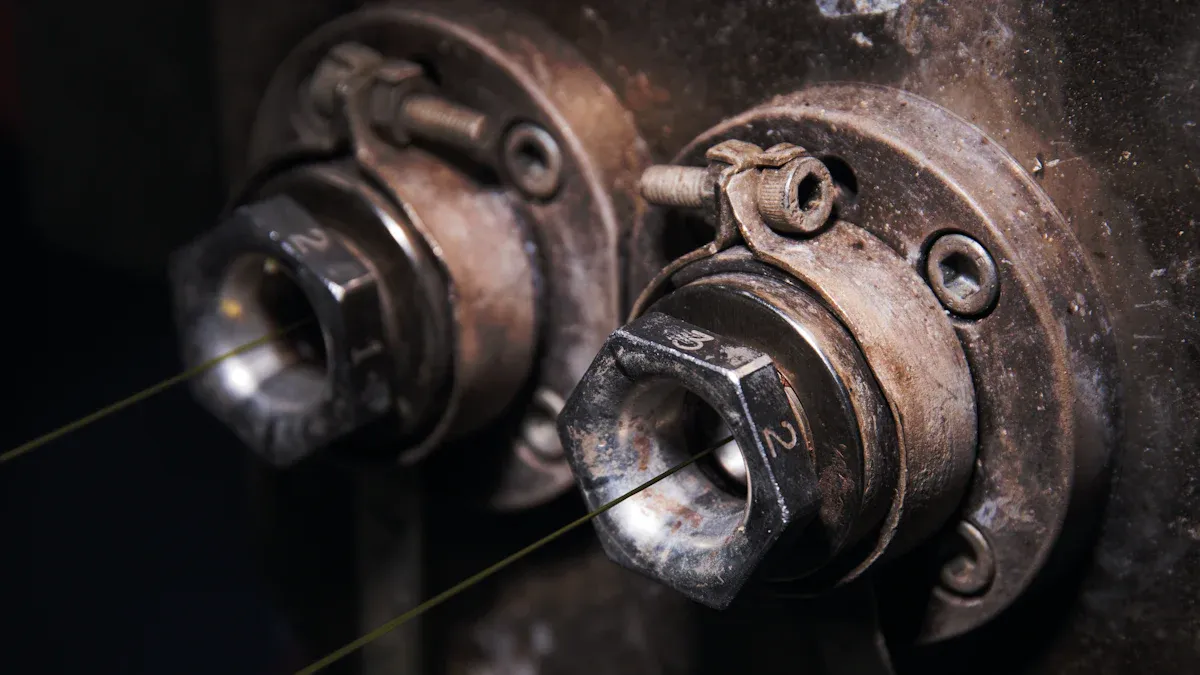
Hoʻomaka mau wau i kaʻu koho mīkini extrusion ma ka nānā ʻana i ka hoʻolālā ʻana a me ka pahu pahu. Hoʻoholo ka geometry o ka wili i ka hoʻoheheʻe ʻana o ka extruder, huikau, a lawe i mea. Hoʻoponopono wau i ka lōʻihi-i-diameter (L/D) ratio e hoʻomalu i ka manawa noho a me ka hui ʻana. ʻO ka lakene L/D kiʻekiʻe e hiki ai i ka mea ke hoʻoheheʻe a hui maikaʻi loa, ka mea nui no ka loaʻa ʻana o ka maikaʻi like ʻole i ka huahana hope. Ke hilinaʻi nei au i nā hoʻolālā pale i loko o ka pahu screw e mālama i ka hoʻoheheʻe ʻana a pale i ka hōʻino, ʻoi aku ka nui o kaʻu hana ʻana i nā mea koʻikoʻi. Nā hoʻolālā māhoe māhoe like ʻole pāʻani koʻikoʻi i ka wikiwiki extrusion, maikaʻi huahana, a me ka ikehu pono. Hoʻohana au i ka zoning a me ka mana wela kūpono e hoʻopaʻa i ke kahe hehee a pale i nā kinoea paʻa, ka mea e hoʻomaikaʻi ai i ka nui a me ka paʻa. ʻO ka hoʻopau ʻana o ka ʻili o ka barela a me ka geometry o ka screw e hoʻopili pū i ka pono o ka ikehu a me ka kūlike o ka huahana. Hoʻohālikelike mau wau i ka hoʻolālā screw i nā koi kikoʻī o ka noi e hoʻonui i ka hana.
- ʻO ka lākiō L/D kiʻekiʻe e hoʻomaikaʻi i ka hui ʻana a hehee like, he mea nui ia no nā huahana kiʻekiʻe.
- Kōkua nā hoʻolālā pale e mālama i ka hoʻoheheʻe ʻana a pale i ka hoʻohaʻahaʻa.
- Hoʻopau ʻia ka geometry Screw a me ka ʻili o ka barela i ka ikaika o ka ikehu a me ke kūlike o ka huahana.
Ka Neʻe Mea a me ka Hui ʻana
Manaʻo wau i ka neʻe ʻana o nā mea pono a me ka hui ʻana e hōʻoia i ka holo pono o ke kaʻina extrusion. Hoʻohana wau nā mea hoʻokele pneumatic ikaika a i ʻole mechanical e hoʻoili i nā mea maka me ka liʻiliʻi o ka mālama ʻana. Hōʻoiaʻiʻo ʻia nā hoʻolālā mixer kiʻekiʻe i ka hoʻohui ʻia ʻana a me ka like, ka mea e pale ai i nā ʻano like ʻole o nā huahana i hoʻopau ʻia. Hoʻohui au i nā mana automated me nā ʻōnaehana PLC no ka nānā ʻana i ka manawa maoli a me ka mālama ʻana i ka meaʻai. Hāʻawi kēia ala iaʻu e nānā pono i ka hana a hoʻoponopono i nā ʻāpana e like me ka mea e pono ai. Koho au i nā hoʻonohonoho hiki ke hoʻopaʻa ʻia e hoʻokipa i nā hale hana liʻiliʻi a me nā hana ʻoihana nui. ʻO nā hiʻohiʻona hoʻomalu lepo i hoʻonui ʻia e mālama i ka maʻemaʻe a me ka palekana o ka wahi hana. Kūlike, ʻO nā hui like ʻole e hōʻemi i ka loli maikaʻi a hoʻomaikaʻi i ka throughput. Hoʻemi nā ʻōnaehana ʻakomi i ka lawelawe lima, ka mea e hoʻopōkole ai i nā pōʻai hana a hoʻohaʻahaʻa i nā koina hana. Hoʻokumu mau wau i kēia mau hiʻohiʻona ke loiloi au i nā ʻano mīkini extrusion no nā noi hou.
| Hiʻona | wehewehe |
|---|---|
| Hoʻololi Mea Pono | wikiwiki, haʻahaʻa-mālama neʻe o nā mea maka |
| ʻO ka hui pū ʻana | Pono, hoʻohui like no ka maikaʻi kūlike |
| Nā Mana Aunoa | Ka nānā ʻana i ka manawa maoli a me ka hoʻokele meaʻai |
| Nā hoʻonohonoho hiki ke hoʻonui ʻia | Nā hoʻolālā maʻalahi no kēlā me kēia mana hana |
| Hoʻonui i ka hoʻomalu lepo | Mea hoʻomaʻemaʻe, wahi hana palekana |
| ʻOi aku ka maikaʻi o ka huahana | Nā hui like ʻole, hoemiia ka fluctuations |
| Hoʻonui ʻia i ka holo ʻana | ʻOi aku ka pōkole o ka hana ʻana, emi mai ka lima lima |
| Hoʻemi ʻia ka ʻōpala | Ana pololei, emi koina |
| Na Uku Hana Haahaa | Hoʻokuʻu ʻo Automation i nā limahana no nā hana i hoʻohui ʻia |
| Kaiapuni hana palekana | Nā laina i hoʻopaʻa ʻia a me ka mana lepo |
Ka Mana Kaʻina Hana a me ka maikaʻi o ka hoʻopuka
Ke hilinaʻi nei au i ka ʻenehana hoʻomalu kaʻina hana kiʻekiʻe e mālama i ka maikaʻi o ka hoʻopuka kiʻekiʻe i ka hana extrusion. koho au nā thermoplastics kūlana kiʻekiʻe e hōʻoia i ka ikaika o nā huahana hope, ka lōʻihi, a me nā koi hoʻololi. Ke nānā pono nei au i nā ʻāpana extrusion e hōʻemi i nā ʻokoʻa i ka wā hana. ʻO ka pololei o ke ana ka mea nui iaʻu, no ka mea e hōʻoiaʻiʻo ana e kūpono nā ʻāpana i kā lākou mau noi i manaʻo ʻia. Hoʻohana au i ka nānā ʻana i ka ʻili no ka ʻike ʻana i nā hemahema e like me ka warping a i ʻole nā ʻūhū ea, e kōkua iaʻu e mālama i ka maikaʻi o ka huahana. ʻO ka ʻike mua ʻana i nā pilikia e hōʻemi i ka ʻōpala a mālama i nā kumukūʻai hana. Hoʻopaʻa mau wau i kaʻu kaʻina hana i nā kūlana hoʻoponopono, e pale ana i kaʻu ʻoihana a me kaʻu mea kūʻai aku. Hoʻonui nā huahana kiʻekiʻe i koʻu inoa inoa a hoʻonui i ka hauʻoli o ka mea kūʻai aku. ʻAe nā ʻōnaehana nānā kiʻekiʻe iaʻu e hoʻonui i ka wikiwiki o ka hana me ka ʻole e kaumaha i ka pololei, ka mea e hoʻonui i ka pono holoʻokoʻa i nā ʻōnaehana extrusion piha.
| ʻElemu/Pono | wehewehe |
|---|---|
| Koho Mea | E hōʻoia i ka ikaika, ka lōʻihi, a me ka maʻalahi |
| Nānā Kaʻina | Hoʻemi i nā ʻokoʻa a mālama i ke kūlike |
| Ka pololei o ke ana | Hōʻoiaʻiʻo kūpono no nā noi āpau |
| Nānā Ili | E ʻike mua i nā hemahema no ka maikaʻi |
| Kūlike Huahana | Every batch meets high standards |
| Hoemi ʻōpala | Saves material and production costs |
| Hoʻokō hoʻoponopono | Meets legal and safety requirements |
| ʻoluʻolu o ka mea kūʻai aku | Builds reputation and loyalty |
| Process Efficiency | Increases speed while maintaining accuracy |
Manaʻo kōkua: I recommend regular calibration and maintenance of all extrusion technology to sustain peak performance and consistent quality.
Comparing the Extrusion Process
Hoʻokahi-Screw vs. Twin-Screw Process
When I compare hoʻokahi-screw a me māhoe-screw extruders, I focus on how each system handles the extrusion process. The screw design shapes the way material moves and mixes. A single-screw extruder uses one helical screw inside a simple, pahu pōʻaleʻa. He ʻokoʻa, a twin-screw extruder features two intermeshing screws and a more complex, barela māhele pinepine. I see that temperature control in single-screw systems remains basic, while twin-screw machines offer advanced control with multiple heating and cooling zones. This difference impacts both throughput and energy efficiency.
| Aspect | Hookahi Screw Extruder | Mālua Screw Extruder |
|---|---|---|
| Hoʻolālā Screw | Hoʻokahi helical screw | ʻElua wili intermeshing |
| Hoʻolālā Barela | Maʻalahi, puʻupuʻu | ʻOi aku ka paʻakikī, mahele pinepine |
| Hoʻomalu wela | Pumehana/hoʻoluʻu kumu | Kiʻekiʻe, multi-zone |
| Hiki ke hoopuka | Kaumaha | Kiʻekiʻe |
| Hoʻohana i ka ikehu | Kiʻekiʻe maʻamau | ʻOi aku ka maikaʻi |
| Hoʻololi i ka Throughput | kaupalena | Kiʻekiʻe |
I rely on twin-screw extruders for higher output and better energy efficiency. When I need flexibility in throughput or advanced process control, I choose twin-screw systems. For straightforward applications, single-screw extruders still provide reliable performance.
Material Compatibility in the Extrusion Process
Material compatibility plays a critical role in extrusion machine selection. I always match the screw configuration to the type of material I plan to process. Single-screw extruders handle standard thermoplastics well, but they struggle with materials that require intensive mixing or have high filler content. Twin-screw extruders excel with specialty compounds, nā ʻilika i hana hou ʻia, a me nā mea hoʻonā. I use segmented screws to adjust mixing and shearing for each application.
When I work with complete extrusion systems, I consider how each screw design affects the final product. Twin-screw extruders allow me to process a wider range of materials, including those with additives or sensitive properties. This flexibility supports more types of extrusion machines and expands the range of possible applications.
Manaʻo kōkua: I recommend evaluating the chemical and physical properties of your raw materials before choosing an extruder. This step ensures compatibility and reduces the risk of defects.
ʻO ka maikaʻi o ka huahana a me ke kūlike
I know that the extrusion process directly impacts the quality of the finished product. Modern extrusion lines integrate automation a me nā paepae hoʻomalu holomua. Hoʻopili kēia mau ʻōnaehana i nā ʻano like ʻole i ka manawa hoʻokahi, ʻo ia ka mea e kōkua iaʻu e mālama i ka maikaʻi kūlike ma kēlā me kēia pūʻulu.
ʻO ke kūlike o ka maikaʻi ka mea hoʻonui huahana. Hoʻokaʻawale nā papa hoʻokele kiʻekiʻe i nā kumu ma nā ʻano like ʻole i ka manawa like, e hōʻoia i ka mālama ʻia ʻana o ka maikaʻi o ka huahana ma ke kaʻina extrusion.
Ke nānā nei au i nā mea nui e like me ke kaomi hoʻoheheʻe paʻa, ka helu puka, a me ka pau ʻana o ka ʻili. ʻO ke kaomi hoʻoheheʻe kūpaʻa e pale i ka warping a me ka hoʻoheheʻe dimensional. ʻOi aku ka kiʻekiʻe a me ka paʻa paʻa e hoemi ana i ka uku a me ka manawa hoopau. ʻOi aku ka maikaʻi o ka hoʻopau ʻana i ka ʻili a me ka mana kikoʻī kikoʻī e hoʻonui i ka hopena i ka maikaʻi o ka huahana i hoʻopau ʻia.
| Nā mea nui | Ka hopena i ka maikaʻi a me ka kūlike |
|---|---|
| Paʻa hehee paʻa | Kāohi i nā ana mai ka neʻe ʻana a i ʻole warping |
| ʻOi aku ka kiʻekiʻe a me ka paʻa paʻa | Hoʻemi i ka helu ʻōpala a me ka wā hoʻomaha |
| ʻOi aku ka maikaʻi o ka hoʻopau ʻana i ka ʻili | Hoʻonui i ka maikaʻi o ka huahana holoʻokoʻa |
| Manaʻo mana | E hōʻoia i ka pololei i nā kikoʻī huahana hope loa |
| ʻOi aku ka wikiwiki o ka ROI | Hoʻonui i ka loaʻa kālā no nā mea hana |
When comparing twin screw vs single screw extruders, ʻIke au e hāʻawi ana nā ʻōnaehana twin-screw i ka kūlike ʻoi aku ka maikaʻi a me ka haʻahaʻa o ka uku hana. Loaʻa iaʻu ka ROI wikiwiki a hoʻomaikaʻi i ka hana ma o ka hoʻokomo ʻana i ka ʻenehana extrusion kiʻekiʻe. Hoʻokumu mau wau i ka nānā ʻana i ke kaʻina hana a me ka automation e hōʻoia i ke kiʻekiʻe kiʻekiʻe a me ka pono i ka hana.
- ʻOi aku ka kiʻekiʻe a me ka paʻa paʻa
- ʻO ka haʻahaʻa haʻahaʻa a me ka wā hoʻomaha
- ʻOi aku ka maikaʻi o ka hoʻopau ʻana i ka ʻili a me ka mana dimensional
- Hoʻemi ʻia ke kumukūʻai hana
- ʻOi aku ka wikiwiki o ka ROI
Ke hilinaʻi nei au i kēia mau hoʻolālā e hoʻonui i nā pono o ka extrusion a hāʻawi i nā huahana i kūpono i nā kūlana hana koʻikoʻi.
Papa Hoʻohālikelike Hana
Hoʻokomo a me ka pono
Ke loiloi mau nei au i ka throughput a me ka pono ke hoʻohālikelike au i nā ʻano mīkini extrusion. ʻO ka throughput e ana i ka nui o nā mea i hana ʻia i ka extruder i ka manawa i hāʻawi ʻia. Hōʻike ka maikaʻi i ka maikaʻi o ka hoʻololi ʻana o ka hoʻolālā wili i nā mea maka i nā huahana i hoʻopau ʻia me ka liʻiliʻi o ka ʻōpala a me ka hoʻohana ʻana i ka ikehu. ʻIke wau i ka hoʻopuka pinepine ʻana o nā extruder hoʻokahi-screw i ka throughput paʻa no nā polymers maʻamau. Nā mea hoʻokuke māhoe māhoe, me kā lākou geometry screw kiʻekiʻe, e mālama i ka hoʻopuka kiʻekiʻe a mālama i ka maikaʻi o ka ikehu, ʻoi aku no nā hui paʻakikī.
| ʻAno Extruder | Ka holo ana (kg/h) | Hoʻoikaika ikaika | ʻO nā hihia hoʻohana maikaʻi loa |
|---|---|---|---|
| Hoʻokahi-Screw | 50–500 | Kaumaha | Nui-nui, polimer maʻalahi |
| Māhoe-Ui | 100–1000+ | Kiʻekiʻe | Huihui paʻakikī, nā hana kūikawā |
| Ram Extruder | 10–100 | Haʻahaʻa–Haʻahaʻa | PTFE, seramika, kūikawā |
| Pūnaehana Co-Extrusion | ʻokoʻa | Kiʻekiʻe | ʻO nā ʻaoʻao ʻāpana he nui |
Hoʻohālikelike mau wau i ka hoʻonohonoho screw i nā mea a me nā koi hana. Mālama kēia ala i ke kaʻina hana i ka maikaʻi kūlike a hoʻokō i nā pahuhopu hana. Ke hilinaʻi nei au i nā ʻōnaehana extrusion piha e hoʻonui i ka throughput a me ka pono no kēlā me kēia noi.
Manaʻo kōkua: Paipai au i ka nānā mau ʻana i ka hoʻohana ʻana i ka ikehu a me nā helu puka. Kōkua kēia hana i ka koho ʻana i ka mīkini extrusion a hōʻemi i nā kumukūʻai hana.
Mālama a me ka hilinaʻi
Manaʻo wau i ka mālama ʻana a me ka hilinaʻi ke koho au i kahi extruder. Loaʻa ka ʻāwili a me ka barela i ka ʻaʻahu mau mai nā mea abrasive a me nā wela kiʻekiʻe. Hoʻonohonoho au i nā mākaʻikaʻi maʻamau a hoʻololi i nā mea ʻeleʻele e pale aku i ka wā hoʻomaha i manaʻo ʻole ʻia. Pono nā extruders hoʻokahi-screw i ka mālama liʻiliʻi ma muli o kā lākou hoʻolālā maʻalahi. Nā mea hoʻokuke māhoe māhoe, me nā ʻāpana hoʻoneʻe hou aʻe a me nā ʻāpana ʻāpana, makemake i nā loiloi pinepine akā hāʻawi i ka maʻalahi.
| ʻAno Extruder | Pono mālama | Pae hilinaʻi | Nā pilikia maʻamau |
|---|---|---|---|
| Hoʻokahi-Screw | Haʻahaʻa–Haʻahaʻa | Kiʻekiʻe | ʻAʻahu i kekahi manawa |
| Māhoe-Ui | Kaumaha–Kiʻekiʻe | Kiʻekiʻe | ʻAʻahu ʻāpana, sila hemahema |
| Ram Extruder | Kaumaha | Kaumaha | Leka hydraulic, ʻaʻahu make |
| Pūnaehana Co-Extrusion | Kiʻekiʻe (kīwī nui) | Kiʻekiʻe | Synchronization, screw wear |
I use advanced monitoring systems to track screw wear and process stability. This strategy improves reliability and extends the life of my extrusion technology. I always keep spare screws and barrels on hand to minimize downtime during maintenance.
Product Complexity and Flexibility
I value design flexibility in extrusion. The ability to customize the screw and die allows me to create complex profiles for a wide range of applications. I use extrusion to manufacture everything from simple plastic tubing to intricate window frames. I can add reinforcements or special features within the continuous material, which expands my product offerings.
| Aspect | wehewehe |
|---|---|
| Hoʻolālā Hoʻololi | Extrusion allows for significant design flexibility through die customization, enabling complex profiles. |
| Nā noi | Suitable for various applications, me nā puka makani paʻakikī a me nā paipu plastik maʻalahi. |
| Hoʻopilikino | Hiki i nā mea hana ke hoʻokomo i nā mea hoʻoikaika a i ʻole nā hiʻohiʻona hou i loko o ka mea mau. |
- Ma MedTech, Pono wau e hoʻokō i nā hoʻomanawanui paʻa no nā mea lapaʻau.
- Hoʻopaʻa wau i ka biocompatibility no nā huahana extrusion lapaʻau āpau.
- Nānā pono au i ka mānoanoa o ka pā, no ka mea, pili ia i nā kahe kahe a me ka ikaika o ka hale.
Ke koho nei au i ka hoʻonohonoho screw a me ka mīkini extrusion e pili ana i ka paʻakikī o ka hoʻolālā a me nā ʻae e pono ai. Hāʻawi kēia ala i ka maikaʻi kiʻekiʻe a kākoʻo i nā pono hana kiʻekiʻe.
Nānā: Manaʻo wau e kūkākūkā me nā loea extrusion ke hoʻolālā i nā hoʻolālā huahana hou. Kōkua kā lākou ʻike i ka pale ʻana i nā hewa koʻikoʻi a hōʻoia i ka wili kūpono a me ka hoʻonohonoho kaʻina hana.
Pono kūpono i ka hana ʻana
Hana Nui Nui
Hoʻomaka mau wau i kaʻu koho mīkini extrusion ma ka noʻonoʻo ʻana i nā koi o ka hana kiʻekiʻe. I ka wā e pono ai iaʻu e hana i mau kaukani ʻāpana i kēlā me kēia lā, Ke hilinaʻi nei au i nā extruders hoʻokahi. Hāʻawi kēia mau mīkini i ka hopena paʻa a mālama i ka maikaʻi kūlike. ʻO ka hoʻolālā wili i nā extruders hoʻokahi-screw hiki iaʻu ke hoʻoponopono pono i nā polymers maʻamau. Ke nānā pono nei au i ke kaʻina hana e hōʻoia i ka hoʻoheheʻe like ʻole a hoʻemi i nā hemahema. Ke koho nei au i ke anawaena wili pololei a me ka lōʻihi e like me nā koi hana. Kōkua kēia ala iaʻu e hoʻokō i ka hana kiʻekiʻe a hoʻemi i ka ʻōpala. Hoʻohana au i nā mana automated e nānā i nā huahana a mālama i nā kūlana maikaʻi. Loaʻa nā noi kiʻekiʻe mai nā ʻano mīkini extrusion ikaika e hiki ke hana mau me ka liʻiliʻi o ka downtime.. Mālama mau au i nā wili a me nā barela me ka mākaukau e pale i nā pilikia o ka hana ʻana.
Manaʻo kōkua: Manaʻo wau i ka hoʻonohonoho ʻana i ka mālama maʻamau no nā extruder i hoʻohana ʻia i ka hana kiʻekiʻe. Hoʻonui kēia hana i ke ola o ka screw a hōʻoia i ka hana pono.
Mea Hana Huahana Paʻakikī
Ke hana au i nā huahana paʻakikī a nui paha, Huli au i ka ʻenehana extrusion kiʻekiʻe. Hāʻawi nā māhoe māhoe māhoe iaʻu i ka mana nui ma luna o ka hui ʻana a me ka hāʻawi ʻana i nā mea. Hoʻohana au i nā ʻāpana ʻāpana e hoʻoponopono i ka shear a hoʻopaʻa i ke kaʻina hana no kēlā me kēia noi. ʻO ka ʻenehana co-extrusion hiki iaʻu ke hoʻohui i nā polymers like ʻole i loko nā kiʻiʻoniʻoni a me nā paipu. Hoʻomaikaʻi kēia ʻano hana i nā waiwai pale a hoʻonui i ka ikaika, hikiwawe, a me ke kū'ē kemika.
| ʻenehana | Nā pōmaikaʻi |
|---|---|
| Hoʻokuʻu hui | Hiki i ka hana ʻana i nā kiʻiʻoniʻoni multi-layer a me nā paipu me nā waiwai pale i hoʻomaikaʻi ʻia, combining different polymers for strength, hikiwawe, a me ke kū'ē kemika. |
I select the screw configuration based on the complexity of the product. For intricate designs, I rely on precise tooling and advanced process monitoring. I always test the extruder setup before full-scale production to ensure quality and performance. Complex applications require careful extrusion machine selection and attention to detail.
Specialty Materials and Customization
I often work with specialty materials that demand custom solutions. I use advanced shaping processes, such as sheet extrusion and thermoforming, to control material characteristics. Sheet extrusion gives me the ability to manage thickness and material distribution with high accuracy. Co-extrusion capabilities allow me to create multi-layer constructions that enhance material properties. I integrate downstream shaping processes to ensure consistent performance in finished components. Engineering services help me optimize component designs and select the best materials for specific applications.
- Advanced shaping processes, such as sheet extrusion and thermoforming, allow for precise control over material characteristics.
- Sheet extrusion provides a foundation for custom material solutions, enabling thickness control and material distribution accuracy.
- Co-extrusion capabilities facilitate the creation of multi-layer constructions, enhancing material properties.
- Integration with downstream shaping processes ensures consistent performance characteristics in finished components.
- Engineering services optimize component designs and material selection, ensuring suitability for specific applications.
I always match the screw design to the requirements of specialty materials. Customization in extrusion depends on selecting the right extruder and process parameters. I monitor quality at every stage to deliver products that meet strict standards. Specialty applications benefit from flexible types of extrusion machines and expert guidance.
Nānā: I recommend consulting with extrusion specialists when working with new materials or custom designs. Their expertise helps achieve the desired quality and performance.
Selection Criteria for Extrusion Systems
Product Design and Complexity
I always start my extrusion machine selection by analyzing the product design and complexity. The geometry of the profile influences the choice of extruder and screw configuration. Complex shapes increase tooling costs and create production challenges. I simplify profile geometry whenever possible to enhance material flow and reduce defects. Smooth transitions in the design prevent disruptions in material flow, which is crucial for consistent extrusion quality. I select the right material early in the process because material choice affects both the properties of the part and the ease of extrusion. This decision impacts manufacturability and overall performance.
- Simplifying profile geometry lowers tooling costs and reduces production challenges.
- Designing for material flow ensures consistent extrusion quality and minimizes defects.
- Choosing the right material early improves manufacturability and product performance.
I match the screw design to the complexity of the product. For intricate profiles, I use advanced screw configurations that optimize mixing and material transport. I rely on precise tooling and process monitoring to maintain high quality. When I work with complex applications, I consult with extrusion technology experts to avoid costly mistakes and ensure the best results.
Manaʻo kōkua: I recommend reviewing the profile geometry and material flow before finalizing the extrusion machine selection. This step helps prevent production issues and supports efficient manufacturing.
Mea Pono
Material properties play a critical role in selecting the right extruder and screw configuration. I identify application requirements such as temperature resistance, Hōʻike UV, and impact durability. I consider mechanical properties like flexibility, paakiki, and tensile strength for the intended use. Environmental conditions influence my material choice, especially when I need weathering resistance or flexibility in cold environments. I evaluate aesthetic and finish requirements, me ke kala, gloss, and surface texture, based on project needs. Regulatory and compliance needs guide my selection to ensure materials meet industry-specific standards and certifications.
- Application requirements determine the need for temperature resistance, Hōʻike UV, and impact durability.
- Mechanical properties such as flexibility, paakiki, and tensile strength affect the choice of extruder and screw.
- Environmental conditions require materials that withstand weathering or remain flexible in cold climates.
- Aesthetic and finish requirements influence color, gloss, and surface texture.
- Regulatory and compliance needs ensure materials meet industry standards.
I select the screw design based on the material’s properties. For heat-sensitive materials, I use screws with gentle mixing zones and precise temperature control. When processing tough or abrasive compounds, I choose robust screw geometries that withstand wear and maintain efficiency. I always test materials in pilot runs to verify compatibility with the extruder and ensure consistent quality.
Nānā: I recommend consulting material datasheets and industry standards before choosing an extruder. This practice helps match material properties to the extrusion process and supports reliable performance.
Production Volume and Scale
Production volume and scale influence the cost-effectiveness of extrusion machine selection. Higher production volumes reduce unit costs because tooling expenses are spread over more parts. In the prototype stage, tooling costs are high compared to the quantity produced. In mass production, die costs are amortized over larger volumes, leading to lower costs per unit. ʻo kahi laʻana, a die costing $2,000 with a lifetime of 40,000 kg results in a cost of $0.05 per kg when amortized.
- Higher production volumes lower unit costs by spreading tooling expenses.
- Prototype stages have high tooling costs relative to the number of parts produced.
- Mass production allows die costs to be distributed over larger volumes, reducing per-unit costs.
- Example: A die costing $2,000 with a lifetime of 40,000 kg results in a cost of $0.05 per kg.
I select the extruder and screw configuration based on the expected production volume. For high-volume manufacturing, I use robust types of extrusion machines that deliver steady throughput and maintain efficiency. In low-volume or prototype applications, I prioritize flexibility and rapid changeover. I monitor production rates and adjust screw parameters to optimize output and quality.
Manaʻo kōkua: I recommend calculating the amortized tooling cost before committing to a production scale. This step helps determine the most cost-effective extrusion technology and supports long-term manufacturing goals.
Technical and Budget Considerations
I always approach extrusion machine selection with a clear focus on technical requirements and budget constraints. My experience tells me that investing in advanced extrusion technology demands careful planning. I evaluate every aspect of the system, from screw design to process control, to ensure cost-effectiveness and reliable performance.
I start by analyzing the technical specifications of the extruder. I look at screw geometry, barrel length, and compatibility with different types of extrusion machines. I select a screw that matches the material properties and the complexity of the applications. I check if the extruder can handle the desired throughput and maintain consistent quality. I also assess the integration of feeders, nā mea mālama wela, a me nā lako o lalo. System integration plays a crucial role in maximizing efficiency and avoiding bottlenecks in production.
Budget considerations influence every decision I make. I break down the costs into several categories to understand the financial impact. I use the following table to guide my investment strategy:
| Budget Consideration | wehewehe | Financial Impact / Benefit Example |
|---|---|---|
| Hoʻoikaika ikaika | Reducing energy consumption by upgrading control systems or screws | 33% energy reduction saves nearly $100,000 annually on $288,000 koina ikehu |
| Scrap Reduction | Lowering scrap rate from 15% i 5% through data acquisition and process control | Saves $200,000 monthly or $2.4 million yearly in materials, hana, and energy costs |
| Throughput Increase | Upgrading to twin-screw extruder increases throughput by 30% | Generates $600,000 additional monthly revenue with >50% incremental profit margin |
| Maintenance Cost Reduction | Predictive maintenance and condition monitoring reduce emergency repairs and downtime | Maintenance costs drop 20-30%, equipment availability increases |
| System Integration | Budgeting for compatible feeders, nā mea mālama wela, a me nā lako o lalo | Partial upgrades capture only ~40% of potential benefits |
| Hoʻomaʻamaʻa mea hana | Training on material characteristics, nā mīkini, instrumentation, a me nā mana | Essential to fully realize technology benefits; lack wastes investment |
| Data Acquisition Infrastructure | Adequate sensors and analytics software needed for optimization | Insufficient infrastructure limits optimization; too many sensors without analytics causes overload |
| Downstream Constraints | Ensuring cutting, kāʻei ʻana, and inspection keep pace with increased extruder output | Bottlenecks reduce overall system benefit |
I prioritize energy efficiency when selecting an extruder. Upgrading control systems or optimizing screw design can reduce energy consumption by up to 33%. This improvement saves nearly $100,000 each year on a typical $288,000 energy bill. I also focus on scrap reduction. By implementing advanced process control and data acquisition, I lower scrap rates from 15% i 5%. This change saves $200,000 every month in materials, hana, and energy costs.
Increasing throughput is another key goal. Upgrading to a twin-screw extruder boosts output by 30%. This increase generates $600,000 in additional monthly revenue, with more than a 50% incremental profit margin. I invest in predictive maintenance and condition monitoring to reduce emergency repairs and downtime. Maintenance costs drop by 20-30%, and equipment availability improves.
System integration is essential for maximizing the benefits of extrusion technology. I budget for compatible feeders, nā mea mālama wela, a me nā lako o lalo. Partial upgrades capture only about 40% of the potential benefits. Operator training is critical. I ensure my team understands material characteristics, nā mīkini, instrumentation, a me nā mana. Without proper training, the investment in advanced extrusion technology goes to waste.
I invest in data acquisition infrastructure. Adequate sensors and analytics software optimize the process. Insufficient infrastructure limits optimization, while too many sensors without analytics cause information overload. I address downstream constraints by ensuring cutting, kāʻei ʻana, and inspection keep pace with increased extruder output. Bottlenecks in these areas reduce the overall benefit of the system.
I always balance technical requirements with budget limitations. I select a screw that delivers high quality and efficiency without exceeding my financial resources. I plan for future upgrades and modular expansion to support changing production needs. I monitor every aspect of the extrusion process to maintain cost-effectiveness and reliable performance.
Manaʻo kōkua: I recommend creating a detailed budget plan before investing in new extrusion technology. Include energy costs, mālama, hoʻomaʻamaʻa hoʻokele, and system integration. This approach ensures that the extruder delivers maximum value and supports long-term manufacturing goals.
Actionable Insights for Manufacturers
Matching System to Application
I always match the extrusion system to the specific application. I optimize material use to balance strength and lightweight design. I define critical dimensional tolerances early, which ensures parts fit and function as intended. I design for manufacturability, making sure shapes can be extruded consistently and cost-effectively. I select aluminum alloys based on application needs, such as strength and corrosion resistance. I simplify designs to reduce costs, avoiding unnecessary complexity in profiles. I prototype and test early, which helps me identify potential challenges before full production. These steps help me achieve high quality and reliable performance in every extrusion process.
- Optimize material use for strength and lightweight design.
- Define critical dimensional tolerances early.
- Design for manufacturability.
- Select appropriate aluminum alloys for application needs.
- Simplify designs to reduce costs.
- Prototype and test early.
I always consider the key components of an extruder, such as screw geometry and barrel design, to ensure the system meets production requirements. I review different types of extruder machines to find the best fit for my applications in extrusion plastik. This approach supports scalability and maintains quality control throughout manufacturing.
Common Selection Mistakes
I have seen many manufacturers make mistakes during extrusion machine selection. Inadequate material blending often leads to product imperfections and increased costs from reprocessing. Outdated or incompatible control systems cause integration issues and inefficiencies. Inconsistent feed rates disrupt the extrusion process, resulting in product variabilities and higher scrap rates. Neglecting preventive maintenance allows minor mechanical issues to escalate into major production problems, affecting revenue. Ignoring operator training leads to misconfigurations and missed optimization opportunities.
- Inadequate material blending increases costs and reduces quality.
- Outdated control systems cause inefficiencies.
- Inconsistent feed rates disrupt the extrusion process.
- Neglecting preventive maintenance leads to major production problems.
- Ignoring operator training results in missed optimization.
I always monitor screw wear and maintain the extruder regularly. I invest in operator training to maximize efficiency and quality. I avoid these mistakes by focusing on process stability and performance.
Future Trends in Extrusion Technology
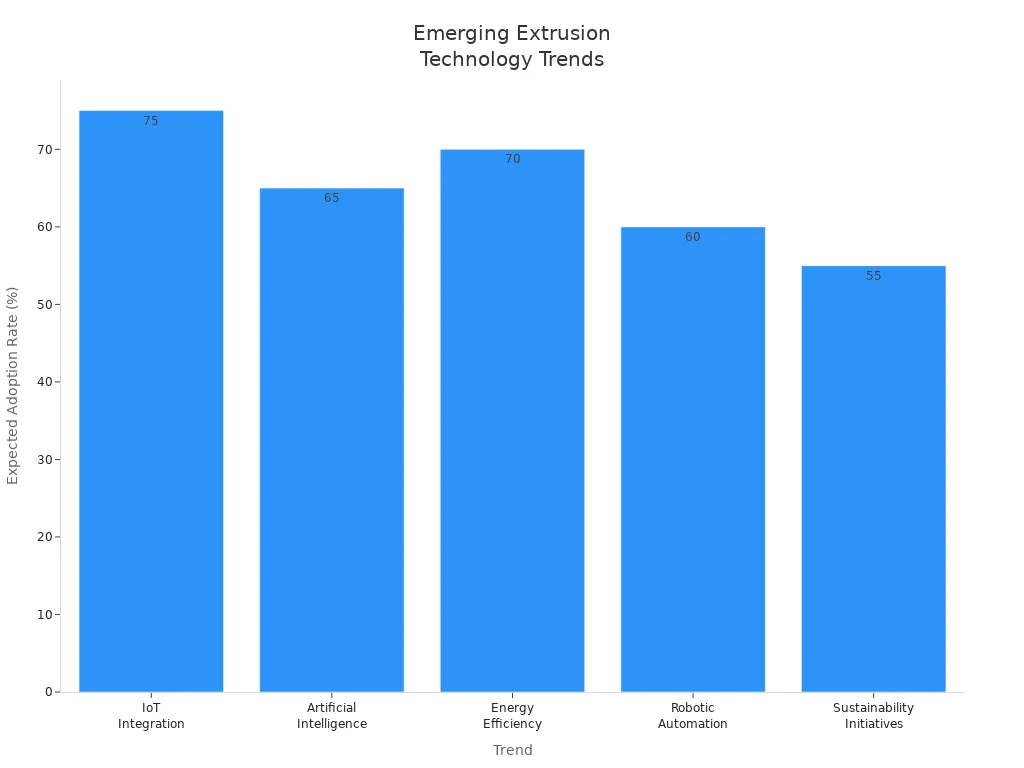
I see rapid changes in extrusion technology shaping the future of manufacturing. IoT integration allows real-time monitoring and analytics, hoʻomaikaʻi maikaʻi. Artificial intelligence supports predictive maintenance and optimization, which boosts performance. Energy efficiency is a growing focus, with manufacturers seeking ways to reduce consumption in the extrusion process. Robotic automation streamlines material handling and quality control. Sustainability initiatives drive the use of recycled materials and eco-friendly processes.
| ʻAno | wehewehe | Ka hopena i ka pono | Ka helu o ka hoʻokomo ʻia ʻana (%) |
|---|---|---|---|
| Hoʻohui IoT | Ka nānā ʻana a me ka nānā ʻana i ka manawa maoli | Kiʻekiʻe | 75% |
| Naʻauao hana | ʻO ka mālama wānana a me ka loiloi | Kiekie loa | 65% |
| Hoʻoikaika ikaika | Reducing energy consumption | Kauwaena | 70% |
| Lopako ʻaunoa | Ka mālama waiwai a me ka hoʻomalu maikaʻi | Kiʻekiʻe | 60% |
| Nā Hana Hoʻomau | ʻO nā mea hana hou a me nā kaʻina kaiaola | Kauwaena | 55% |
I notice advancements in material compatibility, especially with bioplastics, are transforming the extrusion industry. Many manufacturers now prioritize flexibility in equipment design, with modular systems allowing easy upgrades and modifications. Sustainability is essential, with most manufacturers focusing on energy-efficient equipment and waste reduction strategies. Smart extrusion machines reduce downtime by 20%, which improves overall efficiency and quality control. I always stay updated on these trends to maintain high performance and support new applications in plastic extrusion.
Manaʻo kōkua: I recommend reviewing the overview of extruder machines in manufacturing regularly. Staying informed about new types of extrusion machines and screw designs helps me adapt to changing production needs and maintain scalability.
I recognize that each extrusion system offers unique advantages and limitations. My experience shows that single-screw extruders excel in high-volume production, while twin-screw systems provide superior mixing and flexibility. Ram and co-extrusion machines support specialty applications. I always use comparison tables and selection criteria to evaluate:
- Technical capabilities and long-term reliability
- Customer service and design assistance
- Quality standards and energy efficiency
I recommend manufacturers understand their application needs and consult extrusion experts for optimal results.
FAQ
What is the main difference between single-screw and twin-screw extruders?
I see that single-screw extruders use one rotating screw for basic mixing. Twin-screw extruders use two screws for advanced mixing and better control. I choose twin-screw systems for complex materials and higher flexibility.
How do I decide which extrusion system fits my application?
I start by reviewing my material type, ka nui hana, and product complexity. I match these needs to the strengths of each system. I consult with experts if I face unique requirements.
Can I process recycled materials with extrusion systems?
I process recycled materials using twin-screw extruders. These machines handle variable feedstocks and additives better than single-screw systems. I monitor quality closely to ensure consistent results.
How often should I perform maintenance on my extruder?
I schedule routine inspections every month. I check for screw wear, barrel condition, and control system performance. Regular maintenance prevents downtime and extends equipment life.
What are the most common extrusion defects I encounter?
I often see surface roughness, hoʻoheheʻe dimensional, and melt fractures. I address these by adjusting temperature, ka māmā holo, and material feed. I use process monitoring to catch issues early.
Is co-extrusion suitable for all materials?
I use co-extrusion mainly for thermoplastics. Some materials may not bond well in multi-layer profiles. I test material compatibility before starting production.
How does automation improve extrusion quality?
I rely on automation for real-time monitoring and precise control. Automated systems reduce human error, maintain consistent output, and improve overall product quality.
What safety measures do I follow during extrusion?
I wear protective gear and follow lockout procedures. I keep the work area clean and check emergency stops regularly. I train my team on safe operation and emergency response.