

Gakoak hartzeko
- When I evaluate a Recycled Extruder Manufacturer, I start with recycling-specific engineering rather than headline throughput. Impurity tolerance, aireztatzea, and screen changers matter more than raw speed. UET Machine, adibidez, builds recycled extruders that tolerate over 30% impurity content using wear-resistant screens to reduce clogging (UET Machine, 2024).
- Match the screw architecture to your resin stream. In my experience a co-rotating twin screw extruder suits reactive extrusion, masterbatch, and recycled resin compounding, while a single screw extruder is often enough for straightforward waste plastic pelletizing of clean PE, PP, or LDPE scrap.
- Use spec-to-output mapping instead of guessing. General purpose recycling extrusion machines typically run L/D ratios of 1:24 to 1:30 (Xtrustar Machines, 2024), and twin screw models scale from ~10-15 kg/h on lab units to ~150 kg/h on mid-size machines (Made-in-China product data, 2024), with USEON pushing scalability up to 60 t/h (USEON, 2024).
- Temperature stability is a quality lever, not a luxury. Multi-zone PID controllers that hold within +/-1C protect melt integrity across PET, HDPE, PVCa, and PPR feedstocks (Polyretec, 2024), which directly affects pellet consistency and downstream yield.
- The supplier field is deep, so a neutral shortlist beats a single-brand pitch. The ENF Recycling Directory alone lists 191 extrusion equipment manufacturers, including 127 multi-screw and 104 single-screw makers (ENF Recycling Directory, 2024), eta 2025-2026 twin screw shortlists still feature Coperion, Leistritz, Milacron, KraussMaffei, JSW, and Battenfeld-Cincinnati (UDTECH Blog, 2026).
- Weigh China-versus-USA sourcing honestly. China factory sourcing can save 35% or more on purchase price (UDTECH, 2024), but I factor tariffs, epea, spares availability, and commissioning support into total cost of ownership before deciding.
- Think in total cost of ownership, not sticker price. Energy-saving extruder design, melt filtration system durability, and screw-and-barrel wear life shape the real cost of a turnkey recycling line over its lifespan far more than the initial quote.
- Capacity plans should be grounded in real deployments. Plastic Recycling Inc. invested $10 million in two extruder systems to compound 200 million pounds of recycled resin per year (Plastics Machinery Manufacturing, 2024), a useful benchmark when I size high output extrusion against demand.
- The market opportunity is structural. With less than 10% of all plastic waste currently recycled (Instructables, 2023), investing in the right recycled plastic pelletizer or compounding extruder positions your operation squarely within the circular economy for plastics equipment.
What Is a Recycled Plastic Extruder and How Does It Work?
When buyers ask me to explain a recycled plastic extruder in plain terms, I describe it as a machine that melts reclaimed polymer waste and reforms it into usable output, either granules for resale or finished profiles for downstream fabrication. It sits at the heart of any plastic granulating production line, converting bales of scrap into a marketable feedstock. What separates a plastic recycling extruder machine from a general polymer processing machine is that it must tolerate contamination, moisture, and inconsistent bulk density that virgin pellets never present.
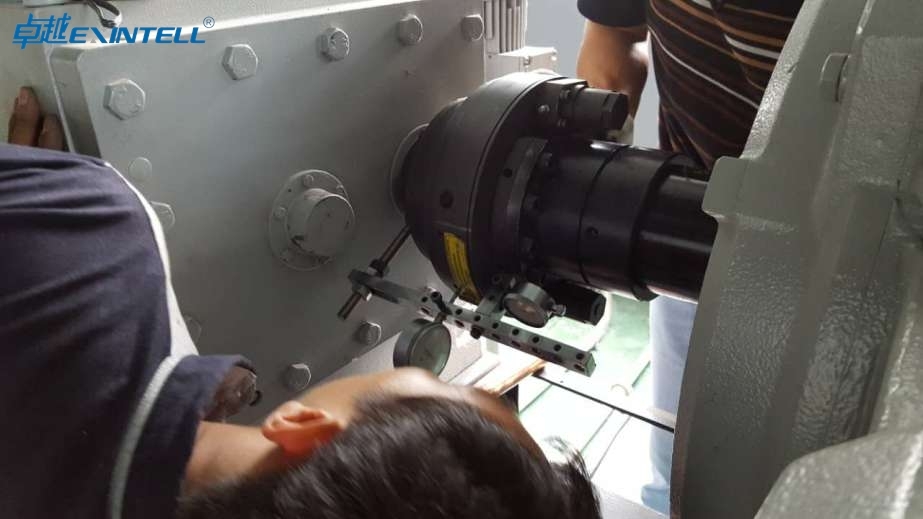
The Core Processing Stages
In my experience commissioning lines, the process breaks into five sequential stages, and a weakness in any one of them limits the whole machine:
- Feeding. A hopper, and often a force-feeder or side-feeder, meters flake or regrind into the barrel. Low-bulk-density film like LDPE demands crammer feeders to avoid bridging.
- Urtzea. Barrel heaters and shear from the extruder screw and barrel raise the material past its melt point. Multi-zone control keeps that heat profile tight; Polyretec (2024) reports recycling extruder temperature systems holding stability within +/-1C using multi-zone PID controllers.
- Nahastea. The melt homogenizes so that color, gehigarriak, and any masterbatch disperse evenly. This is where recycled resin compounding actually happens.
- Desgasifikazioa (devolatilization). Vacuum vents pull off moisture, volatiles, and trapped air. Recyclate is far wetter and more volatile-laden than virgin resin, so venting capacity is not optional.
- Pelletizing or shaping. The melt passes a melt filtration system to remove solids, then either a die and pelletizer produces recycled granules, or a profile die shapes the final part.
Why Recycling Extrusion Differs From Virgin Resin Extrusion
The distinction matters because it drives the entire specification. Virgin resin arrives clean, dry, and uniform, so a virgin-resin extruder optimizes for throughput and surface finish. Recycled feedstock does not cooperate. UET Machine (2024) notes that recycled extruders are built to tolerate over 30% impurity content and use wear-resistant screens to reduce clogging. That means a recycling-grade machine needs aggressive melt filtration, robust venting, and hardened wear surfaces that a virgin line would consider overbuilt. When I evaluate a quote, I look for these recycling-specific features first, because their absence signals a repurposed virgin design rather than a purpose-built recycling extruder.
Where the Extruder Sits in the Circular Economy
The extruder is the practical link that closes the material loop. Instructables (2023) reports that less than 10% of all plastic waste is currently recycled, and much of that gap comes from the difficulty of turning dirty, mixed scrap back into a spec-grade resin. A well-matched extruder is what makes closed-loop recovery economically real: it takes PET bottles, HDPE containers, PP, and film and returns pellets a molder or converter will actually buy. TECNOVA Recycling (2024) describes lines that process feedstock ranging from PET bottles to HDPE containers with smart automation, which is the kind of flexibility circular-economy operations increasingly demand.
Why the Right Extruder Manufacturer Determines Your Line’s ROI
I have watched two plants buy nominally identical machines and land in completely different financial positions three years later. The variable was almost never the datasheet headline; it was the manufacturer behind it. Choosing a Recycled Extruder Manufacturer is a capital decision that compounds across a decade of operation, so I treat manufacturer quality as an ROI input, not a preference.

Build Quality Drives Throughput Stability and Energy Cost
Two numbers decide profitability on a recycling line: sustained throughput and specific energy consumption (the kWh spent per kilogram of output). A manufacturer with proven screw geometry and thermal control delivers steady output at a lower energy draw, while a poorly engineered barrel forces you to run cooler and slower to avoid degradation. USEON (2024) reports 2,500+ twin screw extruder lines running in 70+ countries with torque density up to 15 Nm/cm3 and scalability to 60 t/h, which is the kind of installed-base evidence I want before trusting a throughput claim. Torque density in particular matters, because it sets how hard you can push viscous, filled recyclate before you hit a wall. Estrusio Makina Fabrikatzailea Fabrika
How a Poor Match Erodes Returns
When the extruder is mismatched to the feedstock, the failure modes are predictable and expensive:
- Torque limits. An undersized drive trips out on high-viscosity or heavily filled material, capping output well below the rated figure.
- Premature wear. Non-hardened screws and barrels erode fast against abrasive fillers and contaminants, and replacement is a five-figure event.
- Compound rejects. Inadequate mixing or venting produces off-spec pellets with gels, hutsuneak, or moisture streaks, which downstream customers reject outright.
Each of these converts directly into lost margin, and none of them show up on a purchase order.
After-Sales Support Is Part of the Machine
Uptime is where support quietly protects your investment. I ask every prospective supplier about spare parts lead time, screw and barrel refurbishment options, and remote diagnostics before I ask about price. A screw changer or filter element that takes twelve weeks to arrive can idle a line long enough to erase a year of efficiency gains. This is also central to the honest China-versus-USA sourcing tradeoff: UDTECH (2024) indicates China factory sourcing can save at least 35% versus alternatives, but that saving has to be weighed against longer shipping lead times, tariff exposure, and parts logistics. My rule is simple: model the total cost of ownership, not the sticker price, before you compare regions.
The 10-Year Lens
Because extrusion equipment routinely runs a decade or more, small per-kilogram differences dominate the lifetime math. To make this concrete, Plastic Recycling Inc. invested $10 million in two extruder systems to compound 200 million pounds of recycled resin per year (Plastics Machinery Manufacturing, 2024). At that scale, a one-percent shift in energy consumption or reject rate is worth far more over ten years than any upfront discount. That is why I evaluate manufacturers on the reliability and efficiency they sustain across the lifecycle, not on the day-one quote.
Single Screw vs Twin Screw Recycled Extruders
The single-versus-twin question is the first architectural fork every buyer faces, and the honest answer is that it depends entirely on your feedstock and your product goal. The market itself reflects the split: the ENF Recycling Directory (2024) lists 191 extrusion equipment manufacturers, including 104 single-screw and 127 multi-screw makers. Both categories are healthy because they solve different problems.
Torloju Bakarra: Sinplea, Economical, and Right for Clean Streams
A single screw extruder is mechanically simpler, cheaper to buy and maintain, and well suited to clean, single-polymer streams such as post-industrial PE or PP regrind headed for straightforward waste plastic pelletizing. When the feed is consistent and you are essentially remelting and re-pelletizing rather than compounding, the single screw is often the smarter economic choice. Xtrustar Machines (2024) notes that general-purpose recycling extrusion machines typically use L/D ratios of 1:24 to 1:30, a range that gives single-screw designs enough residence time for basic melting and homogenization without overcomplicating the build.
Torloju bikoitza: Nahastea, Devolatilization, and Compounding Power
A twin screw extruder earns its higher cost when the job is harder. Its intermeshing screws deliver superior distributive mixing, far stronger devolatilization for wet or volatile-heavy recyclate, and the compounding capability needed to blend fillers, masterbatch, gehigarriak, or multiple polymers into a spec resin. If you are producing recycled compounds, WPC, or reactive-extrusion products, or handling contaminated PET and mixed film, the twin screw is usually the only architecture that will hold spec. It is also the platform behind most high-output turnkey recycling lines.
Co-Rotating vs Counter-Rotating
Within twin screws, the configuration choice shapes what the machine does best. A co-rotating extruder, where both screws turn the same direction, is the workhorse for recycled resin compounding and reactive extrusion because it maximizes mixing and self-wiping action. Counter-rotating twin screws, where the screws turn in opposite directions, generate high pressure with gentler shear and are traditionally favored for heat-sensitive materials such as rigid PVC profile work. For recycling and compounding applications, I default to co-rotating unless a specific PVC or profile requirement points the other way.
When Multi-Screw or Two-Stage Designs Make Sense
Some feedstocks defeat both standard architectures. Heavily contaminated or highly volatile material may justify a two-stage design, where a first stage melts and vents aggressively and a second stage builds pressure for clean pelletizing. Multi-screw layouts exist for extreme devolatilization or very high throughput. These are not defaults; I reach for them only when a single- or twin-screw line cannot meet the venting or output target, because the added complexity carries its own maintenance cost.
Spec-to-Output Comparison
The table below maps the two architectures to the specifications and outputs buyers actually act on. Output figures reflect published ranges: twin screw product data (Txinan egindakoa, 2024) shows lab units around 10-15 kg/h and mid-size machines near 150 kg/h, while USEON (2024) documents large twin-screw scalability to 60 t/h.
|
Faktorea |
Torloju bakarreko estrusioa |
Torloju Bikoitzeko Estrusioa (Co-Rotating) |
|---|---|---|
|
Best feedstock |
Clean single-polymer PE, PP, PPR regrind |
Kutsatuta, mixed, or volatile recyclate; PET, film, WPC |
|
Mixing capability |
Basic homogenization |
Superior distributive and dispersive mixing |
|
Devolatilization |
Mugatua |
Indartsua; multiple vent zones |
|
Konposaketa / masterbatch |
Not ideal |
Purpose-built |
|
Typical L/D ratio |
1:24 to 1:30 |
Luzeagoa, modular barrels |
|
Indicative output range |
Lower to moderate |
~10-15 kg/h (lab) to 60 t/h (industrial) |
|
Relative capital cost |
Behea |
Gorago |
|
Maintenance complexity |
Simpler |
Gorago; modular screws aid repair |
|
Faktorea |
Torloju bakarreko estrusioa |
Torloju Bikoitzeko Estrusioa (Co-Rotating) |
|---|---|---|
|
Best feedstock |
Clean single-polymer PE, PP, PPR regrind |
Kutsatuta, mixed, or volatile recyclate; PET, film, WPC |
|
Mixing capability |
Basic homogenization |
Superior distributive and dispersive mixing |
|
Devolatilization |
Mugatua |
Indartsua; multiple vent zones |
|
Konposaketa / masterbatch |
Not ideal |
Purpose-built |
|
Typical L/D ratio |
1:24 to 1:30 |
Luzeagoa, modular barrels |
|
Indicative output range |
Lower to moderate |
~10-15 kg/h (lab) to 60 t/h (industrial) |
|
Relative capital cost |
Behea |
Gorago |
|
Maintenance complexity |
Simpler |
Gorago; modular screws aid repair |
My practical takeaway: match the architecture to the dirtiest, most demanding feedstock you realistically expect to run, not the cleanest. Sizing to the easy case is the mistake I see most often, and it is the one that quietly caps a line’s return for its entire service life.
Which Plastics Can You Recycle: PET, HDPE, PP, PVCa, and LDPE
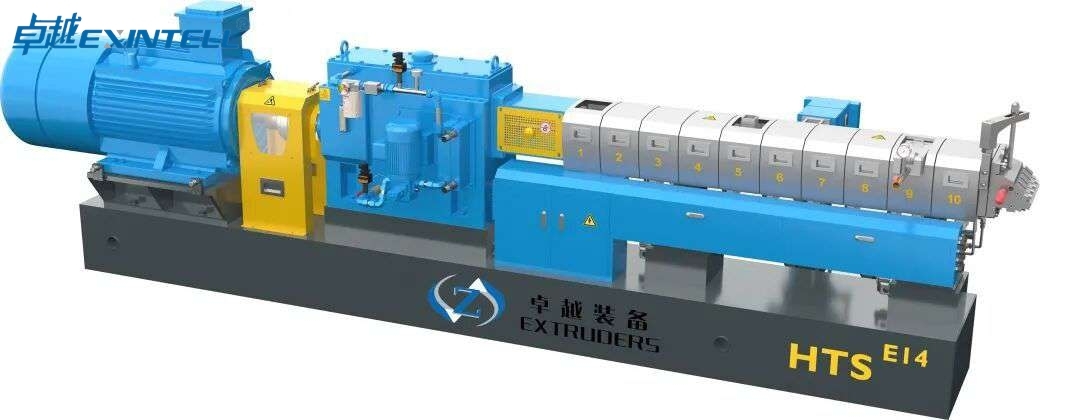
When I evaluate a recycled extruder manufacturer, my first question is never about horsepower or brand reputation. It is about polymer chemistry. A machine that runs beautifully on HDPE regrind can scorch a PET stream or degrade PVC into corrosive gas within minutes. The reality I keep returning to is sobering: less than 10% of all plastic waste is currently recycled (Instructables, 2023), and a large share of that gap comes down to feedstock and equipment being poorly matched. Getting the polymer-to-machine fit right is where recovery rates actually improve.
Below I break down the five resins that dominate real recyclate streams, and how each one changes the demands you should place on your screw geometry, temperature profile, and venting.
Matching Screw Geometry and Temperature Profile to Each Polymer
Every polymer has a characteristic melt window, shear sensitivity, and moisture behavior. Nire esperientzian, the most common procurement mistake is treating “plastic” as a single material and buying a general-purpose screw for everything. A recycled resin compounding job on filled polypropylene has almost nothing in common with LDPE film reclaim, and the barrel temperature staging reflects that.
Modern lines address this with multi-zone control. Plastic recycling extruder temperature control systems now hold stability within +/-1C using multi-zone PID controllers (Polyretec, 2024), which matters enormously for heat-sensitive resins where a 10-degree overshoot means visible degradation.
PET: Drying and Crystallization Handling
PET is the resin that catches new buyers off guard. It is hygroscopic, so it must be dried before processing or the moisture triggers hydrolytic chain scission that permanently lowers intrinsic viscosity. On bottle-to-pellet lines, I look for a crystallization stage and a dryer sized to the throughput, not an afterthought bolted on later. Lines from suppliers like TECNOVA Recycling (2024) are built to move feedstock from PET bottles to HDPE containers with the drying and automation those transitions require. If a quoted PET line has no drying and crystallization handling in the scope, the quote is incomplete.
HDPE and PP: The Rigid Packaging Workhorses
HDPE and PP (polipropilenoa) dominate rigid packaging recyclate streams, from milk jugs and detergent bottles to caps, crates, and automotive trim. These are the resins that keep most recyclers in business, and both tolerate processing reasonably well. PE and PP melt at moderate temperatures and are forgiving of minor contamination, which is why the majority of waste plastic pelletizing capacity I see specified is built around them. A single robust single screw extruder or twin screw extruder configured for polyolefins will handle both with a modest screw or temperature adjustment.
PVCa: Careful Temperature Control to Avoid Degradation
PVC is the resin I treat with the most caution. It degrades exothermically and releases hydrogen chloride when overheated, which corrodes barrels and screws and produces genuinely hazardous fumes. PVC needs careful temperature control and a screw designed for low shear and short residence time. This is precisely where the +/-1C multi-zone control cited above earns its keep. If you process PVC and PPR alongside polyolefins, I recommend a dedicated screw set rather than sharing tooling.
LDPE and Film: Low-Bulk-Density Feeding
LDPE, especially in film form, has very low bulk density and a tendency to bridge in the feed throat. The engineering challenge here is feeding, not melting. Force-feeding, compaction, or a purpose-built film-fed screw section is what separates a smooth LDPE line from one that starves and surges. Film reclaim is also where degassing matters most, because trapped air and printing residues need somewhere to escape.
Handling Contaminated and High-Impurity Feedstock
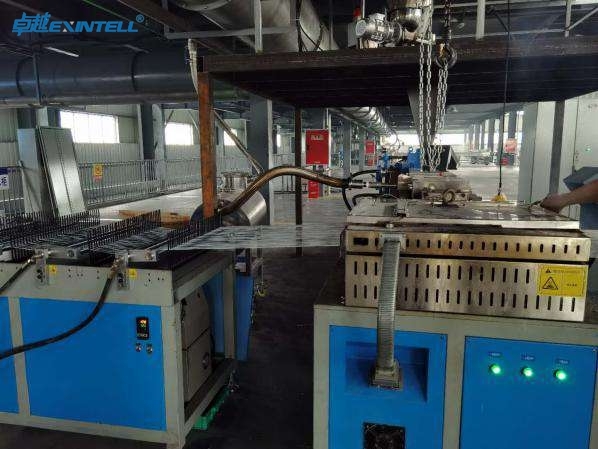
Garbitu, single-source regrind is a luxury most recyclers rarely enjoy. The material that actually shows up on the receiving dock carries paper labels, adhesive, moisture, isunak, and cross-polymer contamination. In my view, a recycled extruder manufacturer’s real value shows up not in the datasheet output number but in how the line behaves when the feedstock is dirty. This is the engineering that competitor buyer’s guides consistently underweight.
Tolerating Over 30% Impurity Content Without Constant Clogging
The single most useful spec I ask for is verified impurity tolerance. Some purpose-built recycling machines handle it well: UET Machine (2024) reports that its recycled extruders tolerate over 30% impurity content and use wear-resistant screens to reduce clogging. That threshold is a practical dividing line. Below it, most decent lines cope; above it, only equipment engineered specifically for plastic scrap recycling stays productive instead of stopping every hour to clear a blockage.
Melt Filtration and Screen Changer Options
A melt filtration system is the heart of contamination management. It captures the solids that survive washing and shredding before they reach the pelletizer. The question is how you change the screen when it loads up:
- Manual screen changers are inexpensive but force a full stop, which is fine for clean feedstock and low-volume operations.
- Hydraulic slide-plate changers swap screens with a brief pressure interruption, a reasonable middle ground.
- Continuous or backflush changers keep the recycled granules making machine running through screen changes, which is what high-impurity, high-uptime lines need.
Wear-resistant screens and hardened extruder screw and barrel surfaces are non-negotiable for abrasive scrap containing fillers, beira-zuntza, or mineral contamination. Standard nitrided screws wear out fast on abrasive recyclate, so I always confirm the wear package before signing off.
Reducing Downtime Through Robust Degassing and Venting
Contaminated and printed feedstock releases moisture, monomer, and volatile organics during melting. Without adequate degassing, those volatiles create voids in the pellet and pressure instability in the die. Robust venting, often a vacuum vent zone on the barrel, is what lets a line run film reclaim or heavily printed material without constant surging. I treat vent count and vent capacity as core specifications, not options.
Plastic Pellets Suppliers Twin-screw designs have a structural advantage here. The co-rotating extruder geometry generates strong distributive mixing and self-wiping action, which improves both devolatilization and the ability to push contaminated material through without stagnation. That is a large part of why co-rotating twin screws dominate demanding recycled resin compounding work.
Key Specifications to Compare: Screw Diameter, L/D, Torque, and Output
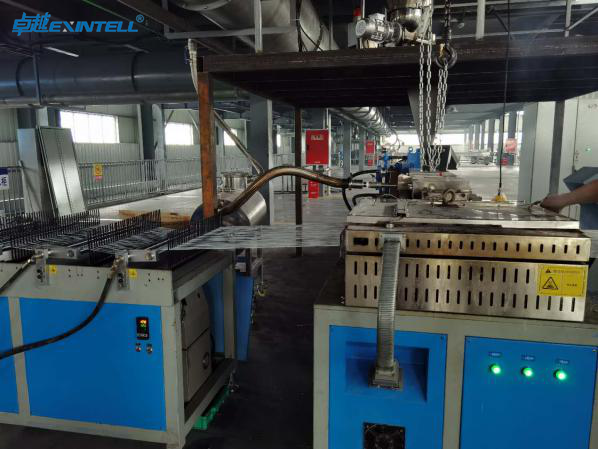
Once the polymer and contamination questions are settled, procurement comes down to four numbers that, together, tell you what a machine can actually do. I always insist on seeing all four in relation to each other, because any one in isolation is misleading. A big screw with weak torque underperforms; high torque on a short barrel limits what compounding you can do. The market itself is large and fragmented, the ENF Recycling Directory (2024) alone lists 191 extrusion equipment manufacturers, including 127 multi-screw and 104 single-screw makers, so a disciplined spec comparison is how you cut through the noise.
Torlojuaren diametroa eta L/D erlazioa
Screw diameters on standard models commonly range from 22mm up to 50mm and beyond, with production lines going much larger. Diameter scales with throughput, but the L/D ratio (barrel length divided by screw diameter) tells you what kind of work the machine does along that length.
Here is a distinction that trips up many buyers: general purpose recycling extrusion machines typically use L/D ratios of 1:24 to 1:30 (Xtrustar Machines, 2024), which is plenty for melting, filtering, and pelletizing. Compounding and reactive extrusion, where you need residence time for mixing masterbatch, betegarriak, edo gehigarriak, push L/D much higher, into the 40 to 80 range on dedicated modular extrusion systems. If a vendor quotes an L/D of 80 for a simple bottle-to-pellet job, you are paying for capability you will never use.
Torque Density: The Real Measure of Capacity
Torque-dentsitatea, expressed in Nm/cm3, is the specification I trust most for predicting mixing capability and sustained output on a twin screw extruder. It normalizes torque against screw volume, so you can compare machines of different sizes fairly. USEON (2024) reports torque density up to 15 Nm/cm3 across its 2,500+ twin screw extruder lines running in 70+ herrialdeak, with scalability to 60 t/h. High torque density means the machine can drive high-viscosity, highly filled recyclate at high output without stalling. For demanding compounding extruder work, I weight torque density heavily.
Irteera: From Lab Bench to Production Floor
Output is the number everyone quotes first, and the one that spans the widest range. Twin screw extruder product data shows models running from roughly 10-15 kg/h on lab units up to about 150 kg/h on mid-size machines (Twin Screw Extruder Manufacturer Product Data, 2024), while full high output extrusion production lines scale to 60 t/h. The capital commitment scales accordingly: Plastic Recycling Inc. invested $10 million in two extruder systems to compound 200 million pounds of recycled resin per year (Plastics Machinery Manufacturing, 2024), which is a useful anchor for what industrial-scale capacity actually costs.
Spec-to-Output Comparison Table
The table below maps typical specification tiers to the jobs they suit. I built it as a starting point for a procurement shortlist, not as a substitute for vendor-specific quotes, but it reflects the ranges I see across current recycled extruder manufacturers.
| Maila | Torlojuaren diametroa | L/D erlazioa | Typical output | Best-fit application |
|---|---|---|---|---|
| Lab / pilot | 22-26 mm | 1:24-40 | ~10-15 kg/h | R&D, formulation trials, small masterbatch batches |
| Small production | 35-45 mm | 1:24-1:30 | ~150-500 kg/h | General recycling, HDPE/PP pelletizing, single-site reclaim |
| Mid-size compounding | 50-75 mm | 1:40-1:52 | ~0.5-3 t/h | Recycled resin compounding, filled PP, estrusio erreaktiboa |
| Industrial line | 75 mm and above | 1:40-1:80 | Up to ~60 t/h | Turnkey recycling line, high-volume WPC, masterbatch at scale |
| Maila | Torlojuaren diametroa | L/D erlazioa | Typical output | Best-fit application |
|---|---|---|---|---|
| Lab / pilot | 22-26 mm | 1:24-40 | ~10-15 kg/h | R&D, formulation trials, small masterbatch batches |
| Small production | 35-45 mm | 1:24-1:30 | ~150-500 kg/h | General recycling, HDPE/PP pelletizing, single-site reclaim |
| Mid-size compounding | 50-75 mm | 1:40-1:52 | ~0.5-3 t/h | Recycled resin compounding, filled PP, estrusio erreaktiboa |
| Industrial line | 75 mm and above | 1:40-1:80 | Up to ~60 t/h | Turnkey recycling line, high-volume WPC, masterbatch at scale |
Reading this table against your own throughput target and polymer mix is the fastest way to disqualify machines that are wrong for the job. A recycled plastic pelletizer sized for 500 kg/h will never economically feed a plant that needs multi-ton output, and an industrial compounding line is wasted capital on a small film reclaim operation. Match the four numbers to the work, then compare vendors within that tier on impurity tolerance, aireztatzea, eta jabetzaren kostu osoa, the factors I cover elsewhere in this guide (China supplier listings eta UET Machine specifications are useful reference points for current ranges).
Understanding Output Rates and Throughput Scalability
When I evaluate a recycled extruder manufacturer, the first question I ask is not “how big is the machine?” baina “what realistic kilograms-per-hour will this deliver on my actual feedstock?” Nameplate output and effective output are rarely the same number, and the gap is where most procurement budgets quietly bleed. Nire esperientzian, mapping model size to honest throughput is the single most useful exercise a buyer can complete before signing anything.
Mapping Model Size to Realistic kg/h Output
Twin screw extruder product models span a wide band. Lab-scale units commonly run around 10 to 15 kg/h, while mid-size machines reach roughly 150 kg/h according to published manufacturer product data (Twin Screw Extruder Manufacturer Product Data, 2024). At the industrial ceiling, USEON reports scalability up to 60 t/h across its installed base of 2,500+ twin screw extruder lines in 70+ herrialdeak, with torque density up to 15 Nm/cm³ (USEON, 2024). Torque density matters here: higher torque per unit of screw volume lets you push more recycled resin through without stalling, which is why I treat it as a throughput indicator, not just a durability spec.
L/D ratio also shapes achievable output. General-purpose recycling extrusion machines typically use L/D ratios of 1:24 to 1:30 (Xtrustar Machines, 2024). A longer barrel gives melt more residence time for mixing and venting, which helps with contaminated recycled feedstock but does not automatically raise raw throughput. I read L/D as a quality-and-devolatilization lever rather than a speed lever.
How Feedstock Quality Affects Effective Throughput
This is where paper specs meet reality. A single screw extruder rated at 300 kg/h on virgin pellets will not hold that rate on dirty, low-bulk-density flake. Impurity tolerance is the deciding variable. UET Machine reports recycled extruders that tolerate over 30% impurity content and use wear-resistant screens to reduce clogging (UET Machine, 2024). The more your line is engineered for contamination, the closer effective throughput stays to nameplate throughput. When I model capacity, I discount rated output for feedstock quality: clean regrind of PET or HDPE might run near spec, while mixed post-consumer PP or LDPE film with fines and moisture can force a meaningful derate.
The macro context reinforces why this engineering matters. Less than 10% of all plastic waste is currently recycled (Instructables, 2023), which means the feedstock reaching your extruder is often the hardest fraction to process. Buying for pristine input is a mistake I see repeatedly.
Lab to Pilot to Full Production Scaling Path
I recommend a staged path rather than a single leap to full scale. A lab unit (gutxi gorabehera 10 to 15 kg/h) validates that your specific recycled resin compounding recipe survives the extrusion granulation process. A pilot line confirms venting, melt filtration, and pelletizing behavior on representative volumes. Only then do I commit to full production sizing. The advantage of choosing a manufacturer with a coherent model family is geometric consistency: co-rotating extruder screw profiles that behave predictably as you scale reduce the risk of a pilot recipe failing at production speed.
Planning Capacity Around Annual Resin Volume Targets
Output should be reverse-engineered from your annual target, not chosen from a catalog. Plastic Recycling Inc. invested $10 million in two extruder systems to compound 200 million pounds of recycled resin per year (Plastics Machinery Manufacturing, 2024). That figure translates to roughly 90,700 tonnes annually, or about 11,600 kg/h across two lines assuming ~7,800 operating hours. The lesson is that redundancy and uptime assumptions drive sizing as much as the headline volume does. I always work backward: annual tonnes, divided by realistic operating hours, divided by an uptime factor, then buffered for feedstock derate. That produces the effective kg/h target I take to suppliers.
Temperature Control and Energy Efficiency
Recycled polymers are unforgiving thermally. Contaminants shift melt behavior batch to batch, and overheating degrades chains while underheating leaves unmelted cores. Precise thermal control is therefore both a quality tool and an energy-cost lever, and I evaluate the two together.
Multi-Zone Heating with PID Control Holding ±1°C Stability
The benchmark I look for is tight, verifiable stability. Plastic recycling extruder temperature control systems maintain stability within ±1°C using multi-zone PID controllers (Polyretec, 2024). Multi-zone heating lets me profile the barrel: gentler in the feed section to avoid premature melting, hotter in compression, and controlled in the metering and die zones. For sensitive materials like PVC and PPR, where the processing window is narrow, that ±1°C band is the difference between saleable recycled granules and scorched scrap. I ask every manufacturer to demonstrate zone-by-zone stability under load, not just at idle.
Variable Frequency Drives to Cut Energy Consumption
Variable frequency drives (VFDs) are the highest-leverage energy feature on a modern line. By matching motor speed to actual load rather than running fixed-speed, VFDs cut consumption during ramp, changeover, and partial-load operation, which in real recycling plants is a large share of runtime. When I compare an energy-saving extruder against a conventional one, VFD-equipped main drives and feeders consistently show lower specific energy consumption across variable feedstock.
Specific Energy Consumption as a Total-Cost Metric
I treat specific energy consumption (SEC), expressed in kWh per kilogram of output, as the truest efficiency metric because it normalizes energy against real production. Two machines with the same motor rating can differ substantially in SEC depending on screw design, insulation, and drive control. Over a machine’s life, SEC often outweighs purchase price in total cost of ownership. My rule: ask for SEC under representative recycled feedstock, and be skeptical of figures measured only on virgin resin, since contaminated material and higher torque demand push real-world SEC upward.
Energy-Saving Barrel Insulation and Cooling Design
Barrel insulation is unglamorous and frequently underrated. Insulated barrels retain process heat, reducing the duty on band heaters and cutting standby losses. On the cooling side, well-zoned barrel cooling prevents overshoot without wasteful over-cooling that the heaters then have to fight. The best designs balance heating and cooling so the two systems are not working against each other, which is a subtle but real source of wasted energy in polymer processing machinery. When I inspect a line, I look for jacketed insulation and independently controlled cooling zones as evidence the manufacturer took SEC seriously.
Pelletizazioa, Granulating, and Line Configuration Options
The extruder is only the heart of the system. How you pelletize, what auxiliaries you integrate, and whether you buy turnkey or source components decide whether the line actually runs. Nire esperientzian, buyers who obsess over the extruder and neglect the pelletizer and upstream equipment end up with an expensive machine that cannot maintain rated output.
Harra, Water-Ring, and Underwater Pelletizing Methods
Three pelletizing methods dominate recycled plastic pelletizer configurations, and each fits a different material and volume profile. I use the table below as my starting decision framework.
| Metodoa | Best-fit materials | Typical throughput fit | Key tradeoff |
|---|---|---|---|
| Harra (cold cut) | Clean PE, PP, engineering resins, masterbatch | Low to mid | Simple and low cost, but strand breaks disrupt continuous running on contaminated feed |
| Ur-eraztuna | PP, PE film regrind, moderate contamination | Mid | Handles unstable melt better than strand, with more water management than cold cut |
| Urpean | PET, high-volume HDPE, WPC, demanding compounds | Alta | Highest output and pellet uniformity, but higher capital and complexity |
| Metodoa | Best-fit materials | Typical throughput fit | Key tradeoff |
|---|---|---|---|
| Harra (cold cut) | Clean PE, PP, engineering resins, masterbatch | Low to mid | Simple and low cost, but strand breaks disrupt continuous running on contaminated feed |
| Ur-eraztuna | PP, PE film regrind, moderate contamination | Mid | Handles unstable melt better than strand, with more water management than cold cut |
| Urpean | PET, high-volume HDPE, WPC, demanding compounds | Alta | Highest output and pellet uniformity, but higher capital and complexity |
For a high-output extrusion PET line, I lean toward underwater pelletizing because it manages the low melt strength of recycled PET and delivers uniform granules. For a smaller LDPE film operation, water-ring is often the pragmatic choice. Strand cutting remains excellent for clean, well-sorted streams and masterbatch work where pellet consistency is paramount.
Integrating Crushers, Vibrating Sieves, and Dryers
A plastic granulating production line is a chain, and its throughput is capped by the weakest link. Crushers and shredders must feed the extruder at a rate that keeps the screw filled; vibrating sieves remove oversize and fines that would foul the melt filtration system; dryers control moisture, which is non-negotiable for PET where residual water drives hydrolytic degradation. I insist on sizing auxiliaries to slightly exceed extruder capacity so upstream equipment never becomes the bottleneck. This is exactly the kind of integrated plastic scrap recycling equipment that TECNOVA describes, processing feedstock from PET bottles to HDPE containers with smart automation (TECNOVA Recycling, 2024).
Two-Stage Extruders for Higher Venting and Quality
For contaminated or moist recycled feedstock, a two-stage extruder configuration earns its cost. The first stage melts and mixes; a decompression zone with venting then pulls off volatiles, moisture, and trapped air before the second stage builds pressure for pelletizing. The result is fewer voids, better degassing, and higher-quality recycled granules from a recycled granules making machine that would otherwise struggle with post-consumer material. When paired with a robust screen changer, two-stage venting is the combination I recommend for anyone running variable, real-world scrap rather than clean industrial regrind.
Turnkey Ready-to-Run Line vs Component Sourcing
The final configuration decision is procurement strategy. A turnkey recycling line arrives integrated, commissioned, and warranted as a single system, which shortens ramp time and gives one accountable partner. Component sourcing lets you match best-in-class crushers, extruder, and pelletizer, often at lower headline cost, but you own the integration risk. The market is deep on both paths: the ENF Recycling Directory lists 191 extrusion equipment manufacturers, including 127 multi-screw and 104 single-screw makers (ENF Recycling Directory, 2024), so buyers have real choice on either route.
Sourcing geography intersects with this decision. China factory sourcing of extruders can save a minimum of 35% or more versus alternatives (UDTECH, 2024), which is meaningful, though I always weigh it against lead time, tarifak, and service response. For buyers who prioritize established brand support, top twin screw extruder manufacturer lists for 2025-2026 include Coperion, Leistritz, Milacron, KraussMaffei, JSW, and Battenfeld-Cincinnati (UDTECH Blog, 2026). My guidance is neutral: choose turnkey when speed and single-point accountability matter most, and choose component sourcing when in-house engineering can manage integration and squeeze cost. Edozein modutan, verify supplier options directly against real product data before committing (see China recycle plastic extruder manufacturers eta industrial recycling extruder specifications). Plastic Extruder Manufacturers Manufacturer
Recycled Extruder Manufacturers in the USA
When I begin a sourcing project for a North American buyer, I start close to home. The domestic base for recycled extrusion equipment is smaller than most people expect, but it is established and technically credible. The ENF Recycling Directory lists 191 extrusion equipment manufacturers globally, spanning 127 multi-screw and 104 single-screw makers (ENF Recycling Directory, 2024), and only a fraction of those maintain full manufacturing and service operations inside the United States. That scarcity shapes the entire domestic value proposition.
A limited but established domestic base
US-based makers and compounders tend to compete on service depth rather than unit count. Nire esperientzian, the practical advantage of buying domestically shows up after commissioning, when a screw and barrel wears, a melt filtration system needs retrofitting, or a screen changer jams. A supplier in the same time zone, shipping spares without customs delay, materially reduces downtime on a plastic recycling extruder machine.
US compounders investing in recycled resin capacity
The domestic story is increasingly about capacity, not just repair. Plastic Recycling Inc. invested $10 million in two extruder systems to compound 200 million pounds of recycled resin per year (Plastics Machinery Manufacturing, 2024). Investments of that scale signal that recycled resin compounding is moving from niche to mainstream in the US, and equipment demand for PET, HDPE, LDPE, and PP granulating lines follows that momentum. When I evaluate a domestic compounding extruder, I read this as a sign that the supporting ecosystem, from feedstock to aftermarket parts, is maturing.
When local sourcing justifies a price premium
Domestic equipment usually carries a higher sticker price, and I do not pretend otherwise. Two factors can justify that premium. Lehenengoa, domestic makers offer faster support and carry no import tariffs, which compresses total lead time and removes a layer of landed-cost uncertainty. Bigarrena, for buyers running just-in-time production or holding tight contractual delivery windows, an unplanned six-week wait for an overseas spare part can cost more than the entire price gap. I recommend local sourcing when downtime risk is high, throughput is mission-critical, or the line handles complex reactive extrusion or masterbatch work that benefits from hands-on vendor engineering.
China and Global Recycled Extruder Manufacturers
Outside the US, two distinct supplier tiers dominate my shortlists: economical Chinese OEM/ODM factories and premium global engineering houses. Each solves a different procurement problem, and I match them to the buyer’s tolerance for risk, budget, and service expectations.
China factories: economical pricing and broad OEM/ODM options
Chinese factories compete aggressively on price and configurability. China factory sourcing of extruders can save a minimum of 35% or more versus alternatives (UDTECH, 2024), and the OEM/ODM flexibility is genuinely broad. I regularly see product models ranging from roughly 10 to 15 kg/h on lab units up to about 150 kg/h on mid-size machines (Twin Screw Extruder Manufacturer Product Data, 2024), with recycling-specific engineering built in. UET Machine recycled extruders, adibidez, tolerate over 30% impurity content and use wear-resistant screens to reduce clogging (UET Machine, 2024), which matters when feedstock is contaminated post-consumer scrap. For a recycled plastic pelletizer or a turnkey recycling line covering PVC, PPR, LH, or WPC, this tier delivers strong value.
Global leaders and installed-base credibility
At the premium end, the recognized global leaders are consistent across industry lists. Top twin screw extruder manufacturer rankings for 2025-2026 include Coperion, Leistritz, Milacron, KraussMaffei, JSW, and Battenfeld-Cincinnati (UDTECH Blog, 2026). These names anchor most curated top-20 lists for 2025 as well. What I pay for with these builders is proven co-rotating extruder design, precise polymer processing machinery, and documented reliability at high output extrusion rates.
Installed base is a credibility signal I weigh heavily. USEON reports 2,500+ twin screw extruder lines running in 70+ herrialdeak, with torque density up to 15 Nm/cm3 and scalability to 60 t/h (USEON, 2024). Thousands of lines across dozens of countries tells me a supplier has survived real production conditions, not just controlled demos. Temperature stability is another differentiator worth verifying: some recycling extruder control systems maintain stability within +/-1C using multi-zone PID controllers (Polyretec, 2024), which protects sensitive recycled resin compounding.
Evaluating export experience and English-language support
Price and specs are only half the decision. Before I commit to any overseas supplier, I evaluate export experience and English-language support directly. I ask for reference installations in my region, confirm documentation quality, and test response speed during pre-sale. A factory that answers technical questions clearly in English and ships to my country regularly is far lower risk than one offering a marginally cheaper quote with thin support. Vendors like TECNOVA, whose recycling extrusion lines process feedstock from PET bottles to HDPE containers with smart automation (TECNOVA Recycling, 2024), illustrate the automation depth I look for in a modular extrusion system.
China vs USA Sourcing: Kostua, Lead Time, and Tariffs
The China-versus-USA decision is where I see buyers make the most avoidable mistakes, usually by anchoring on the upfront quote and ignoring Screw Extruder Suppliers landed cost. The honest tradeoff is between a large price advantage on one side and faster, tariff-free service on the other.
The upfront price gap and where it erodes
The imported price advantage is real and can exceed 35% in favor of Chinese equipment (UDTECH, 2024). That gap, hala ere, erodes across freight, installation logistics, and trade policy exposure. Ocean freight for a heavy plastic granulating production line, port handling, barneko garraioa, and on-site installation all add cost and weeks of calendar time. Trade policy and tariff exposure on imported equipment can further narrow the delta, and tariff schedules change, so I always price the current rate rather than assume last year’s figure.
Balancing landed cost against service response
My rule is to model total cost of ownership, not purchase price. I factor in freight, tarifak, spare-parts lead time, expected downtime, and energy consumption on an energy-saving extruder over its service life. When downtime is cheap and the line is not on a critical path, the import savings usually win. When a single day of stopped production costs more than the price gap, domestic service response justifies the premium. The comparison below summarizes how I weigh the two paths.
| Faktorea | USA Sourcing | China Sourcing |
|---|---|---|
| Upfront equipment price | Gorago (baseline) | Behea; savings can exceed 35% (UDTECH, 2024) |
| Import tariffs | None | Applicable; rates vary by policy and HTS code |
| Epea | Laburragoa; no ocean freight or customs | Luzeagoa; add freight, port handling, barneko garraioa |
| Spare parts and service | Fast, same time zone, no customs on parts | Slower; parts subject to shipping and customs delay |
| OEM/ODM configurability | Solid, often at premium engineering cost | Very broad across PET, HDPE, LDPE, PP, PVCa, PPR |
| Egokinik onena | Critical-path, low downtime tolerance | Cost-sensitive projects with schedule flexibility |
| Faktorea | USA Sourcing | China Sourcing |
|---|---|---|
| Upfront equipment price | Gorago (baseline) | Behea; savings can exceed 35% (UDTECH, 2024) |
| Import tariffs | None | Applicable; rates vary by policy and HTS code |
| Epea | Laburragoa; no ocean freight or customs | Luzeagoa; add freight, port handling, barneko garraioa |
| Spare parts and service | Fast, same time zone, no customs on parts | Slower; parts subject to shipping and customs delay |
| OEM/ODM configurability | Solid, often at premium engineering cost | Very broad across PET, HDPE, LDPE, PP, PVCa, PPR |
| Egokinik onena | Critical-path, low downtime tolerance | Cost-sensitive projects with schedule flexibility |
Neither path is universally correct. I choose based on the buyer’s downtime economics and schedule, then verify current tariff rates and supplier service commitments before signing. For a broader sense of the Chinese supplier field, buyer-facing directories such as recycled extruder manufacturer listings on Made-in-China eta direct-from-factory options like UDTECH are reasonable starting points for gathering quotes to model against a domestic baseline.
Certifications and Quality Standards That Matter
When I vet a Recycled Extruder Manufacturer, I treat certifications as filters, not guarantees. They tell me a supplier has cleared a baseline of process discipline, but they never replace a factory audit. I look for four signals first: CE marka, ISO 9001, and third-party inspection reports from SGS or Bureau Veritas (BV). Each one answers a different question, and knowing what each does and does not cover keeps me from overpaying for a badge.
What CE, ISO 9001, SGS, and BV Actually Certify
CE marking indicates a machine is declared compliant with applicable EU directives, most relevant here being the Machinery Directive on guarding, emergency stops, and electrical safety. What CE does not do is verify output quality or throughput claims. It is a self-declaration backed by a technical file, so I always ask to see that file rather than accepting the logo on a nameplate.
ISO 9001 certifies that the manufacturer runs a documented quality management system. It tells me the factory has repeatable processes for design review, incoming material inspection, and corrective action. It says nothing about whether a specific twin screw extruder will hit its rated 150 kg/h. Think of ISO 9001 as evidence of consistency, not performance.
SGS and BV reports are the ones I weight most heavily, because they are independent inspections tied to a specific order or factory. A pre-shipment SGS report on your actual machine, with photos of the extruder screw and barrel, the melt filtration system, and a witnessed run test, is worth more than any certificate hanging on a wall.
Verifying Claims With Audits and Factory Documentation
Nire esperientzian, the gap between marketing and reality closes fastest with three documents. Lehenengoa, a certified bill of materials naming the gearbox, motorra, and PID controller brands. Bigarrena, a factory acceptance test protocol showing the run conditions for your resin, whether that is PET, HDPE, LDPE, PP (polipropilenoa), PVCa, or PPR. Hirugarrena, a maintenance and spare parts manual. If a supplier resists sharing these before deposit, I treat that as a warning about their turnkey recycling line documentation overall.
I also cross-check installed-base claims. USEON, adibidez, reports 2,500+ twin screw extruder lines running across 70+ herrialdeak (USEON, 2024). Numbers like that are easy to state and worth confirming with reference customers who process feedstock similar to yours.
Compliance Requirements for US Installation and Safety
A CE-marked machine is not automatically compliant for a US floor. For North American installation I plan for UL or a Nationally Recognized Testing Laboratory listing on the electrical panel, NFPA 70 (NEC) wiring conformance, and OSHA machine-guarding expectations under 29 CFR 1910. Voltage and frequency also differ, so I confirm the control package is built for 480V/60Hz rather than 400V/50Hz. Retrofitting a European panel after arrival is one of the most common hidden costs I see buyers absorb, and it is avoidable by specifying US compliance in the purchase contract.
Jabetzaren kostu osoa: Beyond the Sticker Price
The purchase price of a plastic recycling extruder machine is usually 30 to 50 percent of what you will actually spend over its first decade. I model total cost of ownership before I compare quotes, because the cheapest quote frequently carries the highest lifetime cost. Four categories drive that math: energia, wear parts, downtime, eta ordezko piezen logistika.
Energia, Wear Parts, and Screen Changes Over Years
Energy is the largest recurring line item. On a continuously running compounding extruder, electricity often exceeds the machine cost within a few years, which is why an energy-saving extruder with efficient heating and a right-sized motor pays back quietly. Precise thermal control also matters here; systems that hold stability within ±1°C using multi-zone PID controllers (Polyretec, 2024) waste less energy on overshoot and produce more consistent recycled granules.
Wear parts are the second driver. The extruder screw and barrel degrade faster on contaminated recycled feedstock than on virgin resin. Machines built for waste plastic pelletizing address this directly. UET Machine reports designs that tolerate over 30% impurity content and use wear-resistant screens to reduce clogging (UET Machine, 2024). Screen changes are a routine cost of extrusion granulation on dirty streams, so I budget for screen packs and, ideally, an automatic screen changer that lets the line keep running through a change.
Downtime Cost From Clogging and Unplanned Maintenance
Unplanned downtime is where thin margins disappear. If a melt filtration system clogs and forces a stop, you lose output, labor, and often a full purge cycle. I quantify this by estimating hours of lost production times the contribution margin per hour, then comparing that against the premium for better filtration and screen automation. On a high-output extrusion line, avoiding even a handful of unplanned stops per year usually justifies the upgrade.
Spare Parts Lead Time and Screw/Barrel Replacement
Spare parts lead time is the quiet risk in cross-border sourcing. A screw and barrel replacement on an overseas machine can mean weeks of shipping on top of manufacturing time. This is a real tradeoff in the China-versus-USA decision: China factory sourcing can save a minimum of 35% or more versus alternatives (UDTECH, 2024), but that saving erodes fast if a critical part sits on a container for a month. I mitigate this by negotiating a stocked spares kit at purchase and confirming whether local service partners can machine or source consumables.
| Cost Category | Share of 10-Year TCO | Primary Driver |
|---|---|---|
| Machine purchase | 30–50% | Size, momentua, automation |
| Energia | 25–40% | Motor size, thermal efficiency, run hours |
| Higadura-piezak (torlojua, barrika, screens) | 10–20% | Impurity level of feedstock |
| Downtime and maintenance labor | 5–15% | Filtration quality, screen automation |
| Spare parts logistics | 2–8% | Sourcing distance, stocked kits |
| Cost Category | Share of 10-Year TCO | Primary Driver |
|---|---|---|
| Machine purchase | 30–50% | Size, momentua, automation |
| Energia | 25–40% | Motor size, thermal efficiency, run hours |
| Higadura-piezak (torlojua, barrika, screens) | 10–20% | Impurity level of feedstock |
| Downtime and maintenance labor | 5–15% | Filtration quality, screen automation |
| Spare parts logistics | 2–8% | Sourcing distance, stocked kits |
These ranges are planning estimates, not vendor figures. I recalculate them with real utility rates and resin margins for each project, because a line running PET flake behaves very differently from one compounding WPC or masterbatch.
How Much Does a Recycled Plastic Extruder Cost?
The honest answer is that a Recycled Extruder Manufacturer price spans two orders of magnitude, so any single number is misleading. What I can offer is a framework: understand the price drivers, know the budget bands for lab versus production scale, and calculate payback against your recycled resin margin.
Price Drivers: Size, Torque, Automatizazioa, and Line Complexity
Four factors move the number most. Size and throughput set the baseline, since a machine rated for 15 kg/h and one rated for 150 kg/h are structurally different builds (Twin Screw Extruder Manufacturer Product Data, 2024). Torque density is next; a co-rotating extruder with high specific torque handles demanding recycled resin compounding and reactive extrusion but costs more, with premium platforms reaching torque density up to 15 Nm/cm³ and scalability into tons per hour (USEON, 2024). Automation is the third driver, covering PID thermal control, automatic screen changers, and integrated controls. The fourth is line complexity: a bare extruder is one price, while a plastic granulating production line with washing, lehortzea, pelletizing, and a turnkey control system is another entirely.
Lab Units vs Full Production Line Budget Ranges
For planning, I group budgets into three tiers. A lab or pilot single screw extruder for R&D and small batches sits at the entry level. A mid-size twin screw extruder for steady commercial waste plastic pelletizing sits in the middle. A full turnkey recycling line with front-end washing and back-end pelletizing sits at the top. The market is deep at every tier: the ENF Recycling Directory lists 191 extrusion equipment manufacturers, including 127 multi-screw and 104 single-screw makers (ENF Recycling Directory, 2024), so competitive quotes are available in each band if you specify clearly.
Example Capital Scale: $10M for Two Systems
To ground the top of the range, consider a real reference point. Plastic Recycling Inc. invested $10 million in two extruder systems to compound 200 million pounds of recycled resin per year (Plastics Machinery Manufacturing, 2024). That is roughly $5 million per system at genuine production scale, and it reframes the question from “what does an extruder cost” to “what output and reliability am I buying.” At that volume, the capital is justified by throughput and uptime, not by the per-machine sticker.
Calculating Payback Against Recycled Resin Margins
I build payback bottom-up. Annual output in tons multiplied by the margin between your recycled resin sale price and your input plus processing cost gives annual contribution. Dividing installed capital by that contribution gives a rough payback in years, then I stress-test it against downtime and energy from the TCO model above. Because less than 10% of all plastic waste is currently recycled (Instructables, 2023), feedstock is generally available and margins on recycled granules can support aggressive payback when the line runs reliably.
Financing and Phased Scaling Strategies
Not every buyer needs to commit full capital at once. I frequently recommend phased scaling: start with one modular extrusion system sized for confirmed demand, prove the economics, then add a parallel line once volumes and offtake contracts justify it. Equipment financing or leasing spreads the capital and preserves working capital for feedstock. This phased approach also de-risks the sourcing decision, since you can validate a manufacturer’s service and spare parts responsiveness on line one before betting the plant on line two. You can compare current model ranges and pricing directly with suppliers through directories such as Made-in-China’s recycle plastic extruder listings and factory-direct sources like UDTECH before finalizing a shortlist.
Automatizazioa, Controls, and Smart Monitoring
When I evaluate a recycled extruder manufacturer, the control architecture tells me almost as much as the screw geometry. Recycled feedstock is inconsistent by nature, so the machine’s ability to sense and correct in real time is what separates a line that produces uniform pellets from one that produces scrap. Nire esperientzian, buyers who focus only on throughput specifications and ignore the controls end up paying for that oversight in downtime and off-spec granules.
PLC control versus manual and semi-automatic systems
The market still offers three broad tiers, and each has a legitimate use case. Manual systems rely on operator judgment for temperature setpoints and screw speed, which keeps capital cost low but makes output quality dependent on the person at the panel. Semi-automatic lines automate the core extrusion sequence while leaving startup, purging, and screen changes to the operator. Fully computerized PLC control governs the entire process, from feeding through pelletizing, with recipe management that stores parameters per resin type.
For a plastic recycling extruder machine running mixed post-consumer material, I recommend full PLC control in almost every case. The recipe memory alone justifies the cost when you switch between PET, HDPE, eta Plastic Extrusion Product PP streams, because each polymer needs a distinct thermal and shear profile. A manual line forces the operator to rebuild those settings from memory on every changeover, and that is where variability creeps in.
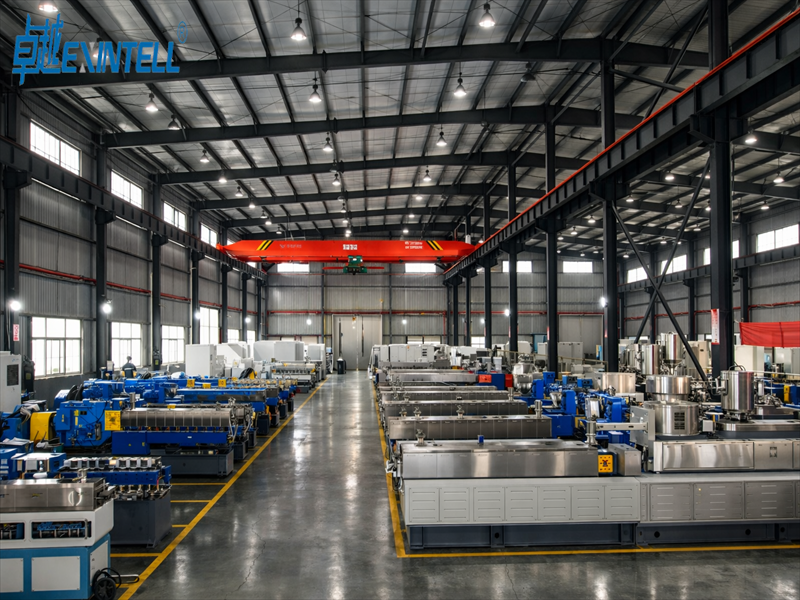
Real-time monitoring of temperature, momentua, and output
The three variables I watch most closely are melt temperature, screw torque, and mass output. Torque is the early-warning system for a recycled line: a sudden spike usually means contamination or an under-melted charge, and catching it before it stalls the drive protects both the gearbox and the screw. Polyretec reports that recycling extruder temperature control systems can hold stability within +/-1C using multi-zone PID controllers (Polyretec, 2024), and that tolerance matters when you are compounding heat-sensitive recyclate that degrades under thermal excursions.
Output monitoring closes the accounting loop. Gravimetric feeders paired with a downstream check let the PLC confirm that the mass entering the barrel matches the pellets leaving the pelletizer, which flags leaks, venting losses, or feed-throat bridging without a manual weigh check.
Closed-loop feedback for consistent pellet quality
Closed-loop control is where modern polymer processing machinery earns its keep. Instead of holding a fixed screw speed, the controller adjusts speed and feed rate to keep torque and melt pressure inside a target band. For recycled resin compounding, this is the mechanism that delivers consistent bulk density and pellet size run after run, even as the incoming scrap varies. When I review a quote, I ask specifically whether the feedback is genuine closed-loop or simply data logging with alarms, because those are very different capabilities sold under similar language.
Predictive maintenance and remote diagnostics
Remote diagnostics have moved from a premium option to a baseline expectation on high output extrusion lines. Vibration and current-draw trending let the manufacturer’s support team, or your own maintenance staff, forecast bearing and gearbox wear before failure. TECNOVA, adibidez, positions its recycling extrusion lines around smart automation across feedstock ranging from PET bottles to HDPE containers (TECNOVA Recycling, 2024). The practical payoff is fewer unplanned stops and the ability to schedule screen and screw service during planned windows rather than mid-shift. I treat remote access as a security decision as well: confirm that any remote diagnostic link is authenticated and network-segmented, because an open industrial connection is a real exposure on a plant floor.
Polypropylene and Specialty Polymer Extrusion Lines
Polypropylene deserves its own discussion because its rheology and thermal window differ meaningfully from polyolefins like HDPE and LDPE. A recycled extruder manufacturer that treats PP as interchangeable with PE tends to deliver disappointing melt homogeneity. Beyond PP, the specialty segment covers engineering plastics, reactive chemistry, and natural-fiber composites, and each pulls the machine design in a different direction.
PP-specific screw and thermal profiles
PP (polipropilenoa) has a narrow processing window and shear-sensitive behavior, so I look for a screw with a gentle compression profile and controlled mixing zones rather than aggressive high-shear elements. General purpose recycling extrusion machines commonly run L/D ratios between 1:24 eta 1:30 (Xtrustar Machines, 2024), and for PP I favor the longer end of that range to give the melt adequate residence time for uniform temperature without overheating. Multi-zone barrel heating with tight PID control keeps the profile inside the window that avoids chain scission and the resulting loss of mechanical properties.
Masterbatch and filler compounding with recyclate
Compounding masterbatch and mineral filler into recyclate is one of the most common jobs I spec twin screw extruder lines for. Co-rotating twin screw geometry provides the distributive and dispersive mixing that single screw extruders cannot match for pigment and additive dispersion. USEON reports more than 2,500 twin screw extruder lines running in over 70 herrialdeak, with torque density up to 15 Nm/cm3 and scalability to 60 t/h (USEON, 2024), which illustrates the range available once you commit to twin screw architecture for compounding. Side feeders for fillers and multiple venting stations keep the melt clean and degassed during recycled resin compounding.
Engineering plastics and reactive extrusion needs
Engineering polymers and reactive extrusion raise the bar on thermal control, momentua, and venting. Reactive extrusion uses the extruder as a continuous reactor, so it demands precise residence-time control, robust vacuum venting to remove volatiles, and corrosion-resistant barrel and screw surfaces. If your roadmap includes reactive chemistry or higher-temperature engineering plastics, confirm the manufacturer can supply upgraded metallurgy and the additional vent ports, because retrofitting these later is expensive.
Biodegradable and WPC compounding options
Wood-plastic composite (WPC) and biodegradable compounds bring their own constraints. WPC lines need low-temperature, high-throughput profiles that avoid scorching the natural fiber, plus wear-resistant components to handle the abrasive filler load. Biodegradable polymers such as PLA-based blends are moisture- and heat-sensitive, so devolatilization and gentle thermal handling become priorities. A manufacturer serious about circular economy plastics equipment should be able to show a WPC or bio-compound configuration, not just a standard polyolefin line relabeled.
Matching specialty needs to machine type
The table below maps common recycled and specialty applications to the screw configuration I would specify and the reasoning behind it.
| Application | Recommended machine | Key design priority | Typical output range |
|---|---|---|---|
| Clean single-resin repelletizing (LH, PP) | Torloju bakarreko estrusorea | Low cost per kg, simple operation | Lab units ~10-15 kg/h up to ~150 kg/h mid-size (Product Data, 2024) |
| Masterbatch and filler compounding | Co-rotating twin screw extruder | Dispersive mixing, side feeding, aireztatzea | Scalable to 60 t/h on large lines (USEON, 2024) |
| PP recyclate compounding | Twin screw, L/D 1:28-1:30 | Gentle compression, tight thermal window | Model-dependent |
| Reactive extrusion / ingeniaritza plastikoak | Twin screw with vacuum venting | Residence control, corrosion-resistant metallurgy | Model-dependent |
| WPC and biodegradable compounds | Twin screw, wear-resistant elements | Low-temp profile, devolatilization | Model-dependent |
| Heavily contaminated post-consumer scrap | Single or twin screw with melt filtration | Impurity tolerance, screen changers | Tolerates 30%+ impurity (UET Machine, 2024) |
| Application | Recommended machine | Key design priority | Typical output range |
|---|---|---|---|
| Clean single-resin repelletizing (LH, PP) | Torloju bakarreko estrusorea | Low cost per kg, simple operation | Lab units ~10-15 kg/h up to ~150 kg/h mid-size (Product Data, 2024) |
| Masterbatch and filler compounding | Co-rotating twin screw extruder | Dispersive mixing, side feeding, aireztatzea | Scalable to 60 t/h on large lines (USEON, 2024) |
| PP recyclate compounding | Twin screw, L/D 1:28-1:30 | Gentle compression, tight thermal window | Model-dependent |
| Reactive extrusion / ingeniaritza plastikoak | Twin screw with vacuum venting | Residence control, corrosion-resistant metallurgy | Model-dependent |
| WPC and biodegradable compounds | Twin screw, wear-resistant elements | Low-temp profile, devolatilization | Model-dependent |
| Heavily contaminated post-consumer scrap | Single or twin screw with melt filtration | Impurity tolerance, screen changers | Tolerates 30%+ impurity (UET Machine, 2024) |
How to Evaluate a Reliable Recycled Extruder Manufacturer
The market is crowded. The ENF Recycling Directory alone lists 191 extrusion equipment manufacturers, including 127 multi-screw and 104 single-screw makers (ENF Recycling Directory, 2024). Sorting a reliable partner from a broker who drop-ships generic equipment is the hardest part of this purchase, so I use a structured checklist rather than reacting to sales claims. What follows is a neutral procurement framework, not a pitch for any single brand.
Reviewing installed base, references, and case studies
Installed base is my first filter. A manufacturer with thousands of running lines has been forced to solve field problems that a newer supplier has not yet encountered. Named references matter more than logos on a website. I ask for two or three customers running a configuration close to mine and I contact them. Concrete deployments carry weight: Plastic Recycling Inc. invested $10 million in two extruder systems to compound 200 million pounds of recycled resin per year (Plastics Machinery Manufacturing, 2024), and case studies at that scale reveal how a manufacturer performs on commissioning, ramp-up, and support.
Assessing engineering support and process expertise
A recycled extruder manufacturer supplier should be able to discuss your specific feedstock, not just quote a catalog model. I probe how they handle impurity tolerance, aireztatzea, and screen changers, because those are the recycling-specific details generalists gloss over. UET Machine, for instance, states its recycled extruders tolerate over 30% impurity content and use wear-resistant screens to reduce clogging (UET Machine, 2024). When a supplier can explain why a particular melt filtration system suits my contamination level, I know I am talking to engineers rather than resellers. I also ask them to model total cost of ownership, since energy draw, wear-part replacement, and downtime over a decade routinely dwarf the purchase price.
Fabrikaren auditoretzak, testing before shipment, and warranties
I do not buy high-value extrusion granulation equipment without a factory acceptance test. Ideally I run my own scrap through the machine, or send a representative sample, and verify pellet quality and rated output before shipment. A remote video audit is the minimum when travel is not feasible. On sourcing geography, the tradeoffs are real: China factory sourcing can save 35% or more versus alternatives (UDTECH, 2024), but that saving must be weighed against longer lead times, shipping, and potential tariffs. Established Western and Japanese names such as Coperion, Leistritz, Milacron, KraussMaffei, JSW, and Battenfeld-Cincinnati appear consistently on 2025-2026 leader lists (UDTECH Blog, 2026) and typically offer faster regional support at a higher price. Neither path is universally correct; the right answer depends on your uptime tolerance and total cost model. Whatever the origin, I insist on a clear warranty covering the gearbox, torlojua, and barrel, with defined response times for parts and service.
Red flags in specs, ziurtagiriak, and communication
A few warning signs reliably predict trouble. Vague throughput figures with no stated resin or L/D ratio suggest the numbers are aspirational rather than tested. Missing or unverifiable certifications, particularly for the electrical and control systems, are a serious concern on equipment that will operate continuously. Slow, evasive answers to direct engineering questions during the sales phase only get worse after the money changes hands. And a quote that omits wear parts, instalazioa, and commissioning is not actually cheaper, it just hides the cost. Given that less than 10% of all plastic waste is currently recycled (Instructables, 2023), the demand for capable recycled granules making machines is only growing, which means more suppliers are entering the space and more diligence is required to separate substance from marketing.
A practical evaluation scorecard
The table below summarizes the criteria I score every candidate against before signing.
| Criterion | What to verify | Red flag |
|---|---|---|
| Installed base | Number of running lines, years in operation | No verifiable deployments |
| References | Contactable customers with similar configuration | Only anonymous testimonials |
| Process expertise | Feedstock-specific screw, aireztatzea, filtration advice | Catalog answers regardless of your material |
| Pre-shipment testing | Factory acceptance test with your scrap sample | Refusal to test before payment |
| Warranty and support | Coverage on drivetrain, defined response times | Short or ambiguous warranty terms |
| Jabetzaren kostu osoa | Energia, wear parts, downtime modeled over 10 urteak | Quote covers purchase price only |
| Sourcing tradeoff | Epea, tarifak, and regional service factored in | Price compared in isolation |
| Criterion | What to verify | Red flag |
|---|---|---|
| Installed base | Number of running lines, years in operation | No verifiable deployments |
| References | Contactable customers with similar configuration | Only anonymous testimonials |
| Process expertise | Feedstock-specific screw, aireztatzea, filtration advice | Catalog answers regardless of your material |
| Pre-shipment testing | Factory acceptance test with your scrap sample | Refusal to test before payment |
| Warranty and support | Coverage on drivetrain, defined response times | Short or ambiguous warranty terms |
| Jabetzaren kostu osoa | Energia, wear parts, downtime modeled over 10 urteak | Quote covers purchase price only |
| Sourcing tradeoff | Epea, tarifak, and regional service factored in | Price compared in isolation |
Run every prospective recycled extruder manufacturer through this framework and the field narrows quickly. The suppliers that answer each question with specifics, welcome a factory audit, and model the full lifecycle cost are the ones I have found deliver a plastic granulating production line that performs as promised for years. For broader market context, buyer-facing directories such as China recycle plastic extruder listings and process references like Polyretec’s recycling extruder overview can help you build an initial shortlist before applying this diligence.
A Procurement Checklist for Buying Your Extruder
When I sit down with a buyer who is about to commit six or seven figures to a recycling line, I always slow the conversation down. The most expensive mistakes I have watched happen were not caused by picking the wrong brand. They were caused by skipping the definition work before anyone asked for a quote. A procurement process for a plastic recycling extruder machine is really a sequence of decisions, and each one narrows the field of legitimate suppliers. The checklist below is the same one I use in the field, and it is deliberately vendor-neutral.
Step 1: Define feedstock, output target, and end product
Everything starts here. Before I compare a single spec sheet, I want three numbers and three material descriptions locked down. What polymer am I feeding, in what form, and how clean is it? A line built for washed PET flake behaves nothing like one built for post-industrial HDPE regrind or mixed LDPE film. Then I want a realistic hourly output target, and finally the end product: are we making recycled granules for resale, compounding masterbatch, or feeding a downstream sheet or pipe process?
This matters because the answers dictate machine architecture. Reactive extrusion and recycled resin compounding lean toward a co-rotating twin screw extruder, while simple waste plastic pelletizing of a single clean stream can often run on a single screw extruder at a lower capital cost. If your feedstock includes PP (polipropilenoa), PVCa, PPR, or PE mixed together, you are in compounding territory whether you planned for it or not.
Step 2: Request full spec sheets and reference contacts
I never accept a marketing brochure in place of an engineering spec sheet. A real specification lists screw diameter, L/D erlazioa, torque rating, installed motor power, heating zones, venting configuration, and the melt filtration system. As a benchmark, general purpose recycling extrusion machines typically use L/D ratios of 1:24 to 1:30 (Xtrustar Machines, 2024), so a quote that omits L/D entirely is a quote I send back with questions.
Reference contacts are non-negotiable. I ask for two or three customers running the same configuration on similar feedstock, and I actually call them. The scale of serious manufacturers makes this reasonable to expect. USEON, adibidez, reports 2,500+ twin screw extruder lines running in 70+ herrialdeak (USEON, 2024), which means a credible supplier can point you to an installation resembling your own.
Step 3: Confirm certifications, warranty, and spare parts terms
Here is where I separate a durable partnership from a transaction. I confirm relevant safety and quality certifications for the destination market, then I read the warranty language closely: what is covered, for how long, and what voids it. Wear parts are usually excluded, which is expected, but the exclusions should be explicit.
The spare parts terms deserve equal attention. I want written lead times for the extruder screw and barrel, screen changer components, and the gearbox. A warranty is only as good as the supplier’s ability to ship a replacement part before your throughput collapses.
Step 4: Plan installation, martxan jartzea, eta operadoreen prestakuntza
A recycled granules making machine that sits uninstalled is pure cost. I fold installation, martxan jartzea, and training into the purchase agreement rather than treating them as afterthoughts. Commissioning should include a run on your actual feedstock, not a clean demonstration resin, because that is when temperature control and venting behavior reveal themselves. Modern plastic recycling extruder temperature control systems can hold stability within +/-1C using multi-zone PID controllers (Polyretec, 2024), but that precision only helps if your operators know how to tune the zones for a contaminated stream.
A quick procurement scoring frame
- Fit: Does the configuration match my defined feedstock and output, not a generic use case?
- Evidence: Do I have a full spec sheet and at least two verifiable references?
- Support: Are warranty, spares, and training terms in writing with lead times?
- Total cost: Have I modeled energy, wear parts, and downtime, not just purchase price?
Mantentzea, Wear Parts, and Reducing Downtime
Nire esperientzian, the difference between a recycling line that hits its throughput targets and one that quietly bleeds margin is almost never the initial purchase. It is maintenance discipline. Recycled feedstock is abrasive and inconsistent by nature, so the machine that processes it wears faster and clogs more often than a virgin-resin extruder. Planning for that reality is what protects your investment.
Screw and barrel wear monitoring schedules
The extruder screw and barrel are the heart of the machine and the first components to degrade under abrasive scrap. I set a wear monitoring schedule tied to running hours, and I measure clearances at fixed intervals rather than waiting for output quality to drop. When screw-to-barrel clearance opens up, you lose pressure, throughput falls, and energy consumption per kilogram climbs. Catching that trend early lets you plan a rebuild during scheduled downtime instead of an emergency stop.
Screen and filter change routines for dirty feedstock
Contaminated recyclate is the main reason recycling extruders differ from virgin-resin machines. The melt filtration system removes the paper, metal, and unmelted debris that come with real-world scrap. UET Machine reports that its recycled extruders tolerate over 30% impurity content and use wear-resistant screens to reduce clogging (UET Machine, 2024), which tells you how central screen design is to this class of equipment. I build a screen and filter change routine around the dirtiness of the incoming stream, and for heavily contaminated feed I favor a continuous or automatic screen changer so the line does not stop for every filter swap.
Stocking critical spares to avoid long lead times
The parts most likely to fail are also the ones with the longest lead times if you have to order them reactively. I keep a critical spares kit on site: screen packs, zigiluak, berogailu-bandak, thermocouples, and at minimum the fast-wearing screw elements for a modular extrusion system. On imported machines the lead-time math is unforgiving, since ocean freight can add weeks to a part that a domestic buyer might receive in days. Stocking spares is cheap insurance against that gap.
Preventive maintenance to protect throughput
A preventive maintenance program is what keeps high output extrusion actually high. I schedule gearbox oil analysis, alignment checks, cooling-system cleaning, and electrical inspections on a calendar, not on failure. This matters at scale: Plastic Recycling Inc. invested $10 million in two extruder systems to compound 200 million pounds of recycled resin per year (Plastics Machinery Manufacturing, 2024). At that volume, an unplanned outage is measured in tons of lost product, and preventive maintenance is the only thing standing between the plan and the shortfall.
Maiz egiten diren galderak
What is the difference between a plastic extruder and a plastic extrusion machine?
People use the terms interchangeably, and in casual conversation that is fine, but the distinction matters when you write a purchase order. In my usage, a plastic extruder refers to the core unit, the motor, engranaje-kutxa, torlojua, and barrel that melts and conveys the polymer. A plastic extrusion machine or plastic granulating production line refers to the full system: the extruder plus feeding, filtration, pelletizing or shaping, hoztea, eta mozketa. When you buy a turnkey recycling line, you are buying the machine in this broader sense, so confirm exactly which components a quoted price includes.
Which extruder type is best for mixed or contaminated recyclate?
For genuinely mixed or heavily contaminated feedstock, I lean toward a co-rotating twin screw extruder. Its intermeshing screws provide better mixing, more effective devolatilization, and easier handling of variable inputs than a single screw extruder, which is why compounding extruder designs dominate recycled resin compounding. That said, if you are running a single, well-washed stream such as clean PET or HDPE, a robust single screw extruder with a strong melt filtration system can be the more economical choice. The decision follows your feedstock definition, not a blanket rule.
Should US buyers source domestically or import from China?
This is the question I get most, and the honest answer is that it is a tradeoff, not a winner. Importing can cut equipment cost significantly; UDTECH reports that China factory sourcing can save a minimum of 35% or more versus alternatives (UDTECH, 2024). Against that, you weigh import tariffs, itsasoko merkantzien, longer spare-parts lead times, and time-zone friction during commissioning. Domestic sourcing costs more upfront but shortens support loops and simplifies service. The market is large on both sides; the ENF Recycling Directory lists 191 extrusion equipment manufacturers (ENF Recycling Directory, 2024), and well-known twin screw builders for 2025-2026 include Coperion, Leistritz, Milacron, KraussMaffei, JSW, and Battenfeld-Cincinnati (UDTECH Blog, 2026). My guidance: if you have in-house maintenance depth and can stock spares, importing often pencils out. If uptime support is your constraint, pay for proximity.
What output and energy should I expect by machine size?
Output scales with machine size across a wide range. Lab-scale twin screw units run roughly 10-15 kg/h, while mid-size machines reach about 150 kg/h (Twin Screw Extruder Manufacturer Product Data, 2024), and the largest industrial twin screw platforms scale up to 60 t/h (USEON, 2024). Energy use tracks installed motor power and, critically, screw wear and screen condition, which is why the maintenance practices above are also energy-saving extruder practices. The table below maps typical tiers so you can sanity-check a quote against your throughput target.
| Machine tier | Typical output | Best-fit use | Feedstock cleanliness | Energy consideration |
|---|---|---|---|---|
| Lab / pilot | ~10-15 kg/h | R&D, formulation, masterbatch trials | Garbitu, controlled | Low absolute draw; high cost per kg |
| Small production | ~50-150 kg/h | Regional recycled granules making machine, WPC | Sorted, moderate impurity | Moderatua; screen changes affect efficiency |
| Mid-size industrial | ~500 kg/h – 2 t/h | Konposaketa, plastic scrap recycling equipment | Handles higher impurity with filtration | Higher draw; PID temperature control saves energy |
| Industria handia | arte 60 t/h | High output extrusion, circular economy plastics equipment | Engineered for variable, contaminated streams | Efficiency per kg improves with scale and upkeep |
| Machine tier | Typical output | Best-fit use | Feedstock cleanliness | Energy consideration |
|---|---|---|---|---|
| Lab / pilot | ~10-15 kg/h | R&D, formulation, masterbatch trials | Garbitu, controlled | Low absolute draw; high cost per kg |
| Small production | ~50-150 kg/h | Regional recycled granules making machine, WPC | Sorted, moderate impurity | Moderatua; screen changes affect efficiency |
| Mid-size industrial | ~500 kg/h – 2 t/h | Konposaketa, plastic scrap recycling equipment | Handles higher impurity with filtration | Higher draw; PID temperature control saves energy |
| Industria handia | arte 60 t/h | High output extrusion, circular economy plastics equipment | Engineered for variable, contaminated streams | Efficiency per kg improves with scale and upkeep |
Figures are indicative starting points; confirm exact numbers against a supplier spec sheet for your specific polymer and feedstock. Sources: Twin Screw Extruder Manufacturer Product Data (2024) and USEON (2024). For broader supplier comparison, industry listings such as the China recycle plastic extruder manufacturer directory eta UDTECH factory-direct overview can help you cross-check pricing and configuration options.
How do I avoid the most common procurement mistakes?
The mistakes I see repeat are predictable: buying on purchase price alone instead of total cost of ownership, skipping reference calls, and failing to test on actual feedstock during commissioning. There is real urgency behind getting this right, because less than 10% of all plastic waste is currently recycled (Instructables, 2023), and every reliable line that comes online moves that number. Do the definition work first, insist on evidence, and model the running costs. That sequence has protected more of my clients’ capital than any single brand recommendation ever could.
What Is a Recycled Extruder Manufacturer and Why It Matters for B2B Buyers
When I evaluate suppliers in this category, I define a recycled extruder manufacturer as a company that designs and builds the machinery that melts, homogenizes, filters, and pelletizes post-consumer or post-industrial plastic waste into usable granules. The core equipment is the plastic recycling extruder machine itself, but a serious manufacturer delivers the full plastic granulating production line: elikadura, estrusioa, melt filtration, degassing, and either strand or underwater pelletizing. Understanding that scope matters, because I have seen buyers purchase a bare extruder and then discover they still need a recycled plastic pelletizer, a screen changer, and a drying system to run production.
Definition and Core Engineering
The two dominant architectures are the single screw extruder and the twin screw extruder. Nire esperientzian, the single screw extruder handles clean, single-resin scrap efficiently and cost-effectively, while a co-rotating twin screw extruder is the workhorse for recycled resin compounding, masterbatch ekoizpena, and reactive extrusion where mixing intensity and devolatilization matter. Screw geometry drives performance: general purpose recycling extrusion machines typically run L/D ratios of 1:24 to 1:30 (Xtrustar Machines, 2024), which balances residence time against shear and thermal degradation.
Recycling-specific engineering is where I separate real specialists from generalists. Waste plastic pelletizing exposes the extruder screw and barrel to contamination that virgin processing never sees. UET Machine reports recycled extruders that tolerate over 30% impurity content and use wear-resistant screens to reduce clogging (UET Machine, 2024). Precise thermal control also matters more with mixed feedstock; Polyretec describes plastic recycling extruder temperature control systems that maintain stability within +/-1C using multi-zone PID controllers (Polyretec, 2024). If a vendor cannot discuss impurity tolerance, aireztatzea, and melt filtration in specifics, I treat that as a signal they build virgin-focused machines and rebrand them for recycling.
Market Context
The supply base is deep and global. The ENF Recycling Directory lists 191 extrusion equipment manufacturers, including 127 multi-screw and 104 single-screw makers (ENF Recycling Directory, 2024). That fragmentation is both an opportunity and a risk: plenty of competition on price, but wide variance in build quality and after-sales support. The demand side is compelling too. Less than 10% of all plastic waste is currently recycled (Instructables, 2023), which means the addressable market for circular economy plastics equipment has substantial room to grow as brand commitments and regulation tighten.
Scale is achievable at the top of the market. USEON reports 2,500+ twin screw extruder lines running in 70+ herrialdeak, with torque density up to 15 Nm/cm3 and scalability to 60 t/h (USEON, 2024). At the application end, TECNOVA recycling extrusion lines process feedstock ranging from PET bottles to HDPE containers with smart automation (TECNOVA Recycling, 2024), and Plastic Recycling Inc. invested $10 million in two extruder systems to compound 200 million pounds of recycled resin per year (Plastics Machinery Manufacturing, 2024). Those figures give me realistic anchors when a supplier claims a certain throughput.
Key Applications by Resin
Different polymers demand different configurations, and I always match the machine to the feedstock rather than accepting a one-size-fits-all pitch.
- PET — bottle-to-flake and bottle-to-granule lines need strong devolatilization and crystallization control; moisture management is decisive for quality.
- HDPE and LDPE — flexible and rigid PE scrap benefit from robust melt filtration to catch labels, adhesives, and fines.
- PP (polipropilenoa) — common in caps and containers, often compounded with masterbatch on a co-rotating extruder.
- PVC and PPR — heat-sensitive materials that require tight temperature windows and gentle shear to avoid degradation.
- PE and WPC — wood-plastic composites need high-torque compounding extruders that handle filler loading.
Because feedstock dictates screw design, aireztatzea, and screen strategy, I ask every candidate manufacturer to quote against my actual resin mix and contamination profile, not a generic datasheet.
How to Choose the Right Recycled Extruder Manufacturer Supplier
Choosing a supplier is a procurement problem, not a brochure comparison. My approach centers on matching verified specifications to my throughput targets, then stress-testing the vendor on service, ordezko piezak, eta jabetzaren kostu osoa. Below I share the evaluation framework I use, the spec-to-output mapping that keeps me honest, and the due diligence steps that catch problems before a purchase order goes out.
Vendor Evaluation Framework
I score candidates across five dimensions rather than fixating on price. Lehenengoa, engineering fit for my resin and contamination level. Bigarrena, demonstrated installed base and references I can actually call. Hirugarrena, spare parts availability and lead time for wear components like the extruder screw and barrel. Laugarrena, commissioning and training support. Bosgarrena, energia-kontsumoa, because an energy-saving extruder pays back over years of operation. For context on the current field, top twin screw extruder manufacturer lists for 2025-2026 include Coperion, Leistritz, Milacron, KraussMaffei, JSW, and Battenfeld-Cincinnati (UDTECH Blog, 2026), and industry roundups such as the Top 20 Twin Screw Extruder Manufacturers list for 2025 are a reasonable starting shortlist. I treat those lists as a research entry point, never as a substitute for my own diligence.
Spec-to-Output Mapping
The single most useful thing I do early is map machine class to realistic output so I can size correctly and avoid overbuying. Twin screw extruder product models range from roughly 10-15 kg/h on lab units to about 150 kg/h on mid-size machines (Twin Screw Extruder Manufacturer Product Data, 2024), while high output extrusion systems from top-tier builders scale far beyond that. The table below consolidates the ranges I work from.
| Machine Class | Typical Output | Common Use Case | Architecture |
|---|---|---|---|
| Lab / pilot unit | ~10-15 kg/h | R&D, formulation trials, small masterbatch batches | Twin screw extruder |
| Mid-size line | ~150 kg/h | Recycled granules making machine, regional compounding | Single or twin screw |
| Industrial line | Up to ~60 t/h (top tier) | High-volume recycled resin compounding, WPC | Co-rotating twin screw |
| Machine Class | Typical Output | Common Use Case | Architecture |
|---|---|---|---|
| Lab / pilot unit | ~10-15 kg/h | R&D, formulation trials, small masterbatch batches | Twin screw extruder |
| Mid-size line | ~150 kg/h | Recycled granules making machine, regional compounding | Single or twin screw |
| Industrial line | Up to ~60 t/h (top tier) | High-volume recycled resin compounding, WPC | Co-rotating twin screw |
Sources: Twin Screw Extruder Manufacturer Product Data (2024); USEON (2024). I always confirm quoted output is measured against my resin, since throughput on contaminated recycled feedstock runs lower than on clean virgin material.
China vs. USA Sourcing Tradeoffs
This is where honesty serves buyers better than a single-brand pitch. China factory sourcing of extruders can save a minimum of 35% or more versus alternatives (UDTECH, 2024), and the depth of the Chinese supply base is real, as the made-in-China listings for recycle plastic extruder manufacturers show. That said, I weigh the savings against tariffs, longer ocean lead times, remote commissioning logistics, and the harder path to warranty service. Domestic or regional suppliers often cost more upfront but reduce downtime risk through local field service and faster spare parts. My rule of thumb: for a first line or a mission-critical operation, the service proximity premium is usually worth it; for a proven, well-documented machine class where I already have in-house maintenance capability, the offshore savings can be compelling.
Jabetzaren kostu osoa
Purchase price is the smallest part of the picture over a machine’s life. I model TCO across the full ownership horizon: energy per kilogram of pellets, wear-part replacement intervals for screws, upelak, and melt filtration screens, labor for screen changes, scrap and downtime, and any tariff or freight burden. A cheaper turnkey recycling line that burns more power and clogs frequently on my impurity level will lose to a slightly pricier energy-saving extruder within a couple of years. I ask each supplier for kWh per kg and expected wear-part life in writing so the comparison is quantitative rather than anecdotal.
Red Flags
Certain signals reliably predict trouble, and I walk away when I see them.
- Throughput claims with no reference to feedstock type or contamination level.
- No verifiable installed base or reluctance to share customer references.
- Vague answers on impurity tolerance, aireztatzea, and screen changer design for a machine sold as recycling equipment.
- No local or regional spare parts stock and undefined lead times for wear components.
- Prices far below the market with no explanation, which often means thin barrels, undersized motors, or missing melt filtration.
- Unwillingness to provide energy consumption data or a commissioning plan.
Due Diligence Checklist
Before I commit, I work through a concrete checklist that I recommend to any buyer sourcing plastic scrap recycling equipment.
- Request a written specification sheet: torlojuaren diametroa, L/D erlazioa, motor power, momentua, and rated output against my resin.
- Confirm melt filtration system type and screen changer design for my contamination level.
- Verify impurity tolerance and venting configuration for the target polymers.
- Obtain at least two operating references in a similar application and contact them.
- Get energy consumption in kWh per kg and expected wear-part life in writing.
- Clarify commissioning, operadoreen prestakuntza, and remote or on-site support terms.
- Map spare parts availability, pricing, and lead time for screws, upelak, and screens.
- Document total landed cost including tariffs, freight, eta instalazioa.
- Confirm warranty scope, duration, and the process for claims.
- Where possible, run a trial with your own feedstock or witness a factory acceptance test.
Practical Tips and Industry Context
A few habits have saved me repeatedly. I favor a modular extrusion system when my feedstock may change, since a co-rotating twin screw with segmented barrels lets me reconfigure for new formulations rather than buying a new line. I size for realistic recycled throughput, not the optimistic virgin-material number on the datasheet. And I treat the melt filtration and screen changer as first-class purchasing criteria, because in extrusion granulation of contaminated scrap they determine uptime more than raw horsepower does.
The broader context reinforces the opportunity. With less than 10% of plastic waste currently recycled (Instructables, 2023) and a fragmented but deep supplier field of 191 extrusion equipment manufacturers (ENF Recycling Directory, 2024), buyers have leverage to negotiate on both price and specification. The manufacturers that will earn my business are the ones that engineer for recycling realities, back their throughput claims with references, and stand behind the machine with parts and service. If you are researching suppliers directly, industry listings such as the China recycle plastic extruder manufacturer directory and specialist factory pages like UDTECH’s recycled plastic extruder line are reasonable starting points, provided you run them through the due diligence checklist above rather than trusting the marketing copy.
Locate recycled extruder manufacturers based in the USA
When I start a domestic sourcing project, I treat “made in the USA” as a spectrum rather than a binary. Some vendors design, cast, and assemble entire recycling lines stateside; others import barrels and screws from Asia and complete final integration in a US facility. Both can be legitimate choices, but they carry different price, lead-time, and service implications. My first task on any short list is to confirm where the core wear parts, the extruder screw and barrel, are actually manufactured, because that is where quality and replacement economics live.
Key considerations when sourcing domestically
The starting point is the size of the addressable market. The ENF Recycling Directory catalogs 191 extrusion equipment manufacturers worldwide, of which 127 build multi-screw machines and 104 build single-screw machines (ENF Recycling Directory, 2024). That global count matters for US buyers because the domestic field is a subset of it, so I expect a shorter list and I plan for longer discovery cycles. I look specifically for suppliers who can document a plastic granulating production line reference in North America, ideally one I can visit or verify by phone.
Domestic proof of capability exists. Plastic Recycling Inc. invested $10 million in two extruder systems engineered to compound roughly 200 million pounds of recycled resin per year (Plastics Machinery Manufacturing, 2024). I use case studies like this to calibrate what a serious US recycled resin compounding installation looks like, and to ask candidate suppliers whether their equipment has run at comparable throughput and duty cycle.
Practical tips for building a US short list
- Ask directly whether the vendor is an OEM or a value-added reseller. A reseller can still be excellent for turnkey recycling line integration, but you need to know who owns the engineering.
- Request the domestic install base for your specific polymer, whether that is PET, HDPE, LDPE, PP (polipropilenoa), PVCa, PPR, or a mixed PE stream. Machines proven on PET bottle flake behave very differently from those proven on HDPE containers.
- Confirm spare-parts stocking on US soil. A domestic nameplate means little if a replacement screw section ships from overseas on a six-week lead time.
- Verify field-service coverage and average response time in your region before you weigh price.
Industry context
Even the global leaders in this category run predominantly imported fleets, which shapes what “etxekoak” realistically means. USEON alone reports 2,500-plus twin screw extruder lines operating across more than 70 herrialdeak, with torque density up to 15 Nm/cm³ and scalability to 60 t/h (USEON, 2024). For US buyers, the practical takeaway is that world-class extrusion granulation technology is widely available, so a domestic supplier should be judged on engineering support, parts logistics, and application fit rather than on national origin alone.
Compare recycled extruder suppliers by price and quality
Nire esperientzian, the fastest way to make a bad procurement decision is to compare machines on sticker price alone. A recycled plastic pelletizer that looks cheap on the quote can carry the highest total cost of ownership once you fold in energy draw, screen-change downtime, and wear-part replacement. I build every comparison around throughput-normalized cost, meaning cost per kilogram of finished recycled granules over a realistic service life, not the purchase figure in isolation.
The China-versus-USA sourcing tradeoff
Offshore sourcing carries a real and consistent price advantage. Buyers sourcing extruders directly from Chinese factories can save a minimum of 35% or more versus alternatives (UDTECH, 2024). That gap is large enough to fund a lot of spare inventory. What it does not automatically buy is short lead time, tariff certainty, or on-site service, and those three factors are where I see domestic and European suppliers earn their premium. My rule is simple: if downtime costs you more than the freight and tariff differential over three years, buy closer to home.
Mapping specifications to output
Quality claims mean little without a spec-to-output mapping I can act on. Twin screw extruder product data shows lab units running roughly 10 to 15 kg/h and mid-size machines reaching around 150 kg/h (Twin Screw Extruder Manufacturer Product Data, 2024), while general-purpose recycling extrusion machines typically use L/D ratios of 1:24 to 1:30 (Xtrustar Machines, 2024). I use L/D as a first-pass quality signal because it governs melt residence time, aireztatzea, and how well the machine handles contaminated feedstock.
| Maila | Typical output | Common config | Best-fit application | Relative price signal |
|---|---|---|---|---|
| Lab / pilot | ~10–15 kg/h | Twin screw, L/D 1:24–1:30 | Masterbatch trials, reactive extrusion R&D | Lowest capital, highest cost/kg |
| Mid-size compounding | ~150 kg/h | Co-rotating twin screw, melt filtration | Recycled resin compounding, WPC, masterbatch | Balanced cost/kg |
| Industrial single-screw | Line-dependent | Single screw, wear-resistant screens | Waste plastic pelletizing of PE, PP, HDPE film | Low cost/kg on clean streams |
| High-output line | Up to 60 t/h (fleet-scale) | Twin screw, torque density to 15 Nm/cm³ | Turnkey recycling line, high output extrusion | Highest capital, lowest cost/kg at scale |
| Maila | Typical output | Common config | Best-fit application | Relative price signal |
|---|---|---|---|---|
| Lab / pilot | ~10–15 kg/h | Twin screw, L/D 1:24–1:30 | Masterbatch trials, reactive extrusion R&D | Lowest capital, highest cost/kg |
| Mid-size compounding | ~150 kg/h | Co-rotating twin screw, melt filtration | Recycled resin compounding, WPC, masterbatch | Balanced cost/kg |
| Industrial single-screw | Line-dependent | Single screw, wear-resistant screens | Waste plastic pelletizing of PE, PP, HDPE film | Low cost/kg on clean streams |
| High-output line | Up to 60 t/h (fleet-scale) | Twin screw, torque density to 15 Nm/cm³ | Turnkey recycling line, high output extrusion | Highest capital, lowest cost/kg at scale |
Jabetzaren kostu osoa, not sticker price
Two engineering details dominate operating cost on recycled feedstock, and I always price them explicitly. Lehenengoa, impurity tolerance: UET Machine recycled extruders are built to handle over 30% impurity content using wear-resistant screens that reduce clogging (UET Machine, 2024). Higher tolerance directly cuts screen-change frequency and scrap losses. Bigarrena, thermal control: recycling extruder systems with multi-zone PID controllers can hold temperature within ±1°C (Polyretec, 2024), which protects melt quality and reduces off-spec pellets. When I compare quotes, I convert both into projected downtime hours and reject-rate percentages, then add them to the capital and energy figures.
Practical tips for supplier comparison
- Request a signed throughput guarantee for your feedstock, not the vendor’s clean reference material.
- Ask for the melt filtration system change-out interval at your expected contamination level.
- Compare energy consumption per kg of finished granules, since an energy-saving extruder can offset a higher purchase price within a year on a two-shift operation.
- Cross-reference vendor claims against the market. Top twin screw extruder lists for 2025–2026 consistently include Coperion, Leistritz, Milacron, KraussMaffei, JSW, and Battenfeld-Cincinnati (UDTECH Blog, 2026); use these as engineering benchmarks even if you ultimately buy from a smaller specialist.
For live model-and-price scanning across many suppliers at once, I keep a directory of Chinese OEM listings open during sourcing (recycle plastic extruder manufacturers) and pair it with application-specific vendor documentation (UDTECH recycled plastic extruder).
Understand what a recycled plastic extruder is and how it works
A recycled plastic extruder is a plastic recycling extruder machine that melts, homogenizes, decontaminates, and reforms plastic scrap into usable pellets or profiles. The reason recycling-grade equipment differs from virgin-polymer machinery is contamination: recycled streams carry moisture, etiketak, isunak, and mixed polymers, so the machine has to degas, filter, and stabilize a much dirtier melt. Understanding the flow path helps you read spec sheets critically instead of taking marketing language at face value.
How the process works, stage by stage
- Feeding. Washed and shredded plastic scrap recycling equipment output enters the throat, sometimes force-fed for low-bulk-density film.
- Conveying and melting. The extruder screw and barrel convey material forward while shear and barrel heat melt it. This is where L/D ratio matters, since 1:24 to 1:30 gives enough length for consistent melting and mixing (Xtrustar Machines, 2024).
- Venting. Vacuum vents pull out moisture and volatiles, a stage that is far more critical for recycled feedstock than for virgin resin.
- Melt filtration. Screen changers trap contaminants; wear-resistant screens let robust machines tolerate over 30% impurity content while limiting clogging (UET Machine, 2024).
- Pelletizazioa. The clean melt passes through a die and is cut into recycled granules, completing the extrusion granulation cycle on a recycled granules making machine.
Single screw versus twin screw
The core architectural choice is single screw versus twin screw. A single screw extruder is simpler, lower cost, and well suited to clean, single-polymer waste plastic pelletizing of PE, PP, or LDPE film. A co-rotating twin screw extruder delivers superior mixing, devolatilization, and control, which is why it dominates recycled resin compounding, masterbatch, WPC, and reactive extrusion. The modular extrusion system design of most twin screw compounding extruders also lets you reconfigure the screw for different polymers, from PET to HDPE to PVC or PPR. TECNOVA recycling extrusion lines, adibidez, process feedstock ranging from PET bottles to HDPE containers with smart automation (TECNOVA Recycling, 2024), illustrating the flexibility buyers now expect.
Why thermal precision matters
Recycled polymers have a narrow processing window because prior heat history has already degraded them. Systems that maintain temperature within ±1°C using multi-zone PID controllers (Polyretec, 2024) protect what viscosity and mechanical properties remain in the material. In my experience this single specification separates lines that produce sellable pellets from lines that produce inconsistent, discounted output.
Industry context and why this matters
The engineering ambition here is not academic. Less than 10% of all plastic waste is currently recycled (Instructables, 2023), which means the equipment described above is the physical bottleneck between waste and a functioning circular economy for plastics. Every gain in impurity tolerance, energia-eraginkortasuna, and thermal control widens the range of feedstock a converter can profitably process. That is why I encourage buyers to view a recycled extruder not as a commodity purchase but as circular economy plastics equipment whose specifications directly determine how much material stays out of landfill and back in production.
Identify the best recycled extruder brands for 2025-2026
When buyers ask me which manufacturers deserve a spot on their shortlist, I resist the urge to name a single winner. The right brand depends on your feedstock, your target output, and how much post-sale engineering support you actually need. That said, a credible 2025-2026 shortlist does exist, and it helps to know who sits on it before you start sending inquiries.
Who consistently shows up on the shortlists
Industry roundups of twin screw extruder manufacturers for 2025-2026 repeatedly include Coperion, Leistritz, Milacron, KraussMaffei, JSW, and Battenfeld-Cincinnati, according to a UDTECH Blog compilation (2026, ud-machine.com). These are the names I expect to see when a project involves demanding recycled resin compounding or high-throughput masterbatch work. On the Asian supply side, USEON reports 2,500+ twin screw extruder lines running across 70+ herrialdeak, with torque density up to 15 Nm/cm³ and scalability to 60 t/h (USEON, 2024, useon.com). That installed base matters more to me than marketing claims, because it signals field-proven reliability across varied plastic scrap recycling equipment applications.
Why a curated list beats a single-brand pitch
One list I found useful frames the market plainly: “To help you stay informed about the key players in this dynamic market, we’ve compiled an updated list of the Top 20 Twin Screw Extruder Manufacturers for 2025” (List: Goiena 20 Torloju bikoitzeko estrusoreen fabrikatzaileak, Updated 2025). I treat lists like this as a starting map, not a ranking to obey. The broader pool is large. The ENF Recycling Directory lists 191 extrusion equipment manufacturers, including 127 multi-screw and 104 single-screw makers (ENF Recycling Directory, 2024, enfplastic.com). No buyer needs 191 quotes, but that number tells you the market is deep enough to negotiate hard.
My neutral evaluation checklist
Rather than anchoring on a logo, I score candidates against criteria that predict long-term satisfaction:
- Recycling-specific engineering: impurity tolerance, robust venting, and screen changer design. UET Machine, for instance, states its recycled extruders tolerate over 30% impurity content and use wear-resistant screens to reduce clogging (UET Machine, 2024, uetmachine.com).
- Process control precision: multi-zone temperature stability. Polyretec reports its plastic recycling extruder machine temperature systems hold within ±1°C using multi-zone PID controllers (Polyretec, 2024, polyretec.com).
- Material breadth: confirmed capability across PET, HDPE, LDPE, PP, PVCa, PPR, LH, and WPC. TECNOVA Recycling notes its lines process feedstock ranging from PET bottles to HDPE containers with smart automation (TECNOVA Recycling, 2024, tecnovarecycling.com).
- Installed base and support footprint in your region.
A brand that scores well on those four points will usually serve you better than the most famous name that lacks local service.
Request a quote for a recycled plastic extrusion line
The quality of the quote you receive is directly proportional to the quality of the brief you send. Nire esperientzian, vague requests produce padded prices and mismatched machines. A tight specification produces comparable bids you can actually evaluate side by side.
What to put in your request for quote
I include, at minimum, my primary polymer and contamination profile, target output in kg/h, desired pellet form, available floor space and utilities, and whether I want a turnkey recycling line or a standalone extruder. I also ask each supplier to state the L/D ratio explicitly. General purpose recycling extrusion machines typically use L/D ratios of 1:24 to 1:30 (Xtrustar Machines, 2024, xtrustar.com), and knowing where a quote sits in that band tells me how much residence time and mixing I am buying.
Honest China-vs-USA sourcing tradeoffs
Price is where sourcing geography shows up first. China factory sourcing of extruders can save a minimum of 35% or more versus alternatives (UDTECH, 2024, ud-machine.com). That figure is real, but I never treat it as the whole story. Against those savings I weigh ocean freight and lead time, import tariffs that can swing with trade policy, spare-parts logistics, and the practical difficulty of getting an engineer on site quickly. A domestic supplier often costs more upfront while shortening commissioning and reducing downtime risk. The honest answer is that neither wins universally; the right choice depends on your capital budget, your uptime tolerance, and how mature your maintenance team is.
Model total cost of ownership, not just purchase price
The sticker price is the smallest number in the equation over a decade of operation. I build a simple TCO model that adds energy consumption, screw and barrel wear replacement, melt filtration system consumables, labor, and expected downtime to the purchase price. An energy-saving extruder that costs more can win the TCO comparison outright once you annualize power draw. For scale context, Plastic Recycling Inc. invested $10 million in two extruder systems to compound 200 million pounds of recycled resin per year (Plastics Machinery Manufacturing, 2024, plasticsmachinerymanufacturing.com). At that volume, a fraction of a cent per pound in energy or scrap savings dwarfs the difference between two competing quotes.
Industry context worth remembering
Demand for this equipment is structurally supported. Less than 10% of all plastic waste is currently recycled (Instructables, 2023, instructables.com). That gap is the entire investment thesis behind circular economy plastics equipment, and it is why I advise buyers to specify capacity with room to grow rather than sizing tightly to today’s throughput.
Find twin screw extruders suitable for recycling applications
Not every recycling job needs a twin screw. But when the feedstock is contaminated, highly variable, or destined for compounding, I reach for a co-rotating twin screw extruder because it handles mixing, devolatilization, and additive dosing far better than a single screw extruder. The modular extrusion system layout also lets me reconfigure the screw for a new material instead of buying a new machine.
Single screw versus twin screw for recycling
A single screw extruder remains the economical choice for clean, single-polymer waste plastic pelletizing, such as in-house PE or PP scrap. A twin screw earns its premium when you need reactive extrusion, masterbatch or filled-compound production, or aggressive venting to strip moisture and volatiles from dirty PET. The decision is really about feedstock consistency: the messier and more variable the input, the stronger the case for twin screw.
Spec-to-output mapping you can act on
Buyers regularly ask me how machine size maps to real throughput. Twin screw extruder product models range from roughly 10-15 kg/h output on lab units to about 150 kg/h on mid-size machines (Twin Screw Extruder Manufacturer Product Data, 2024, made-in-china.com), while flagship compounding lines scale far higher, up to the 60 t/h USEON reports for its largest configurations (USEON, 2024). The table below maps common tiers to typical applications so you can locate your project quickly.
| Machine tier | Typical output | L/D erlazioa | Best-fit application | Typical materials |
|---|---|---|---|---|
| Lab / pilot twin screw | ~10-15 kg/h | 1:24-1:30 | Formulation trials, R&D, small masterbatch batches | PET, PP, LH, WPC samples |
| Mid-size twin screw | ~150 kg/h | 1:28-1:40+ | Recycled resin compounding, extrusion granulation | HDPE, LDPE, PP, PVCa, PPR |
| Industrial single screw | Varies by barrel | 1:24-1:30 | Clean single-polymer plastic granulating production line | LH, PP in-house scrap |
| High-output twin screw | Up to 60 t/h | Application-specific | Large-scale compounding, high output extrusion | Multi-polymer, betetako konposatuak |
| Machine tier | Typical output | L/D erlazioa | Best-fit application | Typical materials |
|---|---|---|---|---|
| Lab / pilot twin screw | ~10-15 kg/h | 1:24-1:30 | Formulation trials, R&D, small masterbatch batches | PET, PP, LH, WPC samples |
| Mid-size twin screw | ~150 kg/h | 1:28-1:40+ | Recycled resin compounding, extrusion granulation | HDPE, LDPE, PP, PVCa, PPR |
| Industrial single screw | Varies by barrel | 1:24-1:30 | Clean single-polymer plastic granulating production line | LH, PP in-house scrap |
| High-output twin screw | Up to 60 t/h | Application-specific | Large-scale compounding, high output extrusion | Multi-polymer, betetako konposatuak |
Output figures for the lab and mid-size tiers come from Made-in-China product data (2024); the high-output figure reflects USEON’s stated scalability (2024). Actual results always depend on polymer, screw design, and contamination level, so I treat these as planning ranges rather than guarantees.
Practical tips for recycling-grade twin screws
A few engineering details separate a machine that survives real recycled feedstock from one that clogs by lunchtime. I insist on generous venting and, where moisture is a factor, vacuum devolatilization. I specify a screen changer sized for my contamination load, guided by the fact that purpose-built recycled extruders can tolerate over 30% impurity content with wear-resistant screens (UET Machine, 2024). I confirm the screw and barrel use hardened or bimetallic surfaces, because abrasive fillers and residual glass will chew through standard steel. And I ask for the temperature control specification in writing; the ±1°C multi-zone PID stability Polyretec cites (2024) is the kind of number that protects product quality when your feedstock quality wobbles.
Industry context
The multi-screw segment is well supplied, with the ENF directory listing 127 multi-screw makers among 191 extrusion manufacturers (ENF Recycling Directory, 2024). That competition works in your favor. It means you can hold out for a Recycled Extruder Manufacturer that meets your full specification on impurity tolerance, aireztatzea, and control precision rather than settling for whichever machine is nearest to your target price.
Bringing It All Together: Choosing the Right Recycled Extruder Manufacturer
After years of evaluating polymer processing machinery for recycling operations, I have learned that the right partner rarely reveals itself through a glossy spec sheet alone. The decision comes down to matching engineering fundamentals to your actual feedstock, then modeling the total cost of ownership honestly. A plastic recycling extruder machine that handles clean PET flake beautifully may choke on contaminated HDPE regrind, so I always start with the material and work backward toward the screw geometry, melt filtration system, and venting design.
The market gives you room to be selective. The ENF Recycling Directory lists 191 extrusion equipment manufacturers, including 127 multi-screw and 104 single-screw makers (ENF Recycling Directory, 2024), which means competitive pricing and genuine engineering choice. That breadth cuts both ways, though. It rewards buyers who ask precise questions and penalizes those who chase the lowest quote. When I compare a co-rotating twin screw extruder for masterbatch and recycled resin compounding against a rugged single screw extruder for straightforward waste plastic pelletizing, the conversation is never about which brand is best. It is about which machine survives your specific PP, PVCa, PPR, LDPE, LH, or WPC stream at your target throughput.
On sourcing geography, I stay candid with clients. China factory sourcing can save a minimum of 35% or more versus alternatives (UDTECH, 2024), and suppliers like USEON have proven scale, with 2,500-plus twin screw extruder lines running in 70-plus countries and torque density up to 15 Nm/cm3 (USEON, 2024). Yet established Western names such as Coperion, Leistritz, Milacron, KraussMaffei, JSW, and Battenfeld-Cincinnati still lead many 2025 shortlists (UDTECH Blog, 2026) for a reason: shorter support loops and lower tariff exposure. The right answer depends on your lead-time tolerance, service expectations, and duty structure, not on a single-brand pitch.
Engineering details decide whether a turnkey recycling line delivers for a decade. UET Machine recycled extruders tolerate over 30% impurity content and use wear-resistant screens to reduce clogging (UET Machine, 2024), and tight thermal control matters just as much, with multi-zone PID systems holding stability within +/-1C (Polyretec, 2024). Given that less than 10% of all plastic waste is currently recycled (Instructables, 2023), the operators who scale the circular economy will be those who buy equipment built for real-world contamination, not laboratory-clean inputs.
Expert Insight
| Key Point | Explanation |
|---|---|
| Match the machine to the feedstock, not the marketing | Impurity tolerance and screen-changer design determine uptime. Equipment rated for 30%-plus contamination (UET Machine, 2024) protects you from the clogging that stalls lines built for clean flake only. |
| Model total cost of ownership, not sticker price | China sourcing can cut 35% or more on purchase (UDTECH, 2024), but energy draw, wear-part replacement on the extruder screw and barrel, tarifak, and lead time reshape the real five-year figure. |
| Verify scale and service track record | Proven installed base signals reliability. A supplier with 2,500-plus lines across 70-plus countries (USEON, 2024) offers spare-parts depth and process support that a first-time exporter cannot match. |
| Key Point | Explanation |
|---|---|
| Match the machine to the feedstock, not the marketing | Impurity tolerance and screen-changer design determine uptime. Equipment rated for 30%-plus contamination (UET Machine, 2024) protects you from the clogging that stalls lines built for clean flake only. |
| Model total cost of ownership, not sticker price | China sourcing can cut 35% or more on purchase (UDTECH, 2024), but energy draw, wear-part replacement on the extruder screw and barrel, tarifak, and lead time reshape the real five-year figure. |
| Verify scale and service track record | Proven installed base signals reliability. A supplier with 2,500-plus lines across 70-plus countries (USEON, 2024) offers spare-parts depth and process support that a first-time exporter cannot match. |
Actionable Sourcing Tips for B2B Buyers
- Send real feedstock samples first. Ask any Recycled Extruder Manufacturer to run your actual PET, HDPE, or mixed PP scrap on a test line and share output data before you commit to specifications.
- Confirm the spec-to-output mapping in writing. Lab units may run 10-15 kg/h while mid-size machines reach ~150 kg/h (Twin Screw Extruder Manufacturer Product Data, 2024), so tie throughput guarantees to your target resin, not a generic maximum.
- Scrutinize the melt filtration and venting system. For contaminated streams, prioritize wear-resistant screen changers and adequate degassing over headline horsepower to keep the recycled plastic pelletizer running clean.
- Price the total cost of ownership. Layer energy consumption, wear-part cycles, tarifak, and freight onto the quote so an energy-saving extruder with a higher upfront price can win on the five-year number.
- Compare China and Western sourcing on your own terms. Weigh the 35%-plus cost advantage (UDTECH, 2024) against lead time, tariff exposure, and local service response before shortlisting a supplier.
- Demand a documented commissioning and support plan. Require installation, operadoreen prestakuntza, and a defined spare-parts lead time in the contract, especially for a turnkey plastic granulating production line running around the clock.
Ohiko galderak
How do I choose a reliable recycled extruder manufacturer?
Nire esperientzian, reliability comes down to five things I verify before shortlisting any plastic recycled extruder manufacturer: proven installed base, recycling-specific engineering, transparent specs, aftermarket support, and documented references. I ask for the number of running lines in my resin category, not just glossy brochures. USEON, adibidez, reports 2,500+ twin screw extruder lines operating in 70+ herrialdeak (USEON, 2024), which is the kind of field data I want to see. I also insist on recycling-grade features like high impurity tolerance and robust melt filtration. UET Machine states its recycled extruders tolerate over 30% impurity content using wear-resistant screens to reduce clogging (UET Machine, 2024), and that tolerance is exactly what separates a true recycling line from a repurposed virgin-resin machine.
What is the cost vs quality tradeoff between China and USA suppliers?
This is the question I get asked most, and the honest answer is that neither region wins outright. China factory sourcing can save a minimum of 35% or more on the purchase price versus alternatives (UDTECH, 2024), which is meaningful capital for a plastic granulating production line. But I model total cost of ownership, not sticker price. I add tariffs, itsasoko merkantzien, longer lead times, and the practical cost of getting a service technician on site. A USA-based supplier often carries a higher upfront figure but shortens lead time, simplifies warranty claims, and reduces language and time-zone friction. My rule: if my process is standardized (LH, PP, HDPE pelletizing) and I have in-house maintenance, the China savings are hard to ignore; if I am running reactive extrusion, tolerantzia estuak, or masterbatch compounding where downtime is expensive, the closer support of a domestic partner usually pays for itself.
Is a twin screw extruder or a single screw extruder better for recycling?
It depends on what I am asking the machine to do. A single screw extruder is my default for straightforward waste plastic pelletizing of a clean, consistent feedstock because it is simpler, merkeago, and easier to maintain. I reach for a co-rotating twin screw extruder when I need recycled resin compounding, filler loading, devolatilization, or reactive extrusion, because the intermeshing screws give better mixing and venting. The ENF Recycling Directory lists 191 extrusion equipment manufacturers, including 127 multi-screw and 104 single-screw makers (ENF Recycling Directory, 2024), so both architectures have deep supplier support. General-purpose recycling extrusion machines typically run L/D ratios of 1:24 to 1:30 (Xtrustar Machines, 2024), and I use that range as a sanity check when a vendor quotes an unusually short barrel.
What output should I expect from a polymer extruder machine at different sizes?
I always map specifications to realistic throughput before signing anything. Reported twin screw extruder models range from roughly 10 to 15 kg/h on lab units up to about 150 kg/h on mid-size machines (Twin Screw Extruder Manufacturer Product Data, 2024), while high-output industrial plastic extruder platforms scale far higher. USEON, for instance, offers scalability up to 60 t/h (USEON, 2024). My guidance: size for your realistic annual volume plus a growth buffer, not for a peak you may never hit, because an oversized recycled granules making machine wastes energy and capital. Plastic Recycling Inc. invested $10 million in two extruder systems to compound 200 million pounds of recycled resin per year (Plastics Machinery Manufacturing, 2024), which shows how deliberately serious buyers match capital to committed output.
Are there recycled extruder manufacturers in the USA, and what do they offer?
Bai. When I look at the recycled extruder manufacturer USA landscape, I see two groups: domestic OEMs building complete turnkey recycling lines and North American arms of global brands. Widely cited top twin screw extruder manufacturer lists for 2025-2026 include Coperion, Leistritz, Milacron, KraussMaffei, JSW, and Battenfeld-Cincinnati (UDTECH Blog, 2026), several of which maintain strong U.S. sales and service networks. What I value most from a domestic partner is responsive commissioning and spare-parts logistics for the extruder screw and barrel, since those wear components determine uptime on a plastic scrap recycling equipment line.
Can one plastic extrusion machine handle PET, HDPE, LDPE, PP, PVCa, and PPR?
Not well, and I am skeptical of any vendor who claims otherwise. Each polymer has its own thermal window and shear sensitivity. PET needs careful drying and precise heat; PVC degrades if it dwells too long; PP (polipropilenoa) extrusion is comparatively forgiving; and PE grades like HDPE and LDPE pelletize readily. Precise multi-zone control matters here. Some plastic recycling extruder machines maintain temperature stability within +/-1C using multi-zone PID controllers (Polyretec, 2024), which is what makes flexible processing viable. In practice I specify a modular extrusion system with configurable screw geometry and a screen changer so I can switch between resin families and even produce WPC or masterbatch, rather than forcing one fixed setup to do everything.
What are the most common mistakes B2B buyers make when purchasing an industrial plastic extruder?
The mistakes I see repeat themselves. Lehenengoa, buying on purchase price alone and ignoring total cost of ownership, energia-kontsumoa, and wear-part replacement. Bigarrena, underspecifying the melt filtration system for dirty feedstock, then fighting clogging every shift. Hirugarrena, skipping impurity-tolerance verification even though contamination is the defining challenge of recycling, given that less than 10% of all plastic waste is currently recycled (Instructables, 2023) and much of what enters a line is far from clean. Laugarrena, treating certification and references as formalities instead of requesting real installations to visit or call. Bosgarrena, forgetting to confirm energy-saving features and venting design for the specific polymer, since these drive both quality and operating cost.
Which certifications and documentation should I require before buying?
I never release a deposit without a documentation package in hand. At minimum I request CE marking for machines destined for Europe, ISO 9001 quality-management evidence, eta, for U.S. installations, UL or equivalent electrical compliance plus OSHA-aligned safety guarding. I also ask for a factory acceptance test protocol, a written warranty on the extruder screw and barrel, and a spare-parts and service-level commitment. For a plastic granulating production line I add a run-off test on my own scrap so I can confirm output, energy draw, and pellet quality against the quoted specifications. Suppliers who process real feedstock from PET bottles to HDPE containers with smart automation (TECNOVA Recycling, 2024) can usually accommodate a sample trial, and a vendor’s willingness to run one tells me a great deal about their confidence.
References
- Plastic Recycling Inc. invested $10 million in two extruder systems to compound 200 million pounds of recycled resin per year — Plastics Machinery Manufacturing (2024)
- USEON has 2,500+ twin screw extruder lines running in 70+ countries with torque density up to 15 Nm/cm3 and scalability to 60 t/h — USEON (2024)
- UET Machine recycled extruders tolerate over 30% impurity content and use wear-resistant screens to reduce clogging — UET Machine (2024)
- Plastic recycling extruder temperature control systems maintain stability within +/-1C using multi-zone PID controllers — Polyretec (2024)
- The ENF Recycling Directory lists 191 extrusion equipment manufacturers, including 127 multi-screw and 104 single-screw makers — ENF Recycling Directory (2024)
- General purpose recycling extrusion machines typically use L/D ratios of 1:24 to 1:30 — Xtrustar Machines (2024)
- Less than 10% of all plastic waste is currently recycled — Instructables (2023)
- China factory sourcing of extruders can save a minimum of 35% or more versus alternatives — UDTECH (2024)
- Top twin screw extruder manufacturer lists for 2025-2026 include Coperion, Leistritz, Milacron, KraussMaffei, JSW, and Battenfeld-Cincinnati — UDTECH Blog (2026)
- TECNOVA recycling extrusion lines process feedstock from PET bottles to HDPE containers with smart automation — TECNOVA Recycling (2024)