

Kunststoff-Compoundierung und Pelletierung im Vergleich zur modernen Fertigung
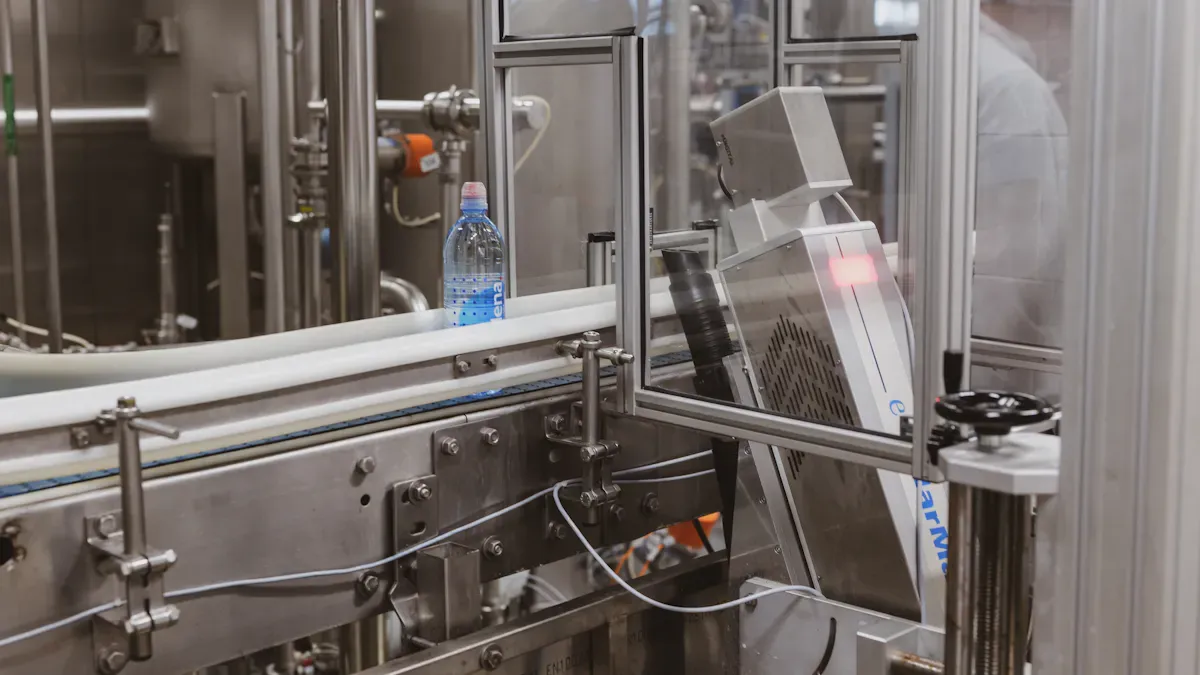
Plastic Compounding passt Basisharze mit Additiven individuell an, Erstellen von Materialien, die auf bestimmte Anwendungen zugeschnitten sind. Durch die Pelletierung werden diese zusammengesetzten Materialien in einheitliche Pellets umgewandelt, bereit für den effizienten Downstream-Einsatz. Hersteller und Ingenieure, die den Unterschied zwischen den einzelnen Prozessen verstehen, können die Effizienz steigern und die Produktqualität sicherstellen.
Aktuelle Marktdaten zeigen, dass der globale Marktwert für diese Technologien zunehmen wird $82 Milliarden von 2025 Und $182 Milliarden von 2035, getrieben durch Wachstum im Automobil- und Verpackungssektor.
| Verfahren | Auswirkungen auf die Effizienz | Auswirkungen auf die Produktqualität |
|---|---|---|
| Compoundierung | Schneidermaterialien, steigert die Leistung, reduziert die Kosten | Ermöglicht eine bessere Qualitätskontrolle |
| Pelletieren | Bietet eine einheitliche Materialform für die Verarbeitung | Gewährleistet eine einheitliche Endproduktqualität |
Wichtige Erkenntnisse
- Beim Kunststoffcompoundieren werden Basisharze mit Additiven individuell angepasst, um Materialien für bestimmte Verwendungszwecke zu schaffen.
- Beim Pelletieren werden zusammengesetzte Materialien in gleichmäßige Pellets umgewandelt, die sich leicht verarbeiten und handhaben lassen.
- Das Verständnis der Unterschiede zwischen Compoundieren und Pelletieren hilft Herstellern, die Effizienz und Produktqualität zu verbessern.
- Beim Compoundieren geht es um das Mischen, schmelzen, und Extrudieren von Materialien, um gewünschte Eigenschaften zu erreichen.
- Beim Pelletieren geht es darum, gleichmäßige Pelletgrößen zu erzeugen, was für eine zuverlässige Fertigung von entscheidender Bedeutung ist.
- In beiden Prozessen ist die Qualitätskontrolle von wesentlicher Bedeutung, um sicherzustellen, dass die Endprodukte den Industriestandards entsprechen.
- Sowohl das Compoundieren als auch das Pelletieren spielen in Branchen wie der Automobilindustrie eine wichtige Rolle, Elektronik, und Gesundheitswesen.
- Die Wahl des richtigen Verfahrens hängt von den Materialeigenschaften ab, Produktionsbedarf, und Kostenüberlegungen.
Definitionen und Unterschiede
Kunststoff-Compoundierung definiert
Unter Kunststoffcompoundieren versteht man den Prozess von Mischen von Polymeren mit Additiven, Füllstoffe, und Verstärkungen, um die physikalischen und chemischen Eigenschaften des Materials zu modifizieren und zu verbessern. Industriestandards definieren diesen Prozess als eine Methode, ein Polymer so anzupassen, dass es alle gewünschten Eigenschaften in einem einzigen Material aufweist. Hersteller nutzen Kunststoffcompoundierung, um die Produktqualität zu verbessern, Kosten senken, und die Produktivität steigern. Der Prozess beinhaltet typischerweise Schmelzen, Mischen, und Extrusion, um eine gleichmäßige Verteilung der Komponenten zu erreichen.
Bei der Kunststoffcompoundierung spielen verschiedenste Inhalts- und Zusatzstoffe eine Rolle:
- Masterbatch: Eine konzentrierte Mischung aus Pigmenten und Additive innerhalb eines Trägerharzes, sorgt für eine gleichmäßige Verteilung.
- Antioxidantien: Verhindern Sie den Polymerabbau durch Hitze und Sauerstoff, Aufrechterhaltung von Kraft und Flexibilität.
- UV-Stabilisatoren: Schützen Sie im Freien verwendete Polymere, indem Sie schädliche ultraviolette Strahlung absorbieren oder ableiten.
- Flammschutzmittel: Flammenbildung hemmen oder verzögern, Besonders wichtig in der Elektronik und im Bauwesen.
- Farbstoffe: Ermöglichen Sie die Farbauswahl bei Verbundkunststoffen.
- Modifikatoren für Stärke und Flexibilität: Erzielen Sie spezifische mechanische Eigenschaften.
- Antimikrobielle Zusatzstoffe: Keimwachstum hemmen, wichtig für Medizinprodukte.
- Füllstoffe: Zum Beispiel Talk, Glasfaser, und Calciumcarbonat, die Kraft verbessern, Kosten senken, und erhöhen die Hitzebeständigkeit.
- Leistungssteigerer: Passen Sie Eigenschaften wie thermische Stabilität an, Flammhemmung, und UV-Beständigkeit.
Dieses Verfahren ermöglicht es Herstellern, Materialien mit präzisen Eigenschaften für anspruchsvolle Anwendungen herzustellen.
Kunststoffpelletisierung definiert
Das Pelletieren von Kunststoffen ist ein Prozess, der wandelt rohen oder recycelten Kunststoff um in klein, gleichmäßige Pellets. Dieser Wandel ist für eine effiziente Herstellung und Wiederverwertung unerlässlich. Der Kunststoffgranulierer Konvertierungen gereinigt und oft geschreddert oder geschmolzenen Kunststoff zu gleichmäßigen Pellets verarbeiten, die dann wieder in die Herstellungsprozesse eingeführt werden. Die Pelletierung bewältigt Herausforderungen wie ungleichmäßige Zuführung und Materialhandhabung, Dies macht es in Branchen wie der Automobil- und Verpackungsindustrie, in denen die Produktqualität von entscheidender Bedeutung ist, von entscheidender Bedeutung.
| Art des Beweismittels | Einzelheiten |
|---|---|
| Rohstoffe | Verschiedene Arten von Kunststoffen, einschließlich Polyethylen (PE) und Polypropylen (PP) |
| Ausgänge | Durch Schmelzen hergestellte Kunststoffpellets, Kühlung, und Schneidprozesse |
Die Pelletierung erhöht die Effizienz der Kunststoffproduktion und ermöglicht die Herstellung von Spezialkunststoffen bei gleichzeitig einfacher Handhabung.
Übersicht über die wichtigsten Unterschiede
Vergleichstabelle
| Aspekt | Kunststoff-Compoundierung | Kunststoffpelletierung |
|---|---|---|
| Hauptzweck | Ändert die Zusammensetzung und Eigenschaften des Polymers | Wandelt Material in eine gleichmäßige Pelletform um |
| Wichtige Schritte | Mischen, schmelzen, Mischen, Extrusion | Schmelzen, Kühlung, Schneiden |
| Typische Zusatzstoffe | Füllstoffe, Farbstoffe, Stabilisatoren, Leistungssteigerer | Normalerweise nicht beim Pelletieren hinzugefügt |
| Ausgabe | Maßgeschneidertes Kunststoffmaterial (kann in verschiedenen Formen vorliegen) | Einheitliche Pellets |
| Anwendung | Direkter Einsatz in Produkten oder Weiterverarbeitung | Wird zum Formen verwendet, Extrusion, oder Transport |
Zusammenfassungspunkte
- Kunststoffcompoundierung konzentriert sich auf die Veränderung der Komposition des Kunststoffs durch Mischen verschiedener Zutaten, was sich auf seine physikalischen Eigenschaften auswirkt.
- Durch die Kunststoffgranulierung werden zusammengesetzte Kunststoffe in gleichmäßige Pellets umgewandelt, Es geht in erster Linie um die physische Form, um die Verwendung bei der Herstellung zu erleichtern.
- Verbundkunststoffe können direkt zu Produkten geformt werden, während für die Weiterverarbeitung typischerweise granulierte Kunststoffe verwendet werden.
- Beide Prozesse spielen in der modernen Fertigung eine entscheidende Rolle, Sie gehen jedoch auf unterschiedliche Bedürfnisse innerhalb der Produktionskette ein.
Tipp: Das Verständnis der Unterschiede zwischen diesen Prozessen hilft Herstellern, den richtigen Ansatz für ihre spezifische Anwendung auszuwählen, Gewährleistung optimaler Leistung und Effizienz.
Kunststoff-Compoundierungsprozess

Prozessschritte
Bei der Kunststoffcompoundierung werden Rohstoffe in präzisen Schritten zu Hochleistungskunststoffen verarbeitet. Hersteller beginnen mit der Lagerung von Rohstoffen wie Harz, Zusatzstoffe, und Füllstoffe in Beuteln, große Taschen, oder Silos. Pneumatische oder mechanische Systeme befördern diese Materialien dann zum Verarbeitungsbereich. Die Bediener führen die Materialien in den Presszylinder ein, entweder kontinuierlich oder in Chargen. Der Compoundierungsprozess wird mit Schmelzen und Mischen fortgesetzt, Hier vermischen sich Polymer und Additive, um eine Einheitlichkeit zu erreichen. In der letzten Phase geht es um die Formgebung, Kühlung, und Schneiden des Produkts, gefolgt von einer strengen Qualitätskontrolle.
| Schritt | Beschreibung |
|---|---|
| 1 | Rohstofflagerung in Säcken, große Taschen, und Silos |
| 2 | Pneumatisches oder mechanisches Materialfördersystem |
| 3 | Materialzuführung zum Presszylinder (Kontinuierliche/diskontinuierliche Befüllung) |
| 4 | Schmelz- und Mischphase |
| 5 | Endprodukt und Kontrolle |
Notiz: Insight Polymers nutzt schnelle Bearbeitungszeiten und Spezialcompoundierungen, um maßgeschneiderte Lösungen für die Kunststoffcompoundierung bereitzustellen, Optimierung jedes Schritts im Hinblick auf Effizienz und Qualität.
Verwendete Ausrüstung
Kunststoff-Compound-Anlagen sind auf fortschrittliche Ausrüstung angewiesen, um konsistente Ergebnisse zu gewährleisten. Extruder geben den Takt bei der Verarbeitung vor und spielen eine zentrale Rolle beim Schmelzen und Mischen. Kontinuierliche Mischer arbeiten mit Extrudern zusammen, um Materialien wie Acryl zu verarbeiten, Nylons, und PVC. Mischsysteme bereiten Additiv-Vormischungen vor, während Dosiersysteme präzise Zutatenverhältnisse garantieren. Materialtransporttechnologien, wie Zellenradschleusen und Umschaltventile, unterstützen die reibungslose Verteilung und Dosierung von Schüttgütern. Integrierte Compoundierlinien vereinen diese Systeme, Dies ermöglicht flexible Produktionsraten und Konfigurationen. Insight Polymers nutzt interne Pilotanlagen zur Doppelschneckenextrusion, um kleine Entwicklungschargenversuche durchzuführen, Dies ermöglicht ein effizientes Screening von Produkt- und Verarbeitungsparametern.
Arten der Aufzinsung
Die Kunststoffcompoundierung umfasst mehrere Ansätze, jeweils auf spezifische Anwendungsanforderungen zugeschnitten. Hersteller können Farbstoffe hinzufügen, um das Aussehen zu verbessern, oder Stabilisatoren, um die Hitze- und UV-Beständigkeit zu verbessern. Flammschutzmittel erhöhen die Sicherheit, insbesondere im Bauwesen und in der Elektronik. Schlagzähmodifikatoren erhöhen die Zähigkeit, während Füllstoffe und Verstärkungen die Kosten anpassen, Steifheit, oder Stärke. Individuell formulierte Verbindungen können auch antimikrobielle Wirkstoffe für medizinische Produkte oder UV-Verstärker für den Außenbereich enthalten. Insight Polymers ist auf Polymer-Compounding-Lösungen spezialisiert, die auf einzigartige Leistungsziele abzielen, Wir bieten Masterbatch-Konzentrate und kundenspezifische Kunststoffmischungen für den Spritzguss an, Fasern, Filme, und additive Fertigung.
- Farbauswahl für Ästhetik
- Lebensmittelechte Formulierungen für Verpackungen
- Feuerschutzmittel für den Bau
- Stärke- und Flexibilitätsanpassungen für produktspezifische Anforderungen
- Antimikrobielle Eigenschaften für das Gesundheitswesen
- Verbesserte UV-Toleranz für Haltbarkeit im Außenbereich
Dieser umfassende Ansatz stellt sicher, dass jede Polymer-Compoundierungslösung den Anforderungen der modernen Fertigung entspricht.
Materielle Zustände
Beim Compoundieren von Kunststoffen sind mehrere Materialzustände beteiligt, da sich Rohstoffe in Hochleistungscompounds verwandeln. Der Prozess beginnt mit festen Harzen, Zusatzstoffe, und Füllstoffe. Die Bediener führen diese Materialien dem Compoundiersystem zu, wo sie in körniger oder pulverförmiger Form verbleiben. Während der Prozess voranschreitet, Der Extruder erhitzt und schmilzt die Mischung, es in ein viskoses umwandeln, geschmolzener Zustand. Diese geschmolzene Mischung ermöglicht ein gründliches Mischen und Dispergieren aller Komponenten.
Sobald die Homogenisierung abgeschlossen ist, Das Material verlässt den Extruder. In diesem Stadium, Je nach Anwendung kann es verschiedene Formen annehmen. Einige Hersteller kühlen das Extrudat ab und schneiden es in Pellets, während andere möglicherweise Stränge produzieren, Blätter, oder direkt geformte Formen. The final state—whether pellet, Strand, or sheet—depends on downstream processing requirements. Zum Beispiel, Insight Polymers often delivers custom plastic compounding in pellet form for easy handling and consistent feeding in injection molding or extrusion lines.
The ability to control material states throughout the process ensures that the final product meets strict performance criteria. This flexibility supports a wide range of applications, from automotive parts to medical devices, and enables rapid adaptation to customer needs.
Qualitätskontrolle
Quality control stands at the core of every successful plastic compounding operation. Manufacturers rely on advanced automatic control systems to maintain consistent pellet characteristics während der Extrusion. These systems monitor and adjust processing parameters in real time, ensuring that the molten mixture remains homogenized. Infolge, Pigmente und Zusatzstoffe verteilen sich gleichmäßig, Herstellung einer einheitlichen Masterbatch-Verbindung.
Bediener verwenden mehrere praktische Methoden, um die Produktkonsistenz zu überprüfen. Der Wasserverdrängungsmethode bietet eine zuverlässige Möglichkeit, die Dichte in der Werkstatt zu messen. Bei dieser Technik wird der anfängliche Wasserstand gemessen, Wiegen der Probe, und Berechnen der Dichte basierend auf dem verdrängten Volumen. Es verbessert die Formulierungsgenauigkeit, verhindert Materialverschwendung, und sorgt für ein gleichmäßiges Produktgewicht. Diese Vorteile unterstützen eine bessere Kostenkontrolle und reduzieren Produktionsqualitätsprobleme.
Ein umfassendes Qualitätskontrollprogramm umfasst eine Reihe von Tests:
- Bei Farbanpassungstests werden Spektralfotometer eingesetzt, um Farbunterschiede zu bewerten und die visuelle Konsistenz sicherzustellen.
- Thermostabilitätstests bestätigen die Pigmentbeständigkeit bei Formtemperaturen.
- Dispersionstests bestätigen die gleichmäßige Additivverteilung durch mikroskopische Beobachtung.
- Bei mechanischen Leistungstests werden Zugfestigkeit und Schlagfestigkeit überprüft.
Insight Polymers integriert diese Qualitätskontrollmaßnahmen in jede Charge, Sicherstellen, dass ihre Polymer-Compoundierungslösungen zuverlässige Leistung erbringen. Dieses Bekenntnis zur Qualität unterstützt Branchen, die Präzision erfordern, wie z.B. Automobil, Elektronik, und Gesundheitswesen.
Tipp: Eine konsequente Qualitätskontrolle erhöht nicht nur die Produktzuverlässigkeit, sondern stärkt auch das Vertrauen der Kunden in maßgeschneiderte Kunststoff-Compounding-Dienstleistungen.
Kunststoffpelletisierungsprozess
Prozessschritte
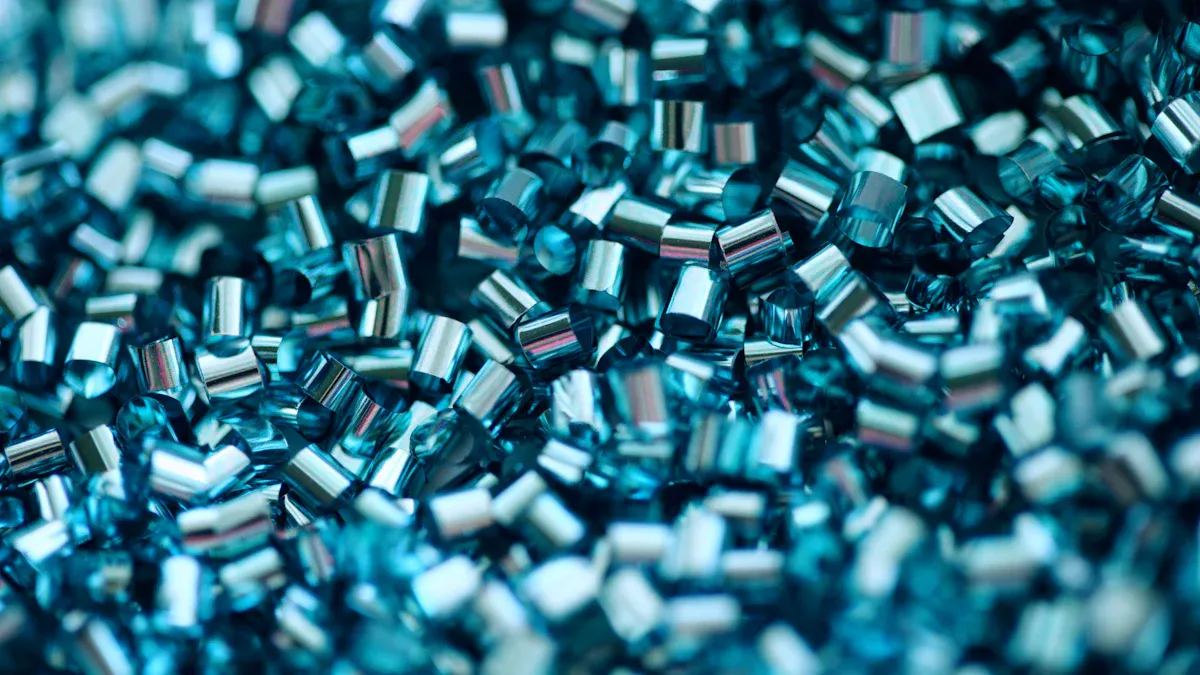
Durch die Kunststoffpelletierung wird rohes oder recyceltes Harz durch eine Reihe genau definierter Schritte in gleichmäßige Pellets umgewandelt. Die Betreiber beginnen mit der Sortierung von Kunststoffabfällen nach Polymertyp, Farbe, und Verschmutzungsgrad. Anschließend zerkleinern sie die sortierten Kunststoffe in kleinere Flocken, which improves washing efficiency. After washing, the clean flakes move to the melting stage, where they are heated and extruded. The molten plastic passes through a filter to remove any remaining impurities. As the filtered melt exits through a die plate, it forms continuous strands. These strands undergo rapid cooling in a water bath or air cooling system, stabilizing their structure. Endlich, the cooled strands are cut into pellets, which are ready for downstream manufacturing.
Efficient pelletizing ensures consistent pellet size and quality, which is critical for reliable processing in molding and extrusion applications.
Verwendete Ausrüstung
Pelletizing operations rely on specialized machinery to achieve high throughput and consistent results. Strand pelletizers handle the extrusion of molten plastic into strands and cut them into pellets. Underwater pelletizers cut the molten plastic directly under water, which instantly cools and solidifies the pellets. Cold pelletizers produce pellets from hot extrudate without using water cooling. Each machine type supports different process requirements and material characteristics. Operators select equipment based on the type of resin, the presence of additives, and the desired pellet properties.
- Stranggranulierer: Cut extruded strands into uniform pellets.
- Unterwassergranulierer: Cut and cool pellets simultaneously in a water chamber.
- Cold pelletizers: Produce pellets without water, suitable for heat-sensitive materials.
Pelletizing Technology Types
Manufacturers use several pelletizing technologies, each offering unique advantages in efficiency and output quality. Strand pelletizing works best for clean, stable materials and delivers high output quality. Water-ring pelletizing cuts the molten plastic at the die face and cools it in a circulating water ring, which enhances efficiency. Underwater pelletizing cuts pellets in a water chamber, ensuring uniform cooling and very high output quality.
| Pelletierungstechnologie | Beschreibung | Effizienz | Ausgabequalität |
|---|---|---|---|
| Stranggranulierer | Cut pellets in strands and are suitable for clean materials. | Mäßig | Hoch |
| Die-Face-Granulatoren | Include underwater and water-ring systems, providing rapid cooling. | Hoch | Sehr hoch |
Operators choose the appropriate technology based on the type of resin, the presence of additives, and the required pellet characteristics. The right selection ensures that pellets meet strict quality standards for downstream processing.
Materielle Zustände
Pelletizing transforms plastics through several distinct material states. The process begins with solid plastic feedstock, which can include virgin resin, recycled flakes, or regrind. Operators load these materials into hoppers or feeders. Anschließend gelangt das Material in den Extruder, wo Hitze und mechanische Kraft die festen Partikel in einen geschmolzenen Zustand überführen. Dieser geschmolzene Kunststoff fließt durch den Extruderzylinder, Gewährleistung einer gründlichen Durchmischung und Homogenisierung.
Wenn die geschmolzene Masse den Extruder verlässt, es passiert eine Lochplatte. In diesem Stadium, Das Material bildet kontinuierliche Stränge oder Tröpfchen, abhängig von der Pelletiertechnologie. Bei der Stranggranulierung, Der geschmolzene Kunststoff tritt so lange aus, spaghettiartige Stränge. Diese Stränge bewegen sich durch ein Kühlsystem, oft ein Wasserbad, wodurch das Material schnell verfestigt wird. Sobald es abgekühlt ist, Die erstarrten Stränge gelangen in eine Schneidkammer, wo rotierende Messer sie in gleichmäßige Pellets zerkleinern.
Andere Pelletierungsmethoden, wie Unterwasser- oder Wasserringsysteme, Schneiden Sie den geschmolzenen Kunststoff sofort ab, wenn er aus der Matrize austritt. Die Pellets kühlen und verfestigen sich in der Wasserumgebung fast augenblicklich. The final product consists of small, dense pellets with consistent size and shape. These pellets are easy to handle, Transport, and feed into downstream manufacturing processes.
Tipp: Controlling each material state during pelletizing ensures that the final pellets meet strict quality and performance standards.
Qualitätskontrolle
Quality control in pelletizing plays a critical role in maintaining pellet uniformity and purity. Operators implement several protocols throughout the process to ensure high-quality output:
- Pre-sorting and washing remove contaminants and non-target materials. Automated sorting systems and washing lines help achieve a clean feedstock.
- Drying and decontamination eliminate moisture and impurities. High-temperature drying and vacuum purification prepare the material for extrusion.
- Durch Extrusion und Pelletierung werden gereinigte Flocken oder Harz zu gleichmäßigen Pellets geschmolzen. Doppelschneckenextruder sorgen für eine hervorragende Mischung und Konsistenz.
- Bei der Vakuumentgasung werden Gase und flüchtige Verbindungen unter Hochvakuumbedingungen entfernt. Dieser Schritt verhindert Defekte und verbessert die Pelletqualität.
- Kristallisation und Festkörperpolymerisation (SSP) erhöhen die Grenzviskosität bestimmter Polymere, wie PET. Diese Schritte stellen sicher, dass die Pellets den anwendungsspezifischen Anforderungen entsprechen.
Bediener überwachen die Pelletgröße, Form, und Farbe während des gesamten Prozesses. Sie verwenden Siebe, Sichtprüfung, und automatisierte Sensoren zur Erkennung etwaiger Abweichungen. Eine konsequente Qualitätskontrolle reduziert Abfall, verbessert die Prozesseffizienz, und garantiert eine zuverlässige Formgebung der Pellets, Extrusion, oder andere Anwendungen.
Notiz: Reliable quality control in pelletizing supports manufacturers in producing high-performance products for demanding industries.
Anwendungen
Compounding Applications
Plastic compounding enables manufacturers to create materials with properties tailored for demanding sectors. The following table highlights common industry uses:
| Sector | Anwendungen |
|---|---|
| Automobil | Lightweight materials, heat-resistant plastics, impact-resistant polymers |
| Elektronik | Flame-retardant compounds, thermally conductive plastics, anti-static materials |
| Konsumgüter | Durable plastics, food-safe materials, UV-resistant compounds |
| Industrial Applications | Chemical-resistant polymers, reinforced plastics, abrasion-resistant materials |
Automobil
Automotive manufacturers rely on advanced compounds for lightweighting and structural integrity. High-performance plastic compounds replace metal in interior panels, Stoßstangen, and under-the-hood components. These materials offer comparable strength and thermal performance, was die Kraftstoffeffizienz und Sicherheit verbessert. Insight Polymers liefert maßgeschneiderte Compoundierungen für den Spritzguss, Dies ermöglicht ein schnelles Prototyping und die Produktion von Automobilteilen, die strengen Industriestandards entsprechen.
Elektronik
Elektronikhersteller verwenden für Gehäuse spezielle Compounds, Anschlüsse, und Isolatoren. Flammhemmende und wärmeleitende Kunststoffe schützen empfindliche Bauteile vor Hitze und elektrischen Gefahren. Antistatische Materialien verhindern Schäden durch statische Entladung. Insight Polymers unterstützt Elektronikhersteller mit Masterbatch-Konzentraten, die die Sicherheit und Leistung von Verbrauchergeräten und erneuerbaren Energiesystemen verbessern.
Medizinisch
Hersteller medizinischer Geräte benötigen Verbindungen mit präzisen mechanischen und chemischen Eigenschaften. Kundenspezifische Formulierungen bieten antimikrobiellen Schutz und Biokompatibilität für Diagnosegeräte und chirurgische Instrumente. Insight Polymers entwickelt Spezialcompounds für Fasern und Folien, die in medizinischen Verpackungen und Geräten verwendet werden, Sicherstellung der Einhaltung der Gesundheitsvorschriften.
Pelletierungsanwendungen
Beim Pelletieren werden rohe oder recycelte Kunststoffe in gleichmäßige Pellets umgewandelt, Unterstützung einer breiten Palette von Herstellungsprozessen.
Formen & Extrusion
Als Pellets dienen Pellets Standardrohstoff für Formen und Extrusion. Ihre einheitliche Größe und Form gewährleisten einen zuverlässigen Maschinenbetrieb und Produktqualität. Hersteller verwenden zur Herstellung Pellets Produkte des täglichen Gebrauchs wie Mülleimer, Kleiderbügel, und Blumentöpfe, sowie Industrieartikel wie Paletten und Basismaterialien für den Automobilinnenraum.
Recycling
Beim Recycling spielt die Pelletierung eine entscheidende Rolle. Operatoren sortieren, Fetzen, und Plastikmüll schmelzen, Anschließend erneut extrudieren und zu hochwertigen Pellets verarbeiten, wiederverwendbare Pellets. Dieser Prozess schließt den Kreislauf im Kunststofflebenszyklus, allowing manufacturers to reintroduce recycled material into new products. Applications include construction materials like plastic lumber and municipal covers.
By turning plastic waste into a consistent raw material, pelletizing helps close the loop in the plastic lifecycle.
Bulk Handling
Large-scale manufacturers benefit from pelletizing in bulk handling and logistics. The process includes material intake, sorting, shredding, Extrusion, Pelletieren, und Verpackung. Uniform pellets simplify storage, Transport, and return shipping, supporting efficient supply chains. Manufacturers can ship pellets back for reuse or send them to third parties for new product applications.
Insight Polymers’ expertise in custom compounding and pelletizing supports diverse applications, from injection molding and additive manufacturing to sustainable recycling initiatives.
Process Selection
Zu berücksichtigende Faktoren
Hersteller müssen mehrere Faktoren berücksichtigen, wenn sie den richtigen Prozess für ihre Produktionsanforderungen auswählen. Diese Überlegungen tragen dazu bei, sicherzustellen, dass die gewählte Methode sowohl mit den betrieblichen Zielen als auch mit den Produktanforderungen übereinstimmt:
- Materialeigenschaften eine zentrale Rolle spielen. Das Verständnis der physikalischen und chemischen Eigenschaften von Eingangsmaterialien bestimmt die Kompatibilität mit der kundenspezifischen Kunststoffmischung oder Pelletierung.
- Die Durchsatzanforderungen müssen mit der Kapazität des Granulators und des vorgeschalteten Extrusionssystems übereinstimmen. Diese Ausrichtung verhindert Engpässe und maximiert die Effizienz.
- Die Anforderungen an die Pelletqualität hängen von den Spezifikationen des Endverbrauchers ab. Präzision in der Pelletgröße und -form unterstützt eine konsistente Weiterverarbeitung.
- Die Betriebsumgebung und die verfügbaren Dienstprogramme beeinflussen die Systemauswahl. Die Einrichtungen müssen die Anforderungen des gewählten Prozesses unterstützen.
- Maintenance and ease of use affect long-term productivity. Machines that require less maintenance and offer higher availability reduce downtime.
- Cost considerations and return on investment guide decision-making. Evaluating total ownership costs, including operating expenses and potential product loss, ensures financial sustainability.
- Companies often require components with exceptional durability. Design flexibility remains essential for meeting unique application needs. Cost efficiency continues to influence the choice of manufacturing methods.
Das verstehen unique mechanical properties, chemische Beständigkeit, and processing characteristics of different plastics is vital. These factors directly impact durability, Kosteneffizienz, and compliance with industry standards.
Fallstudien
| Anwendungsbereich | Evidence of Success | Outcome Description |
|---|---|---|
| Resin Manufacturing and Polymerization | Increased output by 40% with underwater pelletizing system. | Effective for continuous production of consistent pellets. |
| Compounding and Masterbatch Production | Improved color pellet performance in customer processes using underwater systems. | Ideal for color concentrates and filled compounds. |
| Recycling and Reclaim Operations | Customized system for PET bottle recycling to handle changing materials. | Strand systems for consistent scrap; underwater for mixed materials. |
Manufacturers in the medical sector have achieved low extractables profiles in blood set tubing by selecting TPE or DEHP-free PVC. Autoclavable device components benefit from TPE compounds, which resist embrittlement during repeated sterilization. Full batch genealogy ensures traceability of all components, supporting quality assurance in medical device manufacturing.
Herausforderungen & Lösungen
Manufacturers often encounter challenges during implementation. Die schnelle Behebung dieser Probleme gewährleistet eine gleichbleibende Qualität und betriebliche Effizienz:
- Unregelmäßige Pelletgröße und -form kann vorkommen. Bediener passen die Düsentemperatur an, Schneidmesser prüfen, und stellen Sie den richtigen Klingenabstand ein, um dieses Problem zu beheben.
- Ein verringerter Durchsatz oder ein Maschinenstau können zu Produktionsunterbrechungen führen. Matrizenlöcher spülen, Sicherstellung eines gleichmäßigen Materialflusses, und die Überwachung der Komponenten des Zufuhrabschnitts tragen dazu bei, einen stabilen Betrieb aufrechtzuerhalten.
- Eine Überhitzung der Maschine oder des Motors birgt Gefahren. Kühlsysteme prüfen, auf übermäßige Reibung prüfen, und die Sicherstellung der richtigen Schneidgeschwindigkeit verhindern Schäden.
- Eine schlechte Pelletqualität beeinträchtigt die nachgeschaltete Leistung. Überprüfung von Temperaturprofilen, Umsetzung einer strengen Materialhandhabung, und das Vortrocknen hygroskopischer Materialien verbessert die Ergebnisse.
Durch die Anwendung dieser Lösungen, companies can optimize their polymer compounding solutions and maintain high standards in custom plastic compounding and extrusion processes.
Pelletizing Technology Trends
Advances in Compounding
Recent advances in compounding have transformed how manufacturers approach material design and production. Companies now use recycled resins and bio-based polymers to Abfall reduzieren and support sustainability. They rejuvenate old plastic streams, restoring their properties and extending their lifecycle. Advanced compounding techniques allow plastics to replace metals and ceramics in many applications, improving efficiency and reducing costs.
Manufacturers benefit from several key developments:
- Flexibility in creating components without traditional dies or tooling.
- Cost-effective solutions for prototyping and short-run production.
- Enhanced mechanical strength and durability in finished parts.
- Integration of nanotechnology to improve material properties.
- Adoption of Industry 4.0 technologies for better process control and customization.
These innovations enable the use of a wide range of additives, including those that improve conductivity, flame retardance, and structural strength. The focus on sustainable and recyclable materials continues to drive the evolution of compounding processes.
Innovations in Pelletizing
Pelletizing technology has seen significant improvements, especially in quality control and operational efficiency. Leading manufacturers have adopted advanced filtration systems that use multiple filtration stages with finer mesh sizes. This approach removes contaminants and ensures superior pellet quality, protecting downstream equipment.
| Innovationstyp | Beschreibung |
|---|---|
| Advanced Filtration Systems | Multiple filtration stages for cleaner pellets and equipment protection. |
| Intelligent Control Systems | Real-time monitoring and predictive maintenance via touchscreen interfaces. |
| Dynamic Preconditioning Unit | Single-stage preparation of plastics for extrusion, preserving material properties. |
| IoT and AI Integration | Predictive maintenance and real-time adjustments for improved efficiency and lower costs. |
Dynamic preconditioning units combine several steps into one, preparing plastics for extrusion while maintaining high end-product quality. Intelligent control systems provide operators with real-time data, allowing quick adjustments to the process. IoT and AI integration further enhance pelletizing by enabling predictive maintenance and reducing downtime.
Nachhaltigkeit
Sustainability initiatives have become central to the development of both compounding and pelletizing technology. Companies like LyondellBasell focus on improving the quality of mechanical plastic recycling through research and development. Their efforts ensure that recycled materials meet strict safety and performance standards. Primex demonstrates a commitment to sustainability by operating an in-house recycling facility. This facility processes post-industrial and post-consumer materials through collection, sorting, shredding, washing, und Pelletieren. The result is high-quality recycled resin suitable for manufacturing.
Manufacturers now prioritize the use of sustainable additives and recyclable materials in their processes. They design pelletizing systems to handle a variety of recycled plastics, supporting closed-loop recycling and reducing environmental impact. Diese Trends spiegeln einen umfassenderen Branchenwandel hin zu verantwortungsvoller Produktion und Ressourcenschonung wider.
Tipp: Der Einsatz neuer Pelletierungstechnologien und nachhaltiger Praktiken hilft Herstellern, wettbewerbsfähig zu bleiben und gleichzeitig Umweltziele zu erreichen.
Hersteller verlassen sich bei unterschiedlichen Anwendungsanforderungen auf beide Verfahren. Durch das Compoundieren von Kunststoffen entstehen Werkstoffe mit spezifischen Eigenschaften, Beim Pelletieren werden diese Materialien für eine effiziente Nutzung vorbereitet. Durch die Auswahl des richtigen Prozesses wird sichergestellt, dass jede Anwendung die Qualitäts- und Leistungsziele erfüllt.
- Bewerten Sie die Anforderungen jeder Anwendung, bevor Sie sich für einen Prozess entscheiden.
- Konsultieren Sie Branchenexperten, um Ratschläge zu komplexen Anwendungen zu erhalten.
Weitere Informationen zu kundenspezifischen Lösungen, Hersteller können sich an Insight Polymers wenden oder technische Ressourcen einsehen.
FAQ
Was ist der Hauptunterschied zwischen Kunststoffcompoundierung und Pelletierung??
Plastic compounding changes the properties of plastics by mixing resins with additives. Pelletizing shapes these materials into uniform pellets for easy processing. Each process serves a unique role in manufacturing.
When should a manufacturer choose custom plastic compounding?
Manufacturers select custom plastic compounding when they need materials with specific properties, such as flame resistance or enhanced strength. Insight Polymers offers rapid, tailored solutions for these requirements.
Can pelletizing improve recycled plastic quality?
Ja. Pelletizing cleans, schmilzt, and reforms recycled plastics into uniform pellets. This process removes contaminants and improves consistency, making recycled materials suitable for new products.
What equipment does Insight Polymers use for compounding?
Insight Polymers uses twin-screw extruders, advanced mixers, and precise dosing systems. These tools allow for efficient blending and rapid development of custom compounds.
How do manufacturers ensure quality during compounding?
Manufacturers use real-time monitoring, Farbabstimmung, and mechanical testing. They check density and dispersion to guarantee consistent results. Quality control remains essential for reliable performance.
Are compounded pellets ready for injection molding?
Ja. Compounded pellets from Insight Polymers are designed for direct use in injection molding, Extrusion, und additive Fertigung. Their uniformity ensures smooth processing and high-quality finished parts.
What industries benefit most from these processes?
Automobil, Elektronik, medizinisch, and packaging industries rely on compounding and pelletizing. These sectors demand materials with precise properties and consistent quality.