

Füllstoff-Masterbatch-Extrusionsmaschinen: The Definitive B2B Trade Guide for Global Manufacturers, Lieferanten & Käufer rein
The global market for filler masterbatch extrusion machines is entering a pivotal growth phase in, getrieben durch die steigende Nachfrage nach kostengünstigen Kunststoff-Compounding-Lösungen für alle Verpackungen, Konstruktion, Automobil, und Konsumgüterbranche. Als Calciumcarbonat (CaCO3) filler masterbatch continues to replace virgin resin in manufacturing processes worldwide, the machinery that produces these masterbatches — primarily co-rotating twin-screw extruders and specialized compounding lines — has become a critical capital investment for plastics processors on every continent. Dieser umfassende Leitfaden untersucht die aktuelle Handelslandschaft, policy environment, sourcing strategies, and future outlook for B2B buyers seeking reliable filler masterbatch extrusion machines manufacturers, Lieferanten, Und wholesale factory partners across the -Asia trade corridor.
Compounding Extruder Machine Wholesale  Extruded Aluminum Post
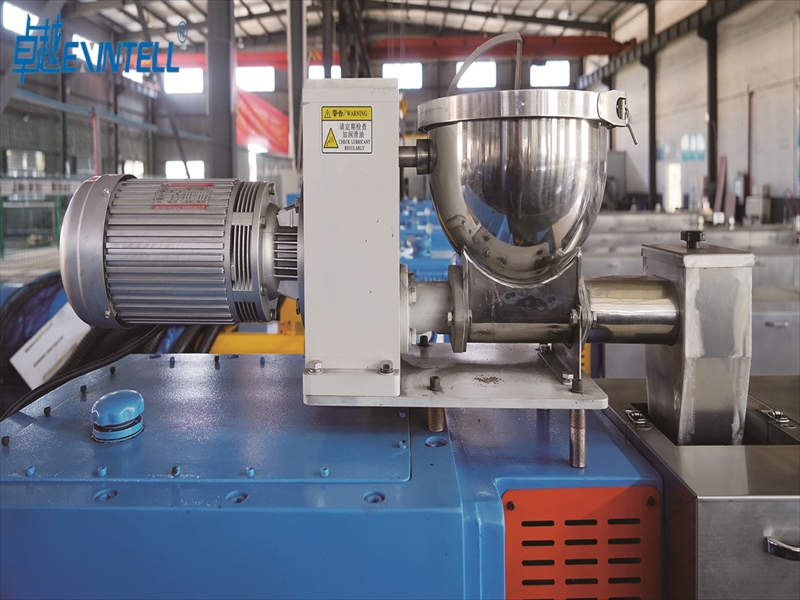
Industrial manufacturing facility with heavy machinery and extrusion production lines representing filler masterbatch extrusi
Understanding Filler Masterbatch Extrusion Machines: Kerntechnologie und Anwendungen
Filler masterbatch extrusion machines are specialized compounding systems designed to blend high concentrations of mineral fillers — most commonly calcium carbonate (CaCO3), Talk, or barium sulfate — with carrier resins such as polyethylene (PE), Polypropylen (PP), or polystyrene (PS). The resulting filler masterbatch pellets are then used by downstream plastics processors to reduce raw material costs, improve dimensional stability, and enhance certain mechanical properties of finished products.
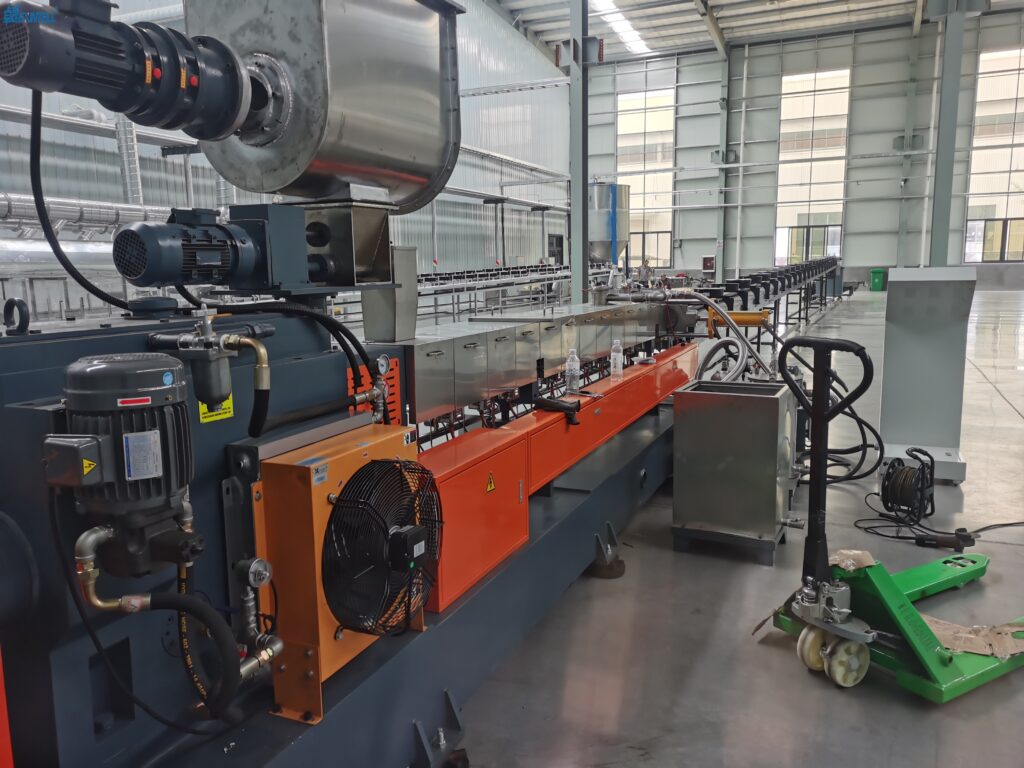
The dominant machine architecture for filler masterbatch production is the co-rotating twin-screw extruder, which offers superior mixing, dispersive capability, and throughput compared to single-screw alternatives. Modern filler masterbatch extrusion lines typically include:
- A co-rotating twin-screw extruder (screw diameter ranging from 50mm to 135mm for industrial-scale production)
- Gravimetric or volumetric feeding systems for precise filler-to-resin ratio control
- Side feeders for high-fill-ratio applications (typically 70–85% CaCO3 loading)
- Strand pelletizing or underwater pelletizing systems
- Cooling conveyors, vibrating screens, and storage silos
- PLC-based control systems with HMI interfaces for process monitoring
Production capacities for commercial filler masterbatch extrusion machines range from 300 kg/h for smaller lines up to 2,000+ kg/h for large-scale factory installations. The choice of machine configuration depends on target filler loading percentage, desired pellet quality, annual output requirements, and the specific downstream application — whether blown film, Spritzguss, pipe extrusion, or sheet production.
Global Market Overview: Filler Masterbatch Extrusion Machines in
The global masterbatch market was valued at approximately USD 13.67 Milliarden in 2024 und wird voraussichtlich USD erreichen 19.94 Milliarden von 2030, wächst mit einer durchschnittlichen jährlichen Wachstumsrate (CAGR) von rund 6.5%, according to industry research from Mordor Intelligence Und Grand View-Forschung. Filler masterbatch represents one of the largest segments within this market, accounting for a significant share of total volume due to its cost-reduction benefits.
This growth directly fuels demand for filler masterbatch extrusion machines. Key market dynamics in include:
- Asia-Pacific dominance: China, Indien, Vietnam, and Indonesia remain the largest producers and consumers of filler masterbatch, with Chinese manufacturers like Nanjing Kerke, Nanjing Haisi, and Jiangsu Xinda leading in extrusion machine production and export.
- European reshoring: EU manufacturers are investing in domestic compounding capacity to reduce supply chain vulnerability, creating demand for high-efficiency extrusion lines from both European OEMs (Coperion, KraussMaffei, Leistritz) and cost-competitive Asian suppliers.
- North American expansion: US and Mexican plastics processors are scaling filler masterbatch production to offset rising virgin resin costs, with particular growth in packaging and construction applications.
- Sustainability drivers: Regulatory pressure to incorporate recycled content and reduce plastic waste is pushing processors toward filler masterbatch as a partial resin replacement strategy, further boosting machine demand.
The machinery segment itself — encompassing twin-screw extruders, compounding lines, and ancillary equipment — represents a multi-billion-dollar global market, with trade flows concentrated along the China-to-world export corridor and intra-European equipment trade, wie von der berichtet Internationale Handelsverwaltung (ITA).
Trade Policy Landscape Affecting Filler Masterbatch Extrusion Machines
The transatlantic trade environment in presents both opportunities and complexities for B2B buyers sourcing filler masterbatch extrusion machines. Understanding the current policy framework is essential for procurement planning. Plastic Extrusion Machine Wholesale
US Trade Policy: Tariffs and Industrial Strategy
The United States maintains a layered tariff structure on imported industrial machinery. Ab Mitte, key considerations include:
- Abschnitt 301 tariffs on Chinese machinery: Twin-screw extruders and compounding equipment imported from China face additional tariffs of 25% unter Abschnitt 301, on top of standard MFN (Meistbegünstigte Nation) duty rates. This has prompted some Chinese filler masterbatch extrusion machines manufacturers to explore assembly operations in Southeast Asia or to partner with US-based distributors to mitigate cost impacts, wie dokumentiert durch die US-amerikanische Kommission für internationalen Handel (USITC).
- Infrastructure and manufacturing incentives: The Inflation Reduction Act (IRA) and CHIPS Act, while primarily targeting semiconductors and clean energy, have created a broader industrial investment climate that benefits domestic plastics processing capacity expansion.
- Buy American provisions: Federal procurement preferences for domestically manufactured equipment can influence purchasing decisions for government-funded infrastructure projects that use plastic components.
EU Trade Policy: Green Deal and Machinery Regulation
The European Union's trade and industrial policy in is shaped by several intersecting frameworks:
- EU-Maschinenverordnung 2023/1230: Effective from January 2027 (with transition provisions already influencing procurement), this regulation updates safety and conformity requirements for industrial machinery sold in the EU. Filler masterbatch extrusion machines suppliers targeting European buyers must ensure CE marking compliance, comprehensive technical documentation, and adherence to updated risk assessment standards, pro European Commission Trade Directorate.
- Carbon Border Adjustment Mechanism (CBAM): While CBAM primarily targets carbon-intensive materials (Stahl, Zement, Aluminium), its phased implementation signals the EU's direction toward embedding carbon costs in trade — a factor that may eventually affect machinery manufacturing supply chains.
- EU-China trade tensions: Ongoing anti-subsidy investigations and potential countervailing duties on certain Chinese industrial goods create uncertainty for European buyers sourcing filler masterbatch extrusion machines from Chinese factories.
Busy international shipping port with container vessels and cargo cranes representing global B2B trade logistics for industri
Bilateral Trade Dynamics
Der Handels- und Technologierat (TTC) continues to serve as a platform for aligning standards and reducing trade friction in industrial sectors. For filler masterbatch extrusion machines, the practical implications include:
- Mutual recognition discussions on machinery safety standards (US OSHA/ANSI vs. EU CE/EN) that could simplify cross-Atlantic equipment trade
- Coordinated approaches to supply chain resilience that may favor diversification away from single-source dependencies
- Shared interest in promoting advanced manufacturing technologies, including Industry 4.0-enabled extrusion systems
B2B buyers navigating this landscape should work with experienced customs brokers and trade compliance advisors to optimize landed costs and ensure regulatory conformity, as recommended by the US Customs and Border Protection (CBP) Und EU Customs Union authorities. Equipment Type Concrete Mixer
B2B Trade Opportunities in the Filler Masterbatch Extrusion Machines Sector
The current market environment creates several distinct B2B trade opportunities for manufacturers, Lieferanten, and buyers of filler masterbatch extrusion machines:
Gelegenheit 1: Cost-Competitive Sourcing from Asian Manufacturers
Single Screw Extruder Applications Chinese and Taiwanese filler masterbatch extrusion machines manufacturers offer complete production lines at 40–60% lower capital cost compared to European OEMs, without necessarily sacrificing core performance metrics. A typical 65mm twin-screw filler Extrusion Lines Plastics masterbatch line with 500–800 kg/h capacity from a reputable Chinese factory may be priced in the USD 80,000–150,000 Reichweite (FOB), compared to USD 250,000–500,000+ for comparable European-built systems. This price differential makes Asian-sourced equipment particularly attractive for:
- Emerging market processors scaling up filler masterbatch production
- Cost-sensitive B2B buyers in price-competitive end markets (commodity packaging, agricultural film)
- Companies establishing secondary or backup production lines
Gelegenheit 2: European Premium Equipment for High-Specification Applications
European filler masterbatch extrusion machines manufacturers — including Coperion (Deutschland), KraussMaffei (Deutschland), and Leistritz (Deutschland) — command premium pricing but deliver advantages in precision engineering, Energieeffizienz, automation integration, und langfristige Zuverlässigkeit. For B2B buyers producing high-quality masterbatch for demanding applications (Automobilkomponenten, medical packaging, food-contact films), European-sourced equipment often delivers superior total cost of ownership over a 15–20 year operational lifespan.
Gelegenheit 3: Turnkey Project Solutions and After-Sales Service Networks
A growing trend among filler masterbatch extrusion machines suppliers is the provision of turnkey project solutions — encompassing machine supply, factory layout design, installation supervision, Bedienerschulung, and ongoing technical support. This model Wholesale Double Screw Extruder is particularly valuable for B2B buyers entering the filler masterbatch market for the first time or expanding into new geographic markets. Suppliers with established after-sales service networks in the buyer's region command a competitive advantage.
Engineers working with advanced industrial control systems and automation technology in a modern manufacturing plant
Gelegenheit 4: Refurbished and Second-Hand Equipment Market
The secondary market for filler masterbatch extrusion machines is active, particularly in Europe and North America, where processors upgrading to newer technology release well-maintained used equipment. B2B buyers with limited capital budgets can acquire functional production lines at 30–50% der Kosten für neue Ausrüstung, though due diligence on machine condition, Ersatzteilverfügbarkeit, and compliance with current safety standards is essential.
Key Challenges in B2B Trade for Filler Masterbatch Extrusion Machines
Alongside opportunities, B2B participants in this sector face several persistent challenges:
- Quality verification at distance: Assessing machine build quality, component sourcing (z.B., Getriebe, Fass, screw element metallurgy), and manufacturing standards from overseas suppliers requires either on-site factory audits or reliance on third-party inspection services such as SGS or Bureau Veritas.
- Bedenken hinsichtlich des geistigen Eigentums: Some lower-cost filler masterbatch extrusion machines may incorporate designs that closely replicate proprietary technologies from established OEMs, creating potential IP liability for buyers in jurisdictions with strong patent enforcement.
- Logistik und Lieferzeiten: Ocean freight disruptions, port congestion (particularly at major hubs like Rotterdam, Los Angeles/Long Beach, and Shanghai), and extended manufacturing lead times (typically 60–120 days for custom configurations) require careful procurement planning.
- Technical support gaps: Buyers sourcing filler masterbatch extrusion machines from distant suppliers may face challenges in obtaining timely spare parts, Fehlerbehebung aus der Ferne, and on-site service — a critical consideration for production-critical equipment.
- Currency and payment risk: International B2B transactions for capital equipment typically involve significant payment milestones (30% deposit, 70% before shipment is common), exposing both parties to currency fluctuation and counterparty risk. Letters of credit and trade finance instruments are standard risk mitigation tools.
Geographic and Policy Advantages Enabling B2B Trade in Filler Masterbatch Extrusion Machines
Several geographic and policy factors create structural advantages for B2B trade in this sector:
Free Trade Zones and Special Economic Zones: Buyers in countries with FTZs (z.B., Jebel Ali in the UAE, various Chinese SEZs, EU free zones in Hamburg and Trieste) can import filler masterbatch extrusion machines with deferred or reduced duty obligations, particularly when the equipment is used to produce goods for re-export. This is documented by the Welthandelsorganisation (WTO) trade facilitation frameworks.
Parallel Twin-Screw Extruder Factory Regional Trade Agreements: The USMCA (US-Mexico-Canada Agreement) facilitates duty-free or preferential trade in industrial machinery among North American partners. Ähnlich, the EU's network of free trade agreements with countries including South Korea, Japan (EU-Japan EPA), and Vietnam (EVFTA) can reduce tariff barriers on machinery components and finished equipment.
Strategic port infrastructure: Major trade corridors for filler masterbatch extrusion machines leverage world-class port facilities — Rotterdam and Hamburg in Europe, Los Angeles/Long Beach and Savannah in the US, Shanghai and Ningbo in China — that offer efficient customs processing, bonded warehousing, and multimodal transport connections to inland manufacturing centers.
Industry cluster effects: Concentrations of plastics processing expertise — such as the Guangdong and Jiangsu provinces in China, the Rhine-Ruhr region in Germany, and the Gulf Coast petrochemical corridor in the US — create ecosystems where filler masterbatch extrusion machines manufacturers, component suppliers, and technical service providers operate in close proximity, facilitating efficient B2B transactions.

Aerial view of a major international port with shipping containers and logistics infrastructure supporting global trade
Practical Case Studies Success in Filler Masterbatch Extrusion Machines Trade
Fallstudie 1: European Compounder Sources from Chinese Manufacturer
A mid-sized plastics compounding company based in Poland sought to expand its filler masterbatch production capacity to serve growing demand from the European packaging sector. After evaluating both European and Asian suppliers, the company selected a Chinese filler masterbatch extrusion machines manufacturer offering a complete 75mm twin-screw compounding line with 1,000 kg/h capacity for CaCO3 masterbatch at 80% filler loading.
3X3 Extruded Aluminum Cad Key success factors in this B2B transaction included:
- Pre-purchase factory audit conducted by a third-party inspection firm, verifying manufacturing capabilities and quality management systems
- Detailed technical specification agreement covering screw element configuration, Fassmetallurgie (nitrided steel with bimetallic liners for abrasion resistance), gearbox specifications (verified torque rating), and control system requirements
- Structured payment terms using an irrevocable letter of credit, with final payment contingent on successful factory acceptance testing (FETT)
- Negotiated 2-year warranty with defined spare parts pricing and availability commitments
- CE marking and EU Machinery Directive compliance documentation provided by the manufacturer, verified by an EU-based notified body
The total landed cost (including equipment, ocean freight, Zölle, Installation, and commissioning) was approximately 55% of the quoted price for a comparable European-built line. The machine achieved target production parameters within 3 Wochen der Inbetriebnahme, and the company reported satisfactory performance after 12 Monate im Betrieb.
Fallstudie 2: US Distributor Builds Wholesale Channel for Asian Equipment
A US-based industrial equipment distributor identified an opportunity to serve the growing North American filler masterbatch market by establishing a wholesale channel for competitively priced Asian-manufactured extrusion machines. The distributor partnered with two Taiwanese and one Chinese filler masterbatch extrusion machines factory to offer a curated range of production lines spanning 300–1,500 kg/h capacity.
The distributor's value proposition to B2B buyers included:
- US-based inventory of critical spare parts (Schraubenelemente, Laufsegmente, heater bands, drive components) for rapid delivery
- Factory-trained service technicians based in Texas and Ohio, capable of on-site installation, Inbetriebnahme, and troubleshooting
- Equipment pre-configured to meet US electrical standards (480V/60Hz), OSHA safety requirements, and UL/CSA certifications
- Flexible financing options through partnerships with industrial equipment leasing companies
This model addressed the primary pain points of US B2B buyers — after-sales support, Einhaltung gesetzlicher Vorschriften, und Ersatzteilverfügbarkeit — while preserving the cost advantage of Asian-manufactured equipment. The distributor reported 40% year-over-year growth in filler masterbatch extrusion machine sales over the 2023– period.
Fallstudie 3: Indian Manufacturer Targets African and Middle Eastern Markets
An Indian filler masterbatch extrusion machines manufacturer leveraged India's competitive manufacturing costs and favorable trade agreements to build a strong export business targeting B2B buyers in Africa and the Middle East. The company offered complete turnkey filler masterbatch production projects, including factory design, equipment supply, raw material sourcing guidance, and operator training programs.
The manufacturer's approach to these emerging markets emphasized:
- Robust, simplified machine designs optimized for operating environments with variable power supply quality and limited access to specialized maintenance technicians
- Competitive pricing enabled by India's lower labor and overhead costs compared to Chinese competitors
- Participation in regional trade exhibitions (z.B., Plastivision Arabia, PPPEXPO Africa) to build direct relationships with B2B buyers
- Partnerships with local agents and service providers in key markets (Nigeria, Kenya, Saudi Arabia, UAE) to ensure ongoing customer support
International B2B trade exhibition hall with industrial machinery Extrusion Machine Manufacturers displays and business professionals networking Plastic Tube Extrusion Manufacturer
Selecting the Right Filler Masterbatch Extrusion Machines Supplier: A B2B Buyer's Framework
For B2B procurement professionals evaluating filler masterbatch extrusion machines suppliers, a structured assessment framework reduces risk and improves outcomes:
Technical Evaluation Criteria
- Screw and barrel technology: Assess screw element design (kneading block configuration, mixing element geometry), Fassmetallurgie (Bimetall vs. nitrided), and the supplier's ability to customize screw profiles for specific filler types and loading ratios.
- Gearbox and drive system: Das Getriebe ist die kritischste und teuerste Komponente. Verify torque density rating (Nm/cm³), manufacturer origin, and warranty terms. Premium suppliers use gearboxes from established manufacturers like Flender, Zambello, or NANJING-branded equivalents with verified specifications.
- Control system sophistication: Evaluate PLC brand (Siemens, Allen-Bradley, Mitsubishi), HMI functionality, data logging capabilities, und Industrie 4.0 readiness (OPC-UA connectivity, remote monitoring options).
- Energieeffizienz: Specific energy consumption (kWh/kg of output) varies significantly between machine designs. Request verified energy consumption data at target production parameters.
- Pelletizing system: Strand pelletizing is standard for filler masterbatch; underwater pelletizing offers advantages for high-throughput operations. Assess pellet quality (uniformity, Staubentwicklung, Schüttdichte) from reference installations.
Commercial and Service Evaluation Criteria
- Referenzinstallationen: Request and verify reference customer contacts operating similar filler masterbatch extrusion machines in comparable applications.
- Spare parts strategy: Evaluate spare parts pricing, availability (stock vs. made-to-order), and delivery timelines to the buyer's location.
- Training and commissioning: Confirm the scope and duration of operator training, commissioning support, and the availability of ongoing technical consultation.
- Finanzielle Stabilität: For capital equipment purchases with multi-year warranty and service implications, assess the supplier's financial health and market longevity.
- Trade compliance: Verify the supplier's ability to provide all required export documentation, certificates of origin, and regulatory compliance certifications for the destination market.
Future Trade Trends for Filler Masterbatch Extrusion Machines: Juli–September Outlook
Basierend auf aktuellen Marktsignalen, politische Entwicklungen, und Brancheninformationen, several trends are expected to shape B2B trade in filler masterbatch extrusion machines over the next 1–2 Monate:
Trend 1: Accelerated Procurement Ahead of Potential Tariff Escalation
Ongoing US-China trade tensions and the possibility of additional tariff actions on industrial machinery are prompting some B2B buyers to accelerate procurement timelines. Buyers who have been evaluating Chinese-manufactured filler masterbatch extrusion machines may move to place orders in Q3 to lock in current pricing and tariff rates before potential policy changes take effect. Der ITA tariff resource center provides updated guidance on applicable rates.
Trend 2: Growing Demand for Energy-Efficient and Automated Systems
Rising energy costs in Europe and sustainability reporting requirements (EU Corporate Sustainability Reporting Directive) are driving B2B buyers toward filler masterbatch extrusion machines with demonstrably lower specific energy consumption and higher automation levels. Suppliers offering verified energy performance data, variable-frequency drive integration, and smart process control features will have a competitive advantage in European and North American markets.
Trend 3: Southeast Asian Manufacturing Hub Emergence
Vietnam, Thailand, and Indonesia are emerging as alternative manufacturing bases for filler masterbatch extrusion machines, as some Chinese manufacturers establish production facilities in these countries to circumvent tariff barriers and access ASEAN free trade benefits. B2B buyers should monitor these developments as potential new sourcing options with favorable trade terms for both US and EU markets.
Trend 4: Digital B2B Procurement Platforms Gaining Traction
Online B2B platforms (Alibaba, In China hergestellt, GlobalSources, and specialized industrial equipment marketplaces) are increasingly used for initial supplier discovery and RFQ processes for filler masterbatch extrusion machines. Jedoch, the high-value, technically complex nature of these capital equipment purchases means that digital platforms serve primarily as lead generation tools — final procurement decisions still require direct supplier engagement, factory visits, and detailed technical negotiations.
Trend 5: Circular Economy Integration
The integration of recycled content processing capabilities into filler masterbatch extrusion machines is becoming a differentiating feature. Machines designed to handle post-consumer recycled (PCR) or post-industrial recycled (PIR) resins alongside mineral fillers address the growing regulatory and market demand for circular economy solutions, particularly in the EU market where the EU Plastics Strategy sets ambitious recycled content targets.

Modern industrial automation and smart manufacturing technology representing the future of filler masterbatch extrusion machi
B2B Safety Footwear in Industrial Environments: Protecting Workers Operating Filler Masterbatch Extrusion Machines
The operation of filler masterbatch extrusion machines involves significant workplace hazards — heavy mechanical components, high-temperature polymer melts, rotating equipment, and the handling of bulk mineral fillers. In this industrial context, safety footwear is not merely a compliance requirement but a critical element of worker protection. For B2B buyers and factory operators in the filler masterbatch sector, understanding the advantages of proper safety shoes is essential to maintaining a safe and productive work environment.
Why Safety Footwear Matters in Extrusion Machine Environments
Filler masterbatch production facilities Cheeto Extruder Factory present multiple foot injury risks:
- Crushing hazards: Heavy machine components (Schraubenelemente, Laufsegmente, gearbox assemblies) weighing 20–200+ kg are routinely handled during maintenance and changeover operations. A dropped barrel segment can cause severe foot injuries without adequate toe protection.
- Thermische Gefahren: Extruder barrels operate at temperatures of 150–280°C. Molten polymer strands and hot pellets can cause burns on contact with unprotected feet. Heat-resistant safety footwear with appropriate sole ratings is essential.
- Chemische Belastung: Processing additives, coupling agents, and cleaning solvents used in filler masterbatch production can damage standard footwear and cause skin irritation. Chemical-resistant safety shoes provide necessary protection.
- Rutschgefahr: Spilled CaCO3 powder, polymer dust, and cooling water create slippery floor conditions. Anti-slip sole technology significantly reduces fall risk in these environments.
- Puncture hazards: Metal fragments from screw element wear, wire from packaging materials, and other sharp debris on factory floors can penetrate standard footwear soles.
Steel Toe and Composite Toe Protection: Der
Filler Masterbatch Making Machine: Complete B2B Trade Guide for Manufac… · Farbmasterbatch-Extrudermaschine: Globale B2B-Handelsanalyse, Manufact… · Color Masterbatch Granulating Machine: Globale B2B-Handelsanalyse, Manuf…