

Vlastní vytlačování profilu: A Comprehensive Trade Analysis for
The custom profile extrusion industry stands at a pivotal crossroads in. As transatlantic trade between the United States and the European Union undergoes significant policy shifts, výrobci, dodavatelů, and wholesale distributors of custom extruded profiles face both unprecedented challenges and remarkable opportunities. This in-depth analysis examines the current state of the custom profile extrusion market, the evolving trade landscape, and what B2B operators in this sector can expect in the months ahead.
Custom profile extrusion — the process of forcing raw material (hliník, plastic, pryž, or other polymers) through a die to create components with specific cross-sectional profiles — is foundational to industries ranging from construction and automotive to electronics and renewable energy. The global custom extrusion market was valued at approximately $258 miliard v 2024 and is projected to reach $330 miliardu 2030, according to data from Výzkum Grand View. Within this landscape, the trade corridor remains one of the most significant channels for B2B extrusion commerce.
Industrial manufacturing facility with aluminum extrusion machinery representing custom profile extrusion production lines
Obraz: Industrial extrusion manufacturing facility. Zdroj:
1. The Current State of Trade Policy and Its Impact on Custom Profile Extrusion
The trade relationship between the United States and the European Union in is defined by a complex web of tariffs, negotiations, and regulatory frameworks that directly affect custom profile extrusion manufacturers and suppliers. Understanding these dynamics is essential for any B2B operator in this space.
Na začátku, the United States implemented a new round of tariffs under Section 232, imposing a 25% tariff on steel and aluminum imports effective March 12,. This action, reported extensively by the Správa mezinárodního obchodu (ITA), eliminated previous exclusion agreements that had allowed EU aluminum and steel products — including extruded profiles — to enter the US market at reduced rates. The European Commission responded with retaliatory measures, announcing counter-tariffs on selected US goods, as documented by the EU Directorate-General for Trade.
For custom profile extrusion factories, these tariff escalations have created a dual challenge. US-based manufacturers who rely on European-sourced aluminum billets and specialty alloys face increased raw material costs. Naopak, European custom profile extrusion suppliers who export finished extruded components to American OEMs (Original Equipment Manufacturers) in the automotive, aerospace, and construction sectors now contend with price competitiveness issues.
The Ministerstvo obchodu USA reported that aluminum imports from the EU totaled approximately $4.2 miliard v 2024, with extruded profiles accounting for roughly 18% of that figure. The new tariff regime threatens to redirect trade flows, with some European extrusion manufacturers exploring strategies such as establishing US-based finishing operations or partnering with American wholesale distributors to mitigate tariff exposure.
Mezitím, the EU's Carbon Border Adjustment Mechanism (CBAM), which entered its transitional phase in 2024 and moves toward full implementation, adds another layer of complexity. CBAM requires importers of carbon-intensive goods — including aluminum extrusions — to purchase certificates corresponding to the carbon price that would have been paid if the goods were produced under EU carbon pricing rules. This mechanism, detailed by the European Commission's Taxation and Customs Union, effectively raises the cost of importing extrusions produced in regions with less stringent environmental regulations.
The combined effect of US tariffs and EU carbon border measures is reshaping the competitive landscape for custom profile extrusion. B2B buyers are increasingly evaluating total landed cost — including tariffs, carbon compliance costs, and logistics — rather than simple unit pricing when selecting extrusion suppliers.
2. Understanding the Custom Profile Extrusion Industry: Materials, Procesy, and Applications
Before examining trade opportunities, it is important to understand what makes custom profile extrusion a critical industrial capability. Custom profile extrusion differs from standard extrusion in that each profile is engineered to meet specific dimensional, mechanical, and aesthetic requirements defined by the end customer.
The primary materials used in custom profile extrusion include:
- Aluminum alloys (6061, 6063, 7075) — dominant in construction, transportation, a elektroniky
- Thermoplastics (PVC, ABS, polycarbonate, HDPE) — widely used in consumer goods, lékařské přístroje, a balení
- Rubber and silicone — essential for sealing, gasketing, and vibration dampening applications
- Engineering polymers (PROHLÉDNĚTE, nylon, polypropylen) — used in high-performance industrial and aerospace applications
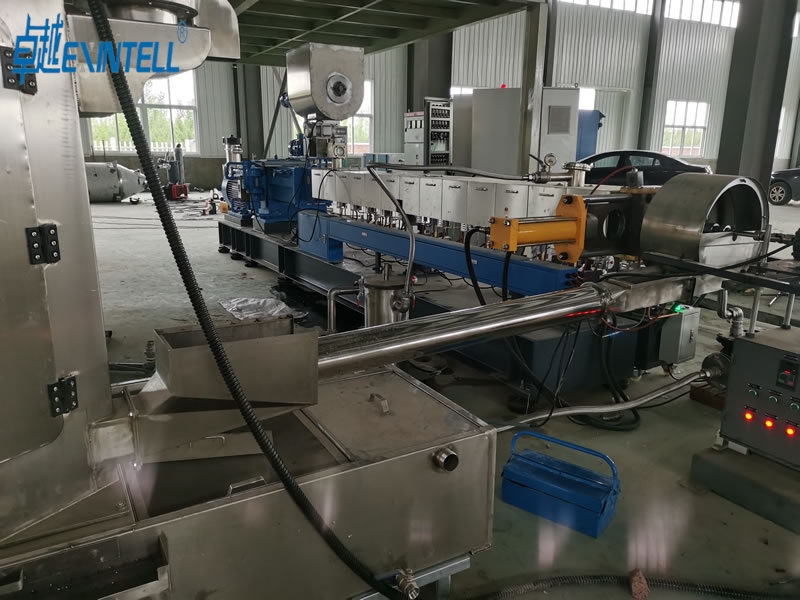
The extrusion process involves heating raw material to a malleable state and forcing it through a custom-designed die. The resulting continuous profile is then cooled, cut, and finished according to specification. Advanced custom profile extrusion manufacturers offer secondary operations including CNC machining, anodizing, powder coating, and precision cutting.
Podle Aluminum Association, North American aluminum extrusion shipments reached 5.8 billion pounds in 2024, with custom profiles representing the fastest-growing segment at 7.2% year-over-year growth. In Europe, a European Aluminium Association reported that extrusion output across EU member states exceeded 3.1 million metric tons, s Německem, Itálie, and Spain leading production.

Close-up of aluminum extrusion profiles and industrial Extruder Factory metal components used in custom manufacturing Twin-Screw Extruders Wholesale
Obraz: Aluminum extrusion profiles for industrial applications. Zdroj:
3. B2B Trade Opportunities for Custom Profile Extrusion Between the US and EU
Despite the tariff headwinds, the corridor presents substantial B2B trade opportunities for custom profile extrusion manufacturers, dodavatelů, a velkoobchodní distributoři. Several structural factors drive continued demand:
Construction and Infrastructure Boom: Americký zákon o investicích do infrastruktury a pracovních místech (IIJA) přidělil přes $1.2 trillion for infrastructure modernization, creating massive demand for custom aluminum and plastic extrusions used in bridge components, highway barriers, building facades, window systems, and solar panel mounting structures. European extrusion manufacturers with expertise in high-tolerance architectural profiles are well-positioned to serve this market, either through direct export or US-based partnerships. Údaje z US Census Bureau's Construction Spending Report shows construction spending reached $2.2 trillion annualized in early.
Automotive Lightweighting: Both US and EU automotive manufacturers are aggressively pursuing vehicle weight reduction to meet emissions standards. Custom aluminum extrusion profiles are replacing stamped steel components in structural frames, battery enclosures for electric vehicles (EVs), and heat management systems. The European Automobile Manufacturers' Association (ACEA) reports that aluminum content per vehicle in EU-manufactured cars increased 12% between 2022 a 2024, with custom extrusions accounting for a significant share.
Renewable Energy: Solar panel mounting systems, wind turbine components, and energy storage enclosures all rely heavily on custom extruded profiles. The EU's REPowerEU plan and the US Inflation Reduction Act (IRA) both incentivize renewable energy deployment, creating parallel demand on both sides of the Atlantic. Custom profile extrusion suppliers who can deliver certified, high-strength aluminum profiles for solar racking systems are experiencing order backlogs extending 8-12 týdnů, according to industry reports from Solar Power World.
Nx Extrude Medical and Electronics: Precision plastic and aluminum extrusions are critical for medical device housings, electronic enclosures, LED lighting channels, and heat sinks. US FDA a EU MDR (Nařízení o zdravotnických prostředcích) frameworks both require traceable, certified materials, giving established custom profile extrusion factories with quality certifications (ISO 9001, ISO 13485, IATF 16949) a competitive advantage in B2B trade.
4. Challenges Facing Custom Profile Extrusion Suppliers in Transatlantic Trade
While opportunities abound, custom profile extrusion businesses operating in the trade corridor face several significant challenges:
Tariff Uncertainty: The 25% Sekce 232 tariffs on aluminum create immediate cost pressure. European custom profile extrusion manufacturers exporting to the US must either absorb the tariff, pass it to buyers, or restructure supply chains. The Journal of Commerce has reported that several mid-sized European extrusion companies are evaluating joint ventures with US-based partners to establish domestic finishing operations that would qualify extruded products as US-origin. Velkoobchodní prodej strojů na výrobu plastových směsí
Logistics and Supply Chain Disruption: Transatlantic shipping costs remain elevated compared to pre-pandemic levels. Container rates between major European ports (Rotterdam, Hamburg, Antverpy) and US East Coast ports (New York/New Jersey, Savannah, Charleston) averaged $2,800-$3,500 per 40-foot container in Q1, podle Freightos Baltic Index data. For heavy aluminum extrusions, freight costs represent a meaningful percentage of total landed cost.
Regulační divergence: US and EU standards for extruded products differ in areas including alloy certification, fire resistance ratings, and environmental compliance. A custom profile extrusion factory serving both markets must maintain dual certification systems, increasing overhead. The divergence between US ASTM standards and EU EN standards for aluminum extrusions requires careful technical management.
Výrobce extruderů pro recyklaci plastů Currency Volatility: The EUR/USD exchange rate fluctuated between 1.03 a 1.14 in the first half of, creating pricing uncertainty for B2B contracts denominated in either currency. Custom profile extrusion wholesale distributors managing cross-border inventory must hedge currency exposure or risk margin erosion. Pe Pipe Extruder Factory

Large container ship at port representing transatlantic trade logistics between US and EU for industrial goods
Obraz: Container shipping at a major international port. Zdroj:
5. Geographic and Policy Advantages Enabling Extrusion Trade
Despite challenges, the trade relationship benefits from structural advantages that continue to support B2B commerce in custom profile extrusion: Plastic Extrusion Machinery Factories
Established Trade Infrastructure: The transatlantic trade lane is the world's most mature commercial corridor. Port infrastructure on both sides — from Rotterdam (Europe's largest port, handling over 440 million metric tons annually) to the Port of Los Angeles/Long Beach complex — is optimized for industrial cargo. Customs procedures, while complex, are well-documented and supported by extensive broker networks.
Mutual Recognition Frameworks: Although full mutual recognition of standards remains incomplete, obchodní a technologické rady (TTC) has made progress on aligning conformity assessment procedures. For custom profile extrusion manufacturers, this means that certifications obtained in one market are increasingly accepted or expedited in the other, zkrácení doby uvedení nových produktů na trh.
Deep Industrial Integration: US and EU manufacturing sectors are deeply intertwined. European automotive OEMs operate major production facilities in the US (BMW in South Carolina, Mercedes in Alabama, Volkswagen in Tennessee), creating demand for locally sourced custom extrusions that meet European engineering specifications. Podobně, US technology companies with European operations require custom extruded enclosures and heat management components that meet EU standards.
3D Printer Extruder Uk Innovation Ecosystems: Both the US and EU maintain world-leading research institutions and innovation clusters focused on advanced materials and manufacturing processes. Collaborative R&D Homemade Polymer Extruder in areas such as high-strength aluminum alloys, recyclable thermoplastics, and additive-assisted extrusion creates opportunities for custom profile extrusion manufacturers to develop differentiated products for B2B markets.
The Úřad obchodního zástupce Spojených států (USTR) notes that total bilateral trade in goods exceeded $940 miliard v 2024, making it the largest bilateral trade relationship in the world. Industrial components, including extruded profiles, represent a significant and growing share of this commerce.
6. případová studie: European Custom Profile Extrusion Manufacturer Expanding into the US Market
To illustrate the practical dynamics of trade in custom profile extrusion, consider the experience of a mid-sized European aluminum extrusion company — representative of patterns observed across the industry.
A Germany-based custom profile extrusion manufacturer specializing in high-tolerance architectural and industrial profiles identified growing demand from US construction and renewable energy companies in 2023. Společnost, s ročním příjmem cca €85 million and ISO 9001/14001 certifikací, had historically served the European market exclusively.
Strategie vstupu na trh: Rather than exporting finished profiles directly (which would incur the 25% Sekce 232 tariff), the company established a partnership with a US-based aluminum distributor in the Southeast. Under this arrangement, the German manufacturer exports semi-finished billets and proprietary die designs to the US partner, who performs the final extrusion, finishing, and distribution. This structure qualifies the finished product as US-origin, avoiding the tariff while leveraging the German company's engineering expertise.
Technical Adaptation: Společnost investovala cca €1.2 million in adapting its product line to meet ASTM B221 (Standard Specification for Aluminum and Aluminum-Alloy Extruded Bars, Rods, Wire, Profiles, and Tubes) and relevant US building codes. This included reformulating certain alloy compositions and adjusting tolerance specifications. The adaptation process took approximately 8 měsíce, including third-party testing and certification.
Výsledky: V 18 měsíce vstupu na trh, the company's US revenue reached $12 milión, zastupující 14% of total company revenue. Key customers included a major US solar racking manufacturer, two regional window and curtain wall fabricators, and an EV battery enclosure supplier. The company's B2B wholesale channel — selling through the US distributor partner — proved more effective than direct sales, as American buyers valued local inventory availability and shorter lead times.
Modern industrial warehouse with organized metal profile inventory representing B2B wholesale distribution of custom extrusio
Obraz: Industrial warehouse for B2B distribution. Zdroj:
Poučení:
- Tariff mitigation through supply chain restructuring is viable but requires significant upfront investment and a reliable local partner
- US B2B buyers in the extrusion space prioritize lead time and local support over lowest unit price
- Dual certification (ASTM + V) creates a competitive moat that smaller competitors struggle to replicate
- Currency hedging is essential — společnost oznámila a €400,000 FX loss in its first year before implementing a systematic hedging program
This case reflects broader patterns documented by the Germany Trade & Invest (GTAI) agency, which reports that German industrial component manufacturers increasingly use hybrid supply chain models to serve the US market while managing tariff exposure.
7. případová studie: US Custom Profile Extrusion Supplier Serving European Automotive OEMs
The reverse trade flow — US extrusion companies serving European buyers — presents a different set of dynamics. A US-based custom plastic extrusion manufacturer in the Midwest provides an instructive example.
This company specializes in engineering-grade thermoplastic extrusions (PROHLÉDNĚTE, Ultem, nylon) for automotive and aerospace applications. With annual revenue of approximately $45 million and IATF 16949 osvědčení, the company began receiving inquiries from European automotive Tier 1 suppliers in 2023 as EU manufacturers sought to diversify their supply base away from Asian sources.
Approach: The company established a European sales office in the Netherlands, leveraging the country's logistics infrastructure and favorable business environment. Products are manufactured in the US and shipped via consolidated ocean freight to Rotterdam, then distributed to European customers through a third-party logistics (3PL) provider.
Challenges Encountered: The primary challenge was meeting EU REACH (Registration, Evaluation, Authorisation and Restriction of Chemicals) compliance for all polymer formulations. Several proprietary compounds required reformulation to eliminate substances restricted under REACH Annex XVII. Navíc, the company needed to obtain CE marking for certain safety-critical automotive extrusions, a process that required engaging a European Notified Body for conformity assessment.
Outcome: European sales grew to $8.5 million within two years, with the company securing contracts with three major European automotive Tier 1 dodavatelů. The company's competitive advantage lay in its ability to produce complex multi-lumen and co-extruded profiles that European competitors could not match at comparable quality levels.
8. Trade Trend Predictions for Custom Profile Extrusion: July-September
Na základě aktuálních tržních ukazatelů, vývoj politiky, a průmyslová data, the following trends are expected to shape the custom profile extrusion B2B trade landscape over the next one to two months:
Tariff Negotiations May Yield Partial Relief: Diplomatic signals from both Washington and Brussels suggest that targeted tariff exemptions for specific industrial inputs — potentially including certain aluminum extrusion alloys — may be negotiated in Q3. The Reuters news service has reported that US and EU trade officials are discussing a framework for "critical industrial materials" exemptions. Pokud je implementován, this could reduce costs for custom profile extrusion manufacturers who import specialty alloys.
Nearshoring Acceleration: The trend toward nearshoring and friend-shoring will intensify. Custom profile extrusion factories in EU candidate countries (particularly Turkey and Serbia) and in Mexico (for US-market supply) will see increased investment as manufacturers seek tariff-advantaged production locations. The Správa mezinárodního obchodu poznamenal a 34% increase in US manufacturing investment inquiries from European extrusion companies exploring Mexican production facilities.
Sustainability as a Competitive Differentiator: CBAM implementation will increasingly favor custom profile extrusion suppliers who can demonstrate low-carbon production processes. European manufacturers using recycled aluminum (which requires 95% less energy than primary production) will gain pricing advantages in EU-bound trade. Expect to see more B2B procurement specifications requiring carbon footprint documentation for extruded profiles.
Digital B2B Platforms Growth: Online B2B marketplaces for industrial components — including custom extrusions — are gaining traction. Platforms that offer instant quoting, CAD file upload for custom profiles, and integrated logistics are reducing the friction of cross-border B2B trade. Custom profile extrusion wholesale distributors who invest in digital capabilities will capture market share from traditional distribution models.
Volatilita ceny surovin: LME aluminum prices have fluctuated between $2,300 a $2,700 per metric ton in, and polymer resin prices remain sensitive to energy costs. Custom profile extrusion manufacturers should expect continued volatility and build pricing flexibility into B2B contracts. Index-based pricing mechanisms tied to LME or ICIS benchmarks are becoming standard in longer-term supply agreements.
Business analytics dashboard showing trade data and market trends relevant to B2B industrial commerce
Obraz: Trade data analytics for B2B market analysis. Zdroj:
9. Heavy Industry Development Trends in Custom Profile Extrusion
The custom profile extrusion industry is undergoing a structural transformation driven by technological advancement, environmental regulation, and shifting global trade patterns. Understanding these heavy industry development trends is critical for B2B operators planning medium- to long-term strategies.
Průmysl 4.0 a Smart Extrusion: Integrace IoT senzorů, monitorování procesů v reálném čase, and AI-driven quality control into extrusion lines is transforming manufacturing efficiency. Leading custom profile extrusion factories are deploying inline laser measurement systems that inspect profile dimensions at speeds exceeding 100 meters per minute, achieving tolerances of ±0.05mm. Predictive maintenance algorithms analyze vibration, teplota, and pressure data from extrusion presses to prevent unplanned downtime. Podle McKinsey & Company's manufacturing practice, smart factory implementations in the extrusion sector have demonstrated 15-25% improvements in overall equipment effectiveness (OEE) a 10-15% reductions in scrap rates.
For B2B trade, these capabilities translate into more consistent product quality, shorter lead times, and the ability to produce smaller batch sizes economically — all factors that enhance competitiveness in cross-border commerce. Custom profile extrusion manufacturers who invest in Industry 4.0 capabilities will be better positioned to serve demanding US and EU OEM customers who require statistical process control (SPC) data and full production traceability.
Advanced Materials and Alloy Development: The materials science frontier in custom extrusion is expanding rapidly. New aluminum-lithium alloys offer 10% weight reduction compared to conventional 6000-series alloys while maintaining equivalent strength, making them attractive for aerospace and high-performance automotive applications. V plastové extruzi, bio-based polymers derived from renewable feedstocks (such as PLA and PHA) are achieving mechanical properties suitable for industrial applications, driven by EU regulations mandating increased use of sustainable materials.
High-entropy alloys (HEAs) and metal matrix composites (MMCs) represent the next frontier for custom profile extrusion. While currently limited to specialized applications due to cost, ongoing research at institutions including Fraunhoferův institut in Germany and Oak Ridge National Laboratory in the US is working to make these materials commercially viable for extrusion processes. B2B custom profile extrusion suppliers who develop early capabilities in these advanced materials will command premium pricing and secure long-term contracts with technology-leading OEMs. Aluminum Extrusion Plastic Cap
Circular Economy and Closed-Loop Recycling: The extrusion industry is at the forefront of the circular economy transition, particularly in aluminum. Aluminum is infinitely recyclable without degradation of properties, and recycled aluminum requires only 5% of the energy needed for primary production. European custom profile extrusion manufacturers are leading the development of closed-loop recycling systems, where production scrap and end-of-life products are collected, remelted, and re-extruded into new profiles.
The European Aluminium Association reports that the recycled content in European aluminum extrusions reached 42% v 2024, nahoru od 35% v 2020. This trend is accelerating as CBAM and corporate ESG (Environmentální, Sociální, a řízení) requirements create financial incentives for low-carbon production. US custom profile extrusion factories are following suit, s Aluminum Association launching a certification program for recycled-content extrusions in.
For B2B wholesale distributors, the ability to offer certified low-carbon and recycled-content custom extrusions is becoming a market differentiator. Major construction companies, automobilových OEM, and electronics manufacturers are incorporating Scope 3 emissions targets into procurement policies, creating preference for suppliers who can document the environmental footprint of their extruded products.
Advanced manufacturing technology and robotics in modern industrial production facility
Obraz: Advanced manufacturing technology in industrial production. Zdroj:
Additive Manufacturing Integration: The convergence of extrusion and additive manufacturing (3D tisk) is creating new possibilities for custom profile production. Hybrid manufacturing approaches — where extruded base profiles are enhanced with 3D-printed features — enable complex geometries that would be impossible or prohibitively expensive with extrusion alone. This is particularly relevant for low-volume, high-value applications in aerospace, lékařské přístroje, and defense.
Wire Arc Additive Manufacturing (WAAM) using aluminum feedstock is emerging as a complementary technology to traditional extrusion for producing large-scale custom profiles with variable cross-sections. T Plastové vytlačování Several European research consortia, funded under the EU's Horizon Europe program, are developing WAAM-extrusion hybrid processes that could enter commercial production by 2027.
Automation and Labor Market Dynamics: The custom profile extrusion industry faces a skilled labor shortage on both sides of the Atlantic. v USA, a Úřad pro statistiku práce reports that manufacturing job openings in the metals and plastics sectors remain 18% above pre-pandemic levels, while applications have declined. V EU, similar shortages are reported by Eurostat, particularly in Germany, Itálie, and Poland.
This labor constraint is accelerating automation investment. Robotic handling systems for extruded profiles, automated packaging lines, and lights-out machining cells are becoming standard in modern custom profile extrusion factories. The capital investment required — obvykle $2-5 million for a comprehensive automation upgrade of a single extrusion line — creates a barrier to entry that favors larger, well-capitalized manufacturers and may drive industry consolidation.
Consolidation and M&A Activity: The custom profile extrusion industry is experiencing a wave of mergers and acquisitions. Private equity firms and strategic acquirers are targeting mid-sized extrusion companies with strong customer relationships, specialized capabilities, and geographic diversification. Notable transactions in 2024- include several cross-border deals where European extrusion groups acquired US operations (a naopak) to establish transatlantic manufacturing footprints that mitigate tariff exposure.
Two Stage Extruder Supplier This consolidation trend has implications for B2B buyers. Larger, integrated custom profile extrusion suppliers can offer broader product ranges, more geographic flexibility, and greater supply chain resilience. Však, consolidation may also reduce competition in specialized niches, potentially affecting pricing dynamics for wholesale distributors and end users.
Opportunities in Emerging Applications:
- Elektrické vozidlo (EV) Battery Enclosures: Custom aluminum extrusions for EV battery trays and enclosures represent one of the fastest-growing application segments, with demand projected to grow 25% annually through 2030
- Data Center Infrastructure: The AI-driven expansion of data centers is creating demand for custom extruded aluminum heat sinks, server rack components, and cable management systems
- Modulární konstrukce: Prefabricated building systems using custom extruded aluminum and plastic profiles are gaining market share in both the US and EU, driven by labor shortages and the need for faster construction timelines
- Defense and Security: Increased defense spending in both the US and EU is driving demand for custom extrusions in military vehicle armor, communication equipment housings, and drone structural components
Challenges for Heavy Industry Development:
- Náklady na energii: Aluminum extrusion is energy-intensive, and European manufacturers face electricity costs 2-3 times higher than US competitors, podle International Energy Agency (IEA) data. This cost differential influences investment decisions and trade competitiveness
- Environmental Regulation Compliance: Meeting increasingly stringent environmental regulations (EU Green Deal, US EPA standards) requires ongoing capital investment in emissions control, water treatment, and waste management systems
- Supply Chain Resilience: The concentration of primary aluminum production in China (přibližně 60% of global output) creates supply chain vulnerability for custom profile extrusion manufacturers worldwide. Diversification of raw material sources is a strategic priority
- Intellectual Property Protection: Custom die designs and proprietary alloy formulations represent significant IP for extrusion manufacturers. Protecting this IP in cross-border B2B relationships requires robust legal frameworks and careful partner selection
Renewable energy solar panel installation requiring custom extruded aluminum mounting profiles
Obraz: Solar energy installation using custom extruded mounting systems. Zdroj:
10. Strategic Recommendations for Custom Profile Extrusion B2B Operators
Based on the analysis presented in this article, the following strategic recommendations are offered for custom profile extrusion manufacturers, dodavatelů, továrny, and wholesale distributors operating in the trade corridor:
- Diversify Supply Chain Geography: