

Twin Screw and Single Screw Extruders Compared for Material Processing
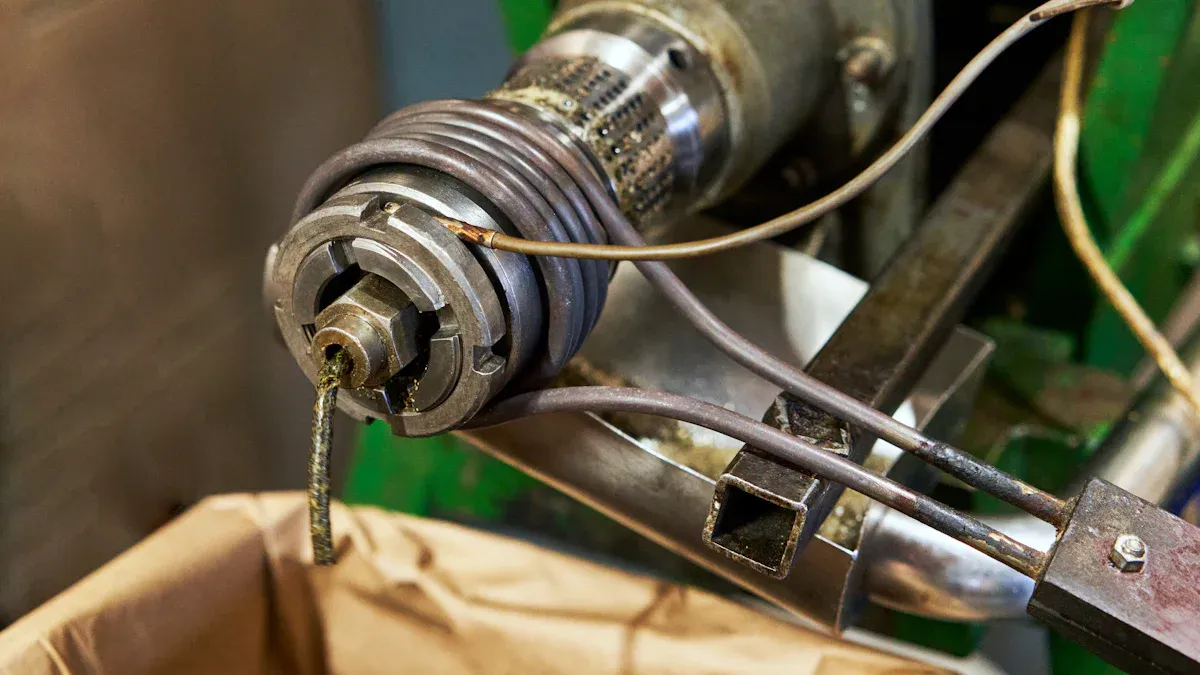
I often see manufacturers ask which extruder delivers the best results for material processing. The answer depends on technical requirements, performance targets, and cost constraints. Sa 2024, co-rotating Twin Screw extruders dominate the global market with a 71% revenue share because they excel at mixing, self-cleaning, and degassing. If you need high throughput or handle complex materials, Twin Screw extruders offer flexibility and efficiency. Compare the core features in the table below to help you decide:
| Feature | Single-Screw Extruder | Twin-Screw Extruder |
|---|---|---|
| Transport Mechanism | Friction / Drag flow | Positive displacement |
| Kapabilidad sa Pagsagol | Ubos | Taas |
| Self-Cleaning | Dili | Maayo kaayo |
| Initial Investment | Ubos ($) | Mas taas ($$$) |
Tip: Assess your material complexity and production goals before choosing an extruder.
Key Takeaways
- Twin screw extruders excel in mixing, self-cleaning, ug pagdumala sa komplikadong mga materyales, making them ideal for advanced applications.
- Single screw extruders are cost-effective and simpler to operate, best suited for high-volume production of homogeneous materials.
- Consider the material type and complexity when choosing an extruder; twin screws handle blends and additives better than single screws.
- Evaluate production volume needs; twin screws offer flexibility for frequent product changes, while single screws are efficient for consistent runs.
- Budget constraints matter; twin screws require higher initial investment but can lead to better quality and reduced waste in complex applications.
- Pilot testing with actual materials is crucial to validate performance before committing to an extruder purchase.
- Stay updated on industry trends like automation and sustainability to enhance efficiency and reduce operational costs.
- Konsultaha sa mga tigbaligya ug pagtigom ug tinuod nga kalibotan nga mga pakisayran aron maseguro nga ang piniling extruder makaabot sa imong piho nga mga tumong sa produksiyon.
Teknikal nga Pagtandi
Twin Screw Mekanismo
Positibo nga Pagbalhin
Sa dihang nagtrabaho ko sa a twin screw extruder, Namatikdan nako kung giunsa ang positibo nga mekanismo sa pagbakwit. Ang kaluha nga mga tornilyo nagtuyok sa tingub, pag-ilog ug paglihok sa materyal sa unahan sa kontroladong paagi. Kini nga aksyon nagmugna sa usa ka makanunayon nga dagan, nga nagpasabot nga ako makatagna kon unsa ka dugay ang mga materyales magpabilin sa sulod sa extruder. Nakita nako kini nga usa ka dako nga bentaha alang sa pagkontrol sa proseso. Ang disenyo sa twin screw hapit magwagtang sa back-mixing, mao nga ang matag piraso sa materyal makakuha sa parehas nga pagtambal. Kini nga lebel sa pagkontrol nakatabang kanako sa paglikay sa ubos- o sobra nga pagproseso, nga makaguba sa kalidad sa produkto.
Pagsagol Efficiency
Ang pagkaepektibo sa pagsagol mao kung diin ang twin screw tinuod nga nagdan-ag. Ang intermeshing screws nagbahin ug naghiusa pag-usab sa mga sapa sa materyal nga balik-balik. Kanunay nakong makita kini nga gihulagway nga exponential layer multiplication. Kini nga aksyon nagsiguro nga ang mga additives, mga filler, o mga colorant nga mikaylap nga parehas, bisan kung mogamit ako gamay kaayo nga kantidad. Ang mekanismo sa twin screw nagmugna og a high-intensity mixing palibot, nga gikinahanglan alang sa komplikadong mga pormulasyon. Nagsalig ako niini kung kinahanglan nako ang pagkaparehas ug pagkamakanunayon sa katapusan nga produkto.
Ania ang usa ka lamesa nga nag-summarize sa mga kalainan sa mekanismo sa paghatud ug pagsagol:
| Aspekto | Twin Screw Mekanismo | Usa ka Disenyo sa Screw |
|---|---|---|
| Pagsagol Efficiency | Gikontrol, nagbalikbalik, ug high-intensity mixing environment | Ang gubot nga pagsagol nagdepende sa kaguliyang |
| Pagkontrol sa Panahon sa Pagpuyo | Gibanabana nga 'plug flow’ nga adunay gamay nga back-mixing | Ang lapad nga pag-apod-apod sa oras sa pagpuyo padulong sa ubos- ug sobra nga giproseso nga materyal |
| Pagpadaghan sa Layer | Ang pagpadaghan sa exponential sa mga layer nagsiguro sa managsama nga pag-apod-apod sa mga additives | Limitado nga abilidad sa pagkab-ot sa pagkaparehas, ilabi na sa ubos nga konsentrasyon |
| Pagkontrol sa Temperatura | Ang kanunay nga pagpalihok makawagtang sa mga stagnant zone, pagsiguro sa makanunayon nga viscosity | Dali sa pagbag-o sa temperatura nga mosangput sa mga kawalay kalig-on ug dili maayo nga pagsagol |
Kanunay kong girekomenda ang usa ka twin screw extruder kung kinahanglan nako ang tukma nga pagkontrol sa pagsagol ug temperatura. Kini nga teknikal nga kalainan modala ngadto sa mas maayo nga performance, ilabi na alang sa advanced nga pagproseso sa materyal.
Disenyo sa Single Screw Extruder
Friction ug Drag Flow
A single nga screw extruder nagsalig sa friction ug drag flow aron mapalihok ang materyal. Ang tornilyo nagtuyok sulod sa usa ka baril, pagduso sa materyal sa unahan. Akong nakita nga kini nga pamaagi maayo alang sa yano, homogenous nga mga materyales. Hinuon, ang proseso nagdepende sa friction tali sa screw, ang baril, ug ang materyal mismo. Kini mahimong mosangpot sa dili patas nga pag-agos ug dili matag-an nga pagsagol. Kung giproseso nako ang mga materyales nga nanginahanglan mabinantayon nga pagsabwag sa pagdugang, I notice that the single screw design struggles to match the mixing efficiency of a twin screw.
Simplicity and Cost
One reason I often choose a single screw extruder for basic applications is its simplicity. The design uses fewer components, which means lower construction complexity and easier maintenance. I can train operators quickly, and I spend less on spare parts. The initial investment is much lower compared to a twin screw extruder. Here’s a table that highlights the technical differences in construction and maintenance:
| Feature | Usa ka Screw Extruder | Twin Screw Extruder |
|---|---|---|
| Construction Complexity | Simpler construction | More complex machinery |
| Number of Components | Fewer components | Higher number of components |
| Pagka-epektibo sa gasto | Lower design and operational costs | Higher initial investments |
| Maintenance Requirements | Lower maintenance costs due to fewer parts | Higher maintenance costs due to more parts |
When I need to process large volumes of a single, consistent material, I find the single screw extruder to be the most cost-effective and reliable choice. The mechanism differences between twin and single screw designs directly impact operational complexity, pagmentinar, and overall efficiency.
Nota: I always match the extruder type to the material and process requirements. For complex mixing and precise control, I choose a twin screw. Para prangka, taas nga gidaghanon sa produksyon, I rely on a single screw.
Pagganap ug Kalidad
Throughput and Efficiency
Output Rates
When I compare output rates, I see that twin screw extruders deliver higher production efficiency, especially with complex material blends. The positive displacement action of the twin screws ensures consistent output, even when I process challenging formulations. Sa akong kasinatian, a single screw extruder works best for straightforward, homogenous nga mga materyales. It provides reliable output, apan nanlimbasug sa mga pagsagol o mga materyales nga nanginahanglan kusog nga pagsagol. Kanunay nakong gikonsiderar ang matang sa materyal ug ang gitinguha nga kalidad sa output sa dili pa mopili.
Paggamit sa Enerhiya
Ang paggamit sa enerhiya adunay dakong papel sa akong proseso sa paghimog desisyon. Ania ang akong naobserbahan:
- Twin screw extruders kasagaran konsumo sa dugang nga enerhiya kay sa single screw extruders kay naggamit sila og dual-drive system.
- Ang panginahanglan sa pag-rotate sa duha ka intermeshing screws nagdugang sa mga kinahanglanon sa kuryente, paghimo sa mas taas nga mga pwersa sa paggunting ug mga panginahanglan sa torque.
- Ang single screw extruders mas episyente sa enerhiya, apan dili nila madumala ang komplikado o taas nga viscosity nga mga materyales nga ingon ka epektibo.
- Ang twin screw extruders nagtanyag og labaw nga pagsagol ug mas maayo nga pagkontrol sa materyal nga mga kabtangan, nga makapamatarung sa ilang mas taas nga konsumo sa enerhiya sa gipangayo nga mga aplikasyon.
- Kanunay nakong gibalanse ang paggamit sa enerhiya uban ang panginahanglan sa pagka-flexible ug kalidad sa produkto.
Bisan pa sa mas taas nga paggamit sa enerhiya, Ang twin screw extruders kasagarang makabawi sa mga gasto pinaagi sa pagkunhod sa basura ug pagpauswag sa kalidad sa output sa dinagkong produksyon.
Pagsagol ug Homogeneity
Dugang nga Pagkatag
Ang performance sa pagsagol nagpalain sa twin screw. Nagsalig ko sa abilidad niini sa pagsabwag sa mga additives, mga filler, ug mga colorant parehas, bisan sa ubos nga konsentrasyon. Ang mekanismo sa twin screw nagmugna og usa ka high-intensity mixing environment, nga kinahanglanon para sa mga advanced formulations. Kung mogamit ko og single-screw extruder, Namatikdan nako nga dili kini makatugma sa kalidad sa pagsabwag, ilabi na sa multi-phase blends.
Pagkakonsistensya sa Produkto
Akong nakit-an nga ang pagkamakanunayon sa produkto mouswag pag-ayo sa usa ka twin screw extruder. Ang talaan sa ubos nagpasiugda mahinungdanong mga kalainan sa pagsagol ug homogeneity:
| Feature | Twin Screw Extruders | Usa ka Screw Extruder |
|---|---|---|
| Pagsabwag sa Materyal | Labaw nga pagkatibulaag sa PC ug ABS nga mga hugna | Dili igo nga pagsabwag, leading to phase separation |
| Thermal Stability | Enhanced thermal stability | Localized overheating in high-shear zones |
| Blend Quality | Higher overall blend quality | Inconsistent melt homogeneity |
| Mechanical Properties | Improved elongation at break, higher impact strength | Inferior mechanical performance |
| Mixing Element Optimization | Use of advanced elements (FME, OSE, DSE) | Basic conveying and kneading elements |
I always choose a twin screw when I need uniformity and high-quality blends. This choice leads to better mechanical properties and consistent product quality.
Process Control
Modularity
Modularity gives me flexibility in process design. A twin-screw extruder allows me to customize the screw configuration and barrel sections for each application. I can adapt quickly to new materials or process changes. Sukwahi, a single screw extruder has a fixed design, which limits adaptability.
Precision
Precision in process control matters for advanced production. I benefit from the full channel mixing and controlled shear that a twin screw provides. This design minimizes pressure drop and enables high throughput with efficient mixing. I can create multiple high-shear zones without stressing the entire melt, which enhances material processing. The table below summarizes the differences:
| Feature | Twin-Screw Extruder | Single-Screw Extruder |
|---|---|---|
| Pagsagol Efficiency | Superior mixing, dispersing, ug pagtunaw | Simpler design, less efficient mixing |
| Modularity | Modular design allows for customization | Fixed design, less adaptable |
| Process Control Precision | Enhanced control over complex formulations | Batakang kontrol, less precision |
| Material Compatibility | Handles a broader range of materials | Limited to simpler materials |
| Gasto | Typically higher price | More cost-effective |
Sa akong kasinatian, the twin screw stands out for its versatility, precision, and ability to handle complex materials. I always match the extruder to the process requirements to achieve the best performance and quality.
Kaangayan sa Aplikasyon
Twin Screw Applications
Complex Formulations
I often select a twin screw extruder when I work with complex formulations. The twin screw design gives me precise control over mixing and temperature, which is essential for advanced blends. I process cereal and starch-based products, snacks, pagkaon sa binuhi, and confectionery using this technology. The modular design allows me to adapt quickly to new recipes or ingredient changes. I also use twin screw extruders for pharmaceuticals and aquatic feed, where uniformity and reliable scale-up matter. In plastics and polymer processing, I rely on twin screw for reinforcement modification, functional modification, polymer alloying, and recycling granulation. The ability to disperse additives evenly makes twin screw the best applications choice for masterbatch nga produksyon and laboratory trials.
- Cereal and starch-based products
- Snacks and pet food
- Confectionery
- Pharmaceuticals
- Aquatic feed
- Polymer alloying and recycling
- Masterbatch production
- Scientific research and formula development
High Precision Needs
I trust twin screw extruders for high precision needs. When I fabricate hybrid hydrogels, I need uniform crosslinking and exact reaction conditions. The twin screw mechanism lets me achieve these goals, which is crucial for biomedicine and advanced materials. Nakabenepisyo sab ko throughput rates up to 40 kg/h with the ZSK MEGAlab, which supports reliable scale-up and modular process design. The twin-screw extruder operates continuously, with optimized wear resistance, making it ideal for industries that demand stable production over long periods.
Single Screw Extruder Uses
Homogeneous nga mga Materyal
Gipili nako ang usa ka screw extruder alang sa homogenous nga mga materyales. Kini nga extruder labing maayo alang sa yano nga pagsagol nga wala magkinahanglan og intensive mixing. Giproseso nako ang mga pelikula, mga palid, ug mga sudlanan alang sa plastic packaging. Ang single screw extruder usab nagdumala sa mga seal, mga gasket, ug trim profile sa mga aplikasyon sa automotive. Gigamit nako kini alang sa mga tubo, mga profile sa bintana, ug insulasyon sa pagtukod. Medical tubing ug catheters, ingon man ang mga casing ug internal nga sangkap alang sa mga elektroniko sa konsumedor, gihimo usab nga epektibo sa kini nga teknolohiya.
- Plastic nga packaging: mga pelikula, mga palid, mga sudlanan
- Automotive: mga selyo, mga gasket, putlon ang mga profile
- Pagtukod: mga tubo, mga profile sa bintana, pagbulag
- Medikal: tubing, mga catheter
- Konsyumer electronics: mga casing, internal nga mga sangkap
Yano nga Pagproseso
Nagsalig ko sa single screw extruders alang sa yano nga mga buluhaton sa pagproseso. Ang prangka nga disenyo nagpamenos sa mga kinahanglanon sa pagmentinar ug pagbansay. Makab-ot nako ang taas nga volume nga produksiyon nga adunay gamay nga pagkakomplikado. Kini nga pamaagi nahiangay sa mga industriya diin ang pagkamakanunayon sa materyal ug pag-agi labi ka hinungdanon kaysa sa abante nga pagsagol.
Mga Ehemplo sa Industriya
Pagputos
Gigamit nako ang twin screw extruders para sa packaging kung kinahanglan nako nga ilakip ang recycled content o specialty additives. Alang sa standard nga mga pelikula ug mga sudlanan, Gipalabi nako ang mga single screw extruder tungod sa ilang kaepektibo ug kasaligan.
Automotive
Sa automotive, Gipili nako ang twin screw extruders alang sa taas nga kalidad nga mga recycled nga materyales ug komplikado nga polymer blends. Ang mga single screw extruder nagpabilin nga akong gipili alang sa mga selyo, mga gasket, ug trim profile diin ang materyal nga homogeneity kritikal.
Medikal ug Pagkaon
Alang sa medikal ug mga aplikasyon sa pagkaon, Nagsalig ko sa twin screw extruders kung nanginahanglan kog tukma nga pagkontrol ug pagkaparehas, sama sa pharmaceutical formulations o textured vegetable protein. Ang single screw extruders nagdumala sa tubing, mga catheter, ug nag-unang pakete sa pagkaon nga dali.
Tip: I always match the extruder type to the complexity of the material and the precision required by the application. Twin screw excels in advanced and high-precision production, while single screw extruder is best for simple, homogenous nga mga materyales.
Gasto ug ROI
Initial Investment
Equipment Cost
When I evaluate new equipment, I always compare the price ranges for each extruder type. Twin screw models cover a wide range, gikan sa $20,000 for lab-scale units to $800,000 for large industrial machines. Most medium-sized twin screw extruders fall between $80,000 ug $300,000. Single screw extruders usually cost less, with prices ranging from $50,000 sa $150,000. I find that the lower price point makes single screw extruders attractive for straightforward applications.
| Uri sa Extruder | Range sa Presyo (USD) |
|---|---|
| Twin Screw | $20,000 – $800,000 |
| Usa ka Screw | $50,000 – $150,000 |
Pag-instalar
Installation costs can add a significant amount to the initial investment. For twin screw extruders, installation often adds 10–30% to the base price, which can mean an extra $5,000 sa $60,000 depending on the model and facility requirements. Single screw extruders usually have lower installation costs, sometimes included in the equipment price.
Tip: I always include installation costs in my budget planning to avoid surprises.
Operational Expenses
Energy and Maintenance
Energy use and maintenance impact my long-term expenses. Twin screw extruders require more energy because they use dual-drive systems and create higher shear forces. I see this reflected in my utility bills, especially during high-volume production. Routine inspections, timely part replacements, and proper lubrication help me maintain efficiency and extend equipment life. Maintenance for twin screw extruders is more complex and costly due to the number of components. Single screw extruders are more cost-effective to operate and maintain, which suits simpler production needs.
Labor
Labor costs also differ. I need skilled operators for twin screw extruders because of their modular design and process control features. Training takes more time, and troubleshooting requires technical knowledge. Single screw extruders are easier to run, so I can train staff quickly and keep labor costs low.
Long-Term nga Bili
Productivity
I focus on productivity and output when I assess long-term value. Twin screw extruders deliver consistent output and handle a wide range of materials. Their modular design lets me adjust for different products, which increases my production capacity. Single screw extruders work best for high-volume runs of simple, homogenous nga mga materyales.
Quality Impact
Product quality matters in every industry. Twin screw extruders give me superior mixing efficiency and process flexibility. This leads to better product quality and less waste. I see faster returns on investment with twin screw extruders in complex or high-value applications. Single screw extruders provide reliable quality for basic products at a lower cost.
| Feature | Twin Screw Extruder | Usa ka Screw Extruder |
|---|---|---|
| Pagsagol Efficiency | Taas (Dispersive) | Kasarangan (Yano) |
| Pagka-flexible sa Proseso | Taas (Modular) | Ubos (Fixed) |
| Pumping Ability | 100% (makanunayon) | 40–60% (Pressure-reliant) |
| Initial Cost | Mas taas | Ubos |
| Pagmentinar | Komplikado | Yano |
Nota: I always match my extruder choice to my production goals, material complexity, ug budget. This approach ensures I maximize both quality and return on investment.
Pagpili sa Husto nga Extruder
Pangunang mga Hinungdan
Matang sa Materyal
I always start by evaluating the material I plan to process. Material properties determine the extruder configuration and influence the final product quality. Pananglitan, materials that require thorough melting and stable shear, such as polypropylene (Si PP) or polyethylene (PE), benefit from longer L/D ratios. Moisture-sensitive materials like PET and PA need degassing sections to prevent defects. Recycled plastics often require extended melting zones for uniformity. When I work with PVC, I avoid overheating by selecting moderate L/D ratios. ABS demands gentle mixing to prevent yellowing.
Twin screw extruders excel when I process complex or contaminated feedstocks. Their superior mixing and process stability allow me to handle multiple resins, mga additives, ug mga colorant. I rely on twin screw for blends, mga masterbatch, and materials that require uniform dispersion. Sukwahi, a single screw extruder is ideal for clean, makanunayon nga mga materyales. I use it for melting and pelletizing single resins, especially when the process is straightforward and does not require extensive mixing.
Volume sa Produksyon
Production volume shapes my extruder choice. I assess how much material I need to process daily or monthly. Twin screw extruders offer flexibility and high throughput, paghimo kanila nga angay alang sa dagkong mga operasyon o kanunay nga pagbag-o sa produkto. Mahimo nakong i-adjust ang mga configuration sa screw ug mga seksyon sa baril aron mohaum sa mga panginahanglan sa produksyon. Sa diha nga ako modagan sa taas nga gidaghanon batch sa homogenous nga mga materyales, Mas gusto nako ang usa ka single-screw extruder. Ang yano nga disenyo ug kasaligan nga output naghimo niini nga episyente alang sa padayon nga produksiyon.
Badyet
Ang mga limitasyon sa badyet naggiya sa akong desisyon. Gikumpara nako ang inisyal nga puhunan, pag-instalar, ug gasto sa operasyon. Ang twin screw extruders nanginahanglan mas taas nga paggasto, apan maghatag ug labaw nga pagsagol ug pagkontrol sa proseso. Gipakamatarung nila ang ilang gasto sa komplikado o taas nga kantidad nga aplikasyon. Ang single screw extruders mas mubu ug mas sayon sa pagmentinar. Gipili nako sila alang sa mga batakang produkto ug kung limitado ang akong badyet.
Kanunay nakong gikonsiderar ang umaabot nga pagpalapad o mga plano sa paglainlain sa materyal. If I expect to process new materials or increase capacity, I invest in modular extruders that support upgrades.
Here is a table summarizing the key factors:
| hinungdan | Twin Screw Extruder | Usa ka Screw Extruder |
|---|---|---|
| Material Complexity | Handles blends, mga additives | Best for single resins |
| Volume sa Produksyon | Flexible, high throughput | Efficient for large batches |
| Badyet | Higher investment, modular | Lower cost, simple design |
| Expansion Potential | Supports upgrades | Limited flexibility |
When to Use Twin Screw
I choose twin screw extruders when I need advanced mixing, paghugpong, or process flexibility. They handle contaminated or multi-component feedstocks with ease. I rely on twin screw for applications that demand uniform dispersion, sama sa mga masterbatch sa kolor, polymer blends, and recycled materials. When I process moisture-sensitive or high-viscosity materials, twin screw extruders provide stable operation and consistent quality. Their modular design allows me to adapt quickly to new formulations or production requirements.
- Complex formulations with multiple additives
- Processing recycled or contaminated materials
- Applications requiring precise mixing and temperature control
- Frequent product changes or expansion plans
Twin screw extruders deliver superior performance in demanding environments. I recommend them for manufacturers seeking versatility and high-quality output.
When to Use Single Screw Extruder
I select a single screw extruder for straightforward processing tasks. It works best with clean, homogeneous materials and single resins. I use it for melting, pelletizing, and shaping products where advanced mixing is not required. The simple design reduces maintenance and training needs. When I run high-volume production of basic items, a single screw extruder offers reliable performance and cost efficiency.
- Processing virgin or recycled single resins
- High-volume production of simple products
- Applications with minimal mixing requirements
- Projects with limited budget or technical complexity
I rely on single screw extruders for consistent output and low operating costs. They suit industries where material consistency and throughput matter most.
Praktikal nga mga Tip
Vendor Consultation
I always start my extruder selection process by consulting with reputable vendors. This step helps me avoid costly mistakes and ensures I get the right machine for my needs. I define my output requirements with precision. I specify the product type, mga sukod, target output, line speed, ug mga tumong sa produksyon. I add 20–30% capacity headroom to my calculations. This practice prevents overloading and gives me flexibility for future growth.
I match the screw configuration to the material I plan to process. For rigid PVC, Gipili nako ang twin screw extruder. For flexible PVC or pre-compounded materials, I select a single screw extruder. I prioritize energy efficiency by looking for machines with servo motor drives, efficient gearboxes, and insulated barrels. These features help me reduce operating costs over time.
When I evaluate gearboxes, I consider the manufacturer’s reputation, torque rating, bearing type, and lubrication system. Gearbox failure can lead to expensive downtime, so I never overlook this detail. I also make sure that all downstream equipment is compatible with the extruder. I prefer to purchase the complete extrusion line from one supplier. This approach minimizes integration issues and streamlines installation.
I always check real-world references before making a final decision. I contact existing users to verify machine performance, uptime, ug pagtubag sa serbisyo. I ask about after-sales support and spare parts availability. I prefer suppliers with regional warehouses and quick shipping capabilities. This ensures I can resolve issues quickly and keep my production running smoothly.
Tip: I recommend building a strong relationship with your vendor. Open communication leads to better support and long-term success.
Pilot Testing
Before I commit to a major investment, I arrange pilot testing with the extruder supplier. This step allows me to validate machine performance with my actual materials and formulations. I bring sample batches and run them under real production conditions. I observe the mixing quality, throughput, ug konsumo sa enerhiya. I also check for any processing challenges or unexpected results.
Pilot testing gives me confidence in my equipment choice. I can fine-tune process parameters and identify potential bottlenecks before full-scale production. I involve my technical team in the testing process. Their feedback helps me make informed decisions and ensures a smooth transition to commercial operation.
I document all test results and compare them to my production targets. If the extruder meets or exceeds my expectations, I proceed with the purchase. If not, I discuss adjustments or alternative configurations with the vendor. This hands-on approach reduces risk and maximizes my return on investment.
Nota: I never skip pilot testing, especially for new materials or complex formulations. It is the best way to ensure the extruder will deliver the results I need.
By following these practical steps, I make confident, data-driven decisions when selecting an extruder. I secure reliable performance, efficient operation, and long-term value for my production line.
Industry Trends
Hybrid Solutions
Emerging Technologies
I see a wave of innovation transforming extruder systems. Manufacturers now invest heavily in research and development. I notice new machines equipped with advanced sensors and data analytics. These features allow me to monitor the extrusion process in real time. Artificial intelligence integration makes the process more predictive and efficient. I can adjust parameters quickly, which aligns with Industry 4.0 principles. Smart technology helps me reduce downtime by up to 20%. This improvement boosts overall performance and keeps my production line running smoothly.
- Advanced sensors detect anomalies early, preventing costly failures.
- Data-driven insights help me maintain consistent quality.
- Next-generation machines adapt to changing materials and recipes.
Automation Integration
Automation has changed how I manage extrusion lines. I rely on automated systems to boost efficiency and reduce manual intervention. Real-time monitoring lets me spot issues before they become problems. Predictive maintenance schedules repairs at the right time, which cuts unexpected downtime. I find that automation brings a steep learning curve for my team. Hinuon, the long-term gains in productivity and quality make the investment worthwhile.
- Automated controls optimize energy use and material flow.
- Integration with smart factory systems supports seamless production.
- Training and upskilling my staff ensures we get the most from new technology.
Pagpadayon
Episyente sa Enerhiya
Sustainability drives many of my decisions. I choose extruders with high-efficiency motors and advanced heating systems. These features lower power demand and reduce my energy bills. akong gigamit induction heating coils for faster, targeted heating. Intelligent automation adjusts energy input in real time, minimizing idle consumption. I also upgrade to AC vector drives for better speed control and energy savings. Direct-drive extruders eliminate inefficient gearboxes, further cutting energy use.
| Improvement Type | Deskripsyon |
|---|---|
| High-Efficiency Motors | Reduce overall power demand |
| Advanced Heating Systems | Ceramic or induction heaters for better heat distribution |
| Intelligent Automation | Real-time nga pag-monitor ug mga pag-adjust aron ma-optimize ang input sa enerhiya |
| Mga Pagpauswag sa Mekanikal nga Disenyo | Ang gaan nga mga bahin ug gi-optimize nga mga tornilyo aron ipaubos ang resistensya ug paggamit sa enerhiya |
| Pagbawi sa Kainit sa Basura | Pagkuha ug pag-recycle sa kainit aron preheat ang umaabot nga feedstock |
Pagkunhod sa Basura
Gipunting nako ang pagkunhod sa basura sa matag yugto. Ang twin screw extruders nakatabang kanako sa pag-recycle mga plastik, bisan kadtong adunay mga kontaminante. Kini nga kapabilidad nagsuporta sa usa ka circular nga ekonomiya pinaagi sa paghimo sa basura nga mahimong bililhon nga mga produkto. Gigamit nako ang maalamon nga mga kontrol sa proseso nga awtomatiko nga nag-adjust sa mga setting aron maminusan ang scrap. Ang matagnaon nga pagmentinar nagpugong sa akong kagamitan nga maayo nga moandar, nga makapamenos sa pagkawala sa materyal. Gipatuman usab nako ang mga waste heat recovery system aron makuha ang init nga tambutso ug preheat feedstock, makadaginot sa enerhiya ug kahinguhaan.
- Ang twin screw extruders makahimo sa abante nga pag-recycle ug paggamit pag-usab sa materyal.
- Ang na-optimize nga mga sistema sa pagpabugnaw makapugong sa sobrang pagpabugnaw ug dili kinahanglan nga basura.
- Ang mga smart control ug predictive nga pagmentinar makapauswag sa abot ug makapaubos sa epekto sa kinaiyahan.
Nagtuo ko nga ang pagdawat niini nga mga uso nagbutang sa akong operasyon alang sa dugay nga kalampusan ug pagpadayon.
Kanunay kong gipares ang akong pagpili sa extruder sa materyal, mga tumong sa produksyon, ug budget. Ania ang usa ka dali pagtandi:
| Feature | Usa ka Screw | Twin Screw |
|---|---|---|
| Gasto | Ubos | Mas taas |
| Kapabilidad sa Pagsagol | Igo | Labaw |
| Pagka-flexible | Limitado | Labing flexible |
| Aplikasyon | Yano nga mga materyales | Komplikado nga mga pormulasyon |
Aron masiguro ang labing kaayo nga sangputanan, Ako mokonsulta sa mga vendor, mangayo ug trial reports, ug paghikay sa pilot testing. Kini nga pamaagi nakatabang kanako sa pagkumpirma sa pagkaangay sa kagamitan ug taas nga bili.
FAQ
Unsa ang nag-unang bentaha sa usa ka twin screw extruder?
Akong nakita nga ang twin screw extruders nagtanyag og labaw nga pagsagol ug pagkontrol sa proseso. Gidumala nila ang komplikado nga mga materyales ug mga additives nga dali. This makes them ideal for advanced formulations and high-precision applications.
When should I choose a single screw extruder?
I choose a single screw extruder for simple, homogenous nga mga materyales. It works best for high-volume production where advanced mixing is not required. The lower cost and easy maintenance make it a practical choice.
How do energy costs compare between the two types?
Twin screw extruders use more energy due to dual drives and higher shear. Single screw extruders consume less power. I always balance energy use with the need for product quality and process flexibility.
Can I process recycled materials with both extruders?
I process recycled materials more efficiently with twin screw extruders. Their design handles contaminants and variable feedstocks better. Single screw extruders work for clean, makanunayon nga gi-recycle nga mga resin.
Unsa nga mga hagit sa pagmentinar ang akong mapaabut?
Ang twin screw extruders nagkinahanglan og mas kanunay ug hanas nga pagmentinar. Ang komplikado nga disenyo nagpasabut nga daghang mga bahin nga susihon ug ilisan. Ang single screw extruders adunay mas gamay nga mga sangkap, busa gamay ra ang akong oras ug kuwarta sa pag-atiman.
Unsaon nako pagdesisyon kung unsang extruder ang mohaum sa akong mga panginahanglan?
Magsugod ko pinaagi sa pagtimbang-timbang sa akong materyal nga tipo, gidaghanon sa produksyon, ug budget. Mokonsulta ko sa mga vendor ug maghikay sa pilot testing. Kini nga pamaagi nagsiguro nga akong gipili ang husto nga extruder alang sa akong proseso.
Ang mga twin screw extruders ba mas lisud nga operahan?
Oo, Akong nakita ang twin screw extruders nanginahanglan dugang nga pagbansay ug teknikal nga kahibalo. Ang ilang modular nga disenyo ug mga kontrol sa proseso makadugang sa pagkakomplikado. Ang single screw extruders mas sayon sa pag-operate ug pagbansay sa mga kawani.
Unsa nga mga industriya ang labing nakabenepisyo gikan sa twin screw extruders?
Mga industriya sama sa plastik, mga pharmaceutical, ug ang pagproseso sa pagkaon labing nakabenepisyo. Gigamit nako ang twin screw extruders alang sa mga aplikasyon nga nanginahanglan advanced nga pagsagol, tukma nga pagkontrol, ug pagka-flexible sa lainlaing mga materyales.