

Giunsa ang Nagkalainlain nga mga Sistema sa Extrusion Nag-stack alang sa Paggama
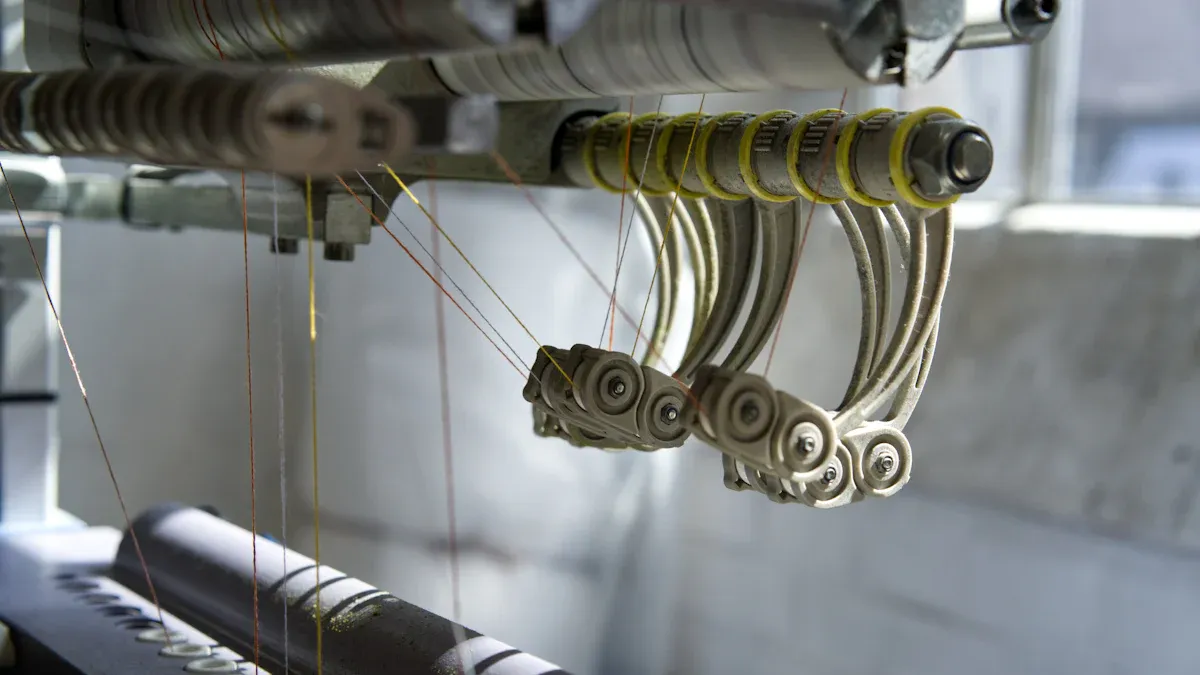
Akong nakita nga ang pagpili sa extrusion system naghulma sa tibuok proseso sa paggama. Kadaghanan sa mga tiggama naggamit sa single-screw system, nga naghupot a 62% bahin sa merkado, samtang ang twin-screw systems maoy hinungdan 38%.
| Uri sa Sistema sa Extrusion | Porsiyento sa Market Share |
|---|---|
| Single-screw | 62% |
| Twin-screw | 38% |
Ang pagpili tali sa mga tipo sa screw makaapekto sa kahusayan, kalidad sa produkto, ug materyal nga pagkaangay. Kung gipares nako ang teknolohiya sa extrusion sa mga katuyoan sa paghimo, Namatikdan nako ang mga pag-uswag sa pagka-epektibo sa gasto, versatility sa disenyo, ug sustainability.
| hinungdan | Epekto sa Episyente sa Paggama | Epekto sa Kalidad sa Produkto |
|---|---|---|
| Gikontrol nga mga parameter | Nagmintinar sa uniporme nga kalidad sa produkto | Nakab-ot ang mga pagtugot sa micrometer |
Nagsalig ko sa Complete Extrusion Systems aron maghatag makanunayon nga mga resulta ug tukma nga performance sa screw.
Key Takeaways
- Pilia ang husto nga sistema sa extrusion base sa imong mga katuyoan sa paghimo ug materyal nga mga kabtangan aron masiguro ang labing maayo nga pasundayag.
- Ang mga single-screw extruder maayo alang sa taas nga volume nga paghimo sa yano nga mga materyales, samtang ang twin-screw nga mga sistema milabaw sa pagsagol sa mga komplikadong materyales.
- Ang kanunay nga pagmentinar ug pag-monitor sa mga sistema sa extrusion makapugong sa downtime ug makapauswag sa kahusayan, pagsiguro sa makanunayon nga kalidad sa produkto.
- Tagda ang screw diameter ug L/D ratio sa diha nga pagpili sa usa ka extruder, tungod kay kini nga mga hinungdan nakaapekto sa throughput ug kahusayan sa pagsagol.
- Gamita ang co-extrusion alang sa pagmugna og multi-layered nga mga produkto nga naghiusa sa lain-laing mga materyales, pagpaayo sa functionality ug performance.
- Pagtimbang-timbang sa pagkaangay sa mga materyales sa pinili nga extrusion system aron malikayan ang mga depekto ug masiguro ang taas nga kalidad nga output.
- Magpabilin nga nahibal-an bahin sa mga nag-uswag nga uso sa teknolohiya sa extrusion, sama sa IoT ug AI, aron mapauswag ang kahusayan ug ipahiangay sa pagbag-o sa mga panginahanglanon sa produksiyon.
- Paghimo og checklist sa importanteng mga butang sa dili pa mopili og makina nga extrusion aron malikayan ang mga mahal nga mga sayup ug masiguro nga ang sistema nagtagbo sa mga kinahanglanon sa aplikasyon.
Pagpili sa Husto nga Extrusion System alang sa Paggama
Panguna nga Mga Hinungdan sa Pagpili sa Sistema
Wala gyud ko makit-an nga unibersal “labing maayo” sistema sa extrusion. Ang akong kasinatian nagsulti kanako nga ang sulundon nga pagpili nagdepende sa mga katuyoan sa paghimo, materyal nga mga kabtangan, ug mga kinahanglanon sa produkto. Sa diha nga ako mopili sa usa ka extrusion nga sistema, Kanunay nakong gipares ang mga kapabilidad niini sa gituyo nga aplikasyon. Kini nga pamaagi nagsiguro nga ang proseso sa extrusion naghatud sa makanunayon nga kalidad ug labing maayo nga pasundayag.
Gikonsiderar nako ang pipila kritikal nga mga hinungdan sa wala pa maghimo usa ka pagpili sa extrusion machine. Gigamit nako ang mosunod nga talaan sa paggiya sa akong desisyon:
| hinungdan | Deskripsyon |
|---|---|
| Tumong sa Panukiduki | Katuyoan sa makina (edukasyon, materyal nga kalamboan, o komersyal nga pilot production) |
| Matang sa Materyal | Uri sa polymers nga iproseso (sensitibo sa kainit, dalidalion, o reaktibo) |
| Gikinahanglan nga Kapasidad sa Output | Kapasidad sa throughput (gramo o kilo kada oras) |
| Advanced nga Proseso nga Kinahanglanon | Kinahanglan ang gas injection, pag-degas sa vacuum, o reactive extrusion nga kapabilidad |
| Badyet ug Laboratory Space | Pagkonsiderar alang sa modular nga pagpalapad alang sa umaabot nga pag-upgrade |
| Mga Panginahanglan sa Umaabot nga Scale-Up | Pagkaangay sa mga modulo sa extrusion sa industriya alang sa pagpadako sa produksiyon |
Kanunay kong magtagad sa screw diameter ug L/D ratio. Kini nga mga parameter nagtino sa kapasidad sa throughput ug kaepektibo sa pagsagol. Gipili nako ang usa ka extruder nga adunay husto nga kapasidad sa output, nga mahimong gikan sa 0.25 kg/h sa 150 kg/h depende sa modelo. Ang modular nga disenyo nagtugot kanako sa pag-ilis dayon sa mga sangkap, nga naghatag ug pagka-flexible alang sa panukiduki ug kalamboan. Nagsalig ko sa mga advanced control system, sama sa PLC ug HMI, aron makab-ot ang tukma nga pagkontrol ug pagsubay sa datos.
Sa diha nga ako sa pagtimbang-timbang sa matang sa extrusion makina, Akong gikonsiderar ang pagkakomplikado sa profile ug ang mga pagtugot nga gikinahanglan. Ang makuti nga mga disenyo nanginahanglan ug tukma nga himan ug makadugang sa gasto. Gitan-aw usab nako ang gidaghanon sa order. Ang mas taas nga mga volume makapamenos sa gasto kada yunit tungod kay ang mga gasto sa pag-setup mikaylap sa daghang mga yunit. Pagtapos ug ikaduhang operasyon, sama sa anodizing o CNC machining, makadugang bili ug gasto.
Tip: Girekomendar nako ang paghimo og checklist niini nga mga hinungdan sa dili pa magsugod ang proseso sa pagpili sa extrusion machine. Kini nga praktis makatabang sa paglikay sa mahal nga mga sayup ug pagsiguro nga ang sistema mohaum sa gituyo nga mga aplikasyon.
Epekto sa Episyente sa Paggama
Akong namatikdan nga ang extrusion system nga akong gipili direktang makaapekto sa manufacturing efficiency. Ang disenyo sa tornilyo, abilidad sa pagsagol, ug extrusion nga teknolohiya ang tanan adunay papel kung unsa ka hapsay ang proseso. Pananglitan, a single nga screw extruder sagad nga maayo alang sa yano nga mga polimer ug taas nga volume nga produksiyon. Ang twin-screw extruders nagdumala sa komplikadong mga materyales ug mga advanced nga aplikasyon, sama sa reactive extrusion o specialty blends.
Akong nakita nga ang taas nga viscosity ug solidong sulod sa mga energetic nga materyales mahimong hinungdan sa pagbara, dili lig-on nga extrusion, ug pagsul-ob sa nozzle. Kini nga mga isyu makapakunhod sa kahusayan ug makompromiso ang kaluwasan. Gitubag nako kini nga mga hagit pinaagi sa pag-optimize sa disenyo sa sistema sa kneading. Ang gipaayo nga pagkaparehas sa pagsagol ug ang katukma sa extrusion makapauswag sa kaluwasan ug kaepektibo.
Gigamit nako ang duha ka yugto nga twin-screw extrusion system kung kinahanglan nako ang labi nga kalig-on ug pagkamapasibo. Gipakita sa mga simulation nga kini nga disenyo nagpauswag sa mga kinaiya sa dagan ug nagmintinar sa makanunayon nga output. Kanunay nakong gimonitor ang proseso sa extrusion aron maseguro ang pare-parehong kalidad ug mamenosan ang downtime.
| Uri sa Ebidensya | Deskripsyon |
|---|---|
| Mga Hagit sa Additive Manufacturing | Ang taas nga viscosity ug solidong sulod sa mga energetic nga materyales mosangpot sa mga isyu sama sa pagbara, dili lig-on nga extrusion, ug pagsul-ob sa nozzle, nakaapekto sa kahusayan ug kaluwasan. |
| Pagbuhat sa Sistema sa Pagmasa | Ang disenyo sa sistema sa kneading nakaapekto sa pagkaparehas sa pagsagol sa materyal ug pagkatukma sa extrusion, nga adunay piho nga mga pag-optimize nga gisugyot aron mapauswag ang kaluwasan ug kaepektibo. |
| Disenyo sa Sistema sa Extrusion | Ang duha ka yugto nga twin-screw extrusion system gidisenyo aron mapauswag ang kalig-on ug pagpahiangay sa proseso sa extrusion., nga adunay mga simulation nga nagpadayag sa mga kinaiya sa dagan sa lainlaing mga sistema. |
Kanunay kong gipares ang extrusion system sa mga kinahanglanon sa produksiyon. Kini nga praktis nagsiguro nga ang extruder naghatag sa gitinguha nga kalidad ug pasundayag. Gipili nako ang configuration sa screw base sa matang sa materyal ug sa pagkakomplikado sa aplikasyon. Nagsalig ako sa advanced extrusion nga teknolohiya aron mapataas ang kahusayan ug mapadayon ang taas nga mga sumbanan sa kalidad sa produkto.
Nota: Girekomendar nako ang regular nga pagmentinar ug pagmonitor sa proseso aron mapadayon ang peak efficiency ug malikayan ang wala damhang downtime.
Mga Matang sa Kompleto nga Sistema sa Extrusion
Kung gisusi nako ang kompleto nga mga sistema sa extrusion alang sa paghimo, Kanunay kong magsugod pinaagi sa pag-ila sa panguna matang sa extrusion machine. Ang labing komon nga mga kapilian naglakip sa single screw extrusion machine, twin screw extrusion machines, ug ram extrusion machines. Ang matag sistema nagtanyag talagsaon nga mga kalig-on ug mga limitasyon, mao nga nagtutok ko sa pagpares sa saktong teknolohiya sa aplikasyon.
| Matang sa Extrusion Machine |
|---|
| Single Screw Extrusion Makina |
| Twin Screw Extrusion Machines |
| Mga Makina sa Ram Extrusion |
Single-Screw Extrusion
Kanunay kong mogamit og usa ka screw extruder alang sa prangka nga mga proseso sa extrusion. Kini nga makina adunay usa ka rotating screw sa sulod sa gipainit nga baril. Ang tornilyo nagduso sa materyal sa unahan, natunaw kini, ug giporma kini pinaagi sa usa ka die. Nagsalig ako sa kini nga sistema alang sa taas nga volume nga produksiyon sa thermoplastics, mga produkto sa pagkaon, ug rubber compounds. Ang kayano sa disenyo nakapasayon sa pag-operate ug pagmentinar.
| Industriya | Deskripsyon sa Aplikasyon | Mga Pagtag-an sa Pag-uswag sa Market |
|---|---|---|
| Mga plastik | Pagtunaw ug pagporma sa mga thermoplastics, gimaneho sa pagtaas sa PE ug PP nga paggamit. | CAGR nga gibanabana 4-5% pinaagi sa 2030 |
| Pagproseso sa Pagkaon | Pagprodyus og mga processed foods sama sa snacks ug cereals. | Market nga maabot $75 bilyon pinaagi sa 2026 |
| Rubber Compounding | Pagsagol ug pagporma sa goma alang sa mga ligid ug mga piyesa sa awto. | Labaw pa ang produksiyon sa ligid 2 bilyon nga yunit pinaagi sa 2025 |
| Biomedical | Ang paghimo sa biopolymer alang sa packaging ug medikal nga mga himan. | Nag-uswag nga merkado nga adunay bag-ong teknolohiya sa extrusion |
Hinuon, Akong giila ang mga limitasyon sa single screw extrusion. Ang pagkab-ot sa uniporme nga pagsagol mahimong lisud, labi na kung magdugang ako mga filler o additives. Ang pagkamakanunayon sa presyur sagad magkalainlain sa mga pagbag-o sa feedstock, ug ang high-viscosity nga mga materyales mahimong dili maayo nga modagayday, mosangpot sa mga depekto. Kini nga mga hagit naggiya sa akong pagpili sa extrusion machine kung kinahanglan nako ang mas taas nga kalidad o mas komplikado nga pagproseso.
Tip: Para simple, taas nga gidaghanon nga mga aplikasyon, Girekomenda ko ang pagsugod sa usa ka screw extruder. Alang sa advanced nga pagsagol o espesyal nga mga materyales, hunahunaa ang ubang mga kapilian.
Twin-Screw Extrusion
Kung kinahanglan nako ang advanced nga pagproseso, Nilingi ko sa twin screw extruder teknolohiya. Kini nga sistema naggamit ug duha ka screw nga nagtuyok nga magkauban sulod sa baril. Ang mga tornilyo mahimong mag-intermesh o magkaparehas, depende sa design. Akong nakita nga ang twin screw extruders naghatag ug labaw nga kahusayan sa pagsagol, mas maayo nga plasticizing alang sa high-viscosity nga mga materyales, ug gipauswag nga pagkontrol sa temperatura ug presyur. Kini nga mga bahin nagpauswag sa kalidad sa produkto ug pagkamakanunayon sa proseso.
Ang twin screw extrusion nagtugot usab kanako sa paghimo sa daghang mga lakang sa pagproseso sa usa ka makina. Ako makasagol, matunaw, pagpahungaw, ug bisan ang mga materyal nga reaksyon sa panahon sa usa ka pass. Kini nga pagka-flexible makapamenos sa basura ug makapadali sa produksiyon. Kung itandi ang twin screw vs single screw extruders, Nakita nako ang mas paspas nga pagbalik sa puhunan ug mas uniporme nga resulta sa twin screw system, ilabina alang sa mga komplikadong sagol o gi-recycle nga mga plastik.
Twin-Screw Subtypes
Kanunay nakong gikonsiderar ang lain-laing klase sa extruder machine sulod sa twin screw category. Ang screw configuration makaapekto sa performance, pagkaepisyente, ug ang sakup sa mga aplikasyon.
Intermeshing
Ang intermeshing twin screw extruders adunay mga screw nga nagsapaw ug naghiusa. Kini nga disenyo naghatag tukma nga transportasyon sa materyal ug taas nga pwersa sa paggunting. Gigamit nako ang mga intermeshing system para sa mas maayo nga compounding ug compatibility, labi na kung kinahanglan nako nga isabwag ang mga additives o filler nga parehas.
Dili Intermeshing
Ang non-intermeshing twin screw extruders adunay mga screw nga nagtuyok nga walay nagsapaw. Kini nga setup nagtanyag sa malumo nga pagsagol ug dili kaayo paggunting. Gipili nako ang dili intermeshing nga mga disenyo alang sa sensitibo nga mga materyales nga nagkinahanglan og gamay nga mekanikal nga stress.
Kauban nga Pag-rotate
Ang co-rotating twin screw extruders adunay mga screw nga moliko sa parehas nga direksyon. Kini nga subtype milabaw sa pagsagol sa kahusayan ug materyal nga transportasyon. Gigamit nako ang co-rotating system para sa reactive extrusion, devolatilization, ug high-performance polymer compounding. Hinuon, taas nga shear rates maka degrade sa init-sensitive nga mga materyales, mao nga gimonitor nako ang disenyo sa screw ug gipabugnaw pag-ayo.
| Subtype | Mga Kaarang sa Pagproseso ug Mga Kaayohan | Mga Limitasyon ug Mga Konsiderasyon | Labing maayo nga mga Aplikasyon |
|---|---|---|---|
| Co-Rotating Twin-Screw Extruder | Taas nga kahusayan sa pagsagol, angay alang sa reactive extrusion, taas nga shear rates | Risgo sa pagkadaot sa materyal, nagkinahanglan og tukma nga disenyo sa screw | Pagsagol sa polimer, mga nanocomposite, lab-to-production workflows |
Counter-Rotating
Ang counter-rotating twin screw extruders adunay mga screw nga moliko sa atbang nga direksyon. Kini nga configuration makamugna og mas ubos nga shear forces, nga nanalipod sa mahuyang nga mga materyales. Nagsalig ko sa mga sistema nga kontra-rotating para sa mga seramiko, bio-polymer, ug pharmaceutical formulations. Ang disenyo naghatag usab og maayo nga pressure build-up ug epektibo nga pagbugkos, bisan kung ang intensity sa pagsagol mas ubos kaysa sa mga co-rotating system.
| Subtype | Mga Kaarang sa Pagproseso ug Mga Kaayohan | Mga Limitasyon ug Mga Konsiderasyon | Labing maayo nga mga Aplikasyon |
|---|---|---|---|
| Counter-Rotating Twin-Screw Extruder | Ubos nga mga pwersa sa paggunting, maayo nga pressure build-up, epektibo nga pagbugkos | Ubos nga intensity sa pagsagol, mas komplikado nga sealing ug bearing design | Mga seramiko, bio-polymer, mga pharmaceutical |
Kung gipili nako ang usa ka kompleto nga sistema sa extrusion, Kanunay kong gipares ang tipo sa tornilyo ug pagsumpo sa mga kinahanglanon sa materyal ug proseso. Kini nga pamaagi nagsiguro sa taas nga kalidad, pagkaepisyente, ug kasaligan nga performance sa tanang aplikasyon.
Ram Extrusion
Kanunay kong gipili ang ram extrusion kung kinahanglan nako nga iproseso ang mga materyales nga nanginahanglan taas nga presyur ug tukma nga pagporma. Kini nga pamaagi naggamit ug hydraulic ram aron iduso ang materyal sa usa ka gipainit nga baril ug mamatay, kay sa pagsalig sa usa ka rotating screw. Nakita nako ang mga extruder sa ram nga labi ka mapuslanon alang sa pagporma sa mga produkto gikan sa mga plastik nga thermosetting, mga seramiko, ug PTFE. Ang proseso nagtugot kanako sa paghimo sa mga sungkod, mga tubo, ug mga profile nga adunay makanunayon nga mga sukat.
Ang ram extrusion nagbarug taliwala sa mga matang sa extrusion machine tungod kay kini nagdumala sa mga materyales nga ang tradisyonal nga screw extruders dili maproseso nga epektibo.. Gigamit nako kini nga teknolohiya sa mga industriya sama sa mga plastik, pagkaon, ug pharmaceuticals. Pananglitan, Naghimo ako og mga meryenda ug mga cereal nga adunay talagsaon nga mga porma, ug naghimo ako og mga tablet ug kapsula nga adunay eksaktong mga detalye.
Namatikdan nako ang daghang mga benepisyo ug mga hagit kung mogamit mga ram extruder:
- Ang mga extruder sa Ram milabaw sa pagprodyus og taas nga kalidad nga mga produkto gikan sa lisud nga proseso nga mga materyales.
- Nagsalig ako kanila alang sa mga aplikasyon diin ang teknolohiya sa pag-extrusion sa screw mubo ra, sama sa PTFE ug seramiko nga mga profile.
- Ang proseso naghatud sa makanunayon nga kalidad ug katukma sa dimensyon.
- Ang taas nga gasto sa operasyon mahimong makaapekto sa kahusayan ug kinatibuk-ang pasundayag.
- Ang higpit nga mga regulasyon sa paggama sa plastik nanginahanglan maampingon nga pagkontrol sa proseso.
- Competition from alternative extrusion systems pushes me to optimize my extrusion machine selection.
I always weigh these factors before choosing ram extrusion for complete extrusion systems. I monitor the process closely to maintain quality and efficiency, especially when working with specialty materials.
Co-Extrusion
Co-extrusion enables me to combine multiple materials into a single product, creating multi-layered profiles with enhanced properties. I use this extrusion technology to integrate different thermoplastics, each layer offering unique characteristics. The process involves pushing several materials through a single die, resulting in a unified profile that meets complex production requirements.
I rely on co-extrusion for manufacturing products that demand durability, pagka-flexible, and aesthetic appeal. Kini nga pamaagi nagtugot kanako sa pagpahaum sa kalidad sa matag layer, pagpalambo sa performance ug functionality. Nakita nako ang co-extrusion isip usa ka yawe nga pag-uswag sa kompleto nga mga sistema sa extrusion, labi na kung kinahanglan nako nga maghimo mga butang nga adunay espesyal nga mga bahin.
Nakabenepisyo ang mga industriya gikan sa co-extrusion sa daghang paagi:
- Pagtukod: Naghimo ako mga sills sa bintana, mga bayanan, ug trim nga mga piraso nga naghiusa sa kusog ug visual appeal.
- Pagbaligya: Nagtukod ko og mga shelving ug display system nga lig-on ug madanihon.
- Signage: Naghimo ako og mga hayag nga mga timailhan ug mga frame nga adunay limpyo nga pagkahuman ug kasaligan nga pasundayag.
Ang co-extrusion nagpalapad sa hanay sa mga aplikasyon alang sa teknolohiya sa extrusion. Gigamit nako kini aron makab-ot ang gipangayo nga mga katuyoan sa produksiyon ug maghatag mga produkto nga adunay labing maayo nga kalidad. Kung gipili nako ang usa ka extruder alang sa co-extrusion, Gikonsiderar nako ang disenyo sa screw, pagkontrol sa proseso, ug materyal nga pagkaangay. Kini nga pamaagi nagsiguro sa pagka-epektibo ug makanunayon nga mga resulta.
Tip: Girekomenda nako ang co-extrusion alang sa mga proyekto nga nanginahanglan daghang mga layer nga profile ug gipaayo ang pagpaandar sa produkto. Ang mabinantayon nga pagpili sa makina sa extrusion ug pag-monitor sa proseso hinungdanon alang sa pagkab-ot sa labing maayo nga kalidad.
Istruktura ug Operasyon sa Extrusion Systems
Disenyo sa Screw ug Barrel
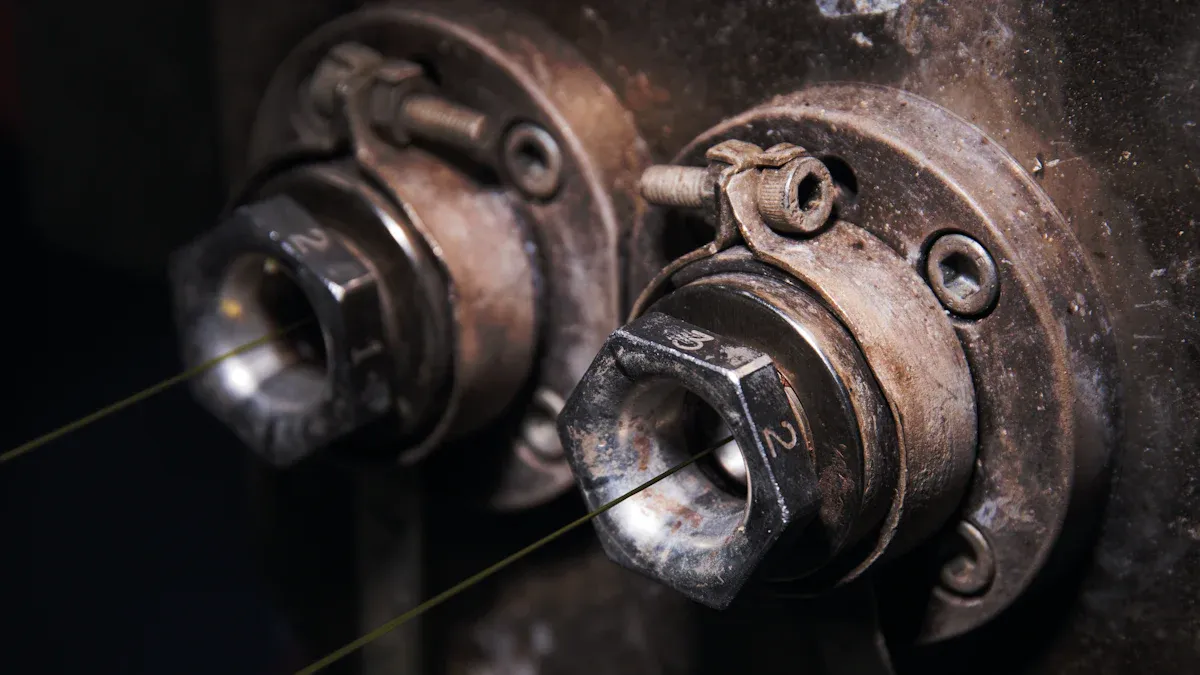
Kanunay nakong sugdan ang pagpili sa akong extrusion machine pinaagi sa pagsusi sa disenyo sa screw ug barrel. Ang geometry sa tornilyo nagtino kung unsa ka episyente ang pagtunaw sa extruder, nagsagol, ug naghatag ug materyal. Akong i-adjust ang gitas-on ngadto sa diyametro (L/D) ratio aron makontrol ang oras sa pagpuyo ug pagsagol. Ang usa ka mas taas nga L/D ratio nagtugot sa materyal nga matunaw ug mas hingpit nga magsagol, nga hinungdanon alang sa pagkab-ot sa parehas nga kalidad sa katapusan nga produkto. Nagsalig ako sa mga disenyo sa babag sa screw barrel aron mapadayon ang pagkatunaw sa kalig-on ug malikayan ang pagkadaot, labi na kung giproseso nako ang mga sensitibo nga materyales. Parallel twin screw ug barrel designs adunay hinungdanon nga papel sa katulin sa extrusion, kalidad sa produkto, ug energy efficiency. Gigamit nako ang zoning ug tukma nga pagkontrol sa temperatura aron ma-stabilize ang dagan sa pagkatunaw ug malikayan ang mga natanggong nga mga gas, nga nagpauswag sa densidad ug pagkamakanunayon. Ang paghuman sa ibabaw sa baril ug ang geometry sa tornilyo nakaimpluwensya usab sa kahusayan sa enerhiya ug pagkamakanunayon sa produkto. Kanunay kong gipares ang disenyo sa tornilyo sa mga piho nga kinahanglanon sa aplikasyon aron mapadako ang pasundayag.
- Ang mas taas nga ratio sa L/D makapauswag sa pagsagol ug matunaw ang pagkaparehas, nga gikinahanglan alang sa taas nga kalidad nga mga produkto.
- Ang mga disenyo sa babag makatabang sa pagpadayon sa pagkatunaw sa kalig-on ug pagpugong sa pagkadaot.
- Screw geometry ug barrel surface finish nakaapekto sa energy efficiency ug product consistency.
Paglihok sa Materyal ug Pagsagol
Nagtutok ko sa episyente nga paglihok sa materyal ug pagsagol aron masiguro nga hapsay ang proseso sa extrusion. akong gigamit lig-on nga pneumatic o mekanikal nga mga conveyor sa pagbalhin sa hilaw nga materyales sa madali ug sa gamay nga maintenance. Ang mga advanced nga disenyo sa mixer naggarantiya sa hingpit ug managsama nga pagsagol, nga nagpugong sa mga kalainan sa nahuman nga mga produkto. Gihiusa nako ang mga awtomatikong kontrol sa mga sistema sa PLC alang sa real-time nga pag-monitor ug pagdumala sa resipe. Kini nga pamaagi nagtugot kanako sa pagdumala sa produksyon nga hapsay ug pag-adjust sa mga parameter kung gikinahanglan. Gipili nako ang mga scalable configurations aron ma-accommodate ang gagmay nga mga workshop ug dagkong mga operasyon sa industriya. Ang gipaayo nga mga bahin sa pagkontrol sa abog magpadayon nga limpyo ug luwas ang trabahoan. makanunayon, homogeneous blends reduce quality fluctuations and improve throughput. Automated systems minimize manual handling, which shortens production cycles and lowers labor costs. I always prioritize these features when I evaluate types of extrusion machines for new applications.
| Feature | Deskripsyon |
|---|---|
| Efficient Material Transfer | Rapid, low-maintenance movement of raw materials |
| Pagsagol sa katukma | Thorough, uniform compounding for consistent quality |
| Awtomatiko nga mga Kontrol | Real-time monitoring and recipe management |
| Scalable Configurations | Flexible layouts for any production capacity |
| Enhanced Dust Control | Cleaner, safer workplace |
| Improved Product Quality | Homogeneous blends, reduced fluctuations |
| Increased Throughput | Shorter production cycles, less manual handling |
| Giminusan nga Basura | Accurate measurement, ubos nga gasto |
| Lower Labor Costs | Automation frees staff for value-added tasks |
| Safer Working Environment | Enclosed lines and dust control |
Process Control and Output Quality
Nagsalig ako sa advanced nga teknolohiya sa pagkontrol sa proseso aron mapadayon ang taas nga kalidad sa output sa paghimo sa extrusion. pilion ko taas nga kalidad nga thermoplastics aron masiguro nga ang katapusan nga mga produkto makatagbo sa kusog, kalig-on, ug mga kinahanglanon sa pagka-flexible. Gibantayan nako pag-ayo ang mga parameter sa extrusion aron makunhuran ang mga kalainan sa panahon sa produksiyon. Ang pagkasibu sa dimensyon nagpabilin nga panguna nga prayoridad alang kanako, tungod kay kini naggarantiya nga ang mga sangkap mohaum sa ilang gituyo nga mga aplikasyon. Gigamit nako ang pag-inspeksyon sa ibabaw aron makit-an ang mga depekto sama sa warping o mga bula sa hangin, nga nakatabang kanako sa pagpadayon sa makanunayon nga kalidad sa produkto. Ang sayo nga pagkakita sa mga isyu makapamenos sa basura ug makadaginot sa gasto sa produksiyon. Kanunay nakong gisiguro nga ang akong proseso nagsunod sa mga sumbanan sa regulasyon, nga nanalipod sa akong negosyo ug sa akong mga kustomer. Ang taas nga kalidad nga mga produkto nagpauswag sa akong reputasyon sa tatak ug nagdugang katagbawan sa kustomer. Advanced monitoring systems allow me to increase production speed without sacrificing accuracy, which boosts overall efficiency in complete extrusion systems.
| Element/Advantage | Deskripsyon |
|---|---|
| Pagpili sa Materyal | Ensures strength, kalig-on, ug pagka-flexible |
| Pag-monitor sa Proseso | Reduces discrepancies and maintains consistency |
| Dimensional Accuracy | Guarantees proper fit for all applications |
| Surface Inspection | Identifies defects early for better quality |
| Ang makanunayon nga kalidad sa produkto | Every batch meets high standards |
| Pagkunhod sa Basura | Saves material and production costs |
| Pagsunod sa Regulatoryo | Meets legal and safety requirements |
| Katagbawan sa Kustomer | Builds reputation and loyalty |
| Process Efficiency | Increases speed while maintaining accuracy |
Tip: I recommend regular calibration and maintenance of all extrusion technology to sustain peak performance and consistent quality.
Comparing the Extrusion Process
Single-Screw vs. Twin-Screw Process
When I compare single-screw ug twin-screw extruders, I focus on how each system handles the extrusion process. Ang disenyo sa tornilyo naghulma sa paagi sa paglihok ug pagsagol sa materyal. Ang usa ka single-screw extruder naggamit sa usa ka helical screw sulod sa usa ka simple, cylindrical nga baril. Sukwahi, ang twin-screw extruder adunay duha ka intermeshing screws ug mas komplikado, kanunay nga bahin sa baril. Nakita nako nga ang pagkontrol sa temperatura sa mga sistema sa single-screw nagpabilin nga sukaranan, samtang ang twin-screw machines nagtanyag og advanced control nga adunay daghang pagpainit ug cooling zones. Kini nga kalainan makaapekto sa throughput ug kahusayan sa enerhiya.
| Aspekto | Usa ka Screw Extruder | Twin Screw Extruder |
|---|---|---|
| Disenyo sa Screw | Usa ka helical screw | Duha ka intermeshing screws |
| Istruktura sa baril | Yano, cylindrical | Mas komplikado, kasagarang gibahin |
| Pagkontrol sa Temperatura | Panguna nga pagpainit/pagpabugnaw | Abante, multi-zone |
| Kapasidad sa Output | Kasarangan | Taas |
| Pagkonsumo sa Enerhiya | Sa kasagaran mas taas | Mas episyente |
| Flexibility sa Throughput | Limitado | Taas |
Nagsalig ko sa twin-screw extruders para sa mas taas nga output ug mas maayong energy efficiency. Kung kinahanglan nako ang pagka-flexible sa throughput o advanced nga pagkontrol sa proseso, Gipili nako ang mga sistema sa twin-screw. Para sa prangka nga mga aplikasyon, Ang single-screw extruders naghatag gihapon ug kasaligan nga performance.
Pagkaangay sa Materyal sa Proseso sa Extrusion
Ang pagkaangay sa materyal adunay hinungdanon nga papel sa pagpili sa makina sa extrusion. I always match the screw configuration to the type of material I plan to process. Single-screw extruders handle standard thermoplastics well, but they struggle with materials that require intensive mixing or have high filler content. Twin-screw extruders excel with specialty compounds, recycle nga mga plastik, ug mga reaktibo nga materyales. I use segmented screws to adjust mixing and shearing for each application.
When I work with complete extrusion systems, I consider how each screw design affects the final product. Twin-screw extruders allow me to process a wider range of materials, including those with additives or sensitive properties. This flexibility supports more types of extrusion machines and expands the range of possible applications.
Tip: I recommend evaluating the chemical and physical properties of your raw materials before choosing an extruder. This step ensures compatibility and reduces the risk of defects.
Ang kalidad ug pagkamakanunayon sa produkto
I know that the extrusion process directly impacts the quality of the finished product. Modern extrusion lines integrate automation and advanced control platforms. These systems analyze multiple variables at once, which helps me maintain consistent quality across every batch.
Quality consistency is a productivity multiplier. Advanced control platforms analyze patterns across multiple variables simultaneously, ensuring that product quality is maintained throughout the extrusion process.
I monitor key factors such as stable melt pressure, rate sa output, ug paghuman sa ibabaw. Stable melt pressure prevents warping and dimensional drift. Higher and more stable output reduces scrap rates and downtime. Better surface finish and precise dimensional control enhance the impact on the quality of the finished product.
| Pangunang mga Hinungdan | Impact on Quality and Consistency |
|---|---|
| Stable melt pressure | Prevents dimensions from drifting or warping |
| Higher and more stable output | Reduces scrap rates and downtime |
| Better surface finish | Enhances overall product quality |
| Dimensional nga pagkontrol | Ensures precision in final product specifications |
| Faster ROI | Improves profitability for manufacturers |
Kung itandi ang twin screw vs single screw extruders, I see that twin-screw systems deliver better consistency and lower operational cost. I achieve faster ROI and improved performance by investing in advanced extrusion technology. I always prioritize process monitoring and automation to ensure high quality and efficiency in production.
- Higher and more stable output
- Lower scrap and downtime
- Better surface finish and dimensional control
- Reduced operational cost
- Faster ROI
I rely on these strategies to maximize the benefits of extrusion and deliver products that meet strict manufacturing standards.
Performance Comparison Table
Throughput ug Efficiency
I always evaluate throughput and efficiency when I compare types of extrusion machines. Throughput measures how much material the extruder processes in a given time. Efficiency reflects how well the screw design converts raw material into finished products with minimal waste and energy use. I see that single-screw extruders often deliver steady throughput for standard polymers. Twin-screw extruders, with their advanced screw geometry, handle higher output and maintain better energy efficiency, especially for complex blends.
| Uri sa Extruder | Throughput (kg/h) | Episyente sa Enerhiya | Labing Maayo nga Mga Kaso sa Paggamit |
|---|---|---|---|
| Single-Screw | 50–500 | Kasarangan | Taas nga volume, simple polymers |
| Kaluha-Screw | 100–1000+ | Taas | Complex blends, specialty jobs |
| Ram Extruder | 10–100 | Low–Moderate | PTFE, mga seramiko, espesyalidad |
| Mga Sistema sa Co-Extrusion | Nagkalainlain | Taas | Multi-layered profiles |
I always match the screw configuration to the material and production requirements. This approach ensures the process delivers consistent quality and meets manufacturing goals. I rely on complete extrusion systems to maximize throughput and efficiency for every application.
Tip: I recommend monitoring energy consumption and output rates regularly. This practice helps optimize extrusion machine selection and reduces operational costs.
Maintenance and Reliability
I prioritize maintenance and reliability when I select an extruder. The screw and barrel experience constant wear from abrasive materials and high temperatures. I schedule routine inspections and replace worn components to prevent unexpected downtime. Single-screw extruders require less maintenance due to their simple design. Twin-screw extruders, with more moving parts and segmented screws, need more frequent checks but offer greater flexibility.
| Uri sa Extruder | Mga Panginahanglan sa Pagmentinar | Reliability Level | Common Issues |
|---|---|---|---|
| Single-Screw | Low–Moderate | Taas | Occasional screw wear |
| Kaluha-Screw | Moderate–High | Taas | Segment wear, seal failure |
| Ram Extruder | Kasarangan | Kasarangan | Hydraulic leaks, die wear |
| Mga Sistema sa Co-Extrusion | Taas (multi-screw) | Taas | Synchronization, screw wear |
I use advanced monitoring systems to track screw wear and process stability. This strategy improves reliability and extends the life of my extrusion technology. I always keep spare screws and barrels on hand to minimize downtime during maintenance.
Product Complexity and Flexibility
I value design flexibility sa extrusion. The ability to customize the screw and die allows me to create complex profiles for a wide range of applications. I use extrusion to manufacture everything from simple plastic tubing to intricate window frames. I can add reinforcements or special features within the continuous material, which expands my product offerings.
| Aspekto | Deskripsyon |
|---|---|
| Pagka-flexible sa Disenyo | Extrusion allows for significant design flexibility through die customization, enabling complex profiles. |
| Mga aplikasyon | Suitable for various applications, including intricate window frames and simple plastic tubing. |
| Pagpahiangay | Manufacturers can include reinforcements or additional features within the continuous material. |
- In MedTech, I must achieve tight tolerances for medical devices.
- I ensure biocompatibility for all medical extrusion products.
- I monitor wall thickness closely, since it affects flow rates and structural strength.
I select the screw configuration and extrusion machine based on the complexity of the design and the required tolerances. This approach guarantees high quality and supports advanced manufacturing needs.
Nota: I recommend consulting with extrusion experts when planning new product designs. Their experience helps avoid costly mistakes and ensures the right screw and process configuration.
Application Suitability in Manufacturing
High-Volume Manufacturing
I always start my extrusion machine selection by considering the demands of high-volume manufacturing. When I need to produce thousands of units per day, I rely on single-screw extruders. These machines deliver steady throughput and maintain consistent quality. The screw design in single-screw extruders allows me to process standard polymers efficiently. I monitor the process closely to ensure uniform melt and minimize defects. I select the right screw diameter and length to match the production requirements. This approach helps me achieve high efficiency and reduce waste. I use automated controls to track output and maintain quality standards. High-volume applications benefit from robust types of extrusion machines that can operate continuously with minimal downtime. I always keep spare screws and barrels ready to avoid interruptions in production.
Tip: I recommend scheduling regular maintenance for extruders used in high-volume manufacturing. This practice extends the life of the screw and ensures reliable performance.
Complex Product Manufacturing
When I manufacture complex or multi-component products, I turn to advanced extrusion technology. Twin-screw extruders give me greater control over mixing and material distribution. I use segmented screws to adjust shear and optimize the process for each application. Co-extrusion technology enables me to combine different polymers into multi-layer films and pipes. This method improves barrier properties and enhances strength, pagka-flexible, ug pagsukol sa kemikal.
| Teknolohiya | Mga kaayohan |
|---|---|
| Co-extrusion | Enables the creation of multi-layer films and pipes with improved barrier properties, combining different polymers for strength, pagka-flexible, ug pagsukol sa kemikal. |
I select the screw configuration based on the complexity of the product. For intricate designs, I rely on precise tooling and advanced process monitoring. I always test the extruder setup before full-scale production to ensure quality and performance. Complex applications require careful extrusion machine selection and attention to detail.
Specialty Materials and Customization
I often work with specialty materials that demand custom solutions. I use advanced shaping processes, such as sheet extrusion and thermoforming, to control material characteristics. Sheet extrusion gives me the ability to manage thickness and material distribution with high accuracy. Co-extrusion capabilities allow me to create multi-layer constructions that enhance material properties. I integrate downstream shaping processes to ensure consistent performance in finished components. Engineering services help me optimize component designs and select the best materials for specific applications.
- Advanced shaping processes, such as sheet extrusion and thermoforming, allow for precise control over material characteristics.
- Sheet extrusion provides a foundation for custom material solutions, enabling thickness control and material distribution accuracy.
- Co-extrusion capabilities facilitate the creation of multi-layer constructions, enhancing material properties.
- Integration with downstream shaping processes ensures consistent performance characteristics in finished components.
- Engineering services optimize component designs and material selection, ensuring suitability for specific applications.
I always match the screw design to the requirements of specialty materials. Customization in extrusion depends on selecting the right extruder and process parameters. I monitor quality at every stage to deliver products that meet strict standards. Specialty applications benefit from flexible types of extrusion machines and expert guidance.
Nota: I recommend consulting with extrusion specialists when working with new materials or custom designs. Their expertise helps achieve the desired quality and performance.
Selection Criteria for Extrusion Systems
Product Design and Complexity
I always start my extrusion machine selection by analyzing the product design and complexity. The geometry of the profile influences the choice of extruder and screw configuration. Complex shapes increase tooling costs and create production challenges. I simplify profile geometry whenever possible to enhance material flow and reduce defects. Smooth transitions in the design prevent disruptions in material flow, which is crucial for consistent extrusion quality. I select the right material early in the process because material choice affects both the properties of the part and the ease of extrusion. This decision impacts manufacturability and overall performance.
- Simplifying profile geometry lowers tooling costs and reduces production challenges.
- Designing for material flow ensures consistent extrusion quality and minimizes defects.
- Choosing the right material early improves manufacturability and product performance.
I match the screw design to the complexity of the product. For intricate profiles, I use advanced screw configurations that optimize mixing and material transport. I rely on precise tooling and process monitoring to maintain high quality. When I work with complex applications, I consult with extrusion technology experts to avoid costly mistakes and ensure the best results.
Tip: I recommend reviewing the profile geometry and material flow before finalizing the extrusion machine selection. This step helps prevent production issues and supports efficient manufacturing.
Mga Kinaiya sa Materyal
Material properties play a critical role in selecting the right extruder and screw configuration. I identify application requirements such as temperature resistance, Pagkaladlad sa UV, and impact durability. I consider mechanical properties like flexibility, katig-a, and tensile strength for the intended use. Environmental conditions influence my material choice, especially when I need weathering resistance or flexibility in cold environments. I evaluate aesthetic and finish requirements, lakip ang kolor, gloss, and surface texture, based on project needs. Regulatory and compliance needs guide my selection to ensure materials meet industry-specific standards and certifications.
- Application requirements determine the need for temperature resistance, Pagkaladlad sa UV, and impact durability.
- Mechanical properties such as flexibility, katig-a, and tensile strength affect the choice of extruder and screw.
- Environmental conditions require materials that withstand weathering or remain flexible in cold climates.
- Aesthetic and finish requirements influence color, gloss, and surface texture.
- Regulatory and compliance needs ensure materials meet industry standards.
I select the screw design based on the material’s properties. For heat-sensitive materials, I use screws with gentle mixing zones and precise temperature control. When processing tough or abrasive compounds, I choose robust screw geometries that withstand wear and maintain efficiency. I always test materials in pilot runs to verify compatibility with the extruder and ensure consistent quality.
Nota: I recommend consulting material datasheets and industry standards before choosing an extruder. This practice helps match material properties to the extrusion process and supports reliable performance.
Production Volume and Scale
Production volume and scale influence the cost-effectiveness of extrusion machine selection. Higher production volumes reduce unit costs because tooling expenses are spread over more parts. In the prototype stage, tooling costs are high compared to the quantity produced. In mass production, die costs are amortized over larger volumes, leading to lower costs per unit. Pananglitan, a die costing $2,000 with a lifetime of 40,000 kg results in a cost of $0.05 per kg when amortized.
- Higher production volumes lower unit costs by spreading tooling expenses.
- Prototype stages have high tooling costs relative to the number of parts produced.
- Mass production allows die costs to be distributed over larger volumes, reducing per-unit costs.
- Example: A die costing $2,000 with a lifetime of 40,000 kg results in a cost of $0.05 per kg.
I select the extruder and screw configuration based on the expected production volume. For high-volume manufacturing, I use robust types of extrusion machines that deliver steady throughput and maintain efficiency. In low-volume or prototype applications, I prioritize flexibility and rapid changeover. I monitor production rates and adjust screw parameters to optimize output and quality.
Tip: I recommend calculating the amortized tooling cost before committing to a production scale. This step helps determine the most cost-effective extrusion technology and supports long-term manufacturing goals.
Technical and Budget Considerations
I always approach extrusion machine selection with a clear focus on technical requirements and budget constraints. My experience tells me that investing in advanced extrusion technology demands careful planning. I evaluate every aspect of the system, from screw design to process control, to ensure cost-effectiveness and reliable performance.
I start by analyzing the technical specifications of the extruder. I look at screw geometry, barrel length, and compatibility with different types of extrusion machines. I select a screw that matches the material properties and the complexity of the applications. I check if the extruder can handle the desired throughput and maintain consistent quality. I also assess the integration of feeders, mga tigkontrol sa temperatura, ug mga kagamitan sa ubos. System integration plays a crucial role in maximizing efficiency and avoiding bottlenecks in production.
Budget considerations influence every decision I make. I break down the costs into several categories to understand the financial impact. I use the following table to guide my investment strategy:
| Budget Consideration | Deskripsyon | Financial Impact / Benefit Example |
|---|---|---|
| Episyente sa Enerhiya | Reducing energy consumption by upgrading control systems or screws | 33% energy reduction saves nearly $100,000 annually on $288,000 energy cost |
| Scrap Reduction | Lowering scrap rate from 15% sa 5% through data acquisition and process control | Saves $200,000 monthly or $2.4 million yearly in materials, paghago, and energy costs |
| Throughput Increase | Upgrading to twin-screw extruder increases throughput by 30% | Generates $600,000 additional monthly revenue with >50% incremental profit margin |
| Maintenance Cost Reduction | Predictive maintenance and condition monitoring reduce emergency repairs and downtime | Maintenance costs drop 20-30%, equipment availability increases |
| Paghiusa sa Sistema | Budgeting for compatible feeders, mga tigkontrol sa temperatura, ug mga kagamitan sa ubos | Partial upgrades capture only ~40% of potential benefits |
| Pagbansay sa Operator | Training on material characteristics, makinarya, instrumentation, ug mga kontrol | Essential to fully realize technology benefits; lack wastes investment |
| Data Acquisition Infrastructure | Adequate sensors and analytics software needed for optimization | Insufficient infrastructure limits optimization; too many sensors without analytics causes overload |
| Downstream Constraints | Ensuring cutting, pagputos, and inspection keep pace with increased extruder output | Bottlenecks reduce overall system benefit |
I prioritize energy efficiency when selecting an extruder. Upgrading control systems or optimizing screw design can reduce energy consumption by up to 33%. This improvement saves nearly $100,000 each year on a typical $288,000 energy bill. I also focus on scrap reduction. By implementing advanced process control and data acquisition, I lower scrap rates from 15% sa 5%. This change saves $200,000 every month in materials, paghago, and energy costs.
Increasing throughput is another key goal. Upgrading to a twin-screw extruder boosts output by 30%. This increase generates $600,000 in additional monthly revenue, with more than a 50% incremental profit margin. I invest in predictive maintenance and condition monitoring to reduce emergency repairs and downtime. Maintenance costs drop by 20-30%, and equipment availability improves.
System integration is essential for maximizing the benefits of extrusion technology. I budget for compatible feeders, mga tigkontrol sa temperatura, ug mga kagamitan sa ubos. Partial upgrades capture only about 40% of the potential benefits. Operator training is critical. I ensure my team understands material characteristics, makinarya, instrumentation, ug mga kontrol. Without proper training, the investment in advanced extrusion technology goes to waste.
I invest in data acquisition infrastructure. Adequate sensors and analytics software optimize the process. Insufficient infrastructure limits optimization, while too many sensors without analytics cause information overload. I address downstream constraints by ensuring cutting, pagputos, and inspection keep pace with increased extruder output. Bottlenecks in these areas reduce the overall benefit of the system.
I always balance technical requirements with budget limitations. I select a screw that delivers high quality and efficiency without exceeding my financial resources. I plan for future upgrades and modular expansion to support changing production needs. I monitor every aspect of the extrusion process to maintain cost-effectiveness and reliable performance.
Tip: I recommend creating a detailed budget plan before investing in new extrusion technology. Include energy costs, pagmentinar, pagbansay sa operator, and system integration. This approach ensures that the extruder delivers maximum value and supports long-term manufacturing goals.
Actionable Insights for Manufacturers
Matching System to Application
I always match the extrusion system to the specific application. Ako optimize material use to balance strength and lightweight design. I define critical dimensional tolerances early, which ensures parts fit and function as intended. I design for manufacturability, making sure shapes can be extruded consistently and cost-effectively. I select aluminum alloys based on application needs, such as strength and corrosion resistance. I simplify designs to reduce costs, avoiding unnecessary complexity in profiles. I prototype and test early, which helps me identify potential challenges before full production. These steps help me achieve high quality and reliable performance in every extrusion process.
- Optimize material use for strength and lightweight design.
- Define critical dimensional tolerances early.
- Design for manufacturability.
- Select appropriate aluminum alloys for application needs.
- Simplify designs to reduce costs.
- Prototype and test early.
I always consider the key components of an extruder, such as screw geometry and barrel design, to ensure the system meets production requirements. I review different types of extruder machines to find the best fit for my applications in plastik nga extrusion. This approach supports scalability and maintains quality control throughout manufacturing.
Common Selection Mistakes
I have seen many manufacturers make mistakes during extrusion machine selection. Inadequate material blending often leads to product imperfections and increased costs from reprocessing. Outdated or incompatible control systems cause integration issues and inefficiencies. Inconsistent feed rates disrupt the extrusion process, resulting in product variabilities and higher scrap rates. Neglecting preventive maintenance allows minor mechanical issues to escalate into major production problems, affecting revenue. Ignoring operator training leads to misconfigurations and missed optimization opportunities.
- Inadequate material blending increases costs and reduces quality.
- Outdated control systems cause inefficiencies.
- Inconsistent feed rates disrupt the extrusion process.
- Neglecting preventive maintenance leads to major production problems.
- Ignoring operator training results in missed optimization.
I always monitor screw wear and maintain the extruder regularly. I invest in operator training to maximize efficiency and quality. I avoid these mistakes by focusing on process stability and performance.
Future Trends in Extrusion Technology
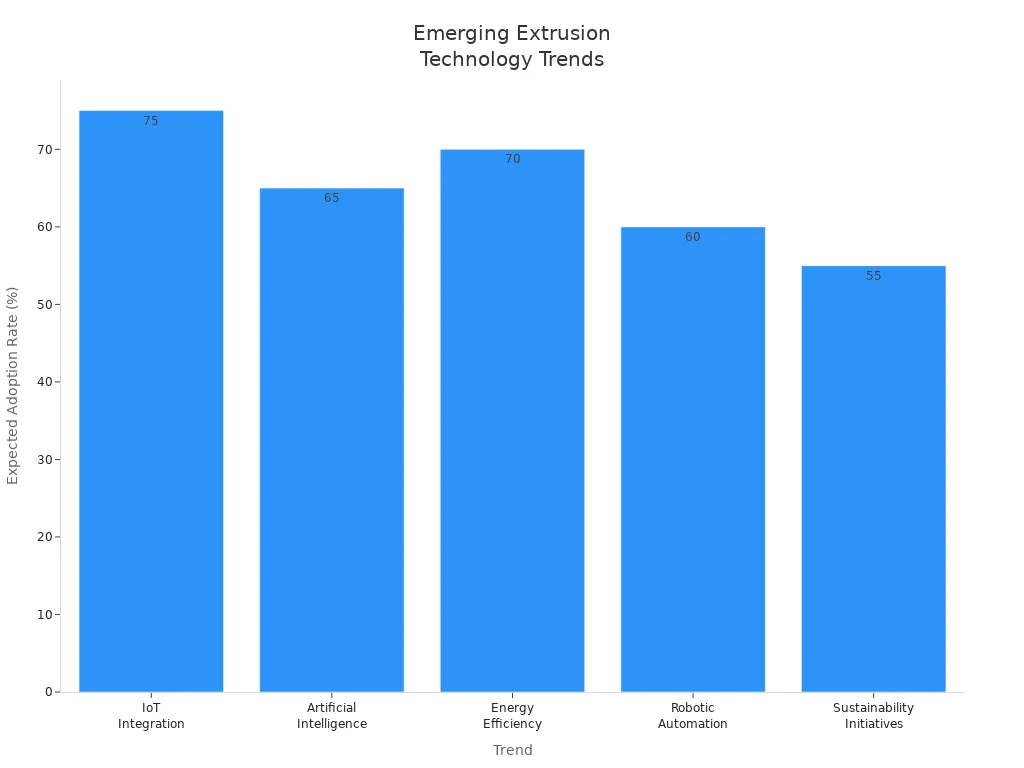
I see rapid changes in extrusion technology shaping the future of manufacturing. IoT integration allows real-time monitoring and analytics, pagpalambo sa efficiency. Artificial intelligence supports predictive maintenance and optimization, which boosts performance. Energy efficiency is a growing focus, with manufacturers seeking ways to reduce consumption in the extrusion process. Robotic automation streamlines material handling and quality control. Ang mga inisyatibo sa pagpadayon nagduso sa paggamit sa mga recycled nga materyales ug mga proseso nga mahigalaon sa kalikopan.
| Uso | Deskripsyon | Epekto sa Episyente | Gipaabot nga Rate sa Pagsagop (%) |
|---|---|---|---|
| Paghiusa sa IoT | Real-time nga pag-monitor ug analytics | Taas | 75% |
| Artipisyal nga Kaalam | Predictive maintenance ug optimization | Taas kaayo | 65% |
| Episyente sa Enerhiya | Pagpakunhod sa konsumo sa enerhiya | Medium | 70% |
| Robotic Automation | Pagdumala sa materyal ug pagkontrol sa kalidad | Taas | 60% |
| Mga Inisyatibo sa Pagpadayon | Mga recycle nga materyales ug eco-friendly nga mga proseso | Medium | 55% |
Namatikdan nako ang mga pag-uswag sa pagkaangay sa materyal, ilabi na sa bioplastics, nagbag-o sa industriya sa extrusion. Daghang mga tiggama karon ang nag-una sa pagka-flexible sa disenyo sa kagamitan, nga adunay mga modular nga sistema nga nagtugot sa dali nga pag-upgrade ug pagbag-o. Ang pagpadayon hinungdanon, uban sa kadaghanan sa mga tiggama nga nagpunting sa mga ekipo nga episyente sa enerhiya ug mga estratehiya sa pagkunhod sa basura. Smart extrusion nga mga makina pagpakunhod sa downtime pinaagi sa 20%, nga nagpauswag sa kinatibuk-ang kahusayan ug pagkontrol sa kalidad. Kanunay kong magpabilin nga updated sa kini nga mga uso aron mapadayon ang taas nga performance ug pagsuporta sa mga bag-ong aplikasyon sa plastic extrusion.
Tip: I recommend reviewing the overview of extruder machines in manufacturing regularly. Staying informed about new types of extrusion machines and screw designs helps me adapt to changing production needs and maintain scalability.
I recognize that each extrusion system offers unique advantages and limitations. My experience shows that single-screw extruders excel in high-volume production, while twin-screw systems provide superior mixing and flexibility. Ram and co-extrusion machines support specialty applications. I always use comparison tables and selection criteria to evaluate:
- Technical capabilities and long-term reliability
- Customer service and design assistance
- Quality standards and energy efficiency
I recommend manufacturers understand their application needs and consult extrusion experts for optimal results.
FAQ
What is the main difference between single-screw and twin-screw extruders?
I see that single-screw extruders use one rotating screw for basic mixing. Twin-screw extruders use two screws for advanced mixing and better control. I choose twin-screw systems for complex materials and higher flexibility.
How do I decide which extrusion system fits my application?
I start by reviewing my material type, gidaghanon sa produksyon, and product complexity. I match these needs to the strengths of each system. I consult with experts if I face unique requirements.
Can I process recycled materials with extrusion systems?
I process recycled materials using twin-screw extruders. These machines handle variable feedstocks and additives better than single-screw systems. I monitor quality closely to ensure consistent results.
How often should I perform maintenance on my extruder?
I schedule routine inspections every month. I check for screw wear, barrel condition, and control system performance. Regular maintenance prevents downtime and extends equipment life.
What are the most common extrusion defects I encounter?
I often see surface roughness, dimensional drift, and melt fractures. I address these by adjusting temperature, tulin sa screw, and material feed. I use process monitoring to catch issues early.
Is co-extrusion suitable for all materials?
I use co-extrusion mainly for thermoplastics. Some materials may not bond well in multi-layer profiles. I test material compatibility before starting production.
How does automation improve extrusion quality?
I rely on automation for real-time monitoring and precise control. Automated systems reduce human error, maintain consistent output, and improve overall product quality.
What safety measures do I follow during extrusion?
I wear protective gear and follow lockout procedures. I keep the work area clean and check emergency stops regularly. I train my team on safe operation and emergency response.