

Aportacions clau
- L'extrusió de plàstic fon la resina en brut i la forma un perfil continu amb una secció transversal fixa, el que fa que s'adapti bé a llargs, tirades de producció de gran volum (SeaGate Plastics, 2024).
- Quan avaluo un fabricant de perfils de plàstic, Jo separo extrusió personalitzada, que comporta una inversió única en matriu i eines, de formes extruïdes en estoc que salten aquest cost inicial (Guia de proveïdors de Thomasnet, 2024).
- La selecció del material condueix tot aigües avall: Coincideixo l'aplicació amb el polímer adequat, si això és PVC per a canonades i perfils, ABS o policarbonat per a la resistència a l'impacte, HDPE i LDPE per a la resistència química, polipropilè per frontisses vives, acrílic (PMMA) per claredat, o niló de grau d'enginyeria (PA) i PEEK per a peces exigents.
- El PVC és un dels plàstics més extruïts del món, comuns a tots els perfils, canonada, i tubs, és per això que molts proveïdors l'enumeren com a capacitat predeterminada (Associació de la indústria del plàstic, 2023).
- Les toleràncies d'extrusió són més fluixes que l'emmotllament per injecció a causa de la contracció del material i la formació contínua, així que planifico les toleràncies aviat en lloc d'assumir la precisió de les peces modelades (Protolabs, 2023).
- Tracto ISO 9001 com a senyal de referència d'un sistema de gestió de la qualitat madur, no una garantia, i emparellar-lo amb una llista de verificació concreta que cobreixi la capacitat, capacitat de coextrusió, i temps de lliurament (ISO, 2015).
- Per intenció de localització, El subministrament d'un fabricant nacional de plàstics pot reduir el cost total de desembarcament reduint el transport de mercaderies, deure, i costos de manteniment d'inventaris, un punt que val la pena ponderar només amb el preu unitari (Iniciativa de relocalització, 2023).
- Els termoplàstics utilitzats en extrusió són reciclables, i la reutilització de la mòlta millora l'eficiència del material, que tinc en compte a les converses de costos i sostenibilitat (EPA dels EUA, 2023).
- Reclamacions com “més gran” o “millor” fàbrica significa poc sense context, així que faig referència als proveïdors pel que fa al cost de les eines, MOQ, producció ràpida, i un suport provat de prototip a producció.
Què fan realment les empreses i fàbriques d'extrusió de plàstic
Quan avaluo un proveïdor per a un client, Començo aclarint quina és la paraula “extrusió” descriu realment a la planta de la botiga. L'extrusió de plàstic fon el material plàstic en brut i el converteix en un perfil continu amb una secció transversal fixa (SeaGate Plastics, 2024). Aquesta sola frase té molt pes: el procés és continu en lloc de tret a tret, i la geometria està definida per una secció transversal bidimensional que recorre tota la longitud de la peça. És per això que s'adapta tan bé a llargues tirades de producció i a grans volums de fabricació, i és una disciplina realment diferent de l'emmotllament per injecció o el mecanitzat.
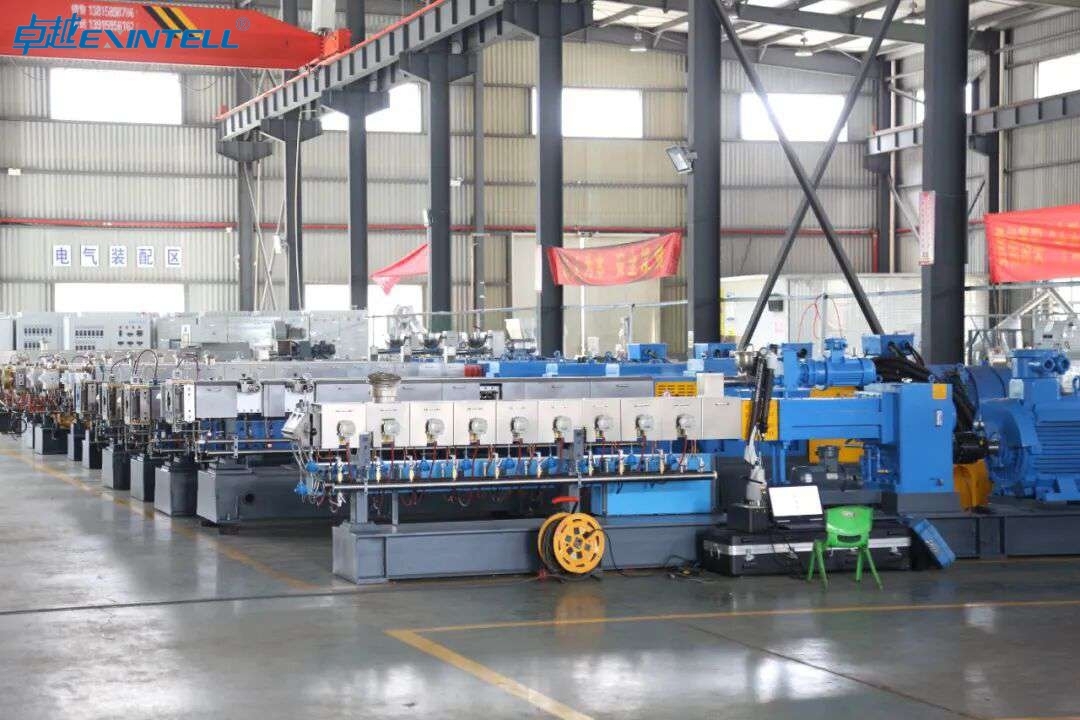
A la pràctica, “extrusió de resina” és el motor darrere de tres famílies àmplies de producció que veig sol·licitades amb més freqüència:
- Perfils — perfils de plàstic personalitzats amb una secció transversal definida, des de canals senzills i retalls de vora fins a formes complexes de múltiples llums. Aquí és on l'extrusió de perfil i la coextrusió realment brillen.
- Tubs — rodó, ovalada, i tub multi-lumen utilitzat en medicina, manipulació de fluids, i aplicacions pneumàtiques, procedeix d'un proveïdor especialitzat de tubs de plàstic.
- Full — extrusió de làmines de plàstic per a panells, revestiments, i material de termoconformat, produït a través d'una pila plana de matrius i rotlles.
Fabricants, Fàbriques, i els distribuïdors no són els mateixos
Els compradors solen utilitzar aquests termes de manera intercanviable, i això els costa temps. Aquí és com els separo:
- A fabricant o fàbrica és propietari de les línies d'extrusió, talla els seus propis encunys, i controla el procés des de la resina fins a la peça acabada. Aquest és qui voleu per a eines personalitzades, control estricte del procés, o plàstics de grau d'enginyeria.
- A distribuïdor o revenedor emmagatzema i envia formes estàndard, però normalment no executa la línia. Ideal per a formes extruïdes en estoc i comandes ràpides, menys per a treballs personalitzats.
- A fabricant pot comprar perfils d'accions i màquina, soldar, o reunir-los en serveis de fabricació de plàstic acabats.
Quan busco en Thomasnet, Filtro deliberadament, perquè aquests directoris enumeren i classifiquen els fabricants d'extrusió de plàstic dels EUA per capacitat i regió (Thomasnet, 2024). Aquest filtre de capacitat és el que us indica si esteu parlant amb un fabricant de perfils de plàstic real o amb un intermediari.
Per què cerquen els compradors “Fàbrica” En lloc de “Proveïdor”
En la meva experiència, el desplaçament cap a “fàbrica” El llenguatge indica la intenció. Els compradors que l'escriuen volen una font amb control intern sobre el disseny de matrius i les eines, converses MOQ transparents, i la capacitat d'escalar des del prototip fins a la producció. També reflecteix la pressió de reposició: El subministrament nacional pot reduir el cost total de desembarcament reduint el transport de mercaderies, deure, i costos de manteniment d'inventaris (Iniciativa de relocalització, 2023), i la indústria dels plàstics dels Estats Units continua sent un contribuent important als enviaments de fabricació nacional i a l'ocupació (Associació de la indústria del plàstic, 2023). Buscant un fabricant nacional de plàstics, en lloc d'un proveïdor genèric, sovint és una decisió deliberada de risc i cost.
Com funciona el procés d'extrusió de plàstic, Pas a pas

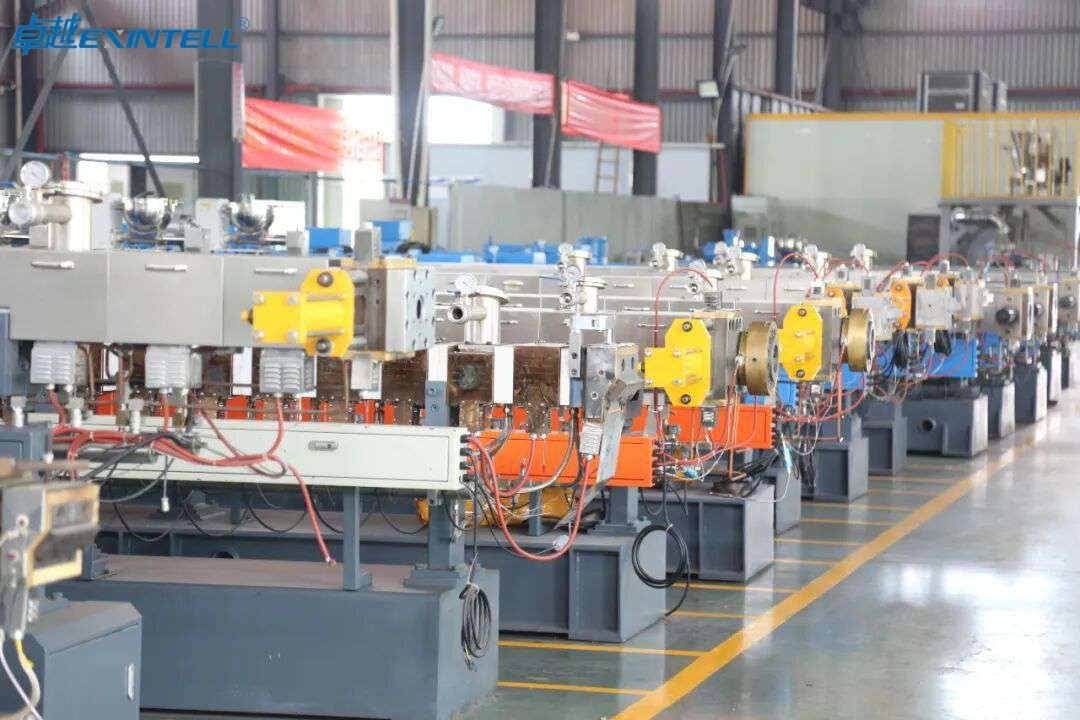
Entendre la mecànica us ajuda a fer millors preguntes i llegir una cotització amb precisió. Fabricants d'extrusores de doble cargol Guio els clients a través de cinc etapes del procés d'extrusió contínua.
1. Alimentació i fusió de matèries primeres al barril
Pellets termoplàstics: generalment PVC, ABS, HDPE, LDPE, o polipropilè: introduïu una tremuja i deixeu-ho caure en un barril escalfat amb un cargol giratori. La combinació d'escalfadors de barril i cisalla del cargol fon la resina en un corrent fos homogeni. L'elecció del material és important aquí: El PVC és un dels plàstics més extruïts del món, utilitzat habitualment en perfils, canonada, i tubs (Associació de la indústria del plàstic), mentre que el policarbonat, acrílic (PMMA), niló (PA), i PEEK serveixen més exigents, aplicacions de grau d'enginyeria. Sovint es pot tornar a barrejar el reciclatge reciclat, i els termoplàstics utilitzats en extrusió són reciclables, de manera que la reutilització de la mòlta millora l'eficiència del material (EPA dels EUA, 2023).
2. Forçar el plàstic fos a través d'una matriu personalitzada
La massa fosa s'empeny a través d'una matriu que defineix la secció transversal del perfil. Aquest és el cor del procés i el motiu pel qual el treball personalitzat comporta un cost d'eines. Una configuració de coextrusió utilitza més d'una extrusora alimentant una sola matriu, que us permet combinar materials: un substrat rígid amb un llavi de segellat suau de TPE/TPU, per exemple, o una capa de tapa de color sobre un nucli de menor cost.
3. Refrigeració, Talla, i Enlairament continu
Deixant el dau, el perfil suau passa per un sistema de refrigeració i dimensionament, normalment un bany d'aigua o un dipòsit de dimensionament al buit, que es bloqueja en dimensions.. Un enlairament (tirador) dibuixa el perfil a una velocitat controlada. Because the part is formed continuously and the material shrinks as it cools, extrusion tolerances are generally looser than injection molding (Protolabs, 2023). I set that expectation early so clients spec realistic tolerances rather than paying for precision the process cannot economically hold.
4. Cutting to Length and Secondary Fabrication
An in-line saw or knife cuts the continuous output to length. A partir d'aquí, secondary operations — drilling, punxada, entallament, impressió, or assembly — turn extruded plastic parts into finished components. This is the bridge between raw profile and a usable deliverable, and it is where quick-turnaround production is either won or lost.
Extrusions de plàstic personalitzades vs: Quin Necessites?
Aquesta és la decisió que més em pregunten, and the honest answer is: it depends on volume, geometry, and timeline. Let me break down each path.
Quan els perfils d'estocs disponibles són l'opció correcta
Formes extruïdes en estoc: vareta estàndard, tub, canal, angle, i xapa: eviteu completament el cost de les eines i envieu-los ràpidament. Si un perfil de catàleg s'adapta a la vostra aplicació dins d'una tolerància acceptable, comprar accions és gairebé sempre més barat, ruta més ràpida. Guio clients aquí per a prototips, volums baixos, i qualsevol part on una secció transversal estàndard faci la feina.
Quan es justifiquen les eines i els perfils personalitzats
L'extrusió personalitzada normalment requereix una inversió única en eines i matrius, mentre que els perfils d'estoc eviten aquest cost (orientació d'aprovisionament del sector). Aquest cost de matriu es justifica quan la vostra geometria és propietat, quan una secció transversal personalitzada elimina el muntatge aigües avall, o quan el volum anual és prou elevat per amortitzar l'eina. Per sobre d'una certa mida de tirada, els estalvis per peu d'un dau dissenyat per a això superen la despesa inicial.
L'enfocament híbrid: Perfils estàndard, Peces personalitzades
El meu camí mitjà preferit sovint es passa per alt. Els perfils i tubs extruïts estàndard es poden fabricar en peces personalitzades rendibles amb una ràpida entrega (SeaGate Plastics, 2024). Et saltes la inversió de matriu, després utilitzeu el tall, mecanitzat, i muntatge per arribar a un lliurament personalitzat. Per a molts programes de volum mitjà, aquest híbrid supera tant l'estoc pur com el personalitzat total en el cost total.
Comparació de costos i terminis de lliurament
Aquí és com es comparen els tres enfocaments generalment. Tracteu-los com a intervals de planificació direccional, no cometes: les xifres reals depenen del material, geometry, i volum.
|
Factor |
Perfils d'estoc |
Híbrid (Estàndard fabricat) |
Extrusió personalitzada completa |
|---|---|---|---|
|
Cost inicial d'eines |
Cap |
Cap a baix (només accessoris) |
Inversió única en matriu |
|
Temps de lliurament típic |
El més curt (sovint en estoc) |
De curt a moderat |
El més llarg (morir construir + primer article) |
|
Comanda mínima (MOQ) |
Baixa |
De baix a moderat |
Més alt (per amortitzar eines) |
|
Flexibilitat geomètrica |
Només formes de catàleg |
Forma estàndard + mecanitzat |
Secció transversal totalment personalitzada |
|
El millor ajust |
Prototips, volum baix |
Volum mitjà, personalització suau |
Volum alt, perfils propietaris |
|
Factor |
Perfils d'estoc |
Híbrid (Estàndard fabricat) |
Extrusió personalitzada completa |
|---|---|---|---|
|
Cost inicial d'eines |
Cap |
Cap a baix (només accessoris) |
Inversió única en matriu |
|
Temps de lliurament típic |
El més curt (sovint en estoc) |
De curt a moderat |
El més llarg (morir construir + primer article) |
|
Comanda mínima (MOQ) |
Baixa |
De baix a moderat |
Més alt (per amortitzar eines) |
|
Flexibilitat geomètrica |
Només formes de catàleg |
Forma estàndard + mecanitzat |
Secció transversal totalment personalitzada |
|
El millor ajust |
Prototips, volum baix |
Volum mitjà, personalització suau |
Volum alt, perfils propietaris |
Sigui quin sigui el camí que trieu, Us recomano que confirmeu que la botiga té un sistema de qualitat documentat: ISO 9001 és l'estàndard reconegut internacionalment per als sistemes de gestió de la qualitat utilitzats en la fabricació (ISO, 2015) i segueix sent el referent més adoptat en el sector dels plàstics. Per obtenir una mirada pràctica sobre com les ofertes d'estoc i personalitzades s'ajunten, trobo SeaGate Plastics’ visió general de l'extrusió personalitzada un punt de referència útil.
Tipus de perfils i productes d'extrusió de plàstic

Quan avaluo un projecte per extrusió, Començo per la secció transversal, perquè la geometria de la peça acabada ho dicta gairebé tot aigües avall: el disseny de la matriu, l'elecció del material, i finalment el preu que pagaràs. L'extrusió de plàstic fon la resina en brut i la forma un perfil continu amb una secció transversal fixa (SeaGate Plastics, 2024). Aquest únic principi produeix un catàleg de formes sorprenentment ampli, així que ajuda a agrupar-los per complexitat i funció.
Perfils sòlids, Perfils buits, i Geometries complexes
Els perfils sòlids són els cavalls de batalla de la indústria: varetes, barres, vorera, i retallar sense buits interns. Són els més fàcils d'eines i els més tolerants en matèria de tolerància, és per això que els recomano als compradors primerencs que proveu un disseny. Els perfils buits introdueixen canals interns, i exigeixen matrius més sofisticades amb mandrils o agulles per mantenir la cavitat oberta mentre la fosa es refreda. Les geometries complexes combinen múltiples parets, retallades, i transicions de prim a gruix en una sola secció transversal, i aquí és on el disseny de matrius i l'experiència en eines separen un fabricant de perfils de plàstic capaç d'un de mitjana. En la meva experiència, El gruix desigual de la paret és la causa més freqüent de deformació, així que prem els proveïdors d'hora sobre com planegen equilibrar el flux de material a través del perfil.
Extrusions de tubs i multi-lumen
El tub és un subconjunt especialitzat d'extrusió buida, i abasta tot, des de simples tubs d'un sol forat fins a dissenys multi-lumen amb diversos canals paral·lels que recorren la longitud de la peça.. Els compradors de dispositius mèdics i instruments analítics es recolzen en extrusions multilumen per transportar fluids, cables, i sensors mitjançant un perfil compacte. Un proveïdor fiable de tubs de plàstic mantindrà toleràncies estretes de concentricitat i diàmetre interior, tot i que sempre recordo als clients que les toleràncies d'extrusió són generalment més fluixes que l'emmotllament per injecció a causa de la contracció del material i la formació contínua (Recursos de disseny de Protolabs, 2023). Planifiqueu el vostre ajust i l'autorització al voltant d'aquesta realitat en lloc de lluitar-hi.
Perfils de coextrusió i multimaterial
La coextrusió fa passar dues o més resines a través d'una matriu compartida per produir un perfil únic amb zones de material diferents. El faig servir quan una peça necessita propietats conflictives alhora, com un cos estructural de PVC rígid amb un llavi suau de junta TPE/TPU, o una capa de tapa impermeable sobre un substrat de baix cost. Elimina els passos secundaris de muntatge i unió, que suposa un estalvi significatiu de costos en volum. El compromís és la complexitat de les eines, així que reservo la coextrusió per a dissenys on el benefici multimaterial justifiqui clarament la inversió en matriu afegida.
Aplicacions industrials comunes per a cada tipus
Diferents geometries graviten cap a diferents sectors, i fer-los coincidir d'hora manté centrades les converses.
- Perfils sòlids: vora de prestatge al detall, guarnició de mobles, segells, i components d'esgrima.
- Perfils buits: marcs de finestres i portes, Canals de llum LED, i revestiment estructural.
- Tubs i multi-lumen: catèters mèdics, línies de transferència de fluids, i tubs pneumàtics.
- Perfils coextruïts: burleta de temps, juntes de refrigeració, i nanses de duòmetre.
- Extrusió de làmina: senyalització, material de termoconformat, i panells de protecció.
Perquè l'extrusió de plàstic és contínua, procés de gran volum, s'adapta especialment bé a llargues tirades de producció, i els perfils i tubs extruïts estàndard es poden fabricar en peces personalitzades rendibles amb una ràpida entrega (SeaGate Plastics, 2024). Si la vostra demanda anual és constant i es mesura en desenes de milers de peus, l'economia de l'extrusió treballa molt al vostre favor.
Materials comuns utilitzats en l'extrusió de plàstic
La selecció del material és la decisió que veig que els compradors subestimen més sovint. La resina regeix la resistència mecànica, resistència química, rang de temperatures, cost, i fins i tot la tolerància que l'extrusora pot mantenir de manera realista. Agrupo les resines d'extrusió en tres nivells, a continuació, treballeu amb els clients per avançar només en la mesura que l'aplicació ho demani realment.
Resines de productes bàsics: PVC, Polietilè, i Polipropilè
Les resines de productes bàsics cobreixen la majoria del volum extruït, i per una bona raó. El PVC és un dels plàstics més extruïts del món, habitual als perfils, canonada, i tubs (Associació de la indústria del plàstic). Ofereix rigidesa, meteorologia, i de baix cost, i pren bé el color i l'acabat superficial. El polietilè apareix en dos graus coneguts: HDPE per a rígids, perfils resistents químicament i LDPE on la flexibilitat és important. El polipropilè equilibra la resistència química amb una bona relació resistència-pes i el rendiment de la frontissa viva. Quan un client pregunta sobre l'extrusió de resina per a un gran volum, part sensible als costos, aquí és gairebé sempre on començo.
Resines d'enginyeria: ABS, Policarbonat, Niló, i acrílic
Els plàstics de grau d'enginyeria augmenten el rendiment mecànic i tèrmic. L'ABS ofereix resistència a l'impacte i acabats nets per a peces de consum i tancaments. El policarbonat aporta una alta resistència a l'impacte i claredat òptica, cosa que el converteix en un element bàsic per il·luminar lents i vidres de seguretat. Niló (PA) ofereix resistència al desgast i duresa per a components mecànics i gestió de cables. Acrílic (PMMA) proporciona una excel·lent claredat i estabilitat UV per als perfils de visualització i senyalització. Passo els compradors a aquest nivell quan les resines de productes bàsics no poden satisfer la càrrega, calor, o requisits de claredat, i m'asseguro que valoren la prima de resina amb el guany de rendiment abans de comprometre's.
Materials d'alt rendiment com PEEK
A la part superior hi ha un petit grup de polímers d'alt rendiment, amb PEEK com a punt de referència. PEEK suporta altes temperatures contínues, productes químics agressius, i les càrregues mecàniques exigents, per això apareix a l'aeroespacial, mèdic, i aplicacions de semiconductors. El cost del material és important, així que només ho especifico quan l'entorn operatiu no deixa cap opció més barata. No tots els fabricants de perfils de plàstic processen PEEK, de manera que el cribratge de capacitat és més important en aquest nivell.
Relacionar les propietats del material amb els requisits de l'aplicació
El meu marc de selecció és deliberadament senzill: definir primer el requisit no negociable, a continuació, escolliu la resina menys costosa que la neteja. La taula següent resumeix com peso les opcions habituals per a peces de plàstic extruït.
| Material | Nivell | Punts forts clau | Cost relatiu | Aplicacions típiques |
|---|---|---|---|---|
| PVC | Mercaderia | Rígida, meteorològic, baix cost | $ | Perfils, canonada, retallar |
| HDPE / LDPE | Mercaderia | Resistència química; rígid o flexible | $ | Tubs, revestiments, conductes |
| Polipropilè | Mercaderia | Resistència química, frontisses vives | $ | Manipulació de fluids, frontisses |
| ABS | Enginyeria | Força d'impacte, acabat net | $$ | Tancaments, peces de consum |
| Policarbonat | Enginyeria | Resistència a l'impacte, claredat | $$ | Lents, vidres de seguretat |
| Niló (PA) | Enginyeria | Resistència al desgast, duresa | $$ | Mecànica, guies de cables |
| Acrílic (PMMA) | Enginyeria | Claredat, Estabilitat UV | $$ | Senyalització, pantalles |
| PEEK | Alt rendiment | Calor, química, i resistència a la càrrega | $$$$ | Aeroespacial, mèdic, semiconductor |
One efficiency point worth raising with any supplier: thermoplastics used in extrusion are recyclable, i la reutilització de la mòlta millora l'eficiència del material (Agència de Protecció del Medi Ambient dels EUA, 2023). Asking how a factory handles regrind tells me something about both their cost discipline and their sustainability practices.
Plastic Extrusion Manufacturers in the USA
For many of the buyers I advise, the sourcing question is not only “who can extrude this profile” but “who can extrude it here.” Domestic sourcing has moved from a preference to a strategic decision, and it deserves a clear-eyed look rather than reflexive patriotism.
Why US-Based Sourcing Matters for Many Buyers
The financial case is stronger than it first appears. Reshoring and domestic sourcing can reduce total landed cost by lowering freight, deure, i costos de manteniment d'inventaris (Iniciativa de relocalització, 2023). When I run a total-cost comparison rather than a unit-price comparison, offshore savings often shrink once I add ocean freight, tarifes, estoc de seguretat, and the working capital tied up in long transit times. For a domestic plastics manufacturer serving a US customer, lead times measured in weeks rather than months also mean less risk if a design changes mid-program.
Regional Manufacturing Hubs Across the Country
US extrusion capacity is not evenly distributed, and knowing the map speeds up sourcing. The Great Lakes and Upper Midwest concentrate general-purpose profile and tubing extruders near automotive and industrial demand. The Northeast holds a dense cluster of medical and precision tubing specialists. The Southeast has grown quickly around building products and packaging. The West Coast and Southwest serve electronics, aeroespacial, and consumer markets. Supplier directories such as Thomasnet list and categorize US plastic extrusion manufacturers by capability and region (Thomasnet, 2024), which is where I usually build a first shortlist before making calls.
Domestic Quality, Comunicació, and IP Advantages
Beyond cost, three practical advantages keep drawing buyers home. Primer, quality systems are easier to verify in person; ISO 9001 és l'estàndard reconegut internacionalment per als sistemes de gestió de la qualitat utilitzats en la fabricació (Organització Internacional per a la Normalització, 2015), and I can audit a domestic supplier’s implementation without an international trip. Segon, time-zone-aligned communication shortens the feedback loop from prototype to production, which matters when a die needs a mid-run adjustment. Tercer, intellectual property protection is more enforceable under US jurisdiction, a real concern when a custom profile is a competitive differentiator. I treat these as the differences that a spreadsheet alone will miss.
How US Factories Serve Diverse Industries
American extruders span the full range of contract manufacturing, from stock extruded shapes shipped from inventory to fully custom die programs. Custom extrusion typically requires a one-time tooling or die investment, while stock profiles avoid that cost, so I match the sourcing path to how unique the geometry really needs to be. The US plastics industry remains a major contributor to domestic manufacturing shipments and employment (Associació de la indústria del plàstic, 2023), and that depth means a buyer can usually find a plastic fabrication services partner suited to their volume, from prototype to production. For a broad view of custom capabilities, I often point clients to overviews such as custom plastic extrusion manufacturers to calibrate expectations before requesting quotes.
How to Find Plastic Extrusion Companies Near You
When I begin a sourcing project, geography is one of the first variables I weigh. Location shapes freight cost, cadència comunicativa, and how quickly I can iterate from prototype to production. Dit això, proximity is only valuable when the nearby supplier can actually do the work. En la meva experiència, the smartest approach treats “prop meu” as a filter, no una decisió.
Why Local Sourcing Often Pays Off
A domestic plastics manufacturer close to your facility gives you three concrete advantages. Primer, shorter shipping distances lower freight and lead-time risk, which matters for bulky extruded plastic parts and long profiles that ship as oversized freight. Segon, local partners make on-site visits practical, and I have caught more process issues in a two-hour plant walkthrough than in weeks of email. Tercer, proximity accelerates iteration: when a die needs a tweak, a supplier a few hours away can turn samples faster than one across an ocean.
The financial case reaches beyond the unit price. According to the Reshoring Initiative (2023), El subministrament nacional pot reduir el cost total de desembarcament reduint el transport de mercaderies, deure, i costos de manteniment d'inventaris. The domestic base is substantial, també; Associació de la indústria del plàstic (2023) reports that the US plastics industry is a major contributor to domestic manufacturing shipments and employment, which means qualified capacity for resin extrusion is usually within reach.
Where I Look: Directories, Associations, and Referrals
To build an initial list of candidates, I use three complementary channels:
- Supplier directories. Thomasnet (2024) lists and categorizes US plastic extrusion manufacturers by capability and region, which makes it straightforward to filter by material, procés, and location.
- Trade associations. Membership in bodies like the Plastics Industry Association signals a firm that invests in standards and industry engagement.
- Referrals. A recommendation from an engineer who has run production with a plastic profile manufacturer carries more weight than any marketing page, because it reflects delivered performance.
I treat the directory as a starting point for a plastic tubing supplier or profile shop, then validate each name against real references before it earns a spot on my shortlist.
Balancing Proximity Against Capability and Price
Distance is a tiebreaker, not a trump card. If a nearby shop cannot hold your tolerances, run your resin, or meet your volume, the convenience is worthless. I rank capability and quality first, després preu, then location. A plastic extrusion companies factory supplier two states away with the right co-extrusion line and a proven ISO 9001 system will usually serve me better than a closer shop lacking those capabilities.
When Local Is Not the Best Option
Sometimes the right partner is not nearby. Specialized work in engineering-grade plastics such as PEEK, policarbonat, or nylon (PA) may only be done well by a handful of shops nationally. High-volume manufacturing programs can justify shipping economics that favor a distant, more automated plant. And when you need capabilities like plastic sheet extrusion combined with in-line fabrication, the fit of the process matters more than the mileage. In those cases I widen the search radius and lean on video plant tours and third-party audits to close the distance gap.
Understanding the Largest Plastic Extrusion Companies
Buyers often gravitate toward the biggest names, assuming scale guarantees a better outcome. Scale does deliver real advantages, but it also carries tradeoffs. Understanding what “més gran” actually means helps me match a supplier’s footprint to my program rather than to a reputation.
What Scale Means for Capacity and Reliability
L'extrusió és contínua, high-volume process well suited to long production runs, and large factories are built around that reality. More extrusion lines mean higher throughput, redundancy if one line goes down, and the ability to absorb demand spikes. Scale usually correlates with mature quality systems as well; ISO 9001, the internationally recognized standard for quality management systems used across manufacturing (Organització Internacional per a la Normalització, 2015), is almost table stakes among large plants. That maturity translates into more consistent extruded plastic parts across long runs.
The Tradeoffs of Large Factories vs. Specialized Shops
Bigger is not automatically better. Large plants optimize for volume, which can mean higher minimum order quantities, less flexibility on small custom runs, and slower responsiveness on prototype work. A specialized shop may excel at tight-tolerance custom plastic profiles, unusual resins, or quick-turnaround production that a high-volume plant treats as a nuisance. The table below summarizes how I weigh the two.
| Factor | Large-Scale Factory | Specialized Shop |
|---|---|---|
| Capacitat | Alt; multiple lines, redundancy | Limitat; fewer lines |
| Quantitat mínima de comanda | Often high | Usually flexible |
| Prototype speed | Més lent; volume-focused scheduling | Més ràpid; agile setup |
| Material range | Broad commodity resins (PVC, HDPE, LDPE, PP) | Often engineering-grade (PEEK, PC, PA) |
| Price per unit at volume | Abaix | Més alt |
| El millor ajust | Long production runs | Personalitzat, low-to-mid volume, complex profiles |
When High-Volume Capability Is Essential
There are programs where I will not compromise on scale. Contínua, long-run demand for standardized profiles, canonada, or tubing in commodity resins is the natural home of a large factory. El PVC és un dels plàstics més extruïts del món, utilitzat habitualment en perfils, canonada, i tubs, and sourcing it at volume rewards the economies a big plant provides. If your forecast calls for millions of feet of a stable profile cross-section, high-volume capability moves from nice-to-have to essential.
How to Verify Claimed Scale and Capacity
Claims on a website are not evidence. Before I accept a “més gran” o “highest capacity” claim, I verify it with concrete questions:
- How many extrusion lines are operational, and what is the die diameter range on each?
- What is current utilization, and how much spare capacity exists for my program?
- Can you share throughput figures (lbs/hour or feet/day) for a comparable profile?
- What redundancy exists if a line fails mid-run?
- Which certifications, com ISO 9001, are current, and may I see the certificate?
I pair those answers with a plant tour or audit. Physical evidence of running lines, staffing, and inventory tells me far more than any capacity figure quoted in a brochure.
How to Identify the Best Plastic Extrusion Factory for Your Project
“Best” is one of the most misused words in supplier marketing. A la pràctica, the best plastic extrusion companies factory manufacturer is the one that best fits your specific requirements, not the one with the loudest claim. I define the term relative to my project, then score candidates against that definition.
Defining “Best” Relative to Your Specific Needs
Before comparing suppliers, I document what my project actually demands: the resin (dir, ABS for impact resistance, acrílic (PMMA) per a la claredat òptica, or TPE/TPU for flexibility), the tolerance band, the volume, the timeline, and the level of engineering support I need for die design and tooling. Extrusion tolerances are generally looser than injection molding due to material shrinkage and continuous forming (Recursos de disseny de Protolabs, 2023), so I confirm early that a candidate can meet my dimensional requirements rather than assuming it can. A shop that is ideal for a high-volume HDPE pipe run may be the wrong choice for a tight-tolerance polycarbonate profile.
Weighing Quality, Cost, Velocitat, and Support
Every sourcing decision balances four levers, and improving one often pressures another:
- Qualitat. Documented quality systems, in-process inspection, and material traceability. ISO 9001 is the most widely adopted quality management standard across manufacturing sectors including plastics.
- Cost. Not just unit price. L'extrusió personalitzada normalment requereix una inversió única en eines i matrius, while stock extruded shapes avoid that cost, so I model total cost including tooling and MOQ.
- Velocitat. Els perfils i tubs extruïts estàndard es poden fabricar en peces personalitzades rendibles amb una ràpida entrega (SeaGate Plastics, 2024), but lead times vary widely between shops.
- Suport. Engineering input on profile cross-section and material selection can prevent costly redesigns as you move from prototype to production.
Sustainability increasingly enters the equation as well. Els termoplàstics utilitzats en extrusió són reciclables, i la reutilització de la mòlta millora l'eficiència del material (Agència de Protecció del Medi Ambient dels EUA, 2023), which can reduce both cost and waste when a supplier manages it responsibly.
Reading Past “Best” Marketing Claims
Superlatives are easy to print and hard to prove. When I see “millor,” “liderant,” o “premier,” I translate the claim into a testable question. Instead of accepting “best quality,” I ask for defect rates and inspection records. En lloc de “fastest,” I ask for typical lead times on my specific part. En lloc de “most experienced,” I ask for references in my industry. Marketing language that cannot survive a follow-up question does not influence my shortlist.
Building a Shortlist Scoring Method
To keep the comparison objective, I use a weighted scoring model. I list my criteria, assign each a weight that reflects its importance to the project, score every candidate from 1 a 5, and multiply. The weights shift by project; a prototype program might weight speed and engineering support heavily, while a mature production program weights cost and capacity.
- List criteria: sistemes de qualitat, material capability, tolerància, capacitat, temps de lliurament, cost d'eines, suport d'enginyeria, and location.
- Assign weights that total 100 percent, reflecting your priorities.
- Score each supplier 1 a 5 on every criterion, using verified evidence rather than marketing claims.
- Calculate weighted totals and rank the candidates.
- Validate the top two with reference calls and, idealment, una visita a la planta abans de comprometre's.
Aquest mètode estructurat m'ha orientat constantment cap al company que s'adapta al treball, si resulta ser una planta gran, un àgil especialista, o una botiga domèstica a la carretera. Per a una visió més profunda de com les capacitats d'extrusió personalitzades s'assignen a les aplicacions, recursos com ara SeaGate Plastics’ visió general de l'extrusió personalitzada són una referència útil a mesura que perfeccioneu els vostres propis criteris.
Capacitats clau per avaluar en una empresa d'extrusió de plàstic
Quan examino un fabricant de perfils de plàstic, miro
Toleràncies i precisió en peces extruïdes
Quan avaluo un fabricant de perfils de plàstic, Les toleràncies són el primer lloc on busco una comprovació de la realitat. L'extrusió és un procés de formació contínua, de manera que es comporta de manera diferent a l'emmotllament. Com assenyala Protolabs, extrusion tolerances are generally looser than injection molding because material shrinkage and continuous forming introduce variability that a closed mold does not (Recursos de disseny de Protolabs, 2023). Setting expectations here early saves both money and rework later.
Typical Achievable Tolerances by Material and Profile
En la meva experiència, achievable precision depends heavily on the resin and the geometry of the profile cross-section. Rigid engineering-grade plastics hold tighter dimensions than soft or semi-crystalline materials, and simple shapes hold tighter than complex hollow profiles. The ranges below reflect commonly quoted commercial extrusion capabilities for custom plastic profiles; always confirm against your supplier’s published standards for your specific part.
| Material | Estabilitat dimensional | Typical tolerance tendency | Notes for specifying |
|---|---|---|---|
| PVC rígid | Alt | Tighter, well-controlled | Widely extruded; predictable in profiles and tubing |
| ABS | Alt | Tight on rigid profiles | Good for structural extruded plastic parts |
| Policarbonat | Alt | Apretada, low shrink | Optical and impact-rated applications |
| Acrílic (PMMA) | Alt | Apretada, but brittle at thin walls | Sheet and clear profiles |
| Niló (PA) | Moderat | Looser; moisture-sensitive | Account for post-extrusion moisture uptake |
| HDPE / LDPE | Moderate to low | Looser; higher shrink | Expect wider bands on wall and OD |
| Polipropilè | Moderat | Looser; semi-crystalline shrink | Allow generous tolerance on critical dims |
| PEEK | Alt | Apretada, but specialized | High-temp engineering runs; higher cost |
| TPE / TPU | Baixa | Loosest; flexible recovery | Soft profiles deform under measurement |
Factors que afecten l'estabilitat dimensional
Several variables move a part inside or outside its tolerance band. Wall thickness uniformity matters most: thick and thin sections in the same profile cool at different rates and warp. Semi-crystalline resins like polypropylene and HDPE shrink more than amorphous ones like polycarbonate and acrylic, so the die must be cut to compensate. I also watch for haul-off speed, melt temperature, and cooling-bath control, since drift in any of these shows up as dimensional variation over a long run. For hygroscopic materials such as nylon, moisture absorbed after extrusion can change dimensions days later, which is why I ask how a supplier conditions and stores finished stock.
Specifying Tolerances in Your Drawings
The cleanest way to control cost is to tolerance only what functionally matters. I call out critical dimensions explicitly, apply a reasonable general tolerance block to everything else, and reference the datum features that mate with other components. Where a flexible TPE or TPU profile is involved, I specify the measurement method and fixture, because a soft part measures differently under light pressure than at rest. Being specific about which surfaces are cosmetic versus functional lets a plastic fabrication services partner set up the line intelligently instead of overbuilding to a blanket precision requirement.
Balancing Precision Against Cost
Tighter tolerances raise cost through slower line speeds, more scrap, added inspection, and sometimes secondary sizing or machining. A la pràctica, I treat precision as a dial rather than a switch: I hold the two or three dimensions that drive fit and function tightly and relax the rest. That approach keeps resin extrusion economical while still delivering parts that assemble correctly. When a design genuinely needs molding-level precision on every feature, that is a signal the part may not be a good extrusion candidate, and I revisit the process choice before committing to tooling.
Minimum Order Quantities and Lead Times
MOQs and lead times are where the difference between stock extruded shapes and true custom work becomes concrete. Custom extrusion typically requires a one-time tooling investment in a die, while stock profiles avoid that cost entirely, per common industry sourcing guidance. That single fact drives most of the ordering economics, so I plan around it from the start.
Typical MOQ Ranges for Stock vs Custom
Stock profiles and tubing can often be bought in small quantities, sometimes by the foot or in single boxes, because the supplier already runs them. As SeaGate Plastics points out, standard extruded profiles and tubes can be fabricated into cost-effective custom parts with quick turnaround, which is a practical advantage when volumes are modest (SeaGate Plastics, 2024). Custom profiles are different. Because the line has to be set up, purged, and stabilized before good parts come off, suppliers set a minimum run to amortize that setup. I commonly see custom MOQs expressed in pounds of resin or in linear footage rather than piece count, and the threshold rises with more exotic engineering-grade plastics.
How Lead Times Vary With Tooling and Volume
For a new custom profile, the die is the pacing item. Tooling design, tall, and first-article trials typically dominate the initial schedule, and I budget several weeks for die design and tooling before any production parts exist. Once the die is proven, repeat orders move quickly because the tooling is on the shelf. Higher volumes actually help here: extrusion is a continuous, high-volume process well suited to long production runs, so once a line is dialed in, adding footage is efficient rather than disruptive.
Quick-Turnaround Options and Expedited Runs
When a timeline is tight, I look at three levers. Primer, use stock profiles or standard tubing that can ship from inventory and be cut or fabricated to length. Segon, ask whether an existing die is close enough to modify rather than cutting a new one. Tercer, request an expedited slot, which many suppliers offer for a premium by prioritizing line time. Quick-turnaround production is realistic for standard shapes; for genuinely new custom geometry, the tooling step still sets the floor on how fast you can go.
Planning Your Project Timeline
I work backward from the required delivery date and add explicit buffers for die design, first-article approval, and any secondary operations. Moving from prototype to production is smoother when I lock the profile cross-section early, because late geometry changes mean recutting the die and resetting the clock. Aligning MOQ with real annual demand also matters: ordering an efficient run size once beats paying repeated setup charges on small, frequent custom orders.
Cost Drivers in Plastic Extrusion Pricing
Understanding what actually drives a quote lets me negotiate from evidence rather than instinct. Extrusion pricing breaks down into a handful of levers, and knowing which one dominates for a given part tells me where the savings live.
Material Selection and Resin Pricing
Resin is usually the largest recurring cost, and it varies widely by grade. Commodity materials like PVC, polipropilè, HDPE, and LDPE sit at the low end; PVC in particular is among the most widely extruded plastics globally and is well supported across suppliers. Engineering-grade plastics such as polycarbonate, niló, and especially PEEK command higher prices and can require specialized processing. One efficiency I always ask about is regrind: thermoplastics used in extrusion are recyclable, i la reutilització de la mòlta millora l'eficiència del material, which can lower material cost on non-critical parts (Agència de Protecció del Medi Ambient dels EUA, 2023). Choosing the least expensive resin that meets the application requirement is the single highest-leverage decision in material selection.
Eines, Configuració, and Run Volume
Custom work carries a one-time die cost that stock profiles avoid. That tooling charge is fixed, so it amortizes across the run: the more footage I order, the lower the per-part tooling burden. Setup time and line stabilization add cost to every job regardless of size, which is exactly why small custom orders feel expensive per piece. Coextrusió, which combines two materials in one profile, adds tooling and process complexity and therefore cost, but it can eliminate secondary assembly, so I weigh the tradeoff on total value rather than tooling alone.
Secondary Operations and Finishing
Anything that happens after the profile leaves the die adds cost: tallant a la longitud, perforació, entallament, impressió, hole punching, tight-tolerance sizing, i embalatge. Individually these are minor, but they stack quickly on high piece counts. I decide deliberately which operations belong in-line with the extrusion and which are genuinely needed, because each added step also adds handling and inspection. Where a feature can be designed into the profile cross-section instead of machined afterward, I do that, since forming a feature is nearly free compared with a downstream operation.
Domestic vs Offshore Cost Comparisons
Headline piece price often favors offshore, but I evaluate total landed cost. The Reshoring Initiative notes that domestic sourcing can reduce total landed cost by lowering freight, deure, i costos de manteniment d'inventaris (Iniciativa de relocalització, 2023), and those factors are easy to underestimate when comparing unit prices alone. Working with a domestic plastics manufacturer also shortens lead times, simplifies communication, and reduces the inventory buffer I have to hold against long ocean transit. The US plastics industry is a substantial contributor to domestic manufacturing shipments and employment (Associació de la indústria del plàstic, 2023), so the domestic supplier base for both stock and custom profiles is deep. La meva regla general: per a grans volums, low-mix commodity profiles, offshore can win on price; for responsive, higher-mix, or engineering-grade work, domestic contract manufacturing usually wins on total cost and risk. For a fuller look at custom capabilities, I point buyers to custom plastic extrusion manufacturers such as SeaGate Plastics as a reference point for scope and services.
Questions to Ask Before Choosing a Factory
Quan examino un fabricant de perfils de plàstic, I treat the first conversation as a structured interview rather than a sales call. The goal is to separate shops that can genuinely deliver my part from those that simply want the order. Over years of sourcing extruded plastic parts, I have found that a handful of pointed questions surface most of the risk before a single dollar changes hands. Below is the checklist I actually use.
Capacitat, Certificacions, and Material Expertise
I start by asking what the factory runs today, not what it claims it can run. Continuous extrusion is a high-volume manufacturing process, so I want to know line count, typical run lengths, and whether they have headroom for my volume without displacing existing customers. On the quality side, I ask directly about certification. ISO 9001 és l'estàndard reconegut internacionalment per als sistemes de gestió de la qualitat utilitzats en la fabricació (Organització Internacional per a la Normalització, 2015), and while certification is not a guarantee of good parts, its absence tells me the shop may lack documented process controls.
Material expertise is the third leg. A capable resin extrusion supplier should speak fluently about the polymers relevant to my application, whether that is PVC and HDPE for construction profiles, ABS and polycarbonate for enclosures, polypropylene and LDPE for packaging and tubing, or engineering-grade plastics like nylon (PA) and PEEK for demanding environments. El PVC és un dels plàstics més extruïts del món, utilitzat habitualment en perfils, canonada, i tubs (Associació de la indústria del plàstic). If I need flexible sections, I confirm experience with TPE/TPU, and if my part demands a rigid core with a soft-touch or weather-resistant skin, I ask whether they offer co-extrusion. Venda a l'engròs d'extrusores de laboratori
Prototyping and Design Support Availability
I ask whether the factory offers design consultation before tooling is cut. The best plastic fabrication services partners will review my cross-section for extrudability, flag thin walls or sharp corners that trap stress, and suggest material substitutions that lower cost without hurting performance. I also confirm they can produce a representative prototype rather than pointing me straight to a production die.
Temps d'execució, MOQs, and Delivery Track Record
Here I get specific. I ask for standard lead times on both tooling and production, the minimum order quantity, and how MOQ scales with material and profile complexity. Custom extrusion typically requires a one-time tooling investment for the die, while stock extruded shapes avoid that cost entirely (orientació d'aprovisionament del sector). If my volumes are modest, standard extruded profiles and tubes can be fabricated into cost-effective custom parts with quick turnaround (SeaGate Plastics, 2024), so I always ask what stock profiles they carry. On delivery, I want on-time performance data, not adjectives.
References and Industry Experience
Finalment, I ask for references in my industry. A shop that regularly serves medical, automoció, or building-products customers has already navigated the tolerances and documentation those sectors demand. I call the references and ask two questions: did the parts meet spec on the first production run, and how did the supplier handle the problem when something went wrong?
From Prototype to Production: How the Process Unfolds
Once I have chosen a supplier, the path from a drawing to shippable extruded plastic parts follows a predictable sequence. Understanding each stage helps me set realistic timelines internally and catch problems while they are still cheap to fix.
Submitting Drawings and Design Consultation
I begin by sending a dimensioned drawing of the profile cross-section, along with the target material, color, requisits de tolerància, and end-use environment. This is where design-for-manufacturing consultation earns its keep. Because extrusion tolerances are generally looser than injection molding due to material shrinkage and continuous forming (Recursos de disseny de Protolabs, 2023), a good engineer will help me place critical dimensions where the process can reliably hold them and relax the ones that do not matter.
Sample and Prototype Validation
Next comes a sample or prototype. Depending on the shop, this may be pulled from a soft or temporary die, or matched from existing stock extruded shapes. I use this stage to validate fit, flexibilitat, acabat superficial, and material behavior in my actual assembly. Catching a wall-thickness issue on a prototype costs me a revision; catching it after the production die is cut costs me the tooling.
Tooling Approval and First-Article Inspection
Extruder Twin Screw After I approve the design, the factory cuts the production die. The die design and tooling step is the largest one-time cost in custom extrusion, so I review the tooling drawing carefully before signing off. Once the die runs, I require a first-article inspection: a documented measurement of the initial output against my drawing. I do not release full production until the first article passes.
Ramping to Full Production
With the first article approved, the line ramps to full production. Plastic extrusion is a continuous, high-volume process well suited to long production runs (SPI/Plastics Industry Association overview), so unit costs typically drop as volume climbs. I confirm the quality plan for ongoing runs, including sampling frequency and the criteria for holding or scrapping out-of-spec material. Els termoplàstics utilitzats en extrusió són reciclables, i la reutilització de la mòlta millora l'eficiència del material (Agència de Protecció del Medi Ambient dels EUA, 2023), so I also clarify the shop’s regrind policy when appearance or mechanical properties are critical.
Domestic vs Overseas Extrusion Sourcing
One of the most consequential decisions I make is where to source. The instinct is to compare unit price, but in my experience that number alone is misleading. What matters is total landed cost and the operational realities that price hides.
Cost vs Total Landed Cost Considerations
Overseas suppliers often quote a lower piece price, but I add freight, deures, customs handling, and the inventory carrying cost of larger safety stock and longer transit. Reshoring and domestic sourcing can reduce total landed cost by lowering freight, deure, i costos de manteniment d'inventaris (Iniciativa de relocalització, 2023). Once I build a full landed-cost model, the gap between a domestic plastics manufacturer and an overseas one usually narrows, and sometimes reverses.
Temps d'execució, Enviament, and Communication Factors
Domestic sourcing shortens my supply chain and simplifies communication across time zones and languages, which matters most when I need quick-turnaround production or fast design changes. Overseas sourcing can suit stable, high-volume programs where the design is frozen and lead time is not a constraint.
Quality Control and IP Protection
Proximity makes on-site audits and first-article reviews far easier, and domestic contracts generally offer stronger, more enforceable intellectual property protection for a proprietary die design. When my profile represents real design investment, that protection weighs heavily.
When Each Option Makes Sense
The US plastics industry is a major contributor to domestic manufacturing shipments and employment (Associació de la indústria del plàstic, 2023), and directories such as Thomasnet list and categorize US plastic extrusion manufacturers by capability and region (Thomasnet, 2024), which makes local sourcing practical to research. The table below summarizes how I weigh the two paths.
| Factor | Domestic Sourcing | Overseas Sourcing |
|---|---|---|
| Unit price | Higher piece price | Often lower piece price |
| Cost total aterrat | Lower freight, deure, i cost de transport | Added freight, deure, and inventory cost |
| Temps d'execució | Més curt, more responsive | Més llarg, transit-dependent |
| Comunicació | Same time zone and language | Time-zone and language gaps |
| Quality audits | On-site visits practical | Remote or costly to audit |
| Protecció IP | Més fort, more enforceable | Variable enforcement |
| El millor ajust | Perfils personalitzats, fast changes, proprietary tooling | Frozen designs, very high volume, price-driven programs |
A la pràctica, I lean domestic for custom plastic profiles that involve proprietary tooling, evolving designs, or short lead times, and I consider overseas contract manufacturing only for mature, estable, high-volume parts where the landed-cost math clearly favors it. For a starting point on capabilities and stock offerings, resources like SeaGate Plastics are a useful reference when scoping a domestic partner.
Sustainability and Recyclability in Extrusion
When I evaluate a plastic extrusion companies factory today, sustainability is no longer a soft preference tucked into the back of a proposal. It sits alongside price, temps de lliurament, and quality as a core selection criterion. The good news is that extrusion is inherently well suited to responsible material use, and the suppliers I trust have built that advantage into their operations rather than treating it as an afterthought.
Recyclable Thermoplastics and Scrap Reuse
Most of the polymers I specify for extruded plastic parts are thermoplastics, which means they can be remelted and reformed multiple times without a complete loss of properties. According to the US Environmental Protection Agency (2023), thermoplastics used in extrusion are recyclable, i la reutilització de la mòlta millora l'eficiència del material. That single characteristic separates them from thermosets and gives buyers real leverage on both cost and environmental footprint.
A la pràctica, this recyclability spans the common resins you will encounter across quotes. PVC, HDPE, LDPE, and Polypropylene are among the workhorses of profile extrusion and plastic tubing, and each reclaims well when handled correctly. Engineering-grade plastics such as ABS, Policarbonat, Niló (PA), i acrílic (PMMA) also tolerate controlled regrind, though I hold them to tighter blend ratios because their properties matter more in demanding applications. High-performance materials like PEEK and flexible TPE/TPU sit at the specialized end, where reuse requires more careful process control.
Regrind and Material Efficiency Practices
The continuous extrusion process generates predictable scrap: startup purge, trim from profile cross-section adjustments, and off-spec runs during die changeovers. A capable plastic profile manufacturer captures this material, granulates it into regrind, and reintroduces it at a defined percentage back into virgin resin. I always ask for the specifics because the details reveal how disciplined an operation really is.
- What regrind percentage do you blend into standard production, and does it change for cosmetic versus structural parts?
- How do you segregate resin types to prevent cross-contamination during resin extrusion?
- Can you document material traceability from raw resin through finished profile?
- Do you offer post-industrial recycled content options when my application allows it?
Co-extrusion deserves a mention here. By combining a virgin outer layer with a regrind or recycled core, some suppliers deliver the surface quality I need while lowering virgin material consumption. It is a practical way to reconcile appearance requirements with sustainability goals on the same part.
Choosing Environmentally Responsible Suppliers
En la meva experiència, a domestic plastics manufacturer often carries a sustainability advantage that has nothing to do with marketing. The Reshoring Initiative (2023) notes that domestic sourcing can reduce total landed cost by lowering freight, deure, i costos de manteniment d'inventaris, and shorter supply chains also mean lower transport emissions. When I compare a nearby US factory against overseas alternatives, the environmental and logistical benefits frequently reinforce each other.
Beyond geography, I look for suppliers whose quality systems formalize waste reduction. ISO 9001, described by the International Organization for Standardization (2015) as the internationally recognized standard for quality management systems, does not mandate sustainability by itself, but shops that maintain it tend to run tighter processes with less scrap and better material accountability.
Regulatory and Buyer Sustainability Expectations
My downstream customers increasingly ask about recycled content, chemical compliance, and end-of-life recyclability before they will approve a part. That pressure flows straight back to how I write specifications. I now treat sustainability documentation as part of the deliverable, not a bonus. When a supplier can hand me material certifications, regrind policies, and recyclability data without hesitation, it signals a partner ready for where the market is heading rather than where it has been.
Making Your Final Decision and Requesting a Quote
Once I have shortlisted candidates, the decision comes down to matching each supplier’s real capabilities against my project’s non-negotiables. The extrusion market rewards specialization, so the goal is not finding the largest or most decorated factory but the one whose strengths line up with my part, my volumes, and my timeline.
Consolidating Your Evaluation Criteria
I bring my findings together into a single scorecard so I am comparing suppliers on the same terms. Reclamacions com “més gran” o “millor” mean little in isolation; a large plastic extrusion companies factory tuned for high-volume commodity profiles may be the wrong fit for a low-volume, tight-tolerance engineering part, i viceversa. The table below shows the weighting I typically apply, though I adjust it to the priorities of each program.
| Evaluation Criterion | El que busco | Typical Weight |
|---|---|---|
| Material capability | Experience with my resin (PVC, HDPE, Policarbonat, etc.) and co-extrusion if needed | Alt |
| Tooling and die design | In-house die design, tooling lead time, revision support | Alt |
| Quality system | ISO 9001 certification and documented process controls | Alt |
| Ajust de volum | Alignment of MOQ and capacity with my annual demand | Mitjana |
| Temps d'execució | Realistic tooling plus production schedule, quick-turnaround options | Mitjana |
| Ubicació | Domestic sourcing benefits, mercaderies, and responsiveness | Mitjana |
| Sostenibilitat | Regrind practices, contingut reciclat, traçabilitat dels materials | Rising |
Preparing a Clear RFQ Package
The quality of the quotes I receive is directly proportional to the quality of the request I send. A vague inquiry produces padded, cautious pricing; a complete RFQ produces sharp, comparable numbers. Extrusion carries specific cost drivers a supplier needs to see up front, chiefly the one-time tooling investment for custom profiles, which industry sourcing guidance confirms is avoided only when you use stock extruded shapes.
What Information to Include for Accurate Quotes
I make sure every RFQ package answers the questions a plastic fabrication services provider will otherwise have to ask, because each back-and-forth adds days to the timeline.
- A dimensioned drawing of the profile cross-section with tolerances. Because extrusion tolerances are generally looser than injection molding due to material shrinkage and continuous forming, per Protolabs (2023), I flag which dimensions are critical and which can float.
- Material specification, including resin type, grade, color, and any UV, flame, or food-contact requirements.
- Annual volume and order frequency, plus expected part length and cut tolerances.
- Whether I need custom tooling or can use a stock profile, and whether secondary operations such as cutting, punxada, or printing apply.
- Target price, required delivery date, and destination for landed-cost accuracy.
- Application and industry context, which helps the supplier recommend the right material and process.
Next Steps to Start Your Project
With the scorecard filled in and the RFQ ready, I send it to two or three well-matched suppliers rather than blasting a dozen. I ask for a sample or first-article inspection before committing to full production, and I confirm the tooling ownership terms in writing. Moving from prototype to production this deliberately has consistently saved me from costly surprises. Directories such as Thomasnet (2024), which list and categorize US plastic extrusion manufacturers by capability and region, remain a useful starting point when I need to widen the field, and specialist custom extruders like SeaGate Plastics illustrate how stock profiles and tubes can be fabricated into cost-effective custom parts.
Preguntes freqüents
These are the questions buyers ask me most often when they are sourcing an extrusion partner. I have kept the answers concise and practical so you can act on them quickly.
How do I find a plastic extrusion companies factory near me or in the USA?
Start with capability, then filter by geography. I search supplier directories such as Thomasnet (2024) that categorize US plastic extrusion manufacturers by region and process, then cross-check each candidate’s material and volume fit. Choosing a domestic plastics manufacturer often pays off beyond convenience: the Reshoring Initiative (2023) reports that domestic sourcing can lower freight, deure, i costos de manteniment d'inventaris, reducing total landed cost.
Quant costa l'extrusió de plàstic personalitzada?
There are two cost layers. Custom profiles require a one-time tooling and die investment, after which per-part pricing depends on resin, gruix de paret, output rate, i volum. Stock extruded shapes skip the tooling charge entirely, which is why I default to them when a standard profile meets the requirement. Perquè l'extrusió és contínua, procés de gran volum, unit costs typically fall as run length increases.
What is the difference between custom and stock extruded profiles?
Stock profiles are standard cross-sections a plastic profile manufacturer already produces, so they carry no tooling cost and short lead times, though the shape is fixed. Custom extrusion gives me a die designed to my exact profile cross-section, which is worth the tooling investment when the geometry, funció, or branding demands it. SeaGate Plastics (2024) also notes that standard profiles and tubes can be fabricated into cost-effective custom parts, a useful middle path when a full custom die is not justified.
How do I choose the right material for my extruded part?
I match the resin to the application. PVC is among the most widely extruded plastics for profiles, canonada, i tubs. HDPE, LDPE, and Polypropylene serve well in chemical-resistant and flexible applications. When I need clarity, força d'impacte, or heat resistance, I move to engineering-grade plastics such as Polycarbonate, ABS, Acrílic (PMMA), or Nylon (PA), and I reserve PEEK for extreme thermal and mechanical demands. Sharing your application and environment with the supplier is the fastest route to the right recommendation.
What certifications should a quality extrusion supplier hold?
ISO 9001 is my baseline. The International Organization for Standardization (2015) describes it as the internationally recognized standard for quality management systems used across manufacturing, and it is the most widely adopted quality standard in the plastics sector. Depending on your industry, you may also require food-contact, mèdic, or flame-rating compliance, so confirm those specifics against your application.
What mistakes should I avoid when sourcing an extrusion partner?
The most common ones I see are chasing “més gran” o “millor” claims without checking fit, sending incomplete drawings that produce inflated quotes, and underestimating tooling lead time. I also caution against ignoring MOQ alignment; a factory built for high-volume manufacturing may not welcome low-volume work, and a small shop may struggle with your scale. Match the supplier to the job rather than the reputation.
What are the next steps once I have chosen a supplier?
Send a complete RFQ, request a sample or first-article inspection, confirm tooling ownership in writing, and agree on a realistic schedule that separates tooling time from production time. Validating the part before full production is the single most reliable way I have found to move from prototype to production without expensive rework.
What Is a Plastic Extrusion Companies Factory and Why It Matters for B2B Buyers
When I evaluate a plastic extrusion companies factory for a client, Començo pel procés en si, because the process defines what a supplier can and cannot do for you. L'extrusió de plàstic fon el material plàstic en brut i el converteix en un perfil continu amb una secció transversal fixa (SeaGate Plastics, 2024). That single sentence carries more purchasing implications than most buyers realize: el “secció transversal fixa” is why extrusion excels at long, uniform shapes like tubing, retallar, i canals, and it is also why you cannot expect the same complex three-dimensional geometry you would get from molding.
Definició: What You Are Actually Buying
In practical terms, a plastic extrusion factory pushes softened resin through a shaped die to produce items such as custom plastic profiles, tub de plàstic, i làmina de plàstic. Perquè es tracta d'un procés d'extrusió continu, funciona bé per a la fabricació de grans volums i per a llargues tirades de producció en lloc de peces complexes puntuals. Les dues categories que demano als compradors que distingeixin abans Proveïdor de fabricació de plàstics per extrusió són formes extruïdes d'estoc, que estan ja fets i eviten eines, i peces de plàstic extrusionat personalitzades, que requereixen un encuny dissenyat a la vostra secció transversal. Els perfils i tubs extruïts estàndard també es poden fabricar en peces personalitzades rendibles amb una producció ràpida (SeaGate Plastics, 2024), que és un camí mitjà útil quan no es justifica un dau personalitzat complet.
Context del mercat
The US plastics industry is a major contributor to domestic manufacturing shipments and employment (Associació de la indústria del plàstic, 2023), de manera que no us proveu d'un nínxol de comerç. Aquesta escala és important per als compradors: significa competència real entre proveïdors, redundància si un fabricant de perfils de plàstic no pot complir el termini de lliurament, and a mature base of contract manufacturing and plastic fabrication services. It also means claims of being the “més gran” o “millor” factory are marketing shorthand, not verified rankings. I treat those labels as prompts to ask about actual line capacity, certificacions, and reference customers rather than as evidence.
Aplicacions i materials clau
Material selection drives most of the outcome, so I map the resin to the application before shortlisting any supplier. Common choices I see across projects include:
- PVC — among the most widely extruded plastics globally, habitual als perfils, canonada, i tubs (Associació de la indústria del plàstic).
- HDPE and LDPE — durable, chemically resistant polyethylenes used for tubing, revestiments, and industrial profiles.
- Polipropilè — lightweight and fatigue-resistant, frequently chosen for living hinges and chemical handling.
- ABS and Polycarbonate — impact-resistant options for structural trim and enclosures; polycarbonate adds optical clarity and heat resistance.
- Acrílic (PMMA) — clarity and weatherability for lenses, pantalles, and lighting profiles.
- Niló (PA) i PEEK — engineering-grade plastics for wear, temperatura, and mechanical demands; PEEK is the high-performance choice for aerospace and medical.
- TPE/TPU — flexible elastomers for seals, juntes, and grips, often produced through co-extrusion with a rigid substrate.
Co-extrusion deserves special attention because it lets a factory combine two materials in one profile, for example a rigid PVC body with a soft TPE sealing lip. If your part needs both stiffness and flexibility, confirm the supplier runs true co-extrusion rather than secondary assembly.
Why This Matters for B2B Buyers
Understanding the process changes how you write a request for quote. Extrusion tolerances are generally looser than injection molding due to material shrinkage and continuous forming (Protolabs, 2023), so specifying injection-molding-tight tolerances on an extruded profile will either inflate your price or trigger a round of clarifying questions that delays the quote. On sustainability, thermoplastics used in extrusion are recyclable, i la reutilització de la mòlta millora l'eficiència del material (EPA dels EUA, 2023), which gives you a legitimate lever for both cost and environmental goals when you discuss regrind percentages with a supplier.
How to Choose the Right Plastic Extrusion Companies Factory Supplier
Choosing a supplier is where I see the most avoidable mistakes, usually because buyers compare on unit price alone and ignore the cost drivers hiding behind that number. A continuació es mostra el marc que faig servir, built around evaluation criteria, banderes vermelles, and a due diligence checklist you can lift directly into your sourcing process.
Criteris d'avaluació del venedor
I score candidates against five dimensions rather than a single quote:
- Capability match. Does the factory routinely run your resin and profile size? A plastic tubing supplier optimized for small-diameter medical tubing is not the same shop as one running large architectural profile extrusion.
- Quality systems. ISO 9001 és l'estàndard reconegut internacionalment per als sistemes de gestió de la qualitat utilitzats en la fabricació (ISO, 2015) and remains the most widely adopted quality standard in the plastics sector. Certification is not a guarantee of good parts, but its absence tells me to dig deeper into inspection practices.
- Tooling and die design. Ask who owns the die, how long die design and tooling take, and what happens to the tool if you leave. Ownership terms are frequently buried in fine print.
- Lead time and capacity. Confirm whether quoted lead times reflect current backlog or ideal conditions. Quick-turnaround production claims should be tied to a specific committed date.
- Financial and operational stability. A supplier that becomes your sole source for a critical profile is a risk if it is financially fragile.
Understanding the Cost Drivers
Transparency on cost structure separates a strong plastic profile manufacturer from an opaque one. Three drivers determine your total price, and I ask suppliers to break them out explicitly:
| Controlador de costos | Stock extruded shapes | Custom extruded profiles |
|---|---|---|
| Eines / die investment | None — profile already exists | One-time die cost required before first run (orientació d'aprovisionament del sector, Thomasnet supplier guides) |
| Quantitat mínima de comanda (MOQ) | Baixa; buy by the length | Més alt; tied to setup and material changeover |
| Temps d'execució | Short — often shelf stock | Més llarg; includes die fabrication and first-article approval |
| Per-unit price at volume | Fixed by catalog | Lower at high volume once tooling is amortized |
| El millor ajust | Prototipatge, volum baix, standard cross-sections | Proprietary geometry, high-volume manufacturing, prototype to production scale-up |
Custom extrusion typically requires a one-time tooling investment, mentre que els perfils d'estoc eviten aquest cost (orientació d'aprovisionament del sector). En la meva experiència, buyers who plan to scale from prototype to production should quote the custom die early even if they start with stock shapes, so the amortized per-unit price is visible before volumes ramp.
Banderes vermelles que estic atent
- Refusal to share ISO or equivalent quality documentation, or vague answers about inspection frequency.
- Quotes with no tooling line item, which usually means the cost reappears later or the die is undersized.
- Unwillingness to provide references in your industry or sample parts.
- Tolerances promised on paper that are tighter than what continuous extrusion realistically holds — a sign the supplier may be overselling.
- “Largest” o “millor” claims with no capacity data, certificacions, or customer evidence behind them.
Llista de verificació de Due Diligence
Before I commit to a Plastic Extrusion Companies Factory supplier, I confirm every item below in writing:
- Do you hold ISO 9001 or an equivalent, and can I see the certificate and scope?
- Which resins do you run in production, and can you handle my material — PVC, ABS, policarbonat, HDPE, LDPE, polipropilè, or an engineering grade?
- What tolerances do you guarantee for this profile cross-section, and how are they measured?
- What is the tooling cost, temps de lliurament, and MOQ, and who owns the die?
- Do you offer co-extrusion and secondary fabrication in-house?
- What percentage of regrind is used, and how does that affect certification and appearance?
- Can you provide first-article inspection reports and material certifications?
- What is your realistic committed lead time given current backlog?
Find Plastic Extrusion Companies and Factories in the United States
Buyers frequently search for a plastic extrusion factory “prop meu” o “in the USA,” and the location question is more strategic than it first appears. Domestic sourcing is not only about proximity; it changes your total landed cost and your supply-chain risk profile.
Where to Start Your Search
Thomas supplier directories list and categorize US plastic extrusion manufacturers by capability and region (Thomasnet, 2024), which makes them a practical first filter when you want to build a shortlist by material, procés, or state. I pair directory research with capability-specific sources such as custom plastic extrusion manufacturer references to understand what a given shop actually produces before I reach out. The goal at this stage is a shortlist of five to eight candidates whose capabilities genuinely match your resin and profile, not a long list of names. Empreses d'extrusió de plàstic
Key Considerations for Domestic Sourcing
Reshoring and domestic sourcing can reduce total landed cost by lowering freight, deure, i costos de manteniment d'inventaris (Iniciativa de relocalització, 2023). For extruded parts, which are often bulky and low in value density, freight is a meaningful line item, so a domestic plastics manufacturer closer to your assembly point can offset a higher unit price. I weigh three factors:
- Cost total aterrat, no preu unitari. Add freight, deure, and the carrying cost of the safety stock you need to cover long overseas transit.
- Communication and design iteration. Domestic time-zone alignment speeds up die design and tooling revisions during the prototype-to-production phase.
- Supply resilience. Shorter lines reduce exposure to port delays and long lead-time shocks.
Interpreting “Largest” i “Best” Factory Claims
Location searches often surface superlatives, and I treat them skeptically. “Largest” tells you nothing about whether a factory runs your material or holds your tolerances. En canvi, I convert vague claims into verifiable questions: How many extrusion lines run my resin family? What is your on-time delivery rate? Which certifications do you hold? A smaller shop that specializes in your profile is frequently a better partner than a large one for which your job is an afterthought.
Practical Tips and Industry Context
A few habits have consistently saved my clients time and money. Primer, request stock extruded shapes for early validation before investing in a custom die — it lets you test fit and function cheaply. Segon, share a dimensioned drawing with realistic extrusion tolerances up front so quotes are comparable. Tercer, confirm the supplier’s regrind policy, since recyclable thermoplastics and regrind reuse improve material efficiency (EPA dels EUA, 2023) but can affect appearance on cosmetic parts. Finalment, remember that plastic extrusion is a continuous, high-volume process well suited to long production runs, so it rewards buyers who can consolidate demand and forecast accurately. Within the mature US plastics manufacturing base (Associació de la indústria del plàstic, 2023), you have room to be selective — use it, and let a structured checklist rather than a headline claim decide your Plastic Extrusion Companies Factory supplier.
Locate a plastic extrusion factory near my location
When buyers ask me how to find a plastic extrusion factory nearby, I remind them that “prop meu” is really shorthand for two goals: shorter freight lanes and easier communication. Extrusion melts raw plastic material and forms it into a continuous profile with a fixed cross-section (SeaGate Plastics, 2024), and because that continuous extrusion process runs at high volume, the finished product is often bulky and freight-sensitive. En la meva experiència, the cost of moving extruded plastic parts across the country can quietly erode the price advantage of a distant supplier, so location genuinely matters.
Key considerations for local sourcing
I start every local search by matching capability to geography rather than proximity alone. A plastic profile manufacturer two states away with the right die design and tooling almost always beats a closer shop that cannot hold your profile cross-section. I evaluate three things in order: the materials they run (PVC, ABS, policarbonat, HDPE, LDPE, polipropilè, acrílic, and engineering-grade resins such as nylon or PEEK), the processes they offer (extrusió de perfils, extrusió de làmina de plàstic, tubs, i coextrusió), and their quality systems. ISO 9001 és l'estàndard reconegut internacionalment per als sistemes de gestió de la qualitat utilitzats en la fabricació (ISO, 2015), so I treat certification as a baseline filter, not a bonus.
Practical tips to find and vet a factory
Thomasnet supplier directories list and categorize US plastic extrusion manufacturers by capability and region (Thomasnet, 2024), which makes them a reliable starting point for a location-based shortlist. A partir d'aquí, I qualify each candidate with a consistent set of questions before I ever request a quote.
My local supplier vetting checklist
- Which resins do you extrude in-house, and can you run regrind for material efficiency?
- Do you offer co-extrusion or dual-durometer profiles if my part needs a soft-touch or barrier layer?
- What tolerances can you hold, and how do you document them?
- Are you ISO 9001 certificat, and can you share a recent audit summary?
- What is your typical lead time from approved die to first article?
- Do you provide plastic fabrication services (tall, punxada, perforació) so I receive finished parts, not just stock lengths?
Context de la indústria
Domestic proximity is more strategic than it looks. Reshoring and domestic sourcing can reduce total landed cost by lowering freight, deure, i costos de manteniment d'inventaris (Iniciativa de relocalització, 2023). Because the US plastics industry is a major contributor to domestic manufacturing shipments and employment (Associació de la indústria del plàstic, 2023), most regions have a viable domestic plastics manufacturer within a reasonable freight radius. I tell buyers that “prop meu” should mean near enough to control landed cost and lead time, which is often a regional rather than a strictly local decision.
Identify the largest plastic extrusion companies in the US
Buyers frequently ask me to point them to the “més gran” empreses d'extrusió de plàstic, and my first move is always to define what “més gran” means for their project. Size can describe revenue, plant footprint, nombre de línies d'extrusió, or annual resin throughput, and those metrics do not always move together. A plastic extrusion companies factory supplier with enormous pipe capacity may be the wrong fit for a low-volume acrylic profile, so I interpret scale through the lens of the specific job.
Key considerations when “més gran” matters
Scale earns its keep on long production runs. Plastic extrusion is a continuous, high-volume process well suited to long production runs, so the largest producers shine when you need millions of feet of PVC profile or HDPE pipe on a predictable schedule. El PVC és un dels plàstics més extruïts del món, utilitzat habitualment en perfils, canonada, i tubs, which is why the biggest players tend to concentrate capacity there. If your program is high-volume and standardized, a large plastic profile manufacturer offers redundancy, buffer inventory, and pricing leverage. If your program is small or highly custom, that same scale can translate into higher minimums and less flexibility.
Practical tips for evaluating scale claims
I never take a marketing claim of “més gran” at face value. En canvi, I ask for concrete indicators: number of extrusion lines by size class, resins run at volume, and the split between stock extruded shapes and custom work. A large firm quoting a wholesale program should be able to show quick-turnaround production capacity, secondary plastic fabrication services, and a documented MOQ structure. The table below summarizes how I weigh large versus specialized suppliers.
Large versus specialized extrusion suppliers
| Factor | Largest producers | Specialized suppliers |
|---|---|---|
| El millor ajust | Gran volum, standardized runs (canonada, Perfil de PVC) | Custom plastic profiles, engineering-grade resins |
| Quantitat mínima de comanda | Higher MOQ to justify line time | Lower MOQ, more flexible |
| Cost de l'eina | Amortized across large volumes | One-time die cost more visible per unit |
| Temps d'execució | Predictable, buffered by capacity | Variable, project-dependent |
| Material range | Commodity resins (PVC, HDPE, LDPE, PP) | Specialty resins (PC, PMMA, PA, PEEK, TPE/TPU) |
| Coextrusió | Common on standard lines | Often available for niche multi-layer parts |
Context de la indústria
The largest US extruders are anchored in commodity, freight-heavy products where continuous, high-volume manufacturing rewards efficiency. Custom extrusion typically requires a one-time tooling or die investment, mentre que els perfils d'estoc eviten aquest cost, so large producers often lead with catalogs of stock extruded shapes. I remind buyers that “més gran” is a useful signal for reliability and capacity, but it is not a proxy for quality or fit. The right size is the one that matches your volume, material, and tolerance needs.
Discover the best-rated plastic extrusion manufacturers
“Best-rated” is the claim I scrutinize most, because ratings can reflect genuine performance or simply strong marketing. En la meva experiència, the manufacturers worth shortlisting are the ones that make their quality measurable. I look past star counts and testimonials for evidence I can verify: certificacions, documented tolerances, traçabilitat dels materials, and a track record of moving projects from prototype to production without surprises.
Key considerations for judging quality
Quality management is the foundation. ISO 9001 is the most widely adopted quality management standard, used across manufacturing sectors including plastics, so I treat it as table stakes for a best-rated plastic extrusion companies factory manufacturer. Beyond certification, I assess how a supplier handles tolerances. Extrusion tolerances are generally looser than injection molding due to material shrinkage and continuous forming (Protolabs, 2023), and the best manufacturers explain that reality up front rather than overpromising. A shop that gives me realistic tolerance ranges and a clear inspection plan earns more trust than one quoting numbers it cannot hold.
Practical tips for choosing the best-rated supplier
I use a material selection framework tied to the application. The resin drives the manufacturer, no al revés.
- PVC — profiles, canonada, and tubing where cost and rigidity matter.
- ABS and polycarbonate — impact-resistant parts; polycarbonate adds clarity and heat tolerance.
- HDPE and LDPE — chemical resistance and flexibility for tubing and liners.
- Polipropilè — lightweight parts needing fatigue and chemical resistance.
- Acrílic (PMMA) — optical clarity for lighting and display profiles.
- Niló (PA) i PEEK — engineering-grade parts under mechanical or thermal stress.
- TPE/TPU — flexible seals and gaskets, often via co-extrusion.
Once the material is set, I confirm the supplier offers the matching process, whether that is profile extrusion, extrusió de làmina de plàstic, or resin extrusion with co-extrusion for multi-layer parts. Els perfils i tubs extruïts estàndard es poden fabricar en peces personalitzades rendibles amb una ràpida entrega (SeaGate Plastics, 2024), so I favor manufacturers that pair extrusion with in-house fabrication and prototype-to-production support. For a working example of custom capability and stock profile options, I point buyers to references such as SeaGate Plastics.
Context de la indústria
The best-rated manufacturers increasingly compete on sustainability alongside quality. Els termoplàstics utilitzats en extrusió són reciclables, i la reutilització de la mòlta millora l'eficiència del material (EPA dels EUA, 2023), so I ask top candidates how they manage scrap and regrind. A manufacturer that documents its quality system, states honest tolerances, and runs an efficient material loop tends to be “best-rated” for reasons that hold up under a plant visit. That is the standard I apply, and it is the one I recommend every buyer use before committing to a contract manufacturing partner.
Understand how the plastic extrusion manufacturing process works
Quan avaluo un fabricant de perfils de plàstic, I start by making sure the buyer understands what actually happens on the shop floor. L'extrusió de plàstic fon el material plàstic en brut i el converteix en un perfil continu amb una secció transversal fixa (SeaGate Plastics, 2024). That single sentence carries most of what you need to know: the process is continuous, the cross-section is constant along the length, and the shape is defined by tooling rather than by a closed mold.
The core stages of the continuous extrusion process
A la pràctica, I describe the workflow in five stages. Primer, resin pellets are fed into a hopper. Segon, a heated barrel with a rotating screw melts and pressurizes the material, which is why practitioners often call it resin extrusion. Tercer, the molten polymer is forced through a die that establishes the profile cross-section. Quart, the extrudate is cooled in a water bath or air rack so it holds its geometry. Cinquè, pullers draw the part at a steady rate before a saw or cutter sizes it. Because nothing stops between stages, the method is genuinely a continuous extrusion process rather than a cycle-by-cycle one.
Why tolerances differ from injection molding
One point I raise early with engineering teams: extrusion tolerances are generally looser than injection molding due to material shrinkage and continuous forming (Recursos de disseny de Protolabs, 2023). This is not a defect. It reflects the physics of pulling a hot polymer through open tooling and cooling it under tension. If your extruded plastic parts need tight dimensional control on a specific feature, plan for secondary machining or specify that feature as a fabrication step rather than expecting the die alone to hold it.
Co-extrusion and profile extrusion variants
Profile extrusion covers the custom cross-sections most buyers picture: canals, juntes, retalls, i formes estructurals. Co-extrusion runs two or more materials through the die at once, which lets you combine, per exemple, a rigid PVC body with a flexible TPE/TPU sealing lip in a single pass. I find co-extrusion is where a capable factory earns its rate, because it removes a downstream assembly step and improves seal performance. Plastic sheet extrusion and tubing use the same fundamentals with different die and downstream setups.
Industry context and material efficiency
Extrusion suits high-volume manufacturing because it is inherently a continuous, high-volume process well suited to long production runs. Once a die is dialed in, output scales with line speed and run time. It also has a reasonable sustainability story: thermoplastics used in extrusion are recyclable, i la reutilització de la mòlta millora l'eficiència del material (EPA dels EUA, 2023). En la meva experiència, asking a supplier how they handle regrind tells you a lot about both their cost discipline and their process control.
Compare custom vs stock plastic extrusion suppliers
The most consequential sourcing decision I help buyers make is custom versus stock. It drives your tooling cost, quantitat mínima de comanda, and lead time all at once. The right answer depends on how closely a standard shape fits your application and how much volume you expect to run.
What separates the two paths
L'extrusió personalitzada normalment requereix una inversió única en eines i matrius, mentre que els perfils d'estoc eviten aquest cost. Els perfils i tubs extruïts estàndard es poden fabricar en peces personalitzades rendibles amb una ràpida entrega (SeaGate Plastics, 2024). So there is a middle path many buyers miss: start from a stock extruded shape and fabricate it, capturing part of the customization benefit without paying for a new die.
Cost drivers to model before you request a quote
When I build a sourcing model, I separate three drivers so the numbers stay honest:
- Die design and tooling: a one-time cost on custom work, typically amortized across your first order or two.
- MOQ: custom lines carry higher minimums to justify setup and purge material; stock shapes can ship in small quantities.
- Temps d'execució: stock ships quickly; custom adds die fabrication and first-article approval before production begins.
Comparison table: custom vs stock extrusion
| Factor | Extrusió de perfils personalitzats | Stock extruded shapes |
|---|---|---|
| Cost de l'eina | One-time die investment required | Cap |
| Quantitat mínima de comanda | Més alt, to amortize setup | Baixa, often cut-to-length |
| Temps d'execució | Més llarg (morir construir + primer article) | Quick-turnaround production |
| Dimensional fit | Exact cross-section to spec | Nearest standard, plus fabrication |
| El millor per | Sustained volume, unique geometry | Prototips, volum baix, near-fit needs |
| Unit price at scale | Lower once tooling is amortized | Higher per unit for heavy customization |
A vetting checklist for either path
Whether you pursue a custom plastic profile manufacturer or a stock plastic tubing supplier, I ask the same core questions. Is the shop certified to ISO 9001, the internationally recognized standard for quality management systems used across manufacturing (ISO, 2015)? ISO 9001 is the most widely adopted quality management standard across manufacturing sectors including plastics, so its absence is worth a direct conversation. Beyond certification, I ask:
- Which resins do you run in-house, and can you handle engineering-grade plastics like polycarbonate, niló (PA), o PEEK?
- Do you offer co-extrusion and downstream plastic fabrication services?
- How do you document tolerances and first-article inspection?
- What is your true MOQ, and how is tooling amortized on the initial order?
- Can you support the move from prototype to production without re-tooling?
Location intent: near me and in the USA
Buyers frequently search for a Plastic Extrusion Companies Factory supplier “prop meu” or a domestic plastics manufacturer in the USA. Two resources help here. Thomas supplier directories list and categorize US plastic extrusion manufacturers by capability and region (Thomasnet, 2024), which is a practical starting point for shortlisting. And the case for domestic sourcing is more than convenience: reshoring and domestic sourcing can reduce total landed cost by lowering freight, deure, i costos de manteniment d'inventaris (Iniciativa de relocalització, 2023). I treat “més gran” i “millor” factory claims with skepticism; capability fit for your specific resin, tolerància, and volume matters far more than a superlative on a homepage.
Learn what products can be made through plastic extrusion
Extrusion produces a broader range of products than most buyers expect, and the material you choose shapes both what is possible and what it costs. I organize my recommendations around a material selection framework tied to application and industry rather than a generic parts list.
Common extruded product categories
The workhorse outputs are custom plastic profiles, tubs, fulla, canals, retalls, juntes, i formes estructurals. Anything with a consistent profile cross-section along its length is a candidate. El PVC és un dels plàstics més extruïts del món, utilitzat habitualment en perfils, canonada, i tubs (Associació de la indústria del plàstic). That prevalence is why so many stock extruded shapes are available in PVC first.
Material selection framework
Here is how I match resins to needs across the polymers you will encounter most often:
- PVC: econòmic, rigid or flexible, strong for profiles, canonada, i tubs.
- ABS: tough and impact-resistant, common in housings and trims.
- Policarbonat: high impact strength and clarity for glazing and guards.
- HDPE and LDPE: chemically resistant polyolefins for tubing, revestiments, and low-cost profiles; HDPE brings more rigidity, LDPE more flexibility.
- Polipropilè: llum, químicament resistent, and fatigue-tolerant for living hinges and profiles.
- Acrílic (PMMA): optical clarity for display and lighting profiles.
- Niló (PA): wear resistance and strength for mechanical parts.
- PEEK: high-temperature, chemically robust engineering-grade plastic for demanding aerospace and medical work.
- TPE/TPU: flexible elastomers ideal for seals and soft-touch co-extruded lips.
Industry applications
Construction relies on PVC and ABS profiles for window frames, retalls, and edging. Medical and lab work uses acrylic, polipropilè, and PEEK tubing and channels. Electronics and appliances draw on polycarbonate and ABS housings. Industrial and fluid-handling lines lean on HDPE and nylon. Mapping your industry to these resins early keeps the quoting conversation focused and avoids specifying an over-engineered material you do not need.
Practical tips for moving from concept to production
En la meva experiència, three habits keep extrusion projects on schedule. Primer, prototype from stock shapes where the geometry allows, then commit to custom tooling only after the design is validated, que protegeix la vostra inversió en matriu. Segon, Especifiqueu toleràncies per funció en lloc d'apretar tot el perfil, ja que això respecta el procés i controla el cost. Tercer, confirmeu que el vostre proveïdor pot portar la peça des del prototip fins a la producció a la mateixa línia, de manera que l'augment d'escala no obliga a tornar a citar. Tractat d'aquesta manera, extrusió ofereix peces personalitzades de manera econòmica, amb el canvi ràpid que fa que el procés sigui atractiu en primer lloc.
Per a una visió més profunda de la fabricació de peces personalitzades rendibles a partir de perfils estàndard i personalitzats, I point buyers to SeaGate Plastics’ vista general de l'extrusió.
Reuneix la teva estratègia d'aprovisionament d'extrusió
Després de caminar per capacitats, materials, i criteris de verificació, la línia a la qual segueixo tornant és aquesta: triar entre empreses i fàbriques d'extrusió de plàstic és menys per trobar el “més gran” o “millor” name and more about matching a supplier’s real strengths to your specific part, volum, and timeline. A continuous, high-volume manufacturing process rewards long production runs, but the same shop that excels at a million linear feet of PVC profile may not be the partner I want for a low-volume PEEK prototype. En la meva experiència, buyers who define the problem precisely before they request quotes get sharper pricing and fewer surprises downstream.
Material selection sits at the center of every good decision. Whether the application calls for rigid PVC or ABS in structural profiles, polycarbonate or acrylic (PMMA) per a la claredat òptica, HDPE i LDPE per a la resistència química, polipropilè per frontisses vives, niló (PA) for wear surfaces, or TPE/TPU for flexible seals, the resin drives tooling, toleràncies, i cost. Extrusion melts raw plastic and forms it into a continuous profile with a fixed cross-section (SeaGate Plastics, 2024), i els perfils i tubs extruïts estàndard es poden fabricar en peces personalitzades rendibles amb una ràpida entrega (SeaGate Plastics, 2024). That combination of stock shapes and custom profile extrusion, sometimes paired with co-extrusion for multi-material geometry, is what makes the process so versatile from prototype to production.
On the commercial side, I always separate one-time and recurring costs. Custom extrusion typically carries a one-time tooling and die investment, while stock profiles avoid it, so the die design and tooling decision shapes the whole business case. Domestic sourcing deserves a second look too: reshoring and domestic sourcing can reduce total landed cost by lowering freight, deure, i costos de manteniment d'inventaris (Iniciativa de relocalització, 2023), which often narrows the gap that offshore unit pricing appears to open. And because thermoplastics used in extrusion are recyclable and regrind reuse improves material efficiency (EUA. EPA, 2023), a quality-focused domestic plastics manufacturer can support both cost and sustainability goals at once.
Quality systems are the final filter I apply. ISO 9001 és l'estàndard reconegut internacionalment per als sistemes de gestió de la qualitat utilitzats en la fabricació (ISO, 2015), and it remains the most widely adopted benchmark I look for when comparing a custom plastic extrusion manufacturer against its peers. Pair that with realistic expectations on precision, since extrusion tolerances are generally looser than injection molding due to material shrinkage and continuous forming (Protolabs, 2023), and you have a grounded framework for evaluating any plastic profile manufacturer or plastic tubing supplier.
Visió experta
| Punt clau | Explicació |
|---|---|
| Match process to volume, not to reputation | Continuous extrusion is a high-volume process best suited to long production runs, so I weigh a factory’s real strengths against my order size rather than chasing “més gran” o “millor” claims. |
| Separate tooling from unit price | Custom profiles require a one-time die investment while stock extruded shapes avoid it; understanding this split keeps the true cost of custom plastic profiles from hiding inside a quoted per-foot rate. |
| Verify quality before precision expectations | ISO 9001 certificació (ISO, 2015) signals a managed process, and I set tolerance expectations knowing extrusion runs looser than injection molding (Protolabs, 2023). |
Actionable Sourcing Tips for B2B Buyers
- Define the part before you shop. Document the profile cross-section, resina (PVC, ABS, policarbonat, HDPE, polipropilè, or an engineering-grade plastic), volum anual, and target tolerance so every plastic extrusion companies factory supplier quotes against the same brief.
- Ask for tooling, MOQ, and lead-time numbers separately. Request the die cost, quantitat mínima de comanda, and quoted lead time as distinct line items to compare custom extrusion and stock profiles on equal footing.
- Confirm the quality system in writing. Ask for a current ISO 9001 certificate and the inspection points used on extruded plastic parts, rather than accepting a general quality claim.
- Weigh domestic sourcing on total landed cost. Compare a domestic plastics manufacturer against offshore options using freight, deure, i costos de manteniment d'inventaris, no només el preu unitari (Iniciativa de relocalització, 2023).
- Test the relationship with a small run. Move from prototype to production in stages so you validate quick-turnaround performance and communication before committing to high-volume manufacturing.
- Use supplier directories as a starting list, no una llista curta. Directories such as Thomasnet (2024) help you locate regional plastic fabrication services, but I still vet capability, materials, and certification directly with each shop.
PMF
How do I find plastic extrusion companies or a factory near me?
When I evaluate location intent, I start by mapping suppliers against my shipping lanes rather than pure geographic proximity. A plastic profile manufacturer two states away with the right die design and tooling capability often beats a closer shop that lacks my resin. I use supplier directories that list and categorize US plastic extrusion manufacturers by capability and region to build a shortlist, then verify with a plant visit or video walkthrough. Thomas directories are a practical starting point for this (Thomasnet, 2024, thomasnet.com). En la meva experiència, “prop meu” should mean short, predictable lead times and low freight, not just a nearby ZIP code.
What should I look for in plastic extrusion manufacturers in the USA?
For domestic sourcing, I weigh three things: certified quality, material breadth, i cost total de l'aterratge. A domestic plastics manufacturer can reduce total landed cost by lowering freight, deure, i costos de manteniment d'inventaris (Iniciativa de relocalització, 2023, reshorenow.org), which often narrows the gap with offshore quotes once you account for the full picture. The US plastics industry is also a major contributor to domestic manufacturing shipments and employment (Associació de la indústria del plàstic, 2023), so the supplier base is deep. I confirm they run the resins I need, from commodity grades like PVC, HDPE, LDPE, and polypropylene to engineering-grade plastics such as polycarbonate, niló (PA), i PEEK.
How do I choose the right plastic extrusion supplier for my project?
I treat supplier selection as a vetting checklist, not a gut call. The concrete questions I ask every candidate:
- Do you hold ISO 9001 certificació, the internationally recognized standard for quality management systems (ISO, 2015)?
- Which resins and profiles do you run in production, and do you offer co-extrusion?
- What are your tolerances, and how do you handle profile cross-section validation?
- What is your minimum order quantity (MOQ), tooling lead time, and production lead time?
- Can you support the full path from prototype to production and quick-turnaround production for reorders?
Industrial Plastic Extrusion Parts The biggest mistake I see buyers make is choosing on unit price alone and ignoring tooling cost, MOQ, and lead-time risk. Those drivers usually decide whether a program is actually profitable.
What is the difference between custom and stock plastic extrusions?
Stock extruded shapes are standard profiles and tubes a supplier already produces, so you skip tooling and buy off the shelf. Custom extrusion requires a one-time tooling and die investment to create your unique profile cross-section. La compensació és senzilla: stock plastic extrusions minimize upfront cost and lead time, while custom plastic profiles fit your exact geometry. Notablement, standard extruded profiles and tubes can be fabricated into cost-effective custom parts with quick turnaround (SeaGate Plastics, 2024, seagateplastics.com), so I often prototype with stock shapes before committing to a die.
How should I read “més gran” i “millor” plastic extrusion factory claims?
I read those labels with healthy skepticism. “Largest” usually reflects capacity or revenue, which matters for high-volume manufacturing but tells me nothing about fit for a low-volume, tight-tolerance job. “Best” is subjective marketing unless it is backed by certifications, referències, and capability data. My rule: rank suppliers against my own requirements, not against a generic superlative. The largest plastic extrusion company on a list may be the wrong contract manufacturing partner for a specialty acrylic (PMMA) or TPE/TPU part, while a mid-size specialist nails it.
What are plastic extrusion profiles, and how are they made?
A profile is a continuous shape with a fixed cross-section. L'extrusió de plàstic fon el material plàstic en brut i el converteix en un perfil continu amb una secció transversal fixa (SeaGate Plastics, 2024). Because it is a continuous forming process, resin extrusion is well suited to long production runs and high-volume manufacturing. It also supports plastic sheet extrusion and tubing. One thing I always plan around: extrusion tolerances are generally looser than injection molding due to material shrinkage and continuous forming (Recursos de disseny de Protolabs, 2023), so I set tolerance expectations early with the plastic tubing supplier or profile shop.
Which plastic material should I choose for my extruded parts?
I anchor material selection to the application, not habit. PVC is among the most widely extruded plastics globally and is common in profiles, canonada, i tubs. For impact and appearance, I look at ABS or polycarbonate; for chemical resistance and living hinges, polipropilè; for outdoor and clarity, acrílic (PMMA); and for demanding thermal or wear conditions, niló (PA) o PEEK. I also confirm recyclability up front, since thermoplastics used in extrusion are recyclable and regrind reuse improves material efficiency (EPA dels EUA, 2023). Matching resin to service environment prevents the costly redesigns I have watched derail otherwise solid programs.
What drives the cost of extruded plastic parts?
Three levers move price more than anything else. Primer, eines: a custom die is a one-time investment that stock profiles avoid entirely. Segon, MOQ and run length, since extrusion rewards volume and unit cost drops as quantities rise. Tercer, grau material, where engineering-grade plastics and specialty resins cost well above commodity options. When I request a quote, I ask suppliers to break out tooling, per-unit price, and secondary plastic fabrication services separately so I can compare offers on equal terms and identify where the real cost lives.
Referències
- L'extrusió de plàstic fon el material plàstic en brut i el converteix en un perfil continu amb una secció transversal fixa. — SeaGate Plastics (2024)
- Els perfils i tubs extruïts estàndard es poden fabricar en peces personalitzades rendibles amb una ràpida entrega. — SeaGate Plastics (2024)
- ISO 9001 és l'estàndard reconegut internacionalment per als sistemes de gestió de la qualitat utilitzats en la fabricació. — Organització Internacional per a la Normalització (2015)
- The US plastics industry is a major contributor to domestic manufacturing shipments and employment. — Associació de la indústria del plàstic (2023)
- Reshoring and domestic sourcing can reduce total landed cost by lowering freight, deure, and inventory carying costs. — Iniciativa de relocalització (2023)
- Extrusion tolerances are generally looser than injection molding due to material shrinkage and continuous forming. — Recursos de disseny de Protolabs (2023)
- Els termoplàstics utilitzats en extrusió són reciclables, i la reutilització de la mòlta millora l'eficiència del material. — Agència de Protecció del Medi Ambient dels EUA (2023)
- Thomas suplier directories list and categorize US plastic extrusion manufacturers by capability and region. — Thomasnet (2024)
- Plastic extrusion is a continuous, high-volume process well suited to long production runs, per general industry manufacturing references (SPI/Plastics Industry Association overview). — Planning analysis
- El PVC és un dels plàstics més extruïts del món, utilitzat habitualment en perfils, canonada, i tubs (Associació de la indústria del plàstic). — Planning analysis