

Ключови изводи
- Пластмасовата екструзия разтопява суровата смола и я оформя в непрекъснат профил с фиксирано напречно сечение, което го прави много подходящ за дълги, големи производствени серии (SeaGate Plastics, 2024).
- Когато оценявам производител на пластмасов профил, отделям се персонализирано екструдиране, което носи еднократна инвестиция в матрица и инструментална екипировка, от складови екструдирани форми, които пропускат тази предварителна цена (Ръководство за доставчик на Thomasnet, 2024).
- Изборът на материал движи всичко надолу по веригата: Съпоставям приложението с правилния полимер, дали това е PVC за тръби и профили, ABS или поликарбонат за устойчивост на удар, HDPE и LDPE за химическа устойчивост, полипропилен за живи панти, акрил (PMMA) за яснота, или инженерен найлон (PA) и PEEK за взискателни части.
- PVC е сред най-широко екструдираните пластмаси в световен мащаб, общи в профилите, тръба, и тръби, поради което много доставчици го посочват като възможност по подразбиране (Асоциация на пластмасовата индустрия, 2023).
- Допустимите отклонения при екструдиране са по-разхлабени от леенето под налягане поради свиването на материала и непрекъснатото формоване, така че планирам допустимите отклонения рано, вместо да предполагам точност на формованите части (Protolabs, 2023).
- Лекувам ISO 9001 като основен сигнал за зряла система за управление на качеството, не е гаранция, и го съчетайте с контролен списък за проверка на бетон, покриващ капацитета, възможност за коекструзия, и време за изпълнение (ISO, 2015).
- За намерение за местоположение, снабдяването от местен производител на пластмаси може да намали общите разходи за разтоварване чрез намаляване на товарите, задължение, и разходи за носене на инвентара, точка, която си струва да се претегли само спрямо единичната цена (Reshoring инициатива, 2023).
- Термопластите, използвани при екструдиране, могат да се рециклират, и повторното смилане подобрява ефективността на материала, което вземам предвид както в разговорите за разходите, така и за устойчивостта (EPA на САЩ, 2023).
- Твърдения като “най-големият” или “най-доброто” фабрика означава малко без контекст, така че сравнявам доставчиците с цената на инструментите, MOQ, бързооборотно производство, и вместо това доказана поддръжка от прототип до производство.
Какво всъщност правят компаниите и фабриките за екструдиране на пластмаса
Когато оценявам доставчик за клиент, Започвам с изясняването на думата “екструзия” всъщност описва на пода на магазина. Пластмасовата екструзия разтопява суровия пластмасов материал и го оформя в непрекъснат профил с фиксирано напречно сечение (SeaGate Plastics, 2024). Това едно изречение носи голяма тежест: процесът е непрекъснат, а не изстрел по изстрел, и геометрията се определя от двуизмерно напречно сечение, което минава по цялата дължина на детайла. Ето защо той е толкова подходящ за дълги производствени серии и производство в големи обеми, и това е наистина различна дисциплина от леене под налягане или машинна обработка.
На практика, “екструдиране на смола” е двигателят зад три широки изходни семейства, които виждам да се изискват най-често:
- Профили — пластмасови профили по поръчка с определено напречно сечение, от прости канали и ръбове до сложни многолуменни форми. This is where profile extrusion and co-extrusion really shine.
- Тръби — кръгъл, овална, and multi-lumen tube used in medical, fluid handling, and pneumatic applications, sourced from a specialized plastic tubing supplier.
- Лист — plastic sheet extrusion for panels, облицовки, and thermoforming stock, produced through a flat die and roll stack.
Производители, Фабрики, and Distributors Are Not the Same
Buyers often use these terms interchangeably, and that costs them time. Here is how I separate them:
- А manufacturer or factory owns the extrusion lines, cuts its own dies, and controls the process from resin to finished part. This is who you want for custom tooling, строг контрол на процеса, or engineering-grade plastics.
- А distributor or reseller stocks and ships standard shapes but typically does not run the line. Great for stock extruded shapes and fast reorders, less so for custom work.
- А fabricator може да закупи стокови профили и машина, заварка, или да ги сглобите в завършени пластмасови производствени услуги.
Когато търся Thomasnet, Филтрирам нарочно, тъй като тези директории изброяват и категоризират американските производители на пластмасови екструзии по възможности и регион (Thomasnet, 2024). Този филтър за възможности е това, което ви казва дали говорите с истински производител на пластмасови профили или посредник.
Защо купувачите търсят “Фабрика” Вместо да “Доставчик”
Според моя опит, преминаването към “фабрика” езикът сигнализира намерение. Купувачите, които го въвеждат, искат източник с вътрешен контрол върху дизайна на матрицата и инструментите, прозрачни MOQ разговори, и възможност за мащабиране от прототип до производство. Той също така отразява натиска за възстановяване: местното снабдяване може да намали общите разходи за разтоварване чрез намаляване на товарите, задължение, и разходи за носене на инвентара (Reshoring инициатива, 2023), и пластмасовата индустрия в САЩ остава основен фактор за местните производствени доставки и заетостта (Асоциация на пластмасовата индустрия, 2023). Търся местен производител на пластмаси, а не генеричен доставчик, често е съзнателно решение за риск и разходи.
Как работи процесът на екструдиране на пластмаса, Стъпка по стъпка

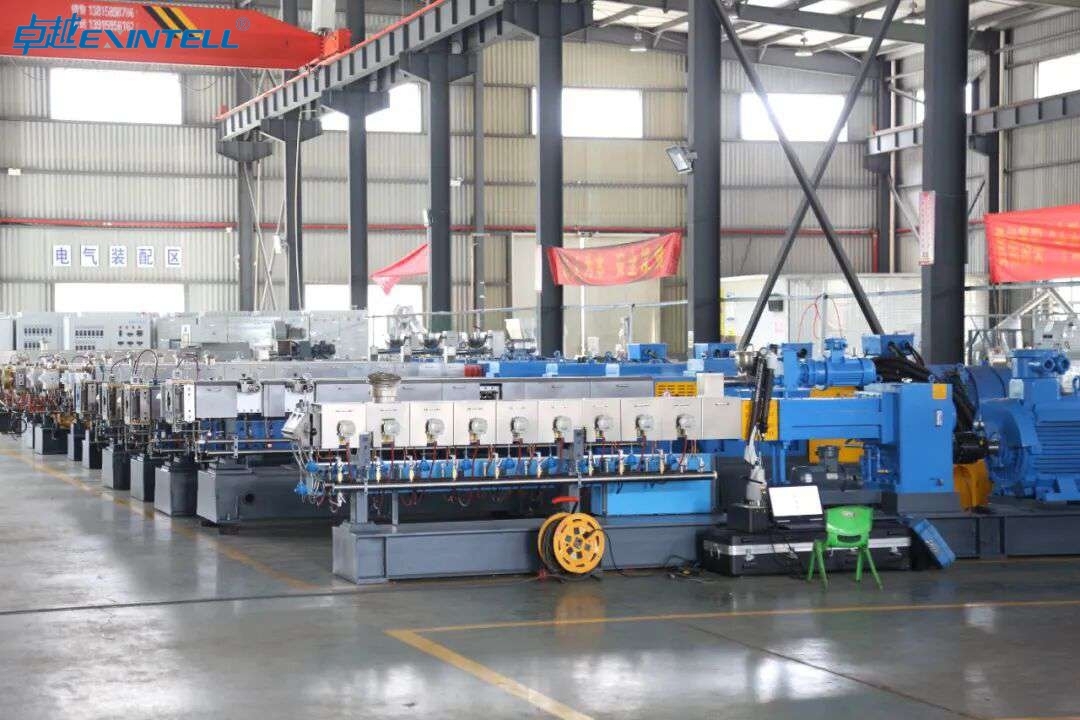
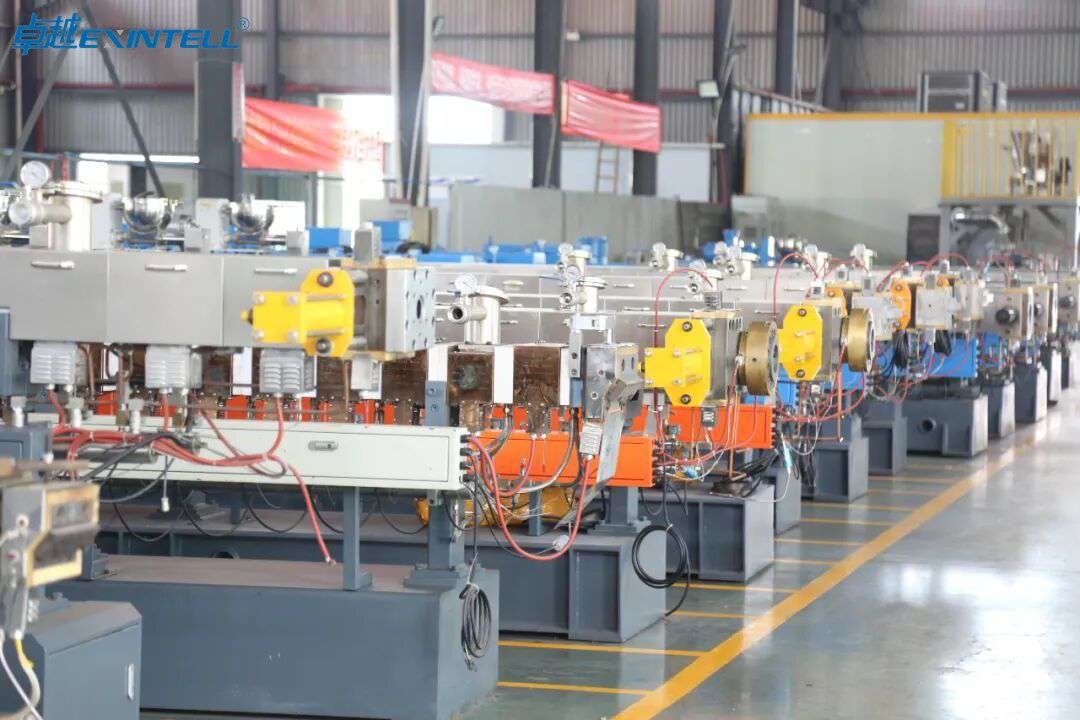
Разбирането на механиката ви помага да задавате по-добри въпроси и да четете цитат точно. Производител на двушнеков екструдер Производител Превеждам клиентите през пет етапа на процеса на непрекъснато екструдиране.
1. Подаване на суровина и топене в цевта
Термопластични пелети - обикновено PVC, ABS, HDPE, LDPE, или полипропилен - влиза в бункер и се пуска в загрят варел с въртящ се винт. Комбинацията от варелни нагреватели и винтова ножица разтапя смолата в хомогенен разтопен поток. Тук има значение изборът на материал: PVC е сред най-широко екструдираните пластмаси в световен мащаб, често използвани в профили, тръба, и тръби (Асоциация на пластмасовата индустрия), докато поликарбонат, акрил (PMMA), найлон (PA), и PEEK обслужват по-взискателни, приложения от инженерно ниво. Рециклираната повторно смляна маса често може да се смеси обратно, и термопластите, използвани при екструдирането, могат да се рециклират, така че повторното смилане подобрява ефективността на материала (EPA на САЩ, 2023).
2. Прокарване на разтопена пластмаса през персонализирана матрица
Стопилката се изтласква през матрица, която определя напречното сечение на профила. Това е сърцето на процеса и причината, поради която работата по поръчка носи разходи за инструменти. Настройката за съвместно екструдиране използва повече от един екструдер, захранващ една матрица, което ви позволява да комбинирате материали — твърда основа с мек TPE/TPU уплътнителен ръб, например, или цветен капачен слой върху по-евтино ядро.
3. Охлаждане, Оразмеряване, и непрекъснато излитане
Напускане на матрицата, мекият профил преминава през система за охлаждане и оразмеряване - обикновено водна баня или вакуумен резервоар за оразмеряване - която заключва размерите. Излитане (теглич) чертае профила с контролирана скорост. Тъй като детайлът се формира непрекъснато и материалът се свива, докато се охлажда, допуските за екструдиране обикновено са по-свободни от шприцоването (Protolabs, 2023). Поставих това очакване рано, така че клиентите да определят реалистични допуски, вместо да плащат за прецизност, която процесът не може да издържи икономически.
4. Рязане по дължина и вторична изработка
Вграден трион или нож реже непрекъснатата продукция на дължина. От там, второстепенни операции — сондиране, щанцоване, назъбване, печат, или сглобяване — превърнете екструдирани пластмасови части в готови компоненти. Това е мостът между необработения профил и използваемия продукт, и това е мястото, където производството с бърз обрат се печели или губи.
Пластмасови екструзии по поръчка срещу сток: От кои имате нужда?
Това е решението, за което ме питат най-много, и честният отговор е: зависи от обема, геометрия, и времева линия. Нека разбия всеки път.
Когато готовите складови профили са правилният избор
Екструдирани форми — стандартен прът, тръба, канал, ъгъл, и листове — избягвайте изцяло разходите за инструменти и доставяйте бързо. Ако каталожният профил отговаря на вашето приложение в рамките на приемлив толеранс, купуването на акции почти винаги е по-евтино, по-бърз маршрут. Насочвам клиенти тук за прототипи, ниски обеми, и всяка част, където стандартното напречно сечение върши работа.
Когато персонализираните инструменти и профили са оправдани
Персонализираното екструдиране обикновено изисква еднократна инвестиция в инструменти и матрица, докато складовите профили избягват този разход (насоки за снабдяване в индустрията). Тази цена на матрицата е оправдана, когато вашата геометрия е собствена, когато персонализирано напречно сечение елиминира монтажа надолу по веригата, или когато годишният обем е достатъчно висок, за да амортизира инструмента. Над определен размер на тираж, спестяванията на крак на специално изработена матрица надхвърлят първоначалните разходи.
Хибридният подход: Стандартни профили, Персонализирани части
Любимият ми среден път често се пренебрегва. Стандартните екструдирани профили и тръби могат да бъдат произведени в рентабилни персонализирани части с бърза обработка (SeaGate Plastics, 2024). Пропускате инвестицията на матрицата, след това използвайте рязане, механична обработка, и сглобяване, за да се постигне персонализирана доставка. За много програми със среден обем, този хибрид побеждава както чистата наличност, така и пълната поръчка по обща цена.
Сравнение на разходите и времето за доставка
Ето как общо се сравняват трите подхода. Отнасяйте се към тях като към диапазони на насочено планиране, не кавички — действителните цифри зависят от материала, геометрия, и обем.
|
Фактор |
Стокови профили |
Хибрид (Изработен стандарт) |
Пълно персонализирано екструдиране |
|---|---|---|---|
|
Предварителни разходи за инструменти |
Няма |
Няма до ниско (само приспособления) |
Еднократна инвестиция |
|
Типично време за изпълнение |
Най-кратък (често на склад) |
Кратко до умерено |
Най-дълъг (матрица изграждане + първа статия) |
|
Минимална поръчка (MOQ) |
ниско |
Ниска до умерена |
По-високо (за амортизиране на инструменталната екипировка) |
|
Гъвкавост на геометрията |
Само каталожни форми |
Стандартна форма + механична обработка |
Изцяло поръчково сечение |
|
Най-добро прилягане |
Прототипи, нисък обем |
Среден обем, леко персонализиране |
Голям обем, собствени профили |
|
Фактор |
Стокови профили |
Хибрид (Изработен стандарт) |
Пълно персонализирано екструдиране |
|---|---|---|---|
|
Предварителни разходи за инструменти |
Няма |
Няма до ниско (само приспособления) |
Еднократна инвестиция |
|
Типично време за изпълнение |
Най-кратък (често на склад) |
Кратко до умерено |
Най-дълъг (матрица изграждане + първа статия) |
|
Минимална поръчка (MOQ) |
ниско |
Ниска до умерена |
По-високо (за амортизиране на инструменталната екипировка) |
|
Гъвкавост на геометрията |
Само каталожни форми |
Стандартна форма + механична обработка |
Изцяло поръчково сечение |
|
Най-добро прилягане |
Прототипи, нисък обем |
Среден обем, леко персонализиране |
Голям обем, собствени профили |
Който и път да изберете, Препоръчвам да потвърдите, че магазинът работи с документирана система за качество — ISO 9001 е международно признат стандарт за системи за управление на качеството, използвани в производството (ISO, 2015) и остава най-широко възприетият еталон в сектора на пластмасите. За практически поглед върху това как стоковите и персонализираните предложения стоят едно до друго, намирам SeaGate Plastics’ custom extrusion overview a useful reference point.
Types of Plastic Extrusion Profiles and Products

When I evaluate a project for extrusion, I start with the cross-section, because the geometry of the finished part dictates almost everything downstream: the die design, the material choice, and ultimately the price you will pay. Пластмасовата екструзия разтопява суровата смола и я оформя в непрекъснат профил с фиксирано напречно сечение (SeaGate Plastics, 2024). That single principle produces a surprisingly wide catalog of shapes, so it helps to group them by complexity and function.
Solid Profiles, Hollow Profiles, and Complex Geometries
Solid profiles are the workhorses of the industry: пръти, bars, кантиране, and trim with no internal voids. They are the easiest to tool and the most forgiving on tolerance, which is why I recommend them for first-time buyers testing a design. Кухите профили въвеждат вътрешни канали, и те изискват по-сложни матрици с дорници или щифтове, които да държат кухината отворена, докато стопилката се охлажда. Сложните геометрии съчетават множество стени, подрязвания, и преходи от тънък към дебел в едно напречно сечение, и това е мястото, където експертизата в дизайна на матрицата и инструменталната екипировка разделят способния производител на пластмасови профили от средностатистическия. Според моя опит, неравномерната дебелина на стената е най-честата причина за изкривяване, затова притискам доставчиците отрано как планират да балансират материалния поток през профила.
Тръби и многолуменни екструзии
Тръбите са специализирана подгрупа на кухото екструдиране, и обхваща всичко от обикновена едноотверчна тръба до многолуменни дизайни с няколко паралелни канала, преминаващи по дължината на частта. Купувачите на медицински устройства и аналитични инструменти разчитат на многолуменни екструзии за пренасяне на течности, жици, и сензори чрез един компактен профил. Надеждният доставчик на пластмасови тръби ще поддържа строги допуски за концентричност и вътрешен диаметър, въпреки че винаги напомням на клиентите, че толерансите при екструдиране обикновено са по-свободни от леенето под налягане поради свиването на материала и непрекъснатото формоване (Ресурси за дизайн на Protolabs, 2023). Планирайте прилягането и клирънса си около тази реалност, вместо да се борите с нея.
Ко-екструзия и многоматериални профили
Коекструзията прекарва две или повече смоли през споделена матрица, за да произведе един профил с различни зони на материала. Използвам го, когато една част се нуждае от противоречиви свойства наведнъж, като твърдо PVC структурно тяло с мек TPE/TPU уплътнение, или устойчив на атмосферни влияния капачен слой върху по-евтин субстрат. Той елиминира вторичните стъпки на сглобяване и залепване, което е значително спестяване на разходи при обем. Компромисът е сложността на инструментите, така че запазвам коекструзията за дизайни, при които ползата от множество материали ясно оправдава добавената инвестиция в матрицата.
Общи приложения в индустрията за всеки тип
Различните геометрии гравитират към различни сектори, и ранното им съпоставяне поддържа разговорите фокусирани.
- Масивни профили: кантове за рафтове на дребно, облицовка на мебели, уплътнения, и компоненти за ограда.
- Кухи профили: дограми за прозорци и врати, LED светлинни канали, и структурни облицовки.
- Тръбна и многолуменна: медицински катетри, линии за пренос на течности, и пневматични тръби.
- Коекструдирани профили: отстраняване на времето, хладилни уплътнения, и дръжки с двоен дурометър.
- Екструдиране на листове: табели, материал за термоформоване, и защитни панели.
Тъй като екструдирането на пластмаса е непрекъснато, процес с голям обем, той пасва особено добре на дълги производствени серии, и стандартните екструдирани профили и тръби могат да бъдат произведени в рентабилни персонализирани части с бърза обработка (SeaGate Plastics, 2024). Ако вашето годишно търсене е стабилно и се измерва в десетки хиляди фута, икономиката на екструзията работи силно във ваша полза.
Обичайни материали, използвани при екструдиране на пластмаса
Изборът на материал е решението, което купувачите най-често подценяват. Смолата определя механичната якост, химическа устойчивост, температурен диапазон, цена, и дори колко строг толеранс екструдерът реалистично може да издържи. Групирам екструзионните смоли на три нива, след това работете с клиенти, за да се придвижите нагоре само дотолкова, доколкото приложението наистина изисква.
Стокови смоли: PVC, Полиетилен, и полипропилен
Стоковите смоли покриват по-голямата част от екструдирания обем, и има основателна причина. PVC е сред най-широко екструдираните пластмаси в световен мащаб, често срещани в профилите, тръба, и тръби (Асоциация на пластмасовата индустрия). Предлага твърдост, устойчивост на атмосферни влияния, и ниска цена, и приема добре цвета и повърхността. Полиетиленът се появява в два познати класа: HDPE за твърд, химически устойчиви профили и LDPE, където гъвкавостта има значение. Полипропиленът балансира химическата устойчивост с добро съотношение на здравина към тегло и производителност на живи панти. Когато клиент попита за екструдиране на смола за голям обем, чувствителна към разходите част, почти винаги оттук започвам.
Инженерни смоли: ABS, Поликарбонат, Найлон, и акрил
Инженерната пластмаса подобрява механичните и термичните характеристики. ABS осигурява устойчивост на удар и чисти покрития за потребителски части и части на корпуса. Поликарбонатът осигурява висока устойчивост на удар и оптична чистота, което го прави основен за осветителни лещи и безопасни стъкла. Найлон (PA) предлага устойчивост на износване и издръжливост на механичните компоненти и управлението на кабелите. Акрил (PMMA) provides excellent clarity and UV stability for display and signage profiles. I move buyers into this tier when commodity resins cannot meet load, топлина, or clarity requirements, and I make sure they price the resin premium against the performance gain before committing.
High-Performance Materials Like PEEK
At the top sits a small group of high-performance polymers, with PEEK as the reference point. PEEK withstands continuous high temperatures, агресивни химикали, and demanding mechanical loads, поради което се появява в космонавтиката, медицински, and semiconductor applications. The material cost is substantial, so I only specify it when the operating environment leaves no cheaper option. Not every plastic profile manufacturer processes PEEK, so capability screening matters more at this level.
Matching Material Properties to Application Requirements
My selection framework is deliberately simple: първо дефинирайте изискването, което не подлежи на договаряне, след това изберете най-евтината смола, която го изчиства. Таблицата по-долу обобщава как претеглям общите опции за екструдирани пластмасови части.
| Материал | Ниво | Ключови силни страни | Относителна цена | Типични приложения |
|---|---|---|---|---|
| PVC | Стока | Твърд, устойчив на атмосферни влияния, ниска цена | $ | Профили, тръба, подстригвам |
| HDPE / LDPE | Стока | Химическа устойчивост; твърда или гъвкава | $ | Тръби, облицовки, канали |
| Полипропилен | Стока | Химическа устойчивост, живи панти | $ | Работа с течности, панти |
| ABS | Инженерство | Сила на удар, чисто покритие | $$ | Заграждения, потребителски части |
| Поликарбонат | Инженерство | Устойчивост на удар, яснота | $$ | Лещи, предпазни стъкла |
| Найлон (PA) | Инженерство | Устойчивост на износване, издръжливост | $$ | Механични, кабелни водачи |
| Акрил (PMMA) | Инженерство | Яснота, UV стабилност | $$ | Указателни знаци, дисплеи |
| PEEK | Висока производителност | Топлина, химически, и устойчивост на натоварване | $$$$ | Космонавтика, медицински, полупроводник |
| Материал | Ниво | Ключови силни страни | Относителна цена | Типични приложения |
|---|---|---|---|---|
| PVC | Стока | Твърд, устойчив на атмосферни влияния, ниска цена | $ | Профили, тръба, подстригвам |
| HDPE / LDPE | Стока | Химическа устойчивост; твърда или гъвкава | $ | Тръби, облицовки, канали |
| Полипропилен | Стока | Химическа устойчивост, живи панти | $ | Работа с течности, панти |
| ABS | Инженерство | Сила на удар, чисто покритие | $$ | Заграждения, потребителски части |
| Поликарбонат | Инженерство | Устойчивост на удар, яснота | $$ | Лещи, предпазни стъкла |
| Найлон (PA) | Инженерство | Устойчивост на износване, издръжливост | $$ | Механични, кабелни водачи |
| Акрил (PMMA) | Инженерство | Яснота, UV стабилност | $$ | Указателни знаци, дисплеи |
| PEEK | Висока производителност | Топлина, химически, и устойчивост на натоварване | $$$$ | Космонавтика, медицински, полупроводник |
Една точка за ефективност, която си струва да повишите с всеки доставчик: термопластите, използвани при екструдиране, могат да се рециклират, и повторното смилане подобрява ефективността на материала (Агенция за опазване на околната среда на САЩ, 2023). Питането как една фабрика се справя с повторното смилане ми казва нещо както за тяхната дисциплина на разходите, така и за техните практики за устойчивост.
Производители на екструдирани пластмаси в САЩ
За много от купувачите съветвам, въпросът за източника е не само “който може да екструдира този профил” но “кой може да го екструдира тук.” Domestic sourcing has moved from a preference to a strategic decision, and it deserves a clear-eyed look rather than reflexive patriotism.
Why US-Based Sourcing Matters for Many Buyers
The financial case is stronger than it first appears. Reshoring and domestic sourcing can reduce total landed cost by lowering freight, задължение, и разходи за носене на инвентара (Reshoring инициатива, 2023). When I run a total-cost comparison rather than a unit-price comparison, offshore savings often shrink once I add ocean freight, тарифи, safety stock, and the working capital tied up in long transit times. For a domestic plastics manufacturer serving a US customer, lead times measured in weeks rather than months also mean less risk if a design changes mid-program.
Regional Manufacturing Hubs Across the Country
US extrusion capacity is not evenly distributed, and knowing the map speeds up sourcing. Големите езера и Горния Среден Запад концентрират екструдери за профили и тръби с общо предназначение близо до автомобилното и индустриалното търсене. Североизтокът притежава плътен клъстер от медицински специалисти и специалисти по прецизни тръби. Югоизтокът се разрасна бързо около строителните продукти и опаковките. Западното крайбрежие и югозападът обслужват електроника, космическото пространство, и потребителски пазари. Директории на доставчици като Thomasnet изброяват и категоризират американските производители на пластмасови екструзии по възможности и регион (Thomasnet, 2024), което е мястото, където обикновено съставям първи кратък списък, преди да се обадя.
Домашно качество, Комуникация, и IP предимства
Отвъд разходите, три практически предимства продължават да привличат купувачите у дома. Първо, системите за качество се проверяват по-лесно лично; ISO 9001 е международно признат стандарт за системи за управление на качеството, използвани в производството (Международна организация по стандартизация, 2015), и мога да одитирам изпълнението на местен доставчик без международно пътуване. Второ, time-zone-aligned communication shortens the feedback loop from prototype to production, which matters when a die needs a mid-run adjustment. трето, intellectual property protection is more enforceable under US jurisdiction, a real concern when a custom profile is a competitive differentiator. I treat these as the differences that a spreadsheet alone will miss.
How US Factories Serve Diverse Industries
American extruders span the full range of contract manufacturing, from stock extruded shapes shipped from inventory to fully custom die programs. Custom extrusion typically requires a one-time tooling or die investment, while stock profiles avoid that cost, so I match the sourcing path to how unique the geometry really needs to be. Промишлеността за производство на пластмаси в САЩ остава основен фактор за местните производствени доставки и заетостта (Асоциация на пластмасовата индустрия, 2023), и тази дълбочина означава, че купувачът обикновено може да намери партньор за услуги за производство на пластмаса, подходящ за неговия обем, от прототип до производство. За широк поглед върху персонализираните възможности, Често насочвам клиенти към прегледи като персонализирани производители на пластмасови екструзии за калибриране на очакванията, преди да поискате оферти.
Как да намерите компании за екструдиране на пластмаса близо до вас
Когато започна проект за търсене на източници, географията е една от първите променливи, които претеглям. Местоположението оформя разходите за превоз, комуникационен каданс, и колко бързо мога да премина от прототип до производство. Това каза, близостта е ценна само когато близкият доставчик може действително да свърши работата. Според моя опит, the smartest approach treats “near me” as a filter, не е решение.
Why Local Sourcing Often Pays Off
A domestic plastics manufacturer close to your facility gives you three concrete advantages. Първо, shorter shipping distances lower freight and lead-time risk, which matters for bulky extruded plastic parts and long profiles that ship as oversized freight. Второ, local partners make on-site visits practical, and I have caught more process issues in a two-hour plant walkthrough than in weeks of email. трето, proximity accelerates iteration: when a die needs a tweak, a supplier a few hours away can turn samples faster than one across an ocean.
The financial case reaches beyond the unit price. According to the Reshoring Initiative (2023), местното снабдяване може да намали общите разходи за разтоварване чрез намаляване на товарите, задължение, и разходи за носене на инвентара. The domestic base is substantial, too; асоциацията на пластмасовата индустрия (2023) reports that the US plastics industry is a major contributor to domestic manufacturing shipments and employment, which means qualified capacity for resin extrusion is usually within reach.
Where I Look: Directories, Associations, and Referrals
To build an initial list of candidates, I use three complementary channels:
- Supplier directories. Thomasnet (2024) lists and categorizes US plastic extrusion manufacturers by capability and region, which makes it straightforward to filter by material, процес, and location.
- Trade associations. Membership in bodies like the Plastics Industry Association signals a firm that invests in standards and industry engagement.
- Referrals. A recommendation from an engineer who has run production with a plastic profile manufacturer carries more weight than any marketing page, because it reflects delivered performance.
I treat the directory as a starting point for a plastic tubing supplier or profile shop, then validate each name against real references before it earns a spot on my shortlist.
Balancing Proximity Against Capability and Price
Distance is a tiebreaker, not a trump card. If a nearby shop cannot hold your tolerances, run your resin, or meet your volume, the convenience is worthless. I rank capability and quality first, then price, then location. A plastic extrusion companies factory supplier two states away with the right co-extrusion line and a proven ISO 9001 system will usually serve me better than a closer shop lacking those capabilities.
When Local Is Not the Best Option
Sometimes the right partner is not nearby. Specialized work in engineering-grade plastics such as PEEK, поликарбонат, or nylon (PA) may only be done well by a handful of shops nationally. High-volume manufacturing programs can justify shipping economics that favor a distant, more automated plant. And when you need capabilities like plastic sheet extrusion combined with in-line fabrication, the fit of the process matters more than the mileage. In those cases I widen the search radius and lean on video plant tours and third-party audits to close the distance gap.
Understanding the Largest Plastic Extrusion Companies
Buyers often gravitate toward the biggest names, assuming scale guarantees a better outcome. Scale does deliver real advantages, but it also carries tradeoffs. Understanding what “най-големият” actually means helps me match a supplier’s footprint to my program rather than to a reputation.
What Scale Means for Capacity and Reliability
Extrusion is a continuous, high-volume process well suited to long production runs, and large factories are built around that reality. More extrusion lines mean higher throughput, redundancy if one line goes down, and the ability to absorb demand spikes. Scale usually correlates with mature quality systems as well; ISO 9001, the internationally recognized standard for quality management systems used across manufacturing (Международна организация по стандартизация, 2015), is almost table stakes among large plants. That maturity translates into more consistent extruded plastic parts across long runs.
The Tradeoffs of Large Factories vs. Specialized Shops
Bigger is not automatically better. Large plants optimize for volume, which can mean higher minimum order quantities, less flexibility on small custom runs, and slower responsiveness on prototype work. A specialized shop may excel at tight-tolerance custom plastic profiles, unusual resins, or quick-turnaround production that a high-volume plant treats as a nuisance. The table below summarizes how I weigh the two.
| Фактор | Large-Scale Factory | Specialized Shop |
|---|---|---|
| Капацитет | високо; multiple lines, излишък | Ограничен; fewer lines |
| Minimum order quantity | Often high | Usually flexible |
| Prototype speed | По-бавно; volume-focused scheduling | По-бързо; agile setup |
| Материална гама | Broad commodity resins (PVC, HDPE, LDPE, ПП) | Often engineering-grade (PEEK, PC, PA) |
| Price per unit at volume | По-ниска | По-високо |
| Най-добро прилягане | Long production runs | По поръчка, нисък до среден обем, complex profiles |
| Фактор | Large-Scale Factory | Specialized Shop |
|---|---|---|
| Капацитет | високо; multiple lines, излишък | Ограничен; fewer lines |
| Minimum order quantity | Often high | Usually flexible |
| Prototype speed | По-бавно; volume-focused scheduling | По-бързо; agile setup |
| Материална гама | Broad commodity resins (PVC, HDPE, LDPE, ПП) | Often engineering-grade (PEEK, PC, PA) |
| Price per unit at volume | По-ниска | По-високо |
| Най-добро прилягане | Long production runs | По поръчка, нисък до среден обем, complex profiles |
When High-Volume Capability Is Essential
There are programs where I will not compromise on scale. Непрекъснато, long-run demand for standardized profiles, тръба, or tubing in commodity resins is the natural home of a large factory. PVC е сред най-широко екструдираните пластмаси в световен мащаб, често използвани в профили, тръба, и тръби, and sourcing it at volume rewards the economies a big plant provides. If your forecast calls for millions of feet of a stable profile cross-section, high-volume capability moves from nice-to-have to essential.
How to Verify Claimed Scale and Capacity
Claims on a website are not evidence. Before I accept a “най-големият” или “highest capacity” claim, I verify it with concrete questions:
- How many extrusion lines are operational, and what is the die diameter range on each?
- What is current utilization, and how much spare capacity exists for my program?
- Can you share throughput figures (lbs/hour or feet/day) for a comparable profile?
- What redundancy exists if a line fails mid-run?
- Which certifications, като ISO 9001, are current, and may I see the certificate?
I pair those answers with a plant tour or audit. Physical evidence of running lines, staffing, and inventory tells me far more than any capacity figure quoted in a brochure.
How to Identify the Best Plastic Extrusion Factory for Your Project
“Best” is one of the most misused words in supplier marketing. На практика, the best plastic extrusion companies factory manufacturer is the one that best fits your specific requirements, not the one with the loudest claim. I define the term relative to my project, then score candidates against that definition.
Defining “Best” Relative to Your Specific Needs
Before comparing suppliers, I document what my project actually demands: the resin (кажи, ABS for impact resistance, акрил (PMMA) за оптична яснота, or TPE/TPU for flexibility), the tolerance band, the volume, the timeline, and the level of engineering support I need for die design and tooling. Extrusion tolerances are generally looser than injection molding due to material shrinkage and continuous forming (Ресурси за дизайн на Protolabs, 2023), so I confirm early that a candidate can meet my dimensional requirements rather than assuming it can. A shop that is ideal for a high-volume HDPE pipe run may be the wrong choice for a tight-tolerance polycarbonate profile.
Weighing Quality, цена, Скорост, and Support
Every sourcing decision balances four levers, and improving one often pressures another:
- качество. Documented quality systems, in-process inspection, and material traceability. ISO 9001 is the most widely adopted quality management standard across manufacturing sectors including plastics.
- цена. Not just unit price. Персонализираното екструдиране обикновено изисква еднократна инвестиция в инструменти и матрица, while stock extruded shapes avoid that cost, so I model total cost including tooling and MOQ.
- Скорост. Стандартните екструдирани профили и тръби могат да бъдат произведени в рентабилни персонализирани части с бърза обработка (SeaGate Plastics, 2024), but lead times vary widely between shops.
- поддръжка. Engineering input on profile cross-section and material selection can prevent costly redesigns as you move from prototype to production.
Sustainability increasingly enters the equation as well. Термопластите, използвани при екструдиране, могат да се рециклират, и повторното смилане подобрява ефективността на материала (Агенция за опазване на околната среда на САЩ, 2023), which can reduce both cost and waste when a supplier manages it responsibly.
Reading Past “Best” Marketing Claims
Superlatives are easy to print and hard to prove. When I see “най-доброто,” “водещи,” или “premier,” I translate the claim into a testable question. Instead of accepting “best quality,” I ask for defect rates and inspection records. Вместо да “fastest,” I ask for typical lead times on my specific part. Вместо да “most experienced,” I ask for references in my industry. Marketing language that cannot survive a follow-up question does not influence my shortlist.
Building a Shortlist Scoring Method
To keep the comparison objective, I use a weighted scoring model. I list my criteria, assign each a weight that reflects its importance to the project, score every candidate from 1 към 5, and multiply. The weights shift by project; a prototype program might weight speed and engineering support heavily, while a mature production program weights cost and capacity.
- List criteria: системи за качество, material capability, толерантност, капацитет, време за изпълнение, tooling cost, инженерна поддръжка, and location.
- Assign weights that total 100 percent, reflecting your priorities.
- Score each supplier 1 към 5 on every criterion, using verified evidence rather than marketing claims.
- Calculate weighted totals and rank the candidates.
- Validate the top two with reference calls and, ideally, a plant visit before committing.
This structured method has consistently steered me toward the partner that fits the work, whether that turns out to be a large plant, a nimble specialist, or a domestic shop just down the road. For a deeper look at how custom extrusion capabilities map to applications, resources such as SeaGate Plastics’ custom extrusion overview are a useful reference as you refine your own criteria.
Key Capabilities to Evaluate in a Plastic Extrusion Company
When I vet a plastic profile manufacturer, I look
Tolerances and Precision in Extruded Parts
Когато оценявам производител на пластмасов профил, tolerances are the first place I look for a reality check. Extrusion is a continuous forming process, so it behaves differently from molding. As Protolabs notes, extrusion tolerances are generally looser than injection molding because material shrinkage and continuous forming introduce variability that a closed mold does not (Ресурси за дизайн на Protolabs, 2023). Setting expectations here early saves both money and rework later.
Typical Achievable Tolerances by Material and Profile
Според моя опит, achievable precision depends heavily on the resin and the geometry of the profile cross-section. Rigid engineering-grade plastics hold tighter dimensions than soft or semi-crystalline materials, and simple shapes hold tighter than complex hollow profiles. The ranges below reflect commonly quoted commercial extrusion capabilities for custom plastic profiles; always confirm against your supplier’s published standards for your specific part.
| Материал | Стабилност на размерите | Typical tolerance tendency | Notes for specifying |
|---|---|---|---|
| Твърдо PVC | високо | Tighter, well-controlled | Widely extruded; predictable in profiles and tubing |
| ABS | високо | Tight on rigid profiles | Good for structural extruded plastic parts |
| Поликарбонат | високо | Tight, low shrink | Optical and impact-rated applications |
| Акрил (PMMA) | високо | Tight, but brittle at thin walls | Sheet and clear profiles |
| Найлон (PA) | Умерен | Looser; moisture-sensitive | Account for post-extrusion moisture uptake |
| HDPE / LDPE | Moderate to low | Looser; higher shrink | Expect wider bands on wall and OD |
| Полипропилен | Умерен | Looser; semi-crystalline shrink | Allow generous tolerance on critical dims |
| PEEK | високо | Tight, but specialized | High-temp engineering runs; higher cost |
| TPE / TPU | ниско | Loosest; flexible recovery | Soft profiles deform under measurement |
| Материал | Стабилност на размерите | Typical tolerance tendency | Notes for specifying |
|---|---|---|---|
| Твърдо PVC | високо | Tighter, well-controlled | Widely extruded; predictable in profiles and tubing |
| ABS | високо | Tight on rigid profiles | Good for structural extruded plastic parts |
| Поликарбонат | високо | Tight, low shrink | Optical and impact-rated applications |
| Акрил (PMMA) | високо | Tight, but brittle at thin walls | Sheet and clear profiles |
| Найлон (PA) | Умерен | Looser; moisture-sensitive | Account for post-extrusion moisture uptake |
| HDPE / LDPE | Moderate to low | Looser; higher shrink | Expect wider bands on wall and OD |
| Полипропилен | Умерен | Looser; semi-crystalline shrink | Allow generous tolerance on critical dims |
| PEEK | високо | Tight, but specialized | High-temp engineering runs; higher cost |
| TPE / TPU | ниско | Loosest; flexible recovery | Soft profiles deform under measurement |
Factors That Affect Dimensional Stability
Several variables move a part inside or outside its tolerance band. Wall thickness uniformity matters most: thick and thin sections in the same profile cool at different rates and warp. Semi-crystalline resins like polypropylene and HDPE shrink more than amorphous ones like polycarbonate and acrylic, so the die must be cut to compensate. I also watch for haul-off speed, melt temperature, and cooling-bath control, since drift in any of these shows up as dimensional variation over a long run. For hygroscopic materials such as nylon, moisture absorbed after extrusion can change dimensions days later, which is why I ask how a supplier conditions and stores finished stock.
Specifying Tolerances in Your Drawings
The cleanest way to control cost is to tolerance only what functionally matters. I call out critical dimensions explicitly, apply a reasonable general tolerance block to everything else, and reference the datum features that mate with other components. Where a flexible TPE or TPU profile is involved, I specify the measurement method and fixture, because a soft part measures differently under light pressure than at rest. Being specific about which surfaces are cosmetic versus functional lets a plastic fabrication services partner set up the line intelligently instead of overbuilding to a blanket precision requirement.
Balancing Precision Against Cost
Tighter tolerances raise cost through slower line speeds, more scrap, added inspection, and sometimes secondary sizing or machining. На практика, I treat precision as a dial rather than a switch: I hold the two or three dimensions that drive fit and function tightly and relax the rest. That approach keeps resin extrusion economical while still delivering parts that assemble correctly. When a design genuinely needs molding-level precision on every feature, that is a signal the part may not be a good extrusion candidate, and I revisit the process choice before committing to tooling.
Minimum Order Quantities and Lead Times
MOQs and lead times are where the difference between stock extruded shapes and true custom work becomes concrete. Custom extrusion typically requires a one-time tooling investment in a die, while stock profiles avoid that cost entirely, per common industry sourcing guidance. That single fact drives most of the ordering economics, so I plan around it from the start.
Typical MOQ Ranges for Stock vs Custom
Stock profiles and tubing can often be bought in small quantities, sometimes by the foot or in single boxes, because the supplier already runs them. As SeaGate Plastics points out, standard extruded profiles and tubes can be fabricated into cost-effective custom parts with quick turnaround, which is a practical advantage when volumes are modest (SeaGate Plastics, 2024). Custom profiles are different. Because the line has to be set up, purged, and stabilized before good parts come off, suppliers set a minimum run to amortize that setup. I commonly see custom MOQs expressed in pounds of resin or in linear footage rather than piece count, and the threshold rises with more exotic engineering-grade plastics.
How Lead Times Vary With Tooling and Volume
For a new custom profile, the die is the pacing item. Проектиране на инструментална екипировка, рязане, and first-article trials typically dominate the initial schedule, and I budget several weeks for die design and tooling before any production parts exist. Once the die is proven, repeat orders move quickly because the tooling is on the shelf. Higher volumes actually help here: extrusion is a continuous, high-volume process well suited to long production runs, so once a line is dialed in, adding footage is efficient rather than disruptive.
Quick-Turnaround Options and Expedited Runs
When a timeline is tight, I look at three levers. Първо, use stock profiles or standard tubing that can ship from inventory and be cut or fabricated to length. Второ, ask whether an existing die is close enough to modify rather than cutting a new one. трето, request an expedited slot, which many suppliers offer for a premium by prioritizing line time. Quick-turnaround production is realistic for standard shapes; for genuinely new custom geometry, the tooling step still sets the floor on how fast you can go.
Planning Your Project Timeline
I work backward from the required delivery date and add explicit buffers for die design, first-article approval, и всякакви второстепенни операции. Moving from prototype to production is smoother when I lock the profile cross-section early, because late geometry changes mean recutting the die and resetting the clock. Aligning MOQ with real annual demand also matters: ordering an efficient run size once beats paying repeated setup charges on small, frequent custom orders.
Cost Drivers in Plastic Extrusion Pricing
Understanding what actually drives a quote lets me negotiate from evidence rather than instinct. Extrusion pricing breaks down into a handful of levers, and knowing which one dominates for a given part tells me where the savings live.
Material Selection and Resin Pricing
Resin is usually the largest recurring cost, and it varies widely by grade. Commodity materials like PVC, полипропилен, HDPE, and LDPE sit at the low end; PVC in particular is among the most widely extruded plastics globally and is well supported across suppliers. Engineering-grade plastics such as polycarbonate, найлон, and especially PEEK command higher prices and can require specialized processing. One efficiency I always ask about is regrind: термопластите, използвани при екструдиране, могат да се рециклират, и повторното смилане подобрява ефективността на материала, which can lower material cost on non-critical parts (Агенция за опазване на околната среда на САЩ, 2023). Choosing the least expensive resin that meets the application requirement is the single highest-leverage decision in material selection.
Инструментална екипировка, Настройка, and Run Volume
Custom work carries a one-time die cost that stock profiles avoid. That tooling charge is fixed, so it amortizes across the run: the more footage I order, the lower the per-part tooling burden. Setup time and line stabilization add cost to every job regardless of size, which is exactly why small custom orders feel expensive per piece. Коекструзия, which combines two materials in one profile, adds tooling and process complexity and therefore cost, but it can eliminate secondary assembly, so I weigh the tradeoff on total value rather than tooling alone.
Secondary Operations and Finishing
Anything that happens after the profile leaves the die adds cost: cutting to length, пробиване, назъбване, печат, пробиване на дупки, tight-tolerance sizing, и опаковка. Individually these are minor, but they stack quickly on high piece counts. I decide deliberately which operations belong in-line with the extrusion and which are genuinely needed, because each added step also adds handling and inspection. Where a feature can be designed into the profile cross-section instead of machined afterward, I do that, since forming a feature is nearly free compared with a downstream operation.
Domestic vs Offshore Cost Comparisons
Headline piece price often favors offshore, but I evaluate total landed cost. The Reshoring Initiative notes that domestic sourcing can reduce total landed cost by lowering freight, задължение, и разходи за носене на инвентара (Reshoring инициатива, 2023), and those factors are easy to underestimate when comparing unit prices alone. Working with a domestic plastics manufacturer also shortens lead times, simplifies communication, and reduces the inventory buffer I have to hold against long ocean transit. The US plastics industry is a substantial contributor to domestic manufacturing shipments and employment (Асоциация на пластмасовата индустрия, 2023), so the domestic supplier base for both stock and custom profiles is deep. Моето основно правило: for high-volume, low-mix commodity profiles, offshore can win on price; for responsive, higher-mix, or engineering-grade work, domestic contract manufacturing usually wins on total cost and risk. For a fuller look at custom capabilities, I point buyers to custom plastic extrusion manufacturers such as SeaGate Plastics as a reference point for scope and services.
Questions to Ask Before Choosing a Factory
When I vet a plastic profile manufacturer, I treat the first conversation as a structured interview rather than a sales call. The goal is to separate shops that can genuinely deliver my part from those that simply want the order. Over years of sourcing extruded plastic parts, I have found that a handful of pointed questions surface most of the risk before a single dollar changes hands. Below is the checklist I actually use.
Капацитет, Сертификати, and Material Expertise
I start by asking what the factory runs today, not what it claims it can run. Continuous extrusion is a high-volume manufacturing process, so I want to know line count, typical run lengths, and whether they have headroom for my volume without displacing existing customers. On the quality side, I ask directly about certification. ISO 9001 е международно признат стандарт за системи за управление на качеството, използвани в производството (Международна организация по стандартизация, 2015), and while certification is not a guarantee of good parts, its absence tells me the shop may lack documented process controls.
Material expertise is the third leg. A capable resin extrusion supplier should speak fluently about the polymers relevant to my application, whether that is PVC and HDPE for construction profiles, ABS and polycarbonate for enclosures, polypropylene and LDPE for packaging and tubing, or engineering-grade plastics like nylon (PA) and PEEK for demanding environments. PVC е сред най-широко екструдираните пластмаси в световен мащаб, често използвани в профили, тръба, и тръби (Асоциация на пластмасовата индустрия). If I need flexible sections, I confirm experience with TPE/TPU, and if my part demands a rigid core with a soft-touch or weather-resistant skin, I ask whether they offer co-extrusion. Лабораторен екструдер на едро
Prototyping and Design Support Availability
I ask whether the factory offers design consultation before tooling is cut. The best plastic fabrication services partners will review my cross-section for extrudability, flag thin walls or sharp corners that trap stress, and suggest material substitutions that lower cost without hurting performance. I also confirm they can produce a representative prototype rather than pointing me straight to a production die.
Време за доставка, MOQ, and Delivery Track Record
Here I get specific. I ask for standard lead times on both tooling and production, the minimum order quantity, and how MOQ scales with material and profile complexity. Custom extrusion typically requires a one-time tooling investment for the die, while stock extruded shapes avoid that cost entirely (насоки за снабдяване в индустрията). If my volumes are modest, standard extruded profiles and tubes can be fabricated into cost-effective custom parts with quick turnaround (SeaGate Plastics, 2024), so I always ask what stock profiles they carry. On delivery, I want on-time performance data, not adjectives.
References and Industry Experience
Накрая, I ask for references in my industry. A shop that regularly serves medical, автомобилен, or building-products customers has already navigated the tolerances and documentation those sectors demand. I call the references and ask two questions: did the parts meet spec on the first production run, and how did the supplier handle the problem when something went wrong?
From Prototype to Production: How the Process Unfolds
Once I have chosen a supplier, the path from a drawing to shippable extruded plastic parts follows a predictable sequence. Understanding each stage helps me set realistic timelines internally and catch problems while they are still cheap to fix.
Submitting Drawings and Design Consultation
I begin by sending a dimensioned drawing of the profile cross-section, along with the target material, цвят, изисквания за толерантност, and end-use environment. This is where design-for-manufacturing consultation earns its keep. Тъй като допуските за екструдиране обикновено са по-свободни от шприцоването поради свиване на материала и непрекъснато формоване (Ресурси за дизайн на Protolabs, 2023), добър инженер ще ми помогне да поставя критичните измерения там, където процесът може надеждно да ги задържи и да отпусна тези, които нямат значение.
Валидиране на проба и прототип
Следва проба или прототип. В зависимост от магазина, това може да бъде изтеглено от мека или временна матрица, или съчетани от съществуващи складови екструдирани форми. Използвам този етап, за да потвърдя годността, гъвкавост, повърхностно покритие, и материално поведение в моя действителен монтаж. Хващането на проблем с дебелината на стената на прототип ми струва ревизия; хващането му след изрязване на производствената матрица ми коства инструментите.
Одобрение на инструменти и инспекция на първия артикул
Двушнеков екструдер След като одобря дизайна, фабриката реже производствената матрица. The die design and tooling step is the largest one-time cost in custom extrusion, so I review the tooling drawing carefully before signing off. Once the die runs, I require a first-article inspection: a documented measurement of the initial output against my drawing. I do not release full production until the first article passes.
Ramping to Full Production
With the first article approved, the line ramps to full production. Plastic extrusion is a continuous, high-volume process well suited to long production runs (SPI/Plastics Industry Association overview), so unit costs typically drop as volume climbs. I confirm the quality plan for ongoing runs, including sampling frequency and the criteria for holding or scrapping out-of-spec material. Термопластите, използвани при екструдиране, могат да се рециклират, и повторното смилане подобрява ефективността на материала (Агенция за опазване на околната среда на САЩ, 2023), so I also clarify the shop’s regrind policy when appearance or mechanical properties are critical.
Domestic vs Overseas Extrusion Sourcing
One of the most consequential decisions I make is where to source. The instinct is to compare unit price, but in my experience that number alone is misleading. What matters is total landed cost and the operational realities that price hides.
Cost vs Total Landed Cost Considerations
Overseas suppliers often quote a lower piece price, но добавям товари, задължения, customs handling, and the inventory carrying cost of larger safety stock and longer transit. Reshoring and domestic sourcing can reduce total landed cost by lowering freight, задължение, и разходи за носене на инвентара (Reshoring инициатива, 2023). Once I build a full landed-cost model, the gap between a domestic plastics manufacturer and an overseas one usually narrows, and sometimes reverses.
Време за изпълнение, Доставка, and Communication Factors
Domestic sourcing shortens my supply chain and simplifies communication across time zones and languages, which matters most when I need quick-turnaround production or fast design changes. Overseas sourcing can suit stable, high-volume programs where the design is frozen and lead time is not a constraint.
Quality Control and IP Protection
Proximity makes on-site audits and first-article reviews far easier, and domestic contracts generally offer stronger, more enforceable intellectual property protection for a proprietary die design. When my profile represents real design investment, that protection weighs heavily.
Когато всяка опция има смисъл
The US plastics industry is a major contributor to domestic manufacturing shipments and employment (Асоциация на пластмасовата индустрия, 2023), and directories such as Thomasnet list and categorize US plastic extrusion manufacturers by capability and region (Thomasnet, 2024), which makes local sourcing practical to research. The table below summarizes how I weigh the two paths.
| Фактор | Domestic Sourcing | Отвъдморски източници |
|---|---|---|
| Единична цена | Higher piece price | Often lower piece price |
| Обща цена на кацане | Lower freight, задължение, and carrying cost | Added freight, задължение, and inventory cost |
| Време за изпълнение | По-кратък, more responsive | По-дълго, transit-dependent |
| Комуникация | Same time zone and language | Time-zone and language gaps |
| Quality audits | On-site visits practical | Remote or costly to audit |
| IP защита | По-силен, more enforceable | Variable enforcement |
| Най-добро прилягане | Персонализирани профили, fast changes, proprietary tooling | Frozen designs, very high volume, price-driven programs |
| Фактор | Domestic Sourcing | Отвъдморски източници |
|---|---|---|
| Единична цена | Higher piece price | Often lower piece price |
| Обща цена на кацане | Lower freight, задължение, and carrying cost | Added freight, задължение, and inventory cost |
| Време за изпълнение | По-кратък, more responsive | По-дълго, transit-dependent |
| Комуникация | Same time zone and language | Time-zone and language gaps |
| Quality audits | On-site visits practical | Remote or costly to audit |
| IP защита | По-силен, more enforceable | Variable enforcement |
| Най-добро прилягане | Персонализирани профили, fast changes, proprietary tooling | Frozen designs, very high volume, price-driven programs |
На практика, I lean domestic for custom plastic profiles that involve proprietary tooling, evolving designs, or short lead times, and I consider overseas contract manufacturing only for mature, стабилен, high-volume parts where the landed-cost math clearly favors it. For a starting point on capabilities and stock offerings, resources like SeaGate Plastics are a useful reference when scoping a domestic partner.
Sustainability and Recyclability in Extrusion
When I evaluate a plastic extrusion companies factory today, sustainability is no longer a soft preference tucked into the back of a proposal. It sits alongside price, време за изпълнение, and quality as a core selection criterion. The good news is that extrusion is inherently well suited to responsible material use, and the suppliers I trust have built that advantage into their operations rather than treating it as an afterthought.
Recyclable Thermoplastics and Scrap Reuse
Most of the polymers I specify for extruded plastic parts are thermoplastics, which means they can be remelted and reformed multiple times without a complete loss of properties. According to the US Environmental Protection Agency (2023), термопластите, използвани при екструдиране, могат да се рециклират, и повторното смилане подобрява ефективността на материала. That single characteristic separates them from thermosets and gives buyers real leverage on both cost and environmental footprint.
На практика, this recyclability spans the common resins you will encounter across quotes. PVC, HDPE, LDPE, and Polypropylene are among the workhorses of profile extrusion and plastic tubing, and each reclaims well when handled correctly. Engineering-grade plastics such as ABS, Поликарбонат, Найлон (PA), и акрил (PMMA) also tolerate controlled regrind, though I hold them to tighter blend ratios because their properties matter more in demanding applications. High-performance materials like PEEK and flexible TPE/TPU sit at the specialized end, where reuse requires more careful process control.
Regrind and Material Efficiency Practices
The continuous extrusion process generates predictable scrap: startup purge, trim from profile cross-section adjustments, and off-spec runs during die changeovers. A capable plastic profile manufacturer captures this material, granulates it into regrind, and reintroduces it at a defined percentage back into virgin resin. I always ask for the specifics because the details reveal how disciplined an operation really is.
- What regrind percentage do you blend into standard production, and does it change for cosmetic versus structural parts?
- How do you segregate resin types to prevent cross-contamination during resin extrusion?
- Can you document material traceability from raw resin through finished profile?
- Do you offer post-industrial recycled content options when my application allows it?
Co-extrusion deserves a mention here. By combining a virgin outer layer with a regrind or recycled core, some suppliers deliver the surface quality I need while lowering virgin material consumption. It is a practical way to reconcile appearance requirements with sustainability goals on the same part.
Choosing Environmentally Responsible Suppliers
Според моя опит, a domestic plastics manufacturer often carries a sustainability advantage that has nothing to do with marketing. The Reshoring Initiative (2023) notes that domestic sourcing can reduce total landed cost by lowering freight, задължение, и разходи за носене на инвентара, and shorter supply chains also mean lower transport emissions. When I compare a nearby US factory against overseas alternatives, the environmental and logistical benefits frequently reinforce each other.
Beyond geography, I look for suppliers whose quality systems formalize waste reduction. ISO 9001, described by the International Organization for Standardization (2015) as the internationally recognized standard for quality management systems, does not mandate sustainability by itself, but shops that maintain it tend to run tighter processes with less scrap and better material accountability.
Regulatory and Buyer Sustainability Expectations
My downstream customers increasingly ask about recycled content, chemical compliance, and end-of-life recyclability before they will approve a part. That pressure flows straight back to how I write specifications. I now treat sustainability documentation as part of the deliverable, не е бонус. When a supplier can hand me material certifications, regrind policies, and recyclability data without hesitation, it signals a partner ready for where the market is heading rather than where it has been.
Making Your Final Decision and Requesting a Quote
Once I have shortlisted candidates, the decision comes down to matching each supplier’s real capabilities against my project’s non-negotiables. The extrusion market rewards specialization, so the goal is not finding the largest or most decorated factory but the one whose strengths line up with my part, my volumes, and my timeline.
Consolidating Your Evaluation Criteria
I bring my findings together into a single scorecard so I am comparing suppliers on the same terms. Твърдения като “най-големият” или “най-доброто” mean little in isolation; a large plastic extrusion companies factory tuned for high-volume commodity profiles may be the wrong fit for a low-volume, tight-tolerance engineering part, и обратно. The table below shows the weighting I typically apply, though I adjust it to the priorities of each program.
| Evaluation Criterion | What I Look For | Typical Weight |
|---|---|---|
| Material capability | Experience with my resin (PVC, HDPE, Поликарбонат, и т.н.) and co-extrusion if needed | високо |
| Tooling and die design | In-house die design, tooling lead time, revision support | високо |
| Система за качество | ISO 9001 certification and documented process controls | високо |
| Напасване на обема | Alignment of MOQ and capacity with my annual demand | Среден |
| Време за изпълнение | Realistic tooling plus production schedule, quick-turnaround options | Среден |
| Местоположение | Domestic sourcing benefits, товари, and responsiveness | Среден |
| Устойчивост | Regrind practices, recycled content, проследимост на материала | Rising |
| Evaluation Criterion | What I Look For | Typical Weight |
|---|---|---|
| Material capability | Experience with my resin (PVC, HDPE, Поликарбонат, и т.н.) and co-extrusion if needed | високо |
| Tooling and die design | In-house die design, tooling lead time, revision support | високо |
| Система за качество | ISO 9001 certification and documented process controls | високо |
| Напасване на обема | Alignment of MOQ and capacity with my annual demand | Среден |
| Време за изпълнение | Realistic tooling plus production schedule, quick-turnaround options | Среден |
| Местоположение | Domestic sourcing benefits, товари, and responsiveness | Среден |
| Устойчивост | Regrind practices, recycled content, проследимост на материала | Rising |
Preparing a Clear RFQ Package
The quality of the quotes I receive is directly proportional to the quality of the request I send. A vague inquiry produces padded, cautious pricing; a complete RFQ produces sharp, comparable numbers. Extrusion carries specific cost drivers a supplier needs to see up front, chiefly the one-time tooling investment for custom profiles, which industry sourcing guidance confirms is avoided only when you use stock extruded shapes.
What Information to Include for Accurate Quotes
I make sure every RFQ package answers the questions a plastic fabrication services provider will otherwise have to ask, because each back-and-forth adds days to the timeline.
- A dimensioned drawing of the profile cross-section with tolerances. Тъй като допуските за екструдиране обикновено са по-свободни от шприцоването поради свиване на материала и непрекъснато формоване, per Protolabs (2023), I flag which dimensions are critical and which can float.
- Material specification, including resin type, клас, цвят, and any UV, flame, or food-contact requirements.
- Annual volume and order frequency, plus expected part length and cut tolerances.
- Whether I need custom tooling or can use a stock profile, and whether secondary operations such as cutting, щанцоване, or printing apply.
- Target price, required delivery date, and destination for landed-cost accuracy.
- Application and industry context, which helps the supplier recommend the right material and process.
Next Steps to Start Your Project
With the scorecard filled in and the RFQ ready, I send it to two or three well-matched suppliers rather than blasting a dozen. I ask for a sample or first-article inspection before committing to full production, and I confirm the tooling ownership terms in writing. Moving from prototype to production this deliberately has consistently saved me from costly surprises. Directories such as Thomasnet (2024), which list and categorize US plastic extrusion manufacturers by capability and region, remain a useful starting point when I need to widen the field, and specialist custom extruders like SeaGate Plastics illustrate how stock profiles and tubes can be fabricated into cost-effective custom parts.
Често задавани въпроси
These are the questions buyers ask me most often when they are sourcing an extrusion partner. I have kept the answers concise and practical so you can act on them quickly.
How do I find a plastic extrusion companies factory near me or in the USA?
Start with capability, then filter by geography. I search supplier directories such as Thomasnet (2024) that categorize US plastic extrusion manufacturers by region and process, then cross-check each candidate’s material and volume fit. Choosing a domestic plastics manufacturer often pays off beyond convenience: the Reshoring Initiative (2023) reports that domestic sourcing can lower freight, задължение, и разходи за носене на инвентара, reducing total landed cost.
How much does custom plastic extrusion cost?
There are two cost layers. Custom profiles require a one-time tooling and die investment, after which per-part pricing depends on resin, дебелина на стената, изходна скорост, и обем. Stock extruded shapes skip the tooling charge entirely, which is why I default to them when a standard profile meets the requirement. Because extrusion is a continuous, процес с голям обем, unit costs typically fall as run length increases.
What is the difference between custom and stock extruded profiles?
Stock profiles are standard cross-sections a plastic profile manufacturer already produces, so they carry no tooling cost and short lead times, though the shape is fixed. Custom extrusion gives me a die designed to my exact profile cross-section, which is worth the tooling investment when the geometry, функция, or branding demands it. SeaGate Plastics (2024) also notes that standard profiles and tubes can be fabricated into cost-effective custom parts, a useful middle path when a full custom die is not justified.
How do I choose the right material for my extruded part?
I match the resin to the application. PVC is among the most widely extruded plastics for profiles, тръба, и тръби. HDPE, LDPE, and Polypropylene serve well in chemical-resistant and flexible applications. When I need clarity, ударна якост, or heat resistance, I move to engineering-grade plastics such as Polycarbonate, ABS, Акрил (PMMA), or Nylon (PA), and I reserve PEEK for extreme thermal and mechanical demands. Sharing your application and environment with the supplier is the fastest route to the right recommendation.
What certifications should a quality extrusion supplier hold?
ISO 9001 е моята базова линия. The International Organization for Standardization (2015) describes it as the internationally recognized standard for quality management systems used across manufacturing, and it is the most widely adopted quality standard in the plastics sector. Depending on your industry, you may also require food-contact, медицински, or flame-rating compliance, so confirm those specifics against your application.
What mistakes should I avoid when sourcing an extrusion partner?
The most common ones I see are chasing “най-големият” или “най-доброто” claims without checking fit, sending incomplete drawings that produce inflated quotes, and underestimating tooling lead time. I also caution against ignoring MOQ alignment; a factory built for high-volume manufacturing may not welcome low-volume work, and a small shop may struggle with your scale. Match the supplier to the job rather than the reputation.
What are the next steps once I have chosen a supplier?
Send a complete RFQ, request a sample or first-article inspection, confirm tooling ownership in writing, and agree on a realistic schedule that separates tooling time from production time. Validating the part before full production is the single most reliable way I have found to move from prototype to production without expensive rework.
What Is a Plastic Extrusion Companies Factory and Why It Matters for B2B Buyers
When I evaluate a plastic extrusion companies factory for a client, Започвам със самия процес, because the process defines what a supplier can and cannot do for you. Пластмасовата екструзия разтопява суровия пластмасов материал и го оформя в непрекъснат профил с фиксирано напречно сечение (SeaGate Plastics, 2024). That single sentence carries more purchasing implications than most buyers realize: на “фиксирано напречно сечение” is why extrusion excels at long, uniform shapes like tubing, подстригвам, и канали, and it is also why you cannot expect the same complex three-dimensional geometry you would get from molding.
Определение: What You Are Actually Buying
В практически план, a plastic extrusion factory pushes softened resin through a shaped die to produce items such as custom plastic profiles, пластмасова тръба, and plastic sheet. Because this is a continuous extrusion process, it runs well for high-volume manufacturing and long production runs rather than one-off complex parts. The two categories I ask buyers to distinguish early Доставчик за производство на екструдирана пластмаса are stock extruded shapes, which are ready-made and avoid tooling, and custom extruded plastic parts, which require a die designed to your cross-section. Standard extruded profiles and tubes can also be fabricated into cost-effective custom parts with quick-turnaround production (SeaGate Plastics, 2024), which is a useful middle path when a full custom die is not justified.
Пазарен контекст
The US plastics industry is a major contributor to domestic manufacturing shipments and employment (Асоциация на пластмасовата индустрия, 2023), so you are not sourcing from a niche trade. That scale matters for buyers: it means real competition among suppliers, redundancy if one plastic profile manufacturer cannot meet lead time, and a mature base of contract manufacturing and plastic fabrication services. It also means claims of being the “най-големият” или “най-доброто” factory are marketing shorthand, not verified rankings. I treat those labels as prompts to ask about actual line capacity, сертификати, and reference customers rather than as evidence.
Key Applications and Materials
Material selection drives most of the outcome, so I map the resin to the application before shortlisting any supplier. Common choices I see across projects include:
- PVC — among the most widely extruded plastics globally, често срещани в профилите, тръба, и тръби (Асоциация на пластмасовата индустрия).
- HDPE and LDPE — durable, chemically resistant polyethylenes used for tubing, облицовки, and industrial profiles.
- Полипропилен — lightweight and fatigue-resistant, frequently chosen for living hinges and chemical handling.
- ABS and Polycarbonate — impact-resistant options for structural trim and enclosures; polycarbonate adds optical clarity and heat resistance.
- Акрил (PMMA) — clarity and weatherability for lenses, дисплеи, and lighting profiles.
- Найлон (PA) и PEEK — engineering-grade plastics for wear, температура, and mechanical demands; PEEK is the high-performance choice for aerospace and medical.
- TPE/TPU — flexible elastomers for seals, уплътнения, and grips, often produced through co-extrusion with a rigid substrate.
Co-extrusion deserves special attention because it lets a factory combine two materials in one profile, for example a rigid PVC body with a soft TPE sealing lip. If your part needs both stiffness and flexibility, confirm the supplier runs true co-extrusion rather than secondary assembly.
Why This Matters for B2B Buyers
Understanding the process changes how you write a request for quote. Extrusion tolerances are generally looser than injection molding due to material shrinkage and continuous forming (Protolabs, 2023), so specifying injection-molding-tight tolerances on an extruded profile will either inflate your price or trigger a round of clarifying questions that delays the quote. On sustainability, термопластите, използвани при екструдиране, могат да се рециклират, и повторното смилане подобрява ефективността на материала (EPA на САЩ, 2023), which gives you a legitimate lever for both cost and environmental goals when you discuss regrind percentages with a supplier.
How to Choose the Right Plastic Extrusion Companies Factory Supplier
Choosing a supplier is where I see the most avoidable mistakes, usually because buyers compare on unit price alone and ignore the cost drivers hiding behind that number. Below is the framework I use, built around evaluation criteria, red flags, and a due diligence checklist you can lift directly into your sourcing process.
Критерии за оценка на доставчици
I score candidates against five dimensions rather than a single quote:
- Capability match. Does the factory routinely run your resin and profile size? A plastic tubing supplier optimized for small-diameter medical tubing is not the same shop as one running large architectural profile extrusion.
- Quality systems. ISO 9001 е международно признат стандарт за системи за управление на качеството, използвани в производството (ISO, 2015) and remains the most widely adopted quality standard in the plastics sector. Certification is not a guarantee of good parts, but its absence tells me to dig deeper into inspection practices.
- Tooling and die design. Ask who owns the die, how long die design and tooling take, and what happens to the tool if you leave. Ownership terms are frequently buried in fine print.
- Lead time and capacity. Confirm whether quoted lead times reflect current backlog or ideal conditions. Quick-turnaround production claims should be tied to a specific committed date.
- Financial and operational stability. A supplier that becomes your sole source for a critical profile is a risk if it is financially fragile.
Understanding the Cost Drivers
Transparency on cost structure separates a strong plastic profile manufacturer from an opaque one. Three drivers determine your total price, and I ask suppliers to break them out explicitly:
| Водач на разходите | Stock extruded shapes | Custom extruded profiles |
|---|---|---|
| Инструментална екипировка / die investment | None — profile already exists | One-time die cost required before first run (насоки за снабдяване в индустрията, Thomasnet supplier guides) |
| Minimum order quantity (MOQ) | ниско; buy by the length | По-високо; tied to setup and material changeover |
| Време за изпълнение | Short — often shelf stock | По-дълго; includes die fabrication and first-article approval |
| Per-unit price at volume | Fixed by catalog | Lower at high volume once tooling is amortized |
| Най-добро прилягане | Прототипиране, нисък обем, standard cross-sections | Proprietary geometry, high-volume manufacturing, prototype to production scale-up |
| Водач на разходите | Stock extruded shapes | Custom extruded profiles |
|---|---|---|
| Инструментална екипировка / die investment | None — profile already exists | One-time die cost required before first run (насоки за снабдяване в индустрията, Thomasnet supplier guides) |
| Minimum order quantity (MOQ) | ниско; buy by the length | По-високо; tied to setup and material changeover |
| Време за изпълнение | Short — often shelf stock | По-дълго; includes die fabrication and first-article approval |
| Per-unit price at volume | Fixed by catalog | Lower at high volume once tooling is amortized |
| Най-добро прилягане | Прототипиране, нисък обем, standard cross-sections | Proprietary geometry, high-volume manufacturing, prototype to production scale-up |
Custom extrusion typically requires a one-time tooling investment, докато складовите профили избягват този разход (насоки за снабдяване в индустрията). Според моя опит, buyers who plan to scale from prototype to production should quote the custom die early even if they start with stock shapes, so the amortized per-unit price is visible before volumes ramp.
Червени знамена, за които следя
- Refusal to share ISO or equivalent quality documentation, or vague answers about inspection frequency.
- Quotes with no tooling line item, which usually means the cost reappears later or the die is undersized.
- Unwillingness to provide references in your industry or sample parts.
- Tolerances promised on paper that are tighter than what continuous extrusion realistically holds — a sign the supplier may be overselling.
- “Largest” или “най-доброто” claims with no capacity data, сертификати, or customer evidence behind them.
Контролен списък за надлежна проверка
Before I commit to a Plastic Extrusion Companies Factory supplier, I confirm every item below in writing:
- Do you hold ISO 9001 or an equivalent, and can I see the certificate and scope?
- Which resins do you run in production, and can you handle my material — PVC, ABS, поликарбонат, HDPE, LDPE, полипропилен, or an engineering grade?
- What tolerances do you guarantee for this profile cross-section, and how are they measured?
- What is the tooling cost, време за изпълнение, and MOQ, and who owns the die?
- Do you offer co-extrusion and secondary fabrication in-house?
- What percentage of regrind is used, and how does that affect certification and appearance?
- Can you provide first-article inspection reports and material certifications?
- What is your realistic committed lead time given current backlog?
Find Plastic Extrusion Companies and Factories in the United States
Buyers frequently search for a plastic extrusion factory “near me” или “in the USA,” and the location question is more strategic than it first appears. Domestic sourcing is not only about proximity; it changes your total landed cost and your supply-chain risk profile.
Where to Start Your Search
Thomas supplier directories list and categorize US plastic extrusion manufacturers by capability and region (Thomasnet, 2024), which makes them a practical first filter when you want to build a shortlist by material, процес, or state. I pair directory research with capability-specific sources such as custom plastic extrusion manufacturer references to understand what a given shop actually produces before I reach out. The goal at this stage is a shortlist of five to eight candidates whose capabilities genuinely match your resin and profile, not a long list of names. Фирми за екструдиране на пластмаса
Key Considerations for Domestic Sourcing
Reshoring and domestic sourcing can reduce total landed cost by lowering freight, задължение, и разходи за носене на инвентара (Reshoring инициатива, 2023). For extruded parts, which are often bulky and low in value density, freight is a meaningful line item, so a domestic plastics manufacturer closer to your assembly point can offset a higher unit price. I weigh three factors:
- Обща цена на кацане, не единична цена. Add freight, задължение, and the carrying cost of the safety stock you need to cover long overseas transit.
- Communication and design iteration. Domestic time-zone alignment speeds up die design and tooling revisions during the prototype-to-production phase.
- Supply resilience. Shorter lines reduce exposure to port delays and long lead-time shocks.
Interpreting “Largest” и “Best” Factory Claims
Location searches often surface superlatives, and I treat them skeptically. “Largest” tells you nothing about whether a factory runs your material or holds your tolerances. Вместо това, I convert vague claims into verifiable questions: How many extrusion lines run my resin family? What is your on-time delivery rate? Which certifications do you hold? A smaller shop that specializes in your profile is frequently a better partner than a large one for which your job is an afterthought.
Practical Tips and Industry Context
A few habits have consistently saved my clients time and money. Първо, request stock extruded shapes for early validation before investing in a custom die — it lets you test fit and function cheaply. Второ, share a dimensioned drawing with realistic extrusion tolerances up front so quotes are comparable. трето, confirm the supplier’s regrind policy, since recyclable thermoplastics and regrind reuse improve material efficiency (EPA на САЩ, 2023) but can affect appearance on cosmetic parts. Накрая, remember that plastic extrusion is a continuous, high-volume process well suited to long production runs, so it rewards buyers who can consolidate demand and forecast accurately. Within the mature US plastics manufacturing base (Асоциация на пластмасовата индустрия, 2023), you have room to be selective — use it, and let a structured checklist rather than a headline claim decide your Plastic Extrusion Companies Factory supplier.
Locate a plastic extrusion factory near my location
When buyers ask me how to find a plastic extrusion factory nearby, I remind them that “near me” is really shorthand for two goals: shorter freight lanes and easier communication. Extrusion melts raw plastic material and forms it into a continuous profile with a fixed cross-section (SeaGate Plastics, 2024), and because that continuous extrusion process runs at high volume, the finished product is often bulky and freight-sensitive. Според моя опит, the cost of moving extruded plastic parts across the country can quietly erode the price advantage of a distant supplier, so location genuinely matters.
Key considerations for local sourcing
I start every local search by matching capability to geography rather than proximity alone. A plastic profile manufacturer two states away with the right die design and tooling almost always beats a closer shop that cannot hold your profile cross-section. I evaluate three things in order: the materials they run (PVC, ABS, поликарбонат, HDPE, LDPE, полипропилен, акрил, and engineering-grade resins such as nylon or PEEK), the processes they offer (профилна екструзия, екструдиране на пластмасов лист, тръби, и коекструзия), and their quality systems. ISO 9001 е международно признат стандарт за системи за управление на качеството, използвани в производството (ISO, 2015), so I treat certification as a baseline filter, не е бонус.
Practical tips to find and vet a factory
Thomasnet supplier directories list and categorize US plastic extrusion manufacturers by capability and region (Thomasnet, 2024), which makes them a reliable starting point for a location-based shortlist. От там, I qualify each candidate with a consistent set of questions before I ever request a quote.
My local supplier vetting checklist
- Which resins do you extrude in-house, and can you run regrind for material efficiency?
- Do you offer co-extrusion or dual-durometer profiles if my part needs a soft-touch or barrier layer?
- What tolerances can you hold, and how do you document them?
- Are you ISO 9001 сертифицирани, and can you share a recent audit summary?
- What is your typical lead time from approved die to first article?
- Do you provide plastic fabrication services (рязане, щанцоване, пробиване) so I receive finished parts, not just stock lengths?
Индустриален контекст
Domestic proximity is more strategic than it looks. Reshoring and domestic sourcing can reduce total landed cost by lowering freight, задължение, и разходи за носене на инвентара (Reshoring инициатива, 2023). Because the US plastics industry is a major contributor to domestic manufacturing shipments and employment (Асоциация на пластмасовата индустрия, 2023), most regions have a viable domestic plastics manufacturer within a reasonable freight radius. I tell buyers that “near me” should mean near enough to control landed cost and lead time, which is often a regional rather than a strictly local decision.
Identify the largest plastic extrusion companies in the US
Buyers frequently ask me to point them to the “най-големият” компании за екструдиране на пластмаса, and my first move is always to define what “най-големият” means for their project. Size can describe revenue, plant footprint, number of extrusion lines, or annual resin throughput, and those metrics do not always move together. A plastic extrusion companies factory supplier with enormous pipe capacity may be the wrong fit for a low-volume acrylic profile, so I interpret scale through the lens of the specific job.
Key considerations when “най-големият” matters
Scale earns its keep on long production runs. Plastic extrusion is a continuous, high-volume process well suited to long production runs, so the largest producers shine when you need millions of feet of PVC profile or HDPE pipe on a predictable schedule. PVC е сред най-широко екструдираните пластмаси в световен мащаб, често използвани в профили, тръба, и тръби, which is why the biggest players tend to concentrate capacity there. If your program is high-volume and standardized, a large plastic profile manufacturer offers redundancy, buffer inventory, and pricing leverage. If your program is small or highly custom, that same scale can translate into higher minimums and less flexibility.
Practical tips for evaluating scale claims
I never take a marketing claim of “най-големият” at face value. Вместо това, I ask for concrete indicators: number of extrusion lines by size class, resins run at volume, and the split between stock extruded shapes and custom work. A large firm quoting a wholesale program should be able to show quick-turnaround production capacity, secondary plastic fabrication services, and a documented MOQ structure. The table below summarizes how I weigh large versus specialized suppliers.
Large versus specialized extrusion suppliers
| Фактор | Largest producers | Specialized suppliers |
|---|---|---|
| Най-добро прилягане | Голям обем, standardized runs (тръба, PVC профил) | Custom plastic profiles, engineering-grade resins |
| Minimum order quantity | Higher MOQ to justify line time | Lower MOQ, more flexible |
| Разходи за инструментална екипировка | Amortized across large volumes | One-time die cost more visible per unit |
| Време за изпълнение | Predictable, buffered by capacity | Променлива, project-dependent |
| Материална гама | Commodity resins (PVC, HDPE, LDPE, ПП) | Specialty resins (PC, PMMA, PA, PEEK, TPE/TPU) |
| Коекструзия | Common on standard lines | Often available for niche multi-layer parts |
| Фактор | Largest producers | Specialized suppliers |
|---|---|---|
| Най-добро прилягане | Голям обем, standardized runs (тръба, PVC профил) | Custom plastic profiles, engineering-grade resins |
| Minimum order quantity | Higher MOQ to justify line time | Lower MOQ, more flexible |
| Разходи за инструментална екипировка | Amortized across large volumes | One-time die cost more visible per unit |
| Време за изпълнение | Predictable, buffered by capacity | Променлива, project-dependent |
| Материална гама | Commodity resins (PVC, HDPE, LDPE, ПП) | Specialty resins (PC, PMMA, PA, PEEK, TPE/TPU) |
| Коекструзия | Common on standard lines | Often available for niche multi-layer parts |
Индустриален контекст
The largest US extruders are anchored in commodity, freight-heavy products where continuous, high-volume manufacturing rewards efficiency. Custom extrusion typically requires a one-time tooling or die investment, докато складовите профили избягват този разход, so large producers often lead with catalogs of stock extruded shapes. I remind buyers that “най-големият” is a useful signal for reliability and capacity, but it is not a proxy for quality or fit. The right size is the one that matches your volume, материал, and tolerance needs.
Discover the best-rated plastic extrusion manufacturers
“Best-rated” is the claim I scrutinize most, because ratings can reflect genuine performance or simply strong marketing. Според моя опит, the manufacturers worth shortlisting are the ones that make their quality measurable. I look past star counts and testimonials for evidence I can verify: сертификати, documented tolerances, проследимост на материала, and a track record of moving projects from prototype to production without surprises.
Key considerations for judging quality
Quality management is the foundation. ISO 9001 is the most widely adopted quality management standard, used across manufacturing sectors including plastics, so I treat it as table stakes for a best-rated plastic extrusion companies factory manufacturer. Beyond certification, I assess how a supplier handles tolerances. Extrusion tolerances are generally looser than injection molding due to material shrinkage and continuous forming (Protolabs, 2023), and the best manufacturers explain that reality up front rather than overpromising. A shop that gives me realistic tolerance ranges and a clear inspection plan earns more trust than one quoting numbers it cannot hold.
Practical tips for choosing the best-rated supplier
I use a material selection framework tied to the application. The resin drives the manufacturer, а не обратното.
- PVC — profiles, тръба, and tubing where cost and rigidity matter.
- ABS и поликарбонат — impact-resistant parts; polycarbonate adds clarity and heat tolerance.
- HDPE and LDPE — chemical resistance and flexibility for tubing and liners.
- Полипропилен — lightweight parts needing fatigue and chemical resistance.
- Акрил (PMMA) — optical clarity for lighting and display profiles.
- Найлон (PA) и PEEK — engineering-grade parts under mechanical or thermal stress.
- TPE/TPU — flexible seals and gaskets, often via co-extrusion.
Once the material is set, I confirm the supplier offers the matching process, whether that is profile extrusion, екструдиране на пластмасов лист, or resin extrusion with co-extrusion for multi-layer parts. Стандартните екструдирани профили и тръби могат да бъдат произведени в рентабилни персонализирани части с бърза обработка (SeaGate Plastics, 2024), so I favor manufacturers that pair extrusion with in-house fabrication and prototype-to-production support. For a working example of custom capability and stock profile options, I point buyers to references such as SeaGate Plastics.
Индустриален контекст
The best-rated manufacturers increasingly compete on sustainability alongside quality. Термопластите, използвани при екструдиране, могат да се рециклират, и повторното смилане подобрява ефективността на материала (EPA на САЩ, 2023), so I ask top candidates how they manage scrap and regrind. A manufacturer that documents its quality system, states honest tolerances, and runs an efficient material loop tends to be “best-rated” for reasons that hold up under a plant visit. That is the standard I apply, and it is the one I recommend every buyer use before committing to a contract manufacturing partner.
Understand how the plastic extrusion manufacturing process works
Когато оценявам производител на пластмасов профил, I start by making sure the buyer understands what actually happens on the shop floor. Пластмасовата екструзия разтопява суровия пластмасов материал и го оформя в непрекъснат профил с фиксирано напречно сечение (SeaGate Plastics, 2024). That single sentence carries most of what you need to know: the process is continuous, the cross-section is constant along the length, and the shape is defined by tooling rather than by a closed mold.
The core stages of the continuous extrusion process
На практика, I describe the workflow in five stages. Първо, resin pellets are fed into a hopper. Второ, a heated barrel with a rotating screw melts and pressurizes the material, which is why practitioners often call it resin extrusion. трето, the molten polymer is forced through a die that establishes the profile cross-section. Четвърто, the extrudate is cooled in a water bath or air rack so it holds its geometry. Пето, pullers draw the part at a steady rate before a saw or cutter sizes it. Because nothing stops between stages, the method is genuinely a continuous extrusion process rather than a cycle-by-cycle one.
Why tolerances differ from injection molding
One point I raise early with engineering teams: extrusion tolerances are generally looser than injection molding due to material shrinkage and continuous forming (Ресурси за дизайн на Protolabs, 2023). This is not a defect. It reflects the physics of pulling a hot polymer through open tooling and cooling it under tension. If your extruded plastic parts need tight dimensional control on a specific feature, plan for secondary machining or specify that feature as a fabrication step rather than expecting the die alone to hold it.
Co-extrusion and profile extrusion variants
Profile extrusion covers the custom cross-sections most buyers picture: канали, уплътнения, гарнитури, и структурни форми. Co-extrusion runs two or more materials through the die at once, which lets you combine, например, a rigid PVC body with a flexible TPE/TPU sealing lip in a single pass. I find co-extrusion is where a capable factory earns its rate, because it removes a downstream assembly step and improves seal performance. Plastic sheet extrusion and tubing use the same fundamentals with different die and downstream setups.
Industry context and material efficiency
Extrusion suits high-volume manufacturing because it is inherently a continuous, high-volume process well suited to long production runs. Once a die is dialed in, output scales with line speed and run time. It also has a reasonable sustainability story: термопластите, използвани при екструдиране, могат да се рециклират, и повторното смилане подобрява ефективността на материала (EPA на САЩ, 2023). Според моя опит, asking a supplier how they handle regrind tells you a lot about both their cost discipline and their process control.
Compare custom vs stock plastic extrusion suppliers
The most consequential sourcing decision I help buyers make is custom versus stock. It drives your tooling cost, минимално количество за поръчка, and lead time all at once. The right answer depends on how closely a standard shape fits your application and how much volume you expect to run.
What separates the two paths
Персонализираното екструдиране обикновено изисква еднократна инвестиция в инструменти и матрица, докато складовите профили избягват този разход. Стандартните екструдирани профили и тръби могат да бъдат произведени в рентабилни персонализирани части с бърза обработка (SeaGate Plastics, 2024). So there is a middle path many buyers miss: start from a stock extruded shape and fabricate it, capturing part of the customization benefit without paying for a new die.
Cost drivers to model before you request a quote
When I build a sourcing model, I separate three drivers so the numbers stay honest:
- Die design and tooling: a one-time cost on custom work, typically amortized across your first order or two.
- MOQ: custom lines carry higher minimums to justify setup and purge material; stock shapes can ship in small quantities.
- Време за изпълнение: stock ships quickly; custom adds die fabrication and first-article approval before production begins.
Comparison table: custom vs stock extrusion
| Фактор | Custom profile extrusion | Stock extruded shapes |
|---|---|---|
| Разходи за инструментална екипировка | One-time die investment required | Няма |
| Minimum order quantity | По-високо, to amortize setup | ниско, often cut-to-length |
| Време за изпълнение | По-дълго (матрица изграждане + първа статия) | Quick-turnaround production |
| Dimensional fit | Exact cross-section to spec | Nearest standard, plus fabrication |
| Best for | Sustained volume, unique geometry | Прототипи, нисък обем, near-fit needs |
| Unit price at scale | Lower once tooling is amortized | Higher per unit for heavy customization |
| Фактор | Custom profile extrusion | Stock extruded shapes |
|---|---|---|
| Разходи за инструментална екипировка | One-time die investment required | Няма |
| Minimum order quantity | По-високо, to amortize setup | ниско, often cut-to-length |
| Време за изпълнение | По-дълго (матрица изграждане + първа статия) | Quick-turnaround production |
| Dimensional fit | Exact cross-section to spec | Nearest standard, plus fabrication |
| Best for | Sustained volume, unique geometry | Прототипи, нисък обем, near-fit needs |
| Unit price at scale | Lower once tooling is amortized | Higher per unit for heavy customization |
A vetting checklist for either path
Whether you pursue a custom plastic profile manufacturer or a stock plastic tubing supplier, I ask the same core questions. Is the shop certified to ISO 9001, the internationally recognized standard for quality management systems used across manufacturing (ISO, 2015)? ISO 9001 is the most widely adopted quality management standard across manufacturing sectors including plastics, so its absence is worth a direct conversation. Beyond certification, I ask:
- Which resins do you run in-house, and can you handle engineering-grade plastics like polycarbonate, найлон (PA), или PEEK?
- Do you offer co-extrusion and downstream plastic fabrication services?
- How do you document tolerances and first-article inspection?
- What is your true MOQ, and how is tooling amortized on the initial order?
- Can you support the move from prototype to production without re-tooling?
Location intent: near me and in the USA
Buyers frequently search for a Plastic Extrusion Companies Factory supplier “near me” or a domestic plastics manufacturer in the USA. Two resources help here. Thomas supplier directories list and categorize US plastic extrusion manufacturers by capability and region (Thomasnet, 2024), which is a practical starting point for shortlisting. And the case for domestic sourcing is more than convenience: reshoring and domestic sourcing can reduce total landed cost by lowering freight, задължение, и разходи за носене на инвентара (Reshoring инициатива, 2023). I treat “най-големият” и “най-доброто” factory claims with skepticism; capability fit for your specific resin, толерантност, and volume matters far more than a superlative on a homepage.
Learn what products can be made through plastic extrusion
Extrusion produces a broader range of products than most buyers expect, and the material you choose shapes both what is possible and what it costs. I organize my recommendations around a material selection framework tied to application and industry rather than a generic parts list.
Common extruded product categories
The workhorse outputs are custom plastic profiles, тръби, лист, канали, гарнитури, уплътнения, и структурни форми. Anything with a consistent profile cross-section along its length is a candidate. PVC е сред най-широко екструдираните пластмаси в световен мащаб, често използвани в профили, тръба, и тръби (Асоциация на пластмасовата индустрия). That prevalence is why so many stock extruded shapes are available in PVC first.
Material selection framework
Here is how I match resins to needs across the polymers you will encounter most often:
- PVC: икономичен, rigid or flexible, strong for profiles, тръба, и тръби.
- ABS: tough and impact-resistant, common in housings and trims.
- Поликарбонат: high impact strength and clarity for glazing and guards.
- HDPE and LDPE: chemically resistant polyolefins for tubing, облицовки, and low-cost profiles; HDPE brings more rigidity, LDPE more flexibility.
- Полипропилен: светлина, химически устойчиви, and fatigue-tolerant for living hinges and profiles.
- Акрил (PMMA): optical clarity for display and lighting profiles.
- Найлон (PA): wear resistance and strength for mechanical parts.
- PEEK: high-temperature, chemically robust engineering-grade plastic for demanding aerospace and medical work.
- TPE/TPU: flexible elastomers ideal for seals and soft-touch co-extruded lips.
Industry applications
Construction relies on PVC and ABS profiles for window frames, гарнитури, and edging. Medical and lab work uses acrylic, полипропилен, and PEEK tubing and channels. Electronics and appliances draw on polycarbonate and ABS housings. Industrial and fluid-handling lines lean on HDPE and nylon. Mapping your industry to these resins early keeps the quoting conversation focused and avoids specifying an over-engineered material you do not need.
Practical tips for moving from concept to production
Според моя опит, three habits keep extrusion projects on schedule. Първо, prototype from stock shapes where the geometry allows, then commit to custom tooling only after the design is validated, which protects your die investment. Второ, specify tolerances by feature rather than blanket-tightening the whole profile, since that respects the process and controls cost. трето, confirm your supplier can carry the part from prototype to production on the same line, so scale-up does not force a re-quote. Handled this way, extrusion delivers custom parts economically, with the quick turnaround that makes the process attractive in the first place.
For a deeper look at fabricating cost-effective custom parts from standard and custom profiles, I point buyers to SeaGate Plastics’ extrusion overview.
Bringing Your Extrusion Sourcing Strategy Together
After walking through capabilities, материали, and vetting criteria, the through-line I keep returning to is this: choosing among plastic extrusion companies and factories is less about finding the “най-големият” или “най-доброто” name and more about matching a supplier’s real strengths to your specific part, обем, и времева линия. A continuous, high-volume manufacturing process rewards long production runs, but the same shop that excels at a million linear feet of PVC profile may not be the partner I want for a low-volume PEEK prototype. Според моя опит, buyers who define the problem precisely before they request quotes get sharper pricing and fewer surprises downstream.
Material selection sits at the center of every good decision. Whether the application calls for rigid PVC or ABS in structural profiles, polycarbonate or acrylic (PMMA) за оптична яснота, HDPE и LDPE за химическа устойчивост, полипропилен за живи панти, найлон (PA) for wear surfaces, or TPE/TPU for flexible seals, the resin drives tooling, допустими отклонения, и цена. Extrusion melts raw plastic and forms it into a continuous profile with a fixed cross-section (SeaGate Plastics, 2024), и стандартните екструдирани профили и тръби могат да бъдат произведени в рентабилни персонализирани части с бърза обработка (SeaGate Plastics, 2024). That combination of stock shapes and custom profile extrusion, sometimes paired with co-extrusion for multi-material geometry, is what makes the process so versatile from prototype to production.
On the commercial side, I always separate one-time and recurring costs. Custom extrusion typically carries a one-time tooling and die investment, while stock profiles avoid it, so the die design and tooling decision shapes the whole business case. Domestic sourcing deserves a second look too: reshoring and domestic sourcing can reduce total landed cost by lowering freight, задължение, и разходи за носене на инвентара (Reshoring инициатива, 2023), which often narrows the gap that offshore unit pricing appears to open. And because thermoplastics used in extrusion are recyclable and regrind reuse improves material efficiency (САЩ. EPA, 2023), a quality-focused domestic plastics manufacturer can support both cost and sustainability goals at once.
Quality systems are the final filter I apply. ISO 9001 е международно признат стандарт за системи за управление на качеството, използвани в производството (ISO, 2015), and it remains the most widely adopted benchmark I look for when comparing a custom plastic extrusion manufacturer against its peers. Pair that with realistic expectations on precision, since extrusion tolerances are generally looser than injection molding due to material shrinkage and continuous forming (Protolabs, 2023), and you have a grounded framework for evaluating any plastic profile manufacturer or plastic tubing supplier.
Експертно прозрение
| Ключова точка | Обяснение |
|---|---|
| Match process to volume, not to reputation | Continuous extrusion is a high-volume process best suited to long production runs, so I weigh a factory’s real strengths against my order size rather than chasing “най-големият” или “най-доброто” claims. |
| Separate tooling from unit price | Custom profiles require a one-time die investment while stock extruded shapes avoid it; understanding this split keeps the true cost of custom plastic profiles from hiding inside a quoted per-foot rate. |
| Verify quality before precision expectations | ISO 9001 сертифициране (ISO, 2015) signals a managed process, and I set tolerance expectations knowing extrusion runs looser than injection molding (Protolabs, 2023). |
| Ключова точка | Обяснение |
|---|---|
| Match process to volume, not to reputation | Continuous extrusion is a high-volume process best suited to long production runs, so I weigh a factory’s real strengths against my order size rather than chasing “най-големият” или “най-доброто” claims. |
| Separate tooling from unit price | Custom profiles require a one-time die investment while stock extruded shapes avoid it; understanding this split keeps the true cost of custom plastic profiles from hiding inside a quoted per-foot rate. |
| Verify quality before precision expectations | ISO 9001 сертифициране (ISO, 2015) signals a managed process, and I set tolerance expectations knowing extrusion runs looser than injection molding (Protolabs, 2023). |
Actionable Sourcing Tips for B2B Buyers
- Define the part before you shop. Document the profile cross-section, смола (PVC, ABS, поликарбонат, HDPE, полипропилен, or an engineering-grade plastic), годишен обем, and target tolerance so every plastic extrusion companies factory supplier quotes against the same brief.
- Ask for tooling, MOQ, and lead-time numbers separately. Request the die cost, минимално количество за поръчка, and quoted lead time as distinct line items to compare custom extrusion and stock profiles on equal footing.
- Confirm the quality system in writing. Ask for a current ISO 9001 certificate and the inspection points used on extruded plastic parts, rather than accepting a general quality claim.
- Weigh domestic sourcing on total landed cost. Compare a domestic plastics manufacturer against offshore options using freight, задължение, и разходи за носене на инвентара, не само единична цена (Reshoring инициатива, 2023).
- Test the relationship with a small run. Преминете от прототип към производство на етапи, така че да потвърдите производителността и комуникацията с бърз обрат, преди да се ангажирате с производство на голям обем.
- Използвайте директории на доставчици като начален списък, не кратък списък. Directories such as Thomasnet (2024) да ви помогне да намерите регионални услуги за производство на пластмаса, но все още проверявам способностите, материали, и сертифициране директно с всеки магазин.
ЧЗВ
Как да намеря компании за екструдиране на пластмаса или фабрика близо до мен?
Когато оценявам намерението за местоположение, Започвам, като картографирам доставчиците спрямо моите корабни пътища, а не чисто географска близост. Производител на пластмасови профили на два щата разстояние с правилния дизайн на матрицата и инструментална способност често бие по-близък магазин, който няма моята смола. Използвам директории на доставчици, които изброяват и категоризират американските производители на пластмасови екструзии по възможности и регион, за да създам кратък списък, then verify with a plant visit or video walkthrough. Thomas directories are a practical starting point for this (Thomasnet, 2024, thomasnet.com). Според моя опит, “near me” should mean short, predictable lead times and low freight, not just a nearby ZIP code.
What should I look for in plastic extrusion manufacturers in the USA?
For domestic sourcing, I weigh three things: certified quality, material breadth, and total landed cost. A domestic plastics manufacturer can reduce total landed cost by lowering freight, задължение, и разходи за носене на инвентара (Reshoring инициатива, 2023, reshorenow.org), which often narrows the gap with offshore quotes once you account for the full picture. The US plastics industry is also a major contributor to domestic manufacturing shipments and employment (Асоциация на пластмасовата индустрия, 2023), so the supplier base is deep. I confirm they run the resins I need, from commodity grades like PVC, HDPE, LDPE, and polypropylene to engineering-grade plastics such as polycarbonate, найлон (PA), и PEEK.
How do I choose the right plastic extrusion supplier for my project?
I treat supplier selection as a vetting checklist, not a gut call. The concrete questions I ask every candidate:
- Do you hold ISO 9001 сертифициране, the internationally recognized standard for quality management systems (ISO, 2015)?
- Which resins and profiles do you run in production, and do you offer co-extrusion?
- What are your tolerances, and how do you handle profile cross-section validation?
- What is your minimum order quantity (MOQ), tooling lead time, and production lead time?
- Can you support the full path from prototype to production and quick-turnaround production for reorders?
Industrial Plastic Extrusion Parts The biggest mistake I see buyers make is choosing on unit price alone and ignoring tooling cost, MOQ, and lead-time risk. Those drivers usually decide whether a program is actually profitable.
What is the difference between custom and stock plastic extrusions?
Stock extruded shapes are standard profiles and tubes a supplier already produces, so you skip tooling and buy off the shelf. Custom extrusion requires a one-time tooling and die investment to create your unique profile cross-section. Компромисът е ясен: stock plastic extrusions minimize upfront cost and lead time, while custom plastic profiles fit your exact geometry. Notably, standard extruded profiles and tubes can be fabricated into cost-effective custom parts with quick turnaround (SeaGate Plastics, 2024, seagateplastics.com), so I often prototype with stock shapes before committing to a die.
How should I read “най-големият” и “най-доброто” plastic extrusion factory claims?
I read those labels with healthy skepticism. “Largest” usually reflects capacity or revenue, which matters for high-volume manufacturing but tells me nothing about fit for a low-volume, tight-tolerance job. “Best” is subjective marketing unless it is backed by certifications, референции, and capability data. Моето правило: rank suppliers against my own requirements, not against a generic superlative. The largest plastic extrusion company on a list may be the wrong contract manufacturing partner for a specialty acrylic (PMMA) or TPE/TPU part, while a mid-size specialist nails it.
What are plastic extrusion profiles, and how are they made?
A profile is a continuous shape with a fixed cross-section. Пластмасовата екструзия разтопява суровия пластмасов материал и го оформя в непрекъснат профил с фиксирано напречно сечение (SeaGate Plastics, 2024). Because it is a continuous forming process, resin extrusion is well suited to long production runs and high-volume manufacturing. It also supports plastic sheet extrusion and tubing. One thing I always plan around: extrusion tolerances are generally looser than injection molding due to material shrinkage and continuous forming (Ресурси за дизайн на Protolabs, 2023), so I set tolerance expectations early with the plastic tubing supplier or profile shop.
Which plastic material should I choose for my extruded parts?
I anchor material selection to the application, not habit. PVC is among the most widely extruded plastics globally and is common in profiles, тръба, и тръби. For impact and appearance, I look at ABS or polycarbonate; for chemical resistance and living hinges, полипропилен; for outdoor and clarity, акрил (PMMA); and for demanding thermal or wear conditions, найлон (PA) или PEEK. I also confirm recyclability up front, since thermoplastics used in extrusion are recyclable and regrind reuse improves material efficiency (EPA на САЩ, 2023). Matching resin to service environment prevents the costly redesigns I have watched derail otherwise solid programs.
What drives the cost of extruded plastic parts?
Three levers move price more than anything else. Първо, инструментална екипировка: a custom die is a one-time investment that stock profiles avoid entirely. Второ, MOQ and run length, since extrusion rewards volume and unit cost drops as quantities rise. трето, клас на материала, where engineering-grade plastics and specialty resins cost well above commodity options. When I request a quote, I ask suppliers to break out tooling, цена за единица, and secondary plastic fabrication services separately so I can compare offers on equal terms and identify where the real cost lives.
Референции
- Пластмасовата екструзия разтопява суровия пластмасов материал и го оформя в непрекъснат профил с фиксирано напречно сечение. — SeaGate Plastics (2024)
- Стандартните екструдирани профили и тръби могат да бъдат произведени в рентабилни персонализирани части с бърза обработка. — SeaGate Plastics (2024)
- ISO 9001 е международно признат стандарт за системи за управление на качеството, използвани в производството. — Международна организация по стандартизация (2015)
- The US plastics industry is a major contributor to domestic manufacturing shipments and employment. — Асоциация на пластмасовата индустрия (2023)
- Reshoring and domestic sourcing can reduce total landed cost by lowering freight, задължение, and inventory carying costs. — Reshoring инициатива (2023)
- Extrusion tolerances are generally looser than injection molding due to material shrinkage and continuous forming. — Ресурси за дизайн на Protolabs (2023)
- Термопластите, използвани при екструдиране, могат да се рециклират, и повторното смилане подобрява ефективността на материала. — Агенция за опазване на околната среда на САЩ (2023)
- Thomas suplier directories list and categorize US plastic extrusion manufacturers by capability and region. — Thomasnet (2024)
- Plastic extrusion is a continuous, high-volume process well suited to long production runs, per general industry manufacturing references (SPI/Plastics Industry Association overview). — Planning analysis
- PVC е сред най-широко екструдираните пластмаси в световен мащаб, често използвани в профили, тръба, и тръби (Асоциация на пластмасовата индустрия). — Planning analysis